ABC Family Arquivos Brasileiros de Cardiologia International Journal of Cardiovascular Sciences ABC Heart Failure & Cardiomyopathy ABC Imagem Cardiovascular
Português English
ABC Family
Português English
  • About
    • About ABC Family
    • Internal Regulation
    • Editorial Board
    • Brazilian Society of Cardiology (SBC)
  • Issues
  • SBC Guidelines
  • Content
    • Videos
    • Podcasts
    • News
  • About
    • About ABC Family
    • Internal Regulation
    • Editorial Board
    • Brazilian Society of Cardiology (SBC)
  • Issues
  • SBC Guidelines
  • Content
    • Videos
    • Podcasts
    • News

ABC Family

  • ABC Family
  • Arquivos Brasileiros de Cardiologia
  • International Journal of Cardiovascular Sciences
  • ABC Heart Failure & Cardiomyopathy
  • ABC Imagem Cardiovascular
Search in

No content found.

Journals
Ordering
Article types
Others

  1. Home
  2. Keyword: Cardiovascular Surgical Procedures/trends
Figure 1
ABC
Editorial

How Do We Know a Change is an Improvement? The (Not So) New Scientific Knowledge Every Physician Should Learn, Master and Lead

Alexandre Siciliano Colafranceschi

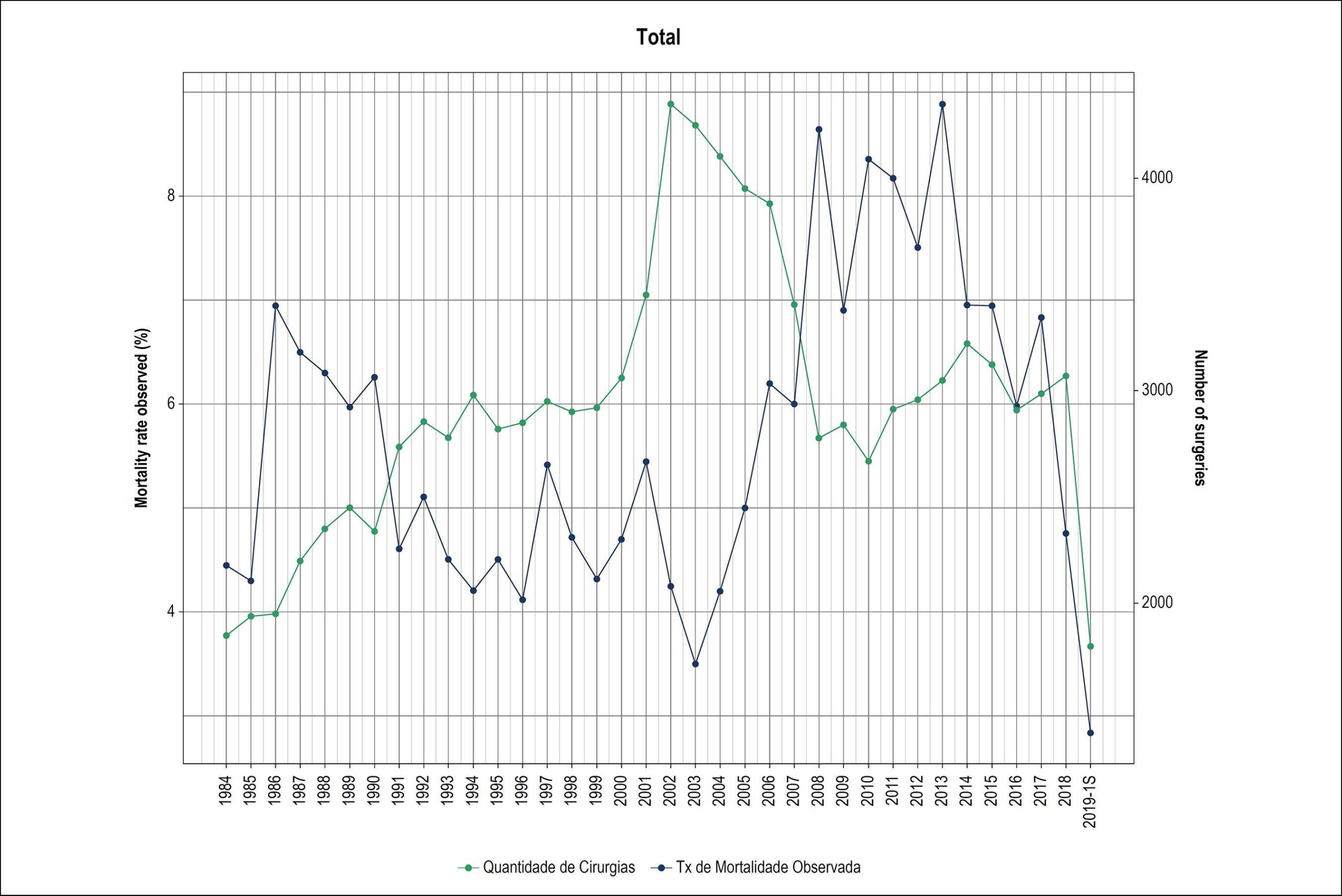
Cardiothoracic surgeons have a rich history of quality improvement and a strong ethos of transparency and innovation allowing for the rapid diffusion of standards, techniques, and benchmarks worldwide. Nationally, few medical specialties have contributed as much to the development of knowledge as the Brazilian cardiac surgery. From the hard work developed during decades by pioneering surgeons such as Euryclides Zerbini and Adib Jatene to the most contemporaneous leaders in the field, the Instituto do Coração do Hospital das Clínicas da Faculdade de Medicina da Universidade de São Paulo – InCor – is definitely at the heart of this journey. In this issue of Arquivos Brasileiros de Cardiologia the work by Mejia et al. has the merit of taking into account the evolution of the number of cardiovascular surgeries performed at InCor during a 35-year period. The total number is a remarkable one: over 100,000 open heart procedures were analyzed. After all, the mean number of procedures/year is 2,964, – or more than 11 procedures per workday. It is noteworthy the fact that the total number of procedures has been increasing, especially due to an increase in valvular operations and the correction of congenital cardiopathies. Also, of note, there is a 7% decrease in coronary artery bypass graft surgery volume in the most recent period studied.

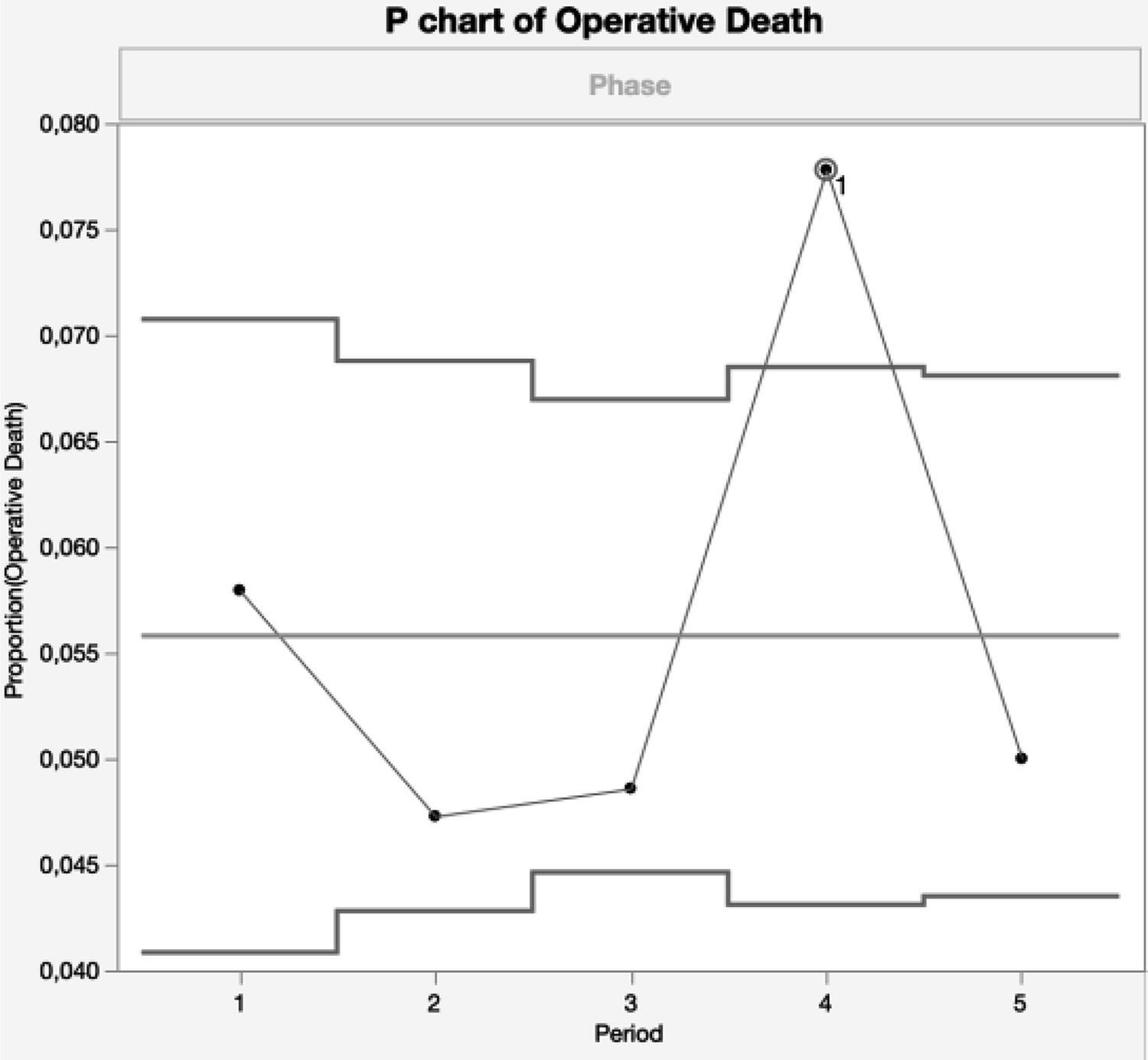
Besides describing the volume of disease-specific open-heart surgical procedures throughout five different periods of time over the 35 years of data, another objective of the study by Mejia et al. was to evaluate the impact of the actions taken from a continuous quality improvement program on mortality from cardiovascular surgery. It is not clear, however, how the periods of time were selected for the analyses.

[…]

  • Cardiovascular Surgical Procedures/trends
  • Database
  • Hospital Mortality
  • Patient Safety
  • Quality Improvement
Read Full Article
Creative Commons Attribution (CC BY) Creative Commons license
29/05/2020 DOI: 10.36660/abc.20200249
Figure 1
ABC
Original Article

Analysis of >100,000 Cardiovascular Surgeries Performed at the Heart Institute and a New Era of Outcomes

Omar A.V. Mejia et al. Luiz Augusto Ferreira Lisboa Luiz Fernando Caneo Elisandra Trevisan Arita … Carlos Manuel de Almeida Brandão Ricardo Ribeiro Dias Roberto Costa Marcelo Biscegli Jatene Pablo Maria Alberto Pomerantzeff Luís Alberto Oliveira Dallan Fabio Biscegli Jatene

Abstract

Background:

The current challenge of cardiovascular surgery (CVS) is to improve the outcomes in increasingly severe patients. In this respect, continuous quality improvement (CQI) programs have had an impact on outcomes.

Objective:

To assess the evolution of the incidence and mortality due to CVS, as well as the current outcomes of the Hospital das Clínicas Heart Institute of the University of São Paulo Medical School (InCor-HCFMUSP).

Methods:

An outcome analysis of CVSs performed at the InCor, between January 1984 and June 2019. We observed the surgical volume and mortality rates in 5 time periods: 1st (1984-1989), 2nd (1990-1999), 3rd (2000-2007), 4th (2008-2015) and 5th (2016-2019). The CQI program was implemented between 2015 and 2016. The analysis included the total number of surgeries and the evolution of the most frequent procedures.

Results:

A total of 105,599 CCVs were performed, with an annual mean of 2,964 procedures and mortality of 5,63%. When comparing the 4th and the 5th periods, the average global volume of surgeries was increased from 2,943 to 3,139 (p = 0.368), bypass graft (CABG), from 638 to 597 (p = 0.214), heart valve surgery, from 372 to 465 (p = 0.201), and congenital heart disease surgery, from 530 to 615 (p = 0.125). The average global mortality went from 7.8% to 5% (p < 0.0001); in CABG surgery, from 5.8% to 3.1% (p < 0.0001); in heart valve surgery, from 14% to 7.5% (p < 0.0001) and in congenital heart disease surgery, from 12.1% to 9.6% (p < 0.0001).

Conclusion:

In spite of a recent trend towards increased surgical volume, there was a significant decrease in operative mortality in the groups studied. After the implementation of the CQI program, the mortality rates were closer to international standards.

  • Cardiovascular Surgical Procedures/trends
  • Database
  • Hospital Mortality
  • Patient Safety
  • Quality Improvement
Read Full Article
Creative Commons Attribution (CC BY) Creative Commons license
14/02/2020 DOI: 10.36660/abc.20190736 Views 2
ABC
Editorial

Editorial Considerations on the New Clinical and Surgical Perspectives of Brazilian Cardiology

Paulo Roberto B. Evora et al. Alfredo J. Rodrigues

The Arquivos Brasileiros de Cardiologia (ABC) has been the official publication of the Brazilian Society of Cardiology for more than 60 years, and has proved to be one of the most prestigious scientific journals in Latin America, approaching all aspects of cardiology, including the surgical ones. In August 1986, the Revista Brasileira de Cirurgia Cardiovascular (RBCCV), specifically directed to the surgical aspects of heart diseases, began to be published. Thus, the editorial policy of the ABC has progressively privileged publications focused on the clinical treatment of cardiovascular diseases over surgical publications of common interest to cardiologists and cardiac surgeons. Despite the substantial changes in the treatment of heart diseases, deriving from the appearance of new drugs and percutaneous devices, cardiac surgeries are still the treatment of choice to a substantial number of heart diseases, mainly the congenital, valvular and even coronary ones, whose onus of surgery indication is invariably on cardiologists. Thus, those specialists should be aware of several aspects of cardiac surgery, mainly those concerning their risks and results, so that they can base their indications on evidence.

The great majority of cardiologists might know that the use of bilateral internal thoracic arteries (BITA) for coronary artery bypass grafting improves survival as compared to the use of only one single internal thoracic artery (ITA). Thus, the optimization of arterial grafts has been widespread with the use of the radial artery (RA) and composite grafts. However, only few professionals are aware of the controversies involving risky situations, possible limitations to the use of BITA, the patency index of RA grafts and their influencing factors. The RA was the second arterial graft introduced in the clinical practice for coronary artery bypass grafting, and has drawn the interest of Brazilian surgeons since the 1990s. Skeletonization of the left ITA (LITA) can favorably change the flow capacity of the graft, leading to the assumption that the behavior of the RA, as a coronary graft, is similar to that of the skeletonized LITA. Considering the potential role of the RA as a second option of coronary grafting and the concept of complete coronary artery bypass grafting with the exclusive use of arterial grafts, Bonini et al have carried out a prospective randomized study comparing 40 patients distributed into two groups. In group I, skeletonized RA was used in 20 patients, and, in group II, RA with adjacent tissues was used in 20 patients. After the surgical procedure, flow velocity was measured. The results showed that the morphological and pathological characteristics, as well as the hemodynamic performance of the free RA grafts, regardless of being skeletonized or having adjacent tissues, were similar. However, a larger number of non-obstructive lesions was observed in the group with the RA graft preserving the adjacent tissues.

[…]

  • Cardiology/trends
  • Cardiovascular Surgical Procedures/trends
  • Case-Control Studies
  • Evidence Based Practice/trends
Read Full Article
Creative Commons Attribution (CC BY) Creative Commons license
01/08/2015 DOI: 10.5935/abc.20150094 Views 1

How to cite this article

EndNote RIS

Electronic Document Format (Vancouver)

Colafranceschi AS. How Do We Know a Change is an Improvement? The (Not So) New Scientific Knowledge Every Physician Should Learn, Master and Lead. Arquivos Brasileiros de Cardiologia 2020;114(4):613-5.

Electronic Document Format (ABNT)

Colafranceschi, Alexandre Siciliano. How Do We Know a Change is an Improvement? The (Not So) New Scientific Knowledge Every Physician Should Learn, Master and Lead. Arquivos Brasileiros de Cardiologia, v. 114, n. 4, p. 613-615, May. 2020.

Electronic Document Format (APA)

Colafranceschi, A. S. (2020). How Do We Know a Change is an Improvement? The (Not So) New Scientific Knowledge Every Physician Should Learn, Master and Lead. Arquivos Brasileiros de Cardiologia, 114(4), 613-615.

Electronic Document Format (ISO)

Colafranceschi, Alexandre Siciliano. How Do We Know a Change is an Improvement? The (Not So) New Scientific Knowledge Every Physician Should Learn, Master and Lead. Arquivos Brasileiros de Cardiologia [online]. 2020, vol. 114, n. 4, [cited 2026-10-14], pp. 613-615. Available from: <https://journals.cardiol.br/en/article/how-do-we-know-a-change-is-an-improvement-the-not-so-new-scientific-knowledge-every-physician-should-learn-master-and-lead/>. ISSN 0066-782X

EndNote RIS

Electronic Document Format (Vancouver)

Mejia OA, Lisboa LAF, Caneo LF, Arita ET, Brandão CMA, Dias RR, Costa R, et al. Analysis of >100,000 Cardiovascular Surgeries Performed at the Heart Institute and a New Era of Outcomes. Arquivos Brasileiros de Cardiologia 2020;114(4):603-12.

Electronic Document Format (ABNT)

Mejia, Omar A.V.; Lisboa, Luiz Augusto Ferreira; Caneo, Luiz Fernando; Arita, Elisandra Trevisan; Brandão, Carlos Manuel de Almeida; Dias, Ricardo Ribeiro; Costa, Roberto; Jatene, Marcelo Biscegli; Pomerantzeff, Pablo Maria Alberto; Dallan, Luís Alberto Oliveira; Jatene, Fabio Biscegli. Analysis of >100,000 Cardiovascular Surgeries Performed at the Heart Institute and a New Era of Outcomes. Arquivos Brasileiros de Cardiologia, v. 114, n. 4, p. 603-612, Feb. 2020.

Electronic Document Format (APA)

Mejia, O. A., Lisboa, L. A. F., Caneo, L. F., Arita, E. T., Brandão, C. M. A., Dias, R. R., Costa, R., Jatene, M. B., Pomerantzeff, P. M. A., Dallan, L. A. O., & Jatene, F. B. (2020). Analysis of >100,000 Cardiovascular Surgeries Performed at the Heart Institute and a New Era of Outcomes. Arquivos Brasileiros de Cardiologia, 114(4), 603-612.

Electronic Document Format (ISO)

Mejia, Omar A.V. and Lisboa, Luiz Augusto Ferreira and Caneo, Luiz Fernando and Arita, Elisandra Trevisan and Brandão, Carlos Manuel de Almeida and Dias, Ricardo Ribeiro and Costa, Roberto and Jatene, Marcelo Biscegli and Pomerantzeff, Pablo Maria Alberto and Dallan, Luís Alberto Oliveira and Jatene, Fabio Biscegli. Analysis of >100,000 Cardiovascular Surgeries Performed at the Heart Institute and a New Era of Outcomes. Arquivos Brasileiros de Cardiologia [online]. 2020, vol. 114, n. 4, [cited 2026-10-14], pp. 603-612. Available from: <https://journals.cardiol.br/en/article/analysis-of-100000-cardiovascular-surgeries-performed-at-the-heart-institute-and-a-new-era-of-outcomes/>. ISSN 0066-782X

EndNote RIS

Electronic Document Format (Vancouver)

Evora PRB, Rodrigues AJ. Editorial Considerations on the New Clinical and Surgical Perspectives of Brazilian Cardiology. Arquivos Brasileiros de Cardiologia 2015;105(2):103-4.

Electronic Document Format (ABNT)

Evora, Paulo Roberto B.; Rodrigues, Alfredo J.. Editorial Considerations on the New Clinical and Surgical Perspectives of Brazilian Cardiology. Arquivos Brasileiros de Cardiologia, v. 105, n. 2, p. 103-104, Jul. 2015.

Electronic Document Format (APA)

Evora, P. R. B., & Rodrigues, A. J. (2015). Editorial Considerations on the New Clinical and Surgical Perspectives of Brazilian Cardiology. Arquivos Brasileiros de Cardiologia, 105(2), 103-104.

Electronic Document Format (ISO)

Evora, Paulo Roberto B. and Rodrigues, Alfredo J.. Editorial Considerations on the New Clinical and Surgical Perspectives of Brazilian Cardiology. Arquivos Brasileiros de Cardiologia [online]. 2015, vol. 105, n. 2, [cited 2026-10-14], pp. 103-104. Available from: <https://journals.cardiol.br/en/article/editorial-considerations-on-the-new-clinical-and-surgical-perspectives-of-brazilian-cardiology/>. ISSN 0066-782X

  • About ABC Family
  • Internal Regulation
  • Editorial Board
  • Brazilian Society of Cardiology (SBC)

Issues

SBC Guidelines

  • Videos
  • Podcasts
  • News