Helena Garcia Betinardi Bernardi et al. Silas Furquim Renata Lopes Hames Jorge Henrique Yoschimoto Koroishi … Jairo Alves Pinheiro Junior Stevan Krieger Martins
Abstract
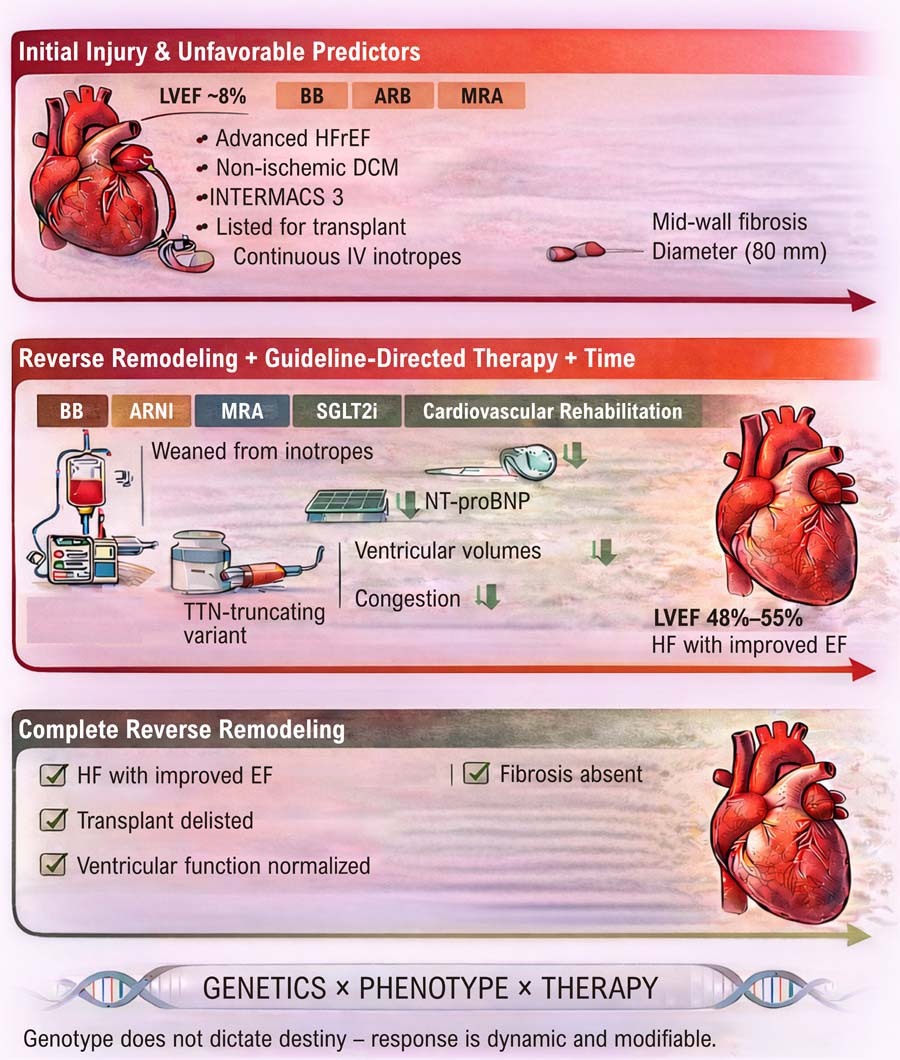
Cardiac remodeling, present in heart failure (HF), is a compensatory biological process following an initial myocardial injury that gradually becomes maladaptive, leading to clinical deterioration and chronic HF. Reverse remodeling (RR), which has been increasingly addressed, occurs when the geometry and/or function of the left ventricle recover in response to treatment, approaching normal cardiac structure. RR is associated with a better prognosis. Factors associated with RR include female sex, non-ischemic etiology, mild to moderate HF, lower fibrotic burden, elevated blood pressure permitting medical optimization, shorter disease duration, and preserved renal function. However, growing knowledge of genetic factors in HF etiology has provided important insights into their role in treatment response and prognosis. To illustrate and discuss these emerging topics, we report a case of advanced HF involving RR and a genetic variant, reviewing current recommendations for management.