ABC Family Arquivos Brasileiros de Cardiologia International Journal of Cardiovascular Sciences ABC Heart Failure & Cardiomyopathy ABC Imagem Cardiovascular
Português English
ABC Family
Português English
  • About
    • About ABC Family
    • Internal Regulation
    • Editorial Board
    • Brazilian Society of Cardiology (SBC)
  • Issues
  • SBC Guidelines
  • Content
    • Videos
    • Podcasts
    • News
  • About
    • About ABC Family
    • Internal Regulation
    • Editorial Board
    • Brazilian Society of Cardiology (SBC)
  • Issues
  • SBC Guidelines
  • Content
    • Videos
    • Podcasts
    • News

ABC Family

  • ABC Family
  • Arquivos Brasileiros de Cardiologia
  • International Journal of Cardiovascular Sciences
  • ABC Heart Failure & Cardiomyopathy
  • ABC Imagem Cardiovascular
Search in

No content found.

Journals
Ordering
Article types
Others

  1. Home
  2. Keyword: Sarcomere-Positive, Nonfamilial
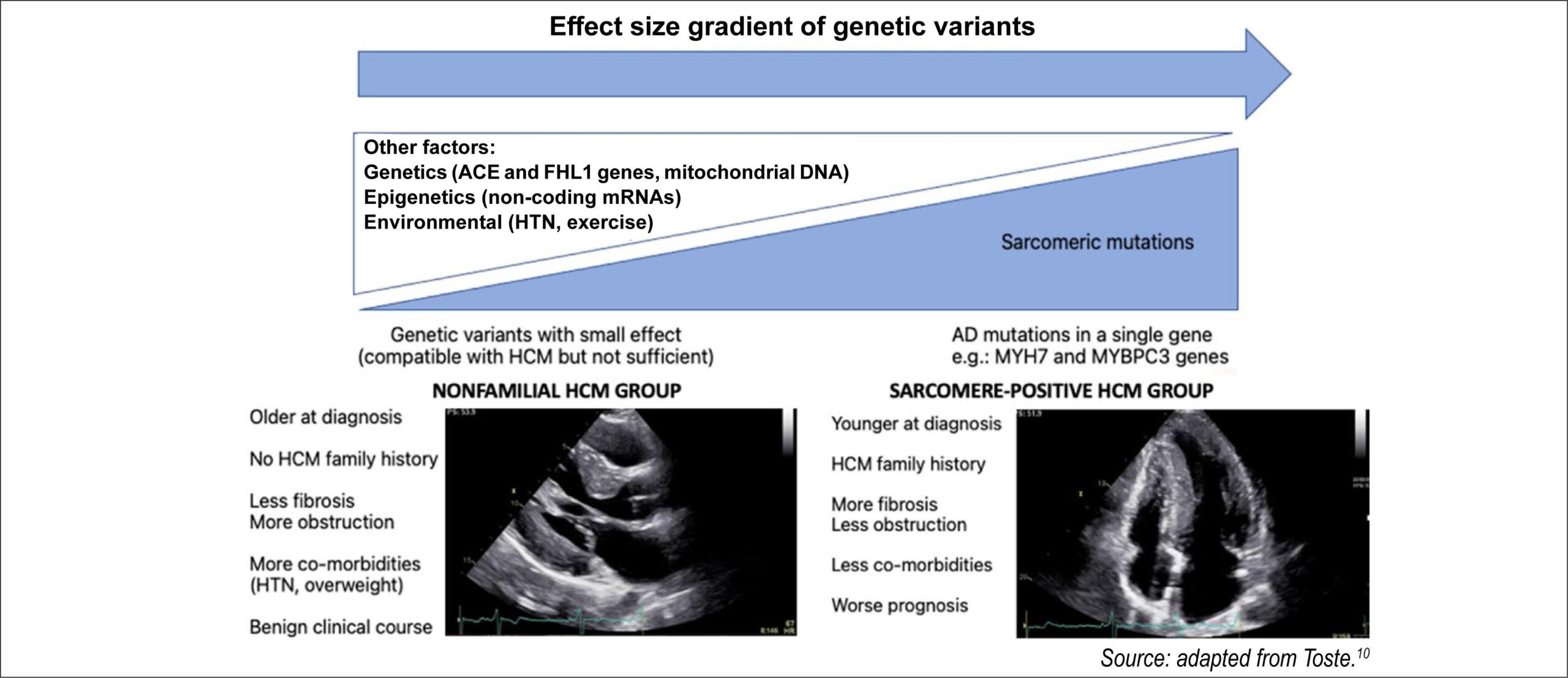
Figure 1
ABCIC
Editorial

How to Perform a Diagnostic and Prognostic Analysis of Hypertrophic Cardiomyopathy in 2022: Should we Divide to Improve Treatment?

Alexandra Toste et al. Nuno Cardim

Hypertrophic cardiomyopathy (HCM), the most common genetic heart disease, has an estimated prevalence in the general population of 1:500–1:200. The diagnosis is based on the presence of left ventricular hypertrophy (LVH) that is not fully explained by loading conditions, and HCM occurs in the absence of other cardiac, systemic, or metabolic disease or in the context of a multiorgan syndrome associated with LVH.

Despite being considered a genetic disease, the initial diagnosis of HCM does not require genetic testing. The diagnostic power of current genetic panels is modest, just 46%; therefore, failure to detect a mutation does not exclude the diagnosis. Current guidelines recommend genetic testing, especially when the possibility of cascading familial genetic screening is anticipated or in cases in which the clinical presentation suggests a specific non-sarcomeric etiology potentially treatable with specific therapy, such as Anderson-Fabry disease, Danon disease, or familial amyloidosis.

[…]

  • Diagnosis
  • Genetics
  • Hypertrophic Cardiomyopathy
  • Prognosis
  • Sarcomere-Positive, Nonfamilial
Read Full Article
Creative Commons Attribution (CC BY) Creative Commons license
01/12/2022 DOI: 10.47593/2675-312X/20223504eed_23i Views 1

How to cite this article

EndNote RIS

Electronic Document Format (Vancouver)

Toste A, Cardim N. How to Perform a Diagnostic and Prognostic Analysis of Hypertrophic Cardiomyopathy in 2022: Should we Divide to Improve Treatment?. ABC Imagem Cardiovascular 2022;35(4):eed_23.

Electronic Document Format (ABNT)

Toste, Alexandra; Cardim, Nuno. How to Perform a Diagnostic and Prognostic Analysis of Hypertrophic Cardiomyopathy in 2022: Should we Divide to Improve Treatment?. ABC Imagem Cardiovascular, v. 35, n. 4, eed_23, Nov. 2022.

Electronic Document Format (APA)

Toste, A., & Cardim, N. (2022). How to Perform a Diagnostic and Prognostic Analysis of Hypertrophic Cardiomyopathy in 2022: Should we Divide to Improve Treatment?. ABC Imagem Cardiovascular, 35(4), eed_23.

Electronic Document Format (ISO)

Toste, Alexandra and Cardim, Nuno. How to Perform a Diagnostic and Prognostic Analysis of Hypertrophic Cardiomyopathy in 2022: Should we Divide to Improve Treatment?. ABC Imagem Cardiovascular [online]. 2022, vol. 35, n. 4, [cited 2026-10-14], eed_23. Available from: <https://journals.cardiol.br/en/article/how-to-perform-a-diagnostic-and-prognostic-analysis-of-hypertrophic-cardiomyopathy-in-2022-should-we-divide-to-improve-treatment/>. ISSN 2318-8219
  • About ABC Family
  • Internal Regulation
  • Editorial Board
  • Brazilian Society of Cardiology (SBC)

Issues

SBC Guidelines

  • Videos
  • Podcasts
  • News