ABC Family Arquivos Brasileiros de Cardiologia International Journal of Cardiovascular Sciences ABC Heart Failure & Cardiomyopathy ABC Imagem Cardiovascular
Português English
ABC Family
Português English
  • About
    • About ABC Family
    • Internal Regulation
    • Editorial Board
    • Brazilian Society of Cardiology (SBC)
  • Issues
  • SBC Guidelines
  • Content
    • Videos
    • Podcasts
    • News
  • About
    • About ABC Family
    • Internal Regulation
    • Editorial Board
    • Brazilian Society of Cardiology (SBC)
  • Issues
  • SBC Guidelines
  • Content
    • Videos
    • Podcasts
    • News

ABC Family

  • ABC Family
  • Arquivos Brasileiros de Cardiologia
  • International Journal of Cardiovascular Sciences
  • ABC Heart Failure & Cardiomyopathy
  • ABC Imagem Cardiovascular
Search in

No content found.

Journals
Ordering
Article types
Others

  1. Home
  2. Keyword: Body weight
ABC
Editorial

Does One Size Fit All? – Refining Parenteral Anticoagulant Therapy According to Body Weight

Remo Holanda de Mendonça Furtado

Parenteral anticoagulant is widely used in medicine. In acute coronary syndromes (ACS), the use of intravenous unfractionated heparin (UFH) has been largely replaced by low molecular weight heparins (LMWH) due to the ease of administration, more predictable effect, and superior efficacy of the latter in patients with ST-elevation myocardial infarction submitted to fibrinolysis. Current guidelines recommend anticoagulation with enoxaparin (class I) in a broad range of patients with ACS., However, one of the major limitations of LMWH remains in its use in patients with extremes of body weight. Some studies suggest a less trustable anticoagulation among patients weighing more than 100 kilograms or with body mass index (BMI) above 40 kg/m. Whether 1 mg/kg every 12 hours dosing for therapeutic anticoagulation should remain in extremely obese patients is still controversial., Currently, the Brazilian label from enoxaparin recommends a maximum dose of 100 mg every 12 hours, with additional dosing adjustments for patients older than 75 years and those with moderate to severe renal dysfunction.

The current issue of the Arquivos Brasileiros de Cardiologia brings an important meta-analysis that can help, in part, to clarify these questions. The authors performed a systematic review of studies enrolling patients being treated for several different conditions, most of them (87%) for ACS, with a parenteral anticoagulant (UFH, enoxaparin, or fondaparinux). Eligible studies compared two exposure groups (obese versus non-obese, being obese defined as a BMI ≥ 30 kg/m) in terms of death and bleeding outcomes. Because few studies reported endpoints of myocardial infarction and none analyzed stroke, these outcomes were not part of the current meta-analysis. Authors have found 6 studies, three of them secondary analyses from randomized clinical trials (RCT) and three retrospective cohort studies. The rates of bleeding did not differ according to the obesity status (with no apparent heterogeneity according to UFH versus LMWH). However, obesity was associated with lower mortality on parenteral anticoagulation. This last finding is not entirely surprising given it has been demonstrated before (the so called “obesity paradox”). The strengths of the current meta-analysis were the rigorous selection of studies in different databases, assessment of risk of bias, and estimates of heterogeneity with proper methods. The main limitation was that, although RCTs were included, the essential information, that is, the comparison between obese and non-obese patients, was based on observational data, with the inherent risk of bias due to unknown, unmeasured confounders. Apparent lower mortality in obese patients could be explained by the usually younger age (since aging is, in fact, a factor that may decrease body weight over time) and thus the lower prevalence of other age-related co-morbidities that per si are associated with higher mortality, thus creating this apparent paradox. This same issue may cover a potential signal for an increase in bleeding (if it does exist) among obese patients. If obesity were protective against death, we would not expect a mortality reduction favoring weight loss in RCTs testing a weight reduction medication, such as subcutaneous semaglutide, among patients with high cardiovascular risk.

[…]
  • Anticoagulants
  • Body weight
  • Heparin
  • Thrombosis
Read Full Article
Creative Commons Attribution (CC BY) Creative Commons license
16/06/2025 DOI: 10.36660/abc.20250251i
IJCS
Original Article

Factors Associated With Elevated Blood Pressure in Nursing Workers

Vivian de Moraes Coelho et al. Camila Oliveira Sinhoroto Patrícia Magnabosco Maria Beatriz Guimarães Raponi … Maria Angélica Melo e Oliveira Omar Pereira de Almeida Neto Valéria Nasser Figueiredo

Abstract

Introduction

Nurses from the night shift are exposed to sleep deprivation, which is associated with circadian rhythm alteration, lifestyle changes, psychosocial stress, and, consequently, increased risk of blood pressure (BP) deregulation and hypertension.

Objective

To analyze risk factors associated with elevated BP levels in nursing workers.

Methods

A transversal, quantitative study was conducted with 172 nursing professionals of a large hospital in the state of Minas Gerais, Brazil. The following data were collected: anthropometric and BP measurements, sociodemographic characteristics, clinical variables, and lifestyle habits. Results were evaluated by bivariate analysis and logistic regression. The level of significance adopted in the statistical analysis was 5%.

Results

Participants’ average age was 42.7 ± 9.6 years old; 86.6% (n = 149) were female, and 20.3% (n = 35) had previous diagnosis of hypertension. Overweight and obesity (odds ratio [OR]: 2.187, 95% confidence interval [CI]: 1.060 – 4.509) and night shift (OR: 2.100, CI 95%: 1.061 – 4.158) were statistically significant (p < 0.05) for increased risk of elevated BP level.

Conclusion

Excessive weight and night shift were significant factors for increased BP in nursing workers.

  • Blood Pressure
  • Body weight
  • Nursing team
  • Shift work schedule
Read Full Article
Creative Commons Attribution (CC BY) Creative Commons license
03/03/2023 DOI: 10.36660/ijcs.20220001 Views 1
Figure 2
ABC
Original Article

Impact of Serum Uric Acid Concentration on the Risk of Cardiovascular Disease: A Cohort Study Conducted in Northern China

Qian Nie et al. Xuemei Zhang Zhihua Hao Liqin Wang … Huanxin Liu Chenghao Liu Zhongli Wang Guangyao Song

Abstract

Background

The results of previous studies of the relationship between serum uric acid (SUA) and the risk of cardiovascular disease (CVD) have been inconsistent due to confounding factors caused by other known cardiovascular risk factors.

Objectives

This study aimed to evaluate the relationship between SUA and incident CVD in middle-aged and elderly Chinese people, who were stratified according to body mass index (BMI).

Methods

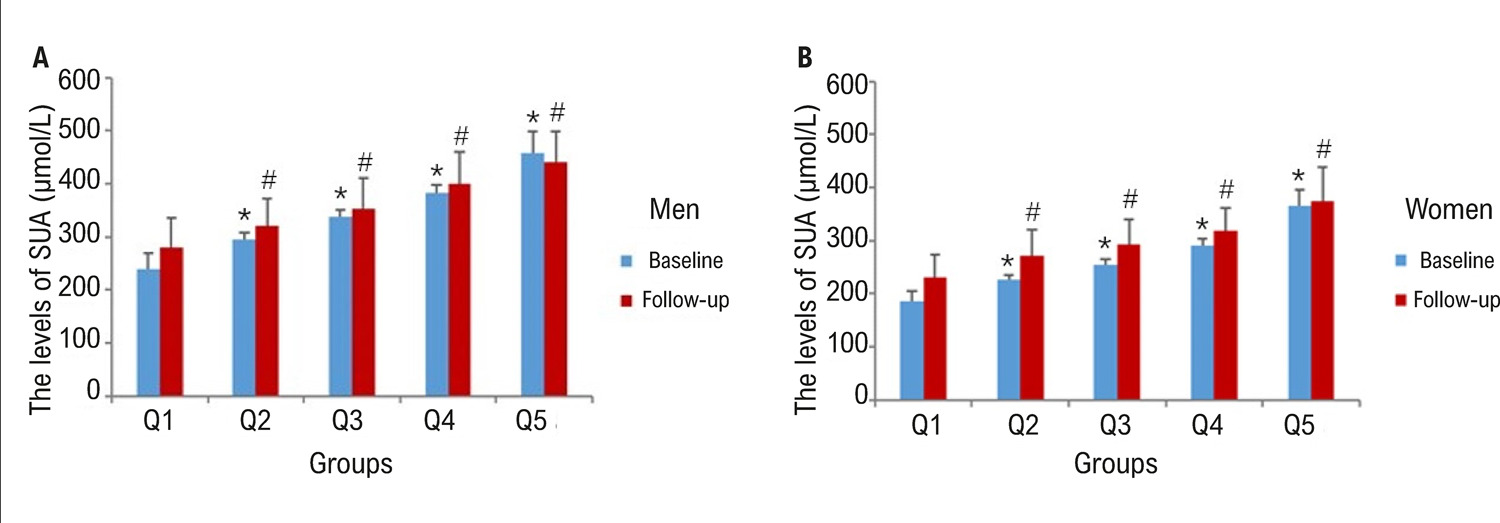
This study recruited 5,721 participants of 40–75 years of age, who were free of CVD at baseline and who underwent follow-up from 2008 to 2017. Participants were categorized in SUA quintiles. Cox proportional hazard and Kaplan-Meier survival analysis were used to compare CVD incidence among the SUA groups. The correlations between SUA and CVD incidence in groups with differing BMI and waist circumference (WC) were also analyzed. A P value <0.05 was considered statistically significant.

Results

During a mean follow-up period of 7.6 years, CVD incidence increased with SUA (log-rank test p<0. 001). Compared with the first quintile, the adjusted hazard ratios (95% confidence interval (CI)) for the development of CVD were 1.08 (0.78–1.65), 1.17 (0.88–1.77), 1.47 (1.12–2.21), and 1.68 (1.28–2.44) for the second to fifth quintiles, respectively. This relationship was clearer in participants with normal BMI and WC. The adjusted hazard ratio for each 100 μmol/L increase in SUA was 1.13 (95% CI: 1.02–1.39) for CVD events.

Conclusions

High SUA is an independent risk factor for CVD in middle-aged and elderly northern Chinese people. This effect is maintained even after stratification according to measures of leanness/obesity.

  • Body weight
  • Cardiovascular Diseases/incidence
  • Hyperuricemia
  • Risk Factors
  • uric acid
Read Full Article
Creative Commons Attribution (CC BY) Creative Commons license
16/07/2021 DOI: 10.36660/abc.20200378
Figure 1
IJCS
Original Article

Influence of Family History of Diabetes on Cardiac Autonomic Dysfunction of Adolescents

Carlos Alberto Alves Dias-Filho et al. Nivaldo de Jesus Soares Jr Carlos José Dias Andressa Coelho Ferreira … Carlan da Silva Sena Janaína de Oliveira Brito-Monzani Rafael Martins Andrade Adeilson Serra Mendes Vieira Leandro Moraes Pinto Wellington Roberto G. de Carvalho Cristiano Teixeira Mostarda

Abstract

Background

To evaluate cardiac autonomic modulation of adolescents with a family history of diabetic parents.

Objective

This study aims to evaluate the influence of a family history of diabetes on cardiac autonomic modulation.

Methods

This is an analytical and cross-sectional study on adolescents between 11 and 18 years of age, of both genders, who were divided into group with a family history of diabetes and a control group without a family history of diabetes. The study protocol consisted of the analysis of heart rate variability, blood pressure, anthropometric measurements, and body composition. Also, by using questionnaires, level of physical activity, sexual maturation, and sleep quality were evaluated. Normality of data distribution was tested using the Kolmogorov-Smirnov test. Then, statistical significance was evaluated using the Student’s t-test, and the Cohen’s teste was used for calculation of the effect size. The level of significance adopted in the statistical analysis was 5%.

Results

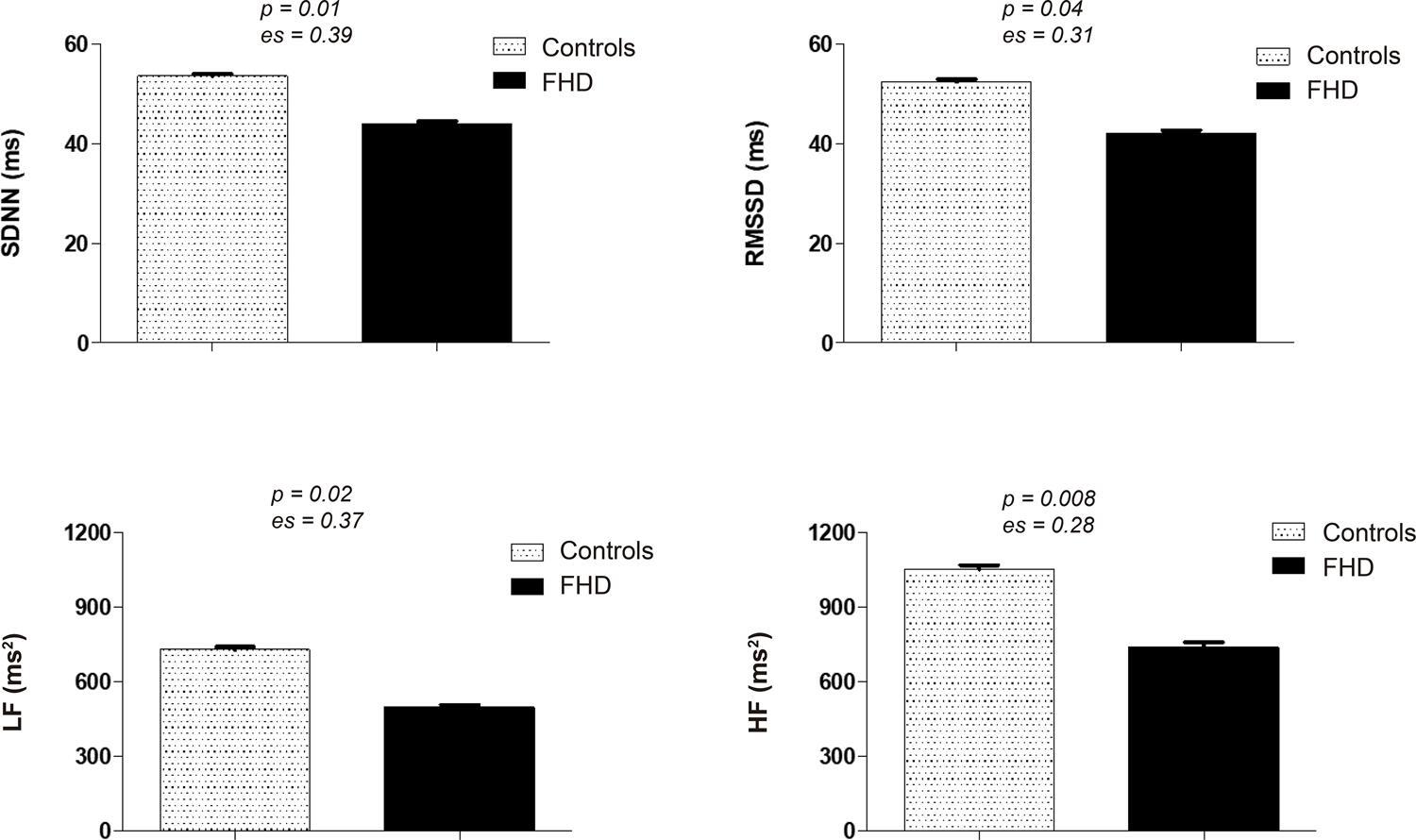
When the group of individuals with a family history of diabetes was compared with the control group, statistically significant differences were observed in the variables the standard deviation of the NN time series interval (SDNN) (43.9 ± 2.2 vs. 53.5 ± 2.6 ms), the square root of the quadratic differences (RMSSD) (41.9 ± 3.3 vs. 52.4 ± 3.2 ms), standard deviation of beat-to-beat instantaneous variability (SD1) (29.7 ± 2.3 vs. 37.1 ± 2.3 ms), long-term standard deviation of continuous RR intervals (SD2) (. 54.1 ± 2.6 vs. 66.66 ± 3.5 ms), and in low frequency (LF) (496.0 ± 49.5 vs. 728 ± 71.6 ms2) and high frequency (HF) (1050.0 ± 120.4 vs. 737.4 ± 98.5 ms2) in the frequency domain.

Conclusions

Global autonomic modulation is decreased in adolescents with a family history of diabetes. We also observed a decrease in vagal activity in this group. So, sympathetic autonomic modulation is predominant in this population. (Int J Cardiovasc Sci. 2020; [online].ahead print, PP.0-0)

  • Adolescent
  • Body Mass Index, cardiac Autonomic System
  • Body weight
  • Diabetes/Epidemiology
  • Diabetes/heredity
Read Full Article
Creative Commons Attribution (CC BY) Creative Commons license
17/07/2020 DOI: 10.36660/ijcs.20180064 Views 1
Figure 1
ABC
Original Article

Pressure Overload-induced Cardiac Hypertrophy Varies According to Different Ligation Needle Sizes and Body Weights in Mice

Zhen Jia et al. Zhijun Chen Hongfei Xu Malik Akuffu Armah … Peng Teng Weidong Li Dongdong Jian Liang Ma Yiming Ni

Abstract

Background:

The cardiac hypertrophy (CH) model for mice has been widely used, thereby providing an effective research foundation for CH exploration.

Objective:

To research the effects of CH modeling under abdominal aortic constriction (AAC) using different needles and weights in mice.

Methods:

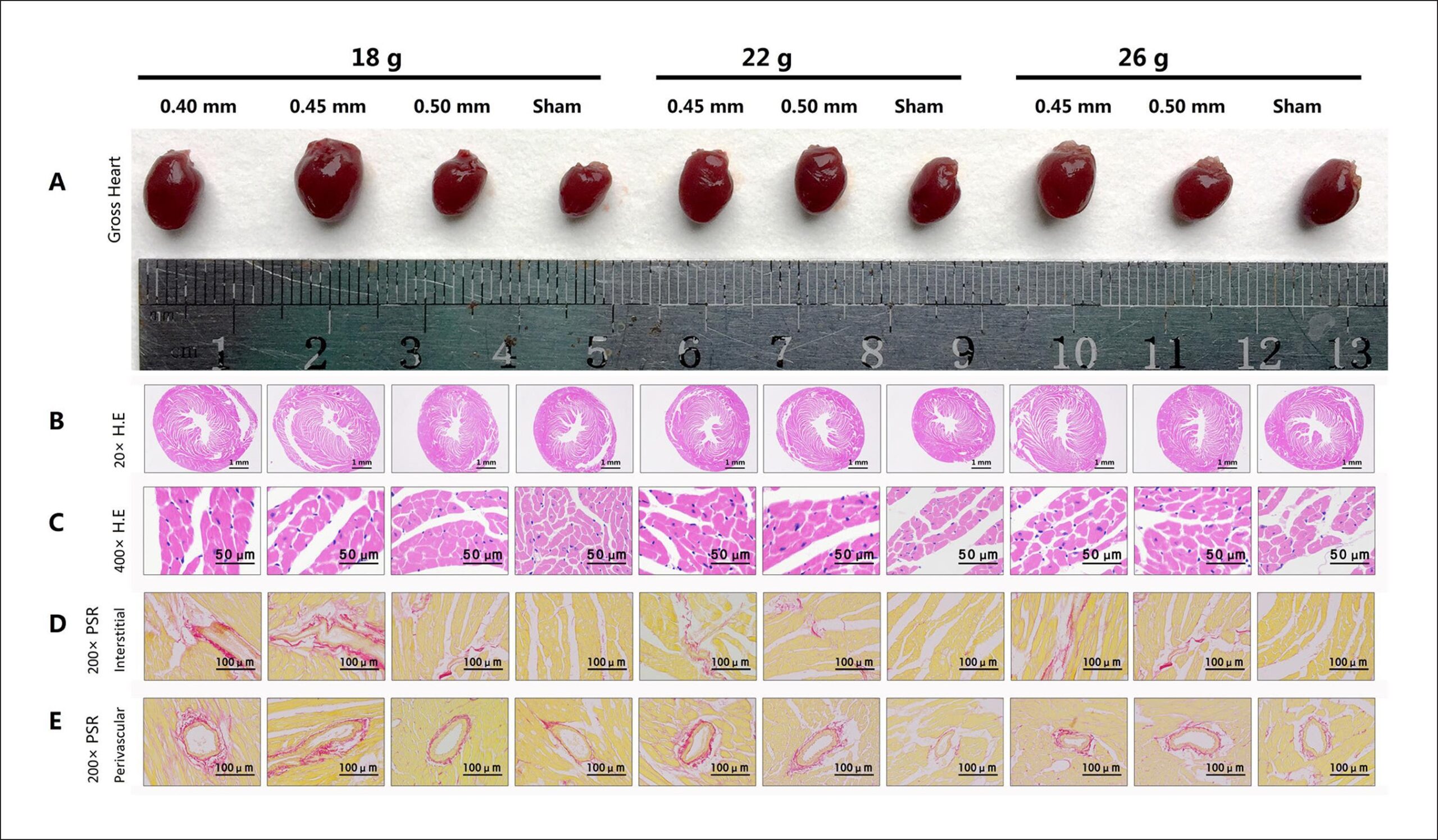
Four needles with different external diameters (0.35, 0.40, 0.45, and 0.50 mm) were used for AAC. 150 male C57BL/6 mice were selected according to body weight (BW) and divided into 3 weight levels: 18 g, 22 g, and 26 g (n = 50 in each group). All weight levels were divided into 5 groups: a sham group (n = 10) and 4 AAC groups using 4 ligation intensities (n = 10 per group). After surgery, survival rates were recorded, echocardiography was performed, hearts were dissected and used for histological detection, and data were statistically analyzed, P < 0.05 was considered statistically significant.

Results:

All mice died in the following AAC groups: 18g/0.35 mm, 22 g/0.35 mm, 26 g/0.35 mm, 22 g/0.40 mm, and 26 g/0.40 mm. All mice with AAC, those ligated with a 0.50-mm needle, and those that underwent sham operation survived. Different death rates occurred in the following AAC groups: 18 g/0.40 mm, 18 g/0.45 mm, 18 g/0.50 mm, 22 g/45 mm, 22 g/0.50 mm, 26 g/0.45 mm, and 26 g/0.50 mm. The heart weight/body weight ratios (5.39 ± 0.85, 6.41 ± 0.68, 4.67 ± 0.37, 5.22 ± 0.42, 4.23 ± 0.28, 5.41 ± 0.14, and 4.02 ± 0.13) were significantly increased compared with those of the sham groups for mice with the same weight levels.

Conclusion:

A 0.45-mm needle led to more obvious CH than did 0.40-mm and 0.50-mm needles and caused extraordinary CH in 18-g mice.

  • Body weight
  • Cardiomegaly
  • Heart Failure
  • Needles/utilization
  • Rats
Read Full Article
Creative Commons Attribution (CC BY) Creative Commons license
01/06/2018 DOI: 10.5935/abc.20180088
Figure 1
ABC
Original Article

Healthy School, Happy School: Design and Protocol for a Randomized Clinical Trial Designed to Prevent Weight Gain in Children

Daniela Schneid Schuh et al. Maíra Ribas Goulart Sandra Mari Barbiero Caroline D’Azevedo Sica … Raphael Borges David William Moraes Lucia Campos Pellanda

Abstract

Background:

Schools have become a key figure for the promotion of health and obesity interventions, bringing the development of critical awareness to the construction and promotion of a healthy diet, physical activity, and the monitoring of the nutritional status in childhood and adolescence.

Objectives:

To describe a study protocol to evaluate the effectiveness of an intervention designed to improve knowledge of food choices in the school environment.

Methods:

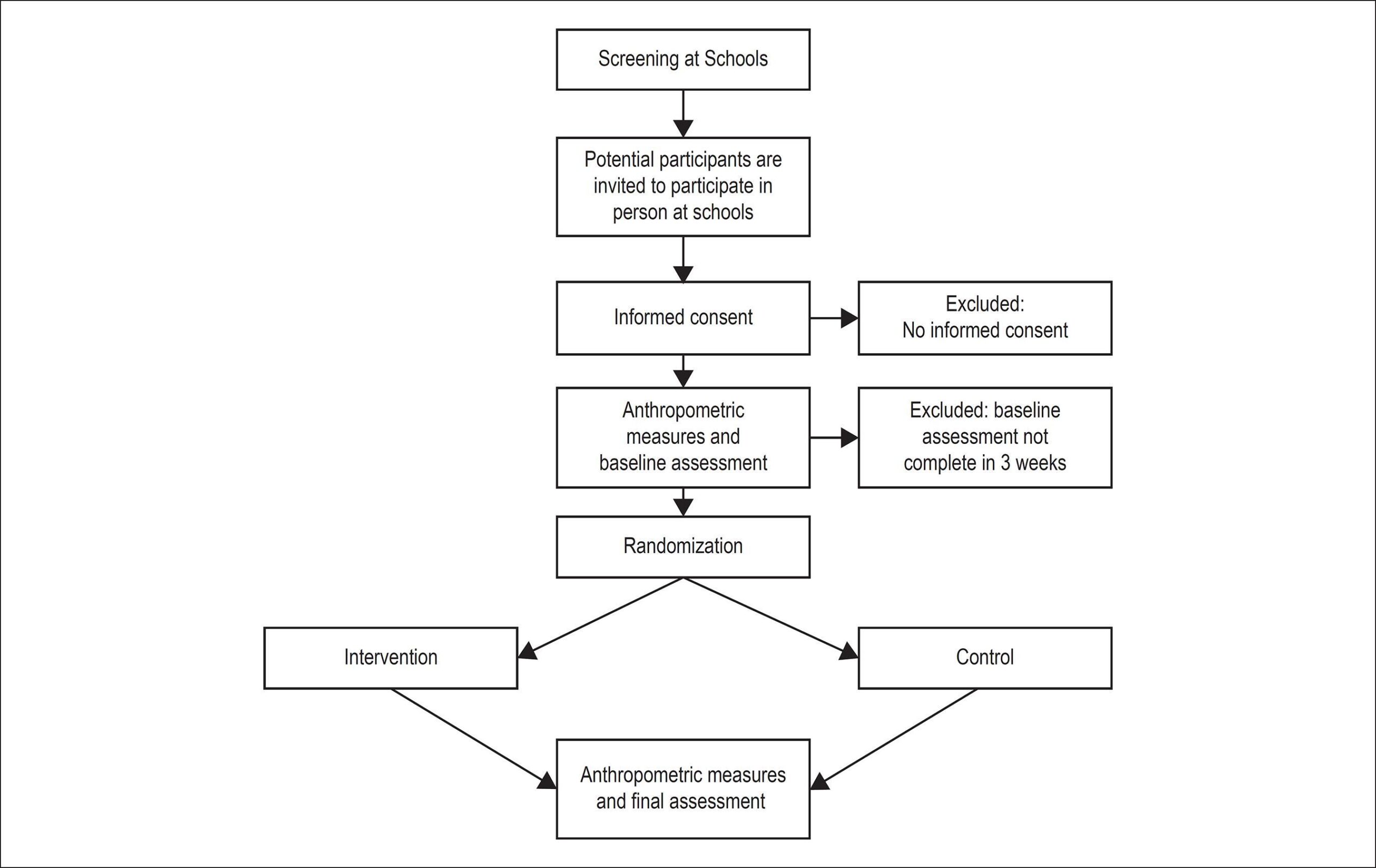
This is a cluster-randomized, parallel, two-arm study conducted in public elementary and middle schools in Brazil. Participants will be children and adolescents between the ages of 5 and 15 years, from both genders. The interventions will be focusing on changes in lifestyle, physical activities and nutritional education. Intervention activities will occur monthly in the school’s multimedia room or sports court. The control group arm will receive usual recommendations by the school. The primary outcome variable will be anthropometric measures, such as body mass index percentiles and levels of physical activity by the International Physical Activity Questionnaire.

Results:

We expect that after the study children will increase the ingestion of fresh food, reduce excessive consumption of sugary and processed foods, and reduce the hours of sedentary activities.

Conclusion:

The purpose of starting the dietary intervention at this stage of life is to develop a knowledge that will enable for healthy choices, providing opportunities for a better future for this population.

  • Body weight
  • Diet, Food and Nutrition
  • Health Behavior
  • Health Promotion
  • Motor Activity
  • Obesity
  • Prevention & Control
  • Schools
Read Full Article
Creative Commons Attribution (CC BY) Creative Commons license
01/06/2017 DOI: 10.5935/abc.20170072 Views 1
ABC
Artigo Original

Anthropometric measures as predictors of cardiovascular disease risk factors in the urban population of Iran

Reza Gharakhanlou et al. Babak Farzad Hamid Agha-Alinejad Lyn M. Steffen Mahdi Bayati

BACKGROUND: Overweight and obesity are an important public health problem in society, due to their association with various chronic diseases. OBJECTIVE: The purpose of this study is to determine the prevalence and distribution of overweight and obesity, using different anthropometric measurements and to identify the best anthropometric indicator which is most closely related to cardiovascular disease (CVD) risk factors in an Iranian urban population. METHODS: This cross-sectional study was conducted with 991 men and 1188 women aged 15 to 64 years. Body mass index (BMI), waist circumference (WC), waist-to-hip ratio (WHR), waist-to-height ratio (WHtR) and percentage of body fat were measured. A fasting blood specimen was obtained. CVD risk factors, including fasting blood glucose, triglycerides, total cholesterol (Tchol), low-density (LDL-C) and high-density-lipoprotein cholesterol (HDL-C) were assessed. RESULTS: Based on BMI, more than 49% of men and 53% of women were either overweight or obese with 10.2% of men and 18.6% of women being obese. In both men and women, the prevalence of overweight was greater among 40-49 year olds and the prevalence of obesity was greater among those 50+ years. Using the multiple regression analysis, BMI, WHtR and WHR explained the highest percentage of variation of triglycerides, Tchol/HDL-C ratio and LDL-C in men, respectively, whereas WHR explained the highest percentage of variation of triglycerides and WC explained the highest percentage of variation of Tchol/HDL-C ratio and LDL-C in women. CONCLUSION: Our data indicated that WHR and WHtR were the anthropometric indicators that best predicted CVD risk factors in men and WHR and WC in women.

  • Body weight
  • Body Weights and Measures
  • Cardiovascular Diseases
  • iran
  • Risk Factors
  • Urban Population
Read Full Article
Creative Commons Attribution (CC BY) Creative Commons license
09/01/2012 DOI: 10.1590/S0066-782X2012005000007

How to cite this article

EndNote RIS

Electronic Document Format (Vancouver)

Furtado RHM. Does One Size Fit All? – Refining Parenteral Anticoagulant Therapy According to Body Weight. Arquivos Brasileiros de Cardiologia 2025;122(4):e20250251.

Electronic Document Format (ABNT)

Furtado, Remo Holanda de Mendonça. Does One Size Fit All? – Refining Parenteral Anticoagulant Therapy According to Body Weight. Arquivos Brasileiros de Cardiologia, v. 122, n. 4, e20250251, Jun. 2025.

Electronic Document Format (APA)

Furtado, R. H. M. (2025). Does One Size Fit All? – Refining Parenteral Anticoagulant Therapy According to Body Weight. Arquivos Brasileiros de Cardiologia, 122(4), e20250251.

Electronic Document Format (ISO)

Furtado, Remo Holanda de Mendonça. Does One Size Fit All? – Refining Parenteral Anticoagulant Therapy According to Body Weight. Arquivos Brasileiros de Cardiologia [online]. 2025, vol. 122, n. 4, [cited 2026-10-14], e20250251. Available from: <https://journals.cardiol.br/en/article/does-one-size-fit-all-refining-parenteral-anticoagulant-therapy-according-to-body-weight/>. ISSN 0066-782X

EndNote RIS

Electronic Document Format (Vancouver)

Coelho VM, Sinhoroto CO, Magnabosco P, Raponi MBG, Oliveira MAM, Almeida Neto OP, Figueiredo VN, et al. Factors Associated With Elevated Blood Pressure in Nursing Workers. International Journal of Cardiovascular Sciences 2023;36:e20220001.

Electronic Document Format (ABNT)

Coelho, Vivian de Moraes; Sinhoroto, Camila Oliveira; Magnabosco, Patrícia; Raponi, Maria Beatriz Guimarães; Oliveira, Maria Angélica Melo e; Almeida Neto, Omar Pereira de; Figueiredo, Valéria Nasser. Factors Associated With Elevated Blood Pressure in Nursing Workers. International Journal of Cardiovascular Sciences, v. 36, e20220001, Mar. 2023.

Electronic Document Format (APA)

Coelho, V. M., Sinhoroto, C. O., Magnabosco, P., Raponi, M. B. G., Oliveira, M. A. M. , Almeida Neto, O. P. , & Figueiredo, V. N. (2023). Factors Associated With Elevated Blood Pressure in Nursing Workers. International Journal of Cardiovascular Sciences, 36, e20220001.

Electronic Document Format (ISO)

Coelho, Vivian de Moraes and Sinhoroto, Camila Oliveira and Magnabosco, Patrícia and Raponi, Maria Beatriz Guimarães and Oliveira, Maria Angélica Melo e and Almeida Neto, Omar Pereira de and Figueiredo, Valéria Nasser. Factors Associated With Elevated Blood Pressure in Nursing Workers. International Journal of Cardiovascular Sciences [online]. 2023, vol. 36, [cited 2026-10-14], e20220001. Available from: <https://journals.cardiol.br/en/article/factors-associated-with-elevated-blood-pressure-in-nursing-workers/>. ISSN 2359-4802

EndNote RIS

Electronic Document Format (Vancouver)

Nie Q, Zhang X, Hao Z, Wang L, Liu H, Liu C, Wang Z, et al. Impact of Serum Uric Acid Concentration on the Risk of Cardiovascular Disease: A Cohort Study Conducted in Northern China. Arquivos Brasileiros de Cardiologia 2021;117(4):666-75.

Electronic Document Format (ABNT)

Nie, Qian; Zhang, Xuemei; Hao, Zhihua; Wang, Liqin; Liu, Huanxin; Liu, Chenghao; Wang, Zhongli; Song, Guangyao. Impact of Serum Uric Acid Concentration on the Risk of Cardiovascular Disease: A Cohort Study Conducted in Northern China. Arquivos Brasileiros de Cardiologia, v. 117, n. 4, p. 666-675, Jul. 2021.

Electronic Document Format (APA)

Nie, Q., Zhang, X., Hao, Z., Wang, L., Liu, H., Liu, C., Wang, Z., & Song, G. (2021). Impact of Serum Uric Acid Concentration on the Risk of Cardiovascular Disease: A Cohort Study Conducted in Northern China. Arquivos Brasileiros de Cardiologia, 117(4), 666-675.

Electronic Document Format (ISO)

Nie, Qian and Zhang, Xuemei and Hao, Zhihua and Wang, Liqin and Liu, Huanxin and Liu, Chenghao and Wang, Zhongli and Song, Guangyao. Impact of Serum Uric Acid Concentration on the Risk of Cardiovascular Disease: A Cohort Study Conducted in Northern China. Arquivos Brasileiros de Cardiologia [online]. 2021, vol. 117, n. 4, [cited 2026-10-14], pp. 666-675. Available from: <https://journals.cardiol.br/en/article/impact-of-serum-uric-acid-concentration-on-the-risk-of-cardiovascular-disease-a-cohort-study-conducted-in-northern-china/>. ISSN 0066-782X

EndNote RIS

Electronic Document Format (Vancouver)

Dias-Filho CAA, Soares Jr NJ, Dias CJ, Ferreira AC, Sena CS, Brito-Monzani JO, Andrade RM, et al. Influence of Family History of Diabetes on Cardiac Autonomic Dysfunction of Adolescents. International Journal of Cardiovascular Sciences 2020;33(4):360-7.

Electronic Document Format (ABNT)

Dias-Filho, Carlos Alberto Alves; Soares Jr, Nivaldo de Jesus; Dias, Carlos José; Ferreira, Andressa Coelho; Sena, Carlan da Silva; Brito-Monzani, Janaína de Oliveira; Andrade, Rafael Martins; Vieira, Adeilson Serra Mendes; Pinto, Leandro Moraes; Carvalho, Wellington Roberto G. de; Mostarda, Cristiano Teixeira. Influence of Family History of Diabetes on Cardiac Autonomic Dysfunction of Adolescents. International Journal of Cardiovascular Sciences, v. 33, n. 4, p. 360-367, Jul. 2020.

Electronic Document Format (APA)

Dias-Filho, C. A. A., Soares Jr, N. J., Dias, C. J., Ferreira, A. C., Sena, C. S., Brito-Monzani, J. O., Andrade, R. M., Vieira, A. S. M., Pinto, L. M., Carvalho, W. R. G. , & Mostarda, C. T. (2020). Influence of Family History of Diabetes on Cardiac Autonomic Dysfunction of Adolescents. International Journal of Cardiovascular Sciences, 33(4), 360-367.

Electronic Document Format (ISO)

Dias-Filho, Carlos Alberto Alves and Soares Jr, Nivaldo de Jesus and Dias, Carlos José and Ferreira, Andressa Coelho and Sena, Carlan da Silva and Brito-Monzani, Janaína de Oliveira and Andrade, Rafael Martins and Vieira, Adeilson Serra Mendes and Pinto, Leandro Moraes and Carvalho, Wellington Roberto G. de and Mostarda, Cristiano Teixeira. Influence of Family History of Diabetes on Cardiac Autonomic Dysfunction of Adolescents. International Journal of Cardiovascular Sciences [online]. 2020, vol. 33, n. 4, [cited 2026-10-14], pp. 360-367. Available from: <https://journals.cardiol.br/en/article/influence-of-family-history-of-diabetes-on-cardiac-autonomic-dysfunction-of-adolescents/>. ISSN 2359-4802

EndNote RIS

Electronic Document Format (Vancouver)

Jia Z, Chen Z, Xu H, Armah MA, Teng P, Li W, Jian D, et al. Pressure Overload-induced Cardiac Hypertrophy Varies According to Different Ligation Needle Sizes and Body Weights in Mice. Arquivos Brasileiros de Cardiologia 2018;110(6):568-76.

Electronic Document Format (ABNT)

Jia, Zhen; Chen, Zhijun; Xu, Hongfei; Armah, Malik Akuffu; Teng, Peng; Li, Weidong; Jian, Dongdong; Ma, Liang; Ni, Yiming. Pressure Overload-induced Cardiac Hypertrophy Varies According to Different Ligation Needle Sizes and Body Weights in Mice. Arquivos Brasileiros de Cardiologia, v. 110, n. 6, p. 568-576, May. 2018.

Electronic Document Format (APA)

Jia, Z., Chen, Z., Xu, H., Armah, M. A., Teng, P., Li, W., Jian, D., Ma, L., & Ni, Y. (2018). Pressure Overload-induced Cardiac Hypertrophy Varies According to Different Ligation Needle Sizes and Body Weights in Mice. Arquivos Brasileiros de Cardiologia, 110(6), 568-576.

Electronic Document Format (ISO)

Jia, Zhen and Chen, Zhijun and Xu, Hongfei and Armah, Malik Akuffu and Teng, Peng and Li, Weidong and Jian, Dongdong and Ma, Liang and Ni, Yiming. Pressure Overload-induced Cardiac Hypertrophy Varies According to Different Ligation Needle Sizes and Body Weights in Mice. Arquivos Brasileiros de Cardiologia [online]. 2018, vol. 110, n. 6, [cited 2026-10-14], pp. 568-576. Available from: <https://journals.cardiol.br/en/article/pressure-overload-induced-cardiac-hypertrophy-varies-according-to-different-ligation-needle-sizes-and-body-weights-in-mice/>. ISSN 0066-782X

EndNote RIS

Electronic Document Format (Vancouver)

Schuh DS, Goulart MR, Barbiero SM, Sica CD, Borges R, Moraes DW, Pellanda LC, et al. Healthy School, Happy School: Design and Protocol for a Randomized Clinical Trial Designed to Prevent Weight Gain in Children. Arquivos Brasileiros de Cardiologia 2017;108(6):501-7.

Electronic Document Format (ABNT)

Schuh, Daniela Schneid; Goulart, Maíra Ribas; Barbiero, Sandra Mari; Sica, Caroline D’Azevedo; Borges, Raphael; Moraes, David William; Pellanda, Lucia Campos. Healthy School, Happy School: Design and Protocol for a Randomized Clinical Trial Designed to Prevent Weight Gain in Children. Arquivos Brasileiros de Cardiologia, v. 108, n. 6, p. 501-507, May. 2017.

Electronic Document Format (APA)

Schuh, D. S., Goulart, M. R., Barbiero, S. M., Sica, C. D., Borges, R., Moraes, D. W., & Pellanda, L. C. (2017). Healthy School, Happy School: Design and Protocol for a Randomized Clinical Trial Designed to Prevent Weight Gain in Children. Arquivos Brasileiros de Cardiologia, 108(6), 501-507.

Electronic Document Format (ISO)

Schuh, Daniela Schneid and Goulart, Maíra Ribas and Barbiero, Sandra Mari and Sica, Caroline D’Azevedo and Borges, Raphael and Moraes, David William and Pellanda, Lucia Campos. Healthy School, Happy School: Design and Protocol for a Randomized Clinical Trial Designed to Prevent Weight Gain in Children. Arquivos Brasileiros de Cardiologia [online]. 2017, vol. 108, n. 6, [cited 2026-10-14], pp. 501-507. Available from: <https://journals.cardiol.br/en/article/healthy-school-happy-school-design-and-protocol-for-a-randomized-clinical-trial-designed-to-prevent-weight-gain-in-children/>. ISSN 0066-782X

EndNote RIS

Electronic Document Format (Vancouver)

Gharakhanlou R, Farzad B, Agha-Alinejad H, Steffen LM, Bayati M. Anthropometric measures as predictors of cardiovascular disease risk factors in the urban population of Iran. Arquivos Brasileiros de Cardiologia 2012;98(2):126-35.

Electronic Document Format (ABNT)

Gharakhanlou, Reza; Farzad, Babak; Agha-Alinejad, Hamid; Steffen, Lyn M.; Bayati, Mahdi. Anthropometric measures as predictors of cardiovascular disease risk factors in the urban population of Iran. Arquivos Brasileiros de Cardiologia, v. 98, n. 2, p. 126-135, Jan. 2012.

Electronic Document Format (APA)

Gharakhanlou, R., Farzad, B., Agha-Alinejad, H., Steffen, L. M., & Bayati, M. (2012). Anthropometric measures as predictors of cardiovascular disease risk factors in the urban population of Iran. Arquivos Brasileiros de Cardiologia, 98(2), 126-135.

Electronic Document Format (ISO)

Gharakhanlou, Reza and Farzad, Babak and Agha-Alinejad, Hamid and Steffen, Lyn M. and Bayati, Mahdi. Anthropometric measures as predictors of cardiovascular disease risk factors in the urban population of Iran. Arquivos Brasileiros de Cardiologia [online]. 2012, vol. 98, n. 2, [cited 2026-10-14], pp. 126-135. Available from: <https://journals.cardiol.br/en/article/anthropometric-measures-as-predictors-of-cardiovascular-disease-risk-factors-in-the-urban-population-of-iran/>. ISSN 0066-782X

  • About ABC Family
  • Internal Regulation
  • Editorial Board
  • Brazilian Society of Cardiology (SBC)

Issues

SBC Guidelines

  • Videos
  • Podcasts
  • News