| ABC
ABC Family Arquivos Brasileiros de Cardiologia International Journal of Cardiovascular Sciences ABC Heart Failure & Cardiomyopathy ABC Imagem Cardiovascular
Português English
ABC Family | ABC
Português English
  • About
    • About the Journal
    • Internal Regulation
    • Editors Section
    • Editorial Board
    • History
    • SBC Award
  • Instructions to Authors
    • Guidelines for Publication
    • Editorial Policy
    • Ethics Policy
    • Policy on the Use of Artificial Intelligence
    • Mandatory Publication Form
    • Publication Fee
  • Issues
  • SBC Guidelines
  • Abstracts
    • How to Publish an Abstract Supplement?
    • Supplements from the Brazilian Congress of Cardiology
  • About
    • About the Journal
    • Internal Regulation
    • Editors Section
    • Editorial Board
    • History
    • SBC Award
  • Instructions to Authors
    • Guidelines for Publication
    • Editorial Policy
    • Ethics Policy
    • Policy on the Use of Artificial Intelligence
    • Mandatory Publication Form
    • Publication Fee
  • Issues
  • SBC Guidelines
  • Abstracts
    • How to Publish an Abstract Supplement?
    • Supplements from the Brazilian Congress of Cardiology

ABC Family

  • ABC Family
  • Arquivos Brasileiros de Cardiologia
  • International Journal of Cardiovascular Sciences
  • ABC Heart Failure & Cardiomyopathy
  • ABC Imagem Cardiovascular
Search in

No content found.

Journals
Ordering
Article types
Others

  1. Home
  2. ABC
  3. Issues
  4. 2026, Volume 123, Number 6
Editorial

Reference Values in Cardiovascular Magnetic Resonance Imaging: Between Local Validation and Global Harmonization

Miguel Correia

Cardiovascular magnetic resonance imaging (CMR) has become established in recent decades as the gold standard method for cardiac morphofunctional assessment, allowing for the precise quantification of ventricular volumes, ejection fraction, and myocardial mass, as well as the tissue characterization of multiple heart diseases.– The high reproducibility of its measurements is one of its main advantages over other imaging modalities, making CMR an essential tool in both clinical practice and cardiovascular research.,

However, the proper interpretation of parameters obtained by CMR depends on the existence of robust reference values applicable to the studied population. In this context, the article “Normal Reference Values for Cardiovascular Magnetic Resonance: An Analytical–Comparative Review with Emphasis on the Brazilian Population”, published in this issue of the Arquivos Brasileiros de Cardiologia, addresses a question that is particularly relevant to Brazilian cardiology: the applicability of international normative values to the national reality.

[…]

  • Magnetic Resonance Imaging
  • Reference Standards
  • Reference Values
Read Full Article
Creative Commons Attribution (CC BY) Creative Commons license
10/08/2026 DOI: 10.36660/abc.2026458i Views 2
Temporal Trends and In-hospital Outcomes of Transcatheter Aortic Valve Implantation in Bicuspid Aortic Valves in Brazil: A Propensity-Matched Analysis
Original Article

Temporal Trends and In-hospital Outcomes of Transcatheter Aortic Valve Implantation in Bicuspid Aortic Valves in Brazil: A Propensity-Matched Analysis

Pedro Calomeni et al. Fernando Bernardi Fábio Sandoli de Brito Jr Marcella Sousa Abizaid … Francisco Ribeiro Barbosa Pedro Alves Lemos Fausto Feres Dimytri Alexandre Siqueira Ricardo Costa Rogério Sarmento-Leite Fernanda Mangione José Armando Mangione Luiz Eduardo Koenig São Thiago Valter Correia de Lima Adriano Dias Dourado Oliveira Marcos Antônio Marino Carlos José Francisco Cardoso Paulo Ricardo Avancini Caramori Rogério Tadeu Tumelero Antenor Lages Fortes Portela Maurício Lopes Prudente Leônidas Alvarenga Henriques Fábio Solano de Freitas Souza Cristiano Guedes Bezerra Guy Fernandes de Almeida Prado Junior Leandro Zacarias Figueiredo de Freitas Ederlon Ferreira Nogueira George César Ximenes Meireles Renato Bastos Pope Ênio Eduardo Guérios Pedro Beraldo de Andrade Luciano de Moura Santos Augusto Celso Lopes Vinicius Borges Cardozo Esteves Cleverson Zukowski Alexandre Abizaid Henrique Barbosa Ribeiro

ABSTRACT

Background:

Bicuspid aortic valve (BAV) is a significant risk factor for aortic stenosis (AS). Yet, the outcomes of transcatheter aortic valve implantation (TAVI) remain unclear, as most randomized trials excluded such patients. Furthermore, most published evidence on TAVI in BAV comes from high-income countries, which may not reflect realities of underserved populations.

Objectives:

Evaluate temporal trends, procedural, and in-hospital outcomes between BAV and tricuspid aortic valve (TAV) patients.

Methods:

Retrospective observational study based on a Brazilian multicenter registry of TAVI patients between January 2009 and December 2021. We performed propensity score matching to adjust comparisons. A p-value <0.05 was considered statistically significant for all analyses.

Results:

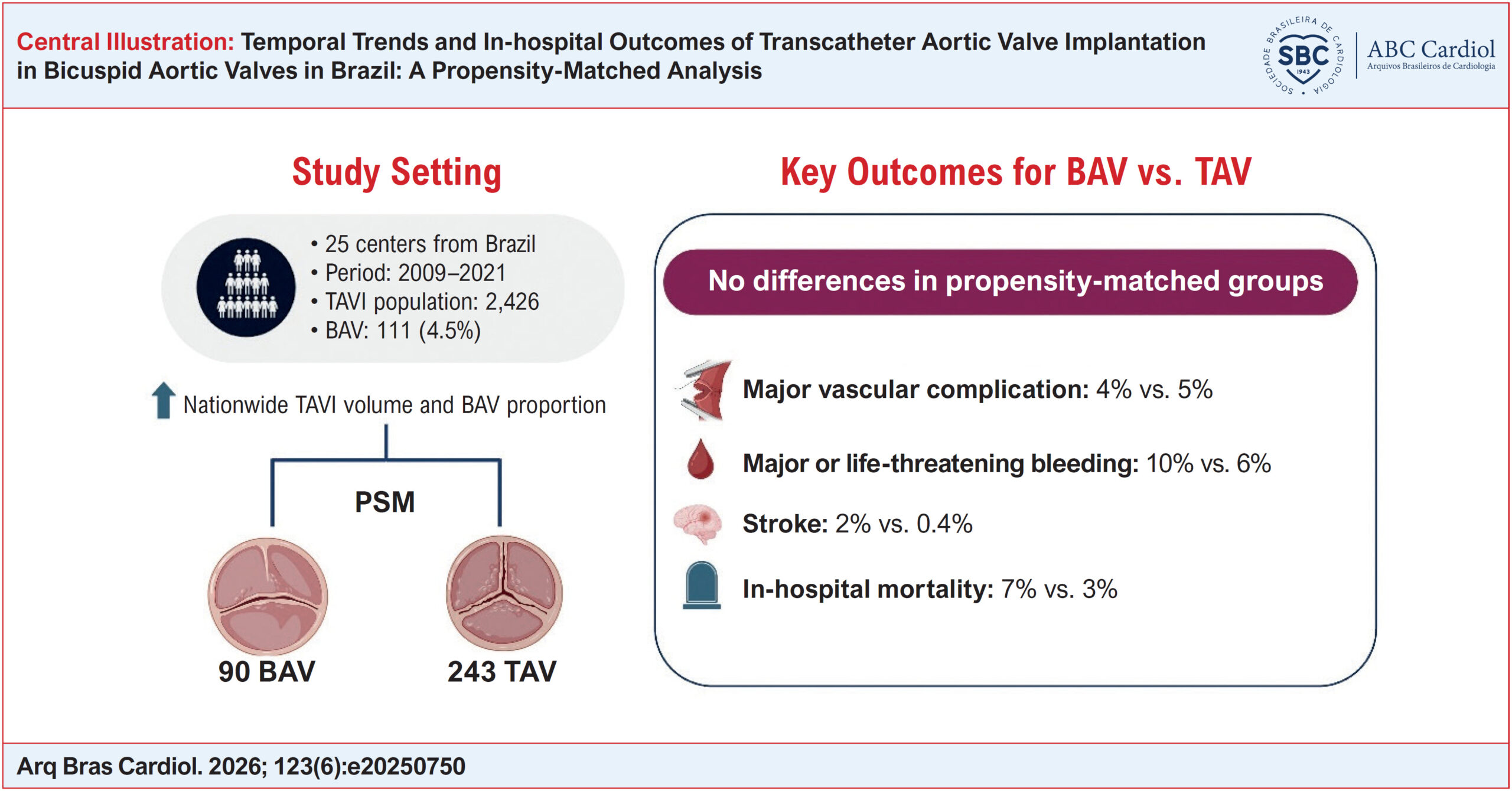
Among 2,426 patients from 25 centers, 111 had BAV. TAVI procedures increased over time in both groups. After one-to-three matching, 90 BAV and 243 TAV patients were included. No significant differences were observed in rates of major vascular complications (4% vs. 5%; p=0.99), major or life-threatening bleeding (10% vs. 6%; p=0.34), stroke (2% vs. 0.4%; p=0.37), or in-hospital mortality (7% vs. 3%; p=0.21). Over time, there was a significant reduction in in-hospital mortality (p<0.01) and major procedural complications (p<0.01 for vascular, bleeding, and stroke events), regardless of valve type.

Conclusion:

During the study period, annual TAVI procedures increased in both BAV and TAV patients, although the prevalence of BAV remained relatively low. No significant differences were observed in procedural or clinical outcomes between the propensity-matched groups. Both valve types showed reductions in procedural complications and in-hospital mortality over time.

  • Aortic Valve Stenosis
  • Bicuspid Aortic Valve Disease
  • Heart Valve Prosthesis Implantation
  • Transcatheter Aortic Valve Replacement
Read Full Article
Creative Commons Attribution (CC BY) Creative Commons license
10/08/2026 DOI: 10.36660/abc.20250750i
Figure 1
Letter to the Editor

Non-dihydropyridine Calcium Channel Blockers in Atrial Fibrillation with Mildly Reduced Ejection Fraction: Caution is Still Advised

Jefferson Luis Vieira et al. Carlos Eduardo Lucena Montenegro

Conclusion

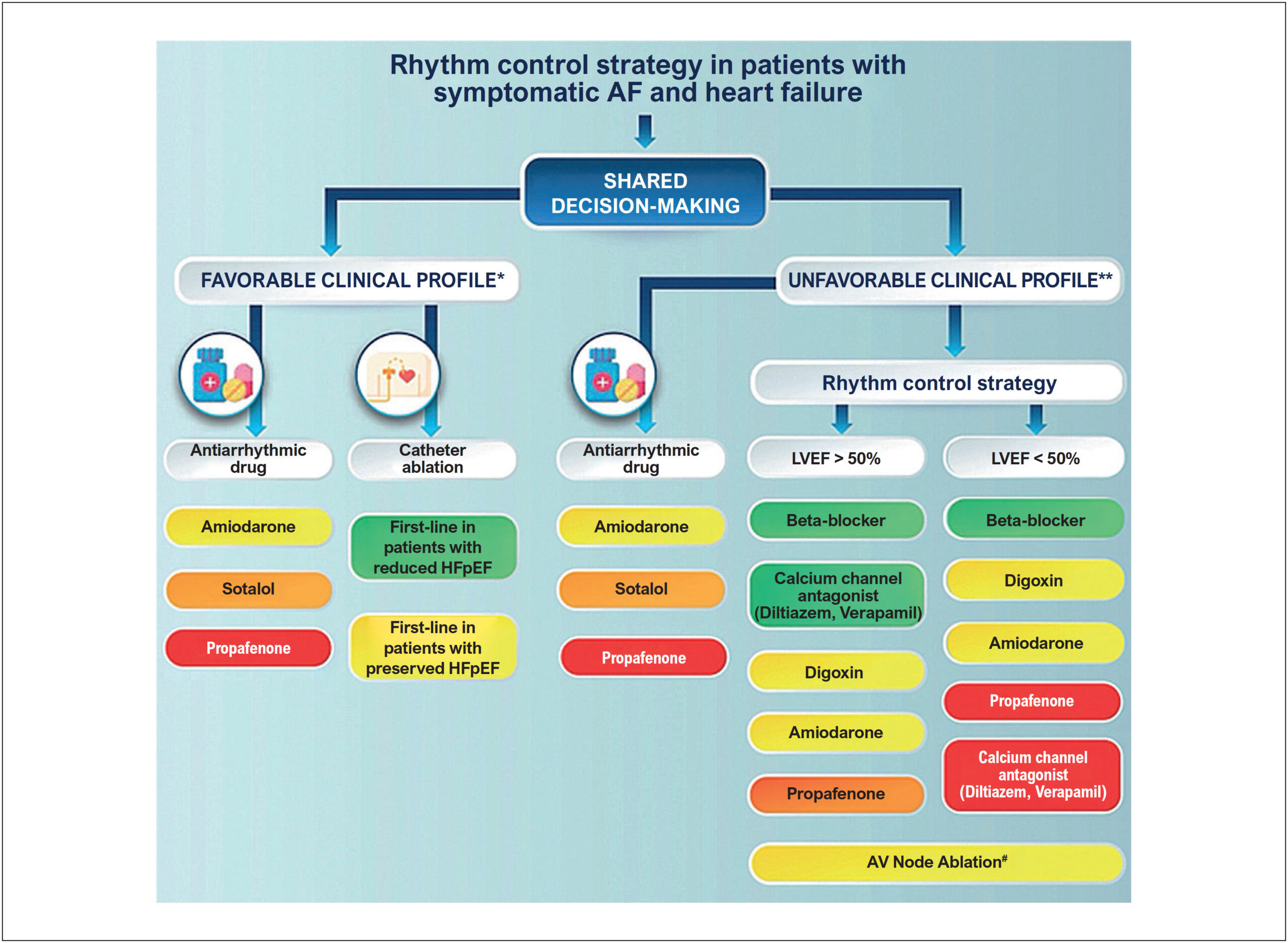
Given the lack of robust safety and benefit data for NDHP-CCBs in patients with HFmrEF and the existence of prognostically aligned alternatives, the current recommendation may be interpreted permissively and lead to potentially detrimental practices. Furthermore, the Second Universal Definition of Heart Failure provides additional conceptual support for this proposal by recognizing that patients with mildly reduced EF constitute a distinct biological phenotype and by discouraging therapeutic reasoning based solely on arbitrary LVEF thresholds. We advocate that the guideline explicitly reinforce the non-recommendation of verapamil/diltiazem when LVEF <50%, until specific studies in HFmrEF validate their safety and prognostic neutrality.

[…]

  • Atrial Fibrillation
  • calcium channel blockers
  • Heart Failure
Read Full Article
Creative Commons Attribution (CC BY) Creative Commons license
10/08/2026 DOI: 10.36660/abc.20260195i Views 1
Research Letter

Simulation in Cardiovascular Medicine Education: Innovation, Safety, and Competency-Based Training

André Luiz Lisboa Cordeiro et al. Tiago Veltri Ormastroni da Trindade Rinaldo Antunes Barros

The incorporation of simulators into cardiovascular medicine education represents one of the most significant transformations in contemporary medical training. In a scenario marked by high clinical complexity, rapid technological evolution, and time-dependent decision-making, simulation emerges as a pedagogical strategy capable of integrating theoretical knowledge, technical skills, and non-technical competencies in a structured and safe manner., However, despite its growing adoption, simulation-based education should be interpreted within the context of its current evidence base, which still presents important limitations, particularly regarding its direct impact on patient-centered outcomes.

Contemporary cardiology, characterized by rapid advances in pharmacological therapies, complex interventional procedures, and sophisticated cardiac imaging, requires professionals not only to acquire new skills but also to maintain continuous proficiency. In this context of rapid evolution and increasing demands for safety and effectiveness, simulation positions itself as an important ally. Nevertheless, its role should be understood as complementary rather than substitutive to real clinical exposure. These needs are reinforced by the newly established National Curricular Guidelines for the Undergraduate Medical Course (DCNs 2025), which explicitly advocate the provision of “protected, controlled, and technically adequate learning environments, such as skills laboratories and clinical simulation,” aiming at patient safety and the analysis of error as a pedagogical tool, while also emphasizing that clinical training in real healthcare environments must remain predominant throughout medical education. This vision aligns with the already consolidated experience of programs that train simulation multipliers, which are essential for the continuing education of health professionals within the SUS and for the training of students and residents.

[…]

  • Cardiology
  • Medical Education
  • Patient Safety
  • Professional Competence
  • Simulation Training
Read Full Article
Creative Commons Attribution (CC BY) Creative Commons license
10/08/2026 DOI: 10.36660/abc.20260233i Views 1
Editorial

Excellent In-Hospital Outcomes in Bicuspid TAVI. But What Comes Next?

Maria Cristina Meira Ferreira

Transcatheter aortic valve implantation (TAVI) has expanded rapidly over the last decade, driven by randomized trials, contemporary registries, and the progressive evolution of international guideline recommendations. In parallel, multicenter studies have increasingly demonstrated the use of TAVI in more complex and lower surgical risk populations, including patients with bicuspid anatomy. As accumulated experience increased and newer generations of transcatheter valves were incorporated into clinical practice, scenarios previously considered challenging began to be explored more frequently, including aortic stenosis associated with a bicuspid aortic valve.

However, questions remain regarding the extent to which evidence derived from tricuspid aortic stenosis can be directly extrapolated to patients with bicuspid anatomy. As highlighted by Hirji et al., bicuspid valve disease represents a fundamentally distinct condition from degenerative tricuspid stenosis, characterized by asymmetric calcification, elliptical annular geometry, and a high prevalence of associated aortopathy. These characteristics introduce challenges capable of affecting both immediate procedural success and long-term valve performance and durability.

[…]

  • Aortic Valve Stenosis
  • Bicuspid Aortic Valve Disease
  • Transcatheter Aortic Valve Replacement
Read Full Article
Creative Commons Attribution (CC BY) Creative Commons license
10/08/2026 DOI: 10.36660/abc.20260398i Views 1
Editorial

Mortality from Cardiomyopathies in Brazil

André Rodrigues Durães

Cardiomyopathies represent a heterogeneous group of heart muscle diseases that, although individually less prevalent than coronary artery disease, impose a substantial burden of morbidity and mortality on a global scale. Data from the Global Burden of Disease (GBD) 2021 estimate that cardiomyopathies were responsible for approximately 1.2 million deaths worldwide, with an age-standardized mortality rate of 14.3 per 100,000 inhabitants, and more than 28 million disability-adjusted life years (DALYs) lost annually., Despite therapeutic advances in recent decades, the epidemiological trajectory of these conditions remains marked by profound regional inequalities, both between countries on different continents and within the same national territory. It is in this context that the study by Silva et al. offers a timely and necessary contribution by analyzing the epidemiological profile, as well as the spatiotemporal evolution of mortality from cardiomyopathies in Brazil between 2001 and 2021.

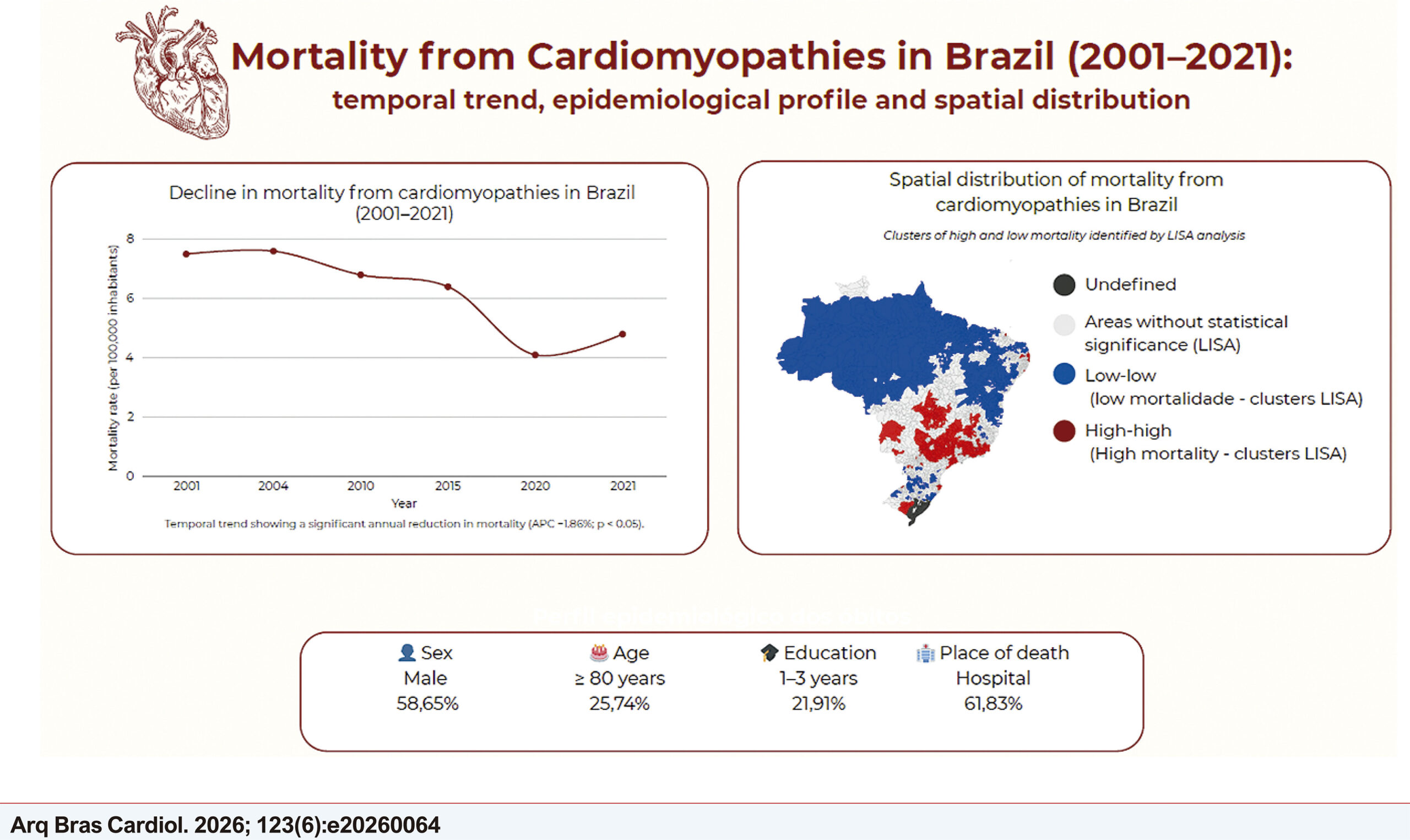
This is an important ecological epidemiological study that used data from the Mortality Information System (SIM) to examine more than 200,000 deaths from cardiomyopathies over a two-decade period. The average mortality rate was observed to be 6.66 per 100,000 inhabitants, reaching 7.64 per 100,000 in 2004 and falling to 4.15 per 100,000 in 2020. A significant annual reduction of 1.86% (p<0.05) was observed, and spatial analysis revealed clusters of high mortality, mainly in the Central-West, South, and Southeast regions.

[…]

  • Brazil
  • Cardiomyopathies
  • Mortality
Read Full Article
Creative Commons Attribution (CC BY) Creative Commons license
07/08/2026 DOI: 10.36660/abc.20260438i Views 3
Editorial

Prevalence in Evidence: Valvular Heart Diseases Dominating the Brazilian Scenario

Ana Teresa Timóteo

Valvular heart disease is a highly prevalent cardiovascular condition, estimated to affect more than 2% of the population, and is associated with increased mortality. However, most epidemiological studies are conducted in high-income countries, and we know that the characteristics vary according to the country and region of the world. In fact, degenerative valvular heart disease predominates in high-income countries, while rheumatic and infectious diseases are still very prevalent in lower-income countries. Socioeconomic conditions also have important implications for the diagnosis and treatment of this condition.

Data from the EURObservational Research Programme Valvular Heart Disease II (EORP-VHD II) Survey, with participants from 28 European countries and an average age of 71 years, reported aortic valve stenosis as the most frequent valvular disease, present in 41% of patients, followed at a distance by mitral regurgitation, aortic regurgitation, and mitral stenosis. Degenerative etiology was the most common, except for mitral stenosis, where rheumatic etiology predominated. This record reinforced the results of the initial EORP-VHD, conducted in 2001. The increase in aortic stenosis is likely a consequence of population aging, and the reduction in rheumatic mitral stenosis is a result of the decrease in rheumatic fever in Europe. Data recently published in the ATLAS of the European Society of Cardiology also highlight that valvular diseases continue to increase in prevalence and are responsible for thousands of deaths annually.

[…]

  • Brazil
  • Prevalence
  • Valvular heart disease
Read Full Article
Creative Commons Attribution (CC BY) Creative Commons license
03/08/2026 DOI: 10.36660/abc.20260464i Views 3
Normal Reference Values for Cardiovascular Magnetic Resonance: An Analytical–Comparative Review with Emphasis on the Brazilian Population
Original Article

Normal Reference Values for Cardiovascular Magnetic Resonance: An Analytical–Comparative Review with Emphasis on the Brazilian Population

Jorge A. Torreão et al. Isabela Bispo Santos da Silva Costa Antonildes N. Assunção-Jr Ilan Gottlieb … Leonardo Sara da Silva Tiago Senra Tiago Augusto Magalhães Marly Uellendahl Hugo Bizetto Zampa Gabriela Liberato Walther Yoshiharu Ishikawa Henrique Trad Marcelo Hadlich Otavio Coelho-Filho Roberto Sasdelli Neto Juliano Lara Fernandes Luiz Francisco Rodrigues de Ávila Ibraim Masciarelli F. Pinto Paulo R. Schvartzman Carlos E. Rochitte

ABSTRACT

Background:

Cardiovascular magnetic resonance (CMR) is the reference standard for morphofunctional cardiac assessment. In Brazil, the application of international normal reference values faces challenges related to population admixture, technical heterogeneity among centers, and the absence of national standardization, all of which may affect diagnostic accuracy.

Objectives:

To compare normal reference values for morphofunctional parameters obtained by CMR between a multicenter international review and a Brazilian publication, discussing concordance, methodological differences, and implications for Brazilian clinical practice.

Methods:

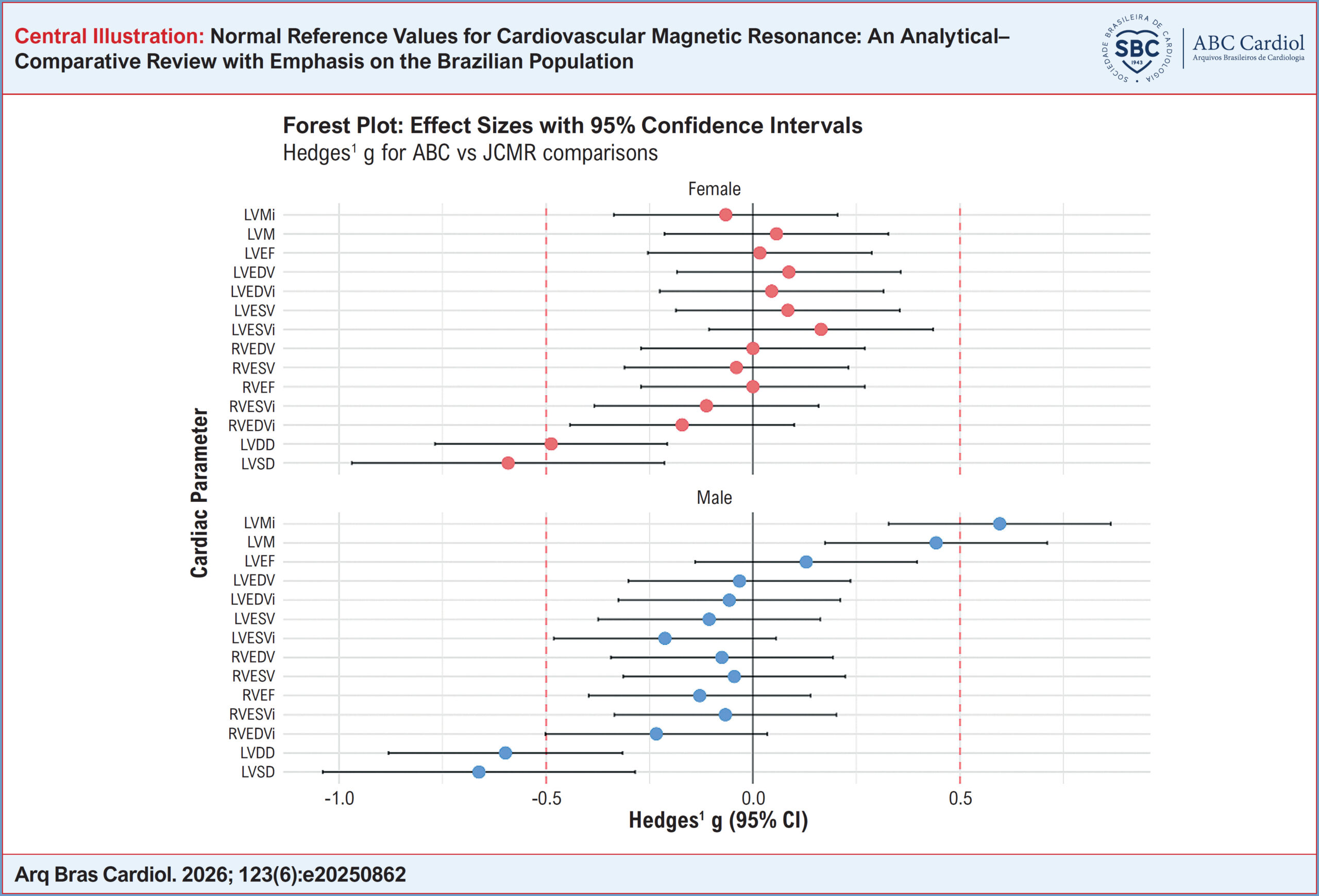
An analytical–comparative review was performed using summarized data from an international reference-value review and a Brazilian study. Means and standard deviations of key ventricular variables were compared, with assessment of 95% CI overlap, Welch’s t-test, and effect size (Hedges’ g). Standard-deviation–based cut-off points were proposed for grading abnormality.

Results:

Overall concordance between means was observed for most variables. Statistically significant differences occurred in a few parameters, mainly ventricular diameters and left ventricular mass, with small to moderate effect sizes. Discrepancies were largely attributed to methodological differences in measurement and indexation.

Conclusions:

International normal reference values may be used in Brazilian clinical practice, provided they are adjusted for body surface area and interpreted in light of local particularities. Standardization of protocols and national multicenter studies are needed to strengthen regional validation. Keywords: Normal Values, Cardiac Magnetic Resonance, Reference Interval.

  • Cardiovascular disease
  • Magnetic Resonance Imaging
  • Reference Values
Read Full Article
Creative Commons Attribution (CC BY) Creative Commons license
03/08/2026 DOI: 10.36660/abc.20250862i Views 1
Editorial

Sick Individuals and Sick Populations

Érique José Farias Peixoto de Miranda

The article by Lederman et al. discusses an epidemiological investigation of mortality from diseases of the circulatory, respiratory, and endocrine systems, as well as neoplasms, in the São Paulo Metropolitan Region (SPMR), analyzed using geoprocessing.

It is noteworthy that the study combined a database of over 1.3 million hospital records from a tertiary hospital with state mortality records through deterministic linkage. In other words, identical variables from the same patient present in the different databases were used to combine them, allowing for the tracking of long-term outcomes of patients frequently lost to care after hospital discharge.

[…]

  • Chronic Disease
  • Epidemiology
  • geographic information systems
  • Mortality
Read Full Article
Creative Commons Attribution (CC BY) Creative Commons license
03/08/2026 DOI: 10.36660/abc.20260436i Views 2
Treatment with Capsinoids Promotes Impaired Cardiomyocyte Contractility in Obesity without Positively Modulating Metabolic Parameters
Original Article

Treatment with Capsinoids Promotes Impaired Cardiomyocyte Contractility in Obesity without Positively Modulating Metabolic Parameters

Kiany Miranda et al. Késsia Cristina Carvalho Santos Janete Corrêa Cardoso Lucas Furtado Domingos … Fabiane Merigueti Nunes Luisa Martins Simmer Daniel Sesana Silva Marina Politi Okoshi Danilo Sales Bocalini Ana Paula Lima-Leopoldo André Soares Leopoldo

Abstract

Background:

Capsinoids (Cap) are bioactive compounds with thermogenic properties capable of promoting physiological changes and aiding digestion, potentially influencing fat loss in obesity. However, their effects on cardiac tissue remain unclear.

Objective:

This study investigated the effects of chronic Cap administration on cardiac contractility and morphology in obese (Ob) rats induced by a saturated high-fat diet (HFD).

Methods:

Male Wistar rats were assigned to standard diet (SD) or HFD groups for 19 weeks. After this period, animals were redistributed into Control (C), Obese (Ob), and Obese supplemented with capsinoids (ObCap). The ObCap group received Cap via orogastric gavage (10 mg/kg). Nutritional assessments, dietary profile, histological analyses, comorbidities, and cardiac evaluations were performed. A significance level of 5% was adopted for all tests.

Results:

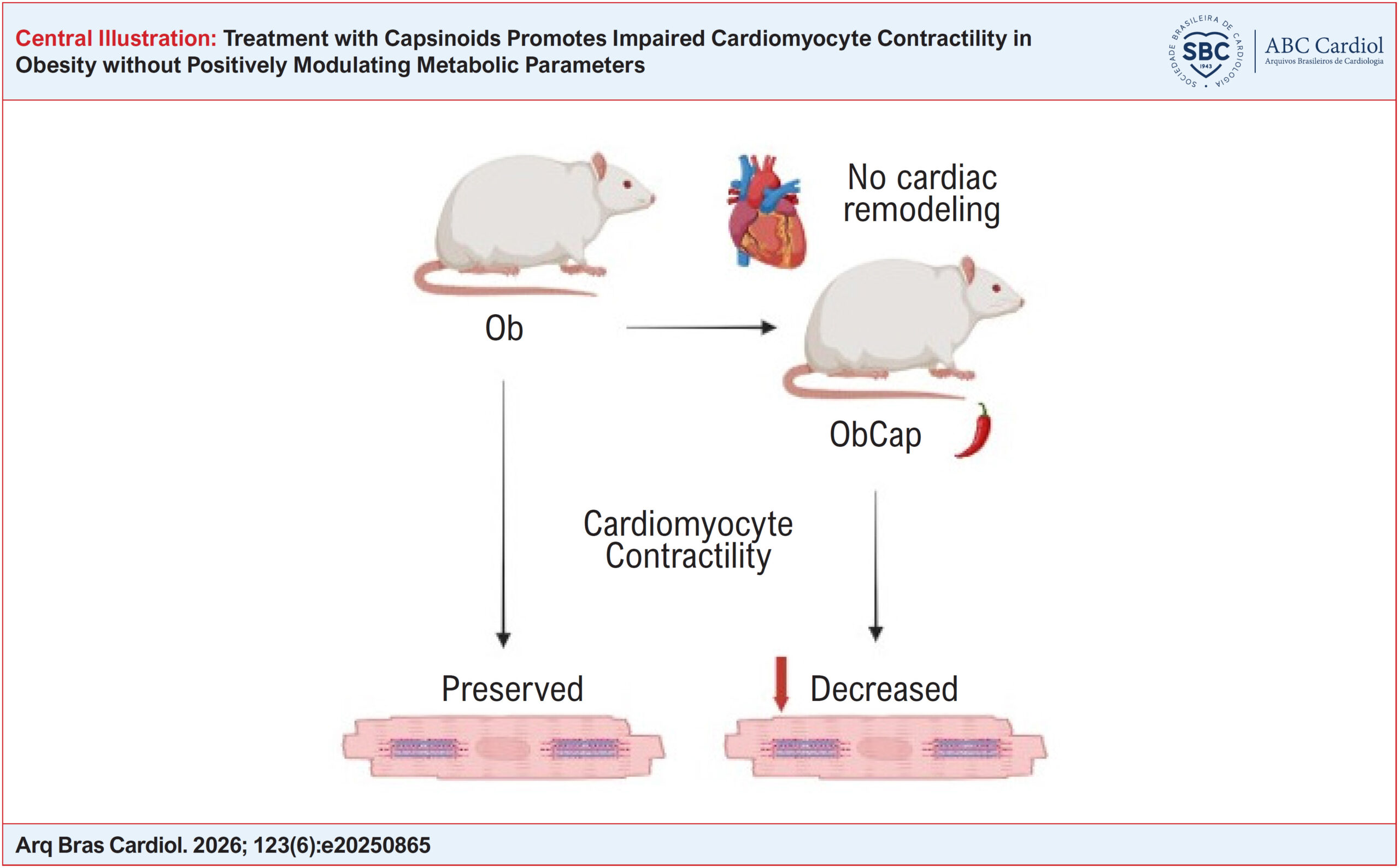
Fat deposits and total adiposity were higher in Ob animals compared with the C group, with no differences between Ob and ObCap. Metabolic, hormonal, and lipid alterations were observed between Ob and ObCap. No differences in cardiac morphometry were detected among groups. The ObCap group exhibited reduced fractional shortening compared with Ob. Regarding shortening time, Ob animals showed a decrease compared with C, whereas ObCap showed an increase compared with Ob.

Conclusion:

Treatment with Cap did not prevent excessive fat accumulation nor improve metabolic parameters in obesity. Moreover, it impaired cardiomyocyte contractility.

  • Heart
  • High-Fat Diet
  • Obesity
Read Full Article
Creative Commons Attribution (CC BY) Creative Commons license
27/07/2026 DOI: 10.36660/abc.20250865i
Spatiotemporal Analysis of Mortality from Cardiomyopathies in Brazil between 2001 and 2021
Original Article

Spatiotemporal Analysis of Mortality from Cardiomyopathies in Brazil between 2001 and 2021

Luiz Fernando Kubrusly et al. Ana Clara Abdo Lopes Fernanda Ritt de Souza Gustavo Ferrucio Dieter … Laura Nadolny Leonardo Moreira Dias Letícia Moreira Dias Luis Gustavo Machado Farias Roberto Oliveira Basso Vitória Naomi Okimura

Abstract

Background

Brazil presents regional variations in mortality from cardiomyopathies, influenced by demographic characteristics, socioeconomic inequalities, and differences in access to health services. Between 2001 and 2021, 272,448 deaths from the disease were recorded in the country.

Objective

To analyze, at the national level, the epidemiological profile and the spatiotemporal distribution of mortality from cardiomyopathies in Brazil, from 2001 to 2021.

Methods

Epidemiological study based on secondary data from the Mortality Information System (SIM/DATASUS) and population estimates from IBGE. Crude mortality rates were calculated per municipality. Temporal analysis was performed using Joinpoint, estimating the annual percentage change (APC). Spatial analysis used GeoDa, with Bayesian smoothing and evaluation of spatial autocorrelation using the Global Moran’s I and LISA indices. Statistical significance was set at p < 0.05.

Results

There were 272,448 deaths due to cardiomyopathies, predominantly in men (58.65%), individuals aged 80 or older (25.74%), white individuals (52.18%), married individuals (36.77%), and those with 1 to 3 years of completed schooling (21.91%). The average mortality rate was 6.66 per 100,000 inhabitants, reaching 7.64 per 100,000 in 2004 and falling to 4.15 per 100,000 in 2020. A significant annual reduction of 1.86% was observed (p < 0.05). Spatial analysis revealed clusters of high mortality, mainly in the Midwest, South, and Southeast regions, with Corumbá de Goiás standing out (49.34/100,000).

Conclusion

There was a significant reduction in mortality from cardiomyopathies, despite the persistence of critical areas that require targeted strategies for surveillance, early diagnosis, and appropriate management.

  • Cardiomyopathies
  • Epidemiology
  • Mortality
  • Spatio-Temporal Analysis
Read Full Article
Creative Commons Attribution (CC BY) Creative Commons license
27/07/2026 DOI: 10.36660/abc.20260064i Views 3
Letter to the Editor

Reply to the Letter to the Editor: "Should Resistance Training Also Be Considered a Mandatory Component?"

Cibele Isaac Saad Rodrigues et al. Claudia Lucia de Moraes Forjaz Luiz Aparecido Bortolotto Wilson Nadruz Andréa A. Brandão

Resistance training (RT) is undoubtedly an essential component of a comprehensive exercise program for improving and maintaining physical fitness, global health, and quality of life. Aerobic, resistance, and stretching exercises performed together on a regular basis promote significant physiological, motor, cognitive, and emotional benefits and are recommended for adults and older adults.,

Although both aerobic training (AT) and RT have impacts on different health dimensions, there is high quality, robust evidence that RT is the most efficient mode of training for improving muscle structure and function, and it is mandatory for prevention and treatment of musculoskeletal diseases, making it particularly important for older adults.– On the other hand, evidence about the effects of RT on cardiovascular parameters and diseases is more recent and less robust.

[…]

  • Endurance Training
  • Hypertension
  • Physical Conditioning Human
  • Practice Guideline
  • Resistance Training
Read Full Article
Creative Commons Attribution (CC BY) Creative Commons license
27/07/2026 DOI: 10.36660/abc.20260362i Views 1
Spatial Distribution of Patients in the Metropolitan Area of São Paulo Attending a Public Tertiary Cardiovascular Referral Hospital According to Diseases of the Circulatory, Respiratory, Endocrine, and Neoplastic Systems
Original Article

Spatial Distribution of Patients in the Metropolitan Area of São Paulo Attending a Public Tertiary Cardiovascular Referral Hospital According to Diseases of the Circulatory, Respiratory, Endocrine, and Neoplastic Systems

Carlos Lederman et al. Sara Lopes de Moraes Antonio Carlos Pedroso de Lima Lucia Pereira Barroso … Lilian Cristina Correia Morais Magaly de Losso Perdigão Rosa Maria Vieira de Freitas Monica La Porte Teixeira Bernadette Cunha Waldvogel Marco Antonio Gutierrez Ligia Vizeu Barrozo Alfredo José Mansur

Abstract

Background

The spatial distribution of patients according to clinical characteristics, using geoprocessing techniques, enables the identification of disease clusters within a studied population. This approach supports the development of targeted interventions directed toward specific risk groups.

Objectives

To investigate geographical clusters of diseases of interest among patients attending a public tertiary hospital and to characterize their spatial distribution across the metropolitan area of São Paulo.

Methods

Based on the results of a previous study, two disease groups were defined: one representing the main diseases identified at the first hospital visit and another representing the main underlying causes of death. A detailed description is provided in the . Disease density was calculated by dividing the frequency of cases within each disease group by the population of each city/district and multiplying the result by 100,000 to enhance data visualization. Spatial data were subsequently analyzed and mapped to illustrate the spatial patterns and relationships identified in the study.

Results

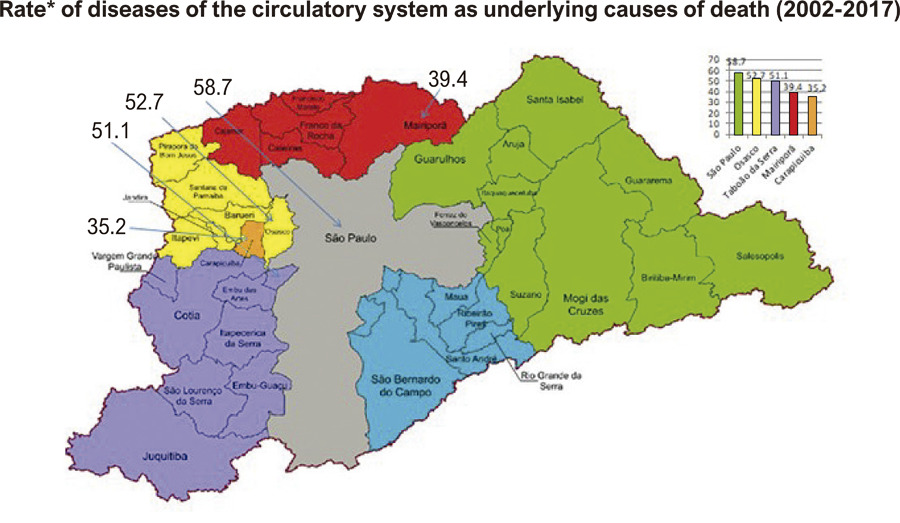
Osasco and Taboão da Serra showed the highest density of underlying causes of death related to diseases of the circulatory system. Additionally, 12 cities/districts located at the borders of the study area showed no recorded neoplastic diseases.

Conclusions

Vargem Grande Paulista showed the highest case density for neoplasms as underlying causes of death and comorbidities. Notably, Embu das Artes, a city recognized for its extensive green areas, showed the highest density of diseases of the respiratory system.

  • cause of death
  • Comorbidity
  • International Classification of Diseases
  • Mortality
  • Noncommunicable Diseases
Read Full Article
Creative Commons Attribution (CC BY) Creative Commons license
24/07/2026 DOI: 10.36660/abc.20260178i Views 1
Impact of Catheter Ablation on LVEF in Patients with Atrial Fibrillation and Heart Failure with Reduced Ejection Fraction: A Systematic Review
Review Article

Impact of Catheter Ablation on LVEF in Patients with Atrial Fibrillation and Heart Failure with Reduced Ejection Fraction: A Systematic Review

Antonio Maria Zacarias Araújo Monteiro et al. Maria Giovanna da Cruz Tocantins Jéssica Batista Souza Renan de Jesus da Silva Albuquerque … João Vitor Ferreira de Oliveira Roni Oliveira Pinheiro Ster Marques de Lima Silva

Abstract

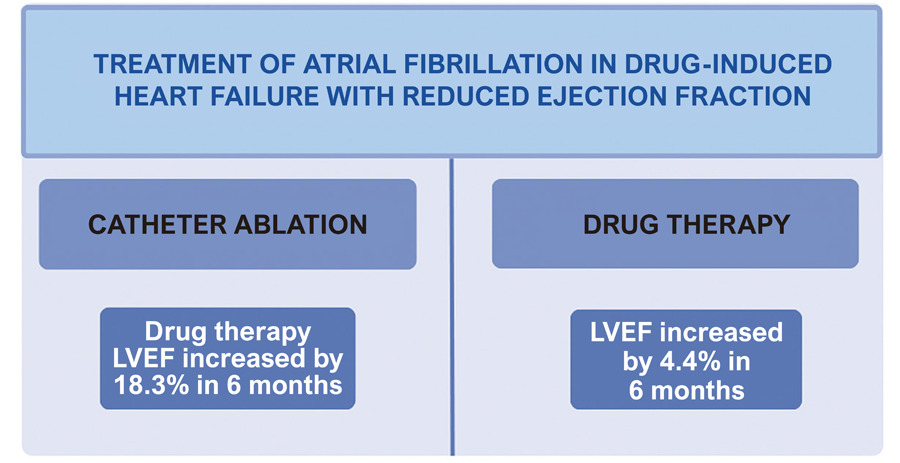
Atrial fibrillation (AF) is a condition that frequently affects patients with heart failure with reduced ejection fraction (HFrEF) and is associated with worsening left ventricular ejection fraction (LVEF) and unfavorable clinical outcomes. Catheter ablation has been proposed as a strategy to restore sinus rhythm; however, its effects on LVEF remain heterogeneous in the literature. To evaluate the impact of catheter ablation, compared with medical therapy, on LVEF in patients with AF and HFrEF. A systematic review of randomized clinical trials was conducted in accordance with the PRISMA guidelines. The primary outcome was improvement in LVEF, while secondary outcomes included cardiovascular mortality, all-cause mortality, and hospitalizations due to heart failure. Other exploratory outcomes were also considered. The included randomized clinical trials demonstrated improvement in LVEF among patients undergoing catheter ablation compared with those receiving medical therapy. In the CAMERA-MRI study, an absolute increase of 18.3% in LVEF was observed after six months. In the CASTLE-AF trial, catheter ablation was also associated with a lower incidence of cardiovascular mortality and heart failure hospitalizations. In the absence of a meta-analysis, no quantitative synthesis of the effects was performed. The available evidence from individual randomized trials suggests that catheter ablation may be associated with improvement in LVEF and more favorable clinical outcomes in patients with AF and HFrEF. However, given the lack of quantitative synthesis, these findings should be interpreted with caution.

  • Atrial Fibrillation
  • Catheter Ablation
  • Drug Therapy
  • Heart Failure
Read Full Article
Creative Commons Attribution (CC BY) Creative Commons license
24/07/2026 DOI: 10.36660/abc.20260117i Views 1
Epidemiology and Mortality of Valvular Heart Disease in Brazilian Adults: Findings from the ELSA-Brasil Cohort
Original Article

Epidemiology and Mortality of Valvular Heart Disease in Brazilian Adults: Findings from the ELSA-Brasil Cohort

Guilia Bevilacqua Schmitz et al. Eduardo Gatti Pianca Maria Do Carmo Pereira Nunes Bruce Bartholow Duncan … Murilo Foppa Angela Barreto Santiago Santos

Abstract

Background

Most of the current evidence on valvular heart disease (VHD) comes from high-income countries. Access to treatment and the impact of VHD on quality of life may vary substantially across nations, largely due to socioeconomic differences.

Objective

This study aimed to estimate the burden of VHD and its association with mortality in a middle-income country.

Methods

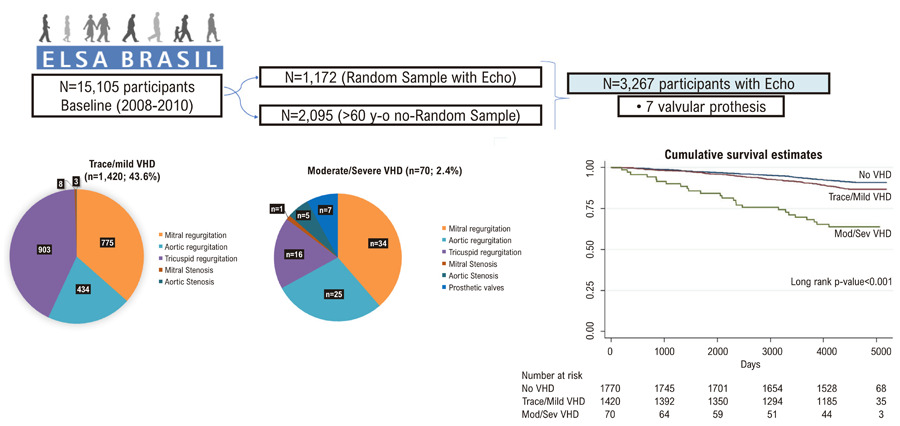
We included participants from the ELSA-Brasil cohort who underwent transthoracic echocardiography at baseline (3,267 participants; 1,539 males; mean age 60.6 ± 8.8 years) across six Brazilian states. Participants were categorized into three groups—no VHD, trace/mild VHD, and moderate/severe VHD—and their characteristics and associated factors were analyzed. P-values < 0.05 were considered statistically significant.

Results

Among all participants, 2.4% had moderate/severe VHD (including 7 participants with prosthetic valves), and 43.6% had trace/mild VHD. The most prevalent moderate/severe VHD was mitral regurgitation, followed by aortic and tricuspid regurgitation, with 56 participants (86%) presenting isolated valvular regurgitation. Moderate/severe VHD was more common in older individuals and was associated with a higher prevalence of most cardiovascular comorbidities, but with lower obesity rates. It was also associated with greater cardiac remodeling and reduced systolic function, with phenotypic variations depending on the affected valve. Moderate/severe VHD was linked to increased 10-year mortality (HR: 3.7; 95% CI [2.17–6.31]), independent of age, sex, and hypertension.

Conclusion

VHD is common among community-dwelling adults in this middle-income country and increases with age. Participants with moderate/severe VHD exhibited a greater burden of comorbidities, more pronounced cardiac remodeling, worse systolic function, and substantially reduced long-term survival.

  • Adult
  • Epidemiology
  • Heart Valve Diseases
  • Mortality
Read Full Article
Creative Commons Attribution (CC BY) Creative Commons license
24/07/2026 DOI: 10.36660/abc.20260060i Views 2
Assessment of Coronary Sinus Flow and Dimensions by Transthoracic Echocardiography in Patients with Atrioventricular Nodal Reentrant Tachycardia
Original Article

Assessment of Coronary Sinus Flow and Dimensions by Transthoracic Echocardiography in Patients with Atrioventricular Nodal Reentrant Tachycardia

Ali Duygu et al. Alkame Akgümüş Ahmet Balun Fahri Er

Abstract

Background:

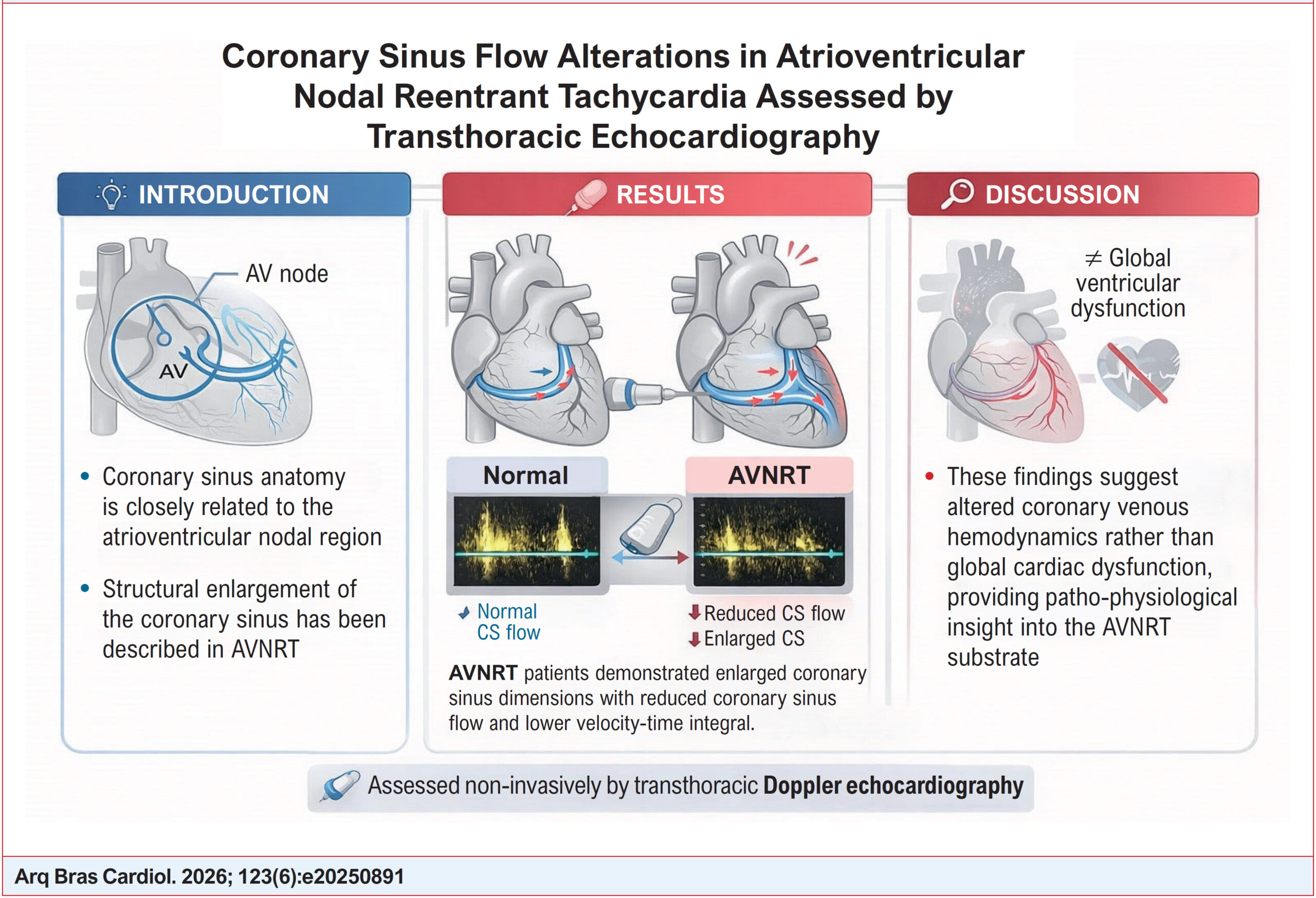
The coronary sinus (CS) plays a pivotal role in cardiac venous drainage and is anatomically adjacent to the atrioventricular nodal region. Although structural enlargement of the CS has been described in patients with atrioventricular nodal reentrant tachycardia (AVNRT), coronary sinus flow (CSF) assessed by transthoracic echocardiography (TTE) has not previously been investigated in this population.

Objective:

To evaluate the relationship between AVNRT and CSF.

Methods:

This retrospective single-center study included 35 patients with AVNRT who underwent successful slow-pathway ablation and 34 age- and sex-matched healthy controls. All participants underwent comprehensive transthoracic echocardiography. CS ostial diameter, CS diameter, and CSF were measured using pulsed-wave Doppler echocardiography. CSF was calculated using standard geometric and Doppler-derived parameters. A p-value <0.05 was considered statistically significant.

Results:

Global left and right ventricular systolic and diastolic function parameters were similar between groups. Patients with AVNRT exhibited significantly larger CS ostial and CS diameters compared with controls (both p<0.001). Despite this enlargement, CSF was significantly reduced in the AVNRT group (460.8 ± 83.3 vs. 523.8 ± 90.1 mL/min, p=0.004), accompanied by a lower CS velocity–time integral. Notably, CSF indexed to left ventricular mass also remained significantly lower in AVNRT patients, indicating that reduced flow was independent of myocardial mass.

Conclusion:

Patients with AVNRT demonstrate a distinct coronary sinus hemodynamic profile characterized by CS enlargement and reduced CSF as assessed by transthoracic echocardiography. These findings suggest altered coronary venous hemodynamics in AVNRT and provide novel pathophysiological insights using a non-invasive imaging modality.

  • Atrioventricular Nodal Reentry Tachycardia
  • Coronary sinus
  • Doppler Echocardiography
Read Full Article
Creative Commons Attribution (CC BY) Creative Commons license
24/07/2026 DOI: 10.36660/abc.20250891i Views 1
Prognostic Value of the Hata Angiographic Classification for Long-Term Outcomes in Takayasu Arteritis: A Single-Center, Retrospective Study
Original Article

Prognostic Value of the Hata Angiographic Classification for Long-Term Outcomes in Takayasu Arteritis: A Single-Center, Retrospective Study

Anisio Uchoa Leite Santana et al. Samuel Katsuyuki Shinjo

Abstract

Background

The prognostic utility of the Hata angiographic classification for long-term outcomes in Takayasu arteritis (TAK) remains unclear.

Objectives

To evaluate the prognostic value of the Hata classification for predicting major adverse cardiovascular events (MACE) and the need for vascular interventions in patients with TAK.

Methods

This single-center, retrospective cohort study included patients diagnosed with TAK between 2000 and 2025. Multivariate logistic regression analyses were performed to identify independent predictors, with statistical significance defined as p < 0.05.

Results

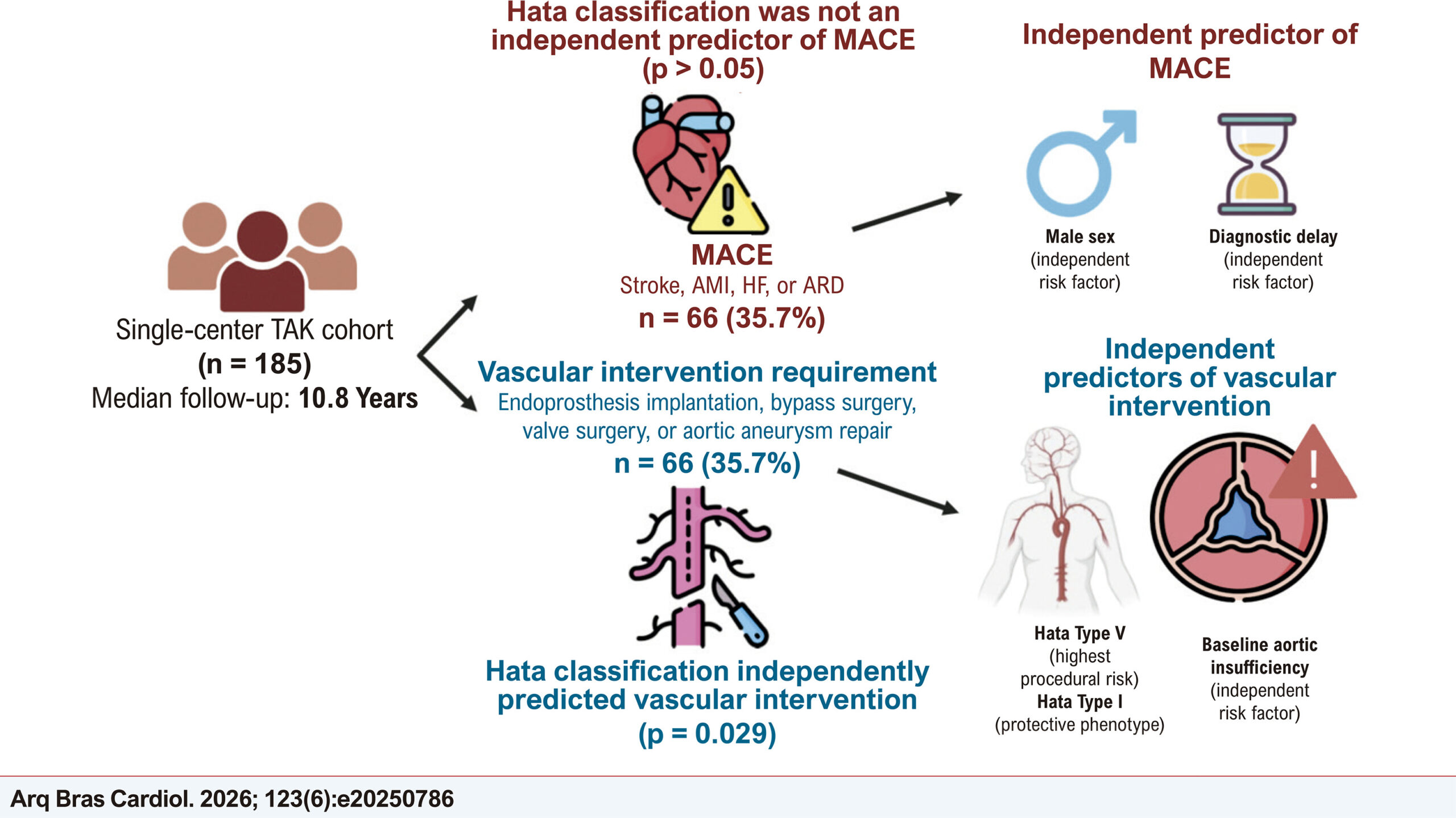
Of 203 patients initially identified, 18 were excluded. The final cohort included 185 patients, of whom 80.0% were women, with a median age at diagnosis of 29 years. Type V was the predominant angiographic pattern (64.9%). During a median follow-up of 10.8 years, MACE occurred in 35.7% of patients, while 37.3% required vascular intervention. The Hata classification was not associated with MACE occurrence. Independent predictors of MACE included female sex, which was protective (odds ratio [OR], 0.38; 95% CI, 0.17-0.86; p = 0.021), and longer symptom onset-to-diagnosis time, which increased risk (OR, 1.10; 95% CI, 1.03-1.18; p = 0.006). In contrast, the Hata classification independently predicted the need for vascular intervention. Hata Type I showed a strong protective association compared with Type V (OR, 0.10; 95% CI, 0.01-0.53; p = 0.029). Baseline aortic insufficiency was also independently associated with a higher likelihood of intervention (OR, 2.54; 95% CI, 1.18-5.60; p = 0.018) ().

Conclusions

The Hata classification appears to be a robust predictor of vascular intervention but not MACE in TAK. Greater anatomical disease extension (Type V) and baseline aortic insufficiency were associated with increased procedural risk, whereas MACE risk was associated with diagnostic delay and male sex. The observed long-term dissociation between high rates of clinical remission (92.4%) and continued disease progression underscores the importance of imaging-based surveillance and highlights the need for prospective multicenter studies to validate these findings.

  • Prognosis
  • Systemic Vasculitis
  • Takayasu Arteritis
Read Full Article
Creative Commons Attribution (CC BY) Creative Commons license
20/07/2026 DOI: 10.36660/abc.20250786i Views 1

How to cite this article

EndNote RIS

Electronic Document Format (Vancouver)

Correia M. Reference Values in Cardiovascular Magnetic Resonance Imaging: Between Local Validation and Global Harmonization. Arquivos Brasileiros de Cardiologia 2026;123(6):e20260458.

Electronic Document Format (ABNT)

Correia, Miguel. Reference Values in Cardiovascular Magnetic Resonance Imaging: Between Local Validation and Global Harmonization. Arquivos Brasileiros de Cardiologia, v. 123, n. 6, e20260458, Aug. 2026.

Electronic Document Format (APA)

Correia, M. (2026). Reference Values in Cardiovascular Magnetic Resonance Imaging: Between Local Validation and Global Harmonization. Arquivos Brasileiros de Cardiologia, 123(6), e20260458.

Electronic Document Format (ISO)

Correia, Miguel. Reference Values in Cardiovascular Magnetic Resonance Imaging: Between Local Validation and Global Harmonization. Arquivos Brasileiros de Cardiologia [online]. 2026, vol. 123, n. 6, [cited 2026-10-15], e20260458. Available from: <https://journals.cardiol.br/en/article/reference-values-in-cardiovascular-magnetic-resonance-imaging-between-local-validation-and-global-harmonization/>. ISSN 0066-782X

EndNote RIS

Electronic Document Format (Vancouver)

Calomeni P, Bernardi F, Brito Jr FS, Abizaid MS, Barbosa FR, Lemos PA, Feres F, et al. Temporal Trends and In-hospital Outcomes of Transcatheter Aortic Valve Implantation in Bicuspid Aortic Valves in Brazil: A Propensity-Matched Analysis. Arquivos Brasileiros de Cardiologia 2026;123(6):e20250750.

Electronic Document Format (ABNT)

Calomeni, Pedro; Bernardi, Fernando; Brito Jr, Fábio Sandoli de; Abizaid, Marcella Sousa; Barbosa, Francisco Ribeiro; Lemos, Pedro Alves; Feres, Fausto; Siqueira, Dimytri Alexandre; Costa, Ricardo; Sarmento-Leite, Rogério; Mangione, Fernanda; Mangione, José Armando; Thiago, Luiz Eduardo Koenig São; Lima, Valter Correia de; Oliveira, Adriano Dias Dourado; Marino, Marcos Antônio; Cardoso, Carlos José Francisco; Caramori, Paulo Ricardo Avancini; Tumelero, Rogério Tadeu; Portela, Antenor Lages Fortes; Prudente, Maurício Lopes; Henriques, Leônidas Alvarenga; Souza, Fábio Solano de Freitas; Bezerra, Cristiano Guedes; Prado Junior, Guy Fernandes de Almeida; Freitas, Leandro Zacarias Figueiredo de; Nogueira, Ederlon Ferreira; Meireles, George César Ximenes; Pope, Renato Bastos; Guérios, Ênio Eduardo; Andrade, Pedro Beraldo de; Santos, Luciano de Moura; Lopes, Augusto Celso; Esteves, Vinicius Borges Cardozo; Zukowski, Cleverson; Abizaid, Alexandre; Ribeiro, Henrique Barbosa. Temporal Trends and In-hospital Outcomes of Transcatheter Aortic Valve Implantation in Bicuspid Aortic Valves in Brazil: A Propensity-Matched Analysis. Arquivos Brasileiros de Cardiologia, v. 123, n. 6, e20250750, Aug. 2026.

Electronic Document Format (APA)

Calomeni, P., Bernardi, F., Brito Jr, F. S. , Abizaid, M. S., Barbosa, F. R., Lemos, P. A., Feres, F., Siqueira, D. A., Costa, R., Sarmento-Leite, R., Mangione, F., Mangione, J. A., Thiago, L. E. K. S., Lima, V. C. , Oliveira, A. D. D., Marino, M. A., Cardoso, C. J. F., Caramori, P. R. A., Tumelero, R. T., Portela, A. L. F., Prudente, M. L., Henriques, L. A., Souza, F. S. F., Bezerra, C. G., Prado Junior, G. F. A., Freitas, L. Z. F. , Nogueira, E. F., Meireles, G. C. X., Pope, R. B., Guérios, E., Andrade, P. B. , Santos, L. M., Lopes, A. C., Esteves, V. B. C., Zukowski, C., Abizaid, A., & Ribeiro, H. B. (2026). Temporal Trends and In-hospital Outcomes of Transcatheter Aortic Valve Implantation in Bicuspid Aortic Valves in Brazil: A Propensity-Matched Analysis. Arquivos Brasileiros de Cardiologia, 123(6), e20250750.

Electronic Document Format (ISO)

Calomeni, Pedro and Bernardi, Fernando and Brito Jr, Fábio Sandoli de and Abizaid, Marcella Sousa and Barbosa, Francisco Ribeiro and Lemos, Pedro Alves and Feres, Fausto and Siqueira, Dimytri Alexandre and Costa, Ricardo and Sarmento-Leite, Rogério and Mangione, Fernanda and Mangione, José Armando and Thiago, Luiz Eduardo Koenig São and Lima, Valter Correia de and Oliveira, Adriano Dias Dourado and Marino, Marcos Antônio and Cardoso, Carlos José Francisco and Caramori, Paulo Ricardo Avancini and Tumelero, Rogério Tadeu and Portela, Antenor Lages Fortes and Prudente, Maurício Lopes and Henriques, Leônidas Alvarenga and Souza, Fábio Solano de Freitas and Bezerra, Cristiano Guedes and Prado Junior, Guy Fernandes de Almeida and Freitas, Leandro Zacarias Figueiredo de and Nogueira, Ederlon Ferreira and Meireles, George César Ximenes and Pope, Renato Bastos and Guérios, Ênio Eduardo and Andrade, Pedro Beraldo de and Santos, Luciano de Moura and Lopes, Augusto Celso and Esteves, Vinicius Borges Cardozo and Zukowski, Cleverson and Abizaid, Alexandre and Ribeiro, Henrique Barbosa. Temporal Trends and In-hospital Outcomes of Transcatheter Aortic Valve Implantation in Bicuspid Aortic Valves in Brazil: A Propensity-Matched Analysis. Arquivos Brasileiros de Cardiologia [online]. 2026, vol. 123, n. 6, [cited 2026-10-15], e20250750. Available from: <https://journals.cardiol.br/en/article/temporal-trends-and-in-hospital-outcomes-of-transcatheter-aortic-valve-implantation-in-bicuspid-aortic-valves-in-brazil-a-propensity-matched-analysis/>. ISSN 0066-782X

EndNote RIS

Electronic Document Format (Vancouver)

Vieira JL, Montenegro CEL. Non-dihydropyridine Calcium Channel Blockers in Atrial Fibrillation with Mildly Reduced Ejection Fraction: Caution is Still Advised. Arquivos Brasileiros de Cardiologia 2026;123(6):e20260195.

Electronic Document Format (ABNT)

Vieira, Jefferson Luis; Montenegro, Carlos Eduardo Lucena. Non-dihydropyridine Calcium Channel Blockers in Atrial Fibrillation with Mildly Reduced Ejection Fraction: Caution is Still Advised. Arquivos Brasileiros de Cardiologia, v. 123, n. 6, e20260195, Aug. 2026.

Electronic Document Format (APA)

Vieira, J. L., & Montenegro, C. E. L. (2026). Non-dihydropyridine Calcium Channel Blockers in Atrial Fibrillation with Mildly Reduced Ejection Fraction: Caution is Still Advised. Arquivos Brasileiros de Cardiologia, 123(6), e20260195.

Electronic Document Format (ISO)

Vieira, Jefferson Luis and Montenegro, Carlos Eduardo Lucena. Non-dihydropyridine Calcium Channel Blockers in Atrial Fibrillation with Mildly Reduced Ejection Fraction: Caution is Still Advised. Arquivos Brasileiros de Cardiologia [online]. 2026, vol. 123, n. 6, [cited 2026-10-15], e20260195. Available from: <https://journals.cardiol.br/en/article/non-dihydropyridine-calcium-channel-blockers-in-atrial-fibrillation-with-mildly-reduced-ejection-fraction-caution-is-still-advised/>. ISSN 0066-782X

EndNote RIS

Electronic Document Format (Vancouver)

Cordeiro ALL, Trindade TVO, Barros RA. Simulation in Cardiovascular Medicine Education: Innovation, Safety, and Competency-Based Training. Arquivos Brasileiros de Cardiologia 2026;123(6):e20260233.

Electronic Document Format (ABNT)

Cordeiro, André Luiz Lisboa; Trindade, Tiago Veltri Ormastroni da; Barros, Rinaldo Antunes. Simulation in Cardiovascular Medicine Education: Innovation, Safety, and Competency-Based Training. Arquivos Brasileiros de Cardiologia, v. 123, n. 6, e20260233, Aug. 2026.

Electronic Document Format (APA)

Cordeiro, A. L. L., Trindade, T. V. O. , & Barros, R. A. (2026). Simulation in Cardiovascular Medicine Education: Innovation, Safety, and Competency-Based Training. Arquivos Brasileiros de Cardiologia, 123(6), e20260233.

Electronic Document Format (ISO)

Cordeiro, André Luiz Lisboa and Trindade, Tiago Veltri Ormastroni da and Barros, Rinaldo Antunes. Simulation in Cardiovascular Medicine Education: Innovation, Safety, and Competency-Based Training. Arquivos Brasileiros de Cardiologia [online]. 2026, vol. 123, n. 6, [cited 2026-10-15], e20260233. Available from: <https://journals.cardiol.br/en/article/simulation-in-cardiovascular-medicine-education-innovation-safety-and-competency-based-training/>. ISSN 0066-782X

EndNote RIS

Electronic Document Format (Vancouver)

Ferreira MCM. Excellent In-Hospital Outcomes in Bicuspid TAVI. But What Comes Next?. Arquivos Brasileiros de Cardiologia 2026;123(6):e20260398.

Electronic Document Format (ABNT)

Ferreira, Maria Cristina Meira. Excellent In-Hospital Outcomes in Bicuspid TAVI. But What Comes Next?. Arquivos Brasileiros de Cardiologia, v. 123, n. 6, e20260398, Aug. 2026.

Electronic Document Format (APA)

Ferreira, M. C. M. (2026). Excellent In-Hospital Outcomes in Bicuspid TAVI. But What Comes Next?. Arquivos Brasileiros de Cardiologia, 123(6), e20260398.

Electronic Document Format (ISO)

Ferreira, Maria Cristina Meira. Excellent In-Hospital Outcomes in Bicuspid TAVI. But What Comes Next?. Arquivos Brasileiros de Cardiologia [online]. 2026, vol. 123, n. 6, [cited 2026-10-15], e20260398. Available from: <https://journals.cardiol.br/en/article/excellent-in-hospital-outcomes-in-bicuspid-tavi-but-what-comes-next/>. ISSN 0066-782X

EndNote RIS

Electronic Document Format (Vancouver)

Durães AR. Mortality from Cardiomyopathies in Brazil. Arquivos Brasileiros de Cardiologia 2026;123(6):e20260438.

Electronic Document Format (ABNT)

Durães, André Rodrigues. Mortality from Cardiomyopathies in Brazil. Arquivos Brasileiros de Cardiologia, v. 123, n. 6, e20260438, Aug. 2026.

Electronic Document Format (APA)

Durães, A. R. (2026). Mortality from Cardiomyopathies in Brazil. Arquivos Brasileiros de Cardiologia, 123(6), e20260438.

Electronic Document Format (ISO)

Durães, André Rodrigues. Mortality from Cardiomyopathies in Brazil. Arquivos Brasileiros de Cardiologia [online]. 2026, vol. 123, n. 6, [cited 2026-10-15], e20260438. Available from: <https://journals.cardiol.br/en/article/mortality-from-cardiomyopathies-in-brazil/>. ISSN 0066-782X

EndNote RIS

Electronic Document Format (Vancouver)

Timóteo AT. Prevalence in Evidence: Valvular Heart Diseases Dominating the Brazilian Scenario. Arquivos Brasileiros de Cardiologia 2026;123(6):e20260464.

Electronic Document Format (ABNT)

Timóteo, Ana Teresa. Prevalence in Evidence: Valvular Heart Diseases Dominating the Brazilian Scenario. Arquivos Brasileiros de Cardiologia, v. 123, n. 6, e20260464, Aug. 2026.

Electronic Document Format (APA)

Timóteo, A. T. (2026). Prevalence in Evidence: Valvular Heart Diseases Dominating the Brazilian Scenario. Arquivos Brasileiros de Cardiologia, 123(6), e20260464.

Electronic Document Format (ISO)

Timóteo, Ana Teresa. Prevalence in Evidence: Valvular Heart Diseases Dominating the Brazilian Scenario. Arquivos Brasileiros de Cardiologia [online]. 2026, vol. 123, n. 6, [cited 2026-10-15], e20260464. Available from: <https://journals.cardiol.br/en/article/prevalence-in-evidence-valvular-heart-diseases-dominating-the-brazilian-scenario/>. ISSN 0066-782X

EndNote RIS

Electronic Document Format (Vancouver)

Torreão JA, Costa IBSS, Assunção-Jr AN, Gottlieb I, Silva LS, Senra T, Magalhães TA, et al. Normal Reference Values for Cardiovascular Magnetic Resonance: An Analytical–Comparative Review with Emphasis on the Brazilian Population. Arquivos Brasileiros de Cardiologia 2026;123(6):e20250862.

Electronic Document Format (ABNT)

Torreão, Jorge A.; Costa, Isabela Bispo Santos da Silva; Assunção-Jr, Antonildes N.; Gottlieb, Ilan; Silva, Leonardo Sara da; Senra, Tiago; Magalhães, Tiago Augusto; Uellendahl, Marly; Zampa, Hugo Bizetto; Liberato, Gabriela; Ishikawa, Walther Yoshiharu; Trad, Henrique; Hadlich, Marcelo; Coelho-Filho, Otavio; Sasdelli Neto, Roberto; Fernandes, Juliano Lara; Ávila, Luiz Francisco Rodrigues de; Pinto, Ibraim Masciarelli F.; Schvartzman, Paulo R.; Rochitte, Carlos E.. Normal Reference Values for Cardiovascular Magnetic Resonance: An Analytical–Comparative Review with Emphasis on the Brazilian Population. Arquivos Brasileiros de Cardiologia, v. 123, n. 6, e20250862, Aug. 2026.

Electronic Document Format (APA)

Torreão, J. A., Costa, I. B. S. S., Assunção-Jr, A. N., Gottlieb, I., Silva, L. S. , Senra, T., Magalhães, T. A., Uellendahl, M., Zampa, H. B., Liberato, G., Ishikawa, W. Y., Trad, H., Hadlich, M., Coelho-Filho, O., Sasdelli Neto, R., Fernandes, J. L., Ávila, L. F. R. , Pinto, I. M. F., Schvartzman, P. R., & Rochitte, C. E. (2026). Normal Reference Values for Cardiovascular Magnetic Resonance: An Analytical–Comparative Review with Emphasis on the Brazilian Population. Arquivos Brasileiros de Cardiologia, 123(6), e20250862.

Electronic Document Format (ISO)

Torreão, Jorge A. and Costa, Isabela Bispo Santos da Silva and Assunção-Jr, Antonildes N. and Gottlieb, Ilan and Silva, Leonardo Sara da and Senra, Tiago and Magalhães, Tiago Augusto and Uellendahl, Marly and Zampa, Hugo Bizetto and Liberato, Gabriela and Ishikawa, Walther Yoshiharu and Trad, Henrique and Hadlich, Marcelo and Coelho-Filho, Otavio and Sasdelli Neto, Roberto and Fernandes, Juliano Lara and Ávila, Luiz Francisco Rodrigues de and Pinto, Ibraim Masciarelli F. and Schvartzman, Paulo R. and Rochitte, Carlos E.. Normal Reference Values for Cardiovascular Magnetic Resonance: An Analytical–Comparative Review with Emphasis on the Brazilian Population. Arquivos Brasileiros de Cardiologia [online]. 2026, vol. 123, n. 6, [cited 2026-10-15], e20250862. Available from: <https://journals.cardiol.br/en/article/normal-reference-values-for-cardiovascular-magnetic-resonance-an-analytical-comparative-review-with-emphasis-on-the-brazilian-population/>. ISSN 0066-782X

EndNote RIS

Electronic Document Format (Vancouver)

Miranda JFP. Sick Individuals and Sick Populations. Arquivos Brasileiros de Cardiologia 2026;123(6):e20260436.

Electronic Document Format (ABNT)

Miranda, Érique José Farias Peixoto de. Sick Individuals and Sick Populations. Arquivos Brasileiros de Cardiologia, v. 123, n. 6, e20260436, Aug. 2026.

Electronic Document Format (APA)

Miranda, J. F. P. (2026). Sick Individuals and Sick Populations. Arquivos Brasileiros de Cardiologia, 123(6), e20260436.

Electronic Document Format (ISO)

Miranda, Érique José Farias Peixoto de. Sick Individuals and Sick Populations. Arquivos Brasileiros de Cardiologia [online]. 2026, vol. 123, n. 6, [cited 2026-10-15], e20260436. Available from: <https://journals.cardiol.br/en/article/sick-individuals-and-sick-populations/>. ISSN 0066-782X

EndNote RIS

Electronic Document Format (Vancouver)

Miranda K, Santos KCC, Cardoso JC, Domingos LF, Nunes FM, Simmer LM, Silva DS, et al. Treatment with Capsinoids Promotes Impaired Cardiomyocyte Contractility in Obesity without Positively Modulating Metabolic Parameters. Arquivos Brasileiros de Cardiologia 2026;123(6):e20250865.

Electronic Document Format (ABNT)

Miranda, Kiany; Santos, Késsia Cristina Carvalho; Cardoso, Janete Corrêa; Domingos, Lucas Furtado; Nunes, Fabiane Merigueti; Simmer, Luisa Martins; Silva, Daniel Sesana; Okoshi, Marina Politi; Bocalini, Danilo Sales; Lima-Leopoldo, Ana Paula; Leopoldo, André Soares. Treatment with Capsinoids Promotes Impaired Cardiomyocyte Contractility in Obesity without Positively Modulating Metabolic Parameters. Arquivos Brasileiros de Cardiologia, v. 123, n. 6, e20250865, Jul. 2026.

Electronic Document Format (APA)

Miranda, K., Santos, K. C. C., Cardoso, J. C., Domingos, L. F., Nunes, F. M., Simmer, L. M., Silva, D. S., Okoshi, M. P., Bocalini, D. S., Lima-Leopoldo, A. P., & Leopoldo, A. S. (2026). Treatment with Capsinoids Promotes Impaired Cardiomyocyte Contractility in Obesity without Positively Modulating Metabolic Parameters. Arquivos Brasileiros de Cardiologia, 123(6), e20250865.

Electronic Document Format (ISO)

Miranda, Kiany and Santos, Késsia Cristina Carvalho and Cardoso, Janete Corrêa and Domingos, Lucas Furtado and Nunes, Fabiane Merigueti and Simmer, Luisa Martins and Silva, Daniel Sesana and Okoshi, Marina Politi and Bocalini, Danilo Sales and Lima-Leopoldo, Ana Paula and Leopoldo, André Soares. Treatment with Capsinoids Promotes Impaired Cardiomyocyte Contractility in Obesity without Positively Modulating Metabolic Parameters. Arquivos Brasileiros de Cardiologia [online]. 2026, vol. 123, n. 6, [cited 2026-10-15], e20250865. Available from: <https://journals.cardiol.br/en/article/treatment-with-capsinoids-promotes-impaired-cardiomyocyte-contractility-in-obesity-without-positively-modulating-metabolic-parameters/>. ISSN 0066-782X

EndNote RIS

Electronic Document Format (Vancouver)

Kubrusly LF, Lopes ACA, Souza FR, Dieter GF, Nadolny L, Dias LM, Dias LM, et al. Spatiotemporal Analysis of Mortality from Cardiomyopathies in Brazil between 2001 and 2021. Arquivos Brasileiros de Cardiologia 2026;123(6):e20260064.

Electronic Document Format (ABNT)

Kubrusly, Luiz Fernando; Lopes, Ana Clara Abdo; Souza, Fernanda Ritt de; Dieter, Gustavo Ferrucio; Nadolny, Laura; Dias, Leonardo Moreira; Dias, Letícia Moreira; Farias, Luis Gustavo Machado; Basso, Roberto Oliveira; Okimura, Vitória Naomi. Spatiotemporal Analysis of Mortality from Cardiomyopathies in Brazil between 2001 and 2021. Arquivos Brasileiros de Cardiologia, v. 123, n. 6, e20260064, Jul. 2026.

Electronic Document Format (APA)

Kubrusly, L. F., Lopes, A. C. A., Souza, F. R. , Dieter, G. F., Nadolny, L., Dias, L. M., Dias, L. M., Farias, L. G. M., Basso, R. O., & Okimura, V. N. (2026). Spatiotemporal Analysis of Mortality from Cardiomyopathies in Brazil between 2001 and 2021. Arquivos Brasileiros de Cardiologia, 123(6), e20260064.

Electronic Document Format (ISO)

Kubrusly, Luiz Fernando and Lopes, Ana Clara Abdo and Souza, Fernanda Ritt de and Dieter, Gustavo Ferrucio and Nadolny, Laura and Dias, Leonardo Moreira and Dias, Letícia Moreira and Farias, Luis Gustavo Machado and Basso, Roberto Oliveira and Okimura, Vitória Naomi. Spatiotemporal Analysis of Mortality from Cardiomyopathies in Brazil between 2001 and 2021. Arquivos Brasileiros de Cardiologia [online]. 2026, vol. 123, n. 6, [cited 2026-10-15], e20260064. Available from: <https://journals.cardiol.br/en/article/spatiotemporal-analysis-of-mortality-from-cardiomyopathies-in-brazil-between-2001-and-2021/>. ISSN 0066-782X

EndNote RIS

Electronic Document Format (Vancouver)

Rodrigues CIS, Forjaz CLM, Bortolotto LA, Nadruz W, Brandão AA. Reply to the Letter to the Editor: “Should Resistance Training Also Be Considered a Mandatory Component?”. Arquivos Brasileiros de Cardiologia 2026;123(6):e20260362.

Electronic Document Format (ABNT)

Rodrigues, Cibele Isaac Saad; Forjaz, Claudia Lucia de Moraes; Bortolotto, Luiz Aparecido; Nadruz, Wilson; Brandão, Andréa A.. Reply to the Letter to the Editor: “Should Resistance Training Also Be Considered a Mandatory Component?”. Arquivos Brasileiros de Cardiologia, v. 123, n. 6, e20260362, Jul. 2026.

Electronic Document Format (APA)

Rodrigues, C. I. S., Forjaz, C. L. M., Bortolotto, L. A., Nadruz, W., & Brandão, A. A. (2026). Reply to the Letter to the Editor: “Should Resistance Training Also Be Considered a Mandatory Component?”. Arquivos Brasileiros de Cardiologia, 123(6), e20260362.

Electronic Document Format (ISO)

Rodrigues, Cibele Isaac Saad and Forjaz, Claudia Lucia de Moraes and Bortolotto, Luiz Aparecido and Nadruz, Wilson and Brandão, Andréa A.. Reply to the Letter to the Editor: “Should Resistance Training Also Be Considered a Mandatory Component?”. Arquivos Brasileiros de Cardiologia [online]. 2026, vol. 123, n. 6, [cited 2026-10-15], e20260362. Available from: <https://journals.cardiol.br/en/article/reply-to-the-letter-to-the-editor-should-resistance-training-also-be-considered-a-mandatory-component/>. ISSN 0066-782X

EndNote RIS

Electronic Document Format (Vancouver)

Lederman C, Moraes SL, Lima ACP, Barroso LP, Morais LCC, Perdigão ML, Freitas RMV, et al. Spatial Distribution of Patients in the Metropolitan Area of São Paulo Attending a Public Tertiary Cardiovascular Referral Hospital According to Diseases of the Circulatory, Respiratory, Endocrine, and Neoplastic Systems. Arquivos Brasileiros de Cardiologia 2026;123(6):e20260178.

Electronic Document Format (ABNT)

Lederman, Carlos; Moraes, Sara Lopes de; Lima, Antonio Carlos Pedroso de; Barroso, Lucia Pereira; Morais, Lilian Cristina Correia; Perdigão, Magaly de Losso; Freitas, Rosa Maria Vieira de; Teixeira, Monica La Porte; Waldvogel, Bernadette Cunha; Gutierrez, Marco Antonio; Barrozo, Ligia Vizeu; Mansur, Alfredo José. Spatial Distribution of Patients in the Metropolitan Area of São Paulo Attending a Public Tertiary Cardiovascular Referral Hospital According to Diseases of the Circulatory, Respiratory, Endocrine, and Neoplastic Systems. Arquivos Brasileiros de Cardiologia, v. 123, n. 6, e20260178, Jul. 2026.

Electronic Document Format (APA)

Lederman, C., Moraes, S. L. , Lima, A. C. P. , Barroso, L. P., Morais, L. C. C., Perdigão, M. L., Freitas, R. M. V. , Teixeira, M. L. P., Waldvogel, B. C., Gutierrez, M. A., Barrozo, L. V., & Mansur, A. J. (2026). Spatial Distribution of Patients in the Metropolitan Area of São Paulo Attending a Public Tertiary Cardiovascular Referral Hospital According to Diseases of the Circulatory, Respiratory, Endocrine, and Neoplastic Systems. Arquivos Brasileiros de Cardiologia, 123(6), e20260178.

Electronic Document Format (ISO)

Lederman, Carlos and Moraes, Sara Lopes de and Lima, Antonio Carlos Pedroso de and Barroso, Lucia Pereira and Morais, Lilian Cristina Correia and Perdigão, Magaly de Losso and Freitas, Rosa Maria Vieira de and Teixeira, Monica La Porte and Waldvogel, Bernadette Cunha and Gutierrez, Marco Antonio and Barrozo, Ligia Vizeu and Mansur, Alfredo José. Spatial Distribution of Patients in the Metropolitan Area of São Paulo Attending a Public Tertiary Cardiovascular Referral Hospital According to Diseases of the Circulatory, Respiratory, Endocrine, and Neoplastic Systems. Arquivos Brasileiros de Cardiologia [online]. 2026, vol. 123, n. 6, [cited 2026-10-15], e20260178. Available from: <https://journals.cardiol.br/en/article/spatial-distribution-of-patients-in-the-metropolitan-area-of-sao-paulo-attending-a-public-tertiary-cardiovascular-referral-hospital-according-to-diseases-of-the-circulatory-respiratory-endocrine-an/>. ISSN 0066-782X

EndNote RIS

Electronic Document Format (Vancouver)

Monteiro AMZA, Tocantins MGC, Souza JB, Albuquerque RJS, Oliveira JVF, Pinheiro RO, Silva SML, et al. Impact of Catheter Ablation on LVEF in Patients with Atrial Fibrillation and Heart Failure with Reduced Ejection Fraction: A Systematic Review. Arquivos Brasileiros de Cardiologia 2026;123(6):e20260117.

Electronic Document Format (ABNT)

Monteiro, Antonio Maria Zacarias Araújo; Tocantins, Maria Giovanna da Cruz; Souza, Jéssica Batista; Albuquerque, Renan de Jesus da Silva; Oliveira, João Vitor Ferreira de; Pinheiro, Roni Oliveira; Silva, Ster Marques de Lima. Impact of Catheter Ablation on LVEF in Patients with Atrial Fibrillation and Heart Failure with Reduced Ejection Fraction: A Systematic Review. Arquivos Brasileiros de Cardiologia, v. 123, n. 6, e20260117, Jul. 2026.

Electronic Document Format (APA)

Monteiro, A. M. Z. A., Tocantins, M. G. C., Souza, J. B., Albuquerque, R. J. S., Oliveira, J. V. F. , Pinheiro, R. O., & Silva, S. M. L. (2026). Impact of Catheter Ablation on LVEF in Patients with Atrial Fibrillation and Heart Failure with Reduced Ejection Fraction: A Systematic Review. Arquivos Brasileiros de Cardiologia, 123(6), e20260117.

Electronic Document Format (ISO)

Monteiro, Antonio Maria Zacarias Araújo and Tocantins, Maria Giovanna da Cruz and Souza, Jéssica Batista and Albuquerque, Renan de Jesus da Silva and Oliveira, João Vitor Ferreira de and Pinheiro, Roni Oliveira and Silva, Ster Marques de Lima. Impact of Catheter Ablation on LVEF in Patients with Atrial Fibrillation and Heart Failure with Reduced Ejection Fraction: A Systematic Review. Arquivos Brasileiros de Cardiologia [online]. 2026, vol. 123, n. 6, [cited 2026-10-15], e20260117. Available from: <https://journals.cardiol.br/en/article/impact-of-catheter-ablation-on-lvef-in-patients-with-atrial-fibrillation-and-heart-failure-with-reduced-ejection-fraction-a-systematic-review/>. ISSN 0066-782X

EndNote RIS

Electronic Document Format (Vancouver)

Schmitz GB, Pianca EG, Nunes MDCP, Duncan BB, Foppa M, Santos ABS. Epidemiology and Mortality of Valvular Heart Disease in Brazilian Adults: Findings from the ELSA-Brasil Cohort. Arquivos Brasileiros de Cardiologia 2026;123(6):e20260060.

Electronic Document Format (ABNT)

Schmitz, Guilia Bevilacqua; Pianca, Eduardo Gatti; Nunes, Maria Do Carmo Pereira; Duncan, Bruce Bartholow; Foppa, Murilo; Santos, Angela Barreto Santiago. Epidemiology and Mortality of Valvular Heart Disease in Brazilian Adults: Findings from the ELSA-Brasil Cohort. Arquivos Brasileiros de Cardiologia, v. 123, n. 6, e20260060, Jul. 2026.

Electronic Document Format (APA)

Schmitz, G. B., Pianca, E. G., Nunes, M. D. C. P., Duncan, B. B., Foppa, M., & Santos, A. B. S. (2026). Epidemiology and Mortality of Valvular Heart Disease in Brazilian Adults: Findings from the ELSA-Brasil Cohort. Arquivos Brasileiros de Cardiologia, 123(6), e20260060.

Electronic Document Format (ISO)

Schmitz, Guilia Bevilacqua and Pianca, Eduardo Gatti and Nunes, Maria Do Carmo Pereira and Duncan, Bruce Bartholow and Foppa, Murilo and Santos, Angela Barreto Santiago. Epidemiology and Mortality of Valvular Heart Disease in Brazilian Adults: Findings from the ELSA-Brasil Cohort. Arquivos Brasileiros de Cardiologia [online]. 2026, vol. 123, n. 6, [cited 2026-10-15], e20260060. Available from: <https://journals.cardiol.br/en/article/epidemiology-and-mortality-of-valvular-heart-disease-in-brazilian-adults-findings-from-the-elsa-brasil-cohort/>. ISSN 0066-782X

EndNote RIS

Electronic Document Format (Vancouver)

Duygu A, Akgümüş A, Balun A, Er F. Assessment of Coronary Sinus Flow and Dimensions by Transthoracic Echocardiography in Patients with Atrioventricular Nodal Reentrant Tachycardia. Arquivos Brasileiros de Cardiologia 2026;123(6):e20250891.

Electronic Document Format (ABNT)

Duygu, Ali; Akgümüş, Alkame; Balun, Ahmet; Er, Fahri. Assessment of Coronary Sinus Flow and Dimensions by Transthoracic Echocardiography in Patients with Atrioventricular Nodal Reentrant Tachycardia. Arquivos Brasileiros de Cardiologia, v. 123, n. 6, e20250891, Jul. 2026.

Electronic Document Format (APA)

Duygu, A., Akgümüş, A., Balun, A., & Er, F. (2026). Assessment of Coronary Sinus Flow and Dimensions by Transthoracic Echocardiography in Patients with Atrioventricular Nodal Reentrant Tachycardia. Arquivos Brasileiros de Cardiologia, 123(6), e20250891.

Electronic Document Format (ISO)

Duygu, Ali and Akgümüş, Alkame and Balun, Ahmet and Er, Fahri. Assessment of Coronary Sinus Flow and Dimensions by Transthoracic Echocardiography in Patients with Atrioventricular Nodal Reentrant Tachycardia. Arquivos Brasileiros de Cardiologia [online]. 2026, vol. 123, n. 6, [cited 2026-10-15], e20250891. Available from: <https://journals.cardiol.br/en/article/assessment-of-coronary-sinus-flow-and-dimensions-by-transthoracic-echocardiography-in-patients-with-atrioventricular-nodal-reentrant-tachycardia/>. ISSN 0066-782X

EndNote RIS

Electronic Document Format (Vancouver)

Santana AUL, Shinjo SK. Prognostic Value of the Hata Angiographic Classification for Long-Term Outcomes in Takayasu Arteritis: A Single-Center, Retrospective Study. Arquivos Brasileiros de Cardiologia 2026;123(6):e20250786.

Electronic Document Format (ABNT)

Santana, Anisio Uchoa Leite; Shinjo, Samuel Katsuyuki. Prognostic Value of the Hata Angiographic Classification for Long-Term Outcomes in Takayasu Arteritis: A Single-Center, Retrospective Study. Arquivos Brasileiros de Cardiologia, v. 123, n. 6, e20250786, Jul. 2026.

Electronic Document Format (APA)

Santana, A. U. L., & Shinjo, S. K. (2026). Prognostic Value of the Hata Angiographic Classification for Long-Term Outcomes in Takayasu Arteritis: A Single-Center, Retrospective Study. Arquivos Brasileiros de Cardiologia, 123(6), e20250786.

Electronic Document Format (ISO)

Santana, Anisio Uchoa Leite and Shinjo, Samuel Katsuyuki. Prognostic Value of the Hata Angiographic Classification for Long-Term Outcomes in Takayasu Arteritis: A Single-Center, Retrospective Study. Arquivos Brasileiros de Cardiologia [online]. 2026, vol. 123, n. 6, [cited 2026-10-15], e20250786. Available from: <https://journals.cardiol.br/en/article/prognostic-value-of-the-hata-angiographic-classification-for-long-term-outcomes-in-takayasu-arteritis-a-single-center-retrospective-study/>. ISSN 0066-782X

Sede – Rio de Janeiro
Av. Marechal Câmara, 160
3º andar – Sala: 330 – Centro
Rio de Janeiro – CEP: 20020-907
Tel.: (55 +21) 3478-2700
ou (21) 99386-3961
E-mail: revista@cardiol.br

Sede – São Paulo
Alameda Santos, 705 – 11º andar
Cerqueira César | São Paulo
CEP: 01419-001
Tel.: (55 +11) 3411-5500
E-mail: revista@cardiol.br

  • About the Journal
  • Internal Regulation
  • Editors Section
  • Editorial Board
  • History
  • SBC Award

  • Guidelines for Publication
  • Editorial Policy
  • Ethics Policy
  • Policy on the Use of Artificial Intelligence
  • Mandatory Publication Form
  • Publication Fee

Issues

SBC Guidelines

  • How to Publish an Abstract Supplement?
  • Supplements from the Brazilian Congress of Cardiology