Assessment of Coronary Sinus Flow and Dimensions by Transthoracic Echocardiography in Patients with Atrioventricular Nodal Reentrant Tachycardia
Abstract
Background:
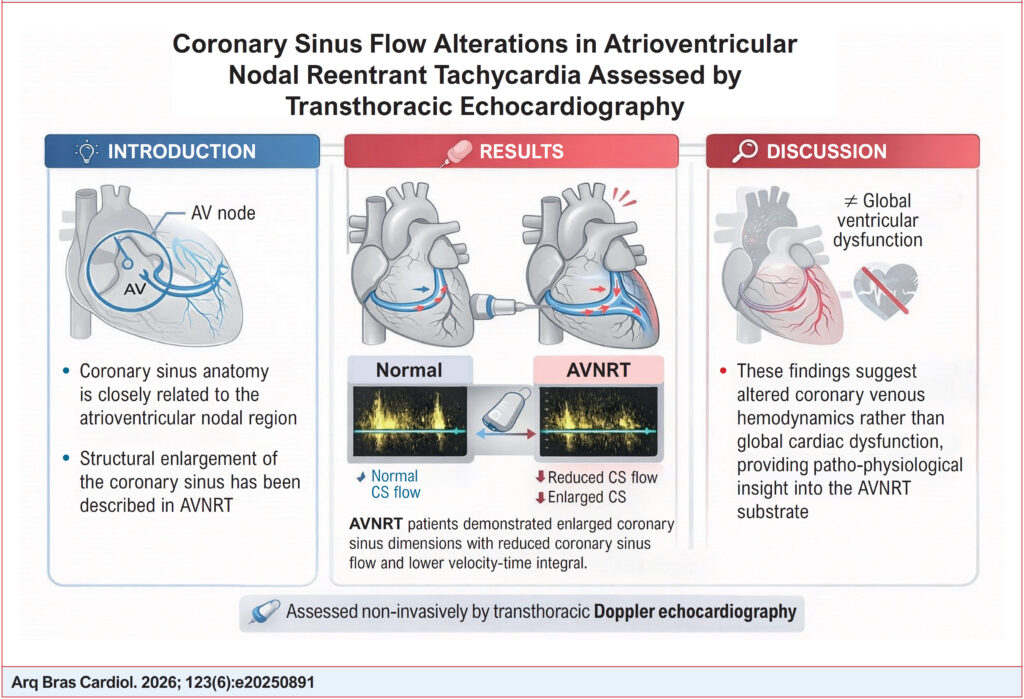
The coronary sinus (CS) plays a pivotal role in cardiac venous drainage and is anatomically adjacent to the atrioventricular nodal region. Although structural enlargement of the CS has been described in patients with atrioventricular nodal reentrant tachycardia (AVNRT), coronary sinus flow (CSF) assessed by transthoracic echocardiography (TTE) has not previously been investigated in this population.
Objective:
To evaluate the relationship between AVNRT and CSF.
Methods:
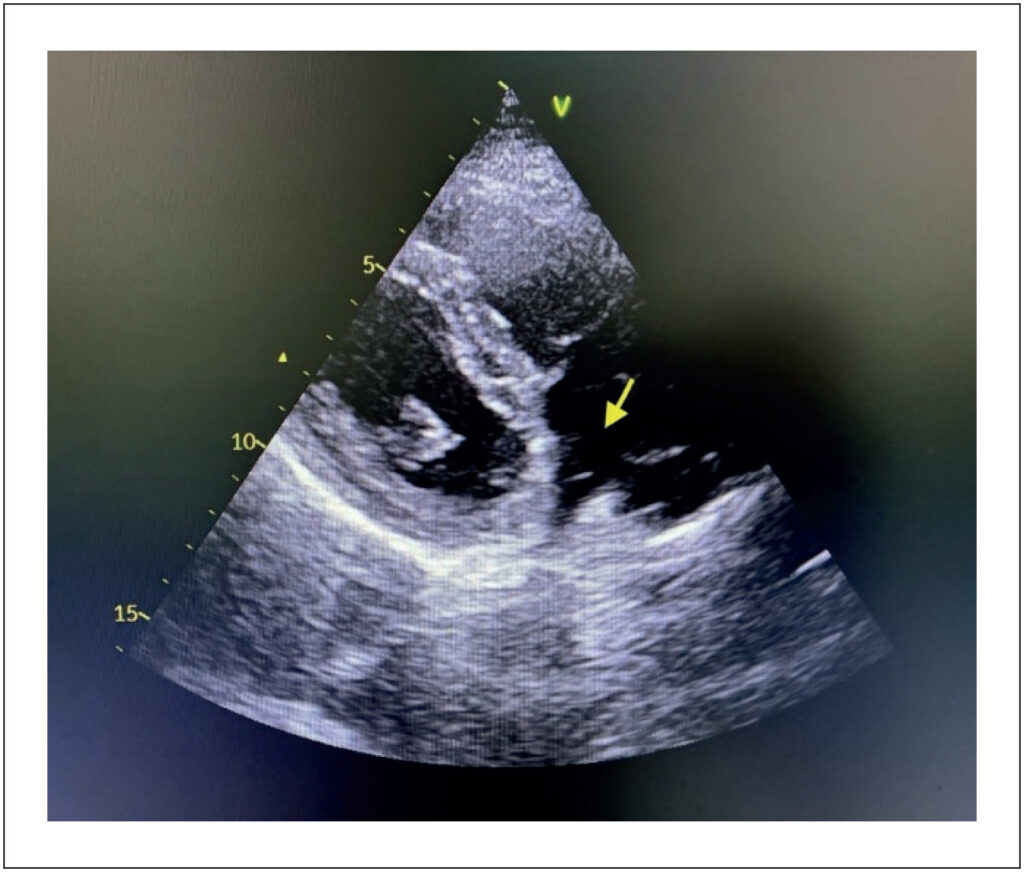
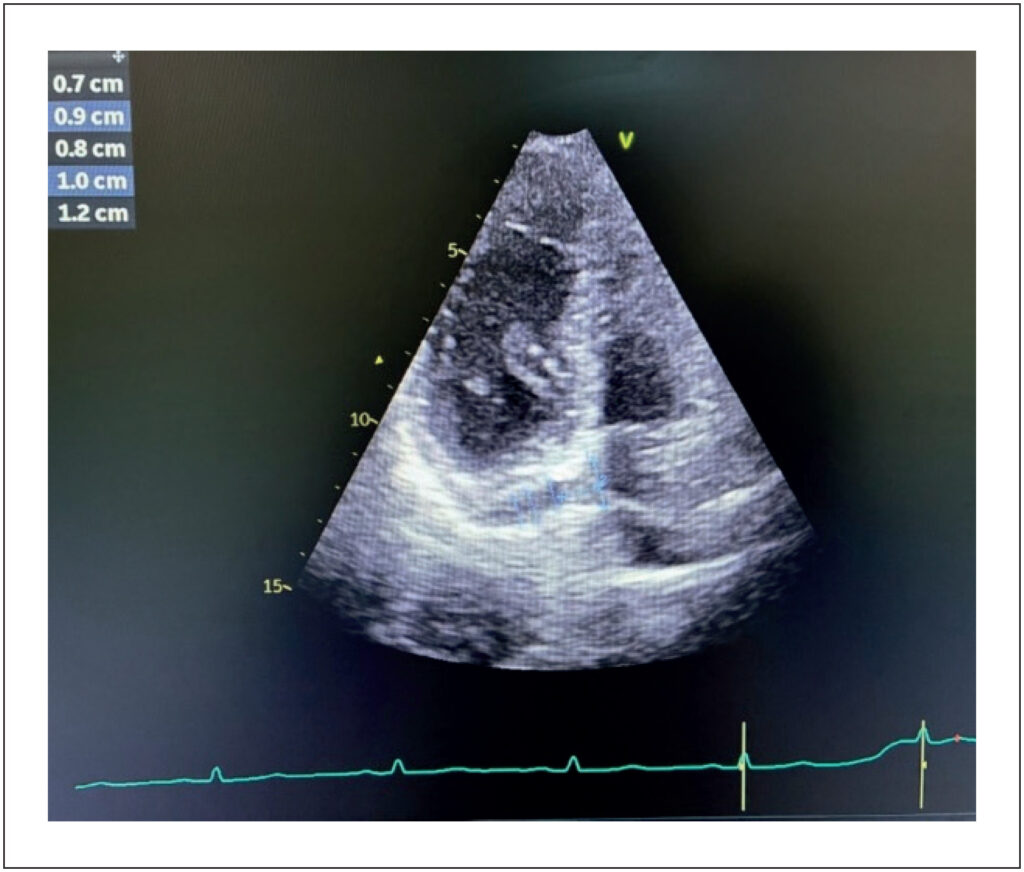
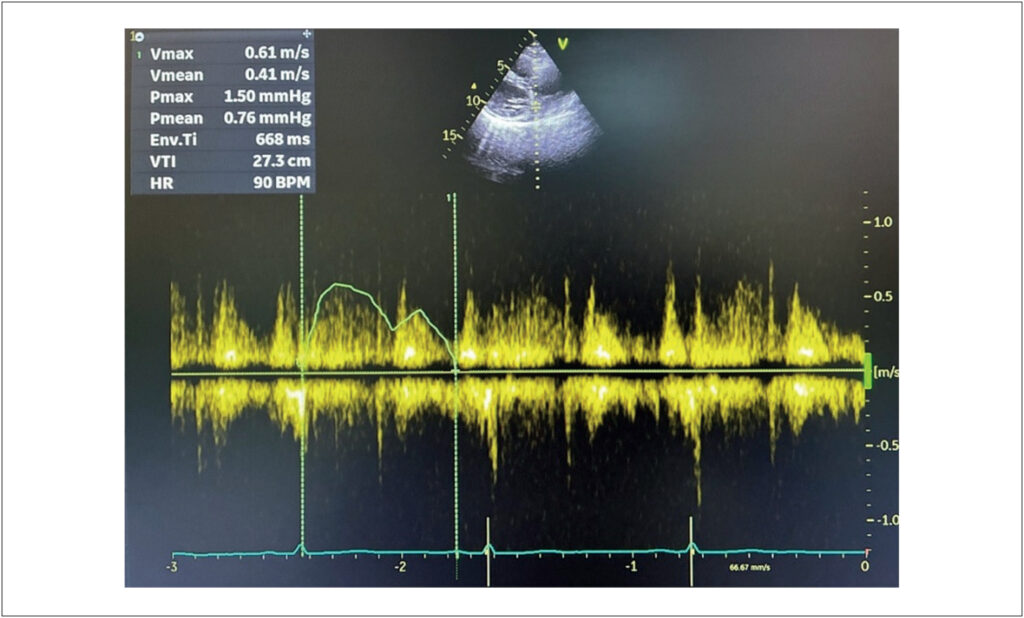
This retrospective single-center study included 35 patients with AVNRT who underwent successful slow-pathway ablation and 34 age- and sex-matched healthy controls. All participants underwent comprehensive transthoracic echocardiography. CS ostial diameter, CS diameter, and CSF were measured using pulsed-wave Doppler echocardiography. CSF was calculated using standard geometric and Doppler-derived parameters. A p-value <0.05 was considered statistically significant.
Results:
Global left and right ventricular systolic and diastolic function parameters were similar between groups. Patients with AVNRT exhibited significantly larger CS ostial and CS diameters compared with controls (both p<0.001). Despite this enlargement, CSF was significantly reduced in the AVNRT group (460.8 ± 83.3 vs. 523.8 ± 90.1 mL/min, p=0.004), accompanied by a lower CS velocity–time integral. Notably, CSF indexed to left ventricular mass also remained significantly lower in AVNRT patients, indicating that reduced flow was independent of myocardial mass.
Conclusion:
Patients with AVNRT demonstrate a distinct coronary sinus hemodynamic profile characterized by CS enlargement and reduced CSF as assessed by transthoracic echocardiography. These findings suggest altered coronary venous hemodynamics in AVNRT and provide novel pathophysiological insights using a non-invasive imaging modality.
Images
Image gallery fullscreen viewer
Comments are moderated by the editorial team before publication. Discussions should be evidence-based and use scientific language. Conflicts of interest should be declared.