Normal Reference Values for Cardiovascular Magnetic Resonance: An Analytical–Comparative Review with Emphasis on the Brazilian Population
ABSTRACT
Background:
Cardiovascular magnetic resonance (CMR) is the reference standard for morphofunctional cardiac assessment. In Brazil, the application of international normal reference values faces challenges related to population admixture, technical heterogeneity among centers, and the absence of national standardization, all of which may affect diagnostic accuracy.
Objectives:
To compare normal reference values for morphofunctional parameters obtained by CMR between a multicenter international review and a Brazilian publication, discussing concordance, methodological differences, and implications for Brazilian clinical practice.
Methods:
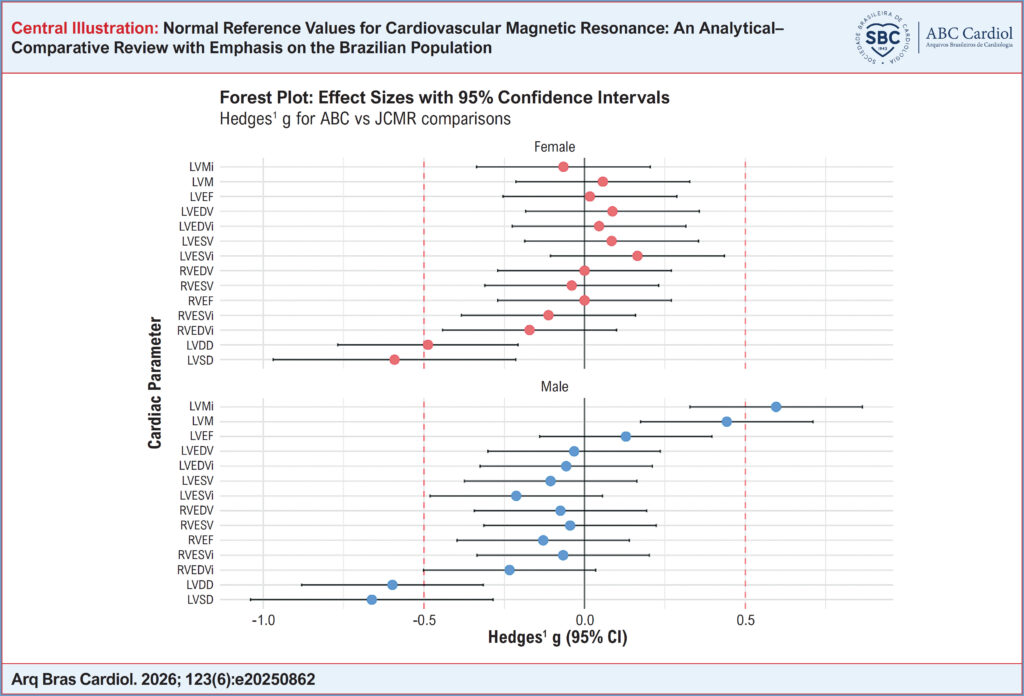
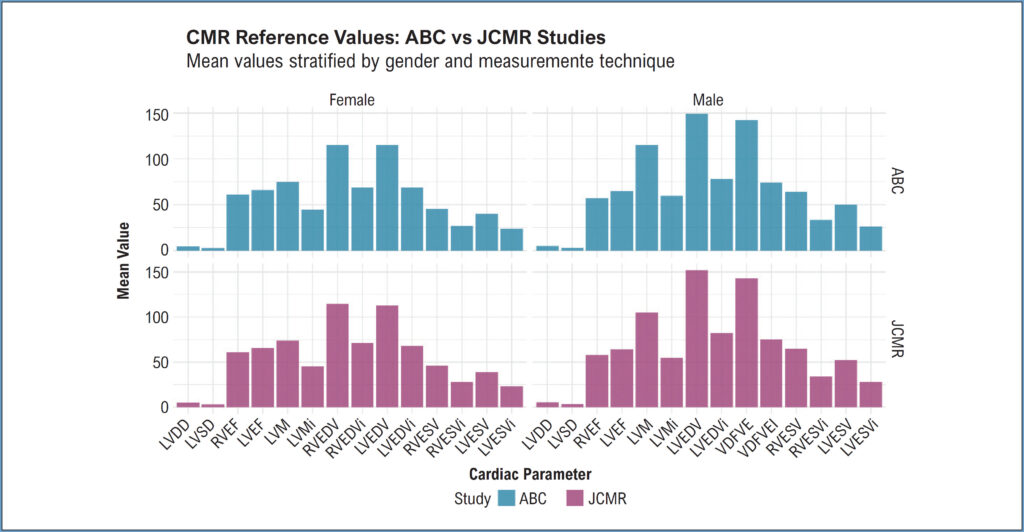
An analytical–comparative review was performed using summarized data from an international reference-value review and a Brazilian study. Means and standard deviations of key ventricular variables were compared, with assessment of 95% CI overlap, Welch’s t-test, and effect size (Hedges’ g). Standard-deviation–based cut-off points were proposed for grading abnormality.
Results:
Overall concordance between means was observed for most variables. Statistically significant differences occurred in a few parameters, mainly ventricular diameters and left ventricular mass, with small to moderate effect sizes. Discrepancies were largely attributed to methodological differences in measurement and indexation.
Conclusions:
International normal reference values may be used in Brazilian clinical practice, provided they are adjusted for body surface area and interpreted in light of local particularities. Standardization of protocols and national multicenter studies are needed to strengthen regional validation. Keywords: Normal Values, Cardiac Magnetic Resonance, Reference Interval.
Images
Image gallery fullscreen viewer
Comments are moderated by the editorial team before publication. Discussions should be evidence-based and use scientific language. Conflicts of interest should be declared.