ABC Family Arquivos Brasileiros de Cardiologia International Journal of Cardiovascular Sciences ABC Heart Failure & Cardiomyopathy ABC Imagem Cardiovascular
Português English
ABC Family
Português English
  • About
    • About ABC Family
    • Internal Regulation
    • Editorial Board
    • Brazilian Society of Cardiology (SBC)
  • Issues
  • SBC Guidelines
  • Content
    • Videos
    • Podcasts
    • News
  • About
    • About ABC Family
    • Internal Regulation
    • Editorial Board
    • Brazilian Society of Cardiology (SBC)
  • Issues
  • SBC Guidelines
  • Content
    • Videos
    • Podcasts
    • News

ABC Family

  • ABC Family
  • Arquivos Brasileiros de Cardiologia
  • International Journal of Cardiovascular Sciences
  • ABC Heart Failure & Cardiomyopathy
  • ABC Imagem Cardiovascular
Search in

No content found.

Journals
Ordering
Article types
Others

  1. Home
  2. Keyword: Noncommunicable Diseases
Spatial Distribution of Patients in the Metropolitan Area of São Paulo Attending a Public Tertiary Cardiovascular Referral Hospital According to Diseases of the Circulatory, Respiratory, Endocrine, and Neoplastic Systems
ABC
Original Article

Spatial Distribution of Patients in the Metropolitan Area of São Paulo Attending a Public Tertiary Cardiovascular Referral Hospital According to Diseases of the Circulatory, Respiratory, Endocrine, and Neoplastic Systems

Carlos Lederman et al. Sara Lopes de Moraes Antonio Carlos Pedroso de Lima Lucia Pereira Barroso … Lilian Cristina Correia Morais Magaly de Losso Perdigão Rosa Maria Vieira de Freitas Monica La Porte Teixeira Bernadette Cunha Waldvogel Marco Antonio Gutierrez Ligia Vizeu Barrozo Alfredo José Mansur

Abstract

Background

The spatial distribution of patients according to clinical characteristics, using geoprocessing techniques, enables the identification of disease clusters within a studied population. This approach supports the development of targeted interventions directed toward specific risk groups.

Objectives

To investigate geographical clusters of diseases of interest among patients attending a public tertiary hospital and to characterize their spatial distribution across the metropolitan area of São Paulo.

Methods

Based on the results of a previous study, two disease groups were defined: one representing the main diseases identified at the first hospital visit and another representing the main underlying causes of death. A detailed description is provided in the . Disease density was calculated by dividing the frequency of cases within each disease group by the population of each city/district and multiplying the result by 100,000 to enhance data visualization. Spatial data were subsequently analyzed and mapped to illustrate the spatial patterns and relationships identified in the study.

Results

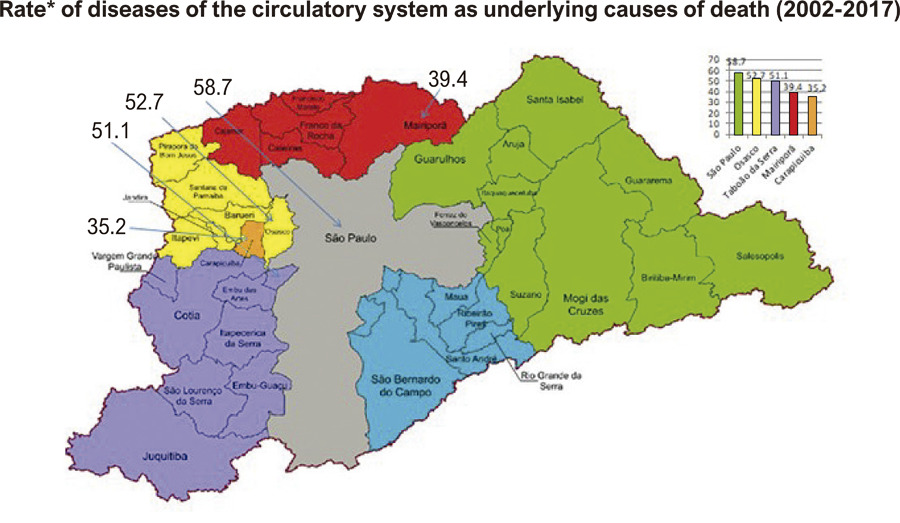
Osasco and Taboão da Serra showed the highest density of underlying causes of death related to diseases of the circulatory system. Additionally, 12 cities/districts located at the borders of the study area showed no recorded neoplastic diseases.

Conclusions

Vargem Grande Paulista showed the highest case density for neoplasms as underlying causes of death and comorbidities. Notably, Embu das Artes, a city recognized for its extensive green areas, showed the highest density of diseases of the respiratory system.
  • cause of death
  • Comorbidity
  • International Classification of Diseases
  • Mortality
  • Noncommunicable Diseases
Read Full Article
Creative Commons Attribution (CC BY) Creative Commons license
24/07/2026 DOI: 10.36660/abc.20260178i Views 1
The Six Pillars of Lifestyle Medicine in Managing Noncommunicable Diseases – The Gaps in Current Guidelines
ABC
Review Article

The Six Pillars of Lifestyle Medicine in Managing Noncommunicable Diseases – The Gaps in Current Guidelines

Rafaella Rogatto de Faria et al. Sergio Freitas de Siqueira Francisco Aguerre Haddad Gustavo Del Monte Silva … Caio Vitale Spaggiari Martino Martinelli Filho

Abstract

Background:

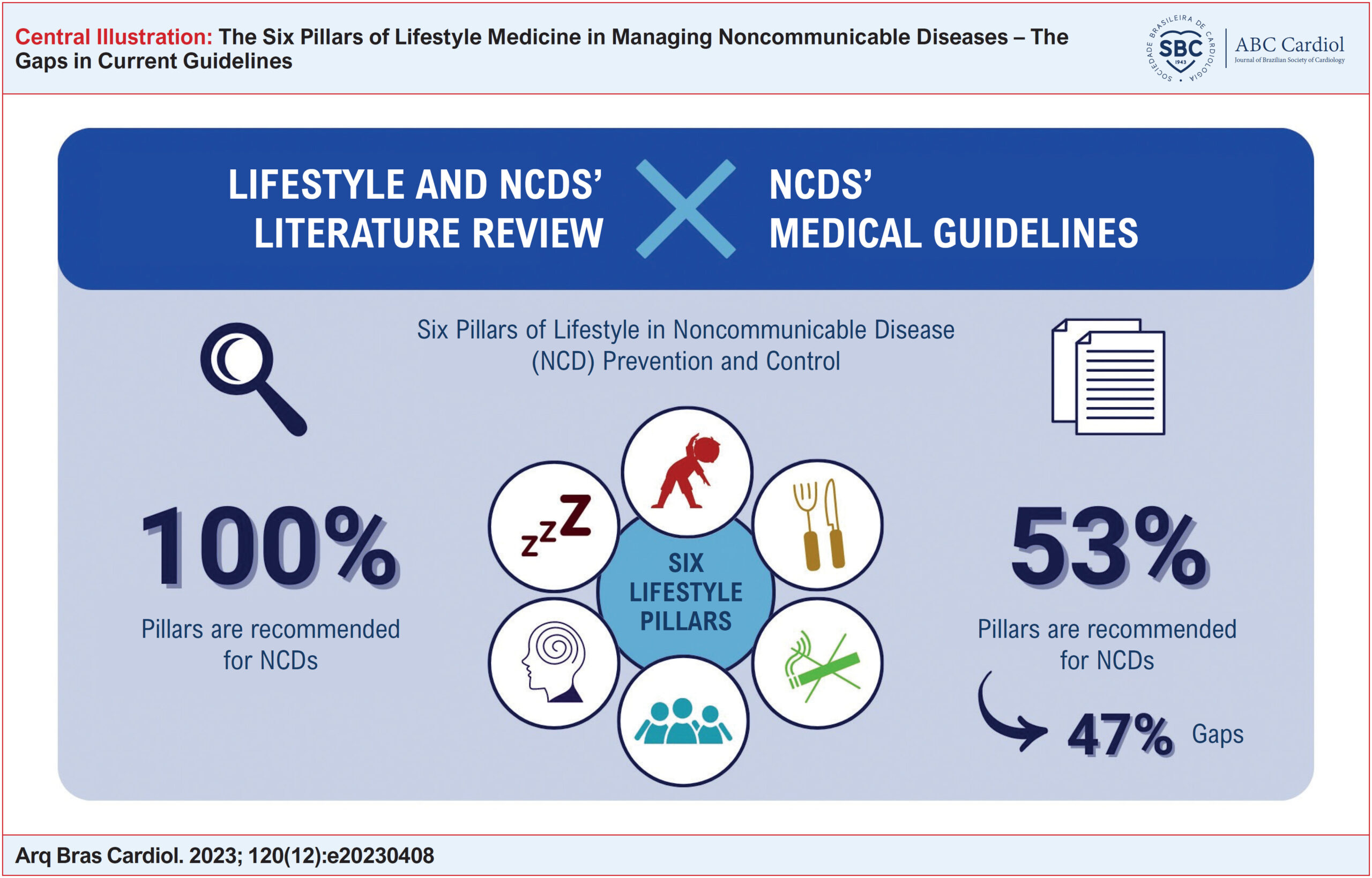
Noncommunicable diseases (NCDs), also known as chronic diseases that are long-lasting, are considered the major cause of death and disability worldwide, and the six pillars of lifestyle medicine (nutrition, exercise, toxic control, stress management, restorative sleep, and social connection) play an important role in a holistic management of their prevention and treatment. In addition, medical guidelines are the most accepted documents with recommendations to manage NCDs.

Objective:

The present study aims to analyze the lack of lifestyle pillars concerning the major Brazilian medical guidelines for NCDs and identify evidence in the literature that could justify their inclusion in the documents.

Method:

Brazilian guidelines were selected according to the most relevant causes of death in Brazil, given by the Mortality Information System, published by the Brazilian Ministry of Health in 2019. Journals were screened in the PUBMED library according to the disease and non-mentioned pillars of lifestyle.

Results:

Relevant causes of deaths in Brazil are acute myocardial infarction (AMI), diabetes mellitus (DM), and chronic obstructive pulmonary diseases (COPD). Six guidelines related to these NCDs were identified, and all address aspects of lifestyle, but only one, regarding cardiovascular prevention, highlights all six pillars. Despite this, a literature search involving over 50 articles showed that there is evidence that all the pillars can help control each of these NCDs.

Conclusion:

Rarely are the six pillars of lifestyle contemplated in Brazilian guidelines for AMI, DM, and COPD. The literature review identified evidence of all lifestyle pillars to offer a holistic approach for the management and prevention of NCDs.

  • Holistic Health
  • Life Style
  • Noncommunicable Diseases
  • Practice Guideline
Read Full Article
Creative Commons Attribution (CC BY) Creative Commons license
08/01/2024 DOI: 10.36660/abc.20230408 Views 1
Figure 1
IJCS
Original Article

Association Between Active Commuting and Cardiometabolic Diseases in Primary Health Care Users

Lucas Bressan Pes et al. Gustavo Olszanski Acrani Ivana Loraine Lindemann Shana Ginar da Silva

Abstract

Background

Although active commuting is inversely related to cardiovascular disease risk factors, these associations are unknown among Brazilian primary health care users.

Objective

To investigate the association between active commuting to daily activities and the prevalence of cardiometabolic diseases.

Methods

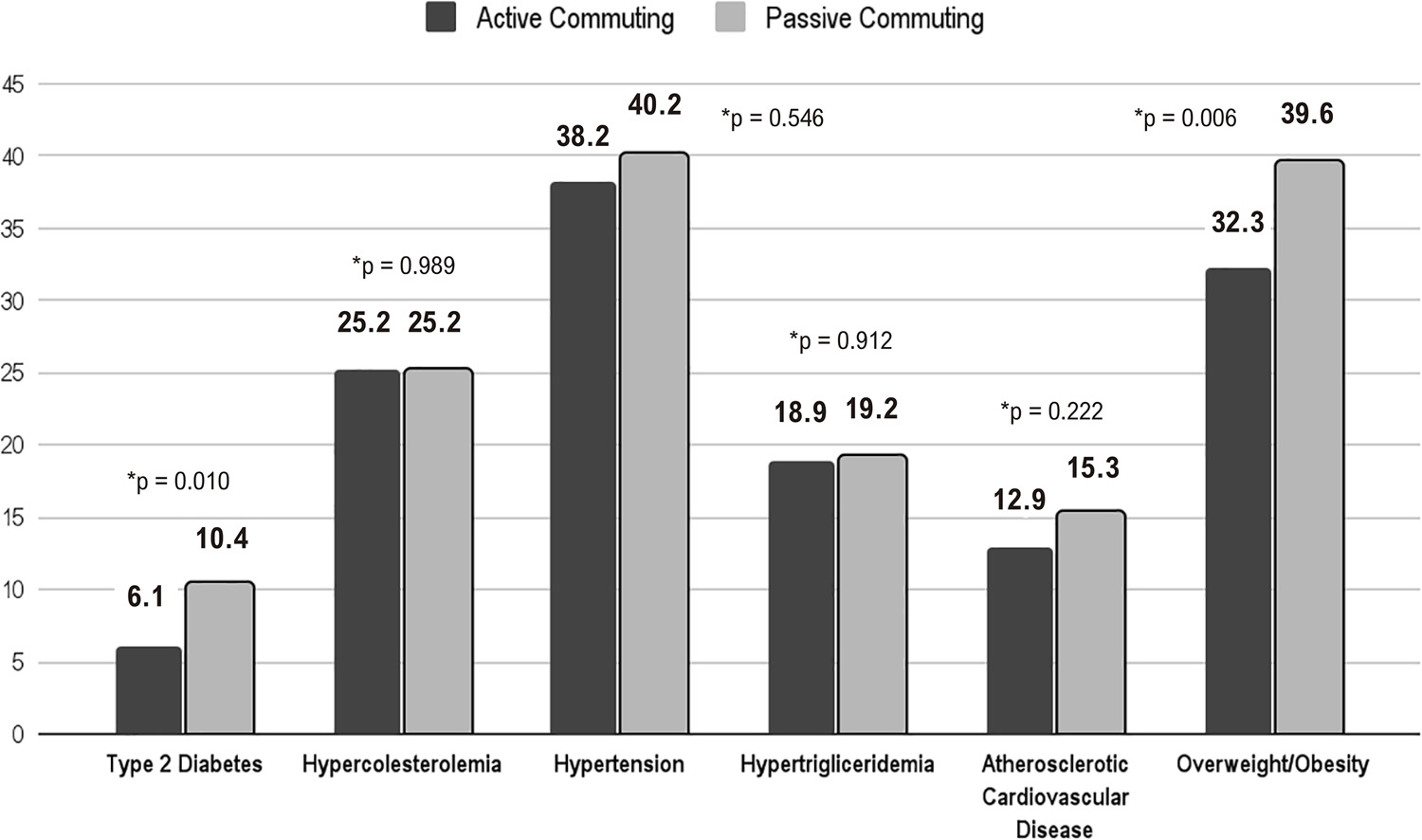
This cross-sectional study, conducted between May and August 2019, included primary health care users from all 34 primary health care centers in Passo Fundo, a city in southern Brazil. Cardiometabolic diseases (type 2 diabetes, hypertension, hypercholesterolemia, hypertriglyceridemia, cardiovascular diseases, and overweight/obesity) were measured by self-reported medical diagnosis using a questionnaire. Active commuting was analyzed dichotomously: daily commuting on foot or by bicycle was considered active, while daily commuting by car, motorcycle, or bus was considered passive. To determine the association between cardiometabolic diseases and active commuting, crude and adjusted prevalence ratios (PR) were estimated using Poisson regression, considering p <0.05 significant.

Results

The sample consisted of 1443 patients. There was an inverse association between active commuting and type 2 diabetes (PR: 0.59; 95% CI [Confidence Interval]: 0.39-0.90) and overweight/obesity (PR: 0.83: 95% CI: 0.71-0.98).

Conclusion

A lower prevalence of type 2 diabetes and obesity/overweight was observed in people who actively commute. These findings indicate that changes in urban infrastructure to enable safe active commuting will positively impact the health of the population.

  • Cardiovascular Diseases
  • Health Promotion
  • Noncommunicable Diseases
  • Primary Health Care
Read Full Article
Creative Commons Attribution (CC BY) Creative Commons license
20/10/2023 DOI: 10.36660/ijcs.20220142
Figure 1
IJCS
Original Article

Cardiovascular Diseases Mortality Rates in Nine Cities of Rio Grande do Sul from 2009 to 2019: Temporal Trends and Demographic Differences

Pâmela Sandri et al. Luiz Artur Rosa Filho Elias Sato de Almeida Shana Ginar da Silva

Abstract

Background

Cardiovascular diseases (CVD) are the leading cause of morbidity and mortality statistics in Brazil and worldwide. The evaluation of the temporal and spatial distribution of mortality due to CVD is essential to support actions aimed at monitoring the implementation of health policies.

Objectives

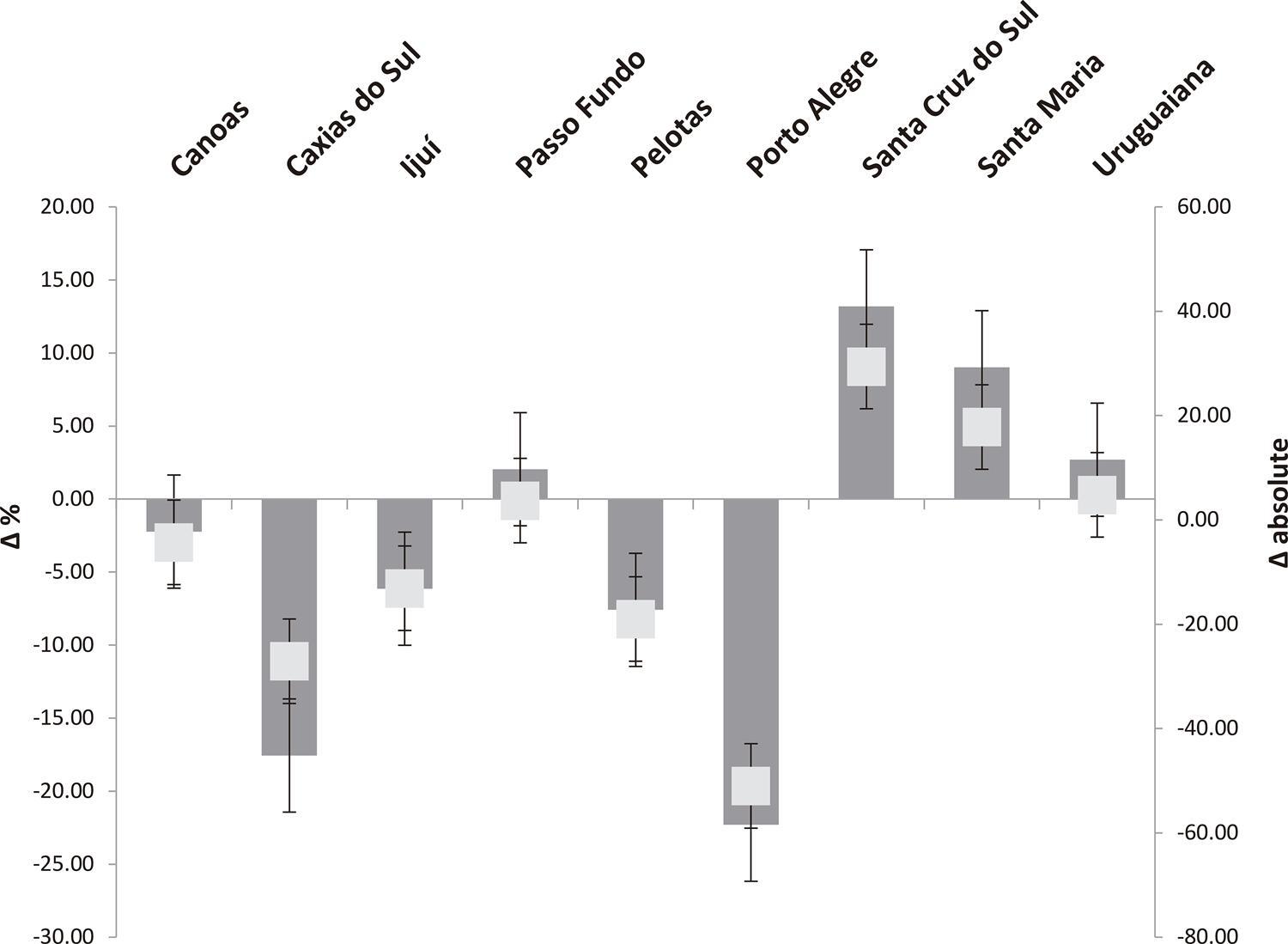
To analyze the temporal trend of mortality due to CVD from 2009 to 2019, as well as the main causes of death according to gender and age group in nine cities of Rio Grande do Sul (RS).

Methods

This is an ecological study based on data from the Mortality Information System. The rates were stratified according to gender, age group and cause, which were composed of ischemic heart diseases (IHD), cerebrovascular diseases and hypertensive diseases (HD). Prais-Winsten regression was used for time trend estimates.

Results

Three out of the nine cities analyzed showed a significant reduction in the overall mortality rates due to CVD in the timeframe evaluated (p<0.05). When the cause of death was analyzed, there was a decreasing trend in mortality due to IHD in Caxias do Sul, Ijuí and Porto Alegre. In these cities and also in Passo Fundo and Uruguaiana, there was a decrease in mortality due to cerebrovascular diseases. The cities of Ijuí, Porto Alegre and Santa Maria recorded an increase in hypertensive disease mortality rates. In most cities, there was an increase in rates related to greater age and male sex.

Conclusion

Heterogeneity was observed in the trend of mortality due to CVD throughout the historical series, which may be related to the execution of public policies and the control of cardiovascular risk factors in the evaluated territories.

  • Cardiovascular Diseases
  • Health Information Systems
  • Mortality
  • Noncommunicable Diseases
Read Full Article
Creative Commons Attribution (CC BY) Creative Commons license
11/11/2022 DOI: 10.36660/ijcs.20220062 Views 2

How to cite this article

EndNote RIS

Electronic Document Format (Vancouver)

Lederman C, Moraes SL, Lima ACP, Barroso LP, Morais LCC, Perdigão ML, Freitas RMV, et al. Spatial Distribution of Patients in the Metropolitan Area of São Paulo Attending a Public Tertiary Cardiovascular Referral Hospital According to Diseases of the Circulatory, Respiratory, Endocrine, and Neoplastic Systems. Arquivos Brasileiros de Cardiologia 2026;123(6):e20260178.

Electronic Document Format (ABNT)

Lederman, Carlos; Moraes, Sara Lopes de; Lima, Antonio Carlos Pedroso de; Barroso, Lucia Pereira; Morais, Lilian Cristina Correia; Perdigão, Magaly de Losso; Freitas, Rosa Maria Vieira de; Teixeira, Monica La Porte; Waldvogel, Bernadette Cunha; Gutierrez, Marco Antonio; Barrozo, Ligia Vizeu; Mansur, Alfredo José. Spatial Distribution of Patients in the Metropolitan Area of São Paulo Attending a Public Tertiary Cardiovascular Referral Hospital According to Diseases of the Circulatory, Respiratory, Endocrine, and Neoplastic Systems. Arquivos Brasileiros de Cardiologia, v. 123, n. 6, e20260178, Jul. 2026.

Electronic Document Format (APA)

Lederman, C., Moraes, S. L. , Lima, A. C. P. , Barroso, L. P., Morais, L. C. C., Perdigão, M. L., Freitas, R. M. V. , Teixeira, M. L. P., Waldvogel, B. C., Gutierrez, M. A., Barrozo, L. V., & Mansur, A. J. (2026). Spatial Distribution of Patients in the Metropolitan Area of São Paulo Attending a Public Tertiary Cardiovascular Referral Hospital According to Diseases of the Circulatory, Respiratory, Endocrine, and Neoplastic Systems. Arquivos Brasileiros de Cardiologia, 123(6), e20260178.

Electronic Document Format (ISO)

Lederman, Carlos and Moraes, Sara Lopes de and Lima, Antonio Carlos Pedroso de and Barroso, Lucia Pereira and Morais, Lilian Cristina Correia and Perdigão, Magaly de Losso and Freitas, Rosa Maria Vieira de and Teixeira, Monica La Porte and Waldvogel, Bernadette Cunha and Gutierrez, Marco Antonio and Barrozo, Ligia Vizeu and Mansur, Alfredo José. Spatial Distribution of Patients in the Metropolitan Area of São Paulo Attending a Public Tertiary Cardiovascular Referral Hospital According to Diseases of the Circulatory, Respiratory, Endocrine, and Neoplastic Systems. Arquivos Brasileiros de Cardiologia [online]. 2026, vol. 123, n. 6, [cited 2026-10-14], e20260178. Available from: <https://journals.cardiol.br/en/article/spatial-distribution-of-patients-in-the-metropolitan-area-of-sao-paulo-attending-a-public-tertiary-cardiovascular-referral-hospital-according-to-diseases-of-the-circulatory-respiratory-endocrine-an/>. ISSN 0066-782X

EndNote RIS

Electronic Document Format (Vancouver)

Faria RR, Siqueira SF, Haddad FA, Silva GDM, Spaggiari CV, Martinelli Filho M. The Six Pillars of Lifestyle Medicine in Managing Noncommunicable Diseases – The Gaps in Current Guidelines. Arquivos Brasileiros de Cardiologia 2024;120(12):e20230408.

Electronic Document Format (ABNT)

Faria, Rafaella Rogatto de; Siqueira, Sergio Freitas de; Haddad, Francisco Aguerre; Silva, Gustavo Del Monte; Spaggiari, Caio Vitale; Martinelli Filho, Martino. The Six Pillars of Lifestyle Medicine in Managing Noncommunicable Diseases – The Gaps in Current Guidelines. Arquivos Brasileiros de Cardiologia, v. 120, n. 12, e20230408, Jan. 2024.

Electronic Document Format (APA)

Faria, R. R. , Siqueira, S. F. , Haddad, F. A., Silva, G. D. M., Spaggiari, C. V., & Martinelli Filho, M. (2024). The Six Pillars of Lifestyle Medicine in Managing Noncommunicable Diseases – The Gaps in Current Guidelines. Arquivos Brasileiros de Cardiologia, 120(12), e20230408.

Electronic Document Format (ISO)

Faria, Rafaella Rogatto de and Siqueira, Sergio Freitas de and Haddad, Francisco Aguerre and Silva, Gustavo Del Monte and Spaggiari, Caio Vitale and Martinelli Filho, Martino. The Six Pillars of Lifestyle Medicine in Managing Noncommunicable Diseases – The Gaps in Current Guidelines. Arquivos Brasileiros de Cardiologia [online]. 2024, vol. 120, n. 12, [cited 2026-10-14], e20230408. Available from: <https://journals.cardiol.br/en/article/the-six-pillars-of-lifestyle-medicine-in-managing-noncommunicable-diseases-the-gaps-in-current-guidelines/>. ISSN 0066-782X

EndNote RIS

Electronic Document Format (Vancouver)

Pes LB, Acrani GO, Lindemann IL, Silva SG. Association Between Active Commuting and Cardiometabolic Diseases in Primary Health Care Users. International Journal of Cardiovascular Sciences 2023;36:e20220142.

Electronic Document Format (ABNT)

Pes, Lucas Bressan; Acrani, Gustavo Olszanski; Lindemann, Ivana Loraine; Silva, Shana Ginar da. Association Between Active Commuting and Cardiometabolic Diseases in Primary Health Care Users. International Journal of Cardiovascular Sciences, v. 36, e20220142, Oct. 2023.

Electronic Document Format (APA)

Pes, L. B., Acrani, G. O., Lindemann, I. L., & Silva, S. G. (2023). Association Between Active Commuting and Cardiometabolic Diseases in Primary Health Care Users. International Journal of Cardiovascular Sciences, 36, e20220142.

Electronic Document Format (ISO)

Pes, Lucas Bressan and Acrani, Gustavo Olszanski and Lindemann, Ivana Loraine and Silva, Shana Ginar da. Association Between Active Commuting and Cardiometabolic Diseases in Primary Health Care Users. International Journal of Cardiovascular Sciences [online]. 2023, vol. 36, [cited 2026-10-14], e20220142. Available from: <https://journals.cardiol.br/en/article/association-between-active-commuting-and-cardiometabolic-diseases-in-primary-health-care-users/>. ISSN 2359-4802

EndNote RIS

Electronic Document Format (Vancouver)

Sandri P, Rosa Filho LA, Almeida ES, Silva SG. Cardiovascular Diseases Mortality Rates in Nine Cities of Rio Grande do Sul from 2009 to 2019: Temporal Trends and Demographic Differences. International Journal of Cardiovascular Sciences 2022;36:e20220062.

Electronic Document Format (ABNT)

Sandri, Pâmela; Rosa Filho, Luiz Artur; Almeida, Elias Sato de; Silva, Shana Ginar da. Cardiovascular Diseases Mortality Rates in Nine Cities of Rio Grande do Sul from 2009 to 2019: Temporal Trends and Demographic Differences. International Journal of Cardiovascular Sciences, v. 36, e20220062, Nov. 2022.

Electronic Document Format (APA)

Sandri, P., Rosa Filho, L. A., Almeida, E. S. , & Silva, S. G. (2022). Cardiovascular Diseases Mortality Rates in Nine Cities of Rio Grande do Sul from 2009 to 2019: Temporal Trends and Demographic Differences. International Journal of Cardiovascular Sciences, 36, e20220062.

Electronic Document Format (ISO)

Sandri, Pâmela and Rosa Filho, Luiz Artur and Almeida, Elias Sato de and Silva, Shana Ginar da. Cardiovascular Diseases Mortality Rates in Nine Cities of Rio Grande do Sul from 2009 to 2019: Temporal Trends and Demographic Differences. International Journal of Cardiovascular Sciences [online]. 2022, vol. 36, [cited 2026-10-14], e20220062. Available from: <https://journals.cardiol.br/en/article/cardiovascular-diseases-mortality-rates-in-nine-cities-of-rio-grande-do-sul-from-2009-to-2019-temporal-trends-and-demographic-differences/>. ISSN 2359-4802

  • About ABC Family
  • Internal Regulation
  • Editorial Board
  • Brazilian Society of Cardiology (SBC)

Issues

SBC Guidelines

  • Videos
  • Podcasts
  • News