| ABC
ABC Family Arquivos Brasileiros de Cardiologia International Journal of Cardiovascular Sciences ABC Heart Failure & Cardiomyopathy ABC Imagem Cardiovascular
Português English
ABC Family | ABC
Português English
  • About
    • About the Journal
    • Internal Regulation
    • Editors Section
    • Editorial Board
    • History
    • SBC Award
  • Instructions to Authors
    • Guidelines for Publication
    • Editorial Policy
    • Ethics Policy
    • Policy on the Use of Artificial Intelligence
    • Mandatory Publication Form
    • Publication Fee
  • Issues
  • SBC Guidelines
  • Abstracts
    • How to Publish an Abstract Supplement?
    • Supplements from the Brazilian Congress of Cardiology
  • About
    • About the Journal
    • Internal Regulation
    • Editors Section
    • Editorial Board
    • History
    • SBC Award
  • Instructions to Authors
    • Guidelines for Publication
    • Editorial Policy
    • Ethics Policy
    • Policy on the Use of Artificial Intelligence
    • Mandatory Publication Form
    • Publication Fee
  • Issues
  • SBC Guidelines
  • Abstracts
    • How to Publish an Abstract Supplement?
    • Supplements from the Brazilian Congress of Cardiology

ABC Family

  • ABC Family
  • Arquivos Brasileiros de Cardiologia
  • International Journal of Cardiovascular Sciences
  • ABC Heart Failure & Cardiomyopathy
  • ABC Imagem Cardiovascular
Search in

No content found.

Journals
Ordering
Article types
Others

  1. Home
  2. ABC
  3. Issues
  4. 2025, Volume 122, Number 4
Editorial

Challenges in Performing Real-World Evidence Studies in Low-Middle Income Countries: the EdoBRA Study

Ayrton Roberto Massaro

In 1991, Wolf et al. on the Framingham study demonstrated that atrial fibrillation (AF) constitutes an independent risk factor for ischemic stroke. Hart et al., in a meta-analysis, confirmed warfarin’s effectiveness in lowering stroke risk by 64% in AF patients. A slight increase in major extracranial hemorrhage was observed, which did not impact overall efficacy. Unpredictable pharmacokinetics, interactions, and INR monitoring needs have limited warfarin use. In low-middle income countries (LMICs) like Brazil, socio-economic disparities affected warfarin use in AF patients.

Direct oral anticoagulants (DOACs) were introduced to overcome the barriers associated with warfarin. All DOACs showed strong stroke prevention compared to warfarin. Edoxaban in the ENGAGE AF-TIMI 48 trial was non-inferior to warfarin in safety and superior in preventing hemorrhagic strokes. Latin American patients showed higher hemorrhage and mortality rates compared to other regions. In addition, considerations of cost, renal monitoring, DOACs in AF subpopulations, and reversal agents for hemorrhage highlight the importance of tailoring therapy based on patient-specific risks.

[…]

  • Atrial Fibrillation
  • Factor Xa Inhibitors
  • Stroke
Read Full Article
Creative Commons Attribution (CC BY) Creative Commons license
28/07/2025 DOI: 10.36660/abc.20250353i Views 3
Figure 1
Editorial

Patisiran in the Treatment of Cardiac Amyloidosis: Good for the World and Good for Brazil

Humberto Villacorta

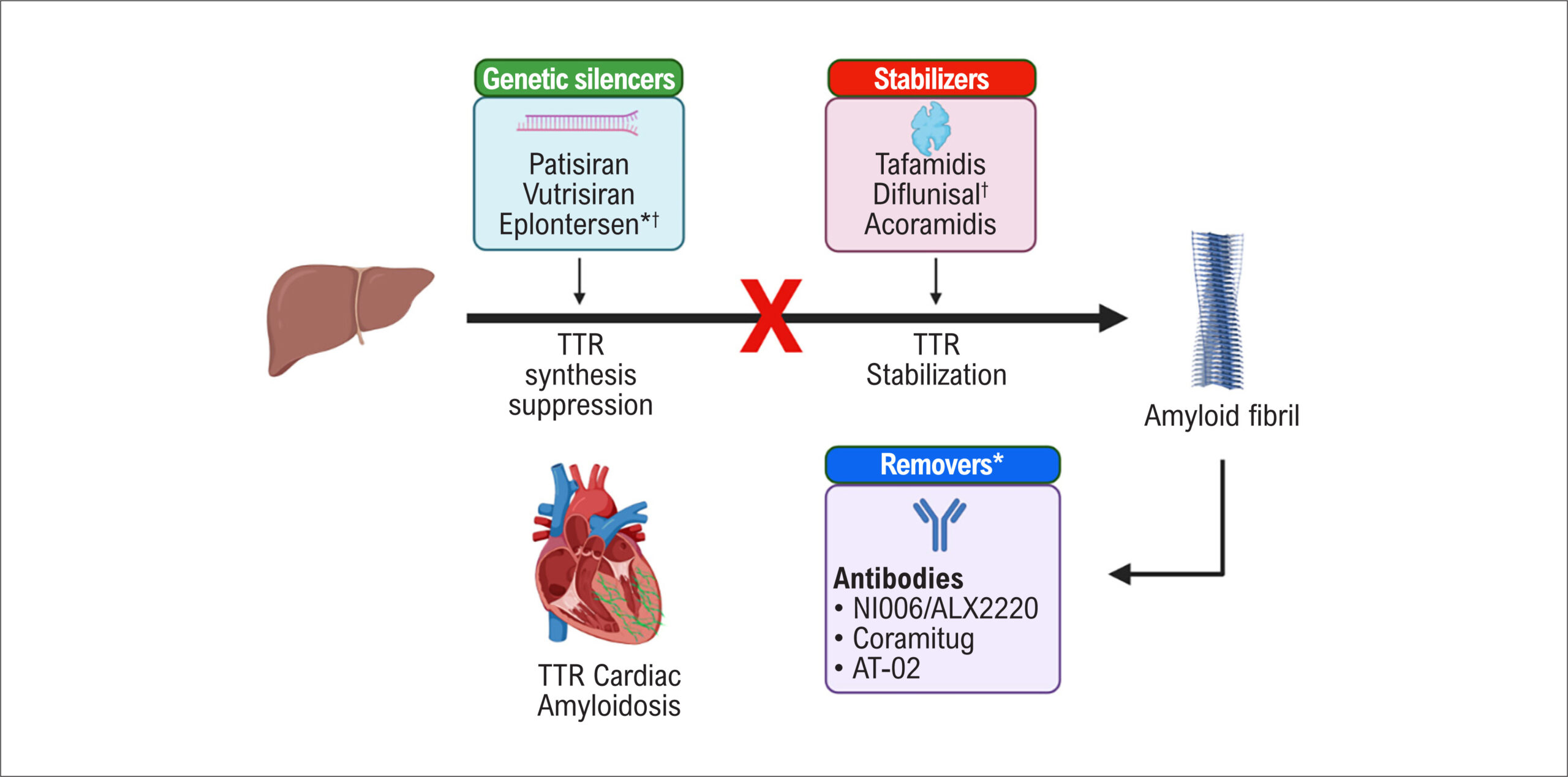
Patisiran is an RNA interference therapeutic agent used in the treatment of transthyretin-mediated amyloidosis (ATTR amyloidosis), a condition characterized by the accumulation of misfolded transthyretin (TTR) protein amyloid fibrils in tissues.– As shown in , the mechanism of action differs from previous drugs such as tafamidis, which promotes the stabilization of the TTR protein, rather than the synthesis inhibition., Patisiran uses a mechanism involving small interfering RNA to specifically target the messenger RNA (mRNA) responsible for producing the TTR protein in the liver. It activates the RNA-induced silencing complex, which promotes the degradation of the TTR mRNA. By degrading TTR mRNA, patisiran effectively reduces the synthesis of TTR protein within the liver. This leads to decreased levels of both normal and mutant forms of TTR.–

The effects of patisiran in cardiac amyloidosis were assessed in the APOLLO B study, which was a phase 3, multicenter, randomized, double-blind, placebo-controlled trial involving 360 patients diagnosed with hereditary or wild-type ATTR amyloidosis with cardiomyopathy, aimed at assessing treatment effects on cardiac function and quality of life. The primary endpoint was a change from baseline in the functional capacity as assessed by the 6-minute walk test (6MWT) at 12 months. The walk distance in the 6MWT decreased over time in both groups, but it was attenuated in the patisiran group (mean change −8.15 vs −21.35 m, in the patisiran and placebo group, respectively). Quality of life as assessed by the Kansas City Cardiomyopathy Questionnaire-Overall Summary (KCCQ-OS) improved in the patisiran group and declined in the placebo group. In a secondary endpoint analysis, no difference was observed in a combined endpoint of death from any cause, cardiovascular events, or change in the 6MWT. An explanatory analysis found that patisiran attenuated the increase in the cardiac biomarkers NT-proBNP and troponin I.

[…]

  • Cardiac Amyloidosis
  • Genetic Silencers
  • Transthyretin
  • Treatment
Read Full Article
Creative Commons Attribution (CC BY) Creative Commons license
07/07/2025 DOI: 10.36660/abc.20250335i
Editorial

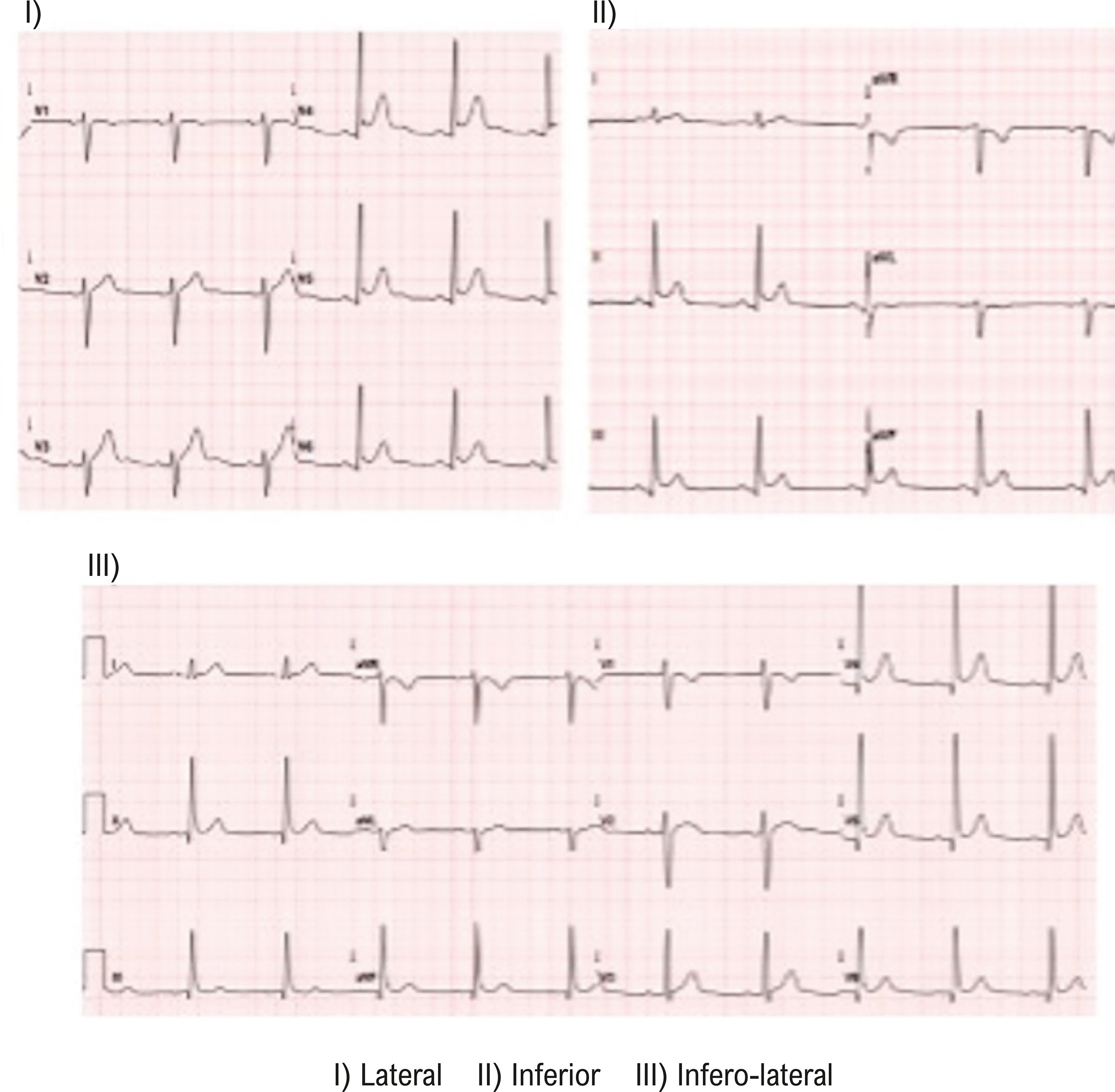
Does Early Repolarization Affect the Risk of Death and Ventricular Arrhythmias?

Guilherme Fenelon

Early repolarization (ER) pattern, defined as J-point elevation of ≥1 mm in ≥2 contiguous inferior and/or lateral electrocardiography (ECG) leads, is a common finding, with a prevalence of approximately 6% in the adult population., ER has long been considered a benign phenomenon, as most affected individuals — typically young males and athletes — have a very low incidence of sudden cardiac death.,

However, a pivotal study by Haïssaguerre et al. demonstrated a significantly higher occurrence of ER (31%) in patients with idiopathic ventricular fibrillation (VF) compared to controls (5%). Subsequent studies confirmed an association between ER and malignant ventricular arrhythmias (VA) in patients without structural heart disease., Additionally, ER has been linked to adverse outcomes in patients with primary electrical disorders such as long QT syndrome and Brugada syndrome.,

[…]

  • Cardiac Arrhythmias
  • Cardiac Sudden Death
  • Electrocardiography
Read Full Article
Creative Commons Attribution (CC BY) Creative Commons license
20/06/2025 DOI: 10.36660/abc.20250275i
Editorial

Does One Size Fit All? – Refining Parenteral Anticoagulant Therapy According to Body Weight

Remo Holanda de Mendonça Furtado

Parenteral anticoagulant is widely used in medicine. In acute coronary syndromes (ACS), the use of intravenous unfractionated heparin (UFH) has been largely replaced by low molecular weight heparins (LMWH) due to the ease of administration, more predictable effect, and superior efficacy of the latter in patients with ST-elevation myocardial infarction submitted to fibrinolysis. Current guidelines recommend anticoagulation with enoxaparin (class I) in a broad range of patients with ACS., However, one of the major limitations of LMWH remains in its use in patients with extremes of body weight. Some studies suggest a less trustable anticoagulation among patients weighing more than 100 kilograms or with body mass index (BMI) above 40 kg/m. Whether 1 mg/kg every 12 hours dosing for therapeutic anticoagulation should remain in extremely obese patients is still controversial., Currently, the Brazilian label from enoxaparin recommends a maximum dose of 100 mg every 12 hours, with additional dosing adjustments for patients older than 75 years and those with moderate to severe renal dysfunction.

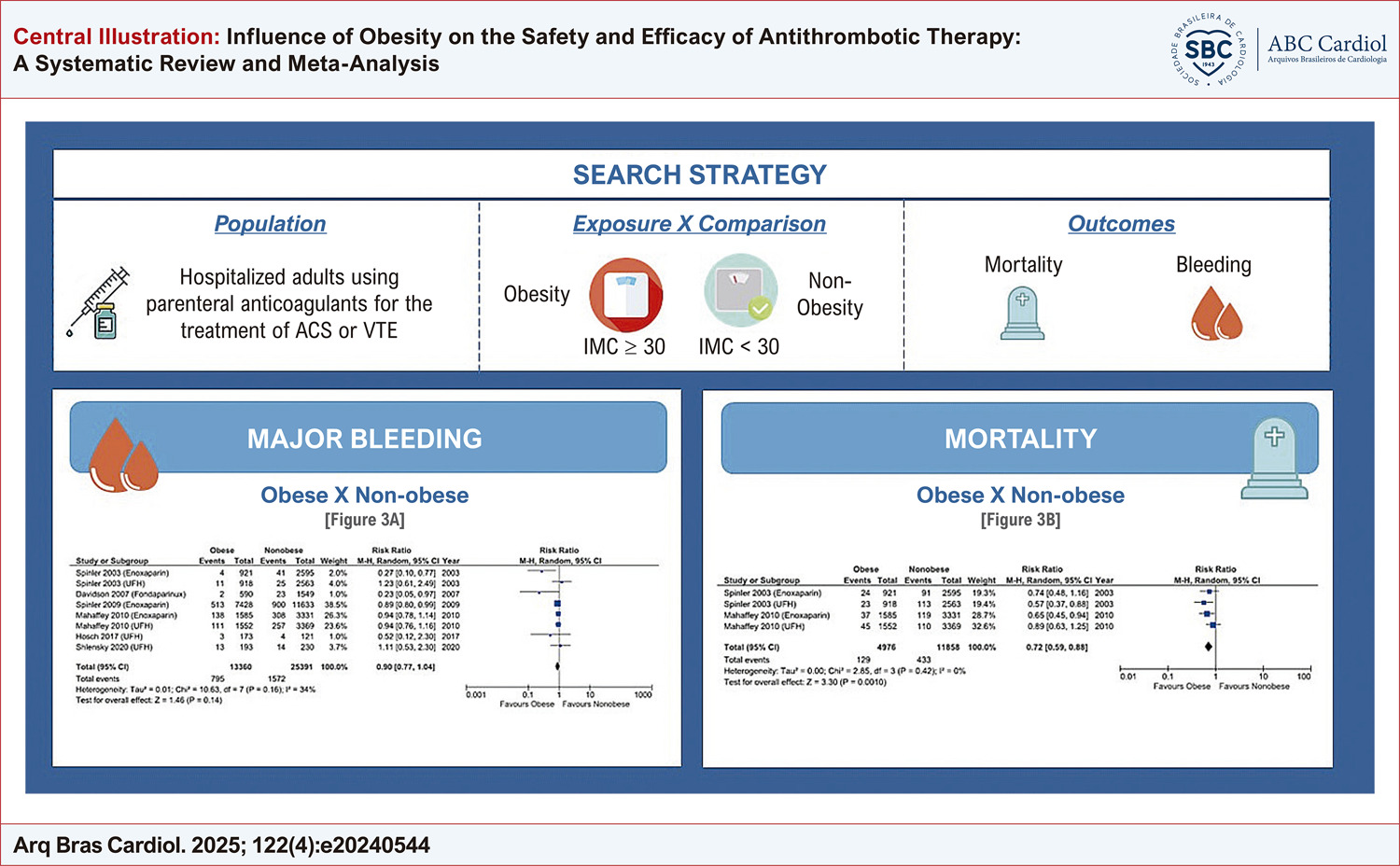
The current issue of the Arquivos Brasileiros de Cardiologia brings an important meta-analysis that can help, in part, to clarify these questions. The authors performed a systematic review of studies enrolling patients being treated for several different conditions, most of them (87%) for ACS, with a parenteral anticoagulant (UFH, enoxaparin, or fondaparinux). Eligible studies compared two exposure groups (obese versus non-obese, being obese defined as a BMI ≥ 30 kg/m) in terms of death and bleeding outcomes. Because few studies reported endpoints of myocardial infarction and none analyzed stroke, these outcomes were not part of the current meta-analysis. Authors have found 6 studies, three of them secondary analyses from randomized clinical trials (RCT) and three retrospective cohort studies. The rates of bleeding did not differ according to the obesity status (with no apparent heterogeneity according to UFH versus LMWH). However, obesity was associated with lower mortality on parenteral anticoagulation. This last finding is not entirely surprising given it has been demonstrated before (the so called “obesity paradox”). The strengths of the current meta-analysis were the rigorous selection of studies in different databases, assessment of risk of bias, and estimates of heterogeneity with proper methods. The main limitation was that, although RCTs were included, the essential information, that is, the comparison between obese and non-obese patients, was based on observational data, with the inherent risk of bias due to unknown, unmeasured confounders. Apparent lower mortality in obese patients could be explained by the usually younger age (since aging is, in fact, a factor that may decrease body weight over time) and thus the lower prevalence of other age-related co-morbidities that per si are associated with higher mortality, thus creating this apparent paradox. This same issue may cover a potential signal for an increase in bleeding (if it does exist) among obese patients. If obesity were protective against death, we would not expect a mortality reduction favoring weight loss in RCTs testing a weight reduction medication, such as subcutaneous semaglutide, among patients with high cardiovascular risk.

[…]

  • Anticoagulants
  • Body weight
  • Heparin
  • Thrombosis
Read Full Article
Creative Commons Attribution (CC BY) Creative Commons license
16/06/2025 DOI: 10.36660/abc.20250251i
Editorial

Hypertrophic Cardiomyopathy in Brazil: Advances in Knowledge and Clinical Implications

Danielle Louvet Guazzelli et al. Mônica Samuel Avila

Hypertrophic cardiomyopathy (HCM) is the most prevalent genetically determined heart disease and remains a diagnostic and prognostic challenge. The estimated prevalence of this condition in the general population is approximately 1 case per 200 individuals. In Brazil, it is estimated that 400,000 people are affected.

The natural history of HCM is heterogeneous, with an unpredictable course that may manifest from childhood to the eighth decade of life. The disease also exhibits phenotypic heterogeneity, with two main clinical forms: left ventricular outflow tract obstruction (LVOTO) and non-obstructive.

[…]

  • Epidemiology
  • Hypertrophic Cardiomyopathy
  • Prognosis
Read Full Article
Creative Commons Attribution (CC BY) Creative Commons license
16/06/2025 DOI: 10.36660/abc.20250185i
Influence of Obesity on the Safety and Efficacy of Antithrombotic Therapy: A Systematic Review and Meta-Analysis
Original Article

Influence of Obesity on the Safety and Efficacy of Antithrombotic Therapy: A Systematic Review and Meta-Analysis

Beatriz Rocha Darzé et al. Queila Oliveira Borges Mateus S. Viana Eduardo Sahade Darzé Luiz Eduardo Fonteles Ritt

Abstract

Background

Obese individuals have been historically underrepresented in clinical trials. Considering their association with a higher risk of venous thromboembolism (VTE) and acute coronary syndrome (ACS), it is necessary to establish a more suitable anticoagulation regimen for this group of patients.

Objectives

To evaluate the influence of obesity on the safety and efficacy of antithrombotic therapy in patients with ACS or VTE.

Methods

This is a systematic review and meta-analysis that used 5 main international databases. We selected clinical trials or observational studies that compared the occurrence of clinical outcomes (mortality or bleeding) between obese and non-obese patients using parenteral anticoagulants for the treatment of ACS or VTE. P value < 0.05 was used for all analyses.

Results

Six articles, with a total of 40,939 patients, were eligible, being 3 randomized clinical trials and 3 retrospective cohorts. Of the patients, 87.7% had ACS. The incidence of major bleeding was similar between groups (relative risk [RR]: 0.90, 95% confidence interval [CI]: 0.77 to 1.04, p = 0.14). The outcome remained comparable when studies were analyzed separately by anticoagulant: enoxaparin (RR: 0.87, 95% CI, 0.70 to 1.08, p = 0.21) or unfractionated heparin (RR: 0.96, 95% CI, 0.79 to 1.17, p = 0.67). The mortality rate was measured in only 2 studies, both in ACS, and it was lower in obese patients (RR: 0.71, 95% CI 0.59 to 0.87, p = 0.0007).

Conclusion

In patients treated for VTE or ACS, rates of bleeding were comparable between obese and non-obese patients, regardless of the anticoagulant used. The lower mortality rate observed in obese patients may represent the effect of unaccounted confounding.

  • Acute coronary syndrome
  • Fibrinolytic Agents
  • Obesity
  • Prognosis
  • Venous Thromboembolism
Read Full Article
Creative Commons Attribution (CC BY) Creative Commons license
26/05/2025 DOI: 10.36660/abc.20240544i Views 1
Editorial

Exercise Stress Test For Detecting High-Risk Accessory Pathways In Patients With Wolff-Parkinson-White Syndrome

Fabricio Vassallo

In the description of Wolff, Parkinson, and White in 1930 of accessory pathway exhibiting antegrade conduction much work had been done to describe the anatomy, electrophysiology, and natural history of the syndrome. During sinus rhythm, a typical pattern in the resting electrocardiogram (ECG) is present: a short PR interval (120ms). In most cases, accessory pathways giving rise to the WPW patterns are seen in structurally normal hearts.

Patients with WPW syndrome presented with palpitations caused by an atrioventricular tachycardia or, less commonly, due to primary atrial tachycardia or fibrillation.

[…]

  • Diagnostic Techniques and Procedures
  • Exercise Test
  • Wolff-Parkinson White Syndrome
Read Full Article
Creative Commons Attribution (CC BY) Creative Commons license
23/05/2025 DOI: 10.36660/abc.20250194i Views 2
Editorial

Nutritional Indices and Postoperative Atrial Fibrillation: The Triglyceride-Cholesterol-Body Weight Index

Zulkif Tanriverdi

Postoperative atrial fibrillation (POAF) is one of the most common complications after cardiac surgery and the most common cause of secondary atrial fibrillation (AF). Although it occurs at different rates depending on the type of cardiac operation, it has been reported to occur in approximately 20% of patients after coronary artery bypass grafting (CABG). Despite technological advances and all the preventive strategies developed, it is still relatively common., POAF increases the length and cost of hospitalization and is associated with increased morbidity and mortality. It may also be a predictor of non-surgical AF development in the years after the cardiac surgery. Therefore, it is important to anticipate patients who may develop POAF after the cardiac surgery.

To date, many serum biomarkers have been investigated to identify patients at risk for POAF. Recently, it has been demonstrated that malnutrition is prevalent in hospitalized patients, and malnutrition has been found to be associated with a higher incidence of AF and adverse cardiac outcomes due to slowing down the recovery process and increasing the risk of complications., Many different nutritional screening tools, from very simple to quite complex, are available to assess malnutrition in daily clinical practice. Some novel nutritional indices have been developed by objectively measurable parameters such as triglyceride, total cholesterol, body weight, albumin, lymphocyte, and additional laboratory variables to identify nutritional status. Although various systems and scores have been assessed in clinical studies, 4 objective nutritional indices have commonly been proposed for the evaluation of malnutrition as follows: geriatric nutritional risk index (GNRI), prognostic nutrition index (PNI), triglyceride-cholesterol-body weight Index (TCBI) and controlling nutritional status score.

[…]

  • Atrial Fibrillation
  • Nutrition Assessment
  • Triglycerides
Read Full Article
Creative Commons Attribution (CC BY) Creative Commons license
23/05/2025 DOI: 10.36660/abc.20250171i
Analysis of Ventricular Repolarization in Hypertensive Patients: Influence of Nocturnal Blood Pressure Dipping
Review Article

Analysis of Ventricular Repolarization in Hypertensive Patients: Influence of Nocturnal Blood Pressure Dipping

Marco Aurélio Goulart et al. Dalmo Antonio Ribeiro Moreira Fernando Yue Cesena Jonathan Batista Souza … Antonio Gabriele Laurinavicius Fernanda Marciano Consolim-Colombo Márcio Gonçalves de Sousa

Abstract

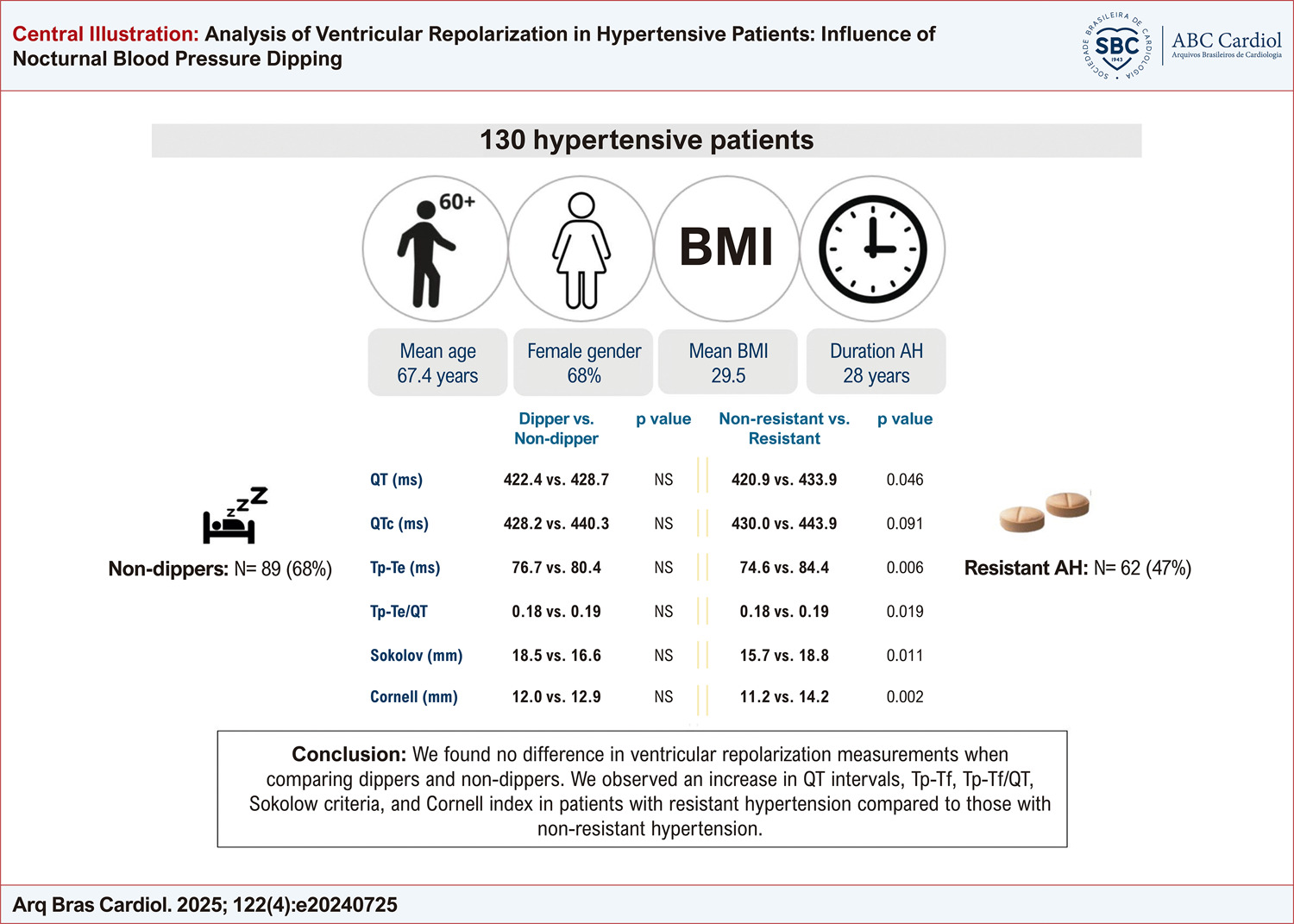
Changes in ventricular repolarization are associated with ventricular arrhythmias and higher mortality. The association between a non-dipper blood pressure pattern and changes in ventricular repolarization remains controversial. This study sought to compare ventricular repolarization measurements (QT interval, QTc, Tp-Te, Tp-Te/QT, and QTd) in hypertensive dippers and non-dippers. Secondary objectives are to compare measurements between controlled and uncontrolled hypertensive patients, as well as resistant and non-resistant hypertensive patients. This observational, cross-sectional study involved patients monitored in a Hypertension Service. The level of significance adopted in the statistical analysis was 5%. A total of 130 participants were admitted. The mean age was 67.4 years, with 72% presenting some form of target organ damage. Repolarization measurements did not differ between dippers and non-dippers. However, within the resistant hypertension group, when compared to the non-resistant, differences were observed in the QT interval in V5 (433.3 ms vs. 420.9 ms, p = 0.046), Tp-Te in both V2 (85.4 ms vs. 78.7 ms, p = 0.049) and V5 (84.6 ms vs. 74.6 ms, p = 0.006), Tp-Te/QT in V5 (0.19 vs. 0.18, p = 0.019), Sokolow-Lyon index (18.8 mm vs. 15.7 mm, p = 0.011), and Cornell index (14.2 mm vs. 11.2 mm, p = 0.002), aged-adjusted values. In this high cardiovascular risk hypertensive population, no difference in repolarization measures was found between dippers and non-dippers. However, this is the first study to demonstrate increased ventricular repolarization measures in patients with resistant hypertension.

  • Cardiac Electrophysiology
  • Heart Disease Risk Factors
  • Hypertension
Read Full Article
Creative Commons Attribution (CC BY) Creative Commons license
16/05/2025 DOI: 10.36660/abc.20240725i Views 1
Clinical and Microbiology Predictors for Therapeutic Failure in Sternal Surgical Site Infections - A Retrospective Cohort Study
Original Article

Clinical and Microbiology Predictors for Therapeutic Failure in Sternal Surgical Site Infections – A Retrospective Cohort Study

Jaqueline Fabiano Palazzo et al. Diego Augusto Medeiros Santos Bruno Adler Maccagnan Pinheiro Besen Caio Sambo … Gabriel Fialkovitz da Costa Leite Samuel Terra Gallafrio Danielle Menosi Gualandro Lani Paola Bonilla Cuello Marcus Vinicius Barbosa Santos Tania Mara Varejão Strabelli Pablo Maria Alberto Pomerantzeff Fabio Biscegli Jatene Rinaldo Siciliano

Abstract

Background

Although sternal surgical site infections (SSI) are an important complication after cardiac surgeries, predictors of treatment failure are poorly studied.

Objectives

The aim of this study is to assess the clinical and microbiology predictors of a sternal SSI therapeutic failure.

Methods

Patients who presented a sternal SSI were retrospectively analyzed. Data regarding demographic characteristics, clinical findings, initial laboratory and radiologic findings and treatment of index sternal SSI were evaluated. Primary outcome was treatment failure, comprising infection relapse (clinical sternal SSI after complete treatment) or infection persistence (outpatient antimicrobial treatment failure). The microbiology was assessed at the index infection and in the outcome. P-values < 0.05 were considered statistically significant.

Results

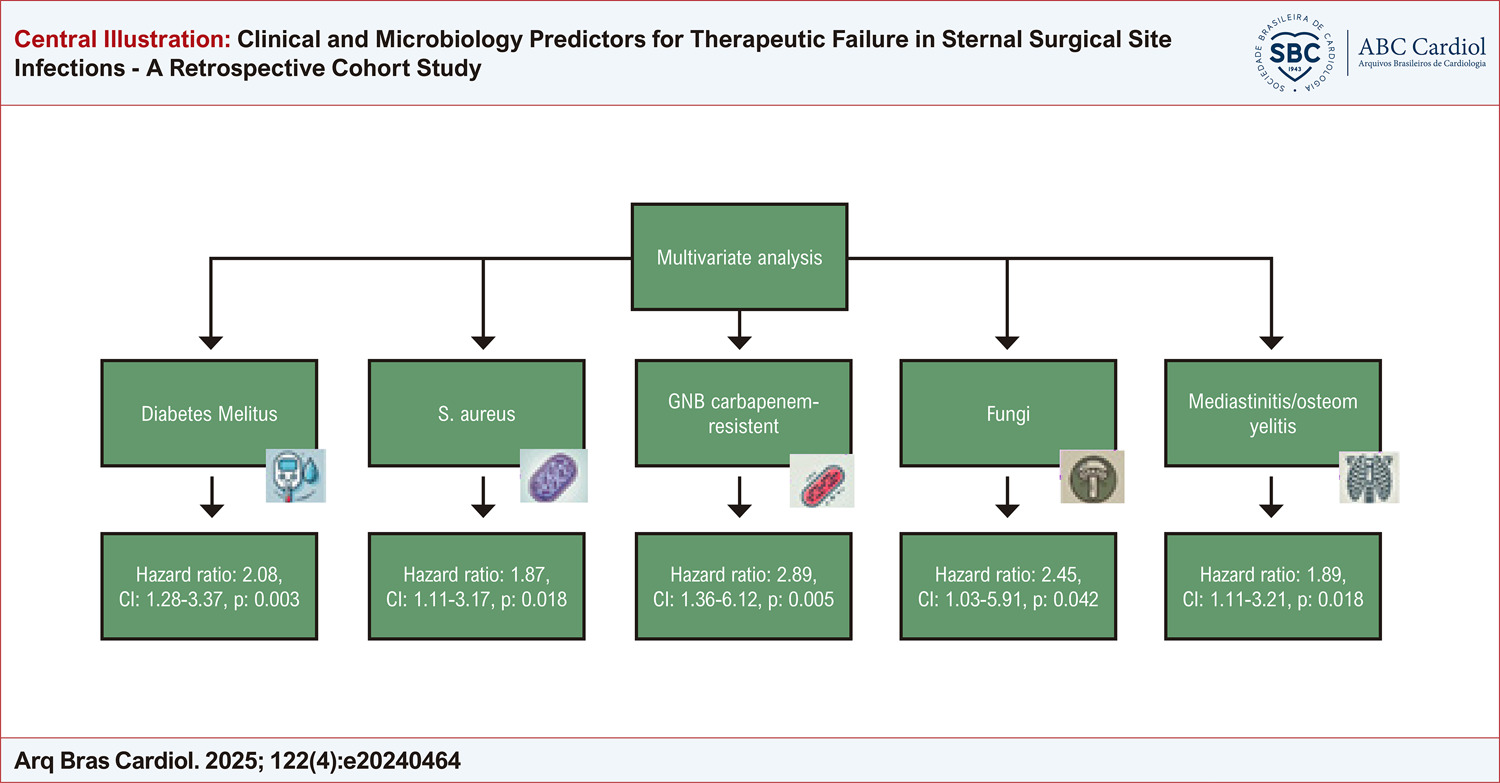
Among 489 included patients, mean age was 58 years, 265 (55%) were female, 185 (38%) had diabetes mellitus. The overall prevalence of therapeutic failure was 14% (67), occurring in a median of 174 days (±41) after index cardiac surgery. Most frequent etiologies were cocci Gram-positive and Klebsiella pneumoniae. None of laboratory or thoracic tomographic findings presented during the index sternal SSI was related to outcome. After multivariate analysis, Staphylococcus aureus, carbapenem-resistant Gram-negative bacilli (GNB), fungi, diabetes mellitus and presence of mediastinitis/osteomyelitis were positive predictors of therapeutic failure.

Conclusions

Emerging carbapenem-resistant GNB, fungi and S. aureus were etiologies associated with higher risk of therapeutic failure in sternal SSI. DM and deep sternal wound infections were also contributing factors. Its clinical implications and the exact role of multi-resistant microorganism itself are subject for more studies.

  • Mediastinitis
  • Surgical Wound Infection
  • Thoracic Surgery
  • Treatment Failure
Read Full Article
Creative Commons Attribution (CC BY) Creative Commons license
16/05/2025 DOI: 10.36660/abc.20240464i Views 1
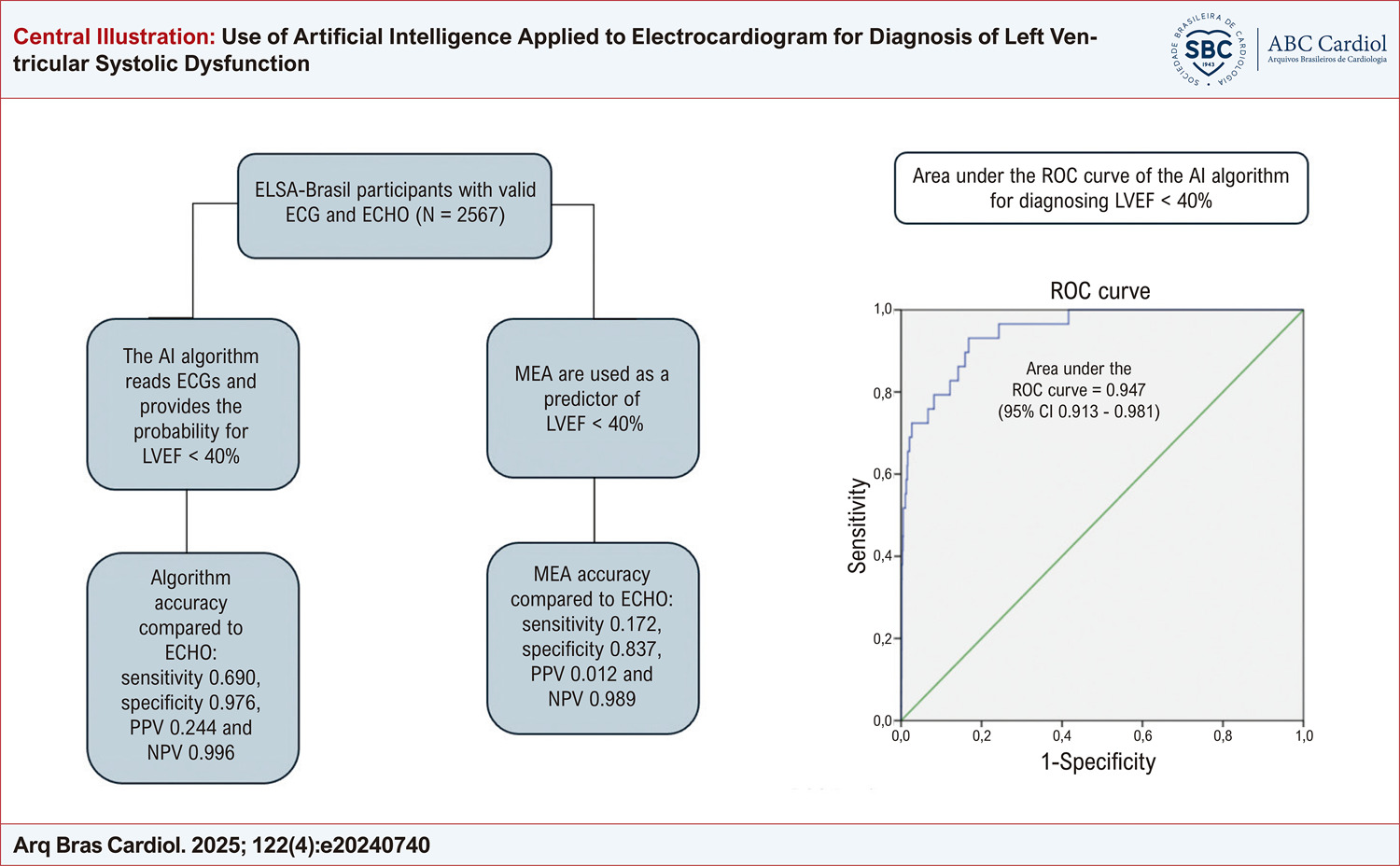
Use of Artificial Intelligence Applied to Electrocardiogram for Diagnosis of Left Ventricular Systolic Dysfunction
Original Article

Use of Artificial Intelligence Applied to Electrocardiogram for Diagnosis of Left Ventricular Systolic Dysfunction

Wilton Batista de Santana Júnior et al. Marcelo M. Pinto Filho Sandhi Maria Barreto Murilo Foppa … Luana Giatti Rohan Khera Antonio Luiz Pinho Ribeiro

Abstract

Background

Heart failure (HF) is a disease associated with an important type of morbidity and mortality. The electrocardiogram (ECG), one of the tests used to evaluate HF, is low-cost and widely available.

Objective

To evaluate the performance of an artificial intelligence (AI) algorithm applied to ECG to detect HF and compare it with the predictive power of major electrocardiographic alterations (MEA).

Methods

This work is a diagnostic accuracy cross-sectional study. All participants were from the Longitudinal Study of Adult Health (Estudo Longitudinal da Saúde do Adulto – ELSA-Brasil) and presented a valid ECG and echocardiogram (ECHO). The algorithm estimated probability values for left ventricular systolic dysfunction (LVSD). The assessed endpoint was left ventricular ejection fraction (LVEF) <40% in the ECHO. Sensitivity, specificity, positive predictive value (PPV), negative predictive value (NPV), positive likelihood ratio (LR+), negative likelihood ratio (LR-), and diagnostic odds ratio (DOR) were determined for both the algorithm and the MEA. The area under the ROC curve (AUC-ROC) for the algorithm was calculated.

Results

In the analytical sample of 2,567 individuals, the prevalence of LVEF <40% was 1.13% (29 individuals). The values obtained for sensitivity, specificity, PPV, NPV, LR+, LR-, and DOR for the algorithm were 0.690, 0.976, 0.244, 0.996, 27.6, 0.32, and 88.74, respectively. For the MEA, the values were 0.172, 0.837, 0.012, 0.989, 1.09, 0.990, and 1.07, respectively. The AUC-ROC of the algorithm to predict the LVEF <40% was 0.947 (95% CI: 0.913 – 0.981).

Conclusion

The AI algorithm performed well in detecting LVSD and can be used as a screening tool for LVSD.

  • Artificial Intelligence
  • Electrocardiography
  • Heart Failure
  • Left Ventricular Dysfunction
Read Full Article
Creative Commons Attribution (CC BY) Creative Commons license
16/05/2025 DOI: 10.36660/abc.20240740i
Figure 1
Original Article

Diagnostic Test Accuracy of Exercise Testing in Detecting High-Risk Accessory Pathways in WPW: A Systematic Review and Meta-Analysis

José Nunes de Alencar et al. Fabio Mahamad Rassi Raquel Pereira Rios Matheus Kiszka Scheffer Guilherme Dagostin de Carvalho

Abstract

Background

Wolff-Parkinson-White (WPW) syndrome is characterized by ventricular pre-excitation, which can lead to severe arrhythmic events such as supraventricular tachycardia and pre-excited atrial fibrillation. The diagnostic value of non-invasive exercise tests in detecting high-risk accessory pathways remains inconsistent in the literature.

Objectives

To evaluate the diagnostic accuracy of non-invasive exercise tests compared to invasive electrophysiological studies (EPS) for identifying high-risk accessory pathways in WPW syndrome.

Methods

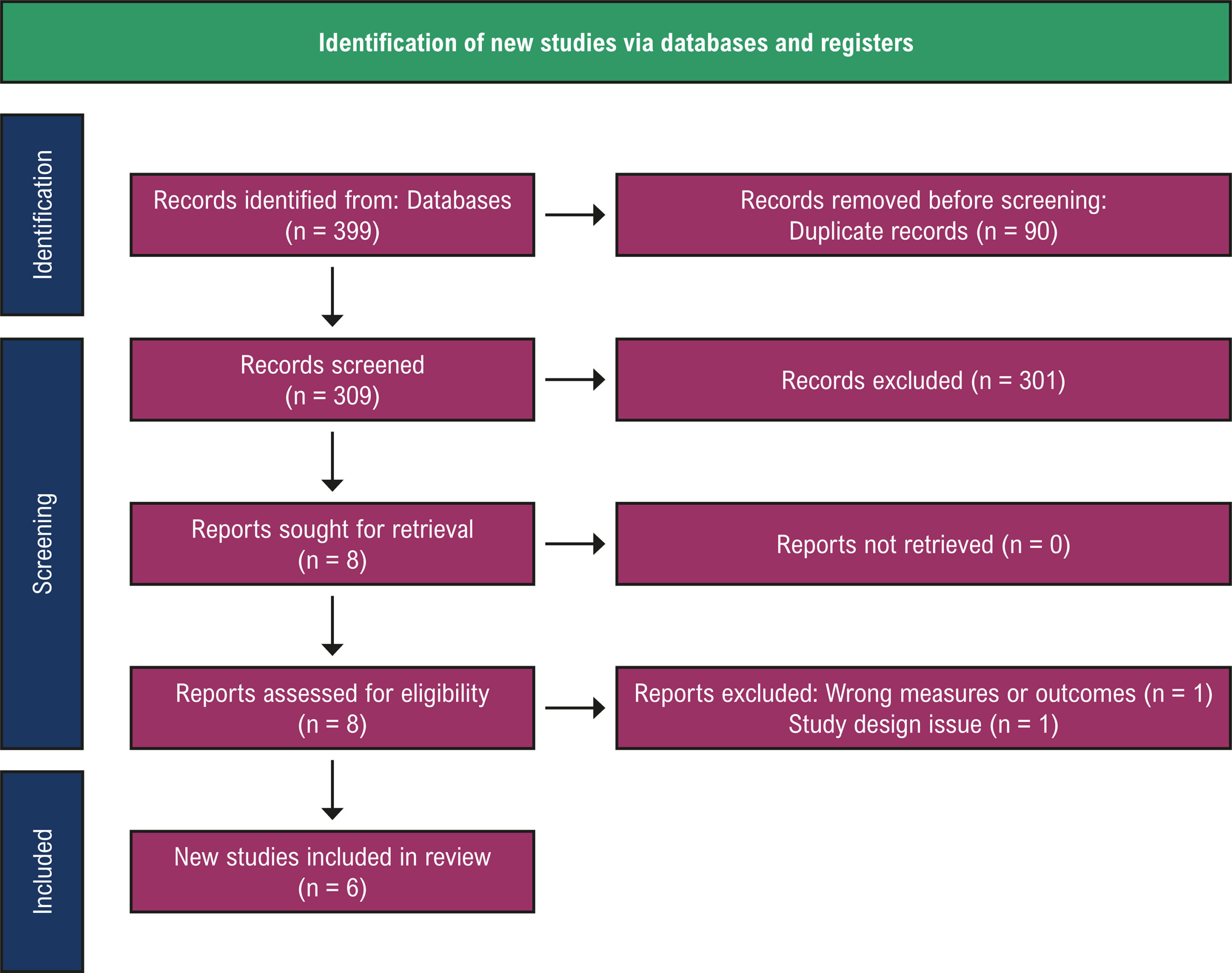
Following PRISMA-DTA guidelines, a comprehensive search was conducted in PubMed, Scopus, and Web of Science databases. Eligible studies assessed the sensitivity, specificity, and likelihood ratios of non-invasive exercise tests in WPW patients, using EPS as the reference standard. A bivariate random-effects model was applied for meta-analysis.

Results

Six studies, comprising a total of 765 patients, met the inclusion criteria. The pooled sensitivity was 92.7% (95% CI: 88.0% – 94.0%), while the pooled specificity was 28.1% (95% CI: 23% – 35.1%). A negative likelihood ratio (LR-) of 0.260 (95% CI: 0.174 – 0.387) indicated that the presence of a high-risk accessory pathway is about four times less likely after a negative test result. Sensitivity analysis restricted to pediatric patients showed consistent results.

Conclusion

Non-invasive exercise tests demonstrate a reasonable diagnostic utility for ruling out high-risk pathways in WPW syndrome. However, caution is advised when using these tests as standalone criteria for risk stratification.

  • Exercise Test
  • Meta-Analysis
  • systematic review
  • Wolff-Parkinson White Syndrome
Read Full Article
Creative Commons Attribution (CC BY) Creative Commons license
12/05/2025 DOI: 10.36660/abc.20240663i
Central Illustration
Original Article

The Effect of Coronary Artery Bypass Graft Surgery on Contractile Function and Symptoms in Patients with Left Ventricular Dysfunction

Fernando Bassan et al. Roberto Esporcatte Marcelo Goulart Correia Octavio Drummond Guina … Guilherme de Souza Weigert Gracielle Christine do Nascimento Oliveira

Abstract

Background

The degree of left ventricular (LV) dysfunction is an independent risk factor for poor outcomes in patients with chronic coronary syndrome. Coronary artery bypass graft (CABG) is the standard care for the management of ischemic heart failure to improve symptoms and prognosis. However, the predictors of improvement are still uncertain.

Objective

To assess the effect of myocardial revascularization on LV function and symptoms in patients with CCS and reduced left ventricular ejection fraction (LVEF), as well as to identify the improvement predictors.

Methods

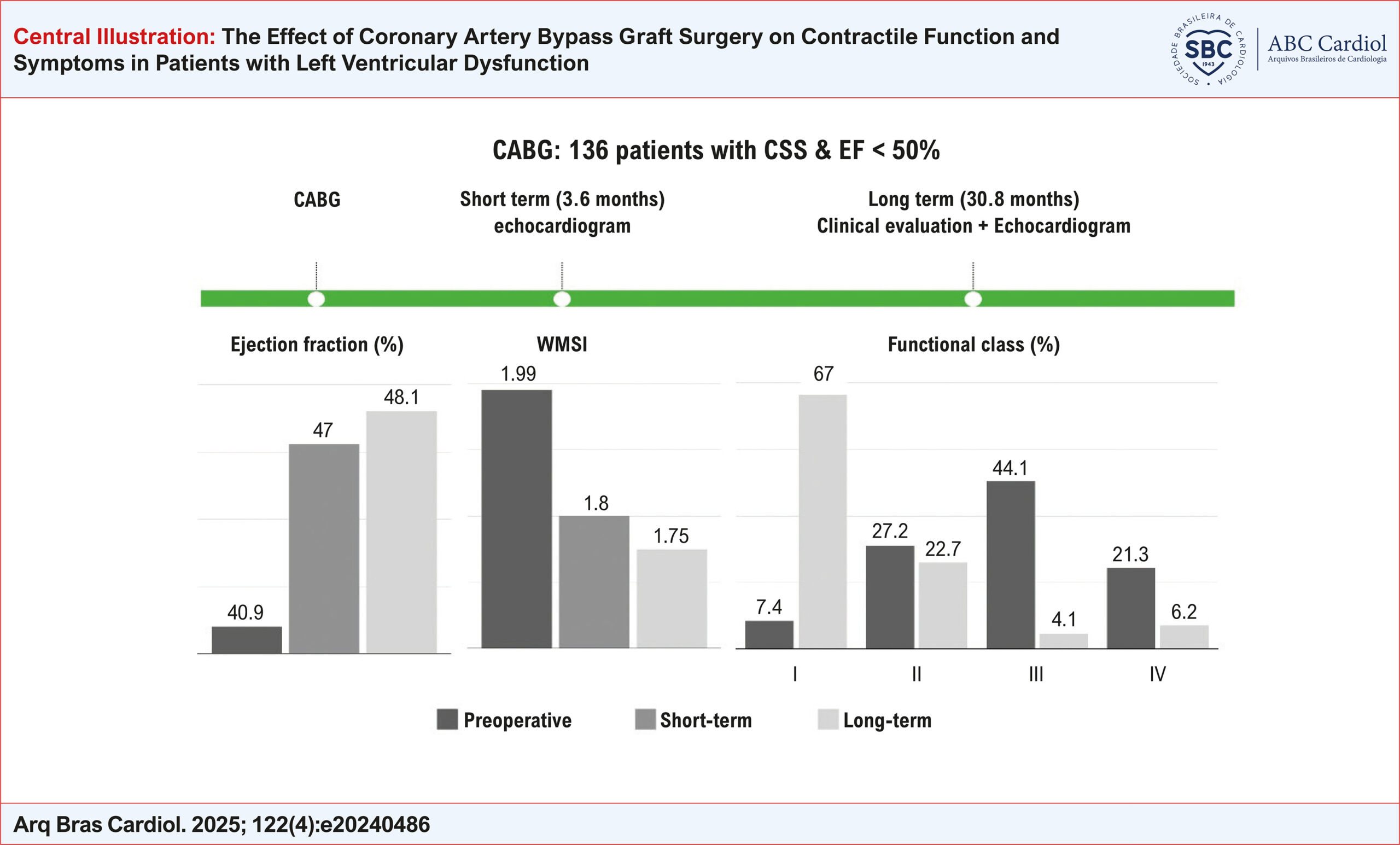
We retrospectively analyzed the data and clinical status of 136 consecutive patients with LVEF<50% that underwent CABG. During clinical follow-up echocardiographic LV function was reassessed at the short-term (3.6 months) and long-term (30.8 months), and compared to baseline.

Results

Mean pre-operative LVEF was 40.9 ± 8.6% and wall motion score index (WMSI) was 1.99 ± 0.36, both improving at long-term to 48.1 ± 15.0% (p<0.001) and 1.75 ± 0.49 (p<0.001), respectively. We observed that 55.7% of the patients presented an improvement of LVEF≥10% and 58.1% in WMSI ≥10%. Univariate logistic regression analysis revealed that cerebrovascular disease was the only variable to be predictor of LVEF improvement. At the end of follow-up, we observed a reduction in the rate of patients in functional class III/IV when compared to baseline (65.4 vs. 10.3% – p<0.001).

Conclusions

Patients with CCS and reduced LVEF undergoing CABG experienced improvement in both LV contractile function and size, with beneficial response in functional class.

  • Chronic Coronary Syndrome
  • Heart Failure
  • Left Ventricular Dysfunction
  • Myocardial Revascularization
Read Full Article
Creative Commons Attribution (CC BY) Creative Commons license
12/05/2025 DOI: 10.36660/abc.20240486i Views 1
Figure 1
Original Article

Clinical and Echocardiographic Particularities of Hypertrophic Cardiomyopathy in a Brazilian Population and its Prognostic Impact

Georgina Del Cisne Jadán Luzuriaga et al. Edmundo Arteaga-Fernandez Viviane Tiemi Hotta Barbara Ianni … Luciano Nastari Felix Ramires Guilherme Wesley Peixoto da Fonseca Charles Mady Fábio Fernandes Juliano Novaes Cardoso

Abstract

Background

Hypertrophic cardiomyopathy (HCM) presents echocardiographic abnormalities that are important for diagnosis and prognosis. Data are scarce in the Brazilian literature.

Objective

To assess clinical and echocardiographic characteristics and disease progression in a Brazilian cohort of patients with HCM.

Methods

This retrospective cohort included patients with HCM aged ≥ 18 years. Patients with moderate or severe aortic stenosis and those undergoing septal reduction were excluded. The significance level adopted in the statistical analysis was 5%.

Results

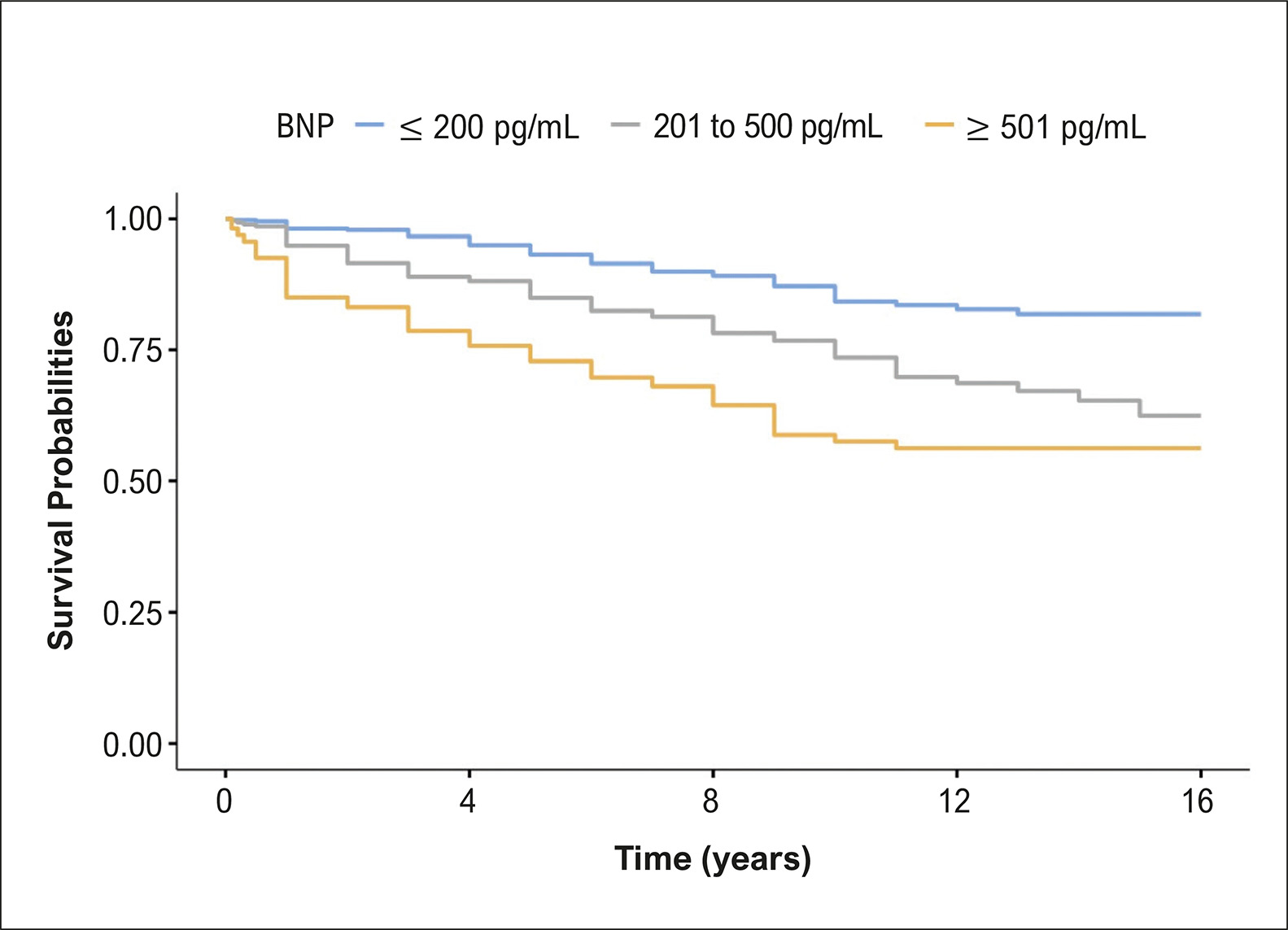
The study included 1244 patients, between 2010 and 2022, with a mean follow-up time of 7.7 ± 4.5 years; 53.6% of patients were men. Mean age was 54.6 ± 16.5 years, and mean left ventricular ejection fraction (LVEF) was 65.8% ± 7.6. We observed LVEF ≤ 50% in 5.8% of patients, asymmetric form in 88.7%, and septal hypertrophy in 85.4%. We found systolic anterior motion of the mitral valve in 30.1% of patients, left ventricular outflow tract obstruction in 30.7%, and septum ≥ 28 mm in 7.2%. Only 1 patient had ventricular aneurysm. Atrial fibrillation/flutter occurred in 9.6% of patients. Overall mortality occurred in 232 patients (1.3%/year). Patients with B-type natriuretic peptide (BNP) > 200 pg/ml, left atrium ≥ 45 mm, and LVEF ≤ 50% had higher mortality (p < 0.001). Age and atrial fibrillation/flutter were also associated with mortality.

Conclusions

The majority of patients had LVEF > 50%, asymmetric hypertrophy, and septal predominance. BNP, LA diameter, LVEF ≤ 50%, age, and atrial fibrillation/flutter were associated with worse prognosis.

  • Echocardiography
  • Hypertrophic Cardiomyopathy
  • Mortality
  • Stroke Volume
Read Full Article
Creative Commons Attribution (CC BY) Creative Commons license
12/05/2025 DOI: 10.36660/abc.20240640i Views 1
Figure 1
Original Article

Mortality and Ventricular Arrhythmia in Patients with Early Ventricular Repolarization

Hugo Baldisserotto et al. Barbara Adelmann de Lima Marco Aurélio Lumertz Saffi Anderson Donelli da Silveira … Marcia Leonardi Baldisserotto Tiago Luiz Luz Leiria

Abstract

Background

Recent research has linked early repolarization (ER) with increased ventricular fibrillation risk, especially in leads V1-V3 and in inferior and lateral regions. However, data on the Brazilian population are limited.

Objective

To estimate the impact of ER on survival and the occurrence of ventricular arrhythmias (VA) in patients over a 10-year period at a university hospital.

Methods

This retrospective cohort study included patients with ER on electrocardiogram from the hospital database. Descriptive analysis was conducted to describe patients’ profile and characteristics. Kaplan-Meier method was utilized to analyze survival curves, with the log-rank test employed to assess differences between ER types. Cox regression models were applied to evaluate the risks of death and VA, calculating both gross and adjusted hazard ratios. The level of significance adopted in the statistical analysis was 5%.

Results

The study population was predominantly male, average age of 45.6 years; 2.7% experienced VA (five in the group with lateral ER, four in the group with inferior ER group, and four in the ER inferolateral group). Significant differences were observed in age, sex, and HFrEF between the groups. Regarding all-cause mortality, 2.3% of patients died (five in the group with lateral ER, one in the group with inferior ER group, and five in the ER inferolateral group). Only age showed a statistically significant difference. There were significant differences in both death and VA between the groups (p=0.7 and p=0.5, respectively).

Conclusion

ER did not lead to a higher incidence of VA or all-cause mortality in this cohort.

  • Cardiac Arrhythmias
  • Electrocardiography
  • Mortality
Read Full Article
Creative Commons Attribution (CC BY) Creative Commons license
12/05/2025 DOI: 10.36660/abc.20240516i
Viewpoint

The Culprit Valve: A New Concept for Reducing the Risk of Intervention in Patients with Severe Valve Disease

Roberto Cintra de Azevedo Aragão et al. José Augusto Soares Barreto-Filho Roney Orismar Sampaio

In clinical practice, it is not unusual to come across two relatively serious clinical conditions that occur concomitantly and may justify the patient’s symptoms. For example, associations between aortic stenosis and coronary artery disease, or between aortic stenosis and primary or secondary mitral regurgitation, both moderate to severe, are common in the real world. In the case of patients with low surgical risk, combined treatment is a consensus at the time of surgical intervention despite the consequences of these combined procedures, such as increased cardiovascular morbidity and mortality. For example, aortic valve (AV) replacement, when combined with coronary artery bypass graft surgery, increases the risk of mortality by almost twofold, just as AV replacement, when combined with mitral valve (MiV) surgery, increases this risk by more than threefold. However, in patients with high perioperative risk, especially when a less invasive isolated procedure can be used, the decision to indicate a broader treatment but with higher morbidity and mortality versus an isolated treatment but with lower morbidity and mortality is not trivial.

Recently, in Heart Team (HT) discussions, thanks to the advent of AV treatment by transcatheter aortic valve implantion (TAVI) or even MiV “edge-to-edge” repair and “valve in valve” procedure, the idea that the isolated treatment of the most severe lesion, which is likely the main cause of the patient’s symptoms, can optimize the patient’s outcome, reducing the expected morbidity and mortality and substantially improving the patient’s quality of life, has gained momentum.

[…]

  • Cardiology
  • Heart Valve Diseases
  • Prognosis
Read Full Article
Creative Commons Attribution (CC BY) Creative Commons license
12/05/2025 DOI: 10.36660/abc.20240492i Views 1
Figure 1
Research Letter

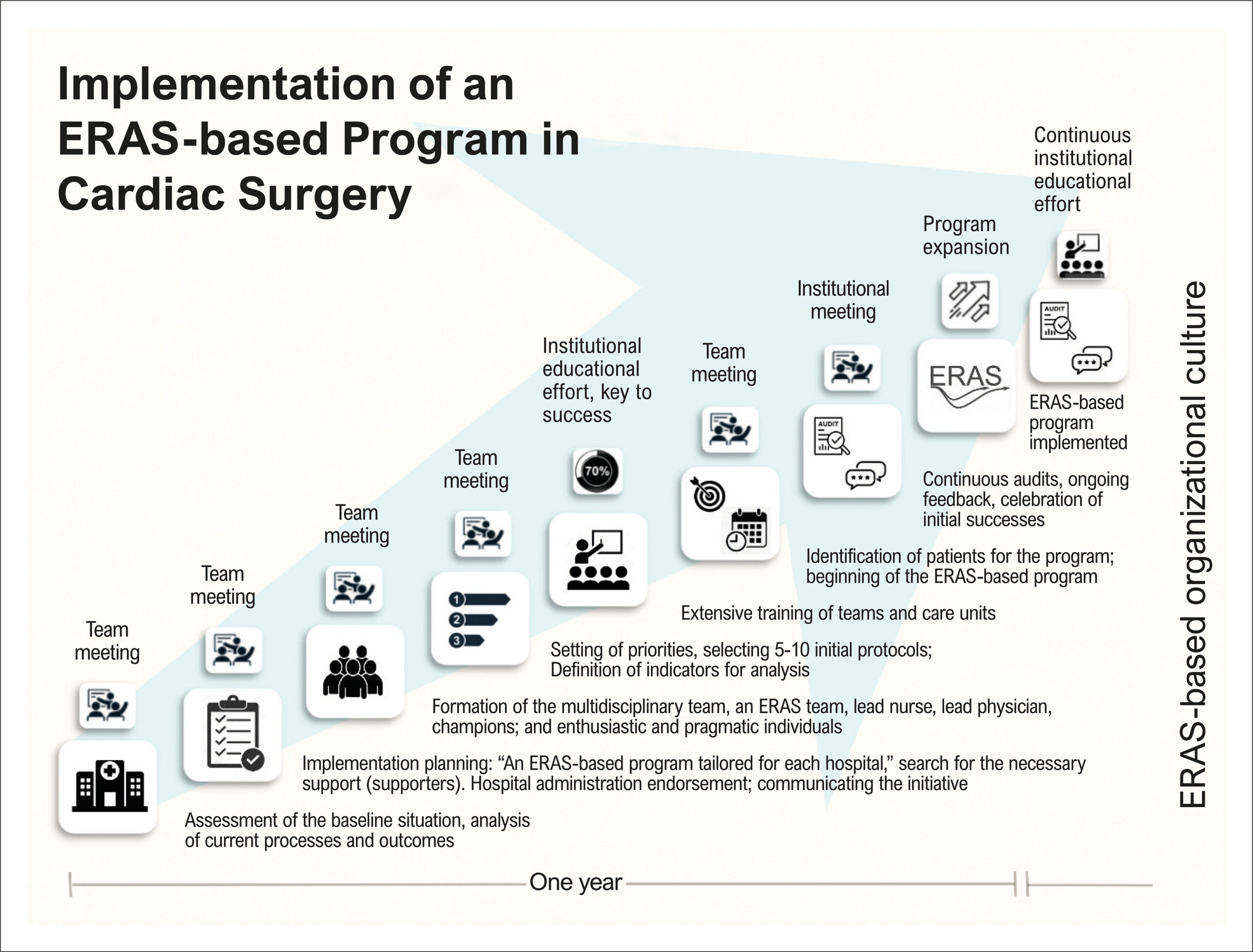
Elements for Implementing Perioperative Optimization in Cardiac Surgery Based on Enhanced Recovery after Surgery

Marcelo Jamus Rodrigues et al. Andréa de Fátima Cristino Bastos Crespo Gabrielle Barbosa Borgomoni Fábio Antônio Serra de Lima Júnior … Paola Keese Montanhesi Luiz Fernando Falcão Valter Furlan Omar Asdrúbal Vilca Mejia

Introduction

The optimization of recovery after surgery, as proposed by the Enhanced Recovery After Surgery (ERAS) concept, involves perioperative care aimed at minimizing emotional and physiological stress while accelerating patients’ functional recovery.

ERAS utilizes intervention bundles that, collectively, decrease hospitalization time,– opioid use, postoperative complications,, and healthcare expenses.,

[…]

  • Cardiovascular Surgical Procedures
  • Clinical Protocols
  • Enhanced Recovery After Surgery
Read Full Article
Creative Commons Attribution (CC BY) Creative Commons license
12/05/2025 DOI: 10.36660/abc.20240599i
Letter to the Editor

How to Incorporate Remote Dielectric Sensing System and Lung Ultrasound in Patients with Acute Congestive Heart Failure

Toshihide Izumida et al. Teruhiko Imamura

To Editor

Accurate assessment of pulmonary congestion is pivotal for the optimal management of congestive heart failure. The remote dielectric sensing (ReDS) system represents a recently developed non-invasive technology designed to quantify lung fluid volume without requiring specialized expertise. Kobalava et al. demonstrated a moderate correlation between the ReDS system and lung ultrasound. However, several concerns warrant further discussion.

[…]

  • Heart Failure
  • Hemodynamics
  • Lung
Read Full Article
Creative Commons Attribution (CC BY) Creative Commons license
09/05/2025 DOI: 10.36660/abc.20250053i Views 1
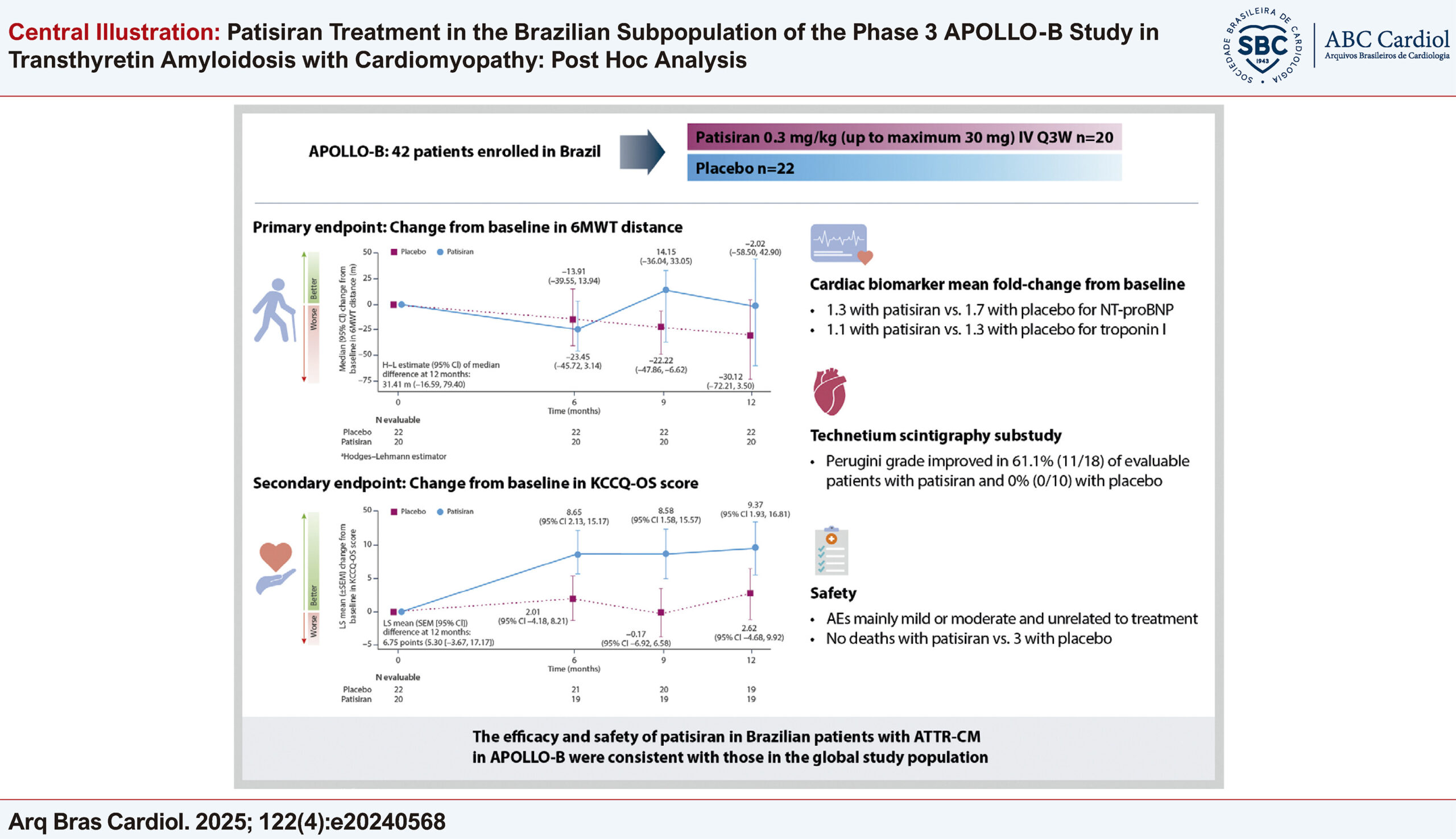
Patisiran Treatment in the Brazilian Subpopulation of the Phase 3 APOLLO-B Study in Transthyretin Amyloidosis with Cardiomyopathy: Post Hoc Analysis
Original Article

Patisiran Treatment in the Brazilian Subpopulation of the Phase 3 APOLLO-B Study in Transthyretin Amyloidosis with Cardiomyopathy: Post Hoc Analysis

Claudio Tinoco Mesquita et al. Pedro Schwartzmann Edileide Barros Correia Marcus V. Simões … Andreia Biolo Daniel Rodriguez Duque Patrick Y. Jay Fábio Fernandes

Abstract

Background

Patisiran rapidly knocked down transthyretin and preserved functional capacity in patients with transthyretin amyloidosis with cardiomyopathy (ATTR-CM) in the global Phase 3 APOLLO-B study (NCT03997383).

Objectives

To evaluate patisiran efficacy and safety in post hoc analysis of the Brazilian subpopulation of APOLLO-B.

Methods

Patients were randomized 1:1 to patisiran 0.3 mg/kg or placebo every 3 weeks for 12 months. The primary endpoint was the change from baseline (CFB) in functional capacity (6-minute walk test [6MWT]) at Month 12. Secondary endpoints included CFB to Month 12 in the Kansas City Cardiomyopathy Questionnaire-Overall Summary (KCCQ-OS) score. Exploratory endpoints included CFB in cardiac biomarkers and Perugini grade of cardiac uptake during technetium-99m scintigraphy.

Results

Forty-two patients enrolled in Brazil (patisiran, n=20; placebo, n=22). Patisiran showed benefit in 6MWT and KCCQ-OS scores vs. placebo; CFB (95% confidence interval [CI]) in 6MWT (median) and KCCQ-OS scores (least squares mean) was –2.0 m (–58.5, 42.9) and 9.37 (1.93, 16.81) points with patisiran vs. –30.1 m (–72.2, 3.5) and 2.62 (–4.68, 9.92) points for placebo. For cardiac biomarkers, the mean fold-change from baseline (95% CI) for N-terminal prohormone B-type natriuretic peptide and troponin I was 1.31 (1.06, 1.61) and 1.12 (0.94, 1.34) for patisiran, and 1.71 (1.39, 2.10) and 1.28 (1.08, 1.53) for placebo, respectively. Perugini grade improved in 11/18 (61.1%) and 0/10 evaluable patients with patisiran and placebo, respectively. There were no deaths in the patisiran group vs. 3 in the placebo group.

Conclusion

The efficacy and safety of patisiran in Brazilian patients with ATTR-CM in APOLLO-B were consistent with those in the global study population. Findings are descriptive due to the small number of patients.

  • Amyloidosis
  • Cardiomyopathies
  • Clinical Trial
  • Small Interfering RNA
  • Transthyretin
Read Full Article
Creative Commons Attribution (CC BY) Creative Commons license
14/04/2025 DOI: 10.36660/abc.20240568i Views 1
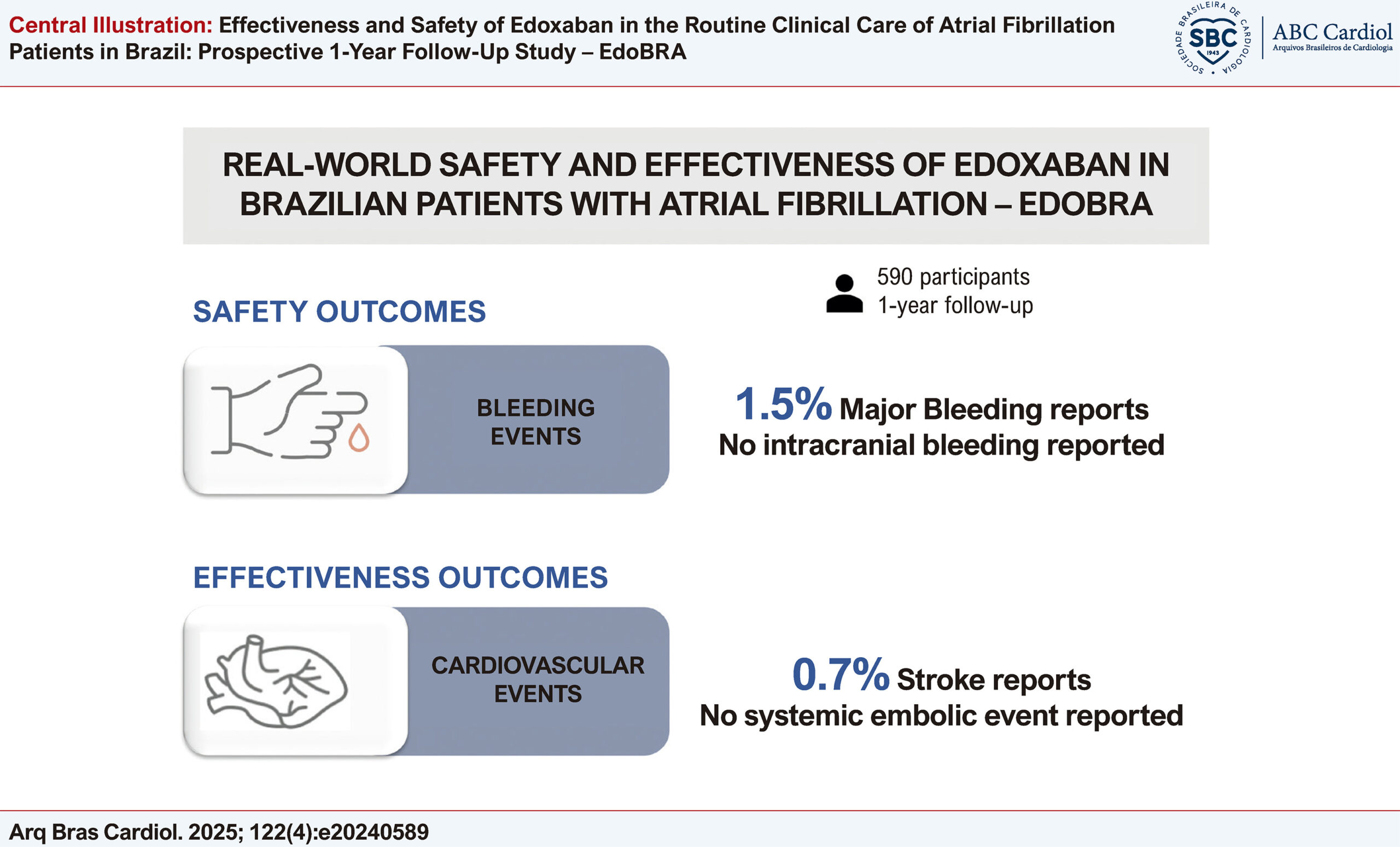
Effectiveness and Safety of Edoxaban in the Routine Clinical Care of Atrial Fibrillation Patients in Brazil: Prospective 1-Year Follow-Up Study – EdoBRA
Original Article

Effectiveness and Safety of Edoxaban in the Routine Clinical Care of Atrial Fibrillation Patients in Brazil: Prospective 1-Year Follow-Up Study – EdoBRA

Dalton Bertolim Precoma et al. Rafael Paletta da Silva Luiz Carlos Santana Passos Conrado Roberto Hoffman Filho … Fábio Serra Silveira José Tarcísio Medeiros de Vasconcelos Sérgio Luiz Zimmermann Artur Haddad Herdy Alessandra Ritter Daniely Freitas-Alves José Francisco Kerr Saraiva

Abstract

Background

Edoxaban, an orally administered anticoagulant, has been shown to be safe and effective in preventing stroke in atrial fibrillation (AF) patients. Given its widespread use since approval, evaluating edoxaban’s real-world performance in the Brazilian clinical context is crucial.

Objective

The study aimed to report the one-year safety and effectiveness of edoxaban in AF patients in Brazil.

Methods

EdoBRA is a multi-center, prospective, observational investigation conducted across 30 Brazilian research sites. Bleeding events were considered as safety measures and cardiovascular events were considered for effectiveness measures. Descriptive analyses were performed. Kaplan-Meier curves were generated for time-to-event analysis and a 95% confidence interval was used as appropriate.

Results

Among the 705 enrolled participants, 590 were included in the analysis for having at least one follow-up or one reported event. Mean (±SD) CHA2DS2-VASc risk score was 3 (3.3 ± 1.6) and the mean HAS-BLED risk score was 2 (1.8 ± 1.2). During the one-year follow-up period, nine major bleedings events were reported, including five cases of gastrointestinal bleeding (IP 0.85 [95% CI =0.82; 0.88]). Among the cardiovascular events recorded (N = 68), there were four stroke events (IP 0.68 [CI 95% 0.65;0.71]), one transient ischemic attack (IP 0.17 [CI 95% (0.16;0.18]) and 1 event was Venous Thromboembolic Events (IP 0.17 [CI 95% (0.16;0.18]). No systemic embolic event was exhibited by any patient.

Conclusion

In an elderly population with several comorbidities routinely treated with edoxaban for AF, the rates of cardiovascular event and major bleeding were low.

  • Anticoagulants
  • Atrial Fibrillation
  • Hemorrhage
  • Stroke
Read Full Article
Creative Commons Attribution (CC BY) Creative Commons license
14/04/2025 DOI: 10.36660/abc.20240589i Views 1
Viewpoint

Treating Patients with Heart Failure with Reduced Ejection Fraction (HFrEF) and Atrial Fibrillation: We Need to Talk About the Fifth Pillar

Mauricio Pimentel et al. Lucas Simonetto Faganello Ana Paula Arbo Magalhães Eduardo Caberlon Leandro Ioschpe Zimerman

Heart failure with reduced ejection fraction (HFrEF) is a complex clinical syndrome characterized by symptoms of dyspnea and worsening functional capacity resulting from reduced cardiac output in patients with left ventricular ejection fraction (LVEF) ≤40%. HFrEF represents an important public health problem, being one of the main causes of hospital admission, with high morbidity and mortality rates. Based on large randomized clinical trials, the standard treatment for patients with HFrEF until the late 1990s consisted of angiotensin-converting enzyme inhibitors (ACEIs) or angiotensin receptor blockers (ARBs), beta-blockers, and mineralocorticoid receptor antagonists (MRAs). After about two decades, a new era in the treatment of HFrEF began with the publication of randomized clinical trials on new classes of drugs: angiotensin receptor-neprilysin inhibitors (ARNIs) and sodium-glucose co-transporter 2 (SGLT2) inhibitors. Based on this evidence, the guidelines defined the four pillars of HFrEF treatment: ACEIs or ARNIs, beta-blockers, MRAs, and SGLT2 inhibitors., In addition to pharmacological treatment, the implantation of a cardioverter-defibrillator and cardiac resynchronization therapy are also indicated for patients with specific clinical features.

Atrial fibrillation (AF) and HFrEF share common risk factors and often coexist, leading to exacerbation of clinical condition and poorer prognosis for both. The diagnosis of AF in patients with HFrEF is associated with increased mortality. HFrEF is a risk factor for increased incidence of AF and is associated with a higher risk of stroke in patients with AF. The importance of determining the best therapeutic approach for patients with AF and HFrEF led to randomized clinical trials comparing rhythm control and heart rate control strategies. The Dofetilide in Patients with Congestive Heart Failure and Left Ventricular Dysfunction (DIAMOND-CHF) study compared the use of dofetilide with placebo in patients with ventricular dysfunction. In the analysis of patients with AF, it was shown that the use of dofetilide resulted in a higher rate of reversion and maintenance of sinus rhythm, but with no effect on overall mortality. The Rhythm Control versus Rate Control for Atrial Fibrillation and Heart Failure (AF-CHF) study compared rhythm control strategies (cardioversion and antiarrhythmic drug, with amiodarone being the drug of choice) to heart rate control in patients with LVEF ≤ 35%. The rhythm control strategy did not show a reduction in cardiovascular mortality compared to heart rate control. It is important to note that, during follow-up, 58% of the patients in the rhythm control group had a recurrence of AF. In fact, the rhythm control strategy was not very effective in maintaining patients in sinus rhythm.

[…]

  • Atrial Fibrillation
  • Catheter Ablation
  • Heart Failure
Read Full Article
Creative Commons Attribution (CC BY) Creative Commons license
31/03/2025 DOI: 10.36660/abc.20240585i Views 1
Parameter Predicting Postoperative Atrial Fibrillation in Coronary Artery Bypass Grafting Patients: Triglyceride-Cholesterol-Body Weight Index
Original Article

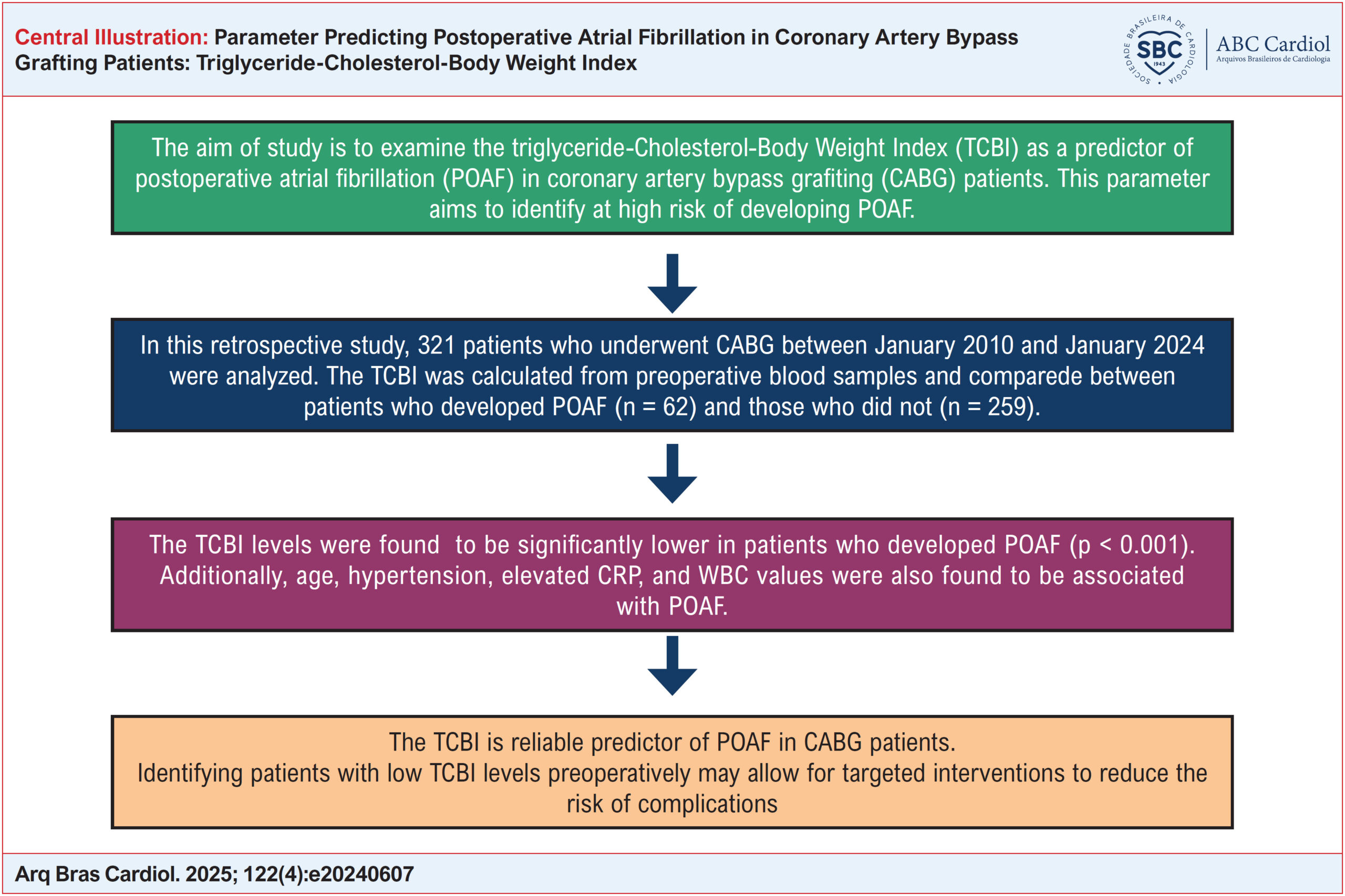
Parameter Predicting Postoperative Atrial Fibrillation in Coronary Artery Bypass Grafting Patients: Triglyceride-Cholesterol-Body Weight Index

İlhan Koyuncu et al. Emin Koyun

Abstract

Background:

Postoperative atrial fibrillation (POAF) is a common complication after cardiac surgery, particularly coronary artery bypass grafting (CABG). Despite advances in surgical techniques, POAF remains a significant cause of morbidity and mortality.

Objectives:

This study investigates the potential of the Triglyceride-Cholesterol-Body weight Index (TCBI) as a predictor of POAF, focusing on the impact of nutritional status on surgical outcomes.

Methods:

This retrospective study included 321 patients who underwent CABG surgery between January 2010 and January 2024. TCBI was calculated using preoperative blood samples and compared between those who developed POAF and those who did not. Statistical analyses, including Cox regression and ROC analysis, were performed to assess the predictive value of TCBI for POAF. P<0.05 was considered statistically significant.

Results:

Patients who developed POAF had significantly lower TCBI (1790.8 ± 689, 3413.3±1232, p<0.001, respectively) levels compared to those without POAF. Also, age (p<0.001), the frequency of hypertension (p=0.009), CRP (p=0.03), and WBC (p=0.02) values were also significantly higher in patients who developed POAF.TCBI was identified as an independent predictor of POAF (OR: 0.998, 95% CI: 0.997-0.999, p<0.001), with a cut-off value of 1932.4 predicting POAF with 75% sensitivity and 78% specificity.

Conclusion:

The TCBI is a reliable indicator for predicting POAF in CABG patients. Preoperative identification of patients with low TCBI could lead to targeted interventions, reducing postoperative complications and improving outcomes. Optimizing nutritional status before surgery may mitigate the risk of POAF.

  • coronary artery bypass grafting
  • Nutrition
  • Postoperative Atrial Fibrillation
  • Triglyceride-Cholesterol-Body Weight Index
Read Full Article
Creative Commons Attribution (CC BY) Creative Commons license
31/03/2025 DOI: 10.36660/abc.20240607i Views 2

How to cite this article

EndNote RIS

Electronic Document Format (Vancouver)

Massaro AR. Challenges in Performing Real-World Evidence Studies in Low-Middle Income Countries: the EdoBRA Study. Arquivos Brasileiros de Cardiologia 2025;122(4):e20250353.

Electronic Document Format (ABNT)

Massaro, Ayrton Roberto. Challenges in Performing Real-World Evidence Studies in Low-Middle Income Countries: the EdoBRA Study. Arquivos Brasileiros de Cardiologia, v. 122, n. 4, e20250353, Jul. 2025.

Electronic Document Format (APA)

Massaro, A. R. (2025). Challenges in Performing Real-World Evidence Studies in Low-Middle Income Countries: the EdoBRA Study. Arquivos Brasileiros de Cardiologia, 122(4), e20250353.

Electronic Document Format (ISO)

Massaro, Ayrton Roberto. Challenges in Performing Real-World Evidence Studies in Low-Middle Income Countries: the EdoBRA Study. Arquivos Brasileiros de Cardiologia [online]. 2025, vol. 122, n. 4, [cited 2026-10-14], e20250353. Available from: <https://journals.cardiol.br/en/article/challenges-in-performing-real-world-evidence-studies-in-low-middle-income-countries-the-edobra-study/>. ISSN 0066-782X

EndNote RIS

Electronic Document Format (Vancouver)

Villacorta H. Patisiran in the Treatment of Cardiac Amyloidosis: Good for the World and Good for Brazil. Arquivos Brasileiros de Cardiologia 2025;122(4):e20250335.

Electronic Document Format (ABNT)

Villacorta, Humberto. Patisiran in the Treatment of Cardiac Amyloidosis: Good for the World and Good for Brazil. Arquivos Brasileiros de Cardiologia, v. 122, n. 4, e20250335, Jul. 2025.

Electronic Document Format (APA)

Villacorta, H. (2025). Patisiran in the Treatment of Cardiac Amyloidosis: Good for the World and Good for Brazil. Arquivos Brasileiros de Cardiologia, 122(4), e20250335.

Electronic Document Format (ISO)

Villacorta, Humberto. Patisiran in the Treatment of Cardiac Amyloidosis: Good for the World and Good for Brazil. Arquivos Brasileiros de Cardiologia [online]. 2025, vol. 122, n. 4, [cited 2026-10-14], e20250335. Available from: <https://journals.cardiol.br/en/article/patisiran-in-the-treatment-of-cardiac-amyloidosis-good-for-the-world-and-good-for-brazil/>. ISSN 0066-782X

EndNote RIS

Electronic Document Format (Vancouver)

Fenelon G. Does Early Repolarization Affect the Risk of Death and Ventricular Arrhythmias?. Arquivos Brasileiros de Cardiologia 2025;122(4):e20250275.

Electronic Document Format (ABNT)

Fenelon, Guilherme. Does Early Repolarization Affect the Risk of Death and Ventricular Arrhythmias?. Arquivos Brasileiros de Cardiologia, v. 122, n. 4, e20250275, Jun. 2025.

Electronic Document Format (APA)

Fenelon, G. (2025). Does Early Repolarization Affect the Risk of Death and Ventricular Arrhythmias?. Arquivos Brasileiros de Cardiologia, 122(4), e20250275.

Electronic Document Format (ISO)

Fenelon, Guilherme. Does Early Repolarization Affect the Risk of Death and Ventricular Arrhythmias?. Arquivos Brasileiros de Cardiologia [online]. 2025, vol. 122, n. 4, [cited 2026-10-14], e20250275. Available from: <https://journals.cardiol.br/en/article/does-early-repolarization-affect-the-risk-of-death-and-ventricular-arrhythmias/>. ISSN 0066-782X

EndNote RIS

Electronic Document Format (Vancouver)

Furtado RHM. Does One Size Fit All? – Refining Parenteral Anticoagulant Therapy According to Body Weight. Arquivos Brasileiros de Cardiologia 2025;122(4):e20250251.

Electronic Document Format (ABNT)

Furtado, Remo Holanda de Mendonça. Does One Size Fit All? – Refining Parenteral Anticoagulant Therapy According to Body Weight. Arquivos Brasileiros de Cardiologia, v. 122, n. 4, e20250251, Jun. 2025.

Electronic Document Format (APA)

Furtado, R. H. M. (2025). Does One Size Fit All? – Refining Parenteral Anticoagulant Therapy According to Body Weight. Arquivos Brasileiros de Cardiologia, 122(4), e20250251.

Electronic Document Format (ISO)

Furtado, Remo Holanda de Mendonça. Does One Size Fit All? – Refining Parenteral Anticoagulant Therapy According to Body Weight. Arquivos Brasileiros de Cardiologia [online]. 2025, vol. 122, n. 4, [cited 2026-10-14], e20250251. Available from: <https://journals.cardiol.br/en/article/does-one-size-fit-all-refining-parenteral-anticoagulant-therapy-according-to-body-weight/>. ISSN 0066-782X

EndNote RIS

Electronic Document Format (Vancouver)

Guazzelli DL, Avila MS. Hypertrophic Cardiomyopathy in Brazil: Advances in Knowledge and Clinical Implications. Arquivos Brasileiros de Cardiologia 2025;122(4):e20250185.

Electronic Document Format (ABNT)

Guazzelli, Danielle Louvet; Avila, Mônica Samuel. Hypertrophic Cardiomyopathy in Brazil: Advances in Knowledge and Clinical Implications. Arquivos Brasileiros de Cardiologia, v. 122, n. 4, e20250185, Jun. 2025.

Electronic Document Format (APA)

Guazzelli, D. L., & Avila, M. S. (2025). Hypertrophic Cardiomyopathy in Brazil: Advances in Knowledge and Clinical Implications. Arquivos Brasileiros de Cardiologia, 122(4), e20250185.

Electronic Document Format (ISO)

Guazzelli, Danielle Louvet and Avila, Mônica Samuel. Hypertrophic Cardiomyopathy in Brazil: Advances in Knowledge and Clinical Implications. Arquivos Brasileiros de Cardiologia [online]. 2025, vol. 122, n. 4, [cited 2026-10-14], e20250185. Available from: <https://journals.cardiol.br/en/article/hypertrophic-cardiomyopathy-in-brazil-advances-in-knowledge-and-clinical-implications/>. ISSN 0066-782X

EndNote RIS

Electronic Document Format (Vancouver)

Darzé BR, Borges QO, Viana MS, Darzé ES, Ritt LEF. Influence of Obesity on the Safety and Efficacy of Antithrombotic Therapy: A Systematic Review and Meta-Analysis. Arquivos Brasileiros de Cardiologia 2025;122(4):e20240544.

Electronic Document Format (ABNT)

Darzé, Beatriz Rocha; Borges, Queila Oliveira; Viana, Mateus S.; Darzé, Eduardo Sahade; Ritt, Luiz Eduardo Fonteles. Influence of Obesity on the Safety and Efficacy of Antithrombotic Therapy: A Systematic Review and Meta-Analysis. Arquivos Brasileiros de Cardiologia, v. 122, n. 4, e20240544, May. 2025.

Electronic Document Format (APA)

Darzé, B. R., Borges, Q. O., Viana, M. S., Darzé, E. S., & Ritt, L. E. F. (2025). Influence of Obesity on the Safety and Efficacy of Antithrombotic Therapy: A Systematic Review and Meta-Analysis. Arquivos Brasileiros de Cardiologia, 122(4), e20240544.

Electronic Document Format (ISO)

Darzé, Beatriz Rocha and Borges, Queila Oliveira and Viana, Mateus S. and Darzé, Eduardo Sahade and Ritt, Luiz Eduardo Fonteles. Influence of Obesity on the Safety and Efficacy of Antithrombotic Therapy: A Systematic Review and Meta-Analysis. Arquivos Brasileiros de Cardiologia [online]. 2025, vol. 122, n. 4, [cited 2026-10-14], e20240544. Available from: <https://journals.cardiol.br/en/article/influence-of-obesity-on-the-safety-and-efficacy-of-antithrombotic-therapy-a-systematic-review-and-meta-analysis/>. ISSN 0066-782X

EndNote RIS

Electronic Document Format (Vancouver)

Vassallo F. Exercise Stress Test For Detecting High-Risk Accessory Pathways In Patients With Wolff-Parkinson-White Syndrome. Arquivos Brasileiros de Cardiologia 2025;122(4):e20250194.

Electronic Document Format (ABNT)

Vassallo, Fabricio. Exercise Stress Test For Detecting High-Risk Accessory Pathways In Patients With Wolff-Parkinson-White Syndrome. Arquivos Brasileiros de Cardiologia, v. 122, n. 4, e20250194, May. 2025.

Electronic Document Format (APA)

Vassallo, F. (2025). Exercise Stress Test For Detecting High-Risk Accessory Pathways In Patients With Wolff-Parkinson-White Syndrome. Arquivos Brasileiros de Cardiologia, 122(4), e20250194.

Electronic Document Format (ISO)

Vassallo, Fabricio. Exercise Stress Test For Detecting High-Risk Accessory Pathways In Patients With Wolff-Parkinson-White Syndrome. Arquivos Brasileiros de Cardiologia [online]. 2025, vol. 122, n. 4, [cited 2026-10-14], e20250194. Available from: <https://journals.cardiol.br/en/article/exercise-stress-test-for-detecting-high-risk-accessory-pathways-in-patients-with-wolff-parkinson-white-syndrome/>. ISSN 0066-782X

EndNote RIS

Electronic Document Format (Vancouver)

Tanriverdi Z. Nutritional Indices and Postoperative Atrial Fibrillation: The Triglyceride-Cholesterol-Body Weight Index. Arquivos Brasileiros de Cardiologia 2025;122(4):e20250171.

Electronic Document Format (ABNT)

Tanriverdi, Zulkif. Nutritional Indices and Postoperative Atrial Fibrillation: The Triglyceride-Cholesterol-Body Weight Index. Arquivos Brasileiros de Cardiologia, v. 122, n. 4, e20250171, May. 2025.

Electronic Document Format (APA)

Tanriverdi, Z. (2025). Nutritional Indices and Postoperative Atrial Fibrillation: The Triglyceride-Cholesterol-Body Weight Index. Arquivos Brasileiros de Cardiologia, 122(4), e20250171.

Electronic Document Format (ISO)

Tanriverdi, Zulkif. Nutritional Indices and Postoperative Atrial Fibrillation: The Triglyceride-Cholesterol-Body Weight Index. Arquivos Brasileiros de Cardiologia [online]. 2025, vol. 122, n. 4, [cited 2026-10-14], e20250171. Available from: <https://journals.cardiol.br/en/article/nutritional-indices-and-postoperative-atrial-fibrillation-the-triglyceride-cholesterol-body-weight-index/>. ISSN 0066-782X

EndNote RIS

Electronic Document Format (Vancouver)

Goulart MA, Moreira DAR, Cesena FY, Souza JB, Laurinavicius AG, Consolim-Colombo FM, Sousa MG, et al. Analysis of Ventricular Repolarization in Hypertensive Patients: Influence of Nocturnal Blood Pressure Dipping. Arquivos Brasileiros de Cardiologia 2025;122(4):e20240725.

Electronic Document Format (ABNT)

Goulart, Marco Aurélio; Moreira, Dalmo Antonio Ribeiro; Cesena, Fernando Yue; Souza, Jonathan Batista; Laurinavicius, Antonio Gabriele; Consolim-Colombo, Fernanda Marciano; Sousa, Márcio Gonçalves de. Analysis of Ventricular Repolarization in Hypertensive Patients: Influence of Nocturnal Blood Pressure Dipping. Arquivos Brasileiros de Cardiologia, v. 122, n. 4, e20240725, May. 2025.

Electronic Document Format (APA)

Goulart, M. A., Moreira, D. A. R., Cesena, F. Y., Souza, J. B., Laurinavicius, A. G., Consolim-Colombo, F. M., & Sousa, M. G. (2025). Analysis of Ventricular Repolarization in Hypertensive Patients: Influence of Nocturnal Blood Pressure Dipping. Arquivos Brasileiros de Cardiologia, 122(4), e20240725.

Electronic Document Format (ISO)

Goulart, Marco Aurélio and Moreira, Dalmo Antonio Ribeiro and Cesena, Fernando Yue and Souza, Jonathan Batista and Laurinavicius, Antonio Gabriele and Consolim-Colombo, Fernanda Marciano and Sousa, Márcio Gonçalves de. Analysis of Ventricular Repolarization in Hypertensive Patients: Influence of Nocturnal Blood Pressure Dipping. Arquivos Brasileiros de Cardiologia [online]. 2025, vol. 122, n. 4, [cited 2026-10-14], e20240725. Available from: <https://journals.cardiol.br/en/article/analysis-of-ventricular-repolarization-in-hypertensive-patients-influence-of-nocturnal-blood-pressure-dipping/>. ISSN 0066-782X

EndNote RIS

Electronic Document Format (Vancouver)

Palazzo JF, Santos DAM, Besen BAMP, Sambo C, Leite GFC, Gallafrio ST, Gualandro DM, et al. Clinical and Microbiology Predictors for Therapeutic Failure in Sternal Surgical Site Infections – A Retrospective Cohort Study. Arquivos Brasileiros de Cardiologia 2025;122(4):e20240464.

Electronic Document Format (ABNT)

Palazzo, Jaqueline Fabiano; Santos, Diego Augusto Medeiros; Besen, Bruno Adler Maccagnan Pinheiro; Sambo, Caio; Leite, Gabriel Fialkovitz da Costa; Gallafrio, Samuel Terra; Gualandro, Danielle Menosi; Cuello, Lani Paola Bonilla; Santos, Marcus Vinicius Barbosa; Strabelli, Tania Mara Varejão; Pomerantzeff, Pablo Maria Alberto; Jatene, Fabio Biscegli; Siciliano, Rinaldo. Clinical and Microbiology Predictors for Therapeutic Failure in Sternal Surgical Site Infections – A Retrospective Cohort Study. Arquivos Brasileiros de Cardiologia, v. 122, n. 4, e20240464, May. 2025.

Electronic Document Format (APA)

Palazzo, J. F., Santos, D. A. M., Besen, B. A. M. P., Sambo, C., Leite, G. F. C., Gallafrio, S. T., Gualandro, D. M., Cuello, L. P. B., Santos, M. V. B., Strabelli, T. M. V., Pomerantzeff, P. M. A., Jatene, F. B., & Siciliano, R. (2025). Clinical and Microbiology Predictors for Therapeutic Failure in Sternal Surgical Site Infections – A Retrospective Cohort Study. Arquivos Brasileiros de Cardiologia, 122(4), e20240464.

Electronic Document Format (ISO)

Palazzo, Jaqueline Fabiano and Santos, Diego Augusto Medeiros and Besen, Bruno Adler Maccagnan Pinheiro and Sambo, Caio and Leite, Gabriel Fialkovitz da Costa and Gallafrio, Samuel Terra and Gualandro, Danielle Menosi and Cuello, Lani Paola Bonilla and Santos, Marcus Vinicius Barbosa and Strabelli, Tania Mara Varejão and Pomerantzeff, Pablo Maria Alberto and Jatene, Fabio Biscegli and Siciliano, Rinaldo. Clinical and Microbiology Predictors for Therapeutic Failure in Sternal Surgical Site Infections – A Retrospective Cohort Study. Arquivos Brasileiros de Cardiologia [online]. 2025, vol. 122, n. 4, [cited 2026-10-14], e20240464. Available from: <https://journals.cardiol.br/en/article/clinical-and-microbiology-predictors-for-therapeutic-failure-in-sternal-surgical-site-infections-a-retrospective-cohort-study/>. ISSN 0066-782X

EndNote RIS

Electronic Document Format (Vancouver)

Santana Júnior WB, Pinto Filho MM, Barreto SM, Foppa M, Giatti L, Khera R, Ribeiro ALP, et al. Use of Artificial Intelligence Applied to Electrocardiogram for Diagnosis of Left Ventricular Systolic Dysfunction. Arquivos Brasileiros de Cardiologia 2025;122(4):e20240740.

Electronic Document Format (ABNT)

Santana Júnior, Wilton Batista de; Pinto Filho, Marcelo M.; Barreto, Sandhi Maria; Foppa, Murilo; Giatti, Luana; Khera, Rohan; Ribeiro, Antonio Luiz Pinho. Use of Artificial Intelligence Applied to Electrocardiogram for Diagnosis of Left Ventricular Systolic Dysfunction. Arquivos Brasileiros de Cardiologia, v. 122, n. 4, e20240740, May. 2025.

Electronic Document Format (APA)

Santana Júnior, W. B. , Pinto Filho, M. M., Barreto, S. M., Foppa, M., Giatti, L., Khera, R., & Ribeiro, A. L. P. (2025). Use of Artificial Intelligence Applied to Electrocardiogram for Diagnosis of Left Ventricular Systolic Dysfunction. Arquivos Brasileiros de Cardiologia, 122(4), e20240740.

Electronic Document Format (ISO)

Santana Júnior, Wilton Batista de and Pinto Filho, Marcelo M. and Barreto, Sandhi Maria and Foppa, Murilo and Giatti, Luana and Khera, Rohan and Ribeiro, Antonio Luiz Pinho. Use of Artificial Intelligence Applied to Electrocardiogram for Diagnosis of Left Ventricular Systolic Dysfunction. Arquivos Brasileiros de Cardiologia [online]. 2025, vol. 122, n. 4, [cited 2026-10-14], e20240740. Available from: <https://journals.cardiol.br/en/article/use-of-artificial-intelligence-applied-to-electrocardiogram-for-diagnosis-of-left-ventricular-systolic-dysfunction/>. ISSN 0066-782X

EndNote RIS

Electronic Document Format (Vancouver)

Alencar JN, Rassi FM, Rios RP, Scheffer MK, Carvalho GD. Diagnostic Test Accuracy of Exercise Testing in Detecting High-Risk Accessory Pathways in WPW: A Systematic Review and Meta-Analysis. Arquivos Brasileiros de Cardiologia 2025;122(4):e20240663.

Electronic Document Format (ABNT)

Alencar, José Nunes de; Rassi, Fabio Mahamad; Rios, Raquel Pereira; Scheffer, Matheus Kiszka; Carvalho, Guilherme Dagostin de. Diagnostic Test Accuracy of Exercise Testing in Detecting High-Risk Accessory Pathways in WPW: A Systematic Review and Meta-Analysis. Arquivos Brasileiros de Cardiologia, v. 122, n. 4, e20240663, May. 2025.

Electronic Document Format (APA)

Alencar, J. N. , Rassi, F. M., Rios, R. P., Scheffer, M. K., & Carvalho, G. D. (2025). Diagnostic Test Accuracy of Exercise Testing in Detecting High-Risk Accessory Pathways in WPW: A Systematic Review and Meta-Analysis. Arquivos Brasileiros de Cardiologia, 122(4), e20240663.

Electronic Document Format (ISO)

Alencar, José Nunes de and Rassi, Fabio Mahamad and Rios, Raquel Pereira and Scheffer, Matheus Kiszka and Carvalho, Guilherme Dagostin de. Diagnostic Test Accuracy of Exercise Testing in Detecting High-Risk Accessory Pathways in WPW: A Systematic Review and Meta-Analysis. Arquivos Brasileiros de Cardiologia [online]. 2025, vol. 122, n. 4, [cited 2026-10-14], e20240663. Available from: <https://journals.cardiol.br/en/article/diagnostic-test-accuracy-of-exercise-testing-in-detecting-high-risk-accessory-pathways-in-wpw-a-systematic-review-and-meta-analysis/>. ISSN 0066-782X

EndNote RIS

Electronic Document Format (Vancouver)

Bassan F, Esporcatte R, Correia MG, Guina OD, Weigert GS, Oliveira GCN. The Effect of Coronary Artery Bypass Graft Surgery on Contractile Function and Symptoms in Patients with Left Ventricular Dysfunction. Arquivos Brasileiros de Cardiologia 2025;122(4):e20240486.

Electronic Document Format (ABNT)

Bassan, Fernando; Esporcatte, Roberto; Correia, Marcelo Goulart; Guina, Octavio Drummond; Weigert, Guilherme de Souza; Oliveira, Gracielle Christine do Nascimento. The Effect of Coronary Artery Bypass Graft Surgery on Contractile Function and Symptoms in Patients with Left Ventricular Dysfunction. Arquivos Brasileiros de Cardiologia, v. 122, n. 4, e20240486, May. 2025.

Electronic Document Format (APA)

Bassan, F., Esporcatte, R., Correia, M. G., Guina, O. D., Weigert, G. S., & Oliveira, G. C. N. (2025). The Effect of Coronary Artery Bypass Graft Surgery on Contractile Function and Symptoms in Patients with Left Ventricular Dysfunction. Arquivos Brasileiros de Cardiologia, 122(4), e20240486.

Electronic Document Format (ISO)

Bassan, Fernando and Esporcatte, Roberto and Correia, Marcelo Goulart and Guina, Octavio Drummond and Weigert, Guilherme de Souza and Oliveira, Gracielle Christine do Nascimento. The Effect of Coronary Artery Bypass Graft Surgery on Contractile Function and Symptoms in Patients with Left Ventricular Dysfunction. Arquivos Brasileiros de Cardiologia [online]. 2025, vol. 122, n. 4, [cited 2026-10-14], e20240486. Available from: <https://journals.cardiol.br/en/article/the-effect-of-coronary-artery-bypass-graft-surgery-on-contractile-function-and-symptoms-in-patients-with-left-ventricular-dysfunction/>. ISSN 0066-782X

EndNote RIS

Electronic Document Format (Vancouver)

Luzuriaga GDCJ, Arteaga-Fernandez E, Hotta VT, Ianni B, Nastari L, Ramires F, Fonseca GWP, et al. Clinical and Echocardiographic Particularities of Hypertrophic Cardiomyopathy in a Brazilian Population and its Prognostic Impact. Arquivos Brasileiros de Cardiologia 2025;122(4):e20240640.

Electronic Document Format (ABNT)

Luzuriaga, Georgina Del Cisne Jadán; Arteaga-Fernandez, Edmundo; Hotta, Viviane Tiemi; Ianni, Barbara; Nastari, Luciano; Ramires, Felix; Fonseca, Guilherme Wesley Peixoto da; Mady, Charles; Fernandes, Fábio; Cardoso, Juliano Novaes. Clinical and Echocardiographic Particularities of Hypertrophic Cardiomyopathy in a Brazilian Population and its Prognostic Impact. Arquivos Brasileiros de Cardiologia, v. 122, n. 4, e20240640, May. 2025.

Electronic Document Format (APA)

Luzuriaga, G. D. C. J., Arteaga-Fernandez, E., Hotta, V. T., Ianni, B., Nastari, L., Ramires, F., Fonseca, G. W. P. , Mady, C., Fernandes, F., & Cardoso, J. N. (2025). Clinical and Echocardiographic Particularities of Hypertrophic Cardiomyopathy in a Brazilian Population and its Prognostic Impact. Arquivos Brasileiros de Cardiologia, 122(4), e20240640.

Electronic Document Format (ISO)

Luzuriaga, Georgina Del Cisne Jadán and Arteaga-Fernandez, Edmundo and Hotta, Viviane Tiemi and Ianni, Barbara and Nastari, Luciano and Ramires, Felix and Fonseca, Guilherme Wesley Peixoto da and Mady, Charles and Fernandes, Fábio and Cardoso, Juliano Novaes. Clinical and Echocardiographic Particularities of Hypertrophic Cardiomyopathy in a Brazilian Population and its Prognostic Impact. Arquivos Brasileiros de Cardiologia [online]. 2025, vol. 122, n. 4, [cited 2026-10-14], e20240640. Available from: <https://journals.cardiol.br/en/article/clinical-and-echocardiographic-particularities-of-hypertrophic-cardiomyopathy-in-a-brazilian-population-and-its-prognostic-impact/>. ISSN 0066-782X

EndNote RIS

Electronic Document Format (Vancouver)

Baldisserotto H, Lima BA, Saffi MAL, Silveira AD, Baldisserotto ML, Leiria TLL. Mortality and Ventricular Arrhythmia in Patients with Early Ventricular Repolarization. Arquivos Brasileiros de Cardiologia 2025;122(4):e20240516.

Electronic Document Format (ABNT)

Baldisserotto, Hugo; Lima, Barbara Adelmann de; Saffi, Marco Aurélio Lumertz; Silveira, Anderson Donelli da; Baldisserotto, Marcia Leonardi; Leiria, Tiago Luiz Luz. Mortality and Ventricular Arrhythmia in Patients with Early Ventricular Repolarization. Arquivos Brasileiros de Cardiologia, v. 122, n. 4, e20240516, May. 2025.

Electronic Document Format (APA)

Baldisserotto, H., Lima, B. A. , Saffi, M. A. L., Silveira, A. D. , Baldisserotto, M. L., & Leiria, T. L. L. (2025). Mortality and Ventricular Arrhythmia in Patients with Early Ventricular Repolarization. Arquivos Brasileiros de Cardiologia, 122(4), e20240516.

Electronic Document Format (ISO)

Baldisserotto, Hugo and Lima, Barbara Adelmann de and Saffi, Marco Aurélio Lumertz and Silveira, Anderson Donelli da and Baldisserotto, Marcia Leonardi and Leiria, Tiago Luiz Luz. Mortality and Ventricular Arrhythmia in Patients with Early Ventricular Repolarization. Arquivos Brasileiros de Cardiologia [online]. 2025, vol. 122, n. 4, [cited 2026-10-14], e20240516. Available from: <https://journals.cardiol.br/en/article/mortality-and-ventricular-arrhythmia-in-patients-with-early-ventricular-repolarization/>. ISSN 0066-782X

EndNote RIS

Electronic Document Format (Vancouver)

Aragão RCA, Barreto-Filho JAS, Sampaio RO. The Culprit Valve: A New Concept for Reducing the Risk of Intervention in Patients with Severe Valve Disease. Arquivos Brasileiros de Cardiologia 2025;122(4):e20240492.

Electronic Document Format (ABNT)

Aragão, Roberto Cintra de Azevedo; Barreto-Filho, José Augusto Soares; Sampaio, Roney Orismar. The Culprit Valve: A New Concept for Reducing the Risk of Intervention in Patients with Severe Valve Disease. Arquivos Brasileiros de Cardiologia, v. 122, n. 4, e20240492, May. 2025.

Electronic Document Format (APA)

Aragão, R. C. A., Barreto-Filho, J. A. S., & Sampaio, R. O. (2025). The Culprit Valve: A New Concept for Reducing the Risk of Intervention in Patients with Severe Valve Disease. Arquivos Brasileiros de Cardiologia, 122(4), e20240492.

Electronic Document Format (ISO)

Aragão, Roberto Cintra de Azevedo and Barreto-Filho, José Augusto Soares and Sampaio, Roney Orismar. The Culprit Valve: A New Concept for Reducing the Risk of Intervention in Patients with Severe Valve Disease. Arquivos Brasileiros de Cardiologia [online]. 2025, vol. 122, n. 4, [cited 2026-10-14], e20240492. Available from: <https://journals.cardiol.br/en/article/the-culprit-valve-a-new-concept-for-reducing-the-risk-of-intervention-in-patients-with-severe-valve-disease/>. ISSN 0066-782X

EndNote RIS

Electronic Document Format (Vancouver)

Rodrigues MJ, Crespo AFCB, Borgomoni GB, Lima Júnior FAS, Montanhesi PK, Falcão LF, Furlan V, et al. Elements for Implementing Perioperative Optimization in Cardiac Surgery Based on Enhanced Recovery after Surgery. Arquivos Brasileiros de Cardiologia 2025;122(4):e20240599.

Electronic Document Format (ABNT)

Rodrigues, Marcelo Jamus; Crespo, Andréa de Fátima Cristino Bastos; Borgomoni, Gabrielle Barbosa; Lima Júnior, Fábio Antônio Serra de; Montanhesi, Paola Keese; Falcão, Luiz Fernando; Furlan, Valter; Mejia, Omar Asdrúbal Vilca. Elements for Implementing Perioperative Optimization in Cardiac Surgery Based on Enhanced Recovery after Surgery. Arquivos Brasileiros de Cardiologia, v. 122, n. 4, e20240599, May. 2025.

Electronic Document Format (APA)

Rodrigues, M. J., Crespo, A. F. C. B., Borgomoni, G. B., Lima Júnior, F. A. S. , Montanhesi, P. K., Falcão, L. F., Furlan, V., & Mejia, O. A. V. (2025). Elements for Implementing Perioperative Optimization in Cardiac Surgery Based on Enhanced Recovery after Surgery. Arquivos Brasileiros de Cardiologia, 122(4), e20240599.

Electronic Document Format (ISO)

Rodrigues, Marcelo Jamus and Crespo, Andréa de Fátima Cristino Bastos and Borgomoni, Gabrielle Barbosa and Lima Júnior, Fábio Antônio Serra de and Montanhesi, Paola Keese and Falcão, Luiz Fernando and Furlan, Valter and Mejia, Omar Asdrúbal Vilca. Elements for Implementing Perioperative Optimization in Cardiac Surgery Based on Enhanced Recovery after Surgery. Arquivos Brasileiros de Cardiologia [online]. 2025, vol. 122, n. 4, [cited 2026-10-14], e20240599. Available from: <https://journals.cardiol.br/en/article/elements-for-implementing-perioperative-optimization-in-cardiac-surgery-based-on-enhanced-recovery-after-surgery/>. ISSN 0066-782X

EndNote RIS

Electronic Document Format (Vancouver)

Izumida T, Imamura T. How to Incorporate Remote Dielectric Sensing System and Lung Ultrasound in Patients with Acute Congestive Heart Failure. Arquivos Brasileiros de Cardiologia 2025;122(4):e20250053.

Electronic Document Format (ABNT)

Izumida, Toshihide; Imamura, Teruhiko. How to Incorporate Remote Dielectric Sensing System and Lung Ultrasound in Patients with Acute Congestive Heart Failure. Arquivos Brasileiros de Cardiologia, v. 122, n. 4, e20250053, May. 2025.

Electronic Document Format (APA)

Izumida, T., & Imamura, T. (2025). How to Incorporate Remote Dielectric Sensing System and Lung Ultrasound in Patients with Acute Congestive Heart Failure. Arquivos Brasileiros de Cardiologia, 122(4), e20250053.

Electronic Document Format (ISO)

Izumida, Toshihide and Imamura, Teruhiko. How to Incorporate Remote Dielectric Sensing System and Lung Ultrasound in Patients with Acute Congestive Heart Failure. Arquivos Brasileiros de Cardiologia [online]. 2025, vol. 122, n. 4, [cited 2026-10-14], e20250053. Available from: <https://journals.cardiol.br/en/article/how-to-incorporate-remote-dielectric-sensing-system-and-lung-ultrasound-in-patients-with-acute-congestive-heart-failure/>. ISSN 0066-782X

EndNote RIS

Electronic Document Format (Vancouver)

Mesquita CT, Schwartzmann P, Correia EB, Simões MV, Biolo A, Duque DR, Jay PY, et al. Patisiran Treatment in the Brazilian Subpopulation of the Phase 3 APOLLO-B Study in Transthyretin Amyloidosis with Cardiomyopathy: Post Hoc Analysis. Arquivos Brasileiros de Cardiologia 2025;122(4):e20240568.

Electronic Document Format (ABNT)

Mesquita, Claudio Tinoco; Schwartzmann, Pedro; Correia, Edileide Barros; Simões, Marcus V.; Biolo, Andreia; Duque, Daniel Rodriguez; Jay, Patrick Y.; Fernandes, Fábio. Patisiran Treatment in the Brazilian Subpopulation of the Phase 3 APOLLO-B Study in Transthyretin Amyloidosis with Cardiomyopathy: Post Hoc Analysis. Arquivos Brasileiros de Cardiologia, v. 122, n. 4, e20240568, Apr. 2025.

Electronic Document Format (APA)

Mesquita, C. T., Schwartzmann, P., Correia, E. B., Simões, M. V., Biolo, A., Duque, D. R., Jay, P. Y., & Fernandes, F. (2025). Patisiran Treatment in the Brazilian Subpopulation of the Phase 3 APOLLO-B Study in Transthyretin Amyloidosis with Cardiomyopathy: Post Hoc Analysis. Arquivos Brasileiros de Cardiologia, 122(4), e20240568.

Electronic Document Format (ISO)

Mesquita, Claudio Tinoco and Schwartzmann, Pedro and Correia, Edileide Barros and Simões, Marcus V. and Biolo, Andreia and Duque, Daniel Rodriguez and Jay, Patrick Y. and Fernandes, Fábio. Patisiran Treatment in the Brazilian Subpopulation of the Phase 3 APOLLO-B Study in Transthyretin Amyloidosis with Cardiomyopathy: Post Hoc Analysis. Arquivos Brasileiros de Cardiologia [online]. 2025, vol. 122, n. 4, [cited 2026-10-14], e20240568. Available from: <https://journals.cardiol.br/en/article/patisiran-treatment-in-the-brazilian-subpopulation-of-the-phase-3-apollo-b-study-in-transthyretin-amyloidosis-with-cardiomyopathy-post-hoc-analysis/>. ISSN 0066-782X

EndNote RIS

Electronic Document Format (Vancouver)

Precoma DB, Silva RP, Passos LCS, Hoffman Filho CR, Silveira FS, Vasconcelos JTM, Zimmermann SL, et al. Effectiveness and Safety of Edoxaban in the Routine Clinical Care of Atrial Fibrillation Patients in Brazil: Prospective 1-Year Follow-Up Study – EdoBRA. Arquivos Brasileiros de Cardiologia 2025;122(4):e20240589.

Electronic Document Format (ABNT)

Precoma, Dalton Bertolim; Silva, Rafael Paletta da; Passos, Luiz Carlos Santana; Hoffman Filho, Conrado Roberto; Silveira, Fábio Serra; Vasconcelos, José Tarcísio Medeiros de; Zimmermann, Sérgio Luiz; Herdy, Artur Haddad; Ritter, Alessandra; Freitas-Alves, Daniely; Saraiva, José Francisco Kerr. Effectiveness and Safety of Edoxaban in the Routine Clinical Care of Atrial Fibrillation Patients in Brazil: Prospective 1-Year Follow-Up Study – EdoBRA. Arquivos Brasileiros de Cardiologia, v. 122, n. 4, e20240589, Apr. 2025.

Electronic Document Format (APA)

Precoma, D. B., Silva, R. P. , Passos, L. C. S., Hoffman Filho, C. R., Silveira, F. S., Vasconcelos, J. T. M. , Zimmermann, S. L., Herdy, A. H., Ritter, A., Freitas-Alves, D., & Saraiva, J. F. K. (2025). Effectiveness and Safety of Edoxaban in the Routine Clinical Care of Atrial Fibrillation Patients in Brazil: Prospective 1-Year Follow-Up Study – EdoBRA. Arquivos Brasileiros de Cardiologia, 122(4), e20240589.

Electronic Document Format (ISO)

Precoma, Dalton Bertolim and Silva, Rafael Paletta da and Passos, Luiz Carlos Santana and Hoffman Filho, Conrado Roberto and Silveira, Fábio Serra and Vasconcelos, José Tarcísio Medeiros de and Zimmermann, Sérgio Luiz and Herdy, Artur Haddad and Ritter, Alessandra and Freitas-Alves, Daniely and Saraiva, José Francisco Kerr. Effectiveness and Safety of Edoxaban in the Routine Clinical Care of Atrial Fibrillation Patients in Brazil: Prospective 1-Year Follow-Up Study – EdoBRA. Arquivos Brasileiros de Cardiologia [online]. 2025, vol. 122, n. 4, [cited 2026-10-14], e20240589. Available from: <https://journals.cardiol.br/en/article/effectiveness-and-safety-of-edoxaban-in-the-routine-clinical-care-of-atrial-fibrillation-patients-in-brazil-prospective-1-year-follow-up-study-edobra/>. ISSN 0066-782X

EndNote RIS

Electronic Document Format (Vancouver)

Pimentel M, Faganello LS, Magalhães APA, Caberlon E, Zimerman LI. Treating Patients with Heart Failure with Reduced Ejection Fraction (HFrEF) and Atrial Fibrillation: We Need to Talk About the Fifth Pillar. Arquivos Brasileiros de Cardiologia 2025;122(4):e20240585.

Electronic Document Format (ABNT)

Pimentel, Mauricio; Faganello, Lucas Simonetto; Magalhães, Ana Paula Arbo; Caberlon, Eduardo; Zimerman, Leandro Ioschpe. Treating Patients with Heart Failure with Reduced Ejection Fraction (HFrEF) and Atrial Fibrillation: We Need to Talk About the Fifth Pillar. Arquivos Brasileiros de Cardiologia, v. 122, n. 4, e20240585, Mar. 2025.

Electronic Document Format (APA)

Pimentel, M., Faganello, L. S., Magalhães, A. P. A., Caberlon, E., & Zimerman, L. I. (2025). Treating Patients with Heart Failure with Reduced Ejection Fraction (HFrEF) and Atrial Fibrillation: We Need to Talk About the Fifth Pillar. Arquivos Brasileiros de Cardiologia, 122(4), e20240585.

Electronic Document Format (ISO)

Pimentel, Mauricio and Faganello, Lucas Simonetto and Magalhães, Ana Paula Arbo and Caberlon, Eduardo and Zimerman, Leandro Ioschpe. Treating Patients with Heart Failure with Reduced Ejection Fraction (HFrEF) and Atrial Fibrillation: We Need to Talk About the Fifth Pillar. Arquivos Brasileiros de Cardiologia [online]. 2025, vol. 122, n. 4, [cited 2026-10-14], e20240585. Available from: <https://journals.cardiol.br/en/article/treating-patients-with-heart-failure-with-reduced-ejection-fraction-hfref-and-atrial-fibrillation-we-need-to-talk-about-the-fifth-pillar/>. ISSN 0066-782X

EndNote RIS

Electronic Document Format (Vancouver)

Koyuncu , Koyun E. Parameter Predicting Postoperative Atrial Fibrillation in Coronary Artery Bypass Grafting Patients: Triglyceride-Cholesterol-Body Weight Index. Arquivos Brasileiros de Cardiologia 2025;122(4):e20240607.

Electronic Document Format (ABNT)

Koyuncu, İlhan; Koyun, Emin. Parameter Predicting Postoperative Atrial Fibrillation in Coronary Artery Bypass Grafting Patients: Triglyceride-Cholesterol-Body Weight Index. Arquivos Brasileiros de Cardiologia, v. 122, n. 4, e20240607, Mar. 2025.

Electronic Document Format (APA)

Koyuncu, , & Koyun, E. (2025). Parameter Predicting Postoperative Atrial Fibrillation in Coronary Artery Bypass Grafting Patients: Triglyceride-Cholesterol-Body Weight Index. Arquivos Brasileiros de Cardiologia, 122(4), e20240607.

Electronic Document Format (ISO)

Koyuncu, İlhan and Koyun, Emin. Parameter Predicting Postoperative Atrial Fibrillation in Coronary Artery Bypass Grafting Patients: Triglyceride-Cholesterol-Body Weight Index. Arquivos Brasileiros de Cardiologia [online]. 2025, vol. 122, n. 4, [cited 2026-10-14], e20240607. Available from: <https://journals.cardiol.br/en/article/parameter-predicting-postoperative-atrial-fibrillation-in-coronary-artery-bypass-grafting-patients-triglyceride-cholesterol-body-weight-index/>. ISSN 0066-782X

Sede – Rio de Janeiro
Av. Marechal Câmara, 160
3º andar – Sala: 330 – Centro
Rio de Janeiro – CEP: 20020-907
Tel.: (55 +21) 3478-2700
ou (21) 99386-3961
E-mail: revista@cardiol.br

Sede – São Paulo
Alameda Santos, 705 – 11º andar
Cerqueira César | São Paulo
CEP: 01419-001
Tel.: (55 +11) 3411-5500
E-mail: revista@cardiol.br

  • About the Journal
  • Internal Regulation
  • Editors Section
  • Editorial Board
  • History
  • SBC Award

  • Guidelines for Publication
  • Editorial Policy
  • Ethics Policy
  • Policy on the Use of Artificial Intelligence
  • Mandatory Publication Form
  • Publication Fee

Issues

SBC Guidelines

  • How to Publish an Abstract Supplement?
  • Supplements from the Brazilian Congress of Cardiology