ABC Family Arquivos Brasileiros de Cardiologia International Journal of Cardiovascular Sciences ABC Heart Failure & Cardiomyopathy ABC Imagem Cardiovascular
Português English
ABC Family
Português English
  • About
    • About ABC Family
    • Internal Regulation
    • Editorial Board
    • Brazilian Society of Cardiology (SBC)
  • Issues
  • SBC Guidelines
  • Content
    • Videos
    • Podcasts
    • News
  • About
    • About ABC Family
    • Internal Regulation
    • Editorial Board
    • Brazilian Society of Cardiology (SBC)
  • Issues
  • SBC Guidelines
  • Content
    • Videos
    • Podcasts
    • News

ABC Family

  • ABC Family
  • Arquivos Brasileiros de Cardiologia
  • International Journal of Cardiovascular Sciences
  • ABC Heart Failure & Cardiomyopathy
  • ABC Imagem Cardiovascular
Search in

No content found.

Journals
Ordering
Article types
Others

  1. Home
  2. Keyword: Cardiac Amyloidosis
ABCIC
Editorial

Cardiac Amyloidosis: Is It Truly a Hypertrophic Phenotype Cardiomyopathy?

Tonnison de Oliveira Silva

Cardiac amyloidosis is a classic example of an infiltrative disease whose predominant phenotype is characterized by a hypertrophic pattern of myocardial involvement., The most relevant studies—both those focused on the development of disease-modifying therapies and cohorts evaluating diagnostic tools—have used increased ventricular wall thickness as a key criterion for suspecting cardiac amyloidosis.– Based on this concept, several diagnostic algorithms have proposed ventricular wall thickening as one of the major red flags for investigating amyloid cardiomyopathy.,

However, increased ventricular wall thickness does not appear to be a universal requirement for diagnosis. Emerging evidence suggests that both Immunoglobulin Light Chain Amyloidosis (AL) and Transthyretin Amyloidosis (ATTR) amyloidosis can be diagnosed, including through noninvasive methods, even in the absence of the classic hypertrophic phenotype.

[…]

  • Amyloidosis without hypertrophy
  • Cardiac Amyloidosis
  • hypertrophic phenotype
Read Full Article
Creative Commons Attribution (CC BY) Creative Commons license
24/07/2026 DOI: 10.36660/abcimg.20260058i
Figure 1
ABC
Editorial

Patisiran in the Treatment of Cardiac Amyloidosis: Good for the World and Good for Brazil

Humberto Villacorta

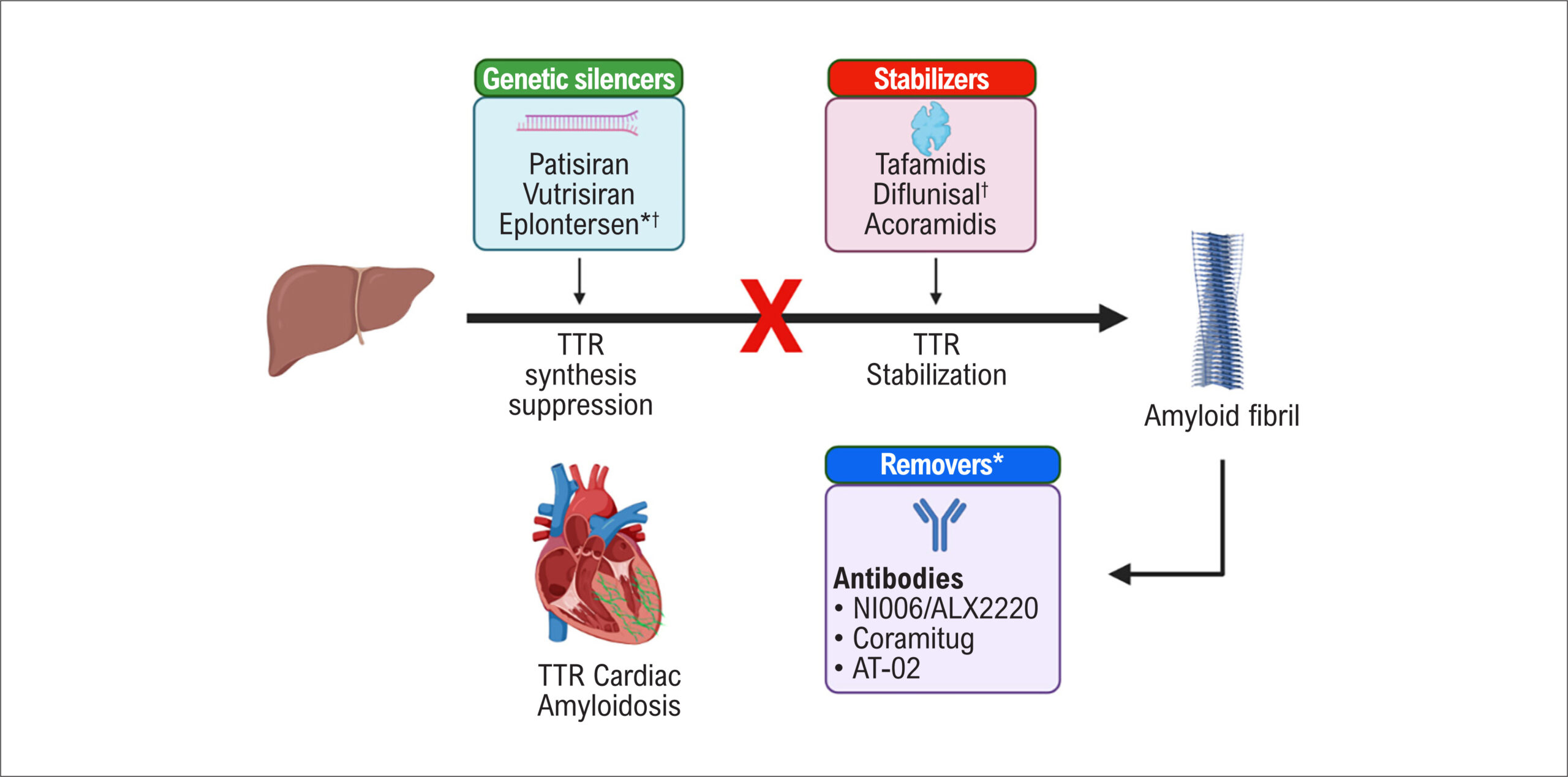
Patisiran is an RNA interference therapeutic agent used in the treatment of transthyretin-mediated amyloidosis (ATTR amyloidosis), a condition characterized by the accumulation of misfolded transthyretin (TTR) protein amyloid fibrils in tissues.– As shown in , the mechanism of action differs from previous drugs such as tafamidis, which promotes the stabilization of the TTR protein, rather than the synthesis inhibition., Patisiran uses a mechanism involving small interfering RNA to specifically target the messenger RNA (mRNA) responsible for producing the TTR protein in the liver. It activates the RNA-induced silencing complex, which promotes the degradation of the TTR mRNA. By degrading TTR mRNA, patisiran effectively reduces the synthesis of TTR protein within the liver. This leads to decreased levels of both normal and mutant forms of TTR.–

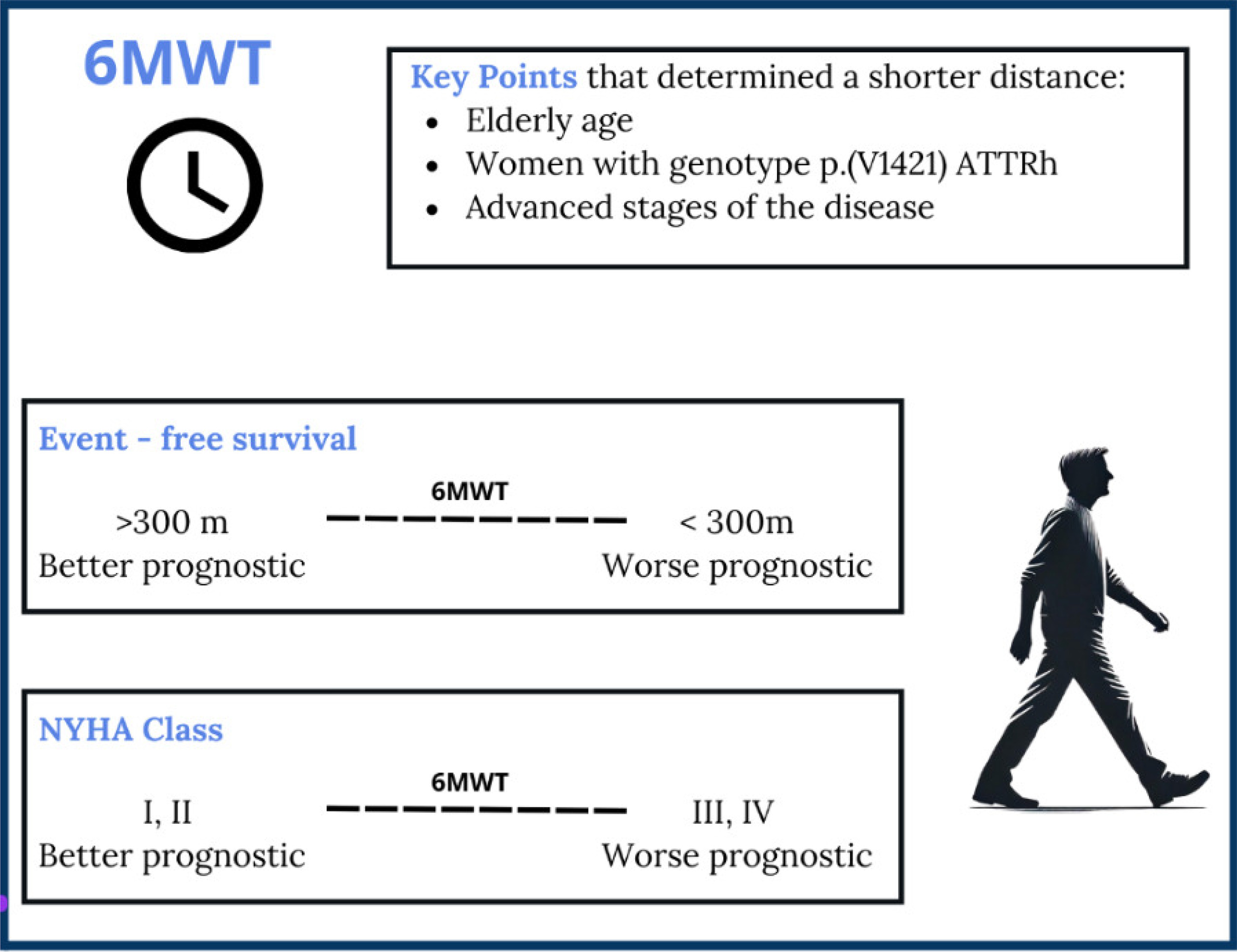
The effects of patisiran in cardiac amyloidosis were assessed in the APOLLO B study, which was a phase 3, multicenter, randomized, double-blind, placebo-controlled trial involving 360 patients diagnosed with hereditary or wild-type ATTR amyloidosis with cardiomyopathy, aimed at assessing treatment effects on cardiac function and quality of life. The primary endpoint was a change from baseline in the functional capacity as assessed by the 6-minute walk test (6MWT) at 12 months. The walk distance in the 6MWT decreased over time in both groups, but it was attenuated in the patisiran group (mean change −8.15 vs −21.35 m, in the patisiran and placebo group, respectively). Quality of life as assessed by the Kansas City Cardiomyopathy Questionnaire-Overall Summary (KCCQ-OS) improved in the patisiran group and declined in the placebo group. In a secondary endpoint analysis, no difference was observed in a combined endpoint of death from any cause, cardiovascular events, or change in the 6MWT. An explanatory analysis found that patisiran attenuated the increase in the cardiac biomarkers NT-proBNP and troponin I.

[…]

  • Cardiac Amyloidosis
  • Genetic Silencers
  • Transthyretin
  • Treatment
Read Full Article
Creative Commons Attribution (CC BY) Creative Commons license
07/07/2025 DOI: 10.36660/abc.20250335i
Figure 1
IJCS
Editorial

Six-Minute Walk Test in Patients with Cardiac Amyloidosis: Does it mean anything?

Isabel Carvajal et al. Luis Caballero Hortiales Valeria Rojo Galicia Denka Durán Aguilar Erick Alexanderson

Cardiac amyloidosis (CA) is a restrictive cardiomyopathy characterized by the extracellular deposition of proteins in the myocardium. Transthyretin (TTR) protein is predominantly synthesized in the liver and normally transports thyroxine and retinol. When TTR is misfolded, it can form amyloid fibrils deposited in different organs, such as the heart.

TTR amyloidosis (ATTR) can be inherited as an autosomal dominant trait caused by variants in the TTR gene (TTRv), or by the deposition of wild-type TTR (TTRwt).

[…]

  • Cardiac Amyloidosis
  • Six-minute walk test
  • Transthyretin amyloidosis
  • Transthyretin amyloidosis hereditary
  • Transthyretin amyloidosis wild type
Read Full Article
Creative Commons Attribution (CC BY) Creative Commons license
03/03/2025 DOI: 10.36660/ijcs.20240205
ABCIC
Editorial

My Approach to Evaluation of Cardiac Amyloidosis

Nuno Miguel Cardim

[…]

  • Cardiac Amyloidosis
  • Diagnosis
  • Echocardiography
Read Full Article
Creative Commons Attribution (CC BY) Creative Commons license
14/01/2022 DOI: 10.5935/2318-8219.20200025
ABCHF
Viewpoint

Disease Modifying Therapies for Transthyretin Amyloid Cardiomyopathy

Ariane Vieira Scarlatelli Macedo et al. Fábio Fernandes Renato Delascio Lopes

Transthyretin (TTR) is a tetrameric protein synthesized essentially by the liver. TTR molecules may misfold and store as amyloid fibrils in the heart and other organs, leading to TTR-related amyloidosis (ATTR) . ATTR can follow the deposition of either variant ATTR (ATTRv), which was previously known as mutant ATTR, or wild-type ATTR (ATTRwt). ATTR is an underdiagnosed disease, as well as a crucial determinant of morbidity and mortality. Cardiac involvement is common in ATTR, leading to transthyretin cardiomyopathy (ATTR-CA). ATTR-CA is a progressive disorder, and patients ultimately develop heart failure, arrhythmias, and cardiac conduction disturbances, resulting in decreased functional capacity, diminished quality of life, and death. Until recently, treatment of ATTR-CA was limited to treating symptoms and complications; however, the development of new specific therapies that delay or stop the progress of the cardiomyopathy has positively modified the outcomes . These specific treatments work by targeting the inhibition of TTR synthesis (inotersen or patisiran); tetramer stabilization (diflunisal, tafamidis, or acoramidis [AG10]); inhibition of oligomer aggregation and disruption (epigallocatechin-3-gallate); and degradation and reabsorption of amyloid fibers (doxycycline-tauroursodeoxycholic acid [TUDCA] or doxycycline-ursodeoxycholic acid [UDCA]).4

In patients with ATTR-CA, either ATTRv or ATTRwt, tafamidis is considered the agent of choice due to the proven clinical benefit in cardiovascular outcomes. Tafamidis is a kinetic TTR stabilizer that binds to the unoccupied thyroxine binding sites of tetrameric TTR and blocks the amyloidogenic cascade. It was first adopted for treatment of symptomatic ATTRv polyneuropathy, and it is the only therapy approved with effectiveness to treat ATTR-CA. This recommendation is essentially based on the results of a large, well-designed phase III randomized clinical trial (RCT), ATTR-ACT. In this study, tafamidis (20 and 80 mg, pooled) showed a decline in all-cause mortality and cardiovascular-related hospitalization, decreased decline in 6-minute walk test, slower deterioration in quality of life, and a minor increase of NT-proBNP in patients with biopsy-proven ATTRwt or ATTRv CA with heart failure and NYHA class I to III at 30 months. The safety profile was similar to placebo, and individuals with NYHA classes I and II reached the most meaningful benefit. ATTR-ACT was not designed to assess a specific dose; therefore, further analysis from ATTR-ACT and its long-term extension study support tafamidis 80 mg as the optimal dose to be used in clinical practice.

[…]

  • Amyloidosis
  • Cardiac Amyloidosis
  • Transthyretin
  • Treatment
  • TTR
Read Full Article
Creative Commons Attribution (CC BY) Creative Commons license
10/12/2021 DOI: 10.36660/abchf.20210034 Views 2
ABCHF
Viewpoint

Indications for Anticoagulation in Cardiac Amyloidosis

Marcelo Westerlund Montera

In cardiac amyloidosis, amyloid infiltrate at the atrial level promotes atrial dilation and contractile dysfunction as well as a higher prevalence of atrial fibrillation which, when associated with ventricular diastolic and systolic dysfunction, favors blood stasis and the consequent development of intracardiac thrombosis (ICT) and cardioembolic events.

In a study of 116 autopsies of patients with cardiac amyloidosis, conducted at the Mayo Clinic, the presence of ICT was demonstrated in 33% of hearts, with a significantly higher prevalence in patients with the AL form of amyloidosis than in those with other forms (56% versus 16%, p < 0.001).

[…]

  • Cardiac Amyloidosis
  • Intracardiac Thrombosis: Anticoagulation
  • Stroke Prevention
Read Full Article
Creative Commons Attribution (CC BY) Creative Commons license
10/12/2021 DOI: 10.36660/abchf.20210032
ABC
Artigo Original

Cardiac amyloidosis. A disease with many faces and different prognoses

Antonio Carlos Pereira Barretto et al. Dalton Precoma João Batista Serro-Azul Mauricio Wajngarten … Humberto Pierri Ligia Pivotto Amit Nussbacher Otavio Celso Eluf Gebara Giovanni Bellotti

PURPOSE: To identify the principal forms of cardiac amiloydosis presentation in a terciary hospital. METHODS: Eight cases whith cardiac amyloidosis were identified. Five were woman, their ages ranged from 23 to 83 years (mean 62). After a medical history and clinical examination the patients, were submitted to complementary tests: electrocardiogram (EKG), echocardiogram (ECHO), scintigraphy with technecium pirophosfate and cardiac biopsy these results allowed the identification of their clinical situation. RESULTS: Seven patients refered dyspnea, 6 were in heart failure, 1 patient had syncope. The EKG identified complete atrioventricular (AV) block in 4 patients, and antero septal inactive area in the other 4. The ECHO showed normal cardiac diameter in all (mean left ventricular diastolic diameter of 46.8) and slight reduction of left ventricular ejection fraction; hypertrophy of the left ventricular septal and posterior walls in all cases, in 7 cases there was a hyper refractile granular sparkling ECHO. Two different groups were identified: one with complete AV block and the second with restrictive cardiomyopathy. The prognosis was different in these two groups. Those with complete AV block evolved better after pacemaker implantation and those with restrictive cardiomyopathy had refractary heart failure and 3 of them died. CONCLUSION: The increased free wall and septal thickness, the slight systolic dysfunction and the infiltration aspect at ECHO allow us to identify the great majority of the cases. Those patients with restrictive cardiomyopathy evolve with refractory heart failure and most of them die in a few months.

  • Cardiac Amyloidosis
  • complete atrioventricular block
  • Heart Failure
Read Full Article
Creative Commons Attribution (CC BY) Creative Commons license
14/02/2001 DOI: 10.1590/S0066-782X1997000800003 Views 1

How to cite this article

EndNote RIS

Electronic Document Format (Vancouver)

Silva TO. Cardiac Amyloidosis: Is It Truly a Hypertrophic Phenotype Cardiomyopathy?. ABC Imagem Cardiovascular 2026;39(2):e20260058.

Electronic Document Format (ABNT)

Silva, Tonnison de Oliveira. Cardiac Amyloidosis: Is It Truly a Hypertrophic Phenotype Cardiomyopathy?. ABC Imagem Cardiovascular, v. 39, n. 2, e20260058, Jul. 2026.

Electronic Document Format (APA)

Silva, T. O. (2026). Cardiac Amyloidosis: Is It Truly a Hypertrophic Phenotype Cardiomyopathy?. ABC Imagem Cardiovascular, 39(2), e20260058.

Electronic Document Format (ISO)

Silva, Tonnison de Oliveira. Cardiac Amyloidosis: Is It Truly a Hypertrophic Phenotype Cardiomyopathy?. ABC Imagem Cardiovascular [online]. 2026, vol. 39, n. 2, [cited 2026-10-14], e20260058. Available from: <https://journals.cardiol.br/en/article/cardiac-amyloidosis-is-it-truly-a-hypertrophic-phenotype-cardiomyopathy/>. ISSN 2318-8219

EndNote RIS

Electronic Document Format (Vancouver)

Villacorta H. Patisiran in the Treatment of Cardiac Amyloidosis: Good for the World and Good for Brazil. Arquivos Brasileiros de Cardiologia 2025;122(4):e20250335.

Electronic Document Format (ABNT)

Villacorta, Humberto. Patisiran in the Treatment of Cardiac Amyloidosis: Good for the World and Good for Brazil. Arquivos Brasileiros de Cardiologia, v. 122, n. 4, e20250335, Jul. 2025.

Electronic Document Format (APA)

Villacorta, H. (2025). Patisiran in the Treatment of Cardiac Amyloidosis: Good for the World and Good for Brazil. Arquivos Brasileiros de Cardiologia, 122(4), e20250335.

Electronic Document Format (ISO)

Villacorta, Humberto. Patisiran in the Treatment of Cardiac Amyloidosis: Good for the World and Good for Brazil. Arquivos Brasileiros de Cardiologia [online]. 2025, vol. 122, n. 4, [cited 2026-10-14], e20250335. Available from: <https://journals.cardiol.br/en/article/patisiran-in-the-treatment-of-cardiac-amyloidosis-good-for-the-world-and-good-for-brazil/>. ISSN 0066-782X

EndNote RIS

Electronic Document Format (Vancouver)

Carvajal I, Hortiales LC, Galicia VR, Aguilar DD, Alexanderson E. Six-Minute Walk Test in Patients with Cardiac Amyloidosis: Does it mean anything?. International Journal of Cardiovascular Sciences 2025;38:e20240205.

Electronic Document Format (ABNT)

Carvajal, Isabel; Hortiales, Luis Caballero; Galicia, Valeria Rojo; Aguilar, Denka Durán; Alexanderson, Erick. Six-Minute Walk Test in Patients with Cardiac Amyloidosis: Does it mean anything?. International Journal of Cardiovascular Sciences, v. 38, e20240205, Mar. 2025.

Electronic Document Format (APA)

Carvajal, I., Hortiales, L. C., Galicia, V. R., Aguilar, D. D., & Alexanderson, E. (2025). Six-Minute Walk Test in Patients with Cardiac Amyloidosis: Does it mean anything?. International Journal of Cardiovascular Sciences, 38, e20240205.

Electronic Document Format (ISO)

Carvajal, Isabel and Hortiales, Luis Caballero and Galicia, Valeria Rojo and Aguilar, Denka Durán and Alexanderson, Erick. Six-Minute Walk Test in Patients with Cardiac Amyloidosis: Does it mean anything?. International Journal of Cardiovascular Sciences [online]. 2025, vol. 38, [cited 2026-10-14], e20240205. Available from: <https://journals.cardiol.br/en/article/six-minute-walk-test-in-patients-with-cardiac-amyloidosis-does-it-mean-anything/>. ISSN 2359-4802

EndNote RIS

Electronic Document Format (Vancouver)

Cardim NM. My Approach to Evaluation of Cardiac Amyloidosis. Arquivos Brasileiros de Cardiologia Imagem cardiovascular 2022;33(2):1-4.

Electronic Document Format (ABNT)

Cardim, Nuno Miguel. My Approach to Evaluation of Cardiac Amyloidosis. Arquivos Brasileiros de Cardiologia Imagem cardiovascular, v. 33, n. 2, p. 1-4, Jan. 2022.

Electronic Document Format (APA)

Cardim, N. M. (2022). My Approach to Evaluation of Cardiac Amyloidosis. Arquivos Brasileiros de Cardiologia Imagem cardiovascular, 33(2), 1-4.

Electronic Document Format (ISO)

Cardim, Nuno Miguel. My Approach to Evaluation of Cardiac Amyloidosis. Arquivos Brasileiros de Cardiologia Imagem cardiovascular [online]. 2022, vol. 33, n. 2, [cited 2026-10-14], pp. 1-4. Available from: <https://journals.cardiol.br/en/article/my-approach-to-evaluation-of-cardiac-amyloidosis/>. ISSN 2318-8219

EndNote RIS

Electronic Document Format (Vancouver)

Macedo AVS, Fernandes F, Lopes RD. Disease Modifying Therapies for Transthyretin Amyloid Cardiomyopathy. Phenomenology, Humanities and Sciences – Fenomenologia, Humanidades e Ciências 2021;1(2):144-6.

Electronic Document Format (ABNT)

Macedo, Ariane Vieira Scarlatelli; Fernandes, Fábio; Lopes, Renato Delascio. Disease Modifying Therapies for Transthyretin Amyloid Cardiomyopathy. Phenomenology, Humanities and Sciences – Fenomenologia, Humanidades e Ciências, v. 1, n. 2, p. 144-146, Dec. 2021.

Electronic Document Format (APA)

Macedo, A. V. S., Fernandes, F., & Lopes, R. D. (2021). Disease Modifying Therapies for Transthyretin Amyloid Cardiomyopathy. Phenomenology, Humanities and Sciences – Fenomenologia, Humanidades e Ciências, 1(2), 144-146.

Electronic Document Format (ISO)

Macedo, Ariane Vieira Scarlatelli and Fernandes, Fábio and Lopes, Renato Delascio. Disease Modifying Therapies for Transthyretin Amyloid Cardiomyopathy. Phenomenology, Humanities and Sciences – Fenomenologia, Humanidades e Ciências [online]. 2021, vol. 1, n. 2, [cited 2026-10-14], pp. 144-146. Available from: <https://journals.cardiol.br/en/article/disease-modifying-therapies-for-transthyretin-amyloid-cardiomyopathy/>

EndNote RIS

Electronic Document Format (Vancouver)

Montera MW. Indications for Anticoagulation in Cardiac Amyloidosis. Phenomenology, Humanities and Sciences – Fenomenologia, Humanidades e Ciências 2021;1(2):147-8.

Electronic Document Format (ABNT)

Montera, Marcelo Westerlund. Indications for Anticoagulation in Cardiac Amyloidosis. Phenomenology, Humanities and Sciences – Fenomenologia, Humanidades e Ciências, v. 1, n. 2, p. 147-148, Dec. 2021.

Electronic Document Format (APA)

Montera, M. W. (2021). Indications for Anticoagulation in Cardiac Amyloidosis. Phenomenology, Humanities and Sciences – Fenomenologia, Humanidades e Ciências, 1(2), 147-148.

Electronic Document Format (ISO)

Montera, Marcelo Westerlund. Indications for Anticoagulation in Cardiac Amyloidosis. Phenomenology, Humanities and Sciences – Fenomenologia, Humanidades e Ciências [online]. 2021, vol. 1, n. 2, [cited 2026-10-14], pp. 147-148. Available from: <https://journals.cardiol.br/en/article/indications-for-anticoagulation-in-cardiac-amyloidosis/>

EndNote RIS

Electronic Document Format (Vancouver)

Barretto ACP, Precoma D, Serro-Azul JB, Wajngarten M, Pierri H, Pivotto L, Nussbacher A, et al. Cardiac amyloidosis. A disease with many faces and different prognoses. Arquivos Brasileiros de Cardiologia 2001;69(2):89-93.

Electronic Document Format (ABNT)

Barretto, Antonio Carlos Pereira; Precoma, Dalton; Serro-Azul, João Batista; Wajngarten, Mauricio; Pierri, Humberto; Pivotto, Ligia; Nussbacher, Amit; Gebara, Otavio Celso Eluf; Bellotti, Giovanni. Cardiac amyloidosis. A disease with many faces and different prognoses. Arquivos Brasileiros de Cardiologia, v. 69, n. 2, p. 89-93, Feb. 2001.

Electronic Document Format (APA)

Barretto, A. C. P., Precoma, D., Serro-Azul, J. B., Wajngarten, M., Pierri, H., Pivotto, L., Nussbacher, A., Gebara, O. C. E., & Bellotti, G. (2001). Cardiac amyloidosis. A disease with many faces and different prognoses. Arquivos Brasileiros de Cardiologia, 69(2), 89-93.

Electronic Document Format (ISO)

Barretto, Antonio Carlos Pereira and Precoma, Dalton and Serro-Azul, João Batista and Wajngarten, Mauricio and Pierri, Humberto and Pivotto, Ligia and Nussbacher, Amit and Gebara, Otavio Celso Eluf and Bellotti, Giovanni. Cardiac amyloidosis. A disease with many faces and different prognoses. Arquivos Brasileiros de Cardiologia [online]. 2001, vol. 69, n. 2, [cited 2026-10-14], pp. 89-93. Available from: <https://journals.cardiol.br/en/article/cardiac-amyloidosis-a-disease-with-many-faces-and-different-prognoses/>. ISSN 0066-782X

  • About ABC Family
  • Internal Regulation
  • Editorial Board
  • Brazilian Society of Cardiology (SBC)

Issues

SBC Guidelines

  • Videos
  • Podcasts
  • News