| ABC
ABC Family Arquivos Brasileiros de Cardiologia International Journal of Cardiovascular Sciences ABC Heart Failure & Cardiomyopathy ABC Imagem Cardiovascular
Português English
ABC Family | ABC
Português English
  • About
    • About the Journal
    • Internal Regulation
    • Editors Section
    • Editorial Board
    • History
    • SBC Award
  • Instructions to Authors
    • Guidelines for Publication
    • Editorial Policy
    • Ethics Policy
    • Policy on the Use of Artificial Intelligence
    • Mandatory Publication Form
    • Publication Fee
  • Issues
  • SBC Guidelines
  • Abstracts
    • How to Publish an Abstract Supplement?
    • Supplements from the Brazilian Congress of Cardiology
  • About
    • About the Journal
    • Internal Regulation
    • Editors Section
    • Editorial Board
    • History
    • SBC Award
  • Instructions to Authors
    • Guidelines for Publication
    • Editorial Policy
    • Ethics Policy
    • Policy on the Use of Artificial Intelligence
    • Mandatory Publication Form
    • Publication Fee
  • Issues
  • SBC Guidelines
  • Abstracts
    • How to Publish an Abstract Supplement?
    • Supplements from the Brazilian Congress of Cardiology

ABC Family

  • ABC Family
  • Arquivos Brasileiros de Cardiologia
  • International Journal of Cardiovascular Sciences
  • ABC Heart Failure & Cardiomyopathy
  • ABC Imagem Cardiovascular
Search in

No content found.

Journals
Ordering
Article types
Others

  1. Home
  2. ABC
  3. Issues
  4. 2014, Volume 103, Number 4
Figure 1
Case Report

Electrophysiological Study in Ebstein's Anomaly With no Evidence of Accessory Pathway

Larissa de Oliveira et al. Ana Karyn E. de Freitas Niraj Mehta Marcio Rogério Ortiz … Leonardo A. Mulinari Cláudio L. Pereira da Cunha

Introduction

Ebstein’s anomaly (EA) is characterized by low implantation of the tricuspid valve, and corresponds to less than 1% of all congenital heart defects–. It is often associated with other malformations, such as ventricular septal defect, and Wolff-Parkinson-White syndrome often accompanies.

Its clinical manifestation depends on the severity of the anatomical changes, and the indications for surgery have been well established,.

[…]

  • Cardiac Electrophysiology
  • Ebstein Anomaly / surgery
  • Embolism, Paradoxical
Read Full Article
Creative Commons Attribution (CC BY) Creative Commons license
01/10/2014 DOI: 10.5935/abc.20140146
Letter to the Editor

Immunopharmacological Approach of Carvedilol in Chronic Chagas Heart Disease

Carla Paixão Miranda et al. Fernando Antônio Botoni Manoel Otávio da Costa Rocha

Dear Editor,

Evidence suggests that approximately 12 million individuals in Latin America are infected with Trypanosoma cruzi and present Chagas disease. Even though the disease was described more than 100 years ago, chemotherapy directed against its etiological agent is restricted to two compounds which are only effective in the acute phase of the disease, benznidazole and nifurtimox. Within this context, chronic Chagas heart disease (CHCD) lacks immunopharmacological studies, given that its pathogenesis involves an imbalance in the host’s immune system. In the chronic phase, CHCD is associated with increased oxidative stress with intense and extensive inflammation and fibrosis in the myocardium, with consequent autonomic dysfunction and production of antibodies directed to the myocytes, beta adrenergic receptors, and neurons–. Rocha et al demonstrate in their study that patients who develop CHCD present increased levels of TNF-alpha and CCL-2 when compared with individuals with the indeterminate form of Chagas disease. A parallel then may be drawn with studies conducted by Yue et al. who reported that the production of superoxide anions occurs from activation of the NADPH system promoted by proinflammatory cytokines, in particular, TNF-alpha. In fact, studies suggest that the antioxidant effects of carvedilol are very effective in the treatment of patients with CHCD. In addition to that, the presence of carbazole groups and hydroxylated metabolites in the molecular structure confers to carvedilol a high antioxidant activity,. Studies highlight the ability of carvedilol to act as a transition metal when donating electrons to reactive oxygen species (ROS) and reactive nitrogen species (RNS) in an attempt to neutralize the effects of oxidative damage caused by T. cruzi in the acute phase, which persist until the chronic phase. Budni et al in their study confirm this hypothesis showing that before a therapeutic intervention with carvedilol, patients with cardiac involvement showed high levels of oxidative markers, whereas patients who received an intervention with carvedilol showed increased levels of nitric oxide (NO) and adenosine deaminase (ADA), important supporting elements in oxidative defense and improvement of immune response,. Therefore, studies are needed to identify treatments able to prevent cardiac damage caused by this infection and to offer tools to improve survival and provide a better quality of life to affected individuals.

[…]

  • Adenosine Desaminase/drug effects
  • Antioxidants
  • Chagas Cardiomyopathy
  • Drug-Related Side Effects and Adverses Reactions
Read Full Article
Creative Commons Attribution (CC BY) Creative Commons license
01/10/2014 DOI: 10.5935/abc.20140153 Views 1
Figure 1
Clinicoradiological Session

Case 6 / 2014 – Five-year Old Child with Scimitar Syndrome and Pulmonary Sequestration of Right Lower Lobe

Edmar Atik

Complementary tests

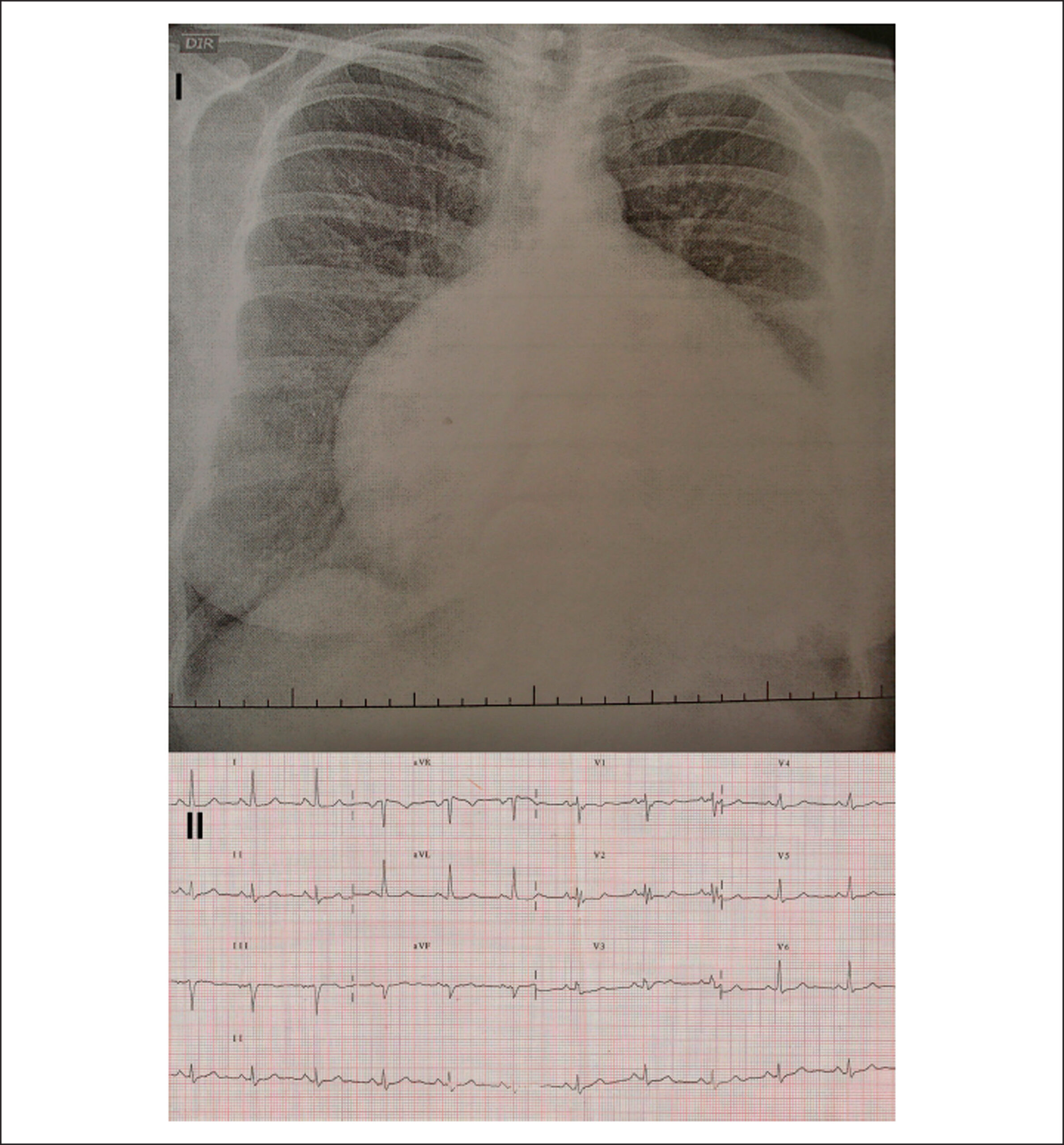
Electrocardiogram: Showed sinus rhythm and RS morphology in right precordial and rs in V6 compatible with right ventricular overload. Ventricular repolarization was normal. AP: +20º, AQRS: +250º, AT: +30º.

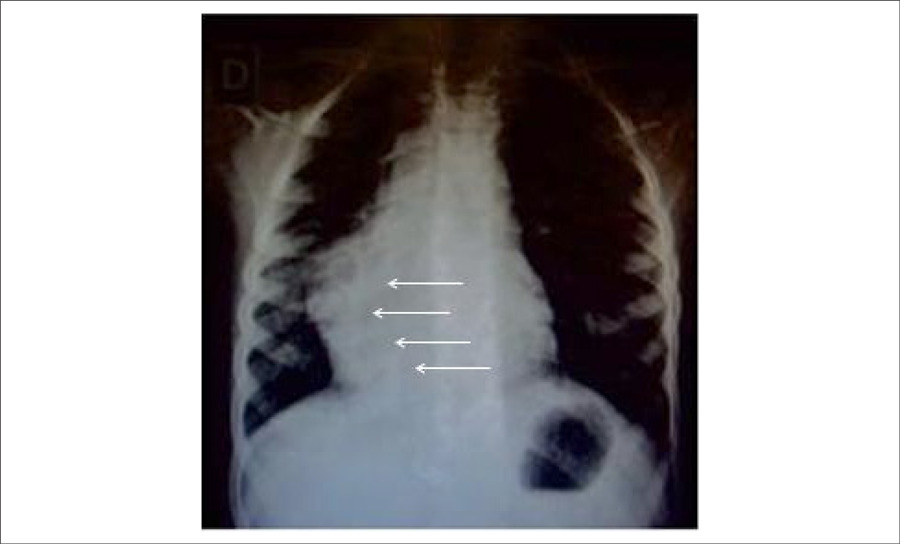
Chest radiography: Shows hypoplasia of right lung with increased cardiac area positioned to the right and increased pulmonary vascular markings. There were signs of vascular imaging on the right side of the retrocardiac image with an outlining that resembled a scimitar ().

[…]

  • Bronchopulmonary sequestration
  • Heart Murmurs
  • Scimitar Syndrome
Read Full Article
Creative Commons Attribution (CC BY) Creative Commons license
01/10/2014 DOI: 10.5935/abc.20140141
Editorial

Primary Angioplasty in the ACCEPT Registry: Why has it Been Difficult to Accept and Implement the Radial Artery Access as Preferential?

Dimytri Alexandre de Alvim Siqueira et al. Fabio Sandoli de Brito Jr Alexandre A. C. Abizaid

Radial access and the reduction in mortality and adverse cardiac events

Although the causal relationship remains controversial, several studies have reported that the radial access for primary angioplasty is associated with a reduction in mortality and in adverse cardiac events (). The largest clinical trial comparing the arterial accesses for percutaneous coronary intervention, the randomized and multicenter Radial Versus Femoral Access for Coronary Intervention (RIVAL) trial, has selected individuals with acute coronary syndromes (ACS) with or without ST-segment elevation, to whom the invasive strategy had been indicated. Individuals with the following characteristics were excluded: cardiogenic shock or previous coronary artery bypass grafting (CABG) – which could make coronary angiography and the study of bypass grafts via the radial access difficult -, and peripheral arterial disease that could make the femoral approach unfeasible. Of the 7,021 patients randomized for femoral (n = 3,514) or radial (n = 3,507) access, 1,958 individuals (28%) were diagnosed with STEMI. In that specific subgroup, patients undergoing coronary angiography and angioplasty via radial access had lower rates of mortality (1.3% versus 3.2%, p = 0.006) and of the combined outcome of death, infarction and stroke (2.7 versus 4.6%, p = 0.031) at 30 days, as compared with individuals undergoing the procedure via femoral access. The beneficial results of the RIVAL trial in the subgroup of STEMI patients have been replicated in the Radial Versus Femoral Randomization Investigation in ST-Elevation Acute Coronary Syndrome (RIFLE-STEACS), a randomized clinical trial with 1,001 patients. Mortality at 30 days was significantly lower in patients undergoing angioplasty via radial access (5.2% versus 9.2%, p = 0.020). In addition, the subanalysis of the Harmonizing Outcomes with Revascularization and Stents in Acute Myocardial Infarction (HORIZONS-AMI) trial has revealed a significantly lower incidence of death and reinfarction at 30 days in individuals treated via the radial access (1.0% versus 4.3%; p = 0.02).

Although those trials have been designed to neither specifically assess the occurrence of death as primary outcome nor to unravel the potential mechanisms associated with its reduction, the favorable impact on the incidence of bleedings has been assumed to be the major determinant of the lower mortality of patients treated via the radial access.

[…]

  • Angioplasty
  • Femoral Artery / complications
  • Fibrinolytic Agents
  • Harm Reduction
  • Radial Artery
Read Full Article
Creative Commons Attribution (CC BY) Creative Commons license
01/10/2014 DOI: 10.5935/abc.20140154 Views 1
Figure 1
Image

Ablation of Premature Ventricular Contraction with the Help of a Notch

Firat Özcan et al. Serkan Topaloğ lu Osman Turak Serkan Çay Dursun Aras

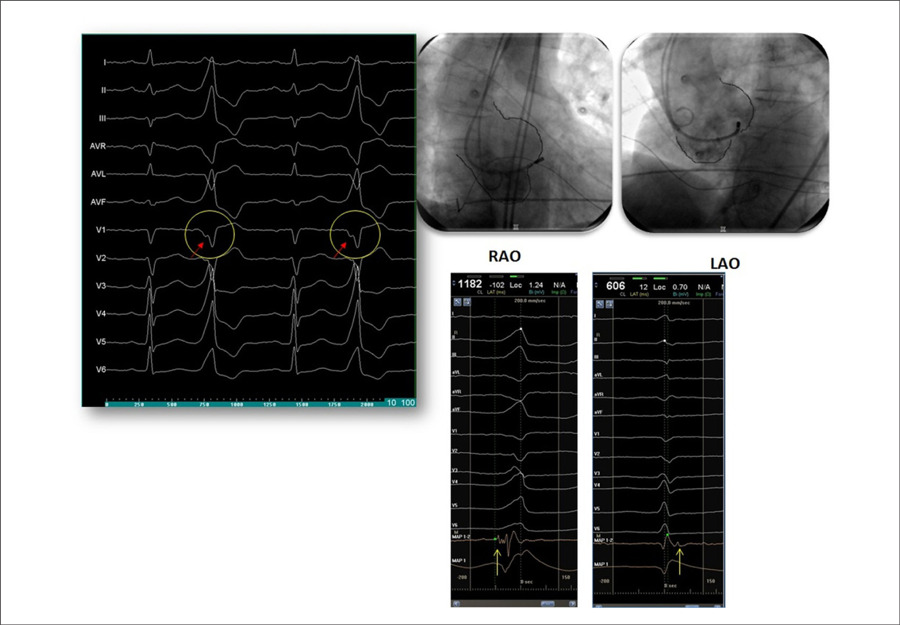
A 43-year-old male patient presented with a complaint of palpitation. Electrocardiography revealed premature ventricular contraction (PVC) that appeared to be originating from the left ventricular outflow tract. Tall positive R waves were observed in leads II, III, and aVF, and the R transition was observed at V2 in precordial leads. A notch was realized on the downward deflection of QS, which was only at lead V1. () This finding indicates that the region between the right and left coronary commissures is the origin of VPS. In addition, 24-h Holter monitoring revealed 32000 PVCs. Therefore, an electrophysiology study was planned. During the procedure, the catheter was moved between the right coronary and left coronary commissures, and the ablation catheter was placed at the ventricular side of the commissures where the earliest signal recorded was at 40 ms. At this site, pacing produced 12/12 morphology with PVC. In addition, at this site, we demonstrated a deflection prior to the intracardiac ventricular electrogram of PVCs corresponding to the notch. This deflection was after the intracardiac ventricular electrogram during sinus beats (). Ablation was performed at 20 watt 45 degrees, and it terminated all PVCs at this site.

PVCs can be very disturbing in some patients, and medical treatment may be tried. Long-term impacts of PVC may be deleterious for systolic ventricular function. Ablation of culprit source of PVC is an effective treatment and may improve systolic function of the left ventricle. Our patient was on a long-term medical treatment that failed to terminate PVCs. We preferred ablation for treatment. In this case, we would like to mention that ECG is an important, simple, cheap, and widely available tool that can be used for localization.

[…]

  • Catheter Ablation
  • Myocardial Contraction
  • Ventricular Function
Read Full Article
Creative Commons Attribution (CC BY) Creative Commons license
01/10/2014 DOI: 10.5935/abc.20140157 Views 1
Erratum

June 2014 Issue, vol.102 (6), pages 611-612

J

u

[…]

Read Full Article
Creative Commons Attribution (CC BY) Creative Commons license
01/10/2014 DOI: 10.5935/abc.20140077e
Viewpoint

Cardiogeriatric, the Future's Cardiology?

Roberto Alexandre Franken et al. Ronaldo Fernandes Rosa

The aging process and survival of living organisms vary among animal and plant species as well as within the same species. The aging process is partially determined by genetic factors and mutations that can prolong the life of many organisms, including worms, flies, and mice, by delaying this process. Considering that most biological processes are conserved through evolution, genes that are identical or similar to those found in other species can regulate factors associated with survival in humans.

In addition to genetic factors, environmental factors, lifestyle, and disease are also associated with longevity.

[…]

  • Aged, 80 and Over
  • Cardiovascular Diseases
  • Demographic Aging
  • Geriatrics/trends
  • Survivorship
Read Full Article
Creative Commons Attribution (CC BY) Creative Commons license
01/10/2014 DOI: 10.5935/abc.20140132 Views 1
Figure 1
Original Article

Relevance to Home Blood Pressure Monitoring Protocol of Blood Pressure Measurements Taken Before First- Morning Micturition and in the Afternoon

Antonio Eduardo Monteiro de Almeida et al. Ricardo Stein Miguel Gus João Agnaldo Nascimento … Karlyse Claudino Belli Jorge Rene Garcia Arévalo Flávio Dani Fuchs Jorge Pinto Ribeiro

Background:

The importance of measuring blood pressure before morning micturition and in the afternoon, while working, is yet to be established in relation to the accuracy of home blood pressure monitoring (HBPM). Objective: To compare two HBPM protocols, considering 24-hour ambulatory blood pressure monitoring (wakefulness ABPM) as gold-standard and measurements taken before morning micturition (BM) and in the afternoon (AM), for the best diagnosis of systemic arterial hypertension (SAH), and their association with prognostic markers.

Methods:

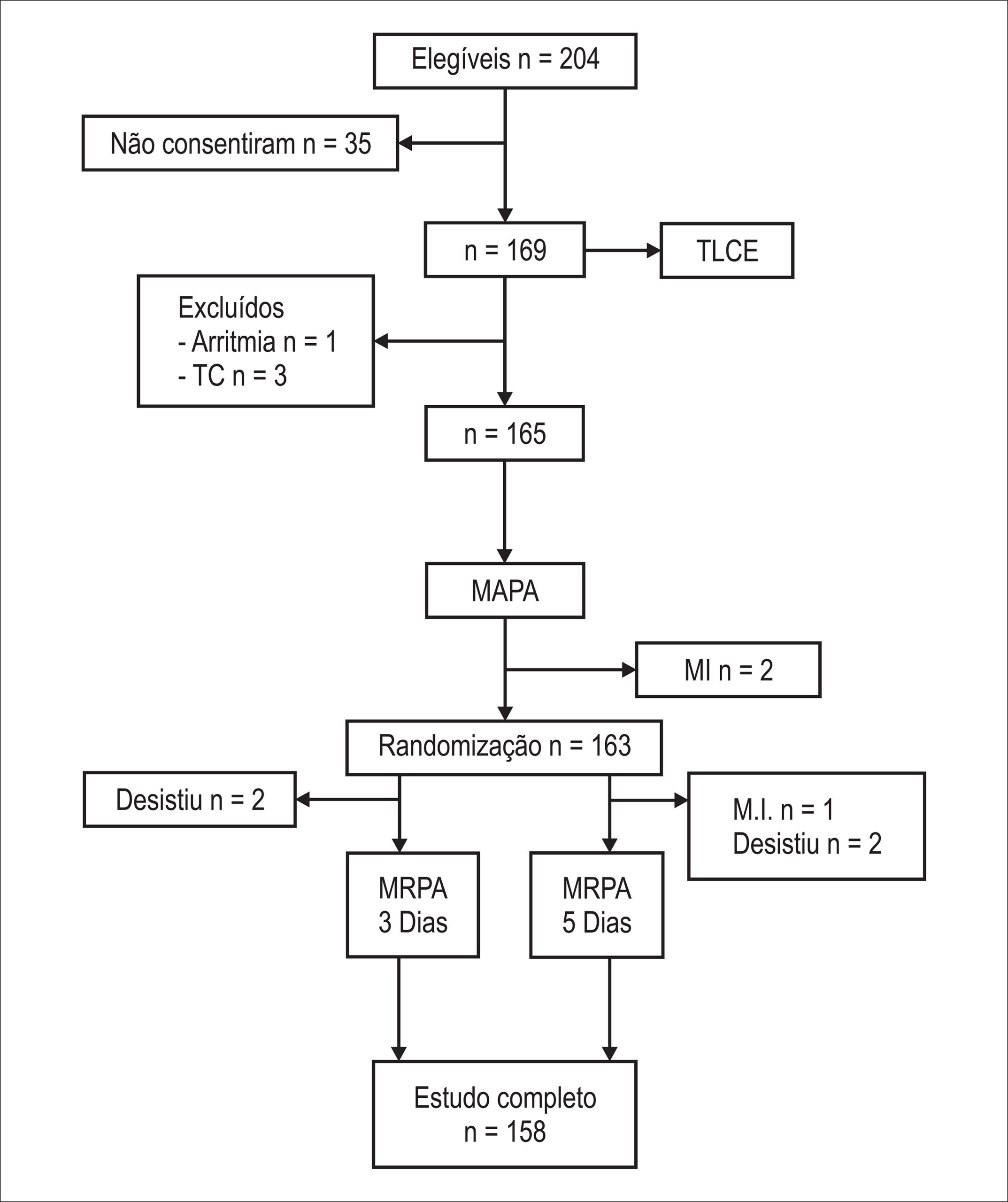
After undergoing 24-hour wakefulness ABPM, 158 participants (84 women) were randomized for 3- or 5-day HBPM. Two variations of the 3-day protocol were considered: with measurements taken before morning micturition and in the afternoon (BM+AM); and with post-morning-micturition and evening measurements (PM+EM). All patients underwent echocardiography (for left ventricular hypertrophy – LVH) and urinary albumin measurement (for microalbuminuria – MAU).

Result:

Kappa statistic for the diagnosis of SAH between wakefulness-ABPM and standard 3-day HBPM, 3-day HBPM (BM+AM) and (PM+EM), and 5-day HBPM were 0.660, 0.638, 0.348 and 0.387, respectively. The values of sensitivity of (BM+AM) versus (PM+EM) were 82.6% × 71%, respectively, and of specificity, 84.8% × 74%, respectively. The positive and negative predictive values were 69.1% × 40% and 92.2% × 91.2%, respectively. The comparisons of intraclass correlations for the diagnosis of LVH and MAU between (BM+AM) and (PM+EM) were 0.782 × 0.474 and 0.511 × 0.276, respectively.

Conclusions:

The 3 day-HBPM protocol including measurements taken before morning micturition and during work in the afternoon showed the best agreement with SAH diagnosis and the best association with prognostic markers.

  • Ambulatory Blood Pressure Monitoring
  • Arterial Pressure
  • Cardiovascular Diseases/urine
  • Hypertension
  • Mass Screening
  • Predictive Value of Tests
Read Full Article
Creative Commons Attribution (CC BY) Creative Commons license
23/09/2014 DOI: 10.5935/abc.20140139 Views 1
Figure 1
Original Article

An Equation for the Prediction of Oxygen Consumption in a Brazilian Population

Antonio Eduardo Monteiro de Almeida et al. Charles de Moraes Stefani João Agnaldo do Nascimento Narla Miranda de Almeida … Amilton da Cruz Santos Jorge Pinto Ribeiro (in memoriam) Ricardo Stein

Background:

The equations predicting maximal oxygen uptake (VO2max or peak) presently in use in cardiopulmonary exercise testing (CPET) softwares in Brazil have not been adequately validated. These equations are very important for the diagnostic capacity of this method.

Objective:

Build and validate a Brazilian Equation (BE) for prediction of VO2peak in comparison to the equation cited by Jones (JE) and the Wasserman algorithm (WA).

Methods:

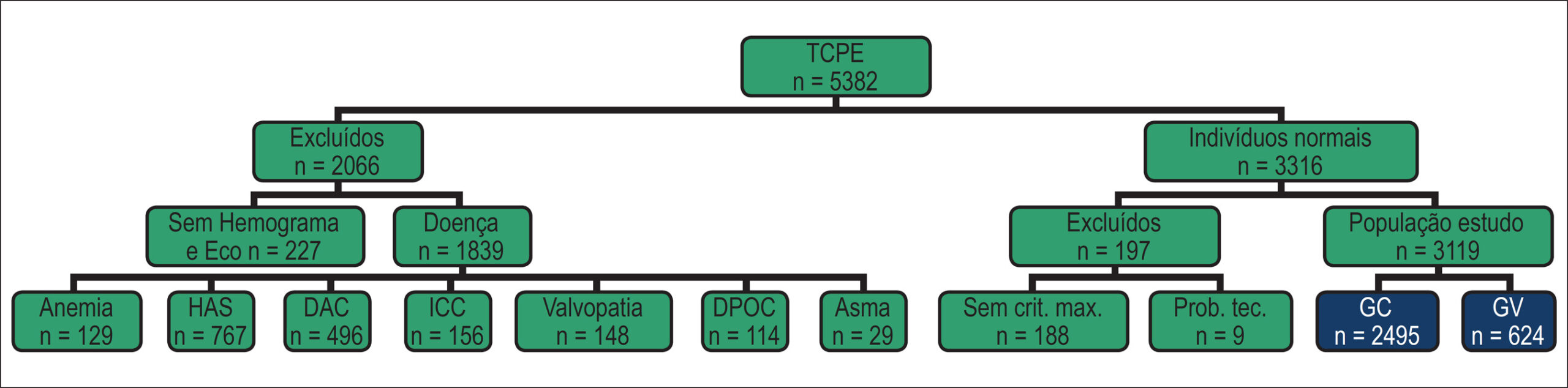
Treadmill evaluation was performed on 3119 individuals with CPET (breath by breath). The construction group (CG) of the equation consisted of 2495 healthy participants. The other 624 individuals were allocated to the external validation group (EVG). At the BE (derived from a multivariate regression model), age, gender, body mass index (BMI) and physical activity level were considered. The same equation was also tested in the EVG. Dispersion graphs and Bland-Altman analyses were built.

Results:

In the CG, the mean age was 42.6 years, 51.5% were male, the average BMI was 27.2, and the physical activity distribution level was: 51.3% sedentary, 44.4% active and 4.3% athletes. An optimal correlation between the BE and the CPET measured VO2peak was observed (0.807). On the other hand, difference came up between the average VO2peak expected by the JE and WA and the CPET measured VO2peak, as well as the one gotten from the BE (p = 0.001).

Conclusion:

BE presents VO2peak values close to those directly measured by CPET, while Jones and Wasserman differ significantly from the real VO2peak.

  • Brazil
  • Forecasting
  • Oxygen Consumption
  • population
  • Respiratory Function Tests
Read Full Article
Creative Commons Attribution (CC BY) Creative Commons license
12/09/2014 DOI: 10.5935/abc.20140137 Views 1
Figure 1
Original Article

Obesity Preserves Myocardial Function During Blockade of the Glycolytic Pathway

Dijon Henrique Salomé de Campos et al. André Soares Leopoldo Ana Paula Lima-Leopoldo André Ferreira do Nascimento … Silvio Assis de Oliveira-Junior Danielle Cristina Tomaz da Silva Mario Mateus Sugizaki Carlos Roberto Padovani Antonio Carlos Cicogna

Background:

Obesity is defined by excessive accumulation of body fat relative to lean tissue. Studies during the last few years indicate that cardiac function in obese animals may be preserved, increased or diminished.

Objective:

Study the energy balance of the myocardium with the hypothesis that the increase in fatty acid oxidation and reduced glucose leads to cardiac dysfunction in obesity.

Methods:

30-day-old male Wistar rats were fed standard and hypercaloric diet for 30 weeks. Cardiac function and morphology were assessed. In this paper was viewed the general characteristics and comorbities associated to obesity. The structure cardiac was determined by weights of the heart and left ventricle (LV). Myocardial function was evaluated by studying isolated papillary muscles from the LV, under the baseline condition and after inotropic and lusitropic maneuvers: myocardial stiffness; postrest contraction; increase in extracellular Ca2+ concentration; change in heart rate and inhibitor of glycolytic pathway.

Results:

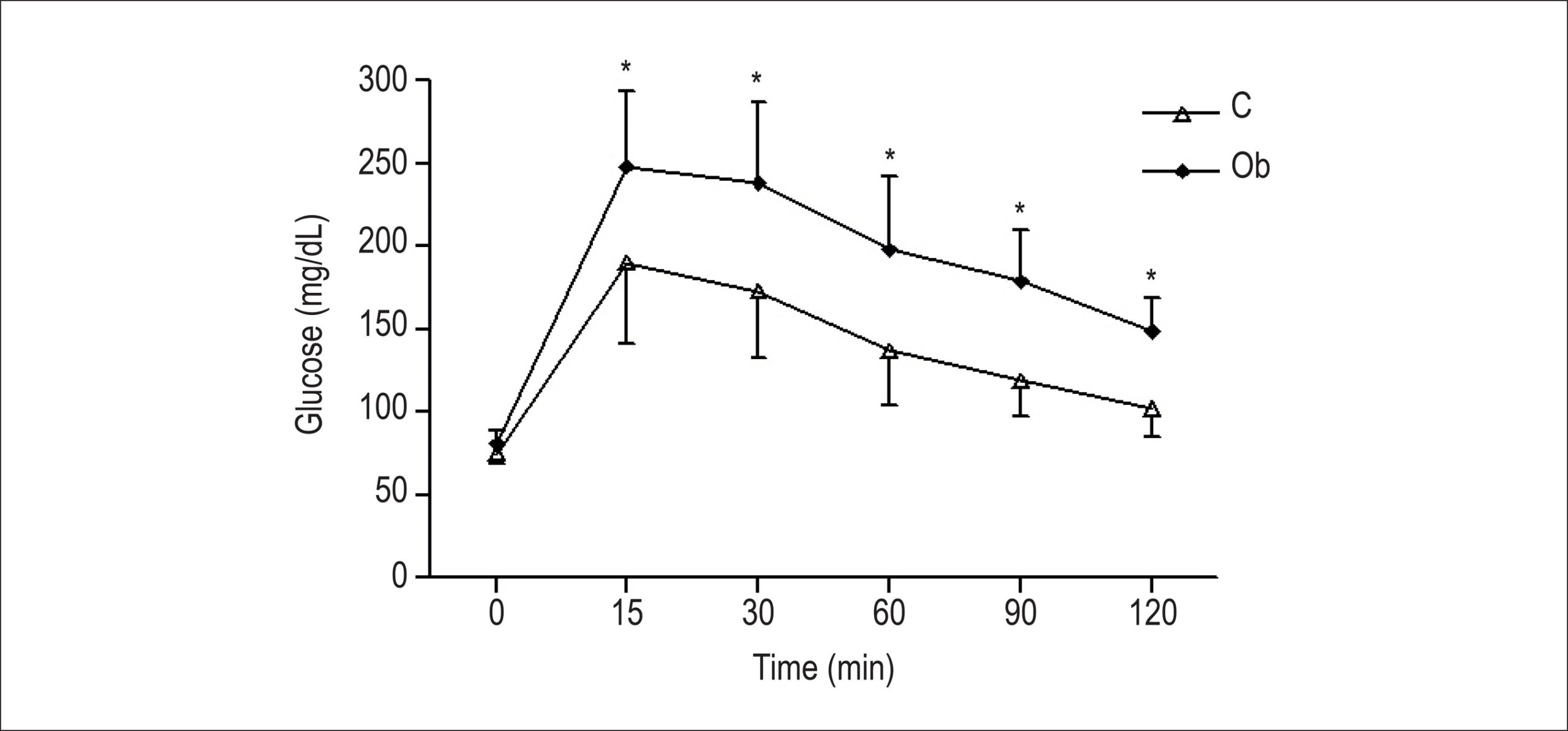
Compared with control group, the obese rats had increased body fat and co-morbities associated with obesity. Functional assessment after blocking iodoacetate shows no difference in the linear regression of DT, however, the RT showed a statistically significant difference in behavior between the control and the obese group, most notable being the slope in group C.

Conclusion:

The energy imbalance on obesity did not cause cardiac dysfunction. On the contrary, the prioritization of fatty acids utilization provides protection to cardiac muscle during the inhibition of glycolysis, suggesting that this pathway is fewer used by obese cardiac muscle.

  • Fatty Acid
  • Metabolism
  • Myocardial
  • Obesity
  • Rats
Read Full Article
Creative Commons Attribution (CC BY) Creative Commons license
12/09/2014 DOI: 10.5935/abc.20140135 Views 2
Figure 1
Original Article

Diabetes Mellitus and Glucose as Predictors of Mortality in Primary Coronary Percutaneous Intervention

Renato Budzyn David et al. Eduardo Dytz Almeida Larissa Vargas Cruz Juliana Cañedo Sebben … Ivan Petry Feijó Karine Elisa Schwarzer Schmidt Luísa Martins Avena Carlos Antonio Mascia Gottschall Alexandre Schaan de Quadros

Background:

Diabetes mellitus and admission blood glucose are important risk factors for mortality in ST segment elevation myocardial infarction patients, but their relative and individual role remains on debate.

Objective:

To analyze the influence of diabetes mellitus and admission blood glucose on the mortality of ST segment elevation myocardial infarction patients submitted to primary coronary percutaneous intervention.

Methods:

Prospective cohort study including every ST segment elevation myocardial infarction patient submitted to primary coronary percutaneous intervention in a tertiary cardiology center from December 2010 to May 2012. We collected clinical, angiographic and laboratory data during hospital stay, and performed a clinical follow-up 30 days after the ST segment elevation myocardial infarction. We adjusted the multivariate analysis of the studied risk factors using the variables from the GRACE score.

Results:

Among the 740 patients included, reported diabetes mellitus prevalence was 18%. On the univariate analysis, both diabetes mellitus and admission blood glucose were predictors of death in 30 days. However, after adjusting for potential confounders in the multivariate analysis, the diabetes mellitus relative risk was no longer significant (relative risk: 2.41, 95% confidence interval: 0.76 – 7.59; p-value: 0.13), whereas admission blood glucose remained and independent predictor of death in 30 days (relative risk: 1.05, 95% confidence interval: 1.02 – 1.09; p-value ≤ 0.01).

Conclusion:

In ST segment elevation myocardial infarction patients submitted to primary coronary percutaneous intervention, the admission blood glucose was a more accurate and robust independent predictor of death than the previous diagnosis of diabetes. This reinforces the important role of inflammation on the outcomes of this group of patients.

  • Biological Markers
  • Blood Glucose
  • Diabetes Mellitus
  • Myocardial Infarction
  • Percutaneous Coronary Intervention
Read Full Article
Creative Commons Attribution (CC BY) Creative Commons license
12/09/2014 DOI: 10.5935/abc.20140130 Views 1
Figure 1
Original Article

Atrial Fibrillation in Decompensated Heart Failure: Associated Factors and In-Hospital Outcome

Fernanda de Souza Nogueira Sardinha Mendes et al. Jacob Atié Marcelo Iorio Garcia Eliza de Almeida Gripp … Andréa Silvestre de Sousa Luiz Augusto Feijó Sergio Salles Xavier

Background:

Studies on atrial fibrillation (AF) in decompensated heart failure (DHF) are scarce in Brazil.

Objectives:

To determine AF prevalence, its types and associated factors in patients hospitalized due to DHF; to assess their thromboembolic risk profile and anticoagulation rate; and to assess the impact of AF on in-hospital mortality and hospital length of stay.

Methods:

Retrospective, observational, cross-sectional study of incident cases including 659 consecutive hospitalizations due to DHF, from 01/01/2006 to 12/31/2011. The thromboembolic risk was assessed by using CHADSVASc score. On univariate analysis, the chi-square, Student t and Mann Whitney tests were used. On multivariate analysis, logistic regression was used.

Results:

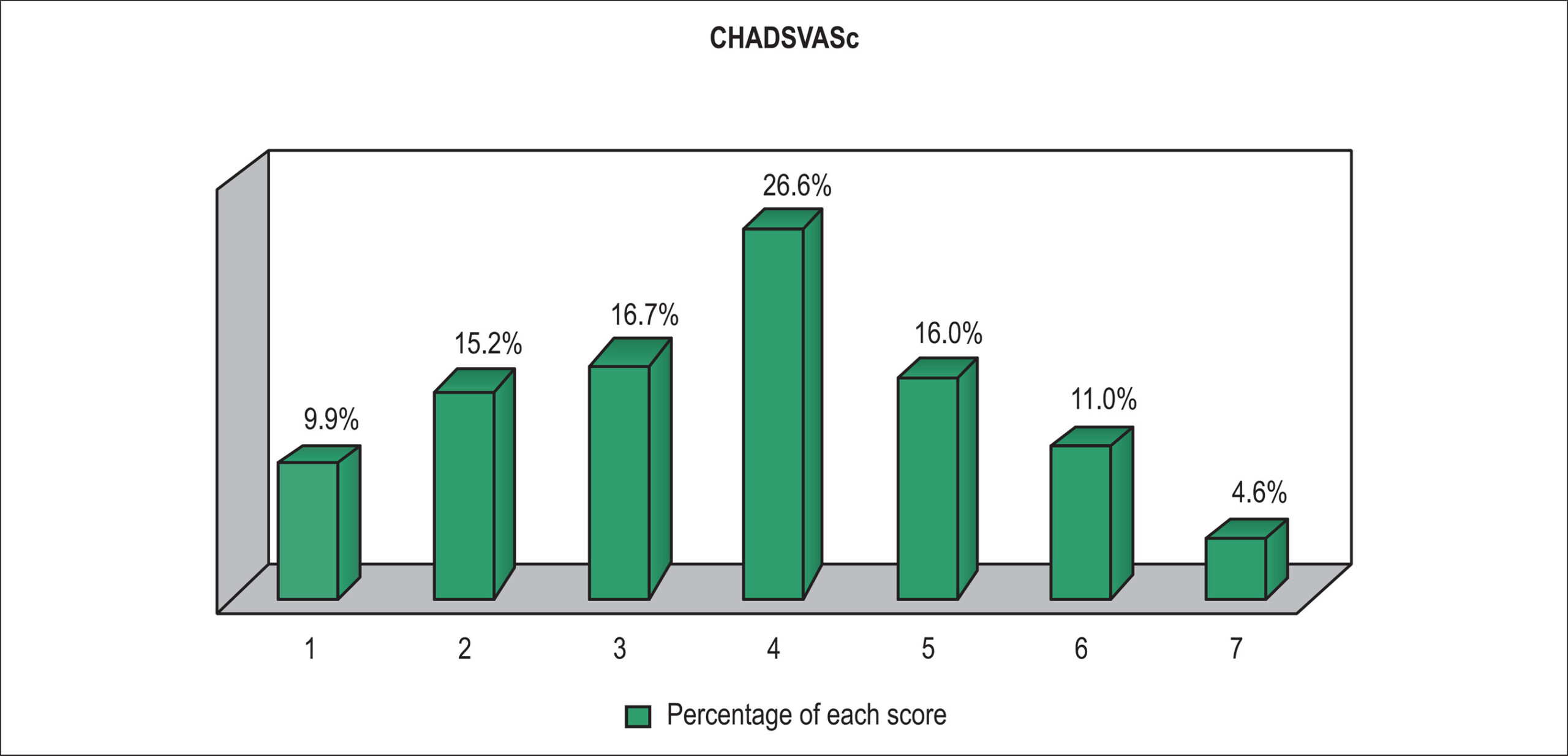
The prevalence of AF was 40%, and the permanent type predominated (73.5%). On multivariate model, AF associated with advanced age (p < 0.0001), non-ischemic etiology (p = 0.02), right ventricular dysfunction (p = 0.03), lower systolic blood pressure (SBP) (p = 0.02), higher ejection fraction (EF) (p < 0.0001) and enlarged left atrium (LA) (p < 0.0001). The median CHADSVASc score was 4, and 90% of the cases had it ≥ 2. The anticoagulation rate was 52.8% on admission and 66.8% on discharge, being lower for higher scores. The group with AF had higher in-hospital mortality (11.0% versus 8.1%, p = 0.21) and longer hospital length of stay (20.5 ± 16 versus 16.3 ± 12, p = 0.001).

Conclusions:

Atrial fibrillation is frequent in DHF, the most prevalent type being permanent AF. Atrial fibrillation is associated with more advanced age, non-ischemic etiology, right ventricular dysfunction, lower SBP, higher EF and enlarged LA. Despite the high thromboembolic risk profile, anticoagulation is underutilized. The presence of AF is associated with longer hospital length of stay and high mortality.
  • Atrial Fibrillation
  • Heart Failure
  • Hospital Mortality
  • Inpatients
  • Ventricular Dysfunction, Left
Read Full Article
Creative Commons Attribution (CC BY) Creative Commons license
29/08/2014 DOI: 10.5935/abc.20140123 Views 1
Graph 1
Original Article

Healthcare-Associated Infective Endocarditis: a Case Series in a Referral Hospital from 2006 to 2011

Oslan Francischetto et al. Luciana Almenara Pereira da Silva Katia Marie Simões e Senna Marcia Regina Vasques … Giovanna Ferraiuoli Barbosa Clara Weksler Rosana Grandelle Ramos Wilma Felix Golebiovski Cristiane da Cruz Lamas

Background:

Healthcare-associated infective endocarditis (HCA-IE), a severe complication of medical care, shows a growing incidence in literature.

Objective:

To evaluate epidemiology, etiology, risk factors for acquisition, complications, surgical treatment, and outcome of HCA-IE.

Methods:

Observational prospective case series study (2006-2011) in a public hospital in Rio de Janeiro.

Results:

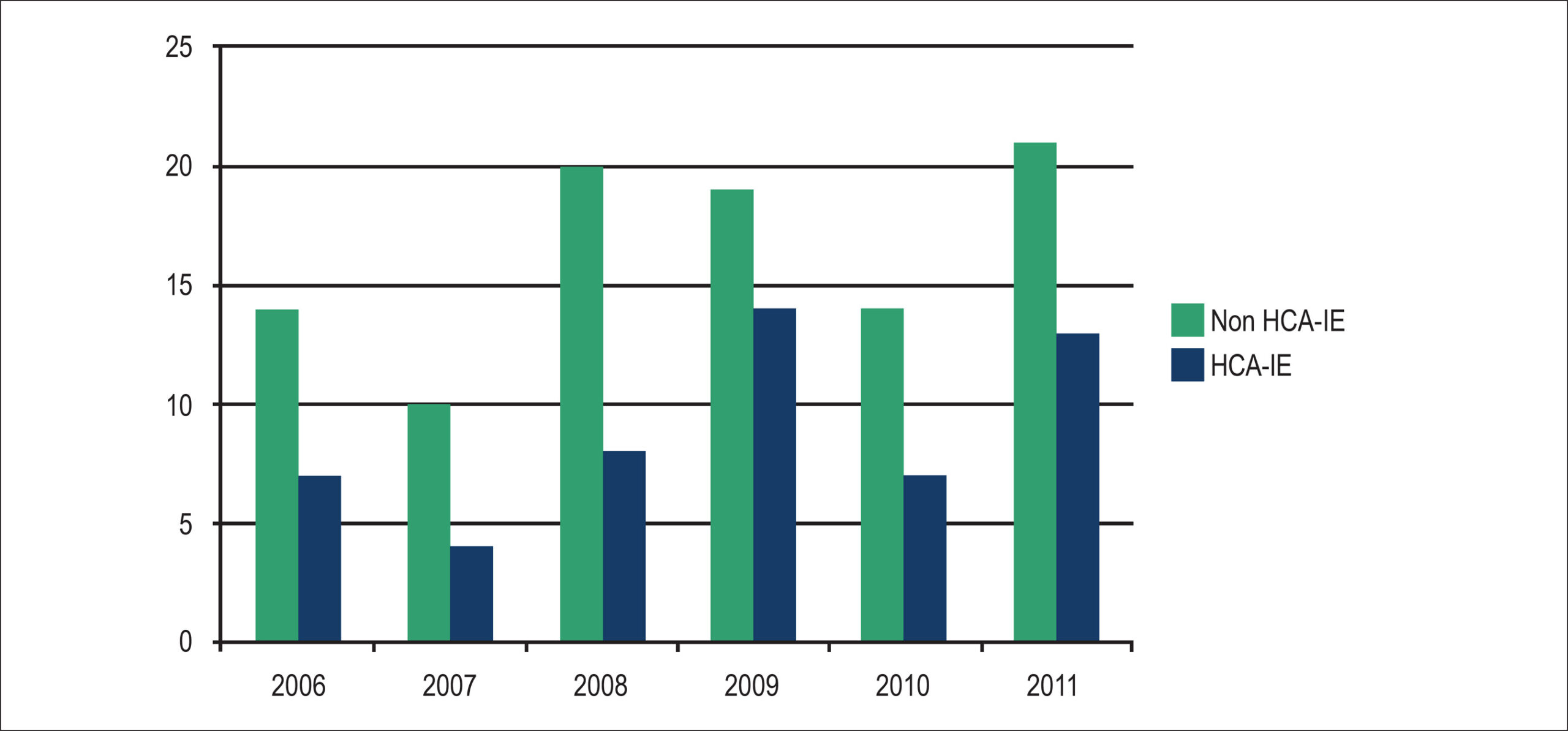
Fifty-three patients with HCA-IE from a total of 151 cases of infective endocarditis (IE) were included. There were 26 (49%) males (mean age of 47 ± 18.7 years), 27 (51%) females (mean age of 42 ± 20.1 years). IE was acute in 37 (70%) cases and subacute in 16 (30%) cases. The mitral valve was affected in 19 (36%) patients and the aortic valve in 12 (36%); prosthetic valves were affected in 23 (43%) patients and native valves in 30 (57%). Deep intravenous access was used in 43 (81%) cases. Negative blood cultures were observed in 11 (21%) patients, Enterococcus faecalis in 10 (19%), Staphylococcus aureus in 9 (17%), and Candida sp. in 7 (13%). Fever was present in 49 (92%) patients, splenomegaly in 12 (23%), new regurgitation murmur in 31 (58%), and elevated C-reactive protein in 44/53 (83%). Echocardiograms showed major criteria in 46 (87%) patients, and 34 (64%) patients were submitted to cardiac surgery. Overall mortality was 17/53 (32%).

Conclusion:

In Brazil HCA-IE affected young subjects. Patients with prosthetic and native valves were affected in a similar proportion, and non-cardiac surgery was an infrequent predisposing factor, whereas intravenous access was a common one. S. aureus was significantly frequent in native valve HCA-IE, and overall mortality was high.

  • Bacterial/mortality
  • Cross Infection
  • Endocarditis
  • Endocarditis Bacterial/etiology
  • Risk Factors
Read Full Article
Creative Commons Attribution (CC BY) Creative Commons license
29/08/2014 DOI: 10.5935/abc.20140126 Views 1
Graph 1
Review Article

Stratification of the Risk of Sudden Death in Nonischemic Heart Failure

Maurício Pimentel et al. Leandro Ioschpe Zimerman Luis Eduardo Rohde

Despite significant therapeutic advancements, heart failure remains a highly prevalent clinical condition associated with significant morbidity and mortality. In 30%-40% patients, the etiology of heart failure is nonischemic. The implantable cardioverter-defibrillator (ICD) is capable of preventing sudden death and decreasing total mortality in patients with nonischemic heart failure. However, a significant number of patients receiving ICD do not receive any kind of therapy during follow-up. Moreover, considering the situation in Brazil and several other countries, ICD cannot be implanted in all patients with nonischemic heart failure. Therefore, there is an urgent need to identify patients at an increased risk of sudden death because these would benefit more than patients at a lower risk, despite the presence of heart failure in both risk groups. In this study, the authors review the primary available methods for the stratification of the risk of sudden death in patients with nonischemic heart failure.

  • Death, Sudden, Cardiac
  • Defibrillators, Implantable
  • Heart Failure / mortality
Read Full Article
Creative Commons Attribution (CC BY) Creative Commons license
29/08/2014 DOI: 10.5935/abc.20140125 Views 2
Figure 1
Original Article

Left Atrial Volume Index and Prediction of Events in Acute Coronary Syndrome: Solar Registry

Jose Alves Secundo Junior et al. Marcos Antonio Almeida Santos Gustavo Baptista de Almeida Faro Camile Bittencourt Soares … Allyson Matos Porto Silva Paulo Fernando Carvalho Secundo Clarissa Karine Cardoso Teixeira Joselina Luzia Menezes Oliveira Jose Augusto Soares Barreto Filho Antônio Carlos Sobral Sousa

Background:

According to some international studies, patients with acute coronary syndrome (ACS) and increased left atrial volume index (LAVI) have worse long-term prognosis. However, national Brazilian studies confirming this prediction are still lacking.

Objective:

To evaluate LAVI as a predictor of major cardiovascular events (MCE) in patients with ACS during a 365-day follow-up.

Methods:

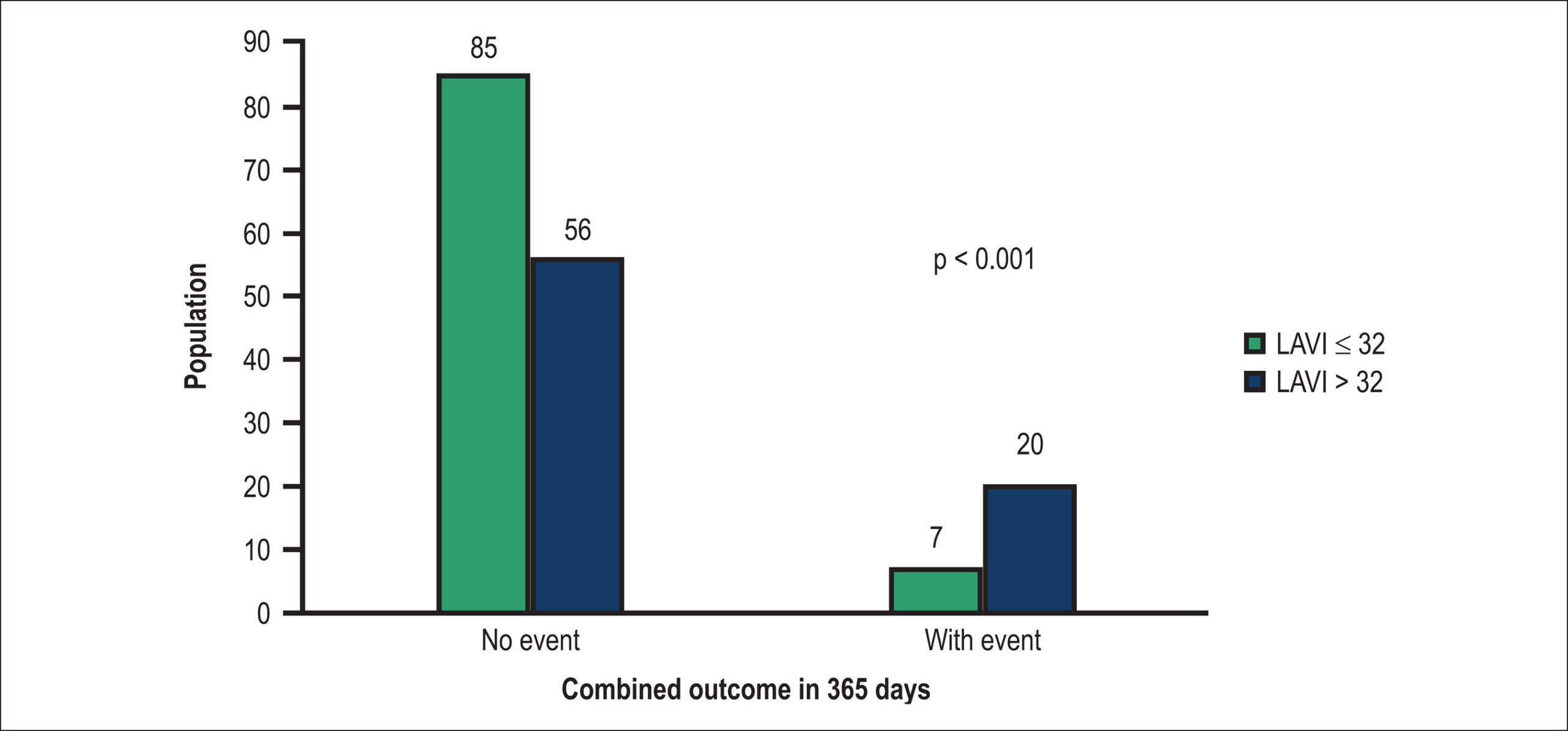
Prospective cohort of 171 patients diagnosed with ACS whose LAVI was calculated within 48 hours after hospital admission. According to LAVI, two groups were categorized: normal LAVI (≤ 32 mL/m2) and increased LAVI (> 32 mL/m2). Both groups were compared regarding clinical and echocardiographic characteristics, in- and out-of-hospital outcomes, and occurrence of ECM in up to 365 days.

Results:

Increased LAVI was observed in 78 patients (45%), and was associated with older age, higher body mass index, hypertension, history of myocardial infarction and previous angioplasty, and lower creatinine clearance and ejection fraction. During hospitalization, acute pulmonary edema was more frequent in patients with increased LAVI (14.1% vs. 4.3%, p = 0.024). After discharge, the occurrence of combined outcome for MCE was higher (p = 0.001) in the group with increased LAVI (26%) as compared to the normal LAVI group (7%) [RR (95% CI) = 3.46 (1.54-7.73) vs. 0.80 (0.69-0.92)]. After Cox regression, increased LAVI increased the probability of MCE (HR = 3.08, 95% CI = 1.28-7.40, p = 0.012).

Conclusion:

Increased LAVI is an important predictor of MCE in a one-year follow-up.

  • Acute coronary syndrome
  • Cardiac Volume
  • Heart Atria
Read Full Article
Creative Commons Attribution (CC BY) Creative Commons license
13/08/2014 DOI: 10.5935/abc.20140122 Views 1
Original Article

Ivabradine Improves Heart Rate Variability in Patients with Nonischemic Dilated Cardiomyopathy

Ertugrul Kurtoglu et al. Sevket Balta Yasin Karakus Erdogan Yasar … Bilal Cuglan Ozgur Kaplan Gokhan Gozubuyuk

Background:

Ivabradine is a novel specific heart rate (HR)-lowering agent that improves event-free survival in patients with heart failure (HF).

Objectives:

We aimed to evaluate the effect of ivabradine on time domain indices of heart rate variability (HRV) in patients with HF.

Methods:

Forty-eight patients with compensated HF of nonischemic origin were included. Ivabradine treatment was initiated according to the latest HF guidelines. For HRV analysis, 24-h Holter recording was obtained from each patient before and after 8 weeks of treatment with ivabradine.

Results:

The mean RR interval, standard deviation of all normal to normal RR intervals (SDNN), the standard deviation of 5-min mean RR intervals (SDANN), the mean of the standard deviation of all normal-to-normal RR intervals for all 5-min segments (SDNN index), the percentage of successive normal RR intervals exceeding 50 ms (pNN50), and the square root of the mean of the squares of the differences between successive normal to normal RR intervals (RMSSD) were low at baseline before treatment with ivabradine. After 8 weeks of treatment with ivabradine, the mean HR (83.6 ± 8.0 and 64.6 ± 5.8, p < 0.0001), mean RR interval (713 ± 74 and 943 ± 101 ms, p < 0.0001), SDNN (56.2 ± 15.7 and 87.9 ± 19.4 ms, p < 0.0001), SDANN (49.5 ± 14.7 and 76.4 ± 19.5 ms, p < 0.0001), SDNN index (24.7 ± 8.8 and 38.3 ± 13.1 ms, p < 0.0001), pNN50 (2.4 ± 1.6 and 3.2 ± 2.2 %, p < 0.0001), and RMSSD (13.5 ± 4.6 and 17.8 ± 5.4 ms, p < 0.0001) substantially improved, which sustained during both when awake and while asleep.

Conclusion:

Our findings suggest that treatment with ivabradine improves HRV in nonischemic patients with HF.

  • Anti-Arrhythmia Agents / therapeutic use
  • Cardiomyopathy, Dilated
  • Heart Rate
Read Full Article
Creative Commons Attribution (CC BY) Creative Commons license
13/08/2014 DOI: 10.5935/abc.20140109 Views 1
Figure 1
Original Article

Relevance of Target-Organ Lesions as Predictors of Mortality in Patients with Diabetes Mellitus

Henrique Tria Bianco et al. Maria Cristina Izar Henrique Andrade Fonseca Rui Manuel Póvoa … José Francisco Saraiva Adriana Forti Paulo Cesar B. V. Jardim Luis Introcaso Juan Yugar-Toledo Hermes Tóros Xavier André Arpad Faludi Francisco A. H. Fonseca

Background:

Patients with diabetes are in extract higher risk for fatal cardiovascular events.

Objective:

To evaluate major predictors of mortality in subjects with type 2 diabetes.

Methods:

A cohort of 323 individuals with type 2 diabetes from several regions of Brazil was followed for a long period. Baseline electrocardiograms, clinical and laboratory data obtained were used to determine hazard ratios (HR) and confidence interval (CI) related to cardiovascular and total mortality.

Results:

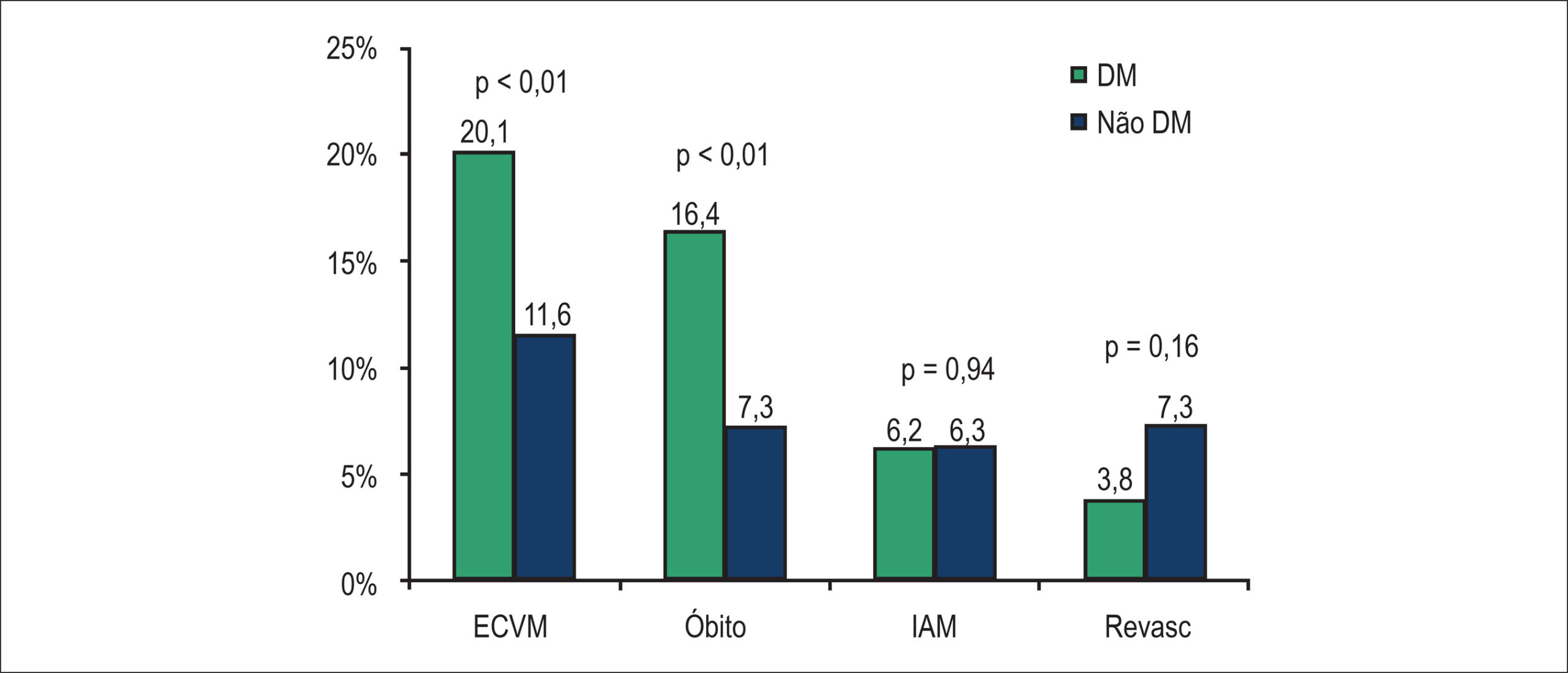
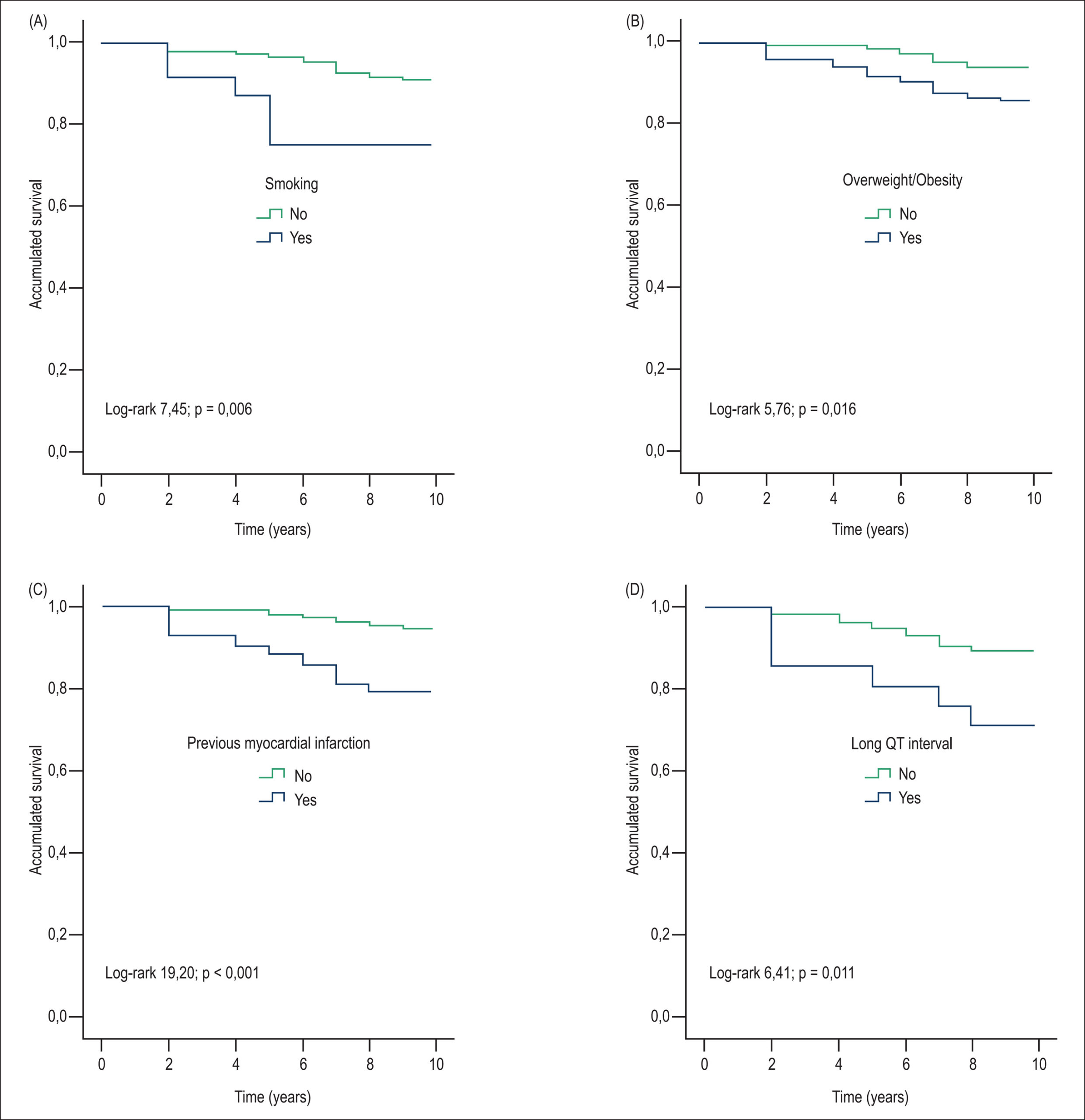
After 9.2 years of follow-up (median), 33 subjects died (17 from cardiovascular causes). Cardiovascular mortality was associated with male gender; smoking; prior myocardial infarction; long QTc interval; left ventricular hypertrophy; and eGFR <60 mL/min. These factors, in addition to obesity, were predictors of total mortality. Cardiovascular mortality was adjusted for age and gender, but remained associated with: smoking (HR = 3.8; 95% CI 1.3-11.8; p = 0.019); prior myocardial infarction (HR = 8.5; 95% CI 1.8-39.9; p = 0.007); eGFR < 60 mL/min (HR = 9.5; 95% CI 2.7-33.7; p = 0.001); long QTc interval (HR = 5.1; 95% CI 1.7-15.2; p = 0.004); and left ventricular hypertrophy (HR = 3.5; 95% CI 1.3-9.7; p = 0.002). Total mortality was associated with obesity (HR = 2.3; 95% CI 1.1-5.1; p = 0.030); smoking (HR = 2.5; 95% CI 1.0-6.1; p = 0.046); prior myocardial infarction (HR = 3.1; 95% CI 1.4-6.1; p = 0.005), and long QTc interval (HR = 3.1; 95% CI 1.4-6.1; p = 0.017).

Conclusions:

Biomarkers of simple measurement, particularly those related to target-organ lesions, were predictors of mortality in subjects with type 2 diabetes.

  • Diabetes Mellitus, Type 2 / complications
  • Diabetes Mellitus, Type 2 / mortality
  • Epidemiology
Read Full Article
Creative Commons Attribution (CC BY) Creative Commons license
01/08/2014 DOI: 10.5935/abc.20140112

How to cite this article

EndNote RIS

Electronic Document Format (Vancouver)

Oliveira L, Freitas AKE, Mehta N, Ortiz MR, Mulinari LA, Cunha CLP. Electrophysiological Study in Ebstein’s Anomaly With no Evidence of Accessory Pathway. Arquivos Brasileiros de Cardiologia 2014;103(4):e48-51.

Electronic Document Format (ABNT)

Oliveira, Larissa de; Freitas, Ana Karyn E. de; Mehta, Niraj; Ortiz, Marcio Rogério; Mulinari, Leonardo A.; Cunha, Cláudio L. Pereira da. Electrophysiological Study in Ebstein’s Anomaly With no Evidence of Accessory Pathway. Arquivos Brasileiros de Cardiologia, v. 103, n. 4, p. e48-e51, Sep. 2014.

Electronic Document Format (APA)

Oliveira, L. , Freitas, A. K. E. , Mehta, N., Ortiz, M. R., Mulinari, L. A., & Cunha, C. L. P. (2014). Electrophysiological Study in Ebstein’s Anomaly With no Evidence of Accessory Pathway. Arquivos Brasileiros de Cardiologia, 103(4), e48-e51.

Electronic Document Format (ISO)

Oliveira, Larissa de and Freitas, Ana Karyn E. de and Mehta, Niraj and Ortiz, Marcio Rogério and Mulinari, Leonardo A. and Cunha, Cláudio L. Pereira da. Electrophysiological Study in Ebstein’s Anomaly With no Evidence of Accessory Pathway. Arquivos Brasileiros de Cardiologia [online]. 2014, vol. 103, n. 4, [cited 2026-10-14], pp. e48-e51. Available from: <https://journals.cardiol.br/en/article/electrophysiological-study-in-ebsteins-anomaly-with-no-evidence-of-accessory-pathway/>. ISSN 0066-782X

EndNote RIS

Electronic Document Format (Vancouver)

Miranda CP, Botoni FA, Rocha MOC. Immunopharmacological Approach of Carvedilol in Chronic Chagas Heart Disease. Arquivos Brasileiros de Cardiologia 2014;103(4):358.

Electronic Document Format (ABNT)

Miranda, Carla Paixão; Botoni, Fernando Antônio; Rocha, Manoel Otávio da Costa. Immunopharmacological Approach of Carvedilol in Chronic Chagas Heart Disease. Arquivos Brasileiros de Cardiologia, v. 103, n. 4, p. 358-358, Sep. 2014.

Electronic Document Format (APA)

Miranda, C. P., Botoni, F. A., & Rocha, M. O. C. (2014). Immunopharmacological Approach of Carvedilol in Chronic Chagas Heart Disease. Arquivos Brasileiros de Cardiologia, 103(4), 358-358.

Electronic Document Format (ISO)

Miranda, Carla Paixão and Botoni, Fernando Antônio and Rocha, Manoel Otávio da Costa. Immunopharmacological Approach of Carvedilol in Chronic Chagas Heart Disease. Arquivos Brasileiros de Cardiologia [online]. 2014, vol. 103, n. 4, [cited 2026-10-14], pp. 358-358. Available from: <https://journals.cardiol.br/en/article/immunopharmacological-approach-of-carvedilol-in-chronic-chagas-heart-disease/>. ISSN 0066-782X

EndNote RIS

Electronic Document Format (Vancouver)

Atik E. Case 6 / 2014 – Five-year Old Child with Scimitar Syndrome and Pulmonary Sequestration of Right Lower Lobe. Arquivos Brasileiros de Cardiologia 2014;103(4):e45-7.

Electronic Document Format (ABNT)

Atik, Edmar. Case 6 / 2014 – Five-year Old Child with Scimitar Syndrome and Pulmonary Sequestration of Right Lower Lobe. Arquivos Brasileiros de Cardiologia, v. 103, n. 4, p. e45-e47, Sep. 2014.

Electronic Document Format (APA)

Atik, E. (2014). Case 6 / 2014 – Five-year Old Child with Scimitar Syndrome and Pulmonary Sequestration of Right Lower Lobe. Arquivos Brasileiros de Cardiologia, 103(4), e45-e47.

Electronic Document Format (ISO)

Atik, Edmar. Case 6 / 2014 – Five-year Old Child with Scimitar Syndrome and Pulmonary Sequestration of Right Lower Lobe. Arquivos Brasileiros de Cardiologia [online]. 2014, vol. 103, n. 4, [cited 2026-10-14], pp. e45-e47. Available from: <https://journals.cardiol.br/en/article/case-6-2014-five-year-old-child-with-scimitar-syndrome-and-pulmonary-sequestration-of-right-lower-lobe/>. ISSN 0066-782X

EndNote RIS

Electronic Document Format (Vancouver)

Siqueira DAA, Brito Jr FS, Abizaid AAC. Primary Angioplasty in the ACCEPT Registry: Why has it Been Difficult to Accept and Implement the Radial Artery Access as Preferential?. Arquivos Brasileiros de Cardiologia 2014;103(4):268-71.

Electronic Document Format (ABNT)

Siqueira, Dimytri Alexandre de Alvim; Brito Jr, Fabio Sandoli de; Abizaid, Alexandre A. C.. Primary Angioplasty in the ACCEPT Registry: Why has it Been Difficult to Accept and Implement the Radial Artery Access as Preferential?. Arquivos Brasileiros de Cardiologia, v. 103, n. 4, p. 268-271, Sep. 2014.

Electronic Document Format (APA)

Siqueira, D. A. A., Brito Jr, F. S. , & Abizaid, A. A. C. (2014). Primary Angioplasty in the ACCEPT Registry: Why has it Been Difficult to Accept and Implement the Radial Artery Access as Preferential?. Arquivos Brasileiros de Cardiologia, 103(4), 268-271.

Electronic Document Format (ISO)

Siqueira, Dimytri Alexandre de Alvim and Brito Jr, Fabio Sandoli de and Abizaid, Alexandre A. C.. Primary Angioplasty in the ACCEPT Registry: Why has it Been Difficult to Accept and Implement the Radial Artery Access as Preferential?. Arquivos Brasileiros de Cardiologia [online]. 2014, vol. 103, n. 4, [cited 2026-10-14], pp. 268-271. Available from: <https://journals.cardiol.br/en/article/primary-angioplasty-in-the-accept-registry-why-has-it-been-difficult-to-accept-and-implement-the-radial-artery-access-as-preferential/>. ISSN 0066-782X

EndNote RIS

Electronic Document Format (Vancouver)

Özcan F, lu ST, Turak O, Çay S, Aras D. Ablation of Premature Ventricular Contraction with the Help of a Notch. Arquivos Brasileiros de Cardiologia 2014;103(4):e55-6.

Electronic Document Format (ABNT)

Özcan, Firat; lu, Serkan Topaloğ; Turak, Osman; Çay, Serkan; Aras, Dursun. Ablation of Premature Ventricular Contraction with the Help of a Notch. Arquivos Brasileiros de Cardiologia, v. 103, n. 4, p. e55-e56, Sep. 2014.

Electronic Document Format (APA)

Özcan, F., lu, S. T., Turak, O., Çay, S., & Aras, D. (2014). Ablation of Premature Ventricular Contraction with the Help of a Notch. Arquivos Brasileiros de Cardiologia, 103(4), e55-e56.

Electronic Document Format (ISO)

Özcan, Firat and lu, Serkan Topaloğ and Turak, Osman and Çay, Serkan and Aras, Dursun. Ablation of Premature Ventricular Contraction with the Help of a Notch. Arquivos Brasileiros de Cardiologia [online]. 2014, vol. 103, n. 4, [cited 2026-10-14], pp. e55-e56. Available from: <https://journals.cardiol.br/en/article/ablation-of-premature-ventricular-contraction-with-the-help-of-a-notch/>. ISSN 0066-782X

EndNote RIS

Electronic Document Format (Vancouver)

. June 2014 Issue, vol.102 (6), pages 611-612. Arquivos Brasileiros de Cardiologia 2014;103(4):359.

Electronic Document Format (ABNT)

. June 2014 Issue, vol.102 (6), pages 611-612. Arquivos Brasileiros de Cardiologia, v. 103, n. 4, p. 359-359, Sep. 2014.

Electronic Document Format (APA)

(2014). June 2014 Issue, vol.102 (6), pages 611-612. Arquivos Brasileiros de Cardiologia, 103(4), 359-359.

Electronic Document Format (ISO)

. June 2014 Issue, vol.102 (6), pages 611-612. Arquivos Brasileiros de Cardiologia [online]. 2014, vol. 103, n. 4, [cited 2026-10-14], pp. 359-359. Available from: <https://journals.cardiol.br/en/article/june-2014-issue-vol-102-6-pages-611-612/>. ISSN 0066-782X

EndNote RIS

Electronic Document Format (Vancouver)

Franken RA, Rosa RF. Cardiogeriatric, the Future’s Cardiology?. Arquivos Brasileiros de Cardiologia 2014;103(4):e52.

Electronic Document Format (ABNT)

Franken, Roberto Alexandre; Rosa, Ronaldo Fernandes. Cardiogeriatric, the Future’s Cardiology?. Arquivos Brasileiros de Cardiologia, v. 103, n. 4, p. e52-e52, Sep. 2014.

Electronic Document Format (APA)

Franken, R. A., & Rosa, R. F. (2014). Cardiogeriatric, the Future’s Cardiology?. Arquivos Brasileiros de Cardiologia, 103(4), e52-e52.

Electronic Document Format (ISO)

Franken, Roberto Alexandre and Rosa, Ronaldo Fernandes. Cardiogeriatric, the Future’s Cardiology?. Arquivos Brasileiros de Cardiologia [online]. 2014, vol. 103, n. 4, [cited 2026-10-14], pp. e52-e52. Available from: <https://journals.cardiol.br/en/article/cardiogeriatric-the-futures-cardiology/>. ISSN 0066-782X

EndNote RIS

Electronic Document Format (Vancouver)

Almeida AEM, Stein R, Gus M, Nascimento JA, Belli KC, Arévalo JRG, Fuchs FD, et al. Relevance to Home Blood Pressure Monitoring Protocol of Blood Pressure Measurements Taken Before First- Morning Micturition and in the Afternoon. Arquivos Brasileiros de Cardiologia 2014;103(4):338-47.

Electronic Document Format (ABNT)

Almeida, Antonio Eduardo Monteiro de; Stein, Ricardo; Gus, Miguel; Nascimento, João Agnaldo; Belli, Karlyse Claudino; Arévalo, Jorge Rene Garcia; Fuchs, Flávio Dani; Ribeiro, Jorge Pinto. Relevance to Home Blood Pressure Monitoring Protocol of Blood Pressure Measurements Taken Before First- Morning Micturition and in the Afternoon. Arquivos Brasileiros de Cardiologia, v. 103, n. 4, p. 338-347, Sep. 2014.

Electronic Document Format (APA)

Almeida, A. E. M. , Stein, R., Gus, M., Nascimento, J. A., Belli, K. C., Arévalo, J. R. G., Fuchs, F. D., & Ribeiro, J. P. (2014). Relevance to Home Blood Pressure Monitoring Protocol of Blood Pressure Measurements Taken Before First- Morning Micturition and in the Afternoon. Arquivos Brasileiros de Cardiologia, 103(4), 338-347.

Electronic Document Format (ISO)

Almeida, Antonio Eduardo Monteiro de and Stein, Ricardo and Gus, Miguel and Nascimento, João Agnaldo and Belli, Karlyse Claudino and Arévalo, Jorge Rene Garcia and Fuchs, Flávio Dani and Ribeiro, Jorge Pinto. Relevance to Home Blood Pressure Monitoring Protocol of Blood Pressure Measurements Taken Before First- Morning Micturition and in the Afternoon. Arquivos Brasileiros de Cardiologia [online]. 2014, vol. 103, n. 4, [cited 2026-10-14], pp. 338-347. Available from: <https://journals.cardiol.br/en/article/relevance-to-home-blood-pressure-monitoring-protocol-of-blood-pressure-measurements-taken-before-first-morning-micturition-and-in-the-afternoon/>. ISSN 0066-782X

EndNote RIS

Electronic Document Format (Vancouver)

Almeida AEM, Stefani CM, Nascimento JA, Almeida NM, Santos AC, memoriam) JPR, Stein R, et al. An Equation for the Prediction of Oxygen Consumption in a Brazilian Population. Arquivos Brasileiros de Cardiologia 2014;103(4):299-307.

Electronic Document Format (ABNT)

Almeida, Antonio Eduardo Monteiro de; Stefani, Charles de Moraes; Nascimento, João Agnaldo do; Almeida, Narla Miranda de; Santos, Amilton da Cruz; memoriam), Jorge Pinto Ribeiro (in; Stein, Ricardo. An Equation for the Prediction of Oxygen Consumption in a Brazilian Population. Arquivos Brasileiros de Cardiologia, v. 103, n. 4, p. 299-307, Sep. 2014.

Electronic Document Format (APA)

Almeida, A. E. M. , Stefani, C. M., Nascimento, J. A. , Almeida, N. M. , Santos, A. C., memoriam), J. P. R. , & Stein, R. (2014). An Equation for the Prediction of Oxygen Consumption in a Brazilian Population. Arquivos Brasileiros de Cardiologia, 103(4), 299-307.

Electronic Document Format (ISO)

Almeida, Antonio Eduardo Monteiro de and Stefani, Charles de Moraes and Nascimento, João Agnaldo do and Almeida, Narla Miranda de and Santos, Amilton da Cruz and memoriam), Jorge Pinto Ribeiro (in and Stein, Ricardo. An Equation for the Prediction of Oxygen Consumption in a Brazilian Population. Arquivos Brasileiros de Cardiologia [online]. 2014, vol. 103, n. 4, [cited 2026-10-14], pp. 299-307. Available from: <https://journals.cardiol.br/en/article/an-equation-for-the-prediction-of-oxygen-consumption-in-a-brazilian-population/>. ISSN 0066-782X

EndNote RIS

Electronic Document Format (Vancouver)

Campos DHS, Leopoldo AS, Lima-Leopoldo AP, Nascimento AF, Oliveira-Junior SA, Silva DCT, Sugizaki MM, et al. Obesity Preserves Myocardial Function During Blockade of the Glycolytic Pathway. Arquivos Brasileiros de Cardiologia 2014;103(4):330-7.

Electronic Document Format (ABNT)

Campos, Dijon Henrique Salomé de; Leopoldo, André Soares; Lima-Leopoldo, Ana Paula; Nascimento, André Ferreira do; Oliveira-Junior, Silvio Assis de; Silva, Danielle Cristina Tomaz da; Sugizaki, Mario Mateus; Padovani, Carlos Roberto; Cicogna, Antonio Carlos. Obesity Preserves Myocardial Function During Blockade of the Glycolytic Pathway. Arquivos Brasileiros de Cardiologia, v. 103, n. 4, p. 330-337, Sep. 2014.

Electronic Document Format (APA)

Campos, D. H. S. , Leopoldo, A. S., Lima-Leopoldo, A. P., Nascimento, A. F. , Oliveira-Junior, S. A. , Silva, D. C. T. , Sugizaki, M. M., Padovani, C. R., & Cicogna, A. C. (2014). Obesity Preserves Myocardial Function During Blockade of the Glycolytic Pathway. Arquivos Brasileiros de Cardiologia, 103(4), 330-337.

Electronic Document Format (ISO)

Campos, Dijon Henrique Salomé de and Leopoldo, André Soares and Lima-Leopoldo, Ana Paula and Nascimento, André Ferreira do and Oliveira-Junior, Silvio Assis de and Silva, Danielle Cristina Tomaz da and Sugizaki, Mario Mateus and Padovani, Carlos Roberto and Cicogna, Antonio Carlos. Obesity Preserves Myocardial Function During Blockade of the Glycolytic Pathway. Arquivos Brasileiros de Cardiologia [online]. 2014, vol. 103, n. 4, [cited 2026-10-14], pp. 330-337. Available from: <https://journals.cardiol.br/en/article/obesity-preserves-myocardial-function-during-blockade-of-the-glycolytic-pathway/>. ISSN 0066-782X

EndNote RIS

Electronic Document Format (Vancouver)

David RB, Almeida ED, Cruz LV, Sebben JC, Feijó IP, Schmidt KES, Avena LM, et al. Diabetes Mellitus and Glucose as Predictors of Mortality in Primary Coronary Percutaneous Intervention. Arquivos Brasileiros de Cardiologia 2014;103(4):323-30.

Electronic Document Format (ABNT)

David, Renato Budzyn; Almeida, Eduardo Dytz; Cruz, Larissa Vargas; Sebben, Juliana Cañedo; Feijó, Ivan Petry; Schmidt, Karine Elisa Schwarzer; Avena, Luísa Martins; Gottschall, Carlos Antonio Mascia; Quadros, Alexandre Schaan de. Diabetes Mellitus and Glucose as Predictors of Mortality in Primary Coronary Percutaneous Intervention. Arquivos Brasileiros de Cardiologia, v. 103, n. 4, p. 323-330, Sep. 2014.

Electronic Document Format (APA)

David, R. B., Almeida, E. D., Cruz, L. V., Sebben, J. C., Feijó, I. P., Schmidt, K. E. S., Avena, L. M., Gottschall, C. A. M., & Quadros, A. S. (2014). Diabetes Mellitus and Glucose as Predictors of Mortality in Primary Coronary Percutaneous Intervention. Arquivos Brasileiros de Cardiologia, 103(4), 323-330.

Electronic Document Format (ISO)

David, Renato Budzyn and Almeida, Eduardo Dytz and Cruz, Larissa Vargas and Sebben, Juliana Cañedo and Feijó, Ivan Petry and Schmidt, Karine Elisa Schwarzer and Avena, Luísa Martins and Gottschall, Carlos Antonio Mascia and Quadros, Alexandre Schaan de. Diabetes Mellitus and Glucose as Predictors of Mortality in Primary Coronary Percutaneous Intervention. Arquivos Brasileiros de Cardiologia [online]. 2014, vol. 103, n. 4, [cited 2026-10-14], pp. 323-330. Available from: <https://journals.cardiol.br/en/article/diabetes-mellitus-and-glucose-as-predictors-of-mortality-in-primary-coronary-percutaneous-intervention/>. ISSN 0066-782X

EndNote RIS

Electronic Document Format (Vancouver)

Mendes FSNS, Atié J, Garcia MI, Gripp EA, Sousa AS, Feijó LA, Xavier SS, et al. Atrial Fibrillation in Decompensated Heart Failure: Associated Factors and In-Hospital Outcome. Arquivos Brasileiros de Cardiologia 2014;103(4):315-22.

Electronic Document Format (ABNT)

Mendes, Fernanda de Souza Nogueira Sardinha; Atié, Jacob; Garcia, Marcelo Iorio; Gripp, Eliza de Almeida; Sousa, Andréa Silvestre de; Feijó, Luiz Augusto; Xavier, Sergio Salles. Atrial Fibrillation in Decompensated Heart Failure: Associated Factors and In-Hospital Outcome. Arquivos Brasileiros de Cardiologia, v. 103, n. 4, p. 315-322, Aug. 2014.

Electronic Document Format (APA)

Mendes, F. S. N. S., Atié, J., Garcia, M. I., Gripp, E. A., Sousa, A. S. , Feijó, L. A., & Xavier, S. S. (2014). Atrial Fibrillation in Decompensated Heart Failure: Associated Factors and In-Hospital Outcome. Arquivos Brasileiros de Cardiologia, 103(4), 315-322.

Electronic Document Format (ISO)

Mendes, Fernanda de Souza Nogueira Sardinha and Atié, Jacob and Garcia, Marcelo Iorio and Gripp, Eliza de Almeida and Sousa, Andréa Silvestre de and Feijó, Luiz Augusto and Xavier, Sergio Salles. Atrial Fibrillation in Decompensated Heart Failure: Associated Factors and In-Hospital Outcome. Arquivos Brasileiros de Cardiologia [online]. 2014, vol. 103, n. 4, [cited 2026-10-14], pp. 315-322. Available from: <https://journals.cardiol.br/en/article/atrial-fibrillation-in-decompensated-heart-failure-associated-factors-and-in-hospital-outcome/>. ISSN 0066-782X

EndNote RIS

Electronic Document Format (Vancouver)

Francischetto O, Silva LAP, Senna KMS, Vasques MR, Barbosa GF, Weksler C, Ramos RG, et al. Healthcare-Associated Infective Endocarditis: a Case Series in a Referral Hospital from 2006 to 2011. Arquivos Brasileiros de Cardiologia 2014;103(4):292-8.

Electronic Document Format (ABNT)

Francischetto, Oslan; Silva, Luciana Almenara Pereira da; Senna, Katia Marie Simões e; Vasques, Marcia Regina; Barbosa, Giovanna Ferraiuoli; Weksler, Clara; Ramos, Rosana Grandelle; Golebiovski, Wilma Felix; Lamas, Cristiane da Cruz. Healthcare-Associated Infective Endocarditis: a Case Series in a Referral Hospital from 2006 to 2011. Arquivos Brasileiros de Cardiologia, v. 103, n. 4, p. 292-298, Aug. 2014.

Electronic Document Format (APA)

Francischetto, O., Silva, L. A. P. , Senna, K. M. S. , Vasques, M. R., Barbosa, G. F., Weksler, C., Ramos, R. G., Golebiovski, W. F., & Lamas, C. C. (2014). Healthcare-Associated Infective Endocarditis: a Case Series in a Referral Hospital from 2006 to 2011. Arquivos Brasileiros de Cardiologia, 103(4), 292-298.

Electronic Document Format (ISO)

Francischetto, Oslan and Silva, Luciana Almenara Pereira da and Senna, Katia Marie Simões e and Vasques, Marcia Regina and Barbosa, Giovanna Ferraiuoli and Weksler, Clara and Ramos, Rosana Grandelle and Golebiovski, Wilma Felix and Lamas, Cristiane da Cruz. Healthcare-Associated Infective Endocarditis: a Case Series in a Referral Hospital from 2006 to 2011. Arquivos Brasileiros de Cardiologia [online]. 2014, vol. 103, n. 4, [cited 2026-10-14], pp. 292-298. Available from: <https://journals.cardiol.br/en/article/healthcare-associated-infective-endocarditis-a-case-series-in-a-referral-hospital-from-2006-to-2011/>. ISSN 0066-782X

EndNote RIS

Electronic Document Format (Vancouver)

Pimentel M, Zimerman LI, Rohde LE. Stratification of the Risk of Sudden Death in Nonischemic Heart Failure. Arquivos Brasileiros de Cardiologia 2014;103(4):348-57.

Electronic Document Format (ABNT)

Pimentel, Maurício; Zimerman, Leandro Ioschpe; Rohde, Luis Eduardo. Stratification of the Risk of Sudden Death in Nonischemic Heart Failure. Arquivos Brasileiros de Cardiologia, v. 103, n. 4, p. 348-357, Aug. 2014.

Electronic Document Format (APA)

Pimentel, M., Zimerman, L. I., & Rohde, L. E. (2014). Stratification of the Risk of Sudden Death in Nonischemic Heart Failure. Arquivos Brasileiros de Cardiologia, 103(4), 348-357.

Electronic Document Format (ISO)

Pimentel, Maurício and Zimerman, Leandro Ioschpe and Rohde, Luis Eduardo. Stratification of the Risk of Sudden Death in Nonischemic Heart Failure. Arquivos Brasileiros de Cardiologia [online]. 2014, vol. 103, n. 4, [cited 2026-10-14], pp. 348-357. Available from: <https://journals.cardiol.br/en/article/stratification-of-the-risk-of-sudden-death-in-nonischemic-heart-failure/>. ISSN 0066-782X

EndNote RIS

Electronic Document Format (Vancouver)

Secundo Junior JA, Santos MAA, Faro GBA, Soares CB, Silva AMP, Secundo PFC, Teixeira CKC, et al. Left Atrial Volume Index and Prediction of Events in Acute Coronary Syndrome: Solar Registry. Arquivos Brasileiros de Cardiologia 2014;103(4):282-91.

Electronic Document Format (ABNT)

Secundo Junior, Jose Alves; Santos, Marcos Antonio Almeida; Faro, Gustavo Baptista de Almeida; Soares, Camile Bittencourt; Silva, Allyson Matos Porto; Secundo, Paulo Fernando Carvalho; Teixeira, Clarissa Karine Cardoso; Oliveira, Joselina Luzia Menezes; Barreto Filho, Jose Augusto Soares; Sousa, Antônio Carlos Sobral. Left Atrial Volume Index and Prediction of Events in Acute Coronary Syndrome: Solar Registry. Arquivos Brasileiros de Cardiologia, v. 103, n. 4, p. 282-291, Aug. 2014.

Electronic Document Format (APA)

Secundo Junior, J. A., Santos, M. A. A., Faro, G. B. A., Soares, C. B., Silva, A. M. P., Secundo, P. F. C., Teixeira, C. K. C., Oliveira, J. L. M., Barreto Filho, J. A. S., & Sousa, A. C. S. (2014). Left Atrial Volume Index and Prediction of Events in Acute Coronary Syndrome: Solar Registry. Arquivos Brasileiros de Cardiologia, 103(4), 282-291.

Electronic Document Format (ISO)

Secundo Junior, Jose Alves and Santos, Marcos Antonio Almeida and Faro, Gustavo Baptista de Almeida and Soares, Camile Bittencourt and Silva, Allyson Matos Porto and Secundo, Paulo Fernando Carvalho and Teixeira, Clarissa Karine Cardoso and Oliveira, Joselina Luzia Menezes and Barreto Filho, Jose Augusto Soares and Sousa, Antônio Carlos Sobral. Left Atrial Volume Index and Prediction of Events in Acute Coronary Syndrome: Solar Registry. Arquivos Brasileiros de Cardiologia [online]. 2014, vol. 103, n. 4, [cited 2026-10-14], pp. 282-291. Available from: <https://journals.cardiol.br/en/article/left-atrial-volume-index-and-prediction-of-events-in-acute-coronary-syndrome-solar-registry/>. ISSN 0066-782X

EndNote RIS

Electronic Document Format (Vancouver)

Kurtoglu E, Balta S, Karakus Y, Yasar E, Cuglan B, Kaplan O, Gozubuyuk G, et al. Ivabradine Improves Heart Rate Variability in Patients with Nonischemic Dilated Cardiomyopathy. Arquivos Brasileiros de Cardiologia 2014;103(4):308-14.

Electronic Document Format (ABNT)

Kurtoglu, Ertugrul; Balta, Sevket; Karakus, Yasin; Yasar, Erdogan; Cuglan, Bilal; Kaplan, Ozgur; Gozubuyuk, Gokhan. Ivabradine Improves Heart Rate Variability in Patients with Nonischemic Dilated Cardiomyopathy. Arquivos Brasileiros de Cardiologia, v. 103, n. 4, p. 308-314, Aug. 2014.

Electronic Document Format (APA)

Kurtoglu, E., Balta, S., Karakus, Y., Yasar, E., Cuglan, B., Kaplan, O., & Gozubuyuk, G. (2014). Ivabradine Improves Heart Rate Variability in Patients with Nonischemic Dilated Cardiomyopathy. Arquivos Brasileiros de Cardiologia, 103(4), 308-314.

Electronic Document Format (ISO)

Kurtoglu, Ertugrul and Balta, Sevket and Karakus, Yasin and Yasar, Erdogan and Cuglan, Bilal and Kaplan, Ozgur and Gozubuyuk, Gokhan. Ivabradine Improves Heart Rate Variability in Patients with Nonischemic Dilated Cardiomyopathy. Arquivos Brasileiros de Cardiologia [online]. 2014, vol. 103, n. 4, [cited 2026-10-14], pp. 308-314. Available from: <https://journals.cardiol.br/en/article/ivabradine-improves-heart-rate-variability-in-patients-with-nonischemic-dilated-cardiomyopathy/>. ISSN 0066-782X

EndNote RIS

Electronic Document Format (Vancouver)

Bianco HT, Izar MC, Fonseca HA, Póvoa RM, Saraiva JF, Forti A, Jardim PCBV, et al. Relevance of Target-Organ Lesions as Predictors of Mortality in Patients with Diabetes Mellitus. Arquivos Brasileiros de Cardiologia 2014;103(4):272-81.

Electronic Document Format (ABNT)

Bianco, Henrique Tria; Izar, Maria Cristina; Fonseca, Henrique Andrade; Póvoa, Rui Manuel; Saraiva, José Francisco; Forti, Adriana; Jardim, Paulo Cesar B. V.; Introcaso, Luis; Yugar-Toledo, Juan; Xavier, Hermes Tóros; Faludi, André Arpad; Fonseca, Francisco A. H.. Relevance of Target-Organ Lesions as Predictors of Mortality in Patients with Diabetes Mellitus. Arquivos Brasileiros de Cardiologia, v. 103, n. 4, p. 272-281, Jul. 2014.

Electronic Document Format (APA)

Bianco, H. T., Izar, M. C., Fonseca, H. A., Póvoa, R. M., Saraiva, J. F., Forti, A., Jardim, P. C. B. V., Introcaso, L., Yugar-Toledo, J., Xavier, H. T., Faludi, A. A., & Fonseca, F. A. H. (2014). Relevance of Target-Organ Lesions as Predictors of Mortality in Patients with Diabetes Mellitus. Arquivos Brasileiros de Cardiologia, 103(4), 272-281.

Electronic Document Format (ISO)

Bianco, Henrique Tria and Izar, Maria Cristina and Fonseca, Henrique Andrade and Póvoa, Rui Manuel and Saraiva, José Francisco and Forti, Adriana and Jardim, Paulo Cesar B. V. and Introcaso, Luis and Yugar-Toledo, Juan and Xavier, Hermes Tóros and Faludi, André Arpad and Fonseca, Francisco A. H.. Relevance of Target-Organ Lesions as Predictors of Mortality in Patients with Diabetes Mellitus. Arquivos Brasileiros de Cardiologia [online]. 2014, vol. 103, n. 4, [cited 2026-10-14], pp. 272-281. Available from: <https://journals.cardiol.br/en/article/relevance-of-target-organ-lesions-as-predictors-of-mortality-in-patients-with-diabetes-mellitus/>. ISSN 0066-782X

Sede – Rio de Janeiro
Av. Marechal Câmara, 160
3º andar – Sala: 330 – Centro
Rio de Janeiro – CEP: 20020-907
Tel.: (55 +21) 3478-2700
ou (21) 99386-3961
E-mail: revista@cardiol.br

Sede – São Paulo
Alameda Santos, 705 – 11º andar
Cerqueira César | São Paulo
CEP: 01419-001
Tel.: (55 +11) 3411-5500
E-mail: revista@cardiol.br

  • About the Journal
  • Internal Regulation
  • Editors Section
  • Editorial Board
  • History
  • SBC Award

  • Guidelines for Publication
  • Editorial Policy
  • Ethics Policy
  • Policy on the Use of Artificial Intelligence
  • Mandatory Publication Form
  • Publication Fee

Issues

SBC Guidelines

  • How to Publish an Abstract Supplement?
  • Supplements from the Brazilian Congress of Cardiology