ABC Family Arquivos Brasileiros de Cardiologia International Journal of Cardiovascular Sciences ABC Heart Failure & Cardiomyopathy ABC Imagem Cardiovascular
Português English
ABC Family
Português English
  • About
    • About ABC Family
    • Internal Regulation
    • Editorial Board
    • Brazilian Society of Cardiology (SBC)
  • Issues
  • SBC Guidelines
  • Content
    • Videos
    • Podcasts
    • News
  • About
    • About ABC Family
    • Internal Regulation
    • Editorial Board
    • Brazilian Society of Cardiology (SBC)
  • Issues
  • SBC Guidelines
  • Content
    • Videos
    • Podcasts
    • News

ABC Family

  • ABC Family
  • Arquivos Brasileiros de Cardiologia
  • International Journal of Cardiovascular Sciences
  • ABC Heart Failure & Cardiomyopathy
  • ABC Imagem Cardiovascular
Search in

No content found.

Journals
Ordering
Article types
Others

  1. Home
  2. Keyword: Ambulatory Blood Pressure Monitoring
Figure 1
ABC
Brief Communication

Treadmill Test and Ambulatory Blood Pressure Monitoring: Can They Be Performed on the Same Day? Can the Effort Reached on the Treadmill Interfere?

Paulo Magno Martins Dourado et al. Larissa de Almeida Dourado Letícia Raiane dos Anjos Silva Jaciara Gomes de Oliveira … Karolyne de Oliveira Matos João Paulo de Almeida Dourado Ludhmila Abrahão Hajjar Pedro Gabriel Senger Braga

Abstract

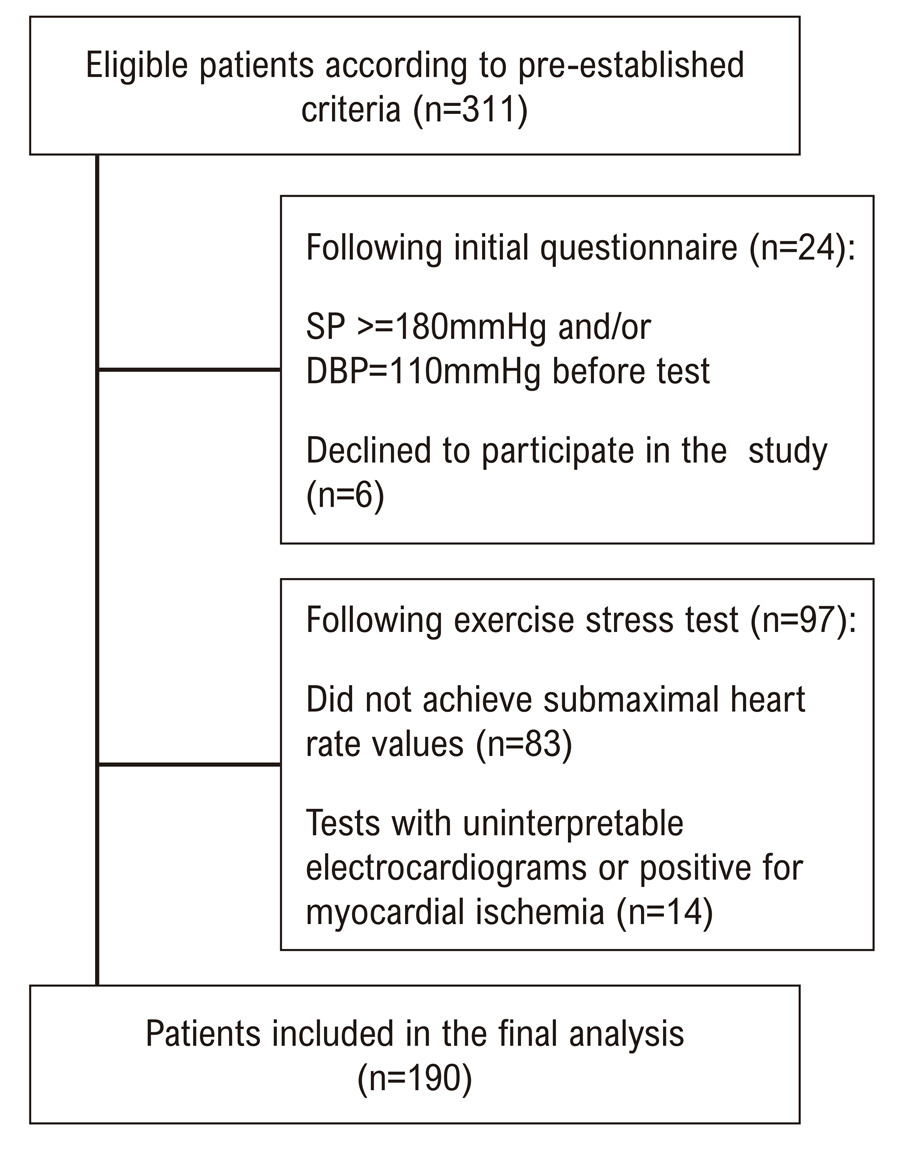
The present study aimed to assess whether the exercise stress test influences the results of ambulatory blood pressure monitoring (ABPM) in individuals who undergo both examinations on the same day, and whether the intensity reached during the test affects the blood pressure values obtained through ABPM. A total of 190 adults participated in the study, which included two analyses: performing the tests on the same day (n=145) versus on different days (n=45) and reaching submaximal (n=95) versus maximal (n=50) heart rate during the exercise stress test. Performing the exercise stress test and ABPM on the same day did not affect maximum systolic blood pressure during wakefulness (p=0.5307) or sleep (p=0.7383), maximum diastolic pressure during wakefulness (p=0.2691) or sleep (p=0.3974), minimum systolic pressure during wakefulness (p=0.4615) or sleep (p=0.5584), or minimum diastolic pressure during wakefulness (p=0.1289) or sleep (p=0.8075). When comparing the intensity of effort reached, there were no differences in maximum systolic pressure during wakefulness (p=0.1029) or sleep (p=0.2149), maximum diastolic pressure during wakefulness (p=0.2062) or sleep (p=0.1851), minimum systolic pressure during wakefulness (p=0.7964) or sleep (p=0.8991), and minimum diastolic pressure during wakefulness (p=0.8864) or sleep (p=0.4892). No differences were found in ABPM blood pressure values between individuals who performed the exercise stress test on the same day and those who did so on different days. Additionally, the intensity reached during the test, whether submaximal or maximal, did not influence ABPM results.
  • Ambulatory Blood Pressure Monitoring
  • Arterial Pressure
  • Exercise Test
Read Full Article
Creative Commons Attribution (CC BY) Creative Commons license
02/03/2026 DOI: 10.36660/abc.20250412i Views 1
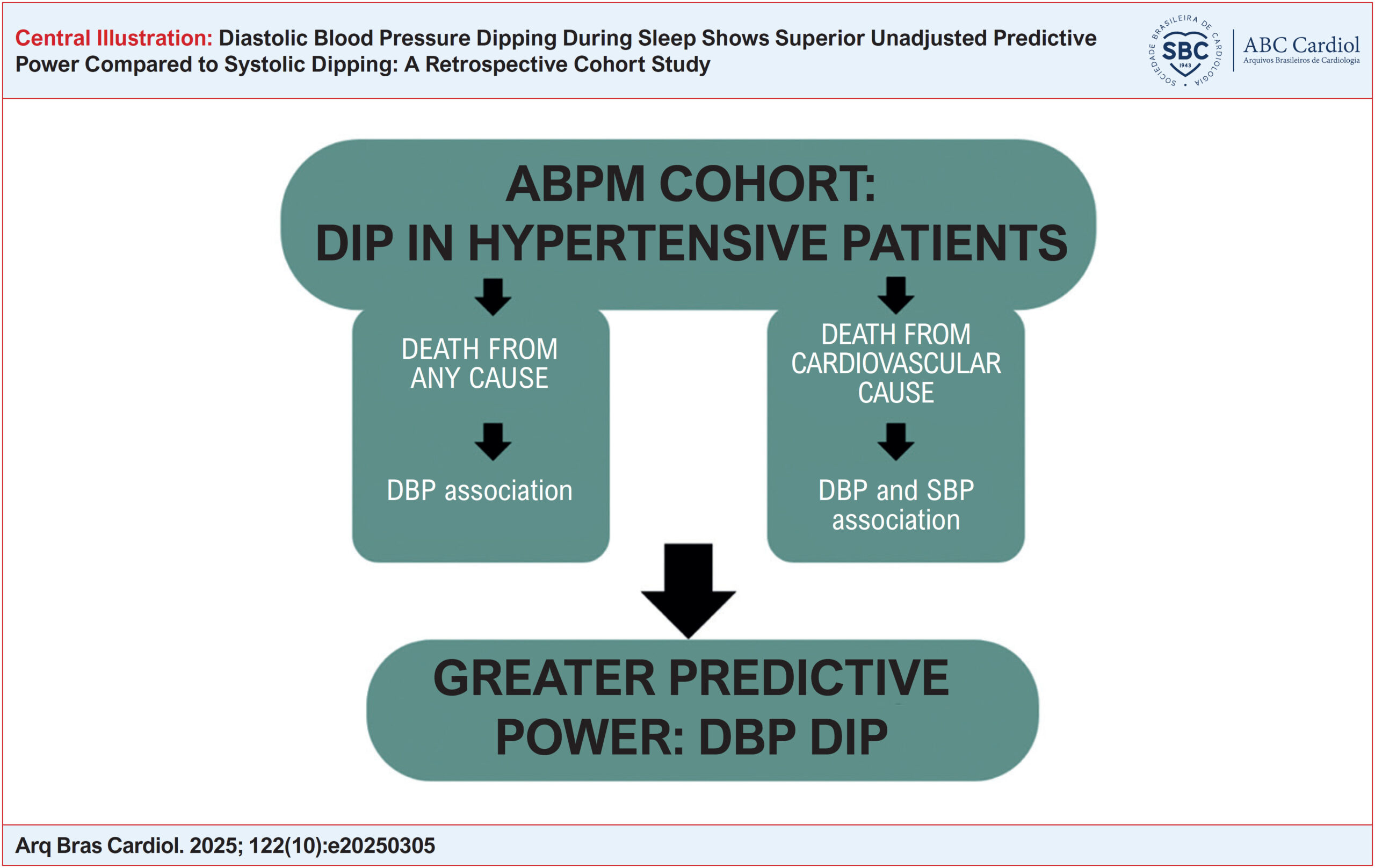
Diastolic Blood Pressure Dipping During Sleep Shows Superior Unadjusted Predictive Power Compared to Systolic Dipping: A Retrospective Cohort Study
ABC
Original Article

Diastolic Blood Pressure Dipping During Sleep Shows Superior Unadjusted Predictive Power Compared to Systolic Dipping: A Retrospective Cohort Study

Mateus de Carvalho Gonçalves et al. Daniely Santos da Silva Vitória Nogueira Ribeiro Vanessa Burgugi Banin … Vanessa dos Santos Silva Rodrigo Bazan Silméia Garcia Zanati Bazan Pasqual Barretti Luis Cuadrado Martin

ABSTRACT

Background:

Sleep blood pressure (BP) fall is a prognostic marker. Few studies have evaluated whether systolic BP (SBP) or diastolic BP (DBP) dipping more accurately predicts clinical outcomes.

Objective:

To determine which type of BP dipping has greater predictive value for clinical outcomes.

Methods:

This retrospective cohort evaluated patients who underwent ambulatory blood pressure monitoring (ABPM) between January 27, 2004, and February 16,2012. Patients were followed until the occurrence of the primary outcome (death from any cause), or until the end of follow-up period (February 01, 2022). Cox survival curves were constructed to assess which dipping classification – SBP or DBP – better distinguished the occurrence of outcomes. Dipping was defined as a nocturnal BP reduction of 10-20%. Absent and attenuated dipping were defined as reductions of ≤ 0% and 0-10%, respectively. Statistical significance was set at p < 0.05.

Results:

A total of 756 patients were included, with a mean age of 54±16.4 years; 42% were male. In predicting the primary outcome (all-cause mortality), the absence of DBP dipping, adjusted for 24-hour SBP, was associated with a hazard-ratio (HR) of 2.051 (95% confidence interval [95%CI]: 1.147 – 3.670 (p=0.015). For the secondary outcome (cardiovascular mortality), the absence of DBP dipping, also adjusted for 24-hour SBP, showed a HR of 3.329 (95%CI: 1.317-8.412; p=0.011). In contrast, the absence of SBP dipping, when adjusted for 24-hour SBP, was not significantly associated with either outcome. In the fully adjusted model, which included age, diabetes, smoking, atherosclerotic vascular disease and chronic kidney disease, both SBP and DBP dipping lost statistically significant associations.

Conclusion:

DBP dipping demonstrates superior predictive power for outcomes compared to SBP dipping, and adds to the prognostic value of mean 24-hour SBP. ().

  • Ambulatory Blood Pressure Monitoring
  • Hypertension
  • Mortality
Read Full Article
Creative Commons Attribution (CC BY) Creative Commons license
15/12/2025 DOI: 10.36660/abc.20250305i Views 2
ABC
Editorial

Morning Surge Blood Pressure and Obesity in Hypertensive Patients

Sayuri Inuzuka et al. Weimar Kunz Sebba Barroso

Obesity and hypertension are two of the most common diseases and they are usually interrelated. The five main modifiable risk factors – dyslipidemia, diabetes, hypertension, obesity and smoking are estimated to account for more than 50% of cardiovascular mortality. There are many hypertensive patients with subclinical lesions in the early stages of the disease that are not generally identified by the traditional assessment model., The presence of left ventricular hypertrophy (LVH) determines general risk stratification and is a major therapeutic target in hypertension. Both obesity and hypertension may have additive and interactive effects on LVH. In order to identify early cardiovascular system damage, more specific complementary exams for biomarker analysis have been recommended by hypertension guidelines.–

Different methods to determine morning surge blood pressure (MSBP) elevation have been proposed,– but there are still several gaps regarding the establishment of cutoffs and clinical meaningful recommendations. Some studies showed that MSBP have an adverse prognostic value, independently of 24h mean blood pressure. However, due to the difficulty in standardizing the calculation of this parameter, the incremental predictive value is still unclear and its low reproducibility indicate that, according to guidelines, it should not be used in clinical practice.,

[…]

  • Ambulatory Blood Pressure Monitoring
  • Hypertension
  • Obesity
Read Full Article
Creative Commons Attribution (CC BY) Creative Commons license
03/11/2023 DOI: 10.36660/abc.20230608 Views 1
Figure 1
ABC
Original Article

Association Between Non-Dipping and Fragmented QRS Complexes in Prehypertensive Patients

Mehmet Eyuboglu et al. Bahri Akdeniz

Abstract

Background:

Fragmented QRS (fQRS) is a sign of adverse cardiovascular events in various cardiovascular diseases. It is also associated with increased blood pressure and non-dipping in hypertensive patients. However, no study has investigated the importance of fQRS in prehypertensive patients.

Objectives:

The aim of our study is to investigate the relationship between fQRS and non-dipper status in prehypertensive patients.

Methods:

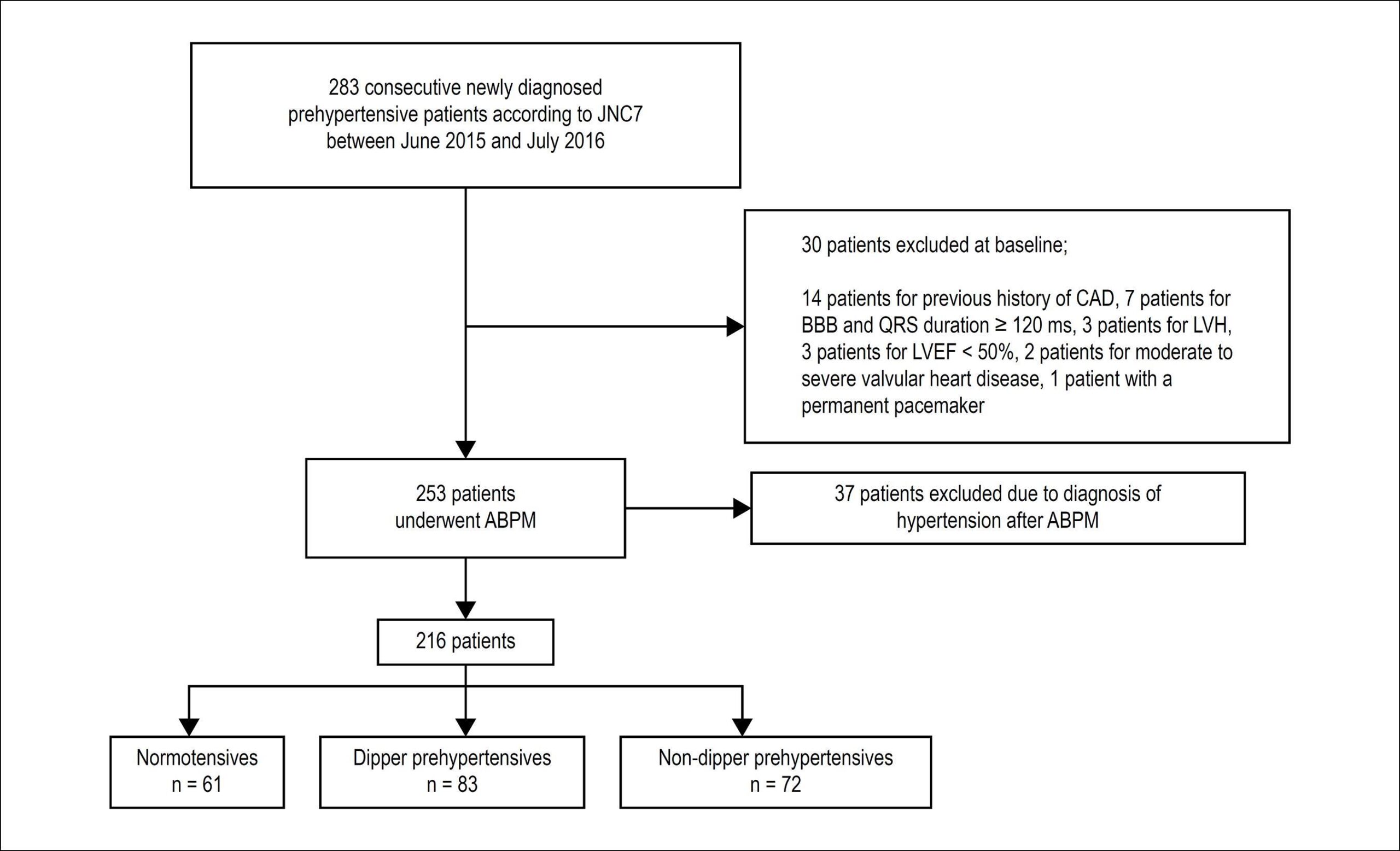
Two hundred and sixteen eligible, newly diagnosed prehypertensive patients who underwent 24-hour ambulatory blood pressure monitoring (ABPM) for further evaluation of blood pressure between June 2015 and July 2016 were included into the study. Patients were divided into three groups according to ABPM results: normotensives, dipper prehypertensives, and non-dipper prehypertensives. Groups were compared regarding presence of fQRS on electrocardiography. Additionally, multinomial logistic regression analysis was used to determine the relationship between fQRS and blood pressure pattern in prehypertensive patients.

Results:

According to ABPM recordings, 61 patients had normotensive blood pressure pattern (systolic blood pressure < 120 mmHg and diastolic blood pressure < 80 mmHg). Of the remaining 155 prehypertensive patients, 83 were dippers and 72 were non-dippers. Non-dipper prehypertensives had a significantly higher frequency of fQRS compared to normotensives (p = 0.048). Furthermore, multinomial logistic regression analysis revealed that fQRS is an independent predictor of non-dipping blood pressure pattern in prehypertensive patients (p = 0.017, OR: 4.071, 95% CI: 1.281-12.936).

Conclusions:

We found that fQRS is a predictor of non-dipping in prehypertensives. As a marker of fibrosis and higher fibrotic burden within myocardium, fQRS may be useful in identifying high-risk prehypertensive patients before the development of hypertension.

  • Ambulatory Blood Pressure Monitoring
  • Electrocardiography
  • Fragmented QRS
  • Hypertension
  • Non-dipping
  • Prehypertension
Read Full Article
Creative Commons Attribution (CC BY) Creative Commons license
17/12/2018 DOI: 10.5935/abc.20180242 Views 1
Figure 1
ABC
Original Article

Relevance to Home Blood Pressure Monitoring Protocol of Blood Pressure Measurements Taken Before First- Morning Micturition and in the Afternoon

Antonio Eduardo Monteiro de Almeida et al. Ricardo Stein Miguel Gus João Agnaldo Nascimento … Karlyse Claudino Belli Jorge Rene Garcia Arévalo Flávio Dani Fuchs Jorge Pinto Ribeiro

Background:

The importance of measuring blood pressure before morning micturition and in the afternoon, while working, is yet to be established in relation to the accuracy of home blood pressure monitoring (HBPM). Objective: To compare two HBPM protocols, considering 24-hour ambulatory blood pressure monitoring (wakefulness ABPM) as gold-standard and measurements taken before morning micturition (BM) and in the afternoon (AM), for the best diagnosis of systemic arterial hypertension (SAH), and their association with prognostic markers.

Methods:

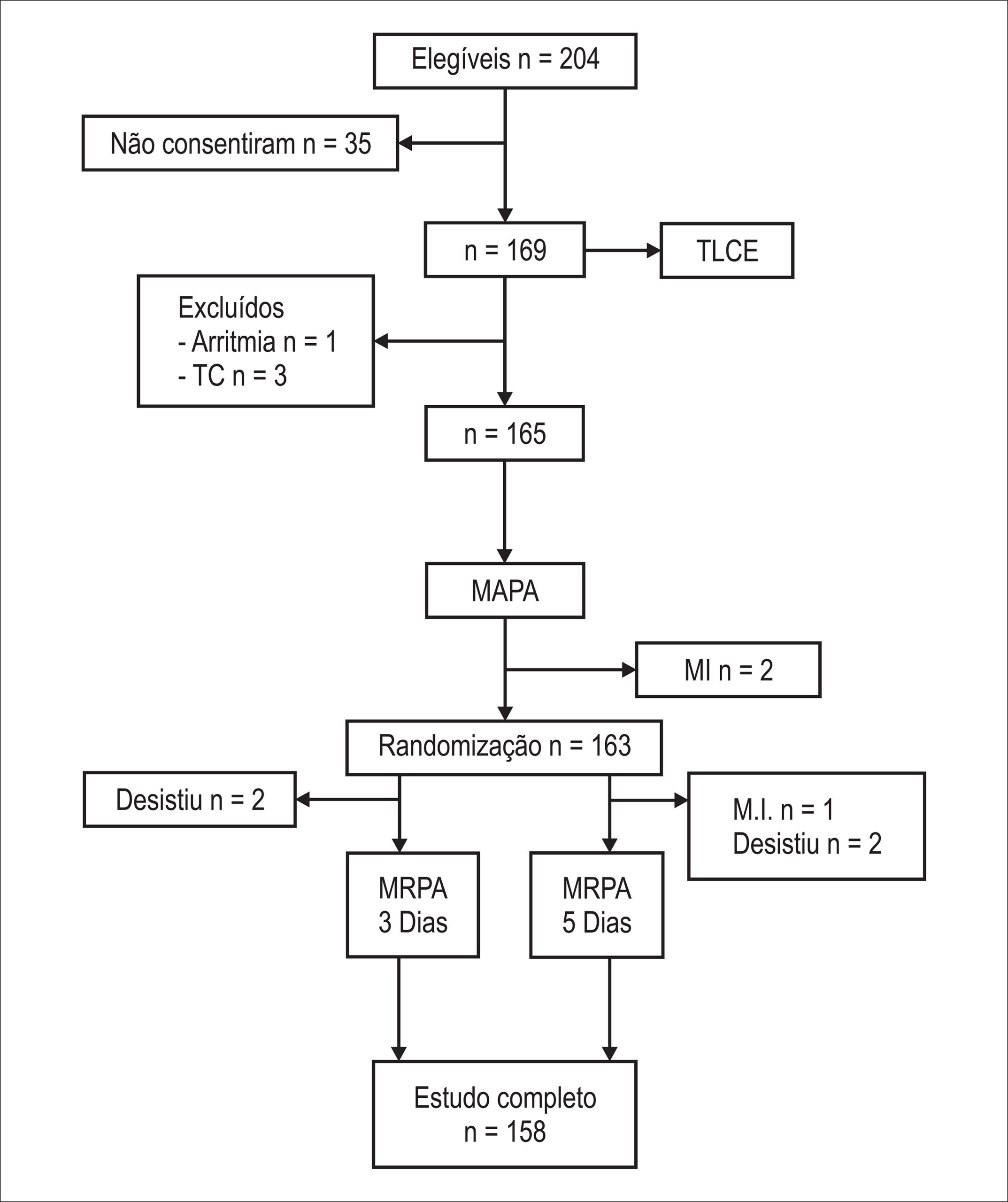
After undergoing 24-hour wakefulness ABPM, 158 participants (84 women) were randomized for 3- or 5-day HBPM. Two variations of the 3-day protocol were considered: with measurements taken before morning micturition and in the afternoon (BM+AM); and with post-morning-micturition and evening measurements (PM+EM). All patients underwent echocardiography (for left ventricular hypertrophy – LVH) and urinary albumin measurement (for microalbuminuria – MAU).

Result:

Kappa statistic for the diagnosis of SAH between wakefulness-ABPM and standard 3-day HBPM, 3-day HBPM (BM+AM) and (PM+EM), and 5-day HBPM were 0.660, 0.638, 0.348 and 0.387, respectively. The values of sensitivity of (BM+AM) versus (PM+EM) were 82.6% × 71%, respectively, and of specificity, 84.8% × 74%, respectively. The positive and negative predictive values were 69.1% × 40% and 92.2% × 91.2%, respectively. The comparisons of intraclass correlations for the diagnosis of LVH and MAU between (BM+AM) and (PM+EM) were 0.782 × 0.474 and 0.511 × 0.276, respectively.

Conclusions:

The 3 day-HBPM protocol including measurements taken before morning micturition and during work in the afternoon showed the best agreement with SAH diagnosis and the best association with prognostic markers.

  • Ambulatory Blood Pressure Monitoring
  • Arterial Pressure
  • Cardiovascular Diseases/urine
  • Hypertension
  • Mass Screening
  • Predictive Value of Tests
Read Full Article
Creative Commons Attribution (CC BY) Creative Commons license
23/09/2014 DOI: 10.5935/abc.20140139 Views 1
Ambulatory blood pressure monitoring and casual blood pressure in hyper-reactive individuals
ABC
Artigo Original

Ambulatory blood pressure monitoring and casual blood pressure in hyper-reactive individuals

Lucia Brandão de Oliveira et al. Ademir Batista da Cunha Wolney de Andrade Martins Rosiane Fátima Silveira de Abreu … Luciana Silva Nogueira de Barros Delma Maria Cunha Antonio Cláudio Lucas da Nóbrega Luiz Romeu Martins Filho

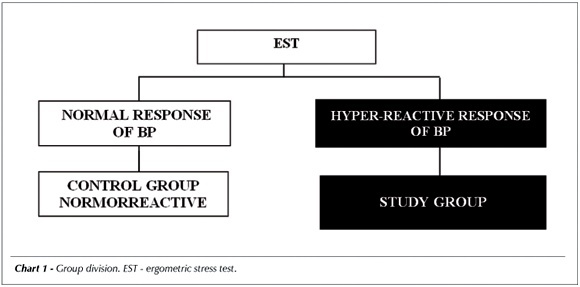
BACKGROUND: Developing hypertension is likely to be at least two times greater in individual with exaggerated blood pressure response on exercise testing (ET). Few reports have evaluated the parameters of 24-hour Ambulatory Blood Pressure Monitoring (ABPM) in normotensive individuals with exaggerated blood pressure response to exercise. OBJECTIVE: To evaluate the relationship among the casual blood pressure with hyper-reactive response on ET and to compare Ambulatory Blood Pressure Monitoring (ABPM) data of hyper-reactive individuals with a control group in order to detect early disorders, that allows a preventive action with prognostic implication. METHODS: Casual BP measurement and parameters of ABPM of 26 adult individuals, with mean age of 41.50±11.78 years, normotensive at rest and hyper-reactive on ET was compared to those of 16 adult individuals, with mean age of 41.38±11.55 years, normotensive at rest with normal BP response on exercise. The values <140 x 90 mmHg were considered normal for casual BP. The values 15mmHg diastolic BP on ET for hyper-reactive response diagnosis. RESULTS: Hyper-reactive individuals presented the systolic (p=0.03) and diastolic (p=0.002) casual BP and mean systolic BP (p=0.050), systolic pressure load during the day (p=0.011), and systolic (p=0.017) pressure load higher when compared to the control group. CONCLUSION: Casual high normal BP had a positive correlation with exaggerated BP response. The hyper-reactive individuals showed particular characteristics in casual BP as well as in ABPM parameters, which, although within the range of reference values, differed from those of individuals with normal response to exercise.

  • Ambulatory Blood Pressure Monitoring
  • Exercise Test
  • hyper-reactive response
  • Hypertension
Read Full Article
Creative Commons Attribution (CC BY) Creative Commons license
15/06/2007 DOI: 10.1590/S0066-782X2007000500011 Views 1
Influence of Quality of Sleep on the Nocturnal Decline in Blood Pressure During Ambulatory Blood Pressure Monitoring
ABC
Original Article

Influence of Quality of Sleep on the Nocturnal Decline in Blood Pressure During Ambulatory Blood Pressure Monitoring

Alexandre Alessi et al. Cristiane Rodrigues Alessi Edson Rogério Piana Márcia Assis … Luciano Rodrigo Oliveira Cláudio L. Pereira da Cunha

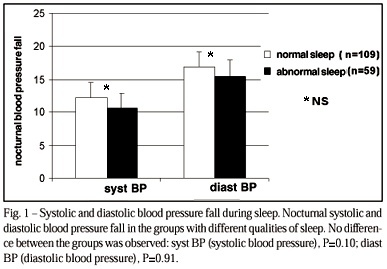
OBJECTIVE: To assess the influence of the quality of sleep on the nocturnal physiological drop in blood pressure during ambulatory blood pressure monitoring. METHODS: We consecutively assessed ambulatory blood pressure monitoring, the degree of tolerance for the examination, and the quality of sleep in 168 patients with hypertension or with the suspected “white-coat” effect. Blood pressure fall during sleep associated with a specific questionnaire and an analogical visual scale of tolerance for ambulatory blood pressure monitoring were used to assess usual sleep and sleep on the day of examination. Two specialists in sleep disturbances classified the patients into 2 groups: those with normal sleep and those with abnormal sleep. RESULTS: Fifty-nine (35 %) patients comprised the abnormal sleep group. Findings regarding the quality of sleep on the day of ambulatory blood pressure monitoring as compared with those regarding the quality of sleep on a usual day were different and were as follows, respectively: total duration of sleep (-12.4±4.7 versus -42.2±14.9 minutes, P=0.02), latency of sleep (0.4±2.7 versus 17±5.1 minutes, P<0.001), number of awakenings (0.1±0.1 versus 1.35±0.3 times, P<0.001), and tolerance for ambulatory blood pressure monitoring (8±0.2 versus 6.7±0.35, P=0.035). An abnormal drop in blood pressure during sleep occurred in 20 (18%) patients in the normal sleep group and in 14 (24%) patients in the abnormal sleep group, P=0.53. CONCLUSION: Ambulatory blood pressure monitoring causes sleep disturbances in some patients, and a positive association between quality of sleep and tolerance for the examination was observed.

  • Ambulatory Blood Pressure Monitoring
  • Hypertension
  • sleep disturbances
Read Full Article
Creative Commons Attribution (CC BY) Creative Commons license
31/01/2007 DOI: 10.1590/S0066-782X2002000200010 Views 2
ABC
Original Article

Ambulatory blood pressure monitoring and microalbuminuria in normotensive subjects with insulin-dependent diabetes mellitus

Cesar Nissan Cohen et al. Francisco Manes Albanesi Fº Maria de Fátima Gonçalves Marília de Brito Gomes

OBJECTIVE: To assess the association between microalbuminuria with ambulatory blood pressure monitoring in normotensive individuals with insulin-dependent diabetes mellitus. METHODS: Thirty-seven patients underwent determination of the rate of urinary excretion of albumin through radioimmunoassay and ambulatory blood pressure monitoring. Their mean age was 26.5±6.7 years, and the mean duration of their disease was 8 (1-34) years. Microalbuminuria was defined as urinary excretion of albumin > or = 20 and <200µg/min in at least 2 out of 3 urine samples. RESULTS: Nine (24.3%) patients were microalbuminuric. Ambulatory blood pressure monitoring in the microalbuminuric patients had higher mean pressure values, mainly the systolic pressure, during sleep as compared with that in the normoalbuminuric patients (120.1±8.3 vs 110.8±7.1 mmHg; p=0.007). The pressure load was higher in the microalbuminuric individuals, mainly the systolic pressure load during wakefulness [6.3 (2.9-45.9) vs 1.6 (0-16%); p=0.001]. This was the variable that better correlated with the urinary excretion of albumin (rS=0.61; p50% and diastolic pressure load > 30% during sleep was associated with microalbuminuria (p=0.008). The pressure drop during sleep did not differ between the groups. CONCLUSION: Microalbuminuric normotensive insulin-dependent diabetic patients show greater mean pressure value and pressure load during ambulatory blood pressure monitoring, and these variables correlate with urinary excretion of albumin.

  • Ambulatory Blood Pressure Monitoring
  • diabetic nephropathy
  • insulin-dependent diabetes mellitus
Read Full Article
Creative Commons Attribution (CC BY) Creative Commons license
08/01/2002 DOI: 10.1590/S0066-782X2000000900001 Views 1
ABC
Artigo Original

Ambulatory blood pressure monitoring in normal adolescents

Vera H. Koch et al. Anita Colli Maria Ignez Saito Patricia Ruffo … Rita Cardoso Edna C. Ignes Yassuhiko Okay Décio Mion Jr

PURPOSE: To evaluate technical aspects of ambulatory blood pressure monitoring (ABPM) in normal adolescents. METHODS: Forty five normal adolescents (27 female), 10-18 years old. RESULTS: ABPM recordings showed a mean of 90% successful readings; 30% of the patients complained of sleep disruption related to the functioning of the ABPM monitor; the mean systolic, diastolic and heart rate fall during sleep was 13%, 23% and 24% respectively; the mean systolic and diastolic blood pressure load, while awake, was in male adolescents 25.4±27.7% and 11.8±14.6%, and in female adolescents, 17.5±18.7% and 11.8±11.4%, respectively; the mean systolic and diastolic blood pressure load, while asleep, was in male adolescents 15.4±22.9% and 2.8±4.9% and, in female adolescents, 10.5±18.2% and 1.8±2.7%, respectively; the mean diastolic values of the first two hours of recording were higher than the ones obtained during the rest of the hours of recording while awake; different mean systolic, diastolic and heart rate values were found during the afternoon and nocturnal sleep periods. CONCLUSION: ABPM was well accepted by the adolescent population, with good technical results.

  • Adolescent
  • Ambulatory Blood Pressure Monitoring
  • Blood Pressure
Read Full Article
Creative Commons Attribution (CC BY) Creative Commons license
16/02/2001 DOI: 10.1590/S0066-782X1997000700007 Views 1

How to cite this article

EndNote RIS

Electronic Document Format (Vancouver)

Dourado PMM, Dourado LA, Silva LRA, Oliveira JG, Matos KO, Dourado JPA, Hajjar LA, et al. Treadmill Test and Ambulatory Blood Pressure Monitoring: Can They Be Performed on the Same Day? Can the Effort Reached on the Treadmill Interfere?. Arquivos Brasileiros de Cardiologia 2026;123(1):e20250412.

Electronic Document Format (ABNT)

Dourado, Paulo Magno Martins; Dourado, Larissa de Almeida; Silva, Letícia Raiane dos Anjos; Oliveira, Jaciara Gomes de; Matos, Karolyne de Oliveira; Dourado, João Paulo de Almeida; Hajjar, Ludhmila Abrahão; Braga, Pedro Gabriel Senger. Treadmill Test and Ambulatory Blood Pressure Monitoring: Can They Be Performed on the Same Day? Can the Effort Reached on the Treadmill Interfere?. Arquivos Brasileiros de Cardiologia, v. 123, n. 1, e20250412, Mar. 2026.

Electronic Document Format (APA)

Dourado, P. M. M., Dourado, L. A., Silva, L. R. A., Oliveira, J. G. , Matos, K. O., Dourado, J. P. A., Hajjar, L. A., & Braga, P. G. S. (2026). Treadmill Test and Ambulatory Blood Pressure Monitoring: Can They Be Performed on the Same Day? Can the Effort Reached on the Treadmill Interfere?. Arquivos Brasileiros de Cardiologia, 123(1), e20250412.

Electronic Document Format (ISO)

Dourado, Paulo Magno Martins and Dourado, Larissa de Almeida and Silva, Letícia Raiane dos Anjos and Oliveira, Jaciara Gomes de and Matos, Karolyne de Oliveira and Dourado, João Paulo de Almeida and Hajjar, Ludhmila Abrahão and Braga, Pedro Gabriel Senger. Treadmill Test and Ambulatory Blood Pressure Monitoring: Can They Be Performed on the Same Day? Can the Effort Reached on the Treadmill Interfere?. Arquivos Brasileiros de Cardiologia [online]. 2026, vol. 123, n. 1, [cited 2026-10-14], e20250412. Available from: <https://journals.cardiol.br/en/article/treadmill-test-and-ambulatory-blood-pressure-monitoring-can-they-be-performed-on-the-same-day-can-the-effort-reached-on-the-treadmill-interfere/>. ISSN 0066-782X

EndNote RIS

Electronic Document Format (Vancouver)

Gonçalves MC, Silva DS, Ribeiro VN, Banin VB, Silva VS, Bazan R, Bazan SGZ, et al. Diastolic Blood Pressure Dipping During Sleep Shows Superior Unadjusted Predictive Power Compared to Systolic Dipping: A Retrospective Cohort Study. Arquivos Brasileiros de Cardiologia 2025;122(10):e20250305.

Electronic Document Format (ABNT)

Gonçalves, Mateus de Carvalho; Silva, Daniely Santos da; Ribeiro, Vitória Nogueira; Banin, Vanessa Burgugi; Silva, Vanessa dos Santos; Bazan, Rodrigo; Bazan, Silméia Garcia Zanati; Barretti, Pasqual; Martin, Luis Cuadrado. Diastolic Blood Pressure Dipping During Sleep Shows Superior Unadjusted Predictive Power Compared to Systolic Dipping: A Retrospective Cohort Study. Arquivos Brasileiros de Cardiologia, v. 122, n. 10, e20250305, Dec. 2025.

Electronic Document Format (APA)

Gonçalves, M. C., Silva, D. S. , Ribeiro, V. N., Banin, V. B., Silva, V. S., Bazan, R., Bazan, S. G. Z., Barretti, P., & Martin, L. C. (2025). Diastolic Blood Pressure Dipping During Sleep Shows Superior Unadjusted Predictive Power Compared to Systolic Dipping: A Retrospective Cohort Study. Arquivos Brasileiros de Cardiologia, 122(10), e20250305.

Electronic Document Format (ISO)

Gonçalves, Mateus de Carvalho and Silva, Daniely Santos da and Ribeiro, Vitória Nogueira and Banin, Vanessa Burgugi and Silva, Vanessa dos Santos and Bazan, Rodrigo and Bazan, Silméia Garcia Zanati and Barretti, Pasqual and Martin, Luis Cuadrado. Diastolic Blood Pressure Dipping During Sleep Shows Superior Unadjusted Predictive Power Compared to Systolic Dipping: A Retrospective Cohort Study. Arquivos Brasileiros de Cardiologia [online]. 2025, vol. 122, n. 10, [cited 2026-10-14], e20250305. Available from: <https://journals.cardiol.br/en/article/diastolic-blood-pressure-dipping-during-sleep-shows-superior-unadjusted-predictive-power-compared-to-systolic-dipping-a-retrospective-cohort-study/>. ISSN 0066-782X

EndNote RIS

Electronic Document Format (Vancouver)

Inuzuka S, Barroso WKS. Morning Surge Blood Pressure and Obesity in Hypertensive Patients. Arquivos Brasileiros de Cardiologia 2023;120(9):e20230608.

Electronic Document Format (ABNT)

Inuzuka, Sayuri; Barroso, Weimar Kunz Sebba. Morning Surge Blood Pressure and Obesity in Hypertensive Patients. Arquivos Brasileiros de Cardiologia, v. 120, n. 9, e20230608, Nov. 2023.

Electronic Document Format (APA)

Inuzuka, S., & Barroso, W. K. S. (2023). Morning Surge Blood Pressure and Obesity in Hypertensive Patients. Arquivos Brasileiros de Cardiologia, 120(9), e20230608.

Electronic Document Format (ISO)

Inuzuka, Sayuri and Barroso, Weimar Kunz Sebba. Morning Surge Blood Pressure and Obesity in Hypertensive Patients. Arquivos Brasileiros de Cardiologia [online]. 2023, vol. 120, n. 9, [cited 2026-10-14], e20230608. Available from: <https://journals.cardiol.br/en/article/morning-surge-blood-pressure-and-obesity-in-hypertensive-patients/>. ISSN 0066-782X

EndNote RIS

Electronic Document Format (Vancouver)

Eyuboglu M, Akdeniz B. Association Between Non-Dipping and Fragmented QRS Complexes in Prehypertensive Patients. Arquivos Brasileiros de Cardiologia 2018;112(1):59-64.

Electronic Document Format (ABNT)

Eyuboglu, Mehmet; Akdeniz, Bahri. Association Between Non-Dipping and Fragmented QRS Complexes in Prehypertensive Patients. Arquivos Brasileiros de Cardiologia, v. 112, n. 1, p. 59-64, Dec. 2018.

Electronic Document Format (APA)

Eyuboglu, M., & Akdeniz, B. (2018). Association Between Non-Dipping and Fragmented QRS Complexes in Prehypertensive Patients. Arquivos Brasileiros de Cardiologia, 112(1), 59-64.

Electronic Document Format (ISO)

Eyuboglu, Mehmet and Akdeniz, Bahri. Association Between Non-Dipping and Fragmented QRS Complexes in Prehypertensive Patients. Arquivos Brasileiros de Cardiologia [online]. 2018, vol. 112, n. 1, [cited 2026-10-14], pp. 59-64. Available from: <https://journals.cardiol.br/en/article/association-between-non-dipping-and-fragmented-qrs-complexes-in-prehypertensive-patients/>. ISSN 0066-782X

EndNote RIS

Electronic Document Format (Vancouver)

Almeida AEM, Stein R, Gus M, Nascimento JA, Belli KC, Arévalo JRG, Fuchs FD, et al. Relevance to Home Blood Pressure Monitoring Protocol of Blood Pressure Measurements Taken Before First- Morning Micturition and in the Afternoon. Arquivos Brasileiros de Cardiologia 2014;103(4):338-47.

Electronic Document Format (ABNT)

Almeida, Antonio Eduardo Monteiro de; Stein, Ricardo; Gus, Miguel; Nascimento, João Agnaldo; Belli, Karlyse Claudino; Arévalo, Jorge Rene Garcia; Fuchs, Flávio Dani; Ribeiro, Jorge Pinto. Relevance to Home Blood Pressure Monitoring Protocol of Blood Pressure Measurements Taken Before First- Morning Micturition and in the Afternoon. Arquivos Brasileiros de Cardiologia, v. 103, n. 4, p. 338-347, Sep. 2014.

Electronic Document Format (APA)

Almeida, A. E. M. , Stein, R., Gus, M., Nascimento, J. A., Belli, K. C., Arévalo, J. R. G., Fuchs, F. D., & Ribeiro, J. P. (2014). Relevance to Home Blood Pressure Monitoring Protocol of Blood Pressure Measurements Taken Before First- Morning Micturition and in the Afternoon. Arquivos Brasileiros de Cardiologia, 103(4), 338-347.

Electronic Document Format (ISO)

Almeida, Antonio Eduardo Monteiro de and Stein, Ricardo and Gus, Miguel and Nascimento, João Agnaldo and Belli, Karlyse Claudino and Arévalo, Jorge Rene Garcia and Fuchs, Flávio Dani and Ribeiro, Jorge Pinto. Relevance to Home Blood Pressure Monitoring Protocol of Blood Pressure Measurements Taken Before First- Morning Micturition and in the Afternoon. Arquivos Brasileiros de Cardiologia [online]. 2014, vol. 103, n. 4, [cited 2026-10-14], pp. 338-347. Available from: <https://journals.cardiol.br/en/article/relevance-to-home-blood-pressure-monitoring-protocol-of-blood-pressure-measurements-taken-before-first-morning-micturition-and-in-the-afternoon/>. ISSN 0066-782X

EndNote RIS

Electronic Document Format (Vancouver)

Oliveira LB, Cunha AB, Martins WA, Abreu RFS, Barros LSN, Cunha DM, Nóbrega ACL, et al. Ambulatory blood pressure monitoring and casual blood pressure in hyper-reactive individuals. Arquivos Brasileiros de Cardiologia 2007;88(5):565-72.

Electronic Document Format (ABNT)

Oliveira, Lucia Brandão de; Cunha, Ademir Batista da; Martins, Wolney de Andrade; Abreu, Rosiane Fátima Silveira de; Barros, Luciana Silva Nogueira de; Cunha, Delma Maria; Nóbrega, Antonio Cláudio Lucas da; Martins Filho, Luiz Romeu. Ambulatory blood pressure monitoring and casual blood pressure in hyper-reactive individuals. Arquivos Brasileiros de Cardiologia, v. 88, n. 5, p. 565-572, Jun. 2007.

Electronic Document Format (APA)

Oliveira, L. B. , Cunha, A. B. , Martins, W. A., Abreu, R. F. S. , Barros, L. S. N. , Cunha, D. M., Nóbrega, A. C. L. , & Martins Filho, L. R. (2007). Ambulatory blood pressure monitoring and casual blood pressure in hyper-reactive individuals. Arquivos Brasileiros de Cardiologia, 88(5), 565-572.

Electronic Document Format (ISO)

Oliveira, Lucia Brandão de and Cunha, Ademir Batista da and Martins, Wolney de Andrade and Abreu, Rosiane Fátima Silveira de and Barros, Luciana Silva Nogueira de and Cunha, Delma Maria and Nóbrega, Antonio Cláudio Lucas da and Martins Filho, Luiz Romeu. Ambulatory blood pressure monitoring and casual blood pressure in hyper-reactive individuals. Arquivos Brasileiros de Cardiologia [online]. 2007, vol. 88, n. 5, [cited 2026-10-14], pp. 565-572. Available from: <https://journals.cardiol.br/en/article/ambulatory-blood-pressure-monitoring-and-casual-blood-pressure-in-hyper-reactive-individuals/>. ISSN 0066-782X

EndNote RIS

Electronic Document Format (Vancouver)

Alessi A, Alessi CR, Piana ER, Assis M, Oliveira LR, Cunha CLP. Influence of Quality of Sleep on the Nocturnal Decline in Blood Pressure During Ambulatory Blood Pressure Monitoring. Arquivos Brasileiros de Cardiologia 2007;78(2):218-23.

Electronic Document Format (ABNT)

Alessi, Alexandre; Alessi, Cristiane Rodrigues; Piana, Edson Rogério; Assis, Márcia; Oliveira, Luciano Rodrigo; Cunha, Cláudio L. Pereira da. Influence of Quality of Sleep on the Nocturnal Decline in Blood Pressure During Ambulatory Blood Pressure Monitoring. Arquivos Brasileiros de Cardiologia, v. 78, n. 2, p. 218-223, Jan. 2007.

Electronic Document Format (APA)

Alessi, A., Alessi, C. R., Piana, E. R., Assis, M., Oliveira, L. R., & Cunha, C. L. P. (2007). Influence of Quality of Sleep on the Nocturnal Decline in Blood Pressure During Ambulatory Blood Pressure Monitoring. Arquivos Brasileiros de Cardiologia, 78(2), 218-223.

Electronic Document Format (ISO)

Alessi, Alexandre and Alessi, Cristiane Rodrigues and Piana, Edson Rogério and Assis, Márcia and Oliveira, Luciano Rodrigo and Cunha, Cláudio L. Pereira da. Influence of Quality of Sleep on the Nocturnal Decline in Blood Pressure During Ambulatory Blood Pressure Monitoring. Arquivos Brasileiros de Cardiologia [online]. 2007, vol. 78, n. 2, [cited 2026-10-14], pp. 218-223. Available from: <https://journals.cardiol.br/en/article/influence-of-quality-of-sleep-on-the-nocturnal-decline-in-blood-pressure-during-ambulatory-blood-pressure-monitoring/>. ISSN 0066-782X

EndNote RIS

Electronic Document Format (Vancouver)

Cohen CN, Fº FMA, Gonçalves MF, Gomes MB. Ambulatory blood pressure monitoring and microalbuminuria in normotensive subjects with insulin-dependent diabetes mellitus. Arquivos Brasileiros de Cardiologia 2002;75(3):200-4.

Electronic Document Format (ABNT)

Cohen, Cesar Nissan; Fº, Francisco Manes Albanesi; Gonçalves, Maria de Fátima; Gomes, Marília de Brito. Ambulatory blood pressure monitoring and microalbuminuria in normotensive subjects with insulin-dependent diabetes mellitus. Arquivos Brasileiros de Cardiologia, v. 75, n. 3, p. 200-204, Jan. 2002.

Electronic Document Format (APA)

Cohen, C. N., Fº, F. M. A., Gonçalves, M. F., & Gomes, M. B. (2002). Ambulatory blood pressure monitoring and microalbuminuria in normotensive subjects with insulin-dependent diabetes mellitus. Arquivos Brasileiros de Cardiologia, 75(3), 200-204.

Electronic Document Format (ISO)

Cohen, Cesar Nissan and Fº, Francisco Manes Albanesi and Gonçalves, Maria de Fátima and Gomes, Marília de Brito. Ambulatory blood pressure monitoring and microalbuminuria in normotensive subjects with insulin-dependent diabetes mellitus. Arquivos Brasileiros de Cardiologia [online]. 2002, vol. 75, n. 3, [cited 2026-10-14], pp. 200-204. Available from: <https://journals.cardiol.br/en/article/ambulatory-blood-pressure-monitoring-and-microalbuminuria-in-normotensive-subjects-with-insulin-dependent-diabetes-mellitus/>. ISSN 0066-782X

EndNote RIS

Electronic Document Format (Vancouver)

Koch VH, Colli A, Saito MI, Ruffo P, Cardoso R, Ignes EC, Okay Y, et al. Ambulatory blood pressure monitoring in normal adolescents. Arquivos Brasileiros de Cardiologia 2001;69(1):41-6.

Electronic Document Format (ABNT)

Koch, Vera H.; Colli, Anita; Saito, Maria Ignez; Ruffo, Patricia; Cardoso, Rita; Ignes, Edna C.; Okay, Yassuhiko; Mion Jr, Décio. Ambulatory blood pressure monitoring in normal adolescents. Arquivos Brasileiros de Cardiologia, v. 69, n. 1, p. 41-46, Feb. 2001.

Electronic Document Format (APA)

Koch, V. H., Colli, A., Saito, M. I., Ruffo, P., Cardoso, R., Ignes, E. C., Okay, Y., & Mion Jr, D. (2001). Ambulatory blood pressure monitoring in normal adolescents. Arquivos Brasileiros de Cardiologia, 69(1), 41-46.

Electronic Document Format (ISO)

Koch, Vera H. and Colli, Anita and Saito, Maria Ignez and Ruffo, Patricia and Cardoso, Rita and Ignes, Edna C. and Okay, Yassuhiko and Mion Jr, Décio. Ambulatory blood pressure monitoring in normal adolescents. Arquivos Brasileiros de Cardiologia [online]. 2001, vol. 69, n. 1, [cited 2026-10-14], pp. 41-46. Available from: <https://journals.cardiol.br/article/ambulatory-blood-pressure-monitoring-in-normal-adolescents/>. ISSN 0066-782X

  • About ABC Family
  • Internal Regulation
  • Editorial Board
  • Brazilian Society of Cardiology (SBC)

Issues

SBC Guidelines

  • Videos
  • Podcasts
  • News