ABC Family Arquivos Brasileiros de Cardiologia International Journal of Cardiovascular Sciences ABC Heart Failure & Cardiomyopathy ABC Imagem Cardiovascular
Português English
ABC Family
Português English
  • About
    • About ABC Family
    • Internal Regulation
    • Editorial Board
    • Brazilian Society of Cardiology (SBC)
  • Issues
  • SBC Guidelines
  • Content
    • Videos
    • Podcasts
    • News
  • About
    • About ABC Family
    • Internal Regulation
    • Editorial Board
    • Brazilian Society of Cardiology (SBC)
  • Issues
  • SBC Guidelines
  • Content
    • Videos
    • Podcasts
    • News

ABC Family

  • ABC Family
  • Arquivos Brasileiros de Cardiologia
  • International Journal of Cardiovascular Sciences
  • ABC Heart Failure & Cardiomyopathy
  • ABC Imagem Cardiovascular
Search in

No content found.

Journals
Ordering
Article types
Others

  1. Home
  2. Keyword: Biological Markers
ABC
Editorial

Effectiveness of Biomarkers in Cardiology

Luis Cláudio Lemos Correia

Besides providing diagnostic or prognostic accuracy, a biomarker must be effective to ensure its adequate use in routine clinical implementation. Effectiveness can be defined as an individual’s potential to benefit from using the biomarker. This benefit includes the prevention of undesirable clinical outcomes and improvement in an individual’s quality of life.

Assessment of a biomarker’s effectiveness should include two sequential criteria. First, the biomarker should add prognostic value in relation to basic clinical and laboratory data. Second, the information provided by the biomarker should promote changes in medical conduct in a way that ultimately benefits the patient. Beginning with the analysis of prognostic value, a new biomarker must have a prognostic value independent of conventional risk markers. However, this criterion of statistical significance is not enough to guarantee clinical significance. Once the statistical significance is confirmed by multivariate analysis, it is necessary to proceed and evaluate whether the biomarker increases our ability to identify individuals who will present the undesirable outcome. This is done by incremental analysis of the C-statistic and net reclassification analysis. For example, although high sensitivity C-reactive protein has an independent association with cardiovascular risk, it only slightly increases the discriminatory capacity in Framingham score. The coronary calcium score, on the other hand, can increase the C-statistic of Framingham score, in addition to correctly reclassifying a proportion of patients. This incremental value is an essential condition for a biomarker to be effective, because only then can its result correctly modify clinical decisions.

[…]

  • Biological Markers
  • Cardiovascular Diseases/genetic
  • Disease Prevention
  • Effectiveness
  • Evidence-Based Practice
Read Full Article
Creative Commons Attribution (CC BY) Creative Commons license
01/12/2014 DOI: 10.5935/abc.20140194
ABC
Special Article

Biomarkers in Cardiology – Part 1 – In Heart Failure and Specific Cardiomyopathies

EXpert Group on Biomarkers

Cardiovascular diseases are the leading causes of mortality and morbidity in Brazil. The primary and secondary preventions of those diseases are a priority for the health system and require multiple approaches to increase their effectiveness. Biomarkers are tools used to more accurately identify high-risk individuals, to speed the diagnosis, and to aid in treatment and prognosis determination. This review aims to highlight the importance of biomarkers in clinical cardiology practice, and to raise relevant points of their use and the promises for the coming years. This document was divided into two parts, and this first one discusses the use of biomarkers in specific cardiomyopathies and heart failure.

  • Biological Markers
  • Cardiomyopathies
  • Evidence-Based Practice
  • Heart Failure
Read Full Article
Creative Commons Attribution (CC BY) Creative Commons license
28/11/2014 DOI: 10.5935/abc.20140184
Figure 1
ABC
Original Article

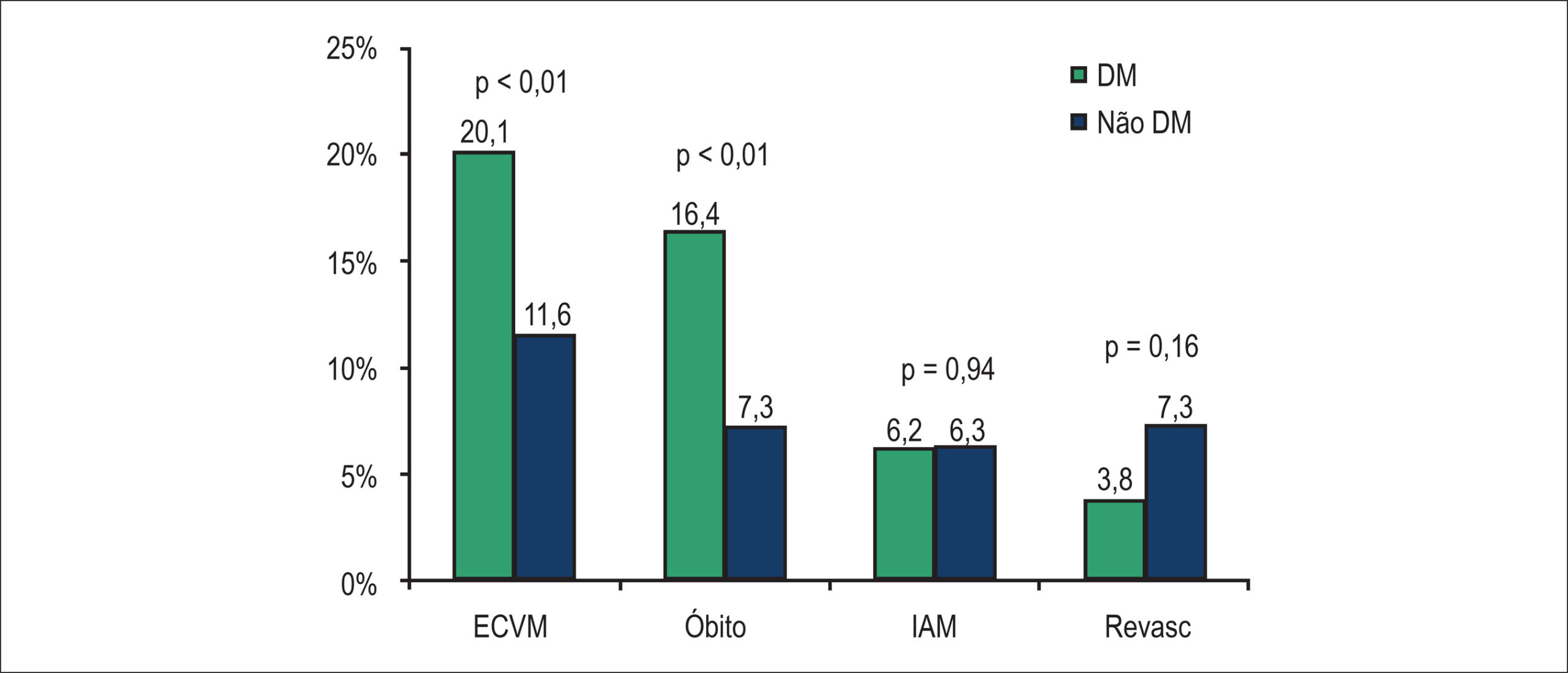
Diabetes Mellitus and Glucose as Predictors of Mortality in Primary Coronary Percutaneous Intervention

Renato Budzyn David et al. Eduardo Dytz Almeida Larissa Vargas Cruz Juliana Cañedo Sebben … Ivan Petry Feijó Karine Elisa Schwarzer Schmidt Luísa Martins Avena Carlos Antonio Mascia Gottschall Alexandre Schaan de Quadros

Background:

Diabetes mellitus and admission blood glucose are important risk factors for mortality in ST segment elevation myocardial infarction patients, but their relative and individual role remains on debate.

Objective:

To analyze the influence of diabetes mellitus and admission blood glucose on the mortality of ST segment elevation myocardial infarction patients submitted to primary coronary percutaneous intervention.

Methods:

Prospective cohort study including every ST segment elevation myocardial infarction patient submitted to primary coronary percutaneous intervention in a tertiary cardiology center from December 2010 to May 2012. We collected clinical, angiographic and laboratory data during hospital stay, and performed a clinical follow-up 30 days after the ST segment elevation myocardial infarction. We adjusted the multivariate analysis of the studied risk factors using the variables from the GRACE score.

Results:

Among the 740 patients included, reported diabetes mellitus prevalence was 18%. On the univariate analysis, both diabetes mellitus and admission blood glucose were predictors of death in 30 days. However, after adjusting for potential confounders in the multivariate analysis, the diabetes mellitus relative risk was no longer significant (relative risk: 2.41, 95% confidence interval: 0.76 – 7.59; p-value: 0.13), whereas admission blood glucose remained and independent predictor of death in 30 days (relative risk: 1.05, 95% confidence interval: 1.02 – 1.09; p-value ≤ 0.01).

Conclusion:

In ST segment elevation myocardial infarction patients submitted to primary coronary percutaneous intervention, the admission blood glucose was a more accurate and robust independent predictor of death than the previous diagnosis of diabetes. This reinforces the important role of inflammation on the outcomes of this group of patients.

  • Biological Markers
  • Blood Glucose
  • Diabetes Mellitus
  • Myocardial Infarction
  • Percutaneous Coronary Intervention
Read Full Article
Creative Commons Attribution (CC BY) Creative Commons license
12/09/2014 DOI: 10.5935/abc.20140130 Views 1
ABC
Artigo Original

Markers of redox imbalance in the blood of hypertensive patients of a community in Northeastern Brazil

Sandra Mary Lima Vasconcelos et al. Marília Oliveira Fonseca Goulart Maria Alayde Mendonça da Silva Vanusa Manfredini … Mara da Silveira Benfato Luiza Antas Rabelo Gilberto Fontes

BACKGROUND: Recent studies describe the participation of reactive oxygen and nitrogen species in hypertension. OBJECTIVE: To identify the redox imbalance in the blood of hypertensive. METHODS: Superoxide dismutase (SOD), catalase (CAT), glutathione peroxidase (GPx), glutathione (GSH), vitamin C, transferrin, ceruloplasmin, malondialdehyde (MDA) and carbonyl group were quantified in the blood of 20 hypertensives and 21 controls. The individuals had a Body Mass Index of > 18.5 and < 30 kg/m², glycemia < 100 mg/dL, serum cholesterol < 200 mg/dL, and were nonsmokers, non-pregnant and non-lactating women, non-users of alopurinol and probucol, with hypertensives on antihypertensive medication. All individuals underwent a preparatory period of 4 weeks without alcohol, vitamin supplements, dexamethasone and paracetamol. RESULTS: Reduced levels of CAT (p 0.013), GSH (p 0.003) and MDA (p 0.014), and high levels of GPx (p 0.001) and ceruloplasmin (p 0.015) were obtained in the hypertensive group compared with controls. A positive correlation between systolic pressure and MDA in hypertensive and diastolic pressure and CAT in controls was obtained. CONCLUSION: The data obtained suggest that the hypertensives were in redox imbalance, despite the possibly attenuating effect of their antihypertensive medication.

  • Antioxidants
  • Biological Markers
  • enzymes
  • Hypertension
  • Oxidative Stress
Read Full Article
Creative Commons Attribution (CC BY) Creative Commons license
04/10/2011 DOI: 10.1590/S0066-782X2011001100008 Views 1
ABC
Artigo Original

Inflammatory markers and antichlamydial antibodies in patients with metabolic syndrome

Rosecler Riethmuller Franco et al. Luiz Carlos Bodanese Giuseppe Repetto Jacqueline da Costa Escobar Piccoli … Mario Wiehe Cassiane Bonato Marta Maria Medeiros Frescura Duarte Thiago Duarte

BACKGROUND: The metabolic syndrome is associated with increased risk of cardiovascular events. Inflammatory markers and antichlamydial antibodies have been linked to the development and progression of atherosclerosis and cardiovascular events. OBJECTIVE: To evaluate the inflammatory markers interleukin-6 (IL-6) and tumor necrosis factor-alpha (TNF-α), as well as anti-chlamydia pneumoniae antibodies, in patients with metabolic syndrome (MS), with and without cardiovascular events. METHODS: Cross sectional study consisting of 147 individuals. Out of these, 100 (68%) with MS and without cardiovascular events; and 47 (32%) with MS and with cardiovascular events. Among the individuals who had had cardiovascular events, 13 (6.11%) had acute myocardial infarction (AMI) and ten (4.7%) had cerebrovascular accident (CVA). The diagnosis of MS was determined by the criteria of NCEP-ATPIII. RESULTS: The mean age of subjects with cardiovascular events was 61.26 ± 8.5 and 59.32 ± 9.9 in subjects without such events (p = 0.279), with a predominance of females. The weight, height, BMI and waist circumference of the group with MS and without event was greater. Among individuals with cardiovascular events (p = 0.001), the inflammatory markers IL-6 and TNF-α and the peripheral vascular disease were significantly greater. There were high levels of IgG antibodies to C. pneumoniae in the SM group, without events, and of IgA antibodies in the group with events, when the two groups were compared. With respect to AMI and stroke, the anti-chlamydia pneumoniae antibodies showed no statistical significance, compared to the group without cardiovascular events. An association was observed with the use of statins, nonsteroidal anti-inflammatory drugs and injectable, oral hypoglycemic agents, in the group with these events. CONCLUSION: The inflammatory markers were significantly elevated in patients with MS, with acute myocardial infarction and stroke. There was no significant difference in anti-chlamydial antibodies in patients with MS, with and without events.

  • Antibodies
  • Biological Markers
  • Chlamydia
  • Chlamydia infectious
  • Metabolic Syndrome
Read Full Article
Creative Commons Attribution (CC BY) Creative Commons license
12/11/2010 DOI: 10.1590/S0066-782X2010005000148 Views 1
ABC
Review Article

Inflammatory markers of cardiovascular disease in the elderly

Adriane M. Ramos et al. Lucia Campos Pellanda Iseu Gus Vera L. Portal

Most information on the role of inflammatory markers as cardiovascular disease predictors concerns only middle-aged individuals. This review aims at evaluating the role of inflammatory markers as cardiovascular disease predictors in the elderly. The Medline (Pubmed) and Cochrane databases were used in the search, using the key words. After adding the following filters: Limits: Aged 65+ years, Humans, Randomized Controlled Trial, Meta-Analysis, Review, Clinical Trials, 554 studies were identified. Of these, 120 were selected and evaluated regarding their power of evidence (classification of the Oxford Centre for Evidence-Based Medicine). In studies with patients older than 65 years, interleukin 6 (IL-6), tumor necrosis factor-alpha (TNF-α) and interleukin-10 (IL-10) showed to be good predictors of cardiovascular events. Regarding C-reactive protein (CRP), the data are inconsistent, as it appears to have lower power of prediction in the elderly when compared to middle-aged individuals. Fibrinogen levels seem to be predictors of mortality, although they are non-specific predictors, i.e., not solely of cardiovascular mortality. Additionally, the inflammatory markers are also indicative of functional decline and mortality, regardless of the presence of cardiovascular disease. The current evidence is not sufficient to allow the routine use of inflammatory markers in the elderly, as there are few studies in this age range and most of them are short-term ones with a small number of inflammatory markers. The routine request for these markers must be decided on an individual basis.

  • Aged
  • Biological Markers
  • Cardiovascular Diseases
Read Full Article
Creative Commons Attribution (CC BY) Creative Commons license
22/04/2009 DOI: 10.1590/S0066-782X2009000300012

How to cite this article

EndNote RIS

Electronic Document Format (Vancouver)

Correia LCL. Effectiveness of Biomarkers in Cardiology. Arquivos Brasileiros de Cardiologia 2014;103(6):449-50.

Electronic Document Format (ABNT)

Correia, Luis Cláudio Lemos. Effectiveness of Biomarkers in Cardiology. Arquivos Brasileiros de Cardiologia, v. 103, n. 6, p. 449-450, Nov. 2014.

Electronic Document Format (APA)

Correia, L. C. L. (2014). Effectiveness of Biomarkers in Cardiology. Arquivos Brasileiros de Cardiologia, 103(6), 449-450.

Electronic Document Format (ISO)

Correia, Luis Cláudio Lemos. Effectiveness of Biomarkers in Cardiology. Arquivos Brasileiros de Cardiologia [online]. 2014, vol. 103, n. 6, [cited 2026-10-14], pp. 449-450. Available from: <https://journals.cardiol.br/en/article/effectiveness-of-biomarkers-in-cardiology/>. ISSN 0066-782X

EndNote RIS

Electronic Document Format (Vancouver)

Biomarkers EG. Biomarkers in Cardiology – Part 1 – In Heart Failure and Specific Cardiomyopathies. Arquivos Brasileiros de Cardiologia 2014;103(6):451-9.

Electronic Document Format (ABNT)

Biomarkers, EXpert Group on. Biomarkers in Cardiology – Part 1 – In Heart Failure and Specific Cardiomyopathies. Arquivos Brasileiros de Cardiologia, v. 103, n. 6, p. 451-459, Nov. 2014.

Electronic Document Format (APA)

Biomarkers, E. G. (2014). Biomarkers in Cardiology – Part 1 – In Heart Failure and Specific Cardiomyopathies. Arquivos Brasileiros de Cardiologia, 103(6), 451-459.

Electronic Document Format (ISO)

Biomarkers, EXpert Group on. Biomarkers in Cardiology – Part 1 – In Heart Failure and Specific Cardiomyopathies. Arquivos Brasileiros de Cardiologia [online]. 2014, vol. 103, n. 6, [cited 2026-10-14], pp. 451-459. Available from: <https://journals.cardiol.br/en/article/biomarkers-in-cardiology-part-1-in-heart-failure-and-specific-cardiomyopathies/>. ISSN 0066-782X

EndNote RIS

Electronic Document Format (Vancouver)

David RB, Almeida ED, Cruz LV, Sebben JC, Feijó IP, Schmidt KES, Avena LM, et al. Diabetes Mellitus and Glucose as Predictors of Mortality in Primary Coronary Percutaneous Intervention. Arquivos Brasileiros de Cardiologia 2014;103(4):323-30.

Electronic Document Format (ABNT)

David, Renato Budzyn; Almeida, Eduardo Dytz; Cruz, Larissa Vargas; Sebben, Juliana Cañedo; Feijó, Ivan Petry; Schmidt, Karine Elisa Schwarzer; Avena, Luísa Martins; Gottschall, Carlos Antonio Mascia; Quadros, Alexandre Schaan de. Diabetes Mellitus and Glucose as Predictors of Mortality in Primary Coronary Percutaneous Intervention. Arquivos Brasileiros de Cardiologia, v. 103, n. 4, p. 323-330, Sep. 2014.

Electronic Document Format (APA)

David, R. B., Almeida, E. D., Cruz, L. V., Sebben, J. C., Feijó, I. P., Schmidt, K. E. S., Avena, L. M., Gottschall, C. A. M., & Quadros, A. S. (2014). Diabetes Mellitus and Glucose as Predictors of Mortality in Primary Coronary Percutaneous Intervention. Arquivos Brasileiros de Cardiologia, 103(4), 323-330.

Electronic Document Format (ISO)

David, Renato Budzyn and Almeida, Eduardo Dytz and Cruz, Larissa Vargas and Sebben, Juliana Cañedo and Feijó, Ivan Petry and Schmidt, Karine Elisa Schwarzer and Avena, Luísa Martins and Gottschall, Carlos Antonio Mascia and Quadros, Alexandre Schaan de. Diabetes Mellitus and Glucose as Predictors of Mortality in Primary Coronary Percutaneous Intervention. Arquivos Brasileiros de Cardiologia [online]. 2014, vol. 103, n. 4, [cited 2026-10-14], pp. 323-330. Available from: <https://journals.cardiol.br/en/article/diabetes-mellitus-and-glucose-as-predictors-of-mortality-in-primary-coronary-percutaneous-intervention/>. ISSN 0066-782X

EndNote RIS

Electronic Document Format (Vancouver)

Vasconcelos SML, Goulart MOF, Silva MAM, Manfredini V, Benfato MS, Rabelo LA, Fontes G, et al. Markers of redox imbalance in the blood of hypertensive patients of a community in Northeastern Brazil. Arquivos Brasileiros de Cardiologia 2011;97(2):141-7.

Electronic Document Format (ABNT)

Vasconcelos, Sandra Mary Lima; Goulart, Marília Oliveira Fonseca; Silva, Maria Alayde Mendonça da; Manfredini, Vanusa; Benfato, Mara da Silveira; Rabelo, Luiza Antas; Fontes, Gilberto. Markers of redox imbalance in the blood of hypertensive patients of a community in Northeastern Brazil. Arquivos Brasileiros de Cardiologia, v. 97, n. 2, p. 141-147, Oct. 2011.

Electronic Document Format (APA)

Vasconcelos, S. M. L., Goulart, M. O. F., Silva, M. A. M. , Manfredini, V., Benfato, M. S., Rabelo, L. A., & Fontes, G. (2011). Markers of redox imbalance in the blood of hypertensive patients of a community in Northeastern Brazil. Arquivos Brasileiros de Cardiologia, 97(2), 141-147.

Electronic Document Format (ISO)

Vasconcelos, Sandra Mary Lima and Goulart, Marília Oliveira Fonseca and Silva, Maria Alayde Mendonça da and Manfredini, Vanusa and Benfato, Mara da Silveira and Rabelo, Luiza Antas and Fontes, Gilberto. Markers of redox imbalance in the blood of hypertensive patients of a community in Northeastern Brazil. Arquivos Brasileiros de Cardiologia [online]. 2011, vol. 97, n. 2, [cited 2026-10-14], pp. 141-147. Available from: <https://journals.cardiol.br/en/article/markers-of-redox-imbalance-in-the-blood-of-hypertensive-patients-of-a-community-in-northeastern-brazil/>. ISSN 0066-782X

EndNote RIS

Electronic Document Format (Vancouver)

Franco RR, Bodanese LC, Repetto G, Piccoli JCE, Wiehe M, Bonato C, Duarte MMMF, et al. Inflammatory markers and antichlamydial antibodies in patients with metabolic syndrome. Arquivos Brasileiros de Cardiologia 2010;96(2):134-9.

Electronic Document Format (ABNT)

Franco, Rosecler Riethmuller; Bodanese, Luiz Carlos; Repetto, Giuseppe; Piccoli, Jacqueline da Costa Escobar; Wiehe, Mario; Bonato, Cassiane; Duarte, Marta Maria Medeiros Frescura; Duarte, Thiago. Inflammatory markers and antichlamydial antibodies in patients with metabolic syndrome. Arquivos Brasileiros de Cardiologia, v. 96, n. 2, p. 134-139, Nov. 2010.

Electronic Document Format (APA)

Franco, R. R., Bodanese, L. C., Repetto, G., Piccoli, J. C. E., Wiehe, M., Bonato, C., Duarte, M. M. M. F., & Duarte, T. (2010). Inflammatory markers and antichlamydial antibodies in patients with metabolic syndrome. Arquivos Brasileiros de Cardiologia, 96(2), 134-139.

Electronic Document Format (ISO)

Franco, Rosecler Riethmuller and Bodanese, Luiz Carlos and Repetto, Giuseppe and Piccoli, Jacqueline da Costa Escobar and Wiehe, Mario and Bonato, Cassiane and Duarte, Marta Maria Medeiros Frescura and Duarte, Thiago. Inflammatory markers and antichlamydial antibodies in patients with metabolic syndrome. Arquivos Brasileiros de Cardiologia [online]. 2010, vol. 96, n. 2, [cited 2026-10-14], pp. 134-139. Available from: <https://journals.cardiol.br/en/article/inflammatory-markers-and-antichlamydial-antibodies-in-patients-with-metabolic-syndrome/>. ISSN 0066-782X

EndNote RIS

Electronic Document Format (Vancouver)

Ramos AM, Pellanda LC, Gus I, Portal VL. Inflammatory markers of cardiovascular disease in the elderly. Arquivos Brasileiros de Cardiologia 2009;92(3):233-40.

Electronic Document Format (ABNT)

Ramos, Adriane M.; Pellanda, Lucia Campos; Gus, Iseu; Portal, Vera L.. Inflammatory markers of cardiovascular disease in the elderly. Arquivos Brasileiros de Cardiologia, v. 92, n. 3, p. 233-240, Apr. 2009.

Electronic Document Format (APA)

Ramos, A. M., Pellanda, L. C., Gus, I., & Portal, V. L. (2009). Inflammatory markers of cardiovascular disease in the elderly. Arquivos Brasileiros de Cardiologia, 92(3), 233-240.

Electronic Document Format (ISO)

Ramos, Adriane M. and Pellanda, Lucia Campos and Gus, Iseu and Portal, Vera L.. Inflammatory markers of cardiovascular disease in the elderly. Arquivos Brasileiros de Cardiologia [online]. 2009, vol. 92, n. 3, [cited 2026-10-14], pp. 233-240. Available from: <https://journals.cardiol.br/en/article/inflammatory-markers-of-cardiovascular-disease-in-the-elderly/>. ISSN 0066-782X

  • About ABC Family
  • Internal Regulation
  • Editorial Board
  • Brazilian Society of Cardiology (SBC)

Issues

SBC Guidelines

  • Videos
  • Podcasts
  • News