ABC Family Arquivos Brasileiros de Cardiologia International Journal of Cardiovascular Sciences ABC Heart Failure & Cardiomyopathy ABC Imagem Cardiovascular
Português English
ABC Family
Português English
  • About
    • About ABC Family
    • Internal Regulation
    • Editorial Board
    • Brazilian Society of Cardiology (SBC)
  • Issues
  • SBC Guidelines
  • Content
    • Videos
    • Podcasts
    • News
  • About
    • About ABC Family
    • Internal Regulation
    • Editorial Board
    • Brazilian Society of Cardiology (SBC)
  • Issues
  • SBC Guidelines
  • Content
    • Videos
    • Podcasts
    • News

ABC Family

  • ABC Family
  • Arquivos Brasileiros de Cardiologia
  • International Journal of Cardiovascular Sciences
  • ABC Heart Failure & Cardiomyopathy
  • ABC Imagem Cardiovascular
Search in

No content found.

Journals
Ordering
Article types
Others

  1. Home
  2. Keyword: Enoxaparin
Figure 1
IJCS
Original Article

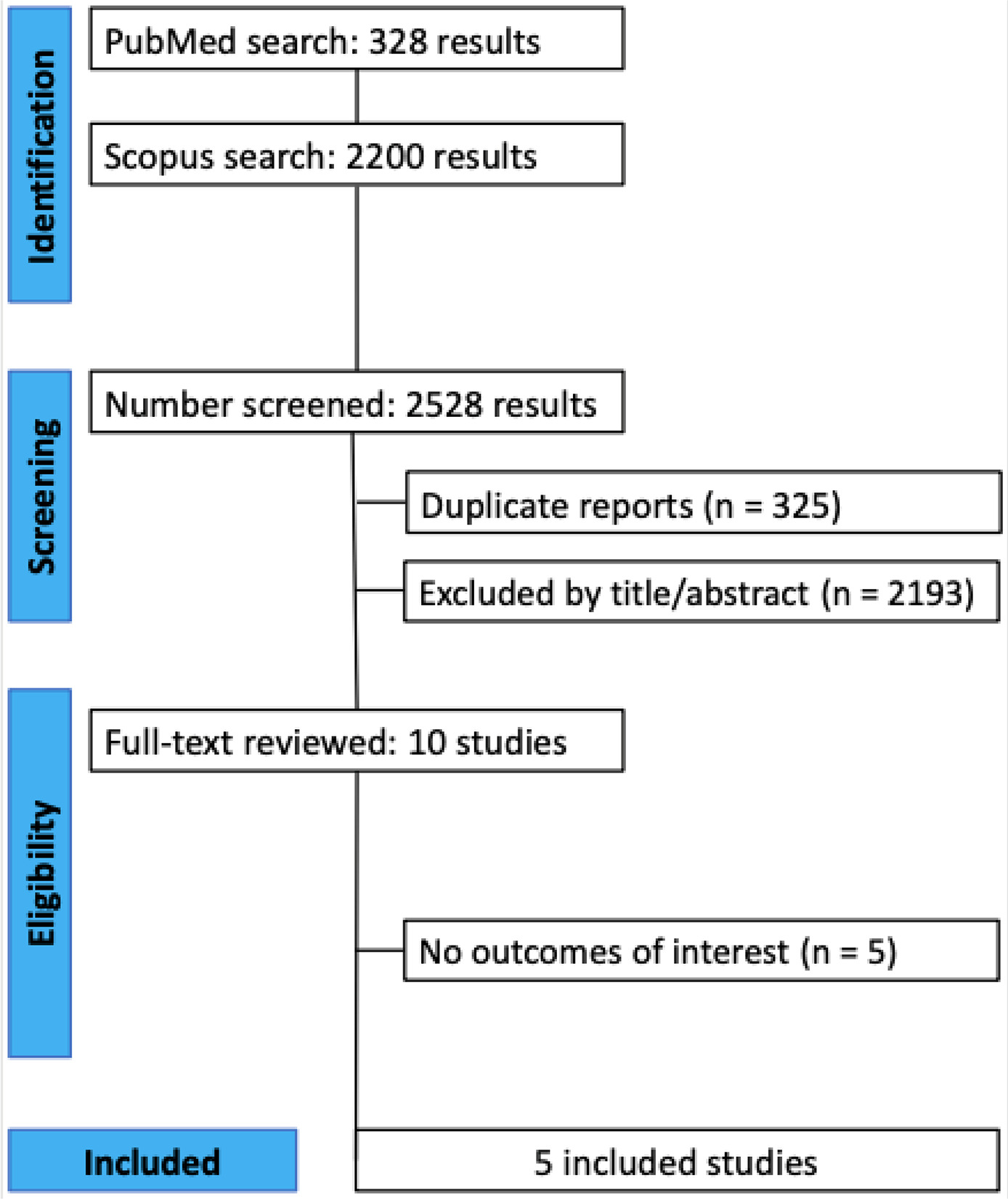
Enoxaparin Versus Unfractionated Heparin in Acute Coronary Syndrome Without St-Segment Elevation: A Systematic Review and Meta-Analysis

Edmundo Damiani Bertoli et al. Maria Luísa Siegloch Barros Eric Pasqualotto Pedro Lucas Gomes Lima … Raphael Camerotte Thiago Faraco Nienkötter Maria Eduarda Cavalcanti Souza Isabela Tonon Floriano Francinny Alves Kelly

Abstract

Introduction

Enoxaparin is a known alternative to the use of unfractionated heparin (UFH) in patients with acute coronary syndrome (ACS). However, the evidence about which of these medications would have the best benefit for these patients in 48 hours and 14 days is limited.

Objectives

Perform a meta-analysis of randomized controlled trials (RCTs) comparing the safety of enoxaparin versus UFH in ACS without ST-segment elevation (NSTE-ACS).

Methods

PubMed and Scopus databases were searched for RCTs that compared enoxaparin versus UFH in patients with NSTE-ACS. Risk ratios (RRs) for binary endpoints were computed with 95% confidence intervals (CIs). Heterogeneity was examined with I2 statistics. Statistical significance was defined as P-value <0.05.

Results

Five RCTs with 17,644 patients were included, of whom 8,898 (50.4%) were treated with enoxaparin. There were no significant differences between groups in myocardial infarction (MI) at 48h (RR 0.87; 95% CI 0.75-1.01) and 14 days (RR 0.91; 95% CI 0.79-1.05), all-cause mortality at 48h (RR 1.02; 95% CI 0.62-1.69) and 14 days (RR 0.93; 95% CI 0.74-1.18), composite endpoint of death or MI at 48h (RR 0.87; 95% CI 0.75-1.00) and 14 days (RR 0.91; 95% CI 0.82-1.01), and urgent revascularization at 48h (RR 0.40; 95% CI 0.08-1.95).

Conclusion

These findings suggest that the use of enoxaparin in the treatment of NSTE-ACS presents similar results to UFH.
  • Acute coronary syndrome
  • Enoxaparin
  • Heparin
Read Full Article
Creative Commons Attribution (CC BY) Creative Commons license
10/02/2025 DOI: 10.36660/ijcs.20240149 Views 1
Fondaparinux versus Enoxaparin in the Treatment of Obese Patients with Acute Coronary Syndrome
ABC
Original Article

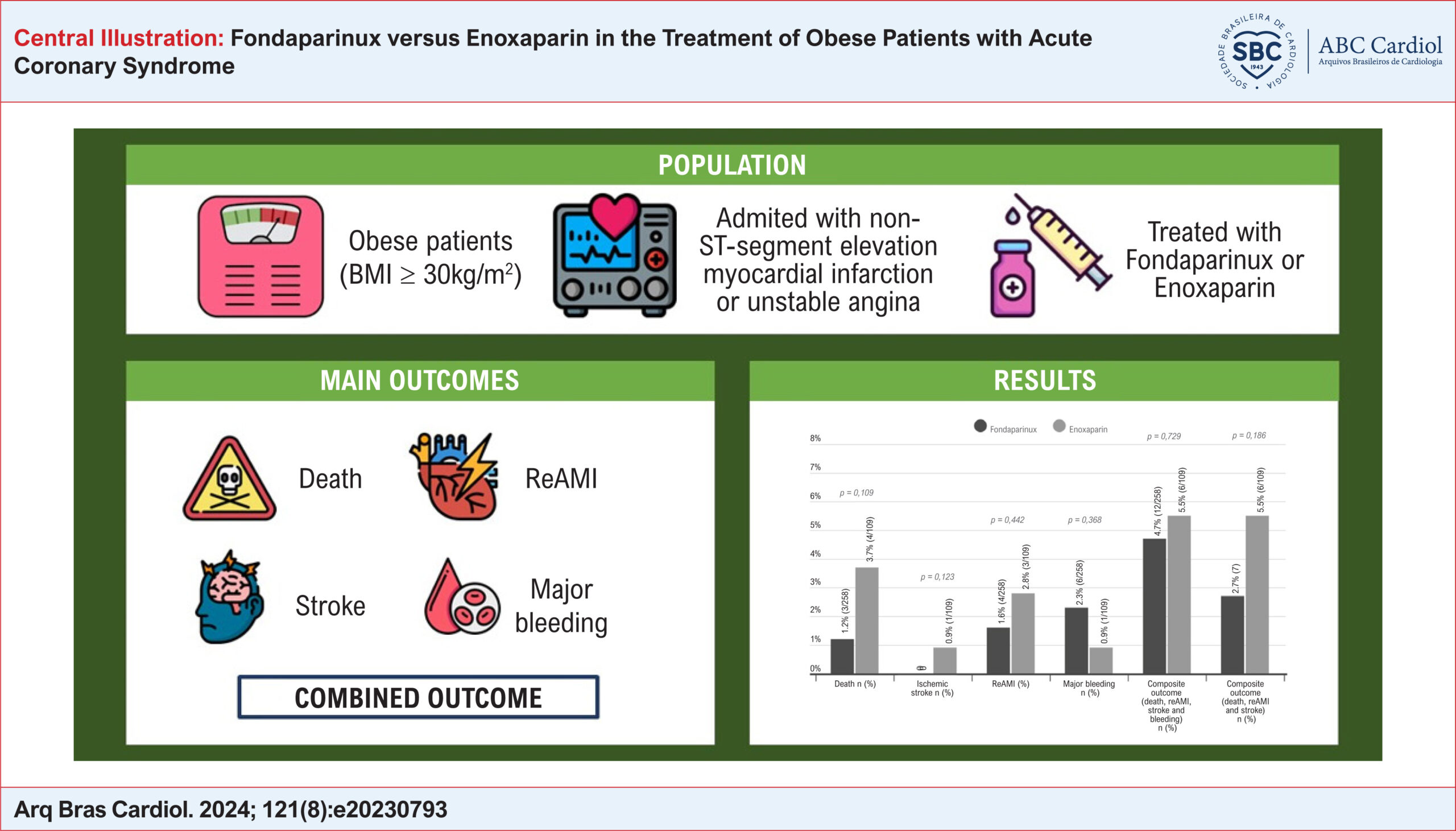
Fondaparinux versus Enoxaparin in the Treatment of Obese Patients with Acute Coronary Syndrome

Beatriz Rocha Darzé et al. Carolina Costa da Silva Souza Queila Borges de Oliveira João Victor Santos Pereira Ramos … Mateus S. Viana Eduardo Sahade Darzé Luiz Eduardo Fonteles Ritt

Abstract

Background:

Fondaparinux is an effective and safe anticoagulant in the treatment of acute coronary syndromes (ACS). However, due to the low representation of obese individuals in clinical trials, the effects of applying the results of this drug to this population remain uncertain.

Objectives:

To compare Fondaparinux to Enoxaparin in the treatment of obese patients with ACS.

Methods:

This is a retrospective cohort study, including obese individuals (BMI ≥ 30 Kg/m2) admitted with non-ST-segment elevation myocardial infarction (NSTEMI) or unstable angina (UA) and treated with Fondaparinux or Enoxaparin between 2010 and 2020. The Fondaparinux and Enoxaparin groups were compared for their clinical and laboratory characteristics using chi-square and Mann-Whitney tests, as appropriate. The incidence of primary outcomes (death, reinfarction, stroke, major bleeding) was compared between groups. P-value < 0.05 was considered significant for all analyses.

Results:

A total of 367 obese patients with NSTEMI or UA were included, of whom 258 used Fondaparinux and 109 used Enoxaparin. Mean age was 64 ± 12 years, and 52.9% were male. The prevalence of diabetes, hypertension, dyslipidemia, prior coronary artery disease, prior stroke, and implementation of invasive strategy was similar between groups. The incidence of the primary outcome was 4.7% in the Fondaparinux group and 5.5% in the Enoxaparin group (p = 0.729). There was no difference between groups when analyzing the components of the primary outcome separately.

Conclusion:

In a sample of obese patients with NSTEMI or UA, there was no difference in the occurrence of the composite outcome (death, stroke, reinfarction, major bleeding) between patients who used Fondaparinux or Enoxaparin.

  • Acute coronary syndrome
  • Anticoagulants
  • Enoxaparin
  • Fondaparinux
  • Obesity
Read Full Article
Creative Commons Attribution (CC BY) Creative Commons license
23/09/2024 DOI: 10.36660/abc.20230793i Views 2
ABC
Editorial

Use of Anticoagulant Therapy in Obese People: What is the Evidence for the Ideal Dose?

Marcia M. Noya-Rabelo et al. Eduardo Novaes Renata Moll-Bernardes Olga Souza

Data from the World Health Organization indicate that more than 1 billion people in the world, one in eight, are obese. In Brazil, according to research by the Chronic Disease Risk Factor Surveillance by Telephone Survey (VIGITEC), one in every four people in the adult population is obese. Obesity is defined by a body mass index (BMI) greater than or equal to 30 kg/m2, while morbid obesity is considered for those with a BMI above 40 kg/m2. Epidemiological data also points to a high prevalence of coronary disease in the Brazilian population, estimated at 5 to 8%.

Although obesity rates have reached epidemic proportions worldwide, the medical literature lacks precise data on changes in the pharmacokinetics and pharmacodynamics of different medications in patients with obesity. Possible physiological differences between obese and non-obese individuals may result in differences in the distribution and elimination of drugs, important factors to be considered when determining the appropriate dosage for pharmacological treatment. The ideal dose of most anticoagulants for obese people has not been established, including low molecular weight heparin and pentasaccharides. In this way, the therapeutic management of patients with acute coronary syndrome (ACS) and obesity is challenging and, consequently, can influence the efficacy and safety of anticoagulants.

[…]

  • Acute coronary syndrome
  • Anticoagulants
  • Enoxaparin
  • Fondaparinux
  • Obesity
Read Full Article
Creative Commons Attribution (CC BY) Creative Commons license
23/09/2024 DOI: 10.36660/abc.20240496i
Figure 1
IJCS
Case Report

Acute Coronary Disease in very Young Patient: A Reality!

Erivelton Nascimento et al. Ana Luisa Freitas e Pena Mello Ludmila Souza da Cunha Marcelo Ferreira Villela

Introduction

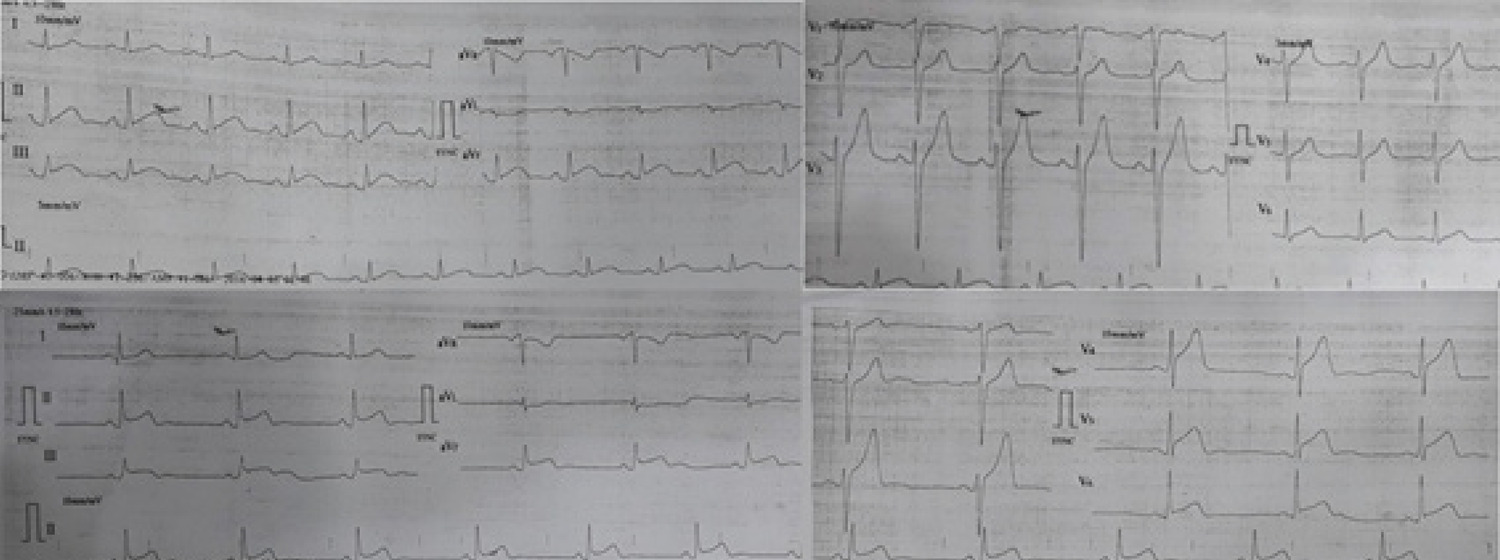
Acute cardiovascular events such as acute myocardial infarction (AMI) are uncommon in young individuals. Additionally, it is known that different factors may be involved in the occurrence of AMI. Here, we report a case of acute myocardial infarction due to severe coronary lesion in a very young patient.

[…]

  • Artery Coronary Diseases
  • Atherosclerosis
  • Enoxaparin
  • Hereditity
  • Hyperlipidemias
  • Myocardial Infarction
  • Platelets/treatment
  • Statins
  • Street Drugs
  • young
Read Full Article
Creative Commons Attribution (CC BY) Creative Commons license
23/11/2020 DOI: 10.36660/ijcs.20200010 Views 1
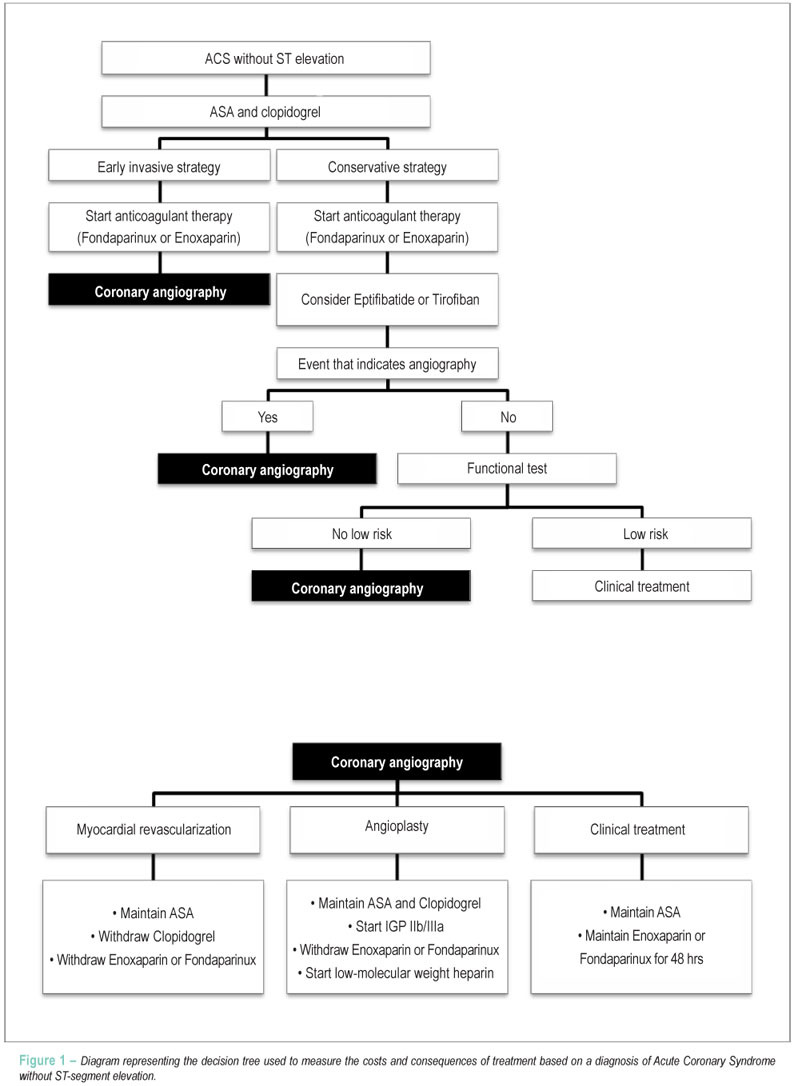
Cost-effectiveness of fondaparinux in patients with acute coronary syndrome without ST-segment Elevation
ABC
Artigo Original

Cost-effectiveness of fondaparinux in patients with acute coronary syndrome without ST-segment Elevation

Camila Pepe et al. Márcio Machado Alexandre Olimpio Rui Ramos

BACKGROUND: The combined use of antithrombotic agents, antiplatelet agents and invasive strategies in acute coronary syndrome without ST-segment elevation (ACSWSTE) reduces cardiovascular events. Fondaparinux has demonstrated equivalence to enoxaparin in reducing cardiovascular events, but with a lower rate of bleeding in patients using fondaparinux. OBJECTIVE: Evaluate the cost-effectiveness of fondaparinux versus enoxaparin in patients with ACSWSTE in Brazil from the economic perspective of the Brazilian Unified Health System (SUS). METHODS: A decision analytic model was constructed to calculate the costs and consequences of the compared treatments. The model parameters were obtained from the OASIS-5 study (N = 20,078 patients with ACSWSTE randomized to fondaparinux or enoxaparin). The target outcome consisted of cardiovascular events (i.e., death, myocardial infarction, refractory ischemia and major bleeding) on days 9, 30 and 180 after ACSWSTE. We evaluated all direct costs of treatment and ACSWSTE-related events. The year of the analysis was 2010 and the costs were described in reais (R$). RESULTS: On day 9, the cost of treatment per patient was R$ 2,768 for fondaparinux and R$ 2,852 for enoxaparin. Approximately 80% of total costs were associated with invasive treatments. The drug costs accounted for 10% of the total cost. The combined rates of cardiovascular events and major bleeding were 7.3% and 9.0% for fondaparinux and enoxaparin, respectively. Sensitivity analyses confirmed the initial results of the model. CONCLUSION: The use of fondaparinux for the treatment of patients with ACSWSTE is superior to that of enoxaparin in terms of prevention of further cardiovascular events at lower cost. (Arq Bras Cardiol. 2012; [online].ahead print, PP.0-0)

  • Acute coronary syndrome
  • Anticoagulants
  • cost benefits analysis
  • Enoxaparin
Read Full Article
Creative Commons Attribution (CC BY) Creative Commons license
26/06/2012 DOI: 10.1590/S0066-782X2012005000060 Views 2
Propositional debate on biosimilar enoxaparin in Brazil
ABC
Point of view

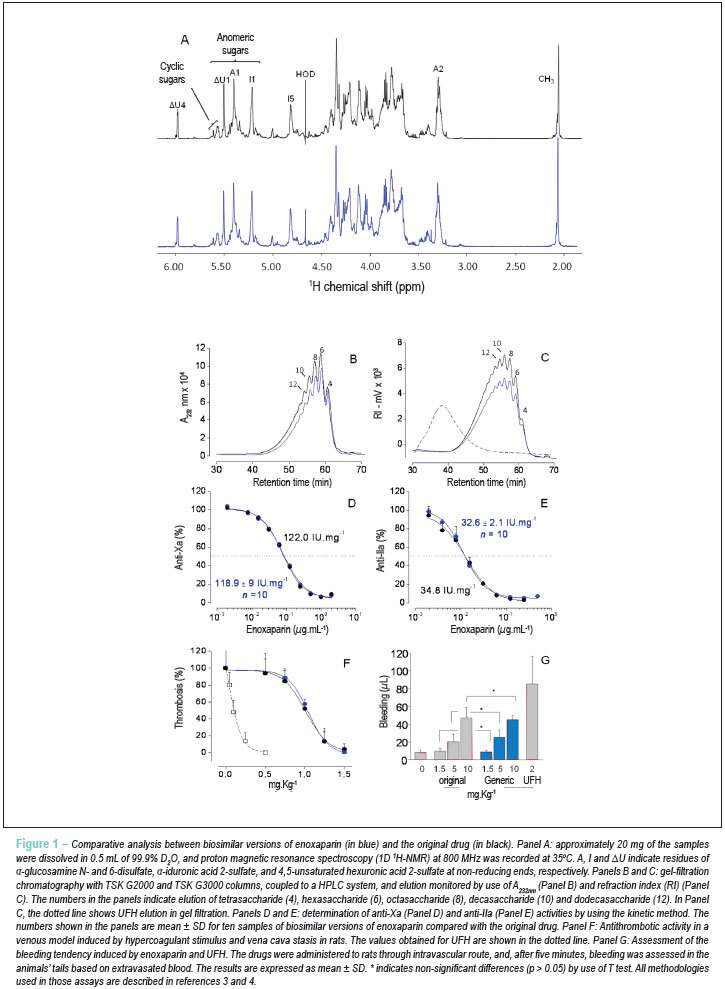
Propositional debate on biosimilar enoxaparin in Brazil

Paulo A.S. Mourão et al. Bianca F. Glauser Bruno C. Vairo Mariana S. Pereira

Some patents of low-molecular-weight heparins (LMWHs) have expired and others are about to expire. Biosimilar versions of those drugs are available for clinical use in several countries. However, skepticism persists about the possibility of obtaining preparations similar to the original drug, because of the complexity of the process to generate LMWHs. In recent years, our laboratory has analyzed biosimilar samples of enoxaparin available for clinical use in Brazil (30 different batches and 70 finished products). Those preparations were assessed regarding their chemical structure, molecular weight distribution, in vitro anticoagulant activity, and pharmacological effects in animal models of thrombosis and bleeding. Our results have clearly shown that biosimilar preparations of enoxaparin are similar to the original drug. Our results have shown that those biosimilar versions of enoxaparin are a valid therapeutic alternative, which are, however, in need of appropriate regulation to ensure compliance with regulatory requirements.

  • Enoxaparin
  • Fibrinolytic Agents
  • Heparin
  • heparin, low-molecular-weight
Read Full Article
Creative Commons Attribution (CC BY) Creative Commons license
08/02/2012 DOI: 10.1590/S0066-782X2012000100019 Views 2

How to cite this article

EndNote RIS

Electronic Document Format (Vancouver)

Bertoli ED, Barros MLS, Pasqualotto E, Lima PLG, Camerotte R, Nienkötter TF, Souza MEC, et al. Enoxaparin Versus Unfractionated Heparin in Acute Coronary Syndrome Without St-Segment Elevation: A Systematic Review and Meta-Analysis. International Journal of Cardiovascular Sciences 2025;38:e20240149.

Electronic Document Format (ABNT)

Bertoli, Edmundo Damiani; Barros, Maria Luísa Siegloch; Pasqualotto, Eric; Lima, Pedro Lucas Gomes; Camerotte, Raphael; Nienkötter, Thiago Faraco; Souza, Maria Eduarda Cavalcanti; Floriano, Isabela Tonon; Kelly, Francinny Alves. Enoxaparin Versus Unfractionated Heparin in Acute Coronary Syndrome Without St-Segment Elevation: A Systematic Review and Meta-Analysis. International Journal of Cardiovascular Sciences, v. 38, e20240149, Feb. 2025.

Electronic Document Format (APA)

Bertoli, E. D., Barros, M. L. S., Pasqualotto, E., Lima, P. L. G., Camerotte, R., Nienkötter, T. F., Souza, M. E. C., Floriano, I. T., & Kelly, F. A. (2025). Enoxaparin Versus Unfractionated Heparin in Acute Coronary Syndrome Without St-Segment Elevation: A Systematic Review and Meta-Analysis. International Journal of Cardiovascular Sciences, 38, e20240149.

Electronic Document Format (ISO)

Bertoli, Edmundo Damiani and Barros, Maria Luísa Siegloch and Pasqualotto, Eric and Lima, Pedro Lucas Gomes and Camerotte, Raphael and Nienkötter, Thiago Faraco and Souza, Maria Eduarda Cavalcanti and Floriano, Isabela Tonon and Kelly, Francinny Alves. Enoxaparin Versus Unfractionated Heparin in Acute Coronary Syndrome Without St-Segment Elevation: A Systematic Review and Meta-Analysis. International Journal of Cardiovascular Sciences [online]. 2025, vol. 38, [cited 2026-10-14], e20240149. Available from: <https://journals.cardiol.br/en/article/enoxaparin-versus-unfractionated-heparin-in-acute-coronary-syndrome-without-st-segment-elevation-a-systematic-review-and-meta-analysis/>. ISSN 2359-4802

EndNote RIS

Electronic Document Format (Vancouver)

Darzé BR, Souza CCS, Oliveira QB, Ramos JVSP, Viana MS, Darzé ES, Ritt LEF, et al. Fondaparinux versus Enoxaparin in the Treatment of Obese Patients with Acute Coronary Syndrome. Arquivos Brasileiros de Cardiologia 2024;121(8):e20230793.

Electronic Document Format (ABNT)

Darzé, Beatriz Rocha; Souza, Carolina Costa da Silva; Oliveira, Queila Borges de; Ramos, João Victor Santos Pereira; Viana, Mateus S.; Darzé, Eduardo Sahade; Ritt, Luiz Eduardo Fonteles. Fondaparinux versus Enoxaparin in the Treatment of Obese Patients with Acute Coronary Syndrome. Arquivos Brasileiros de Cardiologia, v. 121, n. 8, e20230793, Sep. 2024.

Electronic Document Format (APA)

Darzé, B. R., Souza, C. C. S., Oliveira, Q. B. , Ramos, J. V. S. P., Viana, M. S., Darzé, E. S., & Ritt, L. E. F. (2024). Fondaparinux versus Enoxaparin in the Treatment of Obese Patients with Acute Coronary Syndrome. Arquivos Brasileiros de Cardiologia, 121(8), e20230793.

Electronic Document Format (ISO)

Darzé, Beatriz Rocha and Souza, Carolina Costa da Silva and Oliveira, Queila Borges de and Ramos, João Victor Santos Pereira and Viana, Mateus S. and Darzé, Eduardo Sahade and Ritt, Luiz Eduardo Fonteles. Fondaparinux versus Enoxaparin in the Treatment of Obese Patients with Acute Coronary Syndrome. Arquivos Brasileiros de Cardiologia [online]. 2024, vol. 121, n. 8, [cited 2026-10-14], e20230793. Available from: <https://journals.cardiol.br/en/article/fondaparinux-versus-enoxaparin-in-the-treatment-of-obese-patients-with-acute-coronary-syndrome/>. ISSN 0066-782X

EndNote RIS

Electronic Document Format (Vancouver)

Noya-Rabelo MM, Novaes E, Moll-Bernardes R, Souza O. Use of Anticoagulant Therapy in Obese People: What is the Evidence for the Ideal Dose?. Arquivos Brasileiros de Cardiologia 2024;121(8):e20240496.

Electronic Document Format (ABNT)

Noya-Rabelo, Marcia M.; Novaes, Eduardo; Moll-Bernardes, Renata; Souza, Olga. Use of Anticoagulant Therapy in Obese People: What is the Evidence for the Ideal Dose?. Arquivos Brasileiros de Cardiologia, v. 121, n. 8, e20240496, Sep. 2024.

Electronic Document Format (APA)

Noya-Rabelo, M. M., Novaes, E., Moll-Bernardes, R., & Souza, O. (2024). Use of Anticoagulant Therapy in Obese People: What is the Evidence for the Ideal Dose?. Arquivos Brasileiros de Cardiologia, 121(8), e20240496.

Electronic Document Format (ISO)

Noya-Rabelo, Marcia M. and Novaes, Eduardo and Moll-Bernardes, Renata and Souza, Olga. Use of Anticoagulant Therapy in Obese People: What is the Evidence for the Ideal Dose?. Arquivos Brasileiros de Cardiologia [online]. 2024, vol. 121, n. 8, [cited 2026-10-14], e20240496. Available from: <https://journals.cardiol.br/en/article/use-of-anticoagulant-therapy-in-obese-people-what-is-the-evidence-for-the-ideal-dose/>. ISSN 0066-782X

EndNote RIS

Electronic Document Format (Vancouver)

Nascimento E, Mello ALFP, Cunha LS, Villela MF. Acute Coronary Disease in very Young Patient: A Reality!. International Journal of Cardiovascular Sciences 2020;34(5 Supl 1):150-3.

Electronic Document Format (ABNT)

Nascimento, Erivelton; Mello, Ana Luisa Freitas e Pena; Cunha, Ludmila Souza da; Villela, Marcelo Ferreira. Acute Coronary Disease in very Young Patient: A Reality!. International Journal of Cardiovascular Sciences, v. 34, n. 5 Supl 1, p. 150-153, Nov. 2020.

Electronic Document Format (APA)

Nascimento, E., Mello, A. L. F. P., Cunha, L. S. , & Villela, M. F. (2020). Acute Coronary Disease in very Young Patient: A Reality!. International Journal of Cardiovascular Sciences, 34(5 Supl 1), 150-153.

Electronic Document Format (ISO)

Nascimento, Erivelton and Mello, Ana Luisa Freitas e Pena and Cunha, Ludmila Souza da and Villela, Marcelo Ferreira. Acute Coronary Disease in very Young Patient: A Reality!. International Journal of Cardiovascular Sciences [online]. 2020, vol. 34, n. 5 Supl 1, [cited 2026-10-14], pp. 150-153. Available from: <https://journals.cardiol.br/en/article/acute-coronary-disease-in-very-young-patient-a-reality/>. ISSN 2359-4802

EndNote RIS

Electronic Document Format (Vancouver)

Pepe C, Machado M, Olimpio A, Ramos R. Cost-effectiveness of fondaparinux in patients with acute coronary syndrome without ST-segment Elevation. Arquivos Brasileiros de Cardiologia 2012;99(1):613-22.

Electronic Document Format (ABNT)

Pepe, Camila; Machado, Márcio; Olimpio, Alexandre; Ramos, Rui. Cost-effectiveness of fondaparinux in patients with acute coronary syndrome without ST-segment Elevation. Arquivos Brasileiros de Cardiologia, v. 99, n. 1, p. 613-622, Jun. 2012.

Electronic Document Format (APA)

Pepe, C., Machado, M., Olimpio, A., & Ramos, R. (2012). Cost-effectiveness of fondaparinux in patients with acute coronary syndrome without ST-segment Elevation. Arquivos Brasileiros de Cardiologia, 99(1), 613-622.

Electronic Document Format (ISO)

Pepe, Camila and Machado, Márcio and Olimpio, Alexandre and Ramos, Rui. Cost-effectiveness of fondaparinux in patients with acute coronary syndrome without ST-segment Elevation. Arquivos Brasileiros de Cardiologia [online]. 2012, vol. 99, n. 1, [cited 2026-10-14], pp. 613-622. Available from: <https://journals.cardiol.br/en/article/cost-effectiveness-of-fondaparinux-in-patients-with-acute-coronary-syndrome-without-st-segment-elevation/>. ISSN 0066-782X

EndNote RIS

Electronic Document Format (Vancouver)

Mourão PA, Glauser BF, Vairo BC, Pereira MS. Propositional debate on biosimilar enoxaparin in Brazil. Arquivos Brasileiros de Cardiologia 2012;98(1):e11-4.

Electronic Document Format (ABNT)

Mourão, Paulo A.S.; Glauser, Bianca F.; Vairo, Bruno C.; Pereira, Mariana S.. Propositional debate on biosimilar enoxaparin in Brazil. Arquivos Brasileiros de Cardiologia, v. 98, n. 1, p. e11-e14, Feb. 2012.

Electronic Document Format (APA)

Mourão, P. A., Glauser, B. F., Vairo, B. C., & Pereira, M. S. (2012). Propositional debate on biosimilar enoxaparin in Brazil. Arquivos Brasileiros de Cardiologia, 98(1), e11-e14.

Electronic Document Format (ISO)

Mourão, Paulo A.S. and Glauser, Bianca F. and Vairo, Bruno C. and Pereira, Mariana S.. Propositional debate on biosimilar enoxaparin in Brazil. Arquivos Brasileiros de Cardiologia [online]. 2012, vol. 98, n. 1, [cited 2026-10-14], pp. e11-e14. Available from: <https://journals.cardiol.br/en/article/propositional-debate-on-biosimilar-enoxaparin-in-brazil/>. ISSN 0066-782X

  • About ABC Family
  • Internal Regulation
  • Editorial Board
  • Brazilian Society of Cardiology (SBC)

Issues

SBC Guidelines

  • Videos
  • Podcasts
  • News