ABC Family Arquivos Brasileiros de Cardiologia International Journal of Cardiovascular Sciences ABC Heart Failure & Cardiomyopathy ABC Imagem Cardiovascular
Português English
ABC Family
Português English
  • About
    • About ABC Family
    • Internal Regulation
    • Editorial Board
    • Brazilian Society of Cardiology (SBC)
  • Issues
  • SBC Guidelines
  • Content
    • Videos
    • Podcasts
    • News
  • About
    • About ABC Family
    • Internal Regulation
    • Editorial Board
    • Brazilian Society of Cardiology (SBC)
  • Issues
  • SBC Guidelines
  • Content
    • Videos
    • Podcasts
    • News

ABC Family

  • ABC Family
  • Arquivos Brasileiros de Cardiologia
  • International Journal of Cardiovascular Sciences
  • ABC Heart Failure & Cardiomyopathy
  • ABC Imagem Cardiovascular
Search in

No content found.

Journals
Ordering
Article types
Others

  1. Home
  2. Keyword: Vitamin K
Chronic Anticoagulation in Patients with Atrial Fibrillation and COVID-19: A Systematic Review and Meta-Analysis
ABC
Original Article

Chronic Anticoagulation in Patients with Atrial Fibrillation and COVID-19: A Systematic Review and Meta-Analysis

Isabela Landsteiner et al. Jonathan A. Pinheiro Nicole Felix Douglas Mesadri Gewehr Rhanderson Cardoso

Abstract

Background:

Coronavirus disease 2019 (COVID-19) is associated with hypercoagulability. It remains uncertain whether ongoing anticoagulation for atrial fibrillation (AF) in patients who later contract COVID-19 improves clinical outcomes.

Objectives:

To compare chronic oral anticoagulation with no previous anticoagulation in patients with AF who contracted a COVID-19 infection concerning the outcomes of all-cause mortality, COVID-19 mortality, intensive care unit (ICU) admission, and hospitalization.

Methods:

We systematically searched PubMed, Embase, and Cochrane Library for eligible studies from inception to December 2022. We included studies comparing COVID-19 outcomes in patients with versus without prior chronic anticoagulation for AF. Risk ratios (RR) with 95% confidence intervals (CI) were pooled with a random-effects model. The level of significance was set at p < 0.05. Quality assessment and risk of bias were performed according to Cochrane recommendations.

Results:

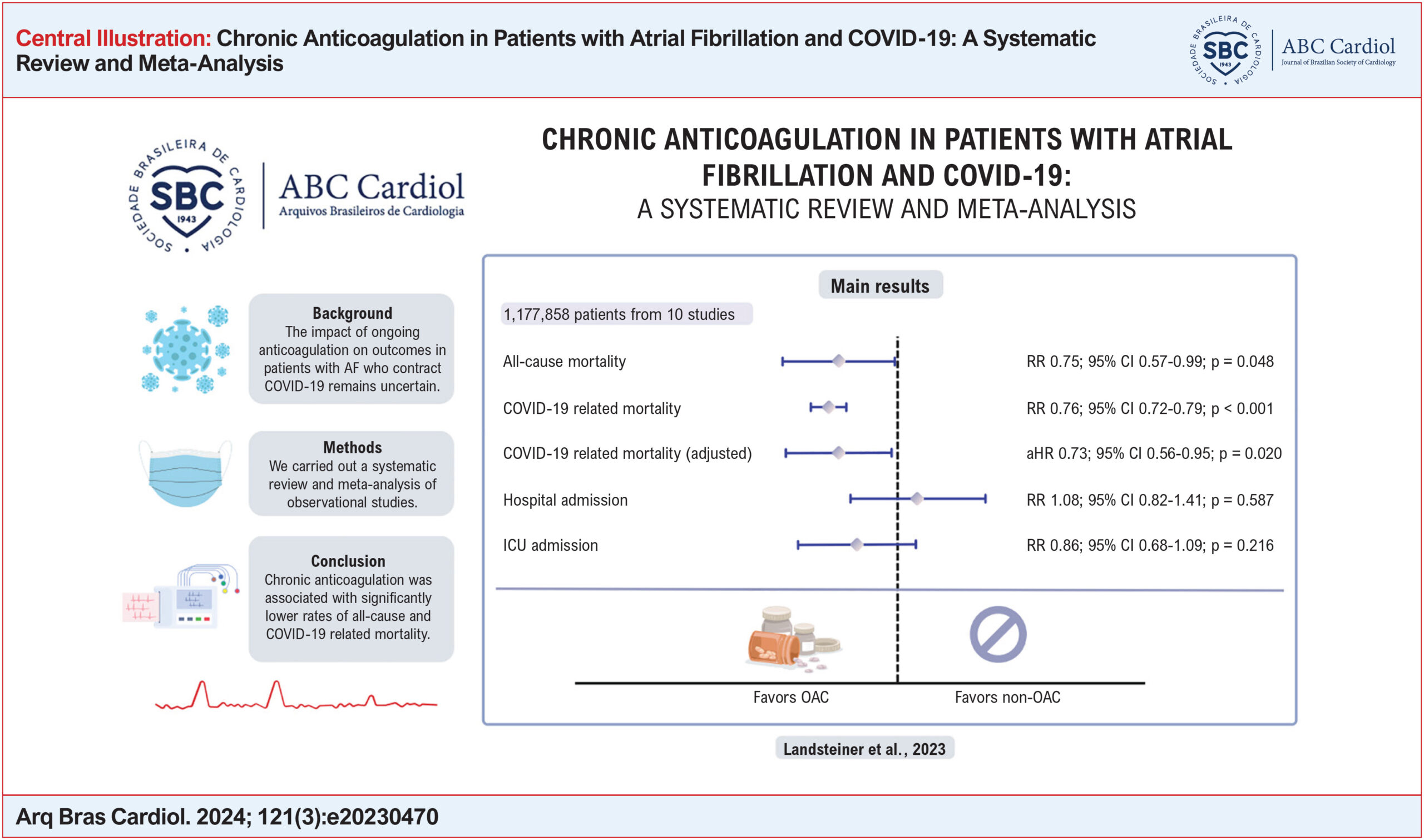
Ten studies comprising 1,177,858 patients with COVID-19 and AF were identified, of whom 893,772 (75.9%) were on prior chronic anticoagulation for AF. In patients with COVID-19, being on chronic anticoagulation for AF significantly reduced all-cause mortality (RR 0.75; 95% CI 0.57 to 0.99; p = 0.048; I = 89%) and COVID-19-related mortality (RR 0.76; 95% CI 0.72 to 0.79; p < 0.001; I = 0%) when compared with no prior anticoagulation. In contrast, there was no difference between groups regarding hospitalization (RR 1.08; 95% CI 0.82 to 1.41; p = 0.587; I = 95%) or ICU admission (RR 0.86; 95% CI 0.68 to 1.09; p = 0.216; I = 69%).

Conclusions:

In this meta-analysis, chronic anticoagulation for patients with AF who contracted COVID-19 was associated with significantly lower rates of all-cause mortality and COVID-19-related mortality as compared with no previous anticoagulation.
  • Anticoagulants
  • Atrial Fibrillation
  • COVID-19
  • Factor Xa Inhibitors
  • Vitamin K
Read Full Article
Creative Commons Attribution (CC BY) Creative Commons license
26/04/2024 DOI: 10.36660/abc.20230470i
IJCS
Editorial

Challenges for Anticoagulation in Atrial Fibrillation

Ana Inês da Costa Bronchtein

Atrial fibrillation (AF) is the most prevalent arrhythmia in the world. It is considered a current epidemic and one of the main causes of ischemic stroke, usually with severe and debilitating conditions, and is responsible for systemic cardioembolic phenomena, increased number of cases of congestive heart failure (CHF), cognitive impairment related to silent embolic phenomena, and increased overall mortality in affected patients.

Vitamin K antagonists (VKA) represented in the vast majority of studies with warfarin have been widely used for many years; however, they have complex adherence due to several factors, including the need for frequent INR monitoring, regular dose adjustments for maintaining a suitable time in therapeutic range (TTR) (>= 70%) and interactions with a number of drugs and foods, which contributed to its ever decreasing use. Direct-acting anticoagulants (DACs), represented by dabigatran, rivaroxaban, apixaban and, more recently, edoxaban, offer an alternative to VKA, without the disadvantages presented by the latter.

[…]

  • Anticoagulants
  • Atrial Fibrillation
  • Brain Ischemia
  • Thromboembolism/prevention and control
  • Vitamin K
Read Full Article
Creative Commons Attribution (CC BY) Creative Commons license
17/02/2020 DOI: 10.36660/ijcs.20190003 Views 2
Figure 1
IJCS
Original Article

Drug Interactions and Adverse Events in a Cohort of Warfarin Users Attending Public Health Clinics

Christiane de Fátima Colet et al. Tania Alves Amador Isabela Heineck

Abstract

Background:

Warfarin is an oral anticoagulant involved in important interactions with foods and other drugs.

Objectives:

To evaluate the occurrence of adverse events reported by warfarin users and their relationship with drug interactions.

Methods:

This was an open cohort, prospective study conducted in an 18-month period with warfarin users attending public health clinics of the city of Ijuí, Brazil. Data were collected by means of interviews administered at patients’ home every month. Patients’ responses were confirmed by review of medical records when patients sought medical care. Data were analyzed by descriptive statistics. Potential drug interactions were evaluated in a database and vitamin K consumption was quantified using a validated method.

Results:

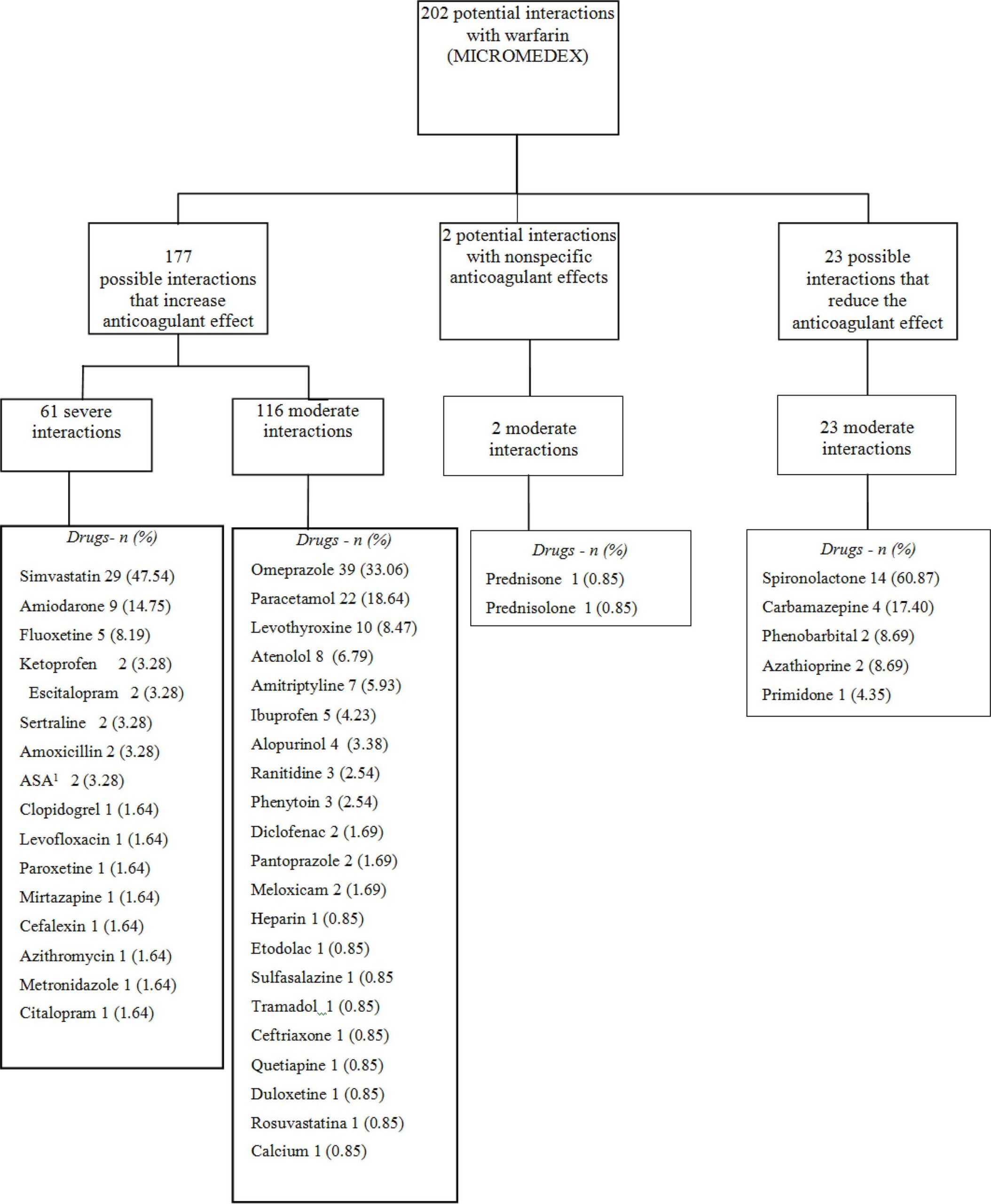
A total of 68 patients were followed-up; 63 completed the study and 5 died in the study period. Mean number of medications taken by the patients was 9.6 ± 4.5, and mean number of interactions involving warfarin was 2.91 ± 1.52. Most potential interactions increased the risk of bleeding, 61 of them severe interactions and 116 moderate interactions. Eighty-seven episodes of bleeding and 4 episodes of thrombosis were reported by a total of 37 and 4 patients, respectively. At the occurrence of these events, 56.5% of warfarin users were also taking omeprazole, 35.9% were taking simvastatin and 25.0% paracetamol. Most patients had a low vitamin K intake.

Conclusions:

A high frequency of potential interactions between warfarin and other drugs was detected, but a low intake of foods that could possibly affect the effects of warfarin was observed. Based on our results, it seems prudent to follow patients on warfarin therapy for drug-drug interactions, aiming to control adverse effects and to promote a safe and effective therapy.

  • Acetaminophen
  • Anticoagulants / adverse effects
  • Delivery Health Care/statistics & numeral data
  • Drug Incompatibility
  • drug interactions
  • Omeprazole
  • Pharmacovigilance
  • simvastatin
  • Vitamin K
  • Warfarin
Read Full Article
Creative Commons Attribution (CC BY) Creative Commons license
17/12/2018 DOI: 10.5935/2359-4802.20180091 Views 2
Figure 1
ABC
Original Article

Uninterrupted Use of Oral Anticoagulants for the Ablation of Atrial Flutter: A Single Center Cohort of 154 Patients

Tiago Luiz Luz Leiria et al. Alexandre Kreling Medeiros Eduardo Dytz Almeida Antonio Lessa Gaudie Ley … Catarine Benta Lopes dos Santos Roberto Toffani Sant'Anna Marcelo Lapa Kruse Leonardo Martins Pires Gustavo Glotz de Lima

Abstract

Background:

The uninterrupted use of oral anticoagulation (OAC) with vitamin K antagonists (VKAs) for electrophysiology procedures has been more and more recommended. The clinical practice in our service recommends the continuous use of these drugs for atrial flutter ablation. There is little evidence as to the uninterrupted use of non-vitamin K antagonist oral anticoagulants (NOACs) in this scenario.

Objective:

To compare the rates of complications related with the uninterrupted use of different types of oral anticoagulants in patients referred to atrial flutter (AFL) ablation.

Methods:

Historical, single-center cohort of ablation procedures by AFL conducted from November 2012 to April 2016. The primary outcome was the occurrence of hemorrhagic or embolic complication during the procedure. The secondary outcome was the occurrence of stroke or transient ischemic attack (TIA) in follow-up. The statistical significance level was 5%.

Results:

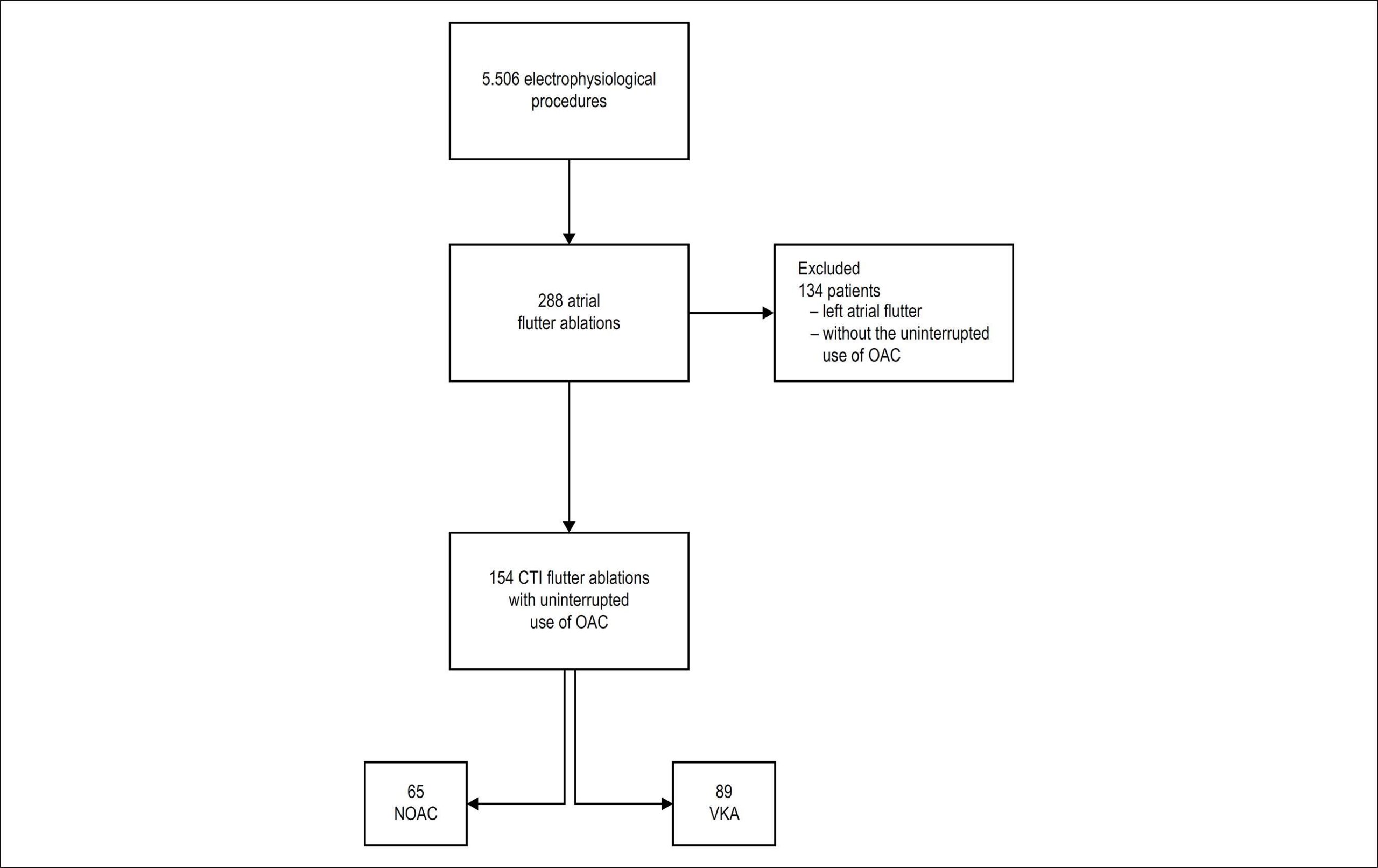
There were 288 ablations per AFL; 154 were carried out with the uninterrupted use of OAC (57.8% with VKA and 42.2% with NOAC). Mean age was 57 ± 13 years. The rate of hemorrhagic complication during the procedure was 3% in each group (p = NS). The rate of stroke/TIA was, respectively, of 56/1,000 people-year in the VKA group against zero/1,000 people-year in the NOAC group (p = 0.02).

Conclusion:

In our population there were no hemorrhagic complications regarding the procedure of OAC use uninterruptedly, including NOACs. There was higher occurrence of stroke/TIA in the follow-up of the group of patients undergoing VKAs; however, this difference may not only be a result of the type of OAC used.

  • Anticoagulants
  • Atrial flutter
  • Catheter Ablation
  • Thromboembolism
  • Vitamin K
Read Full Article
Creative Commons Attribution (CC BY) Creative Commons license
19/02/2018 DOI: 10.5935/abc.20180001
Figure 1
ABC
Original Article

SAMe-TT2R2 Score in the Outpatient Anticoagulation Clinic to Predict Time in Therapeutic Range and Adverse Events

Fernando Pivatto Júnior et al. Rafael Selbach Scheffel Lucas Ries Ricardo Roitman Wolkind … Roberta Marobin Sabrina Sigal Barkan Luís Carlos Amon Andréia Biolo

Abstract

Background:

The SAMe-TT2R2 score was developed to predict which patients on oral anticoagulation with vitamin K antagonists (VKAs) will reach an adequate time in therapeutic range (TTR) (> 65%-70%). Studies have reported a relationship between this score and the occurrence of adverse events.

Objective:

To describe the TTR according to the score, in addition to relating the score obtained with the occurrence of adverse events in patients with nonvalvular atrial fibrillation (AF) on oral anticoagulation with VKAs.

Methods:

Retrospective cohort study including patients with nonvalvular AF attending an outpatient anticoagulation clinic of a tertiary hospital. Visits to the outpatient clinic and emergency, as well as hospital admissions to the institution, during 2014 were evaluated. The TTR was calculated through the Rosendaal´s method.

Results:

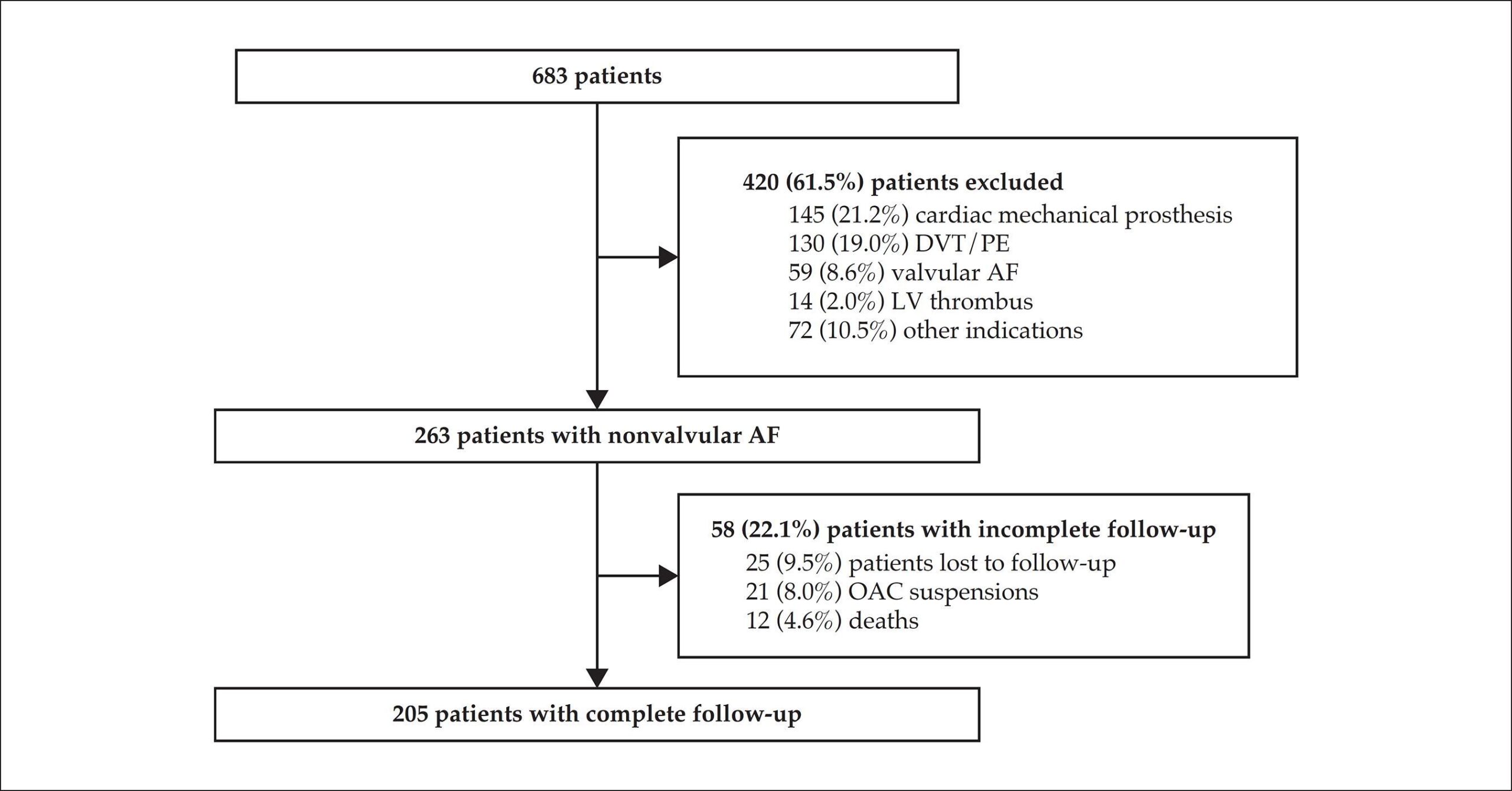
We analyzed 263 patients (median TTR, 62.5%). The low-risk group (score 0-1) had a better median TTR as compared with the high-risk group (score ≥ 2): 69.2% vs. 56.3%, p = 0.002. Similarly, the percentage of patients with TTR ≥ 60%, 65% or 70% was higher in the low-risk group (p < 0.001, p = 0.001 and p = 0.003, respectively). The high-risk group had a higher percentage of adverse events (11.2% vs. 7.2%), although not significant (p = 0.369).

Conclusions:

The SAMe-TT2R2 score proved to be effective to predict patients with a better TTR, but was not associated with adverse events.

  • Anticoagulants / adverse effects
  • Atrial Fibrillation
  • Decision Support Techniques
  • Phenprocoumon
  • Vitamin K
  • Warfarin
Read Full Article
Creative Commons Attribution (CC BY) Creative Commons license
01/04/2017 DOI: 10.5935/abc.20170052 Views 1
ABC
Artigo Original

Reversal of excessive oral anticoagulation

Dayse Maria Lourenço et al. Vânia Maria Morelli Carla Valadares Vignal

PURPOSE: To evaluate the response of 73 patients with antivitamin K (AVK) overdose to 3 different therapeutic regimens. METHODS: Seventy three patients were evaluated in 94 occasions: group A (N=32), consisted of drug withdrawal for 2 days followed by reduced dosage; group B (N=37), drug withdrawal and reassessment within 4 days; group C (N=25), oral administration of vitamin K. Therapeutic range was set between INR-values of 2 and 4. RESULTS: Reversal regimens did not result in differences among 61 patients who had initial INR 4, but 5 of them were bellow 4.5, without increased bleeding risk. There were 10 patients in group C bellow therapeutic range, 6 of them with INR < 1.6, with risk of thromboembolism. Thirteen patients bled, but none required transfusion. CONCLUSION: Reversal of excessive oral anticoagulation can be safely performed by initial withdrawal of the drug, followed by lower doses. Vitamin K administration may lead to INR bellow the therapeutic range. This should be reserved for patients with high INR or in the presence of bleeding.

  • bleeding
  • Oral Anticoagulation
  • throboembolism
  • Vitamin K
Read Full Article
Creative Commons Attribution (CC BY) Creative Commons license
08/01/2002 DOI: 10.1590/S0066-782X1998000100003 Views 1

How to cite this article

EndNote RIS

Electronic Document Format (Vancouver)

Landsteiner I, Pinheiro JA, Felix N, Gewehr DM, Cardoso R. Chronic Anticoagulation in Patients with Atrial Fibrillation and COVID-19: A Systematic Review and Meta-Analysis. Arquivos Brasileiros de Cardiologia 2024;121(3):e20230470.

Electronic Document Format (ABNT)

Landsteiner, Isabela; Pinheiro, Jonathan A.; Felix, Nicole; Gewehr, Douglas Mesadri; Cardoso, Rhanderson. Chronic Anticoagulation in Patients with Atrial Fibrillation and COVID-19: A Systematic Review and Meta-Analysis. Arquivos Brasileiros de Cardiologia, v. 121, n. 3, e20230470, Apr. 2024.

Electronic Document Format (APA)

Landsteiner, I., Pinheiro, J. A., Felix, N., Gewehr, D. M., & Cardoso, R. (2024). Chronic Anticoagulation in Patients with Atrial Fibrillation and COVID-19: A Systematic Review and Meta-Analysis. Arquivos Brasileiros de Cardiologia, 121(3), e20230470.

Electronic Document Format (ISO)

Landsteiner, Isabela and Pinheiro, Jonathan A. and Felix, Nicole and Gewehr, Douglas Mesadri and Cardoso, Rhanderson. Chronic Anticoagulation in Patients with Atrial Fibrillation and COVID-19: A Systematic Review and Meta-Analysis. Arquivos Brasileiros de Cardiologia [online]. 2024, vol. 121, n. 3, [cited 2026-10-14], e20230470. Available from: <https://journals.cardiol.br/en/article/chronic-anticoagulation-in-patients-with-atrial-fibrillation-and-covid-19-a-systematic-review-and-meta-analysis/>. ISSN 0066-782X

EndNote RIS

Electronic Document Format (Vancouver)

Bronchtein AIC. Challenges for Anticoagulation in Atrial Fibrillation. International Journal of Cardiovascular Sciences 2020;33(1):65-7.

Electronic Document Format (ABNT)

Bronchtein, Ana Inês da Costa. Challenges for Anticoagulation in Atrial Fibrillation. International Journal of Cardiovascular Sciences, v. 33, n. 1, p. 65-67, Feb. 2020.

Electronic Document Format (APA)

Bronchtein, A. I. C. (2020). Challenges for Anticoagulation in Atrial Fibrillation. International Journal of Cardiovascular Sciences, 33(1), 65-67.

Electronic Document Format (ISO)

Bronchtein, Ana Inês da Costa. Challenges for Anticoagulation in Atrial Fibrillation. International Journal of Cardiovascular Sciences [online]. 2020, vol. 33, n. 1, [cited 2026-10-14], pp. 65-67. Available from: <https://journals.cardiol.br/en/article/challenges-for-anticoagulation-in-atrial-fibrillation/>. ISSN 2359-4802

EndNote RIS

Electronic Document Format (Vancouver)

Colet CF, Amador TA, Heineck I. Drug Interactions and Adverse Events in a Cohort of Warfarin Users Attending Public Health Clinics. International Journal of Cardiovascular Sciences 2018;32(2):110-7.

Electronic Document Format (ABNT)

Colet, Christiane de Fátima; Amador, Tania Alves; Heineck, Isabela. Drug Interactions and Adverse Events in a Cohort of Warfarin Users Attending Public Health Clinics. International Journal of Cardiovascular Sciences, v. 32, n. 2, p. 110-117, Dec. 2018.

Electronic Document Format (APA)

Colet, C. F., Amador, T. A., & Heineck, I. (2018). Drug Interactions and Adverse Events in a Cohort of Warfarin Users Attending Public Health Clinics. International Journal of Cardiovascular Sciences, 32(2), 110-117.

Electronic Document Format (ISO)

Colet, Christiane de Fátima and Amador, Tania Alves and Heineck, Isabela. Drug Interactions and Adverse Events in a Cohort of Warfarin Users Attending Public Health Clinics. International Journal of Cardiovascular Sciences [online]. 2018, vol. 32, n. 2, [cited 2026-10-14], pp. 110-117. Available from: <https://journals.cardiol.br/en/article/drug-interactions-and-adverse-events-in-a-cohort-of-warfarin-users-attending-public-health-clinics/>. ISSN 2359-4802

EndNote RIS

Electronic Document Format (Vancouver)

Leiria TLL, Medeiros AK, Almeida ED, Ley ALG, Santos CBL, Sant’Anna RT, Kruse ML, et al. Uninterrupted Use of Oral Anticoagulants for the Ablation of Atrial Flutter: A Single Center Cohort of 154 Patients. Arquivos Brasileiros de Cardiologia 2018;110(2):151-6.

Electronic Document Format (ABNT)

Leiria, Tiago Luiz Luz; Medeiros, Alexandre Kreling; Almeida, Eduardo Dytz; Ley, Antonio Lessa Gaudie; Santos, Catarine Benta Lopes dos; Sant’Anna, Roberto Toffani; Kruse, Marcelo Lapa; Pires, Leonardo Martins; Lima, Gustavo Glotz de. Uninterrupted Use of Oral Anticoagulants for the Ablation of Atrial Flutter: A Single Center Cohort of 154 Patients. Arquivos Brasileiros de Cardiologia, v. 110, n. 2, p. 151-156, Feb. 2018.

Electronic Document Format (APA)

Leiria, T. L. L., Medeiros, A. K., Almeida, E. D., Ley, A. L. G., Santos, C. B. L. , Sant’Anna, R. T., Kruse, M. L., Pires, L. M., & Lima, G. G. (2018). Uninterrupted Use of Oral Anticoagulants for the Ablation of Atrial Flutter: A Single Center Cohort of 154 Patients. Arquivos Brasileiros de Cardiologia, 110(2), 151-156.

Electronic Document Format (ISO)

Leiria, Tiago Luiz Luz and Medeiros, Alexandre Kreling and Almeida, Eduardo Dytz and Ley, Antonio Lessa Gaudie and Santos, Catarine Benta Lopes dos and Sant’Anna, Roberto Toffani and Kruse, Marcelo Lapa and Pires, Leonardo Martins and Lima, Gustavo Glotz de. Uninterrupted Use of Oral Anticoagulants for the Ablation of Atrial Flutter: A Single Center Cohort of 154 Patients. Arquivos Brasileiros de Cardiologia [online]. 2018, vol. 110, n. 2, [cited 2026-10-14], pp. 151-156. Available from: <https://journals.cardiol.br/en/article/uninterrupted-use-of-oral-anticoagulants-for-the-ablation-of-atrial-flutter-a-single-center-cohort-of-154-patients/>. ISSN 0066-782X

EndNote RIS

Electronic Document Format (Vancouver)

Pivatto Júnior F, Scheffel RS, Ries L, Wolkind RR, Marobin R, Barkan SS, Amon LC, et al. SAMe-TT2R2 Score in the Outpatient Anticoagulation Clinic to Predict Time in Therapeutic Range and Adverse Events. Arquivos Brasileiros de Cardiologia 2017;108(4):290-6.

Electronic Document Format (ABNT)

Pivatto Júnior, Fernando; Scheffel, Rafael Selbach; Ries, Lucas; Wolkind, Ricardo Roitman; Marobin, Roberta; Barkan, Sabrina Sigal; Amon, Luís Carlos; Biolo, Andréia. SAMe-TT2R2 Score in the Outpatient Anticoagulation Clinic to Predict Time in Therapeutic Range and Adverse Events. Arquivos Brasileiros de Cardiologia, v. 108, n. 4, p. 290-296, Mar. 2017.

Electronic Document Format (APA)

Pivatto Júnior, F., Scheffel, R. S., Ries, L., Wolkind, R. R., Marobin, R., Barkan, S. S., Amon, L. C., & Biolo, A. (2017). SAMe-TT2R2 Score in the Outpatient Anticoagulation Clinic to Predict Time in Therapeutic Range and Adverse Events. Arquivos Brasileiros de Cardiologia, 108(4), 290-296.

Electronic Document Format (ISO)

Pivatto Júnior, Fernando and Scheffel, Rafael Selbach and Ries, Lucas and Wolkind, Ricardo Roitman and Marobin, Roberta and Barkan, Sabrina Sigal and Amon, Luís Carlos and Biolo, Andréia. SAMe-TT2R2 Score in the Outpatient Anticoagulation Clinic to Predict Time in Therapeutic Range and Adverse Events. Arquivos Brasileiros de Cardiologia [online]. 2017, vol. 108, n. 4, [cited 2026-10-14], pp. 290-296. Available from: <https://journals.cardiol.br/en/article/same-tt2r2-score-in-the-outpatient-anticoagulation-clinic-to-predict-time-in-therapeutic-range-and-adverse-events/>. ISSN 0066-782X

EndNote RIS

Electronic Document Format (Vancouver)

Lourenço DM, Morelli VM, Vignal CV. Reversal of excessive oral anticoagulation. Arquivos Brasileiros de Cardiologia 2002;70(1):9-13.

Electronic Document Format (ABNT)

Lourenço, Dayse Maria; Morelli, Vânia Maria; Vignal, Carla Valadares. Reversal of excessive oral anticoagulation. Arquivos Brasileiros de Cardiologia, v. 70, n. 1, p. 9-13, Jan. 2002.

Electronic Document Format (APA)

Lourenço, D. M., Morelli, V. M., & Vignal, C. V. (2002). Reversal of excessive oral anticoagulation. Arquivos Brasileiros de Cardiologia, 70(1), 9-13.

Electronic Document Format (ISO)

Lourenço, Dayse Maria and Morelli, Vânia Maria and Vignal, Carla Valadares. Reversal of excessive oral anticoagulation. Arquivos Brasileiros de Cardiologia [online]. 2002, vol. 70, n. 1, [cited 2026-10-14], pp. 9-13. Available from: <https://journals.cardiol.br/en/article/reversal-of-excessive-oral-anticoagulation/>. ISSN 0066-782X

  • About ABC Family
  • Internal Regulation
  • Editorial Board
  • Brazilian Society of Cardiology (SBC)

Issues

SBC Guidelines

  • Videos
  • Podcasts
  • News