Local Inflammation May Underlie Cardiac Damage in Post-COVID-19 Period
Abstract
Background
Some patients experience subclinical cardiovascular dysfunction after COVID-19, possibly driven by persistent inflammatory mechanisms that remain incompletely understood. NT-proBNP and GDF-15 have been proposed as biomarkers of myocardial stress and inflammation in this context.
Objectives
To investigate associations between NT-proBNP, GDF-15, inflammatory cytokines, and echocardiographic parameters in patients with Post-COVID-19 Condition (PCC).
Methods
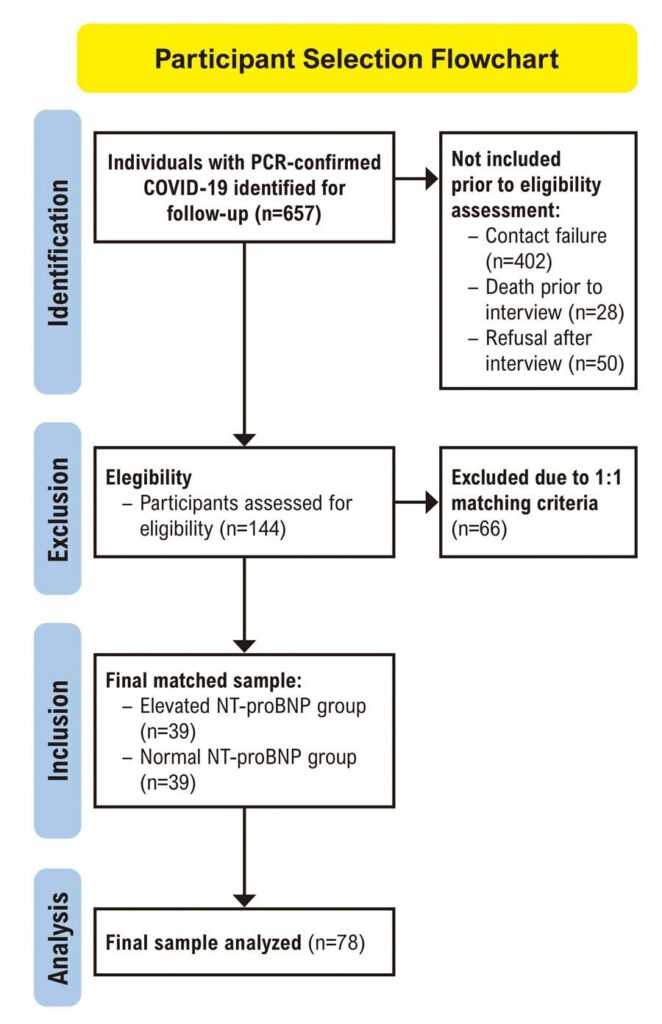
This cross-sectional study included 78 adults followed in a university hospital cohort. Participants were stratified into elevated NT-proBNP (n = 39) and normal NT-proBNP (n = 39) groups. Clinical, laboratory, and echocardiographic variables were assessed, including PALS and RV-GLS. Serum GDF-15 and cytokines were quantified using a multiplex bead assay. ROC curve analysis evaluated the predictive value of GDF-15 for elevated NT-proBNP.
Results
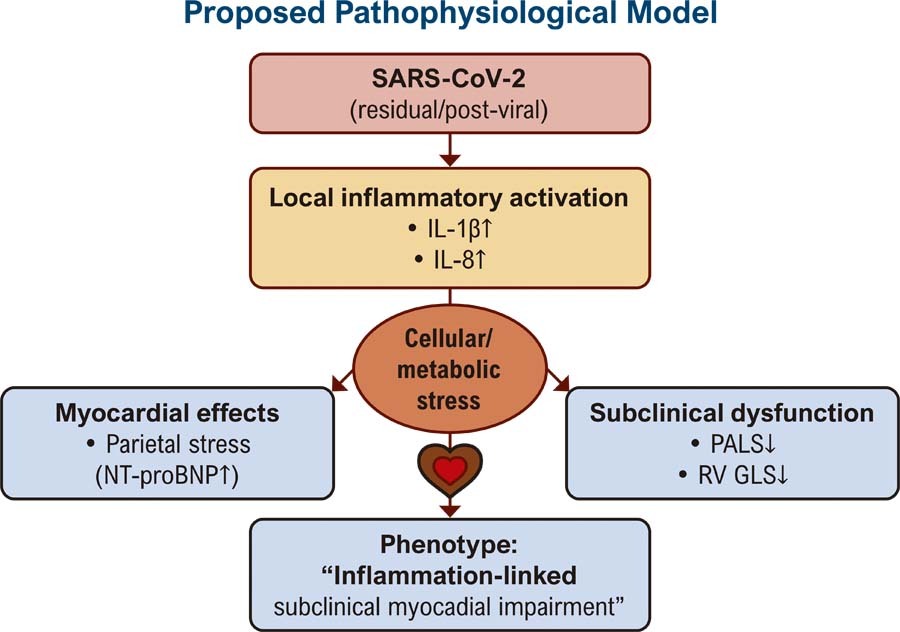
Participants with elevated NT-proBNP had reduced PALS (28.5% vs. 36.7%; p < 0.05), and higher GDF-15 (median 368 vs. 219 pg/mL) and IL-1β levels (2.47 vs. 0.94 pg/mL; p < 0.05). GDF-15 ≥ 519 pg/mL predicted elevated NT-proBNP (AUC = 0.65). Individuals with elevated GDF-15 also showed worse RV-GLS (20.2% vs. 26.9%; p < 0.05) and higher IL-8 levels (p < 0.05).
Conclusions
NT-proBNP, GDF-15, and IL-1β identify subclinical myocardial dysfunction in PCC, supporting a pathophysiological model centered on persistent inflammation and early myocardial remodeling, distinct from classic ischemic pathways.
Images
Image gallery fullscreen viewer
Comments are moderated by the editorial team before publication. Discussions should be evidence-based and use scientific language. Conflicts of interest should be declared.