Lessons Learned from Cardiac Complications of COVID-19 and the Value of the Electrocardiogram
Since the declaration of the coronavirus disease 2019 (COVID-19) pandemic in March 2020, caused by the severe acute respiratory syndrome coronavirus 2 (SARS-CoV-2) virus, much has been learned about the epidemiology, pathophysiology, clinical characteristics, and predictors of poor prognosis. Furthermore, cardiovascular implications have emerged as significant contributors to morbi-mortality. In this sense, the recently published work of Galindes-Casanova et al. reinforces existing evidence on acute COVID-19 infection, cardiac complications, and electrocardiogram (ECG) manifestations.
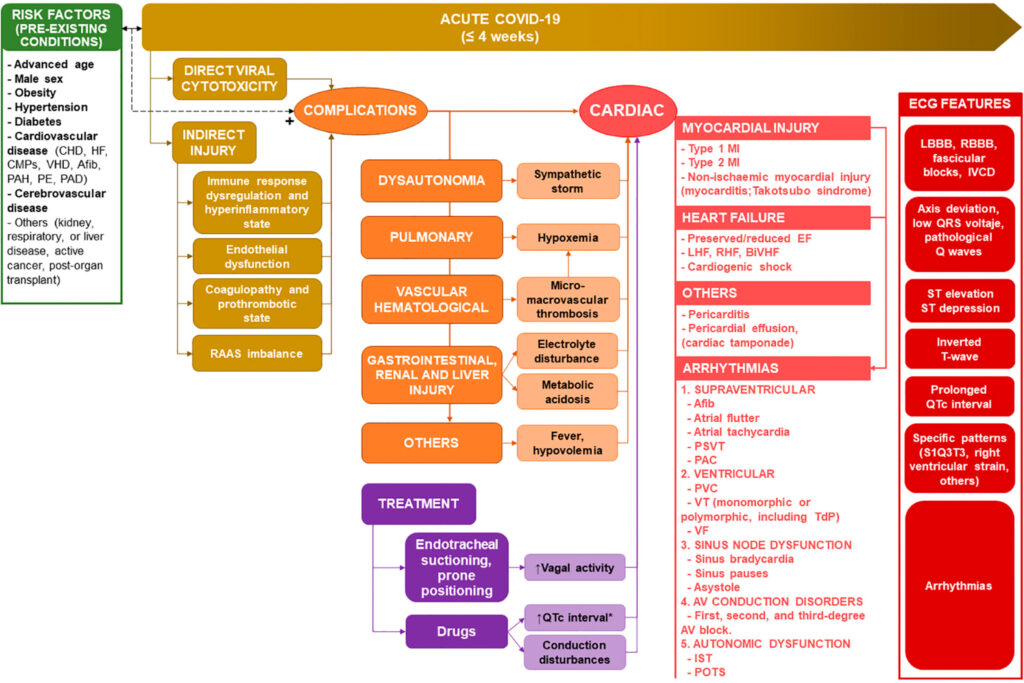
By the end of 2023, COVID-19 had already caused more than 770 million confirmed cases and 7 million deaths worldwide. The disease is characterized by an acute phase that lasts up to 4 weeks. Symptoms and complications could occasionally extend up to several months, called post-acute COVID-19. The main clinical manifestations are fever and respiratory symptoms. Less commonly, extrapulmonary involvement can also occur, involving different organs and systems secondary to direct and indirect viral damage, the latter through the dysregulation of the immune system, a hyperinflammatory state, endothelial dysfunction, coagulopathy, a prothrombotic state, and an imbalance of the renin-angiotensin-aldosterone system. These complex mechanisms, added to the injury of different organs and the adverse effects of COVID-19 treatments, favor the development of cardiac complications ().
[…]
Images
Image gallery fullscreen viewer
Comments are moderated by the editorial team before publication. Discussions should be evidence-based and use scientific language. Conflicts of interest should be declared.