ABC Family Arquivos Brasileiros de Cardiologia International Journal of Cardiovascular Sciences ABC Heart Failure & Cardiomyopathy ABC Imagem Cardiovascular
Português English
ABC Family
Português English
  • About
    • About ABC Family
    • Internal Regulation
    • Editorial Board
    • Brazilian Society of Cardiology (SBC)
  • Issues
  • SBC Guidelines
  • Content
    • Videos
    • Podcasts
    • News
  • About
    • About ABC Family
    • Internal Regulation
    • Editorial Board
    • Brazilian Society of Cardiology (SBC)
  • Issues
  • SBC Guidelines
  • Content
    • Videos
    • Podcasts
    • News

ABC Family

  • ABC Family
  • Arquivos Brasileiros de Cardiologia
  • International Journal of Cardiovascular Sciences
  • ABC Heart Failure & Cardiomyopathy
  • ABC Imagem Cardiovascular
Search in

No content found.

Journals
Ordering
Article types
Others

  1. Home
  2. Keyword: Technology
Figure 1
ABC
Editorial

Technologies for Better Blood Pressure Control: Do the Applications Offer the Necessary Quality?

Roberto Dischinger Miranda et al. Bruna de Oliveira Laurindo Maria Eduarda Augusto Licco

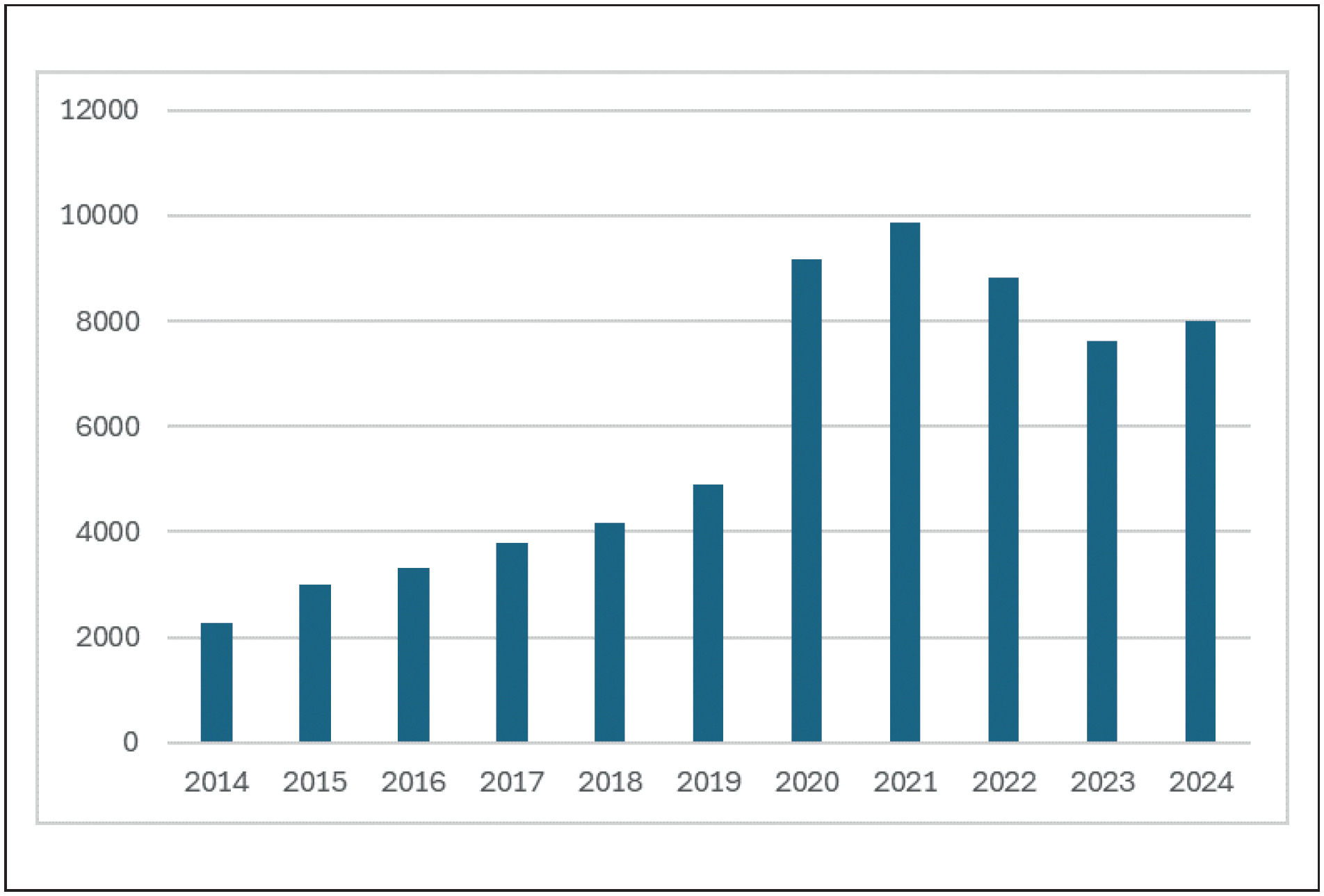
Chronic diseases are highly prevalent among the Brazilian adult population, with a tendency to increase in the coming years, mainly due to population aging. Among them, systemic arterial hypertension (AH) stands out, affecting Around 27.9% of Brazilians. This condition is the main modifiable risk factor for cardiovascular disease, chronic kidney disease, and premature death, and in 2021, the mortality rate from hypertension reached the highest value in the last ten years, with 18.7 deaths per 100,000 inhabitants.,

Among the challenges in controlling hypertension is the fact that it is an asymptomatic condition, which makes it difficult to adhere to treatment, which includes lifestyle changes and regular use of antihypertensive medications. It is estimated that, among hypertensive patients, less than half use their medications properly, and poor medication adherence has been declared a public health problem by the World Health Organization. Among the causes of poor adherence are the reported lack of health education, lack of perception of improvement with the use of medication, the occurrence of adverse effects, and forgetting about the use of medications.,

[…]
  • Essential Hypertension
  • Hypertension
  • medication adherence
  • Mobile Applications
  • Smartphone
  • Technology
Read Full Article
Creative Commons Attribution (CC BY) Creative Commons license
28/04/2025 DOI: 10.36660/abc.20250085i Views 1
Figure 1
IJCS
Original Article

Home-based Virtual Reality Exercise Program During the Maintenance Stage of Cardiac Rehabilitation: A Randomized Controlled Trial

Ágata Vieira et al. Cristina Melo Andreia Noites Jorge Machado Joaquim Mendes

Abstract

Background:

Home-based virtual reality technology may become an alternative to cardiac rehabilitation.

Objectives:

To evaluate the effects of a specific, home-based exercise program, performed either through a virtual reality (Kinect) or a conventional format (booklet) in the maintenance stage of cardiac rehabilitation for six months on functional muscle strength of the lower limbs, physical activity and exercise tolerance.

Methodology:

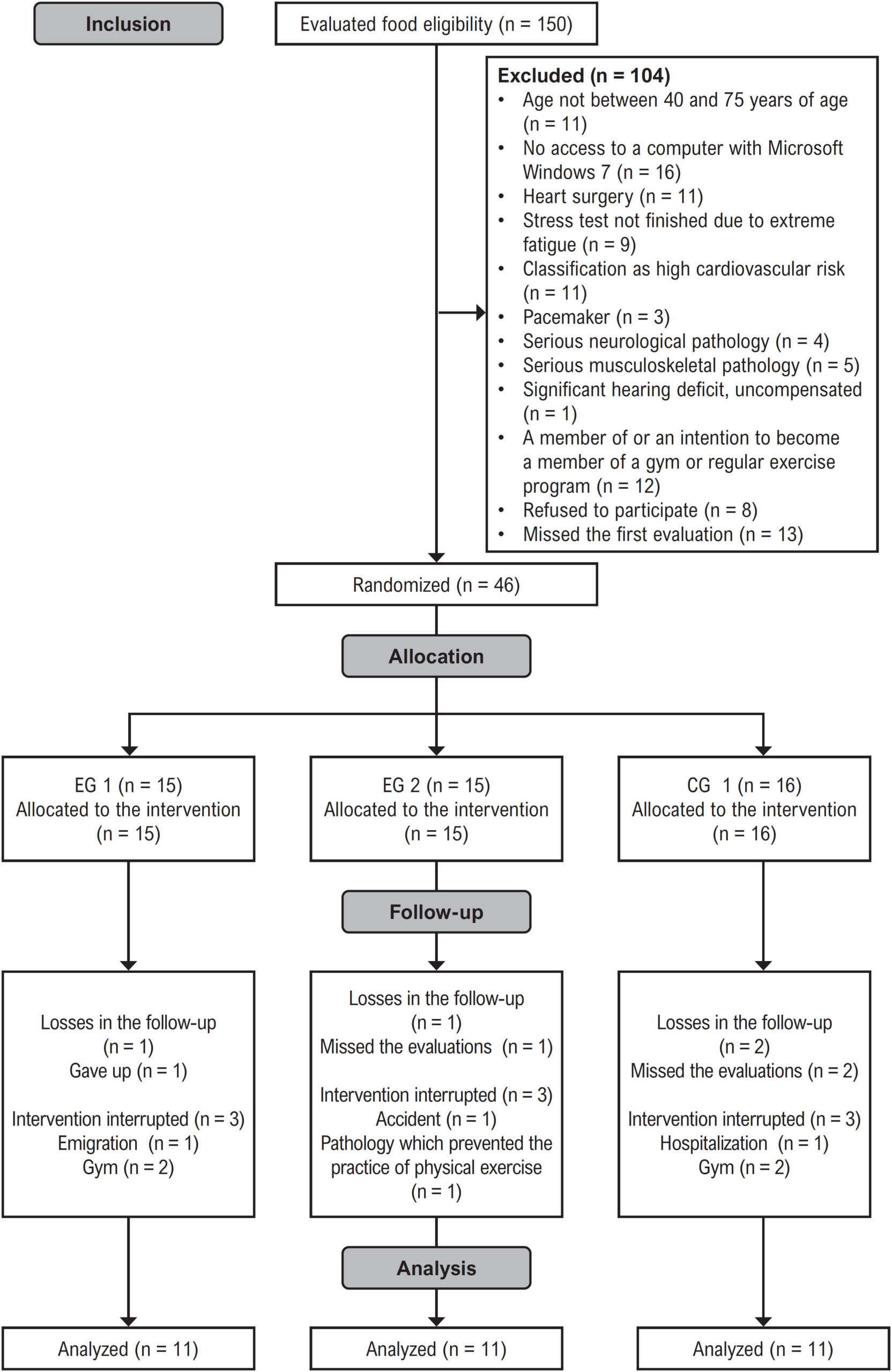
This is a randomized clinical trial (ClinicalTrials.gov — NCT02753829) with individuals with coronary artery disease from a hospital in Porto, Portugal, randomly allocated to an experimental group “1” (EG1; n = 11), submitted to a virtual reality exercise program (Kinect); an experimental group “2” (EG2; n = 11), submitted to an exercise program described in a booklet (conventional format); or a control group (CG) (n=11), submitted to routine care. Parameters of functional muscle strength of the lower limbs (sit-to-stand test), physical activity (accelerometer) and exercise tolerance (stress test) were assessed and compared between the groups. Descriptive and inferential statistics were applied, with 95% with a significance level of 0.05.

Results:

Significant improvements in functional muscle strength of the lower limbs were observed in EG1 compared to EG2, at three months (19.5 ± 7.7 versus 11.9 ± 4.7, p = 0.042), and at six months (23.0 ± 7.7 versus 14.6 ± 4.6, p = 0.027) of intervention.

Conclusions:

The program did not demonstrate superior results, in relation to the control group and among the different formats, in physical activity and effort tolerance. In relation to the functional muscle strength of the lower limbs, the virtual reality format showed significantly better results when compared to the conventional format only.

  • Cardiac Rehabilitation
  • Coronary Disease
  • Exercise
  • Technology
Read Full Article
Creative Commons Attribution (CC BY) Creative Commons license
28/08/2023 DOI: 10.36660/ijcs.20190177 Views 2
Figure 1
IJCS
Original Article

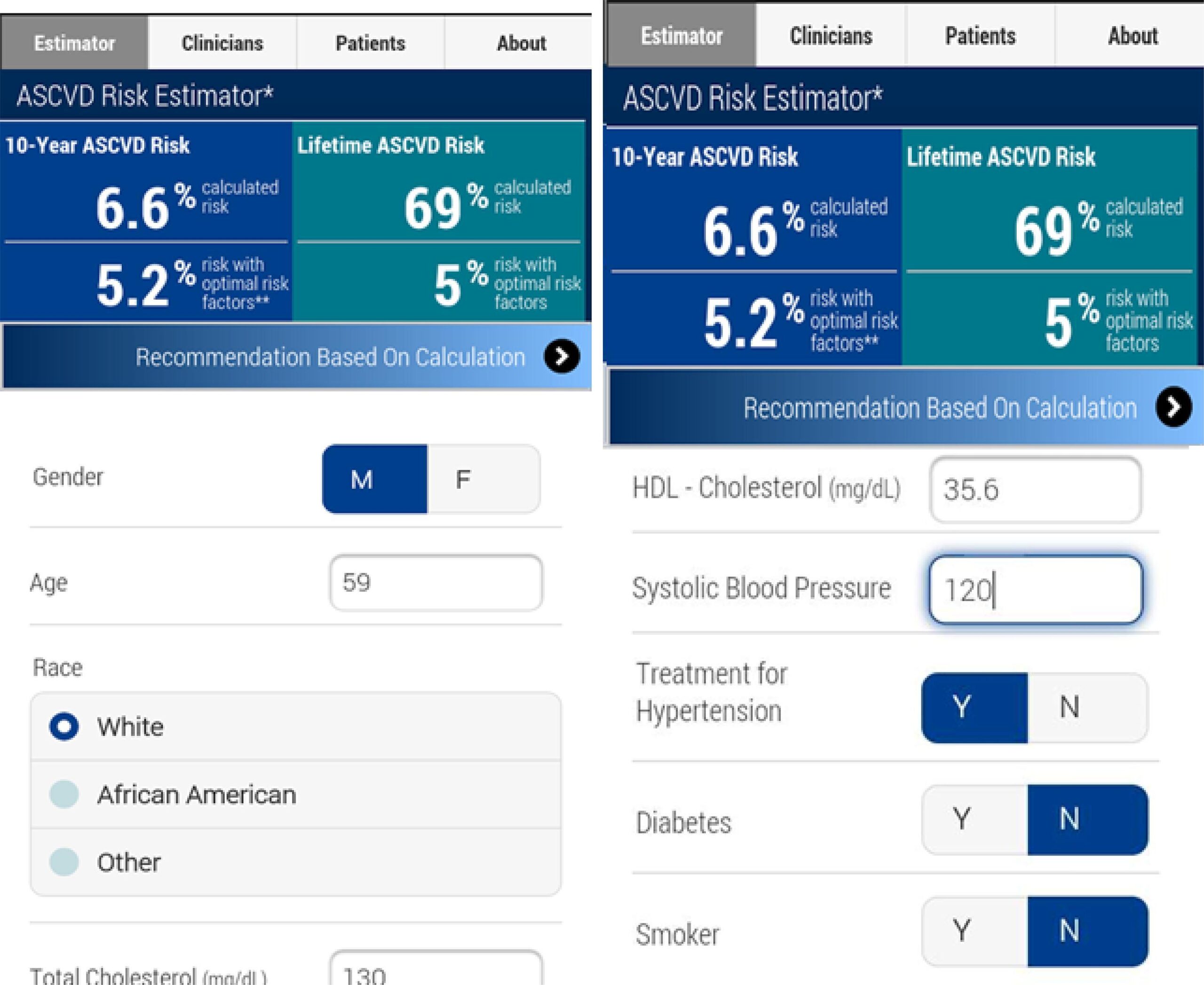
Cardiovascular Risk Estimation by the ASCVD Risk Estimator Application in a University Hospital

Thalita dos Anjos Azevedo et al. Marlos Luiz Villela Moreira Ana Paula Cassetta dos Santos Nucera

Abstract

Background:

Cardiovascular diseases (CVDs) are responsible for many deaths in Brazil and in the world, especially in the economically active population. Risk factors for these diseases include comorbidities such as high blood pressure (HBP), diabetes mellitus (DM) and dyslipidemia. Innovation of portable technology combined with the high prevalence of CVDs motivated the development of the ASCVD Risk Estimator by the American Heart Association/American College of Cardiology.

Objectives:

Estimate the cardiovascular risk of patients hospitalized in the internal medicine wards of Gaffrée e Guinle University Hospital (HUGG) using the ASCVD Risk Estimator, and describe the main risk factors in this population.

Methods:

A prospective, cross-sectional study was conducted, the following data were collected from the medical records: sex, age, ethnicity, presence of HBP, DM, systolic arterial pressure, smoking habits, total cholesterol and HDL levels. Statistical analysis was performed by the chi-square test, with calculation of p-value, relative risk and confidence interval in the correlations.

Results:

A total of 339 medical records were reviewed, and 72 (21.2%) fulfilled the inclusion and exclusion criteria. Twenty-three (32%) patients were classified as at high cardiovascular risk by the application. The main risk factors in the high risk group were age greater than or equal to 60 years (n = 21; 91.30%), dyslipidemia (n = 15; 65,2%), high blood pressure (n = 15; 65.2%), male sex (n = 13; n = 56.5%) and smoking (n = 11; 47.8%).

Conclusion:

Approximately one third of the study population had a high cardiovascular risk; HBP and dyslipidemia were the most prevalent modifiable risk factor in the high risk group. We may say that there is no single protocol or score available able to estimate the cardiovascular risk of all individuals in the same way, and therefore, the physician must individually evaluate the patients and be updated on the best methods of disease prevention to improve current approaches.

  • Cardiovascular Diseases
  • Risk Factors
  • Technology
Read Full Article
Creative Commons Attribution (CC BY) Creative Commons license
30/07/2018 DOI: 10.5935/2359-4802.20180052

How to cite this article

EndNote RIS

Electronic Document Format (Vancouver)

Miranda RD, Laurindo BO, Licco MEA. Technologies for Better Blood Pressure Control: Do the Applications Offer the Necessary Quality?. Arquivos Brasileiros de Cardiologia 2025;122(2):e20250085.

Electronic Document Format (ABNT)

Miranda, Roberto Dischinger; Laurindo, Bruna de Oliveira; Licco, Maria Eduarda Augusto. Technologies for Better Blood Pressure Control: Do the Applications Offer the Necessary Quality?. Arquivos Brasileiros de Cardiologia, v. 122, n. 2, e20250085, Apr. 2025.

Electronic Document Format (APA)

Miranda, R. D., Laurindo, B. O., & Licco, M. E. A. (2025). Technologies for Better Blood Pressure Control: Do the Applications Offer the Necessary Quality?. Arquivos Brasileiros de Cardiologia, 122(2), e20250085.

Electronic Document Format (ISO)

Miranda, Roberto Dischinger and Laurindo, Bruna de Oliveira and Licco, Maria Eduarda Augusto. Technologies for Better Blood Pressure Control: Do the Applications Offer the Necessary Quality?. Arquivos Brasileiros de Cardiologia [online]. 2025, vol. 122, n. 2, [cited 2026-10-14], e20250085. Available from: <https://journals.cardiol.br/en/article/technologies-for-better-blood-pressure-control-do-the-applications-offer-the-necessary-quality/>. ISSN 0066-782X

EndNote RIS

Electronic Document Format (Vancouver)

Vieira , Melo C, Noites A, Machado J, Mendes J. Home-based Virtual Reality Exercise Program During the Maintenance Stage of Cardiac Rehabilitation: A Randomized Controlled Trial. International Journal of Cardiovascular Sciences 2023;36:e20190177.

Electronic Document Format (ABNT)

Vieira, Ágata; Melo, Cristina; Noites, Andreia; Machado, Jorge; Mendes, Joaquim. Home-based Virtual Reality Exercise Program During the Maintenance Stage of Cardiac Rehabilitation: A Randomized Controlled Trial. International Journal of Cardiovascular Sciences, v. 36, e20190177, Aug. 2023.

Electronic Document Format (APA)

Vieira, , Melo, C., Noites, A., Machado, J., & Mendes, J. (2023). Home-based Virtual Reality Exercise Program During the Maintenance Stage of Cardiac Rehabilitation: A Randomized Controlled Trial. International Journal of Cardiovascular Sciences, 36, e20190177.

Electronic Document Format (ISO)

Vieira, Ágata and Melo, Cristina and Noites, Andreia and Machado, Jorge and Mendes, Joaquim. Home-based Virtual Reality Exercise Program During the Maintenance Stage of Cardiac Rehabilitation: A Randomized Controlled Trial. International Journal of Cardiovascular Sciences [online]. 2023, vol. 36, [cited 2026-10-14], e20190177. Available from: <https://journals.cardiol.br/en/article/home-based-virtual-reality-exercise-program-during-the-maintenance-stage-of-cardiac-rehabilitation-a-randomized-controlled-trial/>. ISSN 2359-4802

EndNote RIS

Electronic Document Format (Vancouver)

Azevedo TA, Moreira MLV, Nucera APCS. Cardiovascular Risk Estimation by the ASCVD Risk Estimator Application in a University Hospital. International Journal of Cardiovascular Sciences 2018;31(5):492-8.

Electronic Document Format (ABNT)

Azevedo, Thalita dos Anjos; Moreira, Marlos Luiz Villela; Nucera, Ana Paula Cassetta dos Santos. Cardiovascular Risk Estimation by the ASCVD Risk Estimator Application in a University Hospital. International Journal of Cardiovascular Sciences, v. 31, n. 5, p. 492-498, Jul. 2018.

Electronic Document Format (APA)

Azevedo, T. A., Moreira, M. L. V., & Nucera, A. P. C. S. (2018). Cardiovascular Risk Estimation by the ASCVD Risk Estimator Application in a University Hospital. International Journal of Cardiovascular Sciences, 31(5), 492-498.

Electronic Document Format (ISO)

Azevedo, Thalita dos Anjos and Moreira, Marlos Luiz Villela and Nucera, Ana Paula Cassetta dos Santos. Cardiovascular Risk Estimation by the ASCVD Risk Estimator Application in a University Hospital. International Journal of Cardiovascular Sciences [online]. 2018, vol. 31, n. 5, [cited 2026-10-14], pp. 492-498. Available from: <https://journals.cardiol.br/en/article/cardiovascular-risk-estimation-by-the-ascvd-risk-estimator-application-in-a-university-hospital/>. ISSN 2359-4802

  • About ABC Family
  • Internal Regulation
  • Editorial Board
  • Brazilian Society of Cardiology (SBC)

Issues

SBC Guidelines

  • Videos
  • Podcasts
  • News