Efficacy of Cardiopulmonary Rehabilitation on Cardiorespiratory Function in Patients with Long COVID Syndrome
Abstract
Background
Long COVID syndrome (LCS) refers to persistent sequelae following acute SARS-CoV-2 infection and affects approximately 5%-20% of individuals.
Objective
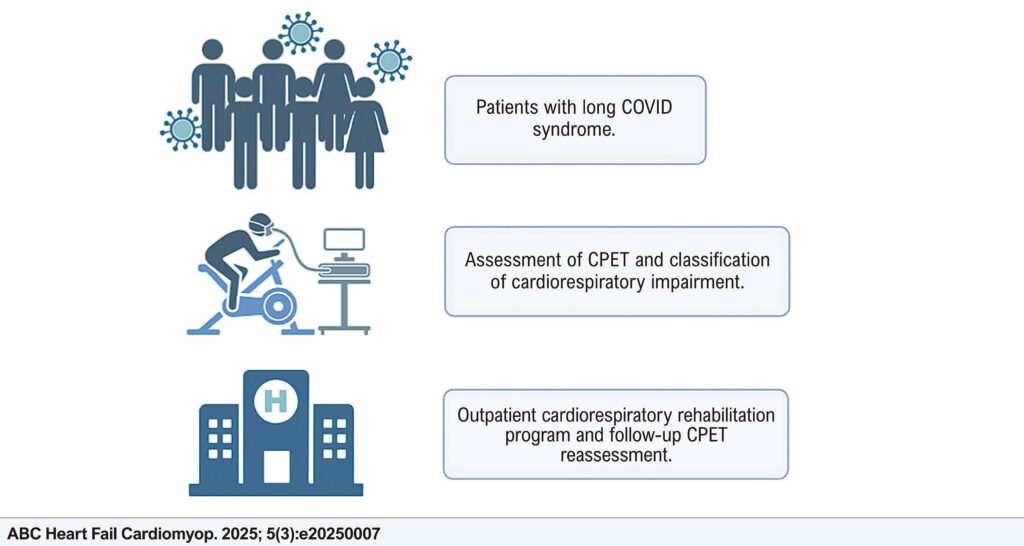
This study evaluated functional capacity limitations in patients with LCS using cardiopulmonary exercise testing (CPET) and quantified the effects of a structured cardiorespiratory rehabilitation (CR) program.
Methods
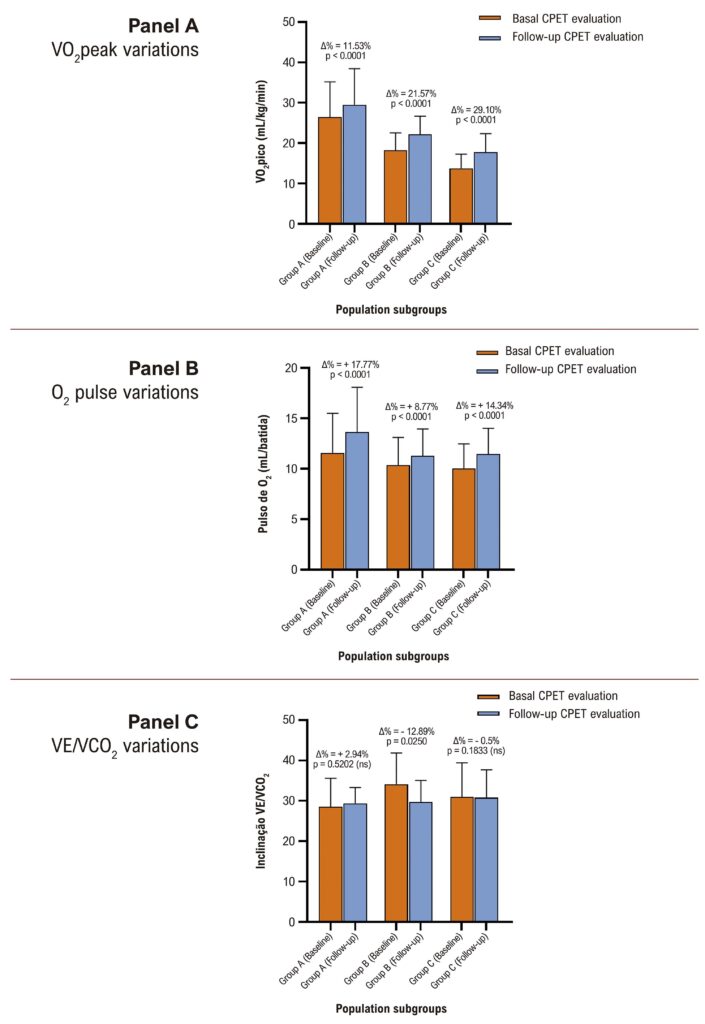
In this prospective observational study, 67 outpatients with LCS completed CPET before and after participation in a supervised CR program. At baseline, patients demonstrated reduced functional capacity, including decreased VO2peak (19.47 ± 7.86 mL/kg/min), lower O2 pulse (10.65 ± 3.11 mL/beat), increased VE/VCO2 slope (31.26 ± 7.98), and impaired ventilation (VE = 57.83 ± 17.37%). Most participants either did not achieve the anaerobic threshold (AT) or reached it prematurely, although VO2/work slope values remained within normal limits.
Results
After a median 45-day CR intervention, significant improvements were observed in several parameters: resting heart rate decreased by 8.88% (p < 0.0001), minute ventilation increased by 30.46% (p < 0.0001), VO2peak rose by 18.85% (p < 0.0001), and peak workload increased by 26.82% (p < 0.0001). Additionally, 95% of patients achieved AT following CR, with a 16.21% delay in AT onset (p < 0.0001). The VE/VCO2 slope showed a modest but significant reduction of 4.03% (p = 0.0443).
Conclusions
Exercise-based CR substantially improved functional capacity in patients with LCS, demonstrated by increases in VO2peak, O2 pulse, and ventilatory efficiency. Although these results support CR as a beneficial therapeutic strategy, the underlying pathophysiological mechanisms of LCS remain incompletely understood.
Images
Image gallery fullscreen viewer
Comments are moderated by the editorial team before publication. Discussions should be evidence-based and use scientific language. Conflicts of interest should be declared.