ABC Family Arquivos Brasileiros de Cardiologia International Journal of Cardiovascular Sciences ABC Heart Failure & Cardiomyopathy ABC Imagem Cardiovascular
Português English
ABC Family
Português English
  • About
    • About ABC Family
    • Internal Regulation
    • Editorial Board
    • Brazilian Society of Cardiology (SBC)
  • Issues
  • SBC Guidelines
  • Content
    • Videos
    • Podcasts
    • News
  • About
    • About ABC Family
    • Internal Regulation
    • Editorial Board
    • Brazilian Society of Cardiology (SBC)
  • Issues
  • SBC Guidelines
  • Content
    • Videos
    • Podcasts
    • News

ABC Family

  • ABC Family
  • Arquivos Brasileiros de Cardiologia
  • International Journal of Cardiovascular Sciences
  • ABC Heart Failure & Cardiomyopathy
  • ABC Imagem Cardiovascular
Search in

No content found.

Journals
Ordering
Article types
Others

  1. Home
  2. Keyword: Amiodarone
ABC
Editorial

Catheter Ablation for Atrial Fibrillation in Patients with Heart Failure

Mauricio Scanavacca et al. Edimar Alcides Bocchi

In the last years, atrial fibrillation (AF) and heart failure (HF) have been the two major epidemic syndromes in cardiology and they frequently coexist. HF increases mean right and left atria pressures promoting their progressive dilation. Such mechanical electro-anatomic remodeling predisposes to atrial fibrosis and electrical heterogeneity, increases ectopic rhythm formation and ultimately induces AF.

A new AF episode, in turn, immediately induces loss of atrial contraction, increases mean heart rate and provokes an important irregularity on ventricular contractions decreasing the heart’s pump function performance. Therefore, around 50% of patients who present with new-onset congestive HF have atrial fibrillation and up to one-third of patients with new-onset AF have congestive heart failure.

[…]

  • Amiodarone
  • Atrial Fibrillation
  • Atrial Remodeling
  • Catheter Ablation / trends
  • Heart Failure
Read Full Article
Creative Commons Attribution (CC BY) Creative Commons license
01/04/2018 DOI: 10.5935/abc.20180066
ABC
Case Report

Amiodarone and thyrotoxicosis: case reports

Ana Beatriz Winter Tavares et al. Simone Kalil de Paula Mario Vaisman Patrícia de Fátima dos Santos Teixeira

Amiodarone-induced thyroid dysfunction has been reported to affect 2-24% of users. Despite the easy management of amiodarone-induced hypothyroidism, the development of thyrotoxicosis leads to a difficult approach in most cases. The aim of this study is to describe three different cases of patients with amiodarone-induced thyrotoxicosis and discuss the clinical and laboratorial aspects, and the different approaches to them. It is essential to carefully evaluate patients before and during amiodarone therapy, since the prompt diagnosis and treatment of this condition is essential in patients with high cardiovascular risk.

  • Amiodarone
  • thyroiditis
  • thyrotoxicosis
Read Full Article
Creative Commons Attribution (CC BY) Creative Commons license
13/04/2011 DOI: 10.1590/S0066-782X2010001500022
Antiadrenergic rescue therapy with amiodarone in children with severe left ventricular dysfunction secondary to scorpion envenomation
ABC
Artigo Original

Antiadrenergic rescue therapy with amiodarone in children with severe left ventricular dysfunction secondary to scorpion envenomation

Justo J. Santiago et al. Carmen A. Mazzei de Dávila Diego F. Davila Jose H. Donis Vanesa Villaroel

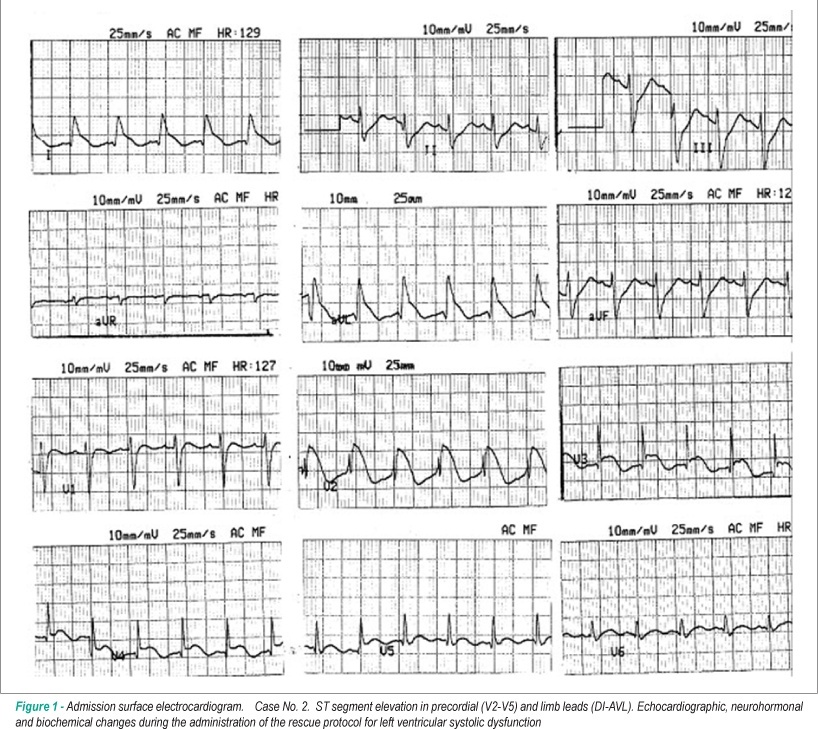
BACKGROUND: Children with scorpion envenomation have massive sympathetic activation and variable degrees of left ventricular systolic dysfunction. OBJECTIVE: To evaluate a rescue protocol for children with severe left ventricular dysfunction secondary to scorpion envenomation. METHODS: Four children, after scorpion envenomation, were subjected to a rescue protocol for acute left ventricular dysfunction: Endotracheal intubation and respiratory assistance, electrocardiograms, chest x-Ray, echocardiograms and blood samples for norepinephrine and troponin I serum levels. Samples and echocardiograms were repeated at 12, 24 and 48 hours. Intravenous medications: Dobutamine: 4-6 μg/kg/min. Amiodarone: 3 mg/kg during a 2 hour period. Maintenance: 5 mg/kg/day. Furosemide: 0.5 mg/kg/dose. Diuretics were given when the systemic blood pressure was above percentile fifty. Amiodarone, Dobutamine and Furosemide were administered during the first 48 hours. Beta-adrenergic blockers and angiotensin converting enzyme were given, at 48 hours after admission, once the left ventricular Ejection fraction > 0.35 and the clinical status had improved. RESULTS: On admission, norepinephrine was 1,727.50 ±794.96 pg/ml, troponin I 24.53 ± 14.09 ng/ml and left ventricular ejection fraction 0.20 ± 0.056. At twelve hours, norepinephrine and troponin I serum levels were down to half of the initial values and the ejection fraction increased to 0.32 ± 0.059. During the next 24 and 48 hours, the ejection fraction rose to 0.46 ± 0.045, (p<0.01) and norepinephrine and troponin diminished to 526.75 ± 273.73 (p < 0.02) and 2.20 ± 2.36 (p<0.02) respectively. CONCLUSION: Amiodarone, by acting as a neuromodulator, is very likely responsible for the early and progressive decrease of serum norepinephrine.

  • adrenergic beta-agonists
  • Amiodarone
  • Norepinephrine
  • Scorpion venoms
Read Full Article
Creative Commons Attribution (CC BY) Creative Commons license
22/09/2010 DOI: 10.1590/S0066-782X2010000100005
Prevention of atrial fibrillation with moderate doses of amiodarone in the postoperative period of cardiac surgery is safe and effective in patients with high risk for developing this arrhythmia
ABC
Artigo Original

Prevention of atrial fibrillation with moderate doses of amiodarone in the postoperative period of cardiac surgery is safe and effective in patients with high risk for developing this arrhythmia

Renato Jorge Alves et al. Glaucylara Reis Geovanini Gisele de Brito Gabriel A. S. Miguel … Valéria A. Glauser Kenji Nakiri

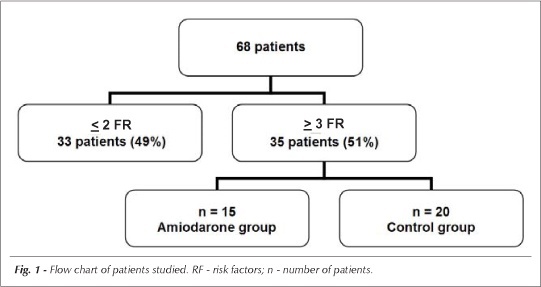
OBJECTIVE: To assess if prophylaxis with moderate doses of amiodarone in the postoperative period of cardiac surgery (coronary artery bypass grafting and/or valve surgery), reduces the incidence of atrial fibrillation in patients with high risk for developing this arrhythmia. METHODS: A randomized and prospective clinical study involving 68 patients who underwent elective cardiac surgery. Mean age was 64 years and 59% of participants were males. Patients with three or more risk factors for atrial fibrillation, according to the literature, were randomized into two groups to receive or not prophylaxis with amiodarone in the first postoperative day. The dose administered ranged from 600 mg/day to 900 mg/day, intravenously, on the first postoperative day, followed by 400 mg/day orally until hospital discharge or until completing seven days. The other patients, who presented two or fewer risk factors, were followed up until hospital discharge. All patients were evaluated by means of cardiac and/or electrocardiographic monitoring. RESULTS: In the group treated with amiodarone, 7% of patients presented atrial fibrillation, whereas in the control group 70% of patients developed arrhythmia. Among the non-randomized individuals (with two or fewer risk factors), only 24% presented atrial fibrillation. CONCLUSION: The prophylactic use of amiodarone was effective in the prevention of atrial fibrillation in patients with three or more risk factors for this arrhythmia. This treatment can be useful to reduce stay at the Intensive Care Unit and, consequently, the complications originating from longer hospitalization.

  • Amiodarone
  • Atrial Fibrillation
  • Postoperative Care
  • Thoracic Surgery
Read Full Article
Creative Commons Attribution (CC BY) Creative Commons license
28/08/2007 DOI: 10.1590/S0066-782X2007001300005
ABC
Artigo Original

High dose of amiodarone in a short-term period reduces the incidence of postoperative atrial fibrillation and atrial flutter

Rafael Vieira Alcalde et al. João Carlos Guaragna Luiz Carlos Bodanese Iran Castro … Eliana Sussenbach Roberta Noer Marco Antônio Goldani Flávia Feier João Batista Petracco

OBJECTIVE: To investigate wheter oral amiodarone administered before surgery for a short period in high dose would reduce the incidence of postoperative atrial fibrillation or atrial flutter and reduces the lenght of hospital stay. METHODS: In the double-blind, randomized study, 93 patients were given either oral amiodarone (46 patients) or placebo (47 patients). Therapy consisted of 600mg of amiodarone three times a day, started at mininum 30 hours and at maximum 56 hours before surgery. RESULTS: Postoperative atrial fibrillation or atrial flutter occurred in 8 of 46 patients in the amiodarone group (17.4%) and 19 of the 47 patients in the placebo group (40.4%) (p=0.027). The mean dose of amiodarone was 2.8g. Patients in the amiodarone group were hospitalized for 8.9±3.1 days and patients in the placebo group were hospitalized for 11.4± 8.7 days (p=0.07). The hospital lenght were significantly prolonged in patients who developed atrial arrhythmias after surgery, despite the treatment received.(p<0.001). CONCLUSION: This new alternative way of using amiodarone in high dose and in a short-term period before surgery reduce the incidence of postoperative atrial fibrillation or atrial flutter in coronary artery bypass graft surgery.

  • Amiodarone
  • Atrial Fibrillation
  • Atrial flutter
  • coronary artery bypass graft surgery
Read Full Article
Creative Commons Attribution (CC BY) Creative Commons license
16/10/2006 DOI: 10.1590/S0066-782X2006001600002 Views 1
The importance of amiodarone pulmonary toxicity in the differential diagnosis of a patient with dyspnea awaiting a heart transplant
ABC
Case Report

The importance of amiodarone pulmonary toxicity in the differential diagnosis of a patient with dyspnea awaiting a heart transplant

Christiano Pereira Silva et al. Fernando Bacal Philippe Vieira Pires Luciano F. Drager … Germano Emílio Conceição Souza Ginny Michele G. Fajardo Léa Maria Macruz F. Demarchi Edimar Alcides Bocchi

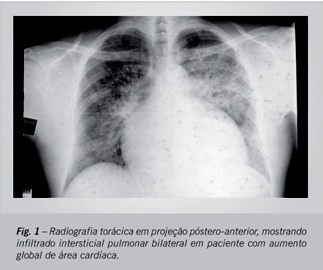
Amiodarone is a class III antiarrhythmic medication used extensively to treat ventricular arrhythmias¹. It is pharmacologically classified as a cationic amphiphilic drug due to its polar and apolar components. During the past few years, amiodarone has proved to be an effective treatment therapy for patients with ventricular dysfunctions, regardless of the etiology, and in particular ventricular arrhythmia associated with Chagas disease². Nevertheless, despite its hemodynamic and electrophysiological benefits, amiodarone produces serious collateral effects such as a bluish skin discoloration, photosensitivity, thyroid dysfunction, corneal deposit, peripheral neuropathy, bone marrow suppression, hepatitis, heart blocks, pneumonitis, among others³. The objective of this case report is to discuss one of the most serious complications related to amiodarone, pulmonary toxicity, which is described as a differential diagnosis for a chagasic patient that was on the waiting list for a heart transplant. Amiodarone pneumonitis is a relevant differential diagnosis for heart failure (HF) patients using amiodarone that are admitted to the emergency ward with dyspnea.

  • Amiodarone
  • Heart Failure
  • pulmonary toxicity
Read Full Article
Creative Commons Attribution (CC BY) Creative Commons license
16/10/2006 DOI: 10.1590/S0066-782X2006001600026 Views 1
Amiodarone causes endothelium-dependent vasodilation in canine coronary arteries
ABC
Artigo Original

Amiodarone causes endothelium-dependent vasodilation in canine coronary arteries

Alfredo José Rodrigues et al. Paulo Roberto Barbosa Evora Ayako Maruo Hartzell V. Schaff

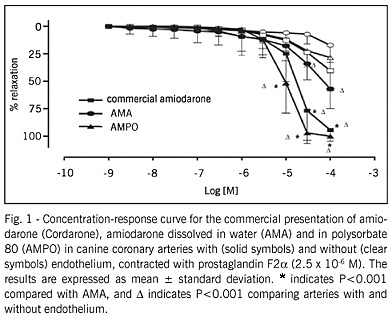
OBJECTIVE: To assess the vasodilating effects of amiodarone on canine coronary arteries by using solutions of amiodarone dissolved in polysorbate 80 or water. METHODS: Rings of coronary arteries, with or without intact endothelium, were immersed in Krebs solution and connected to a transducer for measuring the isometric force promoted by a vascular contraction. The arteries were exposed to increasing concentrations of polysorbate 80, amiodarone dissolved in water, amiodarone dissolved in polysorbate 80, and a commercial presentation of amiodarone (Cordarone). The experiments were conducted in the presence of the following enzymatic blockers: only indomethacin, Nw-nitro-L-arginine associated with indomethacin, and only Nw-nitro-L-arginine. RESULTS: Polysorbate 80 caused a small degree of nonendothelium-dependent relaxation. Cordarone, amiodarone dissolved in water, and amiodarone dissolved in polysorbate 80 caused endothelium-dependent relaxation, which was greater for amiodarone dissolved in polysorbate and for Cordarone. Only the association of indomethacin and Nw-nitro-L-arginine could eliminate the endothelium-dependent relaxation caused by amiodarone dissolved in polysorbate 80. CONCLUSION: The results obtained indicate that vasodilation promoted by amiodarone in canine coronary arteries is mainly caused by stimulation of the release of nitric oxide and cyclooxygenase-dependent relaxing endothelial factors.

  • Amiodarone
  • coronary circulation
  • cyclooxygenase
  • Endothelium
  • Nitric Oxide
Read Full Article
Creative Commons Attribution (CC BY) Creative Commons license
19/08/2005 DOI: 10.1590/S0066-782X2005000300011
ABC
Artigo Original

Thyroid dysfunction and cardiological management in patients receiving amiodarone

Anna Gabriela Fuks et al. Mário Vaisman Alexandru Buescu

OBJECTIVE: To determine the prevalence of thyroid dysfunction in patients receiving amiodarone, and the possible associated factors. The study also aimed at assessing the effect of amiodarone on thyroid function through the application of a questionnaire to cardiologists. METHOD: Fifty-six patients chronically (> 3 months) receiving amiodarone were assessed by measurement of their serum levels of TSH, free T4, total T3, and anti-TPO antibodies. Patients with changes in TSH levels were defined as having thyroid dysfunction (TD). RESULTS: The prevalence of thyroid dysfunction was 33.9%. No difference was observed between this group and that of patients with no dysfunction, except for the greater prevalence of anti-TPO positivity in patients with TD (P=0.02). Subclinical hypothyroidism was diagnosed in 10 (17.9%) patients and clinical hypothyroidism in 6 (10.7%). The prevalence of subclinical hyperthyroidism was 3.6% and that of clinical hyperthyroidism was 1.8%. Anti-TPO antibodies were positive in 5 (8%) patients (of whom, 4 had thyroid dysfunction). When compared with patients negative for anti-TPO antibodies, that group had a greater prevalence of dysfunction (80% vs 29.4%; P=0.04). Only 49.2% of the cardiologists routinely treated their patients’ thyroid function, and the prevalence of the referred dysfunction for most of them ranged from 1 to 10%. CONCLUSION: The prevalence of thyroid dysfunction in our population was high, showing the need for implementing a laboratory routine. The cardiologists disagreed greatly in regard to the type of follow-up required for patients using amiodarone.

  • Amiodarone
  • Hypothyroidism
  • thyroid dysfunction
Read Full Article
Creative Commons Attribution (CC BY) Creative Commons license
12/07/2004 DOI: 10.1590/S0066-782X2004000600005
ABC
Artigo Original

High dose amiodarone for the reversion of atrial fibrillation during the postoperative period of cardiac surgery

João Carlos Vieira da Costa Guaragna et al. Valério Martins Tatiana Marlowe Cunha Brunini José Luis Linhatti … Fábio Branco de Araújo Brauner Renan Canibal Pires Luiz Carlos Bodanese

PURPOSE: To report our experience using high dose oral amiodarone (1,800mg/day) for the reversion of atrial fibrillation to sinus rhythm in patients submitted to cardiac surgery. METHODS: We retrospectively analyzed the records of 80 patients who had atrial fibrillation during the postoperative period after cardiac surgery, initially divided in two groups: group A, 28 patients that used amiodarone, and group B composed of patients receiving digoxin. The latter group was divided further in a third group (C), with 21 patients in which amiodarone was associated with digoxin if there was no reversion of the arrhythmia after 48 hours of treatment. The observed differences were considered significant at P<0.05. RESULTS: Atrial fibrillation occurred in 19.4% of the patients submitted to surgery, predominating in males, 60 to 69 years-old. In group A there was reversion to sinus rhythm in 78.6% of the cases. In group B digoxin succeeded in 60%, and in group C 90% of the patients reverted to sinus rhythm. CONCLUSION: High dose oral amiodarone, alone or combined to digoxin, can be safe and effective for the treatment of atrial fibrillation after cardiac surgery.

  • Amiodarone
  • Atrial Fibrillation
  • Cardiac Surgery
Read Full Article
Creative Commons Attribution (CC BY) Creative Commons license
23/01/2001 DOI: 10.1590/S0066-782X1997001200007

How to cite this article

EndNote RIS

Electronic Document Format (Vancouver)

Scanavacca M, Bocchi EA. Catheter Ablation for Atrial Fibrillation in Patients with Heart Failure. Arquivos Brasileiros de Cardiologia 2018;110(4):300-2.

Electronic Document Format (ABNT)

Scanavacca, Mauricio; Bocchi, Edimar Alcides. Catheter Ablation for Atrial Fibrillation in Patients with Heart Failure. Arquivos Brasileiros de Cardiologia, v. 110, n. 4, p. 300-302, Mar. 2018.

Electronic Document Format (APA)

Scanavacca, M., & Bocchi, E. A. (2018). Catheter Ablation for Atrial Fibrillation in Patients with Heart Failure. Arquivos Brasileiros de Cardiologia, 110(4), 300-302.

Electronic Document Format (ISO)

Scanavacca, Mauricio and Bocchi, Edimar Alcides. Catheter Ablation for Atrial Fibrillation in Patients with Heart Failure. Arquivos Brasileiros de Cardiologia [online]. 2018, vol. 110, n. 4, [cited 2026-10-14], pp. 300-302. Available from: <https://journals.cardiol.br/en/article/catheter-ablation-for-atrial-fibrillation-in-patients-with-heart-failure/>. ISSN 0066-782X

EndNote RIS

Electronic Document Format (Vancouver)

Tavares ABW, Paula SK, Vaisman M, Teixeira PFS. Amiodarone and thyrotoxicosis: case reports. Arquivos Brasileiros de Cardiologia 2011;95(5):e122-4.

Electronic Document Format (ABNT)

Tavares, Ana Beatriz Winter; Paula, Simone Kalil de; Vaisman, Mario; Teixeira, Patrícia de Fátima dos Santos. Amiodarone and thyrotoxicosis: case reports. Arquivos Brasileiros de Cardiologia, v. 95, n. 5, p. e122-e124, Apr. 2011.

Electronic Document Format (APA)

Tavares, A. B. W., Paula, S. K. , Vaisman, M., & Teixeira, P. F. S. (2011). Amiodarone and thyrotoxicosis: case reports. Arquivos Brasileiros de Cardiologia, 95(5), e122-e124.

Electronic Document Format (ISO)

Tavares, Ana Beatriz Winter and Paula, Simone Kalil de and Vaisman, Mario and Teixeira, Patrícia de Fátima dos Santos. Amiodarone and thyrotoxicosis: case reports. Arquivos Brasileiros de Cardiologia [online]. 2011, vol. 95, n. 5, [cited 2026-10-14], pp. e122-e124. Available from: <https://journals.cardiol.br/en/article/amiodarone-and-thyrotoxicosis-case-reports/>. ISSN 0066-782X

EndNote RIS

Electronic Document Format (Vancouver)

Santiago JJ, Dávila CAM, Davila DF, Donis JH, Villaroel V. Antiadrenergic rescue therapy with amiodarone in children with severe left ventricular dysfunction secondary to scorpion envenomation. Arquivos Brasileiros de Cardiologia 2010;94(1):18-24.

Electronic Document Format (ABNT)

Santiago, Justo J.; Dávila, Carmen A. Mazzei de; Davila, Diego F.; Donis, Jose H.; Villaroel, Vanesa. Antiadrenergic rescue therapy with amiodarone in children with severe left ventricular dysfunction secondary to scorpion envenomation. Arquivos Brasileiros de Cardiologia, v. 94, n. 1, p. 18-24, Sep. 2010.

Electronic Document Format (APA)

Santiago, J. J., Dávila, C. A. M. , Davila, D. F., Donis, J. H., & Villaroel, V. (2010). Antiadrenergic rescue therapy with amiodarone in children with severe left ventricular dysfunction secondary to scorpion envenomation. Arquivos Brasileiros de Cardiologia, 94(1), 18-24.

Electronic Document Format (ISO)

Santiago, Justo J. and Dávila, Carmen A. Mazzei de and Davila, Diego F. and Donis, Jose H. and Villaroel, Vanesa. Antiadrenergic rescue therapy with amiodarone in children with severe left ventricular dysfunction secondary to scorpion envenomation. Arquivos Brasileiros de Cardiologia [online]. 2010, vol. 94, n. 1, [cited 2026-10-14], pp. 18-24. Available from: <https://journals.cardiol.br/en/article/antiadrenergic-rescue-therapy-with-amiodarone-in-children-with-severe-left-ventricular-dysfunction-secondary-to-scorpion-envenomation/>. ISSN 0066-782X

EndNote RIS

Electronic Document Format (Vancouver)

Alves RJ, Geovanini GR, Brito G, Miguel GAS, Glauser VA, Nakiri K. Prevention of atrial fibrillation with moderate doses of amiodarone in the postoperative period of cardiac surgery is safe and effective in patients with high risk for developing this arrhythmia. Arquivos Brasileiros de Cardiologia 2007;89(1):22-7.

Electronic Document Format (ABNT)

Alves, Renato Jorge; Geovanini, Glaucylara Reis; Brito, Gisele de; Miguel, Gabriel A. S.; Glauser, Valéria A.; Nakiri, Kenji. Prevention of atrial fibrillation with moderate doses of amiodarone in the postoperative period of cardiac surgery is safe and effective in patients with high risk for developing this arrhythmia. Arquivos Brasileiros de Cardiologia, v. 89, n. 1, p. 22-27, Aug. 2007.

Electronic Document Format (APA)

Alves, R. J., Geovanini, G. R., Brito, G. , Miguel, G. A. S., Glauser, V. A., & Nakiri, K. (2007). Prevention of atrial fibrillation with moderate doses of amiodarone in the postoperative period of cardiac surgery is safe and effective in patients with high risk for developing this arrhythmia. Arquivos Brasileiros de Cardiologia, 89(1), 22-27.

Electronic Document Format (ISO)

Alves, Renato Jorge and Geovanini, Glaucylara Reis and Brito, Gisele de and Miguel, Gabriel A. S. and Glauser, Valéria A. and Nakiri, Kenji. Prevention of atrial fibrillation with moderate doses of amiodarone in the postoperative period of cardiac surgery is safe and effective in patients with high risk for developing this arrhythmia. Arquivos Brasileiros de Cardiologia [online]. 2007, vol. 89, n. 1, [cited 2026-10-14], pp. 22-27. Available from: <https://journals.cardiol.br/en/article/prevention-of-atrial-fibrillation-with-moderate-doses-of-amiodarone-in-the-postoperative-period-of-cardiac-surgery-is-safe-and-effective-in-patients-with-high-risk-for-developing-this-arrhythmia/>. ISSN 0066-782X

EndNote RIS

Electronic Document Format (Vancouver)

Alcalde RV, Guaragna JC, Bodanese LC, Castro I, Sussenbach E, Noer R, Goldani MA, et al. High dose of amiodarone in a short-term period reduces the incidence of postoperative atrial fibrillation and atrial flutter. Arquivos Brasileiros de Cardiologia 2006;87(3):236-40.

Electronic Document Format (ABNT)

Alcalde, Rafael Vieira; Guaragna, João Carlos; Bodanese, Luiz Carlos; Castro, Iran; Sussenbach, Eliana; Noer, Roberta; Goldani, Marco Antônio; Feier, Flávia; Petracco, João Batista. High dose of amiodarone in a short-term period reduces the incidence of postoperative atrial fibrillation and atrial flutter. Arquivos Brasileiros de Cardiologia, v. 87, n. 3, p. 236-240, Oct. 2006.

Electronic Document Format (APA)

Alcalde, R. V., Guaragna, J. C., Bodanese, L. C., Castro, I., Sussenbach, E., Noer, R., Goldani, M. A., Feier, F., & Petracco, J. B. (2006). High dose of amiodarone in a short-term period reduces the incidence of postoperative atrial fibrillation and atrial flutter. Arquivos Brasileiros de Cardiologia, 87(3), 236-240.

Electronic Document Format (ISO)

Alcalde, Rafael Vieira and Guaragna, João Carlos and Bodanese, Luiz Carlos and Castro, Iran and Sussenbach, Eliana and Noer, Roberta and Goldani, Marco Antônio and Feier, Flávia and Petracco, João Batista. High dose of amiodarone in a short-term period reduces the incidence of postoperative atrial fibrillation and atrial flutter. Arquivos Brasileiros de Cardiologia [online]. 2006, vol. 87, n. 3, [cited 2026-10-14], pp. 236-240. Available from: <https://journals.cardiol.br/en/article/high-dose-of-amiodarone-in-a-short-term-period-reduces-the-incidence-of-postoperative-atrial-fibrillation-and-atrial-flutter/>. ISSN 0066-782X

EndNote RIS

Electronic Document Format (Vancouver)

Silva CP, Bacal F, Pires PV, Drager LF, Souza GEC, Fajardo GMG, Demarchi LMMF, et al. The importance of amiodarone pulmonary toxicity in the differential diagnosis of a patient with dyspnea awaiting a heart transplant. Arquivos Brasileiros de Cardiologia 2006;87(3):e4-7.

Electronic Document Format (ABNT)

Silva, Christiano Pereira; Bacal, Fernando; Pires, Philippe Vieira; Drager, Luciano F.; Souza, Germano Emílio Conceição; Fajardo, Ginny Michele G.; Demarchi, Léa Maria Macruz F.; Bocchi, Edimar Alcides. The importance of amiodarone pulmonary toxicity in the differential diagnosis of a patient with dyspnea awaiting a heart transplant. Arquivos Brasileiros de Cardiologia, v. 87, n. 3, p. e4-e7, Oct. 2006.

Electronic Document Format (APA)

Silva, C. P., Bacal, F., Pires, P. V., Drager, L. F., Souza, G. E. C., Fajardo, G. M. G., Demarchi, L. M. M. F., & Bocchi, E. A. (2006). The importance of amiodarone pulmonary toxicity in the differential diagnosis of a patient with dyspnea awaiting a heart transplant. Arquivos Brasileiros de Cardiologia, 87(3), e4-e7.

Electronic Document Format (ISO)

Silva, Christiano Pereira and Bacal, Fernando and Pires, Philippe Vieira and Drager, Luciano F. and Souza, Germano Emílio Conceição and Fajardo, Ginny Michele G. and Demarchi, Léa Maria Macruz F. and Bocchi, Edimar Alcides. The importance of amiodarone pulmonary toxicity in the differential diagnosis of a patient with dyspnea awaiting a heart transplant. Arquivos Brasileiros de Cardiologia [online]. 2006, vol. 87, n. 3, [cited 2026-10-14], pp. e4-e7. Available from: <https://journals.cardiol.br/en/article/the-importance-of-amiodarone-pulmonary-toxicity-in-the-differential-diagnosis-of-a-patient-with-dyspnea-awaiting-a-heart-transplant/>. ISSN 0066-782X

EndNote RIS

Electronic Document Format (Vancouver)

Rodrigues AJ, Evora PRB, Maruo A, Schaff HV. Amiodarone causes endothelium-dependent vasodilation in canine coronary arteries. Arquivos Brasileiros de Cardiologia 2005;84(3):251-5.

Electronic Document Format (ABNT)

Rodrigues, Alfredo José; Evora, Paulo Roberto Barbosa; Maruo, Ayako; Schaff, Hartzell V.. Amiodarone causes endothelium-dependent vasodilation in canine coronary arteries. Arquivos Brasileiros de Cardiologia, v. 84, n. 3, p. 251-255, Aug. 2005.

Electronic Document Format (APA)

Rodrigues, A. J., Evora, P. R. B., Maruo, A., & Schaff, H. V. (2005). Amiodarone causes endothelium-dependent vasodilation in canine coronary arteries. Arquivos Brasileiros de Cardiologia, 84(3), 251-255.

Electronic Document Format (ISO)

Rodrigues, Alfredo José and Evora, Paulo Roberto Barbosa and Maruo, Ayako and Schaff, Hartzell V.. Amiodarone causes endothelium-dependent vasodilation in canine coronary arteries. Arquivos Brasileiros de Cardiologia [online]. 2005, vol. 84, n. 3, [cited 2026-10-14], pp. 251-255. Available from: <https://journals.cardiol.br/en/article/amiodarone-causes-endothelium-dependent-vasodilation-in-canine-coronary-arteries/>. ISSN 0066-782X

EndNote RIS

Electronic Document Format (Vancouver)

Fuks AG, Vaisman M, Buescu A. Thyroid dysfunction and cardiological management in patients receiving amiodarone. Arquivos Brasileiros de Cardiologia 2004;82(6):523-7.

Electronic Document Format (ABNT)

Fuks, Anna Gabriela; Vaisman, Mário; Buescu, Alexandru. Thyroid dysfunction and cardiological management in patients receiving amiodarone. Arquivos Brasileiros de Cardiologia, v. 82, n. 6, p. 523-527, Jul. 2004.

Electronic Document Format (APA)

Fuks, A. G., Vaisman, M., & Buescu, A. (2004). Thyroid dysfunction and cardiological management in patients receiving amiodarone. Arquivos Brasileiros de Cardiologia, 82(6), 523-527.

Electronic Document Format (ISO)

Fuks, Anna Gabriela and Vaisman, Mário and Buescu, Alexandru. Thyroid dysfunction and cardiological management in patients receiving amiodarone. Arquivos Brasileiros de Cardiologia [online]. 2004, vol. 82, n. 6, [cited 2026-10-14], pp. 523-527. Available from: <https://journals.cardiol.br/en/article/thyroid-dysfunction-and-cardiological-management-in-patients-receiving-amiodarone/>. ISSN 0066-782X

EndNote RIS

Electronic Document Format (Vancouver)

Guaragna JCVC, Martins V, Brunini TMC, Linhatti JL, Brauner FBA, Pires RC, Bodanese LC, et al. High dose amiodarone for the reversion of atrial fibrillation during the postoperative period of cardiac surgery. Arquivos Brasileiros de Cardiologia 2001;69(6):401-5.

Electronic Document Format (ABNT)

Guaragna, João Carlos Vieira da Costa; Martins, Valério; Brunini, Tatiana Marlowe Cunha; Linhatti, José Luis; Brauner, Fábio Branco de Araújo; Pires, Renan Canibal; Bodanese, Luiz Carlos. High dose amiodarone for the reversion of atrial fibrillation during the postoperative period of cardiac surgery. Arquivos Brasileiros de Cardiologia, v. 69, n. 6, p. 401-405, Jan. 2001.

Electronic Document Format (APA)

Guaragna, J. C. V. C., Martins, V., Brunini, T. M. C., Linhatti, J. L., Brauner, F. B. A., Pires, R. C., & Bodanese, L. C. (2001). High dose amiodarone for the reversion of atrial fibrillation during the postoperative period of cardiac surgery. Arquivos Brasileiros de Cardiologia, 69(6), 401-405.

Electronic Document Format (ISO)

Guaragna, João Carlos Vieira da Costa and Martins, Valério and Brunini, Tatiana Marlowe Cunha and Linhatti, José Luis and Brauner, Fábio Branco de Araújo and Pires, Renan Canibal and Bodanese, Luiz Carlos. High dose amiodarone for the reversion of atrial fibrillation during the postoperative period of cardiac surgery. Arquivos Brasileiros de Cardiologia [online]. 2001, vol. 69, n. 6, [cited 2026-10-14], pp. 401-405. Available from: <https://journals.cardiol.br/en/article/high-dose-amiodarone-for-the-reversion-of-atrial-fibrillation-during-the-postoperative-period-of-cardiac-surgery/>. ISSN 0066-782X

  • About ABC Family
  • Internal Regulation
  • Editorial Board
  • Brazilian Society of Cardiology (SBC)

Issues

SBC Guidelines

  • Videos
  • Podcasts
  • News