| ABC
ABC Family Arquivos Brasileiros de Cardiologia International Journal of Cardiovascular Sciences ABC Heart Failure & Cardiomyopathy ABC Imagem Cardiovascular
Português English
ABC Family | ABC
Português English
  • About
    • About the Journal
    • Internal Regulation
    • Editors Section
    • Editorial Board
    • History
    • SBC Award
  • Instructions to Authors
    • Guidelines for Publication
    • Editorial Policy
    • Ethics Policy
    • Policy on the Use of Artificial Intelligence
    • Mandatory Publication Form
    • Publication Fee
  • Issues
  • SBC Guidelines
  • Abstracts
    • How to Publish an Abstract Supplement?
    • Supplements from the Brazilian Congress of Cardiology
  • About
    • About the Journal
    • Internal Regulation
    • Editors Section
    • Editorial Board
    • History
    • SBC Award
  • Instructions to Authors
    • Guidelines for Publication
    • Editorial Policy
    • Ethics Policy
    • Policy on the Use of Artificial Intelligence
    • Mandatory Publication Form
    • Publication Fee
  • Issues
  • SBC Guidelines
  • Abstracts
    • How to Publish an Abstract Supplement?
    • Supplements from the Brazilian Congress of Cardiology

ABC Family

  • ABC Family
  • Arquivos Brasileiros de Cardiologia
  • International Journal of Cardiovascular Sciences
  • ABC Heart Failure & Cardiomyopathy
  • ABC Imagem Cardiovascular
Search in

No content found.

Journals
Ordering
Article types
Others

  1. Home
  2. ABC
  3. Issues
  4. 2023, Volume 120, Number 8
Editorial

The Journey Towards Hypertension Control in Brazil

Carlos Henrique Miranda

Arterial hypertension (AH) is a highly prevalent cardiovascular, cerebrovascular, and renal risk factor worldwide. This associated risk can be reduced through the institution of a well-established and scientifically validated therapy. For these reasons, AH control plays a role in preventing chronic degenerative diseases in public health. The controlled AH rate reflects the quality of health care offered to the population.

The Arterial Hypertension control rate evaluated by the office and residential measurements: LHAR National Registry, recently published in the Arquivos Brasileiros de Cardiologia, shows an overview of this scenario in Brazil. Some findings of this study deserve to be highlighted.

[…]

  • Health Care Quality Indicators/ethics
  • Hypertension/epidemiology
  • Hypertension/prevention and control
  • Risk Factors
  • Treatment Adherence and Compliance
Read Full Article
Creative Commons Attribution (CC BY) Creative Commons license
10/11/2023 DOI: 10.36660/abc.20230533
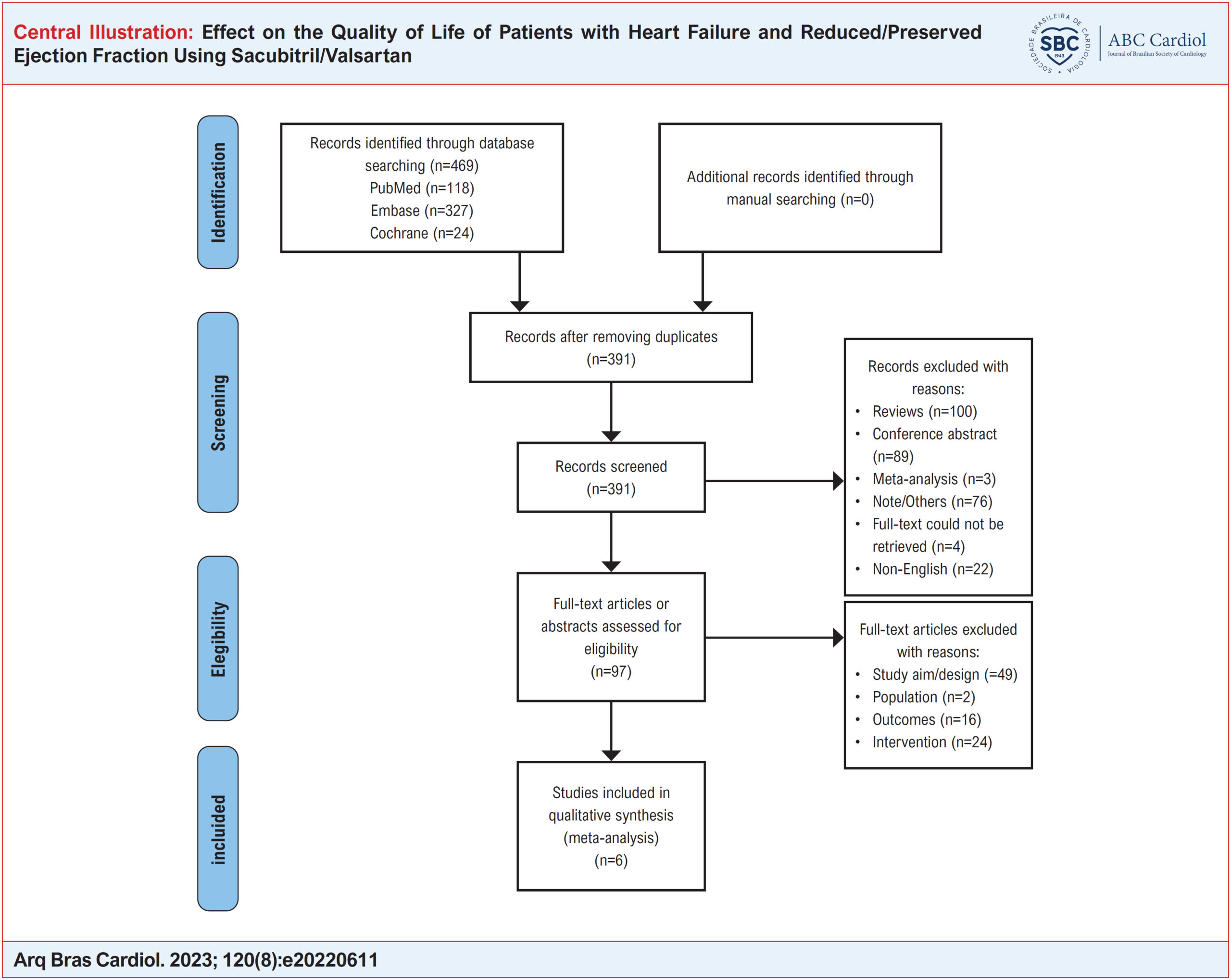
Effect on the Quality of Life of Patients with Heart Failure and Reduced/Preserved Ejection Fraction Using Sacubitril/Valsartan
Original Article

Effect on the Quality of Life of Patients with Heart Failure and Reduced/Preserved Ejection Fraction Using Sacubitril/Valsartan

Yuanrui Huang et al. Xu Wu Xingyu Li Zhengzhong Liu Yunyi Li

Abstract

Background:

Heart failure (HF) management has markedly improved, but a clinically meaningful improvement in functional capacity and quality of life is perhaps more important for patients than living longer.

Objective:

This study aimed to review the improvement in quality of life with sacubitril/valsartan in patients with HF and reduced/preserved ejection fraction (EF) from prospective clinical trials.

Methods:

PubMed, Embase, and the Cochrane Library were searched for randomized controlled trials (RCTs) and prospective cohort studies published from inception to July 2021. A total of 6 clinical trials and 16854 patients with HF were included. The primary outcome was the change from baseline in KCCQ clinical summary score. The secondary outcomes were scores in other domains of KCCQ, the occurrence of serious adverse events (AEs), and overall mortality. P-values <0.05 were considered statistically significant.

Results:

Treatment of sacubitril/valsartan showed significantly higher KCCQ-CSS compared to the control (WMD=0.975, 95% CI: 0.885, 1.064, p<0.001; I2=94.8%, pheterogeneity<0.001). A significant decrease in the mortality rate was observed in the sacubitril/valsartan group compared to the control group (RR=0.895, 95%CI:0.831, 0.965, p=0.004; I2=43.6%, pheterogeneity=0.150). Nevertheless, no significant reduction in the occurrence of serious AEs was found among HF patients treated with sacubitril/valsartan compared to the control group (RR=0.950, 95%CI: 0.879, 1.027, p<0.001; I2=68.1%, pheterogeneity=0.024).

Conclusions:

Our study demonstrated that sacubitril/valsartan might significantly improve the HRQL compared to other treatments according to the results in KCCQ-CSS and some subdomains in the KCCQ index during the follow-up in patients with HF.

  • Heart Failure
  • Meta-Analysis
  • Quality of life
  • Valsartan
Read Full Article
Creative Commons Attribution (CC BY) Creative Commons license
10/11/2023 DOI: 10.36660/abc.20220611 Views 1
Figure 1
Editorial

In-Hospital Worsening Heart Failure: Can We Predict It At Admission?

Humberto Villacorta

Acute decompensated heart failure (ADHF) is a risk marker in the patient’s heart failure (HF) journey. It may be the initial presentation (de novo HF) or an acute exacerbation of chronic HF. Most patients with ADHF present to the emergency department (ED) with congestion and usually respond well to treatment with diuretics. However, some high-risk patients may have a complicated course during hospitalization, including in-hospital worsening HF (WHF), defined as persistent or worsening signs and symptoms requiring an escalation in therapy. Identifying such patients is important since they are at greater risk of in-hospital and post-discharge events.,

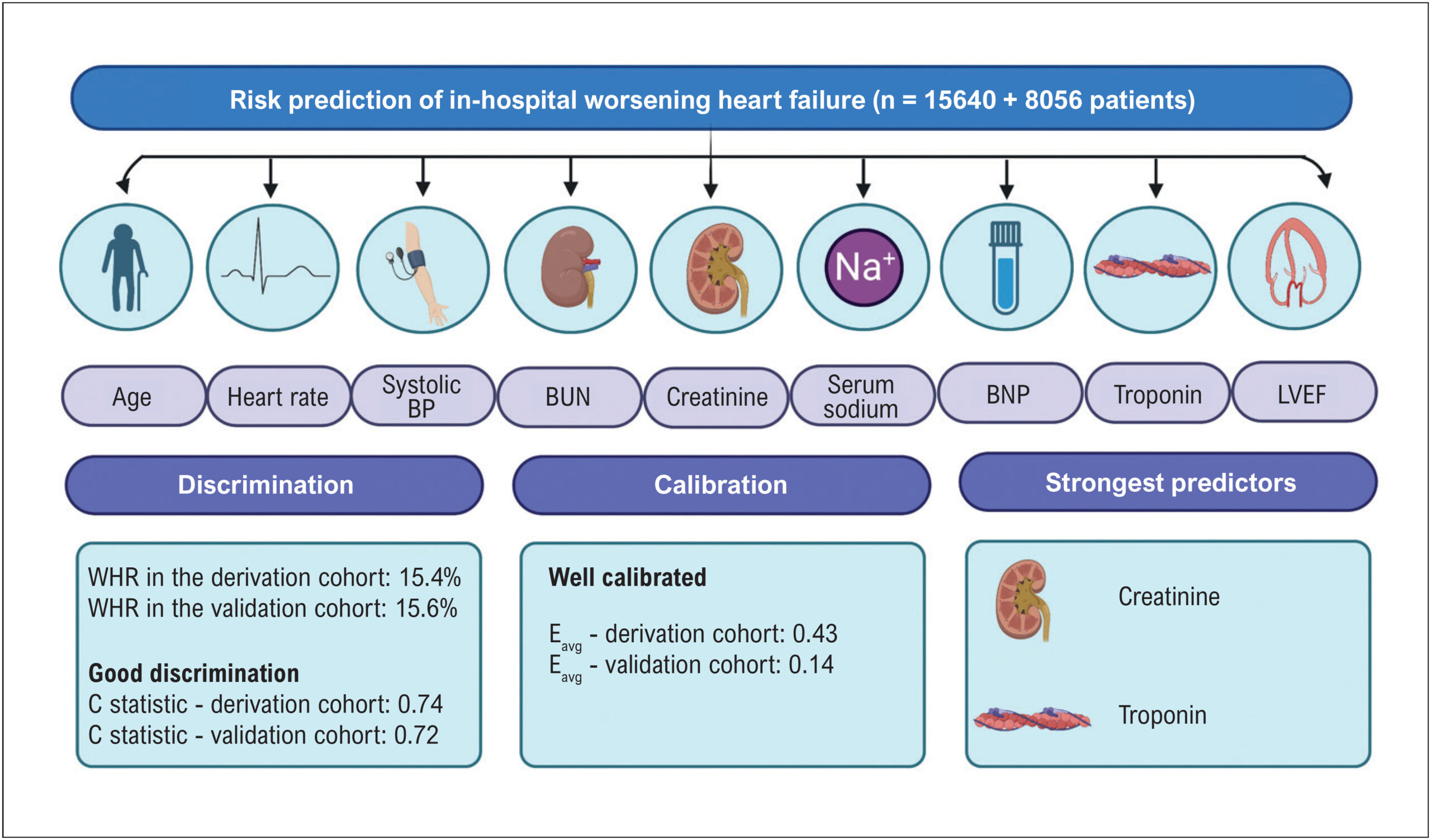
In the early 2000s, ADHF began to attract the attention of many researchers in the field of HF. In that period, a large registry of patients with ADHF – the ADHERE Registry – was set up in the United States of America. The ADHERE Registry gave enormous contributions to the field of ADHF. They taught us about these patients’ clinical characteristics and outcomes, but more importantly, they created prediction rules for patients admitted with ADHF. They initially reported a regression tree analysis, using three simple variables to predict in-hospital mortality – blood urea nitrogen (BUN), creatinine, and systolic blood pressure. Two years later, they reported the value of B-type natriuretic peptide (BNP) in predicting in-hospital mortality. In 2016 they developed and validated a model to predict in-hospital WHF, which included clinical variables (age, heart rate, systolic blood pressure), laboratory tests (BUN, creatinine, serum sodium), biomarkers (BNP and troponin), and the left ventricle ejection fraction (LVEF). Their model had good discrimination, with c-statistics of 0.74 and 0.72 for the derivation and validation cohorts, respectively, as shown in . Nevertheless, discrimination was modest in the external validation cohort (ASCEND-HF study) (c-statistic 0.63).

[…]

  • Heart Decompensation
  • Heart Failure
  • patient admission
  • Prognosis
  • Risk Factors
Read Full Article
Creative Commons Attribution (CC BY) Creative Commons license
10/11/2023 DOI: 10.36660/abc.20230525 Views 1
Editorial

Unfolding Type B Aortic Dissection Controversies – Piecing Together the Evidence

Walter J. Gomes et al. Eduardo N. Gomes Nelson A. Hossne Jr.

Unlike type A aortic dissection, many aspects of the natural history of type B aortic dissection (TBAD) remain blurred and unsettled, leading to uncertainties in its prognosis, recommendations, and management., Among the critical factors impacting TBAD outcomes, the thrombosis of the false lumen seems to be an associated finding exhibiting a robust correlation with late prognosis and conveying significant clinical implications. In addition to being a critical prognostic indicator for TBAD patients, the presence or absence of false lumen thrombosis has been employed to guide treatment decisions, affecting the choice of therapeutic interventions, the thoracic endovascular aortic repair (TEVAR) and adjusting post-treatment follow-up.

In this way, Tang et al. report an interesting aspect of the correlation between imaging and clinics in this issue. Analyzing a large cohort of consecutive patients with TBAD, they investigated the factors affecting false lumen thrombosis in patients with TBAD, focusing on understanding the role of aortic morphology in the thrombosis of the false lumen. Computed tomographic angiography images were used for measurements. Specialized software reconstructed three-dimensional models of aortic dissection, and measurements of true and false lumen diameters were performed at different zones of the aorta. The incidence of thrombotic false lumen was higher in older patients with normal renal function than in younger patients or those with compromised kidney function.

[…]

  • Aneurysm, Dissecting/surgery
  • Aortic Disease/complications
  • Aortic Remodeling
  • Endovascular Procedures
Read Full Article
Creative Commons Attribution (CC BY) Creative Commons license
10/11/2023 DOI: 10.36660/abc.20230550
Figure 1
Original Article

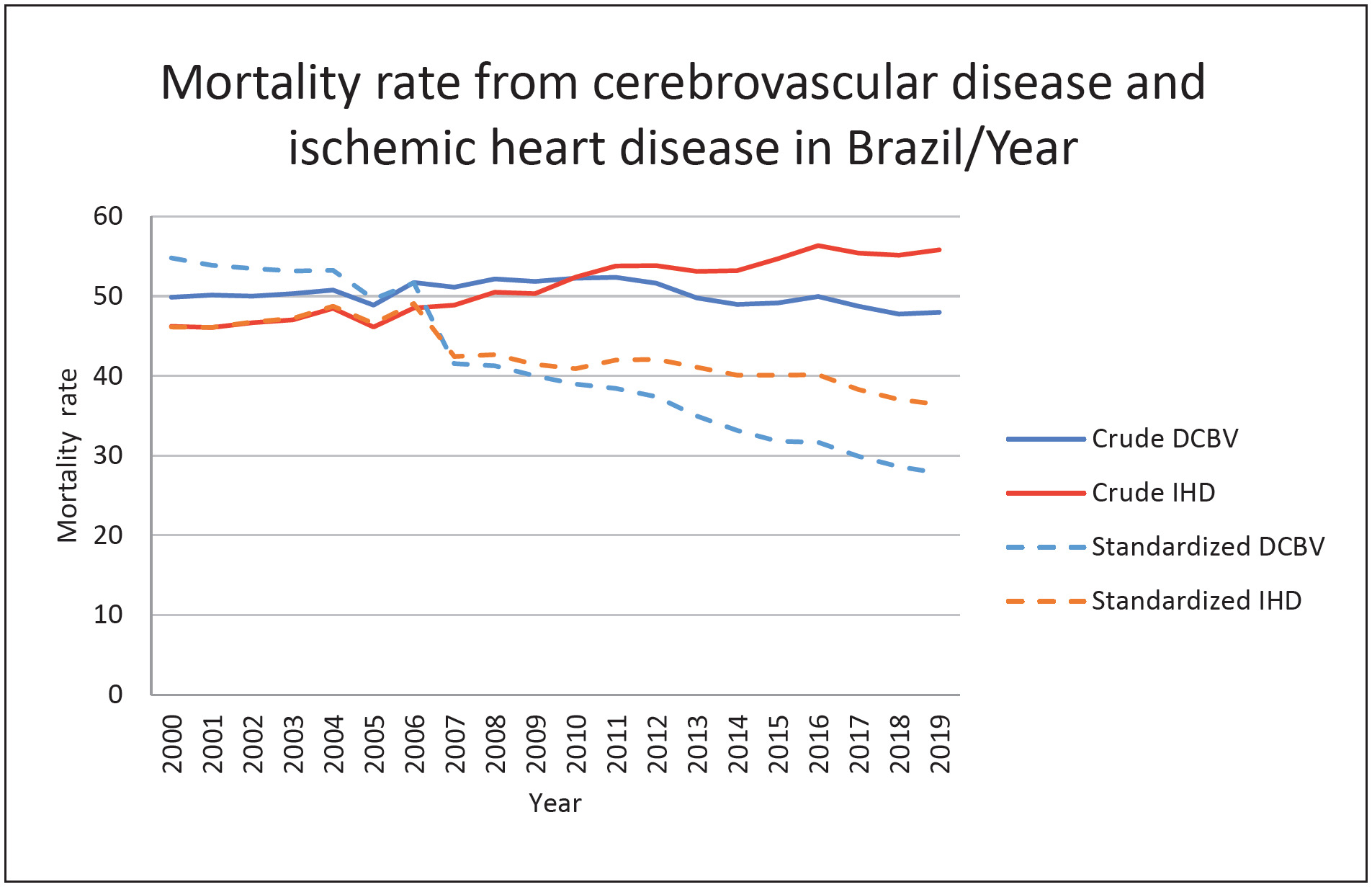
Socioeconomic Indicators and Mortality from Ischemic Heart Disease and Cerebrovascular Disease in Brazil from 2000 to 2019

José Lucas Bichara et al. Luiz Antônio Bastos Paolo Blanco Villela Gláucia Maria Moraes de Oliveira

Abstract

Background:

Previous studies have identified inequalities in the variation of mortality rates from ischemic heart disease (IHD) and cerebrovascular disease (CBVD) when comparing regions with different levels of socioeconomic development indicators.

Objective:

To analyze the variation in IHD and CBVD mortality rates and economic development, evaluated by the sociodemographic index (SDI) and social vulnerability index (SVI) in Brazil over a period of 20 years.

Methods:

Ecological study of time series of crude and standardized mortality rates (direct method, based on the Brazilian population in year 2000) from IHD and CBVD by sex and Federative Unit (FU) between 2000 and 2019, compared using the SDI and SVI.

Results:

There was an improvement in SDI and SVI concomitantly to a reduction in age-standardized mortality rate from IHD and CBVD in the country; however, this occurred unevenly across the FUs. The FUs with the best socioeconomic indicators had the greatest reduction in mortality rates.

Discussion:

The variations in mortality rates from IHD and CBVD, compared using variations in socioeconomic development, are aligned with those from previous studies, but the present study goes further by including the indicators SDI and SVI in the comparison. The limitations include the observational nature of the study, the use of databases, and the vulnerability to ecological bias.

Conclusion:

The observed data raise the hypothesis that the improvement in socioeconomic conditions is one of the factors responsible for the reduction in mortality rates from IHD and CBVD.

  • Cardiovascular disease
  • Cerebrovascular Disorders
  • Epidemiology
  • Myocardial Ischemia
Read Full Article
Creative Commons Attribution (CC BY) Creative Commons license
10/11/2023 DOI: 10.36660/abc.20220832 Views 1
Editorial

Is There a Relationship Between Acute Myocarditis and Intestinal Permeability? Two Biomarkers Help Us Answer this Question

Fernando Arturo Effio Solis et al. Adriana Brentegani Marcelo Luiz Campos Vieira

Myocarditis is an inflammatory heart disease triggered by the action of infectious agents or toxins, which lead to myocyte damage by direct action or by exacerbated activation of the immune system. It can culminate in cardiac dilation, drop in ejection fraction, arrhythmias, or even sudden death. We call “acute myocarditis,” the clinical condition that begins less than 30 days ago. According to recent records, acute myocarditis is more prevalent in young adults, mainly women, and its cause is predominantly infectious, with enterovirus, coxsackie virus, parvovirus B19, and, more recently, the COVID-19 virus as examples of viral etiological agentes., Enteropathogenic bacteria such as Salmonella, Shigella, and Campylobacter are also some of the main causes of myocarditis identified in case series. Zonulin is a protein that modulates intestinal permeability. Its expression leads to the weakening of occlusion junctions present in intestinal epithelial cells. This expression is stimulated by certain enteropathogens, facilitating the translocation of agents and toxins into the body,, leading to a state of endotoxemia. Presepsin is considered a reliable marker of low-grade endotoxemia and an indirect marker of increased intestinal permeability.,

In this observational cross-sectional study, researchers evaluated the possible relationship between intestinal permeability and acute myocarditis by analyzing serum levels of zonulin and presepsin in patients with acute myocarditis compared to individuals without the disease. Acute myocarditis was defined based on clinical history and laboratory elevation of biomarkers such as CK-MB and troponin-I. A total of 138 consecutive individuals were observed, 68 with acute myocarditis and 70 in the control group, with no difference in basic demographic characteristics between groups. C-reactive protein (CRP) levels, fibrinogen, peak CK-MB and peak troponin-I were significantly higher in the myocarditis group than in the control group. It is also interesting to mention that the group of patients with myocarditis had a significantly higher history of COVID-19 or vaccination against COVID-19 in the last six months compared to the control group. The researchers found that zonulin and presepsin levels were statistically higher in the group of patients with myocarditis (p<0.001). Even patients with higher levels of zonulin had lower left ventricular ejection fraction, higher arrhythmia rates, and greater gastrointestinal complaints. It was also observed that zonulin levels are positively related to presepsin (r=0.461), CK-MB peak (r=0.744), and troponin peak (r=0.627); such results show that zonulin and presepsin levels are positively associated with the severity of cardiac injury, as measured by CK MB and troponin markers. In multivariate binary logistic regression analysis, presepsin and zonulin were identified as independent predictors of the disease. Analysis of the ROC curve was performed, showing that the predictive values for acute myocarditis of zonulin and presepsin were statistically significant (p < 0.001, for both).

[…]

  • Biomarkers
  • Intestinal Permeability
  • Myocarditis
  • Preserpsin
  • Zonulin
Read Full Article
Creative Commons Attribution (CC BY) Creative Commons license
10/11/2023 DOI: 10.36660/abc.20230493
Editorial

Saturated Fatty Acids and Implications for Cardiovascular Disease

Matheus Augusto Callegari et al. Ricardo Luiz Damatto Priscila Portugal dos Santos

Cardiovascular diseases (CVD) are the leading cause of mortality, accounting for 17.9 million deaths in 2019, 32% of all global deaths. It is important to detect CVD early to start treatment. For this, there are several standard risk factors in CVD prediction, but interest in finding more sensitive and accurate biomarkers is intense. Gonçalinho et al. propose that the use of inflammation and endothelial dysfunction biomarkers may reflect CVD and predict worse prognosis, regardless of traditional risk factors. Most CVDs can be prevented by addressing behavioral risk factors like diet. Dietary fat intake is one of the major modifiable risk factors implicated in the causation of CVD. Gonçalinho et al. showed that stearic acid (SA) is associated with inflammatory biomarkers and endothelial dysfunction in individuals at cardiovascular risk.

To study the association of fatty acids (FA) with cardiovascular risk factors, Gonçalinho et al. used FA from membrane phospholipids of red blood cells (RBC) as a biomarker of FA status. This analysis has been used since these FAs can be incorporated from the serum lipoproteins. Additionally, it offers an advantage over analysis of plasma because RBC last on average 120 days compared to 3 weeks for plasma lipids, reflecting better long-term dietary FA intake. However, it is important to highlight that the cost of preparing RBC exceeds the plasmatic method and that there are different analytical strategies., Therefore, for FA from RBC membrane phospholipids to become a biomarker of the nutritional status of dietary FA in clinical practice, there remains a need for investigations of cost-effectiveness and method standardization.

[…]

  • Fatty Acids
  • Heart Disease Risk Factors
  • Lipoproteins
  • Palmitic Acid
  • Stearic Acids
Read Full Article
Creative Commons Attribution (CC BY) Creative Commons license
30/10/2023 DOI: 10.36660/abc.20230612 Views 1
Editorial

We Need to Talk about Social Determinants of Cardiovascular Health

Humberto Graner Moreira

In addition to traditional biological risk factors, several social determinants play a significant role in cardiovascular risk. The Social Determinants of Health (SDH) refer to the social, economic, cultural, ethnic, educational, and environmental conditions in which people live and how these conditions impact health. These determinants can encompass factors such as income, working conditions, access to health services, education, housing, transportation, support networks, and others.,

The relationship between socioeconomic factors and health began to be observed during the Industrial Revolution in Europe. One of the pioneers in this field was Rudolf Virchow, a German physician, and politician who, in the mid-nineteenth century, highlighted the impact of social conditions on health. He emphasized that addressing issues such as education, housing, and work was necessary to improve the population’s health. It is from Virchow the phrase “medicine is a social science, and politics is nothing but medicine on a large scale”.

[…]

  • Cardiovascular Diseases/complications
  • Community Health Services
  • Health Statistics
  • Mortality
  • Risk Factors
  • Socioeconomics Factors
Read Full Article
Creative Commons Attribution (CC BY) Creative Commons license
27/10/2023 DOI: 10.36660/abc.20230569 Views 1
Editorial

T-Wave Microalternans in Hypertrophic Cardiomyopathy: The Complexity of an Inherited Cardiac Condition with Multiple Phenotypic Expressions

Jorge Elias Neto

The fact that ventricular tachyarrhythmia is the most frequent cause of sudden cardiac death (SCD) in cardiomyopathies (CM) does not mean that all CM exhibit similar structural and functional alterations that, identified in advance, for example, by analyzing changes in ventricular depolarization and repolarization, may collaborate in the primary prevention of SCD.

In the current edition of ABC Cardiol, Antunes et al. reveals that altered T-wave alternans (TWA) is not associated with SCD and/or malignant ventricular arrhythmias in hypertrophic cardiomyopathy (HCM) patients. This suggests that diagnostic methods used for non-ischemic cardiomyopathies (NICM). stratification may not universally apply across a heterogeneous set of pathologies.

[…]

  • Arritmias Cardíacas
  • Cardiomiopatia Hipertrófica
  • Desfibriladores Implantáveis
  • Morte Súbita
Read Full Article
Creative Commons Attribution (CC BY) Creative Commons license
27/10/2023 DOI: 10.36660/abc.20230615
Editorial

Sacubitril/Valsartan: A Breakthrough in Heart Failure Management – Addressing Quality of Life and Mortality

Allan K. N. Alencar

Heart failure (HF) remains a major global cause of mortality, morbidity, and hospitalizations. Over the past two decades, the management of chronic HF has seen significant improvements with the introduction of novel diagnostic procedures and pharmacological therapies. However, achieving a clinically significant improvement in functional capacity and quality of life (QoL) might be more important to patients than simply prolonging life. HF negatively affects health-related quality of life (HRQoL) in physical, mental, and social domains. Consequently, HF patients experience impaired QoL even when compared to individuals with other debilitating chronic conditions. In contemporary times, many HF patients value the enhancement of HRQoL through treatment as highly as extending their lifespan.

This editorial discusses the findings of a recently published work that aims to review the improvement in quality of life with sacubitril/valsartan in HF patients with reduced or preserved ejection fraction (HFrEF/HFpEF) based on prospective clinical trials. The authors conducted a systematic literature search in PubMed, Embase, and the Cochrane Library for randomized clinical trials (RCTs) and prospective cohort studies published until July 2021. A total of six clinical trials and 16,854 HF patients were included in the analysis. The primary outcome was the change from baseline in the Kansas City Cardiomyopathy Questionnaire-Clinical Summary Score (KCCQ-CSS). Secondary outcomes included scores in other domains of the KCCQ, occurrence of serious adverse events (SAEs), and overall mortality.

[…]

  • Heart Failure
  • Meta-Analysis
  • Mortality
  • Quality of life
  • Sacubitril/Valsartan/drug therapy
  • systematic review
Read Full Article
Creative Commons Attribution (CC BY) Creative Commons license
25/09/2023 DOI: 10.36660/abc.20230530
Editorial

Empowering the Imagers with 3D-Speckle Tracking Echocardiography to Detect Subclinical Cancer Therapy-Related Myocardial Dysfunction

Jennifer Mancio

Despite the expansion of the cardio-oncology field, defining cardiotoxicity to guide therapeutic decisions and impact prognosis is still a work in progress. The most widely recognized diagnosis of cardiotoxicity is based on serial changes in the left ventricular ejection fraction (LVEF). The ESC Position Paper recommends that if LVEF decreases by 10% to a value below the lower limit of normal (considered as an LVEF >50%), angiotensin-converting enzyme inhibitors (or angiotensin receptor blockers) in combination with beta-blockers are recommended to prevent further left ventricular (LV) dysfunction or the development of symptomatic heart failure. However, different LVEF thresholds have been proposed by different authors and guidelines,, and the 2-dimensional (2D)-echocardiography LVEF depends on loading conditions (fluid status varies significantly in cancer patients), has low sensitivity for detecting small LV function changes, is subject to intra- and interobserver variability and relies on geometrical assumptions. Hence, due to the limited availability of cardiac magnetic resonance imaging, 3D echocardiography is the preferred technique for monitoring cardiotoxicity in oncological patients, and the 3D-LVEF is the method of choice for cardiotoxicity surveillance.

Because any grade of cancer therapy-induced myocardial dysfunction matters, a growing body of literature has explored the role of myocardial deformation analysis in patients receiving cancer therapy for early detection of myocardial damage before LVEF starts declining. Speckle-tracking echocardiography (STE) allows quantitative assessment of global and segmental LV myocardial function by measuring strain in a manner largely independent of angle and ventricular geometry. Compared with 2D-strain, 3D-strain has the advantage of tracking the speckle patterns in any direction and out-of-the imaging plane, offering additional deformation parameters (such as area strain) and a more comprehensive quantitation of LV geometry and function.,

[…]

  • Cardiotoxicity
  • Left Ventricular Function
  • Myocardial deformation
  • Myocardium/diagnosis imaging
  • Tridensional Echocardiography/methods
Read Full Article
Creative Commons Attribution (CC BY) Creative Commons license
25/09/2023 DOI: 10.36660/abc.20230554 Views 1
Figure 1
Image

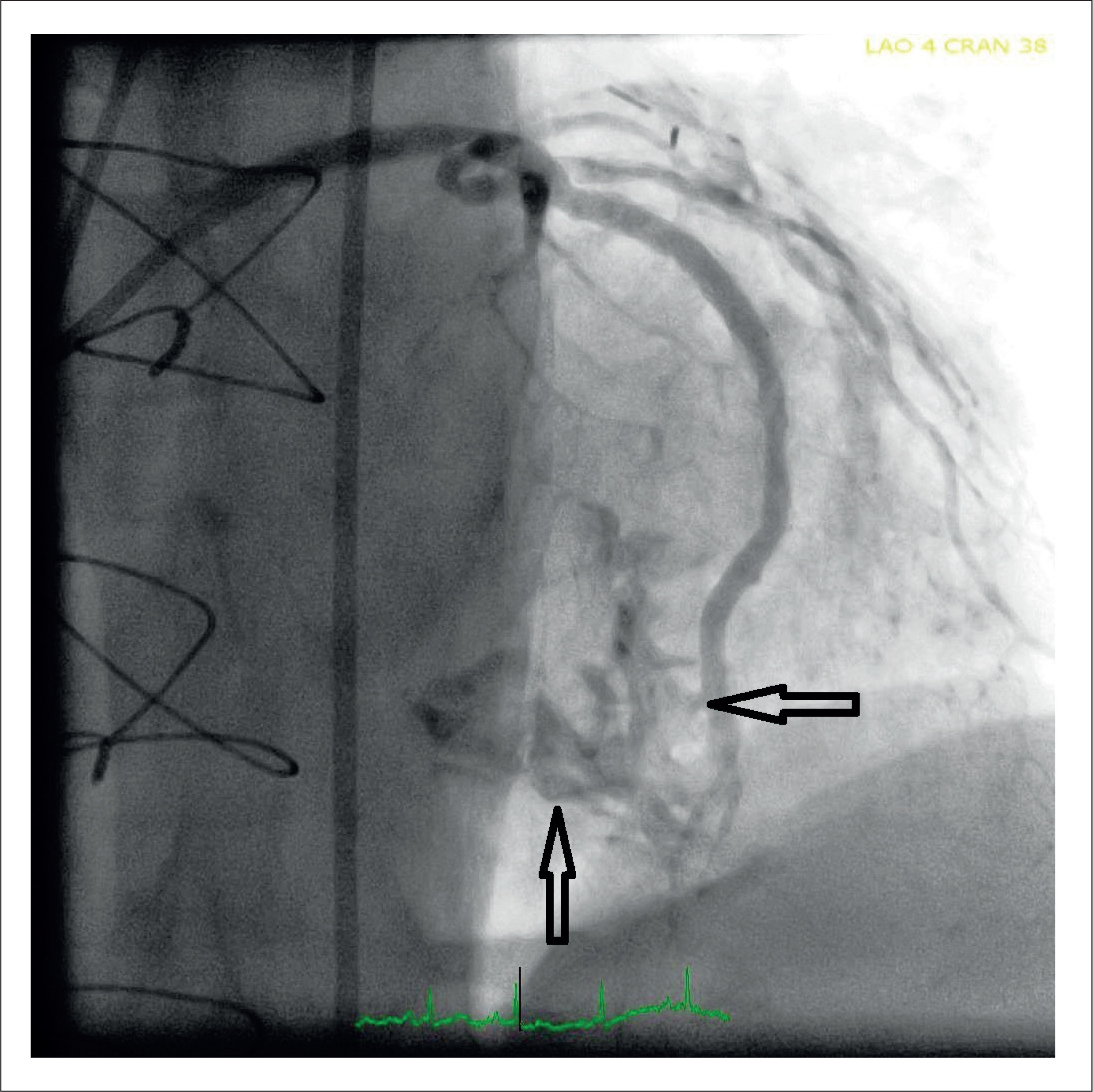
A Stent Misplaced in the Septal Perforating Artery: Right Ventricular Fistula, Interventricular Septal Hematoma, and Right Ventricular Outflow Tract Obstruction

Melik Demir et al. Murat Gök Muhammet Gürdoğan Osman Kula … Fethi Emre Ustabaşıoğlu Kenan Yalta

Abstract

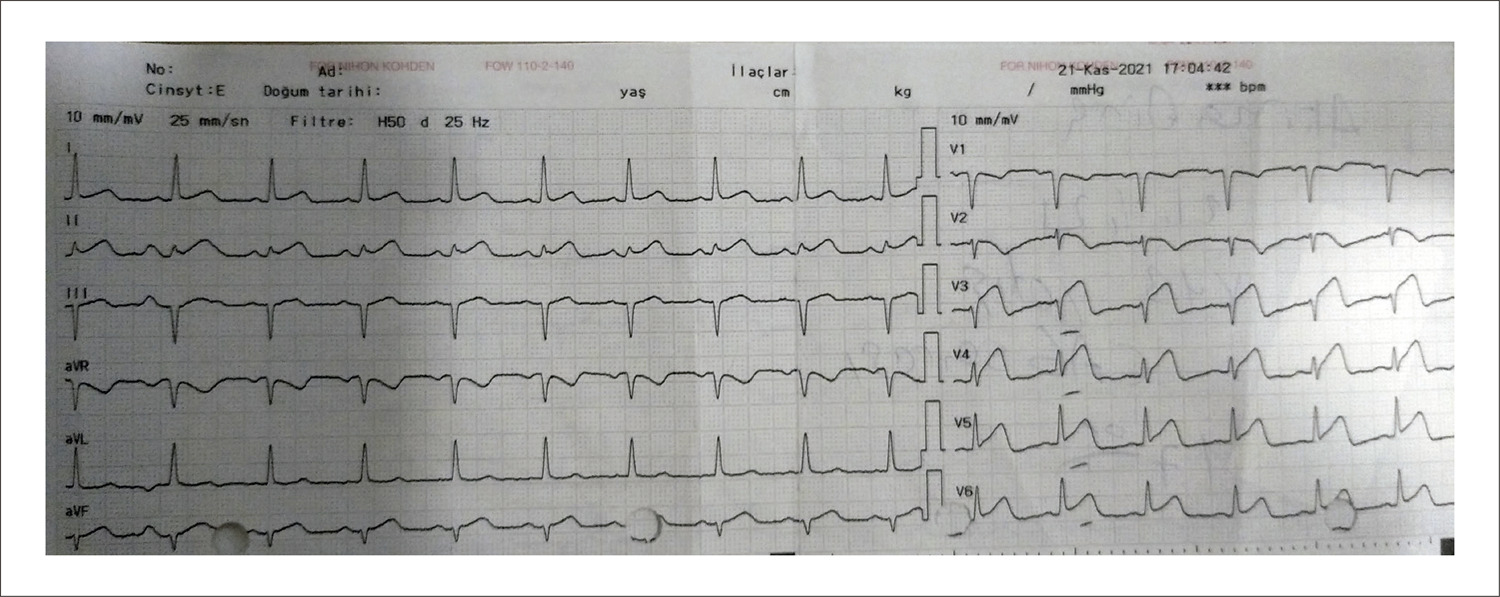
Coronary-cameral fistulas, though mostly regarded as congenital entities, have also been encountered as complications of major traumas and percutaneous coronary interventions (PCIs). On the other hand, interventricular septal (IVS) hematoma might potentially arise mostly during retrograde chronic total occlusion (CTO) interventions and has a benign course in this context. Herein, we describe a challenging PCI complication (and its management strategy) presenting with IVS hematoma, right ventricular fistula, and right ventricular outflow tract (RVOT) obstruction due to a misimplanted coronary stent in the septal perforating artery (SPA).

  • Embolization Therapeutc
  • Heart Septal Ventricular/complications
  • Propensity Score
  • Stents
  • Vascular Foistula
  • Ventricular Outflow Obstruction
Read Full Article
Creative Commons Attribution (CC BY) Creative Commons license
04/09/2023 DOI: 10.36660/abc.20220901
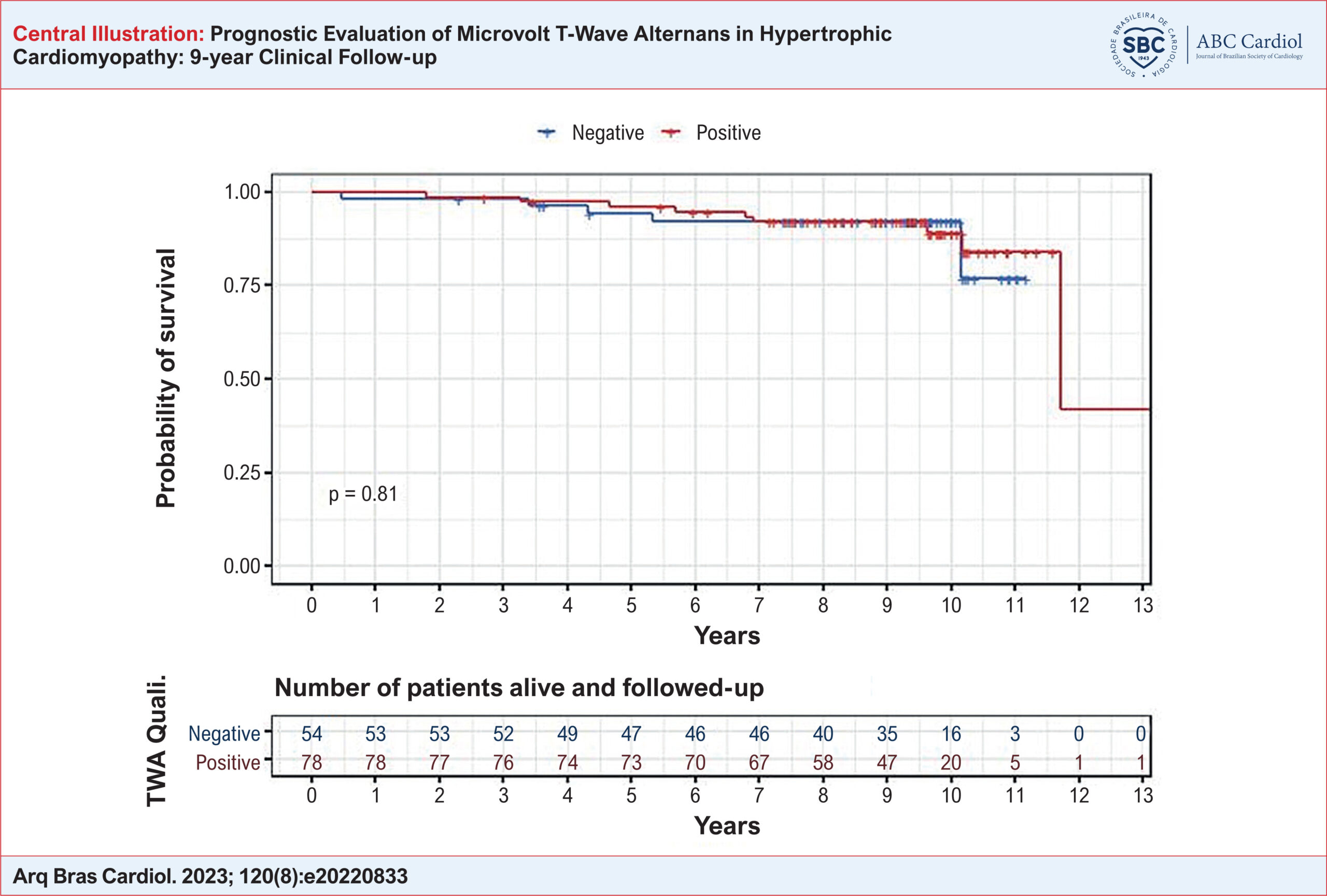
Prognostic Evaluation of Microvolt T-Wave Alternans in Hypertrophic Cardiomyopathy: 9-year Clinical Follow-up
Original Article

Prognostic Evaluation of Microvolt T-Wave Alternans in Hypertrophic Cardiomyopathy: 9-year Clinical Follow-up

Murillo Oliveira Antunes et al. Edmundo Arteaga-Fernandez Nelson Samesima Horácio Gomes Pereira Filho … Afonso Yoshikiro Matsumoto Richard L. Verrier Carlos Alberto Pastore Charles Mady

Abstract

Background:

Sudden cardiac death (SCD) resulting from ventricular arrhythmia is the main complication of hypertrophic cardiomyopathy (HCM). Microvolt T-wave alternans (MTWA) is associated with the occurrence of ventricular arrhythmias in several heart diseases, but its role in HCM remains uncertain.

Objective:

To evaluate the association of MTWA with the occurrence of SCD or potentially fatal ventricular arrhythmias in HCM patients in a long-term follow-up.

Methods:

Patients diagnosed with HCM and NYHA functional class I-II were consecutively selected. At the beginning of the follow-up, the participants performed the MTWA evaluation using the modified moving average during the stress test. The results were classified as altered or normal. The composite endpoint of SCD, ventricular fibrillation, sustained ventricular tachycardia (SVT) or appropriate implantable cardiac defibrillation (ICD) therapy was assessed. The level of significance was set at 5%.

Results:

A total of 132 patients (mean age of 39.5 ± 12.6 years) were recruited and followed for a mean of 9.5 years. The MTWA test was altered in 74 (56%) participants and normal in 58 (44%). Nine events (6.8%) occurred during the follow-up, with a prevalence of 1.0%/year – six SCDs, two appropriate ICD shocks and one episode of (SVT). Altered MTWA was associated with non-sustained ventricular tachycardia on Holter (p = 0.016), septal thickness ≥30 mm (p < 0.001) and inadequate blood pressure response to effort (p = 0.046). Five patients with altered MTWA (7%) and four patients with normal MTWA (7%) had the primary outcome [OR = 0.85 (95% CI: 0.21 – 3.35, p=0.83)]. Kaplan-Meir event curves showed no differences between normal and altered MTWA.

Conclusion:

Altered MTWA was not associated with the occurrence of SCD or potentially fatal ventricular arrhythmias in HCM patients, and the low rate of these events during long-term follow-up suggests the good prognosis of this heart disease.

  • Arrhythmias Cardiac
  • Cardiomyopathy, Hypertrophic
  • Death, Sudden
  • Defibrillators, Implantable
Read Full Article
Creative Commons Attribution (CC BY) Creative Commons license
04/09/2023 DOI: 10.36660/abc.20220833 Views 1
Central Illustration
Original Article

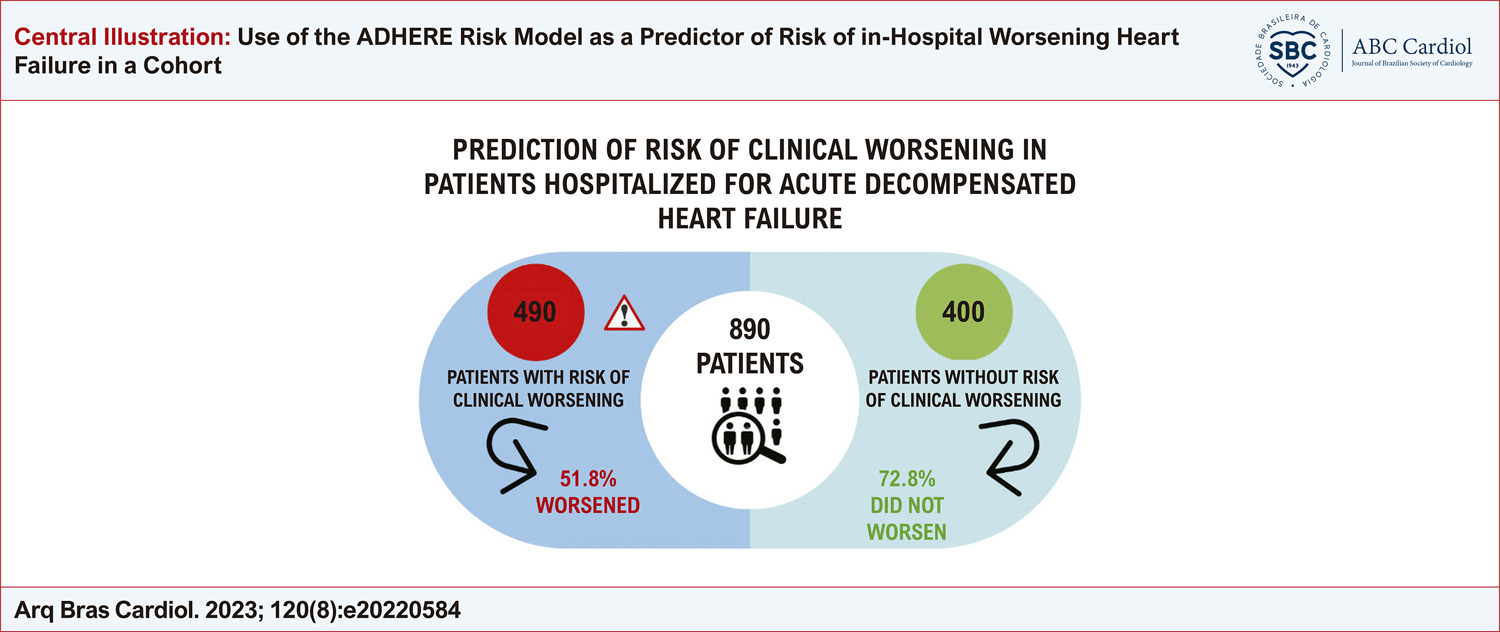
Use of the ADHERE Risk Model as a Predictor of Risk of in-Hospital Worsening Heart Failure in a Cohort

Daniela de Souza Bernardes et al. Marina Scherer Santos Vanessa Monteiro Mantovani Omar Pereira de Almeida Neto … Livia Adams Goldraich Nadine Clausell Eneida Rejane Rabelo-Silva

Abstract

Background

Patients admitted with acute decompensated heart failure (HF) are subject to developing worsening episodes that require more complex interventions. The Acute Decompensated Heart Failure National Registry (ADHERE) risk model was developed in the United States to predict the risk of in-hospital worsening HF.

Objective

To use the ADHERE risk model in the assessment of risk of in-hospital worsening HF and to determine its sensitivity and specificity in hospitalized patients.

Methods

This cohort study was conducted at a Brazilian public university hospital, and data from 2013 to 2020 were retrospectively collected. P values < 0.05 were considered statistically significant.

Results

A total of 890 patients with a mean age of 74 ± 8 years were included. The model showed that, in the group of 490 patients at risk, 254 (51.8%) developed in-hospital worsening HF. In the group of 400 patients not at risk, only 109 (27.2%) experienced worsening HF. The results demonstrated a statistically significant curve (area under the curve = 0.665; standard error = 0.018; P < 0.01; confidence interval = 0.609 to 0.701), indicating good accuracy. The model had a sensitivity of 69.9% and a specificity of 55.2%, with a positive predictive value of 52% and a negative predictive value of 72.7%.

Conclusions

In this cohort, we showed that the ADHERE risk model was able to discriminate patients who in fact developed worsening HF during the admission period, from those who did not.

  • Heart Failure
  • Hospitalization
  • Risk Groups
Read Full Article
Creative Commons Attribution (CC BY) Creative Commons license
01/09/2023 DOI: 10.36660/abc.20220584 Views 2
Figure 1
Original Article

Brazilian Registry of Interventional Cardiology during the COVID-19 Pandemic (RBCI-COVID19)

Viviana Guzzo Lemke et al. Maria Sanali Souza Paiva Giordana Zeferino Mariano Thales Siqueira Alves … Esmeralci Ferreira Leonardo Avany Nunes Flavio Roberto Azevedo Oliveira Rodrigo Cantarelli Emilia Matos do Nascimento Gláucia Maria Moraes de Oliveira

Abstract

Background

At the beginning of the COVID-19 pandemic, patients with myocardial infarction (MI) took longer to present to hospitals because of fear of contamination and health care access difficulties.

Objectives

To assess interventional cardiology procedures performed during the COVID-19 pandemic and its implications for MI approach.

Methods

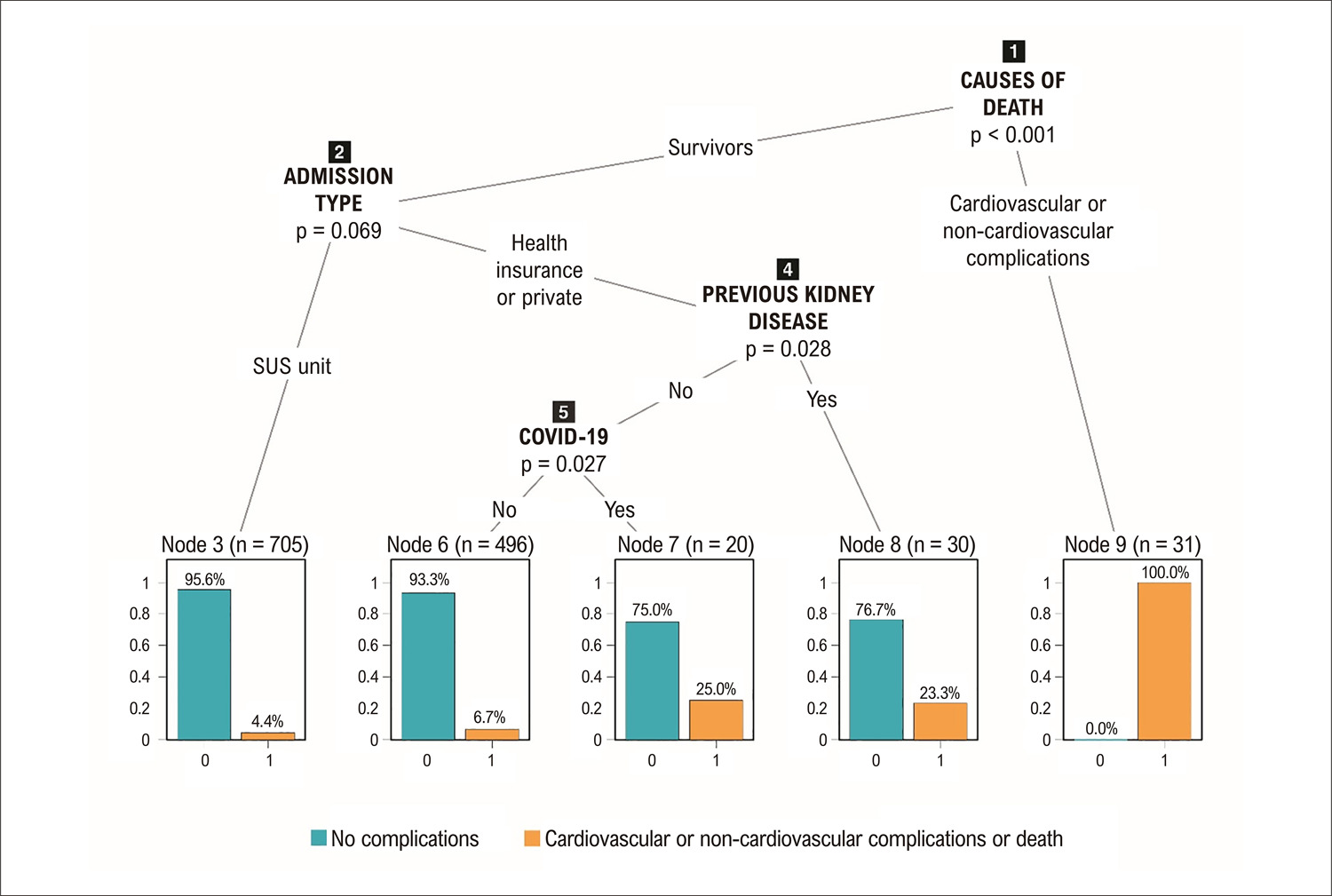
Prospective registry of 24 cardiac catheterization laboratories in Brazil, with adult patients undergoing interventional cardiology procedures between May 26 and November 30, 2020. The outcomes were cardiovascular (CV) and non-CV complications, death, and MI. Concomitant COVID-19 was confirmed using RT-PCR. Machine learning techniques were used with nonparametric Classification Trees models, and Simple Correspondence Analysis, with R statistical software package. Significance level adopted of 5%.

Results

This study included 1282 patients, 435 of whom (33.9%) had MI as follows: ST-segment elevation MI (STEMI), 239 (54.9%); and non-ST-segment elevation MI (NSTEMI), 196 (45.1%). Of the 1282 patients, 29 had CV complications, 47 had non-CV complications, and 31 died. The diagnosis of COVID-19 was confirmed in 77 patients (6%), with 15.58% mortality and non-CV complications in 6.49%. Most patients had significant coronary artery disease (63%), and an intracoronary thrombus was more often found in the presence of STEMI (3.4%) and COVID-19 (4%). A door-to-table time longer than 12 hours in NSTEMI was associated with 30.8% of complications, 25% in COVID-19 patients.

Conclusions

All deaths were preceded by CV or non-CV complications. The presence of COVID-19 was associated with death and non-fatal complications of patients undergoing interventional cardiology procedures during the pandemic.

  • Coronary Angiography
  • Coronary Artery Disease
  • COVID-19
  • Myocardial Infarction
  • Percutaneous Coronary Intervention
Read Full Article
Creative Commons Attribution (CC BY) Creative Commons license
01/09/2023 DOI: 10.36660/abc.20220840 Views 2
Letter to the Editor

Clinical registries in Acute Myocardial Infarction

Miguel Alejandro Rodriguez-Ramos

Dear Editor

I appreciate the efforts of Alves et al.when they tried to evaluate all-cause in-hospital mortality in patients admitted for STEMI and NSTEMI in hospitals in Latin America and the Caribbean from 2000 onward, concluding that in-hospital mortality in low- and middle-income countries was high in comparison with rates reported in high-income countries and to improve these estimates, higher use of reperfusion therapy must be pursued.

[…]

  • Developing Countries
  • Medical Records
  • Myocardial Infarction
Read Full Article
Creative Commons Attribution (CC BY) Creative Commons license
01/09/2023 DOI: 10.36660/abc.20230066
Figure 1
Original Article

Stearic Acid, but not Palmitic Acid, is Associated with Inflammatory and Endothelial Dysfunction Biomarkers in Individuals at Cardiovascular Risk

Gustavo Henrique Ferreira Gonçalinho et al. Geni Rodrigues Sampaio Rosana Aparecida Manólio Soares-Freitas Nágila Raquel Teixeira Damasceno

Abstract

Background

Several studies have associated dietary saturated fatty acids (SFAs) with cardiovascular risk but there are still many controversies. Most of these studies have focused on the effects of palmitic acid on circulating lipids. Stearic acid usually shows a neutral effect on blood lipids, however, there is a lack of clinical studies assessing the link with inflammatory and endothelial dysfunction markers.

Objective

To evaluate the association of red blood cell (RBC) SFA (palmitic and stearic acids) with circulating inflammatory and endothelial dysfunction biomarkers.

Methods

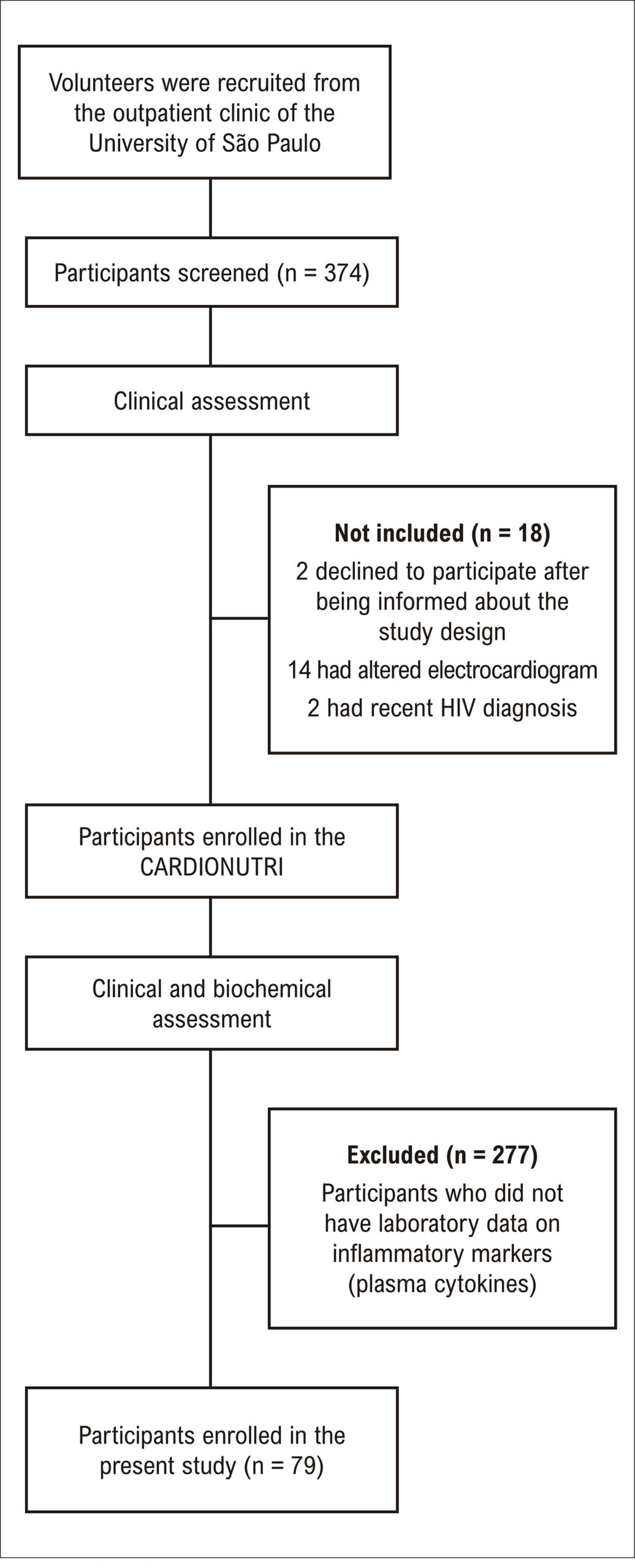
Cross-sectional study of 79 adults of both sexes with at least one cardiovascular risk factor but without previous events (acute myocardial infarction or stroke). Plasma biomarkers – lipids, glucometabolic markers, high-sensitivity C-reactive protein (hs-CRP), interleukin-6 (IL-6), interleukin-10 (IL-10), monocyte chemoattractant protein-1 (MCP-1), and tumor necrosis factor-α (TNF-α) – and RBC palmitic and stearic fatty acids were analyzed. The associations were assessed by correlation and multiple linear regression analyses, with statistical significance set at p < 0.05.

Results

Palmitic acid showed no significant associations with traditional cardiovascular risk factors or inflammatory markers. Stearic acid, on the other hand, was inversely correlated with blood cholesterol and triglycerides, but independently associated with hs-CRP, IL-6, and TNF-α.

Conclusion

Stearic acid is associated with inflammatory and endothelial dysfunction biomarkers in individuals with at least one cardiovascular risk factor.

  • Biomarkers
  • Cardiovascular Diseases
  • Endothelium
  • Fatty Acids
  • Inflammation
Read Full Article
Creative Commons Attribution (CC BY) Creative Commons license
01/09/2023 DOI: 10.36660/abc.20220598
Editorial

Influence of the Immune System on Cardiovascular Disease

Mariana Gatto et al. Gustavo Augusto Ferreira Mota Marina Politi Okoshi

The immune system reacts to stimuli such as foreign molecules and tissue damage. Inflammation is an innate physiological response of the organism to tissue injuries triggered by physical, chemical, and biological agents such as infection, trauma, toxin, and tissue necrosis. Once started, the process only ends with the elimination or neutralization of the aggressor agent and the regeneration of the damaged tissue.

The inflammatory process results from complex reactions triggered by molecular and biochemical events involving immune cells, connective tissue cells, inflammatory molecules, and blood vessels. , In acute inflammation, resident cells and immune cells present in the injured tissue release histamines, chemokines, interleukins (IL), and tumor necrosis factor-α (TNF-α) that increase vascular permeability allowing tissue infiltration of fluids and immune cells such as monocytes and neutrophils. Consequently, pathogens, necrotic cells, and cellular debris are eliminated. Finally, inflammatory pathways are inhibited with tissue repair or replacement by fibrosis.

[…]

  • Atherosclerosis / physiopathology
  • Heart Failure
  • Hipertension
  • Immune System
  • Mortality
  • Myocardial Infarction
Read Full Article
Creative Commons Attribution (CC BY) Creative Commons license
11/08/2023 DOI: 10.36660/abc.20230398 Views 2
Research Letter

Out of Sight, Out of Heart?

Costantino Roberto Costantini et al. Costantino Ortiz Costantini Sérgio Gustavo Tarbine Marcos Antonio Denk … Vinicius Shibata Ferrari Rafael Michel de Macedo

In December 1987, with over 300 experimental coronary implants performed in dogs and cadavers, Palmaz and Schatz, accompanied by Dr. Eduardo Sousa (Dante Pazzanese Cardiology Institute), performed the first human stent implantation in São Paulo, with a prosthesis developed by Palmaz himself.

However, the initial results of the first multicenter study on the subject were less than encouraging, as the device showed high rates of subacute occlusion (18%), despite the Palmaz stent presenting numerous favorable aspects of biocompatibility, mechanics, and hemodynamics.

[…]

  • Intracoronary Ultrasound
  • intravascular ultrasound
Read Full Article
Creative Commons Attribution (CC BY) Creative Commons license
11/08/2023 DOI: 10.36660/abc.20220765 Views 1
Central Illustration
Original Article

National Registry of Hypertension Control Evaluated by Office and Home Measurements: The LHAR National Registry

Roberto Dischinger Miranda et al. Andréa Araujo Brandão Weimar Kunz Sebba Barroso Marco Antonio Mota-Gomes … Eduardo Costa Duarte Barbosa Lucio Paulo Ribeiro Claudinelli Alvarenga Aguilar Fabio Serra Silveira Cristiano de Melo Rangel Gomes Abraham Epelman Annelise Machado Gomes de Paiva Audes Diógenes Magalhães Feitosa

Abstract

Background

It is known that around 30% of patients have higher blood pressure (BP) values when examined at the office than at home. Worldwide, only 35% of patients with hypertension undergoing treatment have reached their BP targets.

Objective

To provide epidemiological data on BP control in the offices of a sample of Brazilian cardiologists, considering office and home BP measurement.

Methods

This is a cross-sectional analysis of patients with a hypertension diagnosis and undergoing antihypertensive treatment, with controlled BP or not. BP was assayed in the office by a medical professional and at home using home BP monitoring (HBPM). The association between categorical variables was verified using the chi-square test (p<0.05).

Results

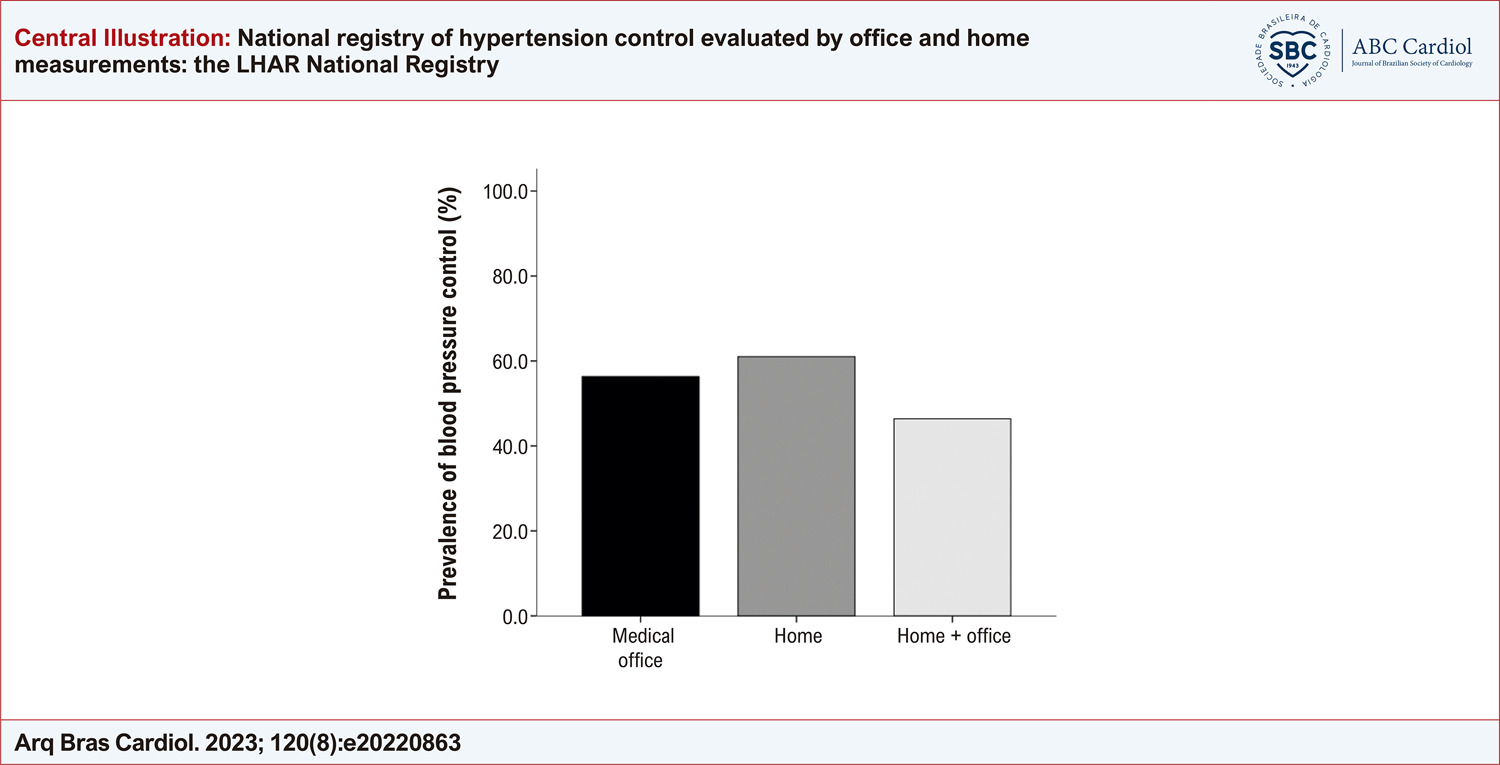
The study included 2540 patients, with a mean age of 59.7 ± 15.2 years. Most patients were women (62%; n=1575). Prevalence rates of 15% (n=382) for uncontrolled white coat hypertension and 10% (n=253) for uncontrolled masked hypertension were observed. The rate of BP control in the office was 56.3% and at home, 61%. Meanwhile, 46.4% of the patients had controlled BP in and outside of the office. Greater control was observed in women and in the 49-61 years age group. Considering the new DBHA 2020 threshold for home BP control, the control rate was 42.4%.

Conclusion

BP control in the offices of a sample of Brazilian cardiologists was 56.3%; this rate was 61% when BP was measured at home and 46.4% when considering both the office and home.

  • Blood Pressure
  • blood pressure control
  • Home blood pressure monitoring
  • Hypertension
Read Full Article
Creative Commons Attribution (CC BY) Creative Commons license
11/08/2023 DOI: 10.36660/abc.20220863 Views 4
Figure 1
Case Report

Could Acute Myeloid Leukemia Have Presented Even Worse? “Uncommon Cause of Concurrently Multivessel Thrombosis”

Kutluhan Eren Hazir et al. Ersin Cagri Simsek Esra Baldan Hakan Gökalp Uzun … Hale Bulbul Bengisu Yarci Elif Busra Ozcan

Abstract

Acute promyelocytic leukemia (APL) is a subgroup of acute myeloid leukemia (AML). Although it is known that hemorrhagic complications are common, thrombotic complications are not as rare as thought. However, myocardial infarction and ischemic stroke incidence are very rare during AML. Here, we present the astonishing case of APL diagnosed with pancytopenia in its presentation with acute myocardial infarction and ischemic stroke.

  • Cerebral Infarction
  • Leukemia, Promyelocytic, Acute
  • Myocardial Infarction
Read Full Article
Creative Commons Attribution (CC BY) Creative Commons license
11/08/2023 DOI: 10.36660/abc.20220808
Central Illustration
Original Article

Could Zonulin and Presepsin Be Biomarkers and Therapeutic Targets for Acute Myocarditis?

Kenan Toprak et al. Mehmet Inanır Tolga Memioğlu Mustafa Kaplangoray … Ali Palice Mustafa Begenc Tascanov

Abstract

Background

The diagnosis of acute myocarditis is usually made with clinical and laboratory parameters. This can sometimes be mixed up with diseases that have similar clinical features, making the diagnosis difficult. Therefore, the use of more specific biomarkers, in addition to the classically used biomarkers such as troponin, will accelerate the diagnosis. In addition, these biomarkers may help us to understand the mechanism of myocarditis development and thus predict unpredictable clinical outcomes.

Objective

This study aims to reveal the possible relationship between intestinal permeability and acute myocarditis.

Methods

In this study, we wanted to evaluate serum levels of zonulin and presepsin in 138 consecutive subjects, including 68 patients with myocarditis and another 70 as the control group, matched for age, gender, and cardiovascular risk factors. P-values <0.05 were considered to be statistically significant.

Results

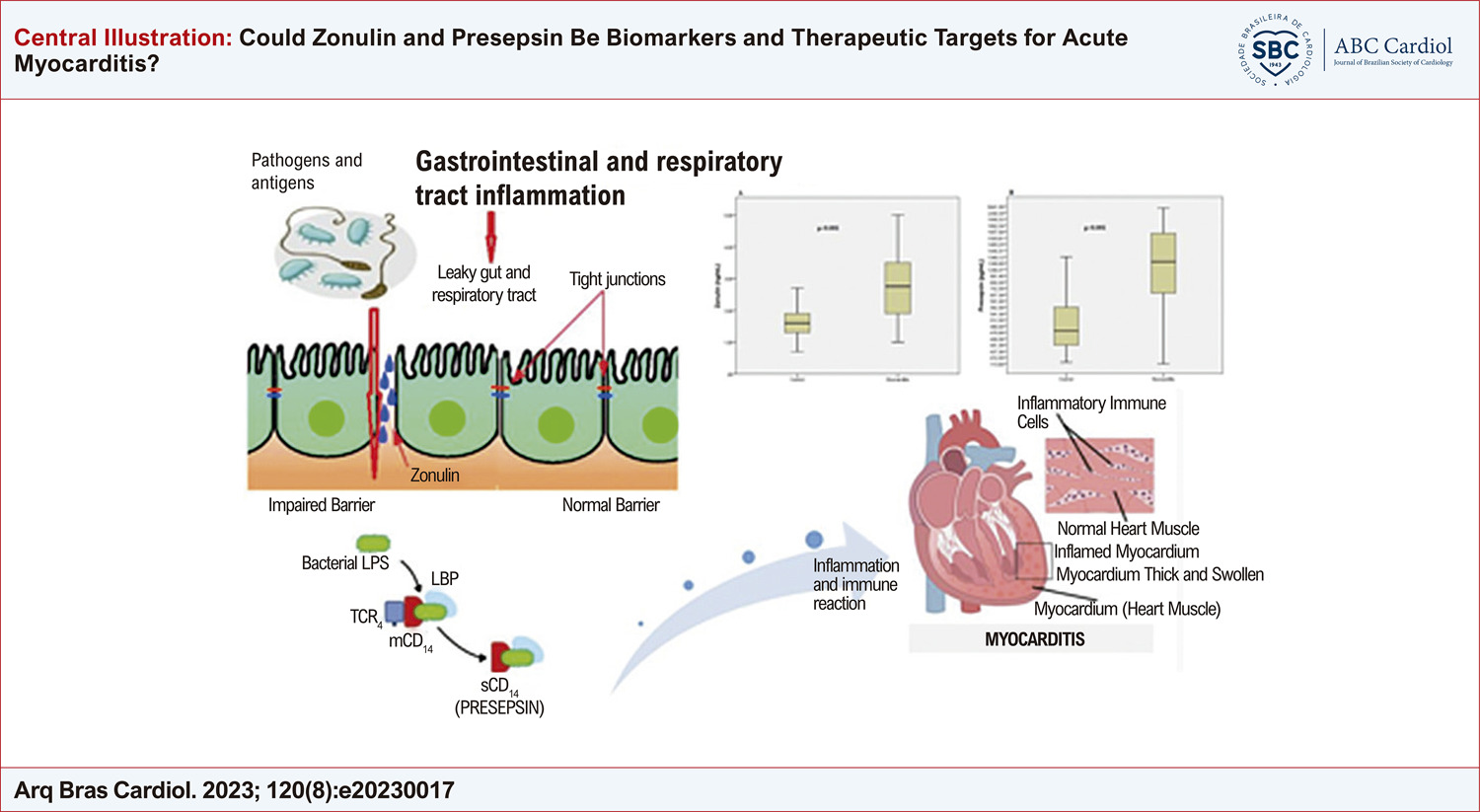
Compared to the control group, zonulin and presepsin were significantly higher in the patient group with myocarditis (p < 0.001, for all). Zonulin levels were positively correlated with presepsin, peak CK-MB, and peak troponin levels (r = 0.461, p < 0.001; r = 0.744, p < 0.001; r = 0.627, p < 0.001; respectively). In regression analysis, presepsin and zonulin were determined as independent predictors for myocarditis (OR 1.002, 95% CI 1.001-1.003, p = 0.025; OR 12.331, 95% CI 4.261-35.689; p < 0.001; respectively). The predictive value of acute myocarditis of presepsin and zonulin in ROC curve analysis was statistically significant (p < 0.001, for both).

Conclusion

This study showed that zonulin and presepsin could be biomarkers that can be used in the diagnosis of myocarditis, and they can also be therapeutic targets by shedding light on the developmental mechanism of myocarditis.

  • Biomarkers
  • Myocarditis
  • Permeability
Read Full Article
Creative Commons Attribution (CC BY) Creative Commons license
07/08/2023 DOI: 10.36660/abc.20230017 Views 1
Figure 1
Research Letter

A “Grasp Heart” Situation: Managing Heart Failure with Reduced Ejection Fraction in Primary Adrenal Insufficiency

Matheo Augusto Morandi Stumpf et al. Madson Queiroz Almeida

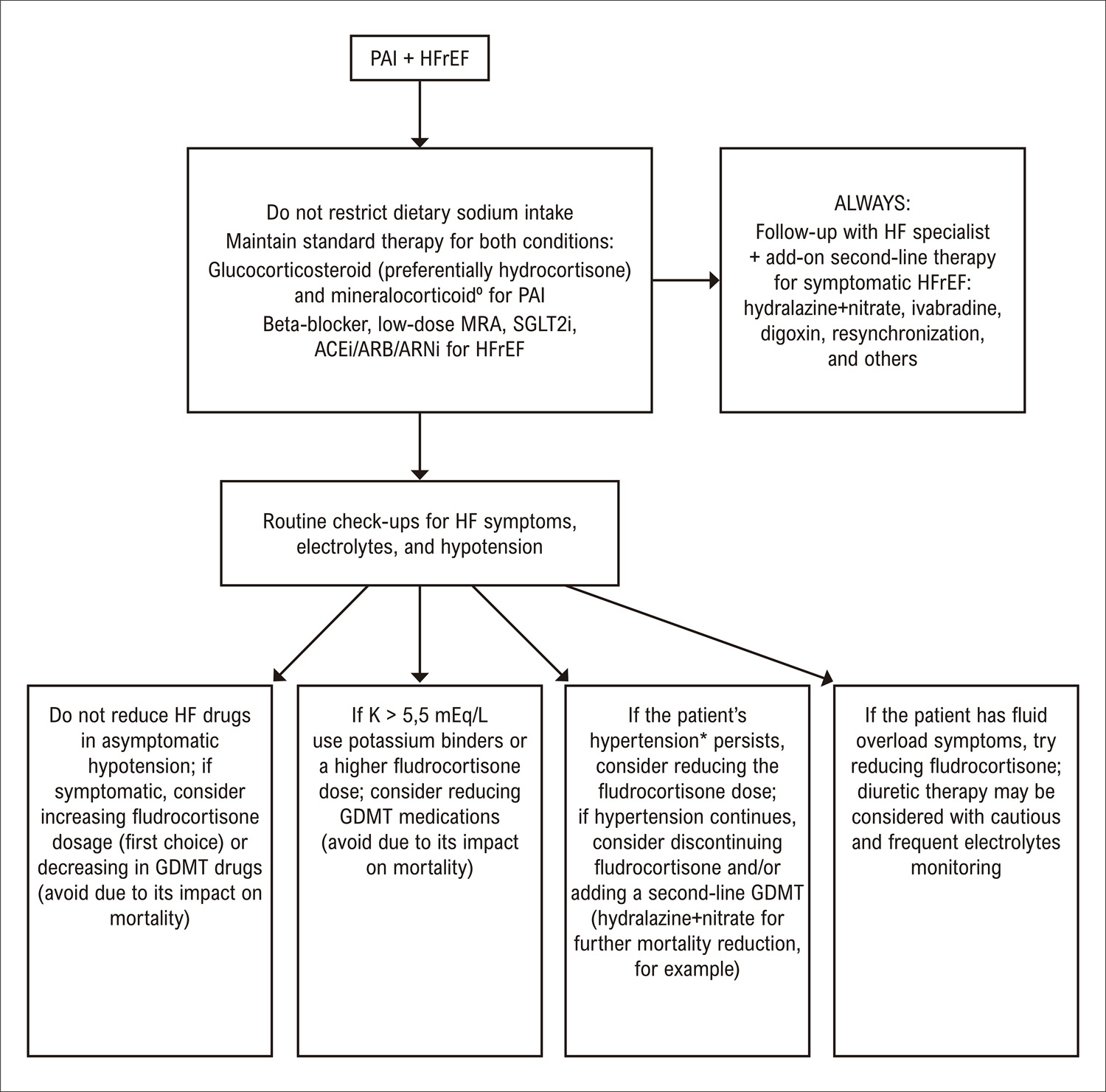
Primary adrenal insufficiency (PAI) is a well-established risk factor for ischemic heart disease, the most prevalent cause of heart failure. Treatment of patients with heart failure with reduced ejection fraction (HFrEF) and PAI is debatable. Here, we briefly discuss the evidence for treating both conditions.

Trials in this particular population are lacking in the literature. In 1983, a single prospective study showed a long-term follow-up of 22 patients with PAI. Seven patients developed HF during a mean follow-up of 30 years. Two of them did not receive mineralocorticoid replacement, while the remaining five had their fludrocortisone dose reduced (to a maximum of 0.1 mg/d). Three patients were advised to limit their sodium intake due to severe HF. HF was predominantly treated with digoxin and furosemide, the usual course of treatment at the time.

[…]

  • Adrenal Insufficiency
  • Heart Failure
  • Renin-Angiotensin System
  • Sodium
Read Full Article
Creative Commons Attribution (CC BY) Creative Commons license
07/08/2023 DOI: 10.36660/abc.20230171 Views 1
Figure 1
Original Article

Diagnostic Value of Three-Dimensional Speckle Tracking Imaging Strain Parameters for Detection of Cancer Chemotherapy-Related Cardiac Dysfunction: A Meta-Analysis

Yingying Guan

Abstract

Background

Chemotherapeutic agents (e.g., anthracyclines, trastuzumab) commonly used for treating malignant tumors have been demonstrated to have cardiotoxic effects, which is associated with poor prognosis. Three-dimensional echocardiography has been used to predict cancer chemotherapy-induced cardiac dysfunction.

Objectives

Evaluation of the diagnostic performance of strain parameters, global area strain (GAS), longitudinal strain (GLS), circumferential strain (GCS), and radial strain (GRS) by meta-analysis.

Methods

Relevant studies were searched from the Embase, PubMed, and Web of Science databases. Statistical analysis was performed using Stata 12. The summary receiver operating characteristic curve, sensitivity, specificity, positive likelihood ratio (PLR), negative likelihood ratio (NLR), and corresponding 95% confidence interval for the four strain parameters were pooled. P<0.05 was considered statistically significant.

Results

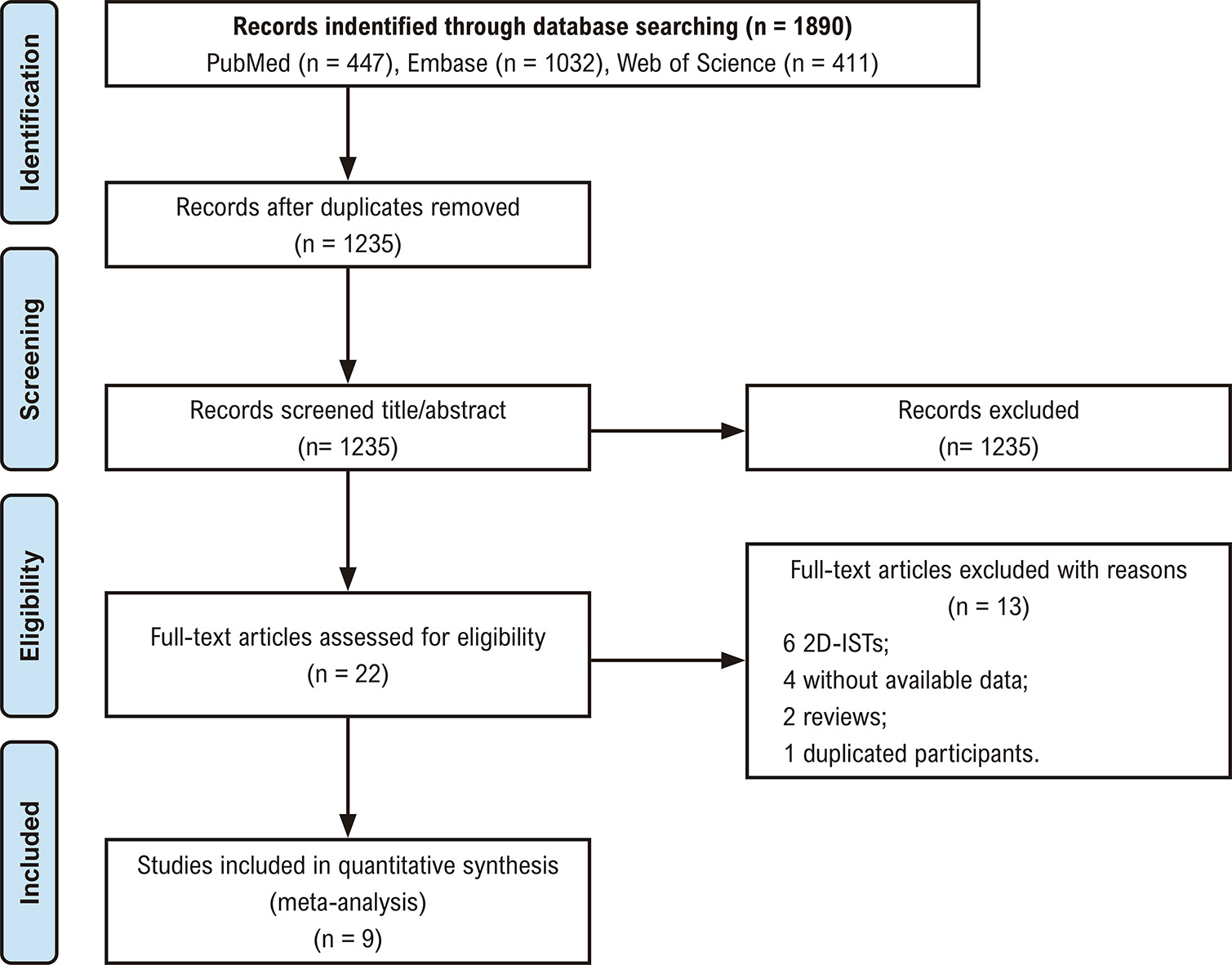
Nine studies involving 650 participants were included. GAS and GLS showed significant diagnostic advantages over GCS and GRS. For GAS, the sensitivity was 0.85 (0.70, 0.93) and specificity was 0.82(0.78, 0.86) with PLR of 4.76 (3.55, 6.39) and NLR of 0.18 (0.09, 0.39) and an area under the curve (AUC) of 0.85 (0.82, 0.88). For GLS, the sensitivity was 0.81 (0.74, 0.86) and specificity was 0.81(0.68, 0.90) with PLR of 4.35(2.42, 7.80) and NLR of 0.23 (0.17, 0.33) and an AUC of 0.85 (0.82, 0.88). The GCS showed a sensitivity of 0.63 and a specificity of 0.79 with an AUC of 0.77. The GRS showed a sensitivity of 0.74 and a specificity of 0.66 with an AUC of 0.73.

Conclusion

3D-STI strain parameters GAS and GLS showed good performance in detecting early cardiac dysfunction in patients with tumors receiving chemotherapy.

  • Anthracyclines
  • Cardiotoxicity
  • Drug Therapy
  • Heart Failure
  • Neoplasms
Read Full Article
Creative Commons Attribution (CC BY) Creative Commons license
31/07/2023 DOI: 10.36660/abc.20220370 Views 1

Could not load more articles. Please try again.

How to cite this article

EndNote RIS

Electronic Document Format (Vancouver)

Miranda CH. The Journey Towards Hypertension Control in Brazil. Arquivos Brasileiros de Cardiologia 2023;120(8):e20230533.

Electronic Document Format (ABNT)

Miranda, Carlos Henrique. The Journey Towards Hypertension Control in Brazil. Arquivos Brasileiros de Cardiologia, v. 120, n. 8, e20230533, Nov. 2023.

Electronic Document Format (APA)

Miranda, C. H. (2023). The Journey Towards Hypertension Control in Brazil. Arquivos Brasileiros de Cardiologia, 120(8), e20230533.

Electronic Document Format (ISO)

Miranda, Carlos Henrique. The Journey Towards Hypertension Control in Brazil. Arquivos Brasileiros de Cardiologia [online]. 2023, vol. 120, n. 8, [cited 2026-10-14], e20230533. Available from: <https://journals.cardiol.br/en/article/the-journey-towards-hypertension-control-in-brazil/>. ISSN 0066-782X

EndNote RIS

Electronic Document Format (Vancouver)

Huang Y, Wu X, Li X, Liu Z, Li Y. Effect on the Quality of Life of Patients with Heart Failure and Reduced/Preserved Ejection Fraction Using Sacubitril/Valsartan. Arquivos Brasileiros de Cardiologia 2023;120(8):e20220611.

Electronic Document Format (ABNT)

Huang, Yuanrui; Wu, Xu; Li, Xingyu; Liu, Zhengzhong; Li, Yunyi. Effect on the Quality of Life of Patients with Heart Failure and Reduced/Preserved Ejection Fraction Using Sacubitril/Valsartan. Arquivos Brasileiros de Cardiologia, v. 120, n. 8, e20220611, Nov. 2023.

Electronic Document Format (APA)

Huang, Y., Wu, X., Li, X., Liu, Z., & Li, Y. (2023). Effect on the Quality of Life of Patients with Heart Failure and Reduced/Preserved Ejection Fraction Using Sacubitril/Valsartan. Arquivos Brasileiros de Cardiologia, 120(8), e20220611.

Electronic Document Format (ISO)

Huang, Yuanrui and Wu, Xu and Li, Xingyu and Liu, Zhengzhong and Li, Yunyi. Effect on the Quality of Life of Patients with Heart Failure and Reduced/Preserved Ejection Fraction Using Sacubitril/Valsartan. Arquivos Brasileiros de Cardiologia [online]. 2023, vol. 120, n. 8, [cited 2026-10-14], e20220611. Available from: <https://journals.cardiol.br/en/article/effect-on-the-quality-of-life-of-patients-with-heart-failure-and-reduced-preserved-ejection-fraction-using-sacubitril-valsartan/>. ISSN 0066-782X

EndNote RIS

Electronic Document Format (Vancouver)

Villacorta H. In-Hospital Worsening Heart Failure: Can We Predict It At Admission?. Arquivos Brasileiros de Cardiologia 2023;120(8):e20230525.

Electronic Document Format (ABNT)

Villacorta, Humberto. In-Hospital Worsening Heart Failure: Can We Predict It At Admission?. Arquivos Brasileiros de Cardiologia, v. 120, n. 8, e20230525, Nov. 2023.

Electronic Document Format (APA)

Villacorta, H. (2023). In-Hospital Worsening Heart Failure: Can We Predict It At Admission?. Arquivos Brasileiros de Cardiologia, 120(8), e20230525.

Electronic Document Format (ISO)

Villacorta, Humberto. In-Hospital Worsening Heart Failure: Can We Predict It At Admission?. Arquivos Brasileiros de Cardiologia [online]. 2023, vol. 120, n. 8, [cited 2026-10-14], e20230525. Available from: <https://journals.cardiol.br/en/article/in-hospital-worsening-heart-failure-can-we-predict-it-at-admission/>. ISSN 0066-782X

EndNote RIS

Electronic Document Format (Vancouver)

Gomes WJ, Gomes EN, Hossne Jr. NA. Unfolding Type B Aortic Dissection Controversies – Piecing Together the Evidence. Arquivos Brasileiros de Cardiologia 2023;120(8):e20230550.

Electronic Document Format (ABNT)

Gomes, Walter J.; Gomes, Eduardo N.; Hossne Jr., Nelson A.. Unfolding Type B Aortic Dissection Controversies – Piecing Together the Evidence. Arquivos Brasileiros de Cardiologia, v. 120, n. 8, e20230550, Nov. 2023.

Electronic Document Format (APA)

Gomes, W. J., Gomes, E. N., & Hossne Jr., N. A. (2023). Unfolding Type B Aortic Dissection Controversies – Piecing Together the Evidence. Arquivos Brasileiros de Cardiologia, 120(8), e20230550.

Electronic Document Format (ISO)

Gomes, Walter J. and Gomes, Eduardo N. and Hossne Jr., Nelson A.. Unfolding Type B Aortic Dissection Controversies – Piecing Together the Evidence. Arquivos Brasileiros de Cardiologia [online]. 2023, vol. 120, n. 8, [cited 2026-10-14], e20230550. Available from: <https://journals.cardiol.br/en/article/unfolding-type-b-aortic-dissection-controversies-piecing-together-the-evidence/>. ISSN 0066-782X

EndNote RIS

Electronic Document Format (Vancouver)

Bichara JL, Bastos LA, Villela PB, Oliveira GMM. Socioeconomic Indicators and Mortality from Ischemic Heart Disease and Cerebrovascular Disease in Brazil from 2000 to 2019. Arquivos Brasileiros de Cardiologia 2023;120(8):e20220832.

Electronic Document Format (ABNT)

Bichara, José Lucas; Bastos, Luiz Antônio; Villela, Paolo Blanco; Oliveira, Gláucia Maria Moraes de. Socioeconomic Indicators and Mortality from Ischemic Heart Disease and Cerebrovascular Disease in Brazil from 2000 to 2019. Arquivos Brasileiros de Cardiologia, v. 120, n. 8, e20220832, Nov. 2023.

Electronic Document Format (APA)

Bichara, J. L., Bastos, L. A., Villela, P. B., & Oliveira, G. M. M. (2023). Socioeconomic Indicators and Mortality from Ischemic Heart Disease and Cerebrovascular Disease in Brazil from 2000 to 2019. Arquivos Brasileiros de Cardiologia, 120(8), e20220832.

Electronic Document Format (ISO)

Bichara, José Lucas and Bastos, Luiz Antônio and Villela, Paolo Blanco and Oliveira, Gláucia Maria Moraes de. Socioeconomic Indicators and Mortality from Ischemic Heart Disease and Cerebrovascular Disease in Brazil from 2000 to 2019. Arquivos Brasileiros de Cardiologia [online]. 2023, vol. 120, n. 8, [cited 2026-10-14], e20220832. Available from: <https://journals.cardiol.br/en/article/socioeconomic-indicators-and-mortality-from-ischemic-heart-disease-and-cerebrovascular-disease-in-brazil-from-2000-to-2019/>. ISSN 0066-782X

EndNote RIS

Electronic Document Format (Vancouver)

Solis FAE, Brentegani A, Vieira MLC. Is There a Relationship Between Acute Myocarditis and Intestinal Permeability? Two Biomarkers Help Us Answer this Question. Arquivos Brasileiros de Cardiologia 2023;120(8):e20230493.

Electronic Document Format (ABNT)

Solis, Fernando Arturo Effio; Brentegani, Adriana; Vieira, Marcelo Luiz Campos. Is There a Relationship Between Acute Myocarditis and Intestinal Permeability? Two Biomarkers Help Us Answer this Question. Arquivos Brasileiros de Cardiologia, v. 120, n. 8, e20230493, Nov. 2023.

Electronic Document Format (APA)

Solis, F. A. E., Brentegani, A., & Vieira, M. L. C. (2023). Is There a Relationship Between Acute Myocarditis and Intestinal Permeability? Two Biomarkers Help Us Answer this Question. Arquivos Brasileiros de Cardiologia, 120(8), e20230493.

Electronic Document Format (ISO)

Solis, Fernando Arturo Effio and Brentegani, Adriana and Vieira, Marcelo Luiz Campos. Is There a Relationship Between Acute Myocarditis and Intestinal Permeability? Two Biomarkers Help Us Answer this Question. Arquivos Brasileiros de Cardiologia [online]. 2023, vol. 120, n. 8, [cited 2026-10-14], e20230493. Available from: <https://journals.cardiol.br/en/article/is-there-a-relationship-between-acute-myocarditis-and-intestinal-permeability-two-biomarkers-help-us-answer-this-question/>. ISSN 0066-782X

EndNote RIS

Electronic Document Format (Vancouver)

Callegari MA, Damatto RL, Santos PP. Saturated Fatty Acids and Implications for Cardiovascular Disease. Arquivos Brasileiros de Cardiologia 2023;120(8):e20230612.

Electronic Document Format (ABNT)

Callegari, Matheus Augusto; Damatto, Ricardo Luiz; Santos, Priscila Portugal dos. Saturated Fatty Acids and Implications for Cardiovascular Disease. Arquivos Brasileiros de Cardiologia, v. 120, n. 8, e20230612, Oct. 2023.

Electronic Document Format (APA)

Callegari, M. A., Damatto, R. L., & Santos, P. P. (2023). Saturated Fatty Acids and Implications for Cardiovascular Disease. Arquivos Brasileiros de Cardiologia, 120(8), e20230612.

Electronic Document Format (ISO)

Callegari, Matheus Augusto and Damatto, Ricardo Luiz and Santos, Priscila Portugal dos. Saturated Fatty Acids and Implications for Cardiovascular Disease. Arquivos Brasileiros de Cardiologia [online]. 2023, vol. 120, n. 8, [cited 2026-10-14], e20230612. Available from: <https://journals.cardiol.br/en/article/saturated-fatty-acids-and-implications-for-cardiovascular-disease/>. ISSN 0066-782X

EndNote RIS

Electronic Document Format (Vancouver)

Moreira HG. We Need to Talk about Social Determinants of Cardiovascular Health. Arquivos Brasileiros de Cardiologia 2023;120(8):e20230569.

Electronic Document Format (ABNT)

Moreira, Humberto Graner. We Need to Talk about Social Determinants of Cardiovascular Health. Arquivos Brasileiros de Cardiologia, v. 120, n. 8, e20230569, Oct. 2023.

Electronic Document Format (APA)

Moreira, H. G. (2023). We Need to Talk about Social Determinants of Cardiovascular Health. Arquivos Brasileiros de Cardiologia, 120(8), e20230569.

Electronic Document Format (ISO)

Moreira, Humberto Graner. We Need to Talk about Social Determinants of Cardiovascular Health. Arquivos Brasileiros de Cardiologia [online]. 2023, vol. 120, n. 8, [cited 2026-10-14], e20230569. Available from: <https://journals.cardiol.br/en/article/we-need-to-talk-about-social-determinants-of-cardiovascular-health/>. ISSN 0066-782X

EndNote RIS

Electronic Document Format (Vancouver)

Elias Neto J. T-Wave Microalternans in Hypertrophic Cardiomyopathy: The Complexity of an Inherited Cardiac Condition with Multiple Phenotypic Expressions. Arquivos Brasileiros de Cardiologia 2023;120(8):e20230615.

Electronic Document Format (ABNT)

Elias Neto, Jorge. T-Wave Microalternans in Hypertrophic Cardiomyopathy: The Complexity of an Inherited Cardiac Condition with Multiple Phenotypic Expressions. Arquivos Brasileiros de Cardiologia, v. 120, n. 8, e20230615, Oct. 2023.

Electronic Document Format (APA)

Elias Neto, J. (2023). T-Wave Microalternans in Hypertrophic Cardiomyopathy: The Complexity of an Inherited Cardiac Condition with Multiple Phenotypic Expressions. Arquivos Brasileiros de Cardiologia, 120(8), e20230615.

Electronic Document Format (ISO)

Elias Neto, Jorge. T-Wave Microalternans in Hypertrophic Cardiomyopathy: The Complexity of an Inherited Cardiac Condition with Multiple Phenotypic Expressions. Arquivos Brasileiros de Cardiologia [online]. 2023, vol. 120, n. 8, [cited 2026-10-14], e20230615. Available from: <https://journals.cardiol.br/en/article/t-wave-microalternans-in-hypertrophic-cardiomyopathy-the-complexity-of-an-inherited-cardiac-condition-with-multiple-phenotypic-expressions/>. ISSN 0066-782X

EndNote RIS

Electronic Document Format (Vancouver)

Alencar AKN. Sacubitril/Valsartan: A Breakthrough in Heart Failure Management – Addressing Quality of Life and Mortality. Arquivos Brasileiros de Cardiologia 2023;120(8):e20230530.

Electronic Document Format (ABNT)

Alencar, Allan K. N.. Sacubitril/Valsartan: A Breakthrough in Heart Failure Management – Addressing Quality of Life and Mortality. Arquivos Brasileiros de Cardiologia, v. 120, n. 8, e20230530, Sep. 2023.

Electronic Document Format (APA)

Alencar, A. K. N. (2023). Sacubitril/Valsartan: A Breakthrough in Heart Failure Management – Addressing Quality of Life and Mortality. Arquivos Brasileiros de Cardiologia, 120(8), e20230530.

Electronic Document Format (ISO)

Alencar, Allan K. N.. Sacubitril/Valsartan: A Breakthrough in Heart Failure Management – Addressing Quality of Life and Mortality. Arquivos Brasileiros de Cardiologia [online]. 2023, vol. 120, n. 8, [cited 2026-10-14], e20230530. Available from: <https://journals.cardiol.br/en/article/sacubitril-valsartan-a-breakthrough-in-heart-failure-management-addressing-quality-of-life-and-mortality/>. ISSN 0066-782X

EndNote RIS

Electronic Document Format (Vancouver)

Mancio J. Empowering the Imagers with 3D-Speckle Tracking Echocardiography to Detect Subclinical Cancer Therapy-Related Myocardial Dysfunction. Arquivos Brasileiros de Cardiologia 2023;120(8):e20230554.

Electronic Document Format (ABNT)

Mancio, Jennifer. Empowering the Imagers with 3D-Speckle Tracking Echocardiography to Detect Subclinical Cancer Therapy-Related Myocardial Dysfunction. Arquivos Brasileiros de Cardiologia, v. 120, n. 8, e20230554, Sep. 2023.

Electronic Document Format (APA)

Mancio, J. (2023). Empowering the Imagers with 3D-Speckle Tracking Echocardiography to Detect Subclinical Cancer Therapy-Related Myocardial Dysfunction. Arquivos Brasileiros de Cardiologia, 120(8), e20230554.

Electronic Document Format (ISO)

Mancio, Jennifer. Empowering the Imagers with 3D-Speckle Tracking Echocardiography to Detect Subclinical Cancer Therapy-Related Myocardial Dysfunction. Arquivos Brasileiros de Cardiologia [online]. 2023, vol. 120, n. 8, [cited 2026-10-14], e20230554. Available from: <https://journals.cardiol.br/en/article/empowering-the-imagers-with-3d-speckle-tracking-echocardiography-to-detect-subclinical-cancer-therapy-related-myocardial-dysfunction/>. ISSN 0066-782X

EndNote RIS

Electronic Document Format (Vancouver)

Demir M, Gök M, Gürdoğan M, Kula O, Ustabaşıoğlu FE, Yalta K. A Stent Misplaced in the Septal Perforating Artery: Right Ventricular Fistula, Interventricular Septal Hematoma, and Right Ventricular Outflow Tract Obstruction. Arquivos Brasileiros de Cardiologia 2023;120(8):e20220901.

Electronic Document Format (ABNT)

Demir, Melik; Gök, Murat; Gürdoğan, Muhammet; Kula, Osman; Ustabaşıoğlu, Fethi Emre; Yalta, Kenan. A Stent Misplaced in the Septal Perforating Artery: Right Ventricular Fistula, Interventricular Septal Hematoma, and Right Ventricular Outflow Tract Obstruction. Arquivos Brasileiros de Cardiologia, v. 120, n. 8, e20220901, Sep. 2023.

Electronic Document Format (APA)

Demir, M., Gök, M., Gürdoğan, M., Kula, O., Ustabaşıoğlu, F. E., & Yalta, K. (2023). A Stent Misplaced in the Septal Perforating Artery: Right Ventricular Fistula, Interventricular Septal Hematoma, and Right Ventricular Outflow Tract Obstruction. Arquivos Brasileiros de Cardiologia, 120(8), e20220901.

Electronic Document Format (ISO)

Demir, Melik and Gök, Murat and Gürdoğan, Muhammet and Kula, Osman and Ustabaşıoğlu, Fethi Emre and Yalta, Kenan. A Stent Misplaced in the Septal Perforating Artery: Right Ventricular Fistula, Interventricular Septal Hematoma, and Right Ventricular Outflow Tract Obstruction. Arquivos Brasileiros de Cardiologia [online]. 2023, vol. 120, n. 8, [cited 2026-10-14], e20220901. Available from: <https://journals.cardiol.br/en/article/a-stent-misplaced-in-the-septal-perforating-artery-right-ventricular-fistula-interventricular-septal-hematoma-and-right-ventricular-outflow-tract-obstruction/>. ISSN 0066-782X

EndNote RIS

Electronic Document Format (Vancouver)

Antunes MO, Arteaga-Fernandez E, Samesima N, Pereira Filho HG, Matsumoto AY, Verrier RL, Pastore CA, et al. Prognostic Evaluation of Microvolt T-Wave Alternans in Hypertrophic Cardiomyopathy: 9-year Clinical Follow-up. Arquivos Brasileiros de Cardiologia 2023;120(8):e20220833.

Electronic Document Format (ABNT)

Antunes, Murillo Oliveira; Arteaga-Fernandez, Edmundo; Samesima, Nelson; Pereira Filho, Horácio Gomes; Matsumoto, Afonso Yoshikiro; Verrier, Richard L.; Pastore, Carlos Alberto; Mady, Charles. Prognostic Evaluation of Microvolt T-Wave Alternans in Hypertrophic Cardiomyopathy: 9-year Clinical Follow-up. Arquivos Brasileiros de Cardiologia, v. 120, n. 8, e20220833, Sep. 2023.

Electronic Document Format (APA)

Antunes, M. O., Arteaga-Fernandez, E., Samesima, N., Pereira Filho, H. G., Matsumoto, A. Y., Verrier, R. L., Pastore, C. A., & Mady, C. (2023). Prognostic Evaluation of Microvolt T-Wave Alternans in Hypertrophic Cardiomyopathy: 9-year Clinical Follow-up. Arquivos Brasileiros de Cardiologia, 120(8), e20220833.

Electronic Document Format (ISO)

Antunes, Murillo Oliveira and Arteaga-Fernandez, Edmundo and Samesima, Nelson and Pereira Filho, Horácio Gomes and Matsumoto, Afonso Yoshikiro and Verrier, Richard L. and Pastore, Carlos Alberto and Mady, Charles. Prognostic Evaluation of Microvolt T-Wave Alternans in Hypertrophic Cardiomyopathy: 9-year Clinical Follow-up. Arquivos Brasileiros de Cardiologia [online]. 2023, vol. 120, n. 8, [cited 2026-10-14], e20220833. Available from: <https://journals.cardiol.br/en/article/prognostic-evaluation-of-microvolt-t-wave-alternans-in-hypertrophic-cardiomyopathy-9-year-clinical-follow-up/>. ISSN 0066-782X

EndNote RIS

Electronic Document Format (Vancouver)

Bernardes DS, Santos MS, Mantovani VM, Almeida Neto OP, Goldraich LA, Clausell N, Rabelo-Silva ER, et al. Use of the ADHERE Risk Model as a Predictor of Risk of in-Hospital Worsening Heart Failure in a Cohort. Arquivos Brasileiros de Cardiologia 2023;120(8):e20220584.

Electronic Document Format (ABNT)

Bernardes, Daniela de Souza; Santos, Marina Scherer; Mantovani, Vanessa Monteiro; Almeida Neto, Omar Pereira de; Goldraich, Livia Adams; Clausell, Nadine; Rabelo-Silva, Eneida Rejane. Use of the ADHERE Risk Model as a Predictor of Risk of in-Hospital Worsening Heart Failure in a Cohort. Arquivos Brasileiros de Cardiologia, v. 120, n. 8, e20220584, Aug. 2023.

Electronic Document Format (APA)

Bernardes, D. S., Santos, M. S., Mantovani, V. M., Almeida Neto, O. P. , Goldraich, L. A., Clausell, N., & Rabelo-Silva, E. R. (2023). Use of the ADHERE Risk Model as a Predictor of Risk of in-Hospital Worsening Heart Failure in a Cohort. Arquivos Brasileiros de Cardiologia, 120(8), e20220584.

Electronic Document Format (ISO)

Bernardes, Daniela de Souza and Santos, Marina Scherer and Mantovani, Vanessa Monteiro and Almeida Neto, Omar Pereira de and Goldraich, Livia Adams and Clausell, Nadine and Rabelo-Silva, Eneida Rejane. Use of the ADHERE Risk Model as a Predictor of Risk of in-Hospital Worsening Heart Failure in a Cohort. Arquivos Brasileiros de Cardiologia [online]. 2023, vol. 120, n. 8, [cited 2026-10-14], e20220584. Available from: <https://journals.cardiol.br/en/article/use-of-the-adhere-risk-model-as-a-predictor-of-risk-of-in-hospital-worsening-heart-failure-in-a-cohort/>. ISSN 0066-782X

EndNote RIS

Electronic Document Format (Vancouver)

Lemke VG, Paiva MSS, Mariano GZ, Alves TS, Ferreira E, Nunes LA, Oliveira FRA, et al. Brazilian Registry of Interventional Cardiology during the COVID-19 Pandemic (RBCI-COVID19). Arquivos Brasileiros de Cardiologia 2023;120(8):e20220840.

Electronic Document Format (ABNT)

Lemke, Viviana Guzzo; Paiva, Maria Sanali Souza; Mariano, Giordana Zeferino; Alves, Thales Siqueira; Ferreira, Esmeralci; Nunes, Leonardo Avany; Oliveira, Flavio Roberto Azevedo; Cantarelli, Rodrigo; Nascimento, Emilia Matos do; Oliveira, Gláucia Maria Moraes de. Brazilian Registry of Interventional Cardiology during the COVID-19 Pandemic (RBCI-COVID19). Arquivos Brasileiros de Cardiologia, v. 120, n. 8, e20220840, Aug. 2023.

Electronic Document Format (APA)

Lemke, V. G., Paiva, M. S. S., Mariano, G. Z., Alves, T. S., Ferreira, E., Nunes, L. A., Oliveira, F. R. A., Cantarelli, R., Nascimento, E. M. , & Oliveira, G. M. M. (2023). Brazilian Registry of Interventional Cardiology during the COVID-19 Pandemic (RBCI-COVID19). Arquivos Brasileiros de Cardiologia, 120(8), e20220840.

Electronic Document Format (ISO)

Lemke, Viviana Guzzo and Paiva, Maria Sanali Souza and Mariano, Giordana Zeferino and Alves, Thales Siqueira and Ferreira, Esmeralci and Nunes, Leonardo Avany and Oliveira, Flavio Roberto Azevedo and Cantarelli, Rodrigo and Nascimento, Emilia Matos do and Oliveira, Gláucia Maria Moraes de. Brazilian Registry of Interventional Cardiology during the COVID-19 Pandemic (RBCI-COVID19). Arquivos Brasileiros de Cardiologia [online]. 2023, vol. 120, n. 8, [cited 2026-10-14], e20220840. Available from: <https://journals.cardiol.br/en/article/brazilian-registry-of-interventional-cardiology-during-the-covid-19-pandemic-rbci-covid19/>. ISSN 0066-782X

EndNote RIS

Electronic Document Format (Vancouver)

Rodriguez-Ramos MA. Clinical registries in Acute Myocardial Infarction. Arquivos Brasileiros de Cardiologia 2023;120(8):e20230066.

Electronic Document Format (ABNT)

Rodriguez-Ramos, Miguel Alejandro. Clinical registries in Acute Myocardial Infarction. Arquivos Brasileiros de Cardiologia, v. 120, n. 8, e20230066, Aug. 2023.

Electronic Document Format (APA)

Rodriguez-Ramos, M. A. (2023). Clinical registries in Acute Myocardial Infarction. Arquivos Brasileiros de Cardiologia, 120(8), e20230066.

Electronic Document Format (ISO)

Rodriguez-Ramos, Miguel Alejandro. Clinical registries in Acute Myocardial Infarction. Arquivos Brasileiros de Cardiologia [online]. 2023, vol. 120, n. 8, [cited 2026-10-14], e20230066. Available from: <https://journals.cardiol.br/en/article/clinical-registries-in-acute-myocardial-infarction/>. ISSN 0066-782X

EndNote RIS

Electronic Document Format (Vancouver)

Gonçalinho GHF, Sampaio GR, Soares-Freitas RAM, Damasceno NRT. Stearic Acid, but not Palmitic Acid, is Associated with Inflammatory and Endothelial Dysfunction Biomarkers in Individuals at Cardiovascular Risk. Arquivos Brasileiros de Cardiologia 2023;120(8):e20220598.

Electronic Document Format (ABNT)

Gonçalinho, Gustavo Henrique Ferreira; Sampaio, Geni Rodrigues; Soares-Freitas, Rosana Aparecida Manólio; Damasceno, Nágila Raquel Teixeira. Stearic Acid, but not Palmitic Acid, is Associated with Inflammatory and Endothelial Dysfunction Biomarkers in Individuals at Cardiovascular Risk. Arquivos Brasileiros de Cardiologia, v. 120, n. 8, e20220598, Aug. 2023.

Electronic Document Format (APA)

Gonçalinho, G. H. F., Sampaio, G. R., Soares-Freitas, R. A. M., & Damasceno, N. R. T. (2023). Stearic Acid, but not Palmitic Acid, is Associated with Inflammatory and Endothelial Dysfunction Biomarkers in Individuals at Cardiovascular Risk. Arquivos Brasileiros de Cardiologia, 120(8), e20220598.

Electronic Document Format (ISO)

Gonçalinho, Gustavo Henrique Ferreira and Sampaio, Geni Rodrigues and Soares-Freitas, Rosana Aparecida Manólio and Damasceno, Nágila Raquel Teixeira. Stearic Acid, but not Palmitic Acid, is Associated with Inflammatory and Endothelial Dysfunction Biomarkers in Individuals at Cardiovascular Risk. Arquivos Brasileiros de Cardiologia [online]. 2023, vol. 120, n. 8, [cited 2026-10-14], e20220598. Available from: <https://journals.cardiol.br/en/article/stearic-acid-but-not-palmitic-acid-is-associated-with-inflammatory-and-endothelial-dysfunction-biomarkers-in-individuals-at-cardiovascular-risk/>. ISSN 0066-782X

EndNote RIS

Electronic Document Format (Vancouver)

Gatto M, Mota GAF, Okoshi MP. Influence of the Immune System on Cardiovascular Disease. Arquivos Brasileiros de Cardiologia 2023;120(8):e20230398.

Electronic Document Format (ABNT)

Gatto, Mariana; Mota, Gustavo Augusto Ferreira; Okoshi, Marina Politi. Influence of the Immune System on Cardiovascular Disease. Arquivos Brasileiros de Cardiologia, v. 120, n. 8, e20230398, Aug. 2023.

Electronic Document Format (APA)

Gatto, M., Mota, G. A. F., & Okoshi, M. P. (2023). Influence of the Immune System on Cardiovascular Disease. Arquivos Brasileiros de Cardiologia, 120(8), e20230398.

Electronic Document Format (ISO)

Gatto, Mariana and Mota, Gustavo Augusto Ferreira and Okoshi, Marina Politi. Influence of the Immune System on Cardiovascular Disease. Arquivos Brasileiros de Cardiologia [online]. 2023, vol. 120, n. 8, [cited 2026-10-14], e20230398. Available from: <https://journals.cardiol.br/en/article/influence-of-the-immune-system-on-cardiovascular-disease/>. ISSN 0066-782X

EndNote RIS

Electronic Document Format (Vancouver)

Costantini CR, Costantini CO, Tarbine SG, Denk MA, Ferrari VS, Macedo RM. Out of Sight, Out of Heart?. Arquivos Brasileiros de Cardiologia 2023;120(8):e20220765.

Electronic Document Format (ABNT)

Costantini, Costantino Roberto; Costantini, Costantino Ortiz; Tarbine, Sérgio Gustavo; Denk, Marcos Antonio; Ferrari, Vinicius Shibata; Macedo, Rafael Michel de. Out of Sight, Out of Heart?. Arquivos Brasileiros de Cardiologia, v. 120, n. 8, e20220765, Aug. 2023.

Electronic Document Format (APA)

Costantini, C. R., Costantini, C. O., Tarbine, S. G., Denk, M. A., Ferrari, V. S., & Macedo, R. M. (2023). Out of Sight, Out of Heart?. Arquivos Brasileiros de Cardiologia, 120(8), e20220765.

Electronic Document Format (ISO)

Costantini, Costantino Roberto and Costantini, Costantino Ortiz and Tarbine, Sérgio Gustavo and Denk, Marcos Antonio and Ferrari, Vinicius Shibata and Macedo, Rafael Michel de. Out of Sight, Out of Heart?. Arquivos Brasileiros de Cardiologia [online]. 2023, vol. 120, n. 8, [cited 2026-10-14], e20220765. Available from: <https://journals.cardiol.br/en/article/out-of-sight-out-of-heart/>. ISSN 0066-782X

EndNote RIS

Electronic Document Format (Vancouver)

Miranda RD, Brandão AA, Barroso WKS, Mota-Gomes MA, Barbosa ECD, Ribeiro LP, Aguilar CA, et al. National Registry of Hypertension Control Evaluated by Office and Home Measurements: The LHAR National Registry. Arquivos Brasileiros de Cardiologia 2023;120(8):e20220863.

Electronic Document Format (ABNT)

Miranda, Roberto Dischinger; Brandão, Andréa Araujo; Barroso, Weimar Kunz Sebba; Mota-Gomes, Marco Antonio; Barbosa, Eduardo Costa Duarte; Ribeiro, Lucio Paulo; Aguilar, Claudinelli Alvarenga; Silveira, Fabio Serra; Gomes, Cristiano de Melo Rangel; Epelman, Abraham; Paiva, Annelise Machado Gomes de; Feitosa, Audes Diógenes Magalhães. National Registry of Hypertension Control Evaluated by Office and Home Measurements: The LHAR National Registry. Arquivos Brasileiros de Cardiologia, v. 120, n. 8, e20220863, Aug. 2023.

Electronic Document Format (APA)

Miranda, R. D., Brandão, A. A., Barroso, W. K. S., Mota-Gomes, M. A., Barbosa, E. C. D., Ribeiro, L. P., Aguilar, C. A., Silveira, F. S., Gomes, C. M. R., Epelman, A., Paiva, A. M. G. , & Feitosa, A. D. M. (2023). National Registry of Hypertension Control Evaluated by Office and Home Measurements: The LHAR National Registry. Arquivos Brasileiros de Cardiologia, 120(8), e20220863.

Electronic Document Format (ISO)

Miranda, Roberto Dischinger and Brandão, Andréa Araujo and Barroso, Weimar Kunz Sebba and Mota-Gomes, Marco Antonio and Barbosa, Eduardo Costa Duarte and Ribeiro, Lucio Paulo and Aguilar, Claudinelli Alvarenga and Silveira, Fabio Serra and Gomes, Cristiano de Melo Rangel and Epelman, Abraham and Paiva, Annelise Machado Gomes de and Feitosa, Audes Diógenes Magalhães. National Registry of Hypertension Control Evaluated by Office and Home Measurements: The LHAR National Registry. Arquivos Brasileiros de Cardiologia [online]. 2023, vol. 120, n. 8, [cited 2026-10-14], e20220863. Available from: <https://journals.cardiol.br/en/article/national-registry-of-hypertension-control-evaluated-by-office-and-home-measurements-the-lhar-national-registry/>. ISSN 0066-782X

EndNote RIS

Electronic Document Format (Vancouver)

Hazir KE, Simsek EC, Baldan E, Uzun HG, Bulbul H, Yarci B, Ozcan EB, et al. Could Acute Myeloid Leukemia Have Presented Even Worse? “Uncommon Cause of Concurrently Multivessel Thrombosis”. Arquivos Brasileiros de Cardiologia 2023;120(8):20220808.

Electronic Document Format (ABNT)

Hazir, Kutluhan Eren; Simsek, Ersin Cagri; Baldan, Esra; Uzun, Hakan Gökalp; Bulbul, Hale; Yarci, Bengisu; Ozcan, Elif Busra. Could Acute Myeloid Leukemia Have Presented Even Worse? “Uncommon Cause of Concurrently Multivessel Thrombosis”. Arquivos Brasileiros de Cardiologia, v. 120, n. 8, 20220808, Aug. 2023.

Electronic Document Format (APA)

Hazir, K. E., Simsek, E. C., Baldan, E., Uzun, H. G., Bulbul, H., Yarci, B., & Ozcan, E. B. (2023). Could Acute Myeloid Leukemia Have Presented Even Worse? “Uncommon Cause of Concurrently Multivessel Thrombosis”. Arquivos Brasileiros de Cardiologia, 120(8), 20220808.

Electronic Document Format (ISO)

Hazir, Kutluhan Eren and Simsek, Ersin Cagri and Baldan, Esra and Uzun, Hakan Gökalp and Bulbul, Hale and Yarci, Bengisu and Ozcan, Elif Busra. Could Acute Myeloid Leukemia Have Presented Even Worse? “Uncommon Cause of Concurrently Multivessel Thrombosis”. Arquivos Brasileiros de Cardiologia [online]. 2023, vol. 120, n. 8, [cited 2026-10-14], 20220808. Available from: <https://journals.cardiol.br/en/article/could-acute-myeloid-leukemia-have-presented-even-worse-uncommon-cause-of-concurrently-multivessel-thrombosis/>. ISSN 0066-782X

EndNote RIS

Electronic Document Format (Vancouver)

Toprak K, Inanır M, Memioğlu T, Kaplangoray M, Palice A, Tascanov MB. Could Zonulin and Presepsin Be Biomarkers and Therapeutic Targets for Acute Myocarditis?. Arquivos Brasileiros de Cardiologia 2023;120(8):e20230017.

Electronic Document Format (ABNT)

Toprak, Kenan; Inanır, Mehmet; Memioğlu, Tolga; Kaplangoray, Mustafa; Palice, Ali; Tascanov, Mustafa Begenc. Could Zonulin and Presepsin Be Biomarkers and Therapeutic Targets for Acute Myocarditis?. Arquivos Brasileiros de Cardiologia, v. 120, n. 8, e20230017, Aug. 2023.

Electronic Document Format (APA)

Toprak, K., Inanır, M., Memioğlu, T., Kaplangoray, M., Palice, A., & Tascanov, M. B. (2023). Could Zonulin and Presepsin Be Biomarkers and Therapeutic Targets for Acute Myocarditis?. Arquivos Brasileiros de Cardiologia, 120(8), e20230017.

Electronic Document Format (ISO)

Toprak, Kenan and Inanır, Mehmet and Memioğlu, Tolga and Kaplangoray, Mustafa and Palice, Ali and Tascanov, Mustafa Begenc. Could Zonulin and Presepsin Be Biomarkers and Therapeutic Targets for Acute Myocarditis?. Arquivos Brasileiros de Cardiologia [online]. 2023, vol. 120, n. 8, [cited 2026-10-14], e20230017. Available from: <https://journals.cardiol.br/en/article/could-zonulin-and-presepsin-be-biomarkers-and-therapeutic-targets-for-acute-myocarditis/>. ISSN 0066-782X

EndNote RIS

Electronic Document Format (Vancouver)

Stumpf MAM, Almeida MQ. A “Grasp Heart” Situation: Managing Heart Failure with Reduced Ejection Fraction in Primary Adrenal Insufficiency. Arquivos Brasileiros de Cardiologia 2023;120(8):e20230171.

Electronic Document Format (ABNT)

Stumpf, Matheo Augusto Morandi; Almeida, Madson Queiroz. A “Grasp Heart” Situation: Managing Heart Failure with Reduced Ejection Fraction in Primary Adrenal Insufficiency. Arquivos Brasileiros de Cardiologia, v. 120, n. 8, e20230171, Aug. 2023.

Electronic Document Format (APA)

Stumpf, M. A. M., & Almeida, M. Q. (2023). A “Grasp Heart” Situation: Managing Heart Failure with Reduced Ejection Fraction in Primary Adrenal Insufficiency. Arquivos Brasileiros de Cardiologia, 120(8), e20230171.

Electronic Document Format (ISO)

Stumpf, Matheo Augusto Morandi and Almeida, Madson Queiroz. A “Grasp Heart” Situation: Managing Heart Failure with Reduced Ejection Fraction in Primary Adrenal Insufficiency. Arquivos Brasileiros de Cardiologia [online]. 2023, vol. 120, n. 8, [cited 2026-10-14], e20230171. Available from: <https://journals.cardiol.br/en/article/a-grasp-heart-situation-managing-heart-failure-with-reduced-ejection-fraction-in-primary-adrenal-insufficiency/>. ISSN 0066-782X

EndNote RIS

Electronic Document Format (Vancouver)

Guan Y. Diagnostic Value of Three-Dimensional Speckle Tracking Imaging Strain Parameters for Detection of Cancer Chemotherapy-Related Cardiac Dysfunction: A Meta-Analysis. Arquivos Brasileiros de Cardiologia 2023;120(8):e20220370.

Electronic Document Format (ABNT)

Guan, Yingying. Diagnostic Value of Three-Dimensional Speckle Tracking Imaging Strain Parameters for Detection of Cancer Chemotherapy-Related Cardiac Dysfunction: A Meta-Analysis. Arquivos Brasileiros de Cardiologia, v. 120, n. 8, e20220370, Jul. 2023.

Electronic Document Format (APA)

Guan, Y. (2023). Diagnostic Value of Three-Dimensional Speckle Tracking Imaging Strain Parameters for Detection of Cancer Chemotherapy-Related Cardiac Dysfunction: A Meta-Analysis. Arquivos Brasileiros de Cardiologia, 120(8), e20220370.

Electronic Document Format (ISO)

Guan, Yingying. Diagnostic Value of Three-Dimensional Speckle Tracking Imaging Strain Parameters for Detection of Cancer Chemotherapy-Related Cardiac Dysfunction: A Meta-Analysis. Arquivos Brasileiros de Cardiologia [online]. 2023, vol. 120, n. 8, [cited 2026-10-14], e20220370. Available from: <https://journals.cardiol.br/en/article/diagnostic-value-of-three-dimensional-speckle-tracking-imaging-strain-parameters-for-detection-of-cancer-chemotherapy-related-cardiac-dysfunction-a-meta-analysis/>. ISSN 0066-782X

Sede – Rio de Janeiro
Av. Marechal Câmara, 160
3º andar – Sala: 330 – Centro
Rio de Janeiro – CEP: 20020-907
Tel.: (55 +21) 3478-2700
ou (21) 99386-3961
E-mail: revista@cardiol.br

Sede – São Paulo
Alameda Santos, 705 – 11º andar
Cerqueira César | São Paulo
CEP: 01419-001
Tel.: (55 +11) 3411-5500
E-mail: revista@cardiol.br

  • About the Journal
  • Internal Regulation
  • Editors Section
  • Editorial Board
  • History
  • SBC Award

  • Guidelines for Publication
  • Editorial Policy
  • Ethics Policy
  • Policy on the Use of Artificial Intelligence
  • Mandatory Publication Form
  • Publication Fee

Issues

SBC Guidelines

  • How to Publish an Abstract Supplement?
  • Supplements from the Brazilian Congress of Cardiology