| ABC
ABC Family Arquivos Brasileiros de Cardiologia International Journal of Cardiovascular Sciences ABC Heart Failure & Cardiomyopathy ABC Imagem Cardiovascular
Português English
ABC Family | ABC
Português English
  • About
    • About the Journal
    • Internal Regulation
    • Editors Section
    • Editorial Board
    • History
    • SBC Award
  • Instructions to Authors
    • Guidelines for Publication
    • Editorial Policy
    • Ethics Policy
    • Policy on the Use of Artificial Intelligence
    • Mandatory Publication Form
    • Publication Fee
  • Issues
  • SBC Guidelines
  • Abstracts
    • How to Publish an Abstract Supplement?
    • Supplements from the Brazilian Congress of Cardiology
  • About
    • About the Journal
    • Internal Regulation
    • Editors Section
    • Editorial Board
    • History
    • SBC Award
  • Instructions to Authors
    • Guidelines for Publication
    • Editorial Policy
    • Ethics Policy
    • Policy on the Use of Artificial Intelligence
    • Mandatory Publication Form
    • Publication Fee
  • Issues
  • SBC Guidelines
  • Abstracts
    • How to Publish an Abstract Supplement?
    • Supplements from the Brazilian Congress of Cardiology

ABC Family

  • ABC Family
  • Arquivos Brasileiros de Cardiologia
  • International Journal of Cardiovascular Sciences
  • ABC Heart Failure & Cardiomyopathy
  • ABC Imagem Cardiovascular
Search in

No content found.

Journals
Ordering
Article types
Others

  1. Home
  2. ABC
  3. Issues
  4. 2023, Volume 120, Number 11
Editorial

Ischemic Heart Disease and Income Level – A Thinking on Social and Structural Determinants

Otávio Azevedo Bertoletti

Social and structural determinants of health have gained prominence regarding their influence on the cardiovascular health of the population. In recent publications, the American Heart Association has directed its attention to inequalities in healthcare, mediated by social (such as income, education, safety, place of residence, and neighborhood) and structural determinants (access to healthcare, basic sanitation, clean air, healthy environment), and its deleterious impacts on cardiovascular health.– It discusses how to implement actions with the potential to eliminate these inequalities in health care that adversely affect the cardiovascular health of marginalized populations. In addition, it addresses strategies to achieve cardiovascular health for all in an equitable way, with a focus on increasing the average population longevity, given that cardiovascular diseases continue to be the main cause of death worldwide, including in Brazil, led by ischemic heart disease..

In this direction, the cross-sectional study by Cerci et al. contributes to the analysis of whether a public environment conducive to walking (walkability) in the neighborhood mediates the potential relationship between income level and ischemic heart disease (IHD) of residents of a city with 1,773,718 inhabitants, located in a middle-income country. The authors analyzed 26,415 individuals from the city of Curitiba/Brazil, in the period between 2010 and 2017, 96.5% of whom were covered by a private health plan and diagnosed with IHD through myocardial perfusion imaging using computed tomography with single photon emission. (SPECT-MPI).

[…]

  • Health Social Determinants
  • Income Level
  • ischemic heart disease
  • Walkability
Read Full Article
Creative Commons Attribution (CC BY) Creative Commons license
22/04/2024 DOI: 10.36660/abc.20240014 Views 1
Editorial

Pericoronary Fat Attenuation on Computed Tomography Unveils a Guilty Factor of Coronary Artery Disease Associated with Anabolic–Androgenic Steroids

Jennifer Mancio

The illicit use of anabolic–androgenic steroids (AAS) is a growing public health problem that affects mainly nonathletes, bodybuilders, and young adults, including women. It is difficult to determine how many people use anabolic steroids for non-medical reasons. In a general population meta-analysis, 6.4% of males and 1.6% of females appealed to have used AAS in their lives. In Brazil, where aesthetic appearance, body cult, and beauty play a special social and economic role, the prevalence of AAS use can vary between 2.1% and 31.6%, according to the region. AAS are synthetic substances related to the male sex hormones, particularly testosterone. In normal doses and over a short time, AAS can improve muscle strength and increase lean body mass, but at higher doses (often 100 times above the clinical dose), AAS are associated with a 4.6-fold higher mortality rate compared to the general population. Several cases of acute cardiovascular events, including myocardial infarction and stroke (some of them fatal), have been described in the literature., The main pathophysiological mechanism behind this association in young adults is the promotion of an adverse lipidic and metabolic profile characterized by elevated LDL- and decreased HDL-cholesterol and insulin resistance, which, ultimately, can lead to atherosclerotic plaque build-up. Importantly, thrombosis without underlying atherosclerosis or vasospasm is also highly possible in AAS users, given its hypercoagulability state and increased blood viscosity because of thromboxane A2, and fibrinogen synthesis, inhibition of prostacyclin production, and increase erythropoiesis.

Diagnosing coronary artery disease (CAD) in AAS users (and abusers) may be challenging given its very low risk based on the classical risk scores. Computed tomography coronary angiography (CTCA) is the current first-line imaging method for the investigation of patients with suspicion of CAD. Despite its excellent spatial resolution, visual CTCA assessment has limitations in detecting coronary artery wall disease at early stages, when coronary plaques are not yet visible to the human eye. Researchers from the University of Oxford showed that more than half of the events happen in patients with non-obstructive plaques., Over the past 5 years, since the publication of the landmark CRISP-CT study, Oikonomou et al. have comprehensively demonstrated that coronary inflammation – the driver of CAD formation and instability – may be present despite the absence of visible plaques; they discovered that signals released from inflamed vessels into the surrounding perivascular adipose tissue block the differentiation of perivascular pre-adipocytes into mature, lipid-laden adipocytes. Thus, patients with CAD accumulate perivascular adipose tissue with smaller adipocyte size and lower lipid content near the vascular wall and, consequently, less negative fat attenuation values compared with non-diseased vessels. These changes in the perivascular fat composition can be tri-dimensionally captured by the Fat Attenuation Index (FAI) – a CTCA-derived biomarker developed to detect early CAD., Briefly, FAI is the mean perivascular fat signal around the vessel that can be obtained in any routinely acquired CTCA. This biomarker of coronary inflammation was developed and validated in large cohorts of European and American patients and further integrated (along with the cardiovascular risk factors) into a prognostic model to obtain the absolute individual risk of events. FAI calculation implies vessel wall contouring in contrasted coronary arteries, which is a time-consuming and operator-dependent task. Currently, an AI-tool is available to automatically segment the perivascular fat and provide each subject risk score for use in clinical practice.

[…]

  • Coronary Artery Disese
  • Plaque Atherosclerotic/pathology
  • Risk Factors
  • Testosterone Congeners/toxicity
  • Tomography
  • X-Ray Computed/methods
Read Full Article
Creative Commons Attribution (CC BY) Creative Commons license
11/03/2024 DOI: 10.36660/abc.20230843 Views 1
Editorial

Acute Myocardial Infarction: Do We Need Markers for Microcirculation Injury? Moreover, Would the Fibrinogen/Albumin Ratio Be the Answer?

Ricardo Wang et al. Fernando Carvalho Neuenschwander

Acute myocardial infarction (AMI) is the leading cause of death in the world and the second cause of death in Brazil. The biggest advance in its treatment was reperfusion therapy, be it medication, through the use of fibrinolytics or coronary angioplasty with stent implantation. The latter, in addition to the superiority in the quality of reperfusion, has been shown to be time-sensitive; the earlier the intervention, the greater the reduction in cardiovascular outcomes, both in the context of Acute Coronary Syndrome without ST-Segment Elevation and especially with ST segment elevation.

In the context of ST-segment elevation AMI (STEMI), the time between symptoms and reperfusion by primary angioplasty is considered the main reduction in cardiovascular death, leading to the preservation of ventricular function and earlier recovery.

[…]

  • Albumins
  • Fibrinolytic Agents
  • Mortality
  • Myocardial Infarction
  • Myocardial Reperfusion
  • No-Reflow Phenomenon
  • Stents
Read Full Article
Creative Commons Attribution (CC BY) Creative Commons license
04/03/2024 DOI: 10.36660/abc.20230809 Views 1
Editorial

Mortality Risk Stratification in Heart Failure. The Search for the Holy Grail Continues! Autonomic Nervous System Analysis is Back!

Eduardo Arrais Rocha et al. Bianca Lopes Cunha Helena Nogueira Brasil Francisca Tatiana Moreira Pereira Roberto da Justa Pires Neto

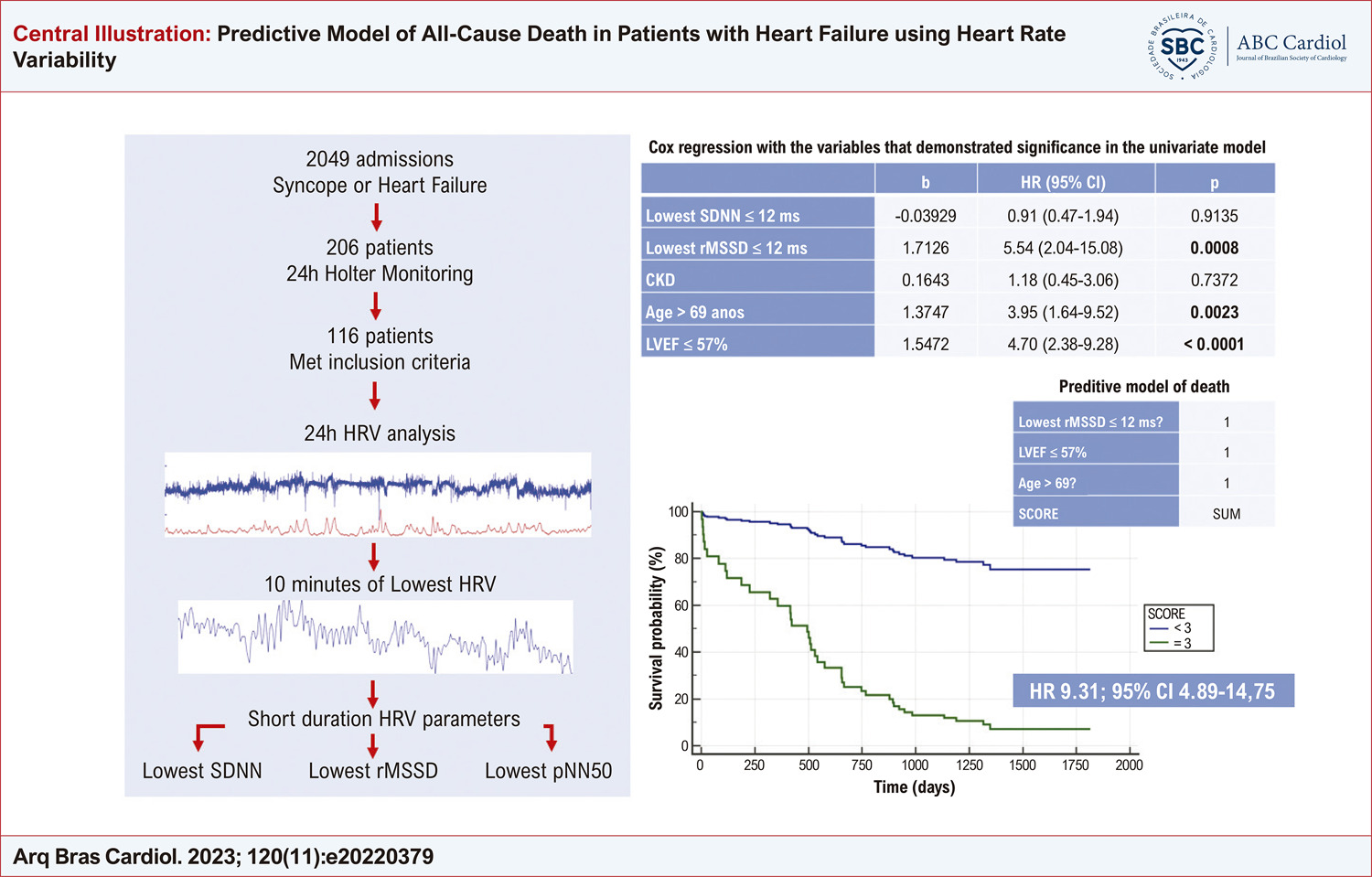
Gomes et al. described an interesting study showing that the analysis of the autonomic nervous system (ANS) should participate in the prognostic assessment of patients with heart failure (HF). A new form of sympathetic assessment was analyzed, measuring 10-minute intervals of heart rate variability (HRV) in the time domain on 24-hour Holters of hospitalized patients, predominantly with HF.

The clinical relevance of the work lies in revealing that the evaluation of short-term HRV variables is one of the main parameters, as it detect brief moments of increased sympathetic tone, that seems to be more associated with HF decompensation and an increase in sudden cardiac death (SCD), adding a parameter (smallest rMSSD) to a risk prediction model that includes age > 69 years and ejection fraction (EF) <57%, with good accuracy.

[…]

  • Autonomic Nervous System
  • Heart Falure
  • Mortality
  • Risk Assessment/methods
Read Full Article
Creative Commons Attribution (CC BY) Creative Commons license
04/03/2024 DOI: 10.36660/abc.20230761
Editorial

Legumain – Another Piece in the Complex Puzzle of Atherosclerotic Plaque Formation and Vulnerability

Ana Teresa Timóteo

The atherosclerotic plaque formation process in the arterial walls is a very complex process. Plaque development occurs due to an interplay between endothelial cells, smooth muscle cells, and immune cells. There is an increase in endothelial permeability and activation of signaling molecules, including inflammatory mediators and cell adhesion molecules. Moreover, circulating lipoproteins (particularly low-density lipoproteins – LDL) can cross the endothelial layer and be deposited in the intimal space, where they undergo oxidative changes (oxLDL), increasing the local inflammatory response. Furthermore, monocytes mature into macrophages, being recruited via attractant chemokines, and while they attempt to clear oxLDL via phagocytosis, they are converted into foam cells and ultimately undergo necrosis. In addition, vascular smooth muscle cells (VSMCs) proliferate and migrate from the media to the intima, leading to intimal hyperplasia, and these cells organize and deposit extracellular matrix, forming a fibrous cap. Erosion or rupture of the fibrous cap will lead to thrombotic occlusion or distal embolism, resulting in ischemia.

In this process, matrix metalloproteinases (MMPs) play an important role. MMPs are a family of zinc-dependent endoproteases that are secreted by endothelial cells, VSMCs, fibroblasts, osteoblasts, macrophages, neutrophils, and lymphocytes. During stable atherosclerotic plaque development, MMP-2 cleaves the endogenous nitric oxide synthase, causing endothelial dysfunction and facilitating infiltration of LDL into the intima. Then, MMP-2 expressed by activated platelets promotes monocyte transmigration into the intima . MMP-2 also facilitates oxLDL-induced VSMCs migration to the intima, forming the fibrous cap. Therefore, it can induce migration and proliferation of VSMCs, enhancing plaque stability. However, MMP-2 levels are higher in unstable than in stable atherosclerotic plaque, indicating that MMP-2 plays a role in plaque vulnerability and propensity to rupture. They participate in the degradation of the extracellular matrix (ECM), which will cause thinning of the plaque fibrous cap, becoming more prone to rupture.

[…]

  • Angina, Unstable
  • Biomarkers
  • Coronary Artery Disease
  • Cysteine Proteases
  • Plaque,Atherosclerosis
  • Ultrasonography, Interventional/methods
Read Full Article
Creative Commons Attribution (CC BY) Creative Commons license
22/12/2023 DOI: 10.36660/abc.20230743 Views 1
Predictive Model of All-Cause Death in Patients with Heart Failure using Heart Rate Variability
Original Article

Predictive Model of All-Cause Death in Patients with Heart Failure using Heart Rate Variability

Bruno Ferraz de Oliveira Gomes et al. Paulo Roberto Benchimol-Barbosa Jurandir Nadal

Abstract

Background

Short and long-duration heart rate variability (HRV) data from Holter monitoring could identify predictors of all-cause death in heart failure (HF) patients.

Objectives

To build a predictive model of all-cause death in patients with HF using HRV.

Methods

Retrospective study including patients with suspected or confirmed HF who were admitted for decompensated HF or syncope that underwent Holter monitoring. In analysis of augmented sympathetic tonus, we evaluated the lowest HRV in nonoverlapping 10-minutes periods throughout 24h continuous electrocardiographic signal recording (short HRV variables). Variables with p<0.01 were included in a multivariate Cox regression model to determine the occurrence of the all-cause death. Variables with statistical significance in Cox regression were chosen to build the predictive model. P<0.05 was considered significant.

Results

A total of 116 patients were included, mean age of 71.9±16.3 years, 45.7% men, mean follow-up of 2.83±1.27 years. Thirty-nine deaths occurred (33.6%). By comparing survivors vs. non-survivors, the variables that showed statistical significance were lowest SDNN, lowest rMSSD, age and left ventricular ejection fraction (LVEF). In Cox regression, independent predictors of all-cause death were: age>69 years (HR 3.95, 95%CI 1.64-9.52); LVEF≤57% (HR 4.70, 95%CI 2.38-9.28) and lowest rMSSD≤12ms (HR 5.54, 95%CI 2.04-15.08). An integer value was assigned to each variable. Score<3 showed AUC=0.802 (95%CI 0.72-0.87).

Conclusion

In HF patients hospitalized for decompensated HF or syncope, independent long-term predictors of all-cause death were age, LVEF, and 10-minutes rMSSD. These findings indicate that even brief moments of high sympathetic tone can impact survival, specifically in the elderly and patients with HF with reduced ejection fraction.

  • Heart Failure
  • Heart Rate
  • Mortality
Read Full Article
Creative Commons Attribution (CC BY) Creative Commons license
22/12/2023 DOI: 10.36660/abc.20220379 Views 1
Letter to the Editor

Cost-Effectiveness of the Use of the Coronary Calcium Score in Primary Prevention as a Guide for the Therapeutic Decision

Cristian Rodrigues do Nascimento et al. Júlio Martinez Santos Rodrigo Mendes Johnnatas Mikael Lopes Pedro Pereira Tenório

To the Editor,

We read with great interest the article: “Cost-Effectiveness of Using the Coronary Calcium Score to Guide Therapeutic Decisions in Primary Prevention in the Brazilian Population” The study aimed to evaluate the cost-effectiveness of using the calcium score in therapeutic guidance for primary cardiovascular prevention. The analysis was based on population data from the “ Multi-Ethnic Study of Atherosclerosis (MESA),” a cohort of 6,814 participants from different study centers in the United States. The inferences made by the authors are important, especially when it comes to identifying factors related to pharmacoeconomics in the prevention of cardiovascular diseases. However, we identified that the procedures suggested using the calcium score (CE) to define the use or not of statins could lead to attrition bias, as there are clinical situations in which more imaging studies on the involvement of the vascular structure are necessary, especially the coronary arteries so that subsequent management can be defined.

[…]

  • Coronary Disease
  • Drug Therapy
  • Economics Pharmaceutica
  • Heart Disease Risk Factors
  • Vascular Calcification
Read Full Article
Creative Commons Attribution (CC BY) Creative Commons license
22/12/2023 DOI: 10.36660/abc.20230542
Editorial

Role of Omega-3 and Omega-6 on Cardiovascular Risk Factors: Importance of Dietary Sources and Lipid Structure

Victória Moralez Soares et al. Thais Caroline da Silva Priscila Portugal dos Santos

Omega-3 (α-linolenic acid – ALA, C18:3n-3) and omega-6 (linoleic acid – LA, C18:2n-6) are essential polyunsaturated fatty acids (PUFAs) as they cannot be synthesized by humans or other higher animals. These PUFAs play an important role in maintaining cardiovascular health, being extensively studied. Mediterranean diet has been repeatedly associated with lower cardiovascular risk, largely due to the abundance of omega-3.

In the human body, ALA and LA are converted to other forms of PUFAs, important for human health including eicosapentaenoic acid (EPA, C20:5n-3), docosapentaenoic acid (DPA, C22:5n-3), docosahexaenoic acid (DHA, C22:6n-3) from the omega-3 family, and γ-linolenic acid (GLA, 18:3n-6), dihomo-γ-linolenic acid (DGLA, 20:3n-6) and arachidonic acid (AA, C20: 4n-6) from the omega-6 family.

[…]

  • Die, Mediterranean
  • Dietary Fats
  • Fatty Acids, Omega-3
  • Fatty Acids, Omega-6
  • Receptors, Eicosanoid
  • Risk Factors
Read Full Article
Creative Commons Attribution (CC BY) Creative Commons license
22/12/2023 DOI: 10.36660/abc.20230753 Views 1
Editorial

Risk Assessment in Heart Failure: Comprehensive is Always Better!

Miguel Mendes

Risk assessment in heart failure (HF) is very challenging, encompassing many data, like NYHA class, clinical history, comorbidities, clinical test parameters, biochemical markers, adherence, and tolerance to guideline-recommended drugs. ,

Risk assessment is critical in advanced HF to support the decision to provide the most adequate therapy for a given patient, from heart transplantation to long-duration LVAD or palliative care. –

[…]

  • Cardiopulmonary Exercise Test/methods
  • Classification Weber
  • Classification/NYHA
  • Heart failure, systolic
  • Risk Assessment/mehods
Read Full Article
Creative Commons Attribution (CC BY) Creative Commons license
22/12/2023 DOI: 10.36660/abc.20230760 Views 1
Editorial

Blood Pressure Response and Exercise Stress Echocardiography: New Perspectives on a Contemporary Challenge

Eduardo M. Vilela et al. Ricardo Fontes-Carvalho

Exercise substantially impacts the cardiovascular system and is associated with many potential benefits across different momentums of the cardiovascular continuum. , On the other hand, physical exercise has for several decades been postulated as a possible approach to assess the cardiovascular response. As such, this methodology could be of interest for diagnostic purposes while also providing prognostic information. While the maturation of protocols encompassing the electrocardiographic response to exercise provided major breakthroughs, novel techniques have allowed an expanded view of the complex interplay between exercise and the cardiovascular system. –

Exercise stress echocardiography (ESE) has progressively evolved into a highly relevant framework, namely when assessing coronary artery disease (CAD). Echocardiography also has the advantage of assessing components such as exercise capacity, diastolic function, dynamic gradients, and valvular heart disease. , Furthermore, blood pressure (BP) and electrocardiographic monitoring also provide pivotal inputs . Recent data also showcases the potential of combining with other techniques, such as lung ultrasound, to assess congestion. While, as illustrated in contemporary guidelines, ESE has garnered great interest (being preferred to pharmacological testing in patients able to exercise), there are still some caveats in its optimal application. ,

[…]

  • Arterial Pressure
  • Coronary Artery Disease
  • Echocardiography, Stress / methods
  • Echocardiography/methods
  • Echocardiography/trends
Read Full Article
Creative Commons Attribution (CC BY) Creative Commons license
22/12/2023 DOI: 10.36660/abc.20230737
Editorial

Post-COVID Syndrome or Long COVID: A New Challenge for the Healthcare System

José Geraldo Mill et al. Jéssica Polese

COVID-19 posed an unprecedented challenge to public health around the world. According to the ‘WHO Coronavirus (Covid-19) Dashboard’ (updated on 10/18/23), the disease affected 770 million people and caused 6.9 million deaths. In terms of the number of cases, Brazil occupies the 8 th position (38 million), rising to 2 nd in the number of deaths (more than 700 thousand) and, unfortunately, reaches 1 st in fatality rate with approximately 368 deaths/100 thousand inhabitants. These data indicate that if the pandemic was devastating for the world, it was even more drastic for the Brazilian population. The lethality of the disease worldwide was around 1%, and, also in this indicator, Brazil stands out negatively, with lethality close to 1.9%. As the disease affected a huge number of individuals, the number of survivors of the disease is also large.

Most individuals affected by SARS-CoV-2 fully recover after illness. An important portion, however, remains symptomatic for a variable period of time. The persistence of symptoms is more frequent and varied in more severe forms of the disease. In a cohort of 41 patients who required hospitalization for, on average, 9 days, 80% had reduced lung function 30 days after discharge, which persisted for up to 6 months in around 10% of patients, some of them with clear signs of restrictive pulmonary syndrome, limiting factor for physical effort. ,

[…]

  • COVID-19
  • Health Systems
  • Post-Acute COVID-19 Syndrome
Read Full Article
Creative Commons Attribution (CC BY) Creative Commons license
22/12/2023 DOI: 10.36660/abc.20230750
Figure 1
Case Report

Left Atrial Appendage Occlusion and Implantation of a Bicaval System: Report of a Simultaneous Transcatheter Procedure in a Critically Ill Elderly Patient

Marcos Cherem et al. Carlos Eduardo Bernini Jamil Abdalla Saad Dirceu Barbosa Dias Sobrinho … Marcio Sérgio Carvalho Silva Ruthnea Aparecida Lazaro Muzzi

Case Report

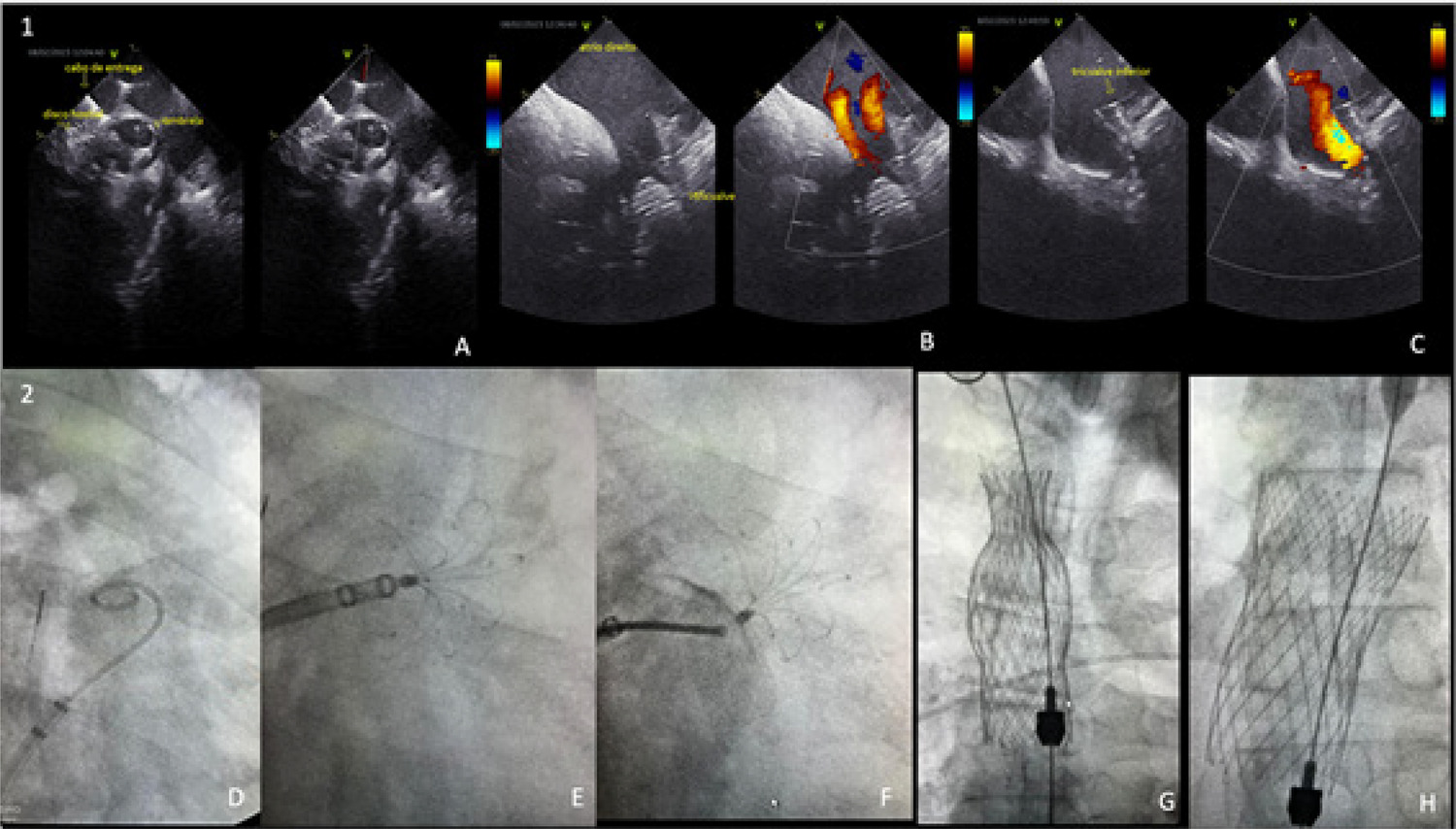
We report the case of an 87-year-old male patient who presented with severe torrential tricuspid regurgitation with important hemodynamic repercussions and conditions of right heart failure, episodes of pulmonary thromboembolism, and deep vein thrombosis in the lower limbs, in follow-up at the hospital’s cardiology service since 1996.

The patient had severe comorbidities, including permanent atrial fibrillation in use of prophylactic enoxaparin and impossibility of safe oral anticoagulation due to chronic renal failure. Furthermore, he concomitantly presented stage 3 essential hypertension, left ventricular hypertrophy, hypercholesterolemia, and venous insufficiency of the lower limbs. Although he was using methyldopa, amiodarone, bisoprolol, enoxaparin, epoetin, dapagliflozin, furosemide, spironolactone, propatylnitrate, atorvastatin, and allopurinol, he progressively developed severe tricuspid insufficiency, right heart chamber dilation, and congestion in the venae cavae and right atrium, which were refractory to optimized clinical treatment, with progressive worsening of renal function. The transthoracic echocardiogram revealed severe and maladaptive concentric hypertrophy of the left ventricle, with systolic involvement of the right ventricle, important tricuspid insufficiency, important biatrial enlargement, and moderate pulmonary hypertension.

[…]

  • Atrial Appendage
  • Atrial Fibrillation
  • Cardiac Catheterization/methods
  • Tricuspid Valve Insufficiency
  • Venas Cavas
Read Full Article
Creative Commons Attribution (CC BY) Creative Commons license
22/12/2023 DOI: 10.36660/abc.20230454 Views 1
Percutaneous Strategies in Structural Heart Diseases: Focus on Chronic Heart Failure
Review Article

Percutaneous Strategies in Structural Heart Diseases: Focus on Chronic Heart Failure

Filippe Barcellos Filippini et al. Henrique Barbosa Ribeiro Edimar Bocchi Fernando Bacal … Fabiana G. Marcondes-Braga Monica S. Avila Janine Daiana Sturmer Mauricio Felippi de Sá Marchi Gabriel Kanhouche Antônio Fernando Freire Renata Cassar Alexandre A. Abizaid Fábio Sândoli de Brito Jr

Abstract

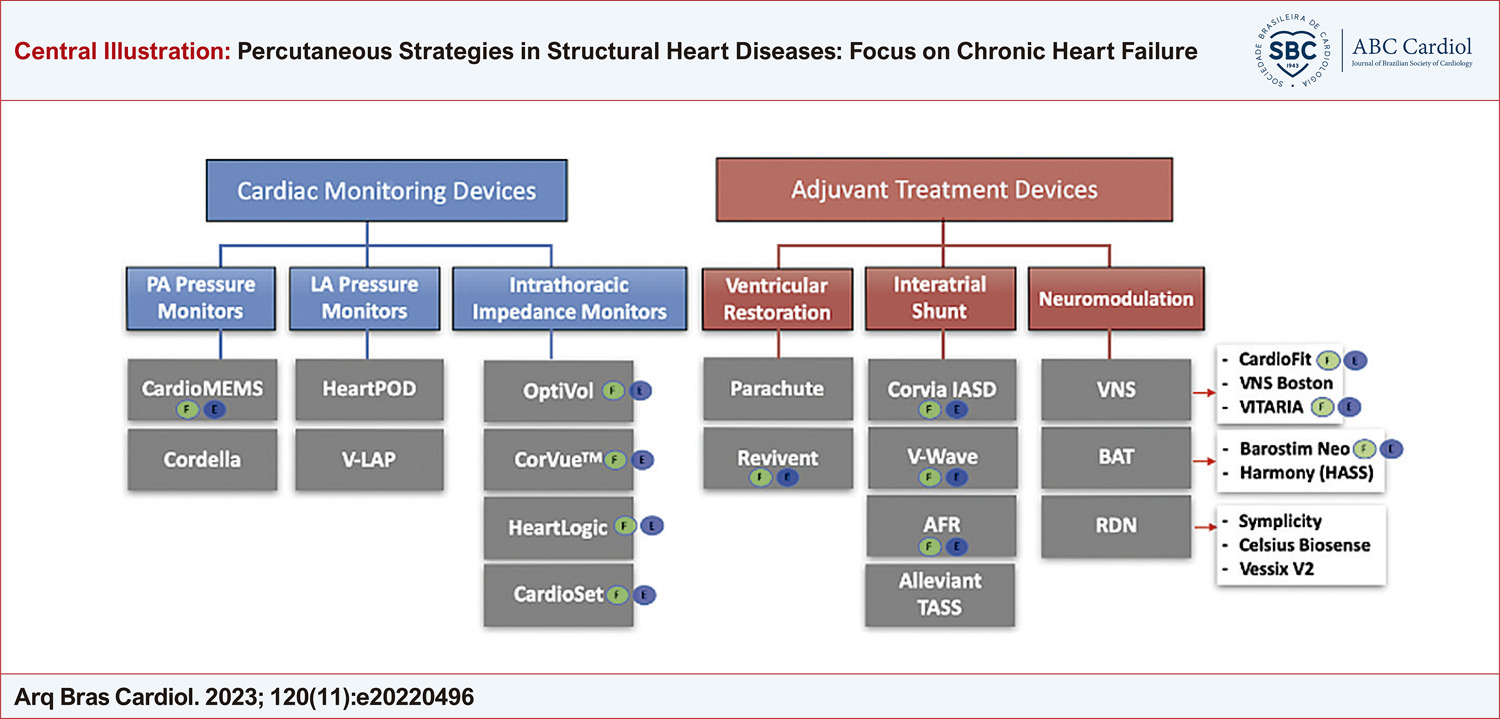
Innovations in devices during the last decade contributed to enhanced diagnosis and treatment of patients with cardiac insufficiency. These tools progressively adapted to minimally invasive strategies with rapid, widespread use. The present article focuses on actual and future directions of device-related diagnosis and treatment of chronic heart failure.

  • Cardiac resynchronization-therapy devices
  • Heart Failure
  • Implantable Defibrillators
Read Full Article
Creative Commons Attribution (CC BY) Creative Commons license
18/12/2023 DOI: 10.36660/abc.20220496 Views 2
Figure 1
Research Letter

Excess Systolic Blood Pressure Associated with Fine Particulate Matter Air Pollution above the WHO Guidelines in Brazil

Pedro Rafael Vieira de Oliveira Salerno et al. Issam Motairek Luis Augusto Palma Dallan Brendan Bourges-Sevenier … Sanjay Rajagopalan Sadeer G. Al-Kindi

Introduction

Cardiovascular disease remains the leading cause of mortality worldwide, and hypertension has been implicated as having the highest association of causation among all of the cardiovascular disease risk factors. Thus, unsurprisingly, hypertension is the main risk factor for death and the second major cause of disability-adjusted life years in Brazil, heavily impacting its population and national healthcare system. It is also directly linked to air pollution, especially fine particulate matter < 2.5 microns (PM 2.5 ), which has been identified as an independent risk factor for increased systolic blood pressure (SBP). In Brazil, as in most countries, the main source of exposure to air pollution in urban areas primarily results from the burning of fossil fuels via vehicular traffic and industrial power generation, while, in rural Brazil, air pollution mainly results from the burning of biomass as well as deforestation.

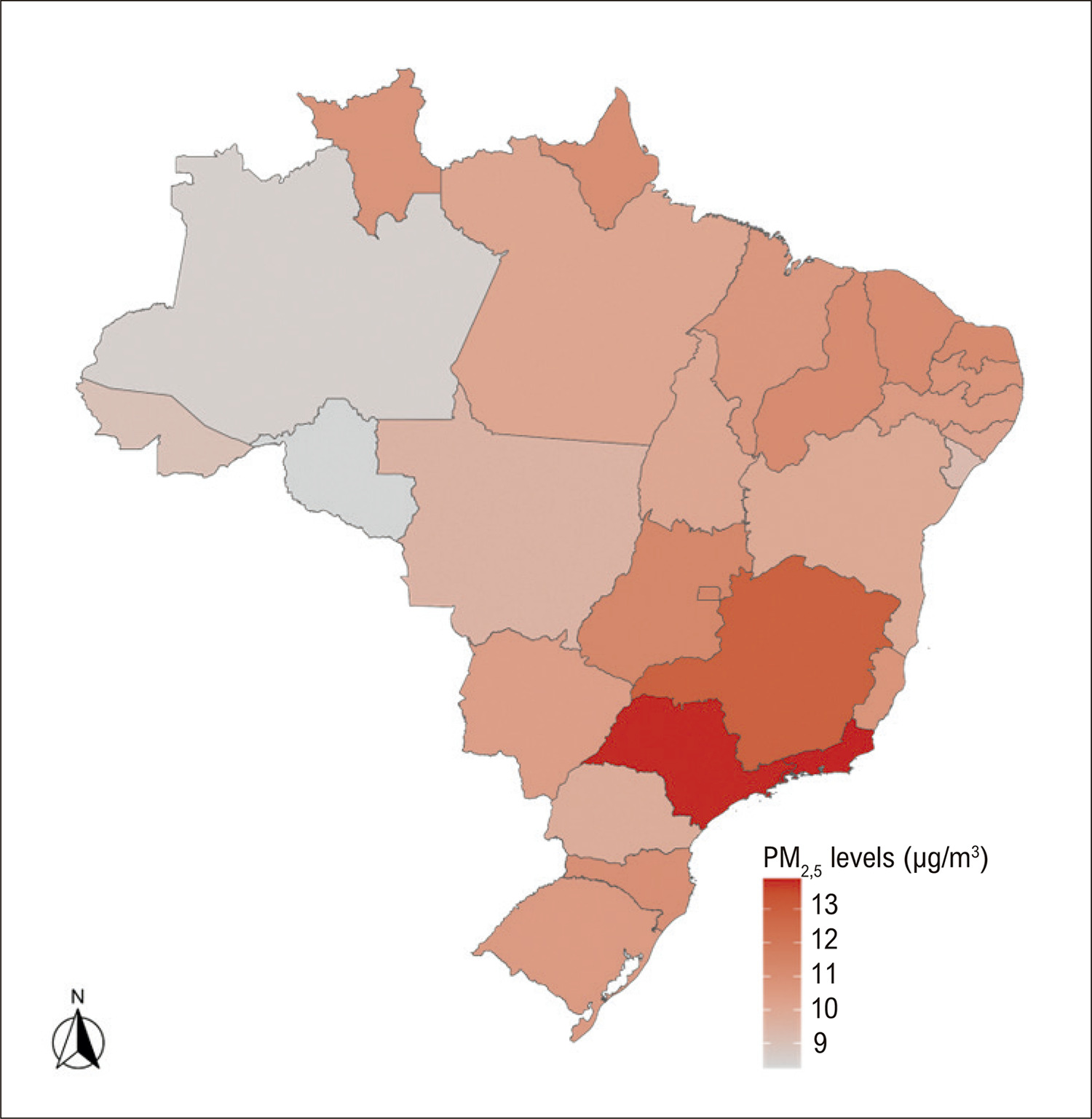
In Brazil, previous studies have been conducted investigating the effects of PM 2.5 exposure on blood pressure in outdoor workers who are most susceptible to ambient air pollution from vehicular emissions, such as traffic controllers, demonstrating the link between PM 2.5 concentration and increased SBP. , However, these studies tend to focus on metropolitan and urban regions. , Thus, due to Brazil’s large geographical size and regional diversity, there exists a substantial gap in knowledge in the less populated areas. In this study, we aimed to estimate the excess SBP attributable to PM 2.5 concentrations above the threshold of the World Health Organization (WHO) guidelines in Brazil, as well as in all its states and regions.

[…]

  • Air Pollution
  • Arterial Pressure
  • Environment
  • Public Health
Read Full Article
Creative Commons Attribution (CC BY) Creative Commons license
18/12/2023 DOI: 10.36660/abc.20230347 Views 2
Exaggerated Systolic Blood Pressure Increase with Exercise and Myocardial Ischemia on Exercise Stress Echocardiography
Original Article

Exaggerated Systolic Blood Pressure Increase with Exercise and Myocardial Ischemia on Exercise Stress Echocardiography

Cláudia Bispo Martins-Santos et al. Lara Teles Alencar Duarte Cleovaldo Ribeiro Ferreira-Junior Allexa Gabriele Teixeira Feitosa … Edvaldo Victor Gois Oliveira Iana Carine Machado Bispo Campos Enaldo Vieira de Melo Stephanie Macedo Andrade Antônio Carlos Sobral Sousa Joselina Luzia Menezes Oliveira

Abstract

Background

The association between exaggerated systolic blood pressure response to exercise (ESBPRE) and myocardial ischemia is controversial and little studied in patients with established or suspected chronic coronary syndrome.

Objective

To verify the relationship between myocardial ischemia and ESBPRE in patients undergoing exercise stress echocardiography (ESE).

Methods

This is a cross-sectional study with 14,367 patients undergoing ESE, from January 2000 to January 2022, divided into the following 2 groups: G1, composed of patients whose peak systolic pressure increased ≥ 90 mmHg (value corresponding to the 95th percentile of the study population), and G2, patients who did not demonstrate an exaggerated hypertensive response. The groups were compared using Student’s t and chi-square tests. P values < 0.05 were considered significant. Logistic regression was also performed to identify independent risk factors for myocardial ischemia, ESBPRE, complaints of typical chest pain prior to the exam, and angina during the test.

Results

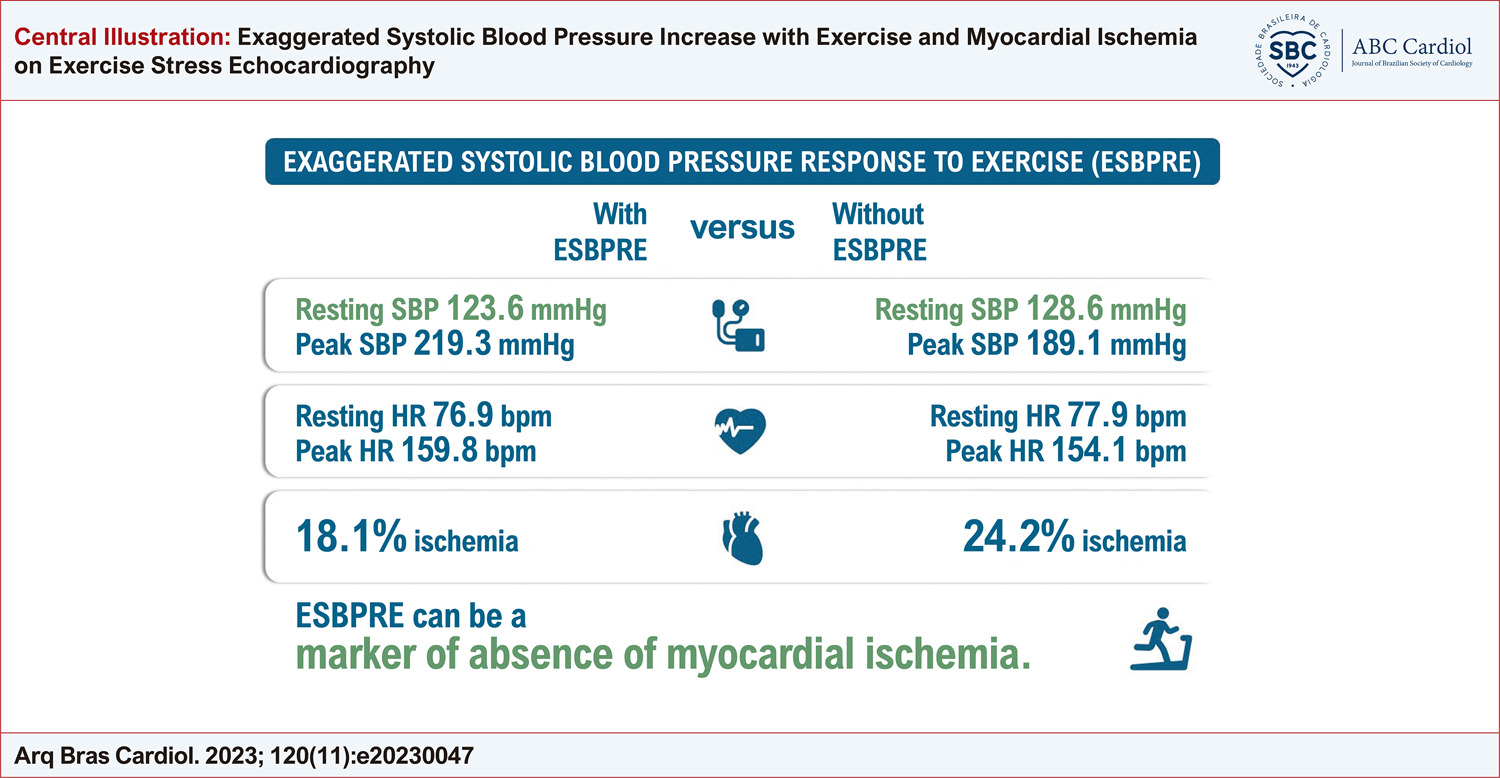
Of the 14,367 patients, 1,500 (10.4%) developed ESBPRE, and 7,471 (52.0%) were female. The percentages of previous complaints of typical chest pain, angina during the test, and myocardial ischemia in patients with ESBPRE were 5.8%, 2.4% and 18.1%, compared to 7.4%, 3.9%, and 24.2%, in patients without ESBPRE, respectively (p = 0.021,p = 0.004, p < 0.001). In multivariate analysis, ESBPRE was independently associated with a lower probability of myocardial ischemia (odds ratio: 0.73; 95% confidence interval: 0.58 to 0.93; p = 0.009).

Conclusion

Exaggerated increase in systolic blood pressure during ESE may be a marker for excluding myocardial ischemia.

  • Arterial Pressure
  • Coronary Artery Disease
  • Exercise Test
  • Myocardial Ischemia
  • Stress echocardiography
Read Full Article
Creative Commons Attribution (CC BY) Creative Commons license
18/12/2023 DOI: 10.36660/abc.20230047 Views 1
Incremental Role of New York Heart Association Class and Cardiopulmonary Exercise Test Indices for Prognostication in Heart Failure: A Cohort Study
Original Article

Incremental Role of New York Heart Association Class and Cardiopulmonary Exercise Test Indices for Prognostication in Heart Failure: A Cohort Study

Pedro Henrique de Borba Engster et al. André Zimerman Thomas Schaan Marina S. Borges … Gabriel Souza Giovanni Donelli Costa Luis Eduardo Rohde Anderson Donelli da Silveira

Abstract

Background

The accuracy of the New York Heart Association (NYHA) classification to assess prognosis may be limited compared with objective cardiopulmonary exercise test (CPET) parameters in heart failure (HF).

Objective

To investigate the prognostic value of the NYHA classification in addition to Weber class.

Methods

Adult outpatients with HF undergoing CPET in a Brazilian tertiary care center were included. The physician-assigned NYHA class and the CPET-derived Weber class were stratified into “favorable” (NYHA I or II; Weber A or B) or “adverse” (NYHA III or IV; Weber C or D). Patients with one favorable class and one adverse class were defined as “discordant.” The primary endpoint was time to all-cause mortality. A 2-sided p value < 0.05 was considered statistically significant.

Results

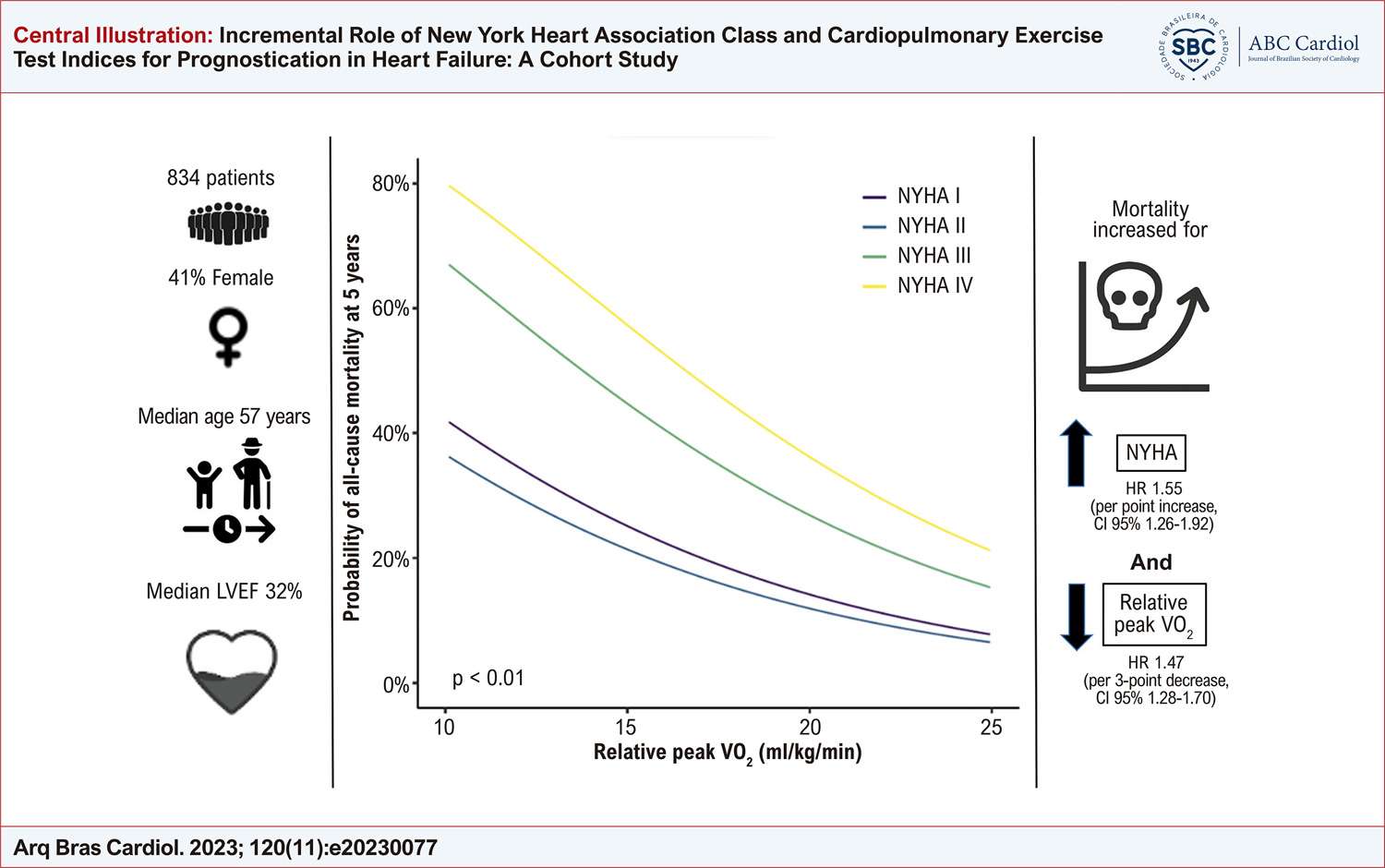
A total of 834 patients were included. Median age was 57 years; 42% (351) were female, and median left ventricular ejection fraction was 32%. Among patients with concordant NYHA and Weber classes, those with adverse NYHA and Weber classes had significantly higher all-cause mortality compared to those with favorable classes (hazard ratio [HR]: 5.65; 95% confidence interval [CI]: 3.38 to 9.42). Among patients with discordant classes, there was no significant difference in all-cause mortality (HR: 1.38; 95% CI: 0.82 to 2.34). In the multivariable model, increments in NYHA class (HR: 1.55 per class increase; 95% CI: 1.26 to 1.92) and reductions in peak VO 2 (HR: 1.47 per 3 ml/kg/min decrease; 95% CI: 1.28 to 1.70) significantly predicted mortality.

Conclusions

Physician-assigned NYHA class and objective CPET measures provide complementary prognostic information for patients with HF.

  • Exercise Test
  • Heart Failure
  • Prognosis
Read Full Article
Creative Commons Attribution (CC BY) Creative Commons license
18/12/2023 DOI: 10.36660/abc.20230077 Views 1
Association of Income Level and Ischemic Heart Disease: Potential Role of Walkability
Original Article

Association of Income Level and Ischemic Heart Disease: Potential Role of Walkability

Rodrigo Julio Cerci et al. Miguel Morita Fernandes-Silva João Vicente Vitola Juliano Julio Cerci … Carlos Cunha Pereira Neto Margaret Masukawa Ana Paula Weller Gracia Lara Luiza Silvello Pedro Prado Murilo Guedes Adriano Akira Ferreira Hino Cristina Pellegrino Baena

Abstract

Background

Socioeconomic status has been linked to ischemic heart disease (IHD). High-income neighborhoods may expose individuals to a walking-promoting built environment for daily activities (walkability). Data from the association between income and IHD is lacking in middle-income countries. It is also uncertain whether walkability mediates this association.

Objectives

To investigate whether income is associated with IHD in a middle-income country and whether neighborhood walkability mediates the income-IHD association.

Methods

This cross-sectional study evaluated 44,589 patients referred for myocardial perfusion imaging (SPECT-MPI). Income and walkability were derived from participants’ residential census tract. Walkability quantitative score combined 4 variables: street connectivity, residential density, commercial density, and mixed land use. IHD was defined by abnormal myocardial perfusion during a SPECT-MPI study. We used adjusted mixed effects models to evaluate the association between income level and IHD, and we performed a mediation analysis to measure the percentage of the income-IHD association mediated by walkability. We considered p values below 0.01 as statistically significant.

Results

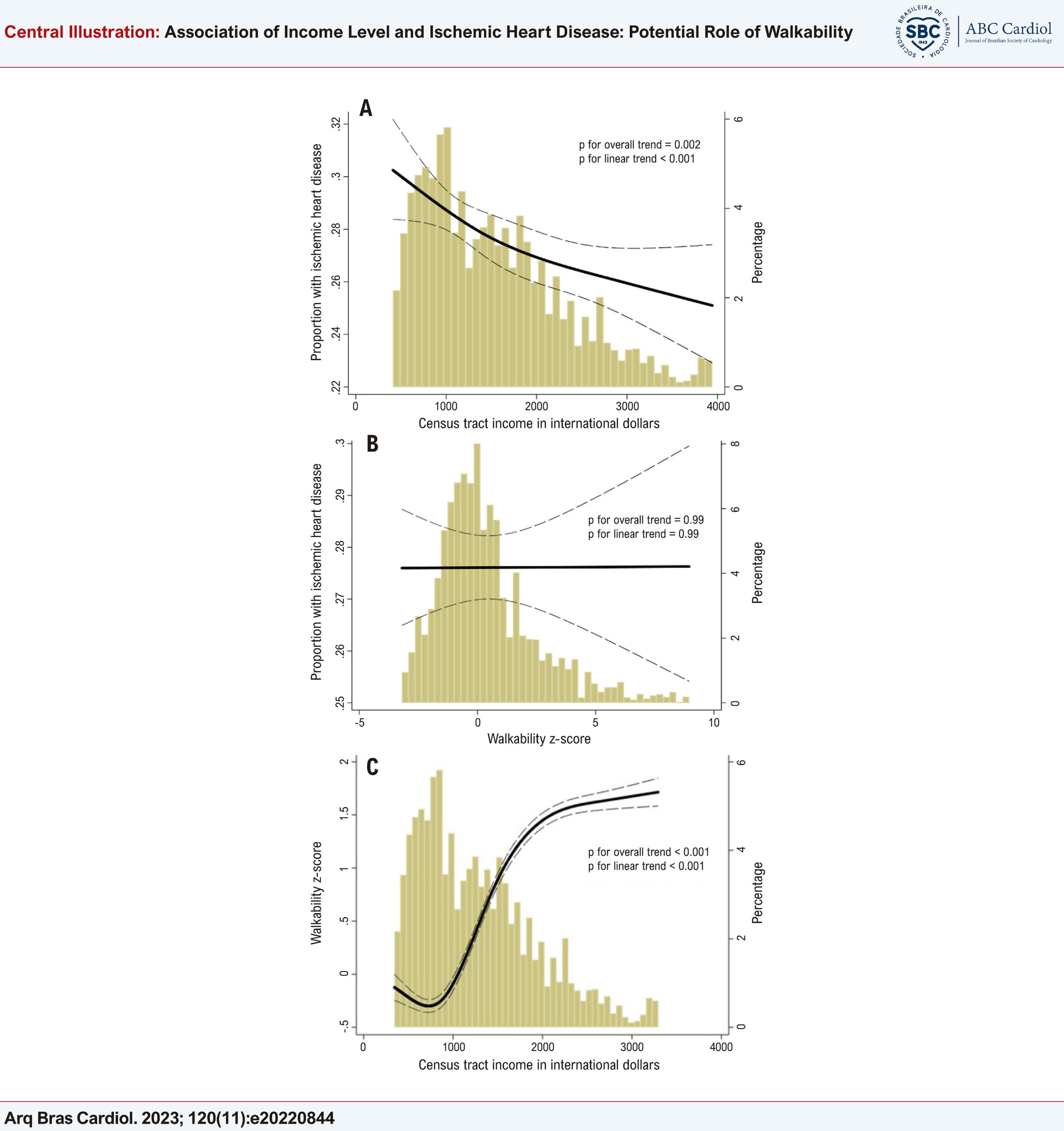
From 26,415 participants, those living in the lowest-income tertile census tract were more physically inactive (79.1% versus 75.8% versus 72.7%) when compared to higher-income tertile census tracts (p < 0.001). Income was associated with IHD (odds ratio: 0.91 [95% confidence interval: 0.87 to 0.96] for each 1,000.00 international dollars increase in income) for both men and women equally (p for interaction = 0.47). Census tracts with a higher income were associated with better walkability (p < 0.001); however, walkability did not mediate the income-IHD association (percent mediated = −0.3%).

Conclusions

Income was independently associated with higher prevalence of IHD in a middle-income country irrespective of gender. Although walkability was associated with census tract income, it did not mediate the income-IHD association.

  • Income
  • Myocardial Ischemia
  • Myocardial Perfusion Imaging
Read Full Article
Creative Commons Attribution (CC BY) Creative Commons license
04/12/2023 DOI: 10.36660/abc.20220844 Views 1
Erratum

Erratum

Arq Bras Cardiol. 2023;120(10):e20230188

In the Original Article “Isolated Left Atrium Morphofunctional Study of an Experimental Pulmonary Hypertension Model in Rats”, with DOI: https://doi.org/10.36660/abc.20230188, published in the journal Arquivos Brasileiros de Cardiologia, Arq Bras Cardiol. 2023; 120(10):e20230188, on page 1, change the name of the author Fabiana Silva Machado to: Fabiana da Silva Alcântara.

[…]

Read Full Article
Creative Commons Attribution (CC BY) Creative Commons license
20/11/2023 DOI: 10.36660/abc.20230739
Coronary Inflammation by Computed Tomography Pericoronary Fat Attenuation and Increased Cytokines in Young Male Anabolic Androgenic Steroid Users
Original Article

Coronary Inflammation by Computed Tomography Pericoronary Fat Attenuation and Increased Cytokines in Young Male Anabolic Androgenic Steroid Users

Francis Ribeiro de Souza et al. Carlos E. Rochitte Douglas Carli Silva Barbara Sampaio … Marisa Passarelli Marcelo R. dos Santos Guilherme W. Fonseca Antonio Carlos Battaglia Filho Kelly Correa Renata Margarida do Val Maurício Yonamine Rosa Maria R. Pereira Carlos Eduardo Negrão Roberto Kalil-Filho Maria Janieire de Nazaré Nunes Alves

Abstract

Background

Anabolic androgenic steroid (AAS) abuse has been associated with coronary artery disease (CAD). Pericoronary fat attenuation (pFA) is a marker of coronary inflammation, which is key in the atherosclerotic process.

Objective

To evaluate pFA and inflammatory profile in AAS users.

Methods

Twenty strength-trained AAS users (AASU), 20 AAS nonusers (AASNU), and 10 sedentary controls (SC) were evaluated. Coronary inflammation was evaluated by mean pericoronary fat attenuation (mPFA) in the right coronary artery (RCA), left anterior descending coronary artery (LAD), and left circumflex (LCx). Interleukin (IL)-1 (IL-1), IL-6, IL-10, and TNF-alpha were evaluated by optical density (OD) in a spectrophotometer with a 450 nm filter. P<0.05 indicated statistical significance.

Results

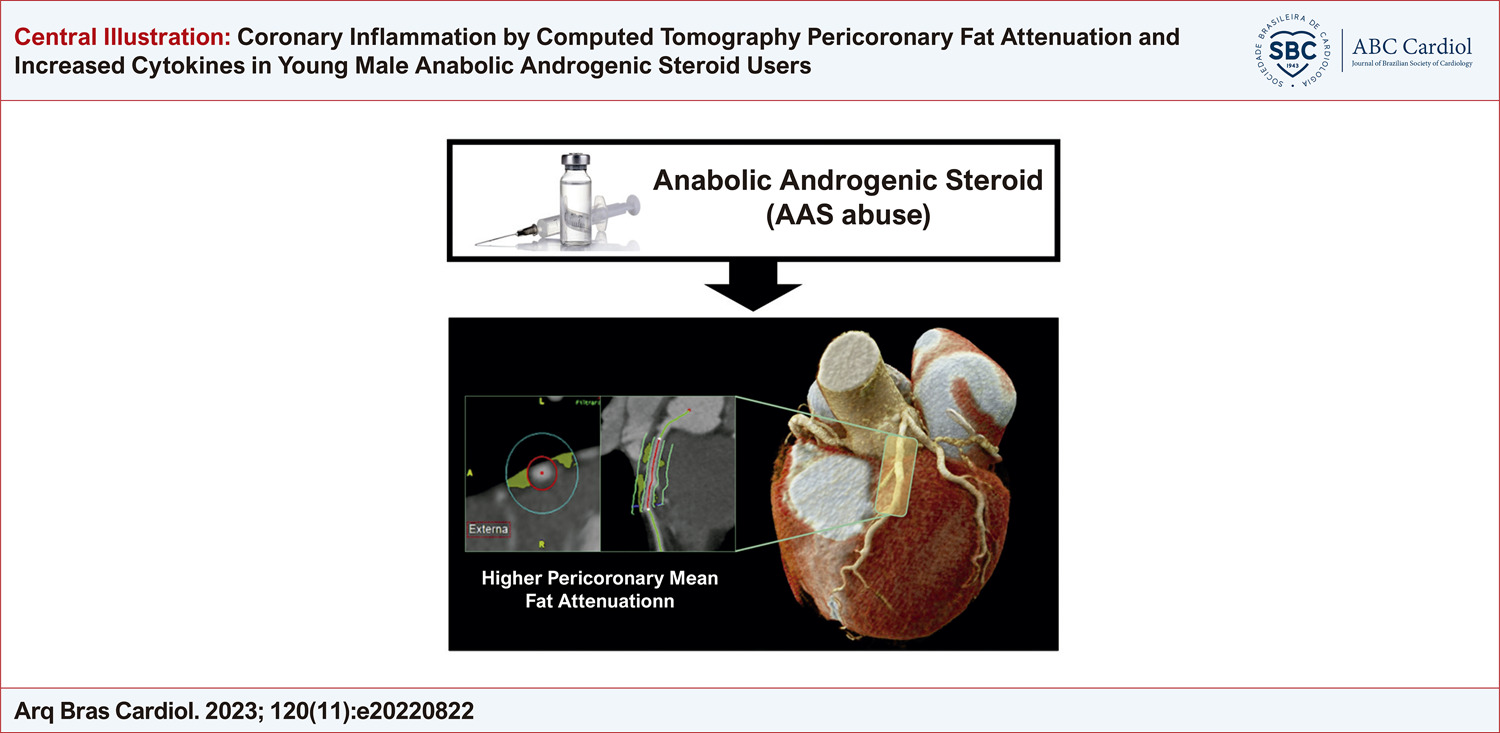
AASU had higher mPFA in the RCA (-65.87 [70.51-60.70] vs. -78.07 [83.66-72.87] vs.-78.46 [85.41-71.99] Hounsfield Units (HU), respectively, p<0.001) and mPFA in the LAD (-71.47 [76.40-66.61] vs. -79.32 [84.37-74.59] vs. -82.52 [88.44-75.81] HU, respectively, p=0.006) compared with AASNU and SC. mPFA in the LCx was not different between AASU, AASNU, and SC (-72.41 [77.17-70.37] vs. -80.13 [86.22-72.23] vs. -78.29 [80.63-72.29] HU, respectively, p=0.163). AASU compared with AASNU and SC, had higher IL-1, (0.975 [0.847-1.250] vs. 0.437 [0.311-0.565] vs. 0.530 [0.402-0.780] OD, respectively, p=0.002), IL-6 (1.195 [0.947-1.405] vs. 0.427 [0.377-0.577] vs. 0.605 [0.332-0.950] OD, p=0.005) and IL-10 (1.145 [0.920-1.292] vs. 0.477 [0.382-0.591] vs. 0.340 [0.316-0.560] OD, p<0.001). TNF-α was not different between the AASU, AASNU, and SC groups (0.520 [0.250-0.610] vs. 0.377 [0.261-0.548] vs. 0.350 [0.182-430]), respectively.

Conclusion

Compared with ASSNU and controls, AASU have higher mPFA and higher systemic inflammatory cytokines profile suggesting that AAS may induce coronary atherosclerosis through coronary and systemic inflammation.

  • Anabolic Androgenic Steroids
  • Coronary Artery Disease
  • Pericoronary Fat Attenuation
Read Full Article
Creative Commons Attribution (CC BY) Creative Commons license
20/11/2023 DOI: 10.36660/abc.20220822 Views 1
Figure 1
Research Letter

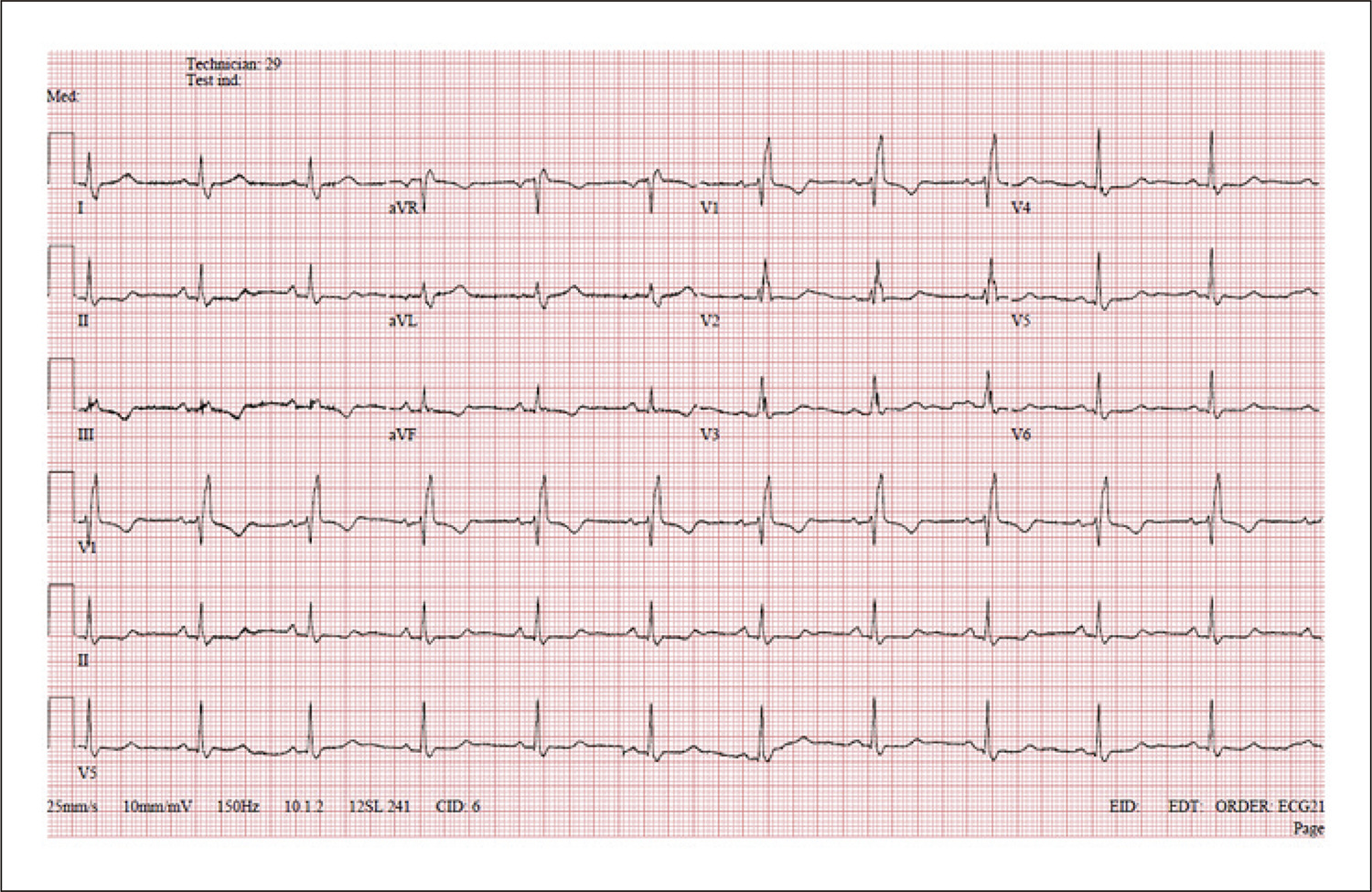
Left Anterior Fascicular Block Associated with Atrioventricular Block during Exercise Stress Test

Andréa Marinho Falcão et al. Vagner L. Suares William A. Chalela

Introduction

The exercise stress test (EST) has been indicated in various clinical situations. Despite the robust evidence about the clinical significance of ST-T abnormalities during exercise, little attention has been paid to the development of exercise-induced intraventricular conduction disorders.

Conduction disorders and fascicular blocks induced during EST are rare. The prevalence of stress-induced left bundle-branch blocks (LBBB) ranges from 0.3%-0.5%, and frequently, the prognosis is more adverse (greater CAD and heart failure prevalence).

[…]

  • Cardiac Conduction System Disease
  • Coronary Artery Disease
  • Exercise Test
Read Full Article
Creative Commons Attribution (CC BY) Creative Commons license
20/11/2023 DOI: 10.36660/abc.20230200
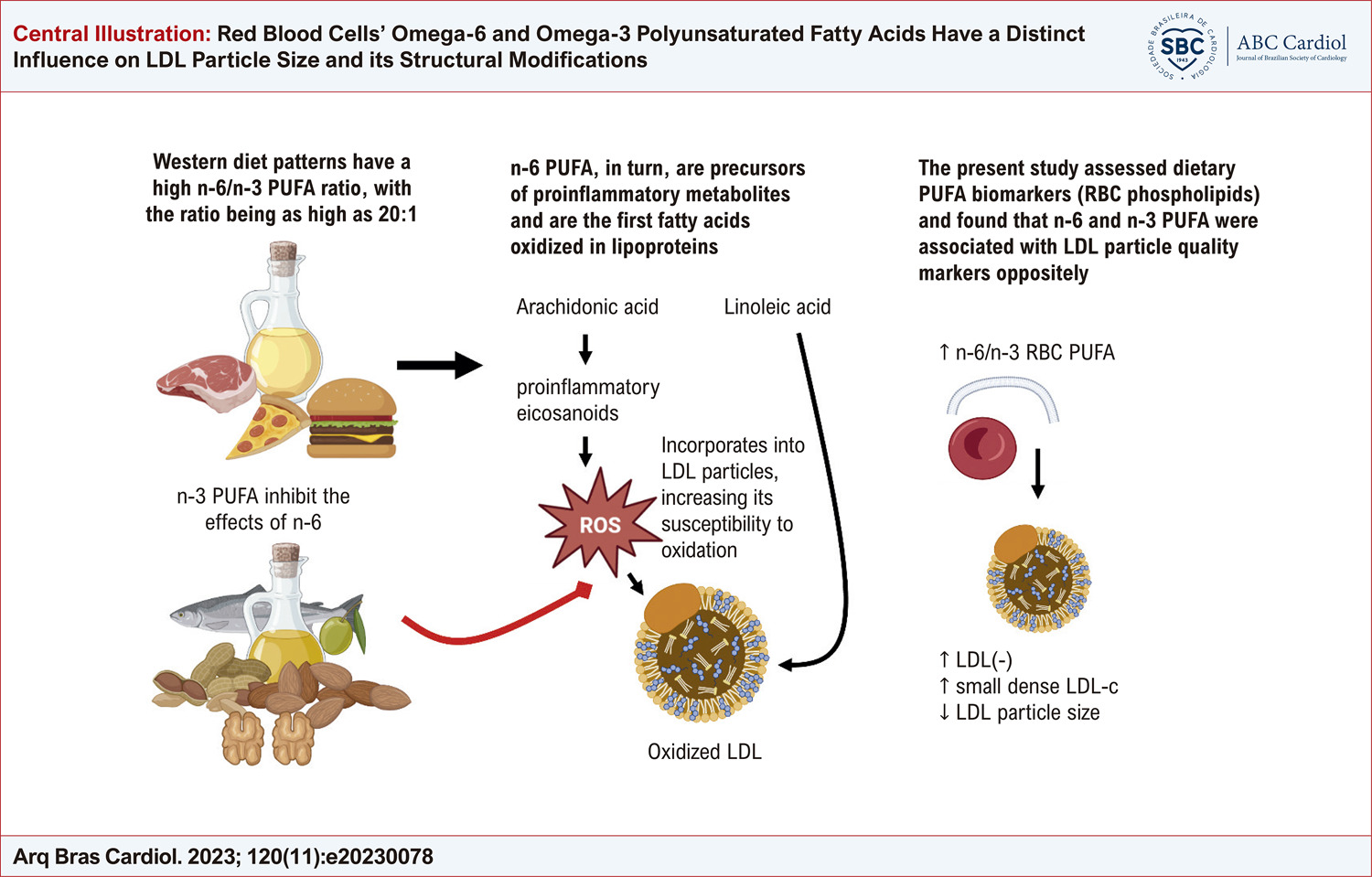
Red Blood Cells’ Omega-6 and Omega-3 Polyunsaturated Fatty Acids Have a Distinct Influence on LDL Particle Size and its Structural Modifications
Original Article

Red Blood Cells’ Omega-6 and Omega-3 Polyunsaturated Fatty Acids Have a Distinct Influence on LDL Particle Size and its Structural Modifications

Gustavo Henrique Ferreira Gonçalinho et al. Geni Rodrigues Sampaio Rosana Aparecida Manólio Soares-Freitas Nágila Raquel Teixeira Damasceno

Abstract

Background

While Omega-3 and omega-6 polyunsaturated fatty acids (n-3 and n-6 PUFAs) have established effects on cardiovascular disease (CVD) risk factors, little is known about their impacts on LDL quality markers.

Objective

To assess the associations of n-3 and n-6 PUFA within red blood cells (RBC) with LDL particle size, small dense LDL-c (sdLDL-c), and electronegative LDL [LDL(-)] in adults with CVD risk factors.

Methods

Cross-sectional study involving 335 men and women aged 30 to 74 with at least one cardiovascular risk factor. Analyses were conducted on biochemical parameters, such as glucose, insulin, HbA1c, C-reactive protein (CRP), lipid profile, lipoprotein subfractions, electronegative LDL particle [LDL(-)] and its autoantibody, and RBC n-3 and n-6 PUFAs. Independent t-test/Mann-Whitney test, one-way ANOVA/Kruskal-Wallis test, and multiple linear regressions were applied. All tests were two-sided, and a p-value of less than 0.05 was considered statistically significant.

Results

The RBC n-6/n-3 ratio was associated with increased LDL(-) (β = 4.064; 95% CI = 1.381 – 6.748) and sdLDL-c (β = 1.905; 95% CI = 0.863 – 2.947) levels, and reduced LDL particle size (β = -1.032; 95% CI = -1.585 − -0.478). Separately, n-6 and n-3 PUFAs had opposing associations with those parameters, reinforcing the protective effects of n-3 and showing the potential negative effects of n-6 on LDL particle quality.

Conclusion

RBC n-6 PUFA was associated with increased cardiometabolic risk and atherogenicity of LDL particles, while n-3 PUFA was associated with better cardiometabolic parameters and LDL particle quality.

  • Fatty Acids, Unsaturated
  • Lipoproteins, LDL
  • Oxidized LDL Receptors
Read Full Article
Creative Commons Attribution (CC BY) Creative Commons license
20/11/2023 DOI: 10.36660/abc.20230078 Views 1
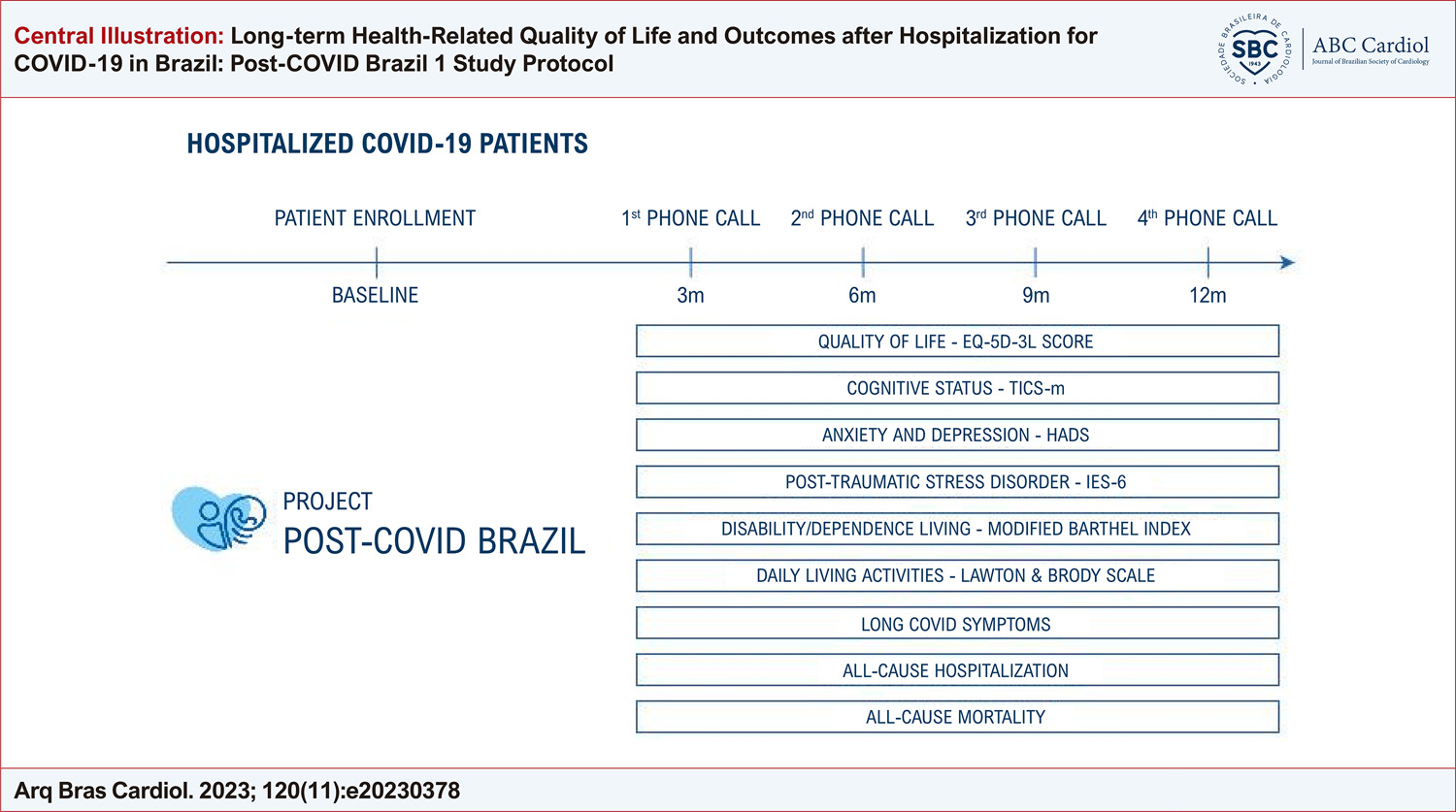
Long-term Health-Related Quality of Life and Outcomes after Hospitalization for COVID-19 in Brazil: Post-COVID Brazil 1 Study Protocol
Original Article

Long-term Health-Related Quality of Life and Outcomes after Hospitalization for COVID-19 in Brazil: Post-COVID Brazil 1 Study Protocol

Geraldine Trott et al. Fernando Luis Scolari Marciane Maria Rover Mariana Motta Dias da Silva … Denise de Souza Rosa da Rosa Minho dos Santos Raíne Fogliati de Carli Schardosim Gabriela Soares Rech Juliana de Mesquita Neto Gabriel Pozza Estivalete Hellen Jordan Martins Freitas Carolina Rothmann Itaqui Amanda Christina Kozesinski-Nakatani Andreia Biolo Milena Soriano Marcolino Bruna Brandão Barreto Paulo Roberto Schvartzman Ana Carolina Peçanha Antonio Caroline Cabral Robinson Maicon Falavigna Carisi Anne Polanczyk Regis Goulart Rosa

Abstract

Background

The long-term impact of hospitalization for COVID-19 on patients’ physical, mental, and cognitive health still needs further assessment.

Objectives

This study aims to evaluate factors associated with quality of life and cardiovascular and non-cardiovascular outcomes 12 months after hospitalization for COVID-19.

Methods

This prospective multicenter study intends to enroll 611 patients hospitalized due to COVID-19 (NCT05165979). Centralized telephone interviews are scheduled to occur at three, six, nine, and 12 months after hospital discharge. The primary endpoint is defined as the health-related quality-of-life utility score assessed by the EuroQol-5D-3L (EQ-5D-3L) questionnaire at 12 months. Secondary endpoints are defined as the EQ-5D-3L at three, six and nine months, return to work or education, persistent symptoms, new disabilities in instrumental activities of daily living, cognitive impairment, anxiety, depression, and post-traumatic stress symptoms, major cardiovascular events, rehospitalization, as well as all-cause mortality at 3, 6, 9, and 12 months after SARS-CoV-2 infection. A p-value <0.05 will be assumed as statistically significant for all analyses.

Results

The primary endpoint will be presented as the frequency of the EQ-5D-3L score 12 months after COVID-19 hospitalization. A sub-analysis to identify possible associations of independent variables with study outcomes will be presented.

Conclusions

This study will determine the impact of COVID-19 on the quality of life and cardiovascular and non-cardiovascular outcomes of hospitalized patients 12 months after discharge providing insights to the public health system in Brazil.

  • Post-Acute COVID-19 Syndrome
  • Quality of life
  • Time
Read Full Article
Creative Commons Attribution (CC BY) Creative Commons license
20/11/2023 DOI: 10.36660/abc.20230378 Views 1
Central Illustration
Original Article

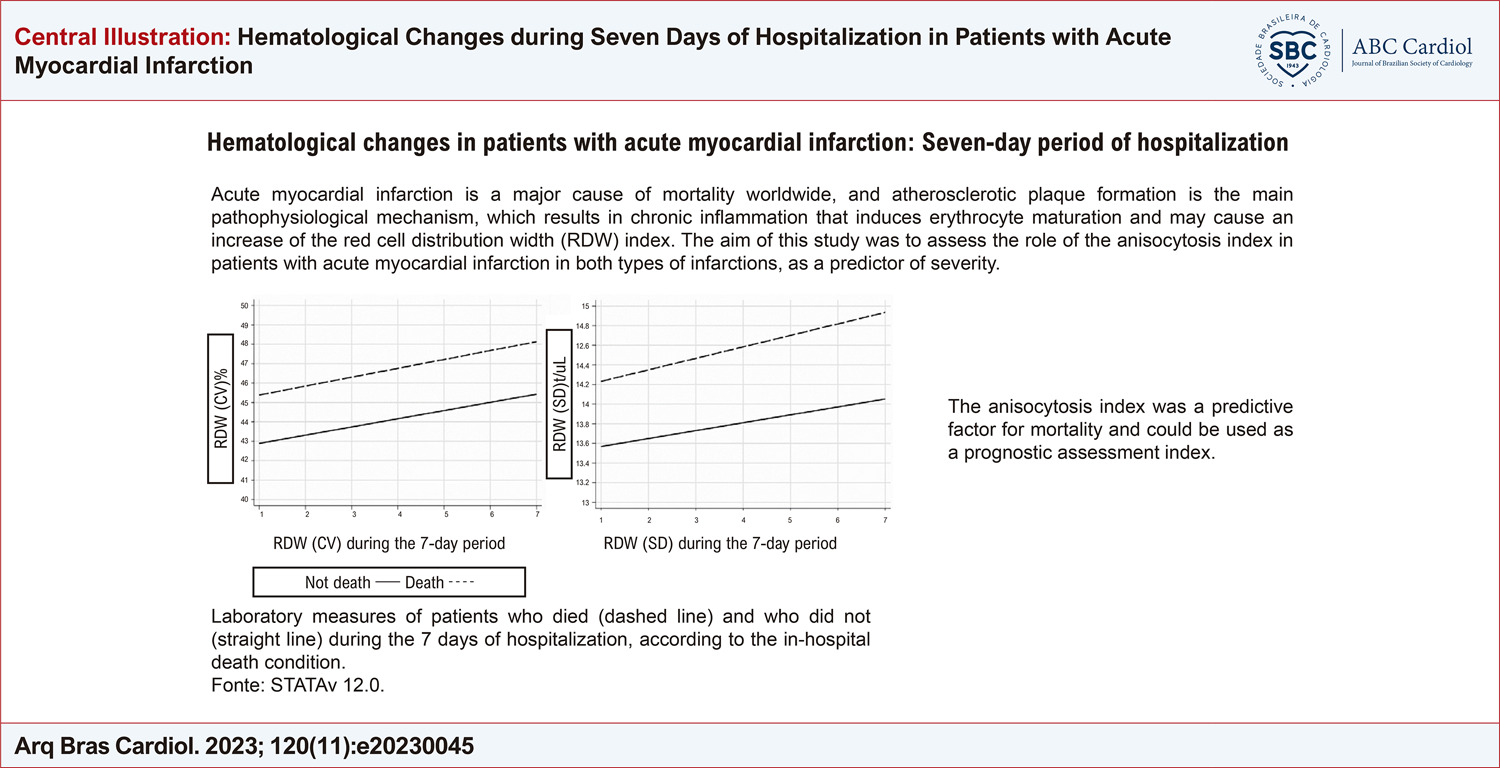
Hematological Changes during Seven Days of Hospitalization in Patients with Acute Myocardial Infarction

Cyntia Maria de Holanda Martins et al. José Gildo de Moura Monteiro Júnior Dilênia de Oliveira Cipriano Torres Dario Celestino Sobral Filho … Maria Clara Santos Morais Ulisses Ramos Montarroyos Izadora Karina da Silva Ana Célia Oliveira dos Santos

Abstract

Background

Acute myocardial infarction is a major cause of mortality worldwide, and atherosclerotic plaque formation is the main pathophysiological mechanism, which results in chronic inflammation that induces erythrocyte maturation and may cause an increase in the red cell distribution width (RDW) index.

Objective

Evaluate the role of the anisocytosis index in patients with acute myocardial infarction in both types of infarctions as a predictor of severity.

Methods

Patients were included in the study according to the inclusion/exclusion criteria, following the hospital routine based on their clinical and laboratory history. Statistical analyzes were performed according to each variable. All conclusions were drawn considering the significance level of 5%.

Results

During the follow-up period, in the 349 patients analyzed, the mortality rate was associated with the variables RDW (CV) and RDW (SD), in those patients who died, an increase was noted, as demonstrated in the multivariate model, for the effects of an acute ST elevation myocardial infarction and the RDW, adjusted for confounding factors (p-value = 0.03 and 0.04). In contrast, the total number of erythrocytes (p-value = 0.00) and hemoglobin (p-value = 0.03) showed a decrease during severe patients’ hospitalization.

Conclusion

The anisocytosis index was a predictive factor of mortality and can be used as an indicator of worse prognosis in patients with acute myocardial infarction.

  • Anisocytosis
  • Myocardial Infarction/mortality/mortality
  • Plaque, Atherosclerosis/physiopathology
  • Prognosis
  • Red Cell Distribution Width
Read Full Article
Creative Commons Attribution (CC BY) Creative Commons license
03/11/2023 DOI: 10.36660/abc.20230045 Views 1
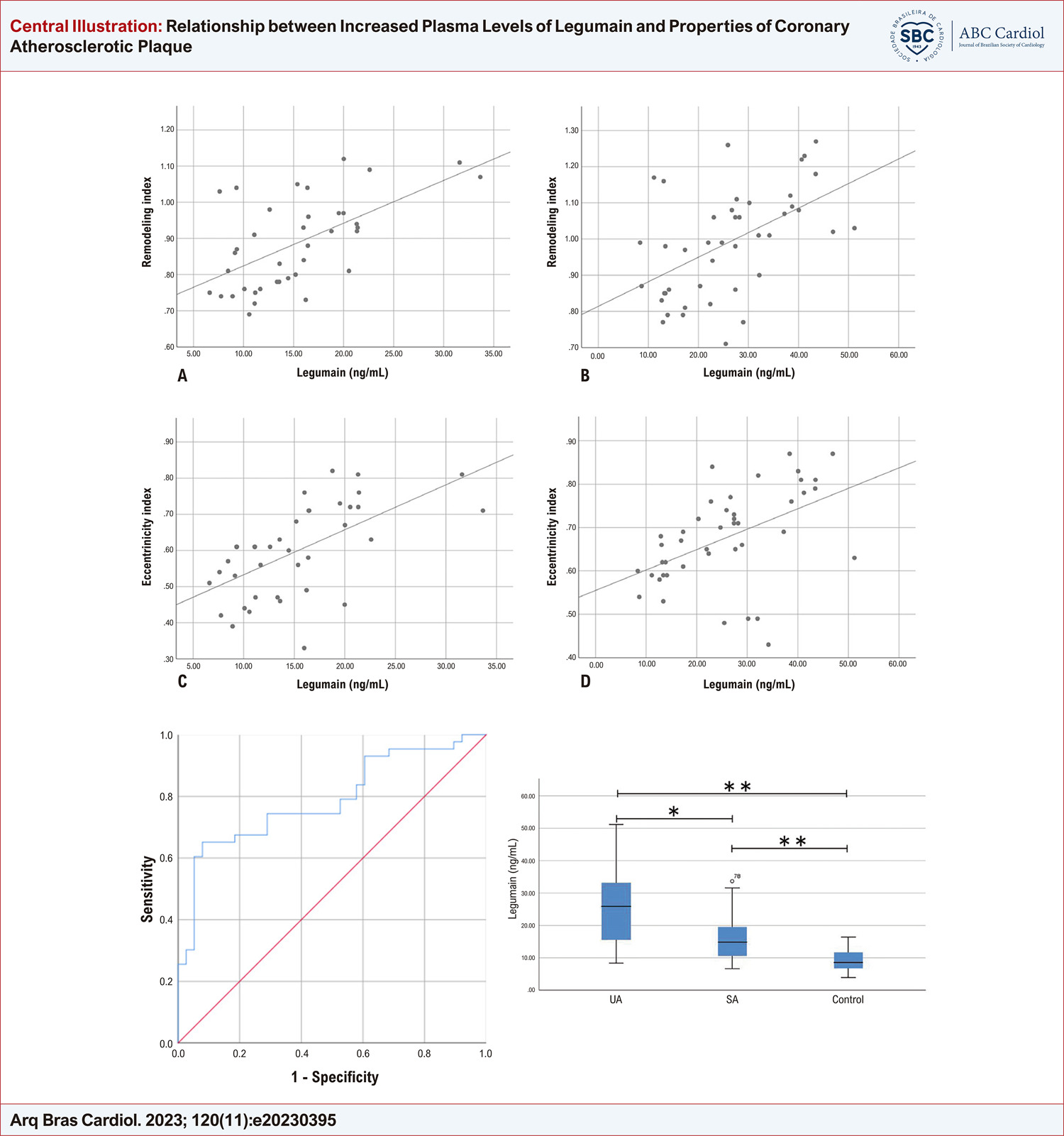
Relationship between Increased Plasma Levels of Legumain and Properties of Coronary Atherosclerotic Plaque
Original Article

Relationship between Increased Plasma Levels of Legumain and Properties of Coronary Atherosclerotic Plaque

Yunpeng Deng et al. Yudong Fan Di Wu Zilong Zhang … Miaomiao Zhang Zhiping Huang Yuxia Gao

Abstract

Background

Many clinical studies have confirmed that legumain is closely related to atherosclerosis. Unfortunately, different conclusions have been reached, and analyses and studies on atherosclerotic plaque characteristics in patients with increased plasma levels of legumain are still lacking.

Objectives

This study aimed to investigate the correlation between legumain and coronary atherosclerotic plaque characteristics.

Methods

A total of 81 patients with coronary atherosclerotic heart disease (CHD), including 43 patients with unstable angina (UA) and 38 patients with stable angina (SA), were screened by coronary angiography. Intravascular ultrasound (IVUS) was performed to evaluate the characteristics of coronary atherosclerotic plaques, and plasma legumain levels were also measured. Values of p < 0.05 were considered significant.

Results

Legumain concentration was significantly higher in the two CHD subgroups than in the control group (all p<0.001). Legumain concentrations in the UA group were significantly higher than in the SA group (p=0.001). The plaque area, remodeling index (RI), and eccentricity index (EI) in the UA group were significantly higher than those in the SA group (p<0.001, p=0.001, p=0.001, respectively). There was a significant positive correlation between legumain levels and RI and EI in both UA and SA patients (all p<0.05).

Conclusions

High plasma levels of legumain were closely related to the occurrence and severity of CHD, and the lesions tended to be unstable. Legumain is expected to be a potential inflammatory biomarker for the diagnosis of CHD and the early identification of unstable coronary lesions.

  • Atherosclerosis
  • Biomarkers
  • Coronary Artery Disease
Read Full Article
Creative Commons Attribution (CC BY) Creative Commons license
30/10/2023 DOI: 10.36660/abc.20230395

Could not load more articles. Please try again.

How to cite this article

EndNote RIS

Electronic Document Format (Vancouver)

Bertoletti OA. Ischemic Heart Disease and Income Level – A Thinking on Social and Structural Determinants. Arquivos Brasileiros de Cardiologia 2024;120(11):e20240014.

Electronic Document Format (ABNT)

Bertoletti, Otávio Azevedo. Ischemic Heart Disease and Income Level – A Thinking on Social and Structural Determinants. Arquivos Brasileiros de Cardiologia, v. 120, n. 11, e20240014, Apr. 2024.

Electronic Document Format (APA)

Bertoletti, O. A. (2024). Ischemic Heart Disease and Income Level – A Thinking on Social and Structural Determinants. Arquivos Brasileiros de Cardiologia, 120(11), e20240014.

Electronic Document Format (ISO)

Bertoletti, Otávio Azevedo. Ischemic Heart Disease and Income Level – A Thinking on Social and Structural Determinants. Arquivos Brasileiros de Cardiologia [online]. 2024, vol. 120, n. 11, [cited 2026-10-14], e20240014. Available from: <https://journals.cardiol.br/en/article/ischemic-heart-disease-and-income-level-a-thinking-on-social-and-structural-determinants/>. ISSN 0066-782X

EndNote RIS

Electronic Document Format (Vancouver)

Mancio J. Pericoronary Fat Attenuation on Computed Tomography Unveils a Guilty Factor of Coronary Artery Disease Associated with Anabolic–Androgenic Steroids. Arquivos Brasileiros de Cardiologia 2024;120(11):e20230843.

Electronic Document Format (ABNT)

Mancio, Jennifer. Pericoronary Fat Attenuation on Computed Tomography Unveils a Guilty Factor of Coronary Artery Disease Associated with Anabolic–Androgenic Steroids. Arquivos Brasileiros de Cardiologia, v. 120, n. 11, e20230843, Mar. 2024.

Electronic Document Format (APA)

Mancio, J. (2024). Pericoronary Fat Attenuation on Computed Tomography Unveils a Guilty Factor of Coronary Artery Disease Associated with Anabolic–Androgenic Steroids. Arquivos Brasileiros de Cardiologia, 120(11), e20230843.

Electronic Document Format (ISO)

Mancio, Jennifer. Pericoronary Fat Attenuation on Computed Tomography Unveils a Guilty Factor of Coronary Artery Disease Associated with Anabolic–Androgenic Steroids. Arquivos Brasileiros de Cardiologia [online]. 2024, vol. 120, n. 11, [cited 2026-10-14], e20230843. Available from: <https://journals.cardiol.br/en/article/pericoronary-fat-attenuation-on-computed-tomography-unveils-a-guilty-factor-of-coronary-artery-disease-associated-with-anabolic-androgenic-steroids/>. ISSN 0066-782X

EndNote RIS

Electronic Document Format (Vancouver)

Wang R, Neuenschwander FC. Acute Myocardial Infarction: Do We Need Markers for Microcirculation Injury? Moreover, Would the Fibrinogen/Albumin Ratio Be the Answer?. Arquivos Brasileiros de Cardiologia 2024;120(11):e20230809.

Electronic Document Format (ABNT)

Wang, Ricardo; Neuenschwander, Fernando Carvalho. Acute Myocardial Infarction: Do We Need Markers for Microcirculation Injury? Moreover, Would the Fibrinogen/Albumin Ratio Be the Answer?. Arquivos Brasileiros de Cardiologia, v. 120, n. 11, e20230809, Mar. 2024.

Electronic Document Format (APA)

Wang, R., & Neuenschwander, F. C. (2024). Acute Myocardial Infarction: Do We Need Markers for Microcirculation Injury? Moreover, Would the Fibrinogen/Albumin Ratio Be the Answer?. Arquivos Brasileiros de Cardiologia, 120(11), e20230809.

Electronic Document Format (ISO)

Wang, Ricardo and Neuenschwander, Fernando Carvalho. Acute Myocardial Infarction: Do We Need Markers for Microcirculation Injury? Moreover, Would the Fibrinogen/Albumin Ratio Be the Answer?. Arquivos Brasileiros de Cardiologia [online]. 2024, vol. 120, n. 11, [cited 2026-10-14], e20230809. Available from: <https://journals.cardiol.br/en/article/acute-myocardial-infarction-do-we-need-markers-for-microcirculation-injury-moreover-would-the-fibrinogen-albumin-ratio-be-the-answer/>. ISSN 0066-782X

EndNote RIS

Electronic Document Format (Vancouver)

Rocha EA, Cunha BL, Brasil HN, Pereira FTM, Pires Neto RJ. Mortality Risk Stratification in Heart Failure. The Search for the Holy Grail Continues! Autonomic Nervous System Analysis is Back!. Arquivos Brasileiros de Cardiologia 2024;120(11):e20230761.

Electronic Document Format (ABNT)

Rocha, Eduardo Arrais; Cunha, Bianca Lopes; Brasil, Helena Nogueira; Pereira, Francisca Tatiana Moreira; Pires Neto, Roberto da Justa. Mortality Risk Stratification in Heart Failure. The Search for the Holy Grail Continues! Autonomic Nervous System Analysis is Back!. Arquivos Brasileiros de Cardiologia, v. 120, n. 11, e20230761, Mar. 2024.

Electronic Document Format (APA)

Rocha, E. A., Cunha, B. L., Brasil, H. N., Pereira, F. T. M., & Pires Neto, R. J. (2024). Mortality Risk Stratification in Heart Failure. The Search for the Holy Grail Continues! Autonomic Nervous System Analysis is Back!. Arquivos Brasileiros de Cardiologia, 120(11), e20230761.

Electronic Document Format (ISO)

Rocha, Eduardo Arrais and Cunha, Bianca Lopes and Brasil, Helena Nogueira and Pereira, Francisca Tatiana Moreira and Pires Neto, Roberto da Justa. Mortality Risk Stratification in Heart Failure. The Search for the Holy Grail Continues! Autonomic Nervous System Analysis is Back!. Arquivos Brasileiros de Cardiologia [online]. 2024, vol. 120, n. 11, [cited 2026-10-14], e20230761. Available from: <https://journals.cardiol.br/en/article/mortality-risk-stratification-in-heart-failure-the-search-for-the-holy-grail-continues-autonomic-nervous-system-analysis-is-back/>. ISSN 0066-782X

EndNote RIS

Electronic Document Format (Vancouver)

Timóteo AT. Legumain – Another Piece in the Complex Puzzle of Atherosclerotic Plaque Formation and Vulnerability. Arquivos Brasileiros de Cardiologia 2023;120(11):e20230743.

Electronic Document Format (ABNT)

Timóteo, Ana Teresa. Legumain – Another Piece in the Complex Puzzle of Atherosclerotic Plaque Formation and Vulnerability. Arquivos Brasileiros de Cardiologia, v. 120, n. 11, e20230743, Dec. 2023.

Electronic Document Format (APA)

Timóteo, A. T. (2023). Legumain – Another Piece in the Complex Puzzle of Atherosclerotic Plaque Formation and Vulnerability. Arquivos Brasileiros de Cardiologia, 120(11), e20230743.

Electronic Document Format (ISO)

Timóteo, Ana Teresa. Legumain – Another Piece in the Complex Puzzle of Atherosclerotic Plaque Formation and Vulnerability. Arquivos Brasileiros de Cardiologia [online]. 2023, vol. 120, n. 11, [cited 2026-10-14], e20230743. Available from: <https://journals.cardiol.br/en/article/legumain-another-piece-in-the-complex-puzzle-of-atherosclerotic-plaque-formation-and-vulnerability/>. ISSN 0066-782X

EndNote RIS

Electronic Document Format (Vancouver)

Gomes BFO, Benchimol-Barbosa PR, Nadal J. Predictive Model of All-Cause Death in Patients with Heart Failure using Heart Rate Variability. Arquivos Brasileiros de Cardiologia 2023;120(11):e20220379.

Electronic Document Format (ABNT)

Gomes, Bruno Ferraz de Oliveira; Benchimol-Barbosa, Paulo Roberto; Nadal, Jurandir. Predictive Model of All-Cause Death in Patients with Heart Failure using Heart Rate Variability. Arquivos Brasileiros de Cardiologia, v. 120, n. 11, e20220379, Dec. 2023.

Electronic Document Format (APA)

Gomes, B. F. O., Benchimol-Barbosa, P. R., & Nadal, J. (2023). Predictive Model of All-Cause Death in Patients with Heart Failure using Heart Rate Variability. Arquivos Brasileiros de Cardiologia, 120(11), e20220379.

Electronic Document Format (ISO)

Gomes, Bruno Ferraz de Oliveira and Benchimol-Barbosa, Paulo Roberto and Nadal, Jurandir. Predictive Model of All-Cause Death in Patients with Heart Failure using Heart Rate Variability. Arquivos Brasileiros de Cardiologia [online]. 2023, vol. 120, n. 11, [cited 2026-10-14], e20220379. Available from: <https://journals.cardiol.br/en/article/predictive-model-of-all-cause-death-in-patients-with-heart-failure-using-heart-rate-variability/>. ISSN 0066-782X

EndNote RIS

Electronic Document Format (Vancouver)

Nascimento CR, Santos JM, Mendes R, Lopes JM, Tenório PP. Cost-Effectiveness of the Use of the Coronary Calcium Score in Primary Prevention as a Guide for the Therapeutic Decision. Arquivos Brasileiros de Cardiologia 2023;120(11):e20230542.

Electronic Document Format (ABNT)

Nascimento, Cristian Rodrigues do; Santos, Júlio Martinez; Mendes, Rodrigo; Lopes, Johnnatas Mikael; Tenório, Pedro Pereira. Cost-Effectiveness of the Use of the Coronary Calcium Score in Primary Prevention as a Guide for the Therapeutic Decision. Arquivos Brasileiros de Cardiologia, v. 120, n. 11, e20230542, Dec. 2023.

Electronic Document Format (APA)

Nascimento, C. R. , Santos, J. M., Mendes, R., Lopes, J. M., & Tenório, P. P. (2023). Cost-Effectiveness of the Use of the Coronary Calcium Score in Primary Prevention as a Guide for the Therapeutic Decision. Arquivos Brasileiros de Cardiologia, 120(11), e20230542.

Electronic Document Format (ISO)

Nascimento, Cristian Rodrigues do and Santos, Júlio Martinez and Mendes, Rodrigo and Lopes, Johnnatas Mikael and Tenório, Pedro Pereira. Cost-Effectiveness of the Use of the Coronary Calcium Score in Primary Prevention as a Guide for the Therapeutic Decision. Arquivos Brasileiros de Cardiologia [online]. 2023, vol. 120, n. 11, [cited 2026-10-14], e20230542. Available from: <https://journals.cardiol.br/en/article/cost-effectiveness-of-the-use-of-the-coronary-calcium-score-in-primary-prevention-as-a-guide-for-the-therapeutic-decision/>. ISSN 0066-782X

EndNote RIS

Electronic Document Format (Vancouver)

Soares VM, Silva TC, Santos PP. Role of Omega-3 and Omega-6 on Cardiovascular Risk Factors: Importance of Dietary Sources and Lipid Structure. Arquivos Brasileiros de Cardiologia 2023;120(11):e20230753.

Electronic Document Format (ABNT)

Soares, Victória Moralez; Silva, Thais Caroline da; Santos, Priscila Portugal dos. Role of Omega-3 and Omega-6 on Cardiovascular Risk Factors: Importance of Dietary Sources and Lipid Structure. Arquivos Brasileiros de Cardiologia, v. 120, n. 11, e20230753, Dec. 2023.

Electronic Document Format (APA)

Soares, V. M., Silva, T. C. , & Santos, P. P. (2023). Role of Omega-3 and Omega-6 on Cardiovascular Risk Factors: Importance of Dietary Sources and Lipid Structure. Arquivos Brasileiros de Cardiologia, 120(11), e20230753.

Electronic Document Format (ISO)

Soares, Victória Moralez and Silva, Thais Caroline da and Santos, Priscila Portugal dos. Role of Omega-3 and Omega-6 on Cardiovascular Risk Factors: Importance of Dietary Sources and Lipid Structure. Arquivos Brasileiros de Cardiologia [online]. 2023, vol. 120, n. 11, [cited 2026-10-14], e20230753. Available from: <https://journals.cardiol.br/en/article/role-of-omega-3-and-omega-6-on-cardiovascular-risk-factors-importance-of-dietary-sources-and-lipid-structure/>. ISSN 0066-782X

EndNote RIS

Electronic Document Format (Vancouver)

Mendes M. Risk Assessment in Heart Failure: Comprehensive is Always Better!. Arquivos Brasileiros de Cardiologia 2023;120(11):e20230760.

Electronic Document Format (ABNT)

Mendes, Miguel. Risk Assessment in Heart Failure: Comprehensive is Always Better!. Arquivos Brasileiros de Cardiologia, v. 120, n. 11, e20230760, Dec. 2023.

Electronic Document Format (APA)

Mendes, M. (2023). Risk Assessment in Heart Failure: Comprehensive is Always Better!. Arquivos Brasileiros de Cardiologia, 120(11), e20230760.

Electronic Document Format (ISO)

Mendes, Miguel. Risk Assessment in Heart Failure: Comprehensive is Always Better!. Arquivos Brasileiros de Cardiologia [online]. 2023, vol. 120, n. 11, [cited 2026-10-14], e20230760. Available from: <https://journals.cardiol.br/en/article/risk-assessment-in-heart-failure-comprehensive-is-always-better/>. ISSN 0066-782X

EndNote RIS

Electronic Document Format (Vancouver)

Vilela EM, Fontes-Carvalho R. Blood Pressure Response and Exercise Stress Echocardiography: New Perspectives on a Contemporary Challenge. Arquivos Brasileiros de Cardiologia 2023;120(11):e20230737.

Electronic Document Format (ABNT)

Vilela, Eduardo M.; Fontes-Carvalho, Ricardo. Blood Pressure Response and Exercise Stress Echocardiography: New Perspectives on a Contemporary Challenge. Arquivos Brasileiros de Cardiologia, v. 120, n. 11, e20230737, Dec. 2023.

Electronic Document Format (APA)

Vilela, E. M., & Fontes-Carvalho, R. (2023). Blood Pressure Response and Exercise Stress Echocardiography: New Perspectives on a Contemporary Challenge. Arquivos Brasileiros de Cardiologia, 120(11), e20230737.

Electronic Document Format (ISO)

Vilela, Eduardo M. and Fontes-Carvalho, Ricardo. Blood Pressure Response and Exercise Stress Echocardiography: New Perspectives on a Contemporary Challenge. Arquivos Brasileiros de Cardiologia [online]. 2023, vol. 120, n. 11, [cited 2026-10-14], e20230737. Available from: <https://journals.cardiol.br/en/article/blood-pressure-response-and-exercise-stress-echocardiography-new-perspectives-on-a-contemporary-challenge/>. ISSN 0066-782X

EndNote RIS

Electronic Document Format (Vancouver)

Mill JG, Polese J. Post-COVID Syndrome or Long COVID: A New Challenge for the Healthcare System. Arquivos Brasileiros de Cardiologia 2023;120(11):e20230750.

Electronic Document Format (ABNT)

Mill, José Geraldo; Polese, Jéssica. Post-COVID Syndrome or Long COVID: A New Challenge for the Healthcare System. Arquivos Brasileiros de Cardiologia, v. 120, n. 11, e20230750, Dec. 2023.

Electronic Document Format (APA)

Mill, J. G., & Polese, J. (2023). Post-COVID Syndrome or Long COVID: A New Challenge for the Healthcare System. Arquivos Brasileiros de Cardiologia, 120(11), e20230750.

Electronic Document Format (ISO)

Mill, José Geraldo and Polese, Jéssica. Post-COVID Syndrome or Long COVID: A New Challenge for the Healthcare System. Arquivos Brasileiros de Cardiologia [online]. 2023, vol. 120, n. 11, [cited 2026-10-14], e20230750. Available from: <https://journals.cardiol.br/en/article/post-covid-syndrome-or-long-covid-a-new-challenge-for-the-healthcare-system/>. ISSN 0066-782X

EndNote RIS

Electronic Document Format (Vancouver)

Cherem M, Bernini CE, Saad JA, Sobrinho DBD, Silva MSC, Muzzi RAL. Left Atrial Appendage Occlusion and Implantation of a Bicaval System: Report of a Simultaneous Transcatheter Procedure in a Critically Ill Elderly Patient. Arquivos Brasileiros de Cardiologia 2023;120(11):e20230454.

Electronic Document Format (ABNT)

Cherem, Marcos; Bernini, Carlos Eduardo; Saad, Jamil Abdalla; Sobrinho, Dirceu Barbosa Dias; Silva, Marcio Sérgio Carvalho; Muzzi, Ruthnea Aparecida Lazaro. Left Atrial Appendage Occlusion and Implantation of a Bicaval System: Report of a Simultaneous Transcatheter Procedure in a Critically Ill Elderly Patient. Arquivos Brasileiros de Cardiologia, v. 120, n. 11, e20230454, Dec. 2023.

Electronic Document Format (APA)

Cherem, M., Bernini, C. E., Saad, J. A., Sobrinho, D. B. D., Silva, M. S. C., & Muzzi, R. A. L. (2023). Left Atrial Appendage Occlusion and Implantation of a Bicaval System: Report of a Simultaneous Transcatheter Procedure in a Critically Ill Elderly Patient. Arquivos Brasileiros de Cardiologia, 120(11), e20230454.

Electronic Document Format (ISO)

Cherem, Marcos and Bernini, Carlos Eduardo and Saad, Jamil Abdalla and Sobrinho, Dirceu Barbosa Dias and Silva, Marcio Sérgio Carvalho and Muzzi, Ruthnea Aparecida Lazaro. Left Atrial Appendage Occlusion and Implantation of a Bicaval System: Report of a Simultaneous Transcatheter Procedure in a Critically Ill Elderly Patient. Arquivos Brasileiros de Cardiologia [online]. 2023, vol. 120, n. 11, [cited 2026-10-14], e20230454. Available from: <https://journals.cardiol.br/en/article/left-atrial-appendage-occlusion-and-implantation-of-a-bicaval-system-report-of-a-simultaneous-transcatheter-procedure-in-a-critically-ill-elderly-patient/>. ISSN 0066-782X

EndNote RIS

Electronic Document Format (Vancouver)

Filippini FB, Ribeiro HB, Bocchi E, Bacal F, Marcondes-Braga FG, Avila MS, Sturmer JD, et al. Percutaneous Strategies in Structural Heart Diseases: Focus on Chronic Heart Failure. Arquivos Brasileiros de Cardiologia 2023;120(11):e20220496.

Electronic Document Format (ABNT)

Filippini, Filippe Barcellos; Ribeiro, Henrique Barbosa; Bocchi, Edimar; Bacal, Fernando; Marcondes-Braga, Fabiana G.; Avila, Monica S.; Sturmer, Janine Daiana; Marchi, Mauricio Felippi de Sá; Kanhouche, Gabriel; Freire, Antônio Fernando; Cassar, Renata; Abizaid, Alexandre A.; Brito Jr, Fábio Sândoli de. Percutaneous Strategies in Structural Heart Diseases: Focus on Chronic Heart Failure. Arquivos Brasileiros de Cardiologia, v. 120, n. 11, e20220496, Dec. 2023.

Electronic Document Format (APA)

Filippini, F. B., Ribeiro, H. B., Bocchi, E., Bacal, F., Marcondes-Braga, F. G., Avila, M. S., Sturmer, J. D., Marchi, M. F. S., Kanhouche, G., Freire, A. F., Cassar, R., Abizaid, A. A., & Brito Jr, F. S. (2023). Percutaneous Strategies in Structural Heart Diseases: Focus on Chronic Heart Failure. Arquivos Brasileiros de Cardiologia, 120(11), e20220496.

Electronic Document Format (ISO)

Filippini, Filippe Barcellos and Ribeiro, Henrique Barbosa and Bocchi, Edimar and Bacal, Fernando and Marcondes-Braga, Fabiana G. and Avila, Monica S. and Sturmer, Janine Daiana and Marchi, Mauricio Felippi de Sá and Kanhouche, Gabriel and Freire, Antônio Fernando and Cassar, Renata and Abizaid, Alexandre A. and Brito Jr, Fábio Sândoli de. Percutaneous Strategies in Structural Heart Diseases: Focus on Chronic Heart Failure. Arquivos Brasileiros de Cardiologia [online]. 2023, vol. 120, n. 11, [cited 2026-10-14], e20220496. Available from: <https://journals.cardiol.br/en/article/percutaneous-strategies-in-structural-heart-diseases-focus-on-chronic-heart-failure/>. ISSN 0066-782X

EndNote RIS

Electronic Document Format (Vancouver)

Salerno PRVO, Motairek I, Dallan LAP, Bourges-Sevenier B, Rajagopalan S, Al-Kindi SG. Excess Systolic Blood Pressure Associated with Fine Particulate Matter Air Pollution above the WHO Guidelines in Brazil. Arquivos Brasileiros de Cardiologia 2023;120(11):e20230347.

Electronic Document Format (ABNT)

Salerno, Pedro Rafael Vieira de Oliveira; Motairek, Issam; Dallan, Luis Augusto Palma; Bourges-Sevenier, Brendan; Rajagopalan, Sanjay; Al-Kindi, Sadeer G.. Excess Systolic Blood Pressure Associated with Fine Particulate Matter Air Pollution above the WHO Guidelines in Brazil. Arquivos Brasileiros de Cardiologia, v. 120, n. 11, e20230347, Dec. 2023.

Electronic Document Format (APA)

Salerno, P. R. V. O., Motairek, I., Dallan, L. A. P., Bourges-Sevenier, B., Rajagopalan, S., & Al-Kindi, S. G. (2023). Excess Systolic Blood Pressure Associated with Fine Particulate Matter Air Pollution above the WHO Guidelines in Brazil. Arquivos Brasileiros de Cardiologia, 120(11), e20230347.

Electronic Document Format (ISO)

Salerno, Pedro Rafael Vieira de Oliveira and Motairek, Issam and Dallan, Luis Augusto Palma and Bourges-Sevenier, Brendan and Rajagopalan, Sanjay and Al-Kindi, Sadeer G.. Excess Systolic Blood Pressure Associated with Fine Particulate Matter Air Pollution above the WHO Guidelines in Brazil. Arquivos Brasileiros de Cardiologia [online]. 2023, vol. 120, n. 11, [cited 2026-10-14], e20230347. Available from: <https://journals.cardiol.br/en/article/excess-systolic-blood-pressure-associated-with-fine-particulate-matter-air-pollution-above-the-who-guidelines-in-brazil/>. ISSN 0066-782X

EndNote RIS

Electronic Document Format (Vancouver)

Martins-Santos CB, Duarte LTA, Ferreira-Junior CR, Feitosa AGT, Oliveira EVG, Campos ICMB, Melo EV, et al. Exaggerated Systolic Blood Pressure Increase with Exercise and Myocardial Ischemia on Exercise Stress Echocardiography. Arquivos Brasileiros de Cardiologia 2023;120(11):e20230047.

Electronic Document Format (ABNT)

Martins-Santos, Cláudia Bispo; Duarte, Lara Teles Alencar; Ferreira-Junior, Cleovaldo Ribeiro; Feitosa, Allexa Gabriele Teixeira; Oliveira, Edvaldo Victor Gois; Campos, Iana Carine Machado Bispo; Melo, Enaldo Vieira de; Andrade, Stephanie Macedo; Sousa, Antônio Carlos Sobral; Oliveira, Joselina Luzia Menezes. Exaggerated Systolic Blood Pressure Increase with Exercise and Myocardial Ischemia on Exercise Stress Echocardiography. Arquivos Brasileiros de Cardiologia, v. 120, n. 11, e20230047, Dec. 2023.

Electronic Document Format (APA)

Martins-Santos, C. B., Duarte, L. T. A., Ferreira-Junior, C. R., Feitosa, A. G. T., Oliveira, E. V. G., Campos, I. C. M. B., Melo, E. V. , Andrade, S. M., Sousa, A. C. S., & Oliveira, J. L. M. (2023). Exaggerated Systolic Blood Pressure Increase with Exercise and Myocardial Ischemia on Exercise Stress Echocardiography. Arquivos Brasileiros de Cardiologia, 120(11), e20230047.

Electronic Document Format (ISO)

Martins-Santos, Cláudia Bispo and Duarte, Lara Teles Alencar and Ferreira-Junior, Cleovaldo Ribeiro and Feitosa, Allexa Gabriele Teixeira and Oliveira, Edvaldo Victor Gois and Campos, Iana Carine Machado Bispo and Melo, Enaldo Vieira de and Andrade, Stephanie Macedo and Sousa, Antônio Carlos Sobral and Oliveira, Joselina Luzia Menezes. Exaggerated Systolic Blood Pressure Increase with Exercise and Myocardial Ischemia on Exercise Stress Echocardiography. Arquivos Brasileiros de Cardiologia [online]. 2023, vol. 120, n. 11, [cited 2026-10-14], e20230047. Available from: <https://journals.cardiol.br/en/article/exaggerated-systolic-blood-pressure-increase-with-exercise-and-myocardial-ischemia-on-exercise-stress-echocardiography/>. ISSN 0066-782X

EndNote RIS

Electronic Document Format (Vancouver)

Engster PHB, Zimerman A, Schaan T, Borges MS, Souza G, Costa GD, Rohde LE, et al. Incremental Role of New York Heart Association Class and Cardiopulmonary Exercise Test Indices for Prognostication in Heart Failure: A Cohort Study. Arquivos Brasileiros de Cardiologia 2023;120(11):e20230077.

Electronic Document Format (ABNT)

Engster, Pedro Henrique de Borba; Zimerman, André; Schaan, Thomas; Borges, Marina S.; Souza, Gabriel; Costa, Giovanni Donelli; Rohde, Luis Eduardo; Silveira, Anderson Donelli da. Incremental Role of New York Heart Association Class and Cardiopulmonary Exercise Test Indices for Prognostication in Heart Failure: A Cohort Study. Arquivos Brasileiros de Cardiologia, v. 120, n. 11, e20230077, Dec. 2023.

Electronic Document Format (APA)

Engster, P. H. B., Zimerman, A., Schaan, T., Borges, M. S., Souza, G., Costa, G. D., Rohde, L. E., & Silveira, A. D. (2023). Incremental Role of New York Heart Association Class and Cardiopulmonary Exercise Test Indices for Prognostication in Heart Failure: A Cohort Study. Arquivos Brasileiros de Cardiologia, 120(11), e20230077.

Electronic Document Format (ISO)

Engster, Pedro Henrique de Borba and Zimerman, André and Schaan, Thomas and Borges, Marina S. and Souza, Gabriel and Costa, Giovanni Donelli and Rohde, Luis Eduardo and Silveira, Anderson Donelli da. Incremental Role of New York Heart Association Class and Cardiopulmonary Exercise Test Indices for Prognostication in Heart Failure: A Cohort Study. Arquivos Brasileiros de Cardiologia [online]. 2023, vol. 120, n. 11, [cited 2026-10-14], e20230077. Available from: <https://journals.cardiol.br/en/article/incremental-role-of-new-york-heart-association-class-and-cardiopulmonary-exercise-test-indices-for-prognostication-in-heart-failure-a-cohort-study/>. ISSN 0066-782X

EndNote RIS

Electronic Document Format (Vancouver)

Cerci RJ, Fernandes-Silva MM, Vitola JV, Cerci JJ, Pereira Neto CC, Masukawa M, Gracia APW, et al. Association of Income Level and Ischemic Heart Disease: Potential Role of Walkability. Arquivos Brasileiros de Cardiologia 2023;120(11):e20220844.

Electronic Document Format (ABNT)

Cerci, Rodrigo Julio; Fernandes-Silva, Miguel Morita; Vitola, João Vicente; Cerci, Juliano Julio; Pereira Neto, Carlos Cunha; Masukawa, Margaret; Gracia, Ana Paula Weller; Silvello, Lara Luiza; Prado, Pedro; Guedes, Murilo; Hino, Adriano Akira Ferreira; Baena, Cristina Pellegrino. Association of Income Level and Ischemic Heart Disease: Potential Role of Walkability. Arquivos Brasileiros de Cardiologia, v. 120, n. 11, e20220844, Dec. 2023.

Electronic Document Format (APA)

Cerci, R. J., Fernandes-Silva, M. M., Vitola, J. V., Cerci, J. J., Pereira Neto, C. C., Masukawa, M., Gracia, A. P. W., Silvello, L. L., Prado, P., Guedes, M., Hino, A. A. F., & Baena, C. P. (2023). Association of Income Level and Ischemic Heart Disease: Potential Role of Walkability. Arquivos Brasileiros de Cardiologia, 120(11), e20220844.

Electronic Document Format (ISO)

Cerci, Rodrigo Julio and Fernandes-Silva, Miguel Morita and Vitola, João Vicente and Cerci, Juliano Julio and Pereira Neto, Carlos Cunha and Masukawa, Margaret and Gracia, Ana Paula Weller and Silvello, Lara Luiza and Prado, Pedro and Guedes, Murilo and Hino, Adriano Akira Ferreira and Baena, Cristina Pellegrino. Association of Income Level and Ischemic Heart Disease: Potential Role of Walkability. Arquivos Brasileiros de Cardiologia [online]. 2023, vol. 120, n. 11, [cited 2026-10-14], e20220844. Available from: <https://journals.cardiol.br/en/article/association-of-income-level-and-ischemic-heart-disease-potential-role-of-walkability/>. ISSN 0066-782X

EndNote RIS

Electronic Document Format (Vancouver)

. Erratum. Arquivos Brasileiros de Cardiologia 2023;120(11):e20230739.

Electronic Document Format (ABNT)

. Erratum. Arquivos Brasileiros de Cardiologia, v. 120, n. 11, e20230739, Nov. 2023.

Electronic Document Format (APA)

(2023). Erratum. Arquivos Brasileiros de Cardiologia, 120(11), e20230739.

Electronic Document Format (ISO)

. Erratum. Arquivos Brasileiros de Cardiologia [online]. 2023, vol. 120, n. 11, [cited 2026-10-14], e20230739. Available from: <https://journals.cardiol.br/en/article/erratum-43/>. ISSN 0066-782X

EndNote RIS

Electronic Document Format (Vancouver)

Souza FR, Rochitte CE, Silva DC, Sampaio B, Passarelli M, Santos MR, Fonseca GW, et al. Coronary Inflammation by Computed Tomography Pericoronary Fat Attenuation and Increased Cytokines in Young Male Anabolic Androgenic Steroid Users. Arquivos Brasileiros de Cardiologia 2023;120(11):e20220822.

Electronic Document Format (ABNT)

Souza, Francis Ribeiro de; Rochitte, Carlos E.; Silva, Douglas Carli; Sampaio, Barbara; Passarelli, Marisa; Santos, Marcelo R. dos; Fonseca, Guilherme W.; Battaglia Filho, Antonio Carlos; Correa, Kelly; Val, Renata Margarida do; Yonamine, Maurício; Pereira, Rosa Maria R.; Negrão, Carlos Eduardo; Kalil-Filho, Roberto; Alves, Maria Janieire de Nazaré Nunes. Coronary Inflammation by Computed Tomography Pericoronary Fat Attenuation and Increased Cytokines in Young Male Anabolic Androgenic Steroid Users. Arquivos Brasileiros de Cardiologia, v. 120, n. 11, e20220822, Nov. 2023.

Electronic Document Format (APA)

Souza, F. R. , Rochitte, C. E., Silva, D. C., Sampaio, B., Passarelli, M., Santos, M. R. , Fonseca, G. W., Battaglia Filho, A. C., Correa, K., Val, R. M. , Yonamine, M., Pereira, R. M. R., Negrão, C. E., Kalil-Filho, R., & Alves, M. J. N. N. (2023). Coronary Inflammation by Computed Tomography Pericoronary Fat Attenuation and Increased Cytokines in Young Male Anabolic Androgenic Steroid Users. Arquivos Brasileiros de Cardiologia, 120(11), e20220822.

Electronic Document Format (ISO)

Souza, Francis Ribeiro de and Rochitte, Carlos E. and Silva, Douglas Carli and Sampaio, Barbara and Passarelli, Marisa and Santos, Marcelo R. dos and Fonseca, Guilherme W. and Battaglia Filho, Antonio Carlos and Correa, Kelly and Val, Renata Margarida do and Yonamine, Maurício and Pereira, Rosa Maria R. and Negrão, Carlos Eduardo and Kalil-Filho, Roberto and Alves, Maria Janieire de Nazaré Nunes. Coronary Inflammation by Computed Tomography Pericoronary Fat Attenuation and Increased Cytokines in Young Male Anabolic Androgenic Steroid Users. Arquivos Brasileiros de Cardiologia [online]. 2023, vol. 120, n. 11, [cited 2026-10-14], e20220822. Available from: <https://journals.cardiol.br/en/article/coronary-inflammation-by-computed-tomography-pericoronary-fat-attenuation-and-increased-cytokines-in-young-male-anabolic-androgenic-steroid-users/>. ISSN 0066-782X

EndNote RIS

Electronic Document Format (Vancouver)

Falcão AM, Suares VL, Chalela WA. Left Anterior Fascicular Block Associated with Atrioventricular Block during Exercise Stress Test. Arquivos Brasileiros de Cardiologia 2023;120(11):e20230200.

Electronic Document Format (ABNT)

Falcão, Andréa Marinho; Suares, Vagner L.; Chalela, William A.. Left Anterior Fascicular Block Associated with Atrioventricular Block during Exercise Stress Test. Arquivos Brasileiros de Cardiologia, v. 120, n. 11, e20230200, Nov. 2023.

Electronic Document Format (APA)

Falcão, A. M., Suares, V. L., & Chalela, W. A. (2023). Left Anterior Fascicular Block Associated with Atrioventricular Block during Exercise Stress Test. Arquivos Brasileiros de Cardiologia, 120(11), e20230200.

Electronic Document Format (ISO)

Falcão, Andréa Marinho and Suares, Vagner L. and Chalela, William A.. Left Anterior Fascicular Block Associated with Atrioventricular Block during Exercise Stress Test. Arquivos Brasileiros de Cardiologia [online]. 2023, vol. 120, n. 11, [cited 2026-10-14], e20230200. Available from: <https://journals.cardiol.br/en/article/left-anterior-fascicular-block-associated-with-atrioventricular-block-during-exercise-stress-test/>. ISSN 0066-782X

EndNote RIS

Electronic Document Format (Vancouver)

Gonçalinho GHF, Sampaio GR, Soares-Freitas RAM, Damasceno NRT. Red Blood Cells’ Omega-6 and Omega-3 Polyunsaturated Fatty Acids Have a Distinct Influence on LDL Particle Size and its Structural Modifications. Arquivos Brasileiros de Cardiologia 2023;120(11):e20230078.

Electronic Document Format (ABNT)

Gonçalinho, Gustavo Henrique Ferreira; Sampaio, Geni Rodrigues; Soares-Freitas, Rosana Aparecida Manólio; Damasceno, Nágila Raquel Teixeira. Red Blood Cells’ Omega-6 and Omega-3 Polyunsaturated Fatty Acids Have a Distinct Influence on LDL Particle Size and its Structural Modifications. Arquivos Brasileiros de Cardiologia, v. 120, n. 11, e20230078, Nov. 2023.

Electronic Document Format (APA)

Gonçalinho, G. H. F., Sampaio, G. R., Soares-Freitas, R. A. M., & Damasceno, N. R. T. (2023). Red Blood Cells’ Omega-6 and Omega-3 Polyunsaturated Fatty Acids Have a Distinct Influence on LDL Particle Size and its Structural Modifications. Arquivos Brasileiros de Cardiologia, 120(11), e20230078.

Electronic Document Format (ISO)

Gonçalinho, Gustavo Henrique Ferreira and Sampaio, Geni Rodrigues and Soares-Freitas, Rosana Aparecida Manólio and Damasceno, Nágila Raquel Teixeira. Red Blood Cells’ Omega-6 and Omega-3 Polyunsaturated Fatty Acids Have a Distinct Influence on LDL Particle Size and its Structural Modifications. Arquivos Brasileiros de Cardiologia [online]. 2023, vol. 120, n. 11, [cited 2026-10-14], e20230078. Available from: <https://journals.cardiol.br/en/article/red-blood-cells-omega-6-and-omega-3-polyunsaturated-fatty-acids-have-a-distinct-influence-on-ldl-particle-size-and-its-structural-modifications/>. ISSN 0066-782X

EndNote RIS

Electronic Document Format (Vancouver)

Trott G, Scolari FL, Rover MM, Silva MMD, Souza D, Santos RRM, Schardosim RFC, et al. Long-term Health-Related Quality of Life and Outcomes after Hospitalization for COVID-19 in Brazil: Post-COVID Brazil 1 Study Protocol. Arquivos Brasileiros de Cardiologia 2023;120(11):e20230378.

Electronic Document Format (ABNT)

Trott, Geraldine; Scolari, Fernando Luis; Rover, Marciane Maria; Silva, Mariana Motta Dias da; Souza, Denise de; Santos, Rosa da Rosa Minho dos; Schardosim, Raíne Fogliati de Carli; Rech, Gabriela Soares; Mesquita Neto, Juliana de; Estivalete, Gabriel Pozza; Freitas, Hellen Jordan Martins; Itaqui, Carolina Rothmann; Kozesinski-Nakatani, Amanda Christina; Biolo, Andreia; Marcolino, Milena Soriano; Barreto, Bruna Brandão; Schvartzman, Paulo Roberto; Antonio, Ana Carolina Peçanha; Robinson, Caroline Cabral; Falavigna, Maicon; Polanczyk, Carisi Anne; Rosa, Regis Goulart. Long-term Health-Related Quality of Life and Outcomes after Hospitalization for COVID-19 in Brazil: Post-COVID Brazil 1 Study Protocol. Arquivos Brasileiros de Cardiologia, v. 120, n. 11, e20230378, Nov. 2023.

Electronic Document Format (APA)

Trott, G., Scolari, F. L., Rover, M. M., Silva, M. M. D. , Souza, D. , Santos, R. R. M. , Schardosim, R. F. C., Rech, G. S., Mesquita Neto, J. , Estivalete, G. P., Freitas, H. J. M., Itaqui, C. R., Kozesinski-Nakatani, A. C., Biolo, A., Marcolino, M. S., Barreto, B. B., Schvartzman, P. R., Antonio, A. C. P., Robinson, C. C., Falavigna, M., Polanczyk, C. A., & Rosa, R. G. (2023). Long-term Health-Related Quality of Life and Outcomes after Hospitalization for COVID-19 in Brazil: Post-COVID Brazil 1 Study Protocol. Arquivos Brasileiros de Cardiologia, 120(11), e20230378.

Electronic Document Format (ISO)

Trott, Geraldine and Scolari, Fernando Luis and Rover, Marciane Maria and Silva, Mariana Motta Dias da and Souza, Denise de and Santos, Rosa da Rosa Minho dos and Schardosim, Raíne Fogliati de Carli and Rech, Gabriela Soares and Mesquita Neto, Juliana de and Estivalete, Gabriel Pozza and Freitas, Hellen Jordan Martins and Itaqui, Carolina Rothmann and Kozesinski-Nakatani, Amanda Christina and Biolo, Andreia and Marcolino, Milena Soriano and Barreto, Bruna Brandão and Schvartzman, Paulo Roberto and Antonio, Ana Carolina Peçanha and Robinson, Caroline Cabral and Falavigna, Maicon and Polanczyk, Carisi Anne and Rosa, Regis Goulart. Long-term Health-Related Quality of Life and Outcomes after Hospitalization for COVID-19 in Brazil: Post-COVID Brazil 1 Study Protocol. Arquivos Brasileiros de Cardiologia [online]. 2023, vol. 120, n. 11, [cited 2026-10-14], e20230378. Available from: <https://journals.cardiol.br/en/article/long-term-health-related-quality-of-life-and-outcomes-after-hospitalization-for-covid-19-in-brazil-post-covid-brazil-1-study-protocol/>. ISSN 0066-782X

EndNote RIS

Electronic Document Format (Vancouver)

Martins CMH, Monteiro Júnior JGM, Torres DOC, Sobral Filho DC, Morais MCS, Montarroyos UR, Silva IK, et al. Hematological Changes during Seven Days of Hospitalization in Patients with Acute Myocardial Infarction. Arquivos Brasileiros de Cardiologia 2023;120(11):e20230045.

Electronic Document Format (ABNT)

Martins, Cyntia Maria de Holanda; Monteiro Júnior, José Gildo de Moura; Torres, Dilênia de Oliveira Cipriano; Sobral Filho, Dario Celestino; Morais, Maria Clara Santos; Montarroyos, Ulisses Ramos; Silva, Izadora Karina da; Santos, Ana Célia Oliveira dos. Hematological Changes during Seven Days of Hospitalization in Patients with Acute Myocardial Infarction. Arquivos Brasileiros de Cardiologia, v. 120, n. 11, e20230045, Nov. 2023.

Electronic Document Format (APA)

Martins, C. M. H., Monteiro Júnior, J. G. M., Torres, D. O. C., Sobral Filho, D. C., Morais, M. C. S., Montarroyos, U. R., Silva, I. K. , & Santos, A. C. O. (2023). Hematological Changes during Seven Days of Hospitalization in Patients with Acute Myocardial Infarction. Arquivos Brasileiros de Cardiologia, 120(11), e20230045.

Electronic Document Format (ISO)

Martins, Cyntia Maria de Holanda and Monteiro Júnior, José Gildo de Moura and Torres, Dilênia de Oliveira Cipriano and Sobral Filho, Dario Celestino and Morais, Maria Clara Santos and Montarroyos, Ulisses Ramos and Silva, Izadora Karina da and Santos, Ana Célia Oliveira dos. Hematological Changes during Seven Days of Hospitalization in Patients with Acute Myocardial Infarction. Arquivos Brasileiros de Cardiologia [online]. 2023, vol. 120, n. 11, [cited 2026-10-14], e20230045. Available from: <https://journals.cardiol.br/en/article/hematological-changes-during-seven-days-of-hospitalization-in-patients-with-acute-myocardial-infarction/>. ISSN 0066-782X

EndNote RIS

Electronic Document Format (Vancouver)

Deng Y, Fan Y, Wu D, Zhang Z, Zhang M, Huang Z, Gao Y, et al. Relationship between Increased Plasma Levels of Legumain and Properties of Coronary Atherosclerotic Plaque. Arquivos Brasileiros de Cardiologia 2023;120(11):e20230395.

Electronic Document Format (ABNT)

Deng, Yunpeng; Fan, Yudong; Wu, Di; Zhang, Zilong; Zhang, Miaomiao; Huang, Zhiping; Gao, Yuxia. Relationship between Increased Plasma Levels of Legumain and Properties of Coronary Atherosclerotic Plaque. Arquivos Brasileiros de Cardiologia, v. 120, n. 11, e20230395, Oct. 2023.

Electronic Document Format (APA)

Deng, Y., Fan, Y., Wu, D., Zhang, Z., Zhang, M., Huang, Z., & Gao, Y. (2023). Relationship between Increased Plasma Levels of Legumain and Properties of Coronary Atherosclerotic Plaque. Arquivos Brasileiros de Cardiologia, 120(11), e20230395.

Electronic Document Format (ISO)

Deng, Yunpeng and Fan, Yudong and Wu, Di and Zhang, Zilong and Zhang, Miaomiao and Huang, Zhiping and Gao, Yuxia. Relationship between Increased Plasma Levels of Legumain and Properties of Coronary Atherosclerotic Plaque. Arquivos Brasileiros de Cardiologia [online]. 2023, vol. 120, n. 11, [cited 2026-10-14], e20230395. Available from: <https://journals.cardiol.br/en/article/relationship-between-increased-plasma-levels-of-legumain-and-properties-of-coronary-atherosclerotic-plaque/>. ISSN 0066-782X

Sede – Rio de Janeiro
Av. Marechal Câmara, 160
3º andar – Sala: 330 – Centro
Rio de Janeiro – CEP: 20020-907
Tel.: (55 +21) 3478-2700
ou (21) 99386-3961
E-mail: revista@cardiol.br

Sede – São Paulo
Alameda Santos, 705 – 11º andar
Cerqueira César | São Paulo
CEP: 01419-001
Tel.: (55 +11) 3411-5500
E-mail: revista@cardiol.br

  • About the Journal
  • Internal Regulation
  • Editors Section
  • Editorial Board
  • History
  • SBC Award

  • Guidelines for Publication
  • Editorial Policy
  • Ethics Policy
  • Policy on the Use of Artificial Intelligence
  • Mandatory Publication Form
  • Publication Fee

Issues

SBC Guidelines

  • How to Publish an Abstract Supplement?
  • Supplements from the Brazilian Congress of Cardiology