ABC Family Arquivos Brasileiros de Cardiologia International Journal of Cardiovascular Sciences ABC Heart Failure & Cardiomyopathy ABC Imagem Cardiovascular
Português English
ABC Family
Português English
  • About
    • About ABC Family
    • Internal Regulation
    • Editorial Board
    • Brazilian Society of Cardiology (SBC)
  • Issues
  • SBC Guidelines
  • Content
    • Videos
    • Podcasts
    • News
  • About
    • About ABC Family
    • Internal Regulation
    • Editorial Board
    • Brazilian Society of Cardiology (SBC)
  • Issues
  • SBC Guidelines
  • Content
    • Videos
    • Podcasts
    • News

ABC Family

  • ABC Family
  • Arquivos Brasileiros de Cardiologia
  • International Journal of Cardiovascular Sciences
  • ABC Heart Failure & Cardiomyopathy
  • ABC Imagem Cardiovascular
Search in

No content found.

Journals
Ordering
Article types
Others

  1. Home
  2. Keyword: Angina, Unstable
ABC
Editorial

Legumain – Another Piece in the Complex Puzzle of Atherosclerotic Plaque Formation and Vulnerability

Ana Teresa Timóteo

The atherosclerotic plaque formation process in the arterial walls is a very complex process. Plaque development occurs due to an interplay between endothelial cells, smooth muscle cells, and immune cells. There is an increase in endothelial permeability and activation of signaling molecules, including inflammatory mediators and cell adhesion molecules. Moreover, circulating lipoproteins (particularly low-density lipoproteins – LDL) can cross the endothelial layer and be deposited in the intimal space, where they undergo oxidative changes (oxLDL), increasing the local inflammatory response. Furthermore, monocytes mature into macrophages, being recruited via attractant chemokines, and while they attempt to clear oxLDL via phagocytosis, they are converted into foam cells and ultimately undergo necrosis. In addition, vascular smooth muscle cells (VSMCs) proliferate and migrate from the media to the intima, leading to intimal hyperplasia, and these cells organize and deposit extracellular matrix, forming a fibrous cap. Erosion or rupture of the fibrous cap will lead to thrombotic occlusion or distal embolism, resulting in ischemia.

In this process, matrix metalloproteinases (MMPs) play an important role. MMPs are a family of zinc-dependent endoproteases that are secreted by endothelial cells, VSMCs, fibroblasts, osteoblasts, macrophages, neutrophils, and lymphocytes. During stable atherosclerotic plaque development, MMP-2 cleaves the endogenous nitric oxide synthase, causing endothelial dysfunction and facilitating infiltration of LDL into the intima. Then, MMP-2 expressed by activated platelets promotes monocyte transmigration into the intima . MMP-2 also facilitates oxLDL-induced VSMCs migration to the intima, forming the fibrous cap. Therefore, it can induce migration and proliferation of VSMCs, enhancing plaque stability. However, MMP-2 levels are higher in unstable than in stable atherosclerotic plaque, indicating that MMP-2 plays a role in plaque vulnerability and propensity to rupture. They participate in the degradation of the extracellular matrix (ECM), which will cause thinning of the plaque fibrous cap, becoming more prone to rupture.

[…]

  • Angina, Unstable
  • Biomarkers
  • Coronary Artery Disease
  • Cysteine Proteases
  • Plaque,Atherosclerosis
  • Ultrasonography, Interventional/methods
Read Full Article
Creative Commons Attribution (CC BY) Creative Commons license
22/12/2023 DOI: 10.36660/abc.20230743 Views 1
Figure 1
ABC
Anatomopathological Session

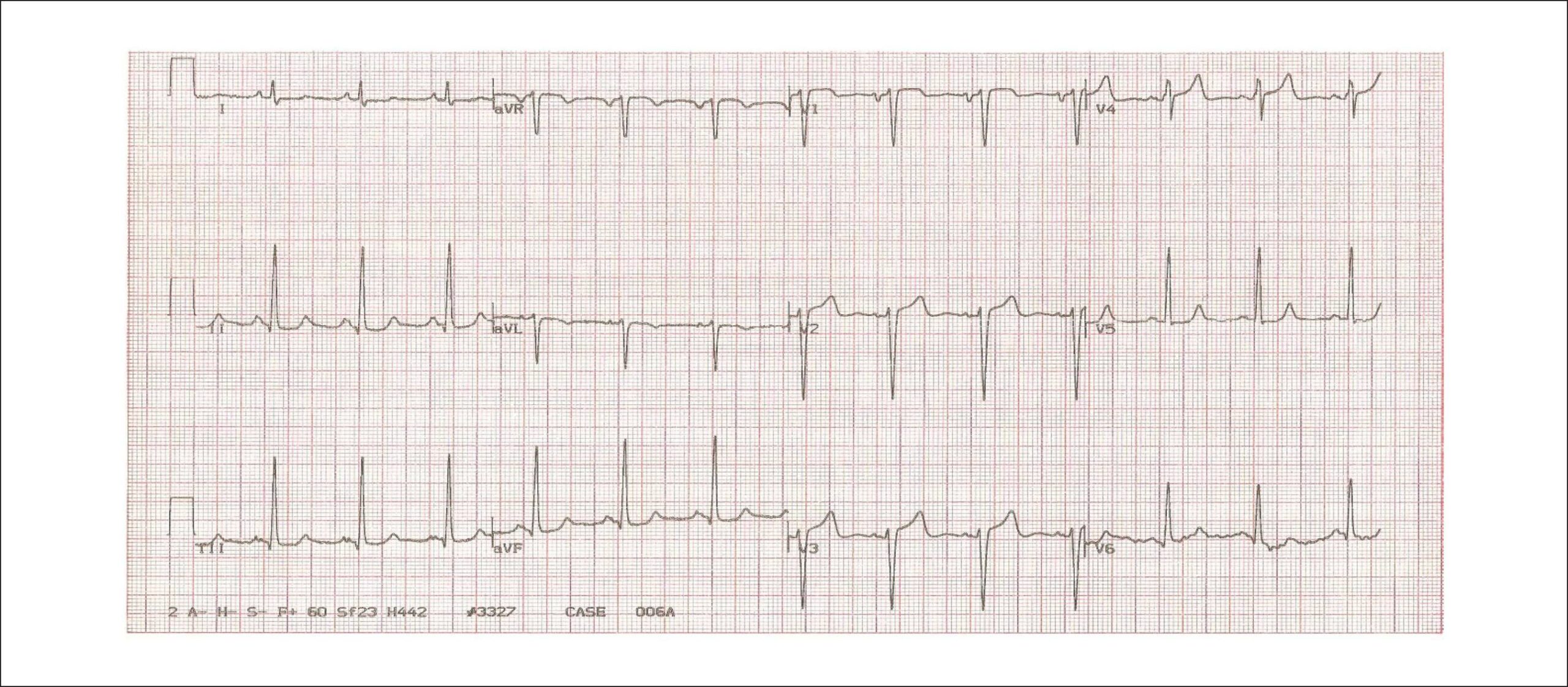
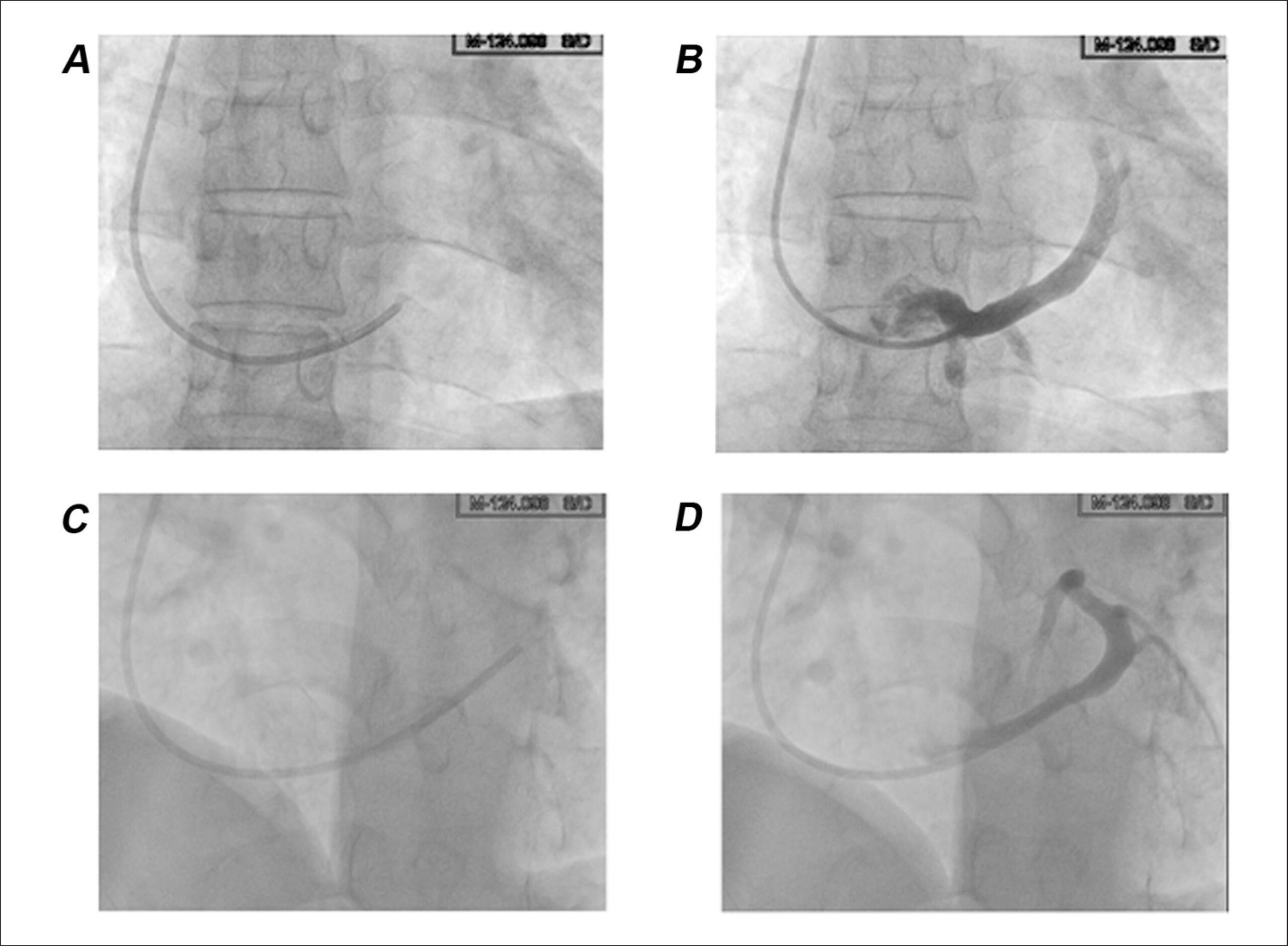
Case 5/2016 – A 56-Year-old Man Hospitalized for Unstable Angina, who Presented Recurrence of Precordial Pain and Cardiac Arrest with Pulseless Electrical Activity

Desiderio Favarato et al. Paulo Sampaio Gutierrez

Clinical aspects

This is a 56-year-old man with a recent onset of angina and three-vessel lesions on coronary cineangiography, who presented with dyspnea and, a few hours later, cardiorespiratory arrest with intense ST segment elevation.

Angina is the initial manifestation in half of the patients with coronary artery disease. Even when stable, i.e., without changes in the triggering events or intensity, a duration of the episodes longer than 3 months doubles the risk of cardiovascular events.,

[…]

  • Angina, Unstable
  • Chest Pain
  • Heart Arrest
  • Myocardial Infarction
  • Pulse Wave Analysis
Read Full Article
Creative Commons Attribution (CC BY) Creative Commons license
01/11/2016 DOI: 10.5935/abc.20160175 Views 1
Figure 1
ABC
Original Article

Correlation between C-Reactive Protein in Peripheral Vein and Coronary Sinus in Stable and Unstable Angina

Weverton Ferreira Leite et al. José Antonio Franchini Ramires Luiz Felipe Pinho Moreira Célia Maria Cassaro Strunz José Armando Mangione

Background:

High sensitivity C-reactive protein (hs-CRP) is commonly used in clinical practice to assess cardiovascular risk. However, a correlation has not yet been established between the absolute levels of peripheral and central hs-CRP.

Objective:

To assess the correlation between serum hs-CRP levels (mg/L) in a peripheral vein in the left forearm (LFPV) with those in the coronary sinus (CS) of patients with coronary artery disease (CAD) and a diagnosis of stable angina (SA) or unstable angina (UA).

Methods:

This observational, descriptive, and cross-sectional study was conducted at the Instituto do Coração, Hospital das Clinicas, Faculdade de Medicina, Universidade de São Paulo, and at the Hospital Beneficência Portuguesa de Sao Paulo, where CAD patients referred to the hospital for coronary angiography were evaluated.

Results:

Forty patients with CAD (20 with SA and 20 with UA) were included in the study. Blood samples from LFPV and CS were collected before coronary angiography. Furthermore, analysis of the correlation between serum levels of hs-CRP in LFPV versus CS showed a strong linear correlation for both SA (r = 0.993, p < 0.001) and UA (r = 0.976, p < 0.001) and for the entire sample (r = 0.985, p < 0.001).

Conclusion:

Our data suggest a strong linear correlation between hs-CRP levels in LFPV versus CS in patients with SA and UA.

  • Angina, Stable
  • Angina, Unstable
  • C-Reactive Protein
  • Coronary Artery Disease
  • Coronary sinus
Read Full Article
Creative Commons Attribution (CC BY) Creative Commons license
09/12/2014 DOI: 10.5935/abc.20140188 Views 2
Causality analysis of the relationship between bleeding and lethality in Acute Coronary Syndromes
ABC
Artigo Original

Causality analysis of the relationship between bleeding and lethality in Acute Coronary Syndromes

Luis Cláudio Lemos Correia et al. Michael Sabino Mariana Brito Guilherme Garcia … Mateus Viana J. Péricles Esteves Márcia R. Noya

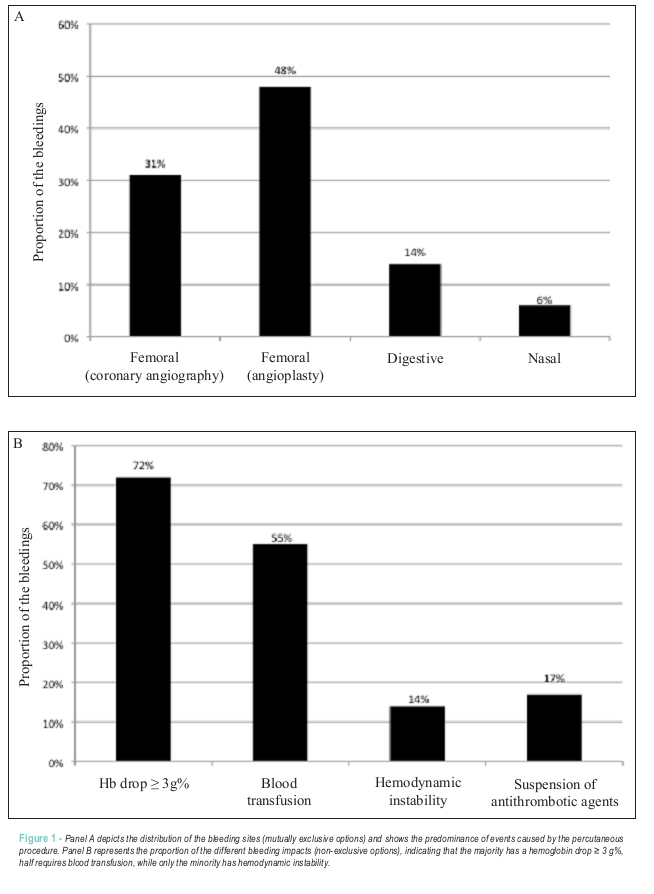
BACKGROUND: Hemorrhagic events in Acute Coronary Syndromes (ACS) have been independently associated with death in international multicenter registries. However, that association has not been tested in Brazil and the true causal relationship between bleeding and death has not been completely shown. OBJECTIVE: To test the following hypotheses: (1) major bleeding is an independent predictor of in-hospital death in ACS; (2) the relationship between those two endpoints is causal. METHODS: This study included patients meeting predefined criteria of unstable angina, non-ST-segment elevation myocardial infarction or ST-segment elevation myocardial infarction. Major bleeding during hospitalization was defined according to the Bleeding Academic Research Consortium (types 3 or 5). Logistic regression and analysis of the sequence of events were used to assess the association between bleeding and death. RESULTS: Of the 455 patients studied, 29 experienced major bleeding (6.4%; 95% CI = 4.3-9.0%). They had in-hospital mortality of 21%, as compared with 5.6% of those not experiencing bleeding (RR = 4.0; 95% CI = 1.8-9.1; P = 0.001). After adjusting for the propensity score, major bleeding remained as a predictor of in-hospital death (OR = 3.34; 95% CI = 1.2-9.5; P = 0.02). Of the 29 patients who experienced bleeding, six died. However, the detailed analysis of the sequence of events showed causal relationship only in one case. CONCLUSION: (1) Major bleeding is an independent predictor of in-hospital death in ACS; (2) the role of bleeding as a risk marker overcomes that as a risk factor for death. This conclusion should be seen as a hypothesis generator to be confirmed by larger-sample studies. (Arq Bras Cardiol. 2012; [online].ahead print, PP.0-0)

  • Acute coronary syndrome
  • Angina, Unstable
  • Hemorrhage
  • Hospitalization
  • Myocardial Infarction
Read Full Article
Creative Commons Attribution (CC BY) Creative Commons license
17/05/2012 DOI: 10.1590/S0066-782X2012005000046 Views 1
NT-proBNP levels in patients with non-ST-segment elevation acute coronary syndrome
ABC
Artigo Original

NT-proBNP levels in patients with non-ST-segment elevation acute coronary syndrome

Luiz Ricardo A. Castro et al. Maria Clara N. Alencar Márcia M. Barbosa Maria do Carmo P. Nunes … José Ronaldo Cardoso Antonio Luiz P. Ribeiro

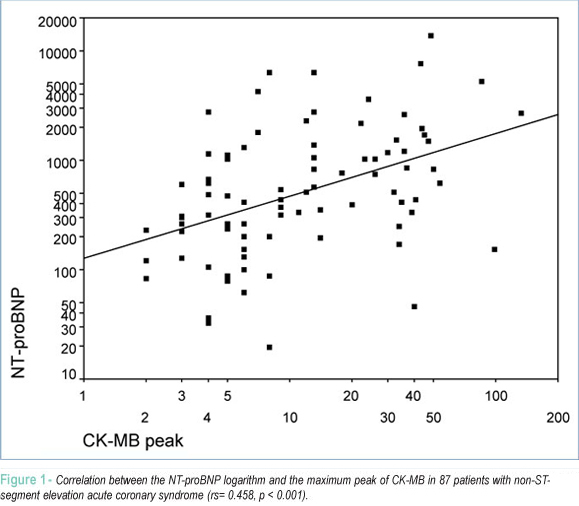
BACKGROUND: Non-ST-segment elevation acute coronary syndrome is associated with elevation of brain natriuretic peptide and markers of myocardial necrosis, although its relationship with the TIMI score and left ventricular function are largely unknown. OBJECTIVE: To evaluate the correlation between plasma N-terminal pro-brain natriuretic peptide (NT-proBNP) and markers of myocardial necrosis [creatine phosphokinase muscle-brain fraction (CK-MB) and troponin I], TIMI risk score and left ventricular ejection fraction in patients with non-ST-segment elevation acute coronary syndrome. METHODS: Eighty-seven patients with non-ST-segment elevation acute coronary syndrome were divided into two groups: 37 (42.5%) with unstable angina and 50 (57.5%) with non-ST-segment elevation myocardial infarction. RESULTS: Left ventricular ejection fraction more than 40% was found in 86.2% of the total sample. Serum levels of NT-proBNP was higher in patients with non-ST elevation myocardial infarction than in those with unstable angina (p<0.001). Increased levels of NT-proBNP were associated with increases in troponin I (rs=0.425, p<0.001), peak CK-MB (rs=0.458, p<0.001) and low left ventricular ejection fraction (rs=-0.345, p=0.002); no correlation was found with the TIMI risk score (rs=0.082, p=0.44). Multivariate analysis revealed that left ventricular ejection fraction and troponin I levels were independently correlated with NT-proBNP levels (p=0.017 and p=0.002, respectively). CONCLUSION: Increased levels of NT-proBNP in patients with non-ST-segment elevation acute coronary syndrome are not related exclusively to low left ventricular ejection fraction, but can also be caused by the presence of myocardial ischemia and necrosis.

  • Acute coronary syndrome
  • Angina, Unstable
  • Myocardial Infarction
  • Natriuretic Peptides
Read Full Article
Creative Commons Attribution (CC BY) Creative Commons license
27/10/2011 DOI: 10.1590/S0066-782X2011005000114
Preinfarction angina and in-hospital outcome of elderly patients with acute myocardial infarction
ABC
Artigo Original

Preinfarction angina and in-hospital outcome of elderly patients with acute myocardial infarction

Chiu Wen Shian et al. Sandro Gonçalves de Lima Brivaldo Markman Filho

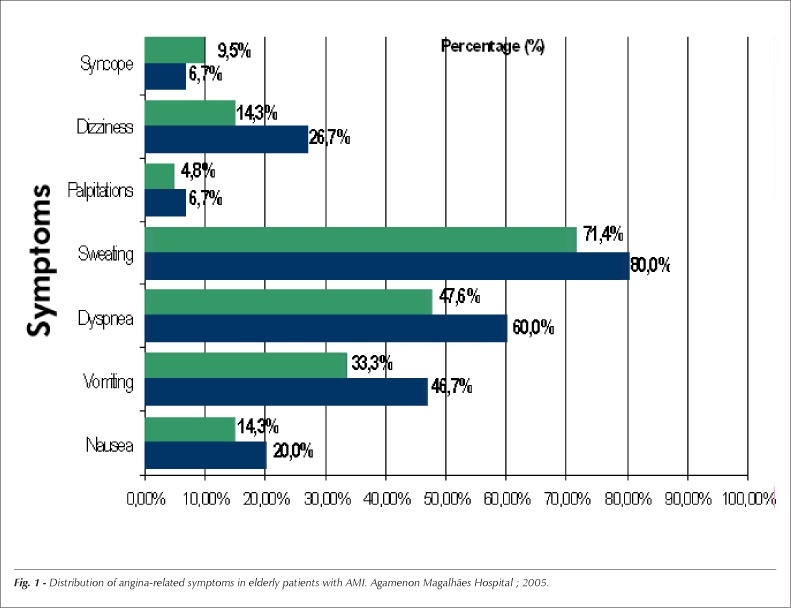
BACKGROUND: Preinfarction angina (PIA) may be a marker of ischemic preconditioning. A decrease in infarct size, ventricular remodeling, congestive heart failure, cardiogenic shock or death was demonstrated in the presence of preinfarction angina. These findings were more evident in adults, but not in the elderly. OBJECTIVE: To assess the relationship between PIA and the clinical course of elderly patients with acute myocardial infarction (AMI). METHODS: This was a case-series study with a comparison group. A total of 36 patients with ST-segment elevation AMI were included in the study and divided into two groups: group A (21 patients with PIA) and group B (15 patients without PIA). RESULTS: Mean age of the study population was 70.5 years, and there was a predominance of males (73%). Mean body mass index was 25.3 Kg/m2. Hypertension was present in 77.8%, diabetes in 27.8% and dyslipidemia in 32.4%. Type-A chest pain was reported by 71.4% of patients, and the majority of them (72.2%) were in Killip class I. Clinical endpoints for groups A and B were as follows: postinfarction angina 9.5% versus 20%, p = 0.630; heart failure 23.8% versus 13.3%, p = 0.674; urgent revascularization 4.8% versus 6.7%, p = 1; and cardiac arrhythmia 0% versus 6.7%, p = 0.417. There was no case of reinfarction, cardiogenic shock or death within 30 days of follow up in either group. CONCLUSION: In this case series, preinfarction angina was not associated with better clinical course in elderly patients with AMI.

  • Aged
  • Angina, Unstable
  • Myocardial Infarction
Read Full Article
Creative Commons Attribution (CC BY) Creative Commons license
18/04/2008 DOI: 10.1590/S0066-782X2007001800004

How to cite this article

EndNote RIS

Electronic Document Format (Vancouver)

Timóteo AT. Legumain – Another Piece in the Complex Puzzle of Atherosclerotic Plaque Formation and Vulnerability. Arquivos Brasileiros de Cardiologia 2023;120(11):e20230743.

Electronic Document Format (ABNT)

Timóteo, Ana Teresa. Legumain – Another Piece in the Complex Puzzle of Atherosclerotic Plaque Formation and Vulnerability. Arquivos Brasileiros de Cardiologia, v. 120, n. 11, e20230743, Dec. 2023.

Electronic Document Format (APA)

Timóteo, A. T. (2023). Legumain – Another Piece in the Complex Puzzle of Atherosclerotic Plaque Formation and Vulnerability. Arquivos Brasileiros de Cardiologia, 120(11), e20230743.

Electronic Document Format (ISO)

Timóteo, Ana Teresa. Legumain – Another Piece in the Complex Puzzle of Atherosclerotic Plaque Formation and Vulnerability. Arquivos Brasileiros de Cardiologia [online]. 2023, vol. 120, n. 11, [cited 2026-10-14], e20230743. Available from: <https://journals.cardiol.br/en/article/legumain-another-piece-in-the-complex-puzzle-of-atherosclerotic-plaque-formation-and-vulnerability/>. ISSN 0066-782X

EndNote RIS

Electronic Document Format (Vancouver)

Favarato D, Gutierrez PS. Case 5/2016 – A 56-Year-old Man Hospitalized for Unstable Angina, who Presented Recurrence of Precordial Pain and Cardiac Arrest with Pulseless Electrical Activity. Arquivos Brasileiros de Cardiologia 2016;107(5):485-90.

Electronic Document Format (ABNT)

Favarato, Desiderio; Gutierrez, Paulo Sampaio. Case 5/2016 – A 56-Year-old Man Hospitalized for Unstable Angina, who Presented Recurrence of Precordial Pain and Cardiac Arrest with Pulseless Electrical Activity. Arquivos Brasileiros de Cardiologia, v. 107, n. 5, p. 485-490, Oct. 2016.

Electronic Document Format (APA)

Favarato, D., & Gutierrez, P. S. (2016). Case 5/2016 – A 56-Year-old Man Hospitalized for Unstable Angina, who Presented Recurrence of Precordial Pain and Cardiac Arrest with Pulseless Electrical Activity. Arquivos Brasileiros de Cardiologia, 107(5), 485-490.

Electronic Document Format (ISO)

Favarato, Desiderio and Gutierrez, Paulo Sampaio. Case 5/2016 – A 56-Year-old Man Hospitalized for Unstable Angina, who Presented Recurrence of Precordial Pain and Cardiac Arrest with Pulseless Electrical Activity. Arquivos Brasileiros de Cardiologia [online]. 2016, vol. 107, n. 5, [cited 2026-10-14], pp. 485-490. Available from: <https://journals.cardiol.br/en/article/case-5-2016-a-56-year-old-man-hospitalized-for-unstable-angina-who-presented-recurrence-of-precordial-pain-and-cardiac-arrest-with-pulseless-electrical-activity/>. ISSN 0066-782X

EndNote RIS

Electronic Document Format (Vancouver)

Leite WF, Ramires JAF, Moreira LFP, Strunz CMC, Mangione JA. Correlation between C-Reactive Protein in Peripheral Vein and Coronary Sinus in Stable and Unstable Angina. Arquivos Brasileiros de Cardiologia 2014;104(3):202-8.

Electronic Document Format (ABNT)

Leite, Weverton Ferreira; Ramires, José Antonio Franchini; Moreira, Luiz Felipe Pinho; Strunz, Célia Maria Cassaro; Mangione, José Armando. Correlation between C-Reactive Protein in Peripheral Vein and Coronary Sinus in Stable and Unstable Angina. Arquivos Brasileiros de Cardiologia, v. 104, n. 3, p. 202-208, Dec. 2014.

Electronic Document Format (APA)

Leite, W. F., Ramires, J. A. F., Moreira, L. F. P., Strunz, C. M. C., & Mangione, J. A. (2014). Correlation between C-Reactive Protein in Peripheral Vein and Coronary Sinus in Stable and Unstable Angina. Arquivos Brasileiros de Cardiologia, 104(3), 202-208.

Electronic Document Format (ISO)

Leite, Weverton Ferreira and Ramires, José Antonio Franchini and Moreira, Luiz Felipe Pinho and Strunz, Célia Maria Cassaro and Mangione, José Armando. Correlation between C-Reactive Protein in Peripheral Vein and Coronary Sinus in Stable and Unstable Angina. Arquivos Brasileiros de Cardiologia [online]. 2014, vol. 104, n. 3, [cited 2026-10-14], pp. 202-208. Available from: <https://journals.cardiol.br/en/article/correlation-between-c-reactive-protein-in-peripheral-vein-and-coronary-sinus-in-stable-and-unstable-angina/>. ISSN 0066-782X

EndNote RIS

Electronic Document Format (Vancouver)

Correia LCL, Sabino M, Brito M, Garcia G, Viana M, Esteves JP, Noya MR, et al. Causality analysis of the relationship between bleeding and lethality in Acute Coronary Syndromes. Arquivos Brasileiros de Cardiologia 2012;98(6):488-96.

Electronic Document Format (ABNT)

Correia, Luis Cláudio Lemos; Sabino, Michael; Brito, Mariana; Garcia, Guilherme; Viana, Mateus; Esteves, J. Péricles; Noya, Márcia R.. Causality analysis of the relationship between bleeding and lethality in Acute Coronary Syndromes. Arquivos Brasileiros de Cardiologia, v. 98, n. 6, p. 488-496, May. 2012.

Electronic Document Format (APA)

Correia, L. C. L., Sabino, M., Brito, M., Garcia, G., Viana, M., Esteves, J. P., & Noya, M. R. (2012). Causality analysis of the relationship between bleeding and lethality in Acute Coronary Syndromes. Arquivos Brasileiros de Cardiologia, 98(6), 488-496.

Electronic Document Format (ISO)

Correia, Luis Cláudio Lemos and Sabino, Michael and Brito, Mariana and Garcia, Guilherme and Viana, Mateus and Esteves, J. Péricles and Noya, Márcia R.. Causality analysis of the relationship between bleeding and lethality in Acute Coronary Syndromes. Arquivos Brasileiros de Cardiologia [online]. 2012, vol. 98, n. 6, [cited 2026-10-14], pp. 488-496. Available from: <https://journals.cardiol.br/en/article/causality-analysis-of-the-relationship-between-bleeding-and-lethality-in-acute-coronary-syndromes/>. ISSN 0066-782X

EndNote RIS

Electronic Document Format (Vancouver)

Castro LRA, Alencar MCN, Barbosa MM, Nunes MCP, Cardoso JR, Ribeiro ALP. NT-proBNP levels in patients with non-ST-segment elevation acute coronary syndrome. Arquivos Brasileiros de Cardiologia 2011;97(6):456-61.

Electronic Document Format (ABNT)

Castro, Luiz Ricardo A.; Alencar, Maria Clara N.; Barbosa, Márcia M.; Nunes, Maria do Carmo P.; Cardoso, José Ronaldo; Ribeiro, Antonio Luiz P.. NT-proBNP levels in patients with non-ST-segment elevation acute coronary syndrome. Arquivos Brasileiros de Cardiologia, v. 97, n. 6, p. 456-461, Oct. 2011.

Electronic Document Format (APA)

Castro, L. R. A., Alencar, M. C. N., Barbosa, M. M., Nunes, M. C. P., Cardoso, J. R., & Ribeiro, A. L. P. (2011). NT-proBNP levels in patients with non-ST-segment elevation acute coronary syndrome. Arquivos Brasileiros de Cardiologia, 97(6), 456-461.

Electronic Document Format (ISO)

Castro, Luiz Ricardo A. and Alencar, Maria Clara N. and Barbosa, Márcia M. and Nunes, Maria do Carmo P. and Cardoso, José Ronaldo and Ribeiro, Antonio Luiz P.. NT-proBNP levels in patients with non-ST-segment elevation acute coronary syndrome. Arquivos Brasileiros de Cardiologia [online]. 2011, vol. 97, n. 6, [cited 2026-10-14], pp. 456-461. Available from: <https://journals.cardiol.br/en/article/nt-probnp-levels-in-patients-with-non-st-segment-elevation-acute-coronary-syndrome/>. ISSN 0066-782X

EndNote RIS

Electronic Document Format (Vancouver)

Shian CW, Lima SG, Markman Filho B. Preinfarction angina and in-hospital outcome of elderly patients with acute myocardial infarction. Arquivos Brasileiros de Cardiologia 2008;89(6):370-6.

Electronic Document Format (ABNT)

Shian, Chiu Wen; Lima, Sandro Gonçalves de; Markman Filho, Brivaldo. Preinfarction angina and in-hospital outcome of elderly patients with acute myocardial infarction. Arquivos Brasileiros de Cardiologia, v. 89, n. 6, p. 370-376, Apr. 2008.

Electronic Document Format (APA)

Shian, C. W., Lima, S. G. , & Markman Filho, B. (2008). Preinfarction angina and in-hospital outcome of elderly patients with acute myocardial infarction. Arquivos Brasileiros de Cardiologia, 89(6), 370-376.

Electronic Document Format (ISO)

Shian, Chiu Wen and Lima, Sandro Gonçalves de and Markman Filho, Brivaldo. Preinfarction angina and in-hospital outcome of elderly patients with acute myocardial infarction. Arquivos Brasileiros de Cardiologia [online]. 2008, vol. 89, n. 6, [cited 2026-10-14], pp. 370-376. Available from: <https://journals.cardiol.br/en/article/preinfarction-angina-and-in-hospital-outcome-of-elderly-patients-with-acute-myocardial-infarction/>. ISSN 0066-782X

  • About ABC Family
  • Internal Regulation
  • Editorial Board
  • Brazilian Society of Cardiology (SBC)

Issues

SBC Guidelines

  • Videos
  • Podcasts
  • News