ABC Family Arquivos Brasileiros de Cardiologia International Journal of Cardiovascular Sciences ABC Heart Failure & Cardiomyopathy ABC Imagem Cardiovascular
Português English
ABC Family
Português English
  • About
    • About ABC Family
    • Internal Regulation
    • Editorial Board
    • Brazilian Society of Cardiology (SBC)
  • Issues
  • SBC Guidelines
  • Content
    • Videos
    • Podcasts
    • News
  • About
    • About ABC Family
    • Internal Regulation
    • Editorial Board
    • Brazilian Society of Cardiology (SBC)
  • Issues
  • SBC Guidelines
  • Content
    • Videos
    • Podcasts
    • News

ABC Family

  • ABC Family
  • Arquivos Brasileiros de Cardiologia
  • International Journal of Cardiovascular Sciences
  • ABC Heart Failure & Cardiomyopathy
  • ABC Imagem Cardiovascular
Search in

No content found.

Journals
Ordering
Article types
Others

  1. Home
  2. Keyword: Anabolic Androgenic Steroids
ABCIC
Editorial

A New Frontier in Cardiovascular Prevention: Beyond Prohibition, Clinical Management of Anabolic Steroid Users

Fabio Roston et al. Alexandre Aby Azar Ribeiro Naiara Caroline Makiniks Luiz Felipe Branco Ribeiro Liliana Ludwing Ziegler

Subclinical Diagnosis: The Role of Advanced Echocardiography

Conventional cardiac assessment often fails to detect early damage, as Left Ventricular Ejection Fraction (LVEF) may remain within normal limits despite established myocardial injury. The literature highlights that AAS users exhibit alterations in cardiac geometry and function, including pathological hypertrophy, diastolic dysfunction, and biventricular impairment.,

In this setting, echocardiography incorporating advanced measurements such as myocardial strain has emerged as an essential diagnostic tool. Although LVEF may remain preserved during the early stages, myocardial deformation (strain) analysis enables the detection of incipient systolic dysfunction resulting from fibrosis and myofibrillar destruction caused by the direct toxic effects of androgens. Recent studies have demonstrated that both current and former AAS users may exhibit persistent biventricular cardiomyopathy, reinforcing the need for continuous monitoring.

[…]
  • Anabolic Androgenic Steroids
  • Cardiomyopathies
  • Myocardial Infarction
Read Full Article
Creative Commons Attribution (CC BY) Creative Commons license
31/07/2026 DOI: 10.36660/abcimg.20260076i Views 1
Anabolic-Androgenic Steroids and Acute Myocardial Infarction in Young Adults: A Literature Review Based on a Case Series
ABCIC
Original Article

Anabolic-Androgenic Steroids and Acute Myocardial Infarction in Young Adults: A Literature Review Based on a Case Series

Fabiana Rocha Botelho de Oliveira et al. Danielli Oliveira de Costa Lino Germano Freire Bezerra Filho Bruno Cavalcante Linhares … Leonardo Brito De Souza Luiz Filipe Torres de Alencar Matheus Rolim Santa Cruz Mateus Paiva Marques Feitosa

Abstract

Background:

The use of anabolic-androgenic steroids (AAS) has increased substantially, especially among young adults seeking aesthetic enhancement and improved physical performance. Scientific evidence demonstrates a significant association between the abuse of these substances and severe cardiovascular events, including acute myocardial infarction (AMI), often occurring in individuals without traditional cardiovascular risk factors.

Objective:

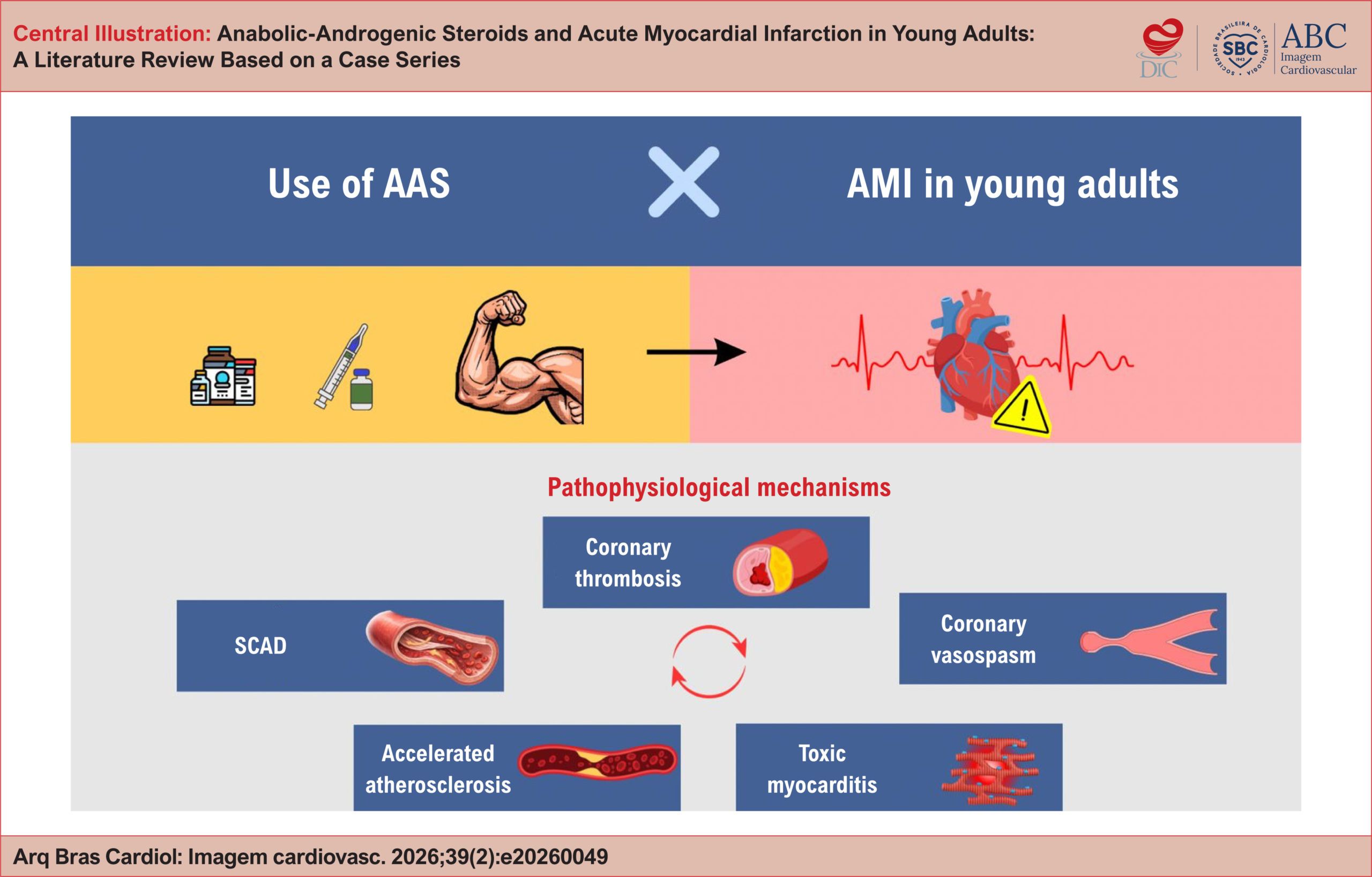
To describe the adverse effects of AAS on the cardiovascular system and the main pathophysiological mechanisms involved in the development of AMI through the analysis of a clinical case series combined with a review of medical literature.

Methods:

A systematic literature review was conducted using the PubMed and SciELO databases, complemented by the analysis of three clinical cases. Demographic variables and characteristics related to AAS use, including duration of exposure and route of administration, were evaluated, with emphasis on the pathophysiological mechanisms associated with AMI.

Results:

Analysis of the clinical cases identified different mechanisms related to AMI, including coronary thrombosis, atherosclerosis with plaque rupture, and spontaneous coronary artery dissection. The literature review also identified other relevant mechanisms, such as coronary vasospasm and toxic myocarditis. A predominance of male patients was observed, with the highest incidence occurring among individuals aged 20-40 years, and testosterone esters were the most frequently used AAS.

Conclusions:

AAS abuse represents a major threat to cardiovascular health and is associated with AMI through multiple pathophysiological mechanisms. These findings reinforce the need for public awareness as well as the development of preventive strategies and clinical guidelines aimed at managing this emerging condition.

  • Anabolic Androgenic Steroids
  • Atherosclerosis
  • Myocardial Infarction
  • Myocarditis
Read Full Article
Creative Commons Attribution (CC BY) Creative Commons license
27/07/2026 DOI: 10.36660/abcimg.20260049i Views 1
Figure 1
IJCS
Editorial

Anabolic-Androgenic Steroids and Cardiotoxicity

José Antônio Caldas Teixeira et al. Joelma Dominato Rocha Carvalho Mateus Freitas Teixeira

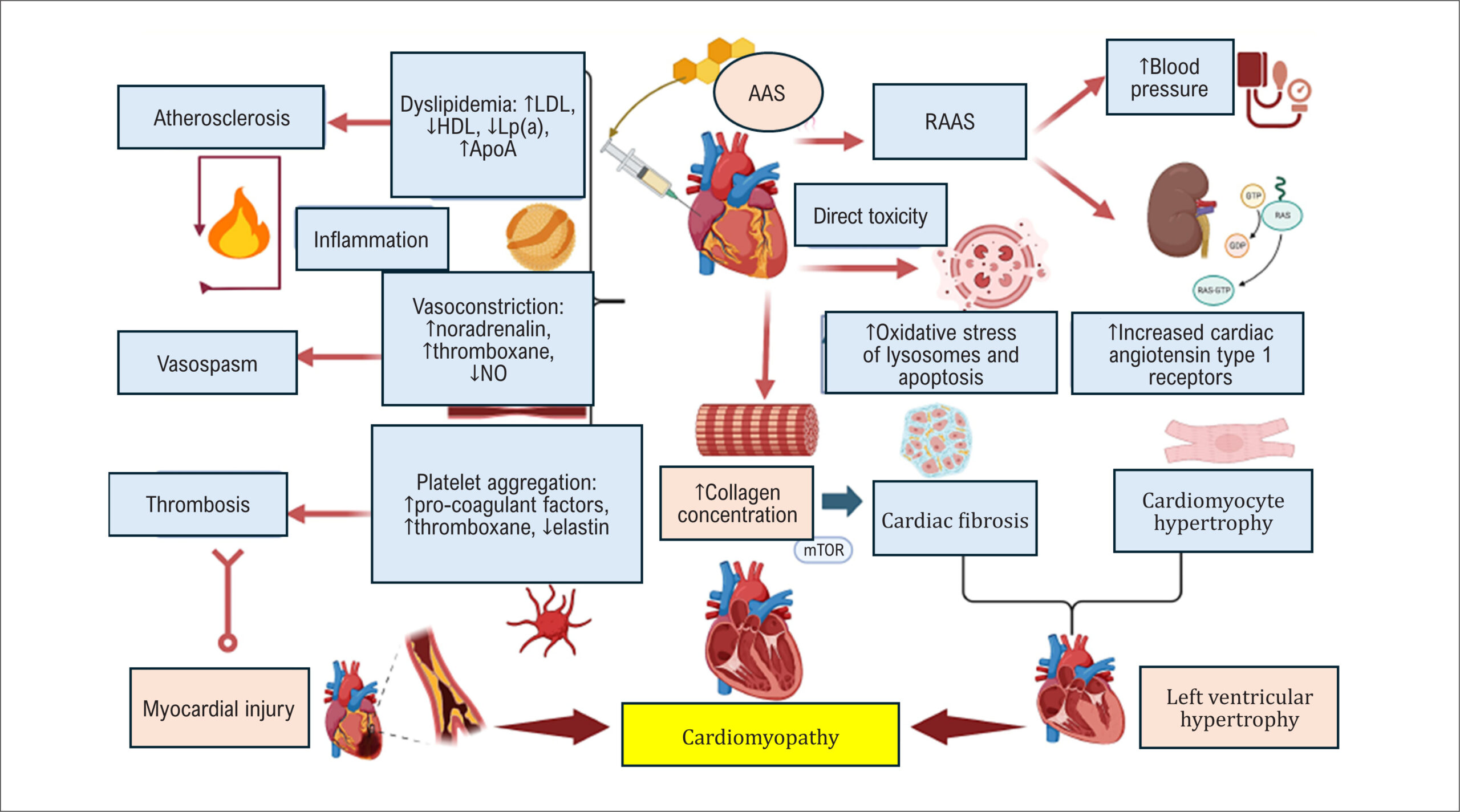
Anabolic-androgenic steroids (AAS) are a class of natural and synthetic hormones, which owe their name to their chemical structure (steroid nucleus) and their biological, anabolic, and androgenic effects. Misuse of AAS for aesthetic and performance purposes has become widespread, as they provide increases in muscle mass and strength. It is estimated that approximately 3.5% of the world’s population uses AAS.

Use of AAS dates back to ancient Greece, followed by the Second World War. They were detected in sports competitions in 1954 and later disseminated among bodybuilders and identified in various sports in the Tokyo 1964 Olympic Games. Currently, we are witnessing a growing encouragement of AAS use for aesthetic purposes, through “beauty chips” and disguised as hormone replacement therapy. This indiscriminate use culminated in a resolution by the Brazilian Federal Council of Medicine against the prescription of these hormones for aesthetic purposes.

[…]

  • Anabolic Androgenic Steroids
  • Androgens
  • Cardiotoxicity
  • Steroids
  • Testosterone
Read Full Article
Creative Commons Attribution (CC BY) Creative Commons license
15/08/2025 DOI: 10.36660/ijcs.20250096 Views 1
Systolic Subclinical Dysfunction in Anabolic Steroid Users: A Real Life Study
IJCS
Original Article

Systolic Subclinical Dysfunction in Anabolic Steroid Users: A Real Life Study

Renata Rodrigues Teixeira De Castro et al. Marcello de Brito Campos Luiz Mello João Giffoni Silveira Neto

Abstract

Background:

Considering the uncertainty regarding the cardiovascular safety of anabolic steroid use, we believe that the use of advanced echocardiography techniques, such as speckle tracking, may contribute more objectively to the analysis of cardiotoxicity induced by these substances.

Objectives:

To compare, through speckle tracking, the echocardiograms of bodybuilders who abuse anabolic steroids with those who do not use these substances.

Methodology:

This work is a retrospective, observational study that analyzed echocardiograms performed on bodybuilders followed up in an outpatient sports cardiology service, comparing the results between individuals who use and those who have never used anabolic steroids. Continuous data was compared, using unpaired, two-tailed, Student’s T test, with a p-value < 0.05 considered to be significant.

Results:

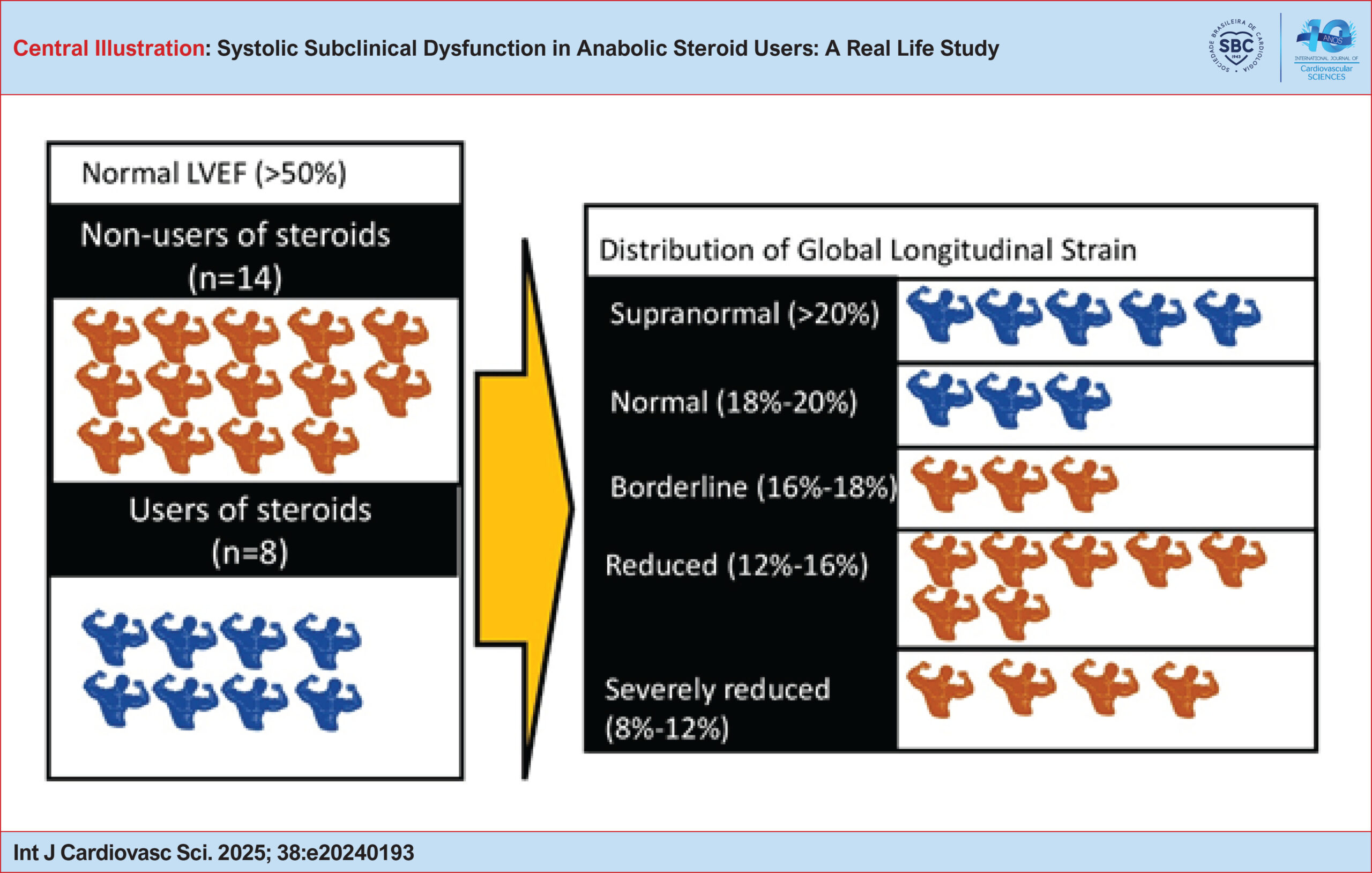
The final sample of this study included 22 bodybuilders, 14 of whom were anabolic steroid users (UAS) and 8 non-users of anabolic steroids (NUAS). All 22 participants had a left ventricular ejection fraction (LVEF) > 50% (UAS = 55±4 vs. NUAS = 63±1%; p < 0.001). All 14 steroid users showed abnormal global longitudinal strain (GLS), while all 8 non-users presented normal values for this variable (UAS = 13±2 vs. NUAS = 20±2; p < 0.01).

Conclusion:

Bodybuilders who use anabolic steroids, despite having normal values for conventional echocardiography parameters, show a reduction in GLS of the left ventricle. The use of speckle-tracking echocardiography represents an important tool in the analysis of myocardial injury in UAS, offering the possibility of early detection of systolic dysfunction in these individuals.

  • Anabolic Androgenic Steroids
  • Echocardiography
  • Resistance Training
Read Full Article
Creative Commons Attribution (CC BY) Creative Commons license
12/05/2025 DOI: 10.36660/ijcs.20240193 Views 2
Coronary Inflammation by Computed Tomography Pericoronary Fat Attenuation and Increased Cytokines in Young Male Anabolic Androgenic Steroid Users
ABC
Original Article

Coronary Inflammation by Computed Tomography Pericoronary Fat Attenuation and Increased Cytokines in Young Male Anabolic Androgenic Steroid Users

Francis Ribeiro de Souza et al. Carlos E. Rochitte Douglas Carli Silva Barbara Sampaio … Marisa Passarelli Marcelo R. dos Santos Guilherme W. Fonseca Antonio Carlos Battaglia Filho Kelly Correa Renata Margarida do Val Maurício Yonamine Rosa Maria R. Pereira Carlos Eduardo Negrão Roberto Kalil-Filho Maria Janieire de Nazaré Nunes Alves

Abstract

Background

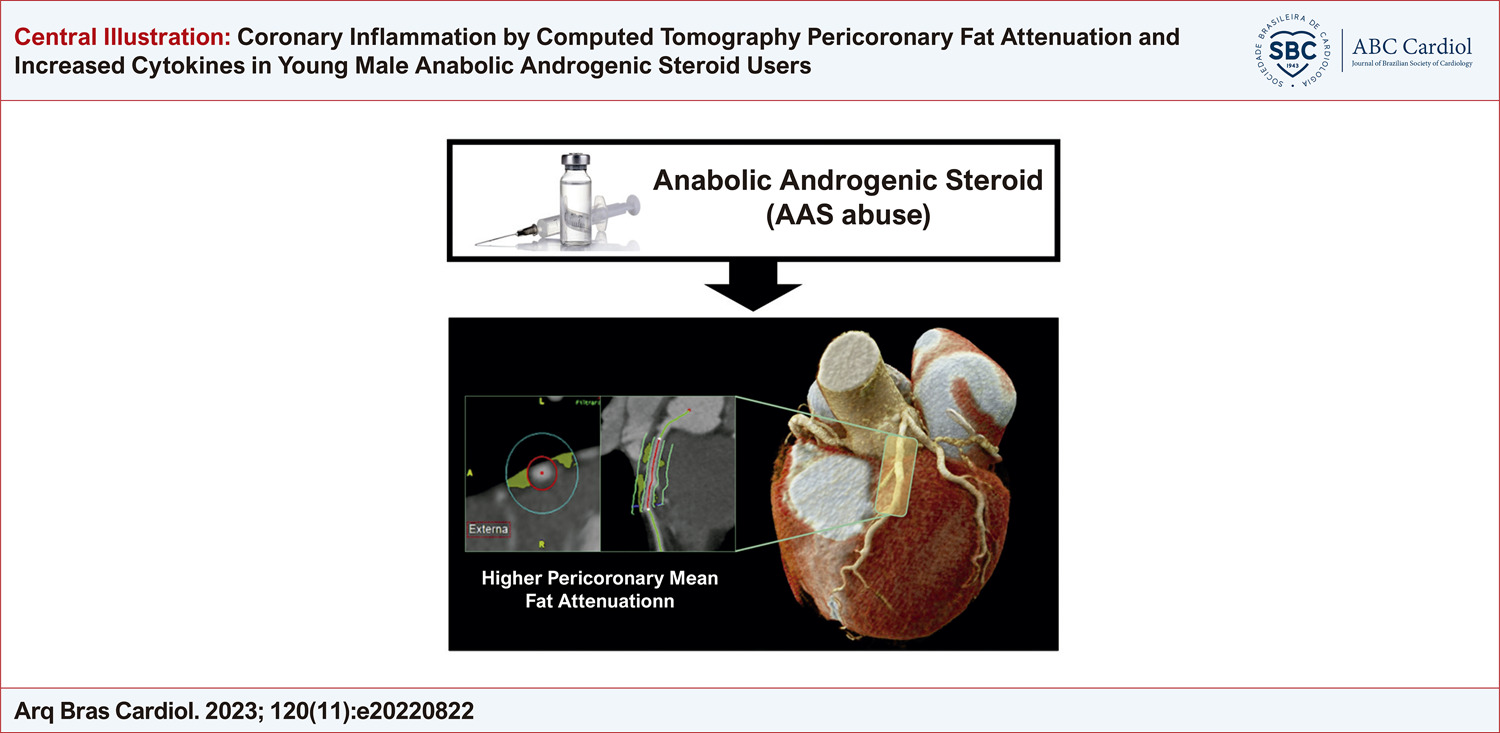
Anabolic androgenic steroid (AAS) abuse has been associated with coronary artery disease (CAD). Pericoronary fat attenuation (pFA) is a marker of coronary inflammation, which is key in the atherosclerotic process.

Objective

To evaluate pFA and inflammatory profile in AAS users.

Methods

Twenty strength-trained AAS users (AASU), 20 AAS nonusers (AASNU), and 10 sedentary controls (SC) were evaluated. Coronary inflammation was evaluated by mean pericoronary fat attenuation (mPFA) in the right coronary artery (RCA), left anterior descending coronary artery (LAD), and left circumflex (LCx). Interleukin (IL)-1 (IL-1), IL-6, IL-10, and TNF-alpha were evaluated by optical density (OD) in a spectrophotometer with a 450 nm filter. P<0.05 indicated statistical significance.

Results

AASU had higher mPFA in the RCA (-65.87 [70.51-60.70] vs. -78.07 [83.66-72.87] vs.-78.46 [85.41-71.99] Hounsfield Units (HU), respectively, p<0.001) and mPFA in the LAD (-71.47 [76.40-66.61] vs. -79.32 [84.37-74.59] vs. -82.52 [88.44-75.81] HU, respectively, p=0.006) compared with AASNU and SC. mPFA in the LCx was not different between AASU, AASNU, and SC (-72.41 [77.17-70.37] vs. -80.13 [86.22-72.23] vs. -78.29 [80.63-72.29] HU, respectively, p=0.163). AASU compared with AASNU and SC, had higher IL-1, (0.975 [0.847-1.250] vs. 0.437 [0.311-0.565] vs. 0.530 [0.402-0.780] OD, respectively, p=0.002), IL-6 (1.195 [0.947-1.405] vs. 0.427 [0.377-0.577] vs. 0.605 [0.332-0.950] OD, p=0.005) and IL-10 (1.145 [0.920-1.292] vs. 0.477 [0.382-0.591] vs. 0.340 [0.316-0.560] OD, p<0.001). TNF-α was not different between the AASU, AASNU, and SC groups (0.520 [0.250-0.610] vs. 0.377 [0.261-0.548] vs. 0.350 [0.182-430]), respectively.

Conclusion

Compared with ASSNU and controls, AASU have higher mPFA and higher systemic inflammatory cytokines profile suggesting that AAS may induce coronary atherosclerosis through coronary and systemic inflammation.

  • Anabolic Androgenic Steroids
  • Coronary Artery Disease
  • Pericoronary Fat Attenuation
Read Full Article
Creative Commons Attribution (CC BY) Creative Commons license
20/11/2023 DOI: 10.36660/abc.20220822 Views 1

How to cite this article

EndNote RIS

Electronic Document Format (Vancouver)

Roston F, Ribeiro AAA, Makiniks NC, Ribeiro LFB, Ziegler LL. A New Frontier in Cardiovascular Prevention: Beyond Prohibition, Clinical Management of Anabolic Steroid Users. ABC Imagem Cardiovascular 2026;39(2):e20260076.

Electronic Document Format (ABNT)

Roston, Fabio; Ribeiro, Alexandre Aby Azar; Makiniks, Naiara Caroline; Ribeiro, Luiz Felipe Branco; Ziegler, Liliana Ludwing. A New Frontier in Cardiovascular Prevention: Beyond Prohibition, Clinical Management of Anabolic Steroid Users. ABC Imagem Cardiovascular, v. 39, n. 2, e20260076, Jul. 2026.

Electronic Document Format (APA)

Roston, F., Ribeiro, A. A. A., Makiniks, N. C., Ribeiro, L. F. B., & Ziegler, L. L. (2026). A New Frontier in Cardiovascular Prevention: Beyond Prohibition, Clinical Management of Anabolic Steroid Users. ABC Imagem Cardiovascular, 39(2), e20260076.

Electronic Document Format (ISO)

Roston, Fabio and Ribeiro, Alexandre Aby Azar and Makiniks, Naiara Caroline and Ribeiro, Luiz Felipe Branco and Ziegler, Liliana Ludwing. A New Frontier in Cardiovascular Prevention: Beyond Prohibition, Clinical Management of Anabolic Steroid Users. ABC Imagem Cardiovascular [online]. 2026, vol. 39, n. 2, [cited 2026-10-14], e20260076. Available from: <https://journals.cardiol.br/en/article/a-new-frontier-in-cardiovascular-prevention-beyond-prohibition-clinical-management-of-anabolic-steroid-users/>. ISSN 2318-8219

EndNote RIS

Electronic Document Format (Vancouver)

Oliveira FRB, Lino DOC, Bezerra Filho GF, Linhares BC, Souza LBD, Alencar LFT, Cruz MRS, et al. Anabolic-Androgenic Steroids and Acute Myocardial Infarction in Young Adults: A Literature Review Based on a Case Series. ABC Imagem Cardiovascular 2026;39(2):e20260049.

Electronic Document Format (ABNT)

Oliveira, Fabiana Rocha Botelho de; Lino, Danielli Oliveira de Costa; Bezerra Filho, Germano Freire; Linhares, Bruno Cavalcante; Souza, Leonardo Brito De; Alencar, Luiz Filipe Torres de; Cruz, Matheus Rolim Santa; Feitosa, Mateus Paiva Marques. Anabolic-Androgenic Steroids and Acute Myocardial Infarction in Young Adults: A Literature Review Based on a Case Series. ABC Imagem Cardiovascular, v. 39, n. 2, e20260049, Jul. 2026.

Electronic Document Format (APA)

Oliveira, F. R. B. , Lino, D. O. C., Bezerra Filho, G. F., Linhares, B. C., Souza, L. B. D., Alencar, L. F. T. , Cruz, M. R. S., & Feitosa, M. P. M. (2026). Anabolic-Androgenic Steroids and Acute Myocardial Infarction in Young Adults: A Literature Review Based on a Case Series. ABC Imagem Cardiovascular, 39(2), e20260049.

Electronic Document Format (ISO)

Oliveira, Fabiana Rocha Botelho de and Lino, Danielli Oliveira de Costa and Bezerra Filho, Germano Freire and Linhares, Bruno Cavalcante and Souza, Leonardo Brito De and Alencar, Luiz Filipe Torres de and Cruz, Matheus Rolim Santa and Feitosa, Mateus Paiva Marques. Anabolic-Androgenic Steroids and Acute Myocardial Infarction in Young Adults: A Literature Review Based on a Case Series. ABC Imagem Cardiovascular [online]. 2026, vol. 39, n. 2, [cited 2026-10-14], e20260049. Available from: <https://journals.cardiol.br/en/article/anabolic-androgenic-steroids-and-acute-myocardial-infarction-in-young-adults-a-literature-review-based-on-a-case-series/>. ISSN 2318-8219

EndNote RIS

Electronic Document Format (Vancouver)

Teixeira JAC, Carvalho JDR, Teixeira MF. Anabolic-Androgenic Steroids and Cardiotoxicity. International Journal of Cardiovascular Sciences 2025;38:e20250096.

Electronic Document Format (ABNT)

Teixeira, José Antônio Caldas; Carvalho, Joelma Dominato Rocha; Teixeira, Mateus Freitas. Anabolic-Androgenic Steroids and Cardiotoxicity. International Journal of Cardiovascular Sciences, v. 38, e20250096, Aug. 2025.

Electronic Document Format (APA)

Teixeira, J. A. C., Carvalho, J. D. R., & Teixeira, M. F. (2025). Anabolic-Androgenic Steroids and Cardiotoxicity. International Journal of Cardiovascular Sciences, 38, e20250096.

Electronic Document Format (ISO)

Teixeira, José Antônio Caldas and Carvalho, Joelma Dominato Rocha and Teixeira, Mateus Freitas. Anabolic-Androgenic Steroids and Cardiotoxicity. International Journal of Cardiovascular Sciences [online]. 2025, vol. 38, [cited 2026-10-14], e20250096. Available from: <https://journals.cardiol.br/en/article/anabolic-androgenic-steroids-and-cardiotoxicity/>. ISSN 2359-4802

EndNote RIS

Electronic Document Format (Vancouver)

Castro RRTD, Campos MB, Mello L, Silveira Neto JG. Systolic Subclinical Dysfunction in Anabolic Steroid Users: A Real Life Study. International Journal of Cardiovascular Sciences 2025;38:e20240193.

Electronic Document Format (ABNT)

Castro, Renata Rodrigues Teixeira De; Campos, Marcello de Brito; Mello, Luiz; Silveira Neto, João Giffoni. Systolic Subclinical Dysfunction in Anabolic Steroid Users: A Real Life Study. International Journal of Cardiovascular Sciences, v. 38, e20240193, May. 2025.

Electronic Document Format (APA)

Castro, R. R. T. D., Campos, M. B., Mello, L., & Silveira Neto, J. G. (2025). Systolic Subclinical Dysfunction in Anabolic Steroid Users: A Real Life Study. International Journal of Cardiovascular Sciences, 38, e20240193.

Electronic Document Format (ISO)

Castro, Renata Rodrigues Teixeira De and Campos, Marcello de Brito and Mello, Luiz and Silveira Neto, João Giffoni. Systolic Subclinical Dysfunction in Anabolic Steroid Users: A Real Life Study. International Journal of Cardiovascular Sciences [online]. 2025, vol. 38, [cited 2026-10-14], e20240193. Available from: <https://journals.cardiol.br/en/article/systolic-subclinical-dysfunction-in-anabolic-steroid-users-a-real-life-study/>. ISSN 2359-4802

EndNote RIS

Electronic Document Format (Vancouver)

Souza FR, Rochitte CE, Silva DC, Sampaio B, Passarelli M, Santos MR, Fonseca GW, et al. Coronary Inflammation by Computed Tomography Pericoronary Fat Attenuation and Increased Cytokines in Young Male Anabolic Androgenic Steroid Users. Arquivos Brasileiros de Cardiologia 2023;120(11):e20220822.

Electronic Document Format (ABNT)

Souza, Francis Ribeiro de; Rochitte, Carlos E.; Silva, Douglas Carli; Sampaio, Barbara; Passarelli, Marisa; Santos, Marcelo R. dos; Fonseca, Guilherme W.; Battaglia Filho, Antonio Carlos; Correa, Kelly; Val, Renata Margarida do; Yonamine, Maurício; Pereira, Rosa Maria R.; Negrão, Carlos Eduardo; Kalil-Filho, Roberto; Alves, Maria Janieire de Nazaré Nunes. Coronary Inflammation by Computed Tomography Pericoronary Fat Attenuation and Increased Cytokines in Young Male Anabolic Androgenic Steroid Users. Arquivos Brasileiros de Cardiologia, v. 120, n. 11, e20220822, Nov. 2023.

Electronic Document Format (APA)

Souza, F. R. , Rochitte, C. E., Silva, D. C., Sampaio, B., Passarelli, M., Santos, M. R. , Fonseca, G. W., Battaglia Filho, A. C., Correa, K., Val, R. M. , Yonamine, M., Pereira, R. M. R., Negrão, C. E., Kalil-Filho, R., & Alves, M. J. N. N. (2023). Coronary Inflammation by Computed Tomography Pericoronary Fat Attenuation and Increased Cytokines in Young Male Anabolic Androgenic Steroid Users. Arquivos Brasileiros de Cardiologia, 120(11), e20220822.

Electronic Document Format (ISO)

Souza, Francis Ribeiro de and Rochitte, Carlos E. and Silva, Douglas Carli and Sampaio, Barbara and Passarelli, Marisa and Santos, Marcelo R. dos and Fonseca, Guilherme W. and Battaglia Filho, Antonio Carlos and Correa, Kelly and Val, Renata Margarida do and Yonamine, Maurício and Pereira, Rosa Maria R. and Negrão, Carlos Eduardo and Kalil-Filho, Roberto and Alves, Maria Janieire de Nazaré Nunes. Coronary Inflammation by Computed Tomography Pericoronary Fat Attenuation and Increased Cytokines in Young Male Anabolic Androgenic Steroid Users. Arquivos Brasileiros de Cardiologia [online]. 2023, vol. 120, n. 11, [cited 2026-10-14], e20220822. Available from: <https://journals.cardiol.br/en/article/coronary-inflammation-by-computed-tomography-pericoronary-fat-attenuation-and-increased-cytokines-in-young-male-anabolic-androgenic-steroid-users/>. ISSN 0066-782X

  • About ABC Family
  • Internal Regulation
  • Editorial Board
  • Brazilian Society of Cardiology (SBC)

Issues

SBC Guidelines

  • Videos
  • Podcasts
  • News