ABC Family Arquivos Brasileiros de Cardiologia International Journal of Cardiovascular Sciences ABC Heart Failure & Cardiomyopathy ABC Imagem Cardiovascular
Português English
ABC Family
Português English
  • About
    • About ABC Family
    • Internal Regulation
    • Editorial Board
    • Brazilian Society of Cardiology (SBC)
  • Issues
  • SBC Guidelines
  • Content
    • Videos
    • Podcasts
    • News
  • About
    • About ABC Family
    • Internal Regulation
    • Editorial Board
    • Brazilian Society of Cardiology (SBC)
  • Issues
  • SBC Guidelines
  • Content
    • Videos
    • Podcasts
    • News

ABC Family

  • ABC Family
  • Arquivos Brasileiros de Cardiologia
  • International Journal of Cardiovascular Sciences
  • ABC Heart Failure & Cardiomyopathy
  • ABC Imagem Cardiovascular
Search in

No content found.

Journals
Ordering
Article types
Others

  1. Home
  2. Keyword: Echocardiography, Stress / methods
ABC
Editorial

Blood Pressure Response and Exercise Stress Echocardiography: New Perspectives on a Contemporary Challenge

Eduardo M. Vilela et al. Ricardo Fontes-Carvalho

Exercise substantially impacts the cardiovascular system and is associated with many potential benefits across different momentums of the cardiovascular continuum. , On the other hand, physical exercise has for several decades been postulated as a possible approach to assess the cardiovascular response. As such, this methodology could be of interest for diagnostic purposes while also providing prognostic information. While the maturation of protocols encompassing the electrocardiographic response to exercise provided major breakthroughs, novel techniques have allowed an expanded view of the complex interplay between exercise and the cardiovascular system. –

Exercise stress echocardiography (ESE) has progressively evolved into a highly relevant framework, namely when assessing coronary artery disease (CAD). Echocardiography also has the advantage of assessing components such as exercise capacity, diastolic function, dynamic gradients, and valvular heart disease. , Furthermore, blood pressure (BP) and electrocardiographic monitoring also provide pivotal inputs . Recent data also showcases the potential of combining with other techniques, such as lung ultrasound, to assess congestion. While, as illustrated in contemporary guidelines, ESE has garnered great interest (being preferred to pharmacological testing in patients able to exercise), there are still some caveats in its optimal application. ,

[…]

  • Arterial Pressure
  • Coronary Artery Disease
  • Echocardiography, Stress / methods
  • Echocardiography/methods
  • Echocardiography/trends
Read Full Article
Creative Commons Attribution (CC BY) Creative Commons license
22/12/2023 DOI: 10.36660/abc.20230737
Figure 1
IJCS
Original Article

Strain Magnitude Assessed at Rest and During Stress Echocardiography in Patients with Normal Coronary Flow Reserve

José Sebastião de Abreu et al. Tereza Cristina Pinheiro Diógenes Marília Esther Benevides Abreu Henrique Maia Costa … Ana Gardenia Liberato Ponte Farias Marcia Maria Carneiro

Abstract

Background

Coronary flow and myocardial contractile performance assessed by strain magnitude increase during a dobutamine stress echocardiogram (DSE). Normal coronary flow reserve (CFR) can be attained upon completion of a DSE at age-predicted maximum heart rate (HR) (HRmax = 220 – age)] or submaximal HR [(0.85) HRmax] or before completion (early CFR).

Objective

To ascertain the association between delta strain and HR in patients with early normal CFR.

Methods

This prospective study included patients whose normal CFR was obtained before the DSE was completed. Percentage of resting HR (%HRrest) = [(HRrest ÷ HRmax) 100]% and %HR CFR = [(HR at the time of CFR attainment) ÷ (HRmax) 100]% were recorded. Strain was assessed in the left ventricular region of interest, and delta strain was calculated as the difference between the measures obtained at HRrest and after the DSE was completed. Strain agreement analysis for HRrest, %HRrest, and %HR CFR was performed using the kappa coefficient. The Shapiro-Wilk test was used to assess data normality, and the Mann-Whitney test was used to compare the groups. A p-value < 0.05 was considered statistically significant.

Results

Strain measured -23.3% ± 4.3% at baseline and -31.1% ± 4.9% during the DSE. In delta strain > 8 absolute points, the ROC curves showed an area under the curve of 0.874 ± 0.07 for %HRrest (p = 0.001) and an area under the curve of 0.862 ± 0.07 for %HR CFR (p = 0.001). In delta strain > 8 points, %HRrest ≤ 42.6% of HRmax and %HR CFR ≤ 62.5% of HRmax showed an accuracy of 82.9% and 79.8%, respectively.

Conclusion

In this study, lower HRrest and HR at the time of CFR attainment had a good association with better myocardial contractile performance, according to the change in strain magnitude.

  • Blood Flow
  • Blood flow velocity
  • Cardiotonic Agents
  • Coronary Artery Disease
  • Diagnostic Imaging/methods
  • Echocardiography, Stress / methods
  • Myocardial Contraction Strain
  • Vasodilatador Agents
Read Full Article
Creative Commons Attribution (CC BY) Creative Commons license
01/08/2022 DOI: 10.36660/ijcs.20210244 Views 1
Figure 1
ABC
Original Article

Assessment of Myocardial Ischemia in Obese Individuals Undergoing Physical Stress Echocardiography (PSE)

Mara Graziele Maciel Silveira et al. Antônio Carlos Sobral Sousa Marcos Antônio Almeida Santos Irlaneide da Silva Tavares … Stephanie Macedo Andrade Luiza Dantas Melo Loren Suyane Oliveira de Andrade Emmanuel Lima Almeida Santos Joselina Luzia Menezes Oliveira

Background:

Physical stress echocardiography is an established methodology for diagnosis and risk stratification of coronary artery disease in patients with physical capacity. In obese (body mass index ≥ 30 kg/m2) the usefulness of pharmacological stress echocardiography has been demonstrated; however, has not been reported the use of physical stress echocardiography in this growing population group.

Objective:

To assess the frequency of myocardial ischemia in obese and non-obese patients undergoing physical stress echocardiography and compare their clinical and echocardiographic differences.

Methods:

4,050 patients who underwent treadmill physical stress echocardiography were studied according to the Bruce protocol, divided into two groups: obese (n = 945; 23.3%) and non-obese (n = 3,105; 76.6%).

Results:

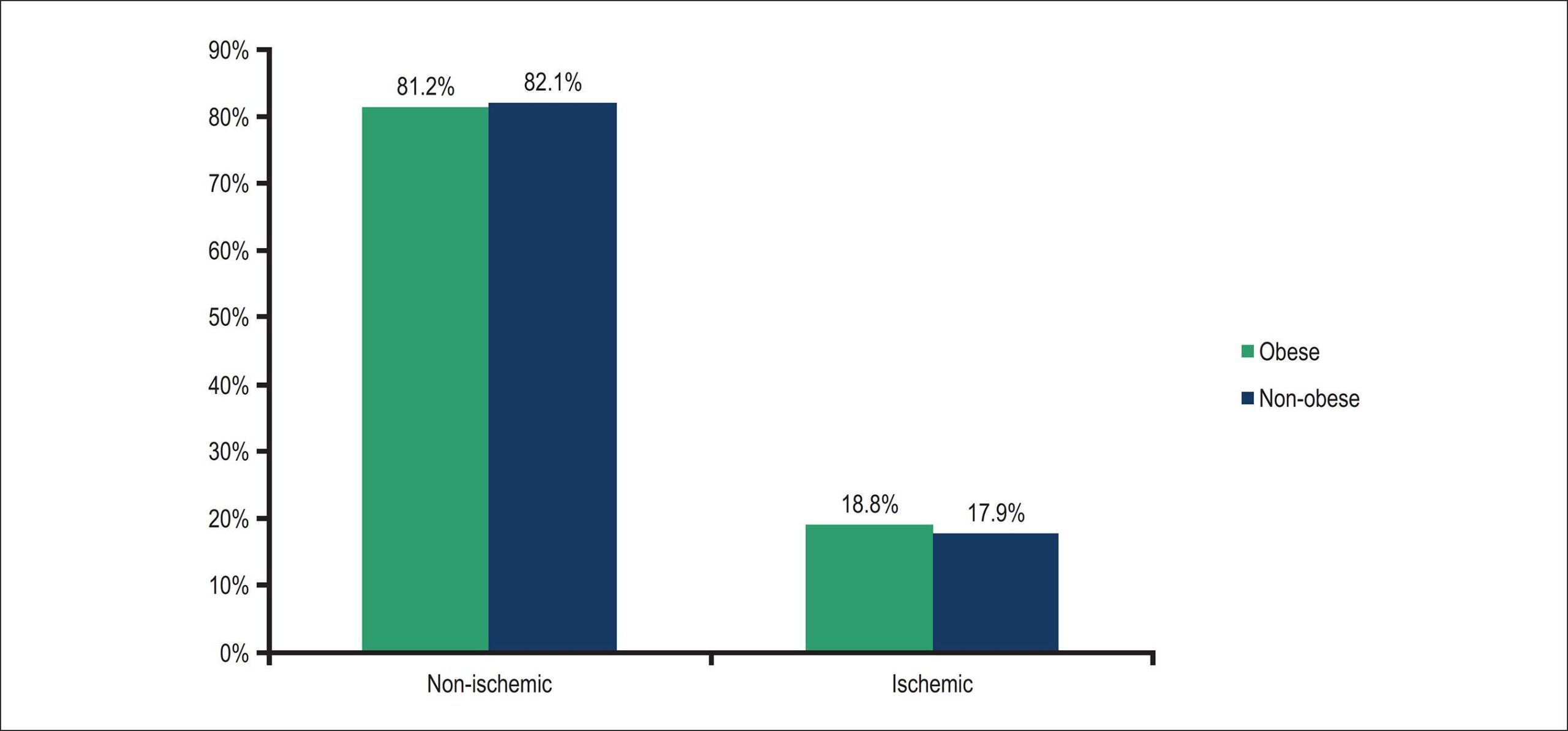
There was no difference regarding gender. Obese patients were younger (55.4 ± 10.9 vs. 57.56 ± 11.67) and had a higher frequency of hypertension (75.2% vs. 57, 2%; p < 0.0001), diabetis mellitus (15.2% vs. 10.9%; p < 0.0001), dyslipidemia (59.5% vs 51.9%; p < 0.0001), family history of coronary artery disease (59.3% vs. 55.1%; p = 0.023) and physical inactivity (71.4% vs. 52.9%, p < 0.0001). The obese had greater aortic dimensions (3.27 vs. 3.14 cm; p < 0.0001), left atrium (3.97 vs. 3.72 cm; p < 0.0001) and the relative thickness of the ventricule (33.7 vs. 32.8 cm; p < 0.0001). Regarding the presence of myocardial ischemia, there was no difference between groups (19% vs. 17.9%; p = 0.41). In adjusted logistic regression, the presence of myocardial ischemia remained independently associated with age, female gender, diabetes and hypertension.

Conclusion:

Obesity did not behave as a predictor of the presence of ischemia and the physical stress echocardiography. The application of this assessment tool in large scale sample demonstrates the feasibility of the methodology, also in obese.

  • Coronary Artery Disease / mortality
  • Echocardiography, Stress / methods
  • Myocardial Ischemia
  • Obesity
Read Full Article
Creative Commons Attribution (CC BY) Creative Commons license
13/02/2015 DOI: 10.5935/abc.20150006 Views 1
Figure 1
ABC
Artigo Original

Coronary Flow Velocity Reserve during Dobutamine Stress Echocardiography

José Sebastião de Abreu et al. José Wellington Oliveira Lima Tereza Cristina Pinheiro Diógenes Jordana Magalhães Siqueira … Nayara Lima Pimentel Pedro Sabino Gomes Neto Marília Esther Benevides de Abreu José Nogueira Paes Júnior

Background:

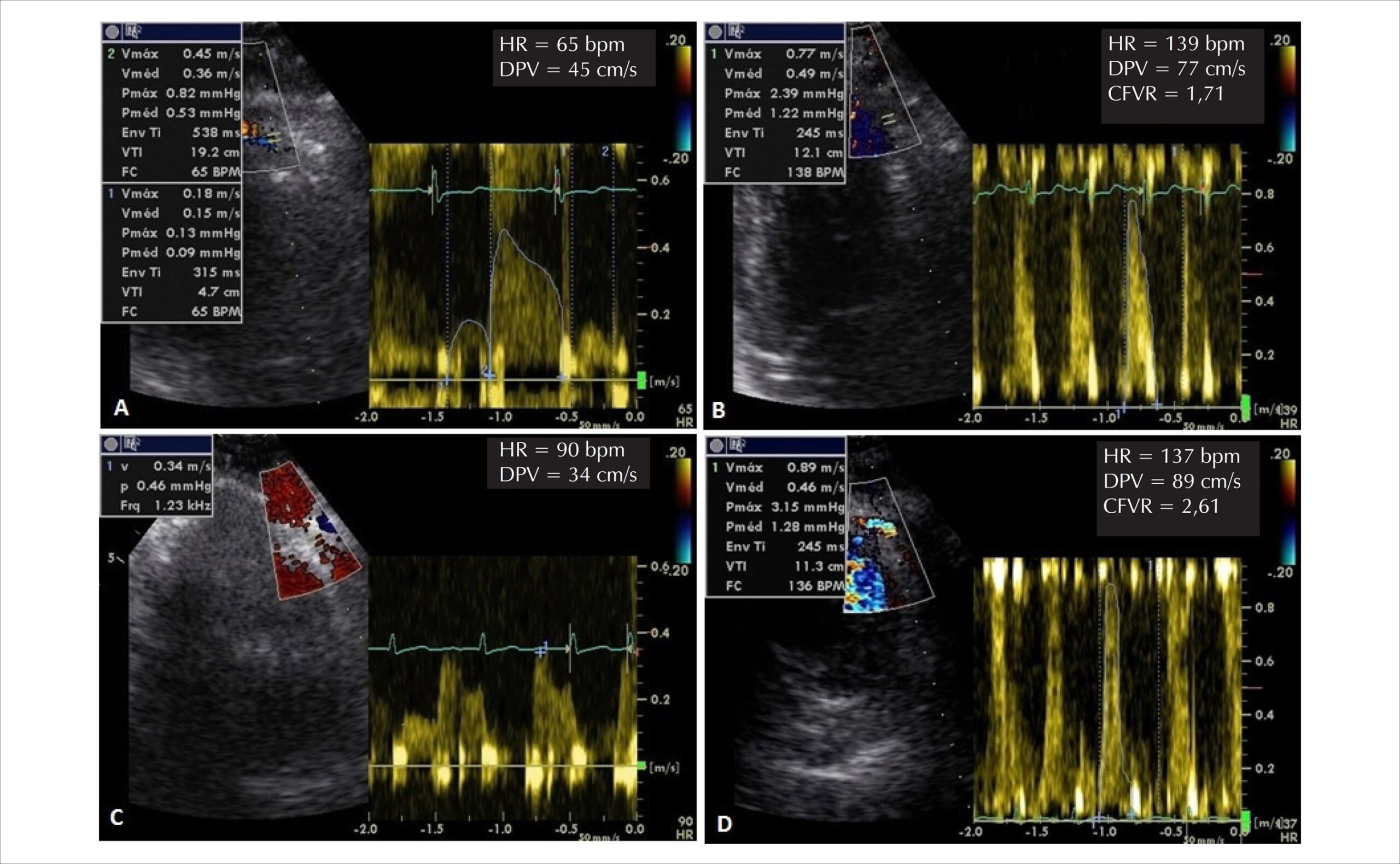
A coronary flow velocity reserve (CFVR) ≥ 2 is adequate to infer a favorable prognosis or the absence of significant coronary artery disease.

Objective:

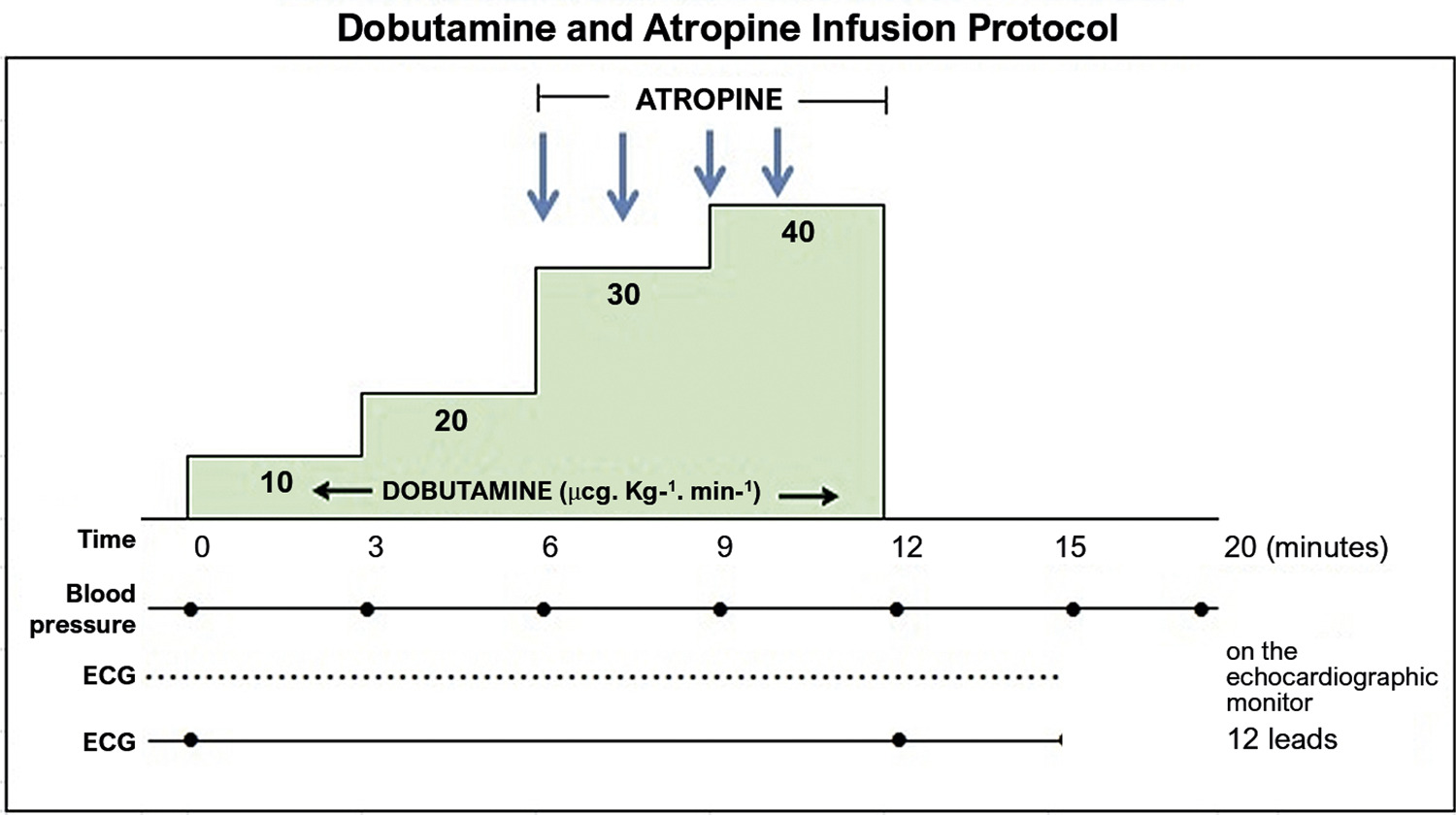
To identify parameters which are relevant to obtain CFVR (adequate or inadequate) in the left anterior descending coronary artery (LAD) during dobutamine stress echocardiography (DSE).

Methods:

100 patients referred for detection of myocardial ischemia by DSE were evaluated; they were instructed to discontinue the use of β-blockers 72 hours prior to the test. CFVR was calculated as a ratio of the diastolic peak velocity (cm/s) (DPV) on DSE (DPV-DSE) to baseline DPV at rest (DPV-Rest). In group I, CFVR was < 2 and, in group II, CFVR was ≥ 2. The Fisher's exact test and Student's t test were used for the statistical analyses. P values < 0.05 were considered statistically significant.

Results:

At rest, the time (in seconds) to obtain Doppler in LAD in groups I and II was not different (53±31 vs. 45±32; p=0.23). During DSE, LAD was recorded in 92 patients. Group I patients were older (65.9±9.3 vs. 61.2±10.8 years; p=0.04), had lower ejection fraction (61±10 vs. 66±6%; p=0.005), higher DPV-Rest (36.81±08 vs. 25.63 ± 06cm/s; p<0.0001) and lower CFVR (1.67 ± 0.24 vs. 2.53 ± 0.57; p<0.0001), but no difference was observed regarding DPVDSE (61.40±16 vs. 64.23±16cm/s; p=0.42). β-blocker discontinuation was associated with a 4-fold higher chance of a CFVR < 2 (OR= 4; 95% CI [1.171-13.63], p=0.027).

Conclusion:

DPV-Rest was the main parameter to determine an adequate CFVR. β-blocker discontinuation was significantly associated with inadequate CFVR. The high feasibility and the time to record the LAD corroborate the use of this methodology.

  • Coronary Artery Disease
  • Coronary flow velocity reserve
  • Echocardiography, Stress / methods
Read Full Article
Creative Commons Attribution (CC BY) Creative Commons license
21/12/2013 DOI: 10.5935/abc.20130242 Views 1

How to cite this article

EndNote RIS

Electronic Document Format (Vancouver)

Vilela EM, Fontes-Carvalho R. Blood Pressure Response and Exercise Stress Echocardiography: New Perspectives on a Contemporary Challenge. Arquivos Brasileiros de Cardiologia 2023;120(11):e20230737.

Electronic Document Format (ABNT)

Vilela, Eduardo M.; Fontes-Carvalho, Ricardo. Blood Pressure Response and Exercise Stress Echocardiography: New Perspectives on a Contemporary Challenge. Arquivos Brasileiros de Cardiologia, v. 120, n. 11, e20230737, Dec. 2023.

Electronic Document Format (APA)

Vilela, E. M., & Fontes-Carvalho, R. (2023). Blood Pressure Response and Exercise Stress Echocardiography: New Perspectives on a Contemporary Challenge. Arquivos Brasileiros de Cardiologia, 120(11), e20230737.

Electronic Document Format (ISO)

Vilela, Eduardo M. and Fontes-Carvalho, Ricardo. Blood Pressure Response and Exercise Stress Echocardiography: New Perspectives on a Contemporary Challenge. Arquivos Brasileiros de Cardiologia [online]. 2023, vol. 120, n. 11, [cited 2026-10-14], e20230737. Available from: <https://journals.cardiol.br/en/article/blood-pressure-response-and-exercise-stress-echocardiography-new-perspectives-on-a-contemporary-challenge/>. ISSN 0066-782X

EndNote RIS

Electronic Document Format (Vancouver)

Abreu JS, Diógenes TCP, Abreu MEB, Costa HM, Farias AGLP, Carneiro MM. Strain Magnitude Assessed at Rest and During Stress Echocardiography in Patients with Normal Coronary Flow Reserve. International Journal of Cardiovascular Sciences 2022;35(6):794-802.

Electronic Document Format (ABNT)

Abreu, José Sebastião de; Diógenes, Tereza Cristina Pinheiro; Abreu, Marília Esther Benevides; Costa, Henrique Maia; Farias, Ana Gardenia Liberato Ponte; Carneiro, Marcia Maria. Strain Magnitude Assessed at Rest and During Stress Echocardiography in Patients with Normal Coronary Flow Reserve. International Journal of Cardiovascular Sciences, v. 35, n. 6, p. 794-802, Jul. 2022.

Electronic Document Format (APA)

Abreu, J. S. , Diógenes, T. C. P., Abreu, M. E. B., Costa, H. M., Farias, A. G. L. P., & Carneiro, M. M. (2022). Strain Magnitude Assessed at Rest and During Stress Echocardiography in Patients with Normal Coronary Flow Reserve. International Journal of Cardiovascular Sciences, 35(6), 794-802.

Electronic Document Format (ISO)

Abreu, José Sebastião de and Diógenes, Tereza Cristina Pinheiro and Abreu, Marília Esther Benevides and Costa, Henrique Maia and Farias, Ana Gardenia Liberato Ponte and Carneiro, Marcia Maria. Strain Magnitude Assessed at Rest and During Stress Echocardiography in Patients with Normal Coronary Flow Reserve. International Journal of Cardiovascular Sciences [online]. 2022, vol. 35, n. 6, [cited 2026-10-14], pp. 794-802. Available from: <https://journals.cardiol.br/en/article/strain-magnitude-assessed-at-rest-and-during-stress-echocardiography-in-patients-with-normal-coronary-flow-reserve/>. ISSN 2359-4802

EndNote RIS

Electronic Document Format (Vancouver)

Silveira MGM, Sousa ACS, Santos MAA, Tavares IS, Andrade SM, Melo LD, Andrade LSO, et al. Assessment of Myocardial Ischemia in Obese Individuals Undergoing Physical Stress Echocardiography (PSE). Arquivos Brasileiros de Cardiologia 2015;104(5):394-400.

Electronic Document Format (ABNT)

Silveira, Mara Graziele Maciel; Sousa, Antônio Carlos Sobral; Santos, Marcos Antônio Almeida; Tavares, Irlaneide da Silva; Andrade, Stephanie Macedo; Melo, Luiza Dantas; Andrade, Loren Suyane Oliveira de; Santos, Emmanuel Lima Almeida; Oliveira, Joselina Luzia Menezes. Assessment of Myocardial Ischemia in Obese Individuals Undergoing Physical Stress Echocardiography (PSE). Arquivos Brasileiros de Cardiologia, v. 104, n. 5, p. 394-400, Feb. 2015.

Electronic Document Format (APA)

Silveira, M. G. M., Sousa, A. C. S., Santos, M. A. A., Tavares, I. S., Andrade, S. M., Melo, L. D., Andrade, L. S. O. , Santos, E. L. A., & Oliveira, J. L. M. (2015). Assessment of Myocardial Ischemia in Obese Individuals Undergoing Physical Stress Echocardiography (PSE). Arquivos Brasileiros de Cardiologia, 104(5), 394-400.

Electronic Document Format (ISO)

Silveira, Mara Graziele Maciel and Sousa, Antônio Carlos Sobral and Santos, Marcos Antônio Almeida and Tavares, Irlaneide da Silva and Andrade, Stephanie Macedo and Melo, Luiza Dantas and Andrade, Loren Suyane Oliveira de and Santos, Emmanuel Lima Almeida and Oliveira, Joselina Luzia Menezes. Assessment of Myocardial Ischemia in Obese Individuals Undergoing Physical Stress Echocardiography (PSE). Arquivos Brasileiros de Cardiologia [online]. 2015, vol. 104, n. 5, [cited 2026-10-14], pp. 394-400. Available from: <https://journals.cardiol.br/en/article/assessment-of-myocardial-ischemia-in-obese-individuals-undergoing-physical-stress-echocardiography-pse/>. ISSN 0066-782X

EndNote RIS

Electronic Document Format (Vancouver)

Abreu JS, Lima JWO, Diógenes TCP, Siqueira JM, Pimentel NL, Gomes Neto PS, Abreu MEB, et al. Coronary Flow Velocity Reserve during Dobutamine Stress Echocardiography. Arquivos Brasileiros de Cardiologia 2013;102(2):134-42.

Electronic Document Format (ABNT)

Abreu, José Sebastião de; Lima, José Wellington Oliveira; Diógenes, Tereza Cristina Pinheiro; Siqueira, Jordana Magalhães; Pimentel, Nayara Lima; Gomes Neto, Pedro Sabino; Abreu, Marília Esther Benevides de; Paes Júnior, José Nogueira. Coronary Flow Velocity Reserve during Dobutamine Stress Echocardiography. Arquivos Brasileiros de Cardiologia, v. 102, n. 2, p. 134-142, Dec. 2013.

Electronic Document Format (APA)

Abreu, J. S. , Lima, J. W. O., Diógenes, T. C. P., Siqueira, J. M., Pimentel, N. L., Gomes Neto, P. S., Abreu, M. E. B. , & Paes Júnior, J. N. (2013). Coronary Flow Velocity Reserve during Dobutamine Stress Echocardiography. Arquivos Brasileiros de Cardiologia, 102(2), 134-142.

Electronic Document Format (ISO)

Abreu, José Sebastião de and Lima, José Wellington Oliveira and Diógenes, Tereza Cristina Pinheiro and Siqueira, Jordana Magalhães and Pimentel, Nayara Lima and Gomes Neto, Pedro Sabino and Abreu, Marília Esther Benevides de and Paes Júnior, José Nogueira. Coronary Flow Velocity Reserve during Dobutamine Stress Echocardiography. Arquivos Brasileiros de Cardiologia [online]. 2013, vol. 102, n. 2, [cited 2026-10-14], pp. 134-142. Available from: <https://journals.cardiol.br/en/article/coronary-flow-velocity-reserve-during-dobutamine-stress-echocardiography/>. ISSN 0066-782X

  • About ABC Family
  • Internal Regulation
  • Editorial Board
  • Brazilian Society of Cardiology (SBC)

Issues

SBC Guidelines

  • Videos
  • Podcasts
  • News