ABC Family Arquivos Brasileiros de Cardiologia International Journal of Cardiovascular Sciences ABC Heart Failure & Cardiomyopathy ABC Imagem Cardiovascular
Português English
ABC Family
Português English
  • About
    • About ABC Family
    • Internal Regulation
    • Editorial Board
    • Brazilian Society of Cardiology (SBC)
  • Issues
  • SBC Guidelines
  • Content
    • Videos
    • Podcasts
    • News
  • About
    • About ABC Family
    • Internal Regulation
    • Editorial Board
    • Brazilian Society of Cardiology (SBC)
  • Issues
  • SBC Guidelines
  • Content
    • Videos
    • Podcasts
    • News

ABC Family

  • ABC Family
  • Arquivos Brasileiros de Cardiologia
  • International Journal of Cardiovascular Sciences
  • ABC Heart Failure & Cardiomyopathy
  • ABC Imagem Cardiovascular
Search in

No content found.

Journals
Ordering
Article types
Others

  1. Home
  2. Keyword: Cell and Tissue-Based Therapy
ABC
Editorial

Adipose-Derived Mesenchymal Stem Cell Therapy for Ischemic Heart Disease: Safe but Not Effective?

Anurag Jamaiyar et al. Aspasia Tzani

Cardiovascular disease continues to be the leading cause of death in adults globally. Obstructive coronary artery disease involves a gradual narrowing of coronary artery branches due to the build-up of atherosclerotic plaque, leading to reduced blood flow to the myocardium. This myocardial infarction initiates a cascade of pathological processes such as oxidative stress, inflammation, and fibrosis, which eventually lead to heart failure. A heart transplant is sometimes the only viable option for many patients with progressive ischemic heart failure refractory to anti-anginal medication or revascularization. Novel therapeutics such as stem cells, RNAs, CRISPR, growth factors, etc., hold great promise for meeting this clinical need. Stem cells have been tested in pre-clinical studies extensively for many years now. Paracrine factors, instead of differentiation potential, are now widely agreed upon as the most likely cause of their therapeutic effects. Contemporary studies continue to employ either native or genetically reprogrammed stem cells for treating various diseases. Stem cells can be derived from diverse niches in the adult human body, such as blood, bone marrow, fat, skeletal muscle, and more. However, many of these tissues can only be harvested in very small quantities. Also, access to some of them, e.g., bone marrow, requires invasive procedures. Adipose remains one of the most abundant and easily retrievable tissues for this purpose.

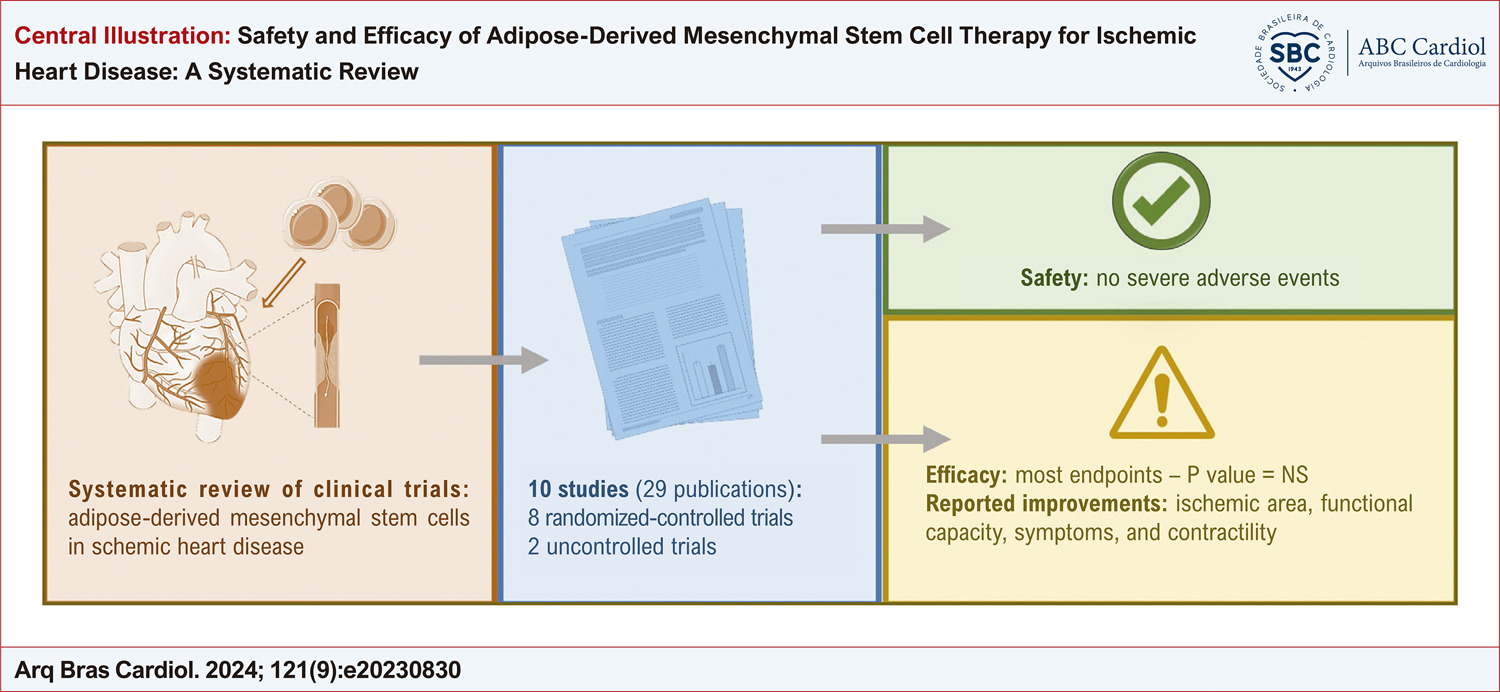
In the current issue, the authors present a systematic review of clinical studies in which adipose-derived stem cells (ADSCs) have been used as a therapeutic for ischemic heart disease (IHD). This review summarizes the safety and efficacy of ADSCs in ten such studies (comprising 29 publications), with 8 randomized controlled clinical trials and 2 uncontrolled trials. The studies reviewed by the authors administered varying numbers of ADSCs (from 400,000 cells in the Athena I trial to 100 million cells in the DANISH and SCIENCE studies. Apart from the AdiFLAP study, which used an adipose patch, these studies administered ADSCs via intramyocardial or intracoronary injections. Follow-up for these trials ranged from 6 months (APOLLO, Kastrup et al.) to 36 months (MyStromalCell and PRECISE). In the early days of stem cell therapy, one of the main safety concerns was teratoma formation. This was largely due to the pluripotent nature of stem cells being tested. As the human body is a complex milieu of growth factors, cytokines, hormones, etc., stem cells could also differentiate into unintended cell types, making stem cell therapy a risky endeavor that could cause more harm than good. In the last decade, these therapies have come of age, with multipotent instead of pluripotent stem cells as candidates.

[…]
  • Cell and Tissue-Based Therapy
  • Mesenchymal Stem Cells
  • Myocardial Infarction
  • systematic review
Read Full Article
Creative Commons Attribution (CC BY) Creative Commons license
18/10/2024 DOI: 10.36660/abc.20240515i
Safety and Efficacy of Adipose-Derived Mesenchymal Stem Cell Therapy for Ischemic Heart Disease: A Systematic Review
ABC
Original Article

Safety and Efficacy of Adipose-Derived Mesenchymal Stem Cell Therapy for Ischemic Heart Disease: A Systematic Review

Fernando Rabioglio Giugni et al. Melina de Oliveira Valdo Giugni Henrique Trombini Pinesi Fabio Cetinic Habrum … Lígia Nasi Laranjeira Erica Regina Ribeiro Sady Erica Aranha Suzumura Luis Henrique Wolff Gowdak José Eduardo Krieger

Abstract

Background

Cell therapy using adipose-derived mesenchymal stem cells (ADSCs) shows great potential as a treatment for cardiovascular diseases.

Objective

We conducted a systematic review to describe the safety and efficacy of ADSCs in ischemic heart disease.

Methods

We searched PubMed/MEDLINE, EMBASE, Web of Science, CENTRAL, and LILACS (from inception to March 2024) for clinical studies involving ADSCs in patients with ischemic heart disease. We excluded studies involving patients with other types of heart disease, studies using mesenchymal stem cells derived from other tissues, as well as ongoing studies. Two independent reviewers screened the retrieved citations, extracted relevant data, and assessed the risk of bias in the included trials, using the Cochrane Collaboration criteria modified by McMaster University and Methodological Index for Non-Randomized Studies (MINORS). We used a narrative synthesis to present the results.

Results

Ten studies (comprising 29 publications) met our inclusion criteria, including 8 randomized controlled trials and 2 uncontrolled trials. No severe adverse events associated with ADSC therapy were reported. While most efficacy endpoints did not reach statistical significance, there were reports of improved ischemic area, functional capacity, symptoms, and contractility in patients treated with ADSCs.

Conclusions

The findings from our review suggest that ADSC therapy is generally safe for patients with ischemic heart disease. However, further investigation is warranted to confirm its efficacy, particularly with larger clinical trials and in specific conditions where improvements in microcirculation may have a notable impact on clinical outcomes.

  • Cell and Tissue-Based Therapy
  • Mesenchymal Stem Cells
  • Myocardial Ischemia
  • Regenerative Medicine
Read Full Article
Creative Commons Attribution (CC BY) Creative Commons license
16/09/2024 DOI: 10.36660/abc.20230830i Views 2
Figure 1
ABC
Original Article

Bone-Marrow-Derived Mesenchymal Stromal Cells (MSC) from Diabetic and Nondiabetic Rats Have Similar Therapeutic Potentials

Vitória Santório de São José et al. Gustavo Monnerat Barbara Guerra Bruno Dias Paredes … Tais Hanae Kasai-Brunswick Antonio Carlos Campos de Carvalho Emiliano Medei

Abstract

Background:

Diabetes mellitus is a severe chronic disease leading to systemic complications, including cardiovascular dysfunction. Previous cell therapy studies have obtained promising results with the use bone marrow mesenchymal stromal cells derived from healthy animals (MSCc) in diabetes animal models. However, the ability of MSC derived from diabetic rats to improve functional cardiac parameters is still unknown.

Objectives:

To investigate whether bone-marrow-derived MSC from diabetic rats (MSCd) would contribute to recover metabolic and cardiac electrical properties in other diabetic rats.

Methods:

Diabetes was induced in Wistar rats with streptozotocin. MSCs were characterized by flow cytometry, morphological analysis, and immunohistochemistry. Cardiac electrical function was analyzed using recordings of ventricular action potential. Differences between variables were considered significant when p < 0.05.

Results:

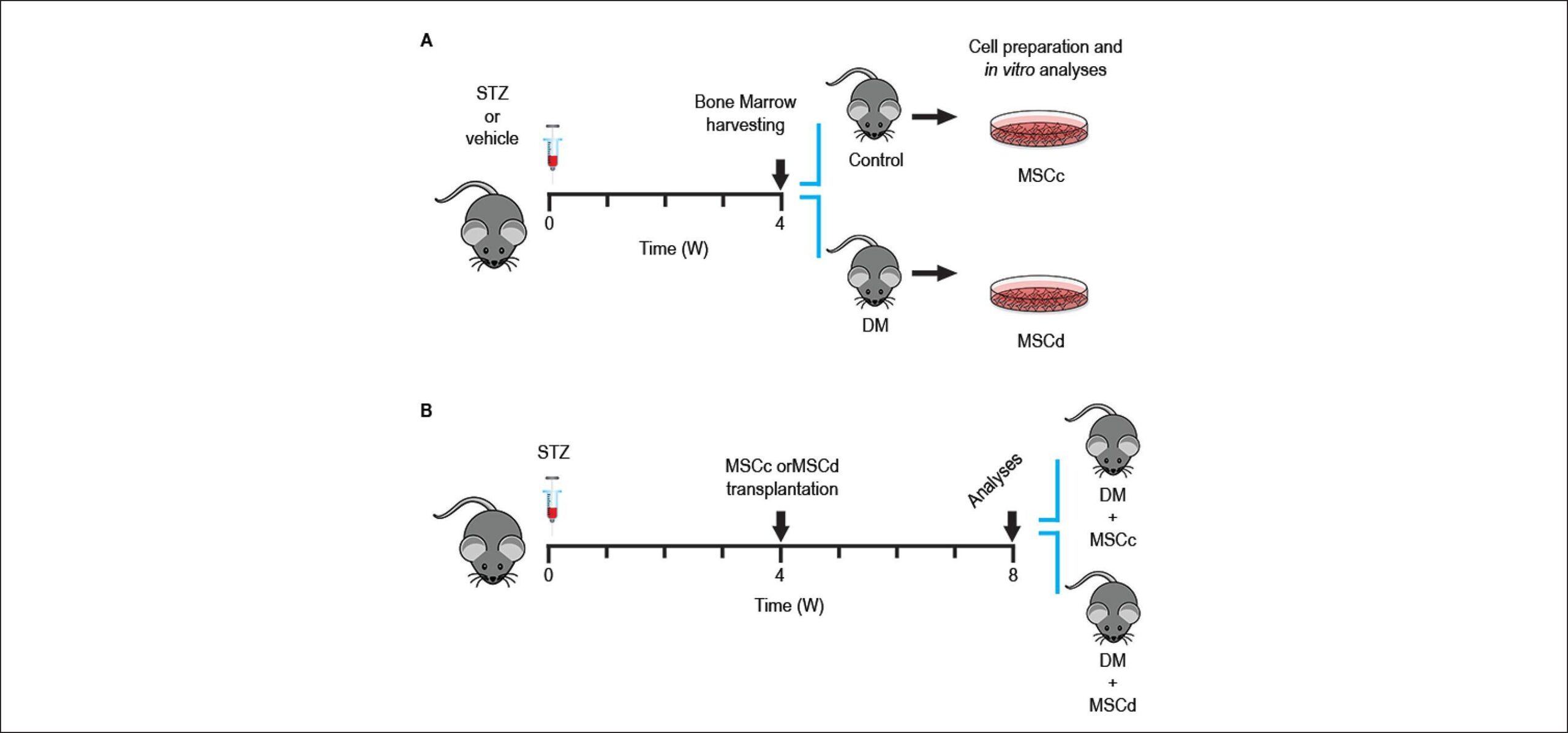
In vitro properties of MSCc and MSCd were evaluated. Both cell types presented similar morphology, growth kinetics, and mesenchymal profile, and could differentiate into adipogenic and osteogenic lineages. However, in an assay for fibroblast colony-forming units (CFU-F), MSCd formed more colonies than MSCc when cultured in expansion medium with or without hydrocortisone (1 µM). In order to compare the therapeutic potential of the cells, the animals were divided into four experimental groups: nondiabetic (CTRL), diabetic (DM), diabetic treated with MSCc (DM + MSCc), and diabetic treated with MSCd (DM + MSCd). The treated groups received a single injection of MSC 4 weeks after the development of diabetes. MSCc and MSCd controlled hyperglycemia and body weight loss and improved cardiac electrical remodeling in diabetic rats.

Conclusions:

MSCd and MSCc have similar in vitro properties and therapeutic potential in a rat model of diabetes induced with streptozotocin.

  • Cardiac Electrophysiology
  • Cell and Tissue-Based Therapy
  • Diabetes Mellitus
  • Mesenchymal Stromal Cells
  • Rats
Read Full Article
Creative Commons Attribution (CC BY) Creative Commons license
01/12/2017 DOI: 10.5935/abc.20170176 Views 2
ABC
Review Article

Cardiac Regeneration using Growth Factors: Advances and Challenges

Juliana de Souza Rebouças et al. Nereide Stela Santos-Magalhães Fabio Rocha Formiga

Abstract

Myocardial infarction is the most significant manifestation of ischemic heart disease and is associated with high morbidity and mortality. Novel strategies targeting at regenerating the injured myocardium have been investigated, including gene therapy, cell therapy, and the use of growth factors. Growth factor therapy has aroused interest in cardiovascular medicine because of the regeneration mechanisms induced by these biomolecules, including angiogenesis, extracellular matrix remodeling, cardiomyocyte proliferation, stem-cell recruitment, and others. Together, these mechanisms promote myocardial repair and improvement of the cardiac function. This review aims to address the strategic role of growth factor therapy in cardiac regeneration, considering its innovative and multifactorial character in myocardial repair after ischemic injury. Different issues will be discussed, with emphasis on the regeneration mechanisms as a potential therapeutic resource mediated by growth factors, and the challenges to make these proteins therapeutically viable in the field of cardiology and regenerative medicine.

  • Cell and Tissue-Based Therapy
  • Intercellular Signaling Peptides and Proteins
  • Myocardial Infarction
  • Myocardial Ischemia
  • Vascular Remodeling
Read Full Article
Creative Commons Attribution (CC BY) Creative Commons license
27/06/2016 DOI: 10.5935/abc.20160097

How to cite this article

EndNote RIS

Electronic Document Format (Vancouver)

Jamaiyar A, Tzani A. Adipose-Derived Mesenchymal Stem Cell Therapy for Ischemic Heart Disease: Safe but Not Effective?. Arquivos Brasileiros de Cardiologia 2024;121(9):e20240515.

Electronic Document Format (ABNT)

Jamaiyar, Anurag; Tzani, Aspasia. Adipose-Derived Mesenchymal Stem Cell Therapy for Ischemic Heart Disease: Safe but Not Effective?. Arquivos Brasileiros de Cardiologia, v. 121, n. 9, e20240515, Oct. 2024.

Electronic Document Format (APA)

Jamaiyar, A., & Tzani, A. (2024). Adipose-Derived Mesenchymal Stem Cell Therapy for Ischemic Heart Disease: Safe but Not Effective?. Arquivos Brasileiros de Cardiologia, 121(9), e20240515.

Electronic Document Format (ISO)

Jamaiyar, Anurag and Tzani, Aspasia. Adipose-Derived Mesenchymal Stem Cell Therapy for Ischemic Heart Disease: Safe but Not Effective?. Arquivos Brasileiros de Cardiologia [online]. 2024, vol. 121, n. 9, [cited 2026-10-14], e20240515. Available from: <https://journals.cardiol.br/en/article/adipose-derived-mesenchymal-stem-cell-therapy-for-ischemic-heart-disease-safe-but-not-effective/>. ISSN 0066-782X

EndNote RIS

Electronic Document Format (Vancouver)

Giugni FR, Giugni MOV, Pinesi HT, Habrum FC, Laranjeira LN, Sady ERR, Suzumura EA, et al. Safety and Efficacy of Adipose-Derived Mesenchymal Stem Cell Therapy for Ischemic Heart Disease: A Systematic Review. Arquivos Brasileiros de Cardiologia 2024;121(9):e20230830.

Electronic Document Format (ABNT)

Giugni, Fernando Rabioglio; Giugni, Melina de Oliveira Valdo; Pinesi, Henrique Trombini; Habrum, Fabio Cetinic; Laranjeira, Lígia Nasi; Sady, Erica Regina Ribeiro; Suzumura, Erica Aranha; Gowdak, Luis Henrique Wolff; Krieger, José Eduardo. Safety and Efficacy of Adipose-Derived Mesenchymal Stem Cell Therapy for Ischemic Heart Disease: A Systematic Review. Arquivos Brasileiros de Cardiologia, v. 121, n. 9, e20230830, Sep. 2024.

Electronic Document Format (APA)

Giugni, F. R., Giugni, M. O. V., Pinesi, H. T., Habrum, F. C., Laranjeira, L. N., Sady, E. R. R., Suzumura, E. A., Gowdak, L. H. W., & Krieger, J. E. (2024). Safety and Efficacy of Adipose-Derived Mesenchymal Stem Cell Therapy for Ischemic Heart Disease: A Systematic Review. Arquivos Brasileiros de Cardiologia, 121(9), e20230830.

Electronic Document Format (ISO)

Giugni, Fernando Rabioglio and Giugni, Melina de Oliveira Valdo and Pinesi, Henrique Trombini and Habrum, Fabio Cetinic and Laranjeira, Lígia Nasi and Sady, Erica Regina Ribeiro and Suzumura, Erica Aranha and Gowdak, Luis Henrique Wolff and Krieger, José Eduardo. Safety and Efficacy of Adipose-Derived Mesenchymal Stem Cell Therapy for Ischemic Heart Disease: A Systematic Review. Arquivos Brasileiros de Cardiologia [online]. 2024, vol. 121, n. 9, [cited 2026-10-14], e20230830. Available from: <https://journals.cardiol.br/en/article/safety-and-efficacy-of-adipose-derived-mesenchymal-stem-cell-therapy-for-ischemic-heart-disease-a-systematic-review/>. ISSN 0066-782X

EndNote RIS

Electronic Document Format (Vancouver)

José VSS, Monnerat G, Guerra B, Paredes BD, Kasai-Brunswick TH, Carvalho ACC, Medei E, et al. Bone-Marrow-Derived Mesenchymal Stromal Cells (MSC) from Diabetic and Nondiabetic Rats Have Similar Therapeutic Potentials. Arquivos Brasileiros de Cardiologia 2017;109(6):579-8.

Electronic Document Format (ABNT)

José, Vitória Santório de São; Monnerat, Gustavo; Guerra, Barbara; Paredes, Bruno Dias; Kasai-Brunswick, Tais Hanae; Carvalho, Antonio Carlos Campos de; Medei, Emiliano. Bone-Marrow-Derived Mesenchymal Stromal Cells (MSC) from Diabetic and Nondiabetic Rats Have Similar Therapeutic Potentials. Arquivos Brasileiros de Cardiologia, v. 109, n. 6, p. 579-589, Nov. 2017.

Electronic Document Format (APA)

José, V. S. S., Monnerat, G., Guerra, B., Paredes, B. D., Kasai-Brunswick, T. H., Carvalho, A. C. C. , & Medei, E. (2017). Bone-Marrow-Derived Mesenchymal Stromal Cells (MSC) from Diabetic and Nondiabetic Rats Have Similar Therapeutic Potentials. Arquivos Brasileiros de Cardiologia, 109(6), 579-589.

Electronic Document Format (ISO)

José, Vitória Santório de São and Monnerat, Gustavo and Guerra, Barbara and Paredes, Bruno Dias and Kasai-Brunswick, Tais Hanae and Carvalho, Antonio Carlos Campos de and Medei, Emiliano. Bone-Marrow-Derived Mesenchymal Stromal Cells (MSC) from Diabetic and Nondiabetic Rats Have Similar Therapeutic Potentials. Arquivos Brasileiros de Cardiologia [online]. 2017, vol. 109, n. 6, [cited 2026-10-14], pp. 579-589. Available from: <https://journals.cardiol.br/en/article/bone-marrow-derived-mesenchymal-stromal-cells-msc-from-diabetic-and-nondiabetic-rats-have-similar-therapeutic-potentials/>. ISSN 0066-782X

EndNote RIS

Electronic Document Format (Vancouver)

Rebouças JS, Santos-Magalhães NS, Formiga FR. Cardiac Regeneration using Growth Factors: Advances and Challenges. Arquivos Brasileiros de Cardiologia 2016;107(3):271-5.

Electronic Document Format (ABNT)

Rebouças, Juliana de Souza; Santos-Magalhães, Nereide Stela; Formiga, Fabio Rocha. Cardiac Regeneration using Growth Factors: Advances and Challenges. Arquivos Brasileiros de Cardiologia, v. 107, n. 3, p. 271-275, Jun. 2016.

Electronic Document Format (APA)

Rebouças, J. S., Santos-Magalhães, N. S., & Formiga, F. R. (2016). Cardiac Regeneration using Growth Factors: Advances and Challenges. Arquivos Brasileiros de Cardiologia, 107(3), 271-275.

Electronic Document Format (ISO)

Rebouças, Juliana de Souza and Santos-Magalhães, Nereide Stela and Formiga, Fabio Rocha. Cardiac Regeneration using Growth Factors: Advances and Challenges. Arquivos Brasileiros de Cardiologia [online]. 2016, vol. 107, n. 3, [cited 2026-10-14], pp. 271-275. Available from: <https://journals.cardiol.br/en/article/cardiac-regeneration-using-growth-factors-advances-and-challenges/>. ISSN 0066-782X

  • About ABC Family
  • Internal Regulation
  • Editorial Board
  • Brazilian Society of Cardiology (SBC)

Issues

SBC Guidelines

  • Videos
  • Podcasts
  • News