ABC Family Arquivos Brasileiros de Cardiologia International Journal of Cardiovascular Sciences ABC Heart Failure & Cardiomyopathy ABC Imagem Cardiovascular
Português English
ABC Family
Português English
  • About
    • About ABC Family
    • Internal Regulation
    • Editorial Board
    • Brazilian Society of Cardiology (SBC)
  • Issues
  • SBC Guidelines
  • Content
    • Videos
    • Podcasts
    • News
  • About
    • About ABC Family
    • Internal Regulation
    • Editorial Board
    • Brazilian Society of Cardiology (SBC)
  • Issues
  • SBC Guidelines
  • Content
    • Videos
    • Podcasts
    • News

ABC Family

  • ABC Family
  • Arquivos Brasileiros de Cardiologia
  • International Journal of Cardiovascular Sciences
  • ABC Heart Failure & Cardiomyopathy
  • ABC Imagem Cardiovascular
Search in

No content found.

Journals
Ordering
Article types
Others

  1. Home
  2. Keyword: Exercise Tolerance
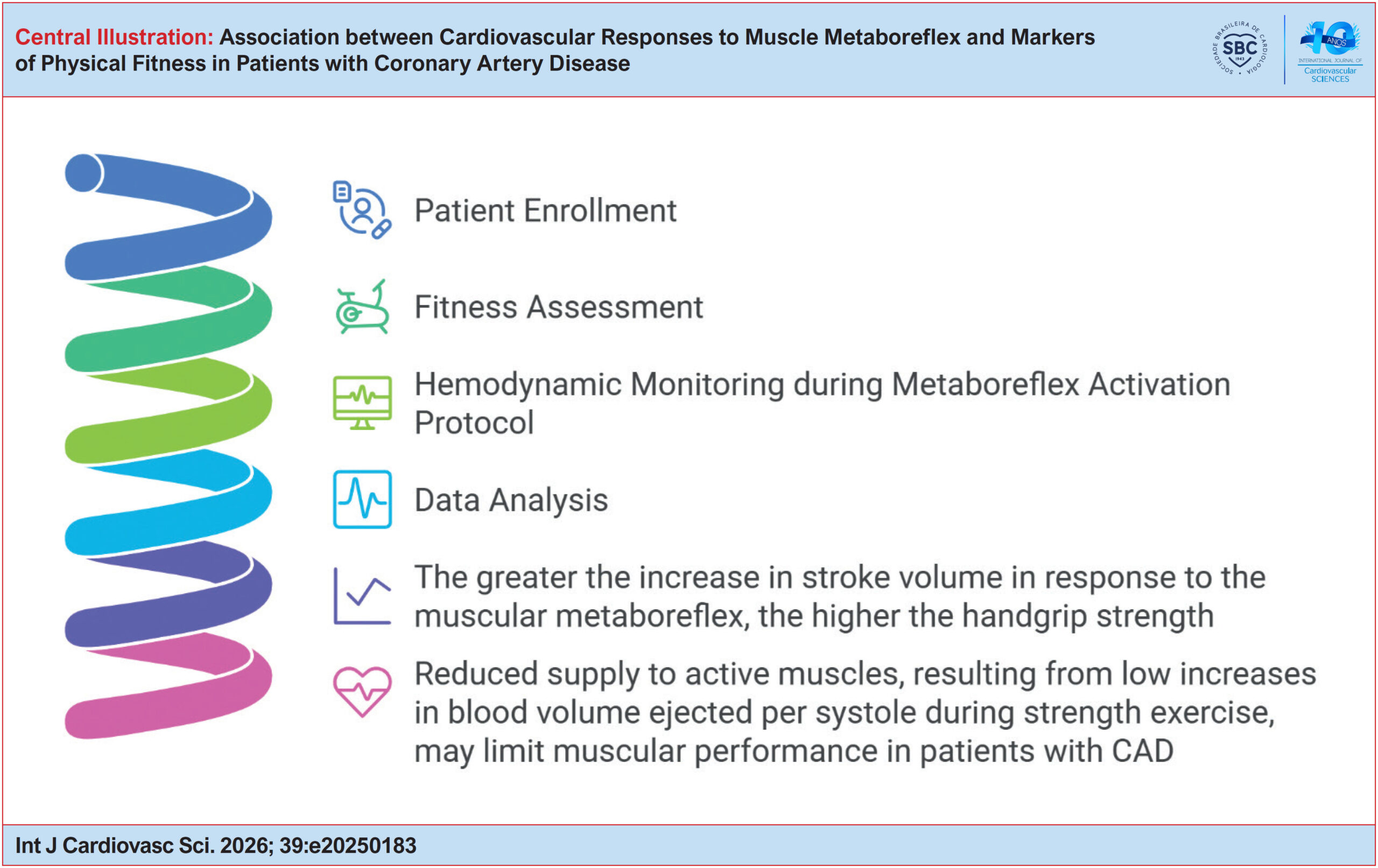
Association between Cardiovascular Responses to Muscle Metaboreflex and Markers of Physical Fitness in Patients with Coronary Artery Disease
IJCS
Original Article

Association between Cardiovascular Responses to Muscle Metaboreflex and Markers of Physical Fitness in Patients with Coronary Artery Disease

Vanessa Cunha de Oliveira Coelho et al. Gabriel da Silva Gama Caio Luan Farias Costa Marcus Vinicius dos Santos Rangel Juliana Borges

Abstract

Background:

The muscle metaboreflex regulates cardiovascular responses during exercise. In patients with coronary artery disease (CAD), this reflex primarily increases blood pressure via sympathetic-mediated vasoconstriction, thereby increasing peripheral vascular resistance (PVR) rather than enhancing stroke volume (SV). This response may result in early fatigue during physical exertion. However, the specific mediators of this response are unclear.

Objective:

To investigate the association between cardiorespiratory and muscle fitness with cardiovascular responses to muscle metaboreflex activation in patients with CAD.

Methods:

Twenty patients underwent an exercise test and a maximal voluntary contraction (MVC) test using handgrip strength. Hemodynamic variables were assessed using photoplethysmography during muscle metaboreflex activation via a post-exercise circulatory arrest (PECA) protocol. Changes (Δ) in mean arterial pressure (MAP), SV, and PVR at rest were used to assess the metaboreflex response.

Results:

Participants (61.7±8.0 years; 28.4±3.9 kg/m²) had a mean VO2max of 31.96±5.70 mL/kg/min, and a MVC of 90.5±21.1 lbs. Metaboreflex activation significantly increased MAP (+14.74±9.56 mmHg, p<0.0001) and PVR (+0.13±0.07 mmHg.s/mL, p<0.0001), but not SV (+1.91±5.54 mL, p=0.13). MVC was directly associated with ΔSV (R=0.54 and p=0.01), but not with ΔMAP (R=0.23 and p=0.31) or ΔPVR (R=-0.10 and p=0.65). In multiple linear regression models adjusted for age and sex, ΔSV emerged as a predictor of MVC (β=+1.37 and p=0.03). Conversely, no significant associations were found between VO2max and ΔSV (R=0.29 and p=0.22), ΔMAP (R=0.14 and p=0.54), or ΔPVR (R=0.05 and p=0.83).

Conclusions:

These findings underscore the association between SV and muscle fitness during metaboreflex activation in patients with CAD.
  • Cardiovascular Physiological Phenomena
  • Exercise Pressor Reflex
  • Exercise Tolerance
  • Myocardial Ischemia
Read Full Article
Creative Commons Attribution (CC BY) Creative Commons license
13/03/2026 DOI: 10.36660/ijcs.20250183
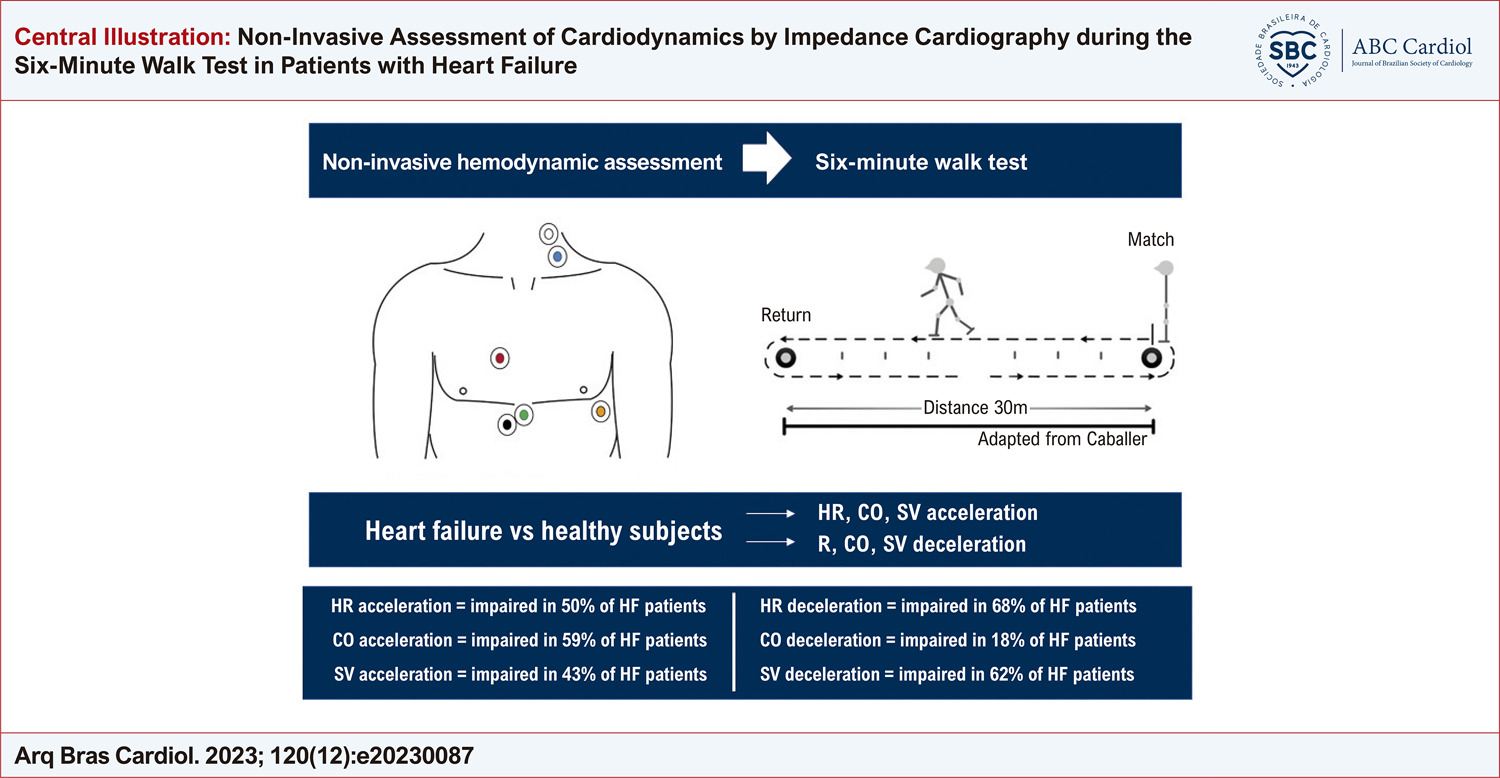
Non-Invasive Assessment of Cardiodynamics by Impedance Cardiography during the Six-Minute Walk Test in Patients with Heart Failure
ABC
Original Article

Non-Invasive Assessment of Cardiodynamics by Impedance Cardiography during the Six-Minute Walk Test in Patients with Heart Failure

Leandro Franzoni et al. Rafael Cechet de Oliveira Diego Busin Douglas Jean Preussler Turella … Rochelle Rocha Costa Marco Aurélio Lumertz Saffi Anderson Donelli da Silveira Ricardo Stein

Abstract

Background

The six-minute walk test (6MWT) is commonly used to evaluate heart failure (HF) patients. However, several clinical factors can influence the distance walked in the test. Signal-morphology impedance cardiography (SM-ICG) is a useful tool to noninvasively assess hemodynamics.

Objective

This study aimed to compare cardiac output (CO), heart rate (HR), and stroke volume (SV) acceleration and deceleration responses to 6MWT in individuals with HF and reduced ejection fraction (HFrEF) and healthy controls.

Methods

This is a cross-sectional observational study. CO, HR, SV and cardiac index (CI) were evaluated before, during, and after the 6MWT assessed by SM-ICG. The level of significance adopted in the statistical analysis was 5%.

Results

Twenty-seven participants were included (13 HFrEF and 14 healthy controls). CO and HR acceleration significantly differed between groups (p<0.01; p=0.039, respectively). We found significant differences in SV, CO and CI between groups (p<0.01). Linear regression showed an impaired SV contribution to CO change in HFrEF group (22.9% versus 57.4%).

Conclusion

The main finding of the study was that individuals with HFrEF showed lower CO and HR acceleration values during the submaximal exercise test compared to healthy controls. This may indicate an imbalance in the autonomic response to exercise in this condition.

  • Exercise Tolerance
  • Hemodynamics
  • Impedance Cardiography
Read Full Article
Creative Commons Attribution (CC BY) Creative Commons license
05/01/2024 DOI: 10.36660/abc.20230087
ABC
Editorial

Lung Function and Inspiratory Muscle Strength in Heart Failure: Can They be Considered Potential Prognostic Markers?

Filipe Ferrari

Heart failure (HF) is a complex syndrome considered a major public health problem. Different HF subtypes are classically defined based on left ventricular ejection fraction (LVEF). Although its prognosis has improved in recent decades – explained, in part, by major therapeutic advances – HF persists with a high burden of mortality and negatively influences the quality of life., In this sense, common symptoms experienced in this disease, such as shortness of breath and exercise intolerance, contribute greatly to this sharp decline in the quality of life of individuals. Another condition, considered an important risk factor, which usually accompanies HF, is pulmonary dysfunction. The respiratory impairments observed in HF may be related to several reasons, such as an impairment of lung mechanics and gas diffusion, as well as respiratory muscle weakness – aggravating increased dyspnea, being a major limitation on physical exercise.

Spirometry is a widely used test that allows the analysis of lung function – by measuring the amount of air inhaled and exhaled to the maximum. Because chronic obstructive pulmonary disease shares similar signs and symptoms with HF, its identification in individuals with HF can be challenging; in this sense, spirometry can help confirm the diagnosis. About evaluating the potential severity of some lung diseases, the exercise test can also be useful, observing a series of parameters, such as the ratio of forced expiratory volume in 1 second/forced vital capacity (FEV1/FVC). The severity of the disease can still be classified based on FEV1 when it is below the lower limit of normal (ranging from mild when ≥70% of predicted to very severe when <35% of predicted). Although HF itself can lead to a decrease in FEV1 and FVC of about 20% of predicted, in addition to the fact that a worse FEV1 may predict higher mortality, convincing evidence examining the prognostic role of FEV1 in the HF setting still needs further investigation.

[…]

  • Exercise Tolerance
  • Heart Failure
  • Respiratory Insufficiency
  • Respiratory Muscles
  • Risk Assessment
  • Ventricular Function
Read Full Article
Creative Commons Attribution (CC BY) Creative Commons license
29/04/2022 DOI: 10.36660/abc.20211060 Views 2
ABC
Original Article

Relationship of Lung Function and Inspiratory Strength with Exercise Capacity and Prognosis in Heart Failure

Sergio Henrique Rodolpho Ramalho et al. Alexandra Correa Gervazoni Balbuena de Lima Fabiola Maria Ferreira da Silva Fausto Stauffer Junqueira de Souza … Lawrence Patrick Cahalin Graziella França Bernardelli Cipriano Gerson Cipriano Junior

Abstract

Background

Spirometry is underused in heart failure (HF) and the extent to which each defect associates with exercise capacity and prognosis is unclear.

Objective

To determine the distinct relationship of continuous %predicted FVC (ppFVC) and FEV1/FVC with: 1) maximal inspiratory pressure (MIP), left ventricular ejection fraction (LVEF), exercise performance; and 2) prognosis for the composite of cardiovascular death, heart transplantation or left ventricular assist device implant.

Methods

A cohort of 111 HF participants (AHA stages C/D) without diagnosed pneumopathy, spirometry, manovacuometry and maximum cardiopulmonary test. The association magnitudes were verified by linear and Cox (HR; 95% CI) regressions, age/sex adjusted. A p<0.05 was considered significant.

Results

Age was 57±12 years, 60% men, 64% in NYHA III. Every 10%-point increase in FEV1/FVC [β 7% (95% CI: 3–10)] and ppFVC [4% (2-6)] associated with ventilatory reserve (VRes), however only ppFVC associated with MIP [3.8 cmH2O (0.3-7.3)], LVEF [2.1% (0.5-3.8)] and VO2peak [0.5 mL/kg/min (0.1–1.0)], accounting for age/sex. In 2.2 years (mean), 22 events occurred, and neither FEV1/FVC (HR 1.44; 95% CI: 0.97–2.13) nor ppFVC (HR 1.13; 0.89–1.43) was significantly associated with the outcome. Only in the LVEF ≤50% subgroup (n=87, 20 events), FEV1/FVC (HR 1.50; 1.01–2.23), but not ppFVC, was associated with greater risk.

Conclusions

In chronic HF, reduced ppFVC associated with lower MIP, LVEF, VRes and VO2peak, but no distinct poorer prognosis over 2.2 years of follow-up. Distinctively, FEV1/FVC was associated only with VRes, and, in participants with LVEF ≤50%, FEV1/FVC reduction proportionally worsened prognosis. Therefore, FEV1/FVC and ppFVC add supplementary information regarding HF phenotyping.

  • Exercise Tolerance
  • Respiratory Insufficiency
  • Respiratory Muscles
  • Risk Assessment
  • Ventricular Function
Read Full Article
Creative Commons Attribution (CC BY) Creative Commons license
07/02/2022 DOI: 10.36660/abc.20201130
IJCS
Editorial

Cardiovascular Rehabilitation at Distance: A New Moment

Ricardo Vivacqua Cardoso Costa

Cardiovascular rehabilitation consists of a non-pharmacological intervention process in individuals with metabolic, pulmonary, or cardiovascular disorders, aiming at reducing symptoms, quality of life improvement, and the possible increase in life expectancy.

It consists, predominantly, in the practice of regular, individualized physical exercises, in addition to guidance concerning other risk factors, including physical inactivity, as well as nutritional and psychological support, intending to slow down and cause possible regression of the patient’s pathology.,

[…]

  • Betacoronavirus
  • Cardiac Rehabilitation
  • COVID-1
  • Exercise Tolerance
  • Guidelines
  • Pandemia
  • Physical Exertion
  • physical therapy modalities
  • Telerehabilitation
Read Full Article
Creative Commons Attribution (CC BY) Creative Commons license
12/05/2021 DOI: 10.36660/ijcs.20210022 Views 1
Figure 1
IJCS
Original Article

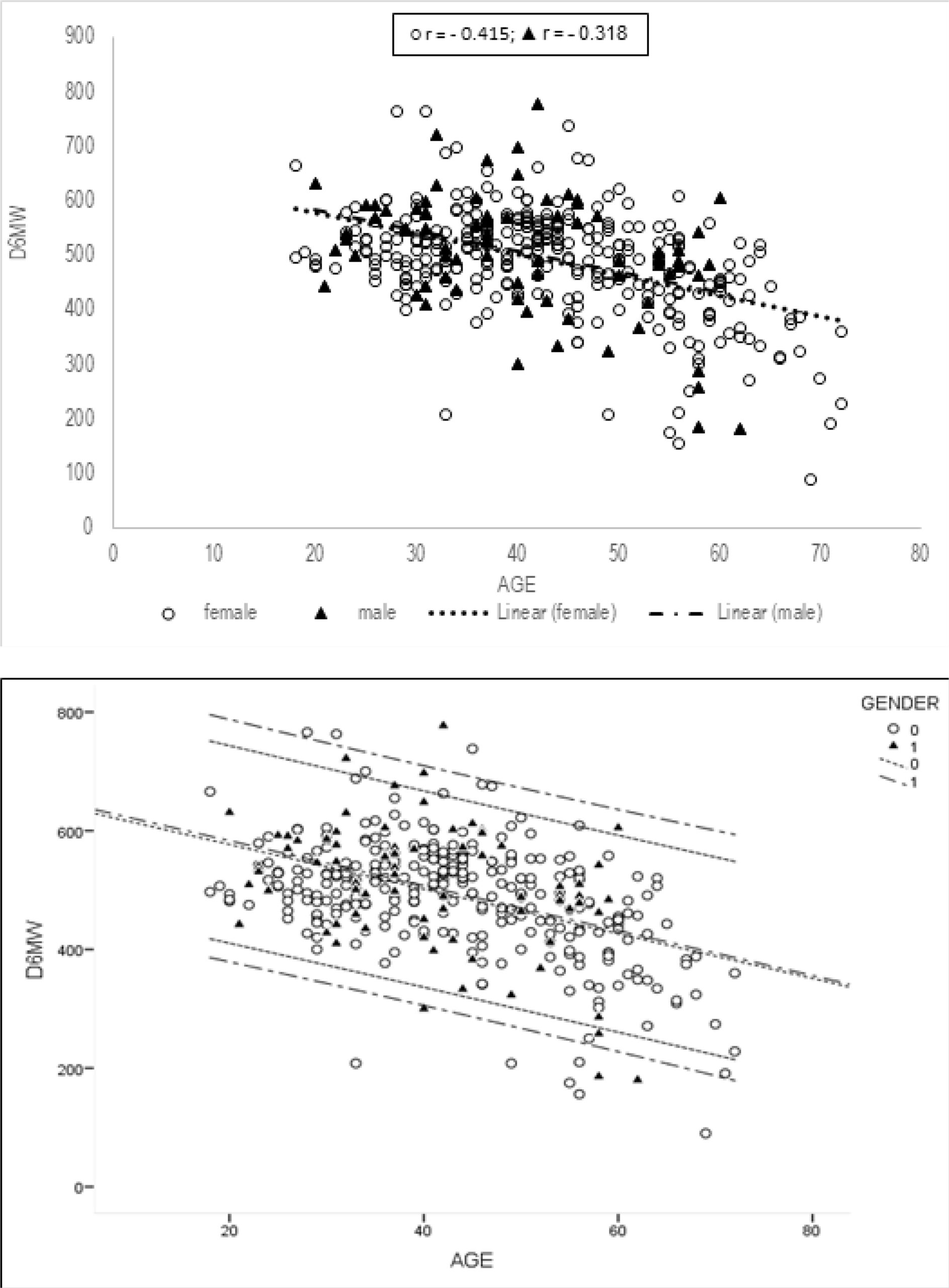
Reference Equation for the Six-Minute Walk Test in Brazilian Patients with Obesity

José Carlos do Vale Quaresma et al. João Regis Ivar Carneiro Norma Ferreira Marschhausen Gustavo Gavina da Cruz … José Fernandes Filho Ronir Raggio Luiz

Abstract

Background:

Obesity has repercussions on functional capacity (FC). The six-minute walk test (6MWT) is a useful tool for assessing submaximal FC, and the distance reached at 6 minutes of walking (D6MW) is a relevant prognostic marker.

Objective:

This paper aims to establish a reference equation for the distance predicted in 6MWT in obese Brazilian subjects.

Methods:

This study included 460 patients (306 women), with a body mass index (BMI) > 30 kg/m2, 71% (328) of whom presented a grade III obesity (BMI ≥ 40 Kg/m²) and were evaluated with 6MWT. Heart rate, blood pressure, oxygen saturation and Borg scale perception of effort were recorded before and after the 6MWT. For statistical analysis, Kolmogorov-Smirnov tests, an unpaired T-Test, Pearson’s correlation, and multiple linear regression were used, together with a significance level set at p<0.05.

Results:

Gender, age, and BMI were significantly correlated with D6MW and were identified by multiple linear regression as the best predictors of the D6MW. Together, they explain 48.7% of the D6MW variance for obese Brazilian subjects. Based on these findings, an equation was proposed – D6MW = 930.138 + (27.130 x Genderfemales = 0; males = 1) − (5.550 x BMI kg/m2) − (4.442 x Age years). When the average of the D6MW obtained with the above equation was compared to the average calculated with the equations described in medical literature for healthy and obese individuals, the latter tended to overestimate the D6MW.

Conclusion:

The proposed reference equation exhibited better assessment of FC in obese Brazilian patients, providing proper subsidies for the follow up ofinterventions in this population..

  • 6-minute walk test
  • Exercise Tolerance
  • Obesity
Read Full Article
Creative Commons Attribution (CC BY) Creative Commons license
03/05/2021 DOI: 10.36660/ijcs.20190175 Views 2
Figure 1
IJCS
Original Article

Speed and Grade Increment During Cardiopulmonary Treadmill Testing: Impact on Exercise Prescription

Karlyse C. Belli et al. Paula F. Da Silva Leandro T. Franzoni Jonathan Myers … Ricardo Stein Jorge P. Ribeiro

Abstract

Background:

Maximal oxygen uptake (VO2max) and both first (VT1) and second (VT2) thresholds have been used as reference points for exercise prescription in different populations.

Objective:

We aimed to test the hypothesis that exercise prescription, based on VTs determined by treadmill cardiopulmonary exercise testing (CPET), is influenced by the rate of increase in treadmill workload.

Methods:

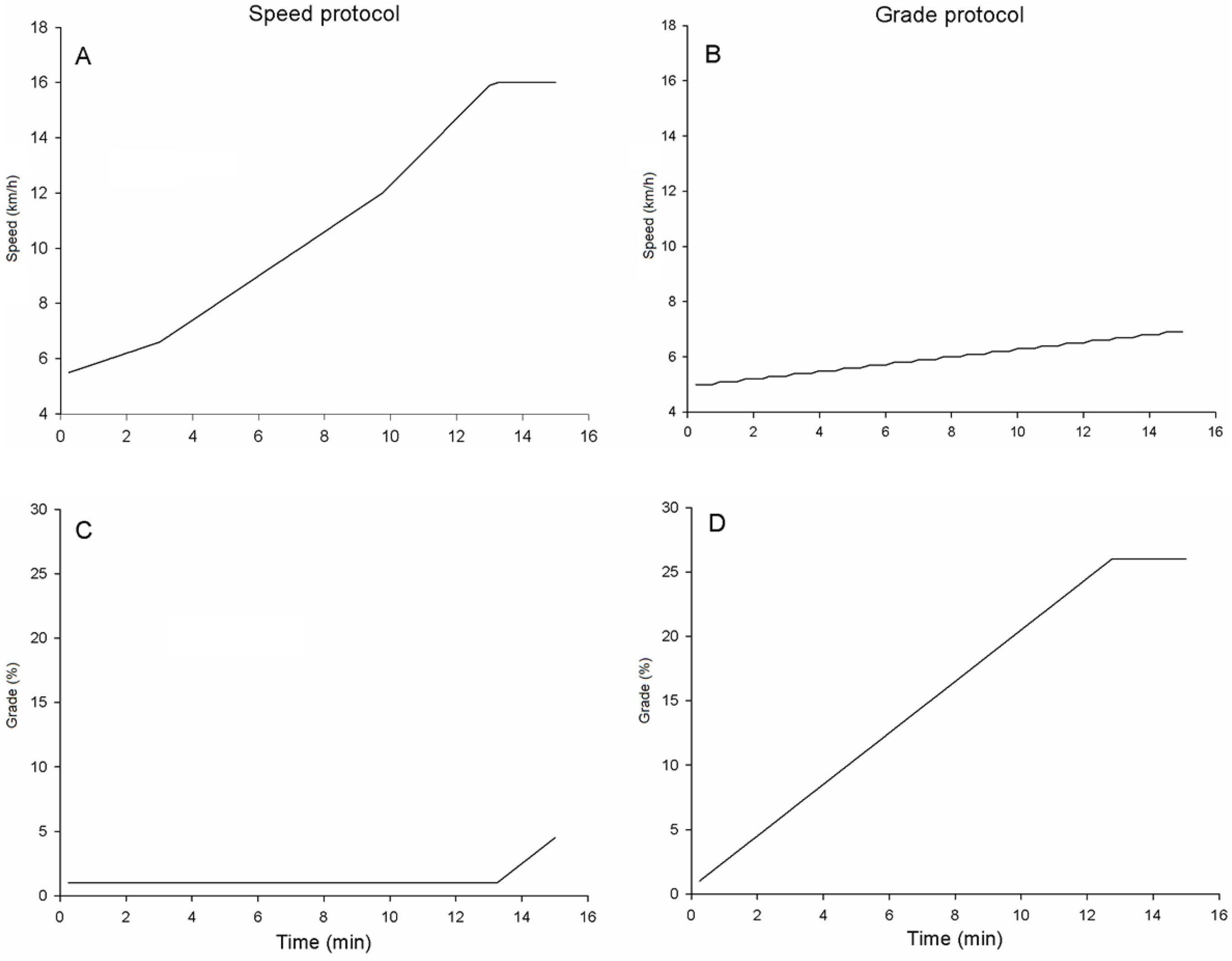
Nine healthy individuals underwent two CPETs, followed by two sessions of submaximal exercise, both in randomized order. For the “speed” protocol, there was an increment of 0.1 to 0.3 km.h-1 every 15s. The “grade” incremental protocol increased 1% every 30s and 0.1 km.h-1 every 45s. This was followed by submaximal exercise sessions lasting 40min at an intensity corresponding to heart rate (HR) between the VT1 and VT2.

Results:

The “speed” protocol resulted in higher VT1 (p = 0.01) and VT2 (p = 0.02) when compared to the “grade” incremental protocol, but there was no effect on VO2max. The target HR for the submaximal exercise sessions was higher in the “speed” protocol compared to the “grade” incremental protocol (p < 0.01) and remained stable during the two steady-state exercise sessions. Blood lactate remained stable during the submaximal exercise sessions, with higher values observed during the “speed” protocol than those “grade” incremental protocol (p < 0.01).

Conclusions:

Compared to a grade-based protocol, a speed-based protocol resulted in higher VT1 and VT2, which significantly affected cardiorespiratory and metabolic responses to prescribed exercise intensity in healthy young adults.

  • Cardiovascular Diseases
  • Exercise Test
  • Exercise Tolerance
  • Oxygen Consunption
Read Full Article
Creative Commons Attribution (CC BY) Creative Commons license
12/08/2019 DOI: 10.5935/2359-4802.20190058
Figure 1
ABC
Review Article

Functional Capacity in Congenital Heart Disease: A Systematic Review and Meta-Analysis

Camila Wohlgemuth Schaan et al. Aline Chagastelles Pinto de Macedo Graciele Sbruzzi Daniel Umpierre … Beatriz D. Schaan Lucia Campos Pellanda

Abstract

Background:

Children and adolescents with congenital heart disease often have alterations in their exercise capacity that can be evaluated by various functional testing.

Objective:

To evaluate the functional capacity of children and adolescents with congenital heart disease (CHD) with systematic review and meta-analyses.

Methods:

The review included observational studies, data from the first evaluation of randomized clinical trials or observational follow-up periods after clinical trials which evaluated functional capacity by cardiopulmonary exercise test, stress testing, six-minute walk test or step test, in children and adolescents with CHD, aged between six and 18 years, and comparisons with healthy controls in the same age group. The quantitative assessment was performed by meta-analysis, by comparing the maximal oxygen consumption (VO2max) of children and adolescents with CHD and respective control groups.

Results:

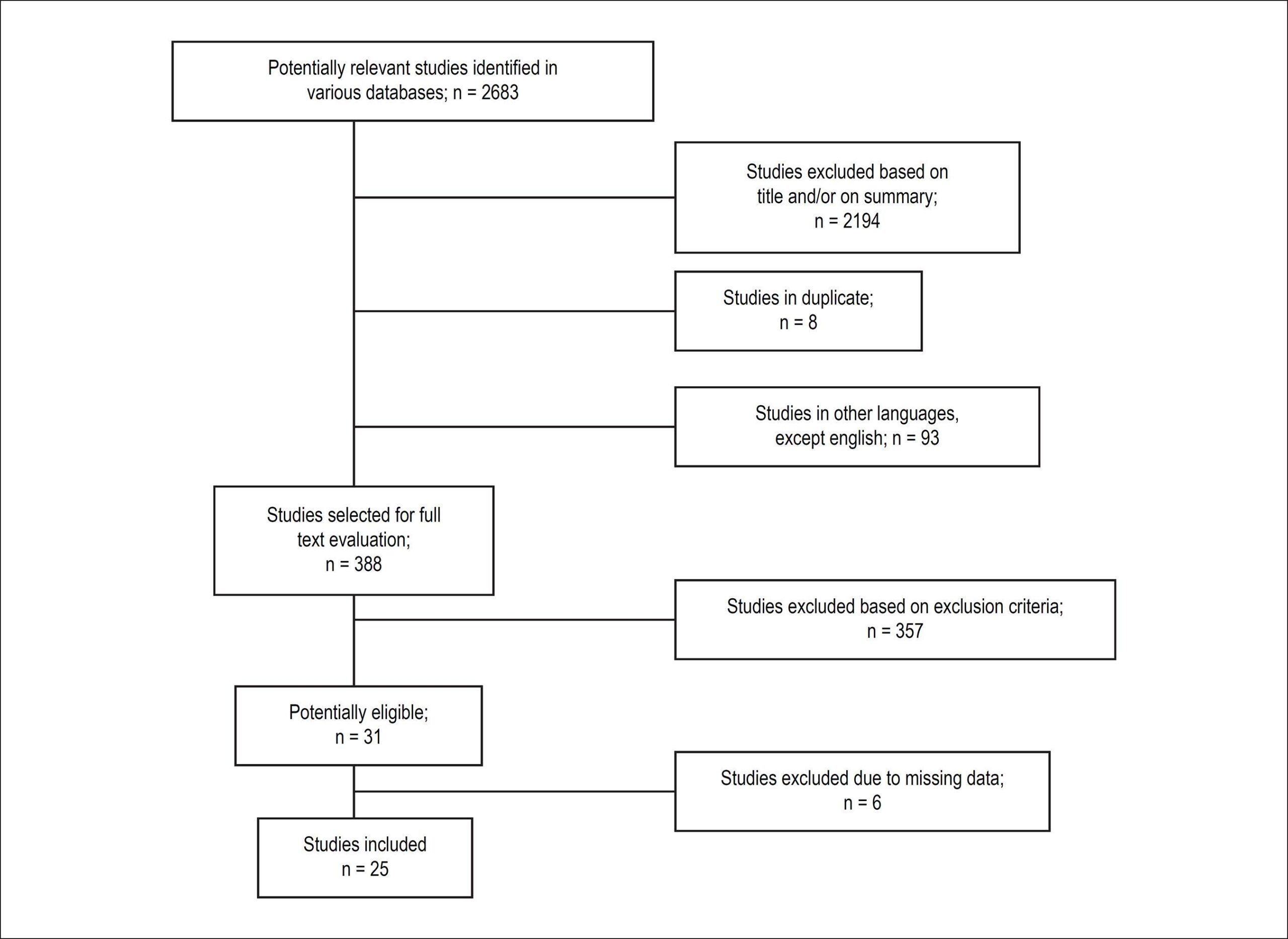
Twenty-five of 2.683 studies identified in the search met the inclusion criteria. The VO2max measurement showed that patients with CHD have a decrease of 9.31 ml/Kg/min (95% CI. -12.48 to -6.13; I2, 94.3%, P for heterogeneity < 0.001) compared with the control group. The meta-analysis of the data of maximum heart rate (HR) reached during cardiopulmonary test and stress testing, retrieved from 18 studies, showed a HR value of -15.14 bpm (95% CI. -20.97 to -9.31; I2, 94.3%, P for heterogeneity < 0.001) compared with the control group.

Conclusion:

Children and adolescents with CHD have lower VO2max and HR compared to controls.

  • Adolescent
  • Child
  • Exercise Tolerance
  • Heart Defects, Congenital
  • Meta-Analysis
  • Review
Read Full Article
Creative Commons Attribution (CC BY) Creative Commons license
04/09/2017 DOI: 10.5935/abc.20170125
Figure 1
ABC
Review Article

Non-Invasive Ventilation in Patients with Heart Failure: A Systematic Review and Meta-Analysis

Hugo Souza Bittencourt et al. Helena França Correia dos Reis Melissa Santos Lima Mansueto Gomes Neto

Abstract

Non-invasive ventilation (NIV) may perfect respiratory and cardiac performance in patients with heart failure (HF).

The objective of the study to establish, through systematic review and meta-analysis, NIV influence on functional capacity of HF patients.

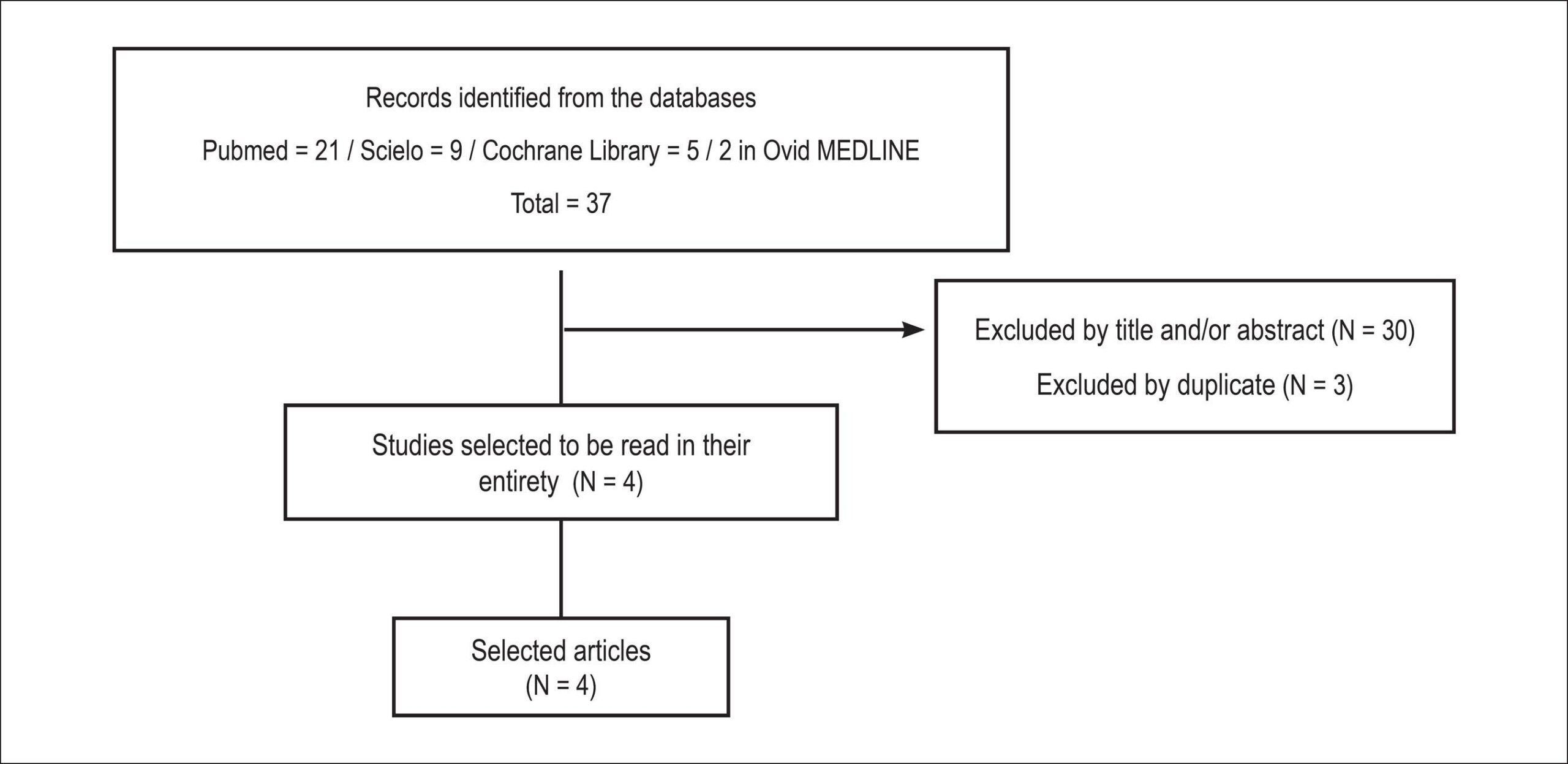
A systematic review with meta-analysis of randomized studies was carried out through research of databases of Cochrane Library, SciELO, Pubmed and PEDro, using the key-words: heart failure, non-invasive ventilation, exercise tolerance; and the free terms: bi-level positive airway pressure (BIPAP), continuous positive airway pressure (CPAP), and functional capacity (terms were searched for in English and Portuguese) using the Boolean operators AND and OR. Methodological quality was ensured through PEDro scale. Weighted averages and a 95% confidence interval (CI) were calculated. The meta-analysis was done thorugh the software Review Manager, version 5.3 (Cochrane Collaboration).

Four randomized clinical trials were included. Individual studies suggest NIV improved functional capacity. NIV resulted in improvement in the distance of the six-minute walk test (6MWT) (68.7m 95%CI: 52.6 to 84.9) in comparison to the control group.

We conclude that the NIV is an intervention that promotes important effects in the improvement of functional capacity of HF patients. However, there is a gap in literature on which are the most adequate parameters for the application of this technique.

  • Exercise Tolerance
  • Heart Failure
  • Meta-Analysis
  • Noninvasive Ventilation
  • Review
Read Full Article
Creative Commons Attribution (CC BY) Creative Commons license
16/01/2017 DOI: 10.5935/abc.20170001 Views 1
Figure 1
IJCS
Original Article

A Simpler and Shorter Neuromuscular Electrical Stimulation Protocol Improves Functional Status and Modulates Inflammatory Profile in Patients with End-Stage Congestive Heart Failure

Maria Carolina Basso Sacilotto et al. Carlos Fernando Ramos Lavagnoli Lindemberg Mota Silveira-Filho Karlos Alexandre de Souza Vilarinho … Elaine Soraya Barbosa de Oliveira Daniela Diógenes de Carvalho Pedro Paulo Martins de Oliveira Otávio Rizzi Coelho-Filho Orlando Petrucci Junior

Abstract

Background:

Neuromuscular electrical stimulation (NMES) using a stimulation wave for 5 days/week over 8 weeks has been used as a treatment option for congestive heart failure (CHF) patients who are unable to tolerate aerobic exercise.

Objective:

We assessed the impact of a shorter NMES protocol using a Russian stimulation wave on the functional status, quality of life (QoL) and inflammatory profile of end-stage CHF patients.

Methods:

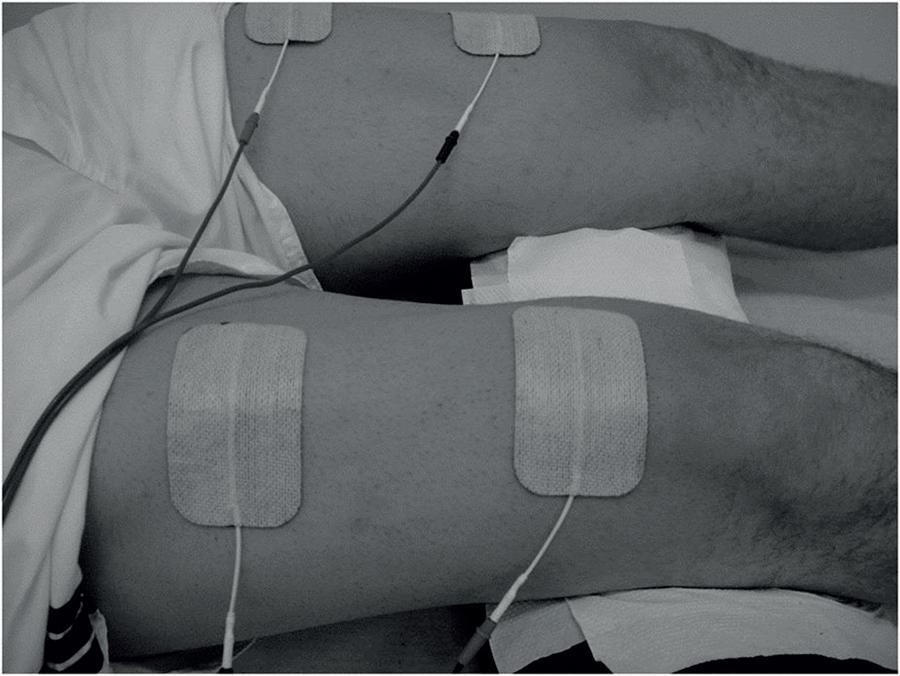
Twenty-eight patients with end-stage CHF (53 ± 11 years) were randomized to the NMES or control group. Treatment was an NMES training program with Russian stimulation wave, applied for 50 minutes to both quadriceps femoral muscles twice weekly over seven weeks. The stimulation intensity was chosen to elicit muscle contractions in the NMES group and current input up to sensory threshold in the control group. Distance in the 6-minute walk test (6MWT) and QoL score by the Minnesota Living with Heart Failure Questionnaire were evaluated before, immediately after and one month after NMES protocol completion. Peripheral leukocytes were obtained to measure the gene expression levels of inflammatory cytokines.

Results:

The NMES group showed increases in the 6MWT (324 ± 117 vs. 445 ± 100 m; p = 0.02) and QoL score (64 ± 22 vs. 45 ± 17; p < 0.01) immediately but not 1 month after protocol completion, as well as increased gene expression levels of IL-1β, IL-6 and IL-8 after protocol completion.

Conclusion:

Using a shorter and fewer sessions NMES protocol improved the QoL score and functional class of severe CHF patients, and modulated the gene expression levels of some cytokines. This protocol might be a good alternative for patients with severe CHF and limitations in protocol adherence. (Int J Cardiovasc Sci. 2017;30(6)484-495)

  • Electric Stimulation Therapy / adverse effects
  • Exercise
  • Exercise Tolerance
  • Heart Failure
  • Heart Transplantation
  • Rehabilitation
Read Full Article
Creative Commons Attribution (CC BY) Creative Commons license
01/01/2017 DOI: 10.5935/2359-4802.20170064
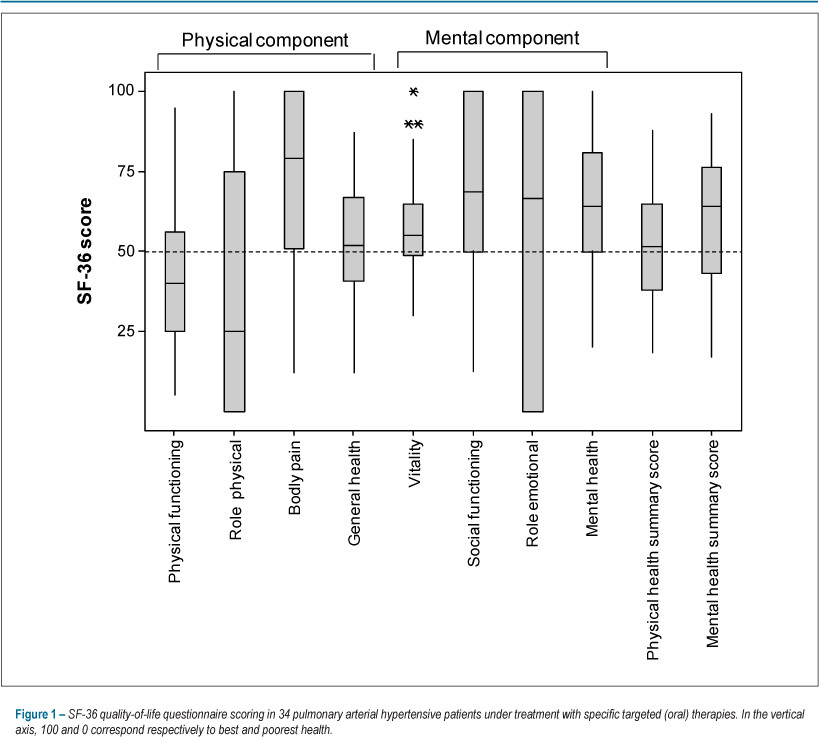
Lack of tight association between quality of life and exercise capacity in pulmonary arterial hypertension
ABC
Artigo Original

Lack of tight association between quality of life and exercise capacity in pulmonary arterial hypertension

Cristina Cícero et al. Sonia Meiken Franchi Alessandra Costa Barreto Antônio Augusto Barbosa Lopes

BACKGROUND: In pulmonary arterial hypertension (PAH) health-related quality of life (HRQOL) has been investigated over the short-term (weeks) but little is known about patient’s perspective over the medium and long term. OBJECTIVE: To analyze how patients on specific PAH therapies do over one year of observation in terms of HRQOL, and to investigate if possible associations between the exercise capacity (EC) and HRQOL persist over the medium term. METHODS: Thirty-four patients on PAH therapies (bosentan and/or sildenafil) were enrolled (age 14 to 58 years, median 35.5 years, functional class II or III), and evaluated at baseline, and 3, 6, 9 and 12 months subsequently using the six-minute walk test and the SF-36 HRQOL questionnaire. RESULTS: The six minute walked distance did not change over the follow-up (387-432 meters, median values, p=0.2775), the same for the functional class and peripheral oxygen saturation. The SF-36 scores also remained stable, with physical health always worse than mental health. Of 40 possible associations between EC and HRQOL, only 12 were significant (30%, p<0.05). Prediction of severely depressed HRQOL based on a walked distance of 90% specific but <43% sensitive. CONCLUSION: Patients with PAH who remain stable in terms of EC also seem to do so in terms of HRQOL. However, EC and HRQOL are not consistently tied over time, and should be analyzed as different perspectives in the individual patient.

  • Exercise Tolerance
  • Pulmonary Hypertension
  • Quality of life
  • symptoms
Read Full Article
Creative Commons Attribution (CC BY) Creative Commons license
30/08/2012 DOI: 10.1590/S0066-782X2012005000079 Views 2
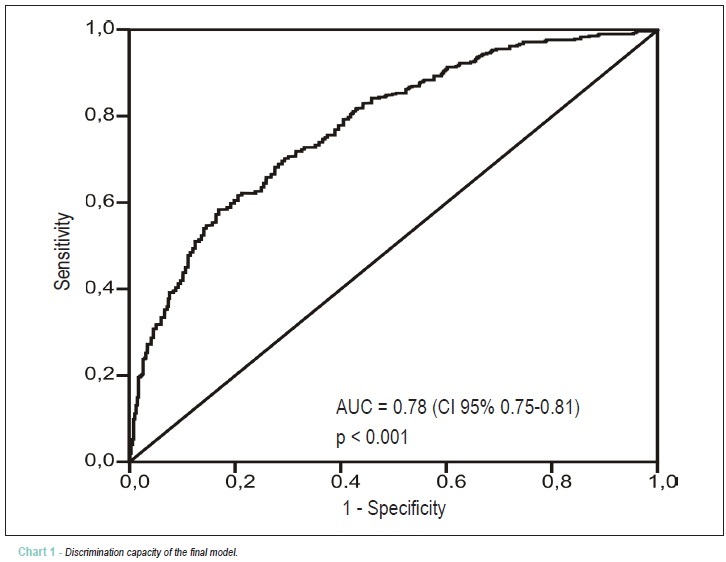
Clinical and echocardiographic parameters associated with low chronotropic index in non-elderly patients
ABC
Artigo Original

Clinical and echocardiographic parameters associated with low chronotropic index in non-elderly patients

Paulo Fernando Carvalho Secundo et al. Bruno Fernandes de Oliveira Santos José Alves Secundo Júnior Joiciane Bárbara da Silva … Adriana Ribeiro de Souza Gustavo Baptista de Almeida Faro José Augusto Barreto- Filho Antônio Carlos Sobral Sousa Joselina Luzia Menezes Oliveira

BACKGROUND: Despite abundant evidence of increased morbidity and mortality, chronotropic incompetence (CI) is not a routine diagnosis well defined in protocols of cardiac evaluation and its clinical importance is still underestimated. OBJECTIVE: To evaluate the clinical and echocardiographic parameters associated with HF in non-elderly patients submitted to stress echocardiography (SE). METHODS: One thousand seven hundred ninety-eight patients with a mean age of 48.4 ± 7.5 years, who underwent SE between January/2000 and August/2009 were evaluated. Patients with chronotropic index smaller than 0.8 were considered chronotropic incompetent as compared to competent patients as to clinical and echocardiographic characteristics. RESULTS: The duration of the exercise was 9.3 ± 2.4 minutes on average. Two hundred and seventy (15%) patients were chronotropic incompetent. The chronotropic index of this group was 0.7 ± 0.1 vs. 1.0 ± 0.1 for competent patients. Multivariate logistic regression analysis identified the following parameters as independently associated with HF: dyspnea on examination [odds ratio (OR) = 4.27, p <0.0001], previous chest pain on medical history (OR = 1.51; p = 0.0111), higher left ventricular mass rate in incompetent patients (LVMI) (OR = 1.16, p = 0.0001), metabolic equivalents (METs) (OR = 0.70, p = 0 , 0001), ST segment depression (OR = 0.58, p = 0.0003) and high systolic blood pressure (ΔSBP) (OR = 0.87, p = 0.0011). Myocardial ischemia was not associated with HF. CONCLUSION: HF is associated with functional parameters, such as dyspnea on exertion, history of chest pain and lower METS. It is also associated with structural benchmark index of left ventricular mass. In addition, chronotropic incompetence does not appear to increase the chance of myocardial ischemia in non-elderly patients. (Arq Bras Cardiol. 2012; [online].ahead print, PP.0-0)

  • Echocardiography, Stress
  • Exercise Test
  • Exercise Tolerance
  • Heart Rate
  • Physical Exertion
Read Full Article
Creative Commons Attribution (CC BY) Creative Commons license
05/04/2012 DOI: 10.1590/S0066-782X2012005000033 Views 1
ABC
Artigo Original

Translation and validation of the walking impairment questionnaire in Brazilian subjects with intermittent claudication

Raphael Mendes Ritti-Dias et al. Luis Alberto Gobbo Gabriel Grizzo Cucato Nelson Wolosker … Wilson Jacob Filho José Maria Santarém Celso Ricardo Fernandes Carvalho Cláudia Lúcia de Moraes Forjaz Maria de Fátima Nunes Marucci

BACKGROUND: The Walking Impairment Questionnaire (WIQ) has been used to evaluate walking impairment in subjects with intermittent claudication (IC). However, this questionnaire has yet to be translated to Brazilian Portuguese, which limits its use in Brazilian subjects. OBJECTIVE: To translate and analyze the validity and reliability of WIQ in Brazilian subjects with IC. METHODS: Forty-two patients with IC, determined by the ankle-brachial index < 0.90, participated in the study. After translation and re-translation, carried out by two independent translators, the construct validity of the WIQ was analyzed by correlating the WIQ scores with the Medical Outcome Study Questionnaire Short Form 36 (SF-36) scores and the physical fitness performance (treadmill and strength tests). The reliability was analyzed with a 7-day interval between two questionnaire applications. RESULTS: Significant correlations between the WIQ domains and the SF-36 (functional capacity, physical aspects, bodily pain and emotional aspects) and physical fitness performance (treadmill and strength tests) were observed. Moreover, the intraclass coefficient correlation ranged from 0.72 to 0.81, and there were no differences in WIQ scores between the two questionnaire applications. CONCLUSION: The Brazilian Portuguese version of the WIQ is valid and reliable to be used in Brazilian subjects with IC.

  • Exercise Tolerance
  • Intermittent Claudication
  • mobility limitation
  • Validation Studies
Read Full Article
Creative Commons Attribution (CC BY) Creative Commons license
06/04/2009 DOI: 10.1590/S0066-782X2009000200011 Views 2
ABC
Original Article

A new proposal to guide velocity and inclination in the ramp protocol for the treadmill ergometer

Odwaldo Barbosa e Silva et al. Dário C. Sobral Filho

OBJECTIVE: To suggest criteria to guide protocol prescription in ramp treadmill testing, according to sex and age, based on velocity, inclination, and max VO2 reached by the population studied. METHODS: Prospective study describing heart rate (HR), time, velocity, inclination, and VO2 estimated at maximum effort of 1840 individuals from 4 to 79 years old, who performed a treadmill test (TT) according to the ramp protocol. A paired Student t test was used to assess the difference between predicted and reached max VO2, calculated according to the formulas of the “American College of Sports Medicine”. RESULTS: Submaximal HR was surpassed in 90.1% of the examinations, with a mean time of 10.0±2.0 minute. Initial and peak inclination velocity of the exercise and max VO2 were inversely proportional to age and were greater in male patients. Predicted Max VO2 was significantly lower than that reached in all patients, except for female children and adolescents (age < 20 years old). CONCLUSION: Use of velocity, inclination, and maximum VO2 actually reached, as a criterion in prescribing the ramp protocol may help in the performance of exercise in treadmill testing. The ramp protocol was well accepted in all age groups and sexes with exercise time within the programmed 8 to 12 minutes.

  • Exercise Tolerance
  • ramp protocol
  • treadmill test
Read Full Article
Creative Commons Attribution (CC BY) Creative Commons license
05/08/2003 DOI: 10.1590/S0066-782X2003000900004

How to cite this article

EndNote RIS

Electronic Document Format (Vancouver)

Coelho VCO, Gama GS, Costa CLF, Rangel MVS, Borges J. Association between Cardiovascular Responses to Muscle Metaboreflex and Markers of Physical Fitness in Patients with Coronary Artery Disease. International Journal of Cardiovascular Sciences 2026;39:e20250183.

Electronic Document Format (ABNT)

Coelho, Vanessa Cunha de Oliveira; Gama, Gabriel da Silva; Costa, Caio Luan Farias; Rangel, Marcus Vinicius dos Santos; Borges, Juliana. Association between Cardiovascular Responses to Muscle Metaboreflex and Markers of Physical Fitness in Patients with Coronary Artery Disease. International Journal of Cardiovascular Sciences, v. 39, e20250183, Mar. 2026.

Electronic Document Format (APA)

Coelho, V. C. O., Gama, G. S., Costa, C. L. F., Rangel, M. V. S., & Borges, J. (2026). Association between Cardiovascular Responses to Muscle Metaboreflex and Markers of Physical Fitness in Patients with Coronary Artery Disease. International Journal of Cardiovascular Sciences, 39, e20250183.

Electronic Document Format (ISO)

Coelho, Vanessa Cunha de Oliveira and Gama, Gabriel da Silva and Costa, Caio Luan Farias and Rangel, Marcus Vinicius dos Santos and Borges, Juliana. Association between Cardiovascular Responses to Muscle Metaboreflex and Markers of Physical Fitness in Patients with Coronary Artery Disease. International Journal of Cardiovascular Sciences [online]. 2026, vol. 39, [cited 2026-10-14], e20250183. Available from: <https://journals.cardiol.br/en/article/association-between-cardiovascular-responses-to-muscle-metaboreflex-and-markers-of-physical-fitness-in-patients-with-coronary-artery-disease/>. ISSN 2359-4802

EndNote RIS

Electronic Document Format (Vancouver)

Franzoni L, Oliveira RC, Busin D, Turella DJP, Costa RR, Saffi MAL, Silveira AD, et al. Non-Invasive Assessment of Cardiodynamics by Impedance Cardiography during the Six-Minute Walk Test in Patients with Heart Failure. Arquivos Brasileiros de Cardiologia 2024;120(12):e20230087.

Electronic Document Format (ABNT)

Franzoni, Leandro; Oliveira, Rafael Cechet de; Busin, Diego; Turella, Douglas Jean Preussler; Costa, Rochelle Rocha; Saffi, Marco Aurélio Lumertz; Silveira, Anderson Donelli da; Stein, Ricardo. Non-Invasive Assessment of Cardiodynamics by Impedance Cardiography during the Six-Minute Walk Test in Patients with Heart Failure. Arquivos Brasileiros de Cardiologia, v. 120, n. 12, e20230087, Jan. 2024.

Electronic Document Format (APA)

Franzoni, L., Oliveira, R. C. , Busin, D., Turella, D. J. P., Costa, R. R., Saffi, M. A. L., Silveira, A. D. , & Stein, R. (2024). Non-Invasive Assessment of Cardiodynamics by Impedance Cardiography during the Six-Minute Walk Test in Patients with Heart Failure. Arquivos Brasileiros de Cardiologia, 120(12), e20230087.

Electronic Document Format (ISO)

Franzoni, Leandro and Oliveira, Rafael Cechet de and Busin, Diego and Turella, Douglas Jean Preussler and Costa, Rochelle Rocha and Saffi, Marco Aurélio Lumertz and Silveira, Anderson Donelli da and Stein, Ricardo. Non-Invasive Assessment of Cardiodynamics by Impedance Cardiography during the Six-Minute Walk Test in Patients with Heart Failure. Arquivos Brasileiros de Cardiologia [online]. 2024, vol. 120, n. 12, [cited 2026-10-14], e20230087. Available from: <https://journals.cardiol.br/en/article/non-invasive-assessment-of-cardiodynamics-by-impedance-cardiography-during-the-six-minute-walk-test-in-patients-with-heart-failure/>. ISSN 0066-782X

EndNote RIS

Electronic Document Format (Vancouver)

Ferrari F. Lung Function and Inspiratory Muscle Strength in Heart Failure: Can They be Considered Potential Prognostic Markers?. Arquivos Brasileiros de Cardiologia 2022;118(4):692-3.

Electronic Document Format (ABNT)

Ferrari, Filipe. Lung Function and Inspiratory Muscle Strength in Heart Failure: Can They be Considered Potential Prognostic Markers?. Arquivos Brasileiros de Cardiologia, v. 118, n. 4, p. 692-693, Apr. 2022.

Electronic Document Format (APA)

Ferrari, F. (2022). Lung Function and Inspiratory Muscle Strength in Heart Failure: Can They be Considered Potential Prognostic Markers?. Arquivos Brasileiros de Cardiologia, 118(4), 692-693.

Electronic Document Format (ISO)

Ferrari, Filipe. Lung Function and Inspiratory Muscle Strength in Heart Failure: Can They be Considered Potential Prognostic Markers?. Arquivos Brasileiros de Cardiologia [online]. 2022, vol. 118, n. 4, [cited 2026-10-14], pp. 692-693. Available from: <https://journals.cardiol.br/en/article/lung-function-and-inspiratory-muscle-strength-in-heart-failure-can-they-be-considered-potential-prognostic-markers/>. ISSN 0066-782X

EndNote RIS

Electronic Document Format (Vancouver)

Ramalho SHR, Lima ACGB, Silva FMF, Souza FSJ, Cahalin LP, Cipriano GFB, Cipriano Junior G, et al. Relationship of Lung Function and Inspiratory Strength with Exercise Capacity and Prognosis in Heart Failure. Arquivos Brasileiros de Cardiologia 2022;118(4):680-91.

Electronic Document Format (ABNT)

Ramalho, Sergio Henrique Rodolpho; Lima, Alexandra Correa Gervazoni Balbuena de; Silva, Fabiola Maria Ferreira da; Souza, Fausto Stauffer Junqueira de; Cahalin, Lawrence Patrick; Cipriano, Graziella França Bernardelli; Cipriano Junior, Gerson. Relationship of Lung Function and Inspiratory Strength with Exercise Capacity and Prognosis in Heart Failure. Arquivos Brasileiros de Cardiologia, v. 118, n. 4, p. 680-691, Feb. 2022.

Electronic Document Format (APA)

Ramalho, S. H. R., Lima, A. C. G. B. , Silva, F. M. F. , Souza, F. S. J. , Cahalin, L. P., Cipriano, G. F. B., & Cipriano Junior, G. (2022). Relationship of Lung Function and Inspiratory Strength with Exercise Capacity and Prognosis in Heart Failure. Arquivos Brasileiros de Cardiologia, 118(4), 680-691.

Electronic Document Format (ISO)

Ramalho, Sergio Henrique Rodolpho and Lima, Alexandra Correa Gervazoni Balbuena de and Silva, Fabiola Maria Ferreira da and Souza, Fausto Stauffer Junqueira de and Cahalin, Lawrence Patrick and Cipriano, Graziella França Bernardelli and Cipriano Junior, Gerson. Relationship of Lung Function and Inspiratory Strength with Exercise Capacity and Prognosis in Heart Failure. Arquivos Brasileiros de Cardiologia [online]. 2022, vol. 118, n. 4, [cited 2026-10-14], pp. 680-691. Available from: <https://journals.cardiol.br/en/article/relationship-of-lung-function-and-inspiratory-strength-with-exercise-capacity-and-prognosis-in-heart-failure/>. ISSN 0066-782X

EndNote RIS

Electronic Document Format (Vancouver)

Costa RVC. Cardiovascular Rehabilitation at Distance: A New Moment. International Journal of Cardiovascular Sciences 2021;34(6):642-3.

Electronic Document Format (ABNT)

Costa, Ricardo Vivacqua Cardoso. Cardiovascular Rehabilitation at Distance: A New Moment. International Journal of Cardiovascular Sciences, v. 34, n. 6, p. 642-643, May. 2021.

Electronic Document Format (APA)

Costa, R. V. C. (2021). Cardiovascular Rehabilitation at Distance: A New Moment. International Journal of Cardiovascular Sciences, 34(6), 642-643.

Electronic Document Format (ISO)

Costa, Ricardo Vivacqua Cardoso. Cardiovascular Rehabilitation at Distance: A New Moment. International Journal of Cardiovascular Sciences [online]. 2021, vol. 34, n. 6, [cited 2026-10-14], pp. 642-643. Available from: <https://journals.cardiol.br/en/article/cardiovascular-rehabilitation-at-distance-a-new-moment/>. ISSN 2359-4802

EndNote RIS

Electronic Document Format (Vancouver)

Quaresma JCV, Carneiro JRI, Marschhausen NF, Cruz GG, Fernandes Filho J, Luiz RR. Reference Equation for the Six-Minute Walk Test in Brazilian Patients with Obesity. International Journal of Cardiovascular Sciences 2021;34(3):307-14.

Electronic Document Format (ABNT)

Quaresma, José Carlos do Vale; Carneiro, João Regis Ivar; Marschhausen, Norma Ferreira; Cruz, Gustavo Gavina da; Fernandes Filho, José; Luiz, Ronir Raggio. Reference Equation for the Six-Minute Walk Test in Brazilian Patients with Obesity. International Journal of Cardiovascular Sciences, v. 34, n. 3, p. 307-314, May. 2021.

Electronic Document Format (APA)

Quaresma, J. C. V., Carneiro, J. R. I., Marschhausen, N. F., Cruz, G. G. , Fernandes Filho, J., & Luiz, R. R. (2021). Reference Equation for the Six-Minute Walk Test in Brazilian Patients with Obesity. International Journal of Cardiovascular Sciences, 34(3), 307-314.

Electronic Document Format (ISO)

Quaresma, José Carlos do Vale and Carneiro, João Regis Ivar and Marschhausen, Norma Ferreira and Cruz, Gustavo Gavina da and Fernandes Filho, José and Luiz, Ronir Raggio. Reference Equation for the Six-Minute Walk Test in Brazilian Patients with Obesity. International Journal of Cardiovascular Sciences [online]. 2021, vol. 34, n. 3, [cited 2026-10-14], pp. 307-314. Available from: <https://journals.cardiol.br/en/article/reference-equation-for-the-six-minute-walk-test-in-brazilian-patients-with-obesity/>. ISSN 2359-4802

EndNote RIS

Electronic Document Format (Vancouver)

Belli KC, Silva PFD, Franzoni LT, Myers J, Stein R, Ribeiro JP. Speed and Grade Increment During Cardiopulmonary Treadmill Testing: Impact on Exercise Prescription. International Journal of Cardiovascular Sciences 2019;32(4):374-83.

Electronic Document Format (ABNT)

Belli, Karlyse C.; Silva, Paula F. Da; Franzoni, Leandro T.; Myers, Jonathan; Stein, Ricardo; Ribeiro, Jorge P.. Speed and Grade Increment During Cardiopulmonary Treadmill Testing: Impact on Exercise Prescription. International Journal of Cardiovascular Sciences, v. 32, n. 4, p. 374-383, Aug. 2019.

Electronic Document Format (APA)

Belli, K. C., Silva, P. F. D., Franzoni, L. T., Myers, J., Stein, R., & Ribeiro, J. P. (2019). Speed and Grade Increment During Cardiopulmonary Treadmill Testing: Impact on Exercise Prescription. International Journal of Cardiovascular Sciences, 32(4), 374-383.

Electronic Document Format (ISO)

Belli, Karlyse C. and Silva, Paula F. Da and Franzoni, Leandro T. and Myers, Jonathan and Stein, Ricardo and Ribeiro, Jorge P.. Speed and Grade Increment During Cardiopulmonary Treadmill Testing: Impact on Exercise Prescription. International Journal of Cardiovascular Sciences [online]. 2019, vol. 32, n. 4, [cited 2026-10-14], pp. 374-383. Available from: <https://journals.cardiol.br/en/article/speed-and-grade-increment-during-cardiopulmonary-treadmill-testing-impact-on-exercise-prescription/>. ISSN 2359-4802

EndNote RIS

Electronic Document Format (Vancouver)

Schaan CW, Macedo ACP, Sbruzzi G, Umpierre D, Schaan BD, Pellanda LC. Functional Capacity in Congenital Heart Disease: A Systematic Review and Meta-Analysis. Arquivos Brasileiros de Cardiologia 2017;109(4):357-6.

Electronic Document Format (ABNT)

Schaan, Camila Wohlgemuth; Macedo, Aline Chagastelles Pinto de; Sbruzzi, Graciele; Umpierre, Daniel; Schaan, Beatriz D.; Pellanda, Lucia Campos. Functional Capacity in Congenital Heart Disease: A Systematic Review and Meta-Analysis. Arquivos Brasileiros de Cardiologia, v. 109, n. 4, p. 357-367, Sep. 2017.

Electronic Document Format (APA)

Schaan, C. W., Macedo, A. C. P. , Sbruzzi, G., Umpierre, D., Schaan, B. D., & Pellanda, L. C. (2017). Functional Capacity in Congenital Heart Disease: A Systematic Review and Meta-Analysis. Arquivos Brasileiros de Cardiologia, 109(4), 357-367.

Electronic Document Format (ISO)

Schaan, Camila Wohlgemuth and Macedo, Aline Chagastelles Pinto de and Sbruzzi, Graciele and Umpierre, Daniel and Schaan, Beatriz D. and Pellanda, Lucia Campos. Functional Capacity in Congenital Heart Disease: A Systematic Review and Meta-Analysis. Arquivos Brasileiros de Cardiologia [online]. 2017, vol. 109, n. 4, [cited 2026-10-14], pp. 357-367. Available from: <https://journals.cardiol.br/en/article/functional-capacity-in-congenital-heart-disease-a-systematic-review-and-meta-analysis/>. ISSN 0066-782X

EndNote RIS

Electronic Document Format (Vancouver)

Bittencourt HS, Reis HFC, Lima MS, Gomes Neto M. Non-Invasive Ventilation in Patients with Heart Failure: A Systematic Review and Meta-Analysis. Arquivos Brasileiros de Cardiologia 2017;108(2):161-8.

Electronic Document Format (ABNT)

Bittencourt, Hugo Souza; Reis, Helena França Correia dos; Lima, Melissa Santos; Gomes Neto, Mansueto. Non-Invasive Ventilation in Patients with Heart Failure: A Systematic Review and Meta-Analysis. Arquivos Brasileiros de Cardiologia, v. 108, n. 2, p. 161-168, Jan. 2017.

Electronic Document Format (APA)

Bittencourt, H. S., Reis, H. F. C. , Lima, M. S., & Gomes Neto, M. (2017). Non-Invasive Ventilation in Patients with Heart Failure: A Systematic Review and Meta-Analysis. Arquivos Brasileiros de Cardiologia, 108(2), 161-168.

Electronic Document Format (ISO)

Bittencourt, Hugo Souza and Reis, Helena França Correia dos and Lima, Melissa Santos and Gomes Neto, Mansueto. Non-Invasive Ventilation in Patients with Heart Failure: A Systematic Review and Meta-Analysis. Arquivos Brasileiros de Cardiologia [online]. 2017, vol. 108, n. 2, [cited 2026-10-14], pp. 161-168. Available from: <https://journals.cardiol.br/en/article/non-invasive-ventilation-in-patients-with-heart-failure-a-systematic-review-and-meta-analysis/>. ISSN 0066-782X

EndNote RIS

Electronic Document Format (Vancouver)

Sacilotto MCB, Lavagnoli CFR, Silveira-Filho LM, Vilarinho KAS, Oliveira ESB, Carvalho DD, Oliveira PPM, et al. A Simpler and Shorter Neuromuscular Electrical Stimulation Protocol Improves Functional Status and Modulates Inflammatory Profile in Patients with End-Stage Congestive Heart Failure. International Journal of Cardiovascular Sciences 2017;30(6):484-95.

Electronic Document Format (ABNT)

Sacilotto, Maria Carolina Basso; Lavagnoli, Carlos Fernando Ramos; Silveira-Filho, Lindemberg Mota; Vilarinho, Karlos Alexandre de Souza; Oliveira, Elaine Soraya Barbosa de; Carvalho, Daniela Diógenes de; Oliveira, Pedro Paulo Martins de; Coelho-Filho, Otávio Rizzi; Petrucci Junior, Orlando. A Simpler and Shorter Neuromuscular Electrical Stimulation Protocol Improves Functional Status and Modulates Inflammatory Profile in Patients with End-Stage Congestive Heart Failure. International Journal of Cardiovascular Sciences, v. 30, n. 6, p. 484-495, Dec. 2016.

Electronic Document Format (APA)

Sacilotto, M. C. B., Lavagnoli, C. F. R., Silveira-Filho, L. M., Vilarinho, K. A. S., Oliveira, E. S. B. , Carvalho, D. D. , Oliveira, P. P. M. , Coelho-Filho, O. R., & Petrucci Junior, O. (2017). A Simpler and Shorter Neuromuscular Electrical Stimulation Protocol Improves Functional Status and Modulates Inflammatory Profile in Patients with End-Stage Congestive Heart Failure. International Journal of Cardiovascular Sciences, 30(6), 484-495.

Electronic Document Format (ISO)

Sacilotto, Maria Carolina Basso and Lavagnoli, Carlos Fernando Ramos and Silveira-Filho, Lindemberg Mota and Vilarinho, Karlos Alexandre de Souza and Oliveira, Elaine Soraya Barbosa de and Carvalho, Daniela Diógenes de and Oliveira, Pedro Paulo Martins de and Coelho-Filho, Otávio Rizzi and Petrucci Junior, Orlando. A Simpler and Shorter Neuromuscular Electrical Stimulation Protocol Improves Functional Status and Modulates Inflammatory Profile in Patients with End-Stage Congestive Heart Failure. International Journal of Cardiovascular Sciences [online]. 2017, vol. 30, n. 6, [cited 2026-10-14], pp. 484-495. Available from: <https://journals.cardiol.br/en/article/a-simpler-and-shorter-neuromuscular-electrical-stimulation-protocol-improves-functional-status-and-modulates-inflammatory-profile-in-patients-with-end-stage-congestive-heart-failure/>. ISSN 2359-4802

EndNote RIS

Electronic Document Format (Vancouver)

Cícero C, Franchi SM, Barreto AC, Lopes AAB. Lack of tight association between quality of life and exercise capacity in pulmonary arterial hypertension. Arquivos Brasileiros de Cardiologia 2012;99(4):876-85.

Electronic Document Format (ABNT)

Cícero, Cristina; Franchi, Sonia Meiken; Barreto, Alessandra Costa; Lopes, Antônio Augusto Barbosa. Lack of tight association between quality of life and exercise capacity in pulmonary arterial hypertension. Arquivos Brasileiros de Cardiologia, v. 99, n. 4, p. 876-885, Aug. 2012.

Electronic Document Format (APA)

Cícero, C., Franchi, S. M., Barreto, A. C., & Lopes, A. A. B. (2012). Lack of tight association between quality of life and exercise capacity in pulmonary arterial hypertension. Arquivos Brasileiros de Cardiologia, 99(4), 876-885.

Electronic Document Format (ISO)

Cícero, Cristina and Franchi, Sonia Meiken and Barreto, Alessandra Costa and Lopes, Antônio Augusto Barbosa. Lack of tight association between quality of life and exercise capacity in pulmonary arterial hypertension. Arquivos Brasileiros de Cardiologia [online]. 2012, vol. 99, n. 4, [cited 2026-10-14], pp. 876-885. Available from: <https://journals.cardiol.br/en/article/lack-of-tight-association-between-quality-of-life-and-exercise-capacity-in-pulmonary-arterial-hypertension/>. ISSN 0066-782X

EndNote RIS

Electronic Document Format (Vancouver)

Secundo PFC, Santos BFO, Secundo Júnior JA, Silva JB, Souza AR, Faro GBA, Barreto- Filho JA, et al. Clinical and echocardiographic parameters associated with low chronotropic index in non-elderly patients. Arquivos Brasileiros de Cardiologia 2012;98(5):413-20.

Electronic Document Format (ABNT)

Secundo, Paulo Fernando Carvalho; Santos, Bruno Fernandes de Oliveira; Secundo Júnior, José Alves; Silva, Joiciane Bárbara da; Souza, Adriana Ribeiro de; Faro, Gustavo Baptista de Almeida; Barreto- Filho, José Augusto; Sousa, Antônio Carlos Sobral; Oliveira, Joselina Luzia Menezes. Clinical and echocardiographic parameters associated with low chronotropic index in non-elderly patients. Arquivos Brasileiros de Cardiologia, v. 98, n. 5, p. 413-420, Apr. 2012.

Electronic Document Format (APA)

Secundo, P. F. C., Santos, B. F. O., Secundo Júnior, J. A., Silva, J. B. , Souza, A. R. , Faro, G. B. A., Barreto- Filho, J. A., Sousa, A. C. S., & Oliveira, J. L. M. (2012). Clinical and echocardiographic parameters associated with low chronotropic index in non-elderly patients. Arquivos Brasileiros de Cardiologia, 98(5), 413-420.

Electronic Document Format (ISO)

Secundo, Paulo Fernando Carvalho and Santos, Bruno Fernandes de Oliveira and Secundo Júnior, José Alves and Silva, Joiciane Bárbara da and Souza, Adriana Ribeiro de and Faro, Gustavo Baptista de Almeida and Barreto- Filho, José Augusto and Sousa, Antônio Carlos Sobral and Oliveira, Joselina Luzia Menezes. Clinical and echocardiographic parameters associated with low chronotropic index in non-elderly patients. Arquivos Brasileiros de Cardiologia [online]. 2012, vol. 98, n. 5, [cited 2026-10-14], pp. 413-420. Available from: <https://journals.cardiol.br/en/article/clinical-and-echocardiographic-parameters-associated-with-low-chronotropic-index-in-non-elderly-patients/>. ISSN 0066-782X

EndNote RIS

Electronic Document Format (Vancouver)

Ritti-Dias RM, Gobbo LA, Cucato GG, Wolosker N, Jacob Filho W, Santarém JM, Carvalho CRF, et al. Translation and validation of the walking impairment questionnaire in Brazilian subjects with intermittent claudication. Arquivos Brasileiros de Cardiologia 2009;92(2):143-9.

Electronic Document Format (ABNT)

Ritti-Dias, Raphael Mendes; Gobbo, Luis Alberto; Cucato, Gabriel Grizzo; Wolosker, Nelson; Jacob Filho, Wilson; Santarém, José Maria; Carvalho, Celso Ricardo Fernandes; Forjaz, Cláudia Lúcia de Moraes; Marucci, Maria de Fátima Nunes. Translation and validation of the walking impairment questionnaire in Brazilian subjects with intermittent claudication. Arquivos Brasileiros de Cardiologia, v. 92, n. 2, p. 143-149, Apr. 2009.

Electronic Document Format (APA)

Ritti-Dias, R. M., Gobbo, L. A., Cucato, G. G., Wolosker, N., Jacob Filho, W., Santarém, J. M., Carvalho, C. R. F., Forjaz, C. L. M., & Marucci, M. F. N. (2009). Translation and validation of the walking impairment questionnaire in Brazilian subjects with intermittent claudication. Arquivos Brasileiros de Cardiologia, 92(2), 143-149.

Electronic Document Format (ISO)

Ritti-Dias, Raphael Mendes and Gobbo, Luis Alberto and Cucato, Gabriel Grizzo and Wolosker, Nelson and Jacob Filho, Wilson and Santarém, José Maria and Carvalho, Celso Ricardo Fernandes and Forjaz, Cláudia Lúcia de Moraes and Marucci, Maria de Fátima Nunes. Translation and validation of the walking impairment questionnaire in Brazilian subjects with intermittent claudication. Arquivos Brasileiros de Cardiologia [online]. 2009, vol. 92, n. 2, [cited 2026-10-14], pp. 143-149. Available from: <https://journals.cardiol.br/en/article/translation-and-validation-of-the-walking-impairment-questionnaire-in-brazilian-subjects-with-intermittent-claudication/>. ISSN 0066-782X

EndNote RIS

Electronic Document Format (Vancouver)

Silva OB, Sobral Filho DC. A new proposal to guide velocity and inclination in the ramp protocol for the treadmill ergometer. Arquivos Brasileiros de Cardiologia 2003;81(1):48-53.

Electronic Document Format (ABNT)

Silva, Odwaldo Barbosa e; Sobral Filho, Dário C.. A new proposal to guide velocity and inclination in the ramp protocol for the treadmill ergometer. Arquivos Brasileiros de Cardiologia, v. 81, n. 1, p. 48-53, Aug. 2003.

Electronic Document Format (APA)

Silva, O. B. , & Sobral Filho, D. C. (2003). A new proposal to guide velocity and inclination in the ramp protocol for the treadmill ergometer. Arquivos Brasileiros de Cardiologia, 81(1), 48-53.

Electronic Document Format (ISO)

Silva, Odwaldo Barbosa e and Sobral Filho, Dário C.. A new proposal to guide velocity and inclination in the ramp protocol for the treadmill ergometer. Arquivos Brasileiros de Cardiologia [online]. 2003, vol. 81, n. 1, [cited 2026-10-14], pp. 48-53. Available from: <https://journals.cardiol.br/en/article/a-new-proposal-to-guide-velocity-and-inclination-in-the-ramp-protocol-for-the-treadmill-ergometer/>. ISSN 0066-782X

  • About ABC Family
  • Internal Regulation
  • Editorial Board
  • Brazilian Society of Cardiology (SBC)

Issues

SBC Guidelines

  • Videos
  • Podcasts
  • News