ABC Family Arquivos Brasileiros de Cardiologia International Journal of Cardiovascular Sciences ABC Heart Failure & Cardiomyopathy ABC Imagem Cardiovascular
Português English
ABC Family
Português English
  • About
    • About ABC Family
    • Internal Regulation
    • Editorial Board
    • Brazilian Society of Cardiology (SBC)
  • Issues
  • SBC Guidelines
  • Content
    • Videos
    • Podcasts
    • News
  • About
    • About ABC Family
    • Internal Regulation
    • Editorial Board
    • Brazilian Society of Cardiology (SBC)
  • Issues
  • SBC Guidelines
  • Content
    • Videos
    • Podcasts
    • News

ABC Family

  • ABC Family
  • Arquivos Brasileiros de Cardiologia
  • International Journal of Cardiovascular Sciences
  • ABC Heart Failure & Cardiomyopathy
  • ABC Imagem Cardiovascular
Search in

No content found.

Journals
Ordering
Article types
Others

  1. Home
  2. Keyword: Takotsubo syndrome
Figure 1
ABC
Research Letter

Takotsubo Syndrome, Complete Heart Block, and Cardiac Arrest: A Clinical Challenge

Ana Abrantes et al. Catarina Gregório Miguel Raposo Nelson Cunha … Dulce Brito Fausto J. Pinto

Abstract

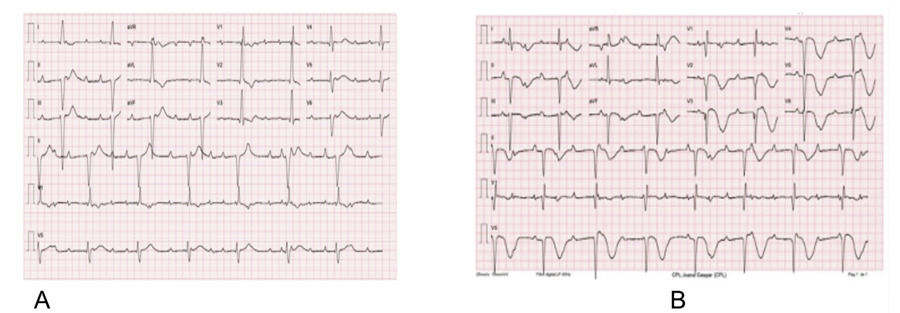
Complete atrioventricular block may be associated with Takotsubo syndrome, and the decision of device implantation in such patients is challenging. We present a case of a 76-year-old woman admitted after out-of-hospital cardiac arrest that was reverted after defibrillation treatment. Post-resuscitation electrocardiogram documented complete atrioventricular block, and echocardiogram revealed severe left ventricular dysfunction with apical ballooning. Coronary angiography excluded coronary artery disease, and Takotsubo syndrome was diagnosed based on clinical and imaging features. Atrioventricular block persisted despite normalization of left ventricular function; therefore, cardiac arrest was considered secondary to a ventricular arrhythmia induced by atrioventricular block, and a pacemaker, rather than an implantable cardioverter-defibrillator, was implanted. During follow-up, complete atrioventricular block persisted, with 99% of ventricular pacing observed upon device interrogation. This case supports that the stress of atrioventricular block may trigger Takotsubo syndrome, which is reinforced by the persistence of conduction abnormalities despite reversal of ventricular defects. Therefore, early implantation of a cardiac device should be carefully considered on a case-by-case basis.

  • Cardiac arrest
  • complete atrioventricular block
  • Pacemaker
  • Takotsubo syndrome
Read Full Article
Creative Commons Attribution (CC BY) Creative Commons license
09/01/2026 DOI: 10.36660/abc.20250245i Views 1
ABC
Letter to the Editor

Recurrent Takotsubo Cardiomyopathy: A Puzzle Yet to be Solved

Kenan Yalta et al. Caglar Kaya

Reply

First, we thank the authors for the comments regarding our recent article in Arquivos Brasileiros de Cardiologia entitled “Factors Associated with Recurrence in Takotsubo Syndrome: A Systematic Review”. In the letter, the authors made some interesting additional comments regarding the mechanisms of Takotsubo recurrence related to mechanical triggers related to mid-ventricular gradient that may be related to associated hypertrophic cardiomyopathy (HCM) and a second mechanism related to severe adrenergic discharge.

One question they posed was related to the incidence of HCM and hypertensive heart disease in the data we analyzed. Actually, in the original papers that were revised, the authors did not mention HCM or hypertensive heart disease incidence. Some patients with Takotsubo Syndrome (TS) may present with systolic anterior motion of the mitral valve and ventricular obstruction; it is sometimes difficult to determine whether these features are related to TS or associated to HCM or even their combination and the clinic, electrocardiographic and image follow-up may reveal the diagnosis., About the impact of the surgical reconstruction on recurrence, in a brief review of literature we found one article describing a case of ventricular reconstruction in a female who remained with apical aneurism and recurrent embolic events. Therefore, in the case of permanent ventricular outflow obstruction in HCM who has TS, one may consider the indication of the HCM guidelines for surgical intervention.

[…]

  • Recurrence
  • systematic review
  • Takotsubo Cardiomyopathy
  • Takotsubo syndrome
Read Full Article
Creative Commons Attribution (CC BY) Creative Commons license
28/09/2020 DOI: 10.36660/abc.20200140 Views 1
Figure 1
ABC
Review Article

Coronavirus Disease 2019 and the Myocardium

José Albuquerque de Figueiredo Neto et al. Fabiana G. Marcondes-Braga Lidia Zytinski Moura André Melo e Silva de Figueiredo … Viviane Melo e Silva de Figueiredo Ricardo Mourilhe-Rocha Evandro Tinoco Mesquita

Abstract

Infection with the coronavirus known as COVID-19 has promoted growing interest on the part of cardiologists, emergency care specialists, intensive care specialists, and researchers, due to the study of myocardial involvement based on different clinical forms resulting from immunoinflammatory and neurohumoral demodulation.Myocardial involvement may be minimal and identifiable only by electrocardiographic changes, mainly increased cardiac troponins, or, on the other side of the spectrum, by forms of fulminant myocarditis and takotsubo syndrome.The description of probable acute myocarditis has been widely supported by the observation of increased troponin in association with dysfunction. Classical definition of myocarditis, supported by endomyocardial biopsy of inflammatory infiltrate, is rare; it has been observed in only one case report to date, and the virus has not been identified inside cardiomyocytes.Thus, the phenomenon that has been documented is acute myocardial injury, making it necessary to rule our obstructive coronary disease based on increased markers of myocardial necrosis, whether or not they are associated with ventricular dysfunction, likely associated with cytokine storms and other factors that may synergistically promote myocardial injury, such as sympathetic hyperactivation, hypoxemia, arterial hypotension, and microvascular thrombotic phenomena.Systemic inflammatory and myocardial phenomena following viral infection have been well documented, and they may progress to cardiac remodeling and myocardial dysfunction. Cardiac monitoring of these patients is, therefore, important in order to monitor the development of the phenotype of dilated myocardiopathy.This review presents the main etiological and physiopathological findings, a description of the taxonomy of these types of cardiac involvement, and their correlation with the main clinical forms of the myocardial component present in patients in the acute phase of COVID-19.

  • Biomarkers
  • Cardiomyopathy, Dilated
  • Coronavirus
  • COVID-19
  • Inflammatory Diseases
  • Myocarditis
  • Myocardium/injuries
  • Pandemics
  • Takotsubo syndrome
  • Thrombotic Microangiopathies
  • Troponin
Read Full Article
Creative Commons Attribution (CC BY) Creative Commons license
03/07/2020 DOI: 10.36660/abc.20200373 Views 2
Figure 1
ABC
Original Article

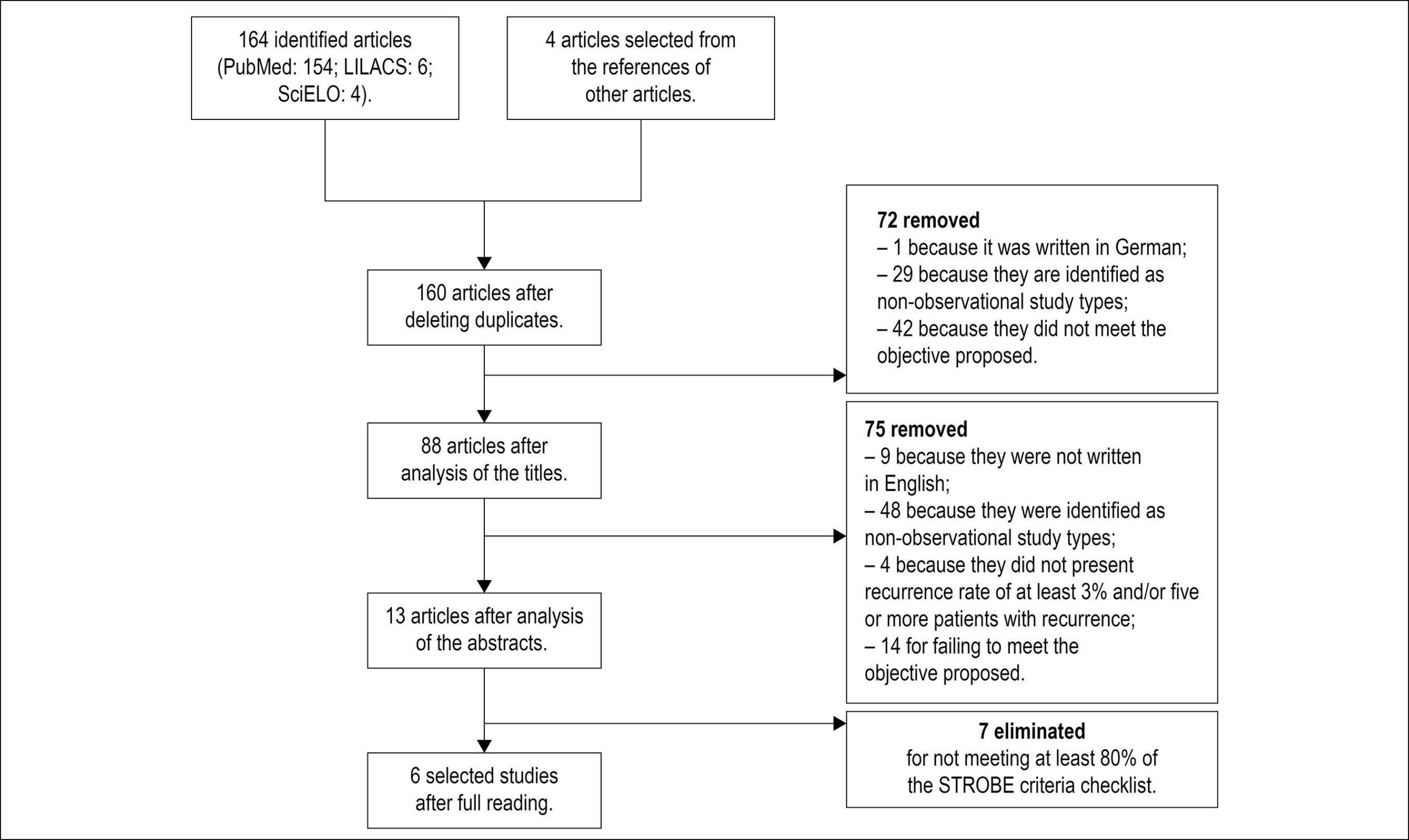
Factors Associated with Recurrence in Takotsubo Syndrome: A Systematic Review

Felipe Alverenga Duarte Campos et al. Luiz Eduardo Fonteles Ritt João Paulo Soares Costa Constança Margarida Cruz … Gilson Soares Feitosa-Filho Queila Borges de Oliveira Eduardo Sahade Darzé

Abstract

Background:

Takotsubo syndrome (TTS) is characterized by a temporary systolic dysfunction of the left ventricle (LV) related to a stressful event. However, the factors associated with its recurrence are still not well established.

Objective:

To analyze the main factors associated with TTS recurrence.

Methods:

A systematic review was performed using the PRISMA model. Observational studies, published between January 2008 and October 2017, which presented a recurrence rate of at least 3% and/or 5 or more patients with recurrence, and who met at least 80% of the STROBE criteria were included.

Results:

six articles reached the criteria to compose this systematic review. The recurrence rate ranged from 1 to 3.5% per year (global recurrence rate 3.8%). One study associated higher recurrence rate with the female gender, four reported the time between the first and second episodes, one study associated body mass index (BMI) and hypercontractility of the LV middle anterior wall to a higher recurrence rate. No association between recurrence and electrocardiographic changes were determined. Beta-blockers use was not associated with recurrence rates.

Conclusions:

Female gender, time from the first episode of the syndrome, low BMI and midventricular obstruction were reported as potential predictors of TTS recurrence.

  • Recurrence
  • Takotsubo Cardiomyopathy
  • Takotsubo syndrome
Read Full Article
Creative Commons Attribution (CC BY) Creative Commons license
07/02/2020 DOI: 10.36660/abc.20180377
Dobutamine stress echocardiography-induced broken heart syndrome (Takotsubo Syndrome)
ABC
Case Report

Dobutamine stress echocardiography-induced broken heart syndrome (Takotsubo Syndrome)

Francisco Juarez Cruz de Vasconcelos Filho et al. Cezario Antonio Martins Gomes Oscar Aires de Queiroz José Erirtonio Façanha Barreto

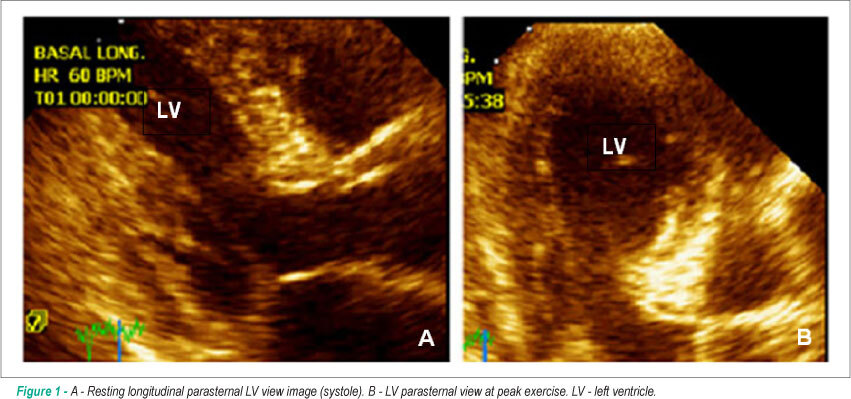
We report a case of dobutamine stress echocardiography-induced Takotsubo syndrome in a 76-year-old hypertensive patient with clinical complaints of chest pain in an elective visit to the cardiologist. Dobutamine-stress-echocardiography was requested to rule out chest pain of coronary origin. During the test, at peak exercise, echocardiogram showed apical akinesia and electrocardiogram showed ST-segment elevation in D1, AVL, and V2. The patient was hospitalized and underwent coronary angiography, which showed normal coronary arteries and left ventricular apical ballooning. During follow-up, the patient’s condition remained stable, with regression of the manifestations 21 days after the initial presentation.

  • Dobutamine
  • Echocardiography, Stress
  • Takotsubo syndrome
Read Full Article
Creative Commons Attribution (CC BY) Creative Commons license
13/10/2009 DOI: 10.1590/S0066-782X2009000700014
Broken-heart syndrome (Takotsubo syndrome)
ABC
Case Report

Broken-heart syndrome (Takotsubo syndrome)

Alessandra Edna Teófilo Lemos et al. Antonio Luiz Junior Araújo Michely Teófilo Lemos Lucia de Souza Belém … Francisco Juarez C. Vasconcelos Filho Raimundo Barbosa Barros

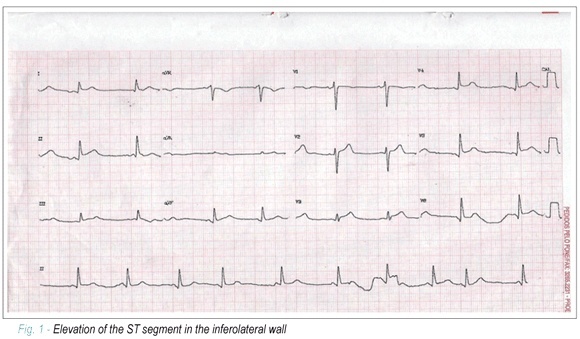
Stress-induced cardiomyopathy, also know as reversible left ventricular apical ballooning, ” Broken-Heart” syndrome, and in Japan, Takotsubo, is characterized by the presence of a transient left ventricular dyskinetic movement of the anterior wall of with hypercontraction of the ventricular basilar segments precipitated by emotional stress. The clinical course of Takotsubo cardiomyopathy is similar to that of an acute myocardial infarct with typical chest pain and electrocardiographic changes, and during the acute phase, coronary angiography is used to distinguish between the two conditions.

  • Heart Diseases
  • Stress, Psychological
  • Takotsubo syndrome
Read Full Article
Creative Commons Attribution (CC BY) Creative Commons license
22/02/2008 DOI: 10.1590/S0066-782X2008000100011 Views 2
A rare association of systemic lupus erythematosus, morbid obesity and Takotsubo Syndrome
ABC
Case Report

A rare association of systemic lupus erythematosus, morbid obesity and Takotsubo Syndrome

João Gaspar Corrêa Meyer Neto et al. Claudio Buarque Benchimol Guilherme Loures Penna Luiz Antônio Ferreira Carvalho Maria Carolina Pessoa

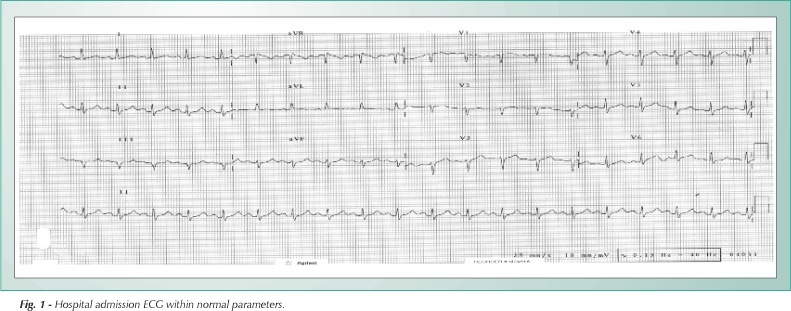
The authors report a 68-year-old white female with long-term systemic lupus erythematosus as well as morbid obesity, characterized by very elevated body mass index, who presented a classical picture of acute coronary failure ascribed to Takotsubo syndrome.

  • cardiopatithy obesity
  • Systemic Lupus Erythematosus
  • Takotsubo syndrome
Read Full Article
Creative Commons Attribution (CC BY) Creative Commons license
21/11/2006 DOI: 10.1590/S0066-782X2006001700028

How to cite this article

EndNote RIS

Electronic Document Format (Vancouver)

Abrantes A, Gregório C, Raposo M, Cunha N, Brito D, Pinto FJ. Takotsubo Syndrome, Complete Heart Block, and Cardiac Arrest: A Clinical Challenge. Arquivos Brasileiros de Cardiologia 2026;122(11):e20250245.

Electronic Document Format (ABNT)

Abrantes, Ana; Gregório, Catarina; Raposo, Miguel; Cunha, Nelson; Brito, Dulce; Pinto, Fausto J.. Takotsubo Syndrome, Complete Heart Block, and Cardiac Arrest: A Clinical Challenge. Arquivos Brasileiros de Cardiologia, v. 122, n. 11, e20250245, Jan. 2026.

Electronic Document Format (APA)

Abrantes, A., Gregório, C., Raposo, M., Cunha, N., Brito, D., & Pinto, F. J. (2026). Takotsubo Syndrome, Complete Heart Block, and Cardiac Arrest: A Clinical Challenge. Arquivos Brasileiros de Cardiologia, 122(11), e20250245.

Electronic Document Format (ISO)

Abrantes, Ana and Gregório, Catarina and Raposo, Miguel and Cunha, Nelson and Brito, Dulce and Pinto, Fausto J.. Takotsubo Syndrome, Complete Heart Block, and Cardiac Arrest: A Clinical Challenge. Arquivos Brasileiros de Cardiologia [online]. 2026, vol. 122, n. 11, [cited 2026-10-14], e20250245. Available from: <https://journals.cardiol.br/en/article/takotsubo-syndrome-complete-heart-block-and-cardiac-arrest-a-clinical-challenge/>. ISSN 0066-782X

EndNote RIS

Electronic Document Format (Vancouver)

Yalta K, Kaya C. Recurrent Takotsubo Cardiomyopathy: A Puzzle Yet to be Solved. Arquivos Brasileiros de Cardiologia 2020;115(3):590-1.

Electronic Document Format (ABNT)

Yalta, Kenan; Kaya, Caglar. Recurrent Takotsubo Cardiomyopathy: A Puzzle Yet to be Solved. Arquivos Brasileiros de Cardiologia, v. 115, n. 3, p. 590-591, Sep. 2020.

Electronic Document Format (APA)

Yalta, K., & Kaya, C. (2020). Recurrent Takotsubo Cardiomyopathy: A Puzzle Yet to be Solved. Arquivos Brasileiros de Cardiologia, 115(3), 590-591.

Electronic Document Format (ISO)

Yalta, Kenan and Kaya, Caglar. Recurrent Takotsubo Cardiomyopathy: A Puzzle Yet to be Solved. Arquivos Brasileiros de Cardiologia [online]. 2020, vol. 115, n. 3, [cited 2026-10-14], pp. 590-591. Available from: <https://journals.cardiol.br/en/article/recurrent-takotsubo-cardiomyopathy-a-puzzle-yet-to-be-solved/>. ISSN 0066-782X

EndNote RIS

Electronic Document Format (Vancouver)

Figueiredo Neto JA, Marcondes-Braga FG, Moura LZ, Figueiredo AMS, Figueiredo VMS, Mourilhe-Rocha R, Mesquita ET, et al. Coronavirus Disease 2019 and the Myocardium. Arquivos Brasileiros de Cardiologia 2020;114(6):1051-7.

Electronic Document Format (ABNT)

Figueiredo Neto, José Albuquerque de; Marcondes-Braga, Fabiana G.; Moura, Lidia Zytinski; Figueiredo, André Melo e Silva de; Figueiredo, Viviane Melo e Silva de; Mourilhe-Rocha, Ricardo; Mesquita, Evandro Tinoco. Coronavirus Disease 2019 and the Myocardium. Arquivos Brasileiros de Cardiologia, v. 114, n. 6, p. 1051-1057, Jul. 2020.

Electronic Document Format (APA)

Figueiredo Neto, J. A. , Marcondes-Braga, F. G., Moura, L. Z., Figueiredo, A. M. S. , Figueiredo, V. M. S. , Mourilhe-Rocha, R., & Mesquita, E. T. (2020). Coronavirus Disease 2019 and the Myocardium. Arquivos Brasileiros de Cardiologia, 114(6), 1051-1057.

Electronic Document Format (ISO)

Figueiredo Neto, José Albuquerque de and Marcondes-Braga, Fabiana G. and Moura, Lidia Zytinski and Figueiredo, André Melo e Silva de and Figueiredo, Viviane Melo e Silva de and Mourilhe-Rocha, Ricardo and Mesquita, Evandro Tinoco. Coronavirus Disease 2019 and the Myocardium. Arquivos Brasileiros de Cardiologia [online]. 2020, vol. 114, n. 6, [cited 2026-10-14], pp. 1051-1057. Available from: <https://journals.cardiol.br/en/article/coronavirus-disease-2019-and-the-myocardium/>. ISSN 0066-782X

EndNote RIS

Electronic Document Format (Vancouver)

Campos FAD, Ritt LEF, Costa JPS, Cruz CM, Feitosa-Filho GS, Oliveira QB, Darzé ES, et al. Factors Associated with Recurrence in Takotsubo Syndrome: A Systematic Review. Arquivos Brasileiros de Cardiologia 2020;114(3):477-83.

Electronic Document Format (ABNT)

Campos, Felipe Alverenga Duarte; Ritt, Luiz Eduardo Fonteles; Costa, João Paulo Soares; Cruz, Constança Margarida; Feitosa-Filho, Gilson Soares; Oliveira, Queila Borges de; Darzé, Eduardo Sahade. Factors Associated with Recurrence in Takotsubo Syndrome: A Systematic Review. Arquivos Brasileiros de Cardiologia, v. 114, n. 3, p. 477-483, Feb. 2020.

Electronic Document Format (APA)

Campos, F. A. D., Ritt, L. E. F., Costa, J. P. S., Cruz, C. M., Feitosa-Filho, G. S., Oliveira, Q. B. , & Darzé, E. S. (2020). Factors Associated with Recurrence in Takotsubo Syndrome: A Systematic Review. Arquivos Brasileiros de Cardiologia, 114(3), 477-483.

Electronic Document Format (ISO)

Campos, Felipe Alverenga Duarte and Ritt, Luiz Eduardo Fonteles and Costa, João Paulo Soares and Cruz, Constança Margarida and Feitosa-Filho, Gilson Soares and Oliveira, Queila Borges de and Darzé, Eduardo Sahade. Factors Associated with Recurrence in Takotsubo Syndrome: A Systematic Review. Arquivos Brasileiros de Cardiologia [online]. 2020, vol. 114, n. 3, [cited 2026-10-14], pp. 477-483. Available from: <https://journals.cardiol.br/en/article/factors-associated-with-recurrence-in-takotsubo-syndrome-a-systematic-review/>. ISSN 0066-782X

EndNote RIS

Electronic Document Format (Vancouver)

Vasconcelos Filho FJC, Gomes CAM, Queiroz OA, Barreto JEF. Dobutamine stress echocardiography-induced broken heart syndrome (Takotsubo Syndrome). Arquivos Brasileiros de Cardiologia 2009;93(1):e5-7.

Electronic Document Format (ABNT)

Vasconcelos Filho, Francisco Juarez Cruz de; Gomes, Cezario Antonio Martins; Queiroz, Oscar Aires de; Barreto, José Erirtonio Façanha. Dobutamine stress echocardiography-induced broken heart syndrome (Takotsubo Syndrome). Arquivos Brasileiros de Cardiologia, v. 93, n. 1, p. e5-e7, Oct. 2009.

Electronic Document Format (APA)

Vasconcelos Filho, F. J. C. , Gomes, C. A. M., Queiroz, O. A. , & Barreto, J. E. F. (2009). Dobutamine stress echocardiography-induced broken heart syndrome (Takotsubo Syndrome). Arquivos Brasileiros de Cardiologia, 93(1), e5-e7.

Electronic Document Format (ISO)

Vasconcelos Filho, Francisco Juarez Cruz de and Gomes, Cezario Antonio Martins and Queiroz, Oscar Aires de and Barreto, José Erirtonio Façanha. Dobutamine stress echocardiography-induced broken heart syndrome (Takotsubo Syndrome). Arquivos Brasileiros de Cardiologia [online]. 2009, vol. 93, n. 1, [cited 2026-10-14], pp. e5-e7. Available from: <https://journals.cardiol.br/en/article/dobutamine-stress-echocardiography-induced-broken-heart-syndrome-takotsubo-syndrome/>. ISSN 0066-782X

EndNote RIS

Electronic Document Format (Vancouver)

Lemos AET, Araújo ALJ, Lemos MT, Belém LS, Vasconcelos Filho FJC, Barros RB. Broken-heart syndrome (Takotsubo syndrome). Arquivos Brasileiros de Cardiologia 2008;90(1):e1-3.

Electronic Document Format (ABNT)

Lemos, Alessandra Edna Teófilo; Araújo, Antonio Luiz Junior; Lemos, Michely Teófilo; Belém, Lucia de Souza; Vasconcelos Filho, Francisco Juarez C.; Barros, Raimundo Barbosa. Broken-heart syndrome (Takotsubo syndrome). Arquivos Brasileiros de Cardiologia, v. 90, n. 1, p. e1-e3, Feb. 2008.

Electronic Document Format (APA)

Lemos, A. E. T., Araújo, A. L. J., Lemos, M. T., Belém, L. S., Vasconcelos Filho, F. J. C., & Barros, R. B. (2008). Broken-heart syndrome (Takotsubo syndrome). Arquivos Brasileiros de Cardiologia, 90(1), e1-e3.

Electronic Document Format (ISO)

Lemos, Alessandra Edna Teófilo and Araújo, Antonio Luiz Junior and Lemos, Michely Teófilo and Belém, Lucia de Souza and Vasconcelos Filho, Francisco Juarez C. and Barros, Raimundo Barbosa. Broken-heart syndrome (Takotsubo syndrome). Arquivos Brasileiros de Cardiologia [online]. 2008, vol. 90, n. 1, [cited 2026-10-14], pp. e1-e3. Available from: <https://journals.cardiol.br/en/article/broken-heart-syndrome-takotsubo-syndrome/>. ISSN 0066-782X

EndNote RIS

Electronic Document Format (Vancouver)

Meyer Neto JGC, Benchimol CB, Penna GL, Carvalho LAF, Pessoa MC. A rare association of systemic lupus erythematosus, morbid obesity and Takotsubo Syndrome. Arquivos Brasileiros de Cardiologia 2006;87(4):e116-21.

Electronic Document Format (ABNT)

Meyer Neto, João Gaspar Corrêa; Benchimol, Claudio Buarque; Penna, Guilherme Loures; Carvalho, Luiz Antônio Ferreira; Pessoa, Maria Carolina. A rare association of systemic lupus erythematosus, morbid obesity and Takotsubo Syndrome. Arquivos Brasileiros de Cardiologia, v. 87, n. 4, p. e116-e121, Nov. 2006.

Electronic Document Format (APA)

Meyer Neto, J. G. C., Benchimol, C. B., Penna, G. L., Carvalho, L. A. F., & Pessoa, M. C. (2006). A rare association of systemic lupus erythematosus, morbid obesity and Takotsubo Syndrome. Arquivos Brasileiros de Cardiologia, 87(4), e116-e121.

Electronic Document Format (ISO)

Meyer Neto, João Gaspar Corrêa and Benchimol, Claudio Buarque and Penna, Guilherme Loures and Carvalho, Luiz Antônio Ferreira and Pessoa, Maria Carolina. A rare association of systemic lupus erythematosus, morbid obesity and Takotsubo Syndrome. Arquivos Brasileiros de Cardiologia [online]. 2006, vol. 87, n. 4, [cited 2026-10-14], pp. e116-e121. Available from: <https://journals.cardiol.br/en/article/a-rare-association-of-systemic-lupus-erythematosus-morbid-obesity-and-takotsubo-syndrome/>. ISSN 0066-782X

  • About ABC Family
  • Internal Regulation
  • Editorial Board
  • Brazilian Society of Cardiology (SBC)

Issues

SBC Guidelines

  • Videos
  • Podcasts
  • News