A Predictive Model for Pulmonary Embolism in Patients with Atrial Fibrillation Based on Thromboelastography and Coagulation Parameters
Abstract
Background
Patients with atrial fibrillation (AF) face an elevated risk of pulmonary embolism (PE), yet existing prediction tools demonstrate limited accuracy.
Objectives
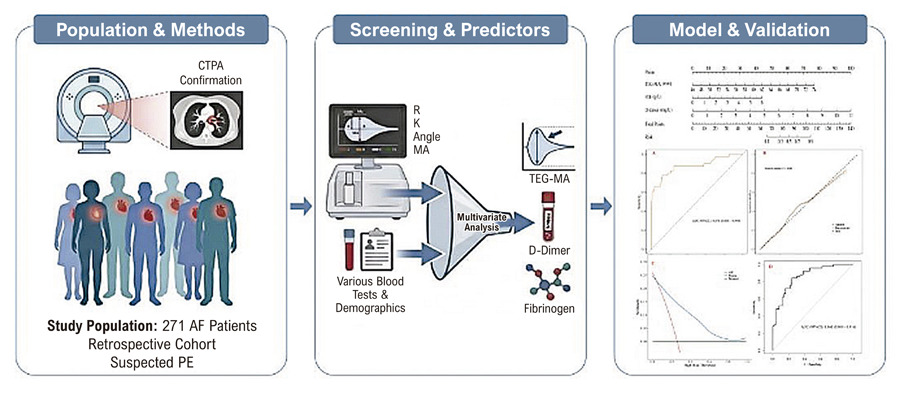
This study aimed to develop and validate a novel predictive model integrating thromboelastography (TEG) parameters with conventional coagulation markers for PE risk assessment in AF patients.
Methods
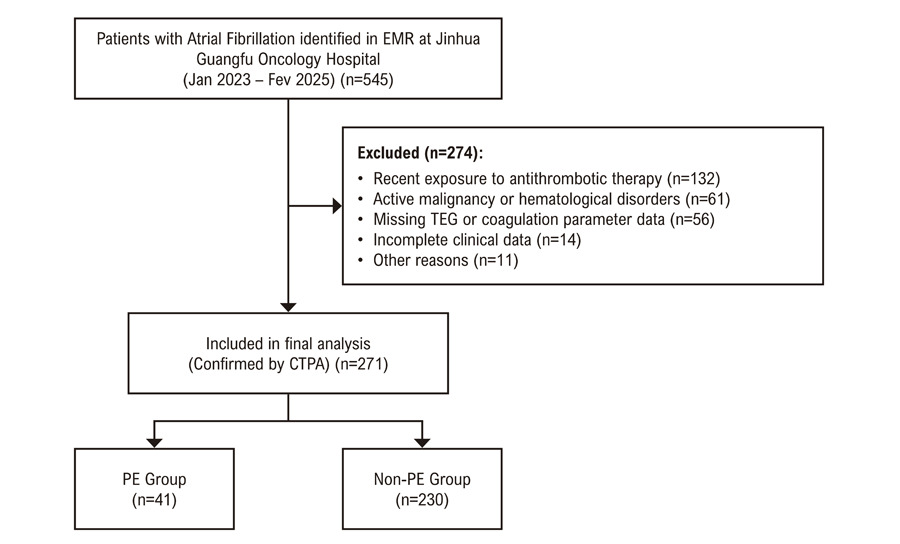
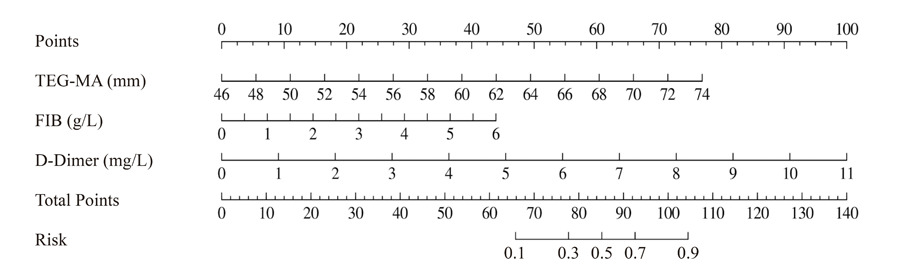
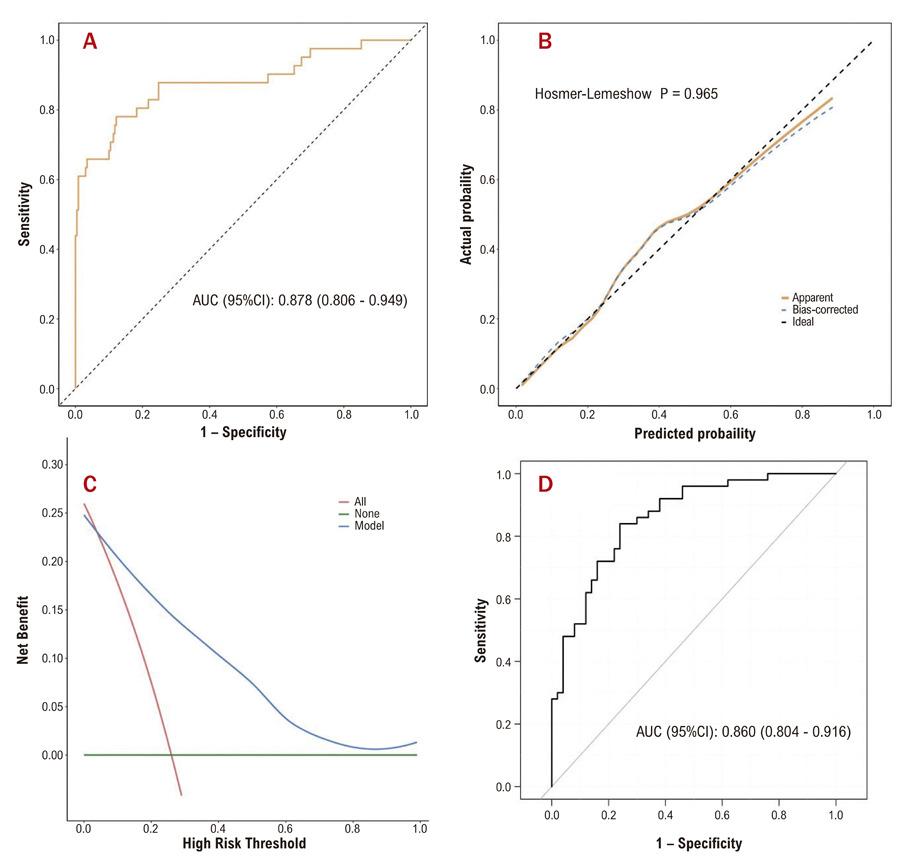
We conducted a retrospective study of 271 hospitalized AF patients who underwent CTPA for suspected PE (41 with PE, 230 without). The mean age was 76.5 years, 56.5% were male, and hypertension was the most common comorbidity (67.5%). PE diagnosis was confirmed by computed tomography pulmonary angiography. Baseline characteristics, TEG parameters (including reaction time, maximum amplitude [MA], and α-angle), and standard coagulation markers (D-dimer, fibrinogen) were analyzed. Statistical significance was defined as a two-sided P-value < 0.05. Multivariate logistic regression identified independent predictors, which were incorporated into a nomogram. Model performance was evaluated using receiver operating characteristic (ROC) analysis, calibration curves, and decision curve analysis (DCA).
Results
The prevalence of PE was 15.1%. Patients with PE exhibited significantly higher TEG-MA, D-dimer, and fibrinogen levels compared to the non-PE group (all P<0.05). Multivariate analysis identified these three markers as independent predictors. The nomogram demonstrated excellent discrimination (AUC=0.878, 95% CI:0.806-0.949), with 87.8% sensitivity and 78.0% specificity at the optimal cutoff. The model showed good calibration (Hosmer-Lemeshow p=0.965) and significant clinical utility.
Conclusion
The TEG-based nomogram combining MA, D-dimer, and fibrinogen provides accurate, bedside-accessible PE risk stratification for AF patients. This tool may facilitate early identification of high-risk individuals and guide clinical decision-making regarding anticoagulation therapy. Further prospective studies are warranted to validate these findings.
Images
Image gallery fullscreen viewer
Comments are moderated by the editorial team before publication. Discussions should be evidence-based and use scientific language. Conflicts of interest should be declared.