| ABC
ABC Family Arquivos Brasileiros de Cardiologia International Journal of Cardiovascular Sciences ABC Heart Failure & Cardiomyopathy ABC Imagem Cardiovascular
Português English
ABC Family | ABC
Português English
  • About
    • About the Journal
    • Internal Regulation
    • Editors Section
    • Editorial Board
    • History
    • SBC Award
  • Instructions to Authors
    • Guidelines for Publication
    • Editorial Policy
    • Ethics Policy
    • Policy on the Use of Artificial Intelligence
    • Mandatory Publication Form
    • Publication Fee
  • Issues
  • SBC Guidelines
  • Abstracts
    • How to Publish an Abstract Supplement?
    • Supplements from the Brazilian Congress of Cardiology
  • About
    • About the Journal
    • Internal Regulation
    • Editors Section
    • Editorial Board
    • History
    • SBC Award
  • Instructions to Authors
    • Guidelines for Publication
    • Editorial Policy
    • Ethics Policy
    • Policy on the Use of Artificial Intelligence
    • Mandatory Publication Form
    • Publication Fee
  • Issues
  • SBC Guidelines
  • Abstracts
    • How to Publish an Abstract Supplement?
    • Supplements from the Brazilian Congress of Cardiology

ABC Family

  • ABC Family
  • Arquivos Brasileiros de Cardiologia
  • International Journal of Cardiovascular Sciences
  • ABC Heart Failure & Cardiomyopathy
  • ABC Imagem Cardiovascular
Search in

No content found.

Journals
Ordering
Article types
Others

  1. Home
  2. ABC
  3. Issues
  4. 2023, Volume 120, Number 6
Editorial

Triglycerides-Glucose İndex and Coronary Slow Flow: A New Diagnostic Tool?

Maria Cristina Costa de Almeida et al. Marildes Luiza de Castro

Cardiovascular disease (CVD) is the primary cause of death and disability worldwide, accounting for the majority of deaths from noncommunicable diseases. Important risk factors such as smoking, diabetes mellitus (DM), hypertension, or dyslipidemia draw more attention from physicians. However, individuals can develop subclinical atherosclerosis even if they do not have traditional cardiovascular risk factors or symptoms since it is a slowly progressive disease, with arteries affected by thickening, stiffness, loss of elasticity, and increased wall fragility to stenosis and lumen occlusion.

Insulin resistance (IR) may be one of the potential mechanisms of the development of CVD, being recognized as an indicator of systemic inflammation and metabolic disorders closely related to atherosclerotic CVD. Moreover, it is considered a high-risk factor for DM and CVD.

[…]

  • Cardiovascular disease
  • Coronary Slow Flow
  • Insulin Resistance
  • Triglyceride-Glucose Index
Read Full Article
Creative Commons Attribution (CC BY) Creative Commons license
04/08/2023 DOI: 10.36660/abc.20230373
Editorial

Could Patients At Low Cardiovascular Risk Be Better Stratified?

Francisco Antonio Helfenstein Fonseca et al. Maria Cristina Izar

In this issue of the Arquivos Brasileiros de Cardiologia , Cesena et al. determined the percentiles distribution of the 10-year Aatherosclerotic cardiovascular disease (ASCVD) risk according to age and gender, in a large Brazilian population, based on the ACC/AHA pooled cohort equations. They excluded patients at high or very high cardiovascular risk (e.g., those with known ASCVD, diabetes, severe hypercholesterolemia, chronic kidney disease, or people with ages outside the range of 40-75 years). The authors found many individuals at low cardiovascular risk but above the 75thpercentile of ASCVD risk for that category. These fascinating findings show the limitations of the current estimation of 10-year cardiovascular risk, mainly among young patients. In fact, the authors present a tool that can be very useful for better awareness of cardiovascular risk, opening the perspective for an early change in lifestyle or for starting pharmacological therapy.

Currently, many patients receive pharmacological therapy or change their lifestyle only at the advanced stage of cardiovascular disease. , At this point, cardiovascular care is much more specialized and expensive, and the quality of life often remains compromised despite great efforts.

[…]

  • Low Cardiovascular Risk
  • Prevention: ASCVD
Read Full Article
Creative Commons Attribution (CC BY) Creative Commons license
17/07/2023 DOI: 10.36660/abc.20230310 Views 2
Research Letter

Mental Health in Cardiologists: A Real Concern

Protásio Lemos da Luz

A recent study has shown that 1 in 4 cardiologists suffer from emotional disturbances, including stress and other psychiatric disorders. Emotional harassment, discrimination, divorce, and age under 55 years were predisposing factors. The international study included 5931 cardiologists interviewed in 2019, covering all continents. Survey respondents represent only 8% of those invited to participate in the survey. The majority were European, White, married, and with children. Individuals at the beginning of their careers were the most affected. Latin America contributed with 17.7% of responses. Men constituted 77.4% of the sample, and women constituted 22.6%. Therefore, it was a select sample that may not represent the entire spectrum of the population of cardiologists. Emotional disturbances were reported by 28% of respondents. There was considerable regional variation, but South America showed the highest rate of psychological disorders, reaching 39.3%; in Asia, the lowest indexes were observed (20.1%). Women were more prone to these disorders, but they also sought psychological help more frequently. This finding corroborates previous research which observed that suicide is more frequent among women doctors than in the general population.

Other researchers had already documented several emotional disorders among physicians, such as anxiety, depression, suicidal ideation, and suicide. – For example, recent research in the United States has documented that 42% of cardiologists suffer from burnout, and 83% have some degree of depression. COVID-19 has greatly accentuated these problems. The phenomenon is universal and seems to affect women in particular. These findings are a cause of concern, because they influence the performance of physicians and, therefore, have a direct impact on medical practice.

[…]

  • Cognitive Behavioral Therapy
  • Mental Disorders
  • Mental Health
  • Physician-Patient Relations
  • Suicide
Read Full Article
Creative Commons Attribution (CC BY) Creative Commons license
17/07/2023 DOI: 10.36660/abc.20230028 Views 1
Letter to the Editor

Mechanical Valve Implants: What Are Their Long-Term Effects?

Eldys Myler Santos Marinho et al. Júlio Martinez Martinez Santos Bruno da Silva Brito Achilles de Souza Andrade Johnnatas Mikael Lopes

Surgical procedures for replacing body structures through prostheses are perhaps the medical interventions that require great expertise and continuous monitoring, prolonging the lives and health of countless people. This was a theme of the research entitled “ Clinical Features and Survival Analysis of Patients after Mechanical Heart Valve Replacement, with an Emphasis on Prosthetic Valve Thrombosis ” by Tagliari et al. published in volume 119, number 5 of this journal.

Among the various contributions the study brings us, some findings need further clarification so mechanical valve implant interventions can be useful clinically and in public health.

[…]

  • Death
  • Embolism
  • Heart Valve Prosthesis Implantation
  • Survival Analysis
  • Thrombosis
Read Full Article
Creative Commons Attribution (CC BY) Creative Commons license
17/07/2023 DOI: 10.36660/abc.20220875 Views 1
Central Illustration
Review Article

Carcinoid Heart Disease: A Case Report and Literature Review

Isabela Bispo Santos da Silva Costa et al. Edielle de Sant`Anna Melo Armando Furtado Juliana Barbosa Sobral-Alves … Stephanie Itala Rizk Luiz Alberto Benvenuti Carlos E. Rochitte Carlos Manuel de Almeida Brandão Pablo Maria Pomarentzeff Cristina Salvadori Bittar Filomena Regina Barbosa Gomes Galas José Otavio Costa Auler Junior Paulo Marcelo Gehm Hoff Roberto Kalil Filho Fabio Biscegli Jatene Ludhmila Abrahão Hajjar

Introduction

Carcinoid syndrome (CS) is a paraneoplastic syndrome frequently diagnosed in patients with neuroendocrine tumors (NETs) associated with the secretion of humoral factors. These factors include serotonin (5-HT), which appears to be the most common substance associated with the syndrome, as well as histamine, kallikrein, prostaglandins, and tachykinins. Among patients diagnosed with NETs located in the duodenum and small intestine, approximately 20% will develop CS during follow-up. The presence of CS is strongly associated with a higher tumor grade and stage and is associated with shorter survival than in patients without CS.

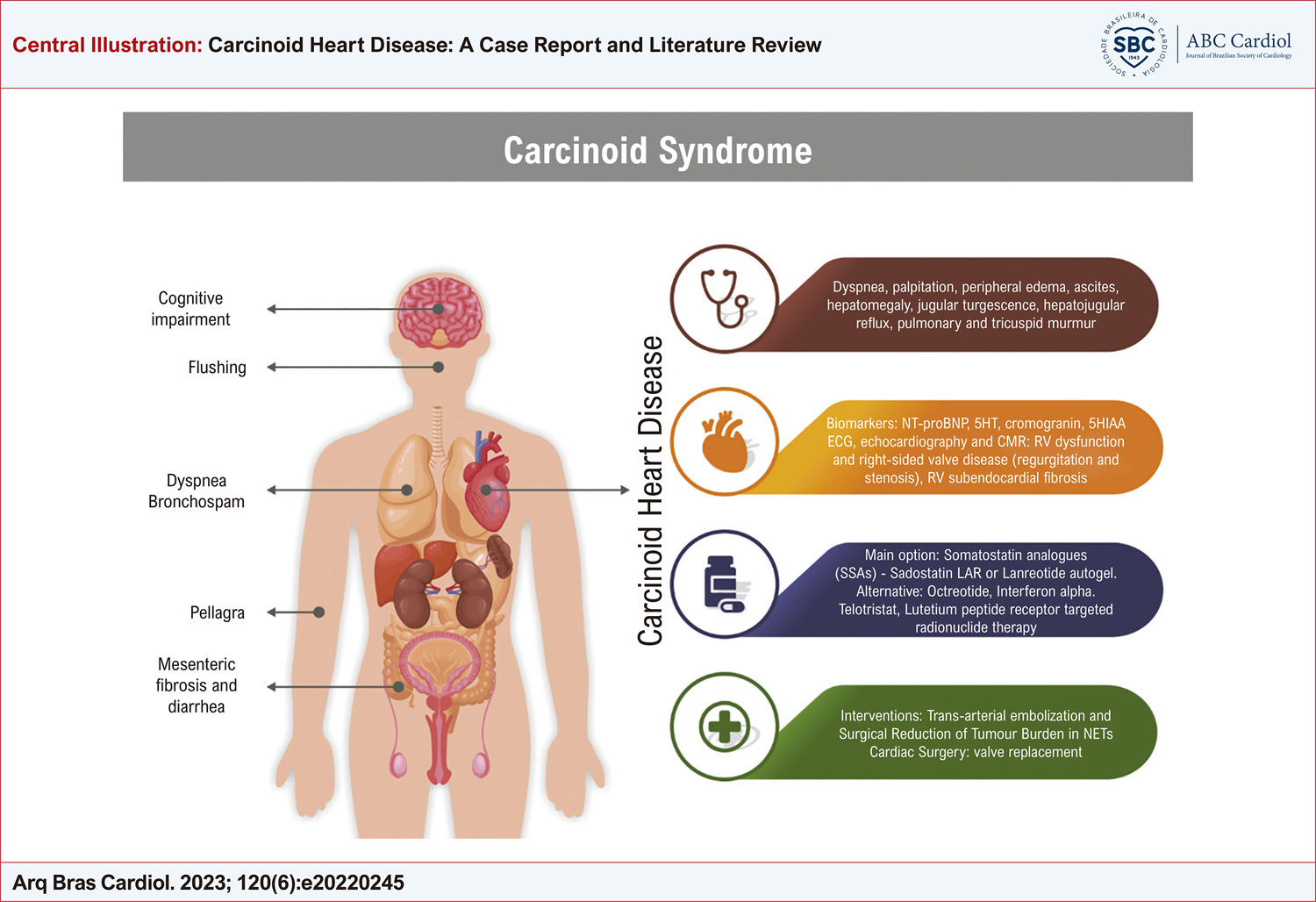
Symptoms and signs related to CS are flushing, diarrhea, abdominal pain, bronchospasm, pellagra, carcinoid heart disease (CHD) and mesenteric fibrosis. CHD is characterized by the involvement of the right-sided heart valves (mostly tricuspid and pulmonary regurgitation), leading to right ventricular (RV) dilatation and dysfunction. Heart disease is usually found in patients with a high burden of disease, notably patients with metastatic tumors. The presence of CHD is associated with a worse prognosis and high mortality rates. , The most common findings of CS are described in the .

[…]

  • Carcinoid Heart Disease
  • Malignant Carcinoid Syndrome
  • Neuroendocrine Tumors
Read Full Article
Creative Commons Attribution (CC BY) Creative Commons license
17/07/2023 DOI: 10.36660/abc.20220245 Views 2
Editorial

Is it Time to Revisit Fractional Flow Reserve Thresholds?

Fernando Mendes Sant’Anna et al. Lucas Bonacossa Sant’Anna Sérgio Lívio Menezes Couceiro

Intracoronary physiological assessment is established as a valuable strategy to identify flow-limiting epicardial stenoses in patients with coronary artery disease (CAD) and to determine an indication for percutaneous coronary interventions (PCI).

It had been previously assumed that once the flow-limiting disease was confirmed with a pressure guidewire measurement, PCI guided by angiography should lead to effective restoration of vessel conductance. However, studies with physiological post-PCI evaluation based on fractional flow reserve (FFR) and non-hyperemic pressure ratios (NHPR) demonstrate that this supposition is not correct and that relying on angiographic guidance alone can be associated with suboptimal functional results post-PCI in many cases. , Moreover, it is well known that post-PCI FFR is a strong predictor of outcomes, and the lower the post-stent FFR, the worse the clinical follow-up.

[…]

  • Constriction Pathoçogic
  • Coronary Artery Disease, Percutaneous Coronary Intervention
  • Drug-Eluting Stents
  • Fractional Flow Reserve, Myocardial
  • Pericardium
Read Full Article
Creative Commons Attribution (CC BY) Creative Commons license
17/07/2023 DOI: 10.36660/abc.20230363
Figure 1
Original Article

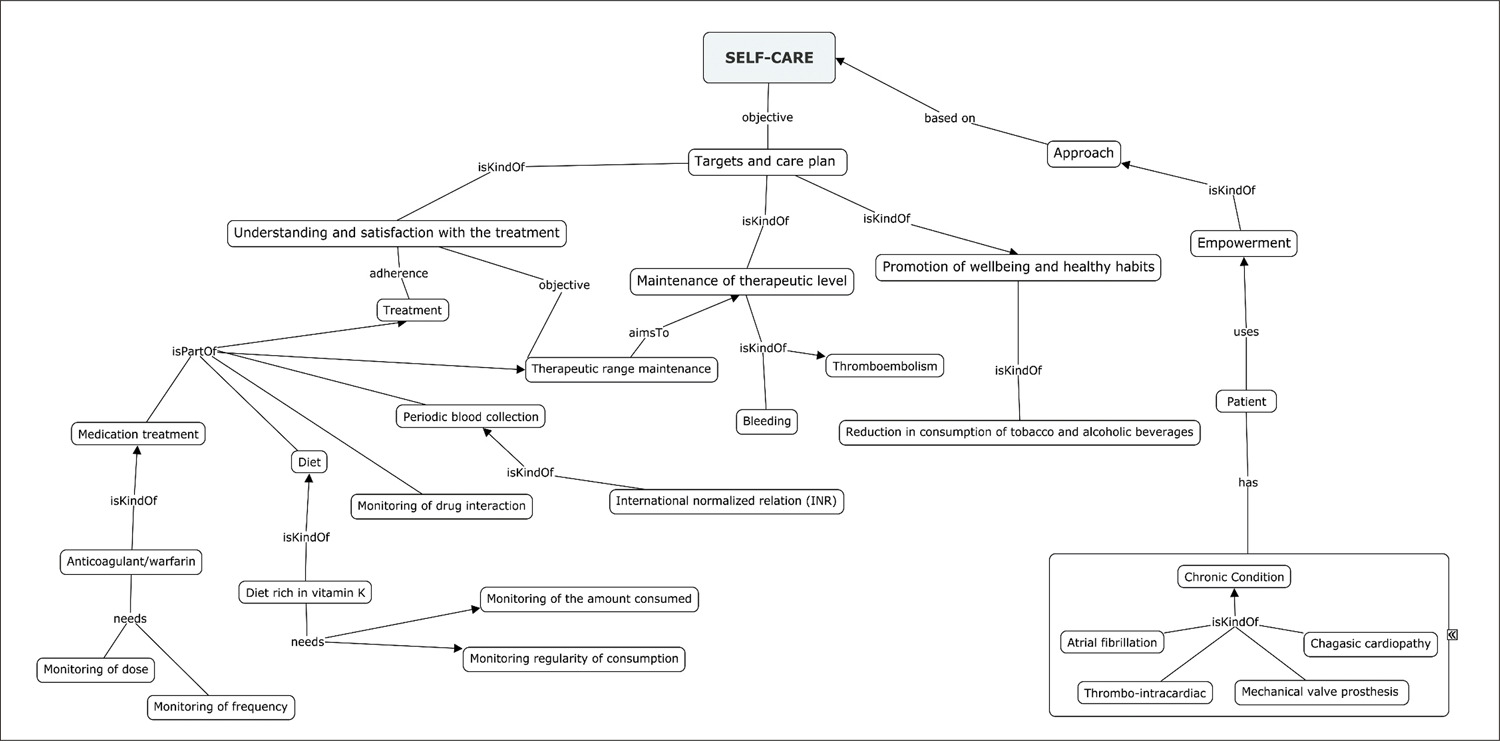
Construction and Validation of a Protocol Targeting Patients on Oral Anticoagulation with Warfarin

Hannah Cardoso Barbosa et al. Heloisa de Carvalho Torres João Antônio de Queiroz Oliveira Rebeca Priscila de Melo Santos … Josiane Moreira da Costa Leonardo Gonçalves Miranda Adriana Silvina Pagano Marcus Fernando da Silva Praxedes Maria Auxiliadora Parreiras Martins

Abstract

Background

Warfarin is an oral anticoagulant that is very useful in preventing thromboembolism, though it is considered a drug with a high risk of causing adverse events. Considering the practical challenges in controlling oral anticoagulation, the patients on warfarin could benefit from educational strategies aimed at behavioral changes, active participation in self-care, and adherence to drug therapy.

Objective

The aim was to construct and validate the EmpoderACO protocol for behavioral changes in warfarin patients.

Methods

The methodological steps were: definition of concepts and domains of self-care, identification of objectives, construction and selection of items, assessment of content validity, and pre-test in the target population.

Results

Relevance, adequacy, clarity, and internal reliability of the instrument’s items were assessed by a multidisciplinary judges committee (JC) through the E-surv web platform, obtaining an average agreement of ≥0.91. The understanding of the instrument measured by the target population revealed adequate clarity with a coefficient average of 0.96.

Conclusion

EmpoderACO can aid in qualifying the communication process between medical professionals and patients, as well as in improving adherence to both treatment and clinical outcomes, and can be replicated in healthcare settings.

  • Anticoagulants
  • Health Behavior
  • Health Education
  • Warfarin
Read Full Article
Creative Commons Attribution (CC BY) Creative Commons license
30/06/2023 DOI: 10.36660/abc.20220576 Views 1
Editorial

Use of Warfarin in Oral Anticoagulation Therapy: Challenges and EmpoderACO Strategy for Promoting Patient Empowerment in Self-Care

Carina Carvalho Silvestre et al. Sabrina Cerqueira-Santos

Warfarin is an oral anticoagulant widely used for primary and secondary prevention of thromboembolism that belongs to the class of vitamin K antagonists., In Brazil, warfarin is still the main oral anticoagulant distributed free of charge by the Unified Health System. According to the Institute for Safe Practices in the Use of Medicines (ISMP – Brazil), warfarin is classified as a high-alert or potentially dangerous drug since it has a low therapeutic index and its use requires constant attention for the drug to act in the prevention of thromboembolic events without increasing the risk of hemorrhages., Furthermore, it appears as one of the drugs that should be the target of priority actions for the prevention of damage, according to the Third Global Patient Safety Challenge of the World Health Organization Health.

Management of anticoagulant therapy with warfarin is a challenge for many patients. It requires procedures that are considered complex, such as the regular measurement of the international normalized ratio (INR), the interpretation of the results to adjust the drug dose by the responsible team, as well as the adequate understanding of the factors that may influence its effectiveness and safety, such as adverse reactions and interactions with other drugs and foods., Thus, strategies are needed to help in the proper and safe use of the medication and contribute to understanding its use process and consequent adherence to treatment.

[…]

  • Anticoagulants
  • Empowerment for Health
  • Health Behavior
  • Health Education
  • Warfarin
Read Full Article
Creative Commons Attribution (CC BY) Creative Commons license
30/06/2023 DOI: 10.36660/abc.20230335 Views 1
Editorial

Scaffolds for Use in Blood Vessel Bioengineering: What are the Prospects?

Leonardo Rufino Garcia et al. André Monti Garzesi Flávio de Souza Brito Marcello Laneza Felicio Matheus Bertanha

Cardiovascular diseases are currently the main causes of morbidity and mortality in Brazil and worldwide., Its treatment is multimodal and has as one of its targets the fight against the progression of its major pathophysiological substrate, atherosclerosis. Lifestyle changes, prescription and use of antiplatelet agents, anticoagulants, and hypolipidemic agents, treatment of comorbidities such as systemic arterial hypertension and diabetes mellitus, and even revascularization of target organs lato sensu are important in controlling its clinical evolution.

However, many patients still have an unfavorable evolution of atherosclerosis with only clinical management and become candidates for revascularization procedures. Thus, the availability of vascular substitutes for use as grafts is essential, which can be autologous or synthetic (artificial). In turn, endovascular techniques with stents can be used to treat stenoses or occlusions according to specific clinical indications.

[…]

  • Biocompatible Materials
  • Blood Vessels
  • Cardiovascular Diseases
  • Cell Nucleous (Scaffold
  • Mortality
  • Stem Cells
  • Tissue Engineering, Bioengineering/trends
Read Full Article
Creative Commons Attribution (CC BY) Creative Commons license
30/06/2023 DOI: 10.36660/abc.20230341 Views 1
Editorial

Are We Reaching the End of the Evolutionary Road to Metallic Drug-Eluting Stents? Which 4th Generation Stents Do We Need?

Manuel Sousa Almeida

Stents are the cornerstone of current PCI. It guarantees safety, a predictable acute angiographic upshot, and long-term acceptable clinical outcomes.

Its current accomplishment is, undoubtedly, linked to a successful evolutionary road driven by continuous unmet medical needs endured by device companies eager to gain market shares.

[…]

  • Angioplasty,Transluminal Percutaneous Coronary
  • Coronary Thrombosis
  • Coronary Vessels Anomalies
  • Myocardial Infarction
  • Percutaneous Coronary Intervention/trends
  • Stents/trends
Read Full Article
Creative Commons Attribution (CC BY) Creative Commons license
30/06/2023 DOI: 10.36660/abc.20230302 Views 1
Figure 1
Original Article

Determining Percentiles of Atherosclerotic Cardiovascular Risk According to Sex and Age in a Healthy Brazilian Population

Fernando Yue Cesena et al. Nea Miwa Kashiwagi Carlos Andre Minanni Raul D. Santos

Abstract

Background

Expressing the risk of atherosclerotic cardiovascular disease (ASCVD) as percentiles of the distribution according to sex and age may provide a better perception of the risk.

Objectives

To determine percentiles of the 10-year ASCVD risk distribution according to sex and age in a sample of the Brazilian population; to characterize individuals at low 10-year risk but high risk percentile.

Methods

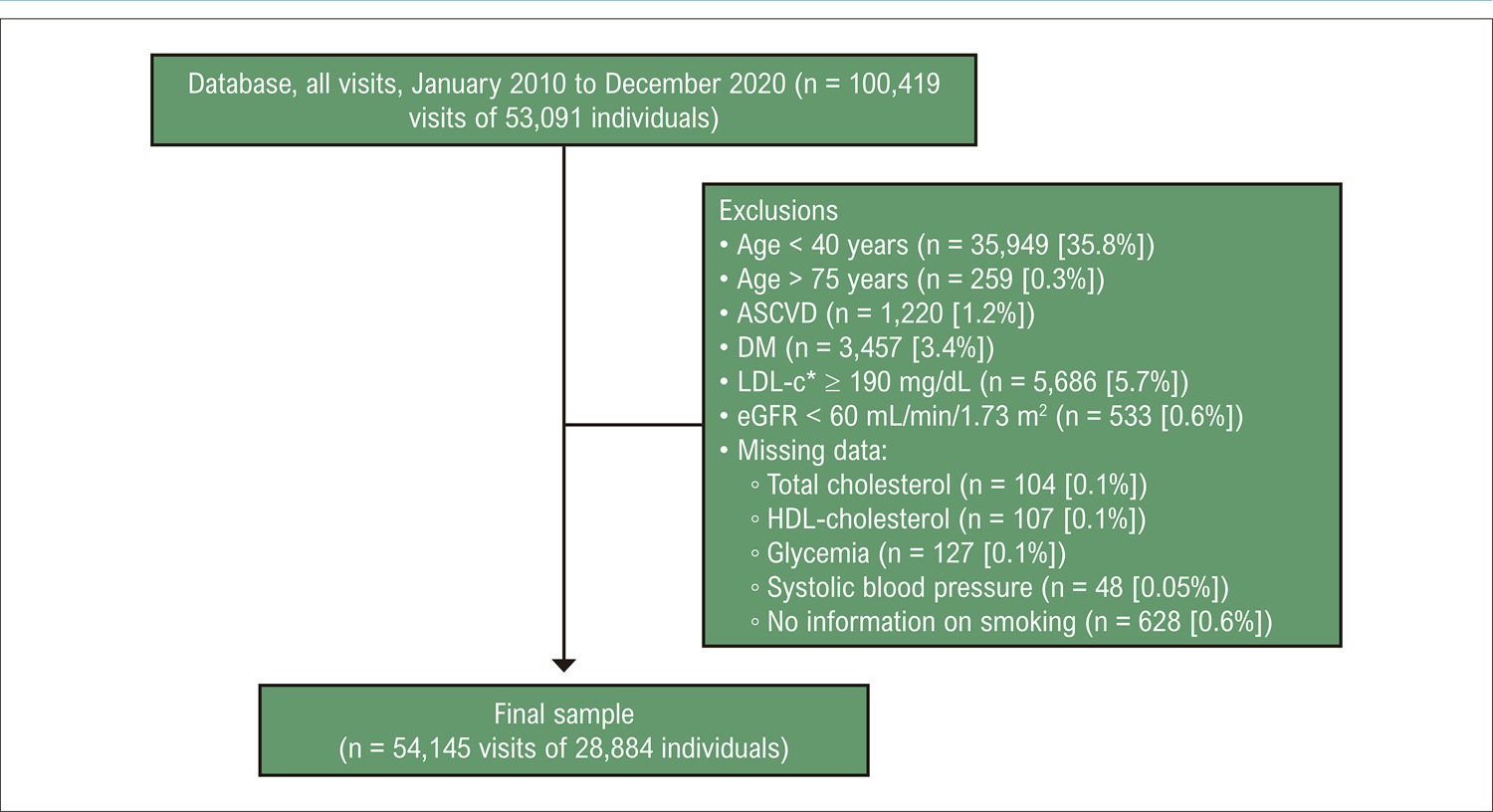
We analyzed individuals aged 40 to 75 years who underwent routine health evaluations from 2010 to 2020. Persons with known clinical ASCVD, diabetes mellitus, chronic kidney disease, or LDL-cholesterol ≥ 190 mg/dL were excluded. The 10-year ASCVD risk was calculated by the ACC/AHA pooled cohort equations. Local polynomial regression was used to determine risk percentiles. Two-sided p-values < 0.050 were considered statistically significant.

Results

Our sample comprised 54,145 visits (72% male, median age [interquartile range] 48 [43, 53] years). We constructed sex-specific graphs plotting age against ASCVD risk corresponding to the 10th, 25th, 50th, 75th, and 90th percentiles. Most males up to 47 years and females up to 59 years above the 75th percentile had a 10-year risk < 5%. Individuals at low 10-year risk and risk percentile ≥ 75th had a high prevalence of excess weight and median (interquartile range) LDL-cholesterol levels 136 (109, 158) mg/dL (males) and 126 (105, 147) mg/dL (females).

Conclusions

We established ASCVD risk percentiles according to sex and age in a large sample of the Brazilian population. This approach may increase risk awareness and help identify younger persons at low 10-year risk who may benefit from more aggressive risk factor control.

  • Cardiovascular Diseases
  • Heart Disease Risk Factors
  • Risk Assessment
Read Full Article
Creative Commons Attribution (CC BY) Creative Commons license
30/06/2023 DOI: 10.36660/abc.20220552 Views 1
Figure 2.1
Diretrizes

SBC Guideline on the Diagnosis and Treatment of Patients with Cardiomyopathy of Chagas Disease – 2023

José Antonio Marin-Neto et al. Anis Rassi Jr Gláucia Maria Moraes Oliveira Luís Claudio Lemos Correia … Alberto Novaes Ramos Júnior Alejandro Ostermayer Luquetti Alejandro Marcel Hasslocher-Moreno Andréa Silvestre de Sousa Angelo Amato Vincenzo de Paola Antônio Carlos Sobral Sousa Antonio Luiz Pinho Ribeiro Dalmo Correia Filho Dilma do Socorro Moraes de Souza Edecio Cunha-Neto Felix Jose Alvarez Ramires Fernando Bacal Maria do Carmo Pereira Nunes Martino Martinelli Filho Maurício Ibrahim Scanavacca Roberto Magalhães Saraiva Wilson Alves de Oliveira Júnior Adalberto Menezes Lorga-Filho Adriana de Jesus Benevides de Almeida Guimarães Adriana Lopes Latado Braga Adriana Sarmento de Oliveira Alvaro Valentim Lima Sarabanda Ana Yecê das Neves Pinto Andre Assis Lopes do Carmo Andre Schmidt Andréa Rodrigues da Costa Barbara Maria Ianni Brivaldo Markman Filho Carlos Eduardo Rochitte Carolina Thé Macêdo Charles Mady Christophe Chevillard Cláudio Marcelo Bittencourt das Virgens Cleudson Nery de Castro Constança Felicia De Paoli de Carvalho Britto Cristiano Pisani Daniela do Carmo Rassi Dário Celestino Sobral Filho Dirceu Rodrigues de Almeida Edimar Alcides Bocchi Evandro Tinoco Mesquita Fernanda de Souza Nogueira Sardinha Mendes Francisca Tatiana Pereira Gondim Gilberto Marcelo Sperandio da Silva Giselle de Lima Peixoto Gustavo Glotz de Lima Henrique Horta Veloso Henrique Turin Moreira Hugo Bellotti Lopes Ibraim Masciarelli Francisco Pinto João Marcos Bemfica Barbosa Ferreira João Paulo Silva Nunes José Augusto Soares Barreto-Filho José Francisco Kerr Saraiva Joseli Lannes-Vieira Joselina Luzia Menezes Oliveira Luciana Vidal Armaganijan Luiz Cláudio Martins Luiz Henrique Conde Sangenis Marco Paulo Tomaz Barbosa Marcos Antonio Almeida-Santos Marcos Vinicius Simões Maria Aparecida Shikanai Yasuda Maria da Consolação Vieira Moreira Maria de Lourdes Higuchi Maria Rita de Cassia Costa Monteiro Mauro Felippe Felix Mediano Mayara Maia Lima Maykon Tavares de Oliveira Minna Moreira Dias Romano Nadjar Nitz Silva Lociks de Araujo Paulo de Tarso Jorge Medeiros Renato Vieira Alves Ricardo Alkmim Teixeira Roberto Coury Pedrosa Roque Aras Junior Rosalia Morais Torres Rui Manoel dos Santos Povoa Sergio Gabriel Rassi Silvia Marinho Martins Alves Suelene Brito do Nascimento Tavares Swamy Lima Palmeira Telêmaco Luiz da Silva Júnior Thiago da Rocha Rodrigues Vagner Madrini Junior Veruska Maia da Costa Brant Walderez Ornelas Dutra João Carlos Pinto Dias

List of Abbreviations

123I-MIBG – iodine-123-metaiodobenzylguanidine

18F-FDG – 18F-fluorodeoxyglucose+

[…]

Read Full Article
Creative Commons Attribution (CC BY) Creative Commons license
26/06/2023 DOI: 10.36660/abc.20230269 Views 3
Editorial

Metabolic and Inflammatory Relationship between Covid-19 and Non-HDL-C

Renato Jorge Alves

The study “Prognostic Value of Non-HDL Cholesterol in COVID-19 Pneumonia” evaluated the predictive value of non-high-density lipoprotein cholesterol (non-HDL-C) in patients with SARS-CoV-2 for mortality in Covid-19 infection. The authors included 1435 patients between January 2020 and June 2022. The results showed that age, CRP, and LDH were positively correlated with non-HDL-C, and the non-surviving group was older. These results corroborate studies’ results demonstrating that several biomarkers could be used as predictive value for prognosis and mortality in Covid-19 disease.

The non-HDL-C represents a total burden of atherogenic lipoproteins, such as LDL-C, VLDL-C, IDL-C, Lp(a), and chylomicron remnant. İt may be used as a predicted risk, even in nonfasting samples when triglycerides increase. On the other hand, COVID-19 infections decrease total cholesterol, LDL-C, HDL-C, and apolipoprotein A-I, A-II, and B levels, while triglyceride levels may be normal or increased. The degree of reduction in total cholesterol, LDL-C, HDL-C, and apolipoprotein A-I could be predictive of mortality. Decreased HDL-C and apolipoprotein A-I levels evaluated before COVID-19 infections would be associated with an increased risk of severe Covid-19 infections, while LDL-C, apolipoprotein B, Lp (a), and triglyceride levels would not be. Covid-19 infections alter lipid and lipoprotein levels, and HDL-C levels may affect the risk of developing Covid-19 infections.

[…]

  • Atherosclerosis
  • Betacoronavirus/physiology
  • COVID-19/metabolism
  • Inflammatory Disease
  • Lipoproteins LDL/metabolism
  • Non-HDL-C
  • Viral, Pneumonia/transmission
Read Full Article
Creative Commons Attribution (CC BY) Creative Commons license
26/06/2023 DOI: 10.36660/abc.20230304 Views 2
Figure 1
Editorial

Improving Meta-analyses

Fernando Mendes Sant’Anna et al. Mariana Bonacossa Sant’Anna Lucas Bonacossa Sant’Anna

The meta-analysis (MA) by Meng-jin et al., published in this issue of the journal, brings important information about the invasive treatment of elderly patients (≥ 75 years old) with acute myocardial infarction without ST-segment elevation (NSTEMI) versus conservative treatment.

Even aware of the benefits of early revascularization in both elderly and young patients, in the first group, the concern with the risks of complications in invasive procedures are known to reduce the number of interventions in this group. On the other hand, with the rapid growth of the elderly population in the world, World Health Organization predicts a significant increase in mortality from coronary artery disease in the coming decades, making it essential to develop effective treatment strategies in elderly patients with NSTEMI.

[…]

  • Aged
  • Conservative Treatment/trends
  • data analysis
  • Meta-Analysis
  • Myocardial Infarction
  • Percutaneous Coronary Intervention
  • Statistics
Read Full Article
Creative Commons Attribution (CC BY) Creative Commons license
26/06/2023 DOI: 10.36660/abc.20230331 Views 1
Figure 1
Image

An Atypical Non-Cardiac Presentation of Hypertrophic Cardiomyopathy

André Alexandre et al. Carla Roque Isabel Sá João Silveira Severo Torres

* Supplemental Materials

For additional information, please .

See the Supplemental Video 1, please .

[…]

  • Heart Aneurysm
  • Hypertrophic Cardiomyopathy
  • Multimodal Imaging
  • Stroke
Read Full Article
Creative Commons Attribution (CC BY) Creative Commons license
26/06/2023 DOI: 10.36660/abc.20220933
Figure 2
Research Letter

[PARTIAL-RETRACTION] MINOCA Phenotypes – A Challenge for Patient-Specific Management

Sofiya Lypovetska

Abstract

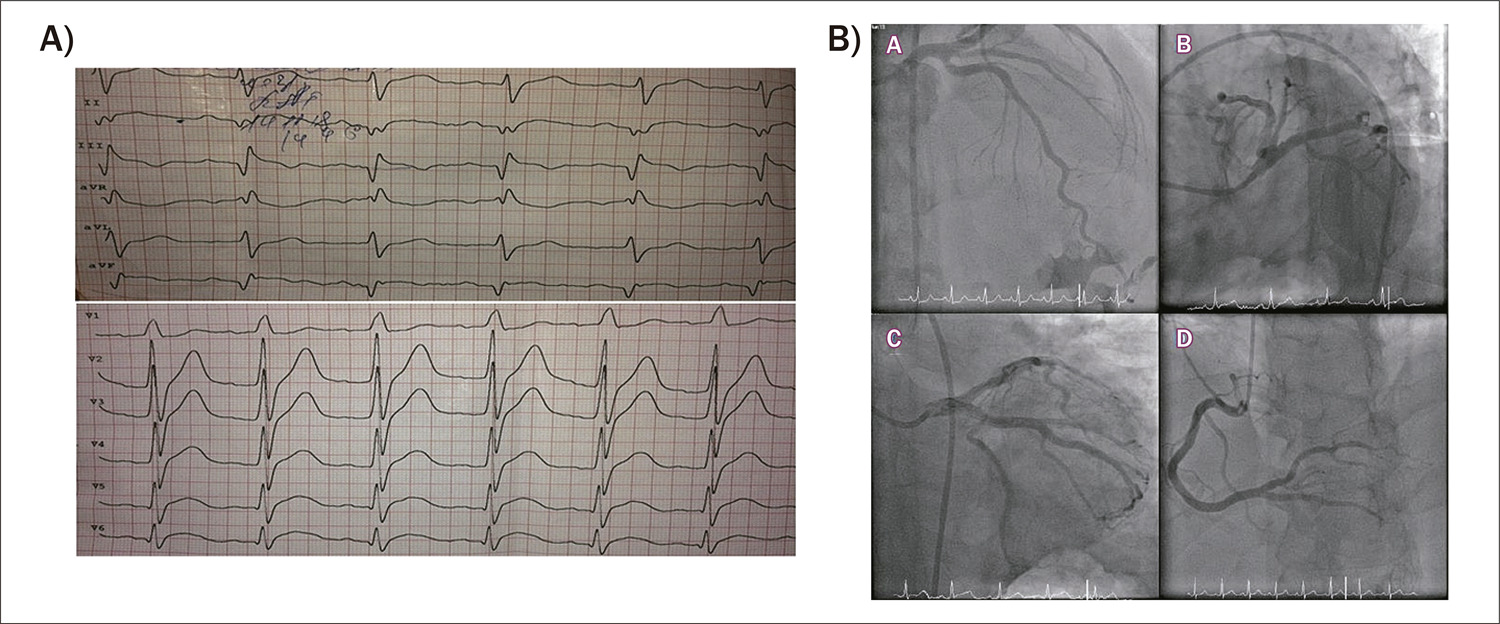
Myocardial infarction with non-obstructive coronary arteries (MINOCA) is a puzzling clinical phenomenon with an unclear prognosis, characterized by evidence of myocardial infarction (MI) with normal or near-normal coronary arteries on angiography1. Currently, there are no guidelines for management, and many patients are discharged without a determined etiology, often meaning that optimal treatment gets postponed.We report three MINOCA case studies with main pathophysiological cardiac causes, particularly epicardial, microvascular, and non-ischemic, prompting differential management. The patients presented with acute chest pain, troponin raise, and no angiographically significant coronary disease.In this study, we analyzed the etiology, clinical diagnosis, and treatment of MINOCA concerning the relevant literature.MINOCA is considered to be a dynamic working diagnosis, including coronary, myocardial, and non-coronary disorders. Prospective studies and registries are needed to improve patient care and outcome.

  • coronary artery
  • Diagnosis Diferential
  • Dilatation, Pathologic
  • Microvascular Spasm
  • MINOCA
  • Phenotype
Read Full Article
Creative Commons Attribution (CC BY) Creative Commons license
19/06/2023 DOI: 10.36660/abc.20220705
Central Illustration
Original Article

Fructose Consumption Alters Biogenic Amines Associated with Cardiovascular Disease Risk Factors

Fabiane Valentini Francisqueti-Ferron et al. Matheus Antônio Filiol Belin Thiago Luiz Novaga Palacio Artur Junio Togneri Ferron … Jéssica Leite Garcia Juliana Silva Siqueira Erika Tiemi Nakandakare-Maia Taynara Aparecida Vieira Hugo Tadashi Kano Fernando Moreto Giuseppina Pace Pereira Lima Camila Renata Corrêa Igor Otavio Minatel

Abstract

Background

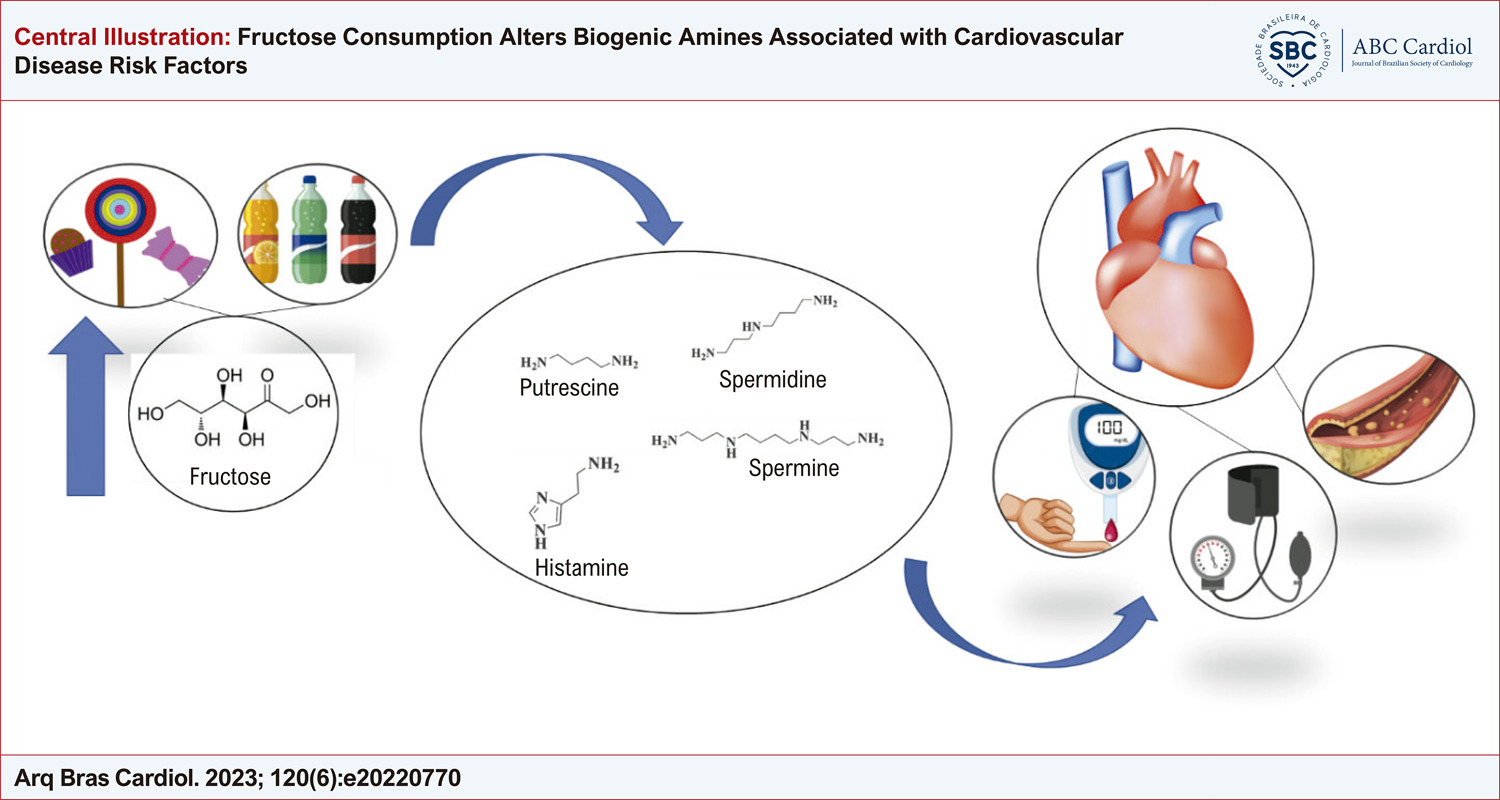
Cardiovascular diseases (CVD) are the major cause of mortality worldwide, whose most prominent risk factor is unhealthy eating habits, such as high fructose intake. Biogenic amines (BAs) perform important functions in the human body. However, the effect of fructose consumption on BA levels is still unclear, as is the association between these and CVD risk factors.

Objective

This study aimed to establish the association between BA levels and CVD risk factors in animals that consumed fructose.

Methods

Male Wistar rats received standard chow (n=8) or standard chow + fructose in drinking water (30%) (n=8) over a 24-week period. At the end of this period, the nutritional and metabolic syndrome (MS) parameters and plasmatic BA levels were analyzed. A 5% level of significance was adopted.

Results

Fructose consumption led to MS, reduced the levels of tryptophan and 5-hydroxitryptophan, and increased histamine. Tryptophan, histamine, and dopamine showed a correlation with metabolic syndrome parameters.

Conclusion

Fructose consumption alters BAs associated with CVD risk factors.

  • Cardiovascular Diseases
  • Metabolic Syndrome
  • Polyamines
Read Full Article
Creative Commons Attribution (CC BY) Creative Commons license
19/06/2023 DOI: 10.36660/abc.20220770 Views 2
Figure 1
Research Letter

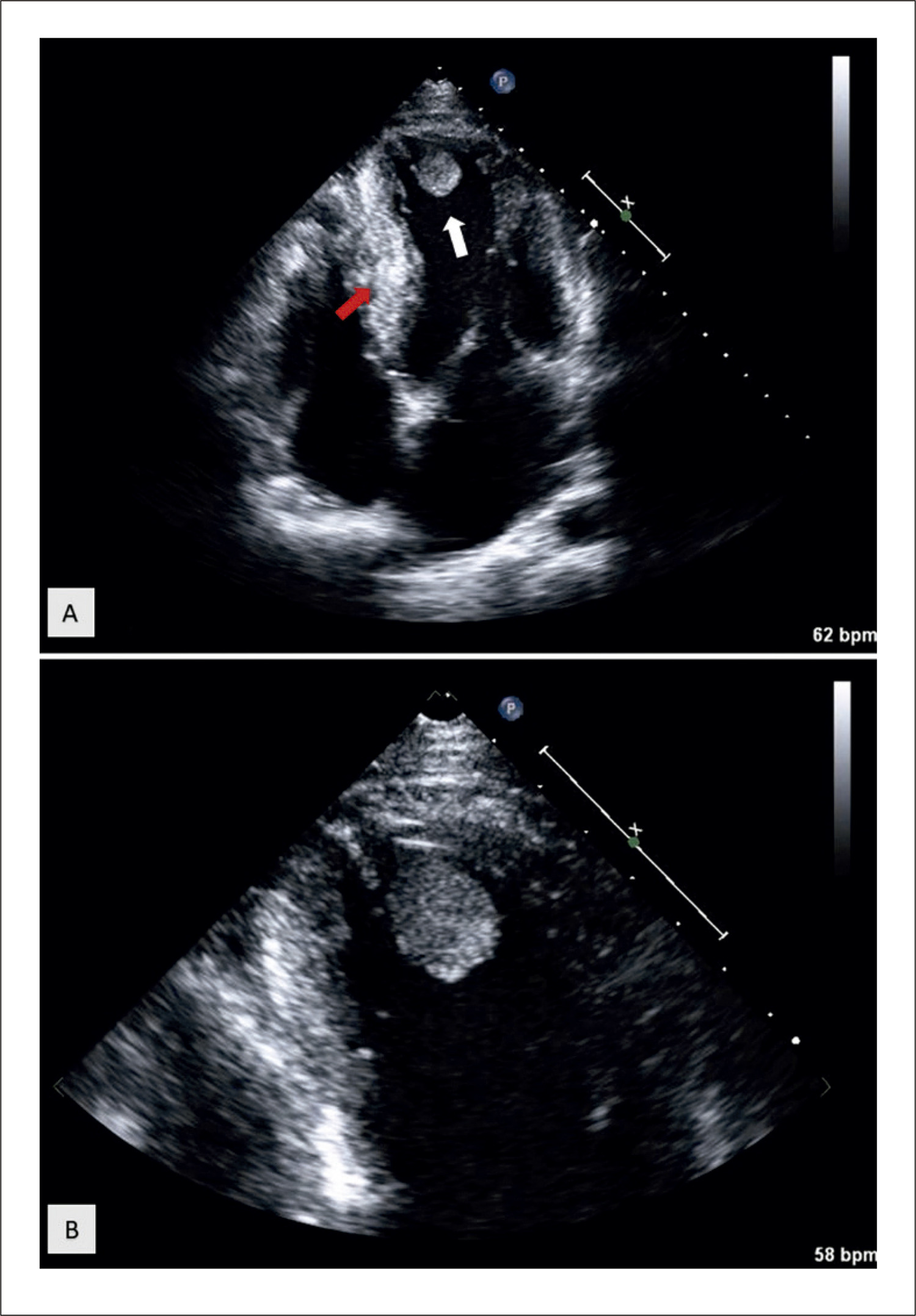
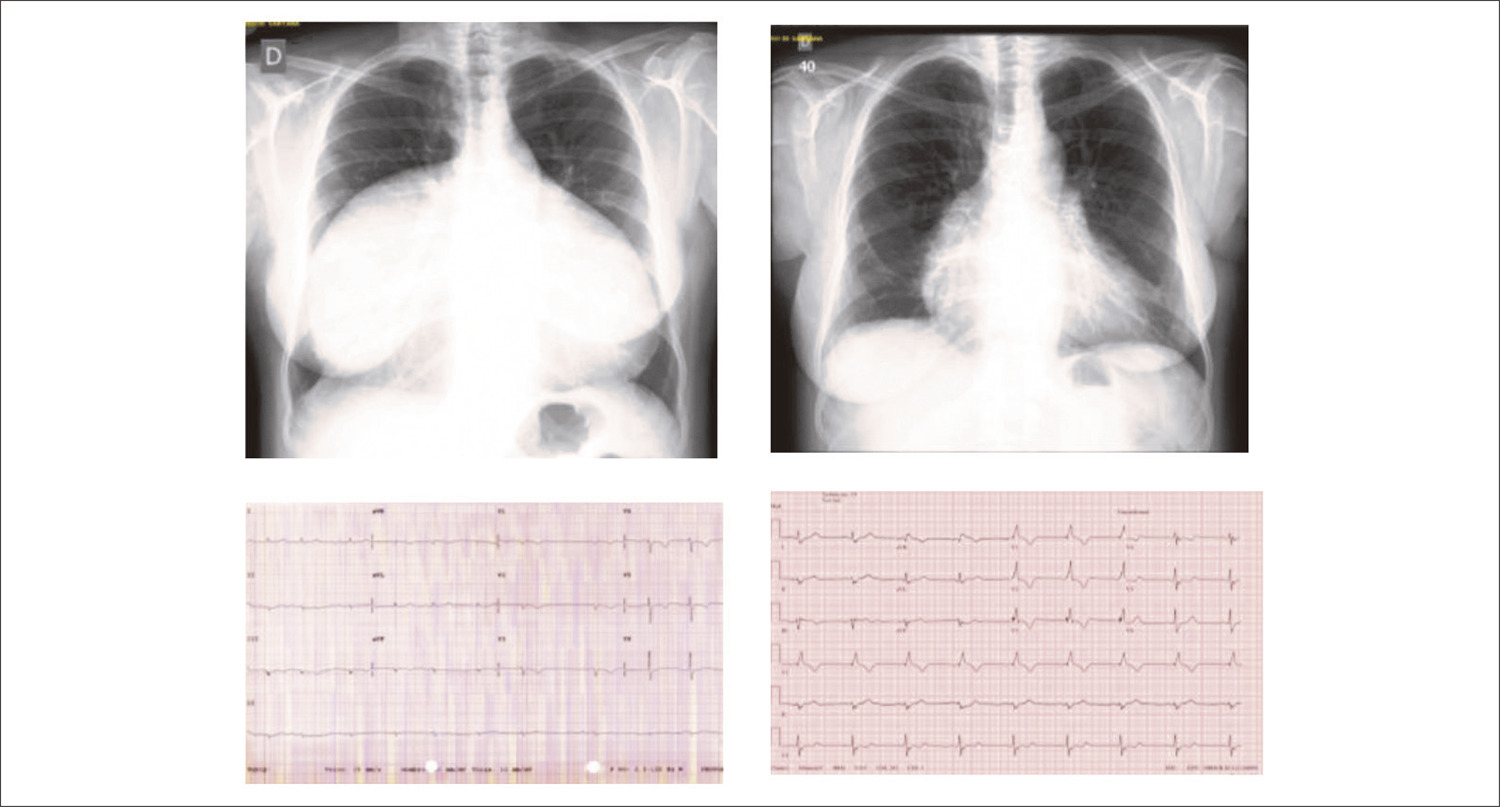
Isolated Aneurysmal Dilatation of the Right Atrium, with Surgical Resolution, in a 53-Year-Old Adult

Edmar Atik et al. Alessandra Costa Barreto Maria Angélica Binotto Marcelo B. Jatene

Introduction

Isolated aneurysmal dilatation of the right atrium is a rare congenital anomaly. Its identification occurs in several age groups, from the fetus to adulthood. The clinical manifestation of this anomaly varies according to the magnitude of the dilation, from asymptomatic patients, usually in children and young people, to the presence of difficult-to-control supraventricular arrhythmias, right heart failure, airway obstruction, pneumonia, and thromboembolic events in adults. The diagnosis is established after verification of cardiomegaly in routine radiographic examinations and confirmed later by echocardiogram. It is noteworthy in this pathology the disproportionate size of the right atrium concerning the other cardiac cavities, with the tricuspid ring also dilated but with a preserved tricuspid valve. The tricuspid insufficiency that accompanies the condition results from the dilation of the valve ring. The recommendation for surgical correction then becomes prophylactic in childhood, given the good evolution verified later.

The differential diagnosis includes Ebstein’s anomaly, pericardial effusion, and mediastinal thoracic tumors.

[…]

  • Arrhythmias Cardiac
  • Cardiomegaly
  • Congenital Abnormalities/surgery
  • Ebstein Anomaly / surgery
  • Heart Aneurysm
  • Isolated Aneurysm of Right Atrium
  • Pericardial Effusion
Read Full Article
Creative Commons Attribution (CC BY) Creative Commons license
19/06/2023 DOI: 10.36660/abc.20220870 Views 2
Central Illustration
Original Article

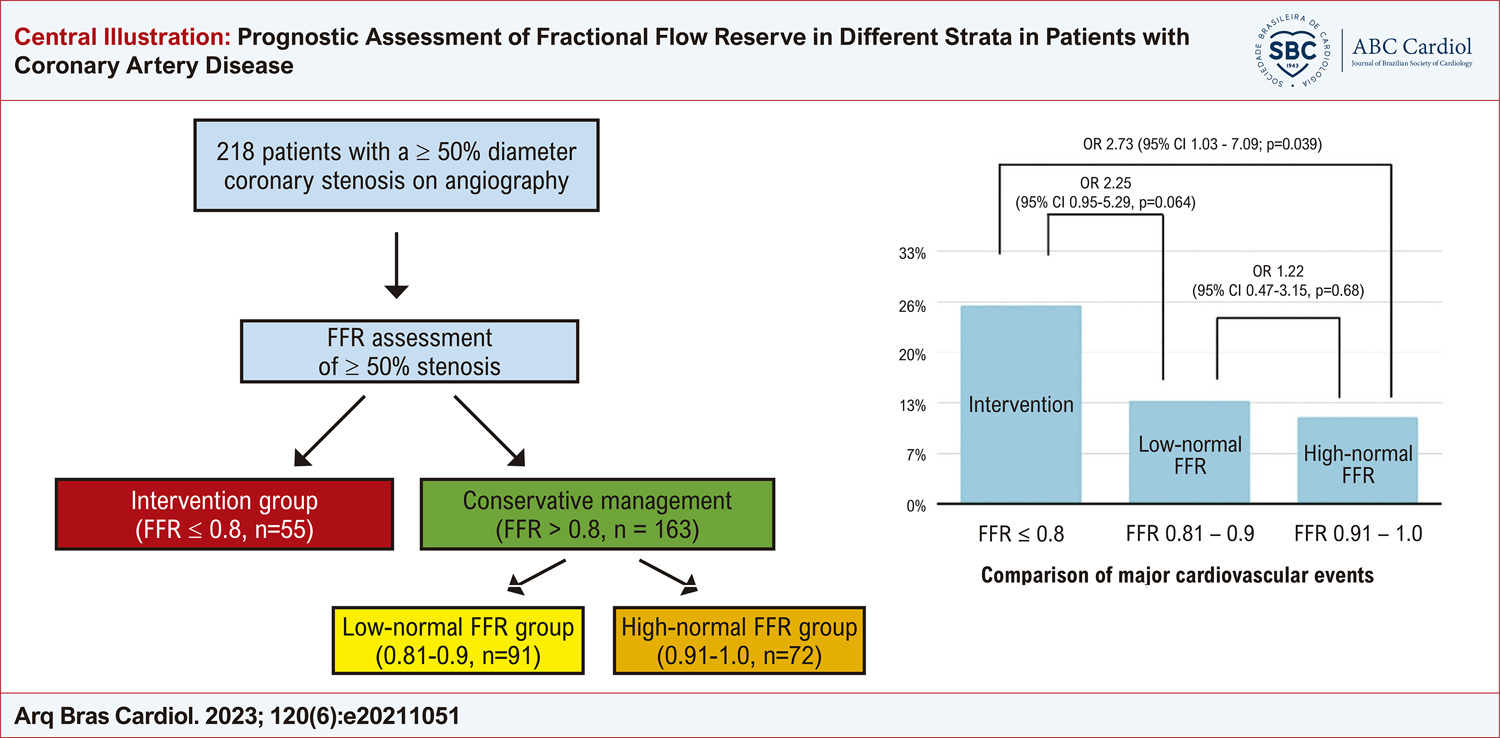
Prognostic Assessment of Fractional Flow Reserve in Different Strata in Patients with Coronary Artery Disease

Denise Pellegrini et al. Paulo R. A. Caramori Ricardo Czarnobai Soccol Ricardo Lasevitch … Gustavo Luís Agostini Alice Dussin Flavio Vinicius Costa Ferreira Mario Bernardes Wagner Luiz Carlos Bodanese

Abstract

Background

There are limited real-world data on the clinical course of untreated coronary lesions according to their functional severity.

Objective

To evaluate the 5-year clinical outcomes of patients with revascularized lesions with fractional flow reserve (FFR) ≤ 0.8 and patients with non-revascularized lesions with FFR > 0.8.

Methods

The FFR assessment was performed in 218 patients followed for up to 5 years. Participants were classified based on FFR into ischemia group (≤ 0.8, intervention group, n = 55), low-normal FFR group (> 0.8-0.9, n = 91), and high-normal FFR group (> 0.9, n = 72). The primary endpoint was major adverse cardiac events (MACEs), a composite of death, myocardial infarction, and need for repeat revascularization. The significance level was set at 0.05; therefore, results with a p-value < 0.05 were considered statistically significant.

Results

Most patients were male (62.8%) with a mean age of 64.1 years. Diabetes was present in 27%. On coronary angiography, the severity of stenosis was 62% in the ischemia group, 56.4% in the low-normal FFR group, and 54.3% in the high-normal FFR group (p<0.05). Mean follow-up was 3.5 years. The incidence of MACEs was 25.5%, 13.2%, and 11.1%, respectively (p=0.037). MACE incidence did not differ significantly between the low-normal and high-normal FFR groups.

Conclusion

Patients with FFR indicative of ischemia had poorer outcomes than those in non-ischemia groups. There was no difference in the incidence of events between the low-normal and high-normal FFR groups. Long-term studies with a large sample size are needed to better assess cardiovascular outcomes in patients with moderate coronary stenosis with FFR values between 0.8 and 1.0.

  • Fractional Flow Reserve
  • Ischemia
  • Outcomes
Read Full Article
Creative Commons Attribution (CC BY) Creative Commons license
19/06/2023 DOI: 10.36660/abc.20211051 Views 2
Central Illustration
Original Article

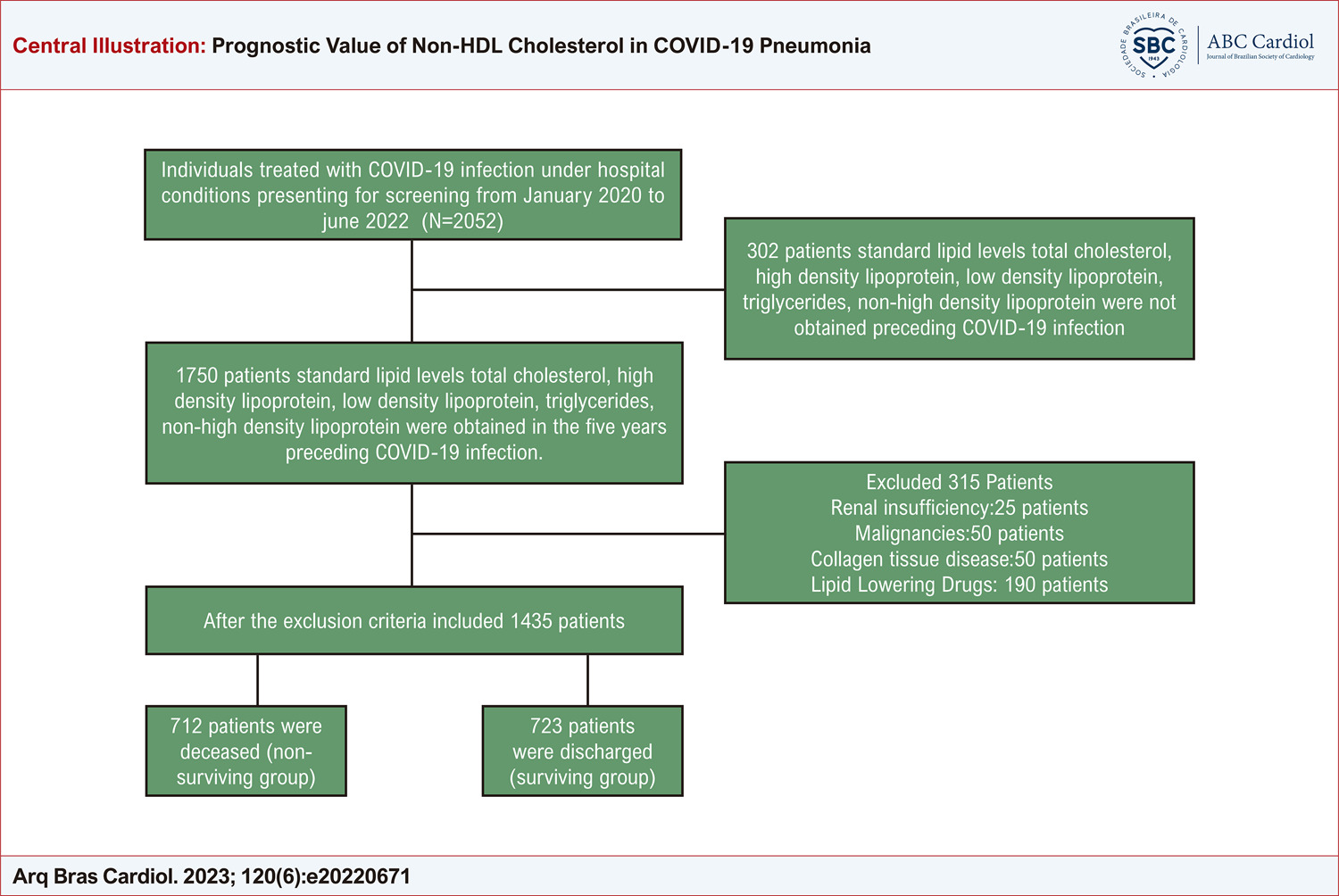
Prognostic Value of Non-HDL Cholesterol in COVID-19 Pneumonia

Fatih Sivri et al. Mehtap Şencan Şerife Barçın Öztürk Ayşe Sema Maraşlı … Yahya Kemal İçen Çağdaş Akgüllü

Abstract

Background

In addition to coronary artery disease, non-high-density lipoprotein(non-HDL-C) provides short and long-term predictive information for many chronic inflammatory diseases such as stroke, hemodialysis, post-renal transplant, non-alcoholic hepatosteatosis, and human immunodeficiency virus.

Objectives

This study examined the predictive value of non-HDL-C measured before SARS-CoV-2 for mortality in COVID-19 infection.

Methods

This study retrospectively included 1435 patients diagnosed with COVID-19 and treated in the thoracic diseases ward in a single center between January 2020 and June 2022. All patients included in the study had clinical and radiological features and signs of COVID-19 pneumonia. The COVID-19 diagnosis of all patients was confirmed by a polymerase chain reaction studied from an oropharyngeal swab. Statistical significance was set at p < 0.05.

Results

The study patients, including 1435 subjects, were divided into 712 patients in the non-surviving group and 723 in the surviving group. While there was no difference between the groups regarding gender, there was a statistically significant age difference. The non-surviving group was older. Age, lactate dehydrogenase(LDH), C reactive protein(CRP), triglycerides, D-dimer, and non-HDL-C were independent risk factors for mortality in regression analyses. In correlation analysis, age, CRP, and LDH were positively correlated with non-HDL-C. In the ROC analysis, sensitivity for non-HDL-C was 61.6%, and specificity was 89.2%.

Conclusion

We believe that the non-HDL-C level studied before COVID-19 infection can be used as a prognostic biomarker for the disease.

  • COVID-19
  • HDL-C/prognosis
  • Mortality
  • Pneumonia/physiopathology
Read Full Article
Creative Commons Attribution (CC BY) Creative Commons license
09/06/2023 DOI: 10.36660/abc.20220671
Central Illustration
Original Article

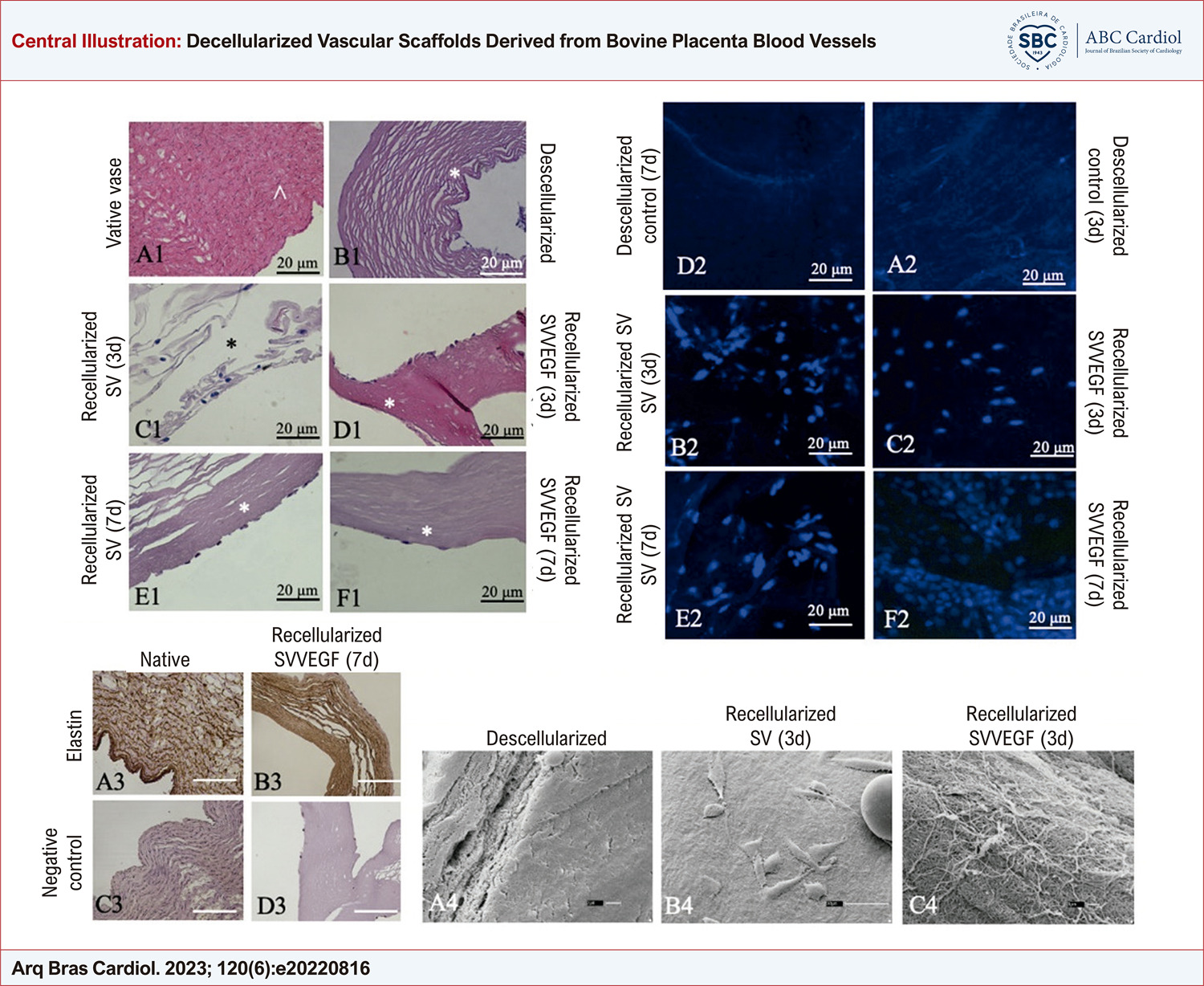
Decellularized Vascular Scaffolds Derived from Bovine Placenta Blood Vessels

Tarley Santos Oliveira et al. Igor Smirnow Kadija Mohamed Santee Maria Angelica Miglino Rodrigo da Silva Nunes Barreto

Background

Objectives

The present project aims to achieve the artificial development of blood vessels through the recellularization of vascular scaffolds derived from bovine placental vessels.

Methods

The chorioallantoic surface of the bovine placenta was used to produce decellularized biomaterials. For recellularization, 2.5 x 10⁴ endothelial cells were seeded above each decellularized vessel fragment during three or seven days, when culture were interrupted, and the fragments were fixed for cell attachment analysis. Decellularized and recellularized biomaterials were evaluated by basic histology, scanning electron microscopy, and immunohistochemistry.

Results

The decellularization process produced vessels that maintained natural structure and elastin content, and no cells or gDNA remains were observed. Endothelial precursor cells were also attached to lumen and external surface of the decellularized vessel.Conclusion: Our results show a possibility of future uses of this biomaterial in cardiovascular medicine, as in the development of engineered vessels.

  • Bioengineering
  • Blood Vessels
  • Decellularized Extracellular Matrix
Read Full Article
Creative Commons Attribution (CC BY) Creative Commons license
09/06/2023 DOI: 10.36660/abc.20220816 Views 1
Figure 1
Original Article

Sex Differences in Outcomes of ST Elevation Myocardial Infarction Patients Submitted to Primary Percutaneous Coronary Intervention

Victoria B. Milan et al. Yasmin F. S. Alves Guilherme P. Machado Gustavo Neves de Araujo … Ana Maria Krepsky Angelo Chies Matheus Niches Julia Fracasso Sandro Cadaval Goncalves Marco Wainstein Carisi Anne Polanczyk

Abstract

Background

Several studies have shown that women are usually undertreated and have worse outcomes after ST-segment elevation myocardial infarction (STEMI), hence the need to investigate questions related to sex in Brazil to better deal with the problem.

Objective

To determine whether female sex is still associated with adverse events in a contemporary cohort of patients with STEMI undergoing primary percutaneous coronary intervention (pPCI).

Methods

This was a prospective cohort study of STEMI patients submitted to pPCI in a tertiary university hospital between March 2011 and December 2021. Patients were categorized into groups based on their sex at birth. The primary clinical outcome was long-term MACCE. Patients were followed-up for up to five years. All hypothesis tests had a two-sided significance level of 0.05.

Results

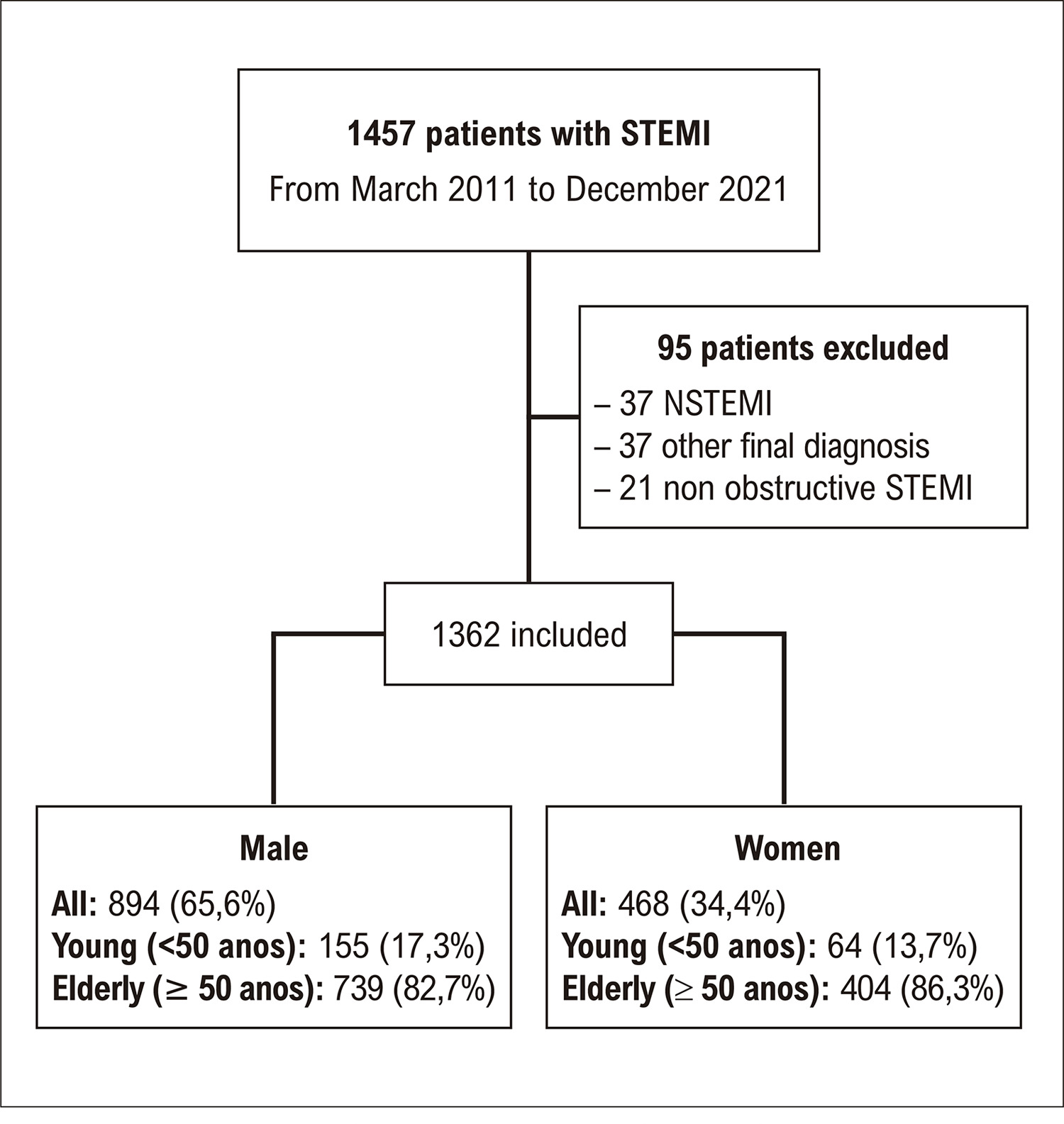
Among 1457 patients admitted with STEMI in the study period, 1362 were included and 468 (34.4%) were women. Female patients had a higher prevalence of hypertension (73% vs. 60%, p <0.001), diabetes (32% vs. 25%, p=0.003) and Killip class 3-4 at hospital admission (17% vs. 12%, p=0.01); TIMI risk score was higher among women (4 [2, 6] vs. 3 [2, 5], p<0.001). In-hospital mortality was not different between groups (12.8% vs. 10.5%, p=0.20). In-hospital MACCE (16.0% vs. 12.6%, p=0.085) and long-term MACCE (28.7% vs. 24.4%, p=0.089) were numerically higher in women, with borderline significance. After multivariate analysis, female sex was not associated with MACCE (HR = 1.14; 95% CI 0.86 – 1.51; p = 0.36).

Conclusion

In a prospective cohort of STEMI patients submitted to pPCI, female patients were older and had more comorbidities at baseline, but no significant differences were found in terms of long-term adverse outcomes.

  • Elderly
  • percutaneous coronary interventions
  • Sex Characteristics
  • ST-elevation myocardial infarction (STEMI
Read Full Article
Creative Commons Attribution (CC BY) Creative Commons license
09/06/2023 DOI: 10.36660/abc.20220673 Views 2
Figure 1
Original Article

Invasive Versus Conservative Management of NSTEMI Patients Aged ≥ 75 Years

Mengjin Hu et al. Xiaosong Li Yuejin Yang

Abstract

Background

The efficiency of invasive management in older patients (≥75 years) with non-ST-segment elevation myocardial infarction (NSTEMI) remains ambiguous.

Objectives

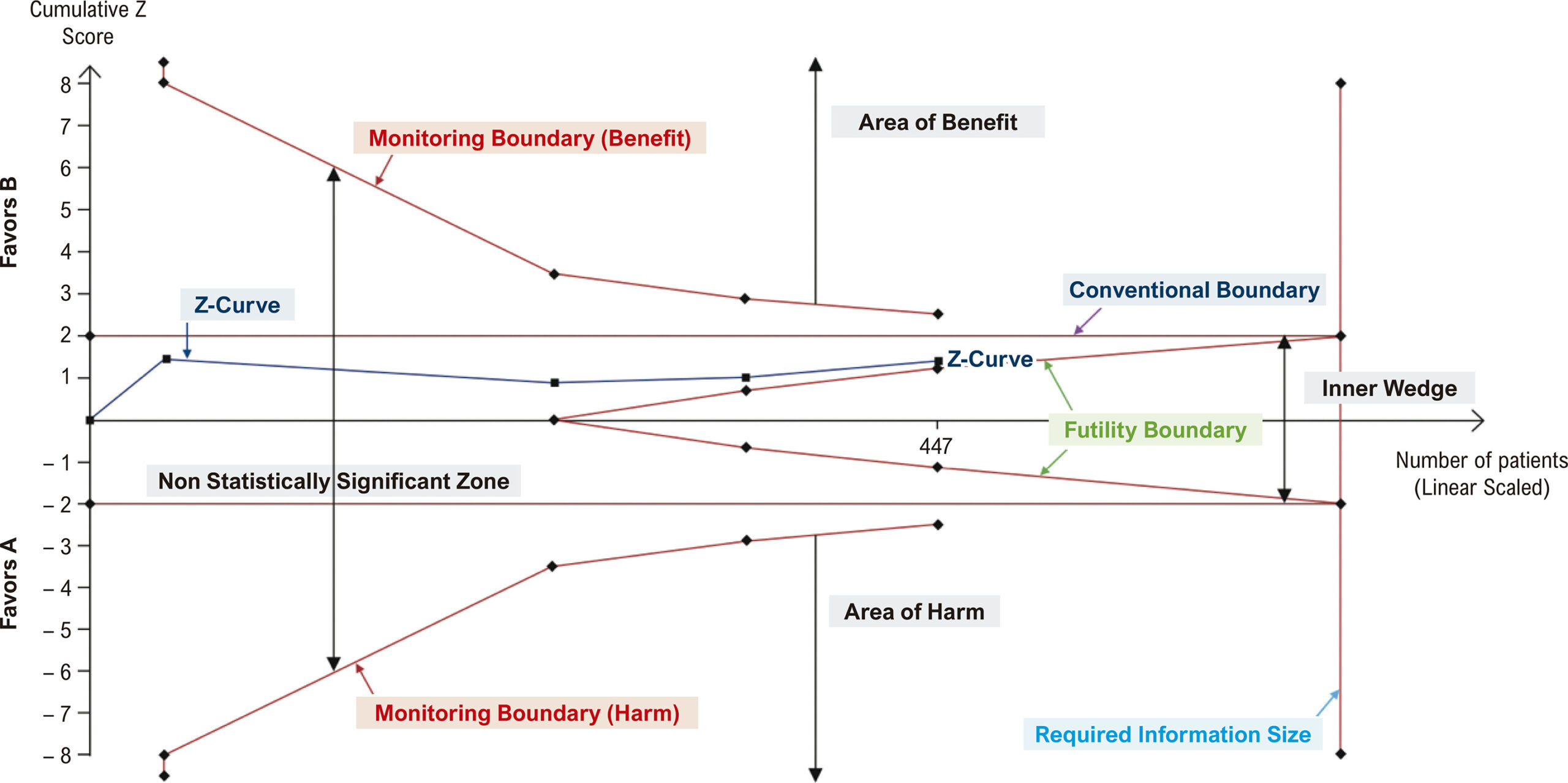
To assess the efficiency of invasive management in older patients with NSTEMI based on meta-analysis and trial sequential analysis (TSA).

Methods

Relevant randomized controlled trials (RCT) and observational studies were included. The primary outcomes were all-cause death, myocardial infarction, stroke, and major bleeding. Pooled odd ratio (OR) and 95% confidence interval (CI) were calculated. P <0.05 was considered statistically significant.

Results

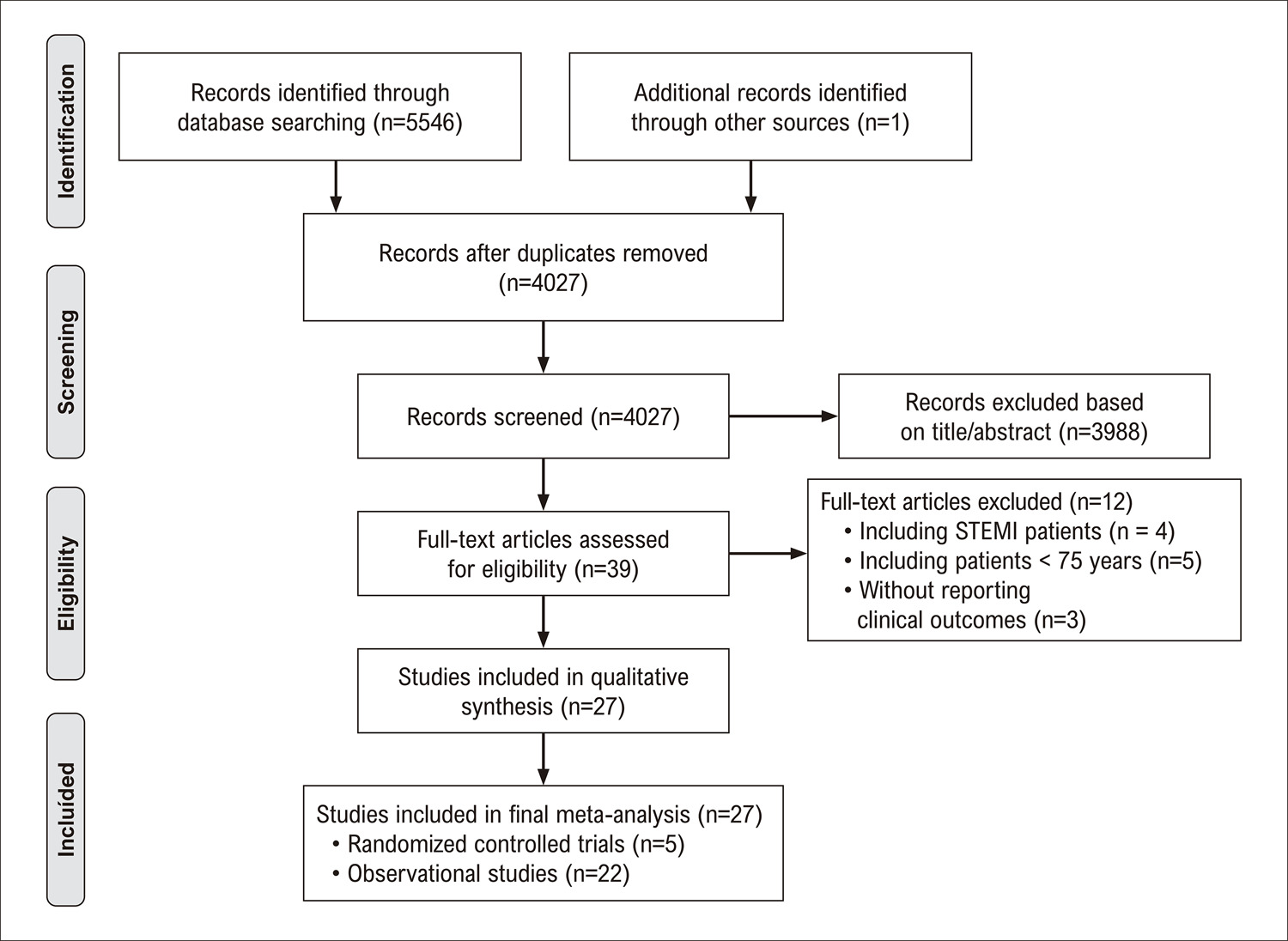
Five RCTs and 22 observational studies with 1017374 patients were included. Based on RCT and TSA results, invasive management was associated with lower risks of myocardial infarction (OR: 0.51; 95% CI: 0.40-0.65; I2=0%), major adverse cardiovascular events (MACE; OR: 0.61; 95% CI: 0.49-0.77; I2=27.0%), and revascularization (OR: 0.29; 95% CI: 0.15-0.55; I2=5.3%) compared with conservative management. Pooling results from RCTs and observational studies with multivariable adjustment showed consistently lower risks of all-cause death (OR: 0.57; 95% CI: 0.50-0.64; I2=86.4%), myocardial infarction (OR: 0.63; 95% CI: 0.56-0.71; I2=0%), stroke (OR: 0.59; 95% CI: 0.51-0.69; I2=0%), and MACE (OR: 0.64; 95% CI: 0.54-0.76; I2=43.4%). The better prognosis associated with invasive management was also observed in real-world scenarios. However, for patients aged ≥85 years, invasive management may increase the risk of major bleeding (OR: 2.68; 95% CI: 1.12-6.42; I2=0%).

Conclusions

Invasive management was associated with lower risks of myocardial infarction, MACE, and revascularization in older patients with NSTEMI, yet it may increase the risk of major bleeding in patients aged ≥85 years.

  • Aged
  • Conservative Treatment
  • Myocardial Infarction
  • Percutaneous Coronary Intervention
Read Full Article
Creative Commons Attribution (CC BY) Creative Commons license
26/05/2023 DOI: 10.36660/abc.20220658
Central Illustration
Original Article

Investigation of the Relationship Between Triglycerides-Glucose İndex and Coronary Slow Flow: A Retrospective Case-Control Study

Mustafa Kaplangoray et al. Kenan Toprak Fuat Başanalan Ali Palice … Cihan Aydın Aykut Demirkıran Yusuf Cekici

Abstract

Background

Coronary slow flow (CSF) refers to delayed distal vessel opacification in the absence of epicardial coronary artery stenosis. The etiopathogenic mechanism of CSF is still unclear.

Objectives

This study investigates the relationship between CSF and the triglyceride-glucose (TyG) index.

Methods

The study sample consisted of 118 CSF patients and 105 patients with normal coronary flow (NCF). The coronary flow rate was measured via the Thrombolysis in Myocardial Infarction (TIMI) frame count (TFC) method in all patients. The TyG index was calculated as the logarithm of the [fasting triglyceride (mg/dL)×fasting glucose (mg/dL)]/2 value. A significance level of < 0.05 was adopted as statistically significant.

Results

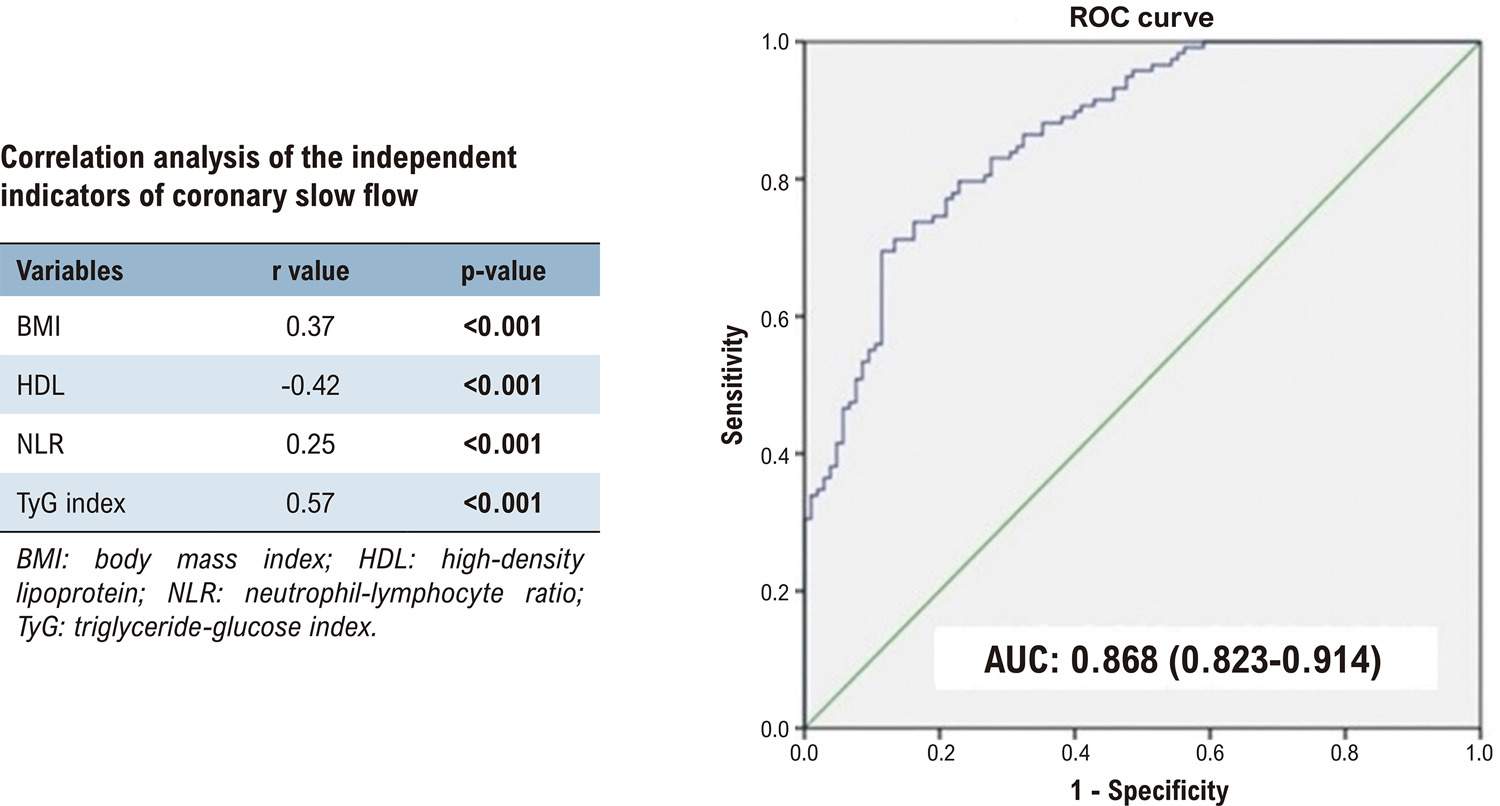
The TyG index, low-density lipoprotein (LDL), body mass index (BMI), neutrophil-to-lymphocyte ratio (NLR) and TFC values, male ratio, and the ratio of smokers were higher, whereas high-density lipoprotein (HDL) levels were significantly lower in the CSF group compared to the NCF group (p<0,05). The correlation analysis revealed that CSF was significantly correlated with TyG index, BMI, NLR, and HDL values. The strongest of these correlations was between CSF and TyG index (r= 0.57, p<0.001). Additionally, the multivariate analysis revealed that TyG index, BMI, NLR ratio, and male gender were independent predictors for CSF (p<0.05). Receiver operating characteristic (ROC) curve analysis indicated that a cut-off value of ≥ 9.28 for the TyG index predicted CSF with a sensitivity of 78% and a specificity of 78.1% [Area under the curve (AUC): 0.868 and 95% Confidence Interval (CI): 0.823-0.914].

Conclusion

The findings of this study revealed a very strong relationship between CSF and TyG index.

  • Blood flow velocity
  • Coronary Artery Disease
  • LDL
  • Lipoproteins
  • Myocardial Ischemic
  • Triglicerideos-Glucose
Read Full Article
Creative Commons Attribution (CC BY) Creative Commons license
26/05/2023 DOI: 10.36660/abc.20220679 Views 1

Could not load more articles. Please try again.

How to cite this article

EndNote RIS

Electronic Document Format (Vancouver)

Almeida MCC, Castro ML. Triglycerides-Glucose İndex and Coronary Slow Flow: A New Diagnostic Tool?. Arquivos Brasileiros de Cardiologia 2023;120(6):e20230373.

Electronic Document Format (ABNT)

Almeida, Maria Cristina Costa de; Castro, Marildes Luiza de. Triglycerides-Glucose İndex and Coronary Slow Flow: A New Diagnostic Tool?. Arquivos Brasileiros de Cardiologia, v. 120, n. 6, e20230373, Aug. 2023.

Electronic Document Format (APA)

Almeida, M. C. C. , & Castro, M. L. (2023). Triglycerides-Glucose İndex and Coronary Slow Flow: A New Diagnostic Tool?. Arquivos Brasileiros de Cardiologia, 120(6), e20230373.

Electronic Document Format (ISO)

Almeida, Maria Cristina Costa de and Castro, Marildes Luiza de. Triglycerides-Glucose İndex and Coronary Slow Flow: A New Diagnostic Tool?. Arquivos Brasileiros de Cardiologia [online]. 2023, vol. 120, n. 6, [cited 2026-10-14], e20230373. Available from: <https://journals.cardiol.br/en/article/triglycerides-glucose-index-and-coronary-slow-flow-a-new-diagnostic-tool/>. ISSN 0066-782X

EndNote RIS

Electronic Document Format (Vancouver)

Fonseca FAH, Izar MC. Could Patients At Low Cardiovascular Risk Be Better Stratified?. Arquivos Brasileiros de Cardiologia 2023;120(6):e20230310.

Electronic Document Format (ABNT)

Fonseca, Francisco Antonio Helfenstein; Izar, Maria Cristina. Could Patients At Low Cardiovascular Risk Be Better Stratified?. Arquivos Brasileiros de Cardiologia, v. 120, n. 6, e20230310, Jul. 2023.

Electronic Document Format (APA)

Fonseca, F. A. H., & Izar, M. C. (2023). Could Patients At Low Cardiovascular Risk Be Better Stratified?. Arquivos Brasileiros de Cardiologia, 120(6), e20230310.

Electronic Document Format (ISO)

Fonseca, Francisco Antonio Helfenstein and Izar, Maria Cristina. Could Patients At Low Cardiovascular Risk Be Better Stratified?. Arquivos Brasileiros de Cardiologia [online]. 2023, vol. 120, n. 6, [cited 2026-10-14], e20230310. Available from: <https://journals.cardiol.br/en/article/could-patients-at-low-cardiovascular-risk-be-better-stratified/>. ISSN 0066-782X

EndNote RIS

Electronic Document Format (Vancouver)

Luz PL. Mental Health in Cardiologists: A Real Concern. Arquivos Brasileiros de Cardiologia 2023;120(6):e20230028.

Electronic Document Format (ABNT)

Luz, Protásio Lemos da. Mental Health in Cardiologists: A Real Concern. Arquivos Brasileiros de Cardiologia, v. 120, n. 6, e20230028, Jul. 2023.

Electronic Document Format (APA)

Luz, P. L. (2023). Mental Health in Cardiologists: A Real Concern. Arquivos Brasileiros de Cardiologia, 120(6), e20230028.

Electronic Document Format (ISO)

Luz, Protásio Lemos da. Mental Health in Cardiologists: A Real Concern. Arquivos Brasileiros de Cardiologia [online]. 2023, vol. 120, n. 6, [cited 2026-10-14], e20230028. Available from: <https://journals.cardiol.br/en/article/mental-health-in-cardiologists-a-real-concern/>. ISSN 0066-782X

EndNote RIS

Electronic Document Format (Vancouver)

Marinho EMS, Santos JMM, Brito BS, Andrade AS, Lopes JM. Mechanical Valve Implants: What Are Their Long-Term Effects?. Arquivos Brasileiros de Cardiologia 2023;120(6):e20220875.

Electronic Document Format (ABNT)

Marinho, Eldys Myler Santos; Santos, Júlio Martinez Martinez; Brito, Bruno da Silva; Andrade, Achilles de Souza; Lopes, Johnnatas Mikael. Mechanical Valve Implants: What Are Their Long-Term Effects?. Arquivos Brasileiros de Cardiologia, v. 120, n. 6, e20220875, Jul. 2023.

Electronic Document Format (APA)

Marinho, E. M. S., Santos, J. M. M., Brito, B. S., Andrade, A. S., & Lopes, J. M. (2023). Mechanical Valve Implants: What Are Their Long-Term Effects?. Arquivos Brasileiros de Cardiologia, 120(6), e20220875.

Electronic Document Format (ISO)

Marinho, Eldys Myler Santos and Santos, Júlio Martinez Martinez and Brito, Bruno da Silva and Andrade, Achilles de Souza and Lopes, Johnnatas Mikael. Mechanical Valve Implants: What Are Their Long-Term Effects?. Arquivos Brasileiros de Cardiologia [online]. 2023, vol. 120, n. 6, [cited 2026-10-14], e20220875. Available from: <https://journals.cardiol.br/en/article/mechanical-valve-implants-what-are-their-long-term-effects/>. ISSN 0066-782X

EndNote RIS

Electronic Document Format (Vancouver)

Costa IBSS, Melo ES, Furtado A, Sobral-Alves JB, Rizk SI, Benvenuti LA, Rochitte CE, et al. Carcinoid Heart Disease: A Case Report and Literature Review. Arquivos Brasileiros de Cardiologia 2023;120(6):e20220245.

Electronic Document Format (ABNT)

Costa, Isabela Bispo Santos da Silva; Melo, Edielle de Sant`Anna; Furtado, Armando; Sobral-Alves, Juliana Barbosa; Rizk, Stephanie Itala; Benvenuti, Luiz Alberto; Rochitte, Carlos E.; Brandão, Carlos Manuel de Almeida; Pomarentzeff, Pablo Maria; Bittar, Cristina Salvadori; Galas, Filomena Regina Barbosa Gomes; Auler Junior, José Otavio Costa; Hoff, Paulo Marcelo Gehm; Kalil Filho, Roberto; Jatene, Fabio Biscegli; Hajjar, Ludhmila Abrahão. Carcinoid Heart Disease: A Case Report and Literature Review. Arquivos Brasileiros de Cardiologia, v. 120, n. 6, e20220245, Jul. 2023.

Electronic Document Format (APA)

Costa, I. B. S. S., Melo, E. S., Furtado, A., Sobral-Alves, J. B., Rizk, S. I., Benvenuti, L. A., Rochitte, C. E., Brandão, C. M. A., Pomarentzeff, P. M., Bittar, C. S., Galas, F. R. B. G., Auler Junior, J. O. C., Hoff, P. M. G., Kalil Filho, R., Jatene, F. B., & Hajjar, L. A. (2023). Carcinoid Heart Disease: A Case Report and Literature Review. Arquivos Brasileiros de Cardiologia, 120(6), e20220245.

Electronic Document Format (ISO)

Costa, Isabela Bispo Santos da Silva and Melo, Edielle de Sant`Anna and Furtado, Armando and Sobral-Alves, Juliana Barbosa and Rizk, Stephanie Itala and Benvenuti, Luiz Alberto and Rochitte, Carlos E. and Brandão, Carlos Manuel de Almeida and Pomarentzeff, Pablo Maria and Bittar, Cristina Salvadori and Galas, Filomena Regina Barbosa Gomes and Auler Junior, José Otavio Costa and Hoff, Paulo Marcelo Gehm and Kalil Filho, Roberto and Jatene, Fabio Biscegli and Hajjar, Ludhmila Abrahão. Carcinoid Heart Disease: A Case Report and Literature Review. Arquivos Brasileiros de Cardiologia [online]. 2023, vol. 120, n. 6, [cited 2026-10-14], e20220245. Available from: <https://journals.cardiol.br/en/article/carcinoid-heart-disease-a-case-report-and-literature-review/>. ISSN 0066-782X

EndNote RIS

Electronic Document Format (Vancouver)

Sant’Anna FM, Sant’Anna LB, Couceiro SLM. Is it Time to Revisit Fractional Flow Reserve Thresholds?. Arquivos Brasileiros de Cardiologia 2023;120(6):e20230363.

Electronic Document Format (ABNT)

Sant’Anna, Fernando Mendes; Sant’Anna, Lucas Bonacossa; Couceiro, Sérgio Lívio Menezes. Is it Time to Revisit Fractional Flow Reserve Thresholds?. Arquivos Brasileiros de Cardiologia, v. 120, n. 6, e20230363, Jul. 2023.

Electronic Document Format (APA)

Sant’Anna, F. M., Sant’Anna, L. B., & Couceiro, S. L. M. (2023). Is it Time to Revisit Fractional Flow Reserve Thresholds?. Arquivos Brasileiros de Cardiologia, 120(6), e20230363.

Electronic Document Format (ISO)

Sant’Anna, Fernando Mendes and Sant’Anna, Lucas Bonacossa and Couceiro, Sérgio Lívio Menezes. Is it Time to Revisit Fractional Flow Reserve Thresholds?. Arquivos Brasileiros de Cardiologia [online]. 2023, vol. 120, n. 6, [cited 2026-10-14], e20230363. Available from: <https://journals.cardiol.br/en/article/is-it-time-to-revisit-fractional-flow-reserve-thresholds/>. ISSN 0066-782X

EndNote RIS

Electronic Document Format (Vancouver)

Barbosa HC, Torres HC, Oliveira JAQ, Santos RPM, Costa JM, Miranda LG, Pagano AS, et al. Construction and Validation of a Protocol Targeting Patients on Oral Anticoagulation with Warfarin. Arquivos Brasileiros de Cardiologia 2023;120(6):e20220576.

Electronic Document Format (ABNT)

Barbosa, Hannah Cardoso; Torres, Heloisa de Carvalho; Oliveira, João Antônio de Queiroz; Santos, Rebeca Priscila de Melo; Costa, Josiane Moreira da; Miranda, Leonardo Gonçalves; Pagano, Adriana Silvina; Praxedes, Marcus Fernando da Silva; Martins, Maria Auxiliadora Parreiras. Construction and Validation of a Protocol Targeting Patients on Oral Anticoagulation with Warfarin. Arquivos Brasileiros de Cardiologia, v. 120, n. 6, e20220576, Jun. 2023.

Electronic Document Format (APA)

Barbosa, H. C., Torres, H. C., Oliveira, J. A. Q., Santos, R. P. M., Costa, J. M. , Miranda, L. G., Pagano, A. S., Praxedes, M. F. S., & Martins, M. A. P. (2023). Construction and Validation of a Protocol Targeting Patients on Oral Anticoagulation with Warfarin. Arquivos Brasileiros de Cardiologia, 120(6), e20220576.

Electronic Document Format (ISO)

Barbosa, Hannah Cardoso and Torres, Heloisa de Carvalho and Oliveira, João Antônio de Queiroz and Santos, Rebeca Priscila de Melo and Costa, Josiane Moreira da and Miranda, Leonardo Gonçalves and Pagano, Adriana Silvina and Praxedes, Marcus Fernando da Silva and Martins, Maria Auxiliadora Parreiras. Construction and Validation of a Protocol Targeting Patients on Oral Anticoagulation with Warfarin. Arquivos Brasileiros de Cardiologia [online]. 2023, vol. 120, n. 6, [cited 2026-10-14], e20220576. Available from: <https://journals.cardiol.br/en/article/construction-and-validation-of-a-protocol-targeting-patients-on-oral-anticoagulation-with-warfarin/>. ISSN 0066-782X

EndNote RIS

Electronic Document Format (Vancouver)

Silvestre CC, Cerqueira-Santos S. Use of Warfarin in Oral Anticoagulation Therapy: Challenges and EmpoderACO Strategy for Promoting Patient Empowerment in Self-Care. Arquivos Brasileiros de Cardiologia 2023;120(6):e20230335.

Electronic Document Format (ABNT)

Silvestre, Carina Carvalho; Cerqueira-Santos, Sabrina. Use of Warfarin in Oral Anticoagulation Therapy: Challenges and EmpoderACO Strategy for Promoting Patient Empowerment in Self-Care. Arquivos Brasileiros de Cardiologia, v. 120, n. 6, e20230335, Jun. 2023.

Electronic Document Format (APA)

Silvestre, C. C., & Cerqueira-Santos, S. (2023). Use of Warfarin in Oral Anticoagulation Therapy: Challenges and EmpoderACO Strategy for Promoting Patient Empowerment in Self-Care. Arquivos Brasileiros de Cardiologia, 120(6), e20230335.

Electronic Document Format (ISO)

Silvestre, Carina Carvalho and Cerqueira-Santos, Sabrina. Use of Warfarin in Oral Anticoagulation Therapy: Challenges and EmpoderACO Strategy for Promoting Patient Empowerment in Self-Care. Arquivos Brasileiros de Cardiologia [online]. 2023, vol. 120, n. 6, [cited 2026-10-14], e20230335. Available from: <https://journals.cardiol.br/en/article/use-of-warfarin-in-oral-anticoagulation-therapy-challenges-and-empoderaco-strategy-for-promoting-patient-empowerment-in-self-care/>. ISSN 0066-782X

EndNote RIS

Electronic Document Format (Vancouver)

Garcia LR, Garzesi AM, Brito FS, Felicio ML, Bertanha M. Scaffolds for Use in Blood Vessel Bioengineering: What are the Prospects?. Arquivos Brasileiros de Cardiologia 2023;120(6):e20230341.

Electronic Document Format (ABNT)

Garcia, Leonardo Rufino; Garzesi, André Monti; Brito, Flávio de Souza; Felicio, Marcello Laneza; Bertanha, Matheus. Scaffolds for Use in Blood Vessel Bioengineering: What are the Prospects?. Arquivos Brasileiros de Cardiologia, v. 120, n. 6, e20230341, Jun. 2023.

Electronic Document Format (APA)

Garcia, L. R., Garzesi, A. M., Brito, F. S., Felicio, M. L., & Bertanha, M. (2023). Scaffolds for Use in Blood Vessel Bioengineering: What are the Prospects?. Arquivos Brasileiros de Cardiologia, 120(6), e20230341.

Electronic Document Format (ISO)

Garcia, Leonardo Rufino and Garzesi, André Monti and Brito, Flávio de Souza and Felicio, Marcello Laneza and Bertanha, Matheus. Scaffolds for Use in Blood Vessel Bioengineering: What are the Prospects?. Arquivos Brasileiros de Cardiologia [online]. 2023, vol. 120, n. 6, [cited 2026-10-14], e20230341. Available from: <https://journals.cardiol.br/en/article/scaffolds-for-use-in-blood-vessel-bioengineering-what-are-the-prospects/>. ISSN 0066-782X

EndNote RIS

Electronic Document Format (Vancouver)

Almeida MS. Are We Reaching the End of the Evolutionary Road to Metallic Drug-Eluting Stents? Which 4th Generation Stents Do We Need?. Arquivos Brasileiros de Cardiologia 2023;120(6):e20230302.

Electronic Document Format (ABNT)

Almeida, Manuel Sousa. Are We Reaching the End of the Evolutionary Road to Metallic Drug-Eluting Stents? Which 4th Generation Stents Do We Need?. Arquivos Brasileiros de Cardiologia, v. 120, n. 6, e20230302, Jun. 2023.

Electronic Document Format (APA)

Almeida, M. S. (2023). Are We Reaching the End of the Evolutionary Road to Metallic Drug-Eluting Stents? Which 4th Generation Stents Do We Need?. Arquivos Brasileiros de Cardiologia, 120(6), e20230302.

Electronic Document Format (ISO)

Almeida, Manuel Sousa. Are We Reaching the End of the Evolutionary Road to Metallic Drug-Eluting Stents? Which 4th Generation Stents Do We Need?. Arquivos Brasileiros de Cardiologia [online]. 2023, vol. 120, n. 6, [cited 2026-10-14], e20230302. Available from: <https://journals.cardiol.br/en/article/are-we-reaching-the-end-of-the-evolutionary-road-to-metallic-drug-eluting-stents-which-4th-generation-stents-do-we-need/>. ISSN 0066-782X

EndNote RIS

Electronic Document Format (Vancouver)

Cesena FY, Kashiwagi NM, Minanni CA, Santos RD. Determining Percentiles of Atherosclerotic Cardiovascular Risk According to Sex and Age in a Healthy Brazilian Population. Arquivos Brasileiros de Cardiologia 2023;120(6):e20220552.

Electronic Document Format (ABNT)

Cesena, Fernando Yue; Kashiwagi, Nea Miwa; Minanni, Carlos Andre; Santos, Raul D.. Determining Percentiles of Atherosclerotic Cardiovascular Risk According to Sex and Age in a Healthy Brazilian Population. Arquivos Brasileiros de Cardiologia, v. 120, n. 6, e20220552, Jun. 2023.

Electronic Document Format (APA)

Cesena, F. Y., Kashiwagi, N. M., Minanni, C. A., & Santos, R. D. (2023). Determining Percentiles of Atherosclerotic Cardiovascular Risk According to Sex and Age in a Healthy Brazilian Population. Arquivos Brasileiros de Cardiologia, 120(6), e20220552.

Electronic Document Format (ISO)

Cesena, Fernando Yue and Kashiwagi, Nea Miwa and Minanni, Carlos Andre and Santos, Raul D.. Determining Percentiles of Atherosclerotic Cardiovascular Risk According to Sex and Age in a Healthy Brazilian Population. Arquivos Brasileiros de Cardiologia [online]. 2023, vol. 120, n. 6, [cited 2026-10-14], e20220552. Available from: <https://journals.cardiol.br/en/article/determining-percentiles-of-atherosclerotic-cardiovascular-risk-according-to-sex-and-age-in-a-healthy-brazilian-population/>. ISSN 0066-782X

EndNote RIS

Electronic Document Format (Vancouver)

Marin-Neto JA, Rassi Jr A, Oliveira GMM, Correia LCL, Ramos Júnior AN, Luquetti AO, Hasslocher-Moreno AM, et al. SBC Guideline on the Diagnosis and Treatment of Patients with Cardiomyopathy of Chagas Disease – 2023. Arquivos Brasileiros de Cardiologia 2023;120(6):e20230269.

Electronic Document Format (ABNT)

Marin-Neto, José Antonio; Rassi Jr, Anis; Oliveira, Gláucia Maria Moraes; Correia, Luís Claudio Lemos; Ramos Júnior, Alberto Novaes; Luquetti, Alejandro Ostermayer; Hasslocher-Moreno, Alejandro Marcel; Sousa, Andréa Silvestre de; Paola, Angelo Amato Vincenzo de; Sousa, Antônio Carlos Sobral; Ribeiro, Antonio Luiz Pinho; Correia Filho, Dalmo; Souza, Dilma do Socorro Moraes de; Cunha-Neto, Edecio; Ramires, Felix Jose Alvarez; Bacal, Fernando; Nunes, Maria do Carmo Pereira; Martinelli Filho, Martino; Scanavacca, Maurício Ibrahim; Saraiva, Roberto Magalhães; Oliveira Júnior, Wilson Alves de; Lorga-Filho, Adalberto Menezes; Guimarães, Adriana de Jesus Benevides de Almeida; Braga, Adriana Lopes Latado; Oliveira, Adriana Sarmento de; Sarabanda, Alvaro Valentim Lima; Pinto, Ana Yecê das Neves; Carmo, Andre Assis Lopes do; Schmidt, Andre; Costa, Andréa Rodrigues da; Ianni, Barbara Maria; Markman Filho, Brivaldo; Rochitte, Carlos Eduardo; Macêdo, Carolina Thé; Mady, Charles; Chevillard, Christophe; Virgens, Cláudio Marcelo Bittencourt das; Castro, Cleudson Nery de; Britto, Constança Felicia De Paoli de Carvalho; Pisani, Cristiano; Rassi, Daniela do Carmo; Sobral Filho, Dário Celestino; Almeida, Dirceu Rodrigues de; Bocchi, Edimar Alcides; Mesquita, Evandro Tinoco; Mendes, Fernanda de Souza Nogueira Sardinha; Gondim, Francisca Tatiana Pereira; Silva, Gilberto Marcelo Sperandio da; Peixoto, Giselle de Lima; Lima, Gustavo Glotz de; Veloso, Henrique Horta; Moreira, Henrique Turin; Lopes, Hugo Bellotti; Pinto, Ibraim Masciarelli Francisco; Ferreira, João Marcos Bemfica Barbosa; Nunes, João Paulo Silva; Barreto-Filho, José Augusto Soares; Saraiva, José Francisco Kerr; Lannes-Vieira, Joseli; Oliveira, Joselina Luzia Menezes; Armaganijan, Luciana Vidal; Martins, Luiz Cláudio; Sangenis, Luiz Henrique Conde; Barbosa, Marco Paulo Tomaz; Almeida-Santos, Marcos Antonio; Simões, Marcos Vinicius; Yasuda, Maria Aparecida Shikanai; Moreira, Maria da Consolação Vieira; Higuchi, Maria de Lourdes; Monteiro, Maria Rita de Cassia Costa; Mediano, Mauro Felippe Felix; Lima, Mayara Maia; Oliveira, Maykon Tavares de; Romano, Minna Moreira Dias; Araujo, Nadjar Nitz Silva Lociks de; Medeiros, Paulo de Tarso Jorge; Alves, Renato Vieira; Teixeira, Ricardo Alkmim; Pedrosa, Roberto Coury; Aras Junior, Roque; Torres, Rosalia Morais; Povoa, Rui Manoel dos Santos; Rassi, Sergio Gabriel; Alves, Silvia Marinho Martins; Tavares, Suelene Brito do Nascimento; Palmeira, Swamy Lima; Silva Júnior, Telêmaco Luiz da; Rodrigues, Thiago da Rocha; Madrini Junior, Vagner; Brant, Veruska Maia da Costa; Dutra, Walderez Ornelas; Dias, João Carlos Pinto. SBC Guideline on the Diagnosis and Treatment of Patients with Cardiomyopathy of Chagas Disease – 2023. Arquivos Brasileiros de Cardiologia, v. 120, n. 6, e20230269, Jun. 2023.

Electronic Document Format (APA)

Marin-Neto, J. A., Rassi Jr, A., Oliveira, G. M. M., Correia, L. C. L., Ramos Júnior, A. N., Luquetti, A. O., Hasslocher-Moreno, A. M., Sousa, A. S. , Paola, A. A. V. , Sousa, A. C. S., Ribeiro, A. L. P., Correia Filho, D., Souza, D. S. M. , Cunha-Neto, E., Ramires, F. J. A., Bacal, F., Nunes, M. C. P., Martinelli Filho, M., Scanavacca, M. I., Saraiva, R. M., Oliveira Júnior, W. A. , Lorga-Filho, A. M., Guimarães, A. J. B. A., Braga, A. L. L., Oliveira, A. S. , Sarabanda, A. V. L., Pinto, A. Y. N., Carmo, A. A. L. , Schmidt, A., Costa, A. R. , Ianni, B. M., Markman Filho, B., Rochitte, C. E., Macêdo, C. T., Mady, C., Chevillard, C., Virgens, C. M. B. , Castro, C. N. , Britto, C. F. D. P. C., Pisani, C., Rassi, D. C., Sobral Filho, D. C., Almeida, D. R. , Bocchi, E. A., Mesquita, E. T., Mendes, F. S. N. S., Gondim, F. T. P., Silva, G. M. S. , Peixoto, G. L., Lima, G. G. , Veloso, H. H., Moreira, H. T., Lopes, H. B., Pinto, I. M. F., Ferreira, J. M. B. B., Nunes, J. P. S., Barreto-Filho, J. A. S., Saraiva, J. F. K., Lannes-Vieira, J., Oliveira, J. L. M., Armaganijan, L. V., Martins, L. C., Sangenis, L. H. C., Barbosa, M. P. T., Almeida-Santos, M. A., Simões, M. V., Yasuda, M. A. S., Moreira, M. C. V., Higuchi, M. L., Monteiro, M. R. C. C., Mediano, M. F. F., Lima, M. M., Oliveira, M. T. , Romano, M. M. D., Araujo, N. N. S. L. , Medeiros, P. T. J., Alves, R. V., Teixeira, R. A., Pedrosa, R. C., Aras Junior, R., Torres, R. M., Povoa, R. M. S., Rassi, S. G., Alves, S. M. M., Tavares, S. B. N., Palmeira, S. L., Silva Júnior, T. L. , Rodrigues, T. R., Madrini Junior, V., Brant, V. M. C., Dutra, W. O., & Dias, J. C. P. (2023). SBC Guideline on the Diagnosis and Treatment of Patients with Cardiomyopathy of Chagas Disease – 2023. Arquivos Brasileiros de Cardiologia, 120(6), e20230269.

Electronic Document Format (ISO)

Marin-Neto, José Antonio and Rassi Jr, Anis and Oliveira, Gláucia Maria Moraes and Correia, Luís Claudio Lemos and Ramos Júnior, Alberto Novaes and Luquetti, Alejandro Ostermayer and Hasslocher-Moreno, Alejandro Marcel and Sousa, Andréa Silvestre de and Paola, Angelo Amato Vincenzo de and Sousa, Antônio Carlos Sobral and Ribeiro, Antonio Luiz Pinho and Correia Filho, Dalmo and Souza, Dilma do Socorro Moraes de and Cunha-Neto, Edecio and Ramires, Felix Jose Alvarez and Bacal, Fernando and Nunes, Maria do Carmo Pereira and Martinelli Filho, Martino and Scanavacca, Maurício Ibrahim and Saraiva, Roberto Magalhães and Oliveira Júnior, Wilson Alves de and Lorga-Filho, Adalberto Menezes and Guimarães, Adriana de Jesus Benevides de Almeida and Braga, Adriana Lopes Latado and Oliveira, Adriana Sarmento de and Sarabanda, Alvaro Valentim Lima and Pinto, Ana Yecê das Neves and Carmo, Andre Assis Lopes do and Schmidt, Andre and Costa, Andréa Rodrigues da and Ianni, Barbara Maria and Markman Filho, Brivaldo and Rochitte, Carlos Eduardo and Macêdo, Carolina Thé and Mady, Charles and Chevillard, Christophe and Virgens, Cláudio Marcelo Bittencourt das and Castro, Cleudson Nery de and Britto, Constança Felicia De Paoli de Carvalho and Pisani, Cristiano and Rassi, Daniela do Carmo and Sobral Filho, Dário Celestino and Almeida, Dirceu Rodrigues de and Bocchi, Edimar Alcides and Mesquita, Evandro Tinoco and Mendes, Fernanda de Souza Nogueira Sardinha and Gondim, Francisca Tatiana Pereira and Silva, Gilberto Marcelo Sperandio da and Peixoto, Giselle de Lima and Lima, Gustavo Glotz de and Veloso, Henrique Horta and Moreira, Henrique Turin and Lopes, Hugo Bellotti and Pinto, Ibraim Masciarelli Francisco and Ferreira, João Marcos Bemfica Barbosa and Nunes, João Paulo Silva and Barreto-Filho, José Augusto Soares and Saraiva, José Francisco Kerr and Lannes-Vieira, Joseli and Oliveira, Joselina Luzia Menezes and Armaganijan, Luciana Vidal and Martins, Luiz Cláudio and Sangenis, Luiz Henrique Conde and Barbosa, Marco Paulo Tomaz and Almeida-Santos, Marcos Antonio and Simões, Marcos Vinicius and Yasuda, Maria Aparecida Shikanai and Moreira, Maria da Consolação Vieira and Higuchi, Maria de Lourdes and Monteiro, Maria Rita de Cassia Costa and Mediano, Mauro Felippe Felix and Lima, Mayara Maia and Oliveira, Maykon Tavares de and Romano, Minna Moreira Dias and Araujo, Nadjar Nitz Silva Lociks de and Medeiros, Paulo de Tarso Jorge and Alves, Renato Vieira and Teixeira, Ricardo Alkmim and Pedrosa, Roberto Coury and Aras Junior, Roque and Torres, Rosalia Morais and Povoa, Rui Manoel dos Santos and Rassi, Sergio Gabriel and Alves, Silvia Marinho Martins and Tavares, Suelene Brito do Nascimento and Palmeira, Swamy Lima and Silva Júnior, Telêmaco Luiz da and Rodrigues, Thiago da Rocha and Madrini Junior, Vagner and Brant, Veruska Maia da Costa and Dutra, Walderez Ornelas and Dias, João Carlos Pinto. SBC Guideline on the Diagnosis and Treatment of Patients with Cardiomyopathy of Chagas Disease – 2023. Arquivos Brasileiros de Cardiologia [online]. 2023, vol. 120, n. 6, [cited 2026-10-14], e20230269. Available from: <https://journals.cardiol.br/en/article/sbc-guideline-on-the-diagnosis-and-treatment-of-patients-with-cardiomyopathy-of-chagas-disease-2023/>. ISSN 0066-782X

EndNote RIS

Electronic Document Format (Vancouver)

Alves RJ. Metabolic and Inflammatory Relationship between Covid-19 and Non-HDL-C. Arquivos Brasileiros de Cardiologia 2023;120(6):e20230304.

Electronic Document Format (ABNT)

Alves, Renato Jorge. Metabolic and Inflammatory Relationship between Covid-19 and Non-HDL-C. Arquivos Brasileiros de Cardiologia, v. 120, n. 6, e20230304, Jun. 2023.

Electronic Document Format (APA)

Alves, R. J. (2023). Metabolic and Inflammatory Relationship between Covid-19 and Non-HDL-C. Arquivos Brasileiros de Cardiologia, 120(6), e20230304.

Electronic Document Format (ISO)

Alves, Renato Jorge. Metabolic and Inflammatory Relationship between Covid-19 and Non-HDL-C. Arquivos Brasileiros de Cardiologia [online]. 2023, vol. 120, n. 6, [cited 2026-10-14], e20230304. Available from: <https://journals.cardiol.br/en/article/metabolic-and-inflammatory-relationship-between-covid-19-and-non-hdl-c/>. ISSN 0066-782X

EndNote RIS

Electronic Document Format (Vancouver)

Sant’Anna FM, Sant’Anna MB, Sant’Anna LB. Improving Meta-analyses. Arquivos Brasileiros de Cardiologia 2023;120(6):e20230331.

Electronic Document Format (ABNT)

Sant’Anna, Fernando Mendes; Sant’Anna, Mariana Bonacossa; Sant’Anna, Lucas Bonacossa. Improving Meta-analyses. Arquivos Brasileiros de Cardiologia, v. 120, n. 6, e20230331, Jun. 2023.

Electronic Document Format (APA)

Sant’Anna, F. M., Sant’Anna, M. B., & Sant’Anna, L. B. (2023). Improving Meta-analyses. Arquivos Brasileiros de Cardiologia, 120(6), e20230331.

Electronic Document Format (ISO)

Sant’Anna, Fernando Mendes and Sant’Anna, Mariana Bonacossa and Sant’Anna, Lucas Bonacossa. Improving Meta-analyses. Arquivos Brasileiros de Cardiologia [online]. 2023, vol. 120, n. 6, [cited 2026-10-14], e20230331. Available from: <https://journals.cardiol.br/en/article/improving-meta-analyses/>. ISSN 0066-782X

EndNote RIS

Electronic Document Format (Vancouver)

Alexandre A, Roque C, Sá I, Silveira J, Torres S. An Atypical Non-Cardiac Presentation of Hypertrophic Cardiomyopathy. Arquivos Brasileiros de Cardiologia 2023;120(6):e20220933.

Electronic Document Format (ABNT)

Alexandre, André; Roque, Carla; Sá, Isabel; Silveira, João; Torres, Severo. An Atypical Non-Cardiac Presentation of Hypertrophic Cardiomyopathy. Arquivos Brasileiros de Cardiologia, v. 120, n. 6, e20220933, Jun. 2023.

Electronic Document Format (APA)

Alexandre, A., Roque, C., Sá, I., Silveira, J., & Torres, S. (2023). An Atypical Non-Cardiac Presentation of Hypertrophic Cardiomyopathy. Arquivos Brasileiros de Cardiologia, 120(6), e20220933.

Electronic Document Format (ISO)

Alexandre, André and Roque, Carla and Sá, Isabel and Silveira, João and Torres, Severo. An Atypical Non-Cardiac Presentation of Hypertrophic Cardiomyopathy. Arquivos Brasileiros de Cardiologia [online]. 2023, vol. 120, n. 6, [cited 2026-10-14], e20220933. Available from: <https://journals.cardiol.br/en/article/an-atypical-non-cardiac-presentation-of-hypertrophic-cardiomyopathy/>. ISSN 0066-782X

EndNote RIS

Electronic Document Format (Vancouver)

Lypovetska S. [PARTIAL-RETRACTION] MINOCA Phenotypes – A Challenge for Patient-Specific Management. Arquivos Brasileiros de Cardiologia 2023;120(6):e20220705.

Electronic Document Format (ABNT)

Lypovetska, Sofiya. [PARTIAL-RETRACTION] MINOCA Phenotypes – A Challenge for Patient-Specific Management. Arquivos Brasileiros de Cardiologia, v. 120, n. 6, e20220705, Jun. 2023.

Electronic Document Format (APA)

Lypovetska, S. (2023). [PARTIAL-RETRACTION] MINOCA Phenotypes – A Challenge for Patient-Specific Management. Arquivos Brasileiros de Cardiologia, 120(6), e20220705.

Electronic Document Format (ISO)

Lypovetska, Sofiya. [PARTIAL-RETRACTION] MINOCA Phenotypes – A Challenge for Patient-Specific Management. Arquivos Brasileiros de Cardiologia [online]. 2023, vol. 120, n. 6, [cited 2026-10-14], e20220705. Available from: <https://journals.cardiol.br/en/article/partial-retraction-minoca-phenotypes-a-challenge-for-patient-specific-management/>. ISSN 0066-782X

EndNote RIS

Electronic Document Format (Vancouver)

Francisqueti-Ferron FV, Belin MAF, Palacio TLN, Ferron AJT, Garcia JL, Siqueira JS, Nakandakare-Maia ET, et al. Fructose Consumption Alters Biogenic Amines Associated with Cardiovascular Disease Risk Factors. Arquivos Brasileiros de Cardiologia 2023;120(6):e20220770.

Electronic Document Format (ABNT)

Francisqueti-Ferron, Fabiane Valentini; Belin, Matheus Antônio Filiol; Palacio, Thiago Luiz Novaga; Ferron, Artur Junio Togneri; Garcia, Jéssica Leite; Siqueira, Juliana Silva; Nakandakare-Maia, Erika Tiemi; Vieira, Taynara Aparecida; Kano, Hugo Tadashi; Moreto, Fernando; Lima, Giuseppina Pace Pereira; Corrêa, Camila Renata; Minatel, Igor Otavio. Fructose Consumption Alters Biogenic Amines Associated with Cardiovascular Disease Risk Factors. Arquivos Brasileiros de Cardiologia, v. 120, n. 6, e20220770, Jun. 2023.

Electronic Document Format (APA)

Francisqueti-Ferron, F. V., Belin, M. A. F., Palacio, T. L. N., Ferron, A. J. T., Garcia, J. L., Siqueira, J. S., Nakandakare-Maia, E. T., Vieira, T. A., Kano, H. T., Moreto, F., Lima, G. P. P., Corrêa, C. R., & Minatel, I. O. (2023). Fructose Consumption Alters Biogenic Amines Associated with Cardiovascular Disease Risk Factors. Arquivos Brasileiros de Cardiologia, 120(6), e20220770.

Electronic Document Format (ISO)

Francisqueti-Ferron, Fabiane Valentini and Belin, Matheus Antônio Filiol and Palacio, Thiago Luiz Novaga and Ferron, Artur Junio Togneri and Garcia, Jéssica Leite and Siqueira, Juliana Silva and Nakandakare-Maia, Erika Tiemi and Vieira, Taynara Aparecida and Kano, Hugo Tadashi and Moreto, Fernando and Lima, Giuseppina Pace Pereira and Corrêa, Camila Renata and Minatel, Igor Otavio. Fructose Consumption Alters Biogenic Amines Associated with Cardiovascular Disease Risk Factors. Arquivos Brasileiros de Cardiologia [online]. 2023, vol. 120, n. 6, [cited 2026-10-14], e20220770. Available from: <https://journals.cardiol.br/en/article/fructose-consumption-alters-biogenic-amines-associated-with-cardiovascular-disease-risk-factors/>. ISSN 0066-782X

EndNote RIS

Electronic Document Format (Vancouver)

Atik E, Barreto AC, Binotto MA, Jatene MB. Isolated Aneurysmal Dilatation of the Right Atrium, with Surgical Resolution, in a 53-Year-Old Adult. Arquivos Brasileiros de Cardiologia 2023;120(6):e20220870.

Electronic Document Format (ABNT)

Atik, Edmar; Barreto, Alessandra Costa; Binotto, Maria Angélica; Jatene, Marcelo B.. Isolated Aneurysmal Dilatation of the Right Atrium, with Surgical Resolution, in a 53-Year-Old Adult. Arquivos Brasileiros de Cardiologia, v. 120, n. 6, e20220870, Jun. 2023.

Electronic Document Format (APA)

Atik, E., Barreto, A. C., Binotto, M. A., & Jatene, M. B. (2023). Isolated Aneurysmal Dilatation of the Right Atrium, with Surgical Resolution, in a 53-Year-Old Adult. Arquivos Brasileiros de Cardiologia, 120(6), e20220870.

Electronic Document Format (ISO)

Atik, Edmar and Barreto, Alessandra Costa and Binotto, Maria Angélica and Jatene, Marcelo B.. Isolated Aneurysmal Dilatation of the Right Atrium, with Surgical Resolution, in a 53-Year-Old Adult. Arquivos Brasileiros de Cardiologia [online]. 2023, vol. 120, n. 6, [cited 2026-10-14], e20220870. Available from: <https://journals.cardiol.br/en/article/isolated-aneurysmal-dilatation-of-the-right-atrium-with-surgical-resolution-in-a-53-year-old-adult/>. ISSN 0066-782X

EndNote RIS

Electronic Document Format (Vancouver)

Pellegrini D, Caramori PRA, Soccol RC, Lasevitch R, Agostini GL, Dussin A, Ferreira FVC, et al. Prognostic Assessment of Fractional Flow Reserve in Different Strata in Patients with Coronary Artery Disease. Arquivos Brasileiros de Cardiologia 2023;120(6):e20211051.

Electronic Document Format (ABNT)

Pellegrini, Denise; Caramori, Paulo R. A.; Soccol, Ricardo Czarnobai; Lasevitch, Ricardo; Agostini, Gustavo Luís; Dussin, Alice; Ferreira, Flavio Vinicius Costa; Wagner, Mario Bernardes; Bodanese, Luiz Carlos. Prognostic Assessment of Fractional Flow Reserve in Different Strata in Patients with Coronary Artery Disease. Arquivos Brasileiros de Cardiologia, v. 120, n. 6, e20211051, Jun. 2023.

Electronic Document Format (APA)

Pellegrini, D., Caramori, P. R. A., Soccol, R. C., Lasevitch, R., Agostini, G. L., Dussin, A., Ferreira, F. V. C., Wagner, M. B., & Bodanese, L. C. (2023). Prognostic Assessment of Fractional Flow Reserve in Different Strata in Patients with Coronary Artery Disease. Arquivos Brasileiros de Cardiologia, 120(6), e20211051.

Electronic Document Format (ISO)

Pellegrini, Denise and Caramori, Paulo R. A. and Soccol, Ricardo Czarnobai and Lasevitch, Ricardo and Agostini, Gustavo Luís and Dussin, Alice and Ferreira, Flavio Vinicius Costa and Wagner, Mario Bernardes and Bodanese, Luiz Carlos. Prognostic Assessment of Fractional Flow Reserve in Different Strata in Patients with Coronary Artery Disease. Arquivos Brasileiros de Cardiologia [online]. 2023, vol. 120, n. 6, [cited 2026-10-14], e20211051. Available from: <https://journals.cardiol.br/en/article/prognostic-assessment-of-fractional-flow-reserve-in-different-strata-in-patients-with-coronary-artery-disease/>. ISSN 0066-782X

EndNote RIS

Electronic Document Format (Vancouver)

Sivri F, Şencan M, Öztürk B, Maraşlı AS, İçen YK, Akgüllü . Prognostic Value of Non-HDL Cholesterol in COVID-19 Pneumonia. Arquivos Brasileiros de Cardiologia 2023;120(6):e20220671.

Electronic Document Format (ABNT)

Sivri, Fatih; Şencan, Mehtap; Öztürk, Şerife Barçın; Maraşlı, Ayşe Sema; İçen, Yahya Kemal; Akgüllü, Çağdaş. Prognostic Value of Non-HDL Cholesterol in COVID-19 Pneumonia. Arquivos Brasileiros de Cardiologia, v. 120, n. 6, e20220671, Jun. 2023.

Electronic Document Format (APA)

Sivri, F., Şencan, M., Öztürk, B., Maraşlı, A. S., İçen, Y. K., & Akgüllü, (2023). Prognostic Value of Non-HDL Cholesterol in COVID-19 Pneumonia. Arquivos Brasileiros de Cardiologia, 120(6), e20220671.

Electronic Document Format (ISO)

Sivri, Fatih and Şencan, Mehtap and Öztürk, Şerife Barçın and Maraşlı, Ayşe Sema and İçen, Yahya Kemal and Akgüllü, Çağdaş. Prognostic Value of Non-HDL Cholesterol in COVID-19 Pneumonia. Arquivos Brasileiros de Cardiologia [online]. 2023, vol. 120, n. 6, [cited 2026-10-14], e20220671. Available from: <https://journals.cardiol.br/en/article/prognostic-value-of-non-hdl-cholesterol-in-covid-19-pneumonia/>. ISSN 0066-782X

EndNote RIS

Electronic Document Format (Vancouver)

Oliveira TS, Smirnow I, Santee KM, Miglino MA, Barreto RSN. Decellularized Vascular Scaffolds Derived from Bovine Placenta Blood Vessels. Arquivos Brasileiros de Cardiologia 2023;120(6):e20220816.

Electronic Document Format (ABNT)

Oliveira, Tarley Santos; Smirnow, Igor; Santee, Kadija Mohamed; Miglino, Maria Angelica; Barreto, Rodrigo da Silva Nunes. Decellularized Vascular Scaffolds Derived from Bovine Placenta Blood Vessels. Arquivos Brasileiros de Cardiologia, v. 120, n. 6, e20220816, Jun. 2023.

Electronic Document Format (APA)

Oliveira, T. S., Smirnow, I., Santee, K. M., Miglino, M. A., & Barreto, R. S. N. (2023). Decellularized Vascular Scaffolds Derived from Bovine Placenta Blood Vessels. Arquivos Brasileiros de Cardiologia, 120(6), e20220816.

Electronic Document Format (ISO)

Oliveira, Tarley Santos and Smirnow, Igor and Santee, Kadija Mohamed and Miglino, Maria Angelica and Barreto, Rodrigo da Silva Nunes. Decellularized Vascular Scaffolds Derived from Bovine Placenta Blood Vessels. Arquivos Brasileiros de Cardiologia [online]. 2023, vol. 120, n. 6, [cited 2026-10-14], e20220816. Available from: <https://journals.cardiol.br/en/article/decellularized-vascular-scaffolds-derived-from-bovine-placenta-blood-vessels/>. ISSN 0066-782X

EndNote RIS

Electronic Document Format (Vancouver)

Milan VB, Alves YFS, Machado GP, Araujo GN, Krepsky AM, Chies A, Niches M, et al. Sex Differences in Outcomes of ST Elevation Myocardial Infarction Patients Submitted to Primary Percutaneous Coronary Intervention. Arquivos Brasileiros de Cardiologia 2023;120(6):e20220673.

Electronic Document Format (ABNT)

Milan, Victoria B.; Alves, Yasmin F. S.; Machado, Guilherme P.; Araujo, Gustavo Neves de; Krepsky, Ana Maria; Chies, Angelo; Niches, Matheus; Fracasso, Julia; Goncalves, Sandro Cadaval; Wainstein, Marco; Polanczyk, Carisi Anne. Sex Differences in Outcomes of ST Elevation Myocardial Infarction Patients Submitted to Primary Percutaneous Coronary Intervention. Arquivos Brasileiros de Cardiologia, v. 120, n. 6, e20220673, Jun. 2023.

Electronic Document Format (APA)

Milan, V. B., Alves, Y. F. S., Machado, G. P., Araujo, G. N. , Krepsky, A. M., Chies, A., Niches, M., Fracasso, J., Goncalves, S. C., Wainstein, M., & Polanczyk, C. A. (2023). Sex Differences in Outcomes of ST Elevation Myocardial Infarction Patients Submitted to Primary Percutaneous Coronary Intervention. Arquivos Brasileiros de Cardiologia, 120(6), e20220673.

Electronic Document Format (ISO)

Milan, Victoria B. and Alves, Yasmin F. S. and Machado, Guilherme P. and Araujo, Gustavo Neves de and Krepsky, Ana Maria and Chies, Angelo and Niches, Matheus and Fracasso, Julia and Goncalves, Sandro Cadaval and Wainstein, Marco and Polanczyk, Carisi Anne. Sex Differences in Outcomes of ST Elevation Myocardial Infarction Patients Submitted to Primary Percutaneous Coronary Intervention. Arquivos Brasileiros de Cardiologia [online]. 2023, vol. 120, n. 6, [cited 2026-10-14], e20220673. Available from: <https://journals.cardiol.br/en/article/sex-differences-in-outcomes-of-st-elevation-myocardial-infarction-patients-submitted-to-primary-percutaneous-coronary-intervention/>. ISSN 0066-782X

EndNote RIS

Electronic Document Format (Vancouver)

Hu M, Li X, Yang Y. Invasive Versus Conservative Management of NSTEMI Patients Aged ≥ 75 Years. Arquivos Brasileiros de Cardiologia 2023;120(6):e20220658.

Electronic Document Format (ABNT)

Hu, Mengjin; Li, Xiaosong; Yang, Yuejin. Invasive Versus Conservative Management of NSTEMI Patients Aged ≥ 75 Years. Arquivos Brasileiros de Cardiologia, v. 120, n. 6, e20220658, May. 2023.

Electronic Document Format (APA)

Hu, M., Li, X., & Yang, Y. (2023). Invasive Versus Conservative Management of NSTEMI Patients Aged ≥ 75 Years. Arquivos Brasileiros de Cardiologia, 120(6), e20220658.

Electronic Document Format (ISO)

Hu, Mengjin and Li, Xiaosong and Yang, Yuejin. Invasive Versus Conservative Management of NSTEMI Patients Aged ≥ 75 Years. Arquivos Brasileiros de Cardiologia [online]. 2023, vol. 120, n. 6, [cited 2026-10-14], e20220658. Available from: <https://journals.cardiol.br/en/article/invasive-versus-conservative-management-of-nstemi-patients-aged-%e2%89%a5-75-years/>. ISSN 0066-782X

EndNote RIS

Electronic Document Format (Vancouver)

Kaplangoray M, Toprak K, Başanalan F, Palice A, Aydın C, Demirkıran A, Cekici Y, et al. Investigation of the Relationship Between Triglycerides-Glucose İndex and Coronary Slow Flow: A Retrospective Case-Control Study. Arquivos Brasileiros de Cardiologia 2023;120(6):e20220679.

Electronic Document Format (ABNT)

Kaplangoray, Mustafa; Toprak, Kenan; Başanalan, Fuat; Palice, Ali; Aydın, Cihan; Demirkıran, Aykut; Cekici, Yusuf. Investigation of the Relationship Between Triglycerides-Glucose İndex and Coronary Slow Flow: A Retrospective Case-Control Study. Arquivos Brasileiros de Cardiologia, v. 120, n. 6, e20220679, May. 2023.

Electronic Document Format (APA)

Kaplangoray, M., Toprak, K., Başanalan, F., Palice, A., Aydın, C., Demirkıran, A., & Cekici, Y. (2023). Investigation of the Relationship Between Triglycerides-Glucose İndex and Coronary Slow Flow: A Retrospective Case-Control Study. Arquivos Brasileiros de Cardiologia, 120(6), e20220679.

Electronic Document Format (ISO)

Kaplangoray, Mustafa and Toprak, Kenan and Başanalan, Fuat and Palice, Ali and Aydın, Cihan and Demirkıran, Aykut and Cekici, Yusuf. Investigation of the Relationship Between Triglycerides-Glucose İndex and Coronary Slow Flow: A Retrospective Case-Control Study. Arquivos Brasileiros de Cardiologia [online]. 2023, vol. 120, n. 6, [cited 2026-10-14], e20220679. Available from: <https://journals.cardiol.br/en/article/investigation-of-the-relationship-between-triglycerides-glucose-index-and-coronary-slow-flow-a-retrospective-case-control-study/>. ISSN 0066-782X

Sede – Rio de Janeiro
Av. Marechal Câmara, 160
3º andar – Sala: 330 – Centro
Rio de Janeiro – CEP: 20020-907
Tel.: (55 +21) 3478-2700
ou (21) 99386-3961
E-mail: revista@cardiol.br

Sede – São Paulo
Alameda Santos, 705 – 11º andar
Cerqueira César | São Paulo
CEP: 01419-001
Tel.: (55 +11) 3411-5500
E-mail: revista@cardiol.br

  • About the Journal
  • Internal Regulation
  • Editors Section
  • Editorial Board
  • History
  • SBC Award

  • Guidelines for Publication
  • Editorial Policy
  • Ethics Policy
  • Policy on the Use of Artificial Intelligence
  • Mandatory Publication Form
  • Publication Fee

Issues

SBC Guidelines

  • How to Publish an Abstract Supplement?
  • Supplements from the Brazilian Congress of Cardiology