
ABC Family Arquivos Brasileiros de Cardiologia International Journal of Cardiovascular Sciences ABC Heart Failure & Cardiomyopathy ABC Imagem Cardiovascular
Português English
ABC Family
Português English
  • About
    • About ABC Family
    • Internal Regulation
    • Editorial Board
    • Brazilian Society of Cardiology (SBC)
  • Issues
  • SBC Guidelines
  • Content
    • Videos
    • Podcasts
    • News
  • About
    • About ABC Family
    • Internal Regulation
    • Editorial Board
    • Brazilian Society of Cardiology (SBC)
  • Issues
  • SBC Guidelines
  • Content
    • Videos
    • Podcasts
    • News

ABC Family

  • ABC Family
  • Arquivos Brasileiros de Cardiologia
  • International Journal of Cardiovascular Sciences
  • ABC Heart Failure & Cardiomyopathy
  • ABC Imagem Cardiovascular
Search in

No content found.

Journals
Ordering
Article types
Others

  1. Home
  2. Keyword: coronary artery
Figure 2
ABC
Research Letter

[PARTIAL-RETRACTION] MINOCA Phenotypes – A Challenge for Patient-Specific Management

Sofiya Lypovetska

Abstract

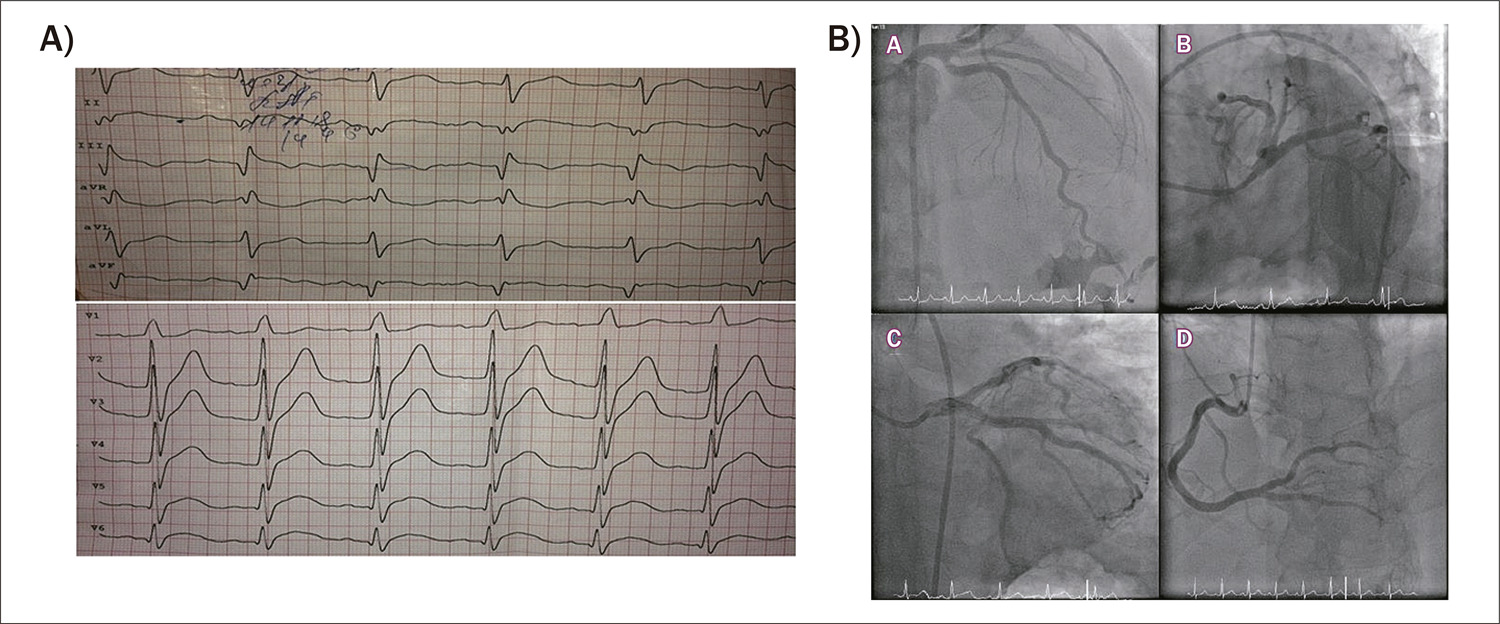
Myocardial infarction with non-obstructive coronary arteries (MINOCA) is a puzzling clinical phenomenon with an unclear prognosis, characterized by evidence of myocardial infarction (MI) with normal or near-normal coronary arteries on angiography1. Currently, there are no guidelines for management, and many patients are discharged without a determined etiology, often meaning that optimal treatment gets postponed.We report three MINOCA case studies with main pathophysiological cardiac causes, particularly epicardial, microvascular, and non-ischemic, prompting differential management. The patients presented with acute chest pain, troponin raise, and no angiographically significant coronary disease.In this study, we analyzed the etiology, clinical diagnosis, and treatment of MINOCA concerning the relevant literature.MINOCA is considered to be a dynamic working diagnosis, including coronary, myocardial, and non-coronary disorders. Prospective studies and registries are needed to improve patient care and outcome.

  • coronary artery
  • Diagnosis Diferential
  • Dilatation, Pathologic
  • Microvascular Spasm
  • MINOCA
  • Phenotype
Read Full Article
Creative Commons Attribution (CC BY) Creative Commons license
19/06/2023 DOI: 10.36660/abc.20220705
My approach to the diagnosis of congenital coronary anomalies by transthoracic echocardiography
ABCIC
Editorial

My approach to the diagnosis of congenital coronary anomalies by transthoracic echocardiography

Vitor Coimbra Guerra

Why do we need to assess the anatomy of the coronary arteries?

Until a few decades ago, coronary artery anatomy assessment by echocardiogram (ECHO) was considered a difficult secondary task even if analyzed by other cardiovascular imaging modalities, such as angiography by cardiac catheterization. Important changes in this approach in recent years can be explained by three important aspects:1) The origin and initial course of coronary artery anomalies can be a substrate for ischemia and even sudden death in young adults;,2) Transthoracic echocardiography (TTE) is a non-invasive radiation-free low-cost imaging test in the frontline of cardiac assessments;3) The anatomical and functional assessment of coronary arteries is part of a transthoracic test used to diagnose congenital heart diseases.,

Which congenital coronary artery anomalies are relevant and should be identified?

[…]

  • Congenital
  • coronary artery
  • Echocardiogram
Read Full Article
Creative Commons Attribution (CC BY) Creative Commons license
25/03/2022 DOI: 10.47593/2675-312X/20213403ecom16 Views 1
Figure 1
ABC
Original Article

Evaluation of Coronary Circulation after Arterial Switch Operation

Mariana Nicoletti Ferreira Baldo et al. Henrique Simão Trad Tarcisio José da Silva Junior Paulo Henrique Manso

Abstract

Background

Coronary artery evaluation remains after arterial switch operation a clinical challenge.

Objective

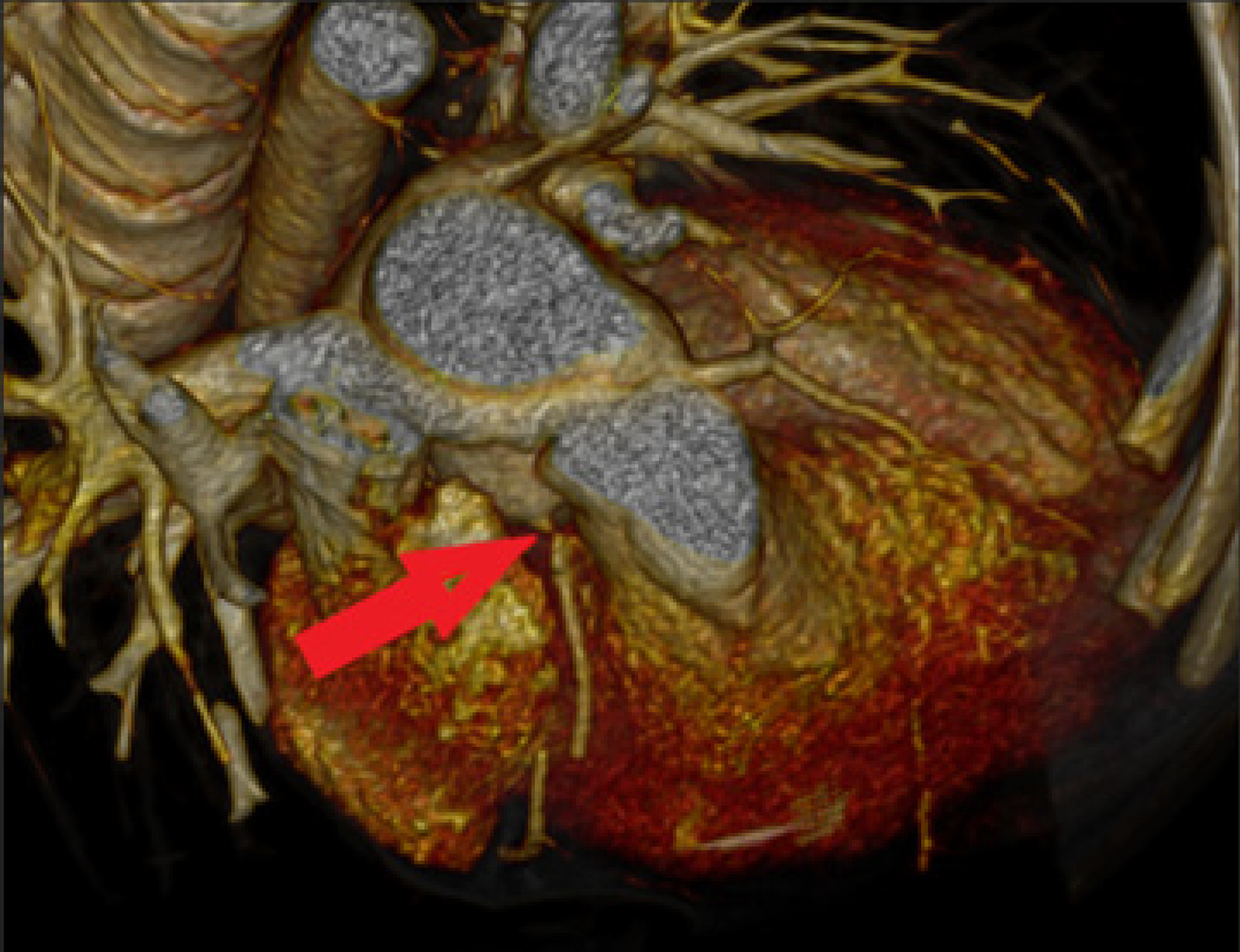
This study aims to correlate anatomical changes diagnosed by cardiac computed tomography (CCT) with physiological alterations on clinical evaluation to diagnose coronary obstruction in late ASO patients.

Methods

This study included 61 consecutive patients with mean age of 9.4 years who underwent ASO. The patients were submitted to echocardiography, electrocardiography, cardiopulmonary exercise test, and cardiac computed tomography to evaluate functional capacity and coronary artery anatomy.

Results

Cardiac computed tomography revealed that only 3.3% of the patients had coronary stenosis. These patients were asymptomatic, and no signs of myocardial ischemia were detected by the tests.

Conclusion

The incidence of coronary abnormalities in late ASO patients was 3.3% in our cohort. There is no clear guideline as to why, when, and how these patients should be screened or what to propose when a coronary obstruction is diagnosed in asymptomatic patients.

  • Arterial Switch Operation
  • coronary artery
  • coronary circulation
  • Diagnostic Imaging
  • Jatene's surgery
  • Tomography, X-Ray
Read Full Article
Creative Commons Attribution (CC BY) Creative Commons license
14/06/2021 DOI: 10.36660/abc.20200095
ABC
Editorial

Coronary Artery Dilation in Children with Febrile Exanthematous Illness without Criteria for Kawasaki Disease -An Enigmatic Disease

Vitor Coimbra Guerra

More than half a century has elapsed since Prof. Tomisaku Kawasaki’s did the first description of a unique disease. He saw the first 4-year-old patient with fever and rash in 1961…. At that time, he described the diagnosis “unknown”. The published paper title was Infantile acute febrile mucocutaneous lymph node syndrome with specific desquamation of the fingers and toes. Clinical observation of 50 cases. From This “unknown diagnosis”, which now we call Kawasaki disease (KD) until the current era, this vasculitis of unknown cause became the leading cause of acquired heart disease among children in United States.

Historically, the presence of coronary abnormalities was not noticed until patients died suddenly of cardiac complications. An angiographic study of 1100 patients showed coronary artery lesions in 24%, with aneurysms in 8% and a number of patients with stenoses and occlusions. As soon as the Coronary arteries became the key structure for risk stratification, treatment and outcome, extensive research and worldwide effort has been done targeting the correct diagnostic. Unfortunately, to make things more challenging, there are forms of “uncomplete KD” which overlaps with other forms of febrile Exanthematous illness in children.

[…]

  • coronary artery
  • Doenças Cardiovasculares/ diagnosis
  • Echocardiography/diagnostic Imaging
  • Exantemous
  • Fever
  • Kawasaki disease
Read Full Article
Creative Commons Attribution (CC BY) Creative Commons license
02/12/2019 DOI: 10.36660/abc.20190730 Views 1
Morphometric and topographic study of coronary ostia
ABC
Original Article

Morphometric and topographic study of coronary ostia

Jennecy Sales Cavalcanti et al. Natália Corrêa Vieira de Melo Renata Simões de Vasconcelos

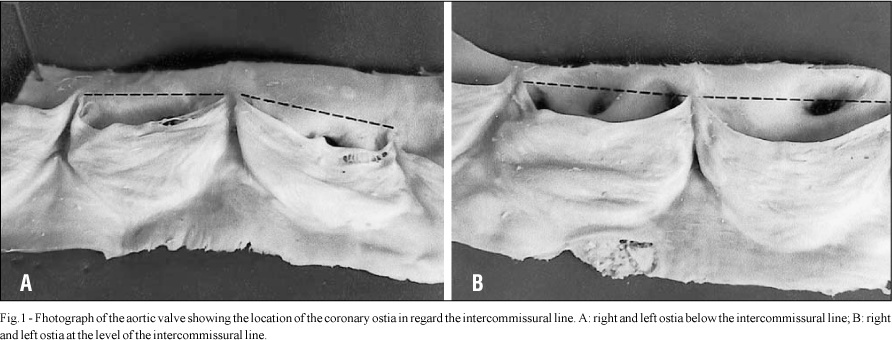
OBJECTIVE: To investigate the morphometric and topographic aspects of coronary ostia, correlating them with the aortic leaflets. METHODS: Fifty-one hearts with the great vessels attached were analyzed in this study. The ascending aorta was transversally sectioned 1 cm above the commissures of the aortic leaflets. The right and left coronary ostia were analyzed, as were the distances from these ostia to the bottom of the aortic sinuses and to the commissures of the aortic leaflets. RESULTS: The left coronary ostium was located below the intercommissural line in 42% of cases, above that line in 40% of cases, and at the level of that line in 18% of cases. The mean distance from the left coronary ostium to the bottom of the corresponding sinus was 12.6±2.61 mm. The right coronary ostium was located below the intercommissural line in 60% of cases, above that line in 28% of cases, and at the level of that line in 12% of cases. The mean distance from the right coronary ostium to the bottom of the corresponding aortic sinus was 13.2±2.64 mm. The mean diameters of the left and right coronary ostia were 4.75±0.93 mm and 3.46±0.94 mm, respectively. The mean diameters of the juxtamural portion of the left and right coronary arteries were 3.75±0.79 mm and 2.9±0.73 mm, respectively. In one case, both ostia were located in the left coronary sinus. CONCLUSION: The left coronary ostium may be located either above or below the intercommissural line. The right coronary ostium is predominantly located below the intercommissural line. The coronary ostia have reduced diameters as compared with the juxtamural diameters of their respective coronary arteries.

  • Aortic Valve
  • coronary artery
  • Heart
Read Full Article
Creative Commons Attribution (CC BY) Creative Commons license
05/11/2003 DOI: 10.1590/S0066-782X2003001200003
Effect of arginine vasopressin on the canine epicardial coronary artery: experiments on V1-receptor-mediated production of nitric oxide
ABC
Original Article

Effect of arginine vasopressin on the canine epicardial coronary artery: experiments on V1-receptor-mediated production of nitric oxide

Paulo Roberto B. Evora et al. Paul J. Pearson Alfredo J. Rodrigues Fernanda Viaro Hartzell V. Schaff

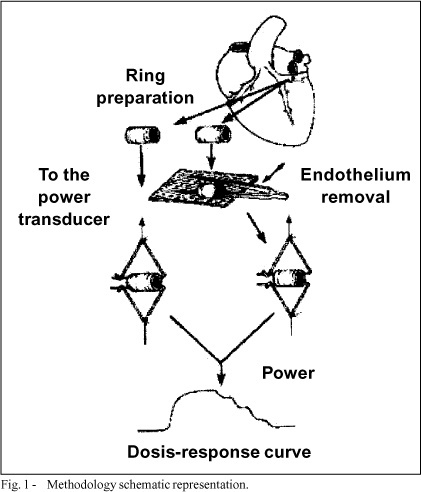
OBJECTIVE: To determine whether arginine vasopressin releases endothelium-derived nitric oxide (EDNO) from the epicardial coronary artery. METHODS: We studied segments of canine left circumflex coronary arteries suspended in organ chambers to measure isometric force. The coronary artery segments were contracted with prostaglandin F2alpha (2 x 10⁻⁶M) and exposed to a unique, strong arginine vasopressin concentration (10-6M) or titrated concentrations (10-9 a 10-5 M). RESULTS: The unique dose of arginine vasopressin concentration (10-6M) induced transient, but significant (p<0.05), relaxation in arterial segments with endothelium, and an increase, not significant, in tension in arteries without endothelium. Endothelium-dependent relaxation to arginine vasopressin was inhibited by Ng-monomethyl-L-arginine (L-NMMA, 10-5M) or N G-nitro-L-arginine (L-NOARG) (10-4M), 2 inhibitors of nitric oxide synthesis from L-arginine. Exogenous L-arginine (10-4M), but not D-arginine (10-4M), reversed the inhibitory effect of L-NMMA on vasopressin-mediated vasorelaxation. Endothelium dependent relaxation to vasopressin was also reversibly inhibited by the vasopressin V1-receptor blocker d(CH2)5Try(Me) arginine vasopressin (10-6M) (n=6, P<0.05). CONCLUSION: Vasopressin acts through V1 endothelial receptors to stimulate nitric oxide release from L-arginine.

  • coronary artery
  • Endothelium
  • Nitric Oxide
  • vasopressin
Read Full Article
Creative Commons Attribution (CC BY) Creative Commons license
26/06/2003 DOI: 10.1590/S0066-782X2003000500002 Views 1

How to cite this article

EndNote RIS

Electronic Document Format (Vancouver)

Lypovetska S. [PARTIAL-RETRACTION] MINOCA Phenotypes – A Challenge for Patient-Specific Management. Arquivos Brasileiros de Cardiologia 2023;120(6):e20220705.

Electronic Document Format (ABNT)

Lypovetska, Sofiya. [PARTIAL-RETRACTION] MINOCA Phenotypes – A Challenge for Patient-Specific Management. Arquivos Brasileiros de Cardiologia, v. 120, n. 6, e20220705, Jun. 2023.

Electronic Document Format (APA)

Lypovetska, S. (2023). [PARTIAL-RETRACTION] MINOCA Phenotypes – A Challenge for Patient-Specific Management. Arquivos Brasileiros de Cardiologia, 120(6), e20220705.

Electronic Document Format (ISO)

Lypovetska, Sofiya. [PARTIAL-RETRACTION] MINOCA Phenotypes – A Challenge for Patient-Specific Management. Arquivos Brasileiros de Cardiologia [online]. 2023, vol. 120, n. 6, [cited 2026-10-14], e20220705. Available from: <https://journals.cardiol.br/en/article/partial-retraction-minoca-phenotypes-a-challenge-for-patient-specific-management/>. ISSN 0066-782X

EndNote RIS

Electronic Document Format (Vancouver)

Guerra VC. My approach to the diagnosis of congenital coronary anomalies by transthoracic echocardiography. Arquivos Brasileiros de Cardiologia Imagem cardiovascular 2022;34(4):ecom16.

Electronic Document Format (ABNT)

Guerra, Vitor Coimbra. My approach to the diagnosis of congenital coronary anomalies by transthoracic echocardiography. Arquivos Brasileiros de Cardiologia Imagem cardiovascular, v. 34, n. 4, ecom16, Mar. 2022.

Electronic Document Format (APA)

Guerra, V. C. (2022). My approach to the diagnosis of congenital coronary anomalies by transthoracic echocardiography. Arquivos Brasileiros de Cardiologia Imagem cardiovascular, 34(4), ecom16.

Electronic Document Format (ISO)

Guerra, Vitor Coimbra. My approach to the diagnosis of congenital coronary anomalies by transthoracic echocardiography. Arquivos Brasileiros de Cardiologia Imagem cardiovascular [online]. 2022, vol. 34, n. 4, [cited 2026-10-14], ecom16. Available from: <https://journals.cardiol.br/en/article/my-approach-to-the-diagnosis-of-congenital-coronary-anomalies-by-transthoracic-echocardiography/>. ISSN 2318-8219

EndNote RIS

Electronic Document Format (Vancouver)

Baldo MNF, Trad HS, Silva Junior TJ, Manso PH. Evaluation of Coronary Circulation after Arterial Switch Operation. Arquivos Brasileiros de Cardiologia 2021;116(6):1111-6.

Electronic Document Format (ABNT)

Baldo, Mariana Nicoletti Ferreira; Trad, Henrique Simão; Silva Junior, Tarcisio José da; Manso, Paulo Henrique. Evaluation of Coronary Circulation after Arterial Switch Operation. Arquivos Brasileiros de Cardiologia, v. 116, n. 6, p. 1111-1116, Jun. 2021.

Electronic Document Format (APA)

Baldo, M. N. F., Trad, H. S., Silva Junior, T. J. , & Manso, P. H. (2021). Evaluation of Coronary Circulation after Arterial Switch Operation. Arquivos Brasileiros de Cardiologia, 116(6), 1111-1116.

Electronic Document Format (ISO)

Baldo, Mariana Nicoletti Ferreira and Trad, Henrique Simão and Silva Junior, Tarcisio José da and Manso, Paulo Henrique. Evaluation of Coronary Circulation after Arterial Switch Operation. Arquivos Brasileiros de Cardiologia [online]. 2021, vol. 116, n. 6, [cited 2026-10-14], pp. 1111-1116. Available from: <https://journals.cardiol.br/en/article/evaluation-of-coronary-circulation-after-arterial-switch-operation/>. ISSN 0066-782X

EndNote RIS

Electronic Document Format (Vancouver)

Guerra VC. Coronary Artery Dilation in Children with Febrile Exanthematous Illness without Criteria for Kawasaki Disease -An Enigmatic Disease. Arquivos Brasileiros de Cardiologia 2019;113(6):1119-20.

Electronic Document Format (ABNT)

Guerra, Vitor Coimbra. Coronary Artery Dilation in Children with Febrile Exanthematous Illness without Criteria for Kawasaki Disease -An Enigmatic Disease. Arquivos Brasileiros de Cardiologia, v. 113, n. 6, p. 1119-1120, Dec. 2019.

Electronic Document Format (APA)

Guerra, V. C. (2019). Coronary Artery Dilation in Children with Febrile Exanthematous Illness without Criteria for Kawasaki Disease -An Enigmatic Disease. Arquivos Brasileiros de Cardiologia, 113(6), 1119-1120.

Electronic Document Format (ISO)

Guerra, Vitor Coimbra. Coronary Artery Dilation in Children with Febrile Exanthematous Illness without Criteria for Kawasaki Disease -An Enigmatic Disease. Arquivos Brasileiros de Cardiologia [online]. 2019, vol. 113, n. 6, [cited 2026-10-14], pp. 1119-1120. Available from: <https://journals.cardiol.br/en/article/coronary-artery-dilation-in-children-with-febrile-exanthematous-illness-without-criteria-for-kawasaki-disease-an-enigmatic-disease/>. ISSN 0066-782X

EndNote RIS

Electronic Document Format (Vancouver)

Cavalcanti JS, Melo NCV, Vasconcelos RS. Morphometric and topographic study of coronary ostia. Arquivos Brasileiros de Cardiologia 2003;81(4):359-62.

Electronic Document Format (ABNT)

Cavalcanti, Jennecy Sales; Melo, Natália Corrêa Vieira de; Vasconcelos, Renata Simões de. Morphometric and topographic study of coronary ostia. Arquivos Brasileiros de Cardiologia, v. 81, n. 4, p. 359-362, Nov. 2003.

Electronic Document Format (APA)

Cavalcanti, J. S., Melo, N. C. V. , & Vasconcelos, R. S. (2003). Morphometric and topographic study of coronary ostia. Arquivos Brasileiros de Cardiologia, 81(4), 359-362.

Electronic Document Format (ISO)

Cavalcanti, Jennecy Sales and Melo, Natália Corrêa Vieira de and Vasconcelos, Renata Simões de. Morphometric and topographic study of coronary ostia. Arquivos Brasileiros de Cardiologia [online]. 2003, vol. 81, n. 4, [cited 2026-10-14], pp. 359-362. Available from: <https://journals.cardiol.br/en/article/morphometric-and-topographic-study-of-coronary-ostia/>. ISSN 0066-782X

EndNote RIS

Electronic Document Format (Vancouver)

Evora PRB, Pearson PJ, Rodrigues AJ, Viaro F, Schaff HV. Effect of arginine vasopressin on the canine epicardial coronary artery: experiments on V1-receptor-mediated production of nitric oxide. Arquivos Brasileiros de Cardiologia 2003;80(5):489-94.

Electronic Document Format (ABNT)

Evora, Paulo Roberto B.; Pearson, Paul J.; Rodrigues, Alfredo J.; Viaro, Fernanda; Schaff, Hartzell V.. Effect of arginine vasopressin on the canine epicardial coronary artery: experiments on V1-receptor-mediated production of nitric oxide. Arquivos Brasileiros de Cardiologia, v. 80, n. 5, p. 489-494, Jun. 2003.

Electronic Document Format (APA)

Evora, P. R. B., Pearson, P. J., Rodrigues, A. J., Viaro, F., & Schaff, H. V. (2003). Effect of arginine vasopressin on the canine epicardial coronary artery: experiments on V1-receptor-mediated production of nitric oxide. Arquivos Brasileiros de Cardiologia, 80(5), 489-494.

Electronic Document Format (ISO)

Evora, Paulo Roberto B. and Pearson, Paul J. and Rodrigues, Alfredo J. and Viaro, Fernanda and Schaff, Hartzell V.. Effect of arginine vasopressin on the canine epicardial coronary artery: experiments on V1-receptor-mediated production of nitric oxide. Arquivos Brasileiros de Cardiologia [online]. 2003, vol. 80, n. 5, [cited 2026-10-14], pp. 489-494. Available from: <https://journals.cardiol.br/en/article/effect-of-arginine-vasopressin-on-the-canine-epicardial-coronary-artery-experiments-on-v1-receptor-mediated-production-of-nitric-oxide/>. ISSN 0066-782X

  • About ABC Family
  • Internal Regulation
  • Editorial Board
  • Brazilian Society of Cardiology (SBC)

Issues

SBC Guidelines

  • Videos
  • Podcasts
  • News