ABC Family Arquivos Brasileiros de Cardiologia International Journal of Cardiovascular Sciences ABC Heart Failure & Cardiomyopathy ABC Imagem Cardiovascular
Português English
ABC Family
Português English
  • About
    • About ABC Family
    • Internal Regulation
    • Editorial Board
    • Brazilian Society of Cardiology (SBC)
  • Issues
  • SBC Guidelines
  • Content
    • Videos
    • Podcasts
    • News
  • About
    • About ABC Family
    • Internal Regulation
    • Editorial Board
    • Brazilian Society of Cardiology (SBC)
  • Issues
  • SBC Guidelines
  • Content
    • Videos
    • Podcasts
    • News

ABC Family

  • ABC Family
  • Arquivos Brasileiros de Cardiologia
  • International Journal of Cardiovascular Sciences
  • ABC Heart Failure & Cardiomyopathy
  • ABC Imagem Cardiovascular
Search in

No content found.

Journals
Ordering
Article types
Others

  1. Home
  2. Keyword: Health Behavior
Figure 1
ABC
Original Article

Construction and Validation of a Protocol Targeting Patients on Oral Anticoagulation with Warfarin

Hannah Cardoso Barbosa et al. Heloisa de Carvalho Torres João Antônio de Queiroz Oliveira Rebeca Priscila de Melo Santos … Josiane Moreira da Costa Leonardo Gonçalves Miranda Adriana Silvina Pagano Marcus Fernando da Silva Praxedes Maria Auxiliadora Parreiras Martins

Abstract

Background

Warfarin is an oral anticoagulant that is very useful in preventing thromboembolism, though it is considered a drug with a high risk of causing adverse events. Considering the practical challenges in controlling oral anticoagulation, the patients on warfarin could benefit from educational strategies aimed at behavioral changes, active participation in self-care, and adherence to drug therapy.

Objective

The aim was to construct and validate the EmpoderACO protocol for behavioral changes in warfarin patients.

Methods

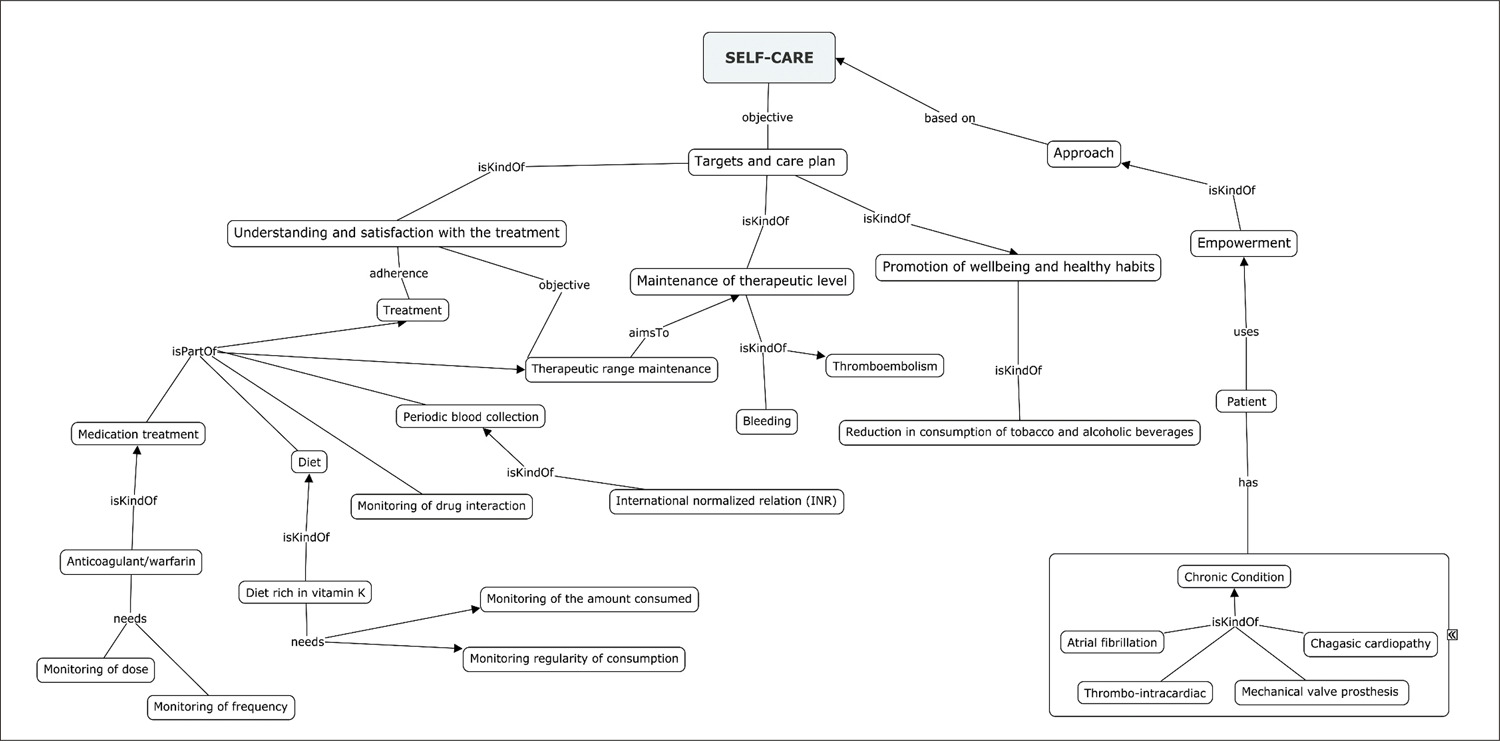
The methodological steps were: definition of concepts and domains of self-care, identification of objectives, construction and selection of items, assessment of content validity, and pre-test in the target population.

Results

Relevance, adequacy, clarity, and internal reliability of the instrument’s items were assessed by a multidisciplinary judges committee (JC) through the E-surv web platform, obtaining an average agreement of ≥0.91. The understanding of the instrument measured by the target population revealed adequate clarity with a coefficient average of 0.96.

Conclusion

EmpoderACO can aid in qualifying the communication process between medical professionals and patients, as well as in improving adherence to both treatment and clinical outcomes, and can be replicated in healthcare settings.
  • Anticoagulants
  • Health Behavior
  • Health Education
  • Warfarin
Read Full Article
Creative Commons Attribution (CC BY) Creative Commons license
30/06/2023 DOI: 10.36660/abc.20220576 Views 1
ABC
Editorial

Use of Warfarin in Oral Anticoagulation Therapy: Challenges and EmpoderACO Strategy for Promoting Patient Empowerment in Self-Care

Carina Carvalho Silvestre et al. Sabrina Cerqueira-Santos

Warfarin is an oral anticoagulant widely used for primary and secondary prevention of thromboembolism that belongs to the class of vitamin K antagonists., In Brazil, warfarin is still the main oral anticoagulant distributed free of charge by the Unified Health System. According to the Institute for Safe Practices in the Use of Medicines (ISMP – Brazil), warfarin is classified as a high-alert or potentially dangerous drug since it has a low therapeutic index and its use requires constant attention for the drug to act in the prevention of thromboembolic events without increasing the risk of hemorrhages., Furthermore, it appears as one of the drugs that should be the target of priority actions for the prevention of damage, according to the Third Global Patient Safety Challenge of the World Health Organization Health.

Management of anticoagulant therapy with warfarin is a challenge for many patients. It requires procedures that are considered complex, such as the regular measurement of the international normalized ratio (INR), the interpretation of the results to adjust the drug dose by the responsible team, as well as the adequate understanding of the factors that may influence its effectiveness and safety, such as adverse reactions and interactions with other drugs and foods., Thus, strategies are needed to help in the proper and safe use of the medication and contribute to understanding its use process and consequent adherence to treatment.

[…]

  • Anticoagulants
  • Empowerment for Health
  • Health Behavior
  • Health Education
  • Warfarin
Read Full Article
Creative Commons Attribution (CC BY) Creative Commons license
30/06/2023 DOI: 10.36660/abc.20230335 Views 1
Figure 1
ABC
Original Article

Healthy School, Happy School: Design and Protocol for a Randomized Clinical Trial Designed to Prevent Weight Gain in Children

Daniela Schneid Schuh et al. Maíra Ribas Goulart Sandra Mari Barbiero Caroline D’Azevedo Sica … Raphael Borges David William Moraes Lucia Campos Pellanda

Abstract

Background:

Schools have become a key figure for the promotion of health and obesity interventions, bringing the development of critical awareness to the construction and promotion of a healthy diet, physical activity, and the monitoring of the nutritional status in childhood and adolescence.

Objectives:

To describe a study protocol to evaluate the effectiveness of an intervention designed to improve knowledge of food choices in the school environment.

Methods:

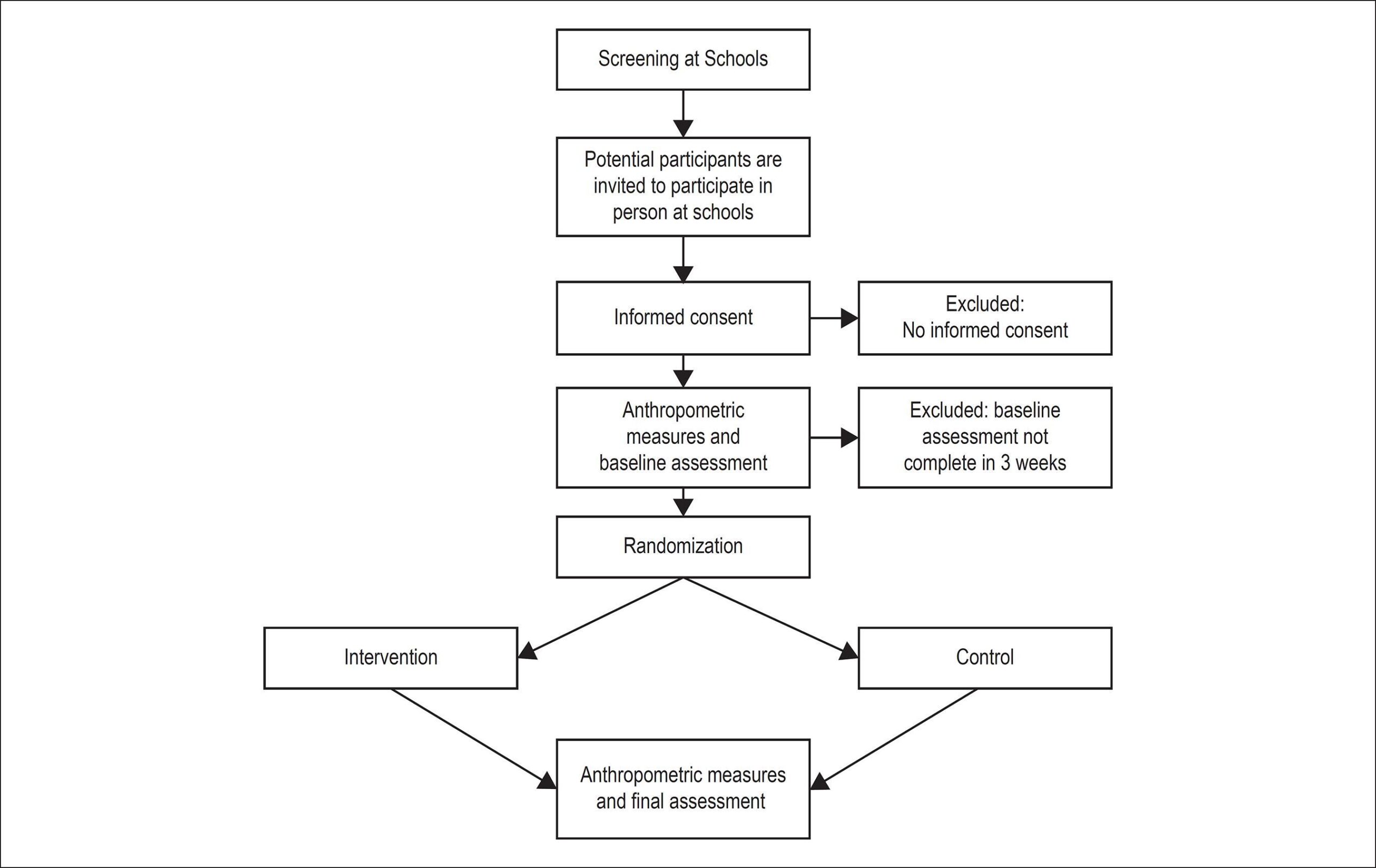
This is a cluster-randomized, parallel, two-arm study conducted in public elementary and middle schools in Brazil. Participants will be children and adolescents between the ages of 5 and 15 years, from both genders. The interventions will be focusing on changes in lifestyle, physical activities and nutritional education. Intervention activities will occur monthly in the school’s multimedia room or sports court. The control group arm will receive usual recommendations by the school. The primary outcome variable will be anthropometric measures, such as body mass index percentiles and levels of physical activity by the International Physical Activity Questionnaire.

Results:

We expect that after the study children will increase the ingestion of fresh food, reduce excessive consumption of sugary and processed foods, and reduce the hours of sedentary activities.

Conclusion:

The purpose of starting the dietary intervention at this stage of life is to develop a knowledge that will enable for healthy choices, providing opportunities for a better future for this population.

  • Body weight
  • Diet, Food and Nutrition
  • Health Behavior
  • Health Promotion
  • Motor Activity
  • Obesity
  • Prevention & Control
  • Schools
Read Full Article
Creative Commons Attribution (CC BY) Creative Commons license
01/06/2017 DOI: 10.5935/abc.20170072 Views 1
Figure 1
ABC
Original Article

Education to a Healthy Lifestyle Improves Symptoms and Cardiovascular Risk Factors – AsuRiesgo Study

Graciela Chaves et al. Nidia Britez Judith Munzinger Lorenz Uhlmann … Graciela Gonzalez Guillermo Oviedo Victoria Chaparro Oscar Achon Thomas Bruckner Meinhard Kieser Hugo A. Katus Derliz Mereles

Background:

Cardiovascular diseases are the current leading causes of death and disability globally.

Objective:

To assess the effects of a basic educational program for cardiovascular prevention in an unselected outpatient population.

Methods:

All participants received an educational program to change to a healthy lifestyle. Assessments were conducted at study enrollment and during follow-up. Symptoms, habits, ATP III parameters for metabolic syndrome, and American Heart Association’s 2020 parameters of cardiovascular health were assessed.

Results:

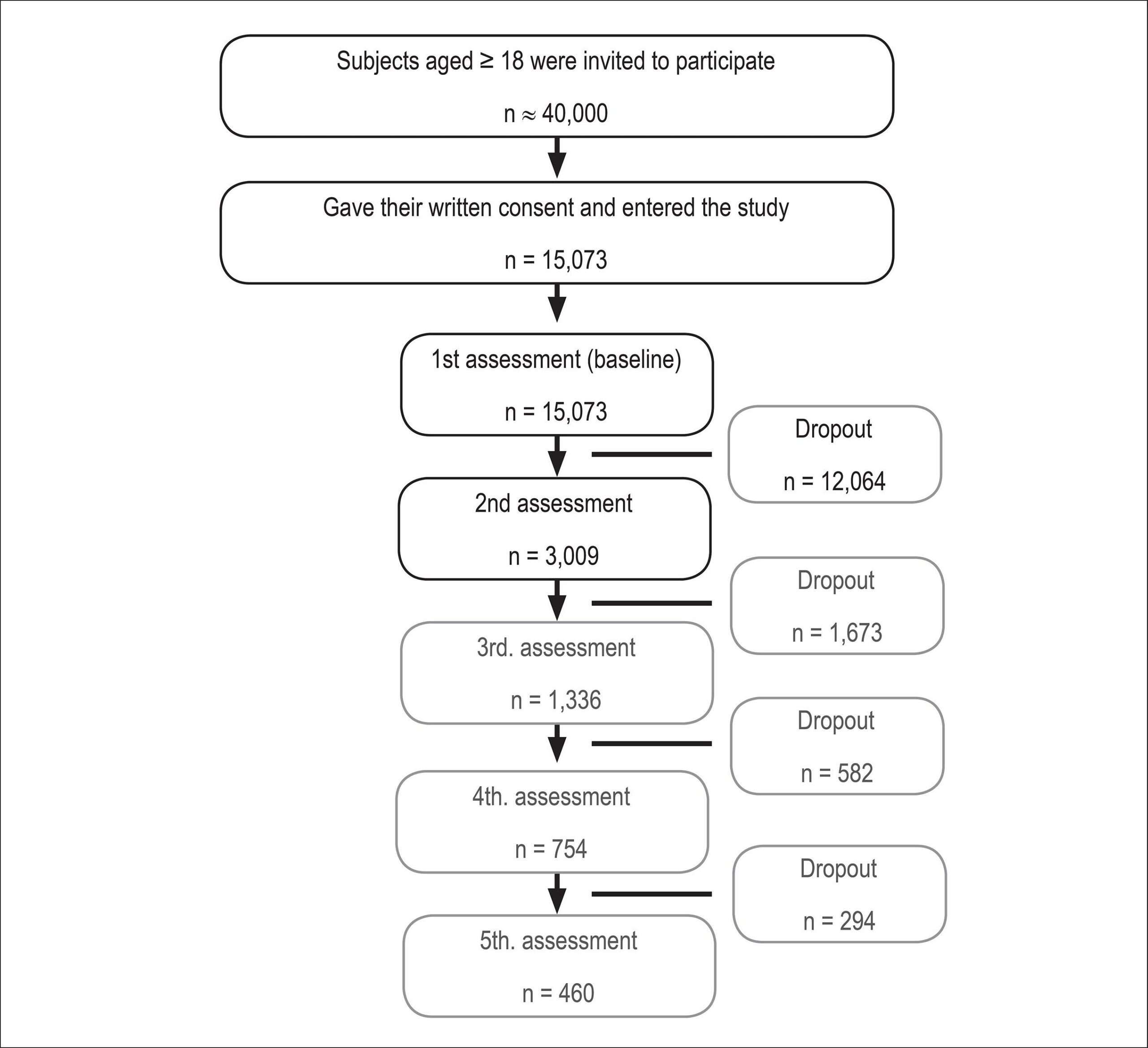
A total of 15,073 participants aged ≥ 18 years entered the study. Data analysis was conducted in 3,009 patients who completed a second assessment. An improvement in weight (from 76.6 ± 15.3 to 76.4 ± 15.3 kg, p = 0.002), dyspnea on exertion NYHA grade II (from 23.4% to 21.0%) and grade III (from 15.8% to 14.0%) and a decrease in the proportion of current active smokers (from 3.6% to 2.9%, p = 0.002) could be documented. The proportion of patients with levels of triglycerides > 150 mg/dL (from 46.3% to 42.4%, p 100 mg/dL (from 69.3% to 65.5%, p < 0.001) improved. A ≥ 20% improvement of AHA 2020 metrics at the level graded as poor was found for smoking (-21.1%), diet (-29.8%), and cholesterol level (-23.6%). A large dropout as a surrogate indicator for low patient adherence was documented throughout the first 5 visits, 80% between the first and second assessments, 55.6% between the second and third assessments, 43.6% between the third and fourth assessments, and 38% between the fourth and fifth assessments.

Conclusion:

A simple, basic educational program may improve symptoms and modifiable cardiovascular risk factors, but shows low patient adherence.

  • Health Behavior
  • Health Education
  • Life Style
  • Obesity
  • Prevention
  • Risk Factors
Read Full Article
Creative Commons Attribution (CC BY) Creative Commons license
17/03/2015 DOI: 10.5935/abc.20150021

How to cite this article

EndNote RIS

Electronic Document Format (Vancouver)

Barbosa HC, Torres HC, Oliveira JAQ, Santos RPM, Costa JM, Miranda LG, Pagano AS, et al. Construction and Validation of a Protocol Targeting Patients on Oral Anticoagulation with Warfarin. Arquivos Brasileiros de Cardiologia 2023;120(6):e20220576.

Electronic Document Format (ABNT)

Barbosa, Hannah Cardoso; Torres, Heloisa de Carvalho; Oliveira, João Antônio de Queiroz; Santos, Rebeca Priscila de Melo; Costa, Josiane Moreira da; Miranda, Leonardo Gonçalves; Pagano, Adriana Silvina; Praxedes, Marcus Fernando da Silva; Martins, Maria Auxiliadora Parreiras. Construction and Validation of a Protocol Targeting Patients on Oral Anticoagulation with Warfarin. Arquivos Brasileiros de Cardiologia, v. 120, n. 6, e20220576, Jun. 2023.

Electronic Document Format (APA)

Barbosa, H. C., Torres, H. C., Oliveira, J. A. Q., Santos, R. P. M., Costa, J. M. , Miranda, L. G., Pagano, A. S., Praxedes, M. F. S., & Martins, M. A. P. (2023). Construction and Validation of a Protocol Targeting Patients on Oral Anticoagulation with Warfarin. Arquivos Brasileiros de Cardiologia, 120(6), e20220576.

Electronic Document Format (ISO)

Barbosa, Hannah Cardoso and Torres, Heloisa de Carvalho and Oliveira, João Antônio de Queiroz and Santos, Rebeca Priscila de Melo and Costa, Josiane Moreira da and Miranda, Leonardo Gonçalves and Pagano, Adriana Silvina and Praxedes, Marcus Fernando da Silva and Martins, Maria Auxiliadora Parreiras. Construction and Validation of a Protocol Targeting Patients on Oral Anticoagulation with Warfarin. Arquivos Brasileiros de Cardiologia [online]. 2023, vol. 120, n. 6, [cited 2026-10-14], e20220576. Available from: <https://journals.cardiol.br/en/article/construction-and-validation-of-a-protocol-targeting-patients-on-oral-anticoagulation-with-warfarin/>. ISSN 0066-782X

EndNote RIS

Electronic Document Format (Vancouver)

Silvestre CC, Cerqueira-Santos S. Use of Warfarin in Oral Anticoagulation Therapy: Challenges and EmpoderACO Strategy for Promoting Patient Empowerment in Self-Care. Arquivos Brasileiros de Cardiologia 2023;120(6):e20230335.

Electronic Document Format (ABNT)

Silvestre, Carina Carvalho; Cerqueira-Santos, Sabrina. Use of Warfarin in Oral Anticoagulation Therapy: Challenges and EmpoderACO Strategy for Promoting Patient Empowerment in Self-Care. Arquivos Brasileiros de Cardiologia, v. 120, n. 6, e20230335, Jun. 2023.

Electronic Document Format (APA)

Silvestre, C. C., & Cerqueira-Santos, S. (2023). Use of Warfarin in Oral Anticoagulation Therapy: Challenges and EmpoderACO Strategy for Promoting Patient Empowerment in Self-Care. Arquivos Brasileiros de Cardiologia, 120(6), e20230335.

Electronic Document Format (ISO)

Silvestre, Carina Carvalho and Cerqueira-Santos, Sabrina. Use of Warfarin in Oral Anticoagulation Therapy: Challenges and EmpoderACO Strategy for Promoting Patient Empowerment in Self-Care. Arquivos Brasileiros de Cardiologia [online]. 2023, vol. 120, n. 6, [cited 2026-10-14], e20230335. Available from: <https://journals.cardiol.br/en/article/use-of-warfarin-in-oral-anticoagulation-therapy-challenges-and-empoderaco-strategy-for-promoting-patient-empowerment-in-self-care/>. ISSN 0066-782X

EndNote RIS

Electronic Document Format (Vancouver)

Schuh DS, Goulart MR, Barbiero SM, Sica CD, Borges R, Moraes DW, Pellanda LC, et al. Healthy School, Happy School: Design and Protocol for a Randomized Clinical Trial Designed to Prevent Weight Gain in Children. Arquivos Brasileiros de Cardiologia 2017;108(6):501-7.

Electronic Document Format (ABNT)

Schuh, Daniela Schneid; Goulart, Maíra Ribas; Barbiero, Sandra Mari; Sica, Caroline D’Azevedo; Borges, Raphael; Moraes, David William; Pellanda, Lucia Campos. Healthy School, Happy School: Design and Protocol for a Randomized Clinical Trial Designed to Prevent Weight Gain in Children. Arquivos Brasileiros de Cardiologia, v. 108, n. 6, p. 501-507, May. 2017.

Electronic Document Format (APA)

Schuh, D. S., Goulart, M. R., Barbiero, S. M., Sica, C. D., Borges, R., Moraes, D. W., & Pellanda, L. C. (2017). Healthy School, Happy School: Design and Protocol for a Randomized Clinical Trial Designed to Prevent Weight Gain in Children. Arquivos Brasileiros de Cardiologia, 108(6), 501-507.

Electronic Document Format (ISO)

Schuh, Daniela Schneid and Goulart, Maíra Ribas and Barbiero, Sandra Mari and Sica, Caroline D’Azevedo and Borges, Raphael and Moraes, David William and Pellanda, Lucia Campos. Healthy School, Happy School: Design and Protocol for a Randomized Clinical Trial Designed to Prevent Weight Gain in Children. Arquivos Brasileiros de Cardiologia [online]. 2017, vol. 108, n. 6, [cited 2026-10-14], pp. 501-507. Available from: <https://journals.cardiol.br/en/article/healthy-school-happy-school-design-and-protocol-for-a-randomized-clinical-trial-designed-to-prevent-weight-gain-in-children/>. ISSN 0066-782X

EndNote RIS

Electronic Document Format (Vancouver)

Chaves G, Britez N, Munzinger J, Uhlmann L, Gonzalez G, Oviedo G, Chaparro V, et al. Education to a Healthy Lifestyle Improves Symptoms and Cardiovascular Risk Factors – AsuRiesgo Study. Arquivos Brasileiros de Cardiologia 2015;104(5):347-55.

Electronic Document Format (ABNT)

Chaves, Graciela; Britez, Nidia; Munzinger, Judith; Uhlmann, Lorenz; Gonzalez, Graciela; Oviedo, Guillermo; Chaparro, Victoria; Achon, Oscar; Bruckner, Thomas; Kieser, Meinhard; Katus, Hugo A.; Mereles, Derliz. Education to a Healthy Lifestyle Improves Symptoms and Cardiovascular Risk Factors – AsuRiesgo Study. Arquivos Brasileiros de Cardiologia, v. 104, n. 5, p. 347-355, Mar. 2015.

Electronic Document Format (APA)

Chaves, G., Britez, N., Munzinger, J., Uhlmann, L., Gonzalez, G., Oviedo, G., Chaparro, V., Achon, O., Bruckner, T., Kieser, M., Katus, H. A., & Mereles, D. (2015). Education to a Healthy Lifestyle Improves Symptoms and Cardiovascular Risk Factors – AsuRiesgo Study. Arquivos Brasileiros de Cardiologia, 104(5), 347-355.

Electronic Document Format (ISO)

Chaves, Graciela and Britez, Nidia and Munzinger, Judith and Uhlmann, Lorenz and Gonzalez, Graciela and Oviedo, Guillermo and Chaparro, Victoria and Achon, Oscar and Bruckner, Thomas and Kieser, Meinhard and Katus, Hugo A. and Mereles, Derliz. Education to a Healthy Lifestyle Improves Symptoms and Cardiovascular Risk Factors – AsuRiesgo Study. Arquivos Brasileiros de Cardiologia [online]. 2015, vol. 104, n. 5, [cited 2026-10-14], pp. 347-355. Available from: <https://journals.cardiol.br/en/article/education-to-a-healthy-lifestyle-improves-symptoms-and-cardiovascular-risk-factors-asuriesgo-study/>. ISSN 0066-782X

  • About ABC Family
  • Internal Regulation
  • Editorial Board
  • Brazilian Society of Cardiology (SBC)

Issues

SBC Guidelines

  • Videos
  • Podcasts
  • News