| IJCS
ABC Family Arquivos Brasileiros de Cardiologia International Journal of Cardiovascular Sciences ABC Heart Failure & Cardiomyopathy ABC Imagem Cardiovascular
Português English
ABC Family | IJCS
Português English
  • About
    • About the Journal
    • Internal Regulation
    • Editors Section
    • Editorial Board
    • SBC Award
  • Instructions to Authors
    • Guidelines for Publication
    • Editorial Policy
    • Ethics Policy
    • Policy on the Use of Artificial Intelligence
    • Mandatory Publication Form
    • Publication Fee
  • Issues
  • SBC Guidelines
  • Abstracts
    • How to Publish an Abstract Supplement?
    • Published Supplements
  • About
    • About the Journal
    • Internal Regulation
    • Editors Section
    • Editorial Board
    • SBC Award
  • Instructions to Authors
    • Guidelines for Publication
    • Editorial Policy
    • Ethics Policy
    • Policy on the Use of Artificial Intelligence
    • Mandatory Publication Form
    • Publication Fee
  • Issues
  • SBC Guidelines
  • Abstracts
    • How to Publish an Abstract Supplement?
    • Published Supplements

ABC Family

  • ABC Family
  • Arquivos Brasileiros de Cardiologia
  • International Journal of Cardiovascular Sciences
  • ABC Heart Failure & Cardiomyopathy
  • ABC Imagem Cardiovascular
Search in

No content found.

Journals
Ordering
Article types
Others

  1. Home
  2. IJCS
  3. Issues
  4. 2017, Volume 30, Number 5
Editorial

Are my Values Different from Yours? The Value of Coronary Artery Disease Invasive Care in Brazil

Alexandre Siciliano Colafranceschi

Coronary Artery Disease (CAD) has been consistently associated with the leading cause of death and disability in most western industrialized countries since the mid-1950s. Although it still has a major impact on the health of society in these countries, CAD rates have considerably decreased in recent decades.

There are significant differences in the prevalence of CAD, as different world regions face varying stages of this epidemic. An epidemiological transition model for cardiovascular disease describes a series of stages starting from a population profile with low life expectancy and cardiovascular diseases mainly due to infectious diseases and malnutrition, which is a pattern commonly observed in developing countries. As the economic and public health development improves the population’s nutrition and decreases infectious disease rates, life expectancy increases, and the pattern and rates of cardiovascular disease are changed. In the last phase, commonly seen in high-income countries, life expectancy increases, and degenerative cardiovascular diseases at advanced age predominate. Variable rates of incidence, prevalence, and mortality reflect the different levels of risk factors, other concurrent causes of death, and the availability of resources to fight cardiovascular disease.

[…]

  • Balloon, Coronary
  • Cardiovascular Diseases / epidemiology
  • Coronary Artery Disease
  • Minimally Invasive Procedures Angioplasty
Read Full Article
Creative Commons Attribution (CC BY) Creative Commons license
01/01/2017 DOI: 10.5935/2359-4802.20170074
Figure 1
Original Article

Temporal Evaluation of Coronary Revascularization Procedures Performed through the Unified Health System (SUS) in Brazil: a 20-year overview

Igor Ribeiro de Castro Bienert et al. Alexandre Rodrigues Érika Airi Harada Karoline Lopes Silva … Amanda Ribeiro Valente Paulo André da Silva Joao Carlos Moron Saes Braga Fabio Salerno Rinaldi Fábio Villaça Guimarães Filho Pedro Beraldo de Andrade

Abstract

Introduction:

The mortality rates associated with coronary atherosclerotic disease (CAD) have been declining over the past decades driven, in part, by advances in revascularization techniques.

Objective:

The aim of this study was to provide an overview of the past 20 years in the treatment of CAD delivered by the Brazilian Unified Health Care System (SUS).

Methods:

The data were obtained from SUS’s TABNET and SIGTAP systems and IBGE. The procedures were grouped into the categories percutaneous, surgical, and primary percutaneous revascularizations. The analysis included the number of hospital admission authorizations (AIH), mean length of hospital stay, in-hospital mortality, mean total amount paid by procedure, and mean values paid per AIH and for professional and hospital services.

Results:

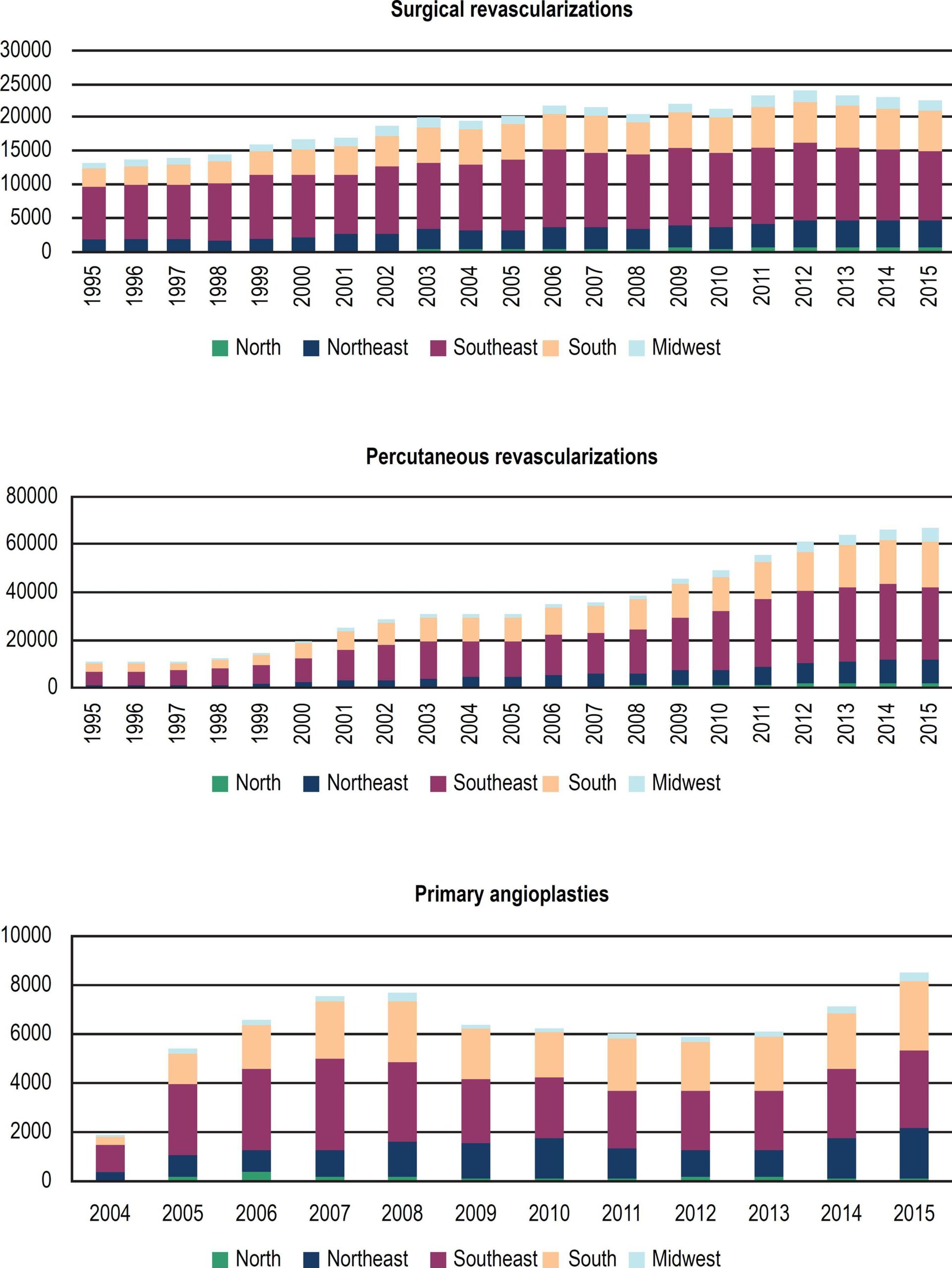
Between 1995 and 2015, there were increases in the number of surgical revascularizations (from 13,198 to 22,559) and percutaneous revascularizations (from 10,522 to 66,345). Similarly, the number of primary angioplasties increased between 2004 and 2015 (from 1,901 to 8,524). There was a decrease in the mean length of hospital stay (from 14.4 to 12.8 days) and hospital mortality (from 7.6% to 5.9%) for surgical revascularizations, and decrease in mean length of hospital stay (from 5.3 days to 3.7 days) but maintenance of the mortality rates (2.2%) for percutaneous revascularizations. In primary angioplasties, the mean length of hospital stay varied from 5.3 to 5.6 days and the mortality rate varied from 7.94% to 7.43% between 2004 and 2015, respectively. The mean total amount paid for surgical revascularization varied from R$ 4,327.57 to $12,839.13 and for percutaneous revascularizations from R$ 2,615.81 to $6,187.87 between 1995 and 2015, respectively. Corresponding values for primary angioplasties were R$ 5,415.58 in 2004 to R$ 6,581.51 in 2015.

Conclusions:

The number of revascularization procedures increased in Brazil over the past 20 years, with an improvement in mortality rates and decrease in length of hospital stay. There was a substantial lag in economic values relative to the inflation accumulated during the period.

  • Angioplasty, Balloon, Coronary
  • Coronary Artery Diseases
  • Health Care Costs
  • Myocardial Revascularization
  • Unified Health System
Read Full Article
Creative Commons Attribution (CC BY) Creative Commons license
01/01/2017 DOI: 10.5935/2359-4802.20170080 Views 1
Figure 1
Original Article

Effectiveness of Medical and Revascularization Procedures as the Initial Strategy in Stable Coronary Artery Disease: A Cohort Study

Mariana Vargas Furtado et al. Gustavo Neves de Araujo Mariana Ferreira Jost Andre Dias Americo … Nicolas Peruzzo Guilherme Nasi Guilherme Heiden Telo Flavia Kessler Borges Carisi Anne Polanczyk

Abstract

Background:

Coronary artery bypass grafting surgery (CABG) and percutaneous coronary intervention (PCI) are widely-used strategies in the management of stable coronary artery disease (CAD).

Objective:

To evaluate the prognosis of patients with stable CAD initially treated by medical therapy (MT), compared to the patients who were submitted to revascularization procedures.

Methods:

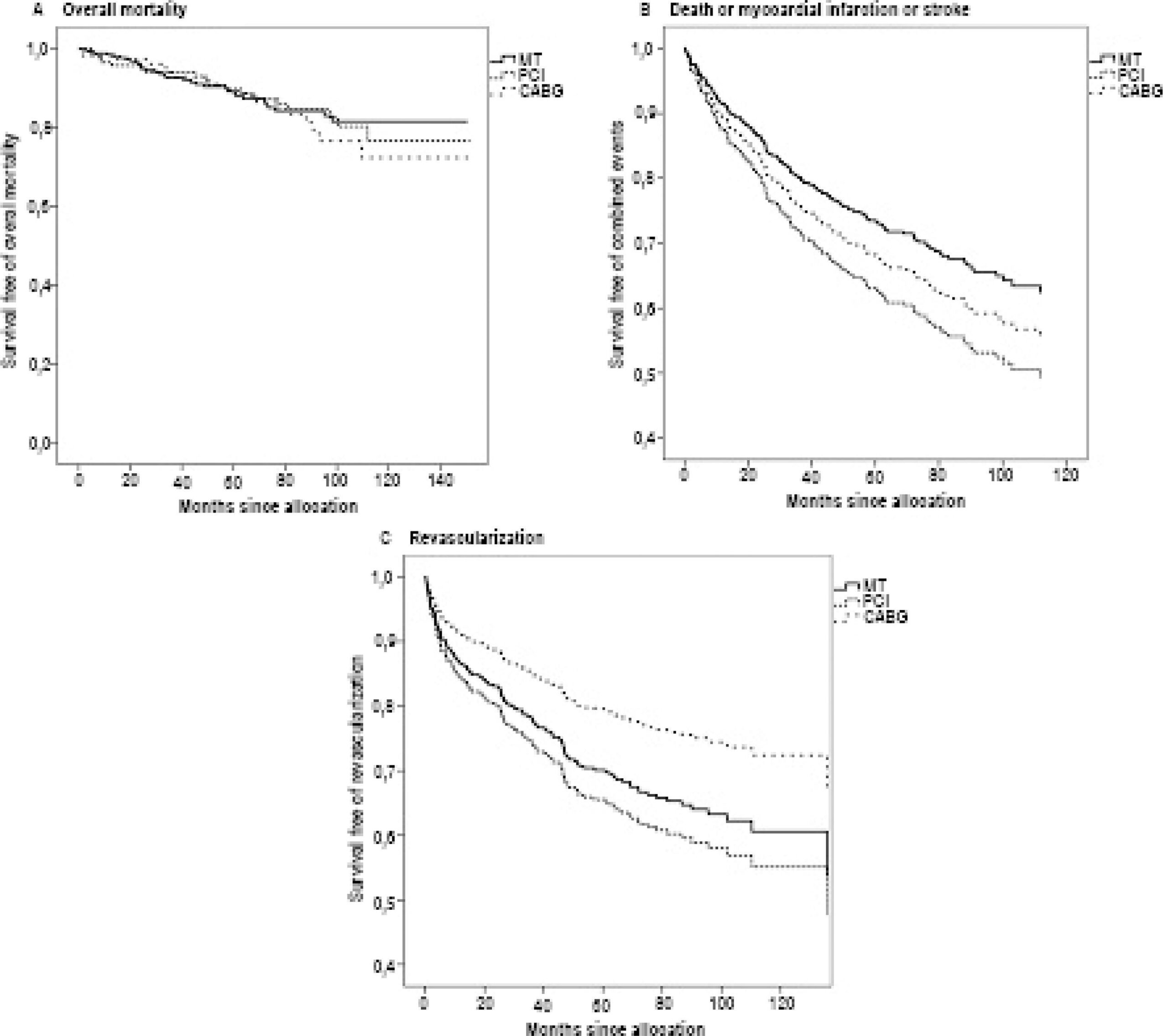
We conducted a prospective cohort study of 560 patients from an outpatient clinic in a tertiary hospital, with a mean follow-up of 5 years. Patients were classified into MT (n = 288), PCI (n = 159) and CABG (n=113) groups according to their initial treatment strategy. Primary endpoints were overall mortality and combined events of death, acute coronary syndrome, and stroke.

Results:

During follow-up, death rates were 11.1% in MT, 11.9% in PCI and 15.9% in CABG patients, with no statistical difference (hazard ratio [HR] for PCI, 1.05; 95% confidence interval [95%CI], 0.59 to 1.84; and HR for CABG, 1.20; 95% CI: 0.68 to 2.15). Combined outcomes occurred more often among patients initially submitted to PCI compared to MT (HR 1.50, 95% CI 1.05 to 2.14), and did not differ between MT and CABG patients (HR 1.24, 95% CI 0.84 to 1.83). Among patients with diabetes (n=198), PCI was the only therapeutic strategy predictive of combined outcomes (HR 2.14; 95% CI 1.25 to 3.63).

Conclusion:

In this observational study of stable coronary artery disease, there was no difference in overall mortality between initial medical therapy or revascularization surgery strategies. Patients initially treated with PCI had greater chance to develop combined major cardiovascular events.

  • Cohort Studies
  • Coronary Artery Disease/surgery
  • Medication Therapy Management
  • Myocardial Revascularization
  • Percutaneous Coronary Intervention
Read Full Article
Creative Commons Attribution (CC BY) Creative Commons license
01/01/2017 DOI: 10.5935/2359-4802.20170069 Views 1
Figure 1
Original Article

Chimó, a Smokeless Tobacco Preparation, is Associated with a Lower Frequency of Hypertension in Subjects with Type 2 Diabetes

Juan P. González-Rivas et al. Raul José García Santiago Jeffrey I. Mechanick Ramfis Nieto-Martínez

Abstract

Background:

Tobacco use and hypertension are leading preventable causes of death globally. Tobacco is presented as smoked or smokeless tobacco (ST). ST use has been related to cardiovascular disease, type 2 diabetes (T2D), and cancer. In Venezuela, chimó is the most common ST preparation, and its relationship with hypertension is unknown.

Objective:

To evaluate the relationship between chimó use and hypertension in a population with a high prevalence of ST use in Venezuela.

Methods:

From 2013-2014, a total of 1,938 consecutive subjects aged 20 years or older were evaluated in a medical center. Anthropometrics and blood pressure (BP) measurements, and responses to a standard questionnaire were obtained.

Results:

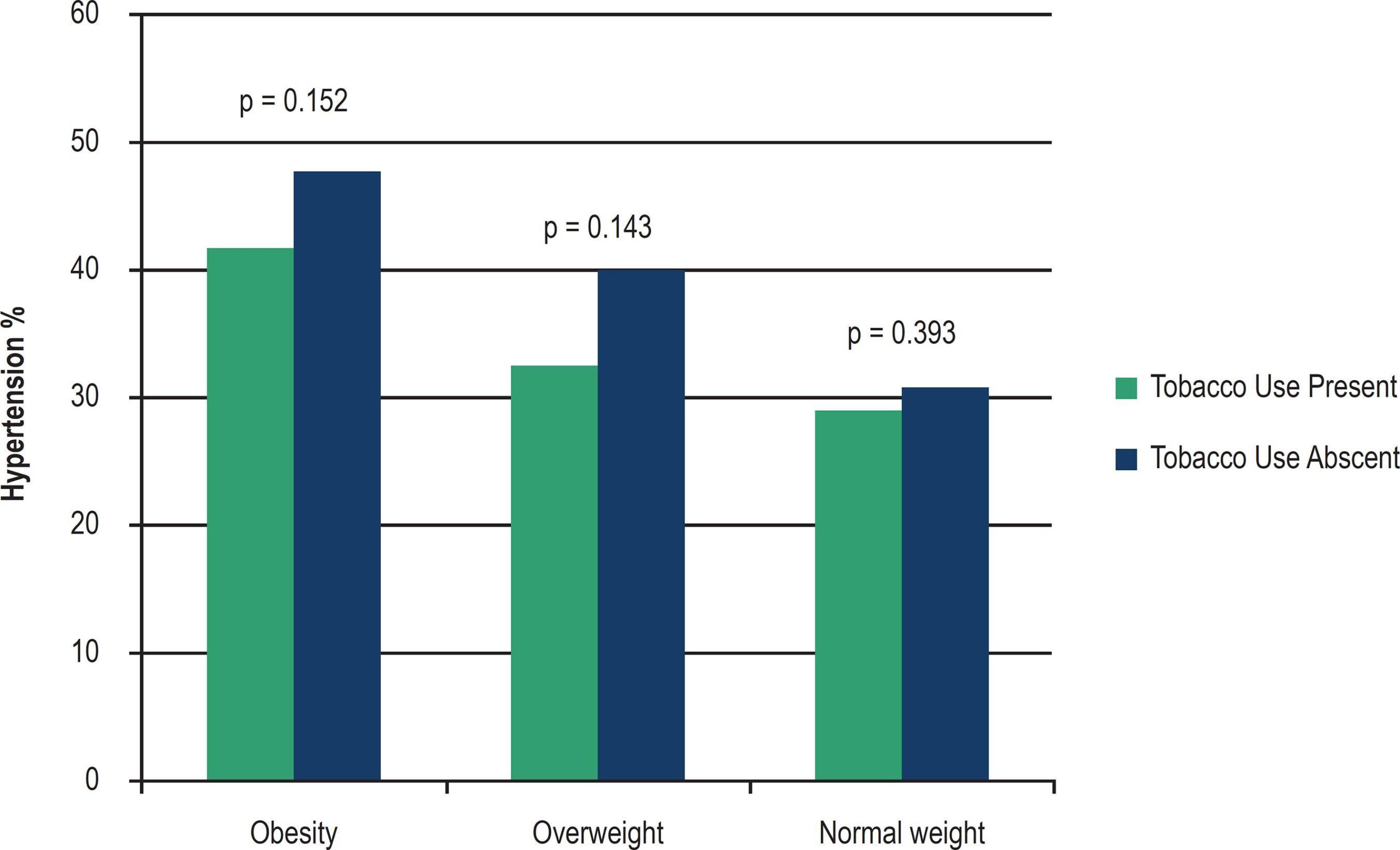
The participants had a mean age of 49.2 years, 59.5% were female, 38.9% had hypertension, 23.2% reported ST use, and 11.6% reported having T2D. One-third of the subjects with T2D were ST users, and this group showed lower heart rate, systolic BP, body mass index (BMI), and frequency of hypertension when compared with T2D subjects who were not ST users (p < 0.05). In subjects with T2D who were 50 years or older, ST use was associated with a 69% lower frequency of hypertension when compared with subjects without ST use. On logistic regression adjusted by heart rate, age, occurrence of T2D, overweight/obesity, and family history of hypertension, ST use was associated with a 30% lower frequency of hypertension (odds ratio 0.70; 95% confidence interval 0.55 – 0.90).

Conclusion:

Chimó, a ST frequently used in the Andes region of Venezuela, is associated with lower BP, heart rate, BMI, and frequency of hypertension in subjects with T2D older than 50 years. This counter-intuitive negative association of chimó with some cardiometabolic risk factors highlights the complex nature of these relationships and the need for further studies.

  • Coronary Artery Disease
  • Hypretension
  • Tobacco Products
  • Tobacco Use
  • Venezuela
Read Full Article
Creative Commons Attribution (CC BY) Creative Commons license
01/01/2017 DOI: 10.5935/2359-4802.20170066 Views 1
Brief Communication

Risk Correlation between Obstructive Sleep Apnea and Heart Failure in Primary Care

Adson Renato Leite et al. Erica de Abreu Macedo Antonio José Lagoeiro Jorge Maria Luiza Garcia Rosa

Introduction

Obstructive sleep apnea syndrome (OSAS), a chronic, progressive disease, with high mortality and morbidity, which has been associated with cardiovascular diseases, including heart failure (HF).

The pathophysiological changes related to OSAS and its contribution to cardiovascular risk are consequences of increased sympathetic activity, increased oxidative stress, pro-inflammatory changes and endothelial dysfunction.

[…]

  • Echocardiography
  • Heart Failure
  • Polysomnography
  • Sleep Apnea,Obstructive
Read Full Article
Creative Commons Attribution (CC BY) Creative Commons license
01/01/2017 DOI: 10.5935/2359-4802.20170063 Views 1
Review Article

Arterial Stiffness: Pathophysiological and Genetic Aspects

Rafael de Oliveira Alvim et al. Paulo Caleb Junior Lima Santos Luiz Aparecido Bortolotto José Geraldo Mill Alexandre da Costa Pereira

Abstract

Cardiovascular diseases (CVD) are the main cause of mortality and it represents a significant percentage of hospitalizations. In the scenario of minimization of costs of the health system, methods that identify subclinical CVD would be important. Some guidelines include the measures of aortic stiffness and intima-media thickness of the carotid artery as methods to identify subclinical CVD in hypertensive patients. The pulse wave velocity (PWV) is the gold standard for the evaluation of arterial stiffness. In this review, we report the pathophysiology, the determinants of arterial stiffness, and justify its inclusion in the assessment of hypertensive patient due its direct association with cardiovascular risk, as show in the I Diretriz Brasileira de Prevenção Cardiovascular. In addition, we raised the main genetic studies of this phenotype, due to its complexity, can be modulated by dozens of genes. However, a better understanding of the relationship genetic-arterial stiffness and, even an intervention based on genotypes, should be achieved in future studies.

  • heritability
  • pathophysiology
  • polymorphism
  • Vascular Stiffness
Read Full Article
Creative Commons Attribution (CC BY) Creative Commons license
01/01/2017 DOI: 10.5935/2359-4802.20170053 Views 3
Figure 1
Original Article

Cardiorenal Syndrome Type 2: A Strong Prognostic Factor of Survival

Arous Salim et al. Mohamed El Ghali Benouna Rachida Habbal Monia El Mourid

Abstract

Background:

Renal failure is common in patients with chronic heart failure, with a prevalence ranging from 20 % to 57% worldwide. It is associated with a poor prognosis and a high risk of readmission.

Objectives:

The purpose of our study is to show the epidemiological, clinical, paraclinical and therapeutic features of Moroccan patients with chronic heart failure who had developed a chronic renal failure. The endpoints were cardiac death and any cause of hospitalization.

Methods:

563 patients followed for chronic heart failure at the heart failure unit in the Department of Cardiology of the University Hospital Ibn Rushd of Casablanca in Morocco, between July 30, 2012 and July 30, 2016 were assessed. Patients were divided into two groups according to the presence or absence of cardiorenal syndrome.

Results:

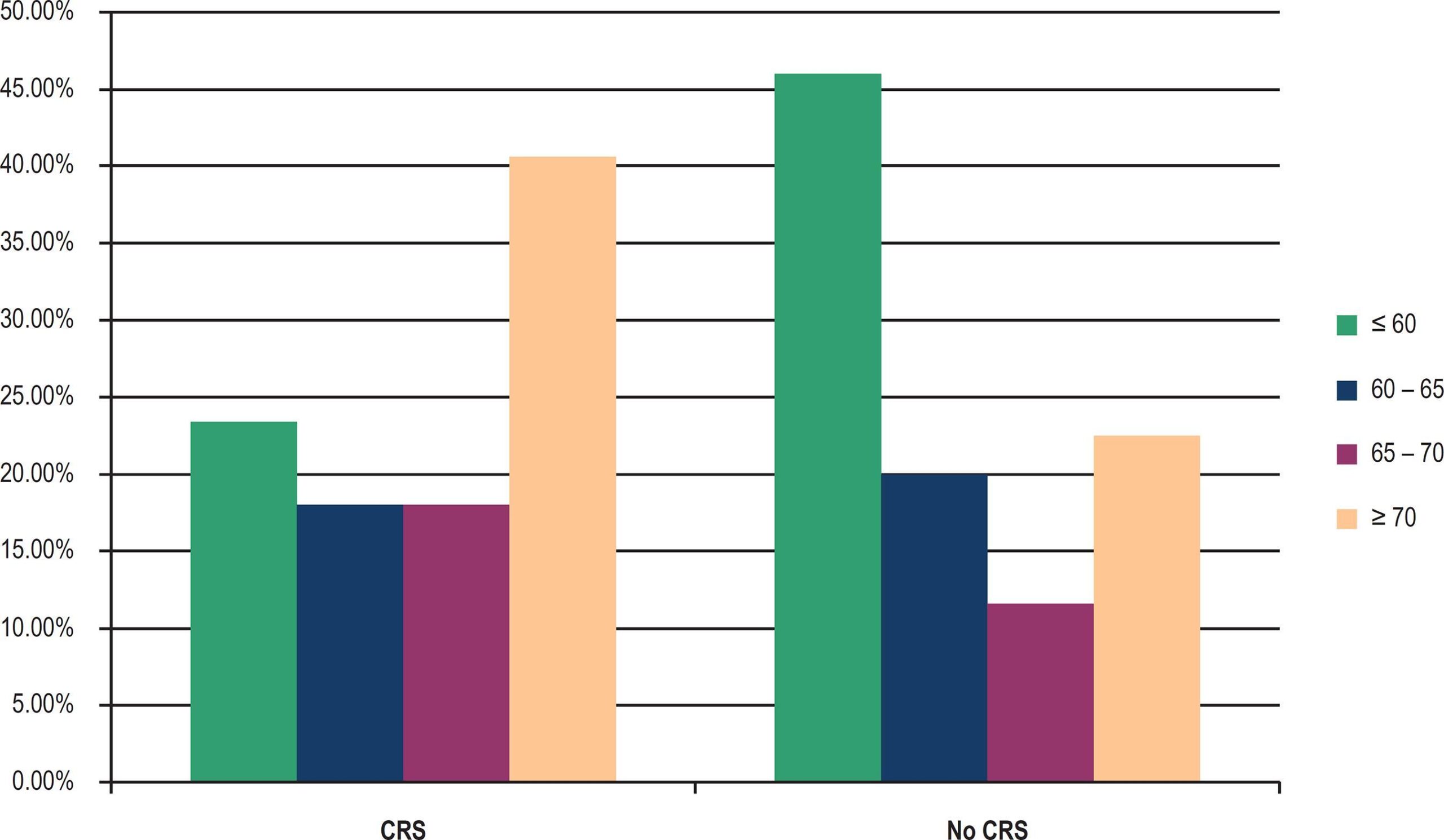
Compared to patients who had no cardiorenal syndrome, patients with cardiorenal syndrome tended to be more aged, hypertensive and diabetic. Clinically more patients were at dyspnea stage III or IV. Biologically their hemoglobin was lower and their blood uric acid level was higher. Regarding echocardiography, their ejection fraction of the left ventricle was lower, with more of systolic dysfunction of the right ventricle and pulmonary hypertension in the CRS group, with a higher risk of readmission (p < 0.0001). The mortality was significantly higher in the group CRS (p < 0.0001).

Conclusion:

The deterioration of renal function in chronic renal failure is associated with poor prognosis, including a high risk of rehospitalization, cardiovascular events and death. Patients who are elderly, diabetic, with a low left ventricular ejection fraction and pulmonary hypertension are the most concerned.

  • Cardio-Renal Syndrome
  • Heart Failure
  • Patient Readmission
  • Renal Insufficiency Chronic / mortality
  • Renal Insufficiency Chronic / prognosis
Read Full Article
Creative Commons Attribution (CC BY) Creative Commons license
01/01/2017 DOI: 10.5935/2359-4802.20170072
Review Article

Antiplatelet Agents in Acute Coronary Syndromes

Pedro Beraldo de Andrade et al. Leonardo Silva Roever Borges

Abstract

Under balanced conditions, hemostasis is maintained by a complex interaction between endothelium, platelets, and coagulation factors. Situations involving injury and discontinuation of the endothelial lining stimulate the adhesion, activation, and aggregation of platelets, culminating in the formation of arterial or venous thrombi. In this context, antiplatelet therapy occupies a prominent role in the management of pathologies arising from this process, notably acute coronary syndromes. The increased conceptual understanding of receptors, agonists, and antagonists of the pathophysiological cascades involved in this process has allowed the development of new drugs and refinement of the current therapy, demanding a complete knowledge of the arsenal of antiplatelet agents with respect to their indication, dosage, moment of administration, and duration of treatment. The objective of this review is to define the role of antiplatelet drugs in the management of acute coronary syndrome, revisiting aspects that have been already consolidated and addressing current and still controversial topics on the subject.

  • Acute coronary syndrome
  • Antifibrinolytic Agents
  • Blood Platelets Inhibitors
  • Myocardial Infarction
  • Platelet Aggregation
Read Full Article
Creative Commons Attribution (CC BY) Creative Commons license
01/01/2017 DOI: 10.5935/2359-4802.20170058
Figure 1
Case Report

Use of Thrombolysis in PE Said to be of no High-Risk, which Presents Acute Cor Pulmonale

Nicolle Lopes Guenther et al. Nágela Simão Vinhosa Nunes Valdênia Pereira de Souza Ronaldo Vegni e Souza

Introduction

PE is a condition that is often difficult to recognize due to its varied clinical presentation, ranging from unclear symptoms to severe conditions that quickly leading the patient to shock and death. It is the third most common cardiovascular disease worldwide, of high mortality and morbidity, with an estimated incidence of 100-200 per 100,000 inhabitants, according to the Guidelines of the European Society of Cardiology.

There is a variety of related risk factors, including major orthopedic surgeries, traumas, prolonged immobilization, malignant neoplasia, spastic and flaccid paralysis, hormonal contraception, congestive heart failure, thrombophilia, obesity and pregnancy., However, PE can occur even in the absence of known risk factors.

[…]

  • Hypertension Pulmonary
  • Indicators of Morbidity and Mortality
  • Pulmonary embolism
  • Thromboembolism
  • Ventricular Dysfunction,Right
Read Full Article
Creative Commons Attribution (CC BY) Creative Commons license
01/01/2017 DOI: 10.5935/2359-4802.20170054
Original Article

Association of Central Obesity with The Incidence of Cardiovascular Diseases and Risk Factors

Taianah Almeida Barroso et al. Lucas Braga Marins Renata Alves Ana Caroline Souza Gonçalves … Sérgio Girão Barroso Gabrielle de Souza Rocha

Abstract

Background:

Obesity has been identified as a major risk factor for cardiovascular disease.

Objective:

To evaluate the association of central obesity with the incidence of cardiovascular diseases and risk factors.

Methods:

This was a cross-sectional study, carried out with patients treated at a metabolic syndrome outpatient clinic, with body mass index ≥ 24.9 kg/m2. Nutritional status, laboratory tests (lipid and glycemic profile) and blood pressure status were analyzed. Participants were stratified into groups regarding the presence or absence of risk factors: diabetes, hypertension, and dyslipidemia.

Results:

Women (n = 39), mean age of 44.18 ± 14.42 years, of which 70% were obese and 38% were hypertensive, corresponded to most of the studied sample. Abdominal circumference was 110.19 cm ± 15.88 cm; levels of triglycerides were 153.72 mg/dL ± 7.07 mg/dL; and fasting glycemia was 188.6 mg/dL ± 116 mg/dL. A significant association was found between the waist/height ratio and the findings of hypertension (p = 0.007); between visceral fat volume and diabetes (p = 0.01); between the conicity index and the findings of hypertension (p = 0.009) and diabetes (p = 0.006). No significant association was found between body mass index and waist circumference with findings of hypertension, diabetes and dyslipidemia.

Conclusion:

Central obesity was associated with a higher incidence of development of risk factors related to cardiovascular diseases.

  • abdominal circumference
  • Cardiovascular Diseases
  • Metabolic Syndrome
  • Obesity
  • Risk Factors
Read Full Article
Creative Commons Attribution (CC BY) Creative Commons license
01/01/2017 DOI: 10.5935/2359-4802.20170073 Views 2
Figure 1
Original Article

Doppler Echocardiographic Follow-Up of Mitral and Aortic Regurgitation in Children and Adolescents with Subclinical and Mild Rheumatic Carditis

Lelia Maria de Almeida Carvalho et al. Fátima Derlene da Rocha Araújo Zilda Maria Alves Meira

Abstract

Background:

Mild rheumatic carditis (MRC) and subclinical rheumatic carditis (SRC) are basically differentiated through auscultation of mitral regurgitation murmur. The evolution of these forms is not well established in the literature.

Objective:

To evaluate the evolution of mild and subclinical rheumatic carditis, considering mitral and aortic regurgitation (acute phase) and regression, maintenance or worsening of these diseases at the end of follow-up (chronic phase).

Methods:

Retrospective, longitudinal study, including patients with mild and subclinical rheumatic carditis. The echocardiographic evolution of mitral and aortic regurgitation was compared in both groups, considering the analysis at the end of follow-up. The Chi-square test and Kaplan-Meier survival curves were used, with significance level established at p < 0.05.

Results:

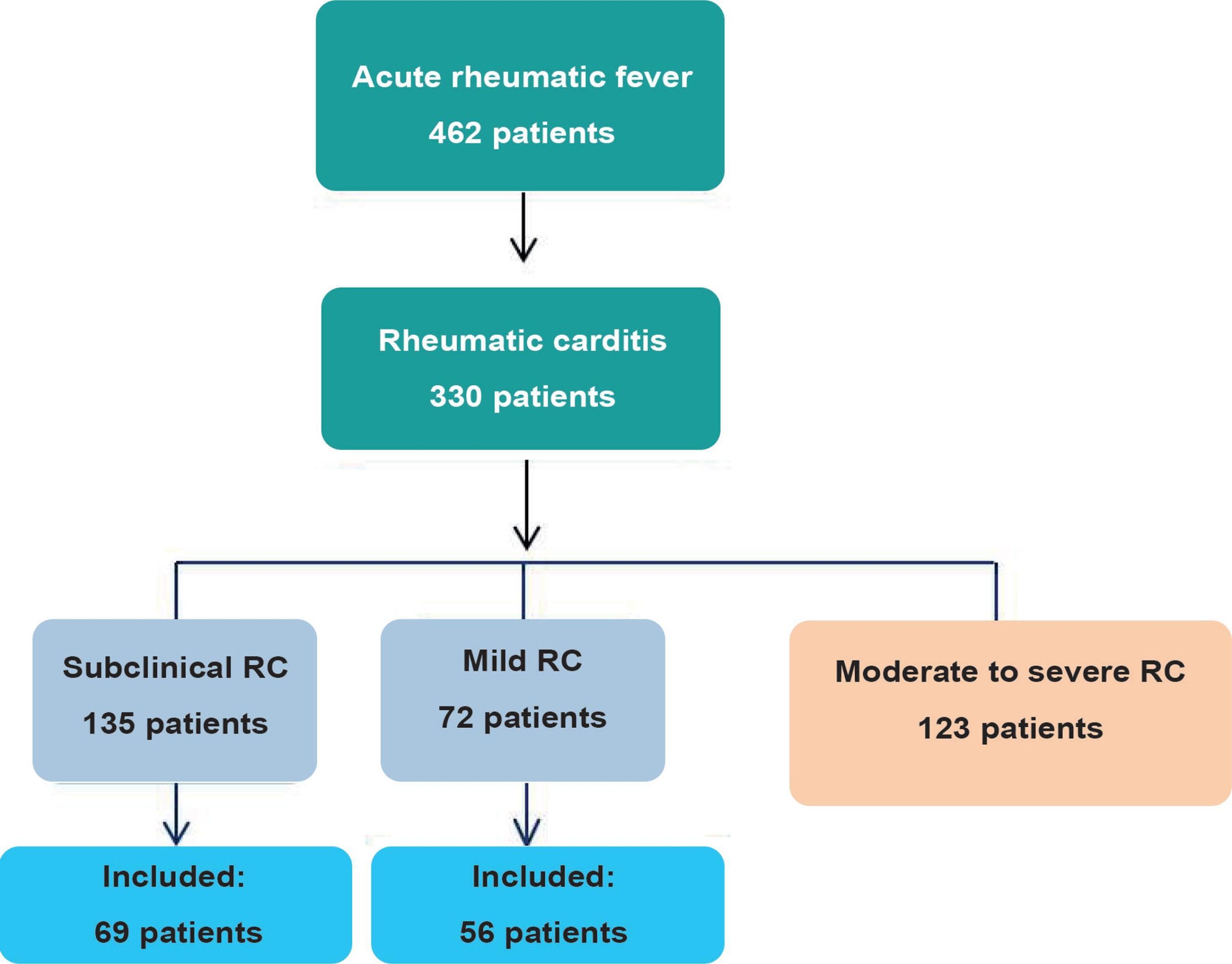
A total of 125 patients were included, 69 (55.2%) with subclinical rheumatic carditis and 56 (44.8%) with mild rheumatic carditis, with a mean age in the acute phase of 10.4 ± 2.6 years and, at the end of study, 19.9 ± 4.6 years. The time of follow-up ranged from 2 to 23 years (mean: 9.38 ± 4.3 years). In the acute phase, mild/moderate or moderate mitral regurgitation was more frequent in patients with mild rheumatic carditis (p = 0.001). Mild or mild/moderate aortic regurgitation was also more common in the mild rheumatic carditis group (p = 0.045). In the chronic phase, we observed that both mitral (p < 0.0001) and aortic regurgitation (p = 0.009) were more frequent in patients with mild rheumatic carditis, and survival free of rheumatic heart disease was higher in the subclinical rheumatic carditis group (p = 0.010). Residual mitral regurgitation was higher in the mild rheumatic carditis group p < 0.0001), and residual aortic regurgitation was similar in both groups (p = 0.099).

Conclusion:

Mitral regurgitation resolution was higher in patients with subclinical rheumatic carditis, and the involution of aortic regurgitation was less frequent and similar in both groups. (Int J Cardiovasc Sci. 2017;30(5):391-400)

  • Adolescent
  • Aortic Valve/abnormalities
  • Child
  • Echocardiography, Doppler
  • Mitral Valve / abnormalities
  • Myocarditis
  • rheumatic heart disease
Read Full Article
Creative Commons Attribution (CC BY) Creative Commons license
01/01/2017 DOI: 10.5935/2359-4802.20170065 Views 2
Original Article

Hypertensive Adolescents: Correlation with Body Mass Index and Lipid and Glucose Profiles

Liz Andréa Villela Baroncini et al. Lucimary de Castro Sylvestre Camila Varotto Baroncini Marcieli da Luz Giroldo … Dalton Bertolim Précoma Roberto Pecoits Filho

Abstract

Background:

The occurrence of hypertension during adolescence correlates with metabolic changes, obesity, and overweight.

Objective:

To correlate the lipid and glucose profiles of hypertensive and nonhypertensive adolescents with age, gender, body mass index (BMI), weight, and height.

Methods:

We selected 53 hypertensive adolescents and 182 healthy, nonhypertensive adolescents. The adolescents were divided into three groups: group I (GI; n = 108, 58 males, mean age 15.2 ± 2.2 years), consisted of healthy, nonhypertensive adolescents of healthy parents without a diagnosis of hypertension, dyslipidemia, or diabetes; group II (GII, n = 53, 28 males, mean age 13.9 ± 1.4 years), consisted of adolescents with confirmed hypertension; and group III (GIII; n = 74, 31 males, mean age 14.9 ± 2.2 years), consisted of healthy, nonhypertensive adolescents of parents with a diagnosis of hypertension, dyslipidemia, or diabetes.

Results:

Gender and weight did not differ significantly among the groups. The subjects in GII were overall younger (around 1 year), shorter, and had a higher BMI compared with those in GI and GIII. After adjustment for age and BMI, GII presented higher glucose and LDL-C levels and lower HDL-C levels compared with GI and GIII. Total cholesterol and triglycerides levels showed no differences between groups. GI and GIII had no significant differences with regard to the analyzed variables.

Conclusion:

Hypertensive adolescents showed higher values of BMI, and serum glucose and LDL-C levels, and lower serum HDL-C levels. These findings reveal that the changes in lipid profile and glucose metabolism that occur during adolescence may be influenced by the occurrence of hypertension during this developmental phase.

  • Adolescent
  • body mass index
  • Dyslipidemias
  • Hypertension
  • Obesity
  • Overwehight
Read Full Article
Creative Commons Attribution (CC BY) Creative Commons license
01/01/2017 DOI: 10.5935/2359-4802.20170067

How to cite this article

EndNote RIS

Electronic Document Format (Vancouver)

Colafranceschi AS. Are my Values Different from Yours? The Value of Coronary Artery Disease Invasive Care in Brazil. International Journal of Cardiovascular Sciences 2017;30(5):369-72.

Electronic Document Format (ABNT)

Colafranceschi, Alexandre Siciliano. Are my Values Different from Yours? The Value of Coronary Artery Disease Invasive Care in Brazil. International Journal of Cardiovascular Sciences, v. 30, n. 5, p. 369-372, Dec. 2016.

Electronic Document Format (APA)

Colafranceschi, A. S. (2017). Are my Values Different from Yours? The Value of Coronary Artery Disease Invasive Care in Brazil. International Journal of Cardiovascular Sciences, 30(5), 369-372.

Electronic Document Format (ISO)

Colafranceschi, Alexandre Siciliano. Are my Values Different from Yours? The Value of Coronary Artery Disease Invasive Care in Brazil. International Journal of Cardiovascular Sciences [online]. 2017, vol. 30, n. 5, [cited 2026-10-14], pp. 369-372. Available from: <https://journals.cardiol.br/en/article/are-my-values-different-from-yours-the-value-of-coronary-artery-disease-invasive-care-in-brazil/>. ISSN 2359-4802

EndNote RIS

Electronic Document Format (Vancouver)

Bienert IRC, Rodrigues A, Harada A, Silva KL, Valente AR, Silva PA, Braga JCMS, et al. Temporal Evaluation of Coronary Revascularization Procedures Performed through the Unified Health System (SUS) in Brazil: a 20-year overview. International Journal of Cardiovascular Sciences 2017;30(5):380-9.

Electronic Document Format (ABNT)

Bienert, Igor Ribeiro de Castro; Rodrigues, Alexandre; Harada, Érika Airi; Silva, Karoline Lopes; Valente, Amanda Ribeiro; Silva, Paulo André da; Braga, Joao Carlos Moron Saes; Rinaldi, Fabio Salerno; Guimarães Filho, Fábio Villaça; Andrade, Pedro Beraldo de. Temporal Evaluation of Coronary Revascularization Procedures Performed through the Unified Health System (SUS) in Brazil: a 20-year overview. International Journal of Cardiovascular Sciences, v. 30, n. 5, p. 380-390, Dec. 2016.

Electronic Document Format (APA)

Bienert, I. R. C., Rodrigues, A., Harada, A., Silva, K. L., Valente, A. R., Silva, P. A. , Braga, J. C. M. S., Rinaldi, F. S., Guimarães Filho, F. V., & Andrade, P. B. (2017). Temporal Evaluation of Coronary Revascularization Procedures Performed through the Unified Health System (SUS) in Brazil: a 20-year overview. International Journal of Cardiovascular Sciences, 30(5), 380-390.

Electronic Document Format (ISO)

Bienert, Igor Ribeiro de Castro and Rodrigues, Alexandre and Harada, Érika Airi and Silva, Karoline Lopes and Valente, Amanda Ribeiro and Silva, Paulo André da and Braga, Joao Carlos Moron Saes and Rinaldi, Fabio Salerno and Guimarães Filho, Fábio Villaça and Andrade, Pedro Beraldo de. Temporal Evaluation of Coronary Revascularization Procedures Performed through the Unified Health System (SUS) in Brazil: a 20-year overview. International Journal of Cardiovascular Sciences [online]. 2017, vol. 30, n. 5, [cited 2026-10-14], pp. 380-390. Available from: <https://journals.cardiol.br/en/article/temporal-evaluation-of-coronary-revascularization-procedures-performed-through-the-unified-health-system-sus-in-brazil-a-20-year-overview/>. ISSN 2359-4802

EndNote RIS

Electronic Document Format (Vancouver)

Furtado MV, Araujo GN, Jost MF, Americo AD, Peruzzo N, Nasi G, Telo GH, et al. Effectiveness of Medical and Revascularization Procedures as the Initial Strategy in Stable Coronary Artery Disease: A Cohort Study. International Journal of Cardiovascular Sciences 2017;30(5):408-15.

Electronic Document Format (ABNT)

Furtado, Mariana Vargas; Araujo, Gustavo Neves de; Jost, Mariana Ferreira; Americo, Andre Dias; Peruzzo, Nicolas; Nasi, Guilherme; Telo, Guilherme Heiden; Borges, Flavia Kessler; Polanczyk, Carisi Anne. Effectiveness of Medical and Revascularization Procedures as the Initial Strategy in Stable Coronary Artery Disease: A Cohort Study. International Journal of Cardiovascular Sciences, v. 30, n. 5, p. 408-415, Dec. 2016.

Electronic Document Format (APA)

Furtado, M. V., Araujo, G. N. , Jost, M. F., Americo, A. D., Peruzzo, N., Nasi, G., Telo, G. H., Borges, F. K., & Polanczyk, C. A. (2017). Effectiveness of Medical and Revascularization Procedures as the Initial Strategy in Stable Coronary Artery Disease: A Cohort Study. International Journal of Cardiovascular Sciences, 30(5), 408-415.

Electronic Document Format (ISO)

Furtado, Mariana Vargas and Araujo, Gustavo Neves de and Jost, Mariana Ferreira and Americo, Andre Dias and Peruzzo, Nicolas and Nasi, Guilherme and Telo, Guilherme Heiden and Borges, Flavia Kessler and Polanczyk, Carisi Anne. Effectiveness of Medical and Revascularization Procedures as the Initial Strategy in Stable Coronary Artery Disease: A Cohort Study. International Journal of Cardiovascular Sciences [online]. 2017, vol. 30, n. 5, [cited 2026-10-14], pp. 408-415. Available from: <https://journals.cardiol.br/en/article/effectiveness-of-medical-and-revascularization-procedures-as-the-initial-strategy-in-stable-coronary-artery-disease-a-cohort-study/>. ISSN 2359-4802

EndNote RIS

Electronic Document Format (Vancouver)

González-Rivas JP, Santiago RJG, Mechanick JI, Nieto-Martínez R. Chimó, a Smokeless Tobacco Preparation, is Associated with a Lower Frequency of Hypertension in Subjects with Type 2 Diabetes. International Journal of Cardiovascular Sciences 2017;30(5):373-9.

Electronic Document Format (ABNT)

González-Rivas, Juan P.; Santiago, Raul José García; Mechanick, Jeffrey I.; Nieto-Martínez, Ramfis. Chimó, a Smokeless Tobacco Preparation, is Associated with a Lower Frequency of Hypertension in Subjects with Type 2 Diabetes. International Journal of Cardiovascular Sciences, v. 30, n. 5, p. 373-379, Dec. 2016.

Electronic Document Format (APA)

González-Rivas, J. P., Santiago, R. J. G., Mechanick, J. I., & Nieto-Martínez, R. (2017). Chimó, a Smokeless Tobacco Preparation, is Associated with a Lower Frequency of Hypertension in Subjects with Type 2 Diabetes. International Journal of Cardiovascular Sciences, 30(5), 373-379.

Electronic Document Format (ISO)

González-Rivas, Juan P. and Santiago, Raul José García and Mechanick, Jeffrey I. and Nieto-Martínez, Ramfis. Chimó, a Smokeless Tobacco Preparation, is Associated with a Lower Frequency of Hypertension in Subjects with Type 2 Diabetes. International Journal of Cardiovascular Sciences [online]. 2017, vol. 30, n. 5, [cited 2026-10-14], pp. 373-379. Available from: <https://journals.cardiol.br/en/article/chimo-a-smokeless-tobacco-preparation-is-associated-with-a-lower-frequency-of-hypertension-in-subjects-with-type-2-diabetes/>. ISSN 2359-4802

EndNote RIS

Electronic Document Format (Vancouver)

Leite AR, Macedo EA, Jorge AJL, Rosa MLG. Risk Correlation between Obstructive Sleep Apnea and Heart Failure in Primary Care. International Journal of Cardiovascular Sciences 2017;30(5):459-63.

Electronic Document Format (ABNT)

Leite, Adson Renato; Macedo, Erica de Abreu; Jorge, Antonio José Lagoeiro; Rosa, Maria Luiza Garcia. Risk Correlation between Obstructive Sleep Apnea and Heart Failure in Primary Care. International Journal of Cardiovascular Sciences, v. 30, n. 5, p. 459-463, Dec. 2016.

Electronic Document Format (APA)

Leite, A. R., Macedo, E. A., Jorge, A. J. L., & Rosa, M. L. G. (2017). Risk Correlation between Obstructive Sleep Apnea and Heart Failure in Primary Care. International Journal of Cardiovascular Sciences, 30(5), 459-463.

Electronic Document Format (ISO)

Leite, Adson Renato and Macedo, Erica de Abreu and Jorge, Antonio José Lagoeiro and Rosa, Maria Luiza Garcia. Risk Correlation between Obstructive Sleep Apnea and Heart Failure in Primary Care. International Journal of Cardiovascular Sciences [online]. 2017, vol. 30, n. 5, [cited 2026-10-14], pp. 459-463. Available from: <https://journals.cardiol.br/en/article/risk-correlation-between-obstructive-sleep-apnea-and-heart-failure-in-primary-care/>. ISSN 2359-4802

EndNote RIS

Electronic Document Format (Vancouver)

Alvim RO, Santos PCJL, Bortolotto LA, Mill JG, Pereira AC. Arterial Stiffness: Pathophysiological and Genetic Aspects. International Journal of Cardiovascular Sciences 2017;30(5):433-41.

Electronic Document Format (ABNT)

Alvim, Rafael de Oliveira; Santos, Paulo Caleb Junior Lima; Bortolotto, Luiz Aparecido; Mill, José Geraldo; Pereira, Alexandre da Costa. Arterial Stiffness: Pathophysiological and Genetic Aspects. International Journal of Cardiovascular Sciences, v. 30, n. 5, p. 433-441, Dec. 2016.

Electronic Document Format (APA)

Alvim, R. O., Santos, P. C. J. L., Bortolotto, L. A., Mill, J. G., & Pereira, A. C. (2017). Arterial Stiffness: Pathophysiological and Genetic Aspects. International Journal of Cardiovascular Sciences, 30(5), 433-441.

Electronic Document Format (ISO)

Alvim, Rafael de Oliveira and Santos, Paulo Caleb Junior Lima and Bortolotto, Luiz Aparecido and Mill, José Geraldo and Pereira, Alexandre da Costa. Arterial Stiffness: Pathophysiological and Genetic Aspects. International Journal of Cardiovascular Sciences [online]. 2017, vol. 30, n. 5, [cited 2026-10-14], pp. 433-441. Available from: <https://journals.cardiol.br/en/article/arterial-stiffness-pathophysiological-and-genetic-aspects/>. ISSN 2359-4802

EndNote RIS

Electronic Document Format (Vancouver)

Salim A, Benouna MEG, Habbal R, Mourid ME. Cardiorenal Syndrome Type 2: A Strong Prognostic Factor of Survival. International Journal of Cardiovascular Sciences 2017;30(5):425-32.

Electronic Document Format (ABNT)

Salim, Arous; Benouna, Mohamed El Ghali; Habbal, Rachida; Mourid, Monia El. Cardiorenal Syndrome Type 2: A Strong Prognostic Factor of Survival. International Journal of Cardiovascular Sciences, v. 30, n. 5, p. 425-432, Dec. 2016.

Electronic Document Format (APA)

Salim, A., Benouna, M. E. G., Habbal, R., & Mourid, M. E. (2017). Cardiorenal Syndrome Type 2: A Strong Prognostic Factor of Survival. International Journal of Cardiovascular Sciences, 30(5), 425-432.

Electronic Document Format (ISO)

Salim, Arous and Benouna, Mohamed El Ghali and Habbal, Rachida and Mourid, Monia El. Cardiorenal Syndrome Type 2: A Strong Prognostic Factor of Survival. International Journal of Cardiovascular Sciences [online]. 2017, vol. 30, n. 5, [cited 2026-10-14], pp. 425-432. Available from: <https://journals.cardiol.br/en/article/cardiorenal-syndrome-type-2-a-strong-prognostic-factor-of-survival/>. ISSN 2359-4802

EndNote RIS

Electronic Document Format (Vancouver)

Andrade PB, Borges LSR. Antiplatelet Agents in Acute Coronary Syndromes. International Journal of Cardiovascular Sciences 2017;30(5):442-51.

Electronic Document Format (ABNT)

Andrade, Pedro Beraldo de; Borges, Leonardo Silva Roever. Antiplatelet Agents in Acute Coronary Syndromes. International Journal of Cardiovascular Sciences, v. 30, n. 5, p. 442-451, Dec. 2016.

Electronic Document Format (APA)

Andrade, P. B. , & Borges, L. S. R. (2017). Antiplatelet Agents in Acute Coronary Syndromes. International Journal of Cardiovascular Sciences, 30(5), 442-451.

Electronic Document Format (ISO)

Andrade, Pedro Beraldo de and Borges, Leonardo Silva Roever. Antiplatelet Agents in Acute Coronary Syndromes. International Journal of Cardiovascular Sciences [online]. 2017, vol. 30, n. 5, [cited 2026-10-14], pp. 442-451. Available from: <https://journals.cardiol.br/en/article/antiplatelet-agents-in-acute-coronary-syndromes/>. ISSN 2359-4802

EndNote RIS

Electronic Document Format (Vancouver)

Guenther NL, Nunes NSV, Souza VP, Souza RV. Use of Thrombolysis in PE Said to be of no High-Risk, which Presents Acute Cor Pulmonale. International Journal of Cardiovascular Sciences 2017;30(5):452-8.

Electronic Document Format (ABNT)

Guenther, Nicolle Lopes; Nunes, Nágela Simão Vinhosa; Souza, Valdênia Pereira de; Souza, Ronaldo Vegni e. Use of Thrombolysis in PE Said to be of no High-Risk, which Presents Acute Cor Pulmonale. International Journal of Cardiovascular Sciences, v. 30, n. 5, p. 452-458, Dec. 2016.

Electronic Document Format (APA)

Guenther, N. L., Nunes, N. S. V., Souza, V. P. , & Souza, R. V. (2017). Use of Thrombolysis in PE Said to be of no High-Risk, which Presents Acute Cor Pulmonale. International Journal of Cardiovascular Sciences, 30(5), 452-458.

Electronic Document Format (ISO)

Guenther, Nicolle Lopes and Nunes, Nágela Simão Vinhosa and Souza, Valdênia Pereira de and Souza, Ronaldo Vegni e. Use of Thrombolysis in PE Said to be of no High-Risk, which Presents Acute Cor Pulmonale. International Journal of Cardiovascular Sciences [online]. 2017, vol. 30, n. 5, [cited 2026-10-14], pp. 452-458. Available from: <https://journals.cardiol.br/en/article/use-of-thrombolysis-in-pe-said-to-be-of-no-high-risk-which-presents-acute-cor-pulmonale/>. ISSN 2359-4802

EndNote RIS

Electronic Document Format (Vancouver)

Barroso TA, Marins LB, Alves R, Gonçalves ACS, Barroso SG, Rocha GS. Association of Central Obesity with The Incidence of Cardiovascular Diseases and Risk Factors. International Journal of Cardiovascular Sciences 2017;30(5):416-24.

Electronic Document Format (ABNT)

Barroso, Taianah Almeida; Marins, Lucas Braga; Alves, Renata; Gonçalves, Ana Caroline Souza; Barroso, Sérgio Girão; Rocha, Gabrielle de Souza. Association of Central Obesity with The Incidence of Cardiovascular Diseases and Risk Factors. International Journal of Cardiovascular Sciences, v. 30, n. 5, p. 416-424, Dec. 2016.

Electronic Document Format (APA)

Barroso, T. A., Marins, L. B., Alves, R., Gonçalves, A. C. S., Barroso, S. G., & Rocha, G. S. (2017). Association of Central Obesity with The Incidence of Cardiovascular Diseases and Risk Factors. International Journal of Cardiovascular Sciences, 30(5), 416-424.

Electronic Document Format (ISO)

Barroso, Taianah Almeida and Marins, Lucas Braga and Alves, Renata and Gonçalves, Ana Caroline Souza and Barroso, Sérgio Girão and Rocha, Gabrielle de Souza. Association of Central Obesity with The Incidence of Cardiovascular Diseases and Risk Factors. International Journal of Cardiovascular Sciences [online]. 2017, vol. 30, n. 5, [cited 2026-10-14], pp. 416-424. Available from: <https://journals.cardiol.br/en/article/association-of-central-obesity-with-the-incidence-of-cardiovascular-diseases-and-risk-factors/>. ISSN 2359-4802

EndNote RIS

Electronic Document Format (Vancouver)

Carvalho LMA, Araújo FDR, Meira ZMA. Doppler Echocardiographic Follow-Up of Mitral and Aortic Regurgitation in Children and Adolescents with Subclinical and Mild Rheumatic Carditis. International Journal of Cardiovascular Sciences 2017;30(5):391-400.

Electronic Document Format (ABNT)

Carvalho, Lelia Maria de Almeida; Araújo, Fátima Derlene da Rocha; Meira, Zilda Maria Alves. Doppler Echocardiographic Follow-Up of Mitral and Aortic Regurgitation in Children and Adolescents with Subclinical and Mild Rheumatic Carditis. International Journal of Cardiovascular Sciences, v. 30, n. 5, p. 391-400, Dec. 2016.

Electronic Document Format (APA)

Carvalho, L. M. A., Araújo, F. D. R., & Meira, Z. M. A. (2017). Doppler Echocardiographic Follow-Up of Mitral and Aortic Regurgitation in Children and Adolescents with Subclinical and Mild Rheumatic Carditis. International Journal of Cardiovascular Sciences, 30(5), 391-400.

Electronic Document Format (ISO)

Carvalho, Lelia Maria de Almeida and Araújo, Fátima Derlene da Rocha and Meira, Zilda Maria Alves. Doppler Echocardiographic Follow-Up of Mitral and Aortic Regurgitation in Children and Adolescents with Subclinical and Mild Rheumatic Carditis. International Journal of Cardiovascular Sciences [online]. 2017, vol. 30, n. 5, [cited 2026-10-14], pp. 391-400. Available from: <https://journals.cardiol.br/en/article/doppler-echocardiographic-follow-up-of-mitral-and-aortic-regurgitation-in-children-and-adolescents-with-subclinical-and-mild-rheumatic-carditis/>. ISSN 2359-4802

EndNote RIS

Electronic Document Format (Vancouver)

Baroncini LAV, Sylvestre LC, Baroncini CV, Giroldo ML, Précoma DB, Pecoits Filho R. Hypertensive Adolescents: Correlation with Body Mass Index and Lipid and Glucose Profiles. International Journal of Cardiovascular Sciences 2017;30(5):401-7.

Electronic Document Format (ABNT)

Baroncini, Liz Andréa Villela; Sylvestre, Lucimary de Castro; Baroncini, Camila Varotto; Giroldo, Marcieli da Luz; Précoma, Dalton Bertolim; Pecoits Filho, Roberto. Hypertensive Adolescents: Correlation with Body Mass Index and Lipid and Glucose Profiles. International Journal of Cardiovascular Sciences, v. 30, n. 5, p. 401-407, Dec. 2016.

Electronic Document Format (APA)

Baroncini, L. A. V., Sylvestre, L. C., Baroncini, C. V., Giroldo, M. L., Précoma, D. B., & Pecoits Filho, R. (2017). Hypertensive Adolescents: Correlation with Body Mass Index and Lipid and Glucose Profiles. International Journal of Cardiovascular Sciences, 30(5), 401-407.

Electronic Document Format (ISO)

Baroncini, Liz Andréa Villela and Sylvestre, Lucimary de Castro and Baroncini, Camila Varotto and Giroldo, Marcieli da Luz and Précoma, Dalton Bertolim and Pecoits Filho, Roberto. Hypertensive Adolescents: Correlation with Body Mass Index and Lipid and Glucose Profiles. International Journal of Cardiovascular Sciences [online]. 2017, vol. 30, n. 5, [cited 2026-10-14], pp. 401-407. Available from: <https://journals.cardiol.br/en/article/hypertensive-adolescents-correlation-with-body-mass-index-and-lipid-and-glucose-profiles/>. ISSN 2359-4802

Sede – Rio de Janeiro
Av. Marechal Câmara, 160
3º andar – Sala: 330 – Centro
Rio de Janeiro – CEP: 20020-907
Tel.: (55 +21) 3478-2700
ou (21) 99386-3961
E-mail: revista@cardiol.br

Sede – São Paulo
Alameda Santos, 705 – 11º andar
Cerqueira César | São Paulo
CEP: 01419-001
Tel.: (55 +11) 3411-5500
E-mail: revista@cardiol.br

  • About the Journal
  • Internal Regulation
  • Editors Section
  • Editorial Board
  • SBC Award

  • Guidelines for Publication
  • Editorial Policy
  • Ethics Policy
  • Policy on the Use of Artificial Intelligence
  • Mandatory Publication Form
  • Publication Fee

Issues

SBC Guidelines

  • How to Publish an Abstract Supplement?
  • Published Supplements