ABC Family Arquivos Brasileiros de Cardiologia International Journal of Cardiovascular Sciences ABC Heart Failure & Cardiomyopathy ABC Imagem Cardiovascular
Português English
ABC Family
Português English
  • About
    • About ABC Family
    • Internal Regulation
    • Editorial Board
    • Brazilian Society of Cardiology (SBC)
  • Issues
  • SBC Guidelines
  • Content
    • Videos
    • Podcasts
    • News
  • About
    • About ABC Family
    • Internal Regulation
    • Editorial Board
    • Brazilian Society of Cardiology (SBC)
  • Issues
  • SBC Guidelines
  • Content
    • Videos
    • Podcasts
    • News

ABC Family

  • ABC Family
  • Arquivos Brasileiros de Cardiologia
  • International Journal of Cardiovascular Sciences
  • ABC Heart Failure & Cardiomyopathy
  • ABC Imagem Cardiovascular
Search in

No content found.

Journals
Ordering
Article types
Others

  1. Home
  2. Keyword: Medication Therapy Management
Figure 1
ABCHF
Review Article

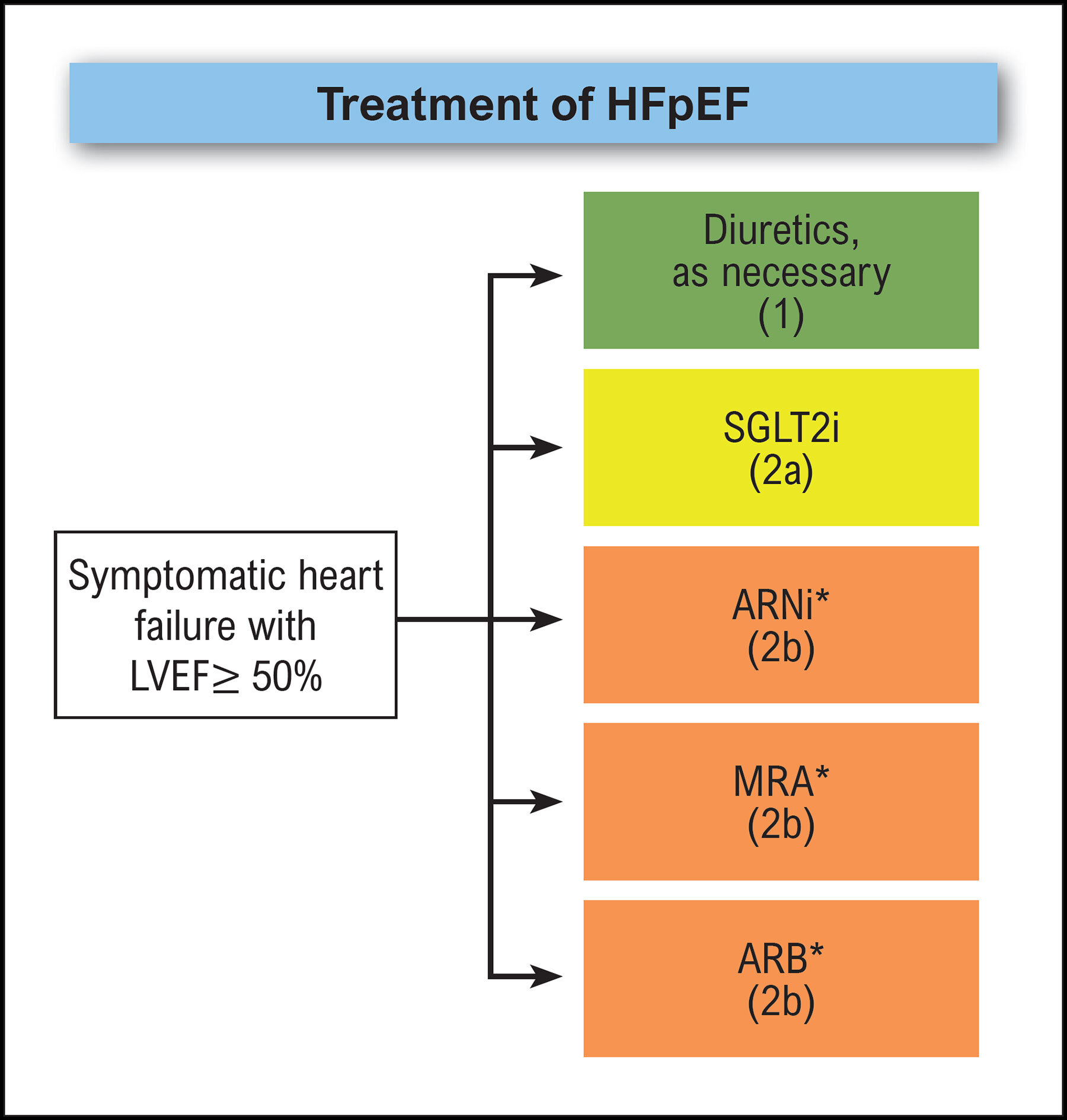
Flowchart for Treatment of Heart Failure with Preserved Ejection Fraction

Viviane Melo e Silva de Figueiredo et al. João Vitor Soares Santos Natália Garcia Galvão José Albuquerque de Figueiredo Neto

Abstract

Heart failure with preserved ejection fraction (HFpEF) manifests as a heterogeneous syndrome, with pathophysiological variety, often associated with other comorbidities. Furthermore, the therapy performed in these patients is related to the treatment of correlated comorbidities. In this context, the specific pharmacological treatment of HFpEF is a challenge, given the lack of evidence from studies that would prove a significant reduction in mortality outcomes. In this article, we will analyze the management for the control of arterial hypertension and atrial fibrillation as well as evidence from studies on the use of the main classes of medications recommended for the treatment of patients with HFpEF, such as sodium-glucose cotransporter 2 inhibitors, renin-angiotensin system inhibitors, neprilysin inhibitors, and nitrates.
  • Diastolic Heart Failure
  • Heart Failure
  • Medication Therapy Management
Read Full Article
Creative Commons Attribution (CC BY) Creative Commons license
01/12/2022 DOI: 10.36660/abchf.20220062 Views 1
Figure 1
ABCHF
Viewpoint

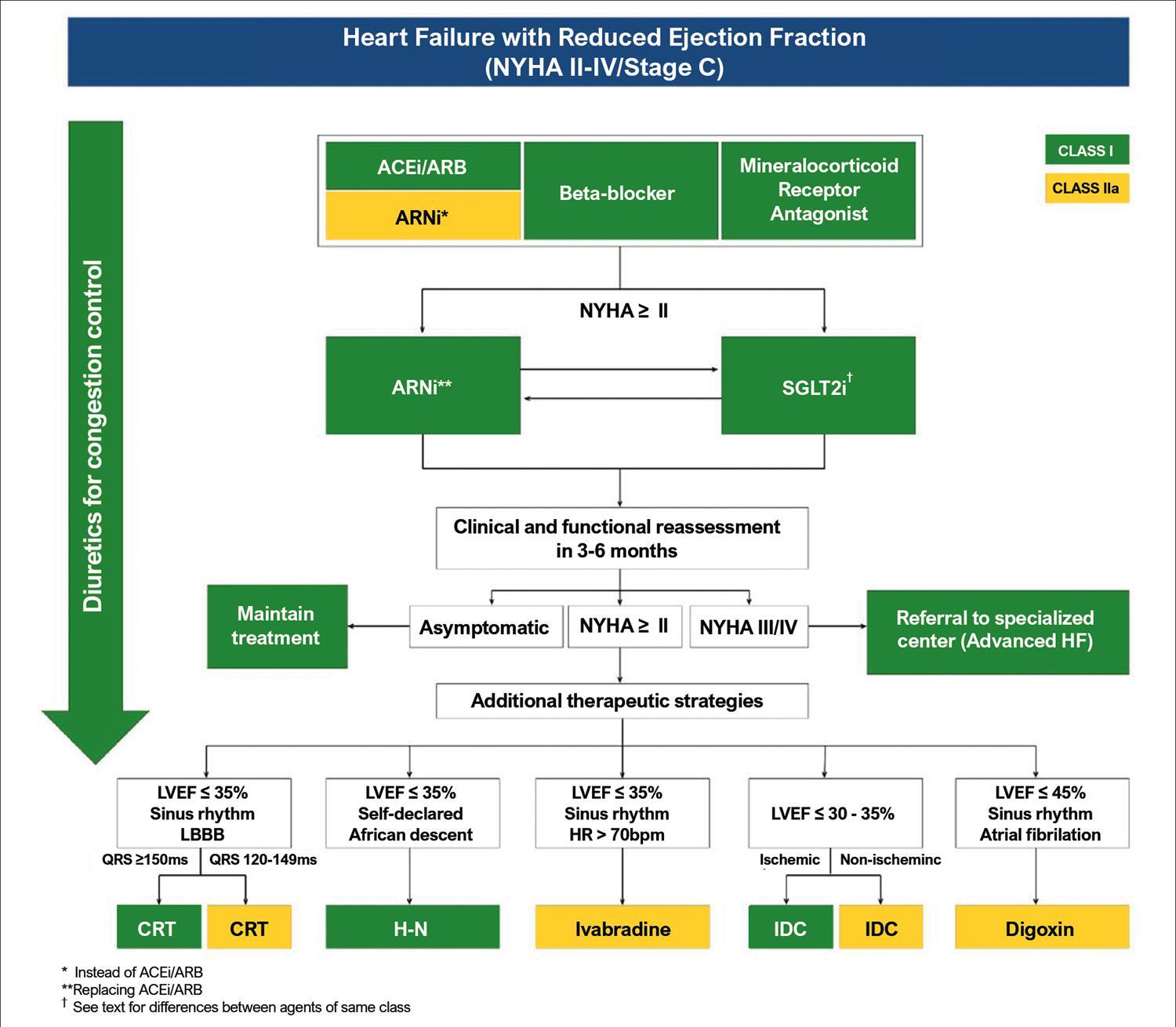
HFREF Pharmacological Treatment Sequencing: The Traditional Approach

João Manoel Rossi Neto et al. Raphael Machado Rossi Marco Aurelio Finger Carolina Casadei dos Santos

The traditional approach to sequencing

This approach respects the historical introduction of drugs studied and proven by randomized clinical trials (RCTs) and has its use approved by all guidelines. It is important to note that all RCTs on heart failure with reduced ejection fraction (HFrEF) have used this sequencing approach, and when a new drug is tested, it is added to optimized standard therapy. This reinforces the need to maintain triple therapy with a beta-blocker (BB), an angiotensin-converting enzyme inhibitor (ACEi)/angiotensin receptor blocker (ARB), and a mineralocorticoid receptor antagonist (MRA). Therefore, this triad is recommended as a key therapy for HFrEF unless drugs are contraindicated or not tolerated.

Angiotensin receptor-neprilysin inhibitors (ARNis; sacubitril/valsartan) should replace ACEis in patients who remain symptomatic despite the triad and may also be considered first-line therapy instead of ACEis ( ). The maximum recommended doses (MRDs) of these drugs are described in the Brazilian Society of Cardiology guidelines.

[…]

  • Heart Failure
  • Medication Therapy Management
  • Ventricular Ejection Fraction
Read Full Article
Creative Commons Attribution (CC BY) Creative Commons license
12/04/2022 DOI: 10.36660/abchf.20220004
Figure 1
IJCS
Original Article

Effectiveness of Medical and Revascularization Procedures as the Initial Strategy in Stable Coronary Artery Disease: A Cohort Study

Mariana Vargas Furtado et al. Gustavo Neves de Araujo Mariana Ferreira Jost Andre Dias Americo … Nicolas Peruzzo Guilherme Nasi Guilherme Heiden Telo Flavia Kessler Borges Carisi Anne Polanczyk

Abstract

Background:

Coronary artery bypass grafting surgery (CABG) and percutaneous coronary intervention (PCI) are widely-used strategies in the management of stable coronary artery disease (CAD).

Objective:

To evaluate the prognosis of patients with stable CAD initially treated by medical therapy (MT), compared to the patients who were submitted to revascularization procedures.

Methods:

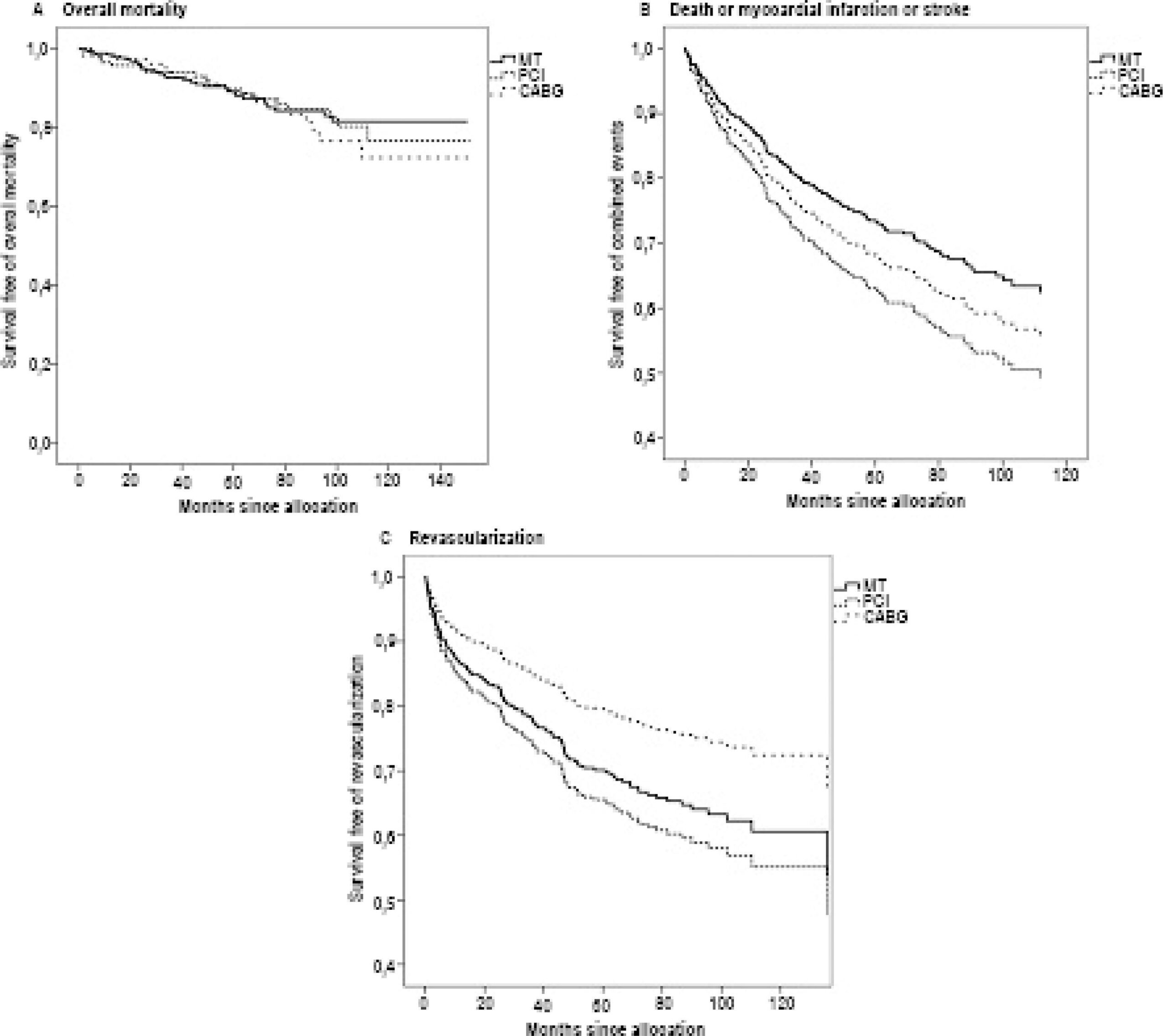
We conducted a prospective cohort study of 560 patients from an outpatient clinic in a tertiary hospital, with a mean follow-up of 5 years. Patients were classified into MT (n = 288), PCI (n = 159) and CABG (n=113) groups according to their initial treatment strategy. Primary endpoints were overall mortality and combined events of death, acute coronary syndrome, and stroke.

Results:

During follow-up, death rates were 11.1% in MT, 11.9% in PCI and 15.9% in CABG patients, with no statistical difference (hazard ratio [HR] for PCI, 1.05; 95% confidence interval [95%CI], 0.59 to 1.84; and HR for CABG, 1.20; 95% CI: 0.68 to 2.15). Combined outcomes occurred more often among patients initially submitted to PCI compared to MT (HR 1.50, 95% CI 1.05 to 2.14), and did not differ between MT and CABG patients (HR 1.24, 95% CI 0.84 to 1.83). Among patients with diabetes (n=198), PCI was the only therapeutic strategy predictive of combined outcomes (HR 2.14; 95% CI 1.25 to 3.63).

Conclusion:

In this observational study of stable coronary artery disease, there was no difference in overall mortality between initial medical therapy or revascularization surgery strategies. Patients initially treated with PCI had greater chance to develop combined major cardiovascular events.

  • Cohort Studies
  • Coronary Artery Disease/surgery
  • Medication Therapy Management
  • Myocardial Revascularization
  • Percutaneous Coronary Intervention
Read Full Article
Creative Commons Attribution (CC BY) Creative Commons license
01/01/2017 DOI: 10.5935/2359-4802.20170069 Views 1
Figure 1
ABC
Review Article

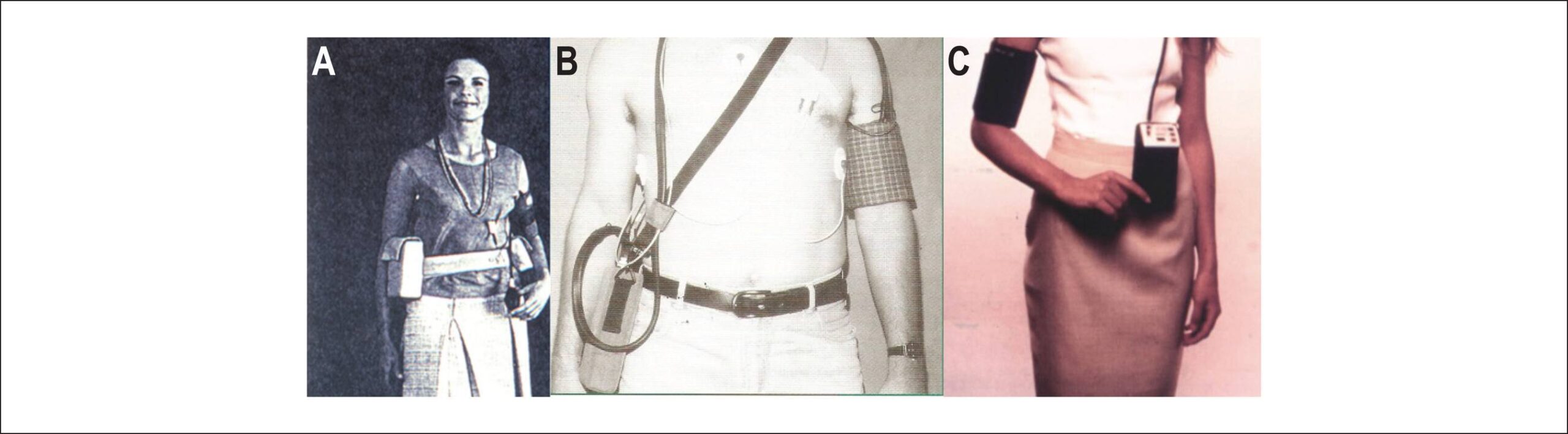
Ambulatory Blood Pressure Monitoring: Five Decades of More Light and Less Shadows

Fernando Nobre et al. Décio Mion Junior

Abstract

Casual blood pressure measurements have been extensively questioned over the last five decades. A significant percentage of patients have different blood pressure readings when examined in the office or outside it. For this reason, a change in the paradigm of the best manner to assess blood pressure has been observed. The method that has been most widely used is the Ambulatory Blood Pressure Monitoring – ABPM. The method allows recording blood pressure measures in 24 hours and evaluating various parameters such as mean BP, pressure loads, areas under the curve, variations between daytime and nighttime, pulse pressure variability etc. Blood pressure measurements obtained by ABPM are better correlated, for example, with the risks of hypertension. The main indications for ABPM are: suspected white coat hypertension and masked hypertension, evaluation of the efficacy of the antihypertensive therapy in 24 hours, and evaluation of symptoms. There is increasing evidence that the use of ABPM has contributed to the assessment of blood pressure behaviors, establishment of diagnoses, prognosis and the efficacy of antihypertensive therapy. There is no doubt that the study of 24-hour blood pressure behavior and its variations by ABPM has brought more light and less darkness to the field, which justifies the title of this review.

  • Ambulatory / trends
  • blood pressure monitoring
  • Hypertension
  • Medication Therapy Management
  • White Coat Hypertension
Read Full Article
Creative Commons Attribution (CC BY) Creative Commons license
06/05/2016 DOI: 10.5935/abc.20160065 Views 1
Figure 1
ABC
Review Article

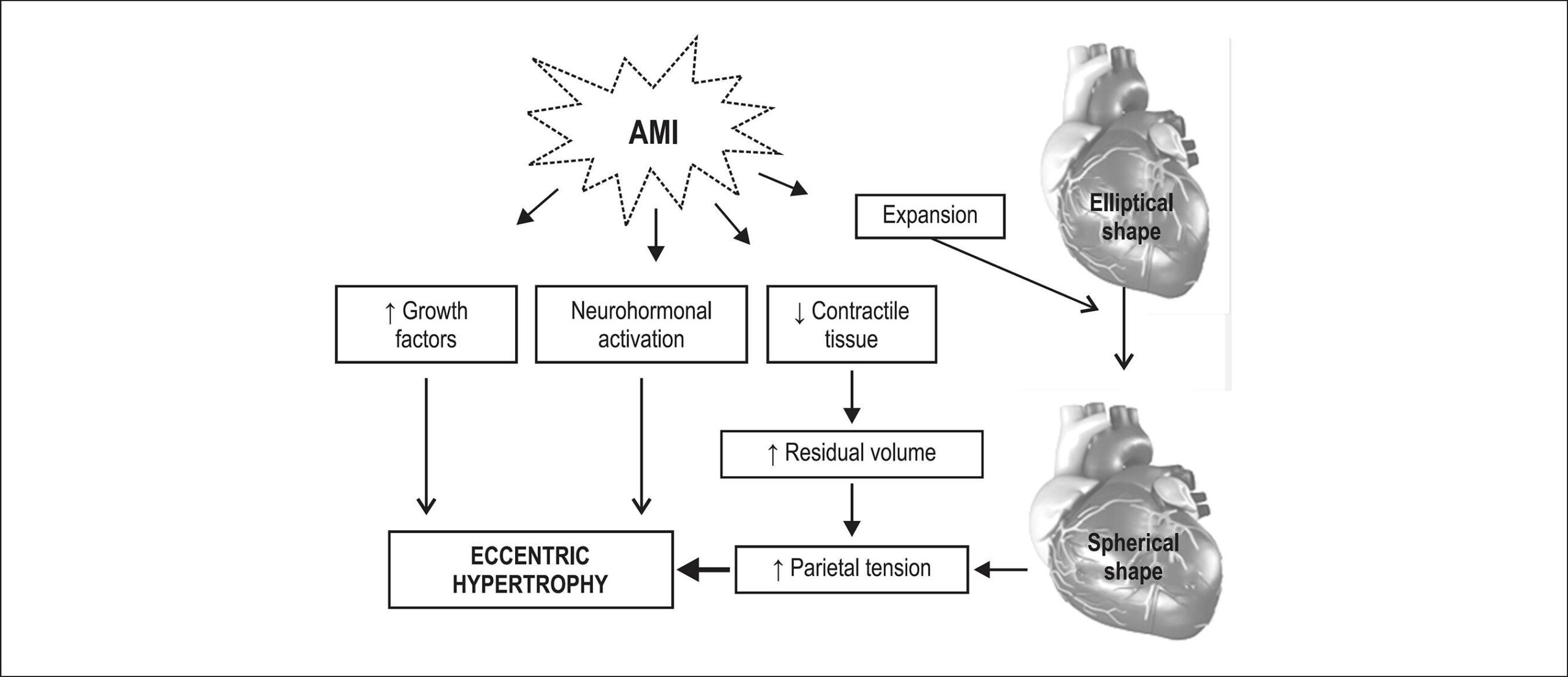
Cardiac Remodeling: Concepts, Clinical Impact, Pathophysiological Mechanisms and Pharmacologic Treatment

Paula S. Azevedo et al. Bertha F. Polegato Marcos F. Minicucci Sergio A. R. Paiva Leonardo A. M. Zornoff

Abstract

Cardiac remodeling is defined as a group of molecular, cellular and interstitial changes that manifest clinically as changes in size, mass, geometry and function of the heart after injury. The process results in poor prognosis because of its association with ventricular dysfunction and malignant arrhythmias. Here, we discuss the concepts and clinical implications of cardiac remodeling, and the pathophysiological role of different factors, including cell death, energy metabolism, oxidative stress, inflammation, collagen, contractile proteins, calcium transport, geometry and neurohormonal activation. Finally, the article describes the pharmacological treatment of cardiac remodeling, which can be divided into three different stages of strategies: consolidated, promising and potential strategies.

  • Heart Failure
  • Medication Therapy Management
  • Ventricular Dysfunction / physiopathology
  • Ventricular Remodeling
Read Full Article
Creative Commons Attribution (CC BY) Creative Commons license
08/12/2015 DOI: 10.5935/abc.20160005 Views 5

How to cite this article

EndNote RIS

Electronic Document Format (Vancouver)

Figueiredo VMS, Santos JVS, Galvão NG, Figueiredo Neto JA. Flowchart for Treatment of Heart Failure with Preserved Ejection Fraction. ABC: Heart Failure & Cardiomyopathy 2022;2(3):299-303.

Electronic Document Format (ABNT)

Figueiredo, Viviane Melo e Silva de; Santos, João Vitor Soares; Galvão, Natália Garcia; Figueiredo Neto, José Albuquerque de. Flowchart for Treatment of Heart Failure with Preserved Ejection Fraction. ABC: Heart Failure & Cardiomyopathy, v. 2, n. 3, p. 299-303, Nov. 2022.

Electronic Document Format (APA)

Figueiredo, V. M. S. , Santos, J. V. S., Galvão, N. G., & Figueiredo Neto, J. A. (2022). Flowchart for Treatment of Heart Failure with Preserved Ejection Fraction. ABC: Heart Failure & Cardiomyopathy, 2(3), 299-303.

Electronic Document Format (ISO)

Figueiredo, Viviane Melo e Silva de and Santos, João Vitor Soares and Galvão, Natália Garcia and Figueiredo Neto, José Albuquerque de. Flowchart for Treatment of Heart Failure with Preserved Ejection Fraction. ABC: Heart Failure & Cardiomyopathy [online]. 2022, vol. 2, n. 3, [cited 2026-10-15], pp. 299-303. Available from: <https://journals.cardiol.br/en/article/flowchart-for-treatment-of-heart-failure-with-preserved-ejection-fraction/>

EndNote RIS

Electronic Document Format (Vancouver)

Rossi Neto JM, Rossi RM, Finger MA, Santos CC. HFREF Pharmacological Treatment Sequencing: The Traditional Approach. ABC Heart Fail Cardiomyop 2022;2(1):24-6.

Electronic Document Format (ABNT)

Rossi Neto, João Manoel; Rossi, Raphael Machado; Finger, Marco Aurelio; Santos, Carolina Casadei dos. HFREF Pharmacological Treatment Sequencing: The Traditional Approach. ABC Heart Fail Cardiomyop, v. 2, n. 1, p. 24-26, Apr. 2022.

Electronic Document Format (APA)

Rossi Neto, J. M., Rossi, R. M., Finger, M. A., & Santos, C. C. (2022). HFREF Pharmacological Treatment Sequencing: The Traditional Approach. ABC Heart Fail Cardiomyop, 2(1), 24-26.

Electronic Document Format (ISO)

Rossi Neto, João Manoel and Rossi, Raphael Machado and Finger, Marco Aurelio and Santos, Carolina Casadei dos. HFREF Pharmacological Treatment Sequencing: The Traditional Approach. ABC Heart Fail Cardiomyop [online]. 2022, vol. 2, n. 1, [cited 2026-10-15], pp. 24-26. Available from: <https://journals.cardiol.br/en/article/hfref-pharmacological-treatment-sequencing-the-traditional-approach/>

EndNote RIS

Electronic Document Format (Vancouver)

Furtado MV, Araujo GN, Jost MF, Americo AD, Peruzzo N, Nasi G, Telo GH, et al. Effectiveness of Medical and Revascularization Procedures as the Initial Strategy in Stable Coronary Artery Disease: A Cohort Study. International Journal of Cardiovascular Sciences 2017;30(5):408-15.

Electronic Document Format (ABNT)

Furtado, Mariana Vargas; Araujo, Gustavo Neves de; Jost, Mariana Ferreira; Americo, Andre Dias; Peruzzo, Nicolas; Nasi, Guilherme; Telo, Guilherme Heiden; Borges, Flavia Kessler; Polanczyk, Carisi Anne. Effectiveness of Medical and Revascularization Procedures as the Initial Strategy in Stable Coronary Artery Disease: A Cohort Study. International Journal of Cardiovascular Sciences, v. 30, n. 5, p. 408-415, Dec. 2016.

Electronic Document Format (APA)

Furtado, M. V., Araujo, G. N. , Jost, M. F., Americo, A. D., Peruzzo, N., Nasi, G., Telo, G. H., Borges, F. K., & Polanczyk, C. A. (2017). Effectiveness of Medical and Revascularization Procedures as the Initial Strategy in Stable Coronary Artery Disease: A Cohort Study. International Journal of Cardiovascular Sciences, 30(5), 408-415.

Electronic Document Format (ISO)

Furtado, Mariana Vargas and Araujo, Gustavo Neves de and Jost, Mariana Ferreira and Americo, Andre Dias and Peruzzo, Nicolas and Nasi, Guilherme and Telo, Guilherme Heiden and Borges, Flavia Kessler and Polanczyk, Carisi Anne. Effectiveness of Medical and Revascularization Procedures as the Initial Strategy in Stable Coronary Artery Disease: A Cohort Study. International Journal of Cardiovascular Sciences [online]. 2017, vol. 30, n. 5, [cited 2026-10-15], pp. 408-415. Available from: <https://journals.cardiol.br/en/article/effectiveness-of-medical-and-revascularization-procedures-as-the-initial-strategy-in-stable-coronary-artery-disease-a-cohort-study/>. ISSN 2359-4802

EndNote RIS

Electronic Document Format (Vancouver)

Nobre F, Mion Junior D. Ambulatory Blood Pressure Monitoring: Five Decades of More Light and Less Shadows. Arquivos Brasileiros de Cardiologia 2016;106(6):528-37.

Electronic Document Format (ABNT)

Nobre, Fernando; Mion Junior, Décio. Ambulatory Blood Pressure Monitoring: Five Decades of More Light and Less Shadows. Arquivos Brasileiros de Cardiologia, v. 106, n. 6, p. 528-537, May. 2016.

Electronic Document Format (APA)

Nobre, F., & Mion Junior, D. (2016). Ambulatory Blood Pressure Monitoring: Five Decades of More Light and Less Shadows. Arquivos Brasileiros de Cardiologia, 106(6), 528-537.

Electronic Document Format (ISO)

Nobre, Fernando and Mion Junior, Décio. Ambulatory Blood Pressure Monitoring: Five Decades of More Light and Less Shadows. Arquivos Brasileiros de Cardiologia [online]. 2016, vol. 106, n. 6, [cited 2026-10-15], pp. 528-537. Available from: <https://journals.cardiol.br/en/article/ambulatory-blood-pressure-monitoring-five-decades-of-more-light-and-less-shadows/>. ISSN 0066-782X

EndNote RIS

Electronic Document Format (Vancouver)

Azevedo PS, Polegato BF, Minicucci MF, Paiva SAR, Zornoff LAM. Cardiac Remodeling: Concepts, Clinical Impact, Pathophysiological Mechanisms and Pharmacologic Treatment. Arquivos Brasileiros de Cardiologia 2015;106(1):62-9.

Electronic Document Format (ABNT)

Azevedo, Paula S.; Polegato, Bertha F.; Minicucci, Marcos F.; Paiva, Sergio A. R.; Zornoff, Leonardo A. M.. Cardiac Remodeling: Concepts, Clinical Impact, Pathophysiological Mechanisms and Pharmacologic Treatment. Arquivos Brasileiros de Cardiologia, v. 106, n. 1, p. 62-69, Dec. 2015.

Electronic Document Format (APA)

Azevedo, P. S., Polegato, B. F., Minicucci, M. F., Paiva, S. A. R., & Zornoff, L. A. M. (2015). Cardiac Remodeling: Concepts, Clinical Impact, Pathophysiological Mechanisms and Pharmacologic Treatment. Arquivos Brasileiros de Cardiologia, 106(1), 62-69.

Electronic Document Format (ISO)

Azevedo, Paula S. and Polegato, Bertha F. and Minicucci, Marcos F. and Paiva, Sergio A. R. and Zornoff, Leonardo A. M.. Cardiac Remodeling: Concepts, Clinical Impact, Pathophysiological Mechanisms and Pharmacologic Treatment. Arquivos Brasileiros de Cardiologia [online]. 2015, vol. 106, n. 1, [cited 2026-10-15], pp. 62-69. Available from: <https://journals.cardiol.br/en/article/cardiac-remodeling-concepts-clinical-impact-pathophysiological-mechanisms-and-pharmacologic-treatment/>. ISSN 0066-782X

  • About ABC Family
  • Internal Regulation
  • Editorial Board
  • Brazilian Society of Cardiology (SBC)

Issues

SBC Guidelines

  • Videos
  • Podcasts
  • News