ABC Family Arquivos Brasileiros de Cardiologia International Journal of Cardiovascular Sciences ABC Heart Failure & Cardiomyopathy ABC Imagem Cardiovascular
Português English
ABC Family
Português English
  • About
    • About ABC Family
    • Internal Regulation
    • Editorial Board
    • Brazilian Society of Cardiology (SBC)
  • Issues
  • SBC Guidelines
  • Content
    • Videos
    • Podcasts
    • News
  • About
    • About ABC Family
    • Internal Regulation
    • Editorial Board
    • Brazilian Society of Cardiology (SBC)
  • Issues
  • SBC Guidelines
  • Content
    • Videos
    • Podcasts
    • News

ABC Family

  • ABC Family
  • Arquivos Brasileiros de Cardiologia
  • International Journal of Cardiovascular Sciences
  • ABC Heart Failure & Cardiomyopathy
  • ABC Imagem Cardiovascular
Search in

No content found.

Journals
Ordering
Article types
Others

  1. Home
  2. Keyword: Tricuspid Valve
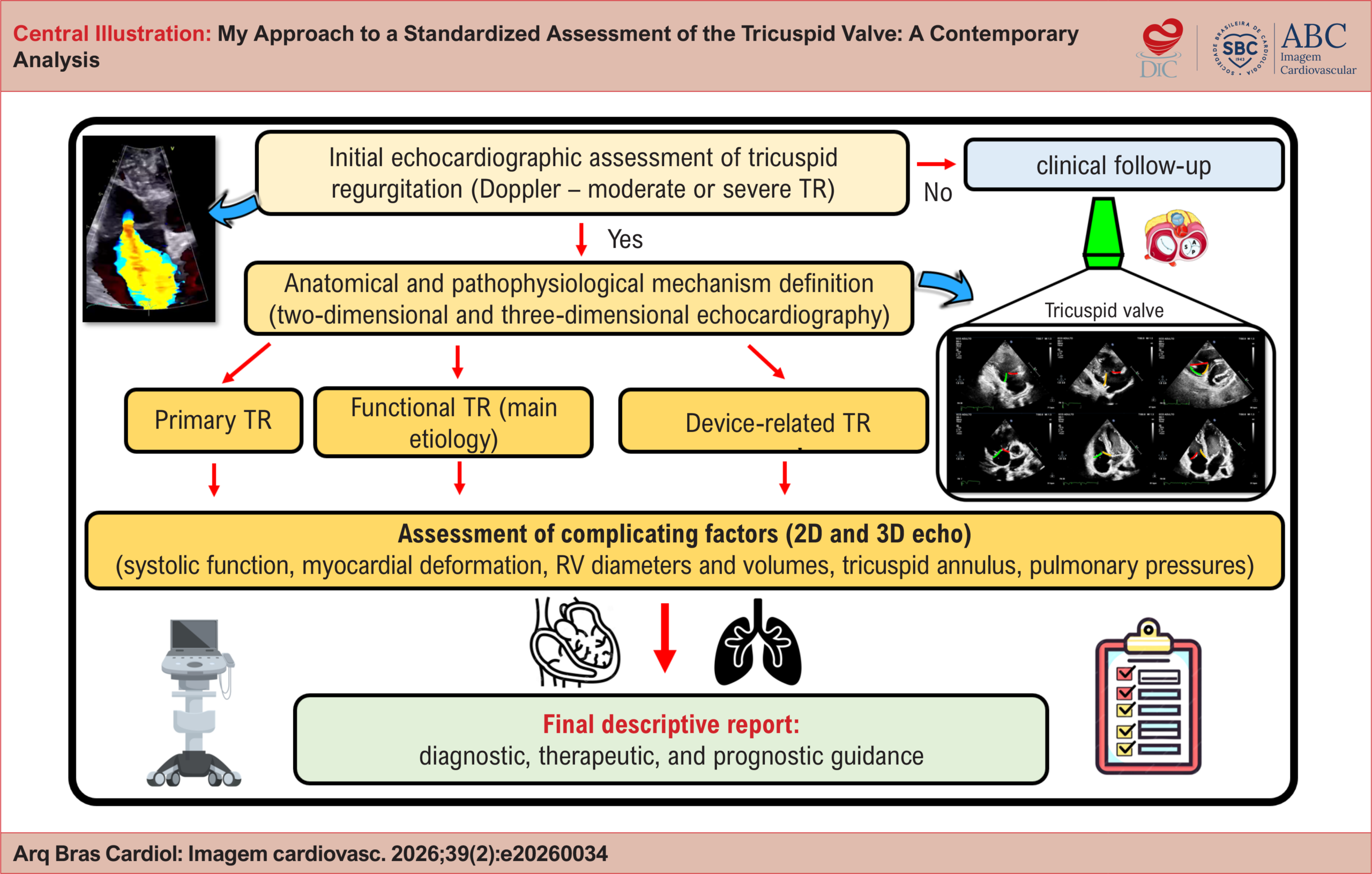
My Approach to a Standardized Assessment of the Tricuspid Valve: A Contemporary Analysis
ABCIC
Review Article

My Approach to a Standardized Assessment of the Tricuspid Valve: A Contemporary Analysis

Halsted Alarcão Gomes Pereira da Silva et al. Alexandre Costa Souza Adenalva Beck

Abstract

Tricuspid regurgitation (TR) remains one of the most frequent valvular diseases encountered in echocardiographic practice. Mild cases generally do not require further investigation or specific treatment. Moderate and severe valvular disease, however, require more detailed anatomical and etiological assessment to better understand the underlying pathophysiological mechanism.

Two-dimensional echocardiographic analysis is the initial examination of choice and should be performed in a standardized manner, with individual identification of the leaflets using the main transthoracic echocardiographic windows. The description of complementary parameters – such as right ventricular (RV) systolic function, myocardial deformation assessed by longitudinal strain, right-sided chamber diameters and volumes, and estimation of pulmonary pressures – guides the clinician regarding potential therapeutic strategies and provides relevant prognostic information.

In this context, the 2025 European Society of Cardiology (ESC) guideline reinforces the importance of a standardized and comprehensive evaluation of the tricuspid valve and its hemodynamic repercussions. Most of this assessment can be performed using widely available two-dimensional transthoracic echocardiography.

  • Pulmonary Hypertension
  • Tricuspid Valve
  • Tricuspid Valve Insufficiency
Read Full Article
Creative Commons Attribution (CC BY) Creative Commons license
24/07/2026 DOI: 10.36660/abcimg.20260034i Views 1
Central Illustration
ABCIC
Review Article

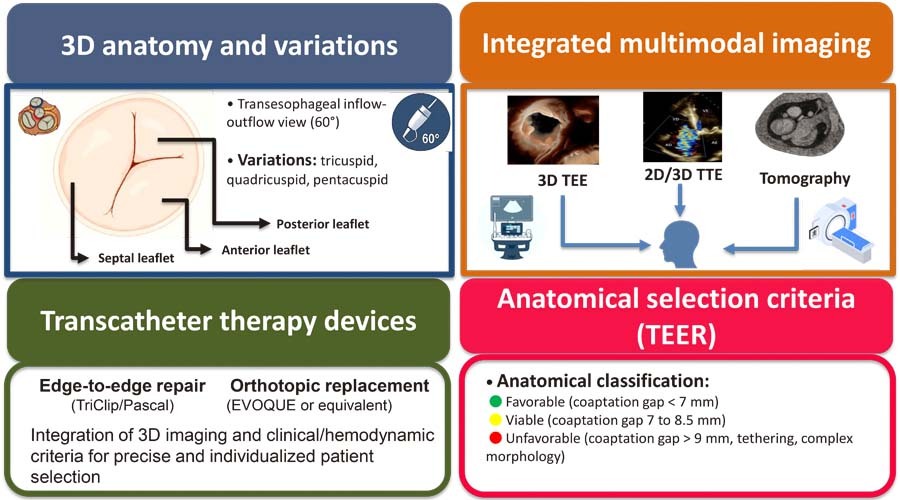
Tricuspid Valve: Anatomical Basis and Patient Selection Criteria for Transcatheter Structural Interventions

Alexandre Costa Souza et al. Halsted Alarcão Gomes Pereira da Silva Alex dos Santos Felix

Abstract

Tricuspid regurgitation has been recognized as a relevant clinical entity, with a direct impact on morbidity and mortality. Recent advances in multimodal cardiovascular imaging have promoted more detailed anatomical and functional assessment of the tricuspid apparatus, guiding the indication and planning of transcatheter interventions. To provide a review of the anatomical basis of the tricuspid valve and discuss echocardiographic and clinical criteria for selecting candidates for transcatheter therapies. This narrative review of the anatomical variability of the tricuspid valve and its subvalvular apparatus incorporates recent recommendations from echocardiography societies and clinical evidence. Special emphasis has been given to three-dimensional echocardiography, transesophageal echocardiography, and computed tomography for morphological and functional characterization of tricuspid regurgitation. Contemporary evidence has demonstrated that up to 45% of patients present with non-classical morphologies (quadricuspid or pentacuspid valves), which impact the viability and outcomes of edge-to-edge repair. The integration of three-dimensional echocardiography enhances accuracy in grading regurgitation severity, enables precise measurement of the vena contracta area, and assists in device selection. Clinical factors including right ventricular function, pulmonary artery systolic pressure, and the presence of intracardiac devices also influence patient selection. Appropriate selection of candidates for transcatheter tricuspid valve therapies requires a systematic approach with integrated application of imaging methods and clinical parameters. Detailed echocardiographic characterization of leaflet morphology, coaptation gap, and annulus geometry is crucial for planning the procedure, selecting the device, and predicting outcomes.

  • Three-Dimensional Echocardiography
  • Transesophageal echocardiography
  • Tricuspid Valve
  • Tricuspid Valve Insufficiency
Read Full Article
Creative Commons Attribution (CC BY) Creative Commons license
16/12/2025 DOI: 10.36660/abcimg.20250064i Views 2
Central Illustration
ABCIC
Original Article

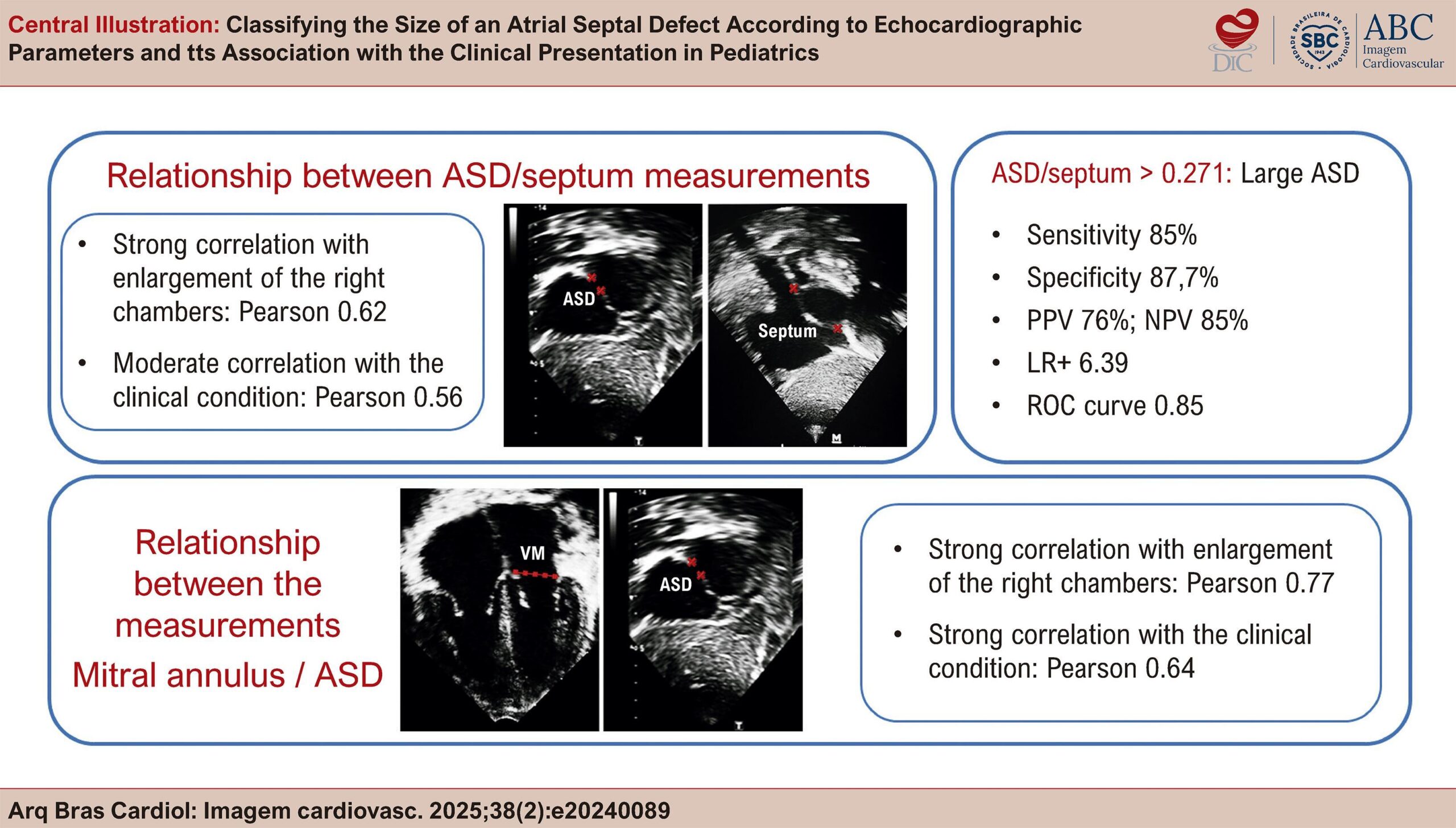
Classifying the Size of an Atrial Septal Defect According to Echocardiographic Parameters and its Association with the Clinical Presentation in Pediatrics

Lívia de Castro Ribeiro et al. Rose Mary Ferreira Lisboa da Silva Henrique de Assis Fonseca Tonelli Adriana Furletti Machado Guimarães … Fátima Derlene da Rocha Araújo Zilda Maria Alves Meira Sandra Regina Tolentino Castilho Alan Alvarez Conde Lícia Campos Valadares

Abstract

Background

Few studies are using linear echocardiographic measurements for classifying the size of Atrial Septal Defect (ASD).

Objectives

Investigate the relationship between ASD hemodynamic repercussions and ASD diameter to the mitral annulus diameter (MI/ASD) ratio and ASD diameter to the interatrial septum diameter (ASD/septum) ratio, and describe cutoff points to classify the size of the defect.

Methods

An observational, prospective, cross-sectional study, including subjects aged 1 month and 18 years diagnosed with isolated ASD. Hemodynamic repercussion was quantified by clinical evaluation, tricuspid annulus (TA) Z-score, subjective estimation of the enlargement of the right chambers, and the relationship between systemic and pulmonary flows (QP/QS) on echocardiography. Its association with ASD/septum and MI/ASD measurements was also studied. A value of p < 0.05 was considered statistically significant.

Results

Thirty-five subjects, mean age 6.3 years, 69% female, mean ASD 13.5 mm. There was a correlation between MI/ASD and the clinical classification of ASD (Pearson: -0.61; p < 0.001), ASD/septum (Pearson: -0.80; p < 0.001), and QP/QS (-0.76; p < 0.001). There was a correlation between ASD/septum and the clinical classification of ASD (Pearson: 0.56; p < 0.001), QP/QS (0.63; p = 0.001), subjective assessment of the right chambers (0.62; p < 0.001), and a weak correlation with the TA Z-score (0.35; p = 0.04). According to the operating characteristic curve for the stable variable classification of ASD according to the subjective right chamber’s size, an area of 0.85 was obtained for ASD/septum (p = 0.001). The cutoff point of 0.27 for large ASD showed sensitivity of 85%, specificity of 86.7%, positive predictive value (PPV) of 86%, negative predictive value (NPV) of 85.2%, and positive likelihood ratio of 6.39.

Conclusions

ASD/septum was associated with the hemodynamic repercussion of ASD and was useful in detecting large ASD.

  • Atrial Heart Septal Defects
  • Atrial Septum
  • Echocardiography
  • Tricuspid Valve
Read Full Article
Creative Commons Attribution (CC BY) Creative Commons license
15/05/2025 DOI: 10.36660/abcimg.20240089i Views 1
First Percutaneous Orthotopic Tricuspid Valve Implantations using the LuX-Valve Plus Device in Latin America: Report of the First Three Cases
ABCIC
Original Article

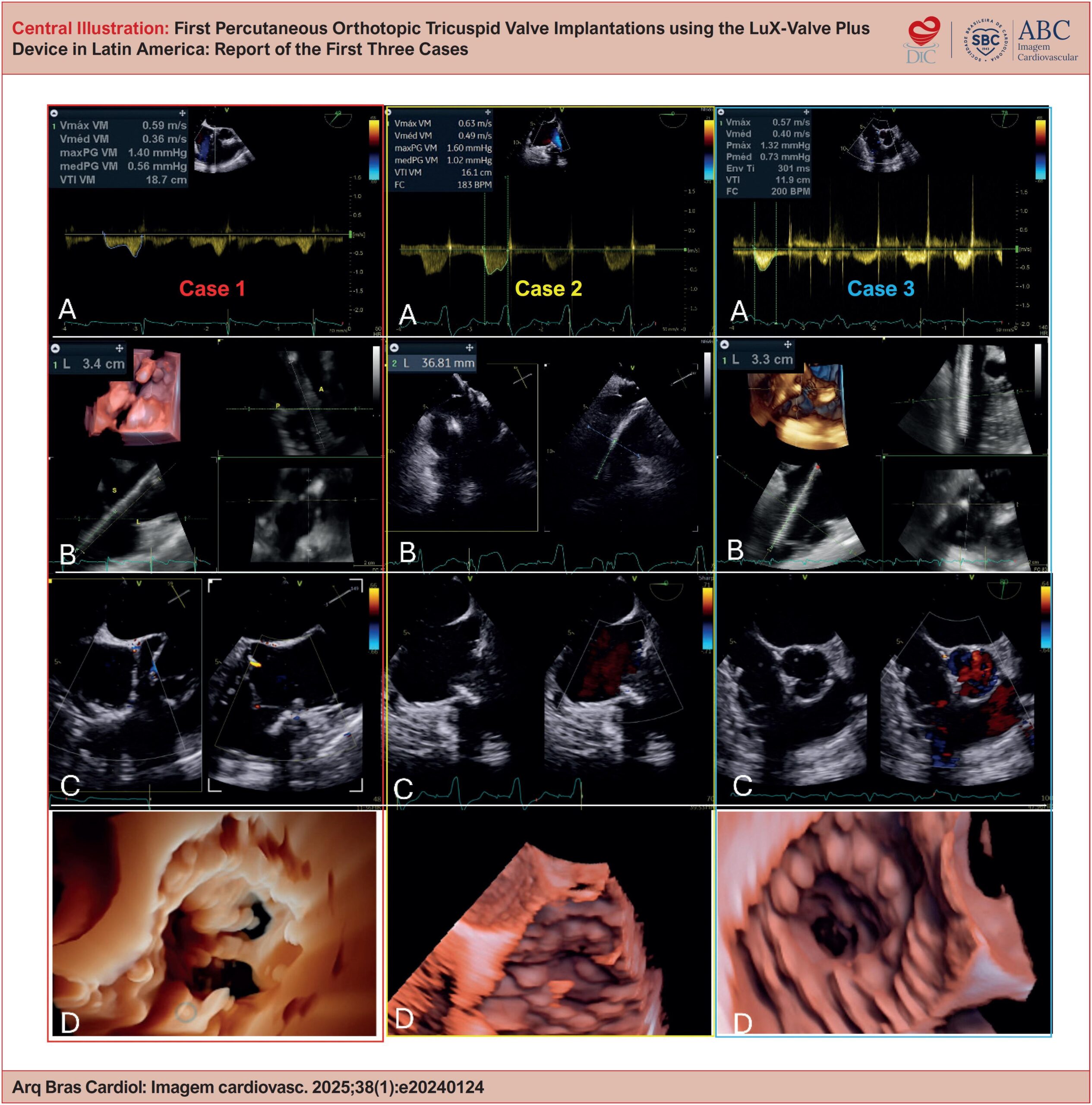
First Percutaneous Orthotopic Tricuspid Valve Implantations using the LuX-Valve Plus Device in Latin America: Report of the First Three Cases

Fernanda Esteves et al. Vinícius Esteves Marcio Mendes Pereira Frederico José Neves Mancuso … Marden Tebet Sergio Kreimer Edmur Carlos de Araújo Francisco Monteiro de Almeida Magalhães

Abstract

Background:

Severe tricuspid regurgitation (TR) is associated with high morbidity and mortality, especially in patients with contraindications for surgery. Transcatheter tricuspid valve replacement has emerged as a minimally invasive alternative for this population, with the LuX-Valve Plus device designed for orthotopic implantation via the transjugular route.

Objective:

To report the first 3 cases of transcatheter tricuspid valve replacement using the LuX-Valve Plus device in Latin America, assessing the feasibility, safety, and immediate clinical outcomes.

Methods:

The study included 3 female patients with torrential TR and high surgical risk. Pre-procedure assessment included transesophageal echocardiography, 3-dimensional transthoracic echocardiography (3D TEE), computed tomography, and cardiac catheterization. The procedure was performed via transjugular access, under general anesthesia, with 3D TEE and fluoroscopy guidance. Implant efficacy was assessed as resolution of TR, transprosthetic gradient, and post-procedure complications.

Results:

The implants were successful in all cases, with complete resolution of TR, absence of paravalvular leaks, and adequate transprosthetic gradient. Right ventricular function was preserved, and all patients were discharged 3 to 4 days after the procedure with no significant complications.

Conclusion:

Transcatheter tricuspid valve replacement using the LuX-Valve Plus was shown to be a viable and safe alternative for patients with severe TR and high surgical risk. The use of 3D TEE was essential to the planning and execution of the implant. Further studies are needed to assess durability and long-term clinical outcomes.

  • Transcatheter Aortic Valve Replacement
  • Transesophageal echocardiography
  • Tricuspid Valve
  • Tricuspid Valve Insufficiency
Read Full Article
Creative Commons Attribution (CC BY) Creative Commons license
28/03/2025 DOI: 10.36660/abcimg.20240124i Views 1
Figure 1
ABCIC
Review Article

My Approach to Three-Dimensional Echocardiography for Pathophysiological Classification of Tricuspid Regurgitation

Alex dos Santos Felix et al. Monica Luiza de Alcantara Konstantinos Papadopoulos

Introduction

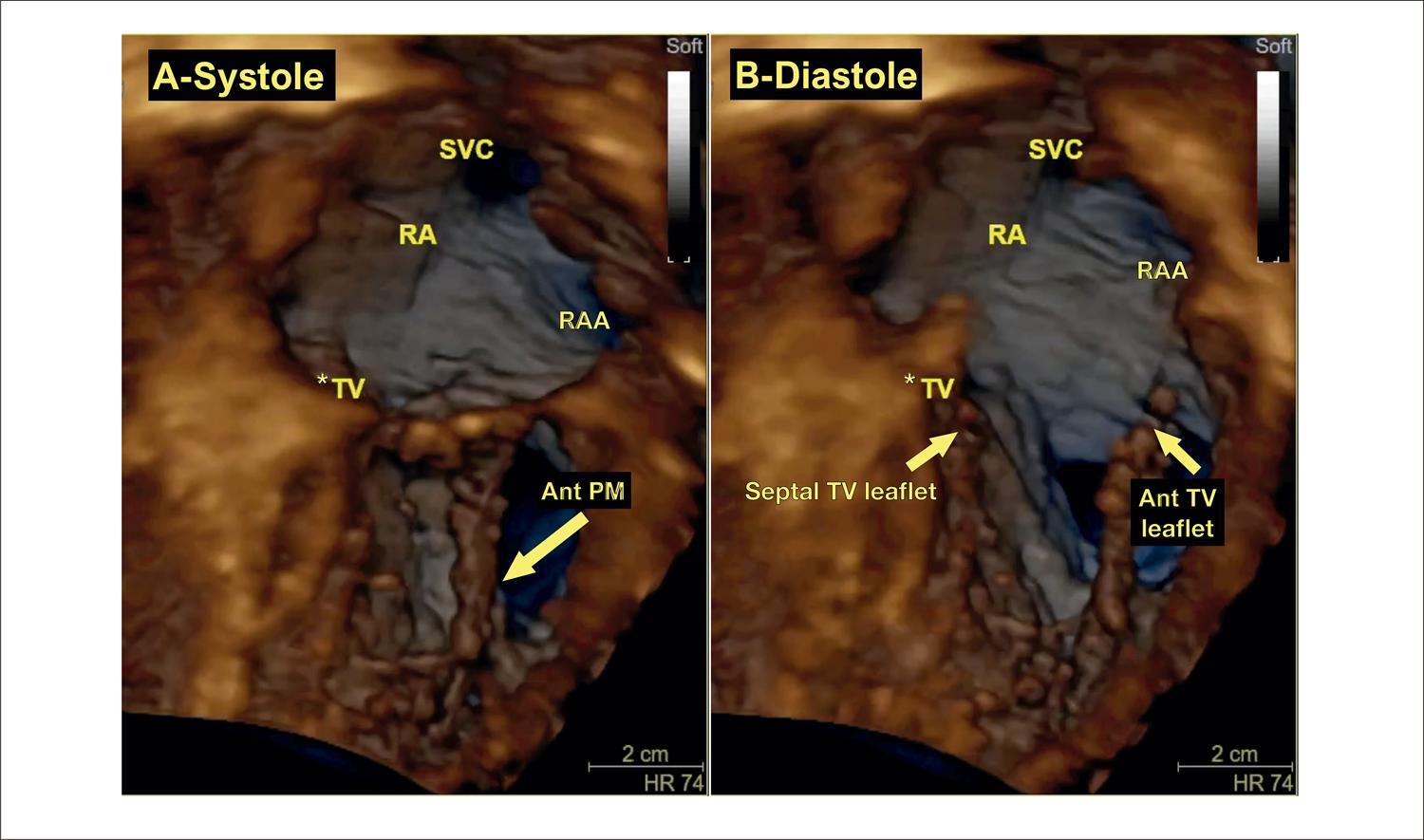
Although it was known as the “forgotten valve” in the past, there has been increasing interest in studying the tricuspid valve (TV) during the last two decades. Tricuspid regurgitation (TR) has been identified as a prognostic marker not only when associated with other cardiac diseases, like heart failure, mitral regurgitation, or aortic stenosis, – but also as an isolated entity. Understanding the pathophysiological mechanisms of this disease is of paramount importance, since new options of transcatheter devices and techniques are emerging, offering invasive treatment for high-risk patients unsuitable for surgical intervention.

The TV is difficult to image in transesophageal echocardiography (TEE) for the following reasons: 1) the leaflets are much thinner compared to mitral leaflets, with greater anatomic variability; 2) it is an anterior structure, far away from the esophagus, with acoustic shadowing from the fibrous heart skeleton; and 3) it cannot be aligned to the esophageal probe in order to acquire en face views and requires use of lateral resolution. These restrictions may limit the ability of traditional TEE to evaluate the TV, making it necessary to complement the evaluation with special windows from the lower esophagus and transgastric views. Different from other cardiac valves, images of the TV obtained from transthoracic echocardiography (TTE) usually have better resolution than images obtained by TEE. Even though all protocols start with two-dimensional (2D) assessment of the TV, three-dimensional echocardiography (3DE) plays an important role in the evaluation of TV diseases, due not only to its ability to precisely depict the anatomy of the valve and the subvalvular apparatus, but also to its accuracy in quantitation of right ventricular (RV) and right atrial volumes and function and functional analysis of valvular dysfunction, especially for grading TR and evaluating dynamics of the tricuspid annulus (TA) through dedicated software. All of this information is of unparalleled importance for patient management and pre-procedural planning in surgical and transcatheter approaches.

[…]

  • Echocardiography, Three-Dimensional
  • Tricuspid Valve
  • Tricuspid Valve Insufficiency
Read Full Article
Creative Commons Attribution (CC BY) Creative Commons license
30/06/2023 DOI: 10.36660/abcimg.20230055i Views 3
ABCIC
Editorial

A Clinician’s View of Tricuspid Regurgitation: What do I Need to Know? When to Intervene?

Tiago Bignoto

Tricuspid valve dysfunction was considered a benign clinical situation for a long time, but with the advancement of diagnostic imaging methods and better clinical stratification of patients with structural heart disease, adequate classification of tricuspid regurgitation has become fundamental to decision making in the context of a Heart Team.

The first assessment to be taken into account is the etiology of the dysfunction. With a low prevalence, the primary etiology, mainly due to rheumatic and congenital causes, has a well-established intervention flowchart, primarily based on the presence of symptoms or hemodynamic repercussions on the right side of the heart.

[…]

  • Heart Valve Diseases
  • Tricuspid Valve
  • Tricuspid Valve Insufficiency
Read Full Article
Creative Commons Attribution (CC BY) Creative Commons license
24/03/2023 DOI: 10.36660/abcimg.20230005i Views 2
ABCIC
Review Article

My Approach to Assessment After Tricuspid Interventions: Tips and Tricks

Bruna Morhy Borges Leal Assunção et al. Arthur Cortez Gonçalves Lucas Velloso Dutra Renata de Sá Cassar

Abstract

Severe tricuspid regurgitation (TR) is associated with high morbidity and mortality. Given that surgical treatment of TR alone has been associated with high mortality, transcatheter interventions in the tricuspid valve (TV) have been used for its treatment, with relatively lower risk. There is a delay in intervention for TR, and this is probably related to a limited understanding of the anatomy of the TV and the right ventricle, in addition to an underestimation of the severity of TR. In this scenario, it is necessary to have comprehensive anatomical knowledge of the TV, the pathophysiology involved in the mechanism of regurgitation, and more accurate grading. The TV has anatomical, histological, and spatial peculiarities that make its assessment more complex when compared to the mitral valve, requiring knowledge and training in the various echocardiographic techniques that will often be used in combination for accurate assessment.

This review will describe the anatomy of the TV, the role of echocardiography in the diagnosis, grading, and pathophysiology involved in TR; the main transcatheter treatment options currently available for TR; and the assessment of outcomes after transcatheter intervention by means of multiple echocardiographic modalities.

  • transcatheter
  • tricuspid regurgitation
  • Tricuspid Valve
Read Full Article
Creative Commons Attribution (CC BY) Creative Commons license
07/03/2023 DOI: 10.36660/abcimg.20230006i Views 1

How to cite this article

EndNote RIS

Electronic Document Format (Vancouver)

Silva HAGP, Souza AC, Beck A. My Approach to a Standardized Assessment of the Tricuspid Valve: A Contemporary Analysis. ABC Imagem Cardiovascular 2026;39(2):e20260034.

Electronic Document Format (ABNT)

Silva, Halsted Alarcão Gomes Pereira da; Souza, Alexandre Costa; Beck, Adenalva. My Approach to a Standardized Assessment of the Tricuspid Valve: A Contemporary Analysis. ABC Imagem Cardiovascular, v. 39, n. 2, e20260034, Jul. 2026.

Electronic Document Format (APA)

Silva, H. A. G. P. , Souza, A. C., & Beck, A. (2026). My Approach to a Standardized Assessment of the Tricuspid Valve: A Contemporary Analysis. ABC Imagem Cardiovascular, 39(2), e20260034.

Electronic Document Format (ISO)

Silva, Halsted Alarcão Gomes Pereira da and Souza, Alexandre Costa and Beck, Adenalva. My Approach to a Standardized Assessment of the Tricuspid Valve: A Contemporary Analysis. ABC Imagem Cardiovascular [online]. 2026, vol. 39, n. 2, [cited 2026-10-14], e20260034. Available from: <https://journals.cardiol.br/en/article/my-approach-to-a-standardized-assessment-of-the-tricuspid-valve-a-contemporary-analysis/>. ISSN 2318-8219

EndNote RIS

Electronic Document Format (Vancouver)

Souza AC, Silva HAGP, Felix AS. Tricuspid Valve: Anatomical Basis and Patient Selection Criteria for Transcatheter Structural Interventions. ABC Imagem Cardiovascular 2025;38(3):e20250064.

Electronic Document Format (ABNT)

Souza, Alexandre Costa; Silva, Halsted Alarcão Gomes Pereira da; Felix, Alex dos Santos. Tricuspid Valve: Anatomical Basis and Patient Selection Criteria for Transcatheter Structural Interventions. ABC Imagem Cardiovascular, v. 38, n. 3, e20250064, Dec. 2025.

Electronic Document Format (APA)

Souza, A. C., Silva, H. A. G. P. , & Felix, A. S. (2025). Tricuspid Valve: Anatomical Basis and Patient Selection Criteria for Transcatheter Structural Interventions. ABC Imagem Cardiovascular, 38(3), e20250064.

Electronic Document Format (ISO)

Souza, Alexandre Costa and Silva, Halsted Alarcão Gomes Pereira da and Felix, Alex dos Santos. Tricuspid Valve: Anatomical Basis and Patient Selection Criteria for Transcatheter Structural Interventions. ABC Imagem Cardiovascular [online]. 2025, vol. 38, n. 3, [cited 2026-10-14], e20250064. Available from: <https://journals.cardiol.br/en/article/tricuspid-valve-anatomical-basis-and-patient-selection-criteria-for-transcatheter-structural-interventions/>. ISSN 2318-8219

EndNote RIS

Electronic Document Format (Vancouver)

Ribeiro LC, Silva RMFL, Tonelli HAF, Guimarães AFM, Araújo FDR, Meira ZMA, Castilho SRT, et al. Classifying the Size of an Atrial Septal Defect According to Echocardiographic Parameters and its Association with the Clinical Presentation in Pediatrics. ABC Imagem Cardiovascular 2025;38(2):e20240089.

Electronic Document Format (ABNT)

Ribeiro, Lívia de Castro; Silva, Rose Mary Ferreira Lisboa da; Tonelli, Henrique de Assis Fonseca; Guimarães, Adriana Furletti Machado; Araújo, Fátima Derlene da Rocha; Meira, Zilda Maria Alves; Castilho, Sandra Regina Tolentino; Conde, Alan Alvarez; Valadares, Lícia Campos. Classifying the Size of an Atrial Septal Defect According to Echocardiographic Parameters and its Association with the Clinical Presentation in Pediatrics. ABC Imagem Cardiovascular, v. 38, n. 2, e20240089, May. 2025.

Electronic Document Format (APA)

Ribeiro, L. C., Silva, R. M. F. L. , Tonelli, H. A. F., Guimarães, A. F. M., Araújo, F. D. R., Meira, Z. M. A., Castilho, S. R. T., Conde, A. A., & Valadares, L. C. (2025). Classifying the Size of an Atrial Septal Defect According to Echocardiographic Parameters and its Association with the Clinical Presentation in Pediatrics. ABC Imagem Cardiovascular, 38(2), e20240089.

Electronic Document Format (ISO)

Ribeiro, Lívia de Castro and Silva, Rose Mary Ferreira Lisboa da and Tonelli, Henrique de Assis Fonseca and Guimarães, Adriana Furletti Machado and Araújo, Fátima Derlene da Rocha and Meira, Zilda Maria Alves and Castilho, Sandra Regina Tolentino and Conde, Alan Alvarez and Valadares, Lícia Campos. Classifying the Size of an Atrial Septal Defect According to Echocardiographic Parameters and its Association with the Clinical Presentation in Pediatrics. ABC Imagem Cardiovascular [online]. 2025, vol. 38, n. 2, [cited 2026-10-14], e20240089. Available from: <https://journals.cardiol.br/en/article/classifying-the-size-of-an-atrial-septal-defect-according-to-echocardiographic-parameters-and-its-association-with-the-clinical-presentation-in-pediatrics/>. ISSN 2318-8219

EndNote RIS

Electronic Document Format (Vancouver)

Esteves F, Esteves V, Pereira MM, Mancuso FJN, Tebet M, Kreimer S, Araújo EC, et al. First Percutaneous Orthotopic Tricuspid Valve Implantations using the LuX-Valve Plus Device in Latin America: Report of the First Three Cases. ABC Imagem Cardiovascular 2025;38(1):e20240124.

Electronic Document Format (ABNT)

Esteves, Fernanda; Esteves, Vinícius; Pereira, Marcio Mendes; Mancuso, Frederico José Neves; Tebet, Marden; Kreimer, Sergio; Araújo, Edmur Carlos de; Magalhães, Francisco Monteiro de Almeida. First Percutaneous Orthotopic Tricuspid Valve Implantations using the LuX-Valve Plus Device in Latin America: Report of the First Three Cases. ABC Imagem Cardiovascular, v. 38, n. 1, e20240124, Mar. 2025.

Electronic Document Format (APA)

Esteves, F., Esteves, V., Pereira, M. M., Mancuso, F. J. N., Tebet, M., Kreimer, S., Araújo, E. C. , & Magalhães, F. M. A. (2025). First Percutaneous Orthotopic Tricuspid Valve Implantations using the LuX-Valve Plus Device in Latin America: Report of the First Three Cases. ABC Imagem Cardiovascular, 38(1), e20240124.

Electronic Document Format (ISO)

Esteves, Fernanda and Esteves, Vinícius and Pereira, Marcio Mendes and Mancuso, Frederico José Neves and Tebet, Marden and Kreimer, Sergio and Araújo, Edmur Carlos de and Magalhães, Francisco Monteiro de Almeida. First Percutaneous Orthotopic Tricuspid Valve Implantations using the LuX-Valve Plus Device in Latin America: Report of the First Three Cases. ABC Imagem Cardiovascular [online]. 2025, vol. 38, n. 1, [cited 2026-10-14], e20240124. Available from: <https://journals.cardiol.br/en/article/first-percutaneous-orthotopic-tricuspid-valve-implantations-using-the-lux-valve-plus-device-in-latin-america-report-of-the-first-three-cases/>. ISSN 2318-8219

EndNote RIS

Electronic Document Format (Vancouver)

Felix AS, Alcantara ML, Papadopoulos K. My Approach to Three-Dimensional Echocardiography for Pathophysiological Classification of Tricuspid Regurgitation. ABC Imagem Cardiovascular 2023;36(2):e20230055.

Electronic Document Format (ABNT)

Felix, Alex dos Santos; Alcantara, Monica Luiza de; Papadopoulos, Konstantinos. My Approach to Three-Dimensional Echocardiography for Pathophysiological Classification of Tricuspid Regurgitation. ABC Imagem Cardiovascular, v. 36, n. 2, e20230055, Jun. 2023.

Electronic Document Format (APA)

Felix, A. S., Alcantara, M. L. , & Papadopoulos, K. (2023). My Approach to Three-Dimensional Echocardiography for Pathophysiological Classification of Tricuspid Regurgitation. ABC Imagem Cardiovascular, 36(2), e20230055.

Electronic Document Format (ISO)

Felix, Alex dos Santos and Alcantara, Monica Luiza de and Papadopoulos, Konstantinos. My Approach to Three-Dimensional Echocardiography for Pathophysiological Classification of Tricuspid Regurgitation. ABC Imagem Cardiovascular [online]. 2023, vol. 36, n. 2, [cited 2026-10-14], e20230055. Available from: <https://journals.cardiol.br/en/article/my-approach-to-three-dimensional-echocardiography-for-pathophysiological-classification-of-tricuspid-regurgitation/>. ISSN 2318-8219

EndNote RIS

Electronic Document Format (Vancouver)

Bignoto T. A Clinician’s View of Tricuspid Regurgitation: What do I Need to Know? When to Intervene?. Arquivos Brasileiros de Cardiologia Imagem cardiovascular 2023;36(1):e20230005.

Electronic Document Format (ABNT)

Bignoto, Tiago. A Clinician’s View of Tricuspid Regurgitation: What do I Need to Know? When to Intervene?. Arquivos Brasileiros de Cardiologia Imagem cardiovascular, v. 36, n. 1, e20230005, Mar. 2023.

Electronic Document Format (APA)

Bignoto, T. (2023). A Clinician’s View of Tricuspid Regurgitation: What do I Need to Know? When to Intervene?. Arquivos Brasileiros de Cardiologia Imagem cardiovascular, 36(1), e20230005.

Electronic Document Format (ISO)

Bignoto, Tiago. A Clinician’s View of Tricuspid Regurgitation: What do I Need to Know? When to Intervene?. Arquivos Brasileiros de Cardiologia Imagem cardiovascular [online]. 2023, vol. 36, n. 1, [cited 2026-10-14], e20230005. Available from: <https://journals.cardiol.br/en/article/a-clinicians-view-of-tricuspid-regurgitation-what-do-i-need-to-know-when-to-intervene/>. ISSN 2318-8219

EndNote RIS

Electronic Document Format (Vancouver)

Assunção BMBL, Gonçalves AC, Dutra LV, Cassar RS. My Approach to Assessment After Tricuspid Interventions: Tips and Tricks. ABC Imagem Cardiovascular 2023;36(1):e20230006.

Electronic Document Format (ABNT)

Assunção, Bruna Morhy Borges Leal; Gonçalves, Arthur Cortez; Dutra, Lucas Velloso; Cassar, Renata de Sá. My Approach to Assessment After Tricuspid Interventions: Tips and Tricks. ABC Imagem Cardiovascular, v. 36, n. 1, e20230006, Mar. 2023.

Electronic Document Format (APA)

Assunção, B. M. B. L., Gonçalves, A. C., Dutra, L. V., & Cassar, R. S. (2023). My Approach to Assessment After Tricuspid Interventions: Tips and Tricks. ABC Imagem Cardiovascular, 36(1), e20230006.

Electronic Document Format (ISO)

Assunção, Bruna Morhy Borges Leal and Gonçalves, Arthur Cortez and Dutra, Lucas Velloso and Cassar, Renata de Sá. My Approach to Assessment After Tricuspid Interventions: Tips and Tricks. ABC Imagem Cardiovascular [online]. 2023, vol. 36, n. 1, [cited 2026-10-14], e20230006. Available from: <https://journals.cardiol.br/en/article/my-approach-to-assessment-after-tricuspid-interventions-tips-and-tricks/>. ISSN 2318-8219

  • About ABC Family
  • Internal Regulation
  • Editorial Board
  • Brazilian Society of Cardiology (SBC)

Issues

SBC Guidelines

  • Videos
  • Podcasts
  • News