ABC Family Arquivos Brasileiros de Cardiologia International Journal of Cardiovascular Sciences ABC Heart Failure & Cardiomyopathy ABC Imagem Cardiovascular
Português English
ABC Family
Português English
  • About
    • About ABC Family
    • Internal Regulation
    • Editorial Board
    • Brazilian Society of Cardiology (SBC)
  • Issues
  • SBC Guidelines
  • Content
    • Videos
    • Podcasts
    • News
  • About
    • About ABC Family
    • Internal Regulation
    • Editorial Board
    • Brazilian Society of Cardiology (SBC)
  • Issues
  • SBC Guidelines
  • Content
    • Videos
    • Podcasts
    • News

ABC Family

  • ABC Family
  • Arquivos Brasileiros de Cardiologia
  • International Journal of Cardiovascular Sciences
  • ABC Heart Failure & Cardiomyopathy
  • ABC Imagem Cardiovascular
Search in

No content found.

Journals
Ordering
Article types
Others

  1. Home
  2. Keyword: Neonatology
Central Illustration
IJCS
Original Article

Prevalence of Critical Congenital Heart Disease Detected in the Pulse Oximetry Test in Asymptomatic Newborns, ≥35 Gestational Weeks, in a Maternity in Southern Brazil

Sandra Mara Witkowski et al. Rafael Bertoldi Torres Aline Fernanda Pereira Carolina Marchi Guerra … Marco Otílio Rodrigues Wilde Leonardo Fonseca Sene Marcelo França Soares Thor Ferreira da Cruz

Abstract

Background

Congenital heart diseases (CHD) are one of the most prevalent malformations, and the screening tests to identify critical congenital heart disease (CCHD) is the pulse oximetry test, with subsequent investigation and treatment.

Objective

To quantify positive pulse oximetry tests and verify the prevalence of CCHD detected by it in asymptomatic newborns, ≥35 gestational weeks, in a Brazilian maternity hospital.

Methodology

This is an observational, retrospective, quantitative, analytical and cross-sectional study, conducted from October 2020 to May 2022, in a maternity hospital in southern Brazil, through the collection of records of positive oximetry pulse tests, following the norms of screening CCHD test of the Brazilian Society of Pediatrics (SBP), after they were evaluated with echocardiography for confirmation or exclusion of CHD.

Results

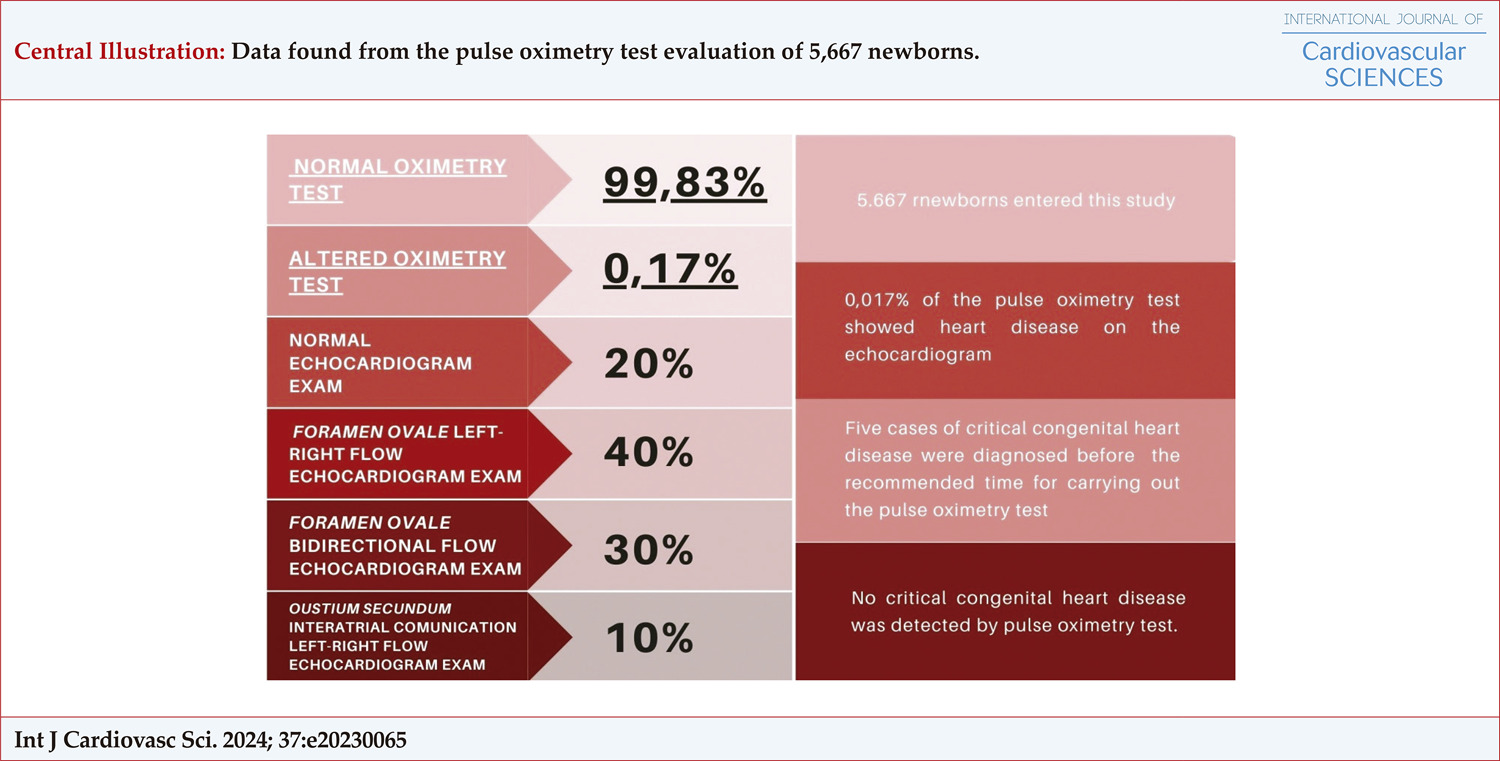
A total of 5,667 newborns were evaluated in this study, according to the inclusion criteria; 0.17% (n = 10) had a positive pulse oximetry test. Regarding the results of the echocardiography of the neonates with a positive test, two were normal, seven were cases of patent foramen ovale (PFO), and one was a case (0,017%) with interatrial communication (IAC) diagnosis. In the same period, five neonates with CCHD were born, symptomatic, diagnosed by physical examination, and referred to neonatal intensive care units (NICU) before taking the neonatal cardiac screening (< 24 hours of life).

Conclusion

The prevalence of positive pulse oximetry tests was 0.17% and none CCHD was detected. Five cases of CCHD were born in this period, but they were diagnosed before the recommend time to perform the screening test.
  • Congenital
  • Echocardiography/methods
  • Heart Defects
  • Infant
  • Neonatology
  • Newborn
  • Oximetry/methods
Read Full Article
Creative Commons Attribution (CC BY) Creative Commons license
04/03/2024 DOI: 10.36660/ijcs.20230065 Views 1
Figure 1
ABCIC
Review Article

My Approach to Echocardiographic Assessment of the Premature Newborn

Karen Saori Shiraishi Sawamura et al. Márcio Miranda Brito

Abstract

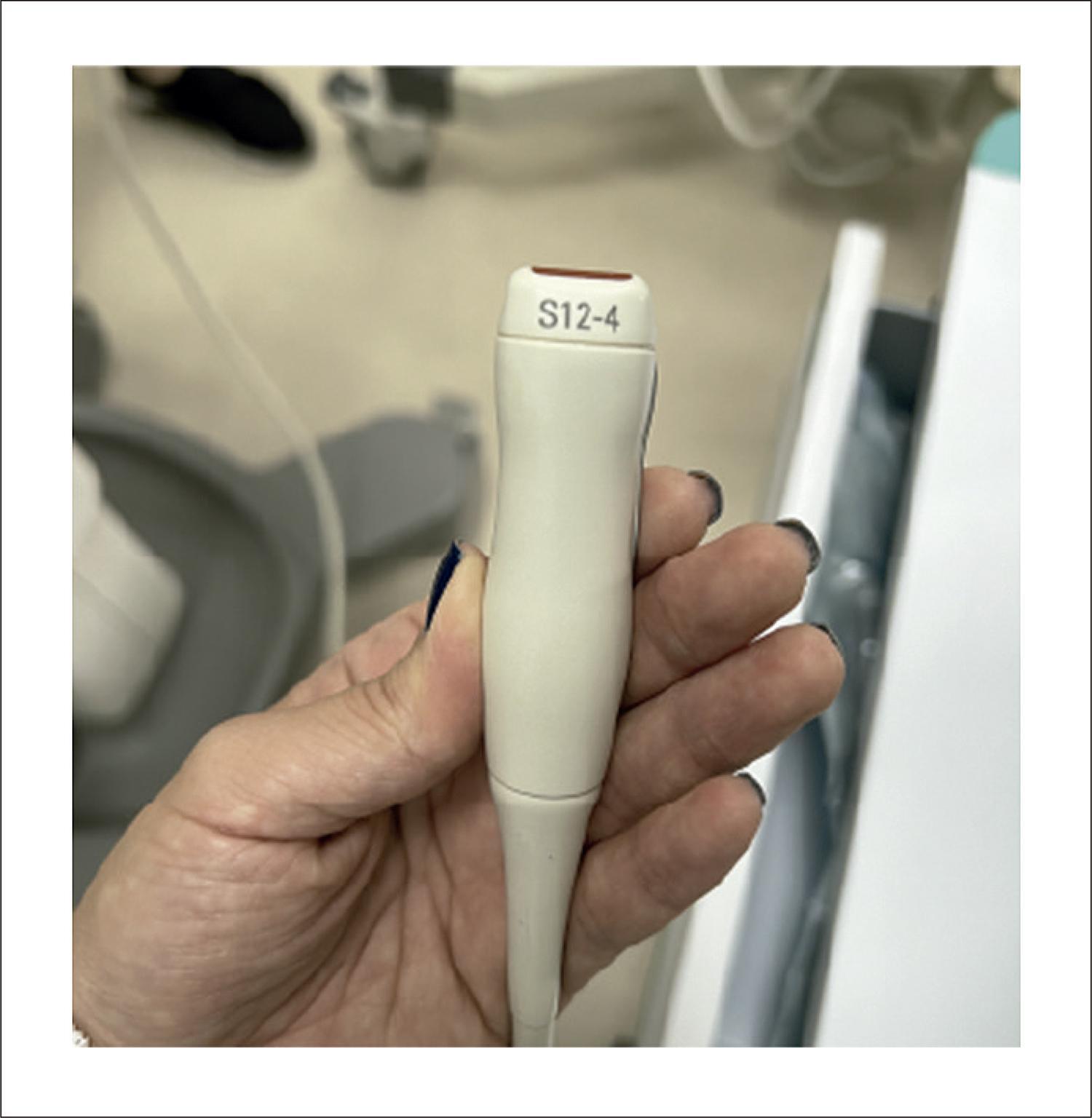
Echocardiographic assessment of preterm infants, why do it? The incidence of premature births has been increasing worldwide and already affects about 10% of live births. Extremely preterm newborns (PTNB) are at increased risk of developing pulmonary immaturity, leading to pulmonary hypertension (PH), in addition to cardiovascular immaturity and patent ductus arteriosus (PDA).Hemodynamic monitoring of this population is challenging and differs from critically ill pediatric patients due to hemodynamic lability. Thus, minimal manipulation is essential to avoid complications. In this context, non-invasive monitoring methods such as transthoracic echocardiography (TTE) gain importance for hemodynamic assessment. It is a low-cost, radiation-free test that offers good anatomical and functional visualization in pediatric patients, making it a useful tool in the clinical management of severe preterm newborns.What you will find in this article:We will take an objective, didactic, and at times humorous approach to the use of echocardiography in premature newborns in the neonatal intensive care unit (NICU), and we will discuss the echocardiographic particularities of premature infants, especially regarding equipment adjustments, PH, and persistence of the ductus arteriosus (DA).

  • Ductus Arteriosus
  • Echocardiography
  • Neonatology
  • Premature Infant
  • Pulmonary Hypertension
Read Full Article
Creative Commons Attribution (CC BY) Creative Commons license
27/06/2023 DOI: 10.36660/abcimg.20230035i Views 1
Figure 1
ABC
Original Article

Percutaneous Closure of Ductus Arteriosus in Preterm Babies: The Initial Brazilian Experience

João Luiz Langer Manica et al. Juliana Rodrigues Neves Raul Arrieta Pedro Abujamra … Raul Ivo Rossi Filho Luiz Carlos Giuliano Germana Coimbra Pablo Tomé Teixeirense João Henrique Aramayo Rossi Rodrigo Nieckel da Costa Salvador André Bavaresco Cristóvão Carlos Pedra

Abstract

Background

The presence of patent ductus arteriosus can be as high as 50% in preterm babies. Hemodynamically significant patent ductus arteriosus is a common cause of delayed weaning of respiratory support and an important risk factor of necrotizing enterocolitis, intraventricular hemorrhage, and bronchopulmonary dysplasia in this population.

Objective

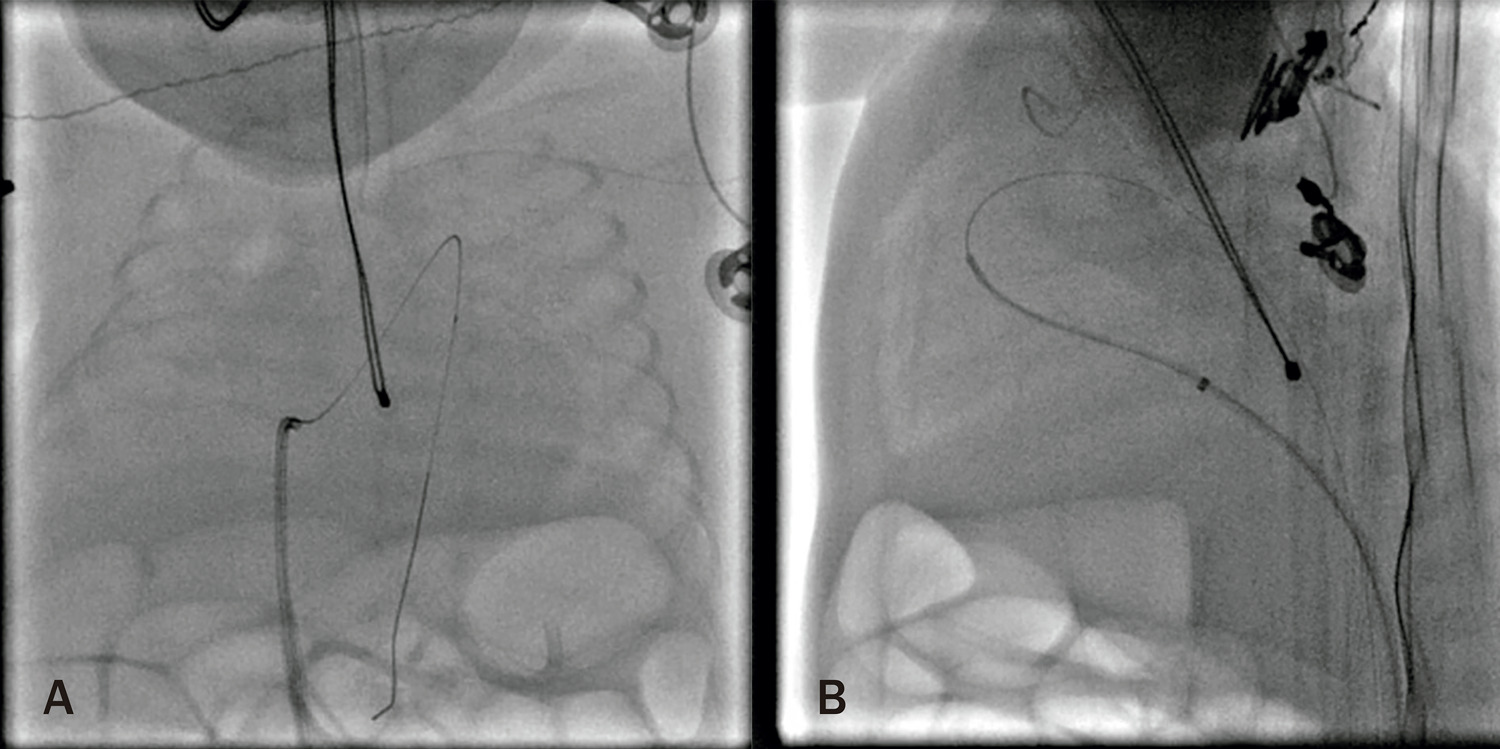
The aim of this study is to describe an initial experience of percutaneous closure of the ductus arteriosus in preterm infants weighing less than 2 kg.

Methods

This was a prospective study, comprised of 14 consecutive patients submitted to percutaneous closure of ductus arteriosus between March 2020 and February 2021 in 6 institutions in Brazil.

Results

Mean gestational age was 28.45±3.14 weeks, mean age at the procedure was 38.85±17.35 days and mean weight was 1.41 ±0.41 kg; 79% of the patients were under mechanical ventilation, and 79% had been submitted, on average, to a 1.5 cycle of non-steroidal anti-inflammatory drugs. Most patients were weaned off of mechanical ventilation in a mean of 12.6 ±7.24 days after the procedure. Success rate was 100%. No procedure-related mortality was observed.

Conclusion

This study concluded that percutaneous closure of ductus arteriosus in premature babies below 2 kg has satisfactory results and a low complication rate in this study sample.

  • Catheterization
  • Ductus Arteriosus
  • Heart Defects, Congenital
  • Infant
  • Neonatology
  • Premature
Read Full Article
Creative Commons Attribution (CC BY) Creative Commons license
05/09/2022 DOI: 10.36660/abc.20210818 Views 2
Figure 1
IJCS
Original Article

Congenital Heart Disesase: A Retrospective Analysis from a Tertiary Referral Centre in Portugal

Diogo Faim et al. Joaquim Tiago Rui Castelo Andreia Francisco … Rosa Alves António Pires

Abstract

Background:

Congenital heart disease is the leading cause of mortality among all congenital malformations.

Objectives:

To evaluate the incidence of congenital heart diseases in a central maternity hospital in Portugal from January 2003 to December 2018 and to determine survival in the first year of life.

Methods:

Retrospective analysis of newborns diagnosed with congenital heart diseases within 72 hours after birth. Malformations were divided according to pathophysiology. Cumulative survival analysis was performed by the Kaplan-Meier test. Stastical significance was set at p <0.05.

Results:

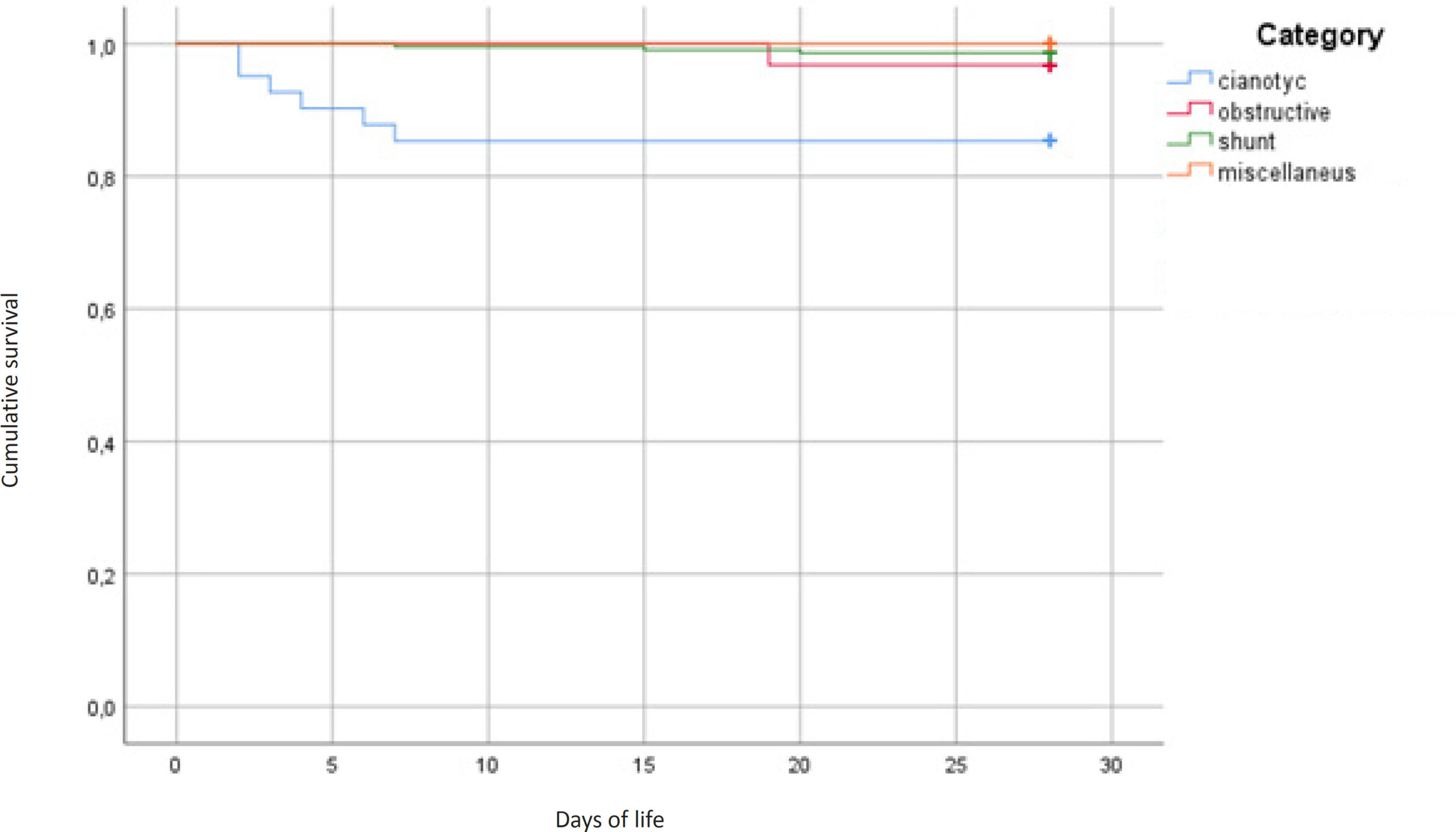
A total of 297 newborns with cardiac malformation was recorded among 47,198 live births (incidence of 6:1000), 16% associated with extra-cardiac disease. The most frequent congenital heart diseases were left-to-right shunt lesions (n = 216), followed by cyanotic (n = 41), acyanotic obstructive (n = 31) and miscellaneous (n = 9). Seventy (24%) patients had prenatal diagnosis, 88% of them cyanotic defects, and a positive association was found between prenatal diagnosis and mortality (p <0.001). Coarctation of the aorta was associated with gestational diabetes (p = 0.014). Atrial septal defect was more common in females (p = 0.02). Mortality rate due to heart disease was 3.4%. Patients with cyanotic disease, 99%, 97%, 97%, respectively, for patients with left-to-right shunt lesions, and 97%, 97%,97% for those with obstructive lesion cases.

Conclusion:

The incidence of congenital heart disease was 6:1000, mostly left-to-right shunt lesions. Heart disease accounted for only half of deaths, and cyanotic diseases have a high nonspecific mortality rate.

  • congenital heart defect
  • Neonatology
  • Newborn Infant
  • Survival
Read Full Article
Creative Commons Attribution (CC BY) Creative Commons license
28/07/2021 DOI: 10.36660/ijcs.20200238 Views 1

How to cite this article

EndNote RIS

Electronic Document Format (Vancouver)

Witkowski SM, Torres RB, Pereira AF, Guerra CM, Wilde MOR, Sene LF, Soares MF, et al. Prevalence of Critical Congenital Heart Disease Detected in the Pulse Oximetry Test in Asymptomatic Newborns, ≥35 Gestational Weeks, in a Maternity in Southern Brazil. International Journal of Cardiovascular Sciences 2024;37:e20230065.

Electronic Document Format (ABNT)

Witkowski, Sandra Mara; Torres, Rafael Bertoldi; Pereira, Aline Fernanda; Guerra, Carolina Marchi; Wilde, Marco Otílio Rodrigues; Sene, Leonardo Fonseca; Soares, Marcelo França; Cruz, Thor Ferreira da. Prevalence of Critical Congenital Heart Disease Detected in the Pulse Oximetry Test in Asymptomatic Newborns, ≥35 Gestational Weeks, in a Maternity in Southern Brazil. International Journal of Cardiovascular Sciences, v. 37, e20230065, Mar. 2024.

Electronic Document Format (APA)

Witkowski, S. M., Torres, R. B., Pereira, A. F., Guerra, C. M., Wilde, M. O. R., Sene, L. F., Soares, M. F., & Cruz, T. F. (2024). Prevalence of Critical Congenital Heart Disease Detected in the Pulse Oximetry Test in Asymptomatic Newborns, ≥35 Gestational Weeks, in a Maternity in Southern Brazil. International Journal of Cardiovascular Sciences, 37, e20230065.

Electronic Document Format (ISO)

Witkowski, Sandra Mara and Torres, Rafael Bertoldi and Pereira, Aline Fernanda and Guerra, Carolina Marchi and Wilde, Marco Otílio Rodrigues and Sene, Leonardo Fonseca and Soares, Marcelo França and Cruz, Thor Ferreira da. Prevalence of Critical Congenital Heart Disease Detected in the Pulse Oximetry Test in Asymptomatic Newborns, ≥35 Gestational Weeks, in a Maternity in Southern Brazil. International Journal of Cardiovascular Sciences [online]. 2024, vol. 37, [cited 2026-10-14], e20230065. Available from: <https://journals.cardiol.br/en/article/prevalence-of-critical-congenital-heart-disease-detected-in-the-pulse-oximetry-test-in-asymptomatic-newborns-%e2%89%a535-gestational-weeks-in-a-maternity-in-southern-brazil/>. ISSN 2359-4802

EndNote RIS

Electronic Document Format (Vancouver)

Sawamura KSS, Brito MM. My Approach to Echocardiographic Assessment of the Premature Newborn. ABC Imagem Cardiovascular 2023;36(2):e20230035.

Electronic Document Format (ABNT)

Sawamura, Karen Saori Shiraishi; Brito, Márcio Miranda. My Approach to Echocardiographic Assessment of the Premature Newborn. ABC Imagem Cardiovascular, v. 36, n. 2, e20230035, Jun. 2023.

Electronic Document Format (APA)

Sawamura, K. S. S., & Brito, M. M. (2023). My Approach to Echocardiographic Assessment of the Premature Newborn. ABC Imagem Cardiovascular, 36(2), e20230035.

Electronic Document Format (ISO)

Sawamura, Karen Saori Shiraishi and Brito, Márcio Miranda. My Approach to Echocardiographic Assessment of the Premature Newborn. ABC Imagem Cardiovascular [online]. 2023, vol. 36, n. 2, [cited 2026-10-14], e20230035. Available from: <https://journals.cardiol.br/en/article/my-approach-to-echocardiographic-assessment-of-the-premature-newborn/>. ISSN 2318-8219

EndNote RIS

Electronic Document Format (Vancouver)

Manica JLL, Neves JR, Arrieta R, Abujamra P, Rossi Filho RI, Giuliano LC, Coimbra G, et al. Percutaneous Closure of Ductus Arteriosus in Preterm Babies: The Initial Brazilian Experience. Arquivos Brasileiros de Cardiologia 2022;119(3):460-7.

Electronic Document Format (ABNT)

Manica, João Luiz Langer; Neves, Juliana Rodrigues; Arrieta, Raul; Abujamra, Pedro; Rossi Filho, Raul Ivo; Giuliano, Luiz Carlos; Coimbra, Germana; Teixeirense, Pablo Tomé; Rossi, João Henrique Aramayo; Costa, Rodrigo Nieckel da; Cristóvão, Salvador André Bavaresco; Pedra, Carlos. Percutaneous Closure of Ductus Arteriosus in Preterm Babies: The Initial Brazilian Experience. Arquivos Brasileiros de Cardiologia, v. 119, n. 3, p. 460-467, Sep. 2022.

Electronic Document Format (APA)

Manica, J. L. L., Neves, J. R., Arrieta, R., Abujamra, P., Rossi Filho, R. I., Giuliano, L. C., Coimbra, G., Teixeirense, P. T., Rossi, J. H. A., Costa, R. N. , Cristóvão, S. A. B., & Pedra, C. (2022). Percutaneous Closure of Ductus Arteriosus in Preterm Babies: The Initial Brazilian Experience. Arquivos Brasileiros de Cardiologia, 119(3), 460-467.

Electronic Document Format (ISO)

Manica, João Luiz Langer and Neves, Juliana Rodrigues and Arrieta, Raul and Abujamra, Pedro and Rossi Filho, Raul Ivo and Giuliano, Luiz Carlos and Coimbra, Germana and Teixeirense, Pablo Tomé and Rossi, João Henrique Aramayo and Costa, Rodrigo Nieckel da and Cristóvão, Salvador André Bavaresco and Pedra, Carlos. Percutaneous Closure of Ductus Arteriosus in Preterm Babies: The Initial Brazilian Experience. Arquivos Brasileiros de Cardiologia [online]. 2022, vol. 119, n. 3, [cited 2026-10-14], pp. 460-467. Available from: <https://journals.cardiol.br/en/article/percutaneous-closure-of-ductus-arteriosus-in-preterm-babies-the-initial-brazilian-experience/>. ISSN 0066-782X

EndNote RIS

Electronic Document Format (Vancouver)

Faim D, Tiago J, Castelo R, Francisco A, Alves R, Pires A. Congenital Heart Disesase: A Retrospective Analysis from a Tertiary Referral Centre in Portugal. International Journal of Cardiovascular Sciences 2021;34(5 Supl 1):105-13.

Electronic Document Format (ABNT)

Faim, Diogo; Tiago, Joaquim; Castelo, Rui; Francisco, Andreia; Alves, Rosa; Pires, António. Congenital Heart Disesase: A Retrospective Analysis from a Tertiary Referral Centre in Portugal. International Journal of Cardiovascular Sciences, v. 34, n. 5 Supl 1, p. 105-113, Jul. 2021.

Electronic Document Format (APA)

Faim, D., Tiago, J., Castelo, R., Francisco, A., Alves, R., & Pires, A. (2021). Congenital Heart Disesase: A Retrospective Analysis from a Tertiary Referral Centre in Portugal. International Journal of Cardiovascular Sciences, 34(5 Supl 1), 105-113.

Electronic Document Format (ISO)

Faim, Diogo and Tiago, Joaquim and Castelo, Rui and Francisco, Andreia and Alves, Rosa and Pires, António. Congenital Heart Disesase: A Retrospective Analysis from a Tertiary Referral Centre in Portugal. International Journal of Cardiovascular Sciences [online]. 2021, vol. 34, n. 5 Supl 1, [cited 2026-10-14], pp. 105-113. Available from: <https://journals.cardiol.br/en/article/congenital-heart-disesase-a-retrospective-analysis-from-a-tertiary-referral-centre-in-portugal/>. ISSN 2359-4802

  • About ABC Family
  • Internal Regulation
  • Editorial Board
  • Brazilian Society of Cardiology (SBC)

Issues

SBC Guidelines

  • Videos
  • Podcasts
  • News