ABC Family Arquivos Brasileiros de Cardiologia International Journal of Cardiovascular Sciences ABC Heart Failure & Cardiomyopathy ABC Imagem Cardiovascular
Português English
ABC Family
Português English
  • About
    • About ABC Family
    • Internal Regulation
    • Editorial Board
    • Brazilian Society of Cardiology (SBC)
  • Issues
  • SBC Guidelines
  • Content
    • Videos
    • Podcasts
    • News
  • About
    • About ABC Family
    • Internal Regulation
    • Editorial Board
    • Brazilian Society of Cardiology (SBC)
  • Issues
  • SBC Guidelines
  • Content
    • Videos
    • Podcasts
    • News

ABC Family

  • ABC Family
  • Arquivos Brasileiros de Cardiologia
  • International Journal of Cardiovascular Sciences
  • ABC Heart Failure & Cardiomyopathy
  • ABC Imagem Cardiovascular
Search in

No content found.

Journals
Ordering
Article types
Others

  1. Home
  2. Keyword: Electrocardiography, Ambulatory
Figure 1
ABC
Original Article

Reconnection Sites in Redo Ablation after Cryoballoon Pulmonary Vein Isolation in Patients with Paroxysmal Atrial Fibrillation

Rogelio Robledo Nolasco et al. Gerardo De Leon-Larios David Eduardo Bazzini-Carranza Elias Zavaleta Omar Calixto-Vargas

Abstract

Background

In paroxysmal atrial fibrillation (PAF), pulmonary vein isolation using cryoballoon (CB-PVI) has similar efficacy as radiofrequency ablation (RF-PVI) has. In redo ablation procedures following RF-PVI, PV reconnection is high, whereas in patients with redo following CB-PVI, information is scarce.

Objective

To determine the sites of PV reconnection in patients who underwent redo ablation after initial CB-PVI.

Methods

Patients who underwent an AF redo procedure, following an initial CB-PVI for PAF were included. LA electroanatomic mapping was used. A reconnection site was defined as the presence of a voltage of 0.3mV or greater in the PV and unidirectional or bidirectional conduction in the PV during sinus rhythm. Reconnections sites were identified using a clock-face view description and were ablated with radiofrequency afterwards.

Results

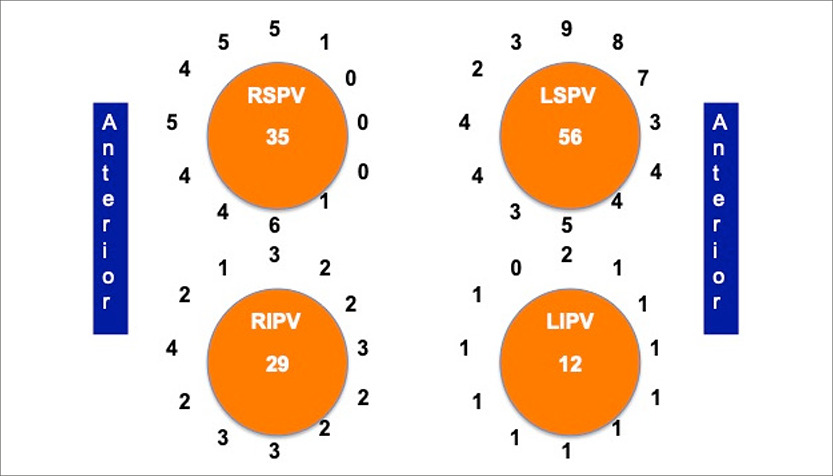
Out of the 165 patients who underwent initial PVI, 27 required redo ablations, of which 18 (66.6%) were males, with a mean age of 55+12.3 years. The time of recurrence was 8.9+6.4 months. PV reconnection was found in 21 (77.8%) patients. There was a total of 132 conduction gaps, six per patient, 3.6 per PV. A significant number of gaps were in the anterosuperior region of the left superior PV (LSPV), and in the septal and inferior regions of the right superior PV (RSPV).

Conclusions

The upper PVs had the most reconnection sites, mostly at the anterior region of the LSPV and the septal region of the RSPV. The reason behind this may be due to greater atrial wall thickness, and difficulty in achieving adequate cryoballoon contact.
  • Arrhythmias Cardiac
  • Atrial Fibrillation, Pulmonary Veins
  • Electrocardiography, Ambulatory
  • Electrocardiography/methods
  • Holter
  • Radio Waves
  • Tachycardia, Ectopic Atrial
Read Full Article
Creative Commons Attribution (CC BY) Creative Commons license
26/07/2021 DOI: 10.36660/abc.20190503
Figure 1
ABC
Original Article

Cryptogenic Acute Ischemic Stroke: Assessment of the Performance of a New Continuous Long-Term Monitoring System in the Detection of Atrial Fibrillation

Rogerio Ferreira Sampaio et al. Isabel Cristina Gomes Eduardo Back Sternick

Abstract

Background:

Long-term monitoring has been advocated to enhance the detection of atrial fibrillation (AF) in patients with stroke.

Objective:

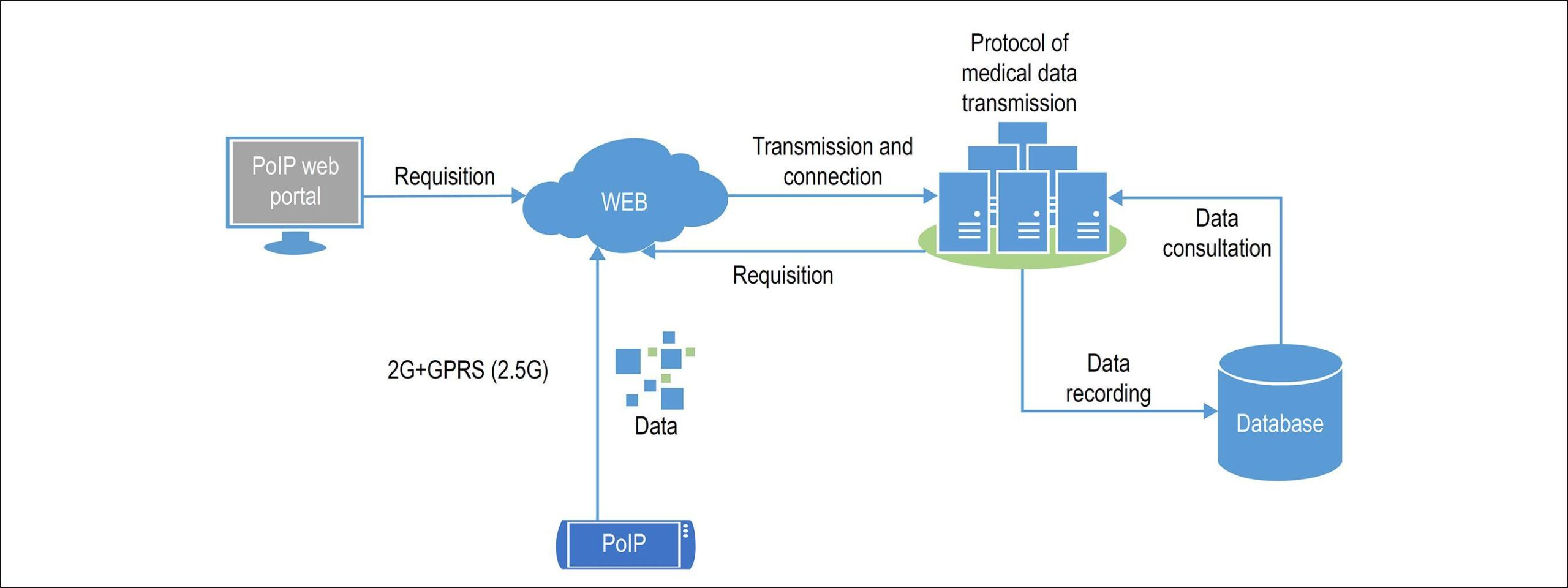
To evaluate the performance of a new ambulatory monitoring system with mobile data transmission (PoIP) compared with 24-hour Holter. We also aimed to evaluate the incidence of arrhythmias in patients with and without stroke or transient ischemic attack.

Methods:

Consecutive patients with and without stroke or TIA, without AF, were matched by propensity score. Participants underwent 24-hour Holter and 7-day PoIP monitoring.

Results:

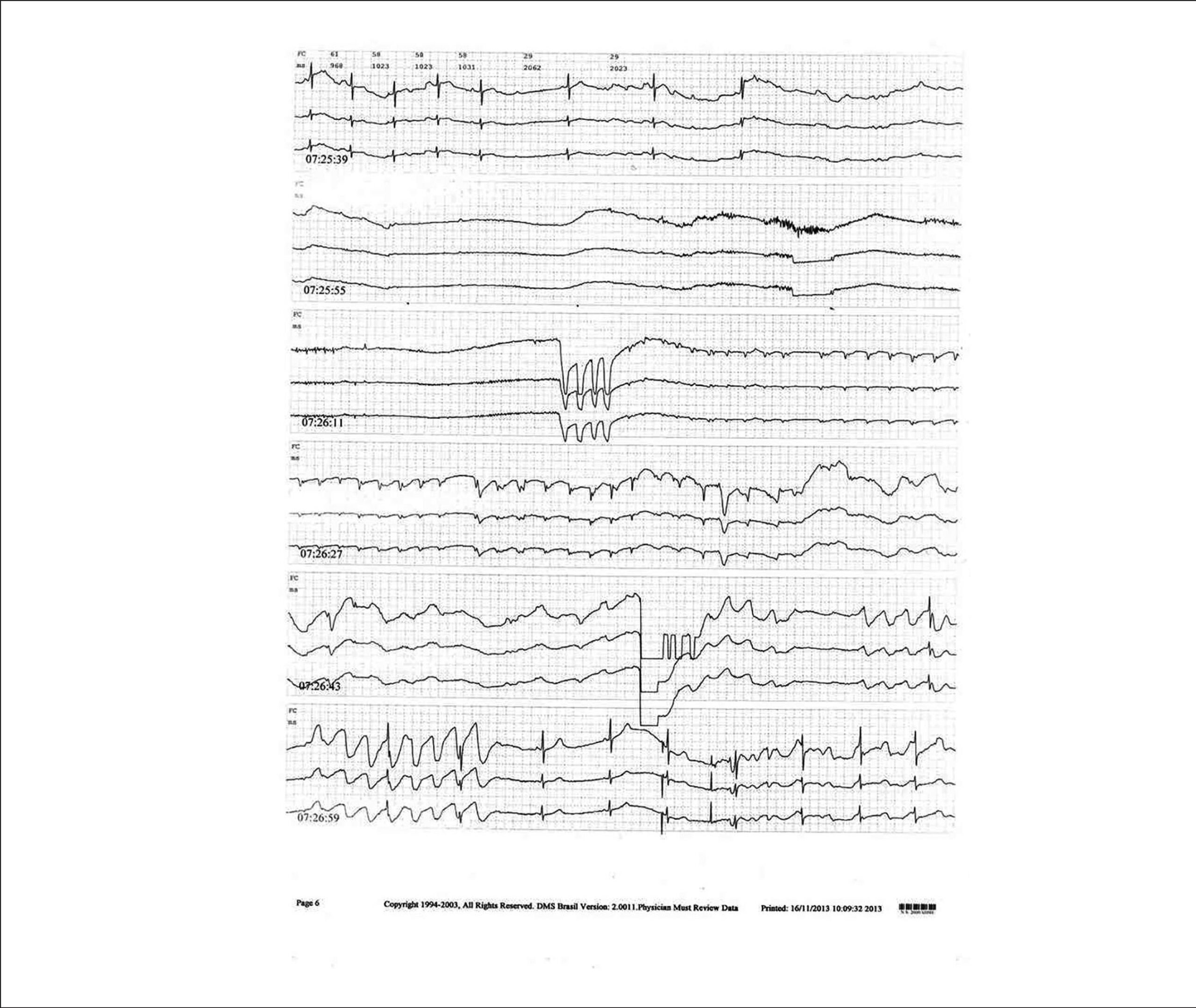
We selected 52 of 84 patients (26 with stroke or TIA and 26 controls). Connection and recording times were 156.5 ± 22.5 and 148.8 ± 20.8 hours, with a signal loss of 6,8% and 11,4%, respectively. Connection time was longer in ambulatory (164.3 ± 15.8 h) than in hospitalized patients (148.8 ± 25.6 h) (p = 0.02), while recording time did not differ between them (153.7 ± 16.9 and 143.0 ± 23.3 h). AF episodes were detected in 1 patient with stroke by Holter, and in 7 individuals (1 control and 6 strokes) by PoIP. There was no difference in the incidence of arrhythmias between the groups.

Conclusions:

Holter and PoIP performed equally well in the first 24 hours. Data transmission loss (4.5%) occurred by a mismatch between signal transmission (2.5G) and signal reception (3G) protocols in cell phone towers (3G). The incidence of arrhythmias was not different between stroke/TIA and control groups.

  • Atrial Fibrillation
  • Cell Phone
  • Electrocardiography, Ambulatory
  • Ischemic Attack, Transient
  • Stroke
Read Full Article
Creative Commons Attribution (CC BY) Creative Commons license
02/07/2018 DOI: 10.5935/abc.20180112 Views 1
Figure 1
ABC
Original Article

Analysis of Heart Rate Variability Before and During Tilt Test in Patients with Cardioinhibitory Vasovagal Syncope

Cláudia Madeira Miranda et al. Rose Mary Ferreira Lisboa da Silva

Abstract

Background:

Cardioinhibitory vasovagal response is uncommon during the tilt test (TT). Heart rate variability (HRV) by use of spectral analysis can distinguish patients with that response.

Objective:

To compare the HRV in patients with cardioinhibitory vasovagal syncope (case group – G1) with that in patients without syncope and with negative response to TT (control group – G2).

Methods:

64 patients were evaluated (mean age, 36.2 years; 35 men) and submitted to TT at 70 degrees, under digital Holter monitoring. The groups were paired for age and sex (G1, 40 patients; G2, 24).

Results:

In G1, 21 patients had a type 2A response and 19 had type 2B, with mean TT duration of 20.4 minutes. There was a greater low frequency (LF) component (11,6 versus 4,5 ms2, p=0.001) and a lower low/high frequency ratio in the supine position (3,9 versus 4,5 ms2, p=0.008) in G1, with no difference during TT between the groups. Applying the receiver operating characteristic curve for cardioinhibitory response, the area under the curve was 0.74 for the LF component in the supine position (p = 0.001). The following were observed for the cutoff point of 0.35 ms(2) for the LF component: sensitivity, 97.4%; specificity, 83.3%; positive predictive value, 85.3%; negative predictive value, 96.9%; and positive likelihood ratio, 5.8.

Conclusion:

HRV in the supine position allowed identifying patients with syncope and cardioinhibitory response with a high negative predictive value and likelihood ratio of 5.8.

  • Electrocardiography, Ambulatory
  • Heart Rate
  • Syncope, Vasovagal / physiotaphology
  • Tilt Table Test
Read Full Article
Creative Commons Attribution (CC BY) Creative Commons license
01/12/2016 DOI: 10.5935/abc.20160177 Views 1
Does the aging process significantly modify the Mean Heart Rate?
ABC
Artigo Original

Does the aging process significantly modify the Mean Heart Rate?

Marcos Antonio Almeida Santos et al. Antonio Carlos Sobral Sousa Francisco Prado Reis Thayná Ramos Santos … Sonia Oliveira Lima José Augusto Barreto-Filho

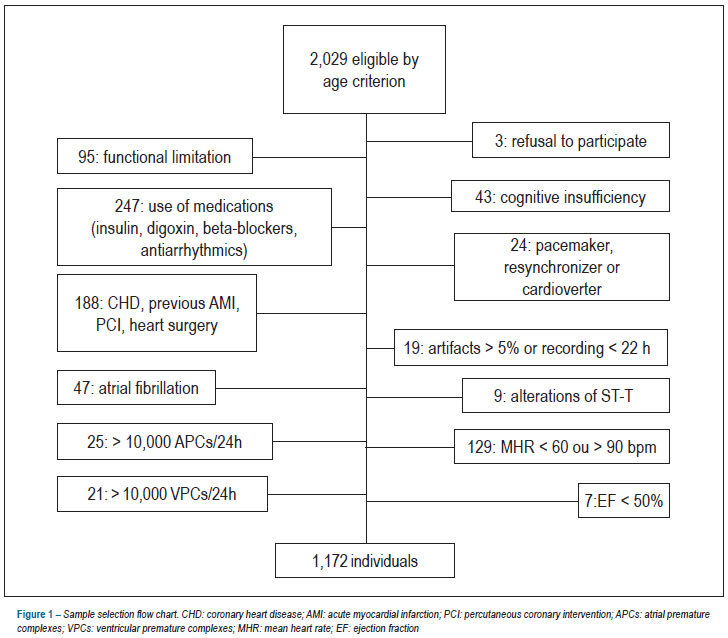
BACKGROUND: The Mean Heart Rate (MHR) tends to decrease with age. When adjusted for gender and diseases, the magnitude of this effect is unclear. OBJECTIVES: To analyze the MHR in a stratified sample of active and functionally independent individuals. METHODS: A total of 1,172 patients aged > 40 years underwent Holter monitoring and were stratified by age group: 1 = 40-49, 2 = 50-59, 3 = 60-69, 4 = 70-79, 5 = > 80 years. The MHR was evaluated according to age and gender, adjusted for Hypertension (SAH), dyslipidemia and non-insulin dependent diabetes mellitus (NIDDM). Several models of ANOVA, correlation and linear regression were employed. A two-tailed p value <0.05 was considered significant (95% CI). RESULTS: The MHR tended to decrease with the age range: 1 = 77.20 ± 7.10; 2 = 76.66 ± 7.07; 3 = 74.02 ± 7.46; 4 = 72.93 ± 7.35; 5 = 73.41 ± 7.98 (p < 0.001). Women showed a correlation with higher MHR (p <0.001). In the ANOVA and regression models, age and gender were predictors (p < 0.001). However, R² and ETA² < 0.10, as well as discrete standardized beta coefficients indicated reduced effect. Dyslipidemia, hypertension and DM did not influence the findings. CONCLUSION: The MHR decreased with age. Women had higher values of MHR, regardless of the age group. Correlations between MHR and age or gender, albeit significant, showed the effect magnitude had little statistical relevance. The prevalence of SAH, dyslipidemia and diabetes mellitus did not influence the results.

  • aging
  • Electrocardiography, Ambulatory
  • Heart Rate
Read Full Article
Creative Commons Attribution (CC BY) Creative Commons license
13/09/2013 DOI: 10.5935/abc.20130188
Maternal-fetal monitoring during dental procedure in patients with heart valve disease
ABC
Artigo Original

Maternal-fetal monitoring during dental procedure in patients with heart valve disease

Itamara Lucia Itagiba Neves et al. Walkiria Samuel Avila Ricardo Simões Neves Dante Marcelo Artigas Giorgi … Jorge Francisco Kuhn dos Santos Ricardo Martins Oliveira Filho Cesar José Grupi Max Grinberg José Antonio Franchini Ramires

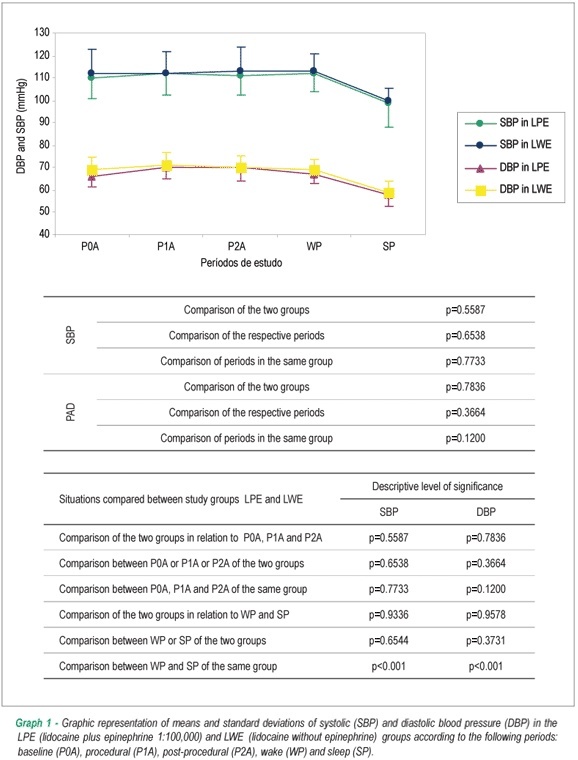
BACKGROUND: The effects of local dental anesthesia with lidocaine and epinephrine on cardiovascular parameters of pregnant women with heart valve diseases and their fetuses are not fully understood. OBJECTIVES: To assess and analyze cardiotocographic, blood pressure and electrocardiographic parameters of pregnant women with rheumatic heart valve disease undergoing local anesthesia with 1.8mL of lidocaine 2% with or without epinephrine 1:100,000 during restorative dental treatment. METHODS: Maternal ambulatory blood pressure and electrocardiographic monitoring as well as cardiotocography of 31 patients with rheumatic heart disease were performed between the 28th and 37th week of gestation. The patients were divided into two groups, those with or without vasoconstrictor. RESULTS: A significant reduction in maternal heart rate was shown in both groups during the procedure in comparison with the other periods (p0.05). The same occurred (p>0.05) with the number of uterine contractions, baseline level and variability, and number of accelerations of fetal heart rate. CONCLUSION: The use of 1.8mL of lidocaine 2% in combination with epinephrine was safe and efficient in restorative dental procedures during pregnancy in women with rheumatic heart valve disease.

  • anesthesia, local
  • Blood Pressure Monitoring, Ambulatory
  • cardiotocography
  • Electrocardiography, Ambulatory
  • Pregnant Women
  • rheumatic heart disease
Read Full Article
Creative Commons Attribution (CC BY) Creative Commons license
20/01/2010 DOI: 10.1590/S0066-782X2009001100005
Silent myocardial ischemia in patients with stable coronary artery disease receiving conventional antianginal drug therapy
ABC
Artigo Original

Silent myocardial ischemia in patients with stable coronary artery disease receiving conventional antianginal drug therapy

João Fernando Monteiro Ferreira et al. Luiz Antonio Machado César César J. Gruppi Dante M. A. Giorgi … Whady A. Hueb Antonio P. Mansur José A. F. Ramires

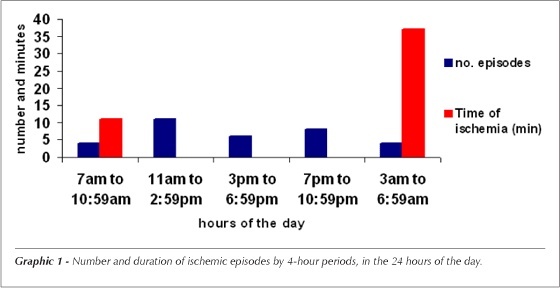
BACKGROUND: Few data are available on the behavior of myocardial ischemia during daily activities in patients with coronary artery disease receiving antianginal drug therapy. OBJECTIVE: To study the mechanism generating myocardial ischemia by evaluating blood pressure and heart rate changes in patients with stable atherosclerotic disease receiving drug therapy and with evidence of myocardial ischemia. METHODS: Fifty non-hospitalized patients (40 males) underwent 24-hour electrocardiographic monitoring synchronized with blood pressured monitoring. RESULTS: Thirty five episodes of myocardial ischemia were detected in 17 patients, with a total duration of 146.3 minutes; angina was reported in five cases. Twenty nine episodes (100.3 minutes) occurred during wakefulness, with 11 episodes (35.3 + 3.7 min) in the period from 11 a.m. to 3 p.m. Blood pressure and heart rate evaluation in the three ten-minute intervals following the ischemic episodes showed a statistically significant difference (p< 0.05), unlike that shown for the three intervals preceding the episodes. However, during the ischemic episode, a higher than 10-mmHg elevation in blood pressure and 5 beats per minute in heart rate were observed when compared with the time interval between 20 and 10 minutes before the episode. The mean heart rate at the onset of ischemia during the exercise test performed before the study was 118.2 + 14.0, and 81.1 + 20.8 beats per minute on the 24-hour electrocardiogram (p < 0.001). CONCLUSION: The incidence of silent myocardial ischemia is high in stable coronary artery disease and is related to alterations in blood pressure and heart rate, with different thresholds for ischemia for the same patient.

  • Blood Pressure
  • Coronary Disease
  • Electrocardiography, Ambulatory
  • Ischemia
Read Full Article
Creative Commons Attribution (CC BY) Creative Commons license
07/12/2007 DOI: 10.1590/S0066-782X2007001700006 Views 1

How to cite this article

EndNote RIS

Electronic Document Format (Vancouver)

Nolasco RR, Leon-Larios GD, Bazzini-Carranza DE, Zavaleta E, Calixto-Vargas O. Reconnection Sites in Redo Ablation after Cryoballoon Pulmonary Vein Isolation in Patients with Paroxysmal Atrial Fibrillation. Arquivos Brasileiros de Cardiologia 2021;117(1):100-5.

Electronic Document Format (ABNT)

Nolasco, Rogelio Robledo; Leon-Larios, Gerardo De; Bazzini-Carranza, David Eduardo; Zavaleta, Elias; Calixto-Vargas, Omar. Reconnection Sites in Redo Ablation after Cryoballoon Pulmonary Vein Isolation in Patients with Paroxysmal Atrial Fibrillation. Arquivos Brasileiros de Cardiologia, v. 117, n. 1, p. 100-105, Jul. 2021.

Electronic Document Format (APA)

Nolasco, R. R., Leon-Larios, G. D., Bazzini-Carranza, D. E., Zavaleta, E., & Calixto-Vargas, O. (2021). Reconnection Sites in Redo Ablation after Cryoballoon Pulmonary Vein Isolation in Patients with Paroxysmal Atrial Fibrillation. Arquivos Brasileiros de Cardiologia, 117(1), 100-105.

Electronic Document Format (ISO)

Nolasco, Rogelio Robledo and Leon-Larios, Gerardo De and Bazzini-Carranza, David Eduardo and Zavaleta, Elias and Calixto-Vargas, Omar. Reconnection Sites in Redo Ablation after Cryoballoon Pulmonary Vein Isolation in Patients with Paroxysmal Atrial Fibrillation. Arquivos Brasileiros de Cardiologia [online]. 2021, vol. 117, n. 1, [cited 2026-10-14], pp. 100-105. Available from: <https://journals.cardiol.br/en/article/reconnection-sites-in-redo-ablation-after-cryoballoon-pulmonary-vein-isolation-in-patients-with-paroxysmal-atrial-fibrillation/>. ISSN 0066-782X

EndNote RIS

Electronic Document Format (Vancouver)

Sampaio RF, Gomes IC, Sternick EB. Cryptogenic Acute Ischemic Stroke: Assessment of the Performance of a New Continuous Long-Term Monitoring System in the Detection of Atrial Fibrillation. Arquivos Brasileiros de Cardiologia 2018;111(2):122-31.

Electronic Document Format (ABNT)

Sampaio, Rogerio Ferreira; Gomes, Isabel Cristina; Sternick, Eduardo Back. Cryptogenic Acute Ischemic Stroke: Assessment of the Performance of a New Continuous Long-Term Monitoring System in the Detection of Atrial Fibrillation. Arquivos Brasileiros de Cardiologia, v. 111, n. 2, p. 122-131, Jul. 2018.

Electronic Document Format (APA)

Sampaio, R. F., Gomes, I. C., & Sternick, E. B. (2018). Cryptogenic Acute Ischemic Stroke: Assessment of the Performance of a New Continuous Long-Term Monitoring System in the Detection of Atrial Fibrillation. Arquivos Brasileiros de Cardiologia, 111(2), 122-131.

Electronic Document Format (ISO)

Sampaio, Rogerio Ferreira and Gomes, Isabel Cristina and Sternick, Eduardo Back. Cryptogenic Acute Ischemic Stroke: Assessment of the Performance of a New Continuous Long-Term Monitoring System in the Detection of Atrial Fibrillation. Arquivos Brasileiros de Cardiologia [online]. 2018, vol. 111, n. 2, [cited 2026-10-14], pp. 122-131. Available from: <https://journals.cardiol.br/en/article/cryptogenic-acute-ischemic-stroke-assessment-of-the-performance-of-a-new-continuous-long-term-monitoring-system-in-the-detection-of-atrial-fibrillation/>. ISSN 0066-782X

EndNote RIS

Electronic Document Format (Vancouver)

Miranda CM, Silva RMFL. Analysis of Heart Rate Variability Before and During Tilt Test in Patients with Cardioinhibitory Vasovagal Syncope. Arquivos Brasileiros de Cardiologia 2016;107(6):568-75.

Electronic Document Format (ABNT)

Miranda, Cláudia Madeira; Silva, Rose Mary Ferreira Lisboa da. Analysis of Heart Rate Variability Before and During Tilt Test in Patients with Cardioinhibitory Vasovagal Syncope. Arquivos Brasileiros de Cardiologia, v. 107, n. 6, p. 568-575, Nov. 2016.

Electronic Document Format (APA)

Miranda, C. M., & Silva, R. M. F. L. (2016). Analysis of Heart Rate Variability Before and During Tilt Test in Patients with Cardioinhibitory Vasovagal Syncope. Arquivos Brasileiros de Cardiologia, 107(6), 568-575.

Electronic Document Format (ISO)

Miranda, Cláudia Madeira and Silva, Rose Mary Ferreira Lisboa da. Analysis of Heart Rate Variability Before and During Tilt Test in Patients with Cardioinhibitory Vasovagal Syncope. Arquivos Brasileiros de Cardiologia [online]. 2016, vol. 107, n. 6, [cited 2026-10-14], pp. 568-575. Available from: <https://journals.cardiol.br/en/article/analysis-of-heart-rate-variability-before-and-during-tilt-test-in-patients-with-cardioinhibitory-vasovagal-syncope/>. ISSN 0066-782X

EndNote RIS

Electronic Document Format (Vancouver)

Santos MAA, Sousa ACS, Reis FP, Santos TR, Lima SO, Barreto-Filho JA. Does the aging process significantly modify the Mean Heart Rate?. Arquivos Brasileiros de Cardiologia 2013;101(5):388-9.

Electronic Document Format (ABNT)

Santos, Marcos Antonio Almeida; Sousa, Antonio Carlos Sobral; Reis, Francisco Prado; Santos, Thayná Ramos; Lima, Sonia Oliveira; Barreto-Filho, José Augusto. Does the aging process significantly modify the Mean Heart Rate?. Arquivos Brasileiros de Cardiologia, v. 101, n. 5, p. 388-398, Sep. 2013.

Electronic Document Format (APA)

Santos, M. A. A., Sousa, A. C. S., Reis, F. P., Santos, T. R., Lima, S. O., & Barreto-Filho, J. A. (2013). Does the aging process significantly modify the Mean Heart Rate?. Arquivos Brasileiros de Cardiologia, 101(5), 388-398.

Electronic Document Format (ISO)

Santos, Marcos Antonio Almeida and Sousa, Antonio Carlos Sobral and Reis, Francisco Prado and Santos, Thayná Ramos and Lima, Sonia Oliveira and Barreto-Filho, José Augusto. Does the aging process significantly modify the Mean Heart Rate?. Arquivos Brasileiros de Cardiologia [online]. 2013, vol. 101, n. 5, [cited 2026-10-14], pp. 388-398. Available from: <https://journals.cardiol.br/en/article/does-the-aging-process-significantly-modify-the-mean-heart-rate/>. ISSN 0066-782X

EndNote RIS

Electronic Document Format (Vancouver)

Neves ILI, Avila WS, Neves RS, Giorgi DMA, Santos JFK, Oliveira Filho RM, Grupi CJ, et al. Maternal-fetal monitoring during dental procedure in patients with heart valve disease. Arquivos Brasileiros de Cardiologia 2010;93(5):463-742.

Electronic Document Format (ABNT)

Neves, Itamara Lucia Itagiba; Avila, Walkiria Samuel; Neves, Ricardo Simões; Giorgi, Dante Marcelo Artigas; Santos, Jorge Francisco Kuhn dos; Oliveira Filho, Ricardo Martins; Grupi, Cesar José; Grinberg, Max; Ramires, José Antonio Franchini. Maternal-fetal monitoring during dental procedure in patients with heart valve disease. Arquivos Brasileiros de Cardiologia, v. 93, n. 5, p. 463-742, Jan. 2010.

Electronic Document Format (APA)

Neves, I. L. I., Avila, W. S., Neves, R. S., Giorgi, D. M. A., Santos, J. F. K. , Oliveira Filho, R. M., Grupi, C. J., Grinberg, M., & Ramires, J. A. F. (2010). Maternal-fetal monitoring during dental procedure in patients with heart valve disease. Arquivos Brasileiros de Cardiologia, 93(5), 463-742.

Electronic Document Format (ISO)

Neves, Itamara Lucia Itagiba and Avila, Walkiria Samuel and Neves, Ricardo Simões and Giorgi, Dante Marcelo Artigas and Santos, Jorge Francisco Kuhn dos and Oliveira Filho, Ricardo Martins and Grupi, Cesar José and Grinberg, Max and Ramires, José Antonio Franchini. Maternal-fetal monitoring during dental procedure in patients with heart valve disease. Arquivos Brasileiros de Cardiologia [online]. 2010, vol. 93, n. 5, [cited 2026-10-14], pp. 463-742. Available from: <https://journals.cardiol.br/en/article/maternal-fetal-monitoring-during-dental-procedure-in-patients-with-heart-valve-disease/>. ISSN 0066-782X

EndNote RIS

Electronic Document Format (Vancouver)

Ferreira JFM, César LAM, Gruppi CJ, Giorgi DMA, Hueb WA, Mansur AP, Ramires JAF, et al. Silent myocardial ischemia in patients with stable coronary artery disease receiving conventional antianginal drug therapy. Arquivos Brasileiros de Cardiologia 2007;89(5):312-8.

Electronic Document Format (ABNT)

Ferreira, João Fernando Monteiro; César, Luiz Antonio Machado; Gruppi, César J.; Giorgi, Dante M. A.; Hueb, Whady A.; Mansur, Antonio P.; Ramires, José A. F.. Silent myocardial ischemia in patients with stable coronary artery disease receiving conventional antianginal drug therapy. Arquivos Brasileiros de Cardiologia, v. 89, n. 5, p. 312-318, Dec. 2007.

Electronic Document Format (APA)

Ferreira, J. F. M., César, L. A. M., Gruppi, C. J., Giorgi, D. M. A., Hueb, W. A., Mansur, A. P., & Ramires, J. A. F. (2007). Silent myocardial ischemia in patients with stable coronary artery disease receiving conventional antianginal drug therapy. Arquivos Brasileiros de Cardiologia, 89(5), 312-318.

Electronic Document Format (ISO)

Ferreira, João Fernando Monteiro and César, Luiz Antonio Machado and Gruppi, César J. and Giorgi, Dante M. A. and Hueb, Whady A. and Mansur, Antonio P. and Ramires, José A. F.. Silent myocardial ischemia in patients with stable coronary artery disease receiving conventional antianginal drug therapy. Arquivos Brasileiros de Cardiologia [online]. 2007, vol. 89, n. 5, [cited 2026-10-14], pp. 312-318. Available from: <https://journals.cardiol.br/en/article/silent-myocardial-ischemia-in-patients-with-stable-coronary-artery-disease-receiving-conventional-antianginal-drug-therapy/>. ISSN 0066-782X

  • About ABC Family
  • Internal Regulation
  • Editorial Board
  • Brazilian Society of Cardiology (SBC)

Issues

SBC Guidelines

  • Videos
  • Podcasts
  • News