| ABC
ABC Family Arquivos Brasileiros de Cardiologia International Journal of Cardiovascular Sciences ABC Heart Failure & Cardiomyopathy ABC Imagem Cardiovascular
Português English
ABC Family | ABC
Português English
  • About
    • About the Journal
    • Internal Regulation
    • Editors Section
    • Editorial Board
    • History
    • SBC Award
  • Instructions to Authors
    • Guidelines for Publication
    • Editorial Policy
    • Ethics Policy
    • Policy on the Use of Artificial Intelligence
    • Mandatory Publication Form
    • Publication Fee
  • Issues
  • SBC Guidelines
  • Abstracts
    • How to Publish an Abstract Supplement?
    • Supplements from the Brazilian Congress of Cardiology
  • About
    • About the Journal
    • Internal Regulation
    • Editors Section
    • Editorial Board
    • History
    • SBC Award
  • Instructions to Authors
    • Guidelines for Publication
    • Editorial Policy
    • Ethics Policy
    • Policy on the Use of Artificial Intelligence
    • Mandatory Publication Form
    • Publication Fee
  • Issues
  • SBC Guidelines
  • Abstracts
    • How to Publish an Abstract Supplement?
    • Supplements from the Brazilian Congress of Cardiology

ABC Family

  • ABC Family
  • Arquivos Brasileiros de Cardiologia
  • International Journal of Cardiovascular Sciences
  • ABC Heart Failure & Cardiomyopathy
  • ABC Imagem Cardiovascular
Search in

No content found.

Journals
Ordering
Article types
Others

  1. Home
  2. ABC
  3. Issues
  4. 2012, Volume 98, Number 4
Effect of a physical exercise program in a patient with Marfan Syndrome and ventricular dysfunction
Case Report

Effect of a physical exercise program in a patient with Marfan Syndrome and ventricular dysfunction

Wladimir Musetti Medeiros et al. Paulo Alberto Peres Antônio Carlos Carvalho Carlos Gun Fábio Augusto De Luca

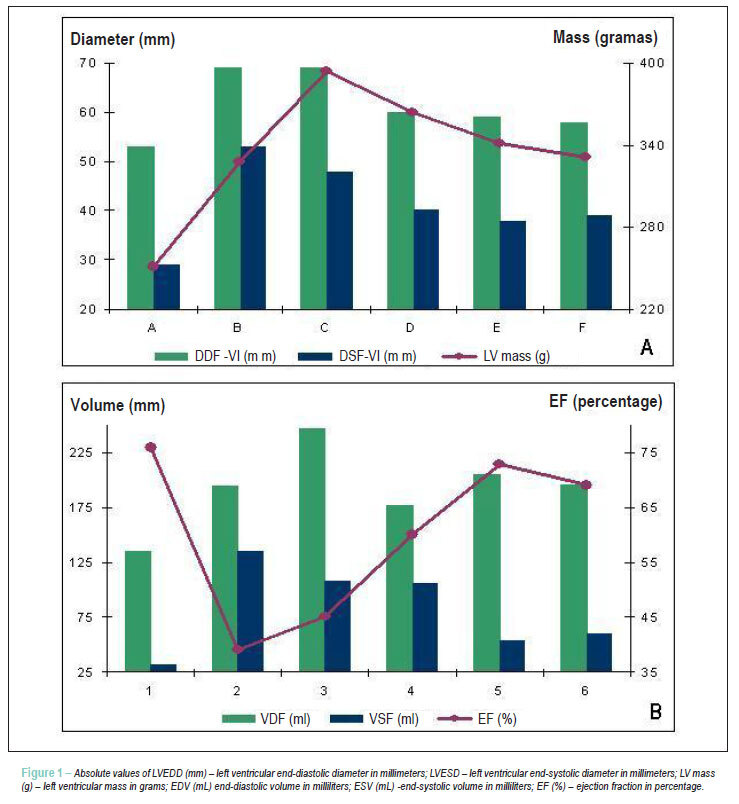
Marfan syndrome (MS) is an autosomal dominant disorder that affects multiple organs and systems. Several cardiac alterations are present, with the main ones being aortic root and ascending aorta dilatation, mitral valve prolapse and left ventricle (LV) dilatation. Aerobic exercise has not shown to be a non-drug therapy that promotes anti-remodeling effect in patients with heart failure. This case report describes the echocardiographic changes in a patient with Marfan syndrome during four years of cardiovascular physical therapy.

  • Cardiomegaly
  • Exercise
  • Marfan syndrome
  • Ventricular Dysfunction, Left
Read Full Article
Creative Commons Attribution (CC BY) Creative Commons license
21/06/2012 DOI: 10.1590/S0066-782X2012000400015 Views 1
Autonomic regulation of mechanical properties in porcine mitral valve cusps
Artigo Original

Autonomic regulation of mechanical properties in porcine mitral valve cusps

Xiang Hu et al. Qiang Zhao Xiaofeng Ye

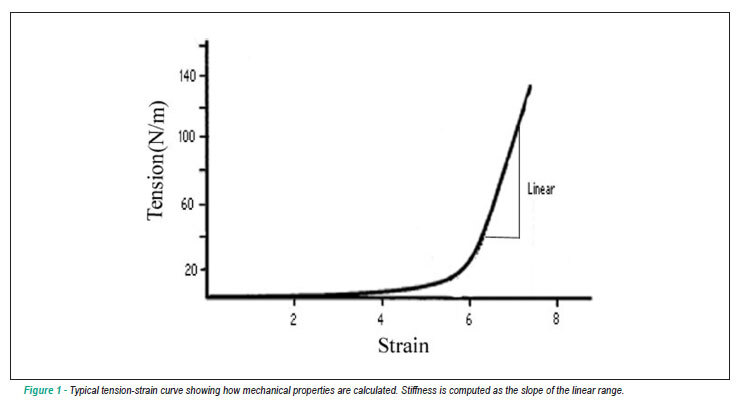
BACKGROUND: The presence of nerves in heart valves was first depicted decades ago and identified into subpopulations: sympathetic, parasympathetic. So valves are expected to be greatly affected by the autonomic nerves. However, few studies have focused on the regulation of heart valves by the autonomic nervous system. OBJECTIVE: We sought to identify the role of the autonomic nervous system in the regulation of the mechanical properties of porcine mitral valve tissues. METHODS: Mechanical properties of porcine mitral valve leaflets were evaluated in response to norepinephrine (NE) and acetylcholine (ACH), the main neurotransmitters. At the same time, phentolamine (Phent), metoprolol (Metop), atropine (Atrop) and endothelial denudation were added to the reactive system. RESULTS: Under physiological conditions, the stiffness was not affected by endothelial denudation (p > 0.05). NE elevated the valve stiffness significantly per 10-fold increase in concentration (10-6 vs 10-7, p < 0.05; 10-5 vs 10-6, p < 0.05). This response was mitigated by Phent, Metop or endothelial denudation (p < 0.05), however, it was still increased significantly when compared to Controls (p < 0.05). ACH caused a decrease in stiffness accompanied by an increase in its concentration (significant change in stiffness per 10-fold increase in ACH concentration, 10-6 vs Control, p < 0.05; 10-5 vs 10-6, p 0.05 vs Control). CONCLUSION: These findings highlight the role of the autonomic nervous system in the regulation of the mechanical properties of porcine mitral valve cusps, which underline the importance of autonomic nervous status for optimal valve function.

  • Autonomic Nervous System
  • autonomic pathways
  • Bioprosthesis
  • Mitral Valve
Read Full Article
Creative Commons Attribution (CC BY) Creative Commons license
21/06/2012 DOI: 10.1590/S0066-782X2012000400006 Views 1
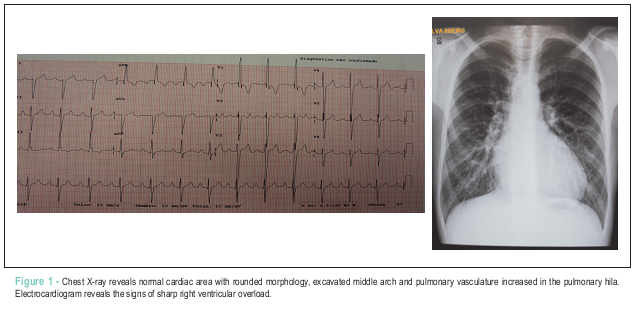
Case 3/2012: 16-year old patient with transposition of great arteries and pulmonary stenosis in natural evolution
Correlação Clínico-Radiográfica

Case 3/2012: 16-year old patient with transposition of great arteries and pulmonary stenosis in natural evolution

Edmar Atik

CLINICORADIOLOGICAL SESSION

Case 3/2012 – 16-year old patient with transposition of great arteries and pulmonary stenosis in natural evolution

[…]

Read Full Article
Creative Commons Attribution (CC BY) Creative Commons license
21/06/2012 DOI: 10.1590/S0066-782X2012000400013
Point of view

Metabolic or pseudometabolic syndrome?

Luis Cláudio Lemos Correia et al. Adriana L. Latado José Augusto Barreto-Filho

Metabolic syndrome has been proposed as a predictor of cardiovascular risk. However, such idea lacks strong scientific basis. This article reviews the evidence regarding that issue, challenging the existing paradigm of the prognostic value of metabolic syndrome.

  • abdominal circumference
  • Diabetes Mellitus
  • Obesity
  • Prognosis
  • Risk Factors
Read Full Article
Creative Commons Attribution (CC BY) Creative Commons license
21/06/2012 DOI: 10.1590/S0066-782X2012000400016
Use of demonstrably effective therapies in the treatment of acute coronary syndromes: comparison between different brazilian regions. Analysis of the Brazilian Registry on Acute Coronary Syndromes (BRACE)
Special Article

Use of demonstrably effective therapies in the treatment of acute coronary syndromes: comparison between different brazilian regions. Analysis of the Brazilian Registry on Acute Coronary Syndromes (BRACE)

José Carlos Nicolau et al. Marcelo Franken Paulo Andrade Lotufo Antonio Carlos Carvalho … José Antonio Marin Neto Felipe Gallego Lima Oscar Dutra Elias Knobel Cesar Cardoso de Oliveira Sérgio Timerman Edson Stefanini

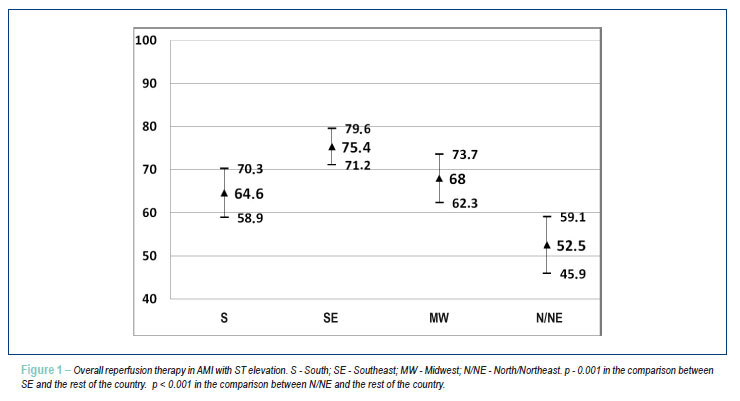
BACKGROUND: Little is known in our country about regional differences in the treatment of acute coronary disease. OBJECTIVE: To analyze the behavior regarding the use of demonstrably effective regional therapies in acute coronary disease. METHODS: A total of 71 hospitals were randomly selected, respecting the proportionality of the country in relation to geographic location, among other criteria. In the overall population was regionally analyzed the use of aspirin, clopidogrel, ACE inhibitors / AT1 blocker, beta-blockers and statins, separately and grouped by individual score ranging from 0 (no drug used) to 100 (all drugs used). In myocardial infarction with ST elevation (STEMI) regional differences were analyzed regarding the use of therapeutic recanalization (fibrinolytics and primary angioplasty). RESULTS: In the overall population, within the first 24 hours of hospitalization, the mean score in the North-Northeast (70.5 ± 22.1) was lower (p <0.05) than in the Southeast (77.7 ± 29.5), Midwest (82 ± 22.1) and South (82.4 ± 21) regions. At hospital discharge, the score of the North-Northeast region (61.4 ± 32.9) was lower (p <0.05) than in the Southeast (69.2 ± 31.6), Midwest (65.3 ± 33.6) and South (73.7 ± 28.1) regions; additionally, the score of the Midwest was lower (p <0.05) than the South region. In STEMI, the use of recanalization therapies was highest in the Southeast (75.4%, p = 0.001 compared to the rest of the country), and lowest in the North-Northeast (52.5%, p <0.001 compared to the rest of the country). CONCLUSION: The use of demonstrably effective therapies in the treatment of acute coronary disease is much to be desired in the country, with important regional differences.

  • Coronary Disease
  • Medical Records
  • Myocardial Infarction
  • Myocardial Ischemia
Read Full Article
Creative Commons Attribution (CC BY) Creative Commons license
21/06/2012 DOI: 10.1590/S0066-782X2012000400001 Views 1
Coronary thrombosis as the first complication of antiphospholipid syndrome
Case Report

Coronary thrombosis as the first complication of antiphospholipid syndrome

Carlos Henrique Miranda et al. Luís Gustavo Gali José Antônio Marin-Neto Paulo Louzada-Júnior Antônio Pazin-Filho

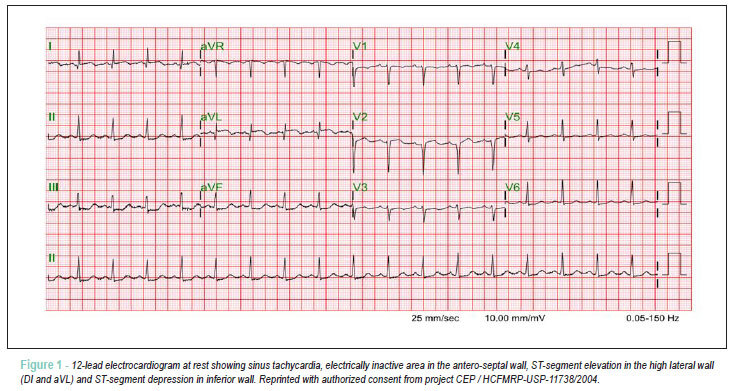
The antiphospholipid syndrome (APS) is an autoimmune thrombophilia, characterized by the presence of plasma antibodies against phospholipids, associated with recurrent episodes of venous and/or arterial thrombosis and gestational morbidity (especially recurrent miscarriage). We report the case of a young female patient diagnosed with systemic lupus erythematosus (SLE) associated with the presence of antiphospholipid antibodies for a long time, presenting with acute myocardial infarction (AMI) due to proximal thrombosis of the anterior descending artery as the first clinical complication of APS.

  • Antiphospholipid syndrome
  • Coronary Thrombosis
  • Lupus Erythematosus, Systemic
  • Myocardial Infarction
Read Full Article
Creative Commons Attribution (CC BY) Creative Commons license
21/06/2012 DOI: 10.1590/S0066-782X2012000400014
Letter to the Editor

About the etiological treatment of Chagas Disease

Adrian Bolívar-Mejía et al. Alfonso J. Rodriguez-Morales

LETTER TO THE EDITOR

About the etiological treatment of Chagas Disease

[…]

Read Full Article
Creative Commons Attribution (CC BY) Creative Commons license
21/06/2012 DOI: 10.1590/S0066-782X2012000400012
MicroRNAs: a new paradigm in the treatment and diagnosis of Heart failure?
Review Article

MicroRNAs: a new paradigm in the treatment and diagnosis of Heart failure?

Vagner Oliveira-Carvalho et al. Vitor Oliveira Carvalho Miguel Morita Silva Guilherme Veiga Guimarães Edimar Alcides Bocchi

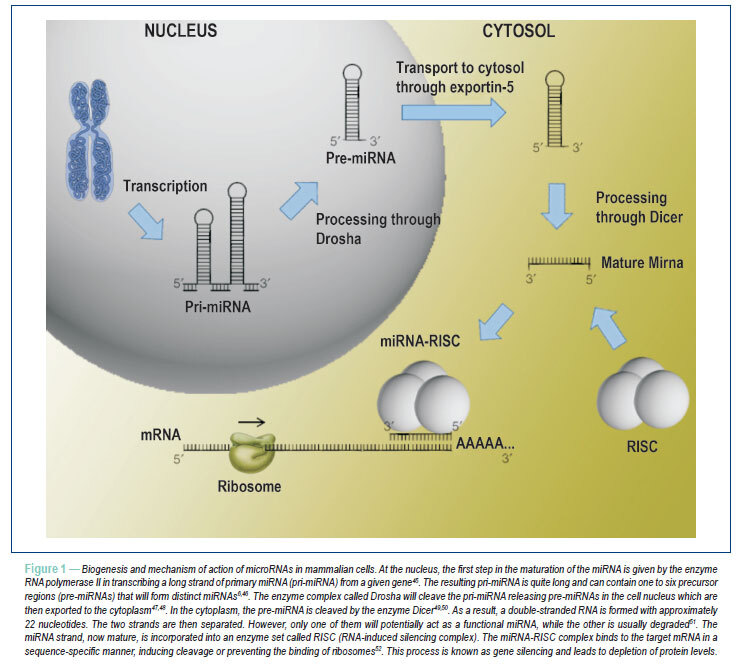
MicroRNAs (miRNAs) are a group of newly discovered small RNAs, non-coding, which represent one of the most exciting areas of modern medical science as they modulate a huge and complex regulatory network of gene expression. Lines of evidence have recently suggested that miRNAs play a key role in the pathogenesis of heart failure. Some miRNAs highly expressed in the heart, such as miR-1, miR-133 and miR-208, are strongly associated with the development of cardiac hypertrophy, while the exact role of miR-21 in the cardiovascular system remains controversial. Serum levels of circulating miRNAs such as miR-423-5p are being evaluated as potential biomarkers in the diagnosis and prognosis of heart failure. On the other hand, the manipulation of levels of miRNAs using techniques such as mimicking the miRNAs (miRmimics) and antagonistic miRNAs (antagomiRs) is making increasingly evident the enormous potential of miRNAs as promising therapeutic strategies in heart failure.

  • Cardiomegaly
  • Heart Failure
  • MicroRNAs
Read Full Article
Creative Commons Attribution (CC BY) Creative Commons license
21/06/2012 DOI: 10.1590/S0066-782X2012000400011
Left ventricular diastolic function in morbidly obese patients in the preoperative for bariatric surgery
Artigo Original

Left ventricular diastolic function in morbidly obese patients in the preoperative for bariatric surgery

Irlaneide da Silva Tavares et al. Antonio Carlos Sobral Sousa Raimundo Sotero Menezes Filho Manuel Hermínio de Aguiar-Oliveira … José Augusto Barreto-Filho Amanda Ferreira de Brito Joselina Luzia Menezes Oliveira

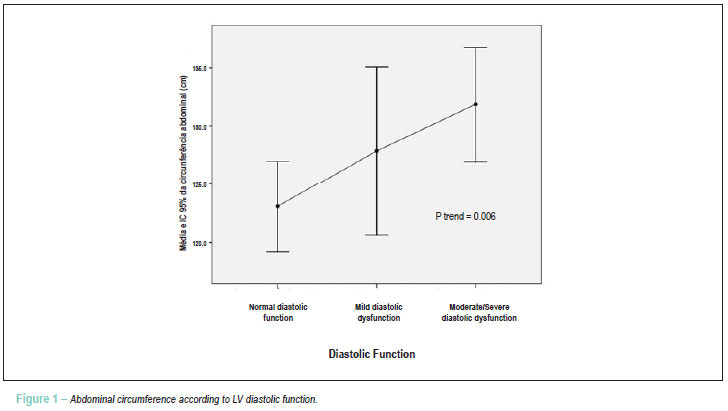
BACKGROUND: Obesity is a chronic and multifactorial disease, associated with increased cardiovascular risk, especially diastolic heart failure. OBJECTIVE: To evaluate left ventricular diastolic function in morbidly obese patients in the pre-operative for bariatric surgery, correlating it with cardiovascular risk factors and heart structure. METHODS: This is a cross-sectional study with 132 patients eligible for bariatric surgery submitted to transthoracic echocardiography assessment and of cardiovascular risk factors, as follows: 97 women (73.5%), mean age 38.5 ± 10.5 years and BMI of 43.7 ± 7.2 kg / m². Patients were divided into three groups: 61 with normal diastolic function, 24 with mild diastolic dysfunction and 47 with moderate/severe diastolic dysfunction, of which 41 with moderate diastolic dysfunction (pseudonormal pattern) and six with severe diastolic dysfunction (restrictive pattern). RESULTS: Hypertension, age and gender were different in the groups with diastolic dysfunction. Groups with dysfunction had higher left atrial diameter, left ventricular diameter, left atrial volume in four and two chambers, left atrial volume index and left ventricular mass index corrected for body surface area and height. CONCLUSION: The high frequency of left ventricular diastolic dysfunction in the preclinical phase in morbidly obese patients justifies the need for careful echocardiographic assessment, aiming at identifying individuals at higher risk, so that early intervention measures can be carried out.

  • bariatric surgery
  • Heart Failure
  • Obesity morbid
  • Preoperative Care
Read Full Article
Creative Commons Attribution (CC BY) Creative Commons license
27/03/2012 DOI: 10.1590/S0066-782X2012005000028 Views 2
The influence of ACE genotype on cardiovascular fitness of moderately active young men
Artigo Original

The influence of ACE genotype on cardiovascular fitness of moderately active young men

Jeeser Alves Almeida et al. Daniel Alexandre Boullosa Emerson Pardono Ricardo Moreno Lima … Pâmella Karoline Morais Benedito Sérgio Denadai Vinícius Carolino Souza Otávio Toledo Nóbrega Carmem Silvia Grubert Campbell Herbert Gustavo Simões

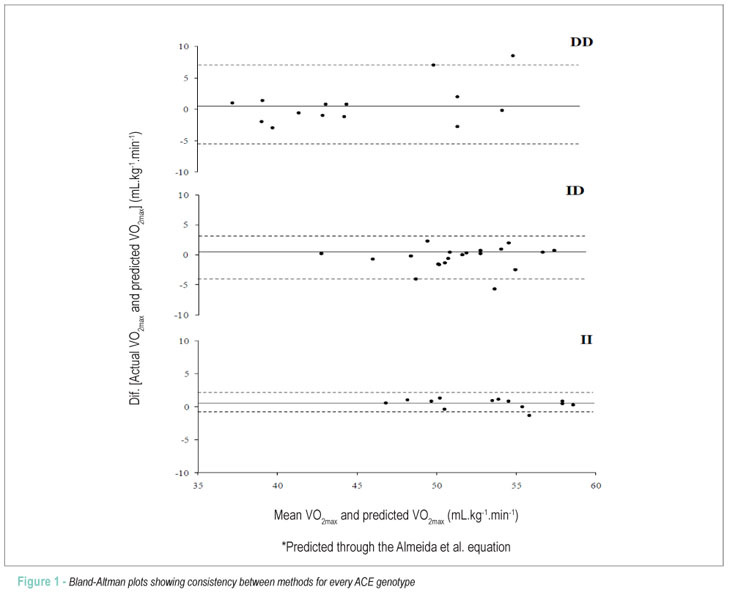
BACKGROUND: The angiotensin I-converting enzyme gene (ACE gene) has been broadly studied as for cardiorespiratory fitness phenotypes, but the association of the ACE genotype to middle-distance running has been poorly investigated. OBJECTIVE: This study investigated the possible influence of Angiotensin-Converting Enzyme (ACE) genotype (I/D) on cardiovascular fitness and middle-distance running performance of Brazilian young males. The validity of VO2max to predict the ACE genotype was also analyzed. METHODS: A homogeneous group of moderately active young males were evaluated in a 1,600 m running track test (V1600m; m.min-1) and in an incremental treadmill test for VO2max determination. Subsequently, the actual and the predicted [(0.177*V1600m) + 8.101] VO2max were compared to ACE genotypes. RESULTS: The VO2max and V1600m recorded for DD, ID and II genotypes were 45.6 (1.8); 51.9 (0.8) and 54.4 (1.0) mL.kg-1.min-1 and 211.2 (8.3); 249.1 (4.3) and 258.6 (5.4) m.min-1 respectively, and were significantly lower for DD carriers (p< 0.05). The actual and predicted VO2max did not differ from each other despite ACE genotype, but the agreement between actual and estimated VO2max methods was lower for the DD genotype. CONCLUSION: It was concluded that there is a possible association between ACE genotype, cardiovascular fitness and middle-distance running performance of moderately active young males and that the accuracy of VO2max prediction may also depend on the ACE genotype of the participants.

  • angiotensin-converting enzyme
  • I
  • middle-distance running
  • VO2max
Read Full Article
Creative Commons Attribution (CC BY) Creative Commons license
27/03/2012 DOI: 10.1590/S0066-782X2012005000029
Artigo Original

Development and validation of the Brazilian Portuguese version of the Cardiac Rehabilitation Barriers Scale

Gabriela Lima de Melo Ghisi et al. Rafaella Zulianello dos Santos Vanessa Schveitzer Aline Lange Barros … Thais Lunardi Recchia Paul Oh Magnus Benetti Sherry L. Grace

BACKGROUND: Cardiovascular diseases show high incidence and prevalence in Brazil; however, participation in Cardiac Rehabilitation (CR) is limited and has been poorly investigated in the country. The Cardiac Rehabilitation Barriers Scale (CRBS) was developed to assess the barriers to participation and adherence to CR. OBJECTIVE: To translate, cross-culturally adapt and psychometrically validate CRBS to Brazilian Portuguese. METHODS: Two independent initial translations were performed. After the reverse translation, both versions were reviewed by a committee. The new version was tested in 173 patients with coronary artery disease (48 women, mean age = 63 years). Of these, 139 (80.3%) participated in CR. Internal consistency was assessed by Cronbach’s alpha, test-retest reliability by intraclass correlation coefficient (ICC) and construct validity by factor analysis. T-tests were used to assess criterion validity between participants and non-participants in CR. The applied test results were evaluated regarding patient characteristics (gender, age, health status and educational level). RESULTS: The Brazilian Portuguese version of the CRBS had Cronbach’s alpha of 0.88, ICC of 0.68 and disclosed five factors, most of which showed to be internally consistent and all were defined by the items. The mean score for patients in CR was 1.29 (SD = 0.27) and 2.36 for ambulatory patients (SD = 0.50) (p <0.001). Criterion validity was also supported by significant differences in total scores by gender, age and educational level. CONCLUSION: The Brazilian Portuguese version of CRBS has shown adequate validity and reliability, which supports its use in future studies.

  • Cardiovascular Diseases
  • Patient Compliance
  • Patient Participation
  • questionnaires
  • Treatment Outcome
Read Full Article
Creative Commons Attribution (CC BY) Creative Commons license
15/03/2012 DOI: 10.1590/S0066-782X2012005000025 Views 1
Prevalence of arterial hypertension among Seventh-Day Adventists of the São Paulo state capital and inner area
Artigo Original

Prevalence of arterial hypertension among Seventh-Day Adventists of the São Paulo state capital and inner area

Leilane Bagno Eleutério da Silva et al. Stael Silvana Bagno Eleutério da Silva Amanda Garcia Marcílio Ângela Maria Geraldo Pierin

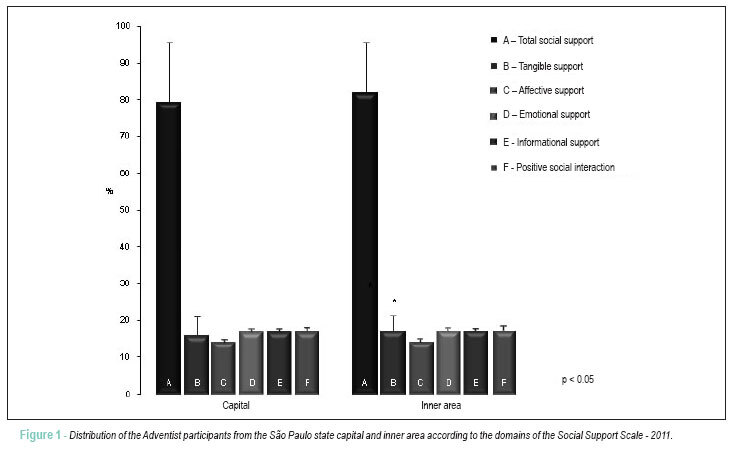
BACKGROUND: Inadequate life habits are known to favor hypertension, and Adventists recommend healthy life habits. OBJECTIVE: To assess the prevalence of hypertension among Seventh-Day Adventists from the inner São Paulo state and São Paulo state capital. METHODS: This study assessed 264 Adventists (mean age, 41.17 ± 15.27 years; women, 59.8%) with a high religiosity level assessed by use of the Duke University Religion Index. Blood pressure was measured with a validated automatic device. The significance level adopted was p < 0.05. RESULTS: The total prevalence of hypertension was 22.7% (27.4% in the inner state and 15% in the capital). The Adventists from the capital differed from those of inner state as follows (p < 0.05), respectively: higher education (62% vs 36.6%); employed by a third party (44%) vs self-employed (40.9%); family income (8.39 ± 6.20 vs 4.59 ± 4.75 minimum wages); individual income (4.54 ± 5.34 vs 6.35 ± 48; couple responsible for family income (35% vs 39.6%); vegetarianism (11% vs 3%); blood pressure (115.38 ± 16.52/68.74 ± 8.94 vs 123.66 ± 19.62/74.88 ± 11.85 mmHg); white ethnicity (65% vs 81.1%); married (53% vs 68.9%); lower tangible support in the social aspect (15.7 ± 5.41 vs 16.9 ± 4.32); and recalling the last time one's blood pressure was measured (65% vs 48.8%). On multivariate analysis, hypertension associated with the following: 1) vegetarianism (OR 0.051; 95% CI: 0.004-0.681); 2) educational level (OR 5.317; 95% CI: 1.674-16.893); 3) recalling the last time one's blood pressure was measured (OR 2.725; 95% CI: 1.275-5.821); 4) being retired (OR 8.846; 95% CI: 1.406-55.668); and 5) being responsible for family income (OR 0.422; 95% CI: 0.189-0.942). CONCLUSION: The prevalence of hypertension among Adventists was lower as compared with that reported in Brazilian studies, and it was lower in the São Paulo state capital as compared with that in the inner São Paulo state, possibly because of the better socioeconomic conditions and life habits of the former.

  • Food habits
  • Hypertension
  • Life Style
  • Prevalence
  • protestantism
Read Full Article
Creative Commons Attribution (CC BY) Creative Commons license
15/03/2012 DOI: 10.1590/S0066-782X2012005000018 Views 1
Artigo Original

Dietary variety is a protective factor for elevated systolic blood pressure

Erick Prado de Oliveira et al. Karina Fernandes de Camargo Gabriela Kaiser Fullin Castanho Marina Nicola … Kátia Cristina Portero-McLellan Roberto Carlos Burini

BACKGROUND: Diet directly influences systemic arterial hypertension (SAH), which is one of the main risk factors for cardiovascular disease. OBJECTIVE: To associate hypertension with dietary factors in adults clinically selected for a change-of-lifestyle program. METHODS: Cross-sectional study comprising 335 individuals, aged between 44 and 65 years, clinically selected for a change-of-lifestyle program. We evaluated anthropometric data (BMI, %body fat and waist circumference), biochemical components (plasma glucose, triglycerides, total cholesterol, HDL-C and LDL-c) and diet, through the 24-hour recall method. The quality of the diet was assessed by the Healthy Eating Index. Blood pressure was measured according to the V Brazilian Guidelines on Hypertension and classified according to NCEP-ATPIII. Logistic regression was performed to determine the likelihood of changes in SBP and DBP according to dietary intake. The level of significance was set at p <0.05. RESULTS: There was a positive correlation between diastolic blood pressure and sugar and cholesterol intake, and a negative one with intake of fiber, portions of oil and fats and diet quality. Dietary variety with ≥ 8 food items showed a protective effect for alterations in systolic blood pressure, OR = 0.361 (0.148 to 0.878). CONCLUSION: A greater dietary variety had a protective effect on the systolic blood pressure.

  • Blood Pressure
  • Diet, Sodium-Restricted
  • food quality
  • Hypertension
Read Full Article
Creative Commons Attribution (CC BY) Creative Commons license
15/03/2012 DOI: 10.1590/S0066-782X2012005000020 Views 1
Impact of stenting and oral sirolimus on endothelium-dependent and independent coronary vasomotion
Artigo Original

Impact of stenting and oral sirolimus on endothelium-dependent and independent coronary vasomotion

Rósley Weber Alvarenga Fernandes et al. João Miguel Dantas Dinaldo Cavalcanti Oliveira Hiram Grando Bezerra … Fabio Sandoli Brito Jr. Valter C. Lima

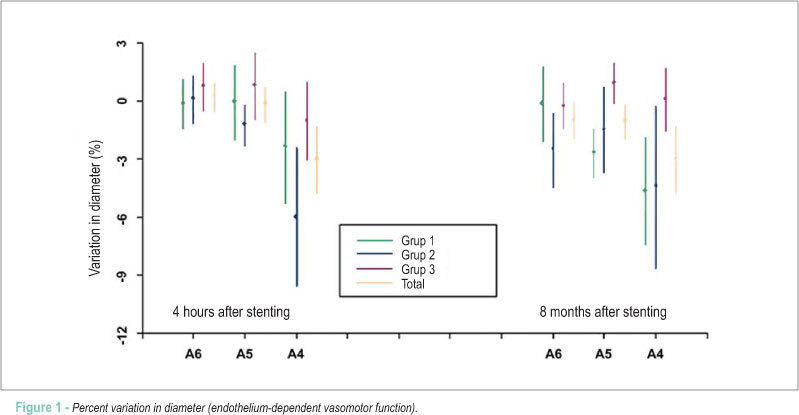
BACKGROUND: There is no consensus regarding the impact of stenting on long-term endothelial function. There have been reports of increased endothelial dysfunction with sirolimus-eluting stents as compared to bare metal stenting (BMS). OBJECTIVE: This study aims to assess the impact of BMS and the effect of oral sirolimus on endothelial function. METHODS: Forty-five patients were randomized into three groups: BMS + high-dose oral sirolimus (initial dose of 15 mg, followed by 6 mg/day for four weeks); BMS + low-dose sirolimus (6 mg followed by 2 mg daily for four weeks); and BMS without sirolimus. Changes in vasoconstriction or vasodilation in a 15 mm segment starting at the distal stent end in response to acetylcholine and nitroglycerin were assessed by quantitative angiography. RESULTS: The groups had similar angiographic characteristics. The percent variation in diameter in response to acetylcholine was similar in all groups at the two time points (p = 0.469). Four hours after stenting, the target segment presented an endothelial dysfunction that was maintained after eight months in all groups. In all groups, endothelium-independent vasomotion in response to nitroglycerin was similar at four hours and eight months, with increased target segment diameter after nitroglycerin infusion (p = 0.001). CONCLUSION: The endothelial dysfunction was similarly present at the 15 mm segment distal to the treated segment, at 4 hours and 8 months after stenting. Sirolimus administered orally during 4 weeks to prevent restenosis did not affect the status of endothelium-dependent and independent vasomotion.

  • Coronary Vessels
  • Endothelium
  • Sirolimus
  • Stents
Read Full Article
Creative Commons Attribution (CC BY) Creative Commons license
08/03/2012 DOI: 10.1590/S0066-782X2012005000022
Prevalence of visceral obesity estimated by predictive equation in young women from Pernambuco
Artigo Original

Prevalence of visceral obesity estimated by predictive equation in young women from Pernambuco

Marina de Moraes Vasconcelos Petribú et al. Poliana Coelho Cabral Alcides da Silva Diniz Pedro Israel Cabral de Lira … Malaquias Batista Filho Ilma Kruze Grande de Arruda

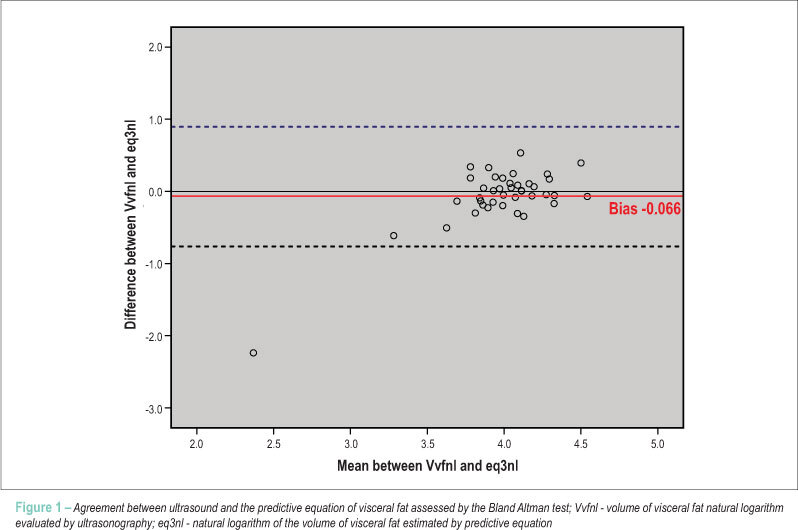
BACKGROUND: The accumulation of visceral fat is considered a major risk factor for cardiovascular and metabolic diseases. OBJECTIVE: To determine the prevalence of visceral obesity and to assess its association with cardiovascular risk factors in young women from the state of Pernambuco. METHODS: Cross-sectional study carried out with data from the “III Health and Nutrition State Survey”, involving women aged 25 to 36 years. The following variables were evaluated: body mass index (BMI), Waist Circumference (WC), waist-to-height ratio (WHtR), volume of visceral fat (VVF) estimated by a predictive equation, Systolic and Diastolic Blood Pressure (SBP, DBP), total cholesterol (TC), Triglycerides (TG), fasting glucose (FG). RESULTS: A total of 517 women were evaluated, with a median age of 29 years (27-32) and prevalence of visceral obesity of 30.6%. BMI, SBP, DBP and TG were higher in the group with visceral obesity: BMI = 28.0 kg/m2 (25.0 to 21.4) vs. 23.9 kg/m2 (21.5 to 26.4) , SBP = 120.0 mmHg (110.0 to 130.0) vs. 112.0 mmHg (100.0 to 122.0), DBP = 74 mmHg (70-80) vs. 70 mmHg (63-80); TG = 156.0 mg / dL (115.0 to 203.2) vs. 131.0 mg / dL (104.0 to 161.0), respectively, p < 0.01. Age, SBP, DBP, TG and TC levels were significantly and positively correlated with the VVF: r = 0.171, 0.224, 0.163, 0.278, 0.124 respectively, p < 0.005. CONCLUSION: A high prevalence of visceral obesity was observed, being statistically correlated with cardiovascular risk factors.
  • Blood Pressure
  • body mass index
  • Cardiovascular Diseases
  • Dyslipidemias
  • Prevalence
  • Risk Factors
  • Subcutaneous rat, abdominal
  • Women
Read Full Article
Creative Commons Attribution (CC BY) Creative Commons license
08/03/2012 DOI: 10.1590/S0066-782X2012005000023
Heart rate variability in Myotonic Dystrophy type 1 patients
Artigo Original

Heart rate variability in Myotonic Dystrophy type 1 patients

Guilherme Fregonezi et al. Thaise Araújo Mario Emilio Dourado Junior Joceline Ferezini … Ester Silva Vanessa Resqueti

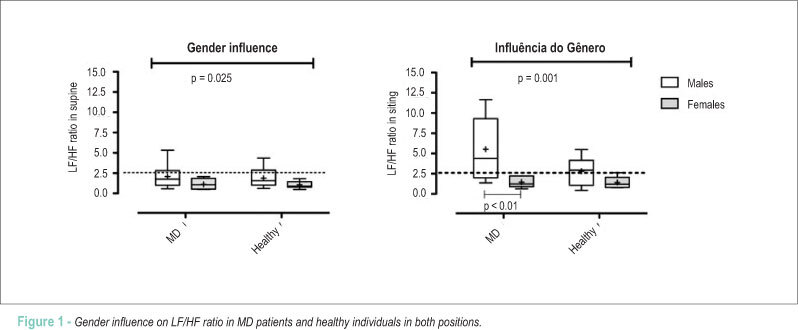
BACKGROUND: Cardiac involvement is common in myotonic dystrophy (MD) patients. Heart rate variability (HRV) is a simple and reliable technique that can be useful for studying the influence of the autonomic nervous system on the heart. OBJECTIVE: Study heart rate variability in patients with type 1 MD. METHODS: We studied HRV during 5-minute recordings in MD patients and in a healthy control group. We analyzed frequency domains (LF and HF) in normalized units (nu) and sympathovagal balance, in the sitting and supine position. RESULTS: Seventeen patients (10 men and 7 women) and seventeen matched healthy individuals (10 men and 7 women) were studied. Sympathetic and parasympathetic modulations of the heart increased in male MD patients from supine to sitting position in 19% of LFnu and the LF/HF ratio rose by 42.3%. In the sitting position, male MD patients exhibited significantly higher sympathovagal balances in 50.9% compared to healthy control individuals. HRV was influenced by both gender and disease. Gender influenced LFnu in the supine position while the LF/HF ratio and HFnu were affected in both positions. Post hoc analyses showed that gender significantly impacts MD patients and healthy individuals in different ways (p < 0.01). The low frequency domain in the sitting position (LFnu) was significantly influenced by the disease. CONCLUSION: The results of this study suggest that the sympathetic drive in middle-aged male MD patients who are not severely impaired and present moderate disease duration seems to be greater than in healthy matched individuals.

  • Autonomic Nervous System
  • Heart Rate
  • myotonic dystrophy
  • spectrum analysis
Read Full Article
Creative Commons Attribution (CC BY) Creative Commons license
08/03/2012 DOI: 10.1590/S0066-782X2012005000021 Views 1

How to cite this article

EndNote RIS

Electronic Document Format (Vancouver)

Medeiros WM, Peres PA, Carvalho AC, Gun C, Luca FAD. Effect of a physical exercise program in a patient with Marfan Syndrome and ventricular dysfunction. Arquivos Brasileiros de Cardiologia 2012;98(4):e70-3.

Electronic Document Format (ABNT)

Medeiros, Wladimir Musetti; Peres, Paulo Alberto; Carvalho, Antônio Carlos; Gun, Carlos; Luca, Fábio Augusto De. Effect of a physical exercise program in a patient with Marfan Syndrome and ventricular dysfunction. Arquivos Brasileiros de Cardiologia, v. 98, n. 4, p. e70-e73, Jun. 2012.

Electronic Document Format (APA)

Medeiros, W. M., Peres, P. A., Carvalho, A. C., Gun, C., & Luca, F. A. D. (2012). Effect of a physical exercise program in a patient with Marfan Syndrome and ventricular dysfunction. Arquivos Brasileiros de Cardiologia, 98(4), e70-e73.

Electronic Document Format (ISO)

Medeiros, Wladimir Musetti and Peres, Paulo Alberto and Carvalho, Antônio Carlos and Gun, Carlos and Luca, Fábio Augusto De. Effect of a physical exercise program in a patient with Marfan Syndrome and ventricular dysfunction. Arquivos Brasileiros de Cardiologia [online]. 2012, vol. 98, n. 4, [cited 2026-10-14], pp. e70-e73. Available from: <https://journals.cardiol.br/en/article/effect-of-a-physical-exercise-program-in-a-patient-with-marfan-syndrome-and-ventricular-dysfunction/>. ISSN 0066-782X

EndNote RIS

Electronic Document Format (Vancouver)

Hu X, Zhao Q, Ye X. Autonomic regulation of mechanical properties in porcine mitral valve cusps. Arquivos Brasileiros de Cardiologia 2012;98(4):321-8.

Electronic Document Format (ABNT)

Hu, Xiang; Zhao, Qiang; Ye, Xiaofeng. Autonomic regulation of mechanical properties in porcine mitral valve cusps. Arquivos Brasileiros de Cardiologia, v. 98, n. 4, p. 321-328, Jun. 2012.

Electronic Document Format (APA)

Hu, X., Zhao, Q., & Ye, X. (2012). Autonomic regulation of mechanical properties in porcine mitral valve cusps. Arquivos Brasileiros de Cardiologia, 98(4), 321-328.

Electronic Document Format (ISO)

Hu, Xiang and Zhao, Qiang and Ye, Xiaofeng. Autonomic regulation of mechanical properties in porcine mitral valve cusps. Arquivos Brasileiros de Cardiologia [online]. 2012, vol. 98, n. 4, [cited 2026-10-14], pp. 321-328. Available from: <https://journals.cardiol.br/en/article/autonomic-regulation-of-mechanical-properties-in-porcine-mitral-valve-cusps/>. ISSN 0066-782X

EndNote RIS

Electronic Document Format (Vancouver)

Atik E. Case 3/2012: 16-year old patient with transposition of great arteries and pulmonary stenosis in natural evolution. Arquivos Brasileiros de Cardiologia 2012;98(4):e64-5.

Electronic Document Format (ABNT)

Atik, Edmar. Case 3/2012: 16-year old patient with transposition of great arteries and pulmonary stenosis in natural evolution. Arquivos Brasileiros de Cardiologia, v. 98, n. 4, p. e64-e65, Jun. 2012.

Electronic Document Format (APA)

Atik, E. (2012). Case 3/2012: 16-year old patient with transposition of great arteries and pulmonary stenosis in natural evolution. Arquivos Brasileiros de Cardiologia, 98(4), e64-e65.

Electronic Document Format (ISO)

Atik, Edmar. Case 3/2012: 16-year old patient with transposition of great arteries and pulmonary stenosis in natural evolution. Arquivos Brasileiros de Cardiologia [online]. 2012, vol. 98, n. 4, [cited 2026-10-14], pp. e64-e65. Available from: <https://journals.cardiol.br/en/article/case-3-2012-16-year-old-patient-with-transposition-of-great-arteries-and-pulmonary-stenosis-in-natural-evolution/>. ISSN 0066-782X

EndNote RIS

Electronic Document Format (Vancouver)

Correia LCL, Latado AL, Barreto-Filho JA. Metabolic or pseudometabolic syndrome?. Arquivos Brasileiros de Cardiologia 2012;98(4):e74-5.

Electronic Document Format (ABNT)

Correia, Luis Cláudio Lemos; Latado, Adriana L.; Barreto-Filho, José Augusto. Metabolic or pseudometabolic syndrome?. Arquivos Brasileiros de Cardiologia, v. 98, n. 4, p. e74-e75, Jun. 2012.

Electronic Document Format (APA)

Correia, L. C. L., Latado, A. L., & Barreto-Filho, J. A. (2012). Metabolic or pseudometabolic syndrome?. Arquivos Brasileiros de Cardiologia, 98(4), e74-e75.

Electronic Document Format (ISO)

Correia, Luis Cláudio Lemos and Latado, Adriana L. and Barreto-Filho, José Augusto. Metabolic or pseudometabolic syndrome?. Arquivos Brasileiros de Cardiologia [online]. 2012, vol. 98, n. 4, [cited 2026-10-14], pp. e74-e75. Available from: <https://journals.cardiol.br/en/article/metabolic-or-pseudometabolic-syndrome/>. ISSN 0066-782X

EndNote RIS

Electronic Document Format (Vancouver)

Nicolau JC, Franken M, Lotufo PA, Carvalho AC, Marin Neto JA, Lima FG, Dutra O, et al. Use of demonstrably effective therapies in the treatment of acute coronary syndromes: comparison between different brazilian regions. Analysis of the Brazilian Registry on Acute Coronary Syndromes (BRACE). Arquivos Brasileiros de Cardiologia 2012;98(4):282-9.

Electronic Document Format (ABNT)

Nicolau, José Carlos; Franken, Marcelo; Lotufo, Paulo Andrade; Carvalho, Antonio Carlos; Marin Neto, José Antonio; Lima, Felipe Gallego; Dutra, Oscar; Knobel, Elias; Oliveira, Cesar Cardoso de; Timerman, Sérgio; Stefanini, Edson. Use of demonstrably effective therapies in the treatment of acute coronary syndromes: comparison between different brazilian regions. Analysis of the Brazilian Registry on Acute Coronary Syndromes (BRACE). Arquivos Brasileiros de Cardiologia, v. 98, n. 4, p. 282-289, Jun. 2012.

Electronic Document Format (APA)

Nicolau, J. C., Franken, M., Lotufo, P. A., Carvalho, A. C., Marin Neto, J. A., Lima, F. G., Dutra, O., Knobel, E., Oliveira, C. C. , Timerman, S., & Stefanini, E. (2012). Use of demonstrably effective therapies in the treatment of acute coronary syndromes: comparison between different brazilian regions. Analysis of the Brazilian Registry on Acute Coronary Syndromes (BRACE). Arquivos Brasileiros de Cardiologia, 98(4), 282-289.

Electronic Document Format (ISO)

Nicolau, José Carlos and Franken, Marcelo and Lotufo, Paulo Andrade and Carvalho, Antonio Carlos and Marin Neto, José Antonio and Lima, Felipe Gallego and Dutra, Oscar and Knobel, Elias and Oliveira, Cesar Cardoso de and Timerman, Sérgio and Stefanini, Edson. Use of demonstrably effective therapies in the treatment of acute coronary syndromes: comparison between different brazilian regions. Analysis of the Brazilian Registry on Acute Coronary Syndromes (BRACE). Arquivos Brasileiros de Cardiologia [online]. 2012, vol. 98, n. 4, [cited 2026-10-14], pp. 282-289. Available from: <https://journals.cardiol.br/en/article/use-of-demonstrably-effective-therapies-in-the-treatment-of-acute-coronary-syndromes-comparison-between-different-brazilian-regions-analysis-of-the-brazilian-registry-on-acute-coronary-syndromes-br/>. ISSN 0066-782X

EndNote RIS

Electronic Document Format (Vancouver)

Miranda CH, Gali LG, Marin-Neto JA, Louzada-Júnior P, Pazin-Filho A. Coronary thrombosis as the first complication of antiphospholipid syndrome. Arquivos Brasileiros de Cardiologia 2012;98(4):e66-9.

Electronic Document Format (ABNT)

Miranda, Carlos Henrique; Gali, Luís Gustavo; Marin-Neto, José Antônio; Louzada-Júnior, Paulo; Pazin-Filho, Antônio. Coronary thrombosis as the first complication of antiphospholipid syndrome. Arquivos Brasileiros de Cardiologia, v. 98, n. 4, p. e66-e69, Jun. 2012.

Electronic Document Format (APA)

Miranda, C. H., Gali, L. G., Marin-Neto, J. A., Louzada-Júnior, P., & Pazin-Filho, A. (2012). Coronary thrombosis as the first complication of antiphospholipid syndrome. Arquivos Brasileiros de Cardiologia, 98(4), e66-e69.

Electronic Document Format (ISO)

Miranda, Carlos Henrique and Gali, Luís Gustavo and Marin-Neto, José Antônio and Louzada-Júnior, Paulo and Pazin-Filho, Antônio. Coronary thrombosis as the first complication of antiphospholipid syndrome. Arquivos Brasileiros de Cardiologia [online]. 2012, vol. 98, n. 4, [cited 2026-10-14], pp. e66-e69. Available from: <https://journals.cardiol.br/en/article/coronary-thrombosis-as-the-first-complication-of-antiphospholipid-syndrome/>. ISSN 0066-782X

EndNote RIS

Electronic Document Format (Vancouver)

Bolívar-Mejía A, Rodriguez-Morales AJ. About the etiological treatment of Chagas Disease. Arquivos Brasileiros de Cardiologia 2012;98(4):371-2.

Electronic Document Format (ABNT)

Bolívar-Mejía, Adrian; Rodriguez-Morales, Alfonso J.. About the etiological treatment of Chagas Disease. Arquivos Brasileiros de Cardiologia, v. 98, n. 4, p. 371-372, Jun. 2012.

Electronic Document Format (APA)

Bolívar-Mejía, A., & Rodriguez-Morales, A. J. (2012). About the etiological treatment of Chagas Disease. Arquivos Brasileiros de Cardiologia, 98(4), 371-372.

Electronic Document Format (ISO)

Bolívar-Mejía, Adrian and Rodriguez-Morales, Alfonso J.. About the etiological treatment of Chagas Disease. Arquivos Brasileiros de Cardiologia [online]. 2012, vol. 98, n. 4, [cited 2026-10-14], pp. 371-372. Available from: <https://journals.cardiol.br/en/article/about-the-etiological-treatment-of-chagas-disease/>. ISSN 0066-782X

EndNote RIS

Electronic Document Format (Vancouver)

Oliveira-Carvalho V, Carvalho VO, Silva MM, Guimarães GV, Bocchi EA. MicroRNAs: a new paradigm in the treatment and diagnosis of Heart failure?. Arquivos Brasileiros de Cardiologia 2012;98(4):362-70.

Electronic Document Format (ABNT)

Oliveira-Carvalho, Vagner; Carvalho, Vitor Oliveira; Silva, Miguel Morita; Guimarães, Guilherme Veiga; Bocchi, Edimar Alcides. MicroRNAs: a new paradigm in the treatment and diagnosis of Heart failure?. Arquivos Brasileiros de Cardiologia, v. 98, n. 4, p. 362-370, Jun. 2012.

Electronic Document Format (APA)

Oliveira-Carvalho, V., Carvalho, V. O., Silva, M. M., Guimarães, G. V., & Bocchi, E. A. (2012). MicroRNAs: a new paradigm in the treatment and diagnosis of Heart failure?. Arquivos Brasileiros de Cardiologia, 98(4), 362-370.

Electronic Document Format (ISO)

Oliveira-Carvalho, Vagner and Carvalho, Vitor Oliveira and Silva, Miguel Morita and Guimarães, Guilherme Veiga and Bocchi, Edimar Alcides. MicroRNAs: a new paradigm in the treatment and diagnosis of Heart failure?. Arquivos Brasileiros de Cardiologia [online]. 2012, vol. 98, n. 4, [cited 2026-10-14], pp. 362-370. Available from: <https://journals.cardiol.br/en/article/micrornas-a-new-paradigm-in-the-treatment-and-diagnosis-of-heart-failure/>. ISSN 0066-782X

EndNote RIS

Electronic Document Format (Vancouver)

Tavares IS, Sousa ACS, Menezes Filho RS, Aguiar-Oliveira MH, Barreto-Filho JA, Brito AF, Oliveira JLM, et al. Left ventricular diastolic function in morbidly obese patients in the preoperative for bariatric surgery. Arquivos Brasileiros de Cardiologia 2012;98(4):300-6.

Electronic Document Format (ABNT)

Tavares, Irlaneide da Silva; Sousa, Antonio Carlos Sobral; Menezes Filho, Raimundo Sotero; Aguiar-Oliveira, Manuel Hermínio de; Barreto-Filho, José Augusto; Brito, Amanda Ferreira de; Oliveira, Joselina Luzia Menezes. Left ventricular diastolic function in morbidly obese patients in the preoperative for bariatric surgery. Arquivos Brasileiros de Cardiologia, v. 98, n. 4, p. 300-306, Mar. 2012.

Electronic Document Format (APA)

Tavares, I. S., Sousa, A. C. S., Menezes Filho, R. S., Aguiar-Oliveira, M. H. , Barreto-Filho, J. A., Brito, A. F. , & Oliveira, J. L. M. (2012). Left ventricular diastolic function in morbidly obese patients in the preoperative for bariatric surgery. Arquivos Brasileiros de Cardiologia, 98(4), 300-306.

Electronic Document Format (ISO)

Tavares, Irlaneide da Silva and Sousa, Antonio Carlos Sobral and Menezes Filho, Raimundo Sotero and Aguiar-Oliveira, Manuel Hermínio de and Barreto-Filho, José Augusto and Brito, Amanda Ferreira de and Oliveira, Joselina Luzia Menezes. Left ventricular diastolic function in morbidly obese patients in the preoperative for bariatric surgery. Arquivos Brasileiros de Cardiologia [online]. 2012, vol. 98, n. 4, [cited 2026-10-14], pp. 300-306. Available from: <https://journals.cardiol.br/en/article/left-ventricular-diastolic-function-in-morbidly-obese-patients-in-the-preoperative-for-bariatric-surgery/>. ISSN 0066-782X

EndNote RIS

Electronic Document Format (Vancouver)

Almeida JA, Boullosa DA, Pardono E, Lima RM, Morais PK, Denadai BS, Souza VC, et al. The influence of ACE genotype on cardiovascular fitness of moderately active young men. Arquivos Brasileiros de Cardiologia 2012;98(4):315-20.

Electronic Document Format (ABNT)

Almeida, Jeeser Alves; Boullosa, Daniel Alexandre; Pardono, Emerson; Lima, Ricardo Moreno; Morais, Pâmella Karoline; Denadai, Benedito Sérgio; Souza, Vinícius Carolino; Nóbrega, Otávio Toledo; Campbell, Carmem Silvia Grubert; Simões, Herbert Gustavo. The influence of ACE genotype on cardiovascular fitness of moderately active young men. Arquivos Brasileiros de Cardiologia, v. 98, n. 4, p. 315-320, Mar. 2012.

Electronic Document Format (APA)

Almeida, J. A., Boullosa, D. A., Pardono, E., Lima, R. M., Morais, P. K., Denadai, B. S., Souza, V. C., Nóbrega, O. T., Campbell, C. S. G., & Simões, H. G. (2012). The influence of ACE genotype on cardiovascular fitness of moderately active young men. Arquivos Brasileiros de Cardiologia, 98(4), 315-320.

Electronic Document Format (ISO)

Almeida, Jeeser Alves and Boullosa, Daniel Alexandre and Pardono, Emerson and Lima, Ricardo Moreno and Morais, Pâmella Karoline and Denadai, Benedito Sérgio and Souza, Vinícius Carolino and Nóbrega, Otávio Toledo and Campbell, Carmem Silvia Grubert and Simões, Herbert Gustavo. The influence of ACE genotype on cardiovascular fitness of moderately active young men. Arquivos Brasileiros de Cardiologia [online]. 2012, vol. 98, n. 4, [cited 2026-10-14], pp. 315-320. Available from: <https://journals.cardiol.br/en/article/the-influence-of-ace-genotype-on-cardiovascular-fitness-of-moderately-active-young-men/>. ISSN 0066-782X

EndNote RIS

Electronic Document Format (Vancouver)

Ghisi GLM, Santos RZ, Schveitzer V, Barros AL, Recchia TL, Oh P, Benetti M, et al. Development and validation of the Brazilian Portuguese version of the Cardiac Rehabilitation Barriers Scale. Arquivos Brasileiros de Cardiologia 2012;98(4):344-52.

Electronic Document Format (ABNT)

Ghisi, Gabriela Lima de Melo; Santos, Rafaella Zulianello dos; Schveitzer, Vanessa; Barros, Aline Lange; Recchia, Thais Lunardi; Oh, Paul; Benetti, Magnus; Grace, Sherry L.. Development and validation of the Brazilian Portuguese version of the Cardiac Rehabilitation Barriers Scale. Arquivos Brasileiros de Cardiologia, v. 98, n. 4, p. 344-352, Mar. 2012.

Electronic Document Format (APA)

Ghisi, G. L. M., Santos, R. Z. , Schveitzer, V., Barros, A. L., Recchia, T. L., Oh, P., Benetti, M., & Grace, S. L. (2012). Development and validation of the Brazilian Portuguese version of the Cardiac Rehabilitation Barriers Scale. Arquivos Brasileiros de Cardiologia, 98(4), 344-352.

Electronic Document Format (ISO)

Ghisi, Gabriela Lima de Melo and Santos, Rafaella Zulianello dos and Schveitzer, Vanessa and Barros, Aline Lange and Recchia, Thais Lunardi and Oh, Paul and Benetti, Magnus and Grace, Sherry L.. Development and validation of the Brazilian Portuguese version of the Cardiac Rehabilitation Barriers Scale. Arquivos Brasileiros de Cardiologia [online]. 2012, vol. 98, n. 4, [cited 2026-10-14], pp. 344-352. Available from: <https://journals.cardiol.br/en/article/development-and-validation-of-the-brazilian-portuguese-version-of-the-cardiac-rehabilitation-barriers-scale/>. ISSN 0066-782X

EndNote RIS

Electronic Document Format (Vancouver)

Silva LBE, Silva SBE, Marcílio AG, Pierin MG. Prevalence of arterial hypertension among Seventh-Day Adventists of the São Paulo state capital and inner area. Arquivos Brasileiros de Cardiologia 2012;98(4):329-37.

Electronic Document Format (ABNT)

Silva, Leilane Bagno Eleutério da; Silva, Stael na Bagno Eleutério da; Marcílio, Amanda Garcia; Pierin, Ângela Maria Geraldo. Prevalence of arterial hypertension among Seventh-Day Adventists of the São Paulo state capital and inner area. Arquivos Brasileiros de Cardiologia, v. 98, n. 4, p. 329-337, Mar. 2012.

Electronic Document Format (APA)

Silva, L. B. E. , Silva, S. B. E. , Marcílio, A. G., & Pierin, M. G. (2012). Prevalence of arterial hypertension among Seventh-Day Adventists of the São Paulo state capital and inner area. Arquivos Brasileiros de Cardiologia, 98(4), 329-337.

Electronic Document Format (ISO)

Silva, Leilane Bagno Eleutério da and Silva, Stael na Bagno Eleutério da and Marcílio, Amanda Garcia and Pierin, Ângela Maria Geraldo. Prevalence of arterial hypertension among Seventh-Day Adventists of the São Paulo state capital and inner area. Arquivos Brasileiros de Cardiologia [online]. 2012, vol. 98, n. 4, [cited 2026-10-14], pp. 329-337. Available from: <https://journals.cardiol.br/en/article/prevalence-of-arterial-hypertension-among-seventh-day-adventists-of-the-sao-paulo-state-capital-and-inner-area/>. ISSN 0066-782X

EndNote RIS

Electronic Document Format (Vancouver)

Oliveira EP, Camargo KF, Castanho GKF, Nicola M, Portero-McLellan KC, Burini RC. Dietary variety is a protective factor for elevated systolic blood pressure. Arquivos Brasileiros de Cardiologia 2012;98(4):338-43.

Electronic Document Format (ABNT)

Oliveira, Erick Prado de; Camargo, Karina Fernandes de; Castanho, Gabriela Kaiser Fullin; Nicola, Marina; Portero-McLellan, Kátia Cristina; Burini, Roberto Carlos. Dietary variety is a protective factor for elevated systolic blood pressure. Arquivos Brasileiros de Cardiologia, v. 98, n. 4, p. 338-343, Mar. 2012.

Electronic Document Format (APA)

Oliveira, E. P. , Camargo, K. F. , Castanho, G. K. F., Nicola, M., Portero-McLellan, K. C., & Burini, R. C. (2012). Dietary variety is a protective factor for elevated systolic blood pressure. Arquivos Brasileiros de Cardiologia, 98(4), 338-343.

Electronic Document Format (ISO)

Oliveira, Erick Prado de and Camargo, Karina Fernandes de and Castanho, Gabriela Kaiser Fullin and Nicola, Marina and Portero-McLellan, Kátia Cristina and Burini, Roberto Carlos. Dietary variety is a protective factor for elevated systolic blood pressure. Arquivos Brasileiros de Cardiologia [online]. 2012, vol. 98, n. 4, [cited 2026-10-14], pp. 338-343. Available from: <https://journals.cardiol.br/en/article/dietary-variety-is-a-protective-factor-for-elevated-systolic-blood-pressure/>. ISSN 0066-782X

EndNote RIS

Electronic Document Format (Vancouver)

Fernandes RWA, Dantas JM, Oliveira DC, Bezerra HG, Brito Jr. FS, Lima VC. Impact of stenting and oral sirolimus on endothelium-dependent and independent coronary vasomotion. Arquivos Brasileiros de Cardiologia 2012;98(4):290-9.

Electronic Document Format (ABNT)

Fernandes, Rósley Weber Alvarenga; Dantas, João Miguel; Oliveira, Dinaldo Cavalcanti; Bezerra, Hiram Grando; Brito Jr., Fabio Sandoli; Lima, Valter C.. Impact of stenting and oral sirolimus on endothelium-dependent and independent coronary vasomotion. Arquivos Brasileiros de Cardiologia, v. 98, n. 4, p. 290-299, Mar. 2012.

Electronic Document Format (APA)

Fernandes, R. W. A., Dantas, J. M., Oliveira, D. C., Bezerra, H. G., Brito Jr., F. S., & Lima, V. C. (2012). Impact of stenting and oral sirolimus on endothelium-dependent and independent coronary vasomotion. Arquivos Brasileiros de Cardiologia, 98(4), 290-299.

Electronic Document Format (ISO)

Fernandes, Rósley Weber Alvarenga and Dantas, João Miguel and Oliveira, Dinaldo Cavalcanti and Bezerra, Hiram Grando and Brito Jr., Fabio Sandoli and Lima, Valter C.. Impact of stenting and oral sirolimus on endothelium-dependent and independent coronary vasomotion. Arquivos Brasileiros de Cardiologia [online]. 2012, vol. 98, n. 4, [cited 2026-10-14], pp. 290-299. Available from: <https://journals.cardiol.br/en/article/impact-of-stenting-and-oral-sirolimus-on-endothelium-dependent-and-independent-coronary-vasomotion/>. ISSN 0066-782X

EndNote RIS

Electronic Document Format (Vancouver)

Petribú MMV, Cabral PC, Diniz AS, Lira PIC, Batista Filho M, Arruda IKG. Prevalence of visceral obesity estimated by predictive equation in young women from Pernambuco. Arquivos Brasileiros de Cardiologia 2012;98(4):307-14.

Electronic Document Format (ABNT)

Petribú, Marina de Moraes Vasconcelos; Cabral, Poliana Coelho; Diniz, Alcides da Silva; Lira, Pedro Israel Cabral de; Batista Filho, Malaquias; Arruda, Ilma Kruze Grande de. Prevalence of visceral obesity estimated by predictive equation in young women from Pernambuco. Arquivos Brasileiros de Cardiologia, v. 98, n. 4, p. 307-314, Mar. 2012.

Electronic Document Format (APA)

Petribú, M. M. V., Cabral, P. C., Diniz, A. S., Lira, P. I. C. , Batista Filho, M., & Arruda, I. K. G. (2012). Prevalence of visceral obesity estimated by predictive equation in young women from Pernambuco. Arquivos Brasileiros de Cardiologia, 98(4), 307-314.

Electronic Document Format (ISO)

Petribú, Marina de Moraes Vasconcelos and Cabral, Poliana Coelho and Diniz, Alcides da Silva and Lira, Pedro Israel Cabral de and Batista Filho, Malaquias and Arruda, Ilma Kruze Grande de. Prevalence of visceral obesity estimated by predictive equation in young women from Pernambuco. Arquivos Brasileiros de Cardiologia [online]. 2012, vol. 98, n. 4, [cited 2026-10-14], pp. 307-314. Available from: <https://journals.cardiol.br/en/article/prevalence-of-visceral-obesity-estimated-by-predictive-equation-in-young-women-from-pernambuco/>. ISSN 0066-782X

EndNote RIS

Electronic Document Format (Vancouver)

Fregonezi G, Araújo T, Dourado Junior ME, Ferezini J, Silva E, Resqueti V. Heart rate variability in Myotonic Dystrophy type 1 patients. Arquivos Brasileiros de Cardiologia 2012;98(4):353-61.

Electronic Document Format (ABNT)

Fregonezi, Guilherme; Araújo, Thaise; Dourado Junior, Mario Emilio; Ferezini, Joceline; Silva, Ester; Resqueti, Vanessa. Heart rate variability in Myotonic Dystrophy type 1 patients. Arquivos Brasileiros de Cardiologia, v. 98, n. 4, p. 353-361, Mar. 2012.

Electronic Document Format (APA)

Fregonezi, G., Araújo, T., Dourado Junior, M. E., Ferezini, J., Silva, E., & Resqueti, V. (2012). Heart rate variability in Myotonic Dystrophy type 1 patients. Arquivos Brasileiros de Cardiologia, 98(4), 353-361.

Electronic Document Format (ISO)

Fregonezi, Guilherme and Araújo, Thaise and Dourado Junior, Mario Emilio and Ferezini, Joceline and Silva, Ester and Resqueti, Vanessa. Heart rate variability in Myotonic Dystrophy type 1 patients. Arquivos Brasileiros de Cardiologia [online]. 2012, vol. 98, n. 4, [cited 2026-10-14], pp. 353-361. Available from: <https://journals.cardiol.br/en/article/heart-rate-variability-in-myotonic-dystrophy-type-1-patients/>. ISSN 0066-782X

Sede – Rio de Janeiro
Av. Marechal Câmara, 160
3º andar – Sala: 330 – Centro
Rio de Janeiro – CEP: 20020-907
Tel.: (55 +21) 3478-2700
ou (21) 99386-3961
E-mail: revista@cardiol.br

Sede – São Paulo
Alameda Santos, 705 – 11º andar
Cerqueira César | São Paulo
CEP: 01419-001
Tel.: (55 +11) 3411-5500
E-mail: revista@cardiol.br

  • About the Journal
  • Internal Regulation
  • Editors Section
  • Editorial Board
  • History
  • SBC Award

  • Guidelines for Publication
  • Editorial Policy
  • Ethics Policy
  • Policy on the Use of Artificial Intelligence
  • Mandatory Publication Form
  • Publication Fee

Issues

SBC Guidelines

  • How to Publish an Abstract Supplement?
  • Supplements from the Brazilian Congress of Cardiology