ABC Family Arquivos Brasileiros de Cardiologia International Journal of Cardiovascular Sciences ABC Heart Failure & Cardiomyopathy ABC Imagem Cardiovascular
Português English
ABC Family
Português English
  • About
    • About ABC Family
    • Internal Regulation
    • Editorial Board
    • Brazilian Society of Cardiology (SBC)
  • Issues
  • SBC Guidelines
  • Content
    • Videos
    • Podcasts
    • News
  • About
    • About ABC Family
    • Internal Regulation
    • Editorial Board
    • Brazilian Society of Cardiology (SBC)
  • Issues
  • SBC Guidelines
  • Content
    • Videos
    • Podcasts
    • News

ABC Family

  • ABC Family
  • Arquivos Brasileiros de Cardiologia
  • International Journal of Cardiovascular Sciences
  • ABC Heart Failure & Cardiomyopathy
  • ABC Imagem Cardiovascular
Search in

No content found.

Journals
Ordering
Article types
Others

  1. Home
  2. Keyword: bariatric surgery
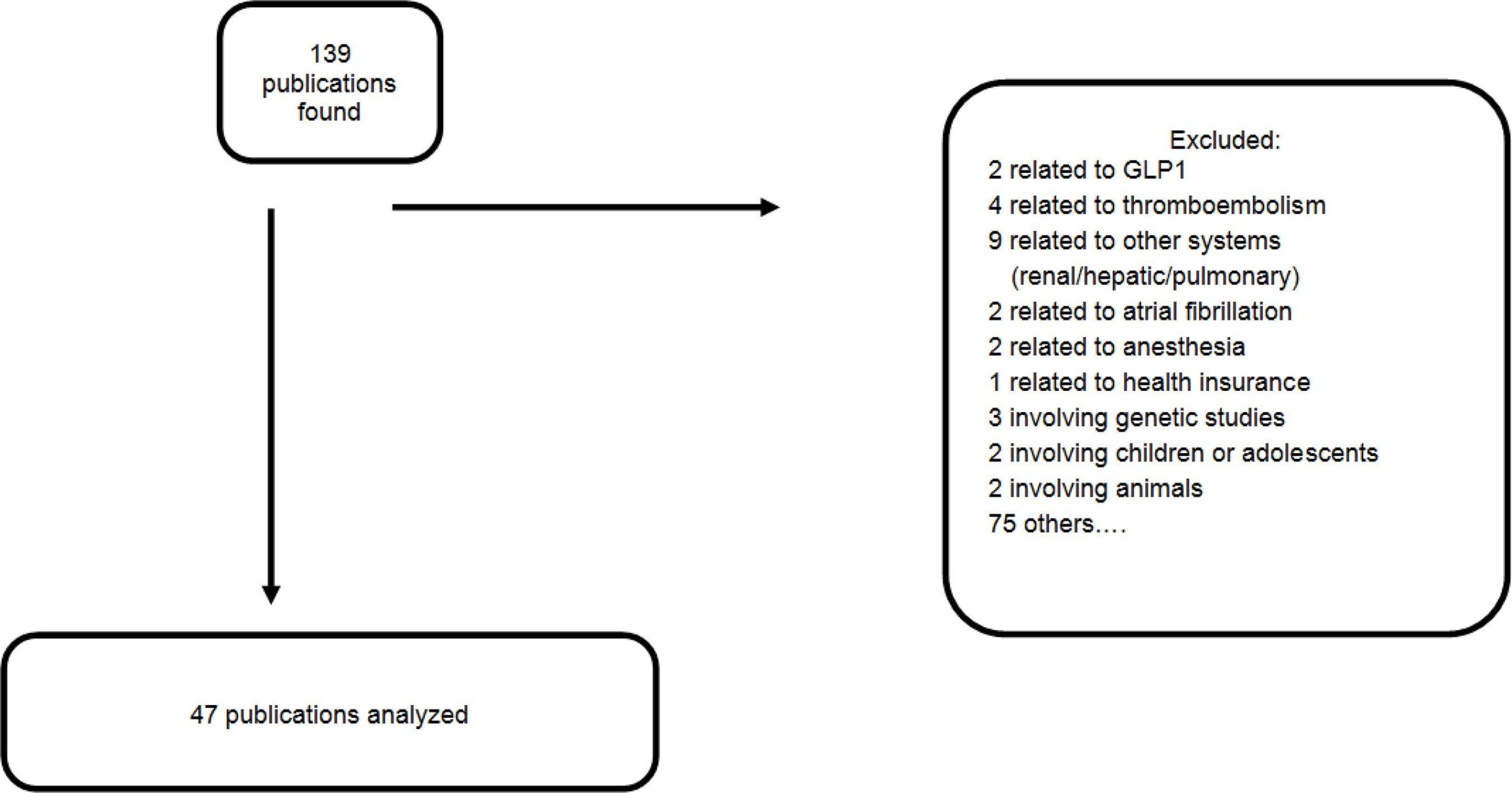
Figure 1
IJCS
Review Article

Impact of Obesity and Bariatric Surgery in the Outcome of Patients with Heart Failure

Ricardo Mourilhe-Rocha et al. Nathália Felix Araujo Salvino

Abstract

Currently, the association between obesity and heart failure (HF) is increasingly known. Patients with advanced obesity who suffer from HF without an identifiable cause can be diagnosed as having obesity-associated cardiomyopathy. Although data suggest that obesity may reduce mortality in HF, weight loss, especially in the presence of morbid obesity, reduces symptoms and improves the quality of life of those patients.

Bariatric surgery is the major treatment available for sustained weight loss in morbid obesity. Observational studies have demonstrated an improvement in ventricular structure and function of morbidly obese patients with HF who underwent that procedure.

Thus, despite the risks, bariatric surgery should be considered for patients with HF, because of its potential for reducing associated comorbidities and improving quality of life and functional capacity, in addition to making eligible for heart transplantation those excluded due to high body mass index.

  • bariatric surgery
  • Comorbidity
  • Heart Failure
  • Hypertrophy Left Ventricular
  • Obesity
  • Quality of life
Read Full Article
Creative Commons Attribution (CC BY) Creative Commons license
18/02/2019 DOI: 10.5935/2359-4802.20190001 Views 2
Left ventricular diastolic function in morbidly obese patients in the preoperative for bariatric surgery
ABC
Artigo Original

Left ventricular diastolic function in morbidly obese patients in the preoperative for bariatric surgery

Irlaneide da Silva Tavares et al. Antonio Carlos Sobral Sousa Raimundo Sotero Menezes Filho Manuel Hermínio de Aguiar-Oliveira … José Augusto Barreto-Filho Amanda Ferreira de Brito Joselina Luzia Menezes Oliveira

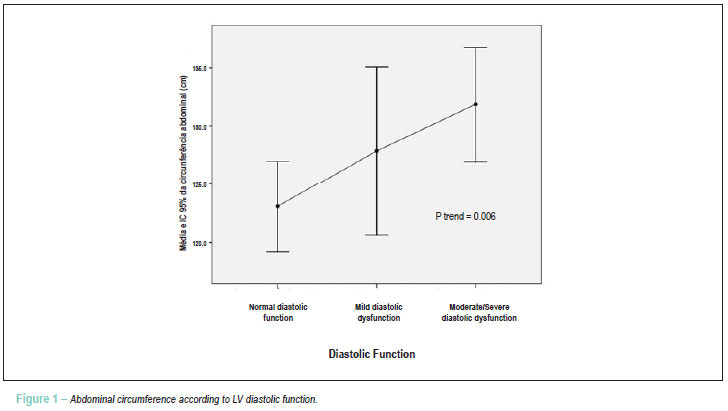
BACKGROUND: Obesity is a chronic and multifactorial disease, associated with increased cardiovascular risk, especially diastolic heart failure. OBJECTIVE: To evaluate left ventricular diastolic function in morbidly obese patients in the pre-operative for bariatric surgery, correlating it with cardiovascular risk factors and heart structure. METHODS: This is a cross-sectional study with 132 patients eligible for bariatric surgery submitted to transthoracic echocardiography assessment and of cardiovascular risk factors, as follows: 97 women (73.5%), mean age 38.5 ± 10.5 years and BMI of 43.7 ± 7.2 kg / m². Patients were divided into three groups: 61 with normal diastolic function, 24 with mild diastolic dysfunction and 47 with moderate/severe diastolic dysfunction, of which 41 with moderate diastolic dysfunction (pseudonormal pattern) and six with severe diastolic dysfunction (restrictive pattern). RESULTS: Hypertension, age and gender were different in the groups with diastolic dysfunction. Groups with dysfunction had higher left atrial diameter, left ventricular diameter, left atrial volume in four and two chambers, left atrial volume index and left ventricular mass index corrected for body surface area and height. CONCLUSION: The high frequency of left ventricular diastolic dysfunction in the preclinical phase in morbidly obese patients justifies the need for careful echocardiographic assessment, aiming at identifying individuals at higher risk, so that early intervention measures can be carried out.

  • bariatric surgery
  • Heart Failure
  • Obesity morbid
  • Preoperative Care
Read Full Article
Creative Commons Attribution (CC BY) Creative Commons license
27/03/2012 DOI: 10.1590/S0066-782X2012005000028 Views 2
Effects of weight loss induced by bariatric surgery on the prevalence of metabolic syndrome
ABC
Artigo Original

Effects of weight loss induced by bariatric surgery on the prevalence of metabolic syndrome

Francisco das Chagas Monteiro Júnior et al. Wellington Santana da Silva Júnior Natalino Salgado Filho Pedro Antônio Muniz Ferreira … Gutenberg Fernandes Araújo Natália Ribeiro Mandarino José Bonifácio Barbosa Joyce Santos Lages José de Ribamar Oliveira Lima Carolina Cipriano Monteiro

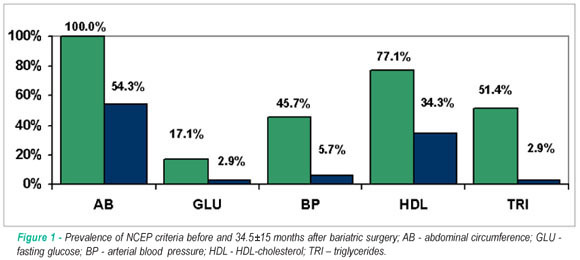
BACKGROUND: Metabolic Syndrome (MS) is often linked to overweight/obesity and can improve after weight loss, such improvement is expected to be proportional to the intensity of weight loss. OBJECTIVE: The aim of this study was to evaluate the impact of weight loss induced by bariatric surgery (BS) on the prevalence of MS in a middle-term period. METHODS: Thirty-five (35) patients who underwent surgical Roux’s Y gastrojejunal by-pass from October 2001 until October 2005 in our University Hospital were evaluated. 88.5% were female, with a mean age at the time of surgery of 37.8±11.1 years and a mean BMI of 45.0±6.2 Kg/m². During the first stage of our study demographic and clinical-anthropomorphic data were collected prior to the BC procedure, including those criteria needed for the diagnosis of MS, according to the guidelines of the US NCEP. The second stage consisted of reevaluation of those patients in the post-surgical period in order to determine the prevalence of MS in an outpatient setting. RESULTS: Prior to surgery, MS was diagnosed in 27 patients (77.1%). When those patients were reevaluated 34.4±15 months after surgery, a reduction of mean BMI to 28.3±5.0 Kg/m² and MS was identified in only two patients (5.7%) (p<0.001). Prevalence of individual criteria such as abdominal circumference, fasting glucose levels, arterial blood pressure, HDL-cholesterol and triglycerides had a reduction of 45.8%, 83%, 87.5%, 57.13% and 94% respectively. CONCLUSION: MS is a rather common feature in obese patients enrolled for BS and this procedure has been proved to be extremely efficient reversing the metabolic syndrome, with an expressive reduction of prevalence of each and all of the NCEP criteria.

  • bariatric surgery
  • Metabolic Syndrome
  • Obesity
  • Prevalence
Read Full Article
Creative Commons Attribution (CC BY) Creative Commons license
17/07/2009 DOI: 10.1590/S0066-782X2009000600007
Evolutive echocardiographic study of the structural and functional heart alterations in obese individuals after bariatric surgery
ABC
Artigo Original

Evolutive echocardiographic study of the structural and functional heart alterations in obese individuals after bariatric surgery

Luciana de Cerjat Bernardes P. Cunha et al. Cláudio L. Pereira da Cunha Admar Moraes de Souza Nelson Chiminacio Neto … Ricardo Soares Pereira Henrique Lacerda Suplicy

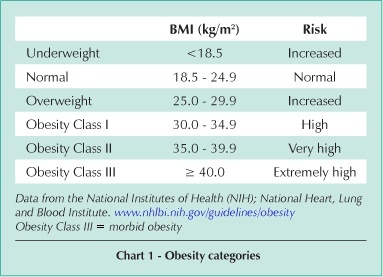
OBJECTIVE: To evaluate with Doppler echocardiography the reversibility of structural and hemodynamic changes in obeses after bariatric surgery. METHODS: Twenty-three patients (19 women = 82.6%) were studied. Mean age was 37.9 years. All subjects had Class III or Class II obesity with comorbidity and were submitted to bariatric surgery. Clinical and echocardiographic evaluation were performed preoperatively, in 6 months and 3 years after surgery. RESULTS: Preoperatively, the mean weight and blood pressure (BP) were respectively 128.7± 25.8 kg and 142.2 ± 16.2 / 92.2 ± 10.4 mmHg. Postoperatively, they showed important body weight reduction in 6 months (97.6 ± 18.3 kg) and 3 years (83.6 ± 13.5 kg), and BP reduction in 6 months (128.5 ± 16.1/80.7 ± 9.9 mmHg) that remain stable in 3rd year. On echocardiogram, preoperatively, there was hypertrophy of the septum and posterior wall associated with normal diastolic dimension; the predominant LV geometric pattern was concentric remodeling (74%). At six months, thinning of the ventricular septum and LV posterior wall, and increase in LV diastolic dimension were demonstrated. At 3rd year, the predominant LV pattern was normal (69%), with reduction of LV mass and LV mass/height² index. We noticed improved diastolic function, with an increased E/A ratio and a decreased LV isovolumic relaxation time. The Myocardial Performance Index was obtained retrospectively in 13 patients and improved in 6 months. There was an increase of the ejection time in 6 months and an elevation of the ejection fraction in 3rd year, suggesting improvement of the LV systolic function. CONCLUSION: The weight loss obtained with bariatric surgery promotes both structural and functional myocardial changes that improve cardiac performance.

  • bariatric surgery
  • Left Ventricular Function
  • Obesity
  • Transthoracic Echocardiography
Read Full Article
Creative Commons Attribution (CC BY) Creative Commons license
06/03/2007 DOI: 10.1590/S0066-782X2006001800011

How to cite this article

EndNote RIS

Electronic Document Format (Vancouver)

Mourilhe-Rocha R, Salvino NFA. Impact of Obesity and Bariatric Surgery in the Outcome of Patients with Heart Failure. International Journal of Cardiovascular Sciences 2019;32(5):527-35.

Electronic Document Format (ABNT)

Mourilhe-Rocha, Ricardo; Salvino, Nathália Felix Araujo. Impact of Obesity and Bariatric Surgery in the Outcome of Patients with Heart Failure. International Journal of Cardiovascular Sciences, v. 32, n. 5, p. 527-535, Feb. 2019.

Electronic Document Format (APA)

Mourilhe-Rocha, R., & Salvino, N. F. A. (2019). Impact of Obesity and Bariatric Surgery in the Outcome of Patients with Heart Failure. International Journal of Cardiovascular Sciences, 32(5), 527-535.

Electronic Document Format (ISO)

Mourilhe-Rocha, Ricardo and Salvino, Nathália Felix Araujo. Impact of Obesity and Bariatric Surgery in the Outcome of Patients with Heart Failure. International Journal of Cardiovascular Sciences [online]. 2019, vol. 32, n. 5, [cited 2026-10-14], pp. 527-535. Available from: <https://journals.cardiol.br/en/article/impact-of-obesity-and-bariatric-surgery-in-the-outcome-of-patients-with-heart-failure/>. ISSN 2359-4802

EndNote RIS

Electronic Document Format (Vancouver)

Tavares IS, Sousa ACS, Menezes Filho RS, Aguiar-Oliveira MH, Barreto-Filho JA, Brito AF, Oliveira JLM, et al. Left ventricular diastolic function in morbidly obese patients in the preoperative for bariatric surgery. Arquivos Brasileiros de Cardiologia 2012;98(4):300-6.

Electronic Document Format (ABNT)

Tavares, Irlaneide da Silva; Sousa, Antonio Carlos Sobral; Menezes Filho, Raimundo Sotero; Aguiar-Oliveira, Manuel Hermínio de; Barreto-Filho, José Augusto; Brito, Amanda Ferreira de; Oliveira, Joselina Luzia Menezes. Left ventricular diastolic function in morbidly obese patients in the preoperative for bariatric surgery. Arquivos Brasileiros de Cardiologia, v. 98, n. 4, p. 300-306, Mar. 2012.

Electronic Document Format (APA)

Tavares, I. S., Sousa, A. C. S., Menezes Filho, R. S., Aguiar-Oliveira, M. H. , Barreto-Filho, J. A., Brito, A. F. , & Oliveira, J. L. M. (2012). Left ventricular diastolic function in morbidly obese patients in the preoperative for bariatric surgery. Arquivos Brasileiros de Cardiologia, 98(4), 300-306.

Electronic Document Format (ISO)

Tavares, Irlaneide da Silva and Sousa, Antonio Carlos Sobral and Menezes Filho, Raimundo Sotero and Aguiar-Oliveira, Manuel Hermínio de and Barreto-Filho, José Augusto and Brito, Amanda Ferreira de and Oliveira, Joselina Luzia Menezes. Left ventricular diastolic function in morbidly obese patients in the preoperative for bariatric surgery. Arquivos Brasileiros de Cardiologia [online]. 2012, vol. 98, n. 4, [cited 2026-10-14], pp. 300-306. Available from: <https://journals.cardiol.br/en/article/left-ventricular-diastolic-function-in-morbidly-obese-patients-in-the-preoperative-for-bariatric-surgery/>. ISSN 0066-782X

EndNote RIS

Electronic Document Format (Vancouver)

Monteiro Júnior FC, Silva Júnior WS, Salgado Filho N, Ferreira PAM, Araújo GF, Mandarino NR, Barbosa JB, et al. Effects of weight loss induced by bariatric surgery on the prevalence of metabolic syndrome. Arquivos Brasileiros de Cardiologia 2009;92(6):452-6.

Electronic Document Format (ABNT)

Monteiro Júnior, Francisco das Chagas; Silva Júnior, Wellington Santana da; Salgado Filho, Natalino; Ferreira, Pedro Antônio Muniz; Araújo, Gutenberg Fernandes; Mandarino, Natália Ribeiro; Barbosa, José Bonifácio; Lages, Joyce Santos; Lima, José de Ribamar Oliveira; Monteiro, Carolina Cipriano. Effects of weight loss induced by bariatric surgery on the prevalence of metabolic syndrome. Arquivos Brasileiros de Cardiologia, v. 92, n. 6, p. 452-456, Jul. 2009.

Electronic Document Format (APA)

Monteiro Júnior, F. C., Silva Júnior, W. S. , Salgado Filho, N., Ferreira, P. A. M., Araújo, G. F., Mandarino, N. R., Barbosa, J. B., Lages, J. S., Lima, J. R. O., & Monteiro, C. C. (2009). Effects of weight loss induced by bariatric surgery on the prevalence of metabolic syndrome. Arquivos Brasileiros de Cardiologia, 92(6), 452-456.

Electronic Document Format (ISO)

Monteiro Júnior, Francisco das Chagas and Silva Júnior, Wellington Santana da and Salgado Filho, Natalino and Ferreira, Pedro Antônio Muniz and Araújo, Gutenberg Fernandes and Mandarino, Natália Ribeiro and Barbosa, José Bonifácio and Lages, Joyce Santos and Lima, José de Ribamar Oliveira and Monteiro, Carolina Cipriano. Effects of weight loss induced by bariatric surgery on the prevalence of metabolic syndrome. Arquivos Brasileiros de Cardiologia [online]. 2009, vol. 92, n. 6, [cited 2026-10-14], pp. 452-456. Available from: <https://journals.cardiol.br/en/article/effects-of-weight-loss-induced-by-bariatric-surgery-on-the-prevalence-of-metabolic-syndrome/>. ISSN 0066-782X

EndNote RIS

Electronic Document Format (Vancouver)

Cunha LCBP, Cunha CLP, Souza AM, Chiminacio Neto N, Pereira RS, Suplicy HL. Evolutive echocardiographic study of the structural and functional heart alterations in obese individuals after bariatric surgery. Arquivos Brasileiros de Cardiologia 2007;87(5):615-22.

Electronic Document Format (ABNT)

Cunha, Luciana de Cerjat Bernardes P.; Cunha, Cláudio L. Pereira da; Souza, Admar Moraes de; Chiminacio Neto, Nelson; Pereira, Ricardo Soares; Suplicy, Henrique Lacerda. Evolutive echocardiographic study of the structural and functional heart alterations in obese individuals after bariatric surgery. Arquivos Brasileiros de Cardiologia, v. 87, n. 5, p. 615-622, Mar. 2007.

Electronic Document Format (APA)

Cunha, L. C. B. P., Cunha, C. L. P. , Souza, A. M. , Chiminacio Neto, N., Pereira, R. S., & Suplicy, H. L. (2007). Evolutive echocardiographic study of the structural and functional heart alterations in obese individuals after bariatric surgery. Arquivos Brasileiros de Cardiologia, 87(5), 615-622.

Electronic Document Format (ISO)

Cunha, Luciana de Cerjat Bernardes P. and Cunha, Cláudio L. Pereira da and Souza, Admar Moraes de and Chiminacio Neto, Nelson and Pereira, Ricardo Soares and Suplicy, Henrique Lacerda. Evolutive echocardiographic study of the structural and functional heart alterations in obese individuals after bariatric surgery. Arquivos Brasileiros de Cardiologia [online]. 2007, vol. 87, n. 5, [cited 2026-10-14], pp. 615-622. Available from: <https://journals.cardiol.br/en/article/evolutive-echocardiographic-study-of-the-structural-and-functional-heart-alterations-in-obese-individuals-after-bariatric-surgery/>. ISSN 0066-782X

  • About ABC Family
  • Internal Regulation
  • Editorial Board
  • Brazilian Society of Cardiology (SBC)

Issues

SBC Guidelines

  • Videos
  • Podcasts
  • News