| ABC
ABC Family Arquivos Brasileiros de Cardiologia International Journal of Cardiovascular Sciences ABC Heart Failure & Cardiomyopathy ABC Imagem Cardiovascular
Português English
ABC Family | ABC
Português English
  • About
    • About the Journal
    • Internal Regulation
    • Editors Section
    • Editorial Board
    • History
    • SBC Award
  • Instructions to Authors
    • Guidelines for Publication
    • Editorial Policy
    • Ethics Policy
    • Policy on the Use of Artificial Intelligence
    • Mandatory Publication Form
    • Publication Fee
  • Issues
  • SBC Guidelines
  • Abstracts
    • How to Publish an Abstract Supplement?
    • Supplements from the Brazilian Congress of Cardiology
  • About
    • About the Journal
    • Internal Regulation
    • Editors Section
    • Editorial Board
    • History
    • SBC Award
  • Instructions to Authors
    • Guidelines for Publication
    • Editorial Policy
    • Ethics Policy
    • Policy on the Use of Artificial Intelligence
    • Mandatory Publication Form
    • Publication Fee
  • Issues
  • SBC Guidelines
  • Abstracts
    • How to Publish an Abstract Supplement?
    • Supplements from the Brazilian Congress of Cardiology

ABC Family

  • ABC Family
  • Arquivos Brasileiros de Cardiologia
  • International Journal of Cardiovascular Sciences
  • ABC Heart Failure & Cardiomyopathy
  • ABC Imagem Cardiovascular
Search in

No content found.

Journals
Ordering
Article types
Others

  1. Home
  2. ABC
  3. Issues
  4. 2009, Volume 92, Number 4
Biventricular repair in unbalanced atrioventricular septal defect
Case Report

Biventricular repair in unbalanced atrioventricular septal defect

Edmar Atik et al. Patrícia O. Marques Rogério A. Miranda Vitor C. Guerra … Lucília Santana Faria Marcelo Jatene

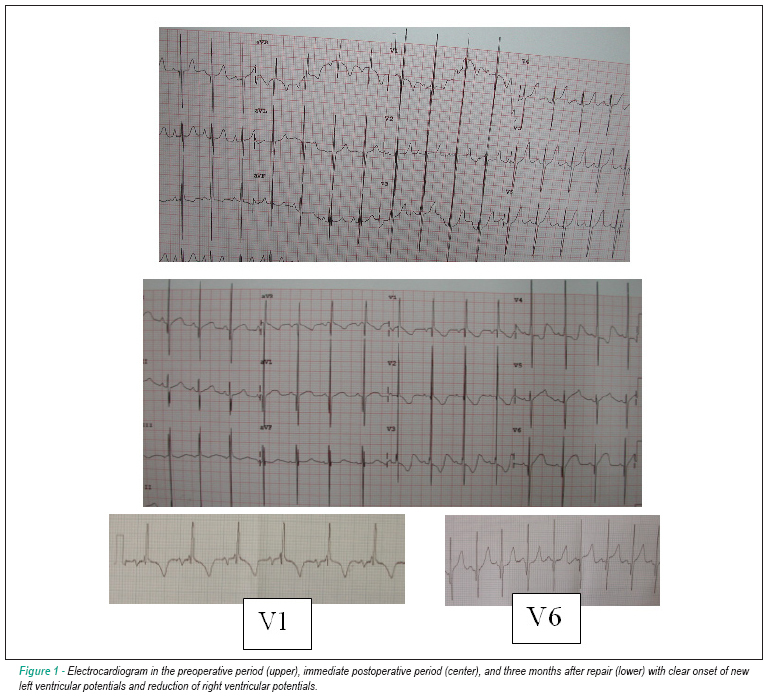
We present the case of a 2.5 year-old child with unbalanced atrioventricular septal defect due to a small left ventricle (LV) (mitral annulus of 10mm and a 0.4 ratio in relation to the tricuspid annulus, LVDD: 17 mm, LV Vd2: 15 ml/m² and LV/RV long-axis ratio of 0.71); he had a favorable outcome after biventricular surgical repair. Normal LV development was observed three months after the operation (mitral annulus of 22 mm, with a 0.84 ratio in relation to the tricuspid annulus, and LVDD of 30 mm). Current parameters for utilization of the hypoplastic ventricle are discussed.
  • Heart Defects, Congenital
  • Heart Septal Defects, Ventricular
  • Heart Ventricles
Read Full Article
Creative Commons Attribution (CC BY) Creative Commons license
29/06/2009 DOI: 10.1590/S0066-782X2009000400015 Views 1
Artigo Original

Comparison of inflammatory biomarkers between diabetic and non-diabetic patients with unstable angina

Marçal de Oliveira Huoya et al. Rafaela Andrade Penalva Sílber Rodrigues Alves Gílson Soares Feitosa … Sandra Gadelha Ana Marice Teixeira Ladeia

BACKGROUND: Studies comparing inflammatory activity between diabetic and non-diabetic individuals with acute coronary syndrome are scarce, and none including only patients with unstable angina (UA) has been published to date. OBJECTIVE: We compared serum C-reactive protein (CRP), and interleukin-6(IL-6) between diabetic and non-diabetic patients with unstable angina (UA) to determine if difference in inflammatory activity is responsible for a worse prognosis in diabetic patients. We also evaluated the correlation between inflammatory markers and the metabolic profile in diabetic patients and the correlation between inflammatory response and in-hospital outcomes: death, acute myocardial infarction, congestive heart failure, and length of stay in hospital. METHODS: A prospective cohort study of 90 consecutive patients admitted to a chest pain unit with UA and divided into two groups, diabetic and non-diabetic. Serum CRP, IL-6, metabolic profile and leukocyte count were measured at hospital arrival. RESULTS: Forty-two patients (47%) were diabetic (age 62±9) vs. 48 (53%) non-diabetic (age 63±12). No differences between median C-reactive protein (1.78 vs. 2.23mg/l,p=0.74) and interleukin-6 (0 vs. 0pg/ml,p=0.31) were found between the two groups. There was a positive correlation between CRP and total cholesterol (rs = 0.21,p = 0.05), CRP and LDL-cholesterol (rs=0.22,p=0.04) and between CRP and leukocyte count (rs = 0.32, p = 0.02) in both groups. No associations were found between inflammatory markers and in-hospital outcomes. CONCLUSION: We found no difference in inflammatory activity between diabetic and non-diabetic patients with UA, suggesting that this clinical condition may result in balanced inflammatory activity between the two groups and increase acute-phase proteins independently of metabolic state.

  • Angina Pectoris
  • Atherosclerosis
  • Diabetes Mellitus
  • Inflammation
Read Full Article
Creative Commons Attribution (CC BY) Creative Commons license
23/06/2009 DOI: 10.1590/S0066-782X2009000400006
Use of resting myocardial scintigraphy during chest pain to exclude diagnosis of acute myocardial infarction
Artigo Original

Use of resting myocardial scintigraphy during chest pain to exclude diagnosis of acute myocardial infarction

Gustavo Borges Barbirato et al. Jader Cunha de Azevedo Renata Christian Martins Felix Patricia Lavatori Correa … André Volschan Monica Viegas Lucia Pimenta Hans Fernando Rocha Dohmann Evandro Tinoco Mesquita Claudio Tinoco Mesquita

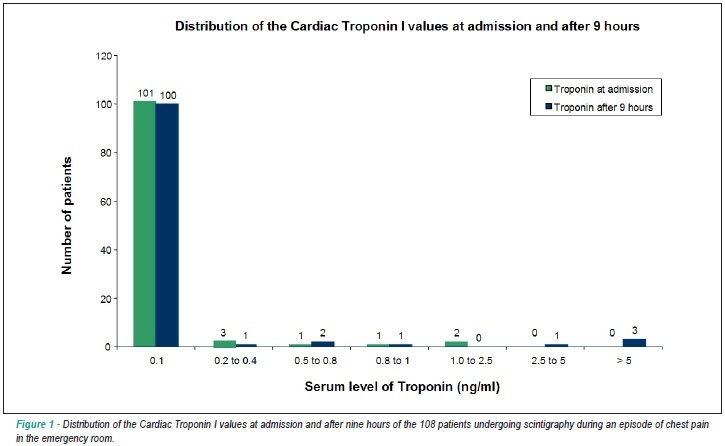
BACKGROUND: Images of myocardial perfusion taken during an episode of chest pain have been used for patients in the emergency department. OBJECTIVE: To evaluate the operating characteristics of 99mTc-Tetrofosmin scintigraphy during an episode of chest pain to exclude the diagnosis of acute myocardial infarction. METHODS: One hundred and eight patients admitted with chest pain, or up to four hours after the end of symptoms and nondiagnostic electrocardiogram, underwent resting scintigraphy and measurement of troponin I concentrations. Patients with a history of myocardial infarction (MI) were not excluded (24 patients). Troponin I concentrations were determined at admission and 6 hours later. Nuclear physicians performed a blind analysis of the images, and myocardial infarction was confirmed whenever troponin I level increase was three times that of the control. RESULTS: Resting perfusion image was abnormal in all 6 patients with MI. Only 1 patient had a normal image and increased troponin levels. Fifty-five patients had positive images without MI, and 46 patients had normal images and troponin levels. The prevalence of the disease was 6.5%. The sensitivity and specificity of the resting images during an episode of chest pain to diagnose MI was 85.7% and 45.5%, respectively. The negative predictive value was 97.7%. CONCLUSION: Patients undergoing chest pain protocol with SPECT showed an excellent negative predictive value to exclude diagnosis of myocardial infarction. These results suggest that resting perfusion image is an important tool at the chest pain unit.

  • Chest Pain
  • Coronary Disease
  • Radionuclide Imaging
  • Rest
Read Full Article
Creative Commons Attribution (CC BY) Creative Commons license
23/06/2009 DOI: 10.1590/S0066-782X2009000400004
Postoperative atrial fibrillation after cardiac surgery: who should receive chemoprophylaxis?
Review Article

Postoperative atrial fibrillation after cardiac surgery: who should receive chemoprophylaxis?

Glaucylara Reis Geovanini et al. Renato Jorge Alves Gisele de Brito Gabriel A. S. Miguel … Valéria A. Glauser Kenji Nakiri

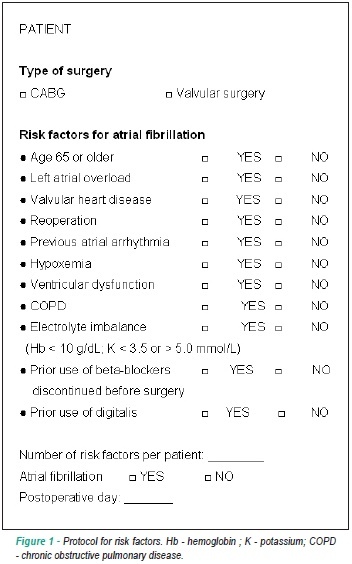
To evaluate arrhythmogenic risk factors associated with greater incidence of postoperative atrial fibrillation (POAF) in patients undergoing cardiac surgery (CABG and/or valvular surgery) in order to identify those more prone to the development of this arrhythmia for possible chemoprophylaxis. Sixty-six patients who underwent elective cardiac surgery were assessed. The following risk factors for the development of POAF were correlated: advanced age, valvular heart disease (VHD), left atrial (LA) enlargement, left ventricular dysfunction (LVD), electrolyte imbalance (EI), previous CABG, prior use and withdrawal of beta-blockers (BB) and/or digitalis 24 hours before surgery). The incidence of AF was high (47%) in our study, most frequently on the first postoperative day. Sixty-four percent of the study sample was male, and the mean age was 62 years. Among patients with two or less risk factors for AF, only 24% developed arrhythmia, while the presence of three or more risk factors was associated with increased incidence of postoperative AF (69%), (p = 0.04). Age > 65 years (58% of the patients) was the most prevalent risk factor, followed by LA enlargement in 45% (p = 0.001), and VHD in 38% (p = 0.02). The presence of three or more risk factors increases significantly the incidence of this arrhythmia in the postoperative period after cardiac surgery. Among the primary risk factors are advanced age, left atrial enlargement, and valvular heart disease.

  • arrhytmia
  • Atrial Fibrillation
  • Postoperative Care
  • Risk Factors
  • Thoracic Surgery
Read Full Article
Creative Commons Attribution (CC BY) Creative Commons license
23/06/2009 DOI: 10.1590/S0066-782X2009000400013
Validation of a new surgical risk score for heart valve surgery: VMCP
Artigo Original

Validation of a new surgical risk score for heart valve surgery: VMCP

Max Grinberg et al. Vívian Masutti Jonke Roney Orismar Sampaio Guilherme Sobreira Spina Flavio Tarasoutchi

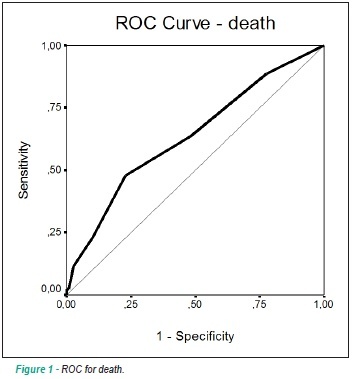
BACKGROUND: Some studies have developed scores for the assessment of surgical risk, particularly the EuroSCORE, which, however, is complex and difficult to apply. We suggest a new and simpler score, which is more appropriate for the clinical practice and for the assessment of surgical risk in patients with heart valve diseases. OBJECTIVE: This study was conducted to create and validate a simple and practical score to predict mortality and morbidity related to heart valve surgery. METHODS: Hospital data from 764 patients were collected, and the score was validated using two statistical models: death (= mortality) and length of hospital stay (LHS) > 10 days (= morbidity). The score was composed by four indexes (V [heart valve lesion], M [myocardial function], C [coronary artery disease], and P [pulmonary artery pressure]). A cut-off point was set for the score, and uni and multivariate analyses were performed to confirm whether the score would be able to predict mortality and morbidity. The existence of association with other risk factors was also studied. RESULTS: The score was validated with good internal consistency (0.65), and the best cut-off point for mortality and morbidity was 8. Scores > 8 can predict LHS > 10 days (odds ratio [OR] = 1.7; p = 0.006) and a higher death risk, at least in the univariate analysis (p = 0.049). However, the death risk could not be predicted in the multivariate analysis (p=0.258). CONCLUSION: VMCP scores > 8 can predict LHS > 10 days and may be used as a new tool for the follow-up of patients with heart valve disease undergoing surgery.

  • Cardiac Surgical Procedures
  • Heart valves
  • Risk Assessment
Read Full Article
Creative Commons Attribution (CC BY) Creative Commons license
23/06/2009 DOI: 10.1590/S0066-782X2009000400012 Views 1
Research Article

Errata

ERRATUM

February 2009 Edition, vol. 92 (2 suppl. 1), pages. 1-25

[…]

Read Full Article
Creative Commons Attribution (CC BY) Creative Commons license
23/06/2009 DOI: 10.1590/S0066-782X2009000400018
Analysis of 6-minute walk test safety in pre-heart transplantation patients
Artigo Original

Analysis of 6-minute walk test safety in pre-heart transplantation patients

Gerson Cipriano Jr et al. Darlene Yuri Graziella França Bernardelli Vanessa Mair … Enio Buffolo João Nelson Rodrigues Branco

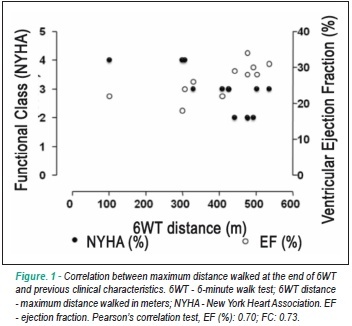
BACKGROUND: The 6-minute walk test (6WT) has been used as a means of assessment of the functional capacity, clinical staging and cardiovascular prognosis. Its safety and metabolic impact have not been frequently described in the literature, especially in patients with severe heart failure with clinical indication for cardiovascular transplantation. OBJECTIVE: To evaluate the occurrence of arrhythmias and cardiovascular changes during 6WT. To correlate 6WT performance with clinical staging and cardiovascular prognosis. METHODS: Twelve patients, 10 of whom males, aged 52 ± 8 years were evaluated at baseline. 6WT was performed with telemetry electrocardiography, vital signs and lactate monitoring. The patients were followed-up for 12 months. RESULTS: The patients walked 399.4±122.5 (D, m), reaching a perceived exertion (PE) of 14.3±1.5 and a 34% baseline heart rate variation. Two patients presented more severe pre-6WT arrhythmia which did not worsen with the exercice, four patients presented a significant increase of blood lactate levels (>5 mmol/dl), and three interrupted the test. The distance walked correlated with the ejection fraction (%) and functional class (NYHA). After 12-month follow-up, three patients died and seven were rehospitalized for cardiac decompensation. The D/PE ratio and 2-minute heart rate recovery (HRR2, bpm) were lower in the death group. CONCLUSION: The clinical and electrocardiographic behaviors suggest that the method is safe, but it may be considered too strenuous for some patients with severe heart failure. Variables related to 6WT performance may be associated with the one-year follow-up mortality.

  • Effectiveness
  • health evaluation
  • Heart Failure
  • walking
Read Full Article
Creative Commons Attribution (CC BY) Creative Commons license
23/06/2009 DOI: 10.1590/S0066-782X2009000400011 Views 2
Aortobronchopulmonary fistula in the postoperative period of aortic coarctation
Case Report

Aortobronchopulmonary fistula in the postoperative period of aortic coarctation

Antônio Fernando Coelho Júnior et al. Antônio Amorim de Araújo Filho João Paulo de Vasconcelos Leitão Francisco Cabral Júnior

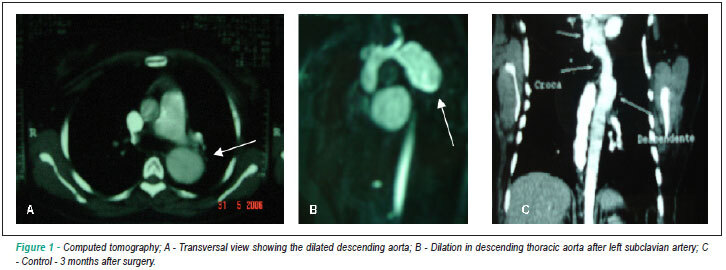
BACKGROUND AND OBJECTIVES: In patients with hemoptysis and a history of aortic surgery, the possibility of aortobronchopulmonary fistula must always be considered. The objective of this study was to report a rare case of hemoptysis due to aortobronchopulmonary fistula in the late postoperative period of aortic surgery. CASE REPORT: Female patient, 34 years, surgical correction of aortic coarctation, presenting massive hemoptysis. The echocardiogram disclosed a pseudoaneurysm. The surgical correction was performed and a Dacron tube graft was implanted in the affected aortic segment successfully. CONCLUSIONS: Aortobronchopulmonary fistulas must be considered in patients with previous aortic surgery, due to the elevated morbimortality if they are not promptly diagnosed and treated.

  • Aorta, Thoracic
  • Fistula
  • Hemoptysis
Read Full Article
Creative Commons Attribution (CC BY) Creative Commons license
23/06/2009 DOI: 10.1590/S0066-782X2009000400016
Atypical presentation of rheumatic carditis in pregnancy
Case Report

Atypical presentation of rheumatic carditis in pregnancy

Lurildo Cleano Ribeiro Saraiva et al. Aluísio Macedo Ana Elizabeth M. Batista

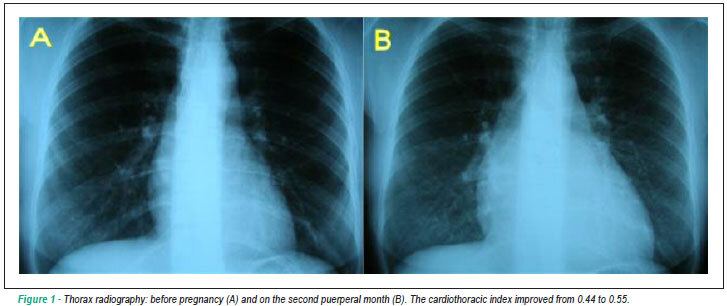
We report the case of a 31-year old woman presenting with atypical rheumatic disease in the 28th week of the second pregnancy. Questions related to prevention of the disease and its treatment during the pregnancy-puerperium cycle are discussed.

  • Pregnancy
  • Rheumatic Fever
  • Tricuspid Valve Insufficiency
Read Full Article
Creative Commons Attribution (CC BY) Creative Commons license
23/06/2009 DOI: 10.1590/S0066-782X2009000400017 Views 1
Case 1/2009 - a 33-year-old man with effort dyspnea and syncope who presented sudden worsening of the dyspnea
Anatomopathological Session

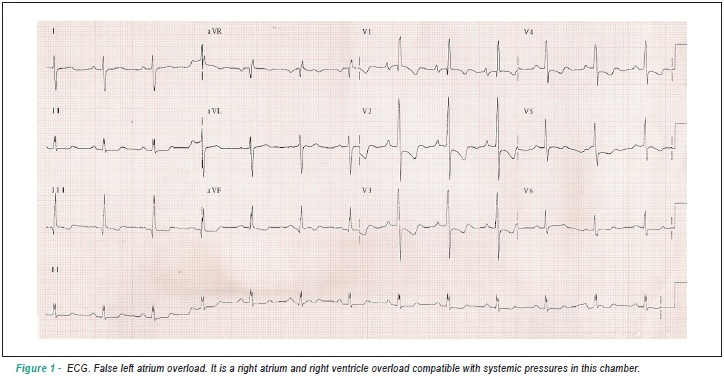
Case 1/2009 – a 33-year-old man with effort dyspnea and syncope who presented sudden worsening of the dyspnea

João Paulo Cheroto de Rezende et al. Fabiana Rached Jussara Bianchi Castelli

ANATOMOPATHOLOGICAL SESSION

Case 1 – a 33 year-old man with effort dyspnea and syncope who presented sudden worsening of the dyspnea

[…]

Read Full Article
Creative Commons Attribution (CC BY) Creative Commons license
23/06/2009 DOI: 10.1590/S0066-782X2009000400014 Views 2
Morphological description and clinical implications of myocardial bridges: an anatomical study in colombians
Artigo Original

Morphological description and clinical implications of myocardial bridges: an anatomical study in colombians

Luis Ernesto Ballesteros Acunã et al. Luis Miguel Ramírez Aristeguieta Saldarriaga Bladimir Tellez

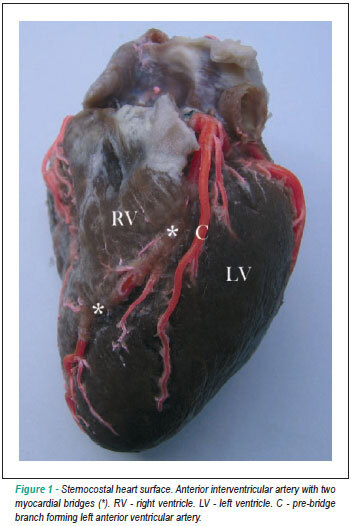
BACKGROUND: Myocardial bridges represent a hotly debated research topic. Myocardial bridges are considered to be a vascular heart variation due to its intermittent or enduring reducing of the arterial lumen, with a possible ischemic effect. METHODS: 154 hearts were studied, having been extracted as fresh autopsy material. Coronary arteries were injected with synthetic resin and cleaned by extracting the pericardial fat. RESULTS: 92 myocardial bridges were observed in 62 hearts (40.3%). Average myocardial bridge length was 19.9 mm. Myocardial bridges varied per artery from one myocardial bridge in 42 hearts (27.3%), two myocardial bridges in 11 hearts (7.2%), three myocardial bridges in 8 hearts (5.2%) and four myocardial bridges in 1 heart (0.7%). Most myocardial bridges coincided with the anterior interventricular artery in its proximal and intermediate segments in 61 cases (39.6%) and left diagonal artery in 11 cases (7.2%). Arteries emitted just before myocardial bridges (pre-bridge branch) in 50 cases (54.3%) of the sample, with an average caliber of 1.41 mm. A third coronary artery was present in 46 cases (29.8%) of total sample. A higher frequency of myocardial bridges was found in hearts with a third coronary artery. CONCLUSION: It is necessary to consider the clinical importance of the variations considering the arterial distribution and associated clinical implications.

  • Chest Pain
  • Coronary Vessels
  • Myocardial Bridging
  • Myocardial Ischemia
Read Full Article
Creative Commons Attribution (CC BY) Creative Commons license
23/06/2009 DOI: 10.1590/S0066-782X2009000400002
Piloerection: a side effect of intravenous administration of dobutamine
Artigo Original

Piloerection: a side effect of intravenous administration of dobutamine

Inés Vidal

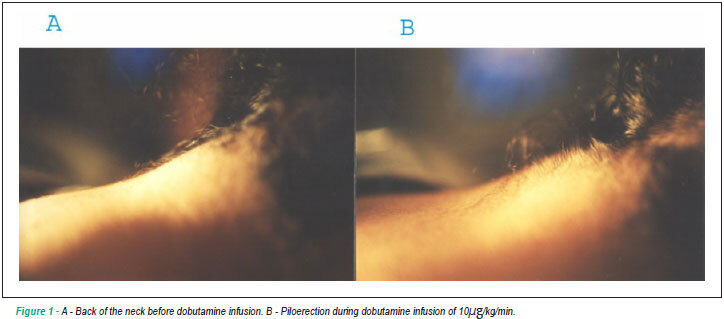
BACKGROUND: When a dobutamine stress echocardiogram is performed, piloerection is frequently found in the scalp area. OBJECTIVE: The aim of the present study was to establish the incidence of this phenomenon and its association with other clinical findings. METHODS: A total of 218 consecutive patients that underwent dobutamine stress echocardiography in our department were included in the study. RESULTS: Piloerection was present in 42.2% of the sample. No correlations could be established between piloerection and gender, result of the stress test or other side effects. A statistically significant correlation was established with the age of the patients: piloerection was present in 73% of patients aged 50 years or younger. It appears most often with a dobutamine dose of 10 µg/kg/min. CONCLUSION: Piloerection is a frequent side effect of dobutamine infusion, particularly in patients aged 50 or less; it usually precedes the increase in heart rate caused by dobutamine; therefore, it is an early and clear indication that the intravenous set is working properly. Also, the previous warning of its possible appearance may contribute to the patient’s well-being.

  • Dobutamine
  • Polierection
Read Full Article
Creative Commons Attribution (CC BY) Creative Commons license
23/06/2009 DOI: 10.1590/S0066-782X2009000400007 Views 1
Left ventricular ejection fraction and volumes as measured by 3d echocardiography and ultrafast computed tomography
Artigo Original

Left ventricular ejection fraction and volumes as measured by 3d echocardiography and ultrafast computed tomography

Marcelo Luiz Campos Vieira et al. César H. Nomura Bernardino Tranchesi Junior Wercules A. de Oliveira … Gustavo Naccarato Bruna S. Serpa Rodrigo B. D. Passos Marcelo B. G. Funari Cláudio H. Fischer Samira S. Morhy

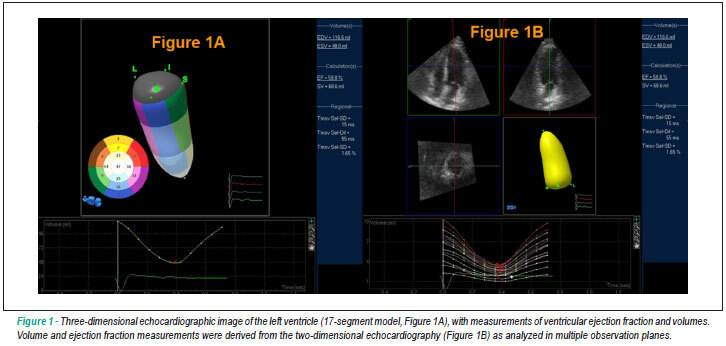
BACKGROUND: Real-time three-dimensional echocargiography (RT-3D-Echo) and ultrafast computed tomography (CT) are two novel methods for the analysis of LV ejection fraction and volumes. OBJECTIVE: To compare LVEF and volume measurements as obtained using RT-3D-Echo and ultrafast CT. METHODS: Thirty nine consecutive patients (27 men, mean age of 57±12 years) were studied using RT-3D-Echo and 64-slice ultrafast CT. LVEF and LV volumes were analyzed. Statistical analysis: coefficient of correlation (r: Pearson), Bland-Altman analysis, linear regression analysis, 95% CI, p<0.05. RESULTS: RT-3D-Echo measurements: LVEF ranged from 56.1 to 78.6 (65.5±5.58)%; end-diastolic volume ranged from 49.6 to 178.2 (87±27.8) ml; end-systolic volume ranged from 11.4 to 78 (33.1±13.6) ml. CT scan measurements: LVEF ranged from 53 to 86% (67.8±7.78); end-diastolic volume ranged from 51 to 186 (106.5±30.3) ml; end-systolic volume ranged from 7 to 72 (35.5±13.4)ml. Correlations between RT-3D-Echo and CT were: LVEF (r: 0.7888, p<0.0001, 95% CI 0.6301 to 0.8843); end-diastolic volume (r: 0.7695, p<0.0001, 95% CI 0.5995 to 0.8730); end-systolic volume (r: 0.8119, p<0.0001, 95% CI 0.6673 to 0.8975). CONCLUSION: Good correlation between LVEF and ventricular volume parameters as measured by RT-3D-Echo and 64-slice ultrafast CT was found in the present case series.

  • Echocardiography
  • emission-computed
  • Heart
  • Stroke Volume
  • Three-Dimensional
  • Tomography
Read Full Article
Creative Commons Attribution (CC BY) Creative Commons license
23/06/2009 DOI: 10.1590/S0066-782X2009000400008 Views 1
22q11.2 deletion in patients with conotruncal heart defect and del22q syndrome phenotype
Artigo Original

22q11.2 deletion in patients with conotruncal heart defect and del22q syndrome phenotype

Sintia Iole Nogueira Belangero et al. Fernanda T.S. Bellucco Leslie Domenici Kulikowski Denise M. Christofolini … Mirlene C. S. P. Cernach Maria Isabel Melaragno

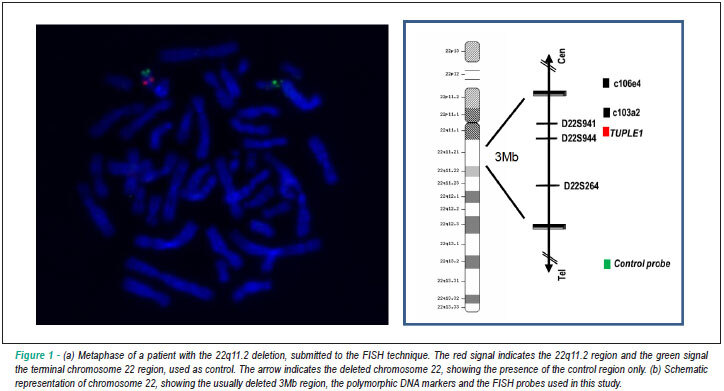
BACKGROUND: The 22q11.2 deletion syndrome is the most frequent human microdeletion syndrome. The phenotype is highly variable, being characterized by conotruncal heart defect, facial dysmorphisms, velopharyngeal insufficiency, learning difficulties and mental retardation. OBJECTIVE: The objective of this study was to investigate the frequency of deletion 22q11.2 in a Brazilian sample of individuals with isolated conotruncal heart defect and 22q11.2 deletion syndrome phenotype. METHODS: Twenty-nine patients were studied by classical cytogenetics, by fluorescence in situ hybridization (FISH), and by molecular techniques. RESULTS: Cytogenetic analysis by G-banding revealed a normal karyotype in all patients except one who presented a 47,XX,+idic(22)(q11.2) karyotype. Using molecular techniques, a deletion was observed in 25% of the patients, all exhibiting a 22q11.2 deletion syndrome phenotype. In none of the cases the deletion was inherited from the parents. The frequency of 22q11.2 deletion was higher in patients with the clinical spectrum of the 22q11.2 deletion syndrome than in patients with isolated conotruncal heart defect. CONCLUSION: Investigating the presence of the deletion and its correlation with the patients’ clinical data can help the patients and their families to have a better genetic counseling and more adequate clinical follow-up.

  • Chromosome deletion
  • genetic markers
  • Heart Defects, Congenital
  • Phenotype
Read Full Article
Creative Commons Attribution (CC BY) Creative Commons license
23/06/2009 DOI: 10.1590/S0066-782X2009000400010
Artigo Original

Association between leisure-time physical activity and C-reactive protein levels in adults, in the city of Salvador, Brazil

Francisco Pitanga et al. Ines Lessa

BACKGROUND: Leisure time physical activity (LTPA), defined as any type of bodily movement performed during leisure time, is associated with a reduction in the risk for many cardiovascular injuries. OBJECTIVE: To investigate the existence of an association between leisure time physical activity (LTPA) and C-reactive protein (CRP) levels in adults, in the city of Salvador, State of Bahia, Brazil. METHODS: This was a cross-sectional study, with a sample of 822 men and women, aged > 20 years. Active in leisure time were those with a self-reported practice of physical activities in leisure time; high serum CRP levels were those with values > 3.0 mg/l. Logistic regression analysis was used to compute the odds ratio (OR) with a 95% confidence interval (CI). RESULTS: Using multivariate analysis to adjust for potential confounders, we found an OR of 0.73 (0.68-0.79) among the men which shows the existence of an association between LTPA and high CRP levels only in male individuals. After a stratification by gender, obesity, diabetes and smoking habit, we found an association between LTPA and high CRP in non-obese and non-diabetic male smokers or former smokers; and in obese and non-smoking females. CONCLUSION: The results of this study may bring contributions to public health, since they can be used to raise awareness of the importance of LTPA as a prospective strategy for population health improvement.

  • Coronary Artery Disease
  • Motor Activity
  • R-reactive protein
  • Risk Factors
Read Full Article
Creative Commons Attribution (CC BY) Creative Commons license
23/06/2009 DOI: 10.1590/S0066-782X2009000400009 Views 1
Effects of an inspiratory muscle rehabilitation program in the postoperative period of cardiac surgery
Artigo Original

Effects of an inspiratory muscle rehabilitation program in the postoperative period of cardiac surgery

Paulo Eduardo Gomes Ferreira et al. Alfredo José Rodrigues Paulo Roberto Barboza Évora

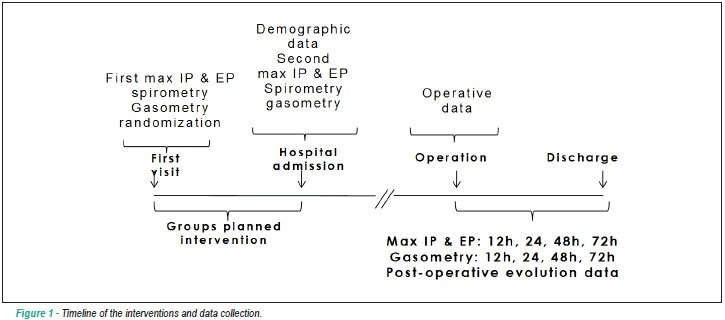
BACKGROUND: Respiratory muscles are affected after cardiac surgeries. OBJECTIVE: To verify whether the preoperative conditioning of the inspiratory muscles might help to decrease postoperative respiratory dysfunction. METHODS: Thirty volunteers of both genders and with a minimum age of 50 years, while waiting for myocardial revascularization and/or cardiac valve surgery, were randomly assigned to two groups. Fifteen patients were included in a domiciliary program of at least 2 weeks of preoperative training of the inspiratory muscles, using a device with a load corresponding to 40% of the maximum inspiratory pressure. The other 15 patients received general advice and did not train the inspiratory muscle. Spirometry, before and after the training program, as well as the evolution of the arterial blood gases and of the maximum inspiratory and expiratory pressure, before and after the operation were evaluated in both group. The clinical outcomes of the two groups were also compared. RESULTS: We observed that inspiratory muscle training increased the forced vital capacity, the maximum voluntary ventilation and the ratio between the forced expired volume during the first second and the forced vital capacity. The evolution of the arterial blood gases and of the maximum inspiratory and expiratory pressures before and after the operation was similar in both groups, with the outcomes also being similar. CONCLUSION: We concluded that our domiciliary program of inspiratory muscle training was safe and improved the forced vital capacity and the maximum voluntary ventilation, although the clinical benefits of this program were not clearly demonstrable in the present study.

  • physical therapy modalities
  • Postoperative Care
  • Rehabilitation
  • Respiratory Muscles
  • Thoracic Surgery
Read Full Article
Creative Commons Attribution (CC BY) Creative Commons license
23/06/2009 DOI: 10.1590/S0066-782X2009000400005 Views 2
Artigo Original

Homocysteine and MTHFR and VEGF gene polymorphisms: impact on coronary artery disease

Alexandre Rodrigues Guerzoni et al. Patrícia Matos Biselli Moacir Fernandes de Godoy Doroteia Rossi Silva Souza … Renato Haddad Marcos Nogueira Eberlin Erika Cristina Pavarino-Bertelli Eny Maria Goloni-Bertollo

BACKGROUND: Polymorphisms in genes involved in the atherosclerosis development, angiogenesis, and homocysteine (Hcy) metabolism could be risk factors for coronary artery disease (CAD). OBJECTIVE: To evaluate the effect of the VEGF C-2578A and MTHFR C677T polymorphisms on CAD, and the association of these polymorphisms with the severity and extension of atherosclerotic lesions and Hcy concentrations. METHODS: Two hundred and forty-four subjects were evaluated by coronary angiography and included in the study (145 with CAD and 99 controls). The VEGF C-2578A and MTHFR C677T polymorphisms were investigated by the PCR-SSCP and PCR-RFLP techniques, respectively. Plasma Hcy was quantified by liquid chromatography/sequential mass spectrometry (LC-MS/MS). RESULTS: There was no significant difference in allele and genotype distribution between the groups, for both polymorphisms. The univariate analysis showed a higher frequency of the VEGF -2578AA genotype in the group with three-vessel disease (p=0.044). In addition, the VEGF -2578CA genotype was observed more frequently among individuals with <95% stenosis (p=0.010). After adjustment for other risk factors for CAD in a multivariate model, the VEGF C-2578A polymorphism was not found to be an independent correlate of CAD (p=0.688). The MTHFR polymorphism did not show any association with the extension and/or severity of the CAD. The MTHFR C677T polymorphism showed no direct association with hyperhomocysteinemia or increased mean plasma concentrations of Hcy. CONCLUSION: Although there is an apparent association between VEGF C-2578A and the development of coronary atherosclerosis, this association is not independent of conventional cardiovascular risk factors.

  • Atherosclerosis
  • Coronary Artery Disease
  • homocysteine
  • Polymorphism, Genetic
Read Full Article
Creative Commons Attribution (CC BY) Creative Commons license
23/06/2009 DOI: 10.1590/S0066-782X2009000400003
Página do Presidente

ACC opens arms to brazilians

Antonio Carlos Palandri Chagas

THE PRESIDENT’S PAGE

ACC opens arms to brazilians

[…]

Read Full Article
Creative Commons Attribution (CC BY) Creative Commons license
23/06/2009 DOI: 10.1590/S0066-782X2009000400001

How to cite this article

EndNote RIS

Electronic Document Format (Vancouver)

Atik E, Marques PO, Miranda RA, Guerra VC, Faria LS, Jatene M. Biventricular repair in unbalanced atrioventricular septal defect. Arquivos Brasileiros de Cardiologia 2009;92(4):e46-9.

Electronic Document Format (ABNT)

Atik, Edmar; Marques, Patrícia O.; Miranda, Rogério A.; Guerra, Vitor C.; Faria, Lucília Santana; Jatene, Marcelo. Biventricular repair in unbalanced atrioventricular septal defect. Arquivos Brasileiros de Cardiologia, v. 92, n. 4, p. e46-e49, Jun. 2009.

Electronic Document Format (APA)

Atik, E., Marques, P. O., Miranda, R. A., Guerra, V. C., Faria, L. S., & Jatene, M. (2009). Biventricular repair in unbalanced atrioventricular septal defect. Arquivos Brasileiros de Cardiologia, 92(4), e46-e49.

Electronic Document Format (ISO)

Atik, Edmar and Marques, Patrícia O. and Miranda, Rogério A. and Guerra, Vitor C. and Faria, Lucília Santana and Jatene, Marcelo. Biventricular repair in unbalanced atrioventricular septal defect. Arquivos Brasileiros de Cardiologia [online]. 2009, vol. 92, n. 4, [cited 2026-10-14], pp. e46-e49. Available from: <https://journals.cardiol.br/en/article/biventricular-repair-in-unbalanced-atrioventricular-septal-defect/>. ISSN 0066-782X

EndNote RIS

Electronic Document Format (Vancouver)

Huoya MO, Penalva RA, Alves SR, Feitosa GS, Gadelha S, Ladeia AMT. Comparison of inflammatory biomarkers between diabetic and non-diabetic patients with unstable angina. Arquivos Brasileiros de Cardiologia 2009;92(4):283-9.

Electronic Document Format (ABNT)

Huoya, Marçal de Oliveira; Penalva, Rafaela Andrade; Alves, Sílber Rodrigues; Feitosa, Gílson Soares; Gadelha, Sandra; Ladeia, Ana Marice Teixeira. Comparison of inflammatory biomarkers between diabetic and non-diabetic patients with unstable angina. Arquivos Brasileiros de Cardiologia, v. 92, n. 4, p. 283-289, Jun. 2009.

Electronic Document Format (APA)

Huoya, M. O., Penalva, R. A., Alves, S. R., Feitosa, G. S., Gadelha, S., & Ladeia, A. M. T. (2009). Comparison of inflammatory biomarkers between diabetic and non-diabetic patients with unstable angina. Arquivos Brasileiros de Cardiologia, 92(4), 283-289.

Electronic Document Format (ISO)

Huoya, Marçal de Oliveira and Penalva, Rafaela Andrade and Alves, Sílber Rodrigues and Feitosa, Gílson Soares and Gadelha, Sandra and Ladeia, Ana Marice Teixeira. Comparison of inflammatory biomarkers between diabetic and non-diabetic patients with unstable angina. Arquivos Brasileiros de Cardiologia [online]. 2009, vol. 92, n. 4, [cited 2026-10-14], pp. 283-289. Available from: <https://journals.cardiol.br/en/article/comparison-of-inflammatory-biomarkers-between-diabetic-and-non-diabetic-patients-with-unstable-angina/>. ISSN 0066-782X

EndNote RIS

Electronic Document Format (Vancouver)

Barbirato GB, Azevedo JC, Felix RCM, Correa PL, Volschan A, Viegas M, Pimenta L, et al. Use of resting myocardial scintigraphy during chest pain to exclude diagnosis of acute myocardial infarction. Arquivos Brasileiros de Cardiologia 2009;92(4):269-74.

Electronic Document Format (ABNT)

Barbirato, Gustavo Borges; Azevedo, Jader Cunha de; Felix, Renata Christian Martins; Correa, Patricia Lavatori; Volschan, André; Viegas, Monica; Pimenta, Lucia; Dohmann, Hans Fernando Rocha; Mesquita, Evandro Tinoco; Mesquita, Claudio Tinoco. Use of resting myocardial scintigraphy during chest pain to exclude diagnosis of acute myocardial infarction. Arquivos Brasileiros de Cardiologia, v. 92, n. 4, p. 269-274, Jun. 2009.

Electronic Document Format (APA)

Barbirato, G. B., Azevedo, J. C. , Felix, R. C. M., Correa, P. L., Volschan, A., Viegas, M., Pimenta, L., Dohmann, H. F. R., Mesquita, E. T., & Mesquita, C. T. (2009). Use of resting myocardial scintigraphy during chest pain to exclude diagnosis of acute myocardial infarction. Arquivos Brasileiros de Cardiologia, 92(4), 269-274.

Electronic Document Format (ISO)

Barbirato, Gustavo Borges and Azevedo, Jader Cunha de and Felix, Renata Christian Martins and Correa, Patricia Lavatori and Volschan, André and Viegas, Monica and Pimenta, Lucia and Dohmann, Hans Fernando Rocha and Mesquita, Evandro Tinoco and Mesquita, Claudio Tinoco. Use of resting myocardial scintigraphy during chest pain to exclude diagnosis of acute myocardial infarction. Arquivos Brasileiros de Cardiologia [online]. 2009, vol. 92, n. 4, [cited 2026-10-14], pp. 269-274. Available from: <https://journals.cardiol.br/en/article/use-of-resting-myocardial-scintigraphy-during-chest-pain-to-exclude-diagnosis-of-acute-myocardial-infarction/>. ISSN 0066-782X

EndNote RIS

Electronic Document Format (Vancouver)

Geovanini GR, Alves RJ, Brito G, Miguel GAS, Glauser VA, Nakiri K. Postoperative atrial fibrillation after cardiac surgery: who should receive chemoprophylaxis?. Arquivos Brasileiros de Cardiologia 2009;92(4):326-30.

Electronic Document Format (ABNT)

Geovanini, Glaucylara Reis; Alves, Renato Jorge; Brito, Gisele de; Miguel, Gabriel A. S.; Glauser, Valéria A.; Nakiri, Kenji. Postoperative atrial fibrillation after cardiac surgery: who should receive chemoprophylaxis?. Arquivos Brasileiros de Cardiologia, v. 92, n. 4, p. 326-330, Jun. 2009.

Electronic Document Format (APA)

Geovanini, G. R., Alves, R. J., Brito, G. , Miguel, G. A. S., Glauser, V. A., & Nakiri, K. (2009). Postoperative atrial fibrillation after cardiac surgery: who should receive chemoprophylaxis?. Arquivos Brasileiros de Cardiologia, 92(4), 326-330.

Electronic Document Format (ISO)

Geovanini, Glaucylara Reis and Alves, Renato Jorge and Brito, Gisele de and Miguel, Gabriel A. S. and Glauser, Valéria A. and Nakiri, Kenji. Postoperative atrial fibrillation after cardiac surgery: who should receive chemoprophylaxis?. Arquivos Brasileiros de Cardiologia [online]. 2009, vol. 92, n. 4, [cited 2026-10-14], pp. 326-330. Available from: <https://journals.cardiol.br/en/article/postoperative-atrial-fibrillation-after-cardiac-surgery-who-should-receive-chemoprophylaxis/>. ISSN 0066-782X

EndNote RIS

Electronic Document Format (Vancouver)

Grinberg M, Jonke VM, Sampaio RO, Spina GS, Tarasoutchi F. Validation of a new surgical risk score for heart valve surgery: VMCP. Arquivos Brasileiros de Cardiologia 2009;92(4):320-5.

Electronic Document Format (ABNT)

Grinberg, Max; Jonke, Vívian Masutti; Sampaio, Roney Orismar; Spina, Guilherme Sobreira; Tarasoutchi, Flavio. Validation of a new surgical risk score for heart valve surgery: VMCP. Arquivos Brasileiros de Cardiologia, v. 92, n. 4, p. 320-325, Jun. 2009.

Electronic Document Format (APA)

Grinberg, M., Jonke, V. M., Sampaio, R. O., Spina, G. S., & Tarasoutchi, F. (2009). Validation of a new surgical risk score for heart valve surgery: VMCP. Arquivos Brasileiros de Cardiologia, 92(4), 320-325.

Electronic Document Format (ISO)

Grinberg, Max and Jonke, Vívian Masutti and Sampaio, Roney Orismar and Spina, Guilherme Sobreira and Tarasoutchi, Flavio. Validation of a new surgical risk score for heart valve surgery: VMCP. Arquivos Brasileiros de Cardiologia [online]. 2009, vol. 92, n. 4, [cited 2026-10-14], pp. 320-325. Available from: <https://journals.cardiol.br/en/article/validation-of-a-new-surgical-risk-score-for-heart-valve-surgery-vmcp/>. ISSN 0066-782X

EndNote RIS

Electronic Document Format (Vancouver)

. Errata. Arquivos Brasileiros de Cardiologia 2009;92(4):339.

Electronic Document Format (ABNT)

. Errata. Arquivos Brasileiros de Cardiologia, v. 92, n. 4, p. 339-339, Jun. 2009.

Electronic Document Format (APA)

(2009). Errata. Arquivos Brasileiros de Cardiologia, 92(4), 339-339.

Electronic Document Format (ISO)

. Errata. Arquivos Brasileiros de Cardiologia [online]. 2009, vol. 92, n. 4, [cited 2026-10-14], pp. 339-339. Available from: <https://journals.cardiol.br/en/article/errata-42/>. ISSN 0066-782X

EndNote RIS

Electronic Document Format (Vancouver)

Cipriano Jr G, Yuri D, Bernardelli GF, Mair V, Buffolo E, Branco JNR. Analysis of 6-minute walk test safety in pre-heart transplantation patients. Arquivos Brasileiros de Cardiologia 2009;92(4):312-9.

Electronic Document Format (ABNT)

Cipriano Jr, Gerson; Yuri, Darlene; Bernardelli, Graziella França; Mair, Vanessa; Buffolo, Enio; Branco, João Nelson Rodrigues. Analysis of 6-minute walk test safety in pre-heart transplantation patients. Arquivos Brasileiros de Cardiologia, v. 92, n. 4, p. 312-319, Jun. 2009.

Electronic Document Format (APA)

Cipriano Jr, G., Yuri, D., Bernardelli, G. F., Mair, V., Buffolo, E., & Branco, J. N. R. (2009). Analysis of 6-minute walk test safety in pre-heart transplantation patients. Arquivos Brasileiros de Cardiologia, 92(4), 312-319.

Electronic Document Format (ISO)

Cipriano Jr, Gerson and Yuri, Darlene and Bernardelli, Graziella França and Mair, Vanessa and Buffolo, Enio and Branco, João Nelson Rodrigues. Analysis of 6-minute walk test safety in pre-heart transplantation patients. Arquivos Brasileiros de Cardiologia [online]. 2009, vol. 92, n. 4, [cited 2026-10-14], pp. 312-319. Available from: <https://journals.cardiol.br/en/article/analysis-of-6-minute-walk-test-safety-in-pre-heart-transplantation-patients/>. ISSN 0066-782X

EndNote RIS

Electronic Document Format (Vancouver)

Coelho Júnior AF, Araújo Filho AA, Leitão JPV, Cabral Júnior F. Aortobronchopulmonary fistula in the postoperative period of aortic coarctation. Arquivos Brasileiros de Cardiologia 2009;92(4):e50-2.

Electronic Document Format (ABNT)

Coelho Júnior, Antônio Fernando; Araújo Filho, Antônio Amorim de; Leitão, João Paulo de Vasconcelos; Cabral Júnior, Francisco. Aortobronchopulmonary fistula in the postoperative period of aortic coarctation. Arquivos Brasileiros de Cardiologia, v. 92, n. 4, p. e50-e52, Jun. 2009.

Electronic Document Format (APA)

Coelho Júnior, A. F., Araújo Filho, A. A. , Leitão, J. P. V., & Cabral Júnior, F. (2009). Aortobronchopulmonary fistula in the postoperative period of aortic coarctation. Arquivos Brasileiros de Cardiologia, 92(4), e50-e52.

Electronic Document Format (ISO)

Coelho Júnior, Antônio Fernando and Araújo Filho, Antônio Amorim de and Leitão, João Paulo de Vasconcelos and Cabral Júnior, Francisco. Aortobronchopulmonary fistula in the postoperative period of aortic coarctation. Arquivos Brasileiros de Cardiologia [online]. 2009, vol. 92, n. 4, [cited 2026-10-14], pp. e50-e52. Available from: <https://journals.cardiol.br/en/article/aortobronchopulmonary-fistula-in-the-postoperative-period-of-aortic-coarctation/>. ISSN 0066-782X

EndNote RIS

Electronic Document Format (Vancouver)

Saraiva LCR, Macedo A, Batista AEM. Atypical presentation of rheumatic carditis in pregnancy. Arquivos Brasileiros de Cardiologia 2009;92(4):e53-5.

Electronic Document Format (ABNT)

Saraiva, Lurildo Cleano Ribeiro; Macedo, Aluísio; Batista, Ana Elizabeth M.. Atypical presentation of rheumatic carditis in pregnancy. Arquivos Brasileiros de Cardiologia, v. 92, n. 4, p. e53-e55, Jun. 2009.

Electronic Document Format (APA)

Saraiva, L. C. R., Macedo, A., & Batista, A. E. M. (2009). Atypical presentation of rheumatic carditis in pregnancy. Arquivos Brasileiros de Cardiologia, 92(4), e53-e55.

Electronic Document Format (ISO)

Saraiva, Lurildo Cleano Ribeiro and Macedo, Aluísio and Batista, Ana Elizabeth M.. Atypical presentation of rheumatic carditis in pregnancy. Arquivos Brasileiros de Cardiologia [online]. 2009, vol. 92, n. 4, [cited 2026-10-14], pp. e53-e55. Available from: <https://journals.cardiol.br/en/article/atypical-presentation-of-rheumatic-carditis-in-pregnancy/>. ISSN 0066-782X

EndNote RIS

Electronic Document Format (Vancouver)

Rezende JPC, Rached F, Castelli JB. Case 1/2009 – a 33-year-old man with effort dyspnea and syncope who presented sudden worsening of the dyspnea. Arquivos Brasileiros de Cardiologia 2009;92(4):331-8.

Electronic Document Format (ABNT)

Rezende, João Paulo Cheroto de; Rached, Fabiana; Castelli, Jussara Bianchi. Case 1/2009 – a 33-year-old man with effort dyspnea and syncope who presented sudden worsening of the dyspnea. Arquivos Brasileiros de Cardiologia, v. 92, n. 4, p. 331-338, Jun. 2009.

Electronic Document Format (APA)

Rezende, J. P. C. , Rached, F., & Castelli, J. B. (2009). Case 1/2009 – a 33-year-old man with effort dyspnea and syncope who presented sudden worsening of the dyspnea. Arquivos Brasileiros de Cardiologia, 92(4), 331-338.

Electronic Document Format (ISO)

Rezende, João Paulo Cheroto de and Rached, Fabiana and Castelli, Jussara Bianchi. Case 1/2009 – a 33-year-old man with effort dyspnea and syncope who presented sudden worsening of the dyspnea. Arquivos Brasileiros de Cardiologia [online]. 2009, vol. 92, n. 4, [cited 2026-10-14], pp. 331-338. Available from: <https://journals.cardiol.br/en/article/case-1-2009-a-33-year-old-man-with-effort-dyspnea-and-syncope-who-presented-sudden-worsening-of-the-dyspnea/>. ISSN 0066-782X

EndNote RIS

Electronic Document Format (Vancouver)

Acunã LEB, Aristeguieta LMR, Tellez SB. Morphological description and clinical implications of myocardial bridges: an anatomical study in colombians. Arquivos Brasileiros de Cardiologia 2009;92(4):256-62.

Electronic Document Format (ABNT)

Acunã, Luis Ernesto Ballesteros; Aristeguieta, Luis Miguel Ramírez; Tellez, Saldarriaga Bladimir. Morphological description and clinical implications of myocardial bridges: an anatomical study in colombians. Arquivos Brasileiros de Cardiologia, v. 92, n. 4, p. 256-262, Jun. 2009.

Electronic Document Format (APA)

Acunã, L. E. B., Aristeguieta, L. M. R., & Tellez, S. B. (2009). Morphological description and clinical implications of myocardial bridges: an anatomical study in colombians. Arquivos Brasileiros de Cardiologia, 92(4), 256-262.

Electronic Document Format (ISO)

Acunã, Luis Ernesto Ballesteros and Aristeguieta, Luis Miguel Ramírez and Tellez, Saldarriaga Bladimir. Morphological description and clinical implications of myocardial bridges: an anatomical study in colombians. Arquivos Brasileiros de Cardiologia [online]. 2009, vol. 92, n. 4, [cited 2026-10-14], pp. 256-262. Available from: <https://journals.cardiol.br/en/article/morphological-description-and-clinical-implications-of-myocardial-bridges-an-anatomical-study-in-colombians/>. ISSN 0066-782X

EndNote RIS

Electronic Document Format (Vancouver)

Vidal I. Piloerection: a side effect of intravenous administration of dobutamine. Arquivos Brasileiros de Cardiologia 2009;92(4):290-3.

Electronic Document Format (ABNT)

Vidal, Inés. Piloerection: a side effect of intravenous administration of dobutamine. Arquivos Brasileiros de Cardiologia, v. 92, n. 4, p. 290-293, Jun. 2009.

Electronic Document Format (APA)

Vidal, I. (2009). Piloerection: a side effect of intravenous administration of dobutamine. Arquivos Brasileiros de Cardiologia, 92(4), 290-293.

Electronic Document Format (ISO)

Vidal, Inés. Piloerection: a side effect of intravenous administration of dobutamine. Arquivos Brasileiros de Cardiologia [online]. 2009, vol. 92, n. 4, [cited 2026-10-14], pp. 290-293. Available from: <https://journals.cardiol.br/en/article/piloerection-a-side-effect-of-intravenous-administration-of-dobutamine/>. ISSN 0066-782X

EndNote RIS

Electronic Document Format (Vancouver)

Vieira MLC, Nomura CH, Tranchesi Junior B, Oliveira WA, Naccarato G, Serpa BS, Passos RBD, et al. Left ventricular ejection fraction and volumes as measured by 3d echocardiography and ultrafast computed tomography. Arquivos Brasileiros de Cardiologia 2009;92(4):294-301.

Electronic Document Format (ABNT)

Vieira, Marcelo Luiz Campos; Nomura, César H.; Tranchesi Junior, Bernardino; Oliveira, Wercules A. de; Naccarato, Gustavo; Serpa, Bruna S.; Passos, Rodrigo B. D.; Funari, Marcelo B. G.; Fischer, Cláudio H.; Morhy, Samira S.. Left ventricular ejection fraction and volumes as measured by 3d echocardiography and ultrafast computed tomography. Arquivos Brasileiros de Cardiologia, v. 92, n. 4, p. 294-301, Jun. 2009.

Electronic Document Format (APA)

Vieira, M. L. C., Nomura, C. H., Tranchesi Junior, B., Oliveira, W. A. , Naccarato, G., Serpa, B. S., Passos, R. B. D., Funari, M. B. G., Fischer, C. H., & Morhy, S. S. (2009). Left ventricular ejection fraction and volumes as measured by 3d echocardiography and ultrafast computed tomography. Arquivos Brasileiros de Cardiologia, 92(4), 294-301.

Electronic Document Format (ISO)

Vieira, Marcelo Luiz Campos and Nomura, César H. and Tranchesi Junior, Bernardino and Oliveira, Wercules A. de and Naccarato, Gustavo and Serpa, Bruna S. and Passos, Rodrigo B. D. and Funari, Marcelo B. G. and Fischer, Cláudio H. and Morhy, Samira S.. Left ventricular ejection fraction and volumes as measured by 3d echocardiography and ultrafast computed tomography. Arquivos Brasileiros de Cardiologia [online]. 2009, vol. 92, n. 4, [cited 2026-10-14], pp. 294-301. Available from: <https://journals.cardiol.br/en/article/left-ventricular-ejection-fraction-and-volumes-as-measured-by-3d-echocardiography-and-ultrafast-computed-tomography/>. ISSN 0066-782X

EndNote RIS

Electronic Document Format (Vancouver)

Belangero SIN, Bellucco FT, Kulikowski LD, Christofolini DM, Cernach MCSP, Melaragno MI. 22q11.2 deletion in patients with conotruncal heart defect and del22q syndrome phenotype. Arquivos Brasileiros de Cardiologia 2009;92(4):307-11.

Electronic Document Format (ABNT)

Belangero, Sintia Iole Nogueira; Bellucco, Fernanda T.S.; Kulikowski, Leslie Domenici; Christofolini, Denise M.; Cernach, Mirlene C. S. P.; Melaragno, Maria Isabel. 22q11.2 deletion in patients with conotruncal heart defect and del22q syndrome phenotype. Arquivos Brasileiros de Cardiologia, v. 92, n. 4, p. 307-311, Jun. 2009.

Electronic Document Format (APA)

Belangero, S. I. N., Bellucco, F. T., Kulikowski, L. D., Christofolini, D. M., Cernach, M. C. S. P., & Melaragno, M. I. (2009). 22q11.2 deletion in patients with conotruncal heart defect and del22q syndrome phenotype. Arquivos Brasileiros de Cardiologia, 92(4), 307-311.

Electronic Document Format (ISO)

Belangero, Sintia Iole Nogueira and Bellucco, Fernanda T.S. and Kulikowski, Leslie Domenici and Christofolini, Denise M. and Cernach, Mirlene C. S. P. and Melaragno, Maria Isabel. 22q11.2 deletion in patients with conotruncal heart defect and del22q syndrome phenotype. Arquivos Brasileiros de Cardiologia [online]. 2009, vol. 92, n. 4, [cited 2026-10-14], pp. 307-311. Available from: <https://journals.cardiol.br/en/article/22q11-2-deletion-in-patients-with-conotruncal-heart-defect-and-del22q-syndrome-phenotype/>. ISSN 0066-782X

EndNote RIS

Electronic Document Format (Vancouver)

Pitanga F, Lessa I. Association between leisure-time physical activity and C-reactive protein levels in adults, in the city of Salvador, Brazil. Arquivos Brasileiros de Cardiologia 2009;92(4):302-6.

Electronic Document Format (ABNT)

Pitanga, Francisco; Lessa, Ines. Association between leisure-time physical activity and C-reactive protein levels in adults, in the city of Salvador, Brazil. Arquivos Brasileiros de Cardiologia, v. 92, n. 4, p. 302-306, Jun. 2009.

Electronic Document Format (APA)

Pitanga, F., & Lessa, I. (2009). Association between leisure-time physical activity and C-reactive protein levels in adults, in the city of Salvador, Brazil. Arquivos Brasileiros de Cardiologia, 92(4), 302-306.

Electronic Document Format (ISO)

Pitanga, Francisco and Lessa, Ines. Association between leisure-time physical activity and C-reactive protein levels in adults, in the city of Salvador, Brazil. Arquivos Brasileiros de Cardiologia [online]. 2009, vol. 92, n. 4, [cited 2026-10-14], pp. 302-306. Available from: <https://journals.cardiol.br/en/article/association-between-leisure-time-physical-activity-and-c-reactive-protein-levels-in-adults-in-the-city-of-salvador-brazil/>. ISSN 0066-782X

EndNote RIS

Electronic Document Format (Vancouver)

Ferreira PEG, Rodrigues AJ, Évora PRB. Effects of an inspiratory muscle rehabilitation program in the postoperative period of cardiac surgery. Arquivos Brasileiros de Cardiologia 2009;92(4):275-82.

Electronic Document Format (ABNT)

Ferreira, Paulo Eduardo Gomes; Rodrigues, Alfredo José; Évora, Paulo Roberto Barboza. Effects of an inspiratory muscle rehabilitation program in the postoperative period of cardiac surgery. Arquivos Brasileiros de Cardiologia, v. 92, n. 4, p. 275-282, Jun. 2009.

Electronic Document Format (APA)

Ferreira, P. E. G., Rodrigues, A. J., & Évora, P. R. B. (2009). Effects of an inspiratory muscle rehabilitation program in the postoperative period of cardiac surgery. Arquivos Brasileiros de Cardiologia, 92(4), 275-282.

Electronic Document Format (ISO)

Ferreira, Paulo Eduardo Gomes and Rodrigues, Alfredo José and Évora, Paulo Roberto Barboza. Effects of an inspiratory muscle rehabilitation program in the postoperative period of cardiac surgery. Arquivos Brasileiros de Cardiologia [online]. 2009, vol. 92, n. 4, [cited 2026-10-14], pp. 275-282. Available from: <https://journals.cardiol.br/en/article/effects-of-an-inspiratory-muscle-rehabilitation-program-in-the-postoperative-period-of-cardiac-surgery/>. ISSN 0066-782X

EndNote RIS

Electronic Document Format (Vancouver)

Guerzoni AR, Biselli PM, Godoy MF, Souza DRS, Haddad R, Eberlin MN, Pavarino-Bertelli EC, et al. Homocysteine and MTHFR and VEGF gene polymorphisms: impact on coronary artery disease. Arquivos Brasileiros de Cardiologia 2009;92(4):263-8.

Electronic Document Format (ABNT)

Guerzoni, Alexandre Rodrigues; Biselli, Patrícia Matos; Godoy, Moacir Fernandes de; Souza, Doroteia Rossi Silva; Haddad, Renato; Eberlin, Marcos Nogueira; Pavarino-Bertelli, Erika Cristina; Goloni-Bertollo, Eny Maria. Homocysteine and MTHFR and VEGF gene polymorphisms: impact on coronary artery disease. Arquivos Brasileiros de Cardiologia, v. 92, n. 4, p. 263-268, Jun. 2009.

Electronic Document Format (APA)

Guerzoni, A. R., Biselli, P. M., Godoy, M. F. , Souza, D. R. S., Haddad, R., Eberlin, M. N., Pavarino-Bertelli, E. C., & Goloni-Bertollo, E. M. (2009). Homocysteine and MTHFR and VEGF gene polymorphisms: impact on coronary artery disease. Arquivos Brasileiros de Cardiologia, 92(4), 263-268.

Electronic Document Format (ISO)

Guerzoni, Alexandre Rodrigues and Biselli, Patrícia Matos and Godoy, Moacir Fernandes de and Souza, Doroteia Rossi Silva and Haddad, Renato and Eberlin, Marcos Nogueira and Pavarino-Bertelli, Erika Cristina and Goloni-Bertollo, Eny Maria. Homocysteine and MTHFR and VEGF gene polymorphisms: impact on coronary artery disease. Arquivos Brasileiros de Cardiologia [online]. 2009, vol. 92, n. 4, [cited 2026-10-14], pp. 263-268. Available from: <https://journals.cardiol.br/en/article/homocysteine-and-mthfr-and-vegf-gene-polymorphisms-impact-on-coronary-artery-disease/>. ISSN 0066-782X

EndNote RIS

Electronic Document Format (Vancouver)

Chagas ACP. ACC opens arms to brazilians. Arquivos Brasileiros de Cardiologia 2009;92(4):255.

Electronic Document Format (ABNT)

Chagas, Antonio Carlos Palandri. ACC opens arms to brazilians. Arquivos Brasileiros de Cardiologia, v. 92, n. 4, p. 255-255, Jun. 2009.

Electronic Document Format (APA)

Chagas, A. C. P. (2009). ACC opens arms to brazilians. Arquivos Brasileiros de Cardiologia, 92(4), 255-255.

Electronic Document Format (ISO)

Chagas, Antonio Carlos Palandri. ACC opens arms to brazilians. Arquivos Brasileiros de Cardiologia [online]. 2009, vol. 92, n. 4, [cited 2026-10-14], pp. 255-255. Available from: <https://journals.cardiol.br/en/article/acc-opens-arms-to-brazilians/>. ISSN 0066-782X

Sede – Rio de Janeiro
Av. Marechal Câmara, 160
3º andar – Sala: 330 – Centro
Rio de Janeiro – CEP: 20020-907
Tel.: (55 +21) 3478-2700
ou (21) 99386-3961
E-mail: revista@cardiol.br

Sede – São Paulo
Alameda Santos, 705 – 11º andar
Cerqueira César | São Paulo
CEP: 01419-001
Tel.: (55 +11) 3411-5500
E-mail: revista@cardiol.br

  • About the Journal
  • Internal Regulation
  • Editors Section
  • Editorial Board
  • History
  • SBC Award

  • Guidelines for Publication
  • Editorial Policy
  • Ethics Policy
  • Policy on the Use of Artificial Intelligence
  • Mandatory Publication Form
  • Publication Fee

Issues

SBC Guidelines

  • How to Publish an Abstract Supplement?
  • Supplements from the Brazilian Congress of Cardiology