ABC Family Arquivos Brasileiros de Cardiologia International Journal of Cardiovascular Sciences ABC Heart Failure & Cardiomyopathy ABC Imagem Cardiovascular
Português English
ABC Family
Português English
  • About
    • About ABC Family
    • Internal Regulation
    • Editorial Board
    • Brazilian Society of Cardiology (SBC)
  • Issues
  • SBC Guidelines
  • Content
    • Videos
    • Podcasts
    • News
  • About
    • About ABC Family
    • Internal Regulation
    • Editorial Board
    • Brazilian Society of Cardiology (SBC)
  • Issues
  • SBC Guidelines
  • Content
    • Videos
    • Podcasts
    • News

ABC Family

  • ABC Family
  • Arquivos Brasileiros de Cardiologia
  • International Journal of Cardiovascular Sciences
  • ABC Heart Failure & Cardiomyopathy
  • ABC Imagem Cardiovascular
Search in

No content found.

Journals
Ordering
Article types
Others

  1. Home
  2. Keyword: homocysteine
Figure 1
IJCS
Case Report

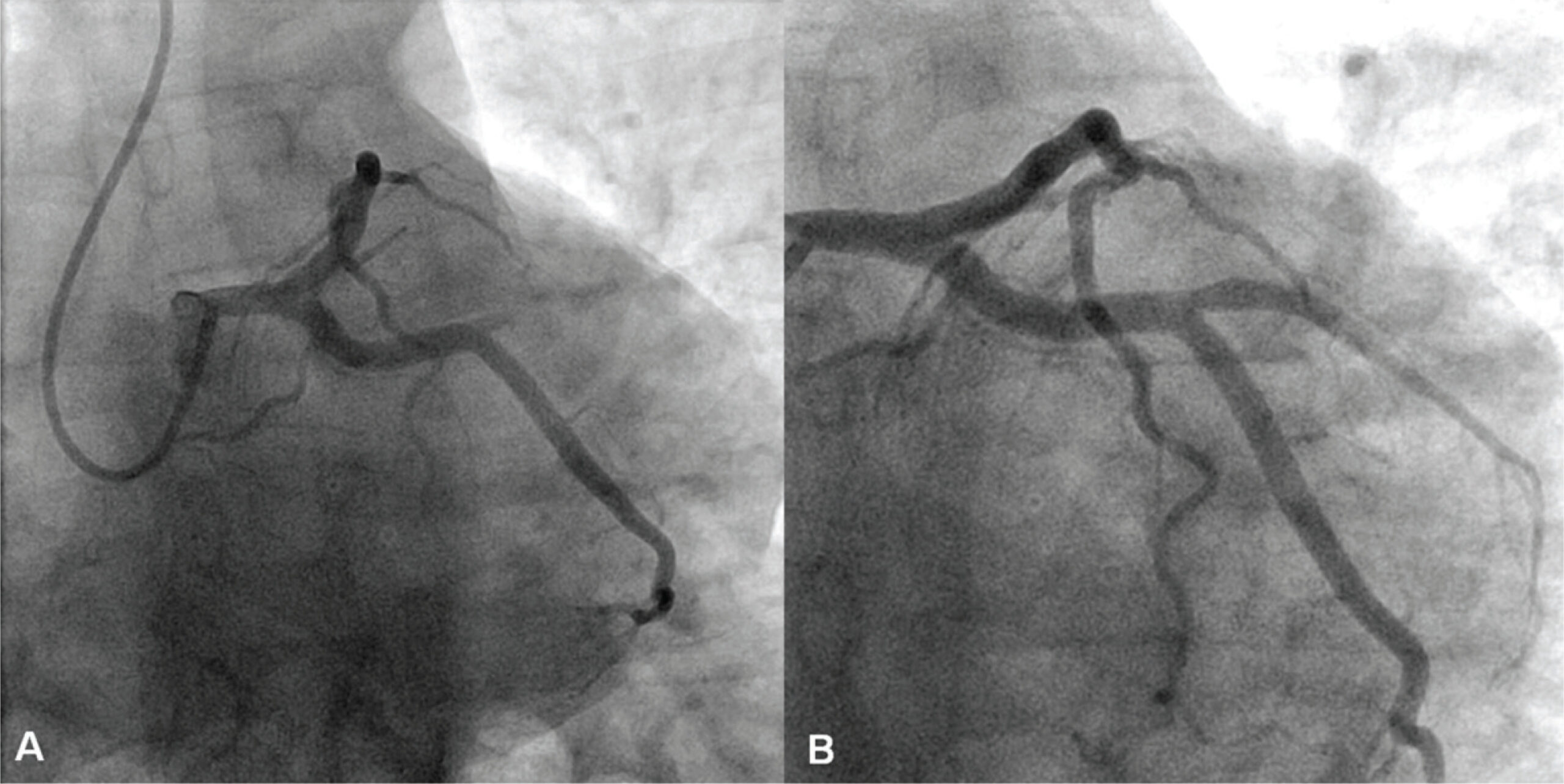
Acute Myocardial Infarction as the Initial Clinical Manifestation of Pernicious Anemia

Leonardo Marostica Alves Silva et al. Assis Xavier da Silva Barros Junior João Antonio de Toledo Galina Alexandre Rodrigues … Igor Ribeiro de Castro Bienert Pedro Beraldo de Andrade

Introduction

Despite its lower prevalence in young individuals, acute myocardial infarction (AMI) causes significant morbidity and socioeconomic impact when occurs in this group. In 2010, considering only the hospitals accredited by the Brazilian Unified Health System, there were 8,368 hospitalizations and 2,556 deaths from ischemic heart diseases among patients younger than 40 years. Although hospitalization rates are lower at this age range, the importance of this theme lies mainly in the absolute numbers of cases.

Acute coronary syndrome (ACS) in young patients has characteristics that differ from older patients. Although coronary atherosclerotic disease is a common cause, the prevalence of AMI without obstruction in the coronary arteries is higher among the young. Among the causes of AMI without atheromatous disease, thromboembolism is a differential diagnosis, with hypercoagulability correlated with formation of coronary embolism. Thus, it is important to identify alternative etiologies in the approach of AMI in young patients since modifiable factors can be diagnosed and treated. In this article, we present a case in which an autoimmune disease may be the cause of ACS in a young patient with few attributable risk factors for cardiovascular disease.

[…]
  • Anemia, Pericious
  • homocysteine
  • Mortality & Morbidity
  • Myocardial Infarction/economics
  • Percutaneous Coronary Intervention/economics
Read Full Article
Creative Commons Attribution (CC BY) Creative Commons license
12/03/2021 DOI: 10.36660/ijcs.20190039 Views 1
ABC
Artigo Original

Homocysteine and MTHFR and VEGF gene polymorphisms: impact on coronary artery disease

Alexandre Rodrigues Guerzoni et al. Patrícia Matos Biselli Moacir Fernandes de Godoy Doroteia Rossi Silva Souza … Renato Haddad Marcos Nogueira Eberlin Erika Cristina Pavarino-Bertelli Eny Maria Goloni-Bertollo

BACKGROUND: Polymorphisms in genes involved in the atherosclerosis development, angiogenesis, and homocysteine (Hcy) metabolism could be risk factors for coronary artery disease (CAD). OBJECTIVE: To evaluate the effect of the VEGF C-2578A and MTHFR C677T polymorphisms on CAD, and the association of these polymorphisms with the severity and extension of atherosclerotic lesions and Hcy concentrations. METHODS: Two hundred and forty-four subjects were evaluated by coronary angiography and included in the study (145 with CAD and 99 controls). The VEGF C-2578A and MTHFR C677T polymorphisms were investigated by the PCR-SSCP and PCR-RFLP techniques, respectively. Plasma Hcy was quantified by liquid chromatography/sequential mass spectrometry (LC-MS/MS). RESULTS: There was no significant difference in allele and genotype distribution between the groups, for both polymorphisms. The univariate analysis showed a higher frequency of the VEGF -2578AA genotype in the group with three-vessel disease (p=0.044). In addition, the VEGF -2578CA genotype was observed more frequently among individuals with <95% stenosis (p=0.010). After adjustment for other risk factors for CAD in a multivariate model, the VEGF C-2578A polymorphism was not found to be an independent correlate of CAD (p=0.688). The MTHFR polymorphism did not show any association with the extension and/or severity of the CAD. The MTHFR C677T polymorphism showed no direct association with hyperhomocysteinemia or increased mean plasma concentrations of Hcy. CONCLUSION: Although there is an apparent association between VEGF C-2578A and the development of coronary atherosclerosis, this association is not independent of conventional cardiovascular risk factors.

  • Atherosclerosis
  • Coronary Artery Disease
  • homocysteine
  • Polymorphism, Genetic
Read Full Article
Creative Commons Attribution (CC BY) Creative Commons license
23/06/2009 DOI: 10.1590/S0066-782X2009000400003
Homocysteine, folate and vitamin B12 in colombian patients with coronary disease
ABC
Artigo Original

Homocysteine, folate and vitamin B12 in colombian patients with coronary disease

Gilberto Garcia et al. Juanita Trejos Beatriz Restrepo Patricia Landázuri

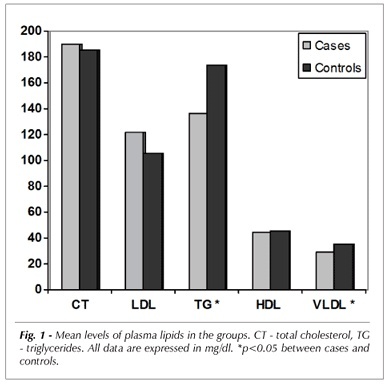
OBJECTIVE: To determine the occurrence of association between homocysteine, folate, or vitamin B12 plasma levels and acute coronary syndrome in Colombian patients. METHODS: Case control study: cases were 50 patients with acute coronary syndrome and controls were 50 outpatients without coronary syndrome. Homocysteine, folate and vitamin B12 levels were determined by means of chemiluminescence immunoassay. Cholesterol and lipoproteins, triglycerides, BUN, creatinine, hemoglobin and hematocrit were also measured. RESULTS: Mean homocysteine plasma concentrations were significantly different between cases (12.4 µmol/l ± 6.0) and controls (9.7 µmol/l ± 2.4), p=0.01. The folic acid levels of the cases were lower than those of the control patients (10.5 ng/ml ± 3.5 vs 12.6 ng/ml ± 3.6, respectively, p=0.01). An inverse relationship was found between folate and homocysteine levels. No relationship was observed between vitamin B12 levels and homocysteine levels. There was a significant difference in triglyceride levels between case and control groups (136.91 ± 67.27 vs 174.3 ± 77.6, respectively, p=0.01). The odds ratio for hyperhomocysteinemia in acute coronary syndrome was 4.45 (95% confidence interval: 1.5 – 13.3). CONCLUSION: The present study found a significant association between homocysteine levels and acute coronary syndrome in Colombian patients, similarly to the European and North American populations. There was a negative correlation between homocysteine plasma levels and folate levels. No association between plasmatic levels of homocysteine and those of vitamin B12 was observed.

  • Coronary Disease
  • folate
  • homocysteine
  • Lipids
  • pteroypolyglutamic acids
  • vitamin B12
Read Full Article
Creative Commons Attribution (CC BY) Creative Commons license
05/09/2007 DOI: 10.1590/S0066-782X2007001400002 Views 1
Total plasmatic homocysteine and von Willebrand factor in experimental diabetes mellitus
ABC
Artigo Original

Total plasmatic homocysteine and von Willebrand factor in experimental diabetes mellitus

Renato Delascio Lopes et al. Lindalva Batista Neves Vânia D'Almeida Gleice Margarete de Souza Conceição Alexandre Gabriel Junior

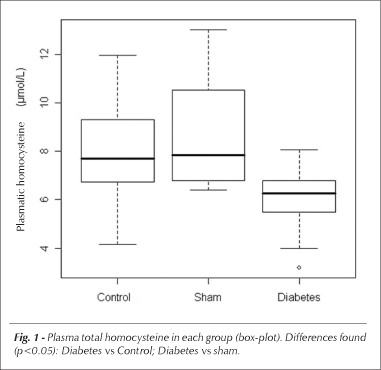
OBJECTIVES: To determine the plasma homocysteine and von Willebrand factor levels as markers of endothelial dysfunction in rats with diabetes mellitus induced by streptozotocin. METHODS: Thirty-five adult male rats (Rattus norvegicus albinus) (weight between 180-200g) were randomized into three groups: control group (n=10), which received no drugs or vehicles; sham group (n=10), which received streptozotocin solution; and diabetic group (n=15), which received streptozotocin. Eight weeks after diabetes mellitus induction, the animals were weighed and anesthesized; blood samples were collected from abdominal aorta for plasma total homocysteine, von Willebrand factor and glucose levels. RESULTS: The experimental model was reproducible in 100% of animals. The mean plasma homocysteine levels were: 7.9 µmol/l (control), 8.6µmol/l (sham) and 6.1µmol/l (diabetic), with difference among the groups (p<0.01). Multiple comparison analysis among the groups showed that values in the diabetic group were lower than in the sham group (p<0.01). The mean von Willebrand factor values were 0.15 U/l (control), 0.16U/l (sham) and 0.18 U/l (diabetic), with difference among the groups (p=0.03). The mean value was higher in the diabetic group than in the control group (p<0.05). Correlation between homocysteine and von Willebrand factor was not observed in the diabetic group. CONCLUSION: Reduced homocysteine levels and increased von Willebrand factor levels were observed in diabetes mellitus induced by streptozotocin; nevertheless, there were no correlations between them and with final glucose levels.

  • Diabetes Mellitus
  • Epidemiology
  • Experimental
  • homocysteine
  • von Willebrand factor
Read Full Article
Creative Commons Attribution (CC BY) Creative Commons license
24/05/2007 DOI: 10.1590/S0066-782X2007000400010 Views 2
Homocysteine and methylenetetrahydrofolate reductase in subjects undergoing coronary angiography
ABC
Artigo Original

Homocysteine and methylenetetrahydrofolate reductase in subjects undergoing coronary angiography

Luciana Moreira Lima et al. Maria das Graças Carvalho Ana Paulo Fernandes Adriano de Paula Sabino … Andréia Assis Loures-Vale Cirilo Pereira da Fonseca Neto José Carlos Faria Garcia Jamil Abdala Saad Marinez Oliveira Sousa

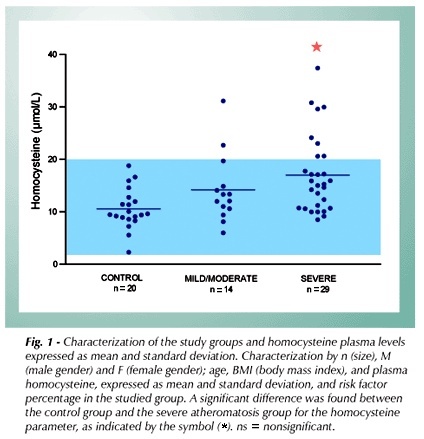
OBJECTIVE: To determine plasma homocysteine levels and the incidence of methylenetetrahydrofolate reductase (MTHFR) gene C677T polymorphism in a group of subjects who underwent coronary angiography, in an attempt to establish a correlation between these parameters and the severity of coronary artery disease (CAD), as well as investigate the correlation between hyperhomocysteinemia and the presence of polymorphism. METHODS: Twenty subjects with no coronary atheromatosis (controls), fourteen subjects with mild/moderate atheromatosis, and twenty-nine subjects with severe atheromatosis were evaluated. RESULTS: Significant differences were observed in mean homocysteine levels between the control and the severe atheromatosis groups (p < 0.001). No significant differences were observed among the other groups. The severe atheromatosis group showed rates of 62.0% and 6.9% for the C677T MTHFR gene polymorphism, in heterozygous and homozygous subjects, respectively. However, there was no correlation between the presence of mutation and hyperhomocysteinemia. A positive correlation of 41.91% (p 70%; yet, whether elevated plasma homocysteine worsens atherosclerosis or is a consequence remains to be established.

  • Coronary Angiography
  • homocysteine
  • methylenetetrahydrofolate reductase (MTHFR)
Read Full Article
Creative Commons Attribution (CC BY) Creative Commons license
20/03/2007 DOI: 10.1590/S0066-782X2007000200006 Views 1
Hyperhomocysteinemia as a risk factor for coronary atherosclerotic diseases in the elderly
ABC
Artigo Original

Hyperhomocysteinemia as a risk factor for coronary atherosclerotic diseases in the elderly

Claudia Felícia Gravina-Taddei et al. Michel Batlouni Camila Sarteschi Valéria T Baltar … Nívea A.C Salvarini Marcelo C Bertolami José Eduardo M. R Sousa

OBJECTIVE: To investigate whether hyperhomocysteinemia is an independent risk factor for atherosclerotic disease in elderly individuals METHODS: A case-control study with 172 elderly individuals, 88 belonging to control group and 84 to case group, who showed coronary angiography requested for clinical indications. Quantitative coronary angiography was performed in 91% of the patients. Homocysteinemia was assessed in a continuous and categorized way, through univariate and multivariate analysis. RESULTS: When analyzed continuously, in univariate analysis, it was verified that case group elderly individuals showed an average homocysteinemia levels significantly higher than the control group individuals’ (14.33±4.59 µmol/l against 11.99±4.59 µmol/l, p=0.015). In multivariate analysis, continuous homocysteinemia was associated to the risk rate for coronary artery disease of 1.07 for each 1 µmol/l increase of homocysteine level. Na increase of 5 µmol/l corresponded to the risk rate of 1.40. When analyzed in categorized way, the values found over percentile 75 of control group (14 µmol/l) were defined as hyperhomocysteinemia. Hyperhomocysteinemia was found in 34% of elderly individuals, being 37.3% in control group and 62.7% in case group (p= 0.009). In multivariate analysis, hyperhomocysteinemia constituted an independent risk factor for coronary atherosclerotic disease for elderly individuals, with a risk rate for coronary artery disease of 2.03, confidence interval 95%, 1.02-4.03. CONCLUSION: Hyperhomocysteinemia was an independent risk factor for coronary artery disease in elderly individuals.

  • Coronary Artery Disease
  • Elderly
  • homocysteine
  • hyperhomocysteinemia
  • octogenarian
  • Risk Factor
Read Full Article
Creative Commons Attribution (CC BY) Creative Commons license
10/10/2005 DOI: 10.1590/S0066-782X2005001600004
Analysis of Plasma Homocysteine Levels in Patients with Unstable Angina
ABC
Original Article

Analysis of Plasma Homocysteine Levels in Patients with Unstable Angina

José Roberto Tavares et al. Vânia D'Almeida Daniela C. Diniz Carolina A. Terzi … Edison N. Cruz Edson Stefanini Adagmar Andriollo Angelo A.V. de Paola Antonio C. Carvalho

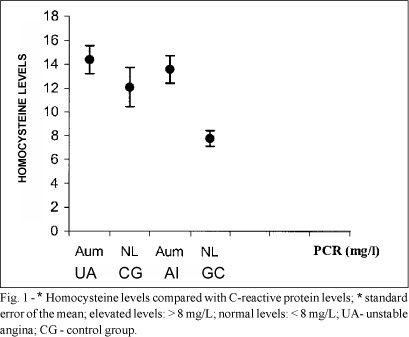
OBJECTIVE – To determine the prevalence of hyperhomocystinemia in patients with acute ischemic syndrome of the unstable angina type. METHODS – We prospectively studied 46 patients (24 females) with unstable angina and 46 control patients (19 males), paired by sex and age, blinded to the laboratory data. Details of diets, smoking habits, medication used, body mass index, and the presence of hypertension and diabetes were recorded, as were plasma lipid and glucose levels, C-reactive protein, and lipoperoxidation in all participants. Patients with renal disease were excluded. Plasma homocysteine was estimated using high-pressure liquid chromatography. RESULTS – Plasma homocysteine levels were significantly higher in the group of patients with unstable angina (12.7±6.7 µmol/L) than in the control group (8.7±4.4 µmol/L) (p<0.05). Among males, homocystinemia was higher in the group with unstable angina than in the control group, but this difference was not statistically significant (14.1±5.9 µmol/L versus 11.9±4.2 µmol/L). Among females, however, a statistically significant difference was observed between the 2 groups: 11.0±7.4 µmol/L versus 6.4±2.9 µmol/L (p<0.05) in the unstable angina and control groups, respectively. Approximately 24% of the patients had unstable angina at homocysteine levels above 15 µmol/L. CONCLUSION – High homocysteine levels seem to be a relevant prevalent factor in the population with unstable angina, particularly among females.

  • acute ischemic syndrome
  • homocysteine
  • Unstable Angina
Read Full Article
Creative Commons Attribution (CC BY) Creative Commons license
10/09/2002 DOI: 10.1590/S0066-782X2002001100008 Views 1

How to cite this article

EndNote RIS

Electronic Document Format (Vancouver)

Silva LMA, Barros Junior AXS, Galina JAT, Rodrigues A, Bienert IRC, Andrade PB. Acute Myocardial Infarction as the Initial Clinical Manifestation of Pernicious Anemia. International Journal of Cardiovascular Sciences 2021;34(2):236-9.

Electronic Document Format (ABNT)

Silva, Leonardo Marostica Alves; Barros Junior, Assis Xavier da Silva; Galina, João Antonio de Toledo; Rodrigues, Alexandre; Bienert, Igor Ribeiro de Castro; Andrade, Pedro Beraldo de. Acute Myocardial Infarction as the Initial Clinical Manifestation of Pernicious Anemia. International Journal of Cardiovascular Sciences, v. 34, n. 2, p. 236-239, Mar. 2021.

Electronic Document Format (APA)

Silva, L. M. A., Barros Junior, A. X. S., Galina, J. A. T., Rodrigues, A., Bienert, I. R. C., & Andrade, P. B. (2021). Acute Myocardial Infarction as the Initial Clinical Manifestation of Pernicious Anemia. International Journal of Cardiovascular Sciences, 34(2), 236-239.

Electronic Document Format (ISO)

Silva, Leonardo Marostica Alves and Barros Junior, Assis Xavier da Silva and Galina, João Antonio de Toledo and Rodrigues, Alexandre and Bienert, Igor Ribeiro de Castro and Andrade, Pedro Beraldo de. Acute Myocardial Infarction as the Initial Clinical Manifestation of Pernicious Anemia. International Journal of Cardiovascular Sciences [online]. 2021, vol. 34, n. 2, [cited 2026-10-14], pp. 236-239. Available from: <https://journals.cardiol.br/en/article/acute-myocardial-infarction-as-the-initial-clinical-manifestation-of-pernicious-anemia/>. ISSN 2359-4802

EndNote RIS

Electronic Document Format (Vancouver)

Guerzoni AR, Biselli PM, Godoy MF, Souza DRS, Haddad R, Eberlin MN, Pavarino-Bertelli EC, et al. Homocysteine and MTHFR and VEGF gene polymorphisms: impact on coronary artery disease. Arquivos Brasileiros de Cardiologia 2009;92(4):263-8.

Electronic Document Format (ABNT)

Guerzoni, Alexandre Rodrigues; Biselli, Patrícia Matos; Godoy, Moacir Fernandes de; Souza, Doroteia Rossi Silva; Haddad, Renato; Eberlin, Marcos Nogueira; Pavarino-Bertelli, Erika Cristina; Goloni-Bertollo, Eny Maria. Homocysteine and MTHFR and VEGF gene polymorphisms: impact on coronary artery disease. Arquivos Brasileiros de Cardiologia, v. 92, n. 4, p. 263-268, Jun. 2009.

Electronic Document Format (APA)

Guerzoni, A. R., Biselli, P. M., Godoy, M. F. , Souza, D. R. S., Haddad, R., Eberlin, M. N., Pavarino-Bertelli, E. C., & Goloni-Bertollo, E. M. (2009). Homocysteine and MTHFR and VEGF gene polymorphisms: impact on coronary artery disease. Arquivos Brasileiros de Cardiologia, 92(4), 263-268.

Electronic Document Format (ISO)

Guerzoni, Alexandre Rodrigues and Biselli, Patrícia Matos and Godoy, Moacir Fernandes de and Souza, Doroteia Rossi Silva and Haddad, Renato and Eberlin, Marcos Nogueira and Pavarino-Bertelli, Erika Cristina and Goloni-Bertollo, Eny Maria. Homocysteine and MTHFR and VEGF gene polymorphisms: impact on coronary artery disease. Arquivos Brasileiros de Cardiologia [online]. 2009, vol. 92, n. 4, [cited 2026-10-14], pp. 263-268. Available from: <https://journals.cardiol.br/en/article/homocysteine-and-mthfr-and-vegf-gene-polymorphisms-impact-on-coronary-artery-disease/>. ISSN 0066-782X

EndNote RIS

Electronic Document Format (Vancouver)

Garcia G, Trejos J, Restrepo B, Landázuri P. Homocysteine, folate and vitamin B12 in colombian patients with coronary disease. Arquivos Brasileiros de Cardiologia 2007;89(2):79-85.

Electronic Document Format (ABNT)

Garcia, Gilberto; Trejos, Juanita; Restrepo, Beatriz; Landázuri, Patricia. Homocysteine, folate and vitamin B12 in colombian patients with coronary disease. Arquivos Brasileiros de Cardiologia, v. 89, n. 2, p. 79-85, Sep. 2007.

Electronic Document Format (APA)

Garcia, G., Trejos, J., Restrepo, B., & Landázuri, P. (2007). Homocysteine, folate and vitamin B12 in colombian patients with coronary disease. Arquivos Brasileiros de Cardiologia, 89(2), 79-85.

Electronic Document Format (ISO)

Garcia, Gilberto and Trejos, Juanita and Restrepo, Beatriz and Landázuri, Patricia. Homocysteine, folate and vitamin B12 in colombian patients with coronary disease. Arquivos Brasileiros de Cardiologia [online]. 2007, vol. 89, n. 2, [cited 2026-10-14], pp. 79-85. Available from: <https://journals.cardiol.br/en/article/homocysteine-folate-and-vitamin-b12-in-colombian-patients-with-coronary-disease/>. ISSN 0066-782X

EndNote RIS

Electronic Document Format (Vancouver)

Lopes RD, Neves LB, D’Almeida V, Conceição GMS, Gabriel Junior A. Total plasmatic homocysteine and von Willebrand factor in experimental diabetes mellitus. Arquivos Brasileiros de Cardiologia 2007;88(4):424-9.

Electronic Document Format (ABNT)

Lopes, Renato Delascio; Neves, Lindalva Batista; D’Almeida, Vânia; Conceição, Gleice Margarete de Souza; Gabriel Junior, Alexandre. Total plasmatic homocysteine and von Willebrand factor in experimental diabetes mellitus. Arquivos Brasileiros de Cardiologia, v. 88, n. 4, p. 424-429, May. 2007.

Electronic Document Format (APA)

Lopes, R. D., Neves, L. B., D’Almeida, V., Conceição, G. M. S., & Gabriel Junior, A. (2007). Total plasmatic homocysteine and von Willebrand factor in experimental diabetes mellitus. Arquivos Brasileiros de Cardiologia, 88(4), 424-429.

Electronic Document Format (ISO)

Lopes, Renato Delascio and Neves, Lindalva Batista and D’Almeida, Vânia and Conceição, Gleice Margarete de Souza and Gabriel Junior, Alexandre. Total plasmatic homocysteine and von Willebrand factor in experimental diabetes mellitus. Arquivos Brasileiros de Cardiologia [online]. 2007, vol. 88, n. 4, [cited 2026-10-14], pp. 424-429. Available from: <https://journals.cardiol.br/en/article/total-plasmatic-homocysteine-and-von-willebrand-factor-in-experimental-diabetes-mellitus/>. ISSN 0066-782X

EndNote RIS

Electronic Document Format (Vancouver)

Lima LM, Carvalho MG, Fernandes AP, Sabino AP, Loures-Vale AA, Fonseca Neto CP, Garcia JCF, et al. Homocysteine and methylenetetrahydrofolate reductase in subjects undergoing coronary angiography. Arquivos Brasileiros de Cardiologia 2007;88(2):167-72.

Electronic Document Format (ABNT)

Lima, Luciana Moreira; Carvalho, Maria das Graças; Fernandes, Ana Paulo; Sabino, Adriano de Paula; Loures-Vale, Andréia Assis; Fonseca Neto, Cirilo Pereira da; Garcia, José Carlos Faria; Saad, Jamil Abdala; Sousa, Marinez Oliveira. Homocysteine and methylenetetrahydrofolate reductase in subjects undergoing coronary angiography. Arquivos Brasileiros de Cardiologia, v. 88, n. 2, p. 167-172, Mar. 2007.

Electronic Document Format (APA)

Lima, L. M., Carvalho, M. G., Fernandes, A. P., Sabino, A. P., Loures-Vale, A. A., Fonseca Neto, C. P. , Garcia, J. C. F., Saad, J. A., & Sousa, M. O. (2007). Homocysteine and methylenetetrahydrofolate reductase in subjects undergoing coronary angiography. Arquivos Brasileiros de Cardiologia, 88(2), 167-172.

Electronic Document Format (ISO)

Lima, Luciana Moreira and Carvalho, Maria das Graças and Fernandes, Ana Paulo and Sabino, Adriano de Paula and Loures-Vale, Andréia Assis and Fonseca Neto, Cirilo Pereira da and Garcia, José Carlos Faria and Saad, Jamil Abdala and Sousa, Marinez Oliveira. Homocysteine and methylenetetrahydrofolate reductase in subjects undergoing coronary angiography. Arquivos Brasileiros de Cardiologia [online]. 2007, vol. 88, n. 2, [cited 2026-10-14], pp. 167-172. Available from: <https://journals.cardiol.br/en/article/homocysteine-and-methylenetetrahydrofolate-reductase-in-subjects-undergoing-coronary-angiography/>. ISSN 0066-782X

EndNote RIS

Electronic Document Format (Vancouver)

Gravina-Taddei CF, Batlouni M, Sarteschi C, Baltar VT, Salvarini NA, Bertolami MC, Sousa JEMR, et al. Hyperhomocysteinemia as a risk factor for coronary atherosclerotic diseases in the elderly. Arquivos Brasileiros de Cardiologia 2005;85(3):166-73.

Electronic Document Format (ABNT)

Gravina-Taddei, Claudia Felícia; Batlouni, Michel; Sarteschi, Camila; Baltar, Valéria T; Salvarini, Nívea A.C; Bertolami, Marcelo C; Sousa, José Eduardo M. R. Hyperhomocysteinemia as a risk factor for coronary atherosclerotic diseases in the elderly. Arquivos Brasileiros de Cardiologia, v. 85, n. 3, p. 166-173, Oct. 2005.

Electronic Document Format (APA)

Gravina-Taddei, C. F., Batlouni, M., Sarteschi, C., Baltar, V. T., Salvarini, N. A., Bertolami, M. C., & Sousa, J. E. M. R. (2005). Hyperhomocysteinemia as a risk factor for coronary atherosclerotic diseases in the elderly. Arquivos Brasileiros de Cardiologia, 85(3), 166-173.

Electronic Document Format (ISO)

Gravina-Taddei, Claudia Felícia and Batlouni, Michel and Sarteschi, Camila and Baltar, Valéria T and Salvarini, Nívea A.C and Bertolami, Marcelo C and Sousa, José Eduardo M. R. Hyperhomocysteinemia as a risk factor for coronary atherosclerotic diseases in the elderly. Arquivos Brasileiros de Cardiologia [online]. 2005, vol. 85, n. 3, [cited 2026-10-14], pp. 166-173. Available from: <https://journals.cardiol.br/en/article/hyperhomocysteinemia-as-a-risk-factor-for-coronary-atherosclerotic-diseases-in-the-elderly/>. ISSN 0066-782X

EndNote RIS

Electronic Document Format (Vancouver)

Tavares JR, D’Almeida V, Diniz DC, Terzi CA, Cruz EN, Stefanini E, Andriollo A, et al. Analysis of Plasma Homocysteine Levels in Patients with Unstable Angina. Arquivos Brasileiros de Cardiologia 2002;79(2):167-72.

Electronic Document Format (ABNT)

Tavares, José Roberto; D’Almeida, Vânia; Diniz, Daniela C.; Terzi, Carolina A.; Cruz, Edison N.; Stefanini, Edson; Andriollo, Adagmar; Paola, Angelo A.V. de; Carvalho, Antonio C.. Analysis of Plasma Homocysteine Levels in Patients with Unstable Angina. Arquivos Brasileiros de Cardiologia, v. 79, n. 2, p. 167-172, Sep. 2002.

Electronic Document Format (APA)

Tavares, J. R., D’Almeida, V., Diniz, D. C., Terzi, C. A., Cruz, E. N., Stefanini, E., Andriollo, A., Paola, A. A. , & Carvalho, A. C. (2002). Analysis of Plasma Homocysteine Levels in Patients with Unstable Angina. Arquivos Brasileiros de Cardiologia, 79(2), 167-172.

Electronic Document Format (ISO)

Tavares, José Roberto and D’Almeida, Vânia and Diniz, Daniela C. and Terzi, Carolina A. and Cruz, Edison N. and Stefanini, Edson and Andriollo, Adagmar and Paola, Angelo A.V. de and Carvalho, Antonio C.. Analysis of Plasma Homocysteine Levels in Patients with Unstable Angina. Arquivos Brasileiros de Cardiologia [online]. 2002, vol. 79, n. 2, [cited 2026-10-14], pp. 167-172. Available from: <https://journals.cardiol.br/en/article/analysis-of-plasma-homocysteine-levels-in-patients-with-unstable-angina/>. ISSN 0066-782X

  • About ABC Family
  • Internal Regulation
  • Editorial Board
  • Brazilian Society of Cardiology (SBC)

Issues

SBC Guidelines

  • Videos
  • Podcasts
  • News