ABC Family Arquivos Brasileiros de Cardiologia International Journal of Cardiovascular Sciences ABC Heart Failure & Cardiomyopathy ABC Imagem Cardiovascular
Português English
ABC Family
Português English
  • About
    • About ABC Family
    • Internal Regulation
    • Editorial Board
    • Brazilian Society of Cardiology (SBC)
  • Issues
  • SBC Guidelines
  • Content
    • Videos
    • Podcasts
    • News
  • About
    • About ABC Family
    • Internal Regulation
    • Editorial Board
    • Brazilian Society of Cardiology (SBC)
  • Issues
  • SBC Guidelines
  • Content
    • Videos
    • Podcasts
    • News

ABC Family

  • ABC Family
  • Arquivos Brasileiros de Cardiologia
  • International Journal of Cardiovascular Sciences
  • ABC Heart Failure & Cardiomyopathy
  • ABC Imagem Cardiovascular
Search in

No content found.

Journals
Ordering
Article types
Others

  1. Home
  2. Keyword: Rabbits
Figure 1
IJCS
Original Article

Decrease in the Inflammatory Marker TNF-α after Consumption of Flaxseed by Hypercholesterolemic Rabbits

Maynara Leonardi Schuh Martins et al. Aniely Bacelar Rocco de Lima Ana Flavia Champoski Pamela Cristiani Pereira … Fernando Martins Carlos Tanizawa Leonardo Précoma Patrícia Campelo Luiz César Guarita-Souza Dalton Bertolim Précoma

Abstract

Background:

Functional foods such as flaxseed have been commonly consumed to prevent atherosclerosis.

Objectives:

To assess the effects of flaxseed in atherogenesis in rabbits consuming a high-cholesterol diet.

Methods:

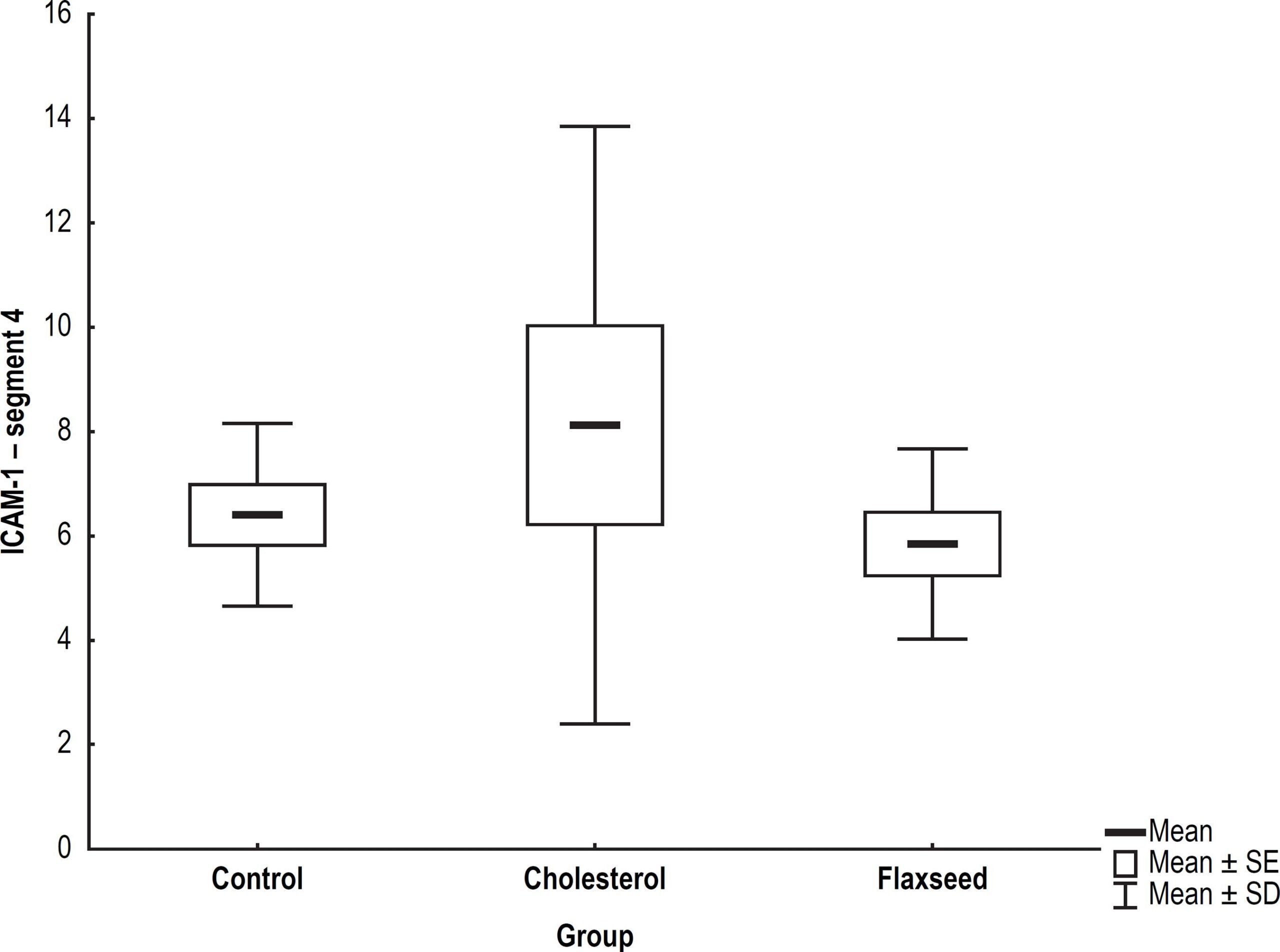
Thirty male albino rabbits were randomized to three groups based on a 12-week dietary treatment: control group (G1), standard diet; high-cholesterol diet (G2), standard diet plus 0.25% cholesterol from lyophilized eggs; and high-cholesterol plus flaxseed (G3), similar diet as G2 plus flaxseed. Biochemical (total cholesterol [TC], high-density lipoprotein [HDL-C], low-density lipoprotein cholesterol [LDL-C], and triglycerides) and immunohistochemical (intercellular adhesion molecule 1 [ICAM-1] and tumor necrosis factor alpha [TNF-α]) analyses were performed in all groups. P values < 0.05 indicated statistical significance.

Results:

At 12 weeks, serum TC levels increased significantly in G2 and G3 compared with G1. Serum LDL-C levels were higher in group G2, and the increase in group G3 was approximately six times lower than that in G2. HDL-C levels increased in all groups, with the highest increase observed in G2. Triglycerides levels in G3 decreased by ~70% and differed significantly in G1 and G3 (p = 0.034) and G2 and G3 (p = 0.015). ICAM-1 levels increased only in aortic segment 4 in G3. TNF-α levels in G3 were similar to those in the control group, while the levels in G2 were greater than twice as those in the control group (p < 0.05).

Conclusions: The group fed with a functional diet (flaxseed) showed decreased development of atherosclerosis, reduced serum triglycerides levels, and lower TNF-α levels on immunohistochemistry.
  • Atherosclerosis / prevention & control
  • Cholesterol, Diet
  • Diet, Atherogenic
  • Flax / seeds
  • Obesity, Sedentary Lifestyle
  • Rabbits
Read Full Article
Creative Commons Attribution (CC BY) Creative Commons license
01/01/2018 DOI: 10.5935/2359-4802.20180002
Figure 1
ABC
Original Article

Effect of Pitavastatin on Vascular Reactivity in Hypercholesterolemic Rabbits

Eros Antonio de Almeida et al. Michiko Regina Ozaki

Background:

Pitavastatin is the newest statin available in Brazil and likely the one with fewer side effects. Thus, pitavastatin was evaluated in hypercholesterolemic rabbits in relation to its action on vascular reactivity.

Objective:

To assess the lowest dose of pitavastatin necessary to reduce plasma lipids, cholesterol and tissue lipid peroxidation, as well as endothelial function in hypercholesterolemic rabbits.

Methods:

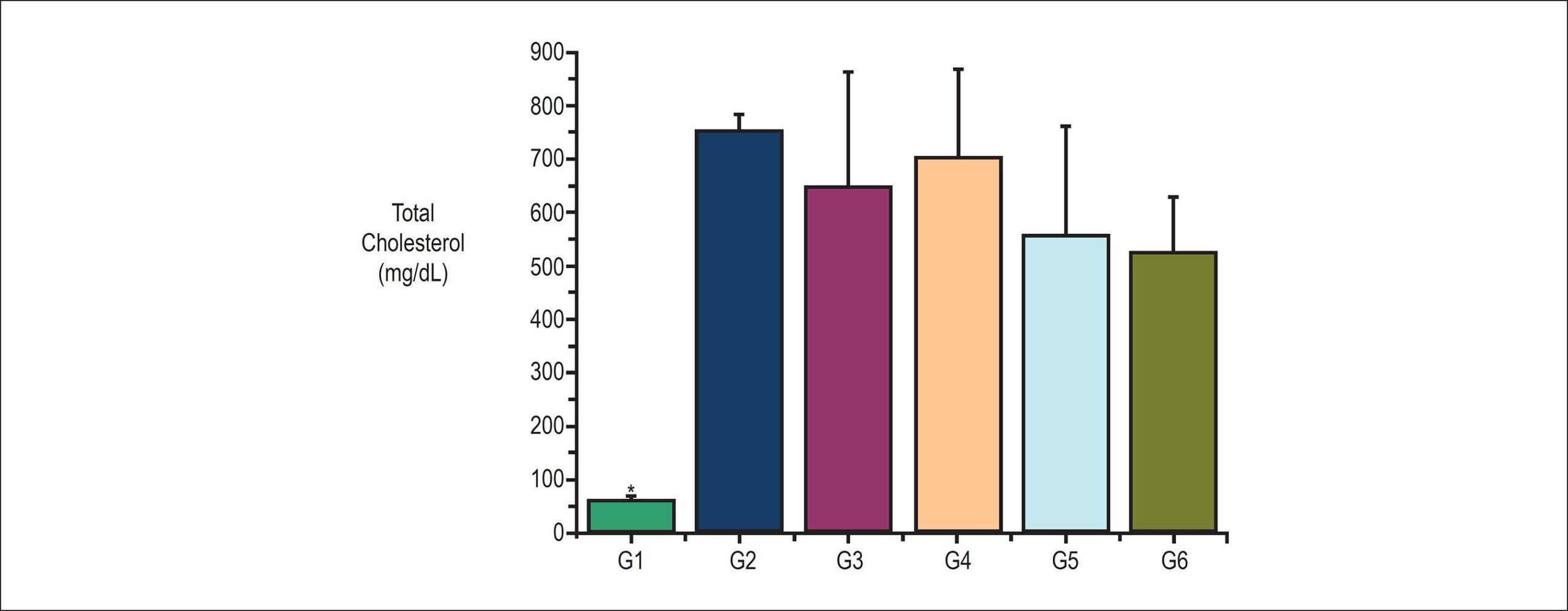
Thirty rabbits divided into six groups (n = 5): G1 – standard chow diet; G2 – hypercholesterolemic diet for 30 days; G3 – hypercholesterolemic diet and after the 16th day, diet supplemented with pitavastatin (0.1 mg); G4 – hypercholesterolemic diet supplemented with pitavastatin (0.25 mg); G5 – hypercholesterolemic diet supplemented with pitavastatin (0.5 mg); G6 – hypercholesterolemic diet supplemented with pitavastatin (1.0 mg). After 30 days, total cholesterol, HDL, triglycerides, glucose, creatine kinase (CK), aspartate aminotransferase (AST), alanine aminotransferase (ALT) were measured and LDL was calculated. In-depth anesthesia was performed with sodium thiopental and aortic segments were removed to study endothelial function, cholesterol and tissue lipid peroxidation. The significance level for statistical tests was 5%.

Results:

Total cholesterol and LDL were significantly elevated in relation to G1. HDL was significantly reduced in G4, G5 and G6 when compared to G2. Triglycerides, CK, AST, ALT, cholesterol and tissue lipid peroxidation showed no statistical difference between G2 and G3-G6. Significantly endothelial dysfunction reversion was observed in G5 and G6 when compared to G2.

Conclusion:

Pitavastatin starting at a 0.5 mg dose was effective in reverting endothelial dysfunction in hypercholesterolemic rabbits.

  • endothelial dysfunction
  • Hydroxymethylglutaryl-CoA Reductase Inhibitors
  • Hypercholesterolemia
  • Rabbits
Read Full Article
Creative Commons Attribution (CC BY) Creative Commons license
09/07/2014 DOI: 10.5935/abc.20140090 Views 2
Experimental atherosclerosis in rabbits
ABC
Review Article

Experimental atherosclerosis in rabbits

Waleska C. Dornas et al. Tânia T. de Oliveira Luis E. Franklin Augusto Tanus J. Nagem

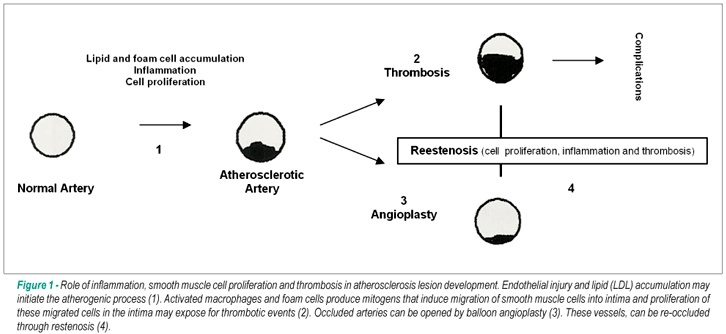
Many researches have been conducted in experimental models in order to study the development of atherosclerosis from hyperlipidemia-inducing diets. Since rabbits are very sensitive to cholesterol-rich diets and accumulate large amounts of cholesterol in their plasma, their use as experimental models to evaluate the development of atherosclerosis is highly relevant and brings information on factors that contribute to the progression and regression of this condition that can be applied to humans. As such, this review includes studies on the atherogenic function of cholesterol based on rabbits as the experimental model, since they have become the most largely used experimental model of atherosclerosis.

  • Atherosclerosis
  • Cholesterol
  • Hypercholesterolemia
  • Rabbits
Read Full Article
Creative Commons Attribution (CC BY) Creative Commons license
10/09/2010 DOI: 10.1590/S0066-782X2010001200020 Views 2
Rosiglitazone and vascular injury in hypercholesterolemic rabbits: neointimal formation assessment
ABC
Artigo Original

Rosiglitazone and vascular injury in hypercholesterolemic rabbits: neointimal formation assessment

Alexandre Alessi et al. Olímpio Ribeiro França Neto Camila Prim Ruy Fernando Kuenzer Caetano da Silva … Lucia de Noronha Paulo Roberto Slud Brofman Liz Andréa Villela Baroncini Dalton Bertolim Précoma

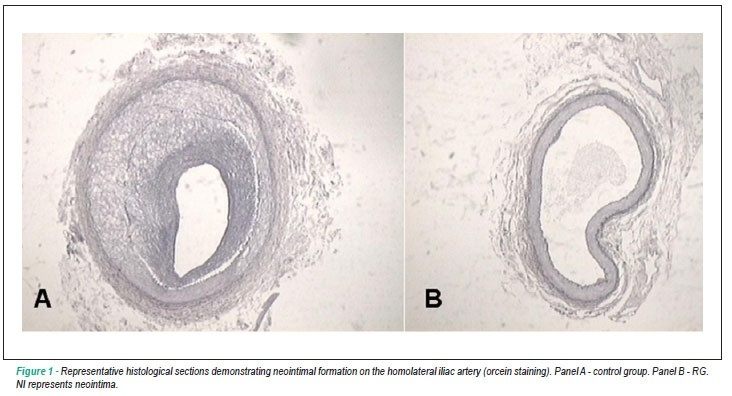
BACKGROUND: Rosiglitazone has been the focus of extensive discussion. OBJECTIVE: To evaluate the effects of rosiglitazone on iliac arteries, both at the injury site and the contralateral artery, of hypercholesterolemic rabbits undergoing balloon catheter injury. METHODS: White male rabbits were fed a hypercholesterolemic diet by oral gavage for 6 weeks and divided into two groups as follows: rosiglitazone group (14 rabbits treated with rosiglitazone during 6 weeks) and the control group (18 rabbits without rosiglitazone). Animals underwent balloon catheter injury of the right iliac artery on the 14th day. RESULTS: In the contralateral iliac artery, there was no significant difference in the intima/media layer area ratio (IMR) between the control and rosiglitazone groups. Rosiglitazone did not reduce the probability of type I, II, or III lesions (72.73% vs 92.31%; p=0.30) and type IV or V lesions (27.27% vs 7.69%; p=0.30). As for the homolateral iliac artery, the intimal area was significantly lower in the rosiglitazone group, as compared to the control group (p = 0.024). The luminal layer area was higher in the rosiglitazone group vs. the control group (p < 0.0001). There was a significant reduction of 65% in the IMR in the rosiglitazone group vs the control group (p = 0.021). None of the histological criteria for type I-V atherosclerotic lesions (American Heart Association) were found in the homolateral iliac artery. CONCLUSION: These findings demonstrate that rosiglitazone given for 6 weeks prevents atherogenesis at the injury site, but not in a vessel distant from the injury site.

  • Atherosclerosis
  • Hypercholesterolemia
  • Rabbits
  • rosiglitazone
Read Full Article
Creative Commons Attribution (CC BY) Creative Commons license
30/07/2010 DOI: 10.1590/S0066-782X2010005000101 Views 1

How to cite this article

EndNote RIS

Electronic Document Format (Vancouver)

Martins MLS, Lima ABR, Champoski AF, Pereira PC, Martins F, Tanizawa C, Précoma L, et al. Decrease in the Inflammatory Marker TNF-α after Consumption of Flaxseed by Hypercholesterolemic Rabbits. International Journal of Cardiovascular Sciences 2018;31(2):114-22.

Electronic Document Format (ABNT)

Martins, Maynara Leonardi Schuh; Lima, Aniely Bacelar Rocco de; Champoski, Ana Flavia; Pereira, Pamela Cristiani; Martins, Fernando; Tanizawa, Carlos; Précoma, Leonardo; Campelo, Patrícia; Guarita-Souza, Luiz César; Précoma, Dalton Bertolim. Decrease in the Inflammatory Marker TNF-α after Consumption of Flaxseed by Hypercholesterolemic Rabbits. International Journal of Cardiovascular Sciences, v. 31, n. 2, p. 114-122, Dec. 2017.

Electronic Document Format (APA)

Martins, M. L. S., Lima, A. B. R. , Champoski, A. F., Pereira, P. C., Martins, F., Tanizawa, C., Précoma, L., Campelo, P., Guarita-Souza, L. C., & Précoma, D. B. (2018). Decrease in the Inflammatory Marker TNF-α after Consumption of Flaxseed by Hypercholesterolemic Rabbits. International Journal of Cardiovascular Sciences, 31(2), 114-122.

Electronic Document Format (ISO)

Martins, Maynara Leonardi Schuh and Lima, Aniely Bacelar Rocco de and Champoski, Ana Flavia and Pereira, Pamela Cristiani and Martins, Fernando and Tanizawa, Carlos and Précoma, Leonardo and Campelo, Patrícia and Guarita-Souza, Luiz César and Précoma, Dalton Bertolim. Decrease in the Inflammatory Marker TNF-α after Consumption of Flaxseed by Hypercholesterolemic Rabbits. International Journal of Cardiovascular Sciences [online]. 2018, vol. 31, n. 2, [cited 2026-10-14], pp. 114-122. Available from: <https://journals.cardiol.br/en/article/decrease-in-the-inflammatory-marker-tnf-%ce%b1-after-consumption-of-flaxseed-by-hypercholesterolemic-rabbits/>. ISSN 2359-4802

EndNote RIS

Electronic Document Format (Vancouver)

Almeida EA, Ozaki MR. Effect of Pitavastatin on Vascular Reactivity in Hypercholesterolemic Rabbits. Arquivos Brasileiros de Cardiologia 2014;103(1):4-12.

Electronic Document Format (ABNT)

Almeida, Eros Antonio de; Ozaki, Michiko Regina. Effect of Pitavastatin on Vascular Reactivity in Hypercholesterolemic Rabbits. Arquivos Brasileiros de Cardiologia, v. 103, n. 1, p. 4-12, Jul. 2014.

Electronic Document Format (APA)

Almeida, E. A. , & Ozaki, M. R. (2014). Effect of Pitavastatin on Vascular Reactivity in Hypercholesterolemic Rabbits. Arquivos Brasileiros de Cardiologia, 103(1), 4-12.

Electronic Document Format (ISO)

Almeida, Eros Antonio de and Ozaki, Michiko Regina. Effect of Pitavastatin on Vascular Reactivity in Hypercholesterolemic Rabbits. Arquivos Brasileiros de Cardiologia [online]. 2014, vol. 103, n. 1, [cited 2026-10-14], pp. 4-12. Available from: <https://journals.cardiol.br/en/article/effect-of-pitavastatin-on-vascular-reactivity-in-hypercholesterolemic-rabbits/>. ISSN 0066-782X

EndNote RIS

Electronic Document Format (Vancouver)

Dornas WC, Oliveira TT, Augusto LEF, Nagem TJ. Experimental atherosclerosis in rabbits. Arquivos Brasileiros de Cardiologia 2010;95(2):272-8.

Electronic Document Format (ABNT)

Dornas, Waleska C.; Oliveira, Tânia T. de; Augusto, Luis E. Franklin; Nagem, Tanus J.. Experimental atherosclerosis in rabbits. Arquivos Brasileiros de Cardiologia, v. 95, n. 2, p. 272-278, Sep. 2010.

Electronic Document Format (APA)

Dornas, W. C., Oliveira, T. T. , Augusto, L. E. F., & Nagem, T. J. (2010). Experimental atherosclerosis in rabbits. Arquivos Brasileiros de Cardiologia, 95(2), 272-278.

Electronic Document Format (ISO)

Dornas, Waleska C. and Oliveira, Tânia T. de and Augusto, Luis E. Franklin and Nagem, Tanus J.. Experimental atherosclerosis in rabbits. Arquivos Brasileiros de Cardiologia [online]. 2010, vol. 95, n. 2, [cited 2026-10-14], pp. 272-278. Available from: <https://journals.cardiol.br/en/article/experimental-atherosclerosis-in-rabbits/>. ISSN 0066-782X

EndNote RIS

Electronic Document Format (Vancouver)

Alessi A, França Neto OR, Prim C, Silva RFKC, Noronha L, Brofman PRS, Baroncini LAV, et al. Rosiglitazone and vascular injury in hypercholesterolemic rabbits: neointimal formation assessment. Arquivos Brasileiros de Cardiologia 2010;95(3):283-8.

Electronic Document Format (ABNT)

Alessi, Alexandre; França Neto, Olímpio Ribeiro; Prim, Camila; Silva, Ruy Fernando Kuenzer Caetano da; Noronha, Lucia de; Brofman, Paulo Roberto Slud; Baroncini, Liz Andréa Villela; Précoma, Dalton Bertolim. Rosiglitazone and vascular injury in hypercholesterolemic rabbits: neointimal formation assessment. Arquivos Brasileiros de Cardiologia, v. 95, n. 3, p. 283-288, Jul. 2010.

Electronic Document Format (APA)

Alessi, A., França Neto, O. R., Prim, C., Silva, R. F. K. C. , Noronha, L. , Brofman, P. R. S., Baroncini, L. A. V., & Précoma, D. B. (2010). Rosiglitazone and vascular injury in hypercholesterolemic rabbits: neointimal formation assessment. Arquivos Brasileiros de Cardiologia, 95(3), 283-288.

Electronic Document Format (ISO)

Alessi, Alexandre and França Neto, Olímpio Ribeiro and Prim, Camila and Silva, Ruy Fernando Kuenzer Caetano da and Noronha, Lucia de and Brofman, Paulo Roberto Slud and Baroncini, Liz Andréa Villela and Précoma, Dalton Bertolim. Rosiglitazone and vascular injury in hypercholesterolemic rabbits: neointimal formation assessment. Arquivos Brasileiros de Cardiologia [online]. 2010, vol. 95, n. 3, [cited 2026-10-14], pp. 283-288. Available from: <https://journals.cardiol.br/en/article/rosiglitazone-and-vascular-injury-in-hypercholesterolemic-rabbits-neointimal-formation-assessment/>. ISSN 0066-782X

  • About ABC Family
  • Internal Regulation
  • Editorial Board
  • Brazilian Society of Cardiology (SBC)

Issues

SBC Guidelines

  • Videos
  • Podcasts
  • News