Intermittent doses of statin in hemodialysis patients with spontaneous low LDL cholesterol levels
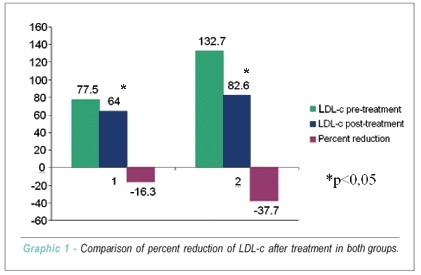
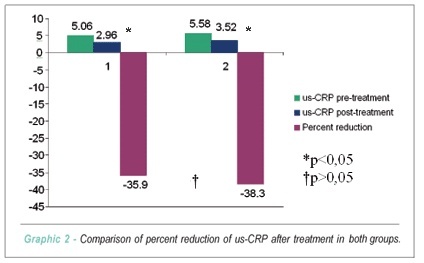
BACKGROUND: Mortality in dialysis patients remains high and is due mainly to cardiovascular causes. Inflammation has a role in the genesis of accelerated atherosclerosis, vascular calcification, malnutrition and anemia, and a huge impact on the survival of these patients. The pleiotropic effects of statins can be a therapeutic option for reducing chronic inflammatory processes of patients undergoing hemodialysis. OBJECTIVE: To evaluate the effects of low doses of simvastatin on inflammatory markers, hematimetric and nutritional parameters of patients undergoing hemodialysis. METHODS: Clinically-stable patients undergoing hemodialysis were classified according to their baseline LDL-cholesterol levels in two groups: those with levels below 100mg/dl (Group 1) and those with levels equal to or greater than 100mg/dl (Group-2), and were treated with simvastatin during eight weeks. Group 1 received 20mg only after each session of hemodialysis (intermittent dose), whereas Group 2 received 20mg/daily. Laboratory data, erythropoietin resistance index and nutritional parameters were obtained before and after treatment. RESULTS: A significant and equivalent reduction in C-reactive protein levels in both groups was observed (35.97±49.23% vs 38.32±32.69%, p=0.86). In group 1, there was also a tendency towards reduced resistance to erythropoietin (228.6±16.2 vs 208.9±16.2, p=0.058) and improvement of hematimetric parameters (hematocrit: 33.1±5.9% vs 36.1±4.5%, p=0.021). CONCLUSION: Intermittent doses proved to be as effective as the usual dose in reducing C-reactive protein levels and resistance to erythropoietin, besides improving the hematimetric parameters, indicating an important reduction of the cardiovascular risk evaluated by these parameters.
Images
Image gallery fullscreen viewer
Comments are moderated by the editorial team before publication. Discussions should be evidence-based and use scientific language. Conflicts of interest should be declared.