ABC Family Arquivos Brasileiros de Cardiologia International Journal of Cardiovascular Sciences ABC Heart Failure & Cardiomyopathy ABC Imagem Cardiovascular
Português English
ABC Family
Português English
  • About
    • About ABC Family
    • Internal Regulation
    • Editorial Board
    • Brazilian Society of Cardiology (SBC)
  • Issues
  • SBC Guidelines
  • Content
    • Videos
    • Podcasts
    • News
  • About
    • About ABC Family
    • Internal Regulation
    • Editorial Board
    • Brazilian Society of Cardiology (SBC)
  • Issues
  • SBC Guidelines
  • Content
    • Videos
    • Podcasts
    • News

ABC Family

  • ABC Family
  • Arquivos Brasileiros de Cardiologia
  • International Journal of Cardiovascular Sciences
  • ABC Heart Failure & Cardiomyopathy
  • ABC Imagem Cardiovascular
Search in

No content found.

Journals
Ordering
Article types
Others

  1. Home
  2. Keyword: Infarction
Comparison of Coronary Computed Tomography Angiography and Invasive Coronary Angiography in Nonobstructive Coronary Artery Disease: The Brazilian Coronary ARtery Disease (BARD) Study
ABC
Original Article

Comparison of Coronary Computed Tomography Angiography and Invasive Coronary Angiography in Nonobstructive Coronary Artery Disease: The Brazilian Coronary ARtery Disease (BARD) Study

Protásio Lemos Da Luz et al. Desiderio Favarato Alexandre A. Abizaid Luiz Antonio Machado César … Carlos Vicente Serrano Antônio Carlos Palandri Chagas Carlos E. Rochitte Marco A. Gutierrez

Abstract

Background

The prognosis of nonobstructive coronary artery disease (CAD) is not well established. Comparative data between coronary computed tomography angiography (CCTA) and invasive coronary angiography (ICA) are limited.

Objectives

To compare CCTA- and ICA-derived information in nonobstructive CAD regarding detection and clinical outcomes.

Methods

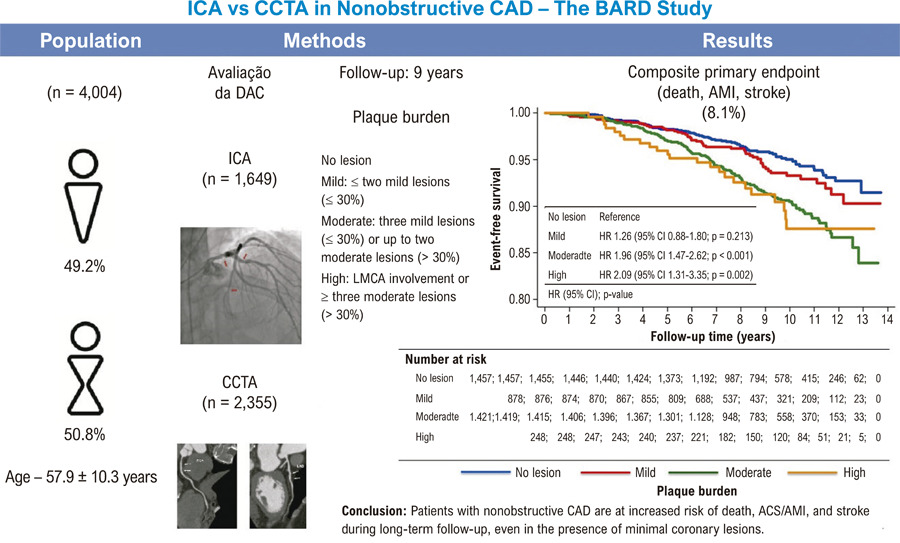
We followed 4,004 adult patients who underwent either ICA (n = 2,355) or CCTA (n = 1,649) for a median of 9 years. The primary endpoint was a composite of all-cause mortality, acute coronary syndrome/acute myocardial infarction, and stroke. Propensity score matching was performed to compare outcomes between groups. The significance level was set at 5%.

Results

The overall event rate was 6.9%. ICA was associated with worse outcomes than CCTA (hazard ratio [HR] 0.54; 95% CI 0.42-0.68; p < 0.001). Patients with nonobstructive CAD had worse outcomes than those without CAD (HR 1.73; 95% CI 1.32-2.27; p < 0.001). Normal coronary findings on CCTA were associated with better outcomes than normal findings on ICA (HR 0.39; 95% CI 0.24-0.62; p < 0.001). Event rates increased proportionally with plaque burden. In 1,187 matched pairs, CCTA was associated with improved survival (HR 0.57; 95% CI 0.42-0.78; p < 0.001).

Conclusion

CCTA more closely reflects clinical outcomes than ICA. Nonobstructive CAD carries a substantial risk regardless of imaging modality.
  • Atherosclerosis
  • Death
  • Diagosis
  • Infarction
  • Ischemia
Read Full Article
Creative Commons Attribution (CC BY) Creative Commons license
01/05/2026 DOI: 10.36660/abc.20250702i
Figure 1
ABC
Editorial

Middle-Aged Women — A High-Risk Group for Post-Myocardial Infarction Mortality

Maria Antonieta Albanez A. de Medeiros Lopes et al. Mayara Viana Júlia Nóbrega Heitor N. Albanez A. de Medeiros Gláucia Maria Moraes de Oliveira

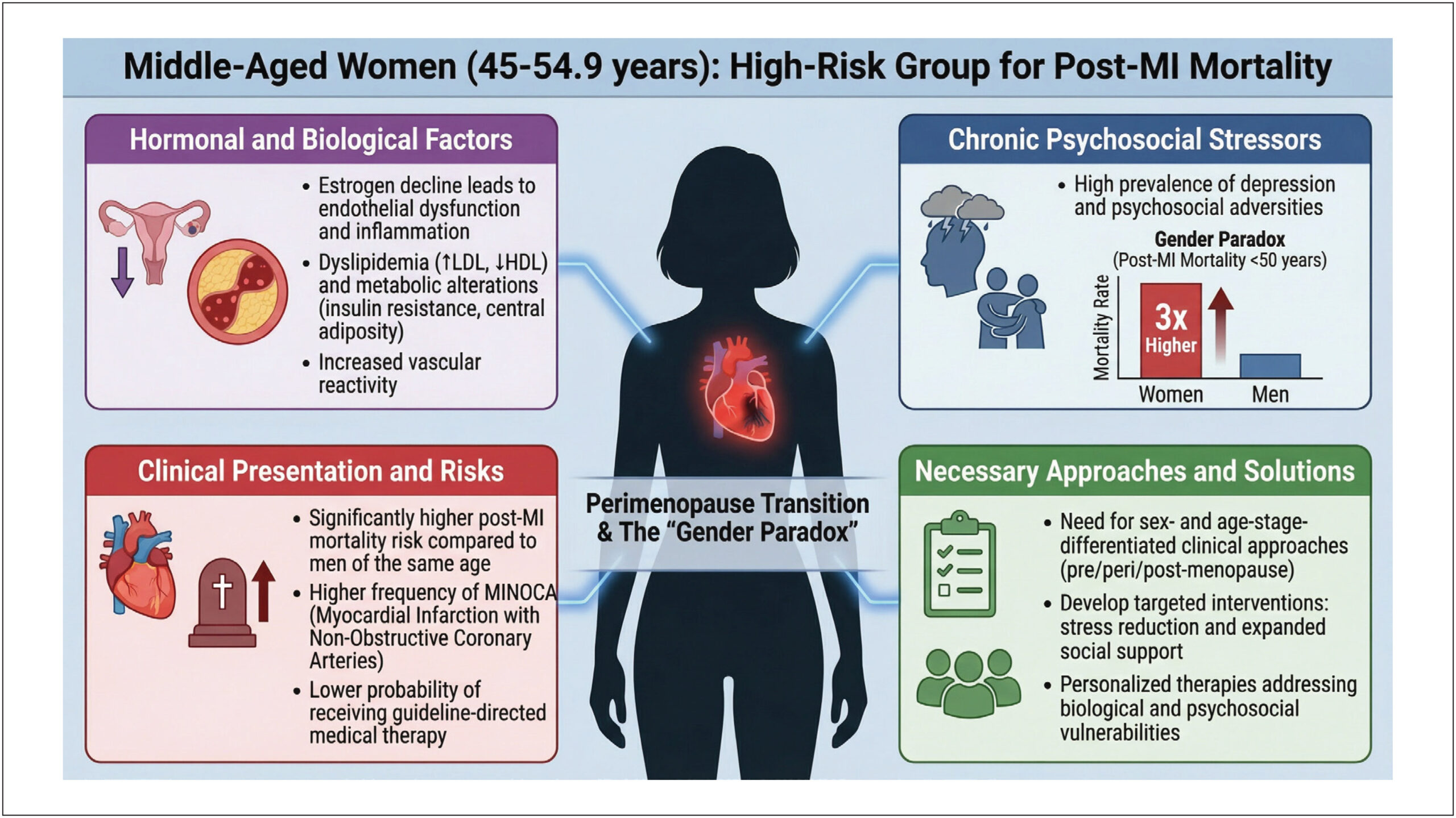
Cardiovascular diseases (CVD) remain the leading cause of death worldwide, with acute myocardial infarction (MI) accounting for significant morbidity and mortality. Despite substantial reductions in overall cardiovascular mortality, gender disparities persist, particularly affecting women in different demographic contexts. In this mini-editorial, we highlight recent evidence from an original study conducted in the Brazilian Unified Health System (SUS) in Curitiba, Brazil, which followed 4,896 patients hospitalized for acute MI between 2008 and 2015. This pioneering study demonstrated that middle-aged women (45 to 54.9 years) have a significantly higher risk of post-infarction mortality compared to men of the same age group, regardless of adjusted clinical factors. These data provide a critical warning about the need for differentiated, specific clinical approaches for this group (). The analysis of the Brazilian public cohort strengthens international evidence on the gender paradox in CVD. It reinforces the critical role of hormonal changes and psychosocial determinants in worsening the prognosis for women after MI. This contradicts the common assumption that women in this age group maintain natural cardiovascular protection, raising critical questions about the attention given to cardiovascular health at this vital stage of life.

The so-called “gender paradox” in CVD is well established, especially among younger women. Studies show that women under 50 have almost three times higher mortality after MI than men of the same age group, regardless of previous medical history, disease severity, or type of treatment., This paradox is remarkable, given that middle-aged women often have fewer traditional cardiovascular risk factors and tend to have better outcomes after percutaneous coronary intervention. The study findings are aligned with global and national data that indicate that women develop MI approximately 5 years later than men (mean age 65.1 vs. 60.3 years). Still, the protective effect of the female sex diminishes and reverses in the 45-54.9 age range. This period coincides with perimenopause and the onset of menopause, highlighting the importance of hormonal changes in increasing cardiovascular susceptibility.

[…]

  • Infarction
  • Mortality
  • Women
Read Full Article
Creative Commons Attribution (CC BY) Creative Commons license
26/01/2026 DOI: 10.36660/abc.20250701i Views 1
Middle-Aged Women and Post-Myocardial Infarction Mortality: A Vulnerable Group? Real-World Evidence from a Brazilian Public Health System Cohort
ABC
Original Article

Middle-Aged Women and Post-Myocardial Infarction Mortality: A Vulnerable Group? Real-World Evidence from a Brazilian Public Health System Cohort

Edson Marcos Campos Lessa Júnior et al. Carolina Perin Maia da Silva Tatiana Lorena da Luz Kaestner Cecília Rubini Rocha … Gabriela Redivo Stroher Gabriele da Silva Giovanni Augusto de Oliveira Baccin Marcia Olandoski Andre Bernardi José Rocha Faria Neto

Abstract

Background

Cardiovascular diseases are the leading cause of death in Brazil, with acute myocardial infarction (MI) accounting for a significant share of these fatalities. Women tend to experience MI at older ages and in the presence of more comorbidities — factors that may negatively impact prognosis. Locally generated evidence is essential to guide targeted strategies within the public health care system.

Objective

To assess the influence of age and sex on post-MI mortality among patients treated within the Brazilian Unified Health System.

Methods

This retrospective cohort study included patients residing in Curitiba who were hospitalized for MI (International Classification of Diseases, 10th Revision code I21) between 2008 and 2015. Mortality data were obtained from the Brazilian Mortality Information System. In-hospital mortality, as well as mortality at 6 and 12 months and at the end of follow-up, were analyzed. Age (both as a continuous and categorical variable) and sex, as well as their interaction, were included in the analysis. Statistical significance was set at 5% (p < 0.05).

Results

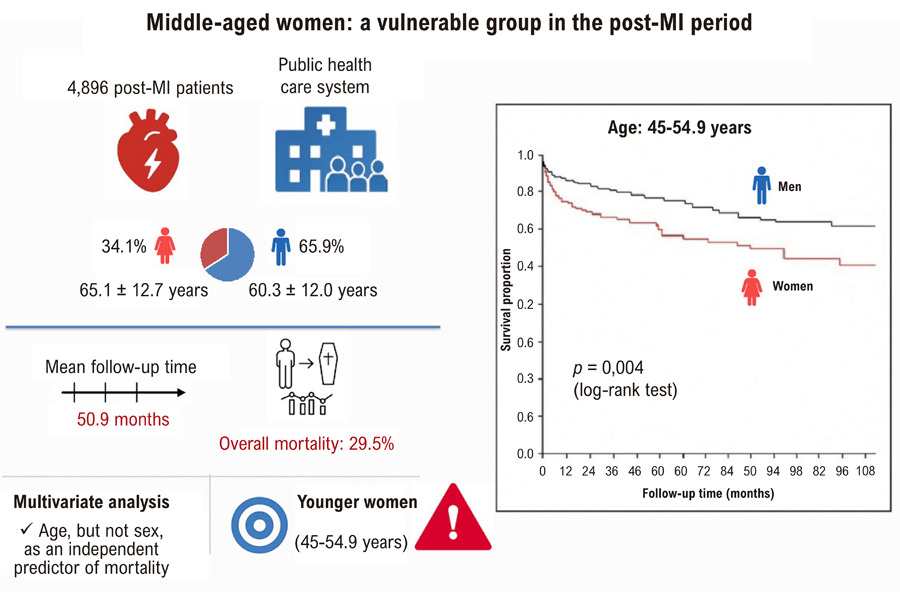
The sample included 4,896 patients (mean age 62 ± 12.4 years; 34.1% women), with an average follow-up of 50.9 months. Overall mortality was 29.5%. On average, women experienced MI 5 years later than men (65.1 vs. 60.3 years; p < 0.001) and had higher follow-up mortality (p < 0.001). However, in the multivariate analysis, only age remained significantly associated with mortality. Age-stratified analysis revealed a higher risk of death among women aged 45-54.9 years (p = 0.004).

Conclusion

Older age contributes to the worse post-MI prognosis observed among women compared to men. However, women in early middle age showed an increased risk of death, representing a potentially vulnerable group requiring specific attention.

  • Infarction
  • middle aged
  • Mortality
Read Full Article
Creative Commons Attribution (CC BY) Creative Commons license
15/12/2025 DOI: 10.36660/abc.20250296i
Chocolate Consumption Does Not Reduce the Risk of Cardiovascular Events and Increases the Risk of Gastrointestinal Bleeding One Year After the First Myocardial Infarction
IJCS
Original Article

Chocolate Consumption Does Not Reduce the Risk of Cardiovascular Events and Increases the Risk of Gastrointestinal Bleeding One Year After the First Myocardial Infarction

Daniel Medeiros Moreira et al. Lara Marcon Dandolini Tammuz Fattah Rodrigo de Moura Joaquim Roberto Leo da Silva

Abstract

Background

Coronary artery disease is the leading cause of death worldwide, with high social and financial costs. Although previous studies have demonstrated the potential of chocolate to reduce coronary events, data on its effects in patients who have suffered an acute myocardial infarction (AMI) are lacking.

Objective

To evaluate the impact of chocolate consumption on the incidence of events in patients with AMI followed for one year.

Methods

A subanalysis of the Catarina Heart study, which evaluated patients hospitalized with a diagnosis of the first AMI, was conducted. During hospitalization, patients were asked about their chocolate consumption before the event. The incidence of events was compared between consumers and non-consumers of chocolate before the AMI. The analyzed outcomes included major adverse cardiovascular events (MACE), all-cause mortality, cardiovascular mortality, reinfarction, stroke, in-stent restenosis, acute stent thrombosis, gastrointestinal bleeding, and bleeding requiring transfusion. Cox regression models were applied, and p < 0.05 was considered statistically significant.

Results

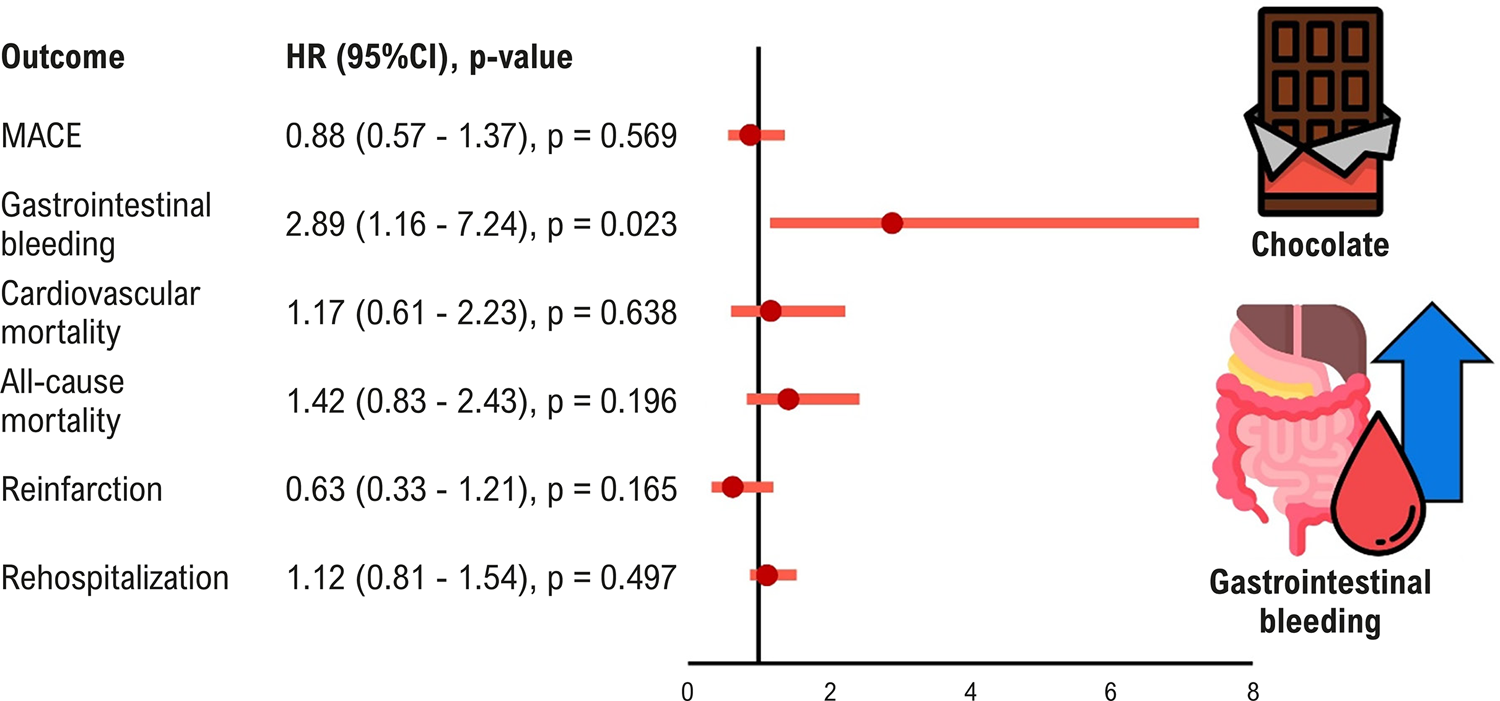
A total of 1404 patients were analyzed, of whom 490 (34.9%) consumed chocolate. Chocolate consumption neither reduced the risk of MACE (hazard ratio [HR] = 0.88 [0.57 – 1.37], p = 0.569) nor showed benefits in other outcomes, such as cardiovascular mortality, reinfarction, or stroke. However, its consumption was significantly associated with an increased risk of gastrointestinal bleeding (HR = 2.89 [1.16 – 7.24], p = 0.023) without increasing the risk of bleeding requiring transfusion or acute stent thrombosis.

Conclusion

Chocolate consumption before AMI did not reduce major cardiovascular events and was associated with an increased risk of gastrointestinal bleeding.

  • Chocolate
  • Coronary Artery Disease
  • Hemorrhage
  • Infarction
Read Full Article
Creative Commons Attribution (CC BY) Creative Commons license
13/10/2025 DOI: 10.36660/ijcs.20250006 Views 1
ABC
Anatomopathological Session

Case 1 /2011- seventy-four-year-old female patient with sudden apnea and acute cholecystitis, five days after acute myocardial infarction without critical coronary lesions

Ricardo Casalino Sanches de Moraes et al. Leonardo Celeste Mangili Luiz Alberto Benvenuti

ANATOMOPATHOLOGICAL SESSION

[…]

  • cholecystitis, acute
  • Dyspnea
  • Infarction
  • Renal Insufficiency
Read Full Article
Creative Commons Attribution (CC BY) Creative Commons license
31/03/2011 DOI: 10.1590/S0066-782X2011000300016 Views 1

How to cite this article

EndNote RIS

Electronic Document Format (Vancouver)

Luz PLD, Favarato D, Abizaid AA, César LAM, Serrano CV, Chagas ACP, Rochitte CE, et al. Comparison of Coronary Computed Tomography Angiography and Invasive Coronary Angiography in Nonobstructive Coronary Artery Disease: The Brazilian Coronary ARtery Disease (BARD) Study. Arquivos Brasileiros de Cardiologia 2026;123(3):e20250702.

Electronic Document Format (ABNT)

Luz, Protásio Lemos Da; Favarato, Desiderio; Abizaid, Alexandre A.; César, Luiz Antonio Machado; Serrano, Carlos Vicente; Chagas, Antônio Carlos Palandri; Rochitte, Carlos E.; Gutierrez, Marco A.. Comparison of Coronary Computed Tomography Angiography and Invasive Coronary Angiography in Nonobstructive Coronary Artery Disease: The Brazilian Coronary ARtery Disease (BARD) Study. Arquivos Brasileiros de Cardiologia, v. 123, n. 3, e20250702, Apr. 2026.

Electronic Document Format (APA)

Luz, P. L. D., Favarato, D., Abizaid, A. A., César, L. A. M., Serrano, C. V., Chagas, A. C. P., Rochitte, C. E., & Gutierrez, M. A. (2026). Comparison of Coronary Computed Tomography Angiography and Invasive Coronary Angiography in Nonobstructive Coronary Artery Disease: The Brazilian Coronary ARtery Disease (BARD) Study. Arquivos Brasileiros de Cardiologia, 123(3), e20250702.

Electronic Document Format (ISO)

Luz, Protásio Lemos Da and Favarato, Desiderio and Abizaid, Alexandre A. and César, Luiz Antonio Machado and Serrano, Carlos Vicente and Chagas, Antônio Carlos Palandri and Rochitte, Carlos E. and Gutierrez, Marco A.. Comparison of Coronary Computed Tomography Angiography and Invasive Coronary Angiography in Nonobstructive Coronary Artery Disease: The Brazilian Coronary ARtery Disease (BARD) Study. Arquivos Brasileiros de Cardiologia [online]. 2026, vol. 123, n. 3, [cited 2026-10-14], e20250702. Available from: <https://journals.cardiol.br/en/article/comparison-of-coronary-computed-tomography-angiography-and-invasive-coronary-angiography-in-nonobstructive-coronary-artery-disease-the-brazilian-coronary-artery-disease-bard-study/>. ISSN 0066-782X

EndNote RIS

Electronic Document Format (Vancouver)

Lopes MAAAM, Viana M, Nóbrega J, Medeiros HNAA, Oliveira GMM. Middle-Aged Women — A High-Risk Group for Post-Myocardial Infarction Mortality. Arquivos Brasileiros de Cardiologia 2026;122(10):e20250701.

Electronic Document Format (ABNT)

Lopes, Maria Antonieta Albanez A. de Medeiros; Viana, Mayara; Nóbrega, Júlia; Medeiros, Heitor N. Albanez A. de; Oliveira, Gláucia Maria Moraes de. Middle-Aged Women — A High-Risk Group for Post-Myocardial Infarction Mortality. Arquivos Brasileiros de Cardiologia, v. 122, n. 10, e20250701, Jan. 2026.

Electronic Document Format (APA)

Lopes, M. A. A. A. M., Viana, M., Nóbrega, J., Medeiros, H. N. A. A. , & Oliveira, G. M. M. (2026). Middle-Aged Women — A High-Risk Group for Post-Myocardial Infarction Mortality. Arquivos Brasileiros de Cardiologia, 122(10), e20250701.

Electronic Document Format (ISO)

Lopes, Maria Antonieta Albanez A. de Medeiros and Viana, Mayara and Nóbrega, Júlia and Medeiros, Heitor N. Albanez A. de and Oliveira, Gláucia Maria Moraes de. Middle-Aged Women — A High-Risk Group for Post-Myocardial Infarction Mortality. Arquivos Brasileiros de Cardiologia [online]. 2026, vol. 122, n. 10, [cited 2026-10-14], e20250701. Available from: <https://journals.cardiol.br/en/article/middle-aged-women-a-high-risk-group-for-post-myocardial-infarction-mortality/>. ISSN 0066-782X

EndNote RIS

Electronic Document Format (Vancouver)

Lessa Júnior EMC, Silva CPM, Kaestner TLL, Rocha CR, Stroher GR, Silva G, Baccin GAO, et al. Middle-Aged Women and Post-Myocardial Infarction Mortality: A Vulnerable Group? Real-World Evidence from a Brazilian Public Health System Cohort. Arquivos Brasileiros de Cardiologia 2025;122(10):e20250296.

Electronic Document Format (ABNT)

Lessa Júnior, Edson Marcos Campos; Silva, Carolina Perin Maia da; Kaestner, Tatiana Lorena da Luz; Rocha, Cecília Rubini; Stroher, Gabriela Redivo; Silva, Gabriele da; Baccin, Giovanni Augusto de Oliveira; Olandoski, Marcia; Bernardi, Andre; Faria Neto, José Rocha. Middle-Aged Women and Post-Myocardial Infarction Mortality: A Vulnerable Group? Real-World Evidence from a Brazilian Public Health System Cohort. Arquivos Brasileiros de Cardiologia, v. 122, n. 10, e20250296, Dec. 2025.

Electronic Document Format (APA)

Lessa Júnior, E. M. C., Silva, C. P. M. , Kaestner, T. L. L., Rocha, C. R., Stroher, G. R., Silva, G. , Baccin, G. A. O., Olandoski, M., Bernardi, A., & Faria Neto, J. R. (2025). Middle-Aged Women and Post-Myocardial Infarction Mortality: A Vulnerable Group? Real-World Evidence from a Brazilian Public Health System Cohort. Arquivos Brasileiros de Cardiologia, 122(10), e20250296.

Electronic Document Format (ISO)

Lessa Júnior, Edson Marcos Campos and Silva, Carolina Perin Maia da and Kaestner, Tatiana Lorena da Luz and Rocha, Cecília Rubini and Stroher, Gabriela Redivo and Silva, Gabriele da and Baccin, Giovanni Augusto de Oliveira and Olandoski, Marcia and Bernardi, Andre and Faria Neto, José Rocha. Middle-Aged Women and Post-Myocardial Infarction Mortality: A Vulnerable Group? Real-World Evidence from a Brazilian Public Health System Cohort. Arquivos Brasileiros de Cardiologia [online]. 2025, vol. 122, n. 10, [cited 2026-10-14], e20250296. Available from: <https://journals.cardiol.br/en/article/middle-aged-women-and-post-myocardial-infarction-mortality-a-vulnerable-group-real-world-evidence-from-a-brazilian-public-health-system-cohort/>. ISSN 0066-782X

EndNote RIS

Electronic Document Format (Vancouver)

Moreira DM, Dandolini LM, Fattah T, Joaquim RM, Silva RL. Chocolate Consumption Does Not Reduce the Risk of Cardiovascular Events and Increases the Risk of Gastrointestinal Bleeding One Year After the First Myocardial Infarction. International Journal of Cardiovascular Sciences 2025;38:e20250006.

Electronic Document Format (ABNT)

Moreira, Daniel Medeiros; Dandolini, Lara Marcon; Fattah, Tammuz; Joaquim, Rodrigo de Moura; Silva, Roberto Leo da. Chocolate Consumption Does Not Reduce the Risk of Cardiovascular Events and Increases the Risk of Gastrointestinal Bleeding One Year After the First Myocardial Infarction. International Journal of Cardiovascular Sciences, v. 38, e20250006, Oct. 2025.

Electronic Document Format (APA)

Moreira, D. M., Dandolini, L. M., Fattah, T., Joaquim, R. M., & Silva, R. L. (2025). Chocolate Consumption Does Not Reduce the Risk of Cardiovascular Events and Increases the Risk of Gastrointestinal Bleeding One Year After the First Myocardial Infarction. International Journal of Cardiovascular Sciences, 38, e20250006.

Electronic Document Format (ISO)

Moreira, Daniel Medeiros and Dandolini, Lara Marcon and Fattah, Tammuz and Joaquim, Rodrigo de Moura and Silva, Roberto Leo da. Chocolate Consumption Does Not Reduce the Risk of Cardiovascular Events and Increases the Risk of Gastrointestinal Bleeding One Year After the First Myocardial Infarction. International Journal of Cardiovascular Sciences [online]. 2025, vol. 38, [cited 2026-10-14], e20250006. Available from: <https://journals.cardiol.br/en/article/chocolate-consumption-does-not-reduce-the-risk-of-cardiovascular-events-and-increases-the-risk-of-gastrointestinal-bleeding-one-year-after-the-first-myocardial-infarction/>. ISSN 2359-4802

EndNote RIS

Electronic Document Format (Vancouver)

Moraes RCS, Mangili LC, Benvenuti LA. Case 1 /2011- seventy-four-year-old female patient with sudden apnea and acute cholecystitis, five days after acute myocardial infarction without critical coronary lesions. Arquivos Brasileiros de Cardiologia 2011;96(3):e35-41.

Electronic Document Format (ABNT)

Moraes, Ricardo Casalino Sanches de; Mangili, Leonardo Celeste; Benvenuti, Luiz Alberto. Case 1 /2011- seventy-four-year-old female patient with sudden apnea and acute cholecystitis, five days after acute myocardial infarction without critical coronary lesions. Arquivos Brasileiros de Cardiologia, v. 96, n. 3, p. e35-e41, Mar. 2011.

Electronic Document Format (APA)

Moraes, R. C. S. , Mangili, L. C., & Benvenuti, L. A. (2011). Case 1 /2011- seventy-four-year-old female patient with sudden apnea and acute cholecystitis, five days after acute myocardial infarction without critical coronary lesions. Arquivos Brasileiros de Cardiologia, 96(3), e35-e41.

Electronic Document Format (ISO)

Moraes, Ricardo Casalino Sanches de and Mangili, Leonardo Celeste and Benvenuti, Luiz Alberto. Case 1 /2011- seventy-four-year-old female patient with sudden apnea and acute cholecystitis, five days after acute myocardial infarction without critical coronary lesions. Arquivos Brasileiros de Cardiologia [online]. 2011, vol. 96, n. 3, [cited 2026-10-14], pp. e35-e41. Available from: <https://journals.cardiol.br/en/article/case-1-2011-seventy-four-year-old-female-patient-with-sudden-apnea-and-acute-cholecystitis-five-days-after-acute-myocardial-infarction-without-critical-coronary-lesions/>. ISSN 0066-782X

  • About ABC Family
  • Internal Regulation
  • Editorial Board
  • Brazilian Society of Cardiology (SBC)

Issues

SBC Guidelines

  • Videos
  • Podcasts
  • News