ABC Family Arquivos Brasileiros de Cardiologia International Journal of Cardiovascular Sciences ABC Heart Failure & Cardiomyopathy ABC Imagem Cardiovascular
Português English
ABC Family
Português English
  • About
    • About ABC Family
    • Internal Regulation
    • Editorial Board
    • Brazilian Society of Cardiology (SBC)
  • Issues
  • SBC Guidelines
  • Content
    • Videos
    • Podcasts
    • News
  • About
    • About ABC Family
    • Internal Regulation
    • Editorial Board
    • Brazilian Society of Cardiology (SBC)
  • Issues
  • SBC Guidelines
  • Content
    • Videos
    • Podcasts
    • News

ABC Family

  • ABC Family
  • Arquivos Brasileiros de Cardiologia
  • International Journal of Cardiovascular Sciences
  • ABC Heart Failure & Cardiomyopathy
  • ABC Imagem Cardiovascular
Search in

No content found.

Journals
Ordering
Article types
Others

  1. Home
  2. Keyword: Anaerobic Threshold
ABC
Editorial

Exercise and Six-Minute Walk Test in Lower Extremity Occlusive Peripheral Arterial Disease

Tales de Carvalho

The article “Exercise Intensity During 6-min Test in Patients with Peripheral Artery Disease” provides original, practically useful information to be considered in the diagnosis, prognosis and mainly in the functional assessment that allows a better prescription of physical exercise in the medical treatment of the disease. The study was conducted with the aim of determining whether overground walking would allows the detection of the first ventilatory threshold, also known as anaerobic threshold (AT), in symptomatic patients with lower extremity occlusive peripheral arterial disease (LE-OPAD). AT is a marker of exercise intensity, useful for the determination of the optimal zone for physical training focused on improvement in cardiorespiratory fitness.

LE-OPAD is an important public health problem. According to global epidemiology report, the disease affected 202 million individuals in 2010, and 237 million in 2015, with a 22% increase during this period. The association of OPAD with major cardiovascular events (MACE) has been well documented; in the severe stage of the disease, with presence of critical ischemia, there is a high risk of cardiovascular events, lower limb amputation and death, with association with elevated levels of cardiac troponin and N terminal pro-brain natriuretic peptide (NT-proBNP).

[…]

  • Anaerobic Threshold
  • Exercise
  • Intermittent Claudication
  • Peripheral Arterial Disease
  • Physical Activities of Daily Living
  • Walk Test
Read Full Article
Creative Commons Attribution (CC BY) Creative Commons license
06/04/2020 DOI: 10.36660/abc.20200068 Views 2
Graph 1
ABC
Original Article

Impact of a High-Intensity Training on Ventricular Function in Rats After Acute Myocardial Infarction

Simone de Campos Neitzke Winter et al. Rafael Michel de Macedo Júlio Cesar Francisco Paula Costa Santos … Ana Paula Sarraff Lopes Leanderson Franco de Meira Katherine A. Teixeira de Carvalho José Rocha Faria Neto Ana Carolina Brandt de Macedo Luiz César Guarita-Souza

Abstract

Background:

Physical exercise should be part of the treatment of post-acute myocardial infarction (AMI) patients.

Objective:

To evaluate the effects of two training prescription models (continuous x interval) and its impact on ventricular function in rats after AMI with normal ventricular function.

Methods:

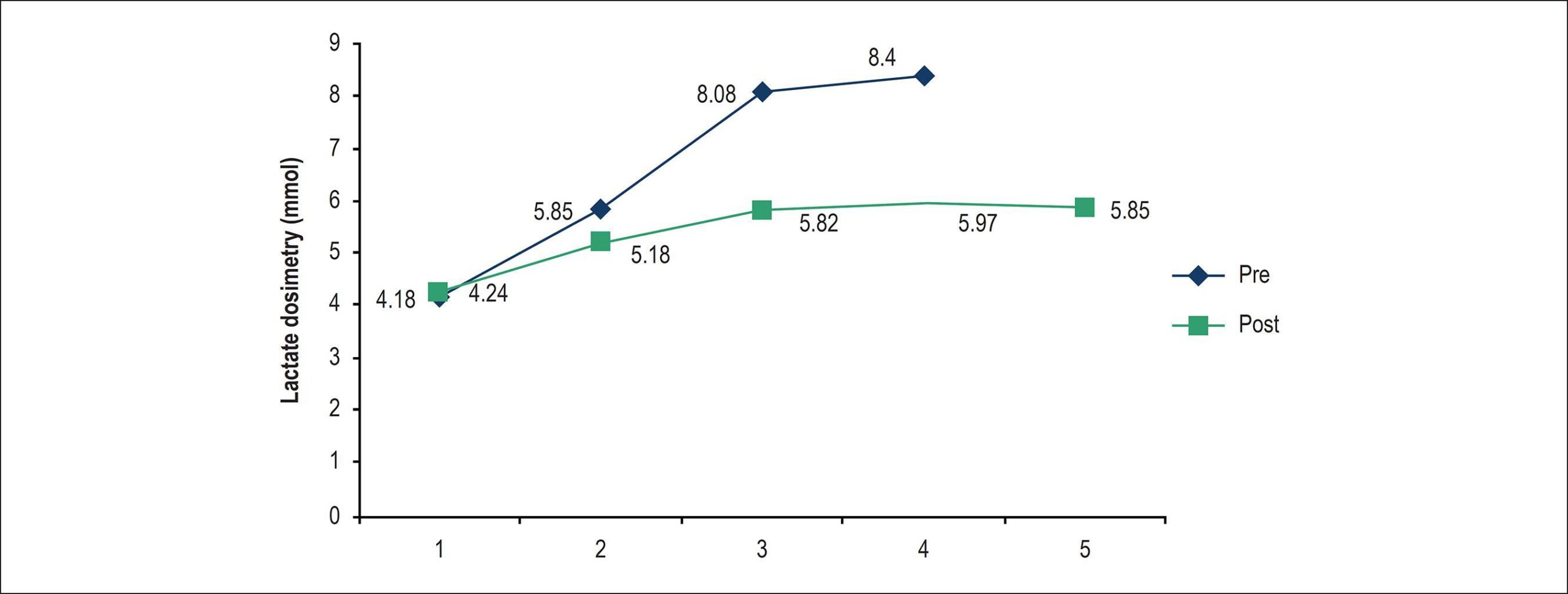
Forty Wistar rats were evaluated by echocardiography 21 days after the AMI. Those with LVEF = 50% (n = 29) were included in the study and randomized to control group (CG n = 10), continuous training group (CTG n = 9) or interval training group (ITG, n = 10). Then, a swimming test with control of lactate production was performed. Based on its result, the lactate threshold (LT) was established to define the training intensities. After six weeks, the animals were reassessed by echocardiography and lactate production. Outcome measures were end-diastolic diameter (EDD), end-systolic diameter (ESD), left ventricular ejection fraction (LVEF, %) lactate at rest, lactate without overload, and lactate with 12g and 13.5g of additional load. Group comparisons of quantitative variables of the study were performed by one-factor analysis of variance (ANOVA). The Newman-Keuls test was used for multiple comparisons of the groups. Within-group comparisons of dependent variables between the two training protocols were performed by Student’s t-test. Normality of the variables was tested by the Shapiro-Wilks test. Values of p < 0.05 indicated statistical significance.

Results:

EDD, ESD, and LVEF before and after the training period were similar in within-group comparisons. However, EDD was significantly different (p=0.008) in the CG. Significant differences were found for L12g (p=0.002) and L13.5g (p = 0.032) in the ITG, and for L12g (p = 0.014) in the CG. No differences were found in the echocardiographic parameters between the groups. Significant differences were found in lactate without overload (p = 0.016) and L12 (p = 0.031) in the second assessment compared with the first, and between the groups – ITG vs. CG (p = 0.019) and CTG vs. CG (p = 0.035).

Conclusion:

Both methods produced a training effect without altering ventricular function.

  • Anaerobic Threshold
  • Exercise
  • Myocardial Infarction
  • Rats
  • Ventricular Function, Left
Read Full Article
Creative Commons Attribution (CC BY) Creative Commons license
12/03/2018 DOI: 10.5935/abc.20180036 Views 1
Method of heart rate variability threshold applied in obese and non-obese pre-adolescents
ABC
Artigo Original

Method of heart rate variability threshold applied in obese and non-obese pre-adolescents

Mário Augusto Paschoal et al. Caio Cesar Fontana

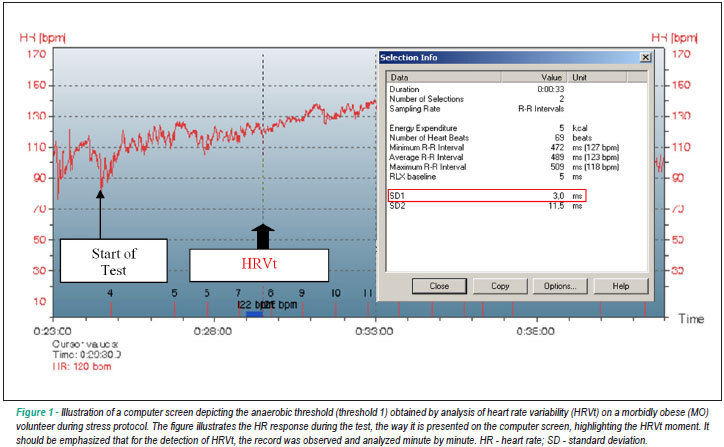
BACKGROUND: The detection of anaerobic threshold (AT) by heart rate variability analysis (HRVt) may mean a new way to assess the cardiorespiratory capacity (CRC) in pre-adolescents. OBJECTIVE: To test the method of HRVt to detect AT in non-obese (NO), obese (O) and morbidly obese (MO) pre-adolescents in order to determine differences in their CRC. METHODS: Were studied 30 pre-adolescents, aged between 9 and 11 years, divided into three groups of ten pre-adolescents each: a) NO group – body mass index (BMI) between 5 and 85 percentiles of the chart of National Center for Chronic Disease Prevention and Health Promotion.; b) O group – BMI between 95 and 97 of the same chart; c) MO group – BMI with percentile over 97. All were submitted to an incremental protocol conducted on a treadmill, and the heart rate was recorded for the detection of the HRVt when the beat-to-beat variability (SD1), extracted from the RR intervals, reached the value of 3 ms. RESULTS: The mean values obtained at HRVt were higher for the NO group, which included: a) VO2 (ml/kg/min) NO = 27.4 ± 9.2; O = 13.1 ± 7.6, and MO = 11.0 ± 1.7 b) HR (bpm): NO = 156.3 ± 18.0, O = 141.7 ± 11.4 and 137.7 ± 10.4 MO; c) distance (m): NO = 1,194.9 ± 427.7, O = 503.2 ± 437.5 and MO = 399.9 ± 185.1. CONCLUSION: HRVt was effective for evaluation of CRC and could be applied as an alternative method to ergoespirometry in certain situations.

  • Anaerobic Threshold
  • Child
  • Heart Rate
  • Obesity
Read Full Article
Creative Commons Attribution (CC BY) Creative Commons license
29/04/2011 DOI: 10.1590/S0066-782X2011005000052
Methods to identify the anaerobic threshold for type-2 diabetic and non-diabetic subjects
ABC
Artigo Original

Methods to identify the anaerobic threshold for type-2 diabetic and non-diabetic subjects

Herbert G. Simões et al. Sérgio R. Moreira Robert J. Moffatt Carmen S. G. Campbell

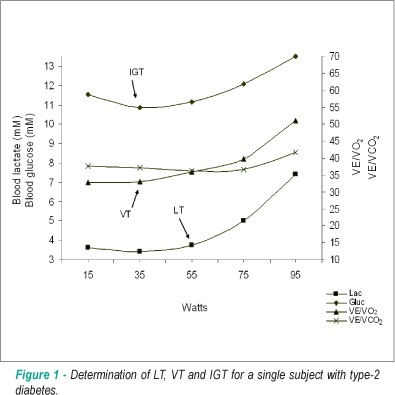
BACKGROUND: In spite of Anaerobic Threshold (AT) to be widely used on exercise evaluation for different populations, there are few studies comparing methods to identify AT for individuals with type-2 diabetes. OBJECTIVE: To compare methods of AT determination on type-2 diabetics (T2D) and non-diabetic (ND) subjects and verify the acid-base balance as related to AT intensity. METHODS: T2D (n=10; 54.5±9.5 yr; 30.1±5.0 kg/m²) and younger ND (n=10; 36.6±12.8 yr; 23.9±5.0 kg/m²) performed an incremental test (IT) on a cycle ergometer. The over-proportional increase in VE/VO2 and blood lactate ([lac]) identified the ventilatory (VT) and lactate thresholds (LT) respectively. The workload corresponding to the lower blood glucose ([gluc]) during test identified the individual glucose threshold (IGT). The AT was also determined by polynomial adjustment of the VE/Workload and [lac]/Workload responses to identify exercise intensities above which an over-proportional increase in VE and [lac] did occur and were named VT VE/W and LT[lac]/W. RESULTS: The workload (Watts-W) corresponding to LT, VT, IGT, LT Lac/W and VT VE/W of diabetics (85.0±32.1; 88.0±31.7; 86.0±33.8; 82.0±20.9 and 90.2±22.2W) and non-diabetics (139.0±39.0; 133.0±42.7; 140.8±36.4; 122.7±44.3 and 133.0±39.1W) differed between groups (p<0.001), but not within groups. Thus it was evidenced an agreement among the studied methods. The pH and pCO2 were significantly decreased in parallel to the increase in [lac], pO2 and VE at supra AT intensities. CONCLUSION: The AT intensities, as determined by different methods both for diabetics and non-diabetic individuals, were in agreement to each other and identified exercise intensities above which the acid-basic balance is disrupted.

  • acid-basic equilibrium
  • Anaerobic Threshold
  • Blood Glucose
  • Clinical Protocols
Read Full Article
Creative Commons Attribution (CC BY) Creative Commons license
22/09/2010 DOI: 10.1590/S0066-782X2010000100012
Reproducibility of the determination of anaerobic threshold in patients with heart failure
ABC
Artigo Original

Reproducibility of the determination of anaerobic threshold in patients with heart failure

Danielle Aparecida Gomes Pereira et al. Danielle Soares Rocha Vieira Giane Amorim Ribeiro Samora Fernanda Lima Lopes … Maria Clara Norman Alencar Susan Martins Lage Verônica Franco Parreira Marcelo Velloso Maria da Consolação Vieira Moreira Raquel Rodrigues Britto

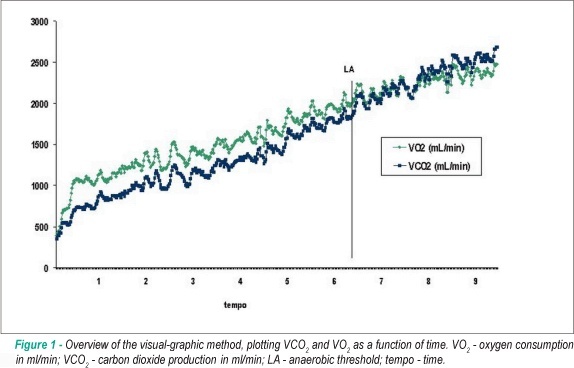
BACKGROUND: The anaerobic threshold (AT) provides information on functional capacity in heart failure (HF). However, the visual determination of the AT by ventilatory methods is subjective, being susceptible to differences between examiners. OBJECTIVE: To evaluate the inter- and intra-examiner reproducibility in the determination of the AT in patients with mild to moderate HF, using visual-graphic and V-slope methods. To compare and correlate the results. METHODS: After performing a cardiopulmonary exercise test on a treadmill, visual-graphic and V-slope methods were used for the analysis of the AT. To assess the reproducibility, three examiners determined the AT twice by each method, on different days. For statistical analysis, we used intra-class correlation coefficient (ICC) with p <0.05. RESULTS: We evaluated a total of 16 subjects, with a mean age of 45.9 ± 9.7 years, left ventricle ejection fraction of 20.5 ± 8.1%, and peak exercise oxygen consumption of 20.6 ± 7.8 mL/kg•min-1. The intra-examiner reproducibility was high in both methods for the three examiners, with ICC values between 0.87 and 0.99. The inter-examiner reproducibility was moderate in both visual-graphic method (ICC = 0.69) and V-slope method (ICC = 0.64). When comparing methods, the ICC found was 0.91. CONCLUSION: AT determination by visual-graphic and V-slope methods showed high and moderate inter- and intra-examiner reproducibility, respectively. Moreover, both methods showed good agreement when compared with each other. These results suggest that both methods can be used in a reproducible way in AT assessment of patients with mild to moderate HF.

  • Anaerobic Threshold
  • Exercise Test
  • Heart Failure
  • Reproducibility of Results
Read Full Article
Creative Commons Attribution (CC BY) Creative Commons license
07/05/2010 DOI: 10.1590/S0066-782X2010005000044 Views 2
Cardiac and metabolic characteristics in long distance runners of sport and exercise cardiology outpatient facility of a tertiary hospital
ABC
Artigo Original

Cardiac and metabolic characteristics in long distance runners of sport and exercise cardiology outpatient facility of a tertiary hospital

Luciene Ferreira Azevedo et al. Patrícia Chakur Brum Dudley Rosemblatt Patrícia de Sá Perlingeiro … Antônio Carlos Pereira Barretto Carlos Eduardo Negrão Luciana Diniz Nagem Janot de Matos

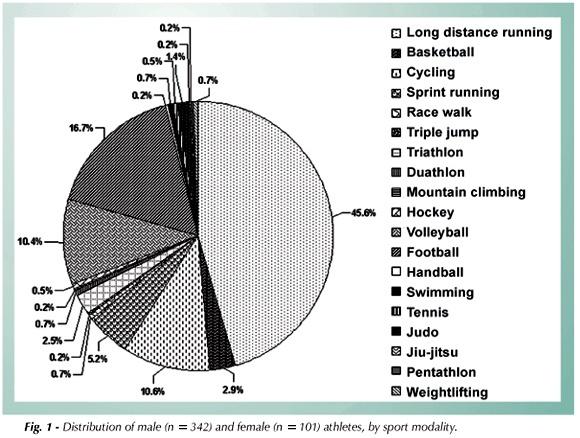
OBJECTIVE: To characterize electrocardiographic and functional cardiac parameters and cardiopulmonary responses to exercise in long-distance Brazilian runners monitored at the Sport and Exercise Cardiology Outpatient Facility of a tertiary care hospital. METHODS: Of an initial population of 443 male and female athletes of different sport modalities, we assessed 162 (37%) long-distance male runners, aged from 14 to 67. Electrocardiographic (12 leads) and echocardiographic (M-mode and two-dimensional) parameters were recorded at rest. Cardiopulmonary responses were evaluated on a treadmill with a ramp protocol. RESULTS: Metabolic alterations and cardiovascular diseases were diagnosed in 17% and 9% of the runners, respectively. Sinus bradycardia and left ventricular hypertrophy were observed in 62% and 33% of the runners, respectively. Structural alterations such as ventricular cavity > 55mm, relative wall thickness > 0.44, and ventricular mass index > 134g/m2 were found in 15%, 11% and 7% of the runners, respectively. Ejection fraction < 55% was observed in 4% of the runners. Peak oxygen uptake (VO2peak) decreased as of the age of 41, although the anaerobic threshold relative to the VO2peak remained unchanged with age. CONCLUSION: Resting bradycardia and left ventricular hypertrophy are the most frequent cardiovascular adaptations in Brazilian long distance runners monitored by the Sport and Exercise Cardiology Outpatient Facility. Although VO2peak decreases after the age of 41, the relative oxygen uptake at the anaerobic threshold of these runners remained unchanged.

  • Anaerobic Threshold
  • Electrocardiography
  • Heart Rate
  • Hypertrophy
  • Left Ventricular
  • Oxygen Consumption
Read Full Article
Creative Commons Attribution (CC BY) Creative Commons license
07/03/2007 DOI: 10.1590/S0066-782X2007000100003
Maximal workload prediction models in the clinical cardio-pulmonary effort test
ABC
Artigo Original

Maximal workload prediction models in the clinical cardio-pulmonary effort test

Fernando dos Santos Nogueira et al. Fernando Augusto Monteiro Sabóia Pompeu

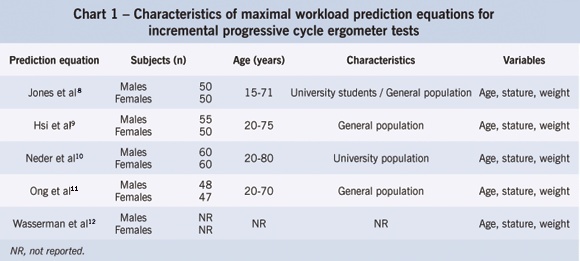
OBJECTIVE: This study sought to derive generalized equations for predicting maximal workload for young men and women. METHODS: Direct ergospirometry (Aerosport® TEEM 100, USA) was used to determine VO2máx and the maximal work load (Wmax) on the cycle ergometer test (Monark®, Brazil) of thirty men (25 ± 5 years, 75.0 ± 10.7 kg; 48.4 ± 8.8 mL . kg -1 . min -1 and 243 ± 51 Watts) and thirty women (26 ± 5 years, 56.7 ± 5.9 kg, 39.8 ± 7.6 mL . kg -1 . min -1 and 172 ± 37 Watts). Age and body mass were used as independent variables. For all statistic tests, a p < 0.05 significance level was adopted. RESULTS: In the multiple linear adjustment, the maximal workload was explained by age and body mass as 54% (r = 0.73) for men, and as 76% (r = 0.87) for women, with standard errors of 0.66 W . kg -1 and 25 Watts. The proposed equations were cross-validated using another sample with similar age and VO2máx characteristics comprised of fifteen men and fifteen women. The intraclass correlation between the predicted Wmax values and those measures by ergospirometry were 0.70 and 0.69, with standard errors of 28.4 and 15.8 Watts, respectively, for men and women. CONCLUSIONS: This study exhibits valid generalized equations for determining the maximal cycle ergonometer workload for men and women.

  • Anaerobic Threshold
  • Oxygen Consumption
  • physicial exertion
  • stress test
  • ventilatory threshold
Read Full Article
Creative Commons Attribution (CC BY) Creative Commons license
28/09/2006 DOI: 10.1590/S0066-782X2006001500011 Views 2

How to cite this article

EndNote RIS

Electronic Document Format (Vancouver)

Carvalho T. Exercise and Six-Minute Walk Test in Lower Extremity Occlusive Peripheral Arterial Disease. Arquivos Brasileiros de Cardiologia 2020;114(3):493-5.

Electronic Document Format (ABNT)

Carvalho, Tales de. Exercise and Six-Minute Walk Test in Lower Extremity Occlusive Peripheral Arterial Disease. Arquivos Brasileiros de Cardiologia, v. 114, n. 3, p. 493-495, Apr. 2020.

Electronic Document Format (APA)

Carvalho, T. (2020). Exercise and Six-Minute Walk Test in Lower Extremity Occlusive Peripheral Arterial Disease. Arquivos Brasileiros de Cardiologia, 114(3), 493-495.

Electronic Document Format (ISO)

Carvalho, Tales de. Exercise and Six-Minute Walk Test in Lower Extremity Occlusive Peripheral Arterial Disease. Arquivos Brasileiros de Cardiologia [online]. 2020, vol. 114, n. 3, [cited 2026-10-14], pp. 493-495. Available from: <https://journals.cardiol.br/en/article/exercise-and-six-minute-walk-test-in-lower-extremity-occlusive-peripheral-arterial-disease/>. ISSN 0066-782X

EndNote RIS

Electronic Document Format (Vancouver)

Winter SCN, Macedo RM, Francisco JC, Santos PC, Lopes APS, Meira LF, Carvalho KAT, et al. Impact of a High-Intensity Training on Ventricular Function in Rats After Acute Myocardial Infarction. Arquivos Brasileiros de Cardiologia 2018;110(4):373-80.

Electronic Document Format (ABNT)

Winter, Simone de Campos Neitzke; Macedo, Rafael Michel de; Francisco, Júlio Cesar; Santos, Paula Costa; Lopes, Ana Paula Sarraff; Meira, Leanderson Franco de; Carvalho, Katherine A. Teixeira de; Faria Neto, José Rocha; Macedo, Ana Carolina Brandt de; Guarita-Souza, Luiz César. Impact of a High-Intensity Training on Ventricular Function in Rats After Acute Myocardial Infarction. Arquivos Brasileiros de Cardiologia, v. 110, n. 4, p. 373-380, Mar. 2018.

Electronic Document Format (APA)

Winter, S. C. N., Macedo, R. M. , Francisco, J. C., Santos, P. C., Lopes, A. P. S., Meira, L. F. , Carvalho, K. A. T. , Faria Neto, J. R., Macedo, A. C. B. , & Guarita-Souza, L. C. (2018). Impact of a High-Intensity Training on Ventricular Function in Rats After Acute Myocardial Infarction. Arquivos Brasileiros de Cardiologia, 110(4), 373-380.

Electronic Document Format (ISO)

Winter, Simone de Campos Neitzke and Macedo, Rafael Michel de and Francisco, Júlio Cesar and Santos, Paula Costa and Lopes, Ana Paula Sarraff and Meira, Leanderson Franco de and Carvalho, Katherine A. Teixeira de and Faria Neto, José Rocha and Macedo, Ana Carolina Brandt de and Guarita-Souza, Luiz César. Impact of a High-Intensity Training on Ventricular Function in Rats After Acute Myocardial Infarction. Arquivos Brasileiros de Cardiologia [online]. 2018, vol. 110, n. 4, [cited 2026-10-14], pp. 373-380. Available from: <https://journals.cardiol.br/en/article/impact-of-a-high-intensity-training-on-ventricular-function-in-rats-after-acute-myocardial-infarction/>. ISSN 0066-782X

EndNote RIS

Electronic Document Format (Vancouver)

Paschoal MA, Fontana CC. Method of heart rate variability threshold applied in obese and non-obese pre-adolescents. Arquivos Brasileiros de Cardiologia 2011;96(6):450-6.

Electronic Document Format (ABNT)

Paschoal, Mário Augusto; Fontana, Caio Cesar. Method of heart rate variability threshold applied in obese and non-obese pre-adolescents. Arquivos Brasileiros de Cardiologia, v. 96, n. 6, p. 450-456, Apr. 2011.

Electronic Document Format (APA)

Paschoal, M. A., & Fontana, C. C. (2011). Method of heart rate variability threshold applied in obese and non-obese pre-adolescents. Arquivos Brasileiros de Cardiologia, 96(6), 450-456.

Electronic Document Format (ISO)

Paschoal, Mário Augusto and Fontana, Caio Cesar. Method of heart rate variability threshold applied in obese and non-obese pre-adolescents. Arquivos Brasileiros de Cardiologia [online]. 2011, vol. 96, n. 6, [cited 2026-10-14], pp. 450-456. Available from: <https://journals.cardiol.br/en/article/method-of-heart-rate-variability-threshold-applied-in-obese-and-non-obese-pre-adolescents/>. ISSN 0066-782X

EndNote RIS

Electronic Document Format (Vancouver)

Simões HG, Moreira SR, Moffatt RJ, Campbell CSG. Methods to identify the anaerobic threshold for type-2 diabetic and non-diabetic subjects. Arquivos Brasileiros de Cardiologia 2010;94(1):71-8.

Electronic Document Format (ABNT)

Simões, Herbert G.; Moreira, Sérgio R.; Moffatt, Robert J.; Campbell, Carmen S. G.. Methods to identify the anaerobic threshold for type-2 diabetic and non-diabetic subjects. Arquivos Brasileiros de Cardiologia, v. 94, n. 1, p. 71-78, Sep. 2010.

Electronic Document Format (APA)

Simões, H. G., Moreira, S. R., Moffatt, R. J., & Campbell, C. S. G. (2010). Methods to identify the anaerobic threshold for type-2 diabetic and non-diabetic subjects. Arquivos Brasileiros de Cardiologia, 94(1), 71-78.

Electronic Document Format (ISO)

Simões, Herbert G. and Moreira, Sérgio R. and Moffatt, Robert J. and Campbell, Carmen S. G.. Methods to identify the anaerobic threshold for type-2 diabetic and non-diabetic subjects. Arquivos Brasileiros de Cardiologia [online]. 2010, vol. 94, n. 1, [cited 2026-10-14], pp. 71-78. Available from: <https://journals.cardiol.br/en/article/methods-to-identify-the-anaerobic-threshold-for-type-2-diabetic-and-non-diabetic-subjects/>. ISSN 0066-782X

EndNote RIS

Electronic Document Format (Vancouver)

Pereira DAG, Vieira DSR, Samora GAR, Lopes FL, Alencar MCN, Lage SM, Parreira VF, et al. Reproducibility of the determination of anaerobic threshold in patients with heart failure. Arquivos Brasileiros de Cardiologia 2010;94(6):771-8.

Electronic Document Format (ABNT)

Pereira, Danielle Aparecida Gomes; Vieira, Danielle Soares Rocha; Samora, Giane Amorim Ribeiro; Lopes, Fernanda Lima; Alencar, Maria Clara Norman; Lage, Susan Martins; Parreira, Verônica Franco; Velloso, Marcelo; Moreira, Maria da Consolação Vieira; Britto, Raquel Rodrigues. Reproducibility of the determination of anaerobic threshold in patients with heart failure. Arquivos Brasileiros de Cardiologia, v. 94, n. 6, p. 771-778, May. 2010.

Electronic Document Format (APA)

Pereira, D. A. G., Vieira, D. S. R., Samora, G. A. R., Lopes, F. L., Alencar, M. C. N., Lage, S. M., Parreira, V. F., Velloso, M., Moreira, M. C. V., & Britto, R. R. (2010). Reproducibility of the determination of anaerobic threshold in patients with heart failure. Arquivos Brasileiros de Cardiologia, 94(6), 771-778.

Electronic Document Format (ISO)

Pereira, Danielle Aparecida Gomes and Vieira, Danielle Soares Rocha and Samora, Giane Amorim Ribeiro and Lopes, Fernanda Lima and Alencar, Maria Clara Norman and Lage, Susan Martins and Parreira, Verônica Franco and Velloso, Marcelo and Moreira, Maria da Consolação Vieira and Britto, Raquel Rodrigues. Reproducibility of the determination of anaerobic threshold in patients with heart failure. Arquivos Brasileiros de Cardiologia [online]. 2010, vol. 94, n. 6, [cited 2026-10-14], pp. 771-778. Available from: <https://journals.cardiol.br/en/article/reproducibility-of-the-determination-of-anaerobic-threshold-in-patients-with-heart-failure/>. ISSN 0066-782X

EndNote RIS

Electronic Document Format (Vancouver)

Azevedo LF, Brum PC, Rosemblatt D, Perlingeiro PS, Barretto ACP, Negrão CE, Matos LDNJ, et al. Cardiac and metabolic characteristics in long distance runners of sport and exercise cardiology outpatient facility of a tertiary hospital. Arquivos Brasileiros de Cardiologia 2007;88(1):17-25.

Electronic Document Format (ABNT)

Azevedo, Luciene Ferreira; Brum, Patrícia Chakur; Rosemblatt, Dudley; Perlingeiro, Patrícia de Sá; Barretto, Antônio Carlos Pereira; Negrão, Carlos Eduardo; Matos, Luciana Diniz Nagem Janot de. Cardiac and metabolic characteristics in long distance runners of sport and exercise cardiology outpatient facility of a tertiary hospital. Arquivos Brasileiros de Cardiologia, v. 88, n. 1, p. 17-25, Mar. 2007.

Electronic Document Format (APA)

Azevedo, L. F., Brum, P. C., Rosemblatt, D., Perlingeiro, P. S., Barretto, A. C. P., Negrão, C. E., & Matos, L. D. N. J. (2007). Cardiac and metabolic characteristics in long distance runners of sport and exercise cardiology outpatient facility of a tertiary hospital. Arquivos Brasileiros de Cardiologia, 88(1), 17-25.

Electronic Document Format (ISO)

Azevedo, Luciene Ferreira and Brum, Patrícia Chakur and Rosemblatt, Dudley and Perlingeiro, Patrícia de Sá and Barretto, Antônio Carlos Pereira and Negrão, Carlos Eduardo and Matos, Luciana Diniz Nagem Janot de. Cardiac and metabolic characteristics in long distance runners of sport and exercise cardiology outpatient facility of a tertiary hospital. Arquivos Brasileiros de Cardiologia [online]. 2007, vol. 88, n. 1, [cited 2026-10-14], pp. 17-25. Available from: <https://journals.cardiol.br/en/article/cardiac-and-metabolic-characteristics-in-long-distance-runners-of-sport-and-exercise-cardiology-outpatient-facility-of-a-tertiary-hospital/>. ISSN 0066-782X

EndNote RIS

Electronic Document Format (Vancouver)

Nogueira FS, Pompeu FAMS. Maximal workload prediction models in the clinical cardio-pulmonary effort test. Arquivos Brasileiros de Cardiologia 2006;87(2):137-45.

Electronic Document Format (ABNT)

Nogueira, Fernando dos Santos; Pompeu, Fernando Augusto Monteiro Sabóia. Maximal workload prediction models in the clinical cardio-pulmonary effort test. Arquivos Brasileiros de Cardiologia, v. 87, n. 2, p. 137-145, Sep. 2006.

Electronic Document Format (APA)

Nogueira, F. S., & Pompeu, F. A. M. S. (2006). Maximal workload prediction models in the clinical cardio-pulmonary effort test. Arquivos Brasileiros de Cardiologia, 87(2), 137-145.

Electronic Document Format (ISO)

Nogueira, Fernando dos Santos and Pompeu, Fernando Augusto Monteiro Sabóia. Maximal workload prediction models in the clinical cardio-pulmonary effort test. Arquivos Brasileiros de Cardiologia [online]. 2006, vol. 87, n. 2, [cited 2026-10-14], pp. 137-145. Available from: <https://journals.cardiol.br/en/article/maximal-workload-prediction-models-in-the-clinical-cardio-pulmonary-effort-test/>. ISSN 0066-782X

  • About ABC Family
  • Internal Regulation
  • Editorial Board
  • Brazilian Society of Cardiology (SBC)

Issues

SBC Guidelines

  • Videos
  • Podcasts
  • News