| ABC
ABC Family Arquivos Brasileiros de Cardiologia International Journal of Cardiovascular Sciences ABC Heart Failure & Cardiomyopathy ABC Imagem Cardiovascular
Português English
ABC Family | ABC
Português English
  • About
    • About the Journal
    • Internal Regulation
    • Editors Section
    • Editorial Board
    • History
    • SBC Award
  • Instructions to Authors
    • Guidelines for Publication
    • Editorial Policy
    • Ethics Policy
    • Policy on the Use of Artificial Intelligence
    • Mandatory Publication Form
    • Publication Fee
  • Issues
  • SBC Guidelines
  • Abstracts
    • How to Publish an Abstract Supplement?
    • Supplements from the Brazilian Congress of Cardiology
  • About
    • About the Journal
    • Internal Regulation
    • Editors Section
    • Editorial Board
    • History
    • SBC Award
  • Instructions to Authors
    • Guidelines for Publication
    • Editorial Policy
    • Ethics Policy
    • Policy on the Use of Artificial Intelligence
    • Mandatory Publication Form
    • Publication Fee
  • Issues
  • SBC Guidelines
  • Abstracts
    • How to Publish an Abstract Supplement?
    • Supplements from the Brazilian Congress of Cardiology

ABC Family

  • ABC Family
  • Arquivos Brasileiros de Cardiologia
  • International Journal of Cardiovascular Sciences
  • ABC Heart Failure & Cardiomyopathy
  • ABC Imagem Cardiovascular
Search in

No content found.

Journals
Ordering
Article types
Others

  1. Home
  2. ABC
  3. Issues
  4. 2013, Volume 100, Number 2
Artigo Original

The influence of hypertension on quality of life

Maria Virgínia de Carvalho et al. Liza Batista Siqueira Ana Luiza Lima Sousa Paulo César Brandão Veiga Jardim

BACKGROUND: Systemic Hypertension (SH) is a major cardiovascular risk factor with a high prevalence in almost all countries. Studies show the negative effect of SH on health-related quality of life. OBJECTIVE: To evaluate the quality of life of hypertensive patients when compared with the general population. METHODS: A total of 333 individuals of both genders and older than 18 years were evaluated; they were divided into the Study Group, consisting of 246 hypertensive patients undergoing treatment in a multidisciplinary service and the Control group, comprised of 87 normotensive individuals from the community. A sociodemographic questionnaire and the SF-36 for quality of life assessment were administered to both groups. The Chi-square, Kolmogorov-Smirnov test, Mann Whitney U-test, Kruskal-Wallis test and multivariate analysis were used for the statistical analysis. Data were analyzed using SPSS and p values <0.05 were considered significant. RESULTS: The groups were homogeneous for age, gender, ethnicity, educational level and marital status. It was observed that normotensive individuals showed a better health-related quality of life when compared with hypertensive patients. CONCLUSIONS: Although considered to be almost always a clinically silent disease, systemic hypertension impairs the quality of life of patients who suffer from it.
  • Blood Pressure
  • Hypertension
  • Quality of life
  • risk of factors
  • Survivorship (Public Health)
Read Full Article
Creative Commons Attribution (CC BY) Creative Commons license
11/03/2013 DOI: 10.5935/abc.20130030
Prognostic value of stress hyperglycemia for in-hospital outcome in acute coronary artery disease
Artigo Original

Prognostic value of stress hyperglycemia for in-hospital outcome in acute coronary artery disease

Carlos Passos Pinheiro et al. Marcos Danillo Peixoto Oliveira Gustavo Baptista de Almeida Faro Esdras Correa Silva … Eduardo Augusto Andrade da Rocha José Augusto Soares Barreto-Filho Joselina Luzia Menezes Oliveira Antônio Carlos Sobral Sousa

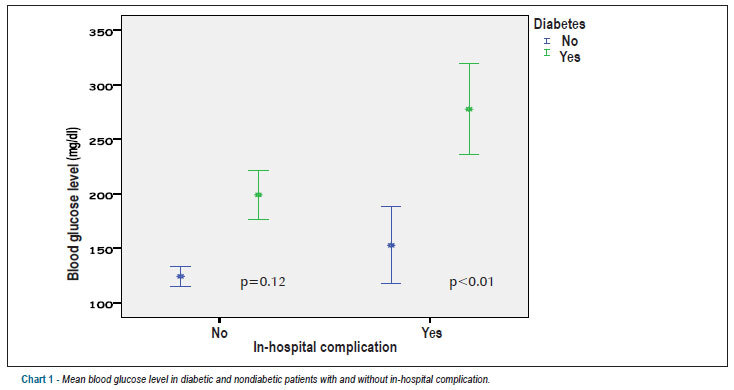
BACKGROUND: In acute coronary syndrome (ACS), admission hyperglycemia is associated with adverse cardiovascular events in diabetic and nondiabetic patients. OBJECTIVE: To assess the prognostic value of stress hyperglycemia for the in-hospital outcome of patients admitted due to ACS. METHODS: This study included 152 patients admitted to the chest pain unit of a tertiary hospital diagnosed with ACS, who had admission blood glucose data, from September 2005 to February 2010. Group I comprised patients with stress hyperglycemia, defined as admission blood glucose concentration > 126 mg/dL for nondiabetic individuals and admission blood glucose concentration > 200 mg/dL for diabetic individuals. Group II was formed by patients with admission blood glucose concentration lower than those established. The association of hyperglycemia and in-hospital outcome was assessed. RESULTS: Stress hyperglycemia associated with in-hospital complications, age increase and female sex. On multivariate analysis, only female sex (OR = 2.04; 95% CI: 1.03 – 4.06; p = 0.007) and in-hospital complications (OR = 3.65; 95% CI: 1.62 – 8.19; p = 0.002) associated independently with admission hyperglycemia. CONCLUSIONS: Stress hyperglycemia is an independent predictive factor for in-hospital complications after ACS in diabetic and nondiabetic patients. The results highlight the need to assess admission blood glucose concentration in all patients admitted due to ACS, including nondiabetic ones, aiming at identifying those at higher risk for complications.

  • Hyperglycemia
  • length of stay
  • Prognosis
Read Full Article
Creative Commons Attribution (CC BY) Creative Commons license
11/03/2013 DOI: 10.5935/abc.20130025
Myocardial perfusion imaging and cardiac involvement in the indeterminate phase of chagas disease
Artigo Original

Myocardial perfusion imaging and cardiac involvement in the indeterminate phase of chagas disease

Amalia Peix et al. Raymid García Jesús Sánchez Lázaro O. Cabrera … Kenia Padrón Oscar Vedia Hugo V. Choque Jorge Fraga Juan Bandera Alberto Hernández-Cañero

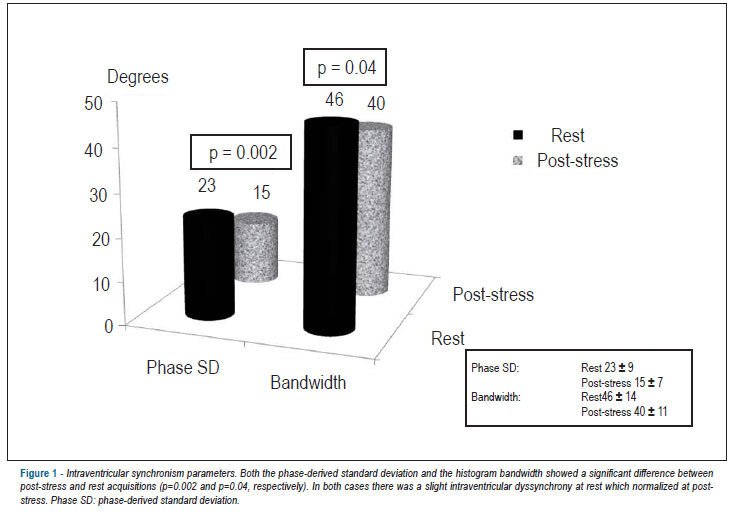
BACKGROUND: Myocardial perfusion imaging (MPI) has been used in the assessment of chagasic heart disease. OBJECTIVE: To investigate the value of gated-single photon emission computed tomography (gated-SPECT) MPI to detect early cardiac involvement in chagasic patients in the indeterminate phase, who present segmental motion abnormalities detected by tissue Doppler imaging (TDI)-derived strain. METHODS: Forty individuals (mean age: 25±2 years, 50% males) from an endemic area of Chagas disease and with positive serologic diagnosis, were included. All underwent gated-SPECT two-day (stress-rest) MPI and echocardiography. RESULTS: Thirty individuals (75%) showed a normal scan. In three cases (8%) the MPI was slightly abnormal, and in seven it was equivocal. In all cases with reversible defects, the affected segments were coincident with those with motion abnormalities. A post-stress left ventricular ejection fraction (LVEF) reduction > 5% (ΔLVEF < -5%) was found in 11 out of 40 individuals (28%). Both the phase-derived standard deviation and the histogram bandwidth showed a significant difference between post-stress and rest. In both cases there was a slight dyssynchrony at rest which normalized at post-stress. CONCLUSIONS: A stress-rest gated-SPECT is a valid approach to detect early myocardial alterations, as well as intraventricular dyssynchrony in the indeterminate phase of Chagas disease in patients with segmental motion abnormalities previously detected by TDI-derived strain.

  • Chagas disease
  • Myocardial Reperfusion
  • Radionuclide Imaging
  • Stroke Volume
Read Full Article
Creative Commons Attribution (CC BY) Creative Commons license
11/03/2013 DOI: 10.5935/abc.20130023
Heart neoplasms in children: retrospective analysis
Artigo Original

Heart neoplasms in children: retrospective analysis

Juliano Gomes Penha et al. Leina Zorzanelli Antônio Augusto Barbosa-Lopes Vera Demarchi Aiello … Vitor Oliveira Carvalho Luiz Fernando Caneo Arlindo de Almeida Riso Carla Tanamati Edimar Atik Marcelo Biscegli Jatene

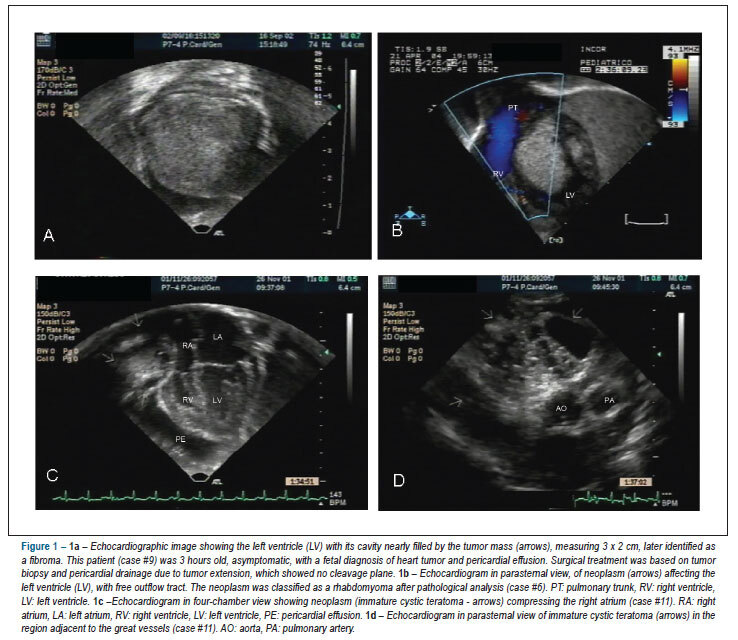
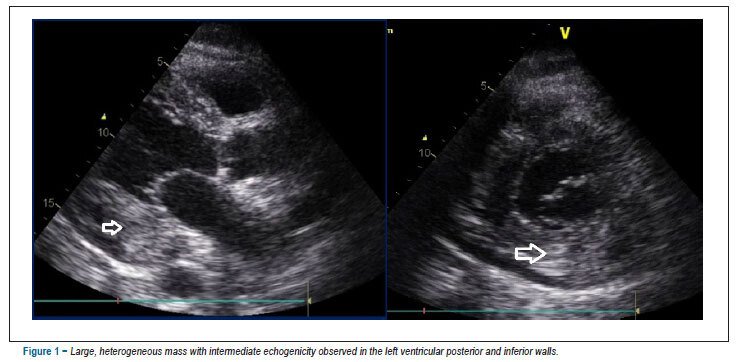
BACKGROUND: The advancement of noninvasive imaging methods has resulted in the increase in diagnosis of heart neoplasms. However, the literature has few studies involving primary cardiac neoplasms in children. OBJECTIVE: To retrospectively review cases of primary heart neoplasms in children, considering the initial clinical manifestations, diagnostic tests used, surgical indication, histopathological types and immediate postoperative course. METHODS: The retrospective study was based on the assessment of medical records from 1983 to 2011. Only cases that were referred for surgical treatment during that period were included. Age at admission, prenatal diagnosis, family history, initial symptoms and the results of performed tests were assessed. Moreover, the date and indication of the surgery, intraoperative findings, the result of the histopathological analysis, as well as the immediate postoperative complications were recorded. RESULTS: Of the 18 patients studied, the most frequent clinical manifestations were dyspnea and heart murmur (7 and 6 patients, respectively); the most often used adjunct diagnostic method was echocardiography (18 patients); cavitary obstruction or ventricular inflow or outflow tract obstruction was the main indication for surgery (12 cases); the most common histological profile was rhabdomyoma (7 patients) and most patients showed good clinical outcome. CONCLUSIONS: In this study, imaging diagnosis was basically attained through echocardiography, with good correlation with intraoperative findings. Histopathological findings were consistent with the literature, with rhabdomyoma being the most common neoplasm in children. The evolution after surgical treatment was favorable in most cases.

  • Echocardiography
  • Heart Neoplasms
  • Retrospective Studies
Read Full Article
Creative Commons Attribution (CC BY) Creative Commons license
11/03/2013 DOI: 10.5935/abc.20130024
Point of view

Common goals to face crisis at coronary care units

Antônio Pazin-Filho et al. Otávio Rizzi Coelho André Schmidt

VIEWPOINT

[…]

Read Full Article
Creative Commons Attribution (CC BY) Creative Commons license
11/03/2013 DOI: 10.5935/abc.20130040
Artigo Original

Evaluation of the autonomic function in patients with hypertrophic cardiomyopathy with and without syncope

Milena Frota Macatrão-Costa et al. Edmundo Arteaga-Fernandez Fábio Sandoli de Brito Francisco Darrieux … Sissy Lara de Melo Mauricio Scanavacca Eduardo Sosa Denise Hachul

BACKGROUND: Several mechanisms may be involved in the trigger of syncope in patients with hypertrophic cardiomyopathy (HCM), including hemodynamic collapses that might be related to an autonomic imbalance. OBJECTIVE: To evaluate and compare the autonomic function of patients presenting HCM with unexplained syncope (US) to those without syncope. METHODS: Thirty-seven patients were included, 16 with US and 21 without syncope. Their autonomic function was assessed by spontaneous and phenylephrine induced baroreflex sensitivity (BRS), by heart rate variability (HRV) in time domain during 24-hour Holter and in frequency domain (spectral analysis), both in supine position and at 70º head-up tilt (HUT). RESULTS: The spontaneous BRS was similar in both groups (16,46 ± 12,99 vs. 18,31 ± 9,88 ms/mmHg, p = 0,464), as was phenylephrine-induced BRS (18,33 ± 9,31 vs. 15,83 ± 15,48 ms/mmHg, p = 0,521). No differences were observed in SDNN (137,69 ± 36,62 vs . 145,95 ± 38,07 ms, p=0,389). The group presenting syncope had a significantly lower RMSSD (24,88±10,03 vs. 35,58 ± 16,43 ms, p = 0,042) and a tendency to lower pNN50 (4,51 ± 3,78 vs . 8,83 ± 7,98%, p =0,085) and lower values of the high frequency component of HRV spectral analysis at rest (637,59±1.295,53 vs. 782,65±1.264,14ms2, p=0,075). No significant difference was observed in response to HUT (p = 0,053). HUT sensitivity, specificity and accuracy in identifying the etiology of US in HCM patients were 6%, 66% and 40%, respectively. CONCLUSIONS: A lower parasympathetic tone was observed in HCM patients with US, but the clinical relevance of this finding remains unclear. HUT is not a valuable tool for evaluating the origin of syncope in these patients, mainly because of its poor specificity.

  • Autonomic Nervous System
  • Cardiomyopathy, Hypertrophic
  • Syncope
Read Full Article
Creative Commons Attribution (CC BY) Creative Commons license
11/03/2013 DOI: 10.5935/abc.20130032 Views 1
Letter to the Editor

Use of sildenafil in the evaluation of candidates for heart transplantation

Eduardo da Rosa Maffini et al. Luísa Stefânia Demore Roberta Casanova Wilhelms

LETTER TO THE EDITOR

Use of sildenafil in the evaluation of candidates for heart transplantation

[…]

Read Full Article
Creative Commons Attribution (CC BY) Creative Commons license
11/03/2013 DOI: 10.5935/abc.20130035
Artigo Original

Association between endothelial function and autonomic modulation in patients with chagas disease

Adriana Barni Truccolo et al. Thiago Dipp Bruna Eibel Rodrigo Antonini Ribeiro … Karina Rabello Casali Maria Claudia Irigoyen Iseu Gus Lucia Campos Pellanda Rodrigo Della Meã Plentz

BACKGROUND: Under homeostatic condition, the autonomic nervous system (ANS), through the release of vasoconstrictor neurotransmitters, and the endothelium, through the release of vasodilating substances, interact to maintain blood vessel tone. However, the association between those two systems in patients with Chagas disease in its indeterminate phase (IChD) has not been studied. OBJECTIVE: To assess the association between autonomic modulation parameters and endothelial function in patients with IChD. METHODS: Thirteen patients with IChD (59.2 ± 11.23 years) and no risk factors for cardiovascular disease were assessed for autonomic modulation by using the blood pressure oscillometric method (Finapress) and the heart rate variability technique (HRV) in the frequency domain. Endothelial function was assessed by use of the brachial artery flow-mediated dilation (FMD) method with high-resolution ultrasound images. RESULTS: In the dorsal decubitus position, correlation of FMD was observed with normalized high-frequency (r = 0.78; p = 0.007) and low-frequency spectral components (r = 0.68; p = 0.01), as well as with sympathovagal balance (r = -0.78; p = 0.004). CONCLUSIONS: Our study indicates the existence of a relationship between the changes in autonomic modulation and endothelial function in patients with IChD.

  • Autonomic Nervous System
  • Chagas disease
  • Endothelium
  • Heart Failure
Read Full Article
Creative Commons Attribution (CC BY) Creative Commons license
11/03/2013 DOI: 10.5935/abc.20130026 Views 1
I guideline for cardiopulmonary resuscitation and emergency cardiovascular care - Brazilian Society of Cardiology: executive summary
Special Article

I guideline for cardiopulmonary resuscitation and emergency cardiovascular care – Brazilian Society of Cardiology: executive summary

Maria Margarita Gonzalez et al. Sergio Timerman Renan Gianotto de Oliveira Thatiane Facholi Polastri … Luis Augusto Palma Dallan Sebastião Araújo Silvia Gelás Lage André Schmidt Claudia San Martín de Bernoche Manoel Fernandes Canesin Frederico José Neves Mancuso Maria Helena Favarato

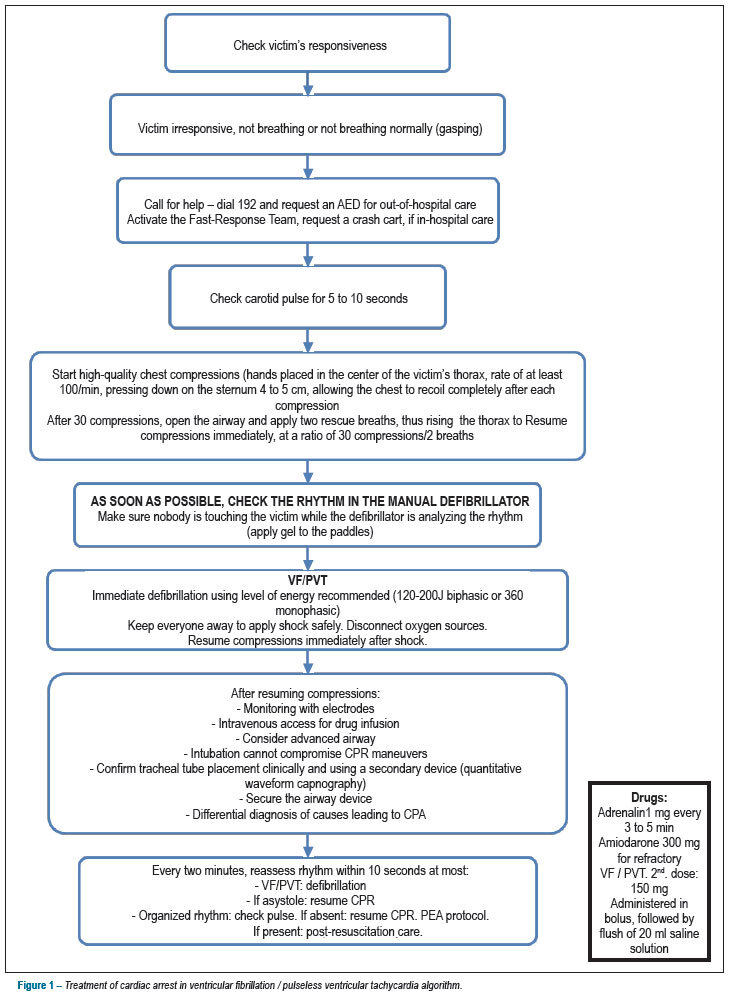
Despite advances related to the prevention and treatment in the past few years, many lives are lost to cardiac arrest and cardiovascular events in general in Brazil every year. Basic Life Support involves cardiovascular emergency treatment mainly in the pre-hospital environment, with emphasis on the early recognition and delivery of cardiopulmonary resuscitation maneuvers focused on high-quality thoracic compressions and rapid defibrillation by means of the implementation of public access-to-defibrillation programs. These aspects are of the utmost importance and may make the difference on the patient’s outcomes, such as on hospital survival with no permanent neurological damage. Early initiation of the Advanced Cardiology Life Support also plays an essential role by keeping the quality of thoracic compressions; adequate airway management; specific treatment for the different arrest rhythms; defibrillation; and assessment and treatment of the possible causes during all the assistance. More recently, emphasis has been given to post-resuscitation care, with the purpose of reducing mortality by means of early recognition and treatment of the post-cardiac arrest syndrome. Therapeutic hypothermia has provided significant improvement of neurological damage and should be performed in comatose individuals post-cardiac arrest. For physicians working in the emergency department or intensive care unit, it is extremely important to improve the treatment given to these patients by means of specific training, thus giving them the chance of higher success and of better survival rates.

  • Cardiopulmonary Resuscitation
  • Heart Arrest
  • hypothermia
Read Full Article
Creative Commons Attribution (CC BY) Creative Commons license
11/03/2013 DOI: 10.5935/abc.20130022 Views 3
Digital stethoscope as an innovative tool on the teaching of auscultatory skills
Brief Communication

Digital stethoscope as an innovative tool on the teaching of auscultatory skills

Claudio Tinoco Mesquita et al. Jader Costa dos Reis Luciana Silveira Simões Eduardo Cardoso de Moura … Gustavo Amarante Rodrigues Carolina Cunto de Athayde Hugo Lima Machado Pedro Gemal Lanzieri

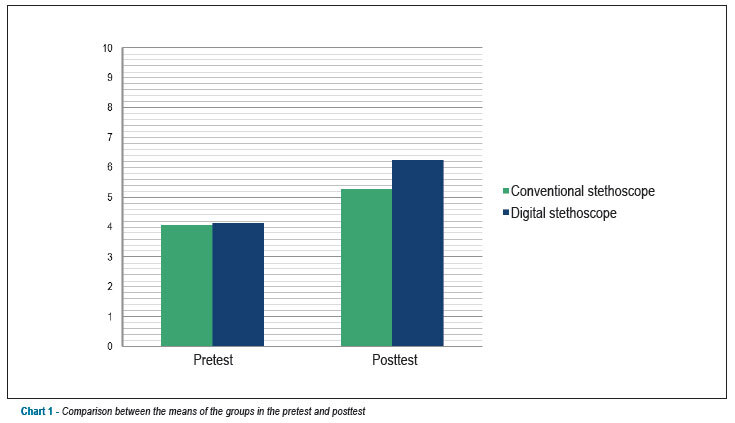
Physical cardiovascular examination, particularly cardiac auscultation, is one of the most difficult clinical skills for students during their medical training. Studies suggest that the use of technologies such as digital stethoscope increase the accuracy of clinical examination, however, its impact on the teaching of cardiac auscultation for undergraduate students of medicine is not known. The objective is to demonstrate the usefulness of the digital stethoscope compared to traditional methods as a tool in the teaching of auscultatory skills. nterventional, longitudinal, controlled, unicenter and randomized study. Thirty-eight medicine students were enrolled for a cardiovascular semiology course lasting eight weeks. The course program included lectures and bedside practice in Cardiology wards. In the practical lessons, the students were randomized into two groups: 1) (n = 21) digital stethoscope (Littmann® Model 3200, 3M); and 2) (n = 17) conventional stethoscopes. A pre-training evaluation was conducted through a test using the software Heart Sounds®, which was repeated after the course. The average scores were compared by paired T test and unpaired T test. It is observed that, at the end of the course, there was a significantly greater improvement in the group that used the digital stethoscope (51.9%) compared to the group using the conventional stethoscope (29.5%). Short-term interventions for cardiac semiology teaching are able to contribute significantly to improving proficiency in the identification of heart sounds. The use of digital stethoscope proved to be a positive factor in teaching these skills.

  • Cardiology
  • Heart Auscultation
  • Stethoscopes
Read Full Article
Creative Commons Attribution (CC BY) Creative Commons license
11/03/2013 DOI: 10.5935/abc.20130033
Evolution of socioeconomic indicators and cardiovascular mortality in three brazilian states
Artigo Original

Evolution of socioeconomic indicators and cardiovascular mortality in three brazilian states

Gabriel Porto Soares et al. Júlia Dias Brum Gláucia Maria Moraes de Oliveira Carlos Henrique Klein Nelson Albuquerque Souza e Silva

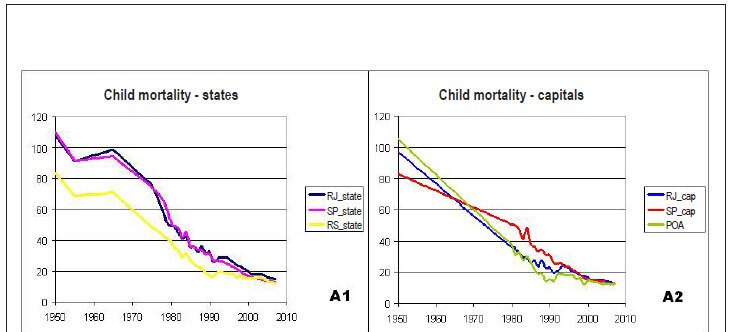
BACKGROUND: Cardiovascular diseases are the major cause of death in Brazil. OBJECTIVE: To correlate cardiovascular mortality rates in the states of Rio de Janeiro, São Paulo and Rio Grande do Sul, and in their capitals, between 1980 and 2008, with socioeconomic indicators collected from 1949 onwards. METHODS: Population and death data were obtained from the Brazilian Unified Health System databank (Datasus). Mortality rates due to the following were calculated and adjusted by use of the direct method and compensated for poorly defined causes: ischemic heart diseases; cerebrovascular diseases; cardiovascular diseases; poorly defined causes; and all causes. Child mortality data were obtained from state and municipal health secretariats and from the Brazilian Institute of Geography and Statistics (IBGE). Information on gross domestic product (GDP) and educational level was obtained from the Brazilian Institute of Applied Economic Research (Ipea). The mortality rates and socioeconomic indicators were correlated by using the estimation of Pearson linear coefficients to determine optimized year lag. The inclination coefficients of the regression between the dependent variable “disease” and the independent variable “socioeconomic indicator” were estimated. RESULTS: The three states showed a reduction in mortality, which was especially due to a decrease in cardiovascular mortality, mainly of cerebrovascular diseases. The decrease in cardiovascular mortality was preceded by a reduction in child mortality, an elevation in the per capita GDP, and an increase in the educational level, and a strong correlation between indicators and mortality rates was observed. CONCLUSIONS: The three indicators showed an almost maximum correlation with the reduction in cardiovascular mortality. Such relationship indicates the importance of improving quality of life to reduce cardiovascular mortality.

  • Brazil
  • Cardiovascular Diseases
  • Epidemiology
  • Social Indicators
Read Full Article
Creative Commons Attribution (CC BY) Creative Commons license
11/03/2013 DOI: 10.5935/abc.20130028 Views 1
Association between inflammatory markers and left atrial enlargement in patients on hemodialysis
Artigo Original

Association between inflammatory markers and left atrial enlargement in patients on hemodialysis

Silvio Henrique Barberato et al. Sérgio Gardano Elias Bucharles Admar Moraes de Souza Costantino Ortiz Costantini … Costantino Roberto Frack Costantini Roberto Pecoits-Filho

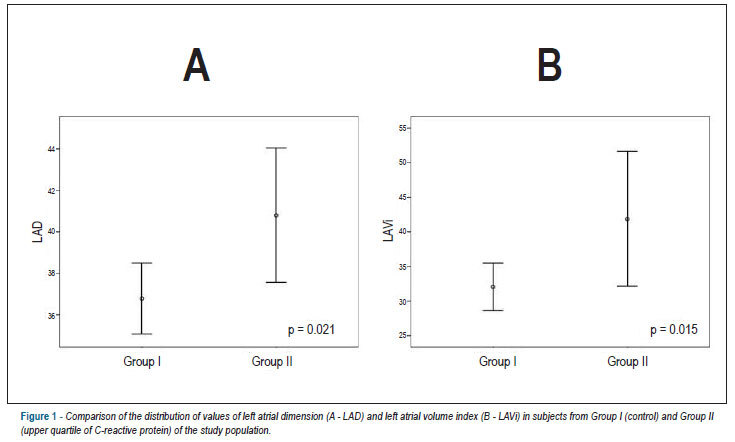
BACKGROUND: In individuals with concurrent chronic kidney disease (CKD) and cardiovascular disease (CVD), the association between left atrial volume (LAV) and serum levels of C-reactive protein (CRP) is shown. OBJECTIVE: Verify the presence of associations between systemic inflammation and LA dilation in patients on hemodialysis (HD) without clinically evident CVD. METHODS: This was an observational cross-sectional study of a population on HD (> 3 months), which excluded patients with acute or chronic inflammatory diseases (infections, malignancies, autoimmune diseases) hemodynamic instability, use of anti-inflammatory drugs, hyperparathyroidism, arrhythmias, mitral valve disease and prior cardiovascular (CV) events. CRP and interleukin-6 (IL-6) measurements as well as Doppler echocardiography were obtained. Correlation coefficients were determined to evaluate the associations between variables. RESULTS: A total of 58 patients were included (28 men, aged 55 ± 15 years), on HD for 24 ± 16 months, 45% were hypertensive, 26% diabetic, with median CRP of 5.1 mg/dL and IL-6 of 6.1 pg/dL. CRP significantly correlated with LAV (p = 0.040), LAV index (LAVi, p = 0.02) and mitral inflow E wave (p = 0.014). IL-6, despite the strong association with CRP levels (r = 0.75, p < 0.001), did not correlate with echocardiographic indices. Individuals in the top quartile of CRP had significantly higher LAVi than the others (42 ± 17 versus 32 ± 11 mL/m², p = 0.015). CONCLUSIONS: In subjects on HD with no prior CV event, there was an association between elevated CRP levels and LA enlargement. The findings suggest an association between physiopathological processes related to left atrial dilation and systemic inflammatory state of patients on HD.

  • C-Reactive Protein
  • Heart Atria
  • Inflammation
  • renal dialysis
Read Full Article
Creative Commons Attribution (CC BY) Creative Commons license
11/03/2013 DOI: 10.5935/abc.20130027 Views 1
Case 1/2013: 69-year-old male patient with sudden back and lower right limb pain and shock
Anatomopathological Session

Case 1/2013: 69-year-old male patient with sudden back and lower right limb pain and shock

Carlos Vinícius Abreu do Espirito Santo et al. Rafael Alves Franco Luiz Alberto Benvenuti

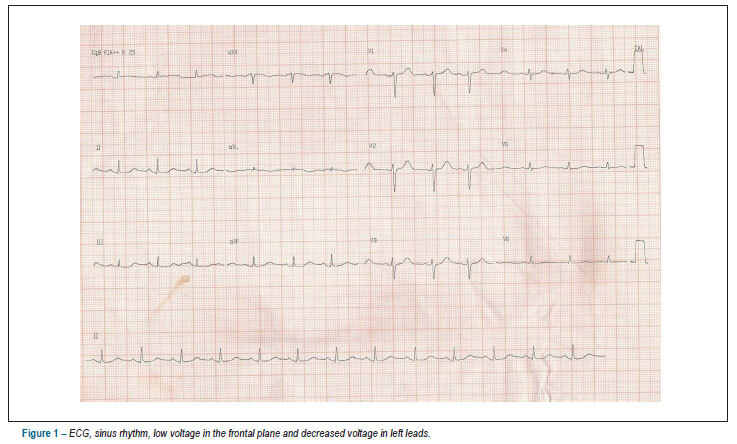
The patient, MSM, a 69-year-old man, sought medical care due to left dorsal and right lower limb pain. The chest x-ray showed mediastinal enlargement. He was undergoing examination when he lost consciousness and went into shock. Subcutaneous emphysema was observed in the left hemithorax, as well as abolition of breath sounds at auscultation. Tracheal intubation was performed with draining of blood-tinged fluid from the left hemithorax. Echocardiography showed left ventricle with 44/29 mm; septum, 12 mm; posterior wall, 13 mm; mild aortic root dilation, dissection of the lamina and periaortic hematoma. The valves and pericardium were normal. The patient was transferred to Instituto do Coraçao – InCor. Physical examination (21 Oct 2004: 10:45) showed that the patient was sedated with tracheal intubation, pale, heart rate at 90 bpm, blood pressure 130 x 80 mmHg, bloody drainage in the chest tube. Electrocardiogram – frequency 90 bpm, sinus rhythm, low voltage in the frontal plane and decreased voltage in left leads (Fig. 1). Computed tomography showed bilateral subcutaneous emphysema, thoracic aorta with inaccurate borders in its descending portion (from the subclavian artery to the middle portion), collapsed left lung and extensive collection of hematic characteristics in same hemithorax and middle and posterior mediastinum. Small right pneumothorax; small right pleural effusion with underlying parenchymal alterations. The analysis of the heart was impaired by the presence of hemothorax. While undergoing computed tomography, the patient showed no pulse, mydriasis, with asystole unresponsive to resuscitation and died (21 Oct 2011; 15:00 h).

  • Acute coronary syndrome
  • Aorta, Thoracic
  • Pneumothorax
  • Pulmonary embolism
Read Full Article
Creative Commons Attribution (CC BY) Creative Commons license
11/03/2013 DOI: 10.5935/abc.20130037
The oxidative response of mouse hearts is modulated by genetic background
Artigo Original

The oxidative response of mouse hearts is modulated by genetic background

Marco Aurélio Santos-Silva et al. Akinori Cardozo Nagato Eduardo Tavares Lima Trajano Jackson Nogueira Alves … Ana Carla Balthar Bandeira Luís Cristóvão Porto Frank Silva Bezerra

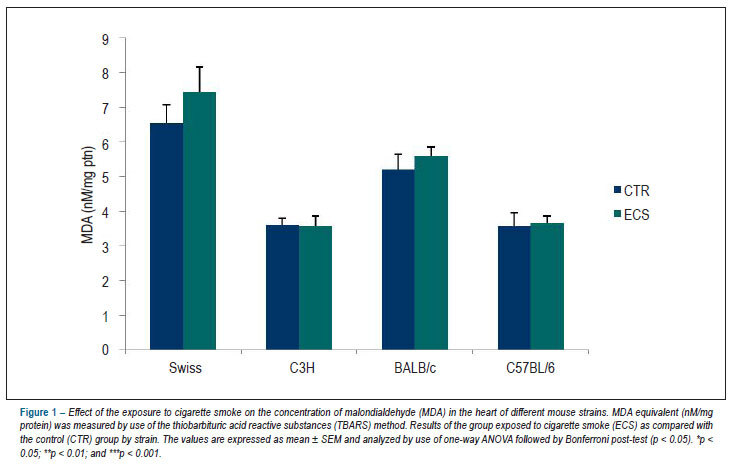
BACKGROUND: Smoking plays an important role in cardiovascular diseases. However, the reasons why some individuals develop those diseases and others do not remain to be explained. OBJECTIVE: This study aimed at assessing the redox profile of the heart of different mouse strains after exposure to cigarette smoke. METHODS: Male mice of the Swiss (n = 10), C3H (n = 10), BALB/c (n = 10) and C57BL/6 (n = 10) strains were exposed to cigarette smoke (12 cigarettes/day), while their respective controls (n = 10) were exposed to ambient air for 60 days. After being euthanized, their heart was removed for biochemical analyses. RESULTS: Although the malondialdehyde content did not increase in any of the groups, catalase activity decreased in the Swiss (p < 0.05) and BALB/c (p < 0.05) strain mice as compared with their respective control groups, while myeloperoxidase decreased in the C3H (p < 0.05) and C57BL/6 (p < 0.001) strain mice as compared with their respective control groups. The reduced glutathione content decreased in the Swiss, C3H, C57BL/6 (p < 0.05) and BALB/c (p < 0,001) strain mice as compared with their respective control groups. Regarding reduced glutathione content, an increase was observed in the Swiss strain mice (p < 0.05), while a decrease was observed in the C3H (p < 0.05) and BALB/c (p < 0.001) strain mice as compared with their respective control groups. The reduced glutathione/reduced glutathione ratio showed a reduction in the Swiss and C57BL/6 (p < 0.05) strain mice as compared with their respective control groups. CONCLUSIONS: The genetic background of mice can influence the antioxidant response after exposure to cigarette smoke and seems to be a determinant factor for redox imbalance in Swiss and C57BL/6 strain mice. Understanding antioxidant responses and genetic background of C3H and BALB/c strain mice might provide important information regarding cardiac resistance to cigarette smoke.

  • Genetic Enhancement
  • Mice
  • Oxidative Stress
  • Smoke
  • Tobacco
Read Full Article
Creative Commons Attribution (CC BY) Creative Commons license
11/03/2013 DOI: 10.5935/abc.20130029
Is there evidence favoring the use of beta-blockers and dobutamine in acute heart failure?
Review Article

Is there evidence favoring the use of beta-blockers and dobutamine in acute heart failure?

Luiz Carlos Santana Passos et al. Andréa Cristina Costa Barbosa Márcio Galvão Oliveira Edval Gomes Santos Jr

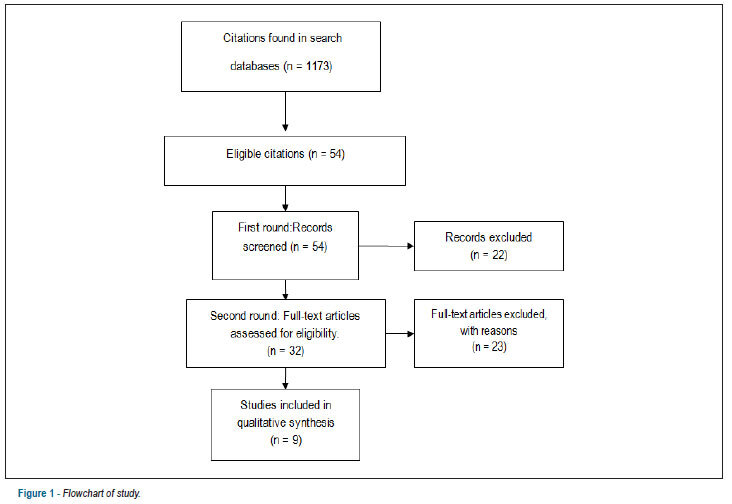
Several studies have reported the benefits of beta-blockers (BB) for patients presenting with systolic heart failure. however, many patients hospitalized as a result of acute heart failure are already using BB and require dobutamine for arterial hypotension and low cardiac output. Therefore, a decision must be made regarding whether BB should be maintained or even started in such cases. The aim of this study was to establish whether there is evidence supporting the safety andyeffectiveness of BB together with dobutamine for patients presenting with acute decompensated heart failure (ADHF). We conducted a search of the English-language literature in the databases MEDLINE, ISI Web of Science, Virtual Health Library, Cochrane Library and the CAPES Portal of Scientific Journals to identify related studies. Additional literature was obtained through the review of relevant references in the identified articles. The expected outcomes included information on the prognosis (in-hospital and on follow-up mortality, number of days of hospitalization and readmission),yeffectiveness and safety (worsening of symptoms, shock, intolerance) of the concomitant use of these drugs in hospitalized patients with ADHF and low cardiac output. This review included nine studies. however, no randomized clinical trials on this subject were found. Most studies include a low number of patients, and no studies addressing the safety of the concomitant use of these drugs were found. The resulting data suggest that a careful literature review did not supply evidence for the systematic use of BB in patients with low cardiac output syndrome who require dobutamine for inotropic support.

  • adrenergic beta-agonists
  • cardiac output, low
  • Dobutamine
  • Heart Failure
  • therapeutic use
Read Full Article
Creative Commons Attribution (CC BY) Creative Commons license
11/03/2013 DOI: 10.5935/abc.20130034
Impact on hypertension reclassification by Ambulatory Blood Pressure Monitoring (ABPM) according to the V Brazilian Guidelines on ABPM
Artigo Original

Impact on hypertension reclassification by Ambulatory Blood Pressure Monitoring (ABPM) according to the V Brazilian Guidelines on ABPM

Daniel Forestiero et al. Juliana Lustoza Mauad Camila Forestiero Mario Lins Peixoto … Fabio Peixoto Ganassin Carolina Gonzaga Antonio Carlos Cordeiro Gabriel Doreto Rodrigues Tiago Bueno da Silveira Celso Amodeo

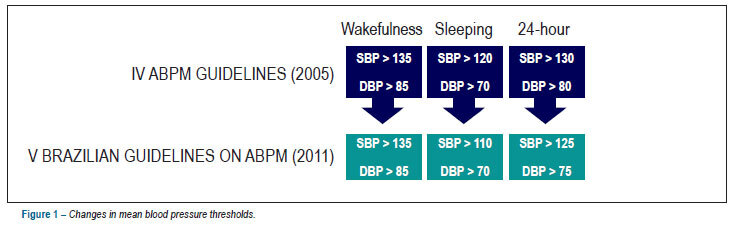
BACKGROUND: New recommendations on reference values for normal test results in ambulatory blood pressure monitoring (ABPM) were proposed by the V Brazilian Guidelines on Ambulatory Blood Pressure Monitoring, based mainly on the IDACO study. Objectives: This epidemiological study is aimed at evaluating the impact of adopting these new standards in an arterial hypertension referral center. METHODS: The results of 1,567 ABPM tests carried out between 2005 and 2010 were analyzed; 481 patients were excluded from the sample for not meeting minimum quality criteria of the test. Reference values from the IV Brazilian Guidelines on ABPM (2005) were used for the classification of these tests regarding the abnormality and compared with the changes proposed by the V Brazilian Guidelines on ABPM (2011). Statistical analysis was performed by Pearson’s chi-square method and p values < 0.05 were considered statistically significant. RESULTS: For the 1,086 tests evaluated, there was a significant difference in the proportion of patients with altered ABPM results, especially for the variable systolic pressure in the sleeping period: 49% when adopting the cutoff values of 2005 and 71% when adopting the values of 2011, with statistical significance, p < 0.0001. CONCLUSIONS: The recommendations of the new guidelines had a great impact on the hypertension classification by ABPM test results in the study population. The question of thresholds of these tests for therapeutic targets of patients known to be hypertensive is still open and requires further studies, preferably national ones, for better definition of the subject.

  • Blood Pressure Monitoring, Ambulatory
  • Guidelines
  • Hypertension
Read Full Article
Creative Commons Attribution (CC BY) Creative Commons license
11/03/2013 DOI: 10.5935/abc.20130031
Non-Hodgkin lymphoma as an uncommon cause of acute heart failure
Case Report

Non-Hodgkin lymphoma as an uncommon cause of acute heart failure

Francisca Caetano et al. Paula Mota Joana Trigo Susana Basso … Luís Francisco Araújo António Leitão-Marques

CASE REPORT

[…]

Read Full Article
Creative Commons Attribution (CC BY) Creative Commons license
11/03/2013 DOI: 10.5935/abc.20130038 Views 2

How to cite this article

EndNote RIS

Electronic Document Format (Vancouver)

Carvalho MV, Siqueira LB, Sousa ALL, Jardim PCBV. The influence of hypertension on quality of life. Arquivos Brasileiros de Cardiologia 2013;100(2):164-7.

Electronic Document Format (ABNT)

Carvalho, Maria Virgínia de; Siqueira, Liza Batista; Sousa, Ana Luiza Lima; Jardim, Paulo César Brandão Veiga. The influence of hypertension on quality of life. Arquivos Brasileiros de Cardiologia, v. 100, n. 2, p. 164-174, Mar. 2013.

Electronic Document Format (APA)

Carvalho, M. V. , Siqueira, L. B., Sousa, A. L. L., & Jardim, P. C. B. V. (2013). The influence of hypertension on quality of life. Arquivos Brasileiros de Cardiologia, 100(2), 164-174.

Electronic Document Format (ISO)

Carvalho, Maria Virgínia de and Siqueira, Liza Batista and Sousa, Ana Luiza Lima and Jardim, Paulo César Brandão Veiga. The influence of hypertension on quality of life. Arquivos Brasileiros de Cardiologia [online]. 2013, vol. 100, n. 2, [cited 2026-10-14], pp. 164-174. Available from: <https://journals.cardiol.br/en/article/the-influence-of-hypertension-on-quality-of-life/>. ISSN 0066-782X

EndNote RIS

Electronic Document Format (Vancouver)

Pinheiro CP, Oliveira MDP, Faro GBA, Silva EC, Rocha EAA, Barreto-Filho JAS, Oliveira JLM, et al. Prognostic value of stress hyperglycemia for in-hospital outcome in acute coronary artery disease. Arquivos Brasileiros de Cardiologia 2013;100(2):127-34.

Electronic Document Format (ABNT)

Pinheiro, Carlos Passos; Oliveira, Marcos Danillo Peixoto; Faro, Gustavo Baptista de Almeida; Silva, Esdras Correa; Rocha, Eduardo Augusto Andrade da; Barreto-Filho, José Augusto Soares; Oliveira, Joselina Luzia Menezes; Sousa, Antônio Carlos Sobral. Prognostic value of stress hyperglycemia for in-hospital outcome in acute coronary artery disease. Arquivos Brasileiros de Cardiologia, v. 100, n. 2, p. 127-134, Mar. 2013.

Electronic Document Format (APA)

Pinheiro, C. P., Oliveira, M. D. P., Faro, G. B. A., Silva, E. C., Rocha, E. A. A. , Barreto-Filho, J. A. S., Oliveira, J. L. M., & Sousa, A. C. S. (2013). Prognostic value of stress hyperglycemia for in-hospital outcome in acute coronary artery disease. Arquivos Brasileiros de Cardiologia, 100(2), 127-134.

Electronic Document Format (ISO)

Pinheiro, Carlos Passos and Oliveira, Marcos Danillo Peixoto and Faro, Gustavo Baptista de Almeida and Silva, Esdras Correa and Rocha, Eduardo Augusto Andrade da and Barreto-Filho, José Augusto Soares and Oliveira, Joselina Luzia Menezes and Sousa, Antônio Carlos Sobral. Prognostic value of stress hyperglycemia for in-hospital outcome in acute coronary artery disease. Arquivos Brasileiros de Cardiologia [online]. 2013, vol. 100, n. 2, [cited 2026-10-14], pp. 127-134. Available from: <https://journals.cardiol.br/en/article/prognostic-value-of-stress-hyperglycemia-for-in-hospital-outcome-in-acute-coronary-artery-disease/>. ISSN 0066-782X

EndNote RIS

Electronic Document Format (Vancouver)

Peix A, García R, Sánchez J, Cabrera LO, Padrón K, Vedia O, Choque HV, et al. Myocardial perfusion imaging and cardiac involvement in the indeterminate phase of chagas disease. Arquivos Brasileiros de Cardiologia 2013;100(2):114-7.

Electronic Document Format (ABNT)

Peix, Amalia; García, Raymid; Sánchez, Jesús; Cabrera, Lázaro O.; Padrón, Kenia; Vedia, Oscar; Choque, Hugo V.; Fraga, Jorge; Bandera, Juan; Hernández-Cañero, Alberto. Myocardial perfusion imaging and cardiac involvement in the indeterminate phase of chagas disease. Arquivos Brasileiros de Cardiologia, v. 100, n. 2, p. 114-117, Mar. 2013.

Electronic Document Format (APA)

Peix, A., García, R., Sánchez, J., Cabrera, L. O., Padrón, K., Vedia, O., Choque, H. V., Fraga, J., Bandera, J., & Hernández-Cañero, A. (2013). Myocardial perfusion imaging and cardiac involvement in the indeterminate phase of chagas disease. Arquivos Brasileiros de Cardiologia, 100(2), 114-117.

Electronic Document Format (ISO)

Peix, Amalia and García, Raymid and Sánchez, Jesús and Cabrera, Lázaro O. and Padrón, Kenia and Vedia, Oscar and Choque, Hugo V. and Fraga, Jorge and Bandera, Juan and Hernández-Cañero, Alberto. Myocardial perfusion imaging and cardiac involvement in the indeterminate phase of chagas disease. Arquivos Brasileiros de Cardiologia [online]. 2013, vol. 100, n. 2, [cited 2026-10-14], pp. 114-117. Available from: <https://journals.cardiol.br/en/article/myocardial-perfusion-imaging-and-cardiac-involvement-in-the-indeterminate-phase-of-chagas-disease/>. ISSN 0066-782X

EndNote RIS

Electronic Document Format (Vancouver)

Penha JG, Zorzanelli L, Barbosa-Lopes AA, Aiello VD, Carvalho VO, Caneo LF, Riso AA, et al. Heart neoplasms in children: retrospective analysis. Arquivos Brasileiros de Cardiologia 2013;100(2):120-6.

Electronic Document Format (ABNT)

Penha, Juliano Gomes; Zorzanelli, Leina; Barbosa-Lopes, Antônio Augusto; Aiello, Vera Demarchi; Carvalho, Vitor Oliveira; Caneo, Luiz Fernando; Riso, Arlindo de Almeida; Tanamati, Carla; Atik, Edimar; Jatene, Marcelo Biscegli. Heart neoplasms in children: retrospective analysis. Arquivos Brasileiros de Cardiologia, v. 100, n. 2, p. 120-126, Mar. 2013.

Electronic Document Format (APA)

Penha, J. G., Zorzanelli, L., Barbosa-Lopes, A. A., Aiello, V. D., Carvalho, V. O., Caneo, L. F., Riso, A. A., Tanamati, C., Atik, E., & Jatene, M. B. (2013). Heart neoplasms in children: retrospective analysis. Arquivos Brasileiros de Cardiologia, 100(2), 120-126.

Electronic Document Format (ISO)

Penha, Juliano Gomes and Zorzanelli, Leina and Barbosa-Lopes, Antônio Augusto and Aiello, Vera Demarchi and Carvalho, Vitor Oliveira and Caneo, Luiz Fernando and Riso, Arlindo de Almeida and Tanamati, Carla and Atik, Edimar and Jatene, Marcelo Biscegli. Heart neoplasms in children: retrospective analysis. Arquivos Brasileiros de Cardiologia [online]. 2013, vol. 100, n. 2, [cited 2026-10-14], pp. 120-126. Available from: <https://journals.cardiol.br/en/article/heart-neoplasms-in-children-retrospective-analysis/>. ISSN 0066-782X

EndNote RIS

Electronic Document Format (Vancouver)

Pazin-Filho A, Coelho OR, Schmidt A. Common goals to face crisis at coronary care units. Arquivos Brasileiros de Cardiologia 2013;100(2):e27-9.

Electronic Document Format (ABNT)

Pazin-Filho, Antônio; Coelho, Otávio Rizzi; Schmidt, André. Common goals to face crisis at coronary care units. Arquivos Brasileiros de Cardiologia, v. 100, n. 2, p. e27-e29, Mar. 2013.

Electronic Document Format (APA)

Pazin-Filho, A., Coelho, O. R., & Schmidt, A. (2013). Common goals to face crisis at coronary care units. Arquivos Brasileiros de Cardiologia, 100(2), e27-e29.

Electronic Document Format (ISO)

Pazin-Filho, Antônio and Coelho, Otávio Rizzi and Schmidt, André. Common goals to face crisis at coronary care units. Arquivos Brasileiros de Cardiologia [online]. 2013, vol. 100, n. 2, [cited 2026-10-14], pp. e27-e29. Available from: <https://journals.cardiol.br/en/article/common-goals-to-face-crisis-at-coronary-care-units/>. ISSN 0066-782X

EndNote RIS

Electronic Document Format (Vancouver)

Macatrão-Costa MF, Arteaga-Fernandez E, Brito FS, Darrieux F, Melo SL, Scanavacca M, Sosa E, et al. Evaluation of the autonomic function in patients with hypertrophic cardiomyopathy with and without syncope. Arquivos Brasileiros de Cardiologia 2013;100(2):180-6.

Electronic Document Format (ABNT)

Macatrão-Costa, Milena Frota; Arteaga-Fernandez, Edmundo; Brito, Fábio Sandoli de; Darrieux, Francisco; Melo, Sissy Lara de; Scanavacca, Mauricio; Sosa, Eduardo; Hachul, Denise. Evaluation of the autonomic function in patients with hypertrophic cardiomyopathy with and without syncope. Arquivos Brasileiros de Cardiologia, v. 100, n. 2, p. 180-186, Mar. 2013.

Electronic Document Format (APA)

Macatrão-Costa, M. F., Arteaga-Fernandez, E., Brito, F. S. , Darrieux, F., Melo, S. L. , Scanavacca, M., Sosa, E., & Hachul, D. (2013). Evaluation of the autonomic function in patients with hypertrophic cardiomyopathy with and without syncope. Arquivos Brasileiros de Cardiologia, 100(2), 180-186.

Electronic Document Format (ISO)

Macatrão-Costa, Milena Frota and Arteaga-Fernandez, Edmundo and Brito, Fábio Sandoli de and Darrieux, Francisco and Melo, Sissy Lara de and Scanavacca, Mauricio and Sosa, Eduardo and Hachul, Denise. Evaluation of the autonomic function in patients with hypertrophic cardiomyopathy with and without syncope. Arquivos Brasileiros de Cardiologia [online]. 2013, vol. 100, n. 2, [cited 2026-10-14], pp. 180-186. Available from: <https://journals.cardiol.br/en/article/evaluation-of-the-autonomic-function-in-patients-with-hypertrophic-cardiomyopathy-with-and-without-syncope/>. ISSN 0066-782X

EndNote RIS

Electronic Document Format (Vancouver)

Maffini ER, Demore LS, Wilhelms RC. Use of sildenafil in the evaluation of candidates for heart transplantation. Arquivos Brasileiros de Cardiologia 2013;100(2):198.

Electronic Document Format (ABNT)

Maffini, Eduardo da Rosa; Demore, Luísa Stefânia; Wilhelms, Roberta Casanova. Use of sildenafil in the evaluation of candidates for heart transplantation. Arquivos Brasileiros de Cardiologia, v. 100, n. 2, p. 198-198, Mar. 2013.

Electronic Document Format (APA)

Maffini, E. R., Demore, L. S., & Wilhelms, R. C. (2013). Use of sildenafil in the evaluation of candidates for heart transplantation. Arquivos Brasileiros de Cardiologia, 100(2), 198-198.

Electronic Document Format (ISO)

Maffini, Eduardo da Rosa and Demore, Luísa Stefânia and Wilhelms, Roberta Casanova. Use of sildenafil in the evaluation of candidates for heart transplantation. Arquivos Brasileiros de Cardiologia [online]. 2013, vol. 100, n. 2, [cited 2026-10-14], pp. 198-198. Available from: <https://journals.cardiol.br/en/article/use-of-sildenafil-in-the-evaluation-of-candidates-for-heart-transplantation/>. ISSN 0066-782X

EndNote RIS

Electronic Document Format (Vancouver)

Truccolo AB, Dipp T, Eibel B, Ribeiro RA, Casali KR, Irigoyen MC, Gus I, et al. Association between endothelial function and autonomic modulation in patients with chagas disease. Arquivos Brasileiros de Cardiologia 2013;100(2):135-40.

Electronic Document Format (ABNT)

Truccolo, Adriana Barni; Dipp, Thiago; Eibel, Bruna; Ribeiro, Rodrigo Antonini; Casali, Karina Rabello; Irigoyen, Maria Claudia; Gus, Iseu; Pellanda, Lucia Campos; Plentz, Rodrigo Della Meã. Association between endothelial function and autonomic modulation in patients with chagas disease. Arquivos Brasileiros de Cardiologia, v. 100, n. 2, p. 135-140, Mar. 2013.

Electronic Document Format (APA)

Truccolo, A. B., Dipp, T., Eibel, B., Ribeiro, R. A., Casali, K. R., Irigoyen, M. C., Gus, I., Pellanda, L. C., & Plentz, R. D. M. (2013). Association between endothelial function and autonomic modulation in patients with chagas disease. Arquivos Brasileiros de Cardiologia, 100(2), 135-140.

Electronic Document Format (ISO)

Truccolo, Adriana Barni and Dipp, Thiago and Eibel, Bruna and Ribeiro, Rodrigo Antonini and Casali, Karina Rabello and Irigoyen, Maria Claudia and Gus, Iseu and Pellanda, Lucia Campos and Plentz, Rodrigo Della Meã. Association between endothelial function and autonomic modulation in patients with chagas disease. Arquivos Brasileiros de Cardiologia [online]. 2013, vol. 100, n. 2, [cited 2026-10-14], pp. 135-140. Available from: <https://journals.cardiol.br/en/article/association-between-endothelial-function-and-autonomic-modulation-in-patients-with-chagas-disease/>. ISSN 0066-782X

EndNote RIS

Electronic Document Format (Vancouver)

Gonzalez MM, Timerman S, Oliveira RG, Polastri TF, Dallan LAP, Araújo S, Lage SG, et al. I guideline for cardiopulmonary resuscitation and emergency cardiovascular care – Brazilian Society of Cardiology: executive summary. Arquivos Brasileiros de Cardiologia 2013;100(2):105-13.

Electronic Document Format (ABNT)

Gonzalez, Maria Margarita; Timerman, Sergio; Oliveira, Renan Gianotto de; Polastri, Thatiane Facholi; Dallan, Luis Augusto Palma; Araújo, Sebastião; Lage, Silvia Gelás; Schmidt, André; Bernoche, Claudia San Martín de; Canesin, Manoel Fernandes; Mancuso, Frederico José Neves; Favarato, Maria Helena. I guideline for cardiopulmonary resuscitation and emergency cardiovascular care – Brazilian Society of Cardiology: executive summary. Arquivos Brasileiros de Cardiologia, v. 100, n. 2, p. 105-113, Mar. 2013.

Electronic Document Format (APA)

Gonzalez, M. M., Timerman, S., Oliveira, R. G. , Polastri, T. F., Dallan, L. A. P., Araújo, S., Lage, S. G., Schmidt, A., Bernoche, C. S. M. , Canesin, M. F., Mancuso, F. J. N., & Favarato, M. H. (2013). I guideline for cardiopulmonary resuscitation and emergency cardiovascular care – Brazilian Society of Cardiology: executive summary. Arquivos Brasileiros de Cardiologia, 100(2), 105-113.

Electronic Document Format (ISO)

Gonzalez, Maria Margarita and Timerman, Sergio and Oliveira, Renan Gianotto de and Polastri, Thatiane Facholi and Dallan, Luis Augusto Palma and Araújo, Sebastião and Lage, Silvia Gelás and Schmidt, André and Bernoche, Claudia San Martín de and Canesin, Manoel Fernandes and Mancuso, Frederico José Neves and Favarato, Maria Helena. I guideline for cardiopulmonary resuscitation and emergency cardiovascular care – Brazilian Society of Cardiology: executive summary. Arquivos Brasileiros de Cardiologia [online]. 2013, vol. 100, n. 2, [cited 2026-10-14], pp. 105-113. Available from: <https://journals.cardiol.br/en/article/i-guideline-for-cardiopulmonary-resuscitation-and-emergency-cardiovascular-care-brazilian-society-of-cardiology-executive-summary/>. ISSN 0066-782X

EndNote RIS

Electronic Document Format (Vancouver)

Mesquita CT, Reis JC, Simões LS, Moura EC, Rodrigues GA, Athayde CC, Machado HL, et al. Digital stethoscope as an innovative tool on the teaching of auscultatory skills. Arquivos Brasileiros de Cardiologia 2013;100(2):187-9.

Electronic Document Format (ABNT)

Mesquita, Claudio Tinoco; Reis, Jader Costa dos; Simões, Luciana Silveira; Moura, Eduardo Cardoso de; Rodrigues, Gustavo Amarante; Athayde, Carolina Cunto de; Machado, Hugo Lima; Lanzieri, Pedro Gemal. Digital stethoscope as an innovative tool on the teaching of auscultatory skills. Arquivos Brasileiros de Cardiologia, v. 100, n. 2, p. 187-189, Mar. 2013.

Electronic Document Format (APA)

Mesquita, C. T., Reis, J. C. , Simões, L. S., Moura, E. C. , Rodrigues, G. A., Athayde, C. C. , Machado, H. L., & Lanzieri, P. G. (2013). Digital stethoscope as an innovative tool on the teaching of auscultatory skills. Arquivos Brasileiros de Cardiologia, 100(2), 187-189.

Electronic Document Format (ISO)

Mesquita, Claudio Tinoco and Reis, Jader Costa dos and Simões, Luciana Silveira and Moura, Eduardo Cardoso de and Rodrigues, Gustavo Amarante and Athayde, Carolina Cunto de and Machado, Hugo Lima and Lanzieri, Pedro Gemal. Digital stethoscope as an innovative tool on the teaching of auscultatory skills. Arquivos Brasileiros de Cardiologia [online]. 2013, vol. 100, n. 2, [cited 2026-10-14], pp. 187-189. Available from: <https://journals.cardiol.br/en/article/digital-stethoscope-as-an-innovative-tool-on-the-teaching-of-auscultatory-skills/>. ISSN 0066-782X

EndNote RIS

Electronic Document Format (Vancouver)

Soares GP, Brum JD, Oliveira GMM, Klein CH, Silva NAS. Evolution of socioeconomic indicators and cardiovascular mortality in three brazilian states. Arquivos Brasileiros de Cardiologia 2013;100(2):147-56.

Electronic Document Format (ABNT)

Soares, Gabriel Porto; Brum, Júlia Dias; Oliveira, Gláucia Maria Moraes de; Klein, Carlos Henrique; Silva, Nelson Albuquerque Souza e. Evolution of socioeconomic indicators and cardiovascular mortality in three brazilian states. Arquivos Brasileiros de Cardiologia, v. 100, n. 2, p. 147-156, Mar. 2013.

Electronic Document Format (APA)

Soares, G. P., Brum, J. D., Oliveira, G. M. M. , Klein, C. H., & Silva, N. A. S. (2013). Evolution of socioeconomic indicators and cardiovascular mortality in three brazilian states. Arquivos Brasileiros de Cardiologia, 100(2), 147-156.

Electronic Document Format (ISO)

Soares, Gabriel Porto and Brum, Júlia Dias and Oliveira, Gláucia Maria Moraes de and Klein, Carlos Henrique and Silva, Nelson Albuquerque Souza e. Evolution of socioeconomic indicators and cardiovascular mortality in three brazilian states. Arquivos Brasileiros de Cardiologia [online]. 2013, vol. 100, n. 2, [cited 2026-10-14], pp. 147-156. Available from: <https://journals.cardiol.br/en/article/evolution-of-socioeconomic-indicators-and-cardiovascular-mortality-in-three-brazilian-states/>. ISSN 0066-782X

EndNote RIS

Electronic Document Format (Vancouver)

Barberato SH, Bucharles SGE, Souza AM, Costantini CO, Costantini CRF, Pecoits-Filho R. Association between inflammatory markers and left atrial enlargement in patients on hemodialysis. Arquivos Brasileiros de Cardiologia 2013;100(2):141-6.

Electronic Document Format (ABNT)

Barberato, Silvio Henrique; Bucharles, Sérgio Gardano Elias; Souza, Admar Moraes de; Costantini, Costantino Ortiz; Costantini, Costantino Roberto Frack; Pecoits-Filho, Roberto. Association between inflammatory markers and left atrial enlargement in patients on hemodialysis. Arquivos Brasileiros de Cardiologia, v. 100, n. 2, p. 141-146, Mar. 2013.

Electronic Document Format (APA)

Barberato, S. H., Bucharles, S. G. E., Souza, A. M. , Costantini, C. O., Costantini, C. R. F., & Pecoits-Filho, R. (2013). Association between inflammatory markers and left atrial enlargement in patients on hemodialysis. Arquivos Brasileiros de Cardiologia, 100(2), 141-146.

Electronic Document Format (ISO)

Barberato, Silvio Henrique and Bucharles, Sérgio Gardano Elias and Souza, Admar Moraes de and Costantini, Costantino Ortiz and Costantini, Costantino Roberto Frack and Pecoits-Filho, Roberto. Association between inflammatory markers and left atrial enlargement in patients on hemodialysis. Arquivos Brasileiros de Cardiologia [online]. 2013, vol. 100, n. 2, [cited 2026-10-14], pp. 141-146. Available from: <https://journals.cardiol.br/en/article/association-between-inflammatory-markers-and-left-atrial-enlargement-in-patients-on-hemodialysis/>. ISSN 0066-782X

EndNote RIS

Electronic Document Format (Vancouver)

Santo CVAE, Franco RA, Benvenuti LA. Case 1/2013: 69-year-old male patient with sudden back and lower right limb pain and shock. Arquivos Brasileiros de Cardiologia 2013;100(2):e16-20.

Electronic Document Format (ABNT)

Santo, Carlos Vinícius Abreu do Espirito; Franco, Rafael Alves; Benvenuti, Luiz Alberto. Case 1/2013: 69-year-old male patient with sudden back and lower right limb pain and shock. Arquivos Brasileiros de Cardiologia, v. 100, n. 2, p. e16-e20, Mar. 2013.

Electronic Document Format (APA)

Santo, C. V. A. E., Franco, R. A., & Benvenuti, L. A. (2013). Case 1/2013: 69-year-old male patient with sudden back and lower right limb pain and shock. Arquivos Brasileiros de Cardiologia, 100(2), e16-e20.

Electronic Document Format (ISO)

Santo, Carlos Vinícius Abreu do Espirito and Franco, Rafael Alves and Benvenuti, Luiz Alberto. Case 1/2013: 69-year-old male patient with sudden back and lower right limb pain and shock. Arquivos Brasileiros de Cardiologia [online]. 2013, vol. 100, n. 2, [cited 2026-10-14], pp. e16-e20. Available from: <https://journals.cardiol.br/en/article/case-1-2013-69-year-old-male-patient-with-sudden-back-and-lower-right-limb-pain-and-shock/>. ISSN 0066-782X

EndNote RIS

Electronic Document Format (Vancouver)

Santos-Silva MA, Nagato AC, Trajano ETL, Alves JN, Bandeira ACB, Porto LC, Bezerra FS, et al. The oxidative response of mouse hearts is modulated by genetic background. Arquivos Brasileiros de Cardiologia 2013;100(2):157-63.

Electronic Document Format (ABNT)

Santos-Silva, Marco Aurélio; Nagato, Akinori Cardozo; Trajano, Eduardo Tavares Lima; Alves, Jackson Nogueira; Bandeira, Ana Carla Balthar; Porto, Luís Cristóvão; Bezerra, Frank Silva. The oxidative response of mouse hearts is modulated by genetic background. Arquivos Brasileiros de Cardiologia, v. 100, n. 2, p. 157-163, Mar. 2013.

Electronic Document Format (APA)

Santos-Silva, M. A., Nagato, A. C., Trajano, E. T. L., Alves, J. N., Bandeira, A. C. B., Porto, L. C., & Bezerra, F. S. (2013). The oxidative response of mouse hearts is modulated by genetic background. Arquivos Brasileiros de Cardiologia, 100(2), 157-163.

Electronic Document Format (ISO)

Santos-Silva, Marco Aurélio and Nagato, Akinori Cardozo and Trajano, Eduardo Tavares Lima and Alves, Jackson Nogueira and Bandeira, Ana Carla Balthar and Porto, Luís Cristóvão and Bezerra, Frank Silva. The oxidative response of mouse hearts is modulated by genetic background. Arquivos Brasileiros de Cardiologia [online]. 2013, vol. 100, n. 2, [cited 2026-10-14], pp. 157-163. Available from: <https://journals.cardiol.br/en/article/the-oxidative-response-of-mouse-hearts-is-modulated-by-genetic-background/>. ISSN 0066-782X

EndNote RIS

Electronic Document Format (Vancouver)

Passos LCS, Barbosa ACC, Oliveira MG, Santos Jr EG. Is there evidence favoring the use of beta-blockers and dobutamine in acute heart failure?. Arquivos Brasileiros de Cardiologia 2013;100(2):190-7.

Electronic Document Format (ABNT)

Passos, Luiz Carlos Santana; Barbosa, Andréa Cristina Costa; Oliveira, Márcio Galvão; Santos Jr, Edval Gomes. Is there evidence favoring the use of beta-blockers and dobutamine in acute heart failure?. Arquivos Brasileiros de Cardiologia, v. 100, n. 2, p. 190-197, Mar. 2013.

Electronic Document Format (APA)

Passos, L. C. S., Barbosa, A. C. C., Oliveira, M. G., & Santos Jr, E. G. (2013). Is there evidence favoring the use of beta-blockers and dobutamine in acute heart failure?. Arquivos Brasileiros de Cardiologia, 100(2), 190-197.

Electronic Document Format (ISO)

Passos, Luiz Carlos Santana and Barbosa, Andréa Cristina Costa and Oliveira, Márcio Galvão and Santos Jr, Edval Gomes. Is there evidence favoring the use of beta-blockers and dobutamine in acute heart failure?. Arquivos Brasileiros de Cardiologia [online]. 2013, vol. 100, n. 2, [cited 2026-10-14], pp. 190-197. Available from: <https://journals.cardiol.br/en/article/is-there-evidence-favoring-the-use-of-beta-blockers-and-dobutamine-in-acute-heart-failure/>. ISSN 0066-782X

EndNote RIS

Electronic Document Format (Vancouver)

Forestiero D, Mauad JL, Forestiero C, Peixoto ML, Ganassin FP, Gonzaga C, Cordeiro AC, et al. Impact on hypertension reclassification by Ambulatory Blood Pressure Monitoring (ABPM) according to the V Brazilian Guidelines on ABPM. Arquivos Brasileiros de Cardiologia 2013;100(2):175-9.

Electronic Document Format (ABNT)

Forestiero, Daniel; Mauad, Juliana Lustoza; Forestiero, Camila; Peixoto, Mario Lins; Ganassin, Fabio Peixoto; Gonzaga, Carolina; Cordeiro, Antonio Carlos; Rodrigues, Gabriel Doreto; Silveira, Tiago Bueno da; Amodeo, Celso. Impact on hypertension reclassification by Ambulatory Blood Pressure Monitoring (ABPM) according to the V Brazilian Guidelines on ABPM. Arquivos Brasileiros de Cardiologia, v. 100, n. 2, p. 175-179, Mar. 2013.

Electronic Document Format (APA)

Forestiero, D., Mauad, J. L., Forestiero, C., Peixoto, M. L., Ganassin, F. P., Gonzaga, C., Cordeiro, A. C., Rodrigues, G. D., Silveira, T. B. , & Amodeo, C. (2013). Impact on hypertension reclassification by Ambulatory Blood Pressure Monitoring (ABPM) according to the V Brazilian Guidelines on ABPM. Arquivos Brasileiros de Cardiologia, 100(2), 175-179.

Electronic Document Format (ISO)

Forestiero, Daniel and Mauad, Juliana Lustoza and Forestiero, Camila and Peixoto, Mario Lins and Ganassin, Fabio Peixoto and Gonzaga, Carolina and Cordeiro, Antonio Carlos and Rodrigues, Gabriel Doreto and Silveira, Tiago Bueno da and Amodeo, Celso. Impact on hypertension reclassification by Ambulatory Blood Pressure Monitoring (ABPM) according to the V Brazilian Guidelines on ABPM. Arquivos Brasileiros de Cardiologia [online]. 2013, vol. 100, n. 2, [cited 2026-10-14], pp. 175-179. Available from: <https://journals.cardiol.br/en/article/impact-on-hypertension-reclassification-by-ambulatory-blood-pressure-monitoring-abpm-according-to-the-v-brazilian-guidelines-on-abpm/>. ISSN 0066-782X

EndNote RIS

Electronic Document Format (Vancouver)

Caetano F, Mota P, Trigo J, Basso S, Araújo LF, Leitão-Marques A. Non-Hodgkin lymphoma as an uncommon cause of acute heart failure. Arquivos Brasileiros de Cardiologia 2013;100(2):e22-4.

Electronic Document Format (ABNT)

Caetano, Francisca; Mota, Paula; Trigo, Joana; Basso, Susana; Araújo, Luís Francisco; Leitão-Marques, António. Non-Hodgkin lymphoma as an uncommon cause of acute heart failure. Arquivos Brasileiros de Cardiologia, v. 100, n. 2, p. e22-e24, Mar. 2013.

Electronic Document Format (APA)

Caetano, F., Mota, P., Trigo, J., Basso, S., Araújo, L. F., & Leitão-Marques, A. (2013). Non-Hodgkin lymphoma as an uncommon cause of acute heart failure. Arquivos Brasileiros de Cardiologia, 100(2), e22-e24.

Electronic Document Format (ISO)

Caetano, Francisca and Mota, Paula and Trigo, Joana and Basso, Susana and Araújo, Luís Francisco and Leitão-Marques, António. Non-Hodgkin lymphoma as an uncommon cause of acute heart failure. Arquivos Brasileiros de Cardiologia [online]. 2013, vol. 100, n. 2, [cited 2026-10-14], pp. e22-e24. Available from: <https://journals.cardiol.br/en/article/non-hodgkin-lymphoma-as-an-uncommon-cause-of-acute-heart-failure/>. ISSN 0066-782X

Sede – Rio de Janeiro
Av. Marechal Câmara, 160
3º andar – Sala: 330 – Centro
Rio de Janeiro – CEP: 20020-907
Tel.: (55 +21) 3478-2700
ou (21) 99386-3961
E-mail: revista@cardiol.br

Sede – São Paulo
Alameda Santos, 705 – 11º andar
Cerqueira César | São Paulo
CEP: 01419-001
Tel.: (55 +11) 3411-5500
E-mail: revista@cardiol.br

  • About the Journal
  • Internal Regulation
  • Editors Section
  • Editorial Board
  • History
  • SBC Award

  • Guidelines for Publication
  • Editorial Policy
  • Ethics Policy
  • Policy on the Use of Artificial Intelligence
  • Mandatory Publication Form
  • Publication Fee

Issues

SBC Guidelines

  • How to Publish an Abstract Supplement?
  • Supplements from the Brazilian Congress of Cardiology