ABC Family Arquivos Brasileiros de Cardiologia International Journal of Cardiovascular Sciences ABC Heart Failure & Cardiomyopathy ABC Imagem Cardiovascular
Português English
ABC Family
Português English
  • About
    • About ABC Family
    • Internal Regulation
    • Editorial Board
    • Brazilian Society of Cardiology (SBC)
  • Issues
  • SBC Guidelines
  • Content
    • Videos
    • Podcasts
    • News
  • About
    • About ABC Family
    • Internal Regulation
    • Editorial Board
    • Brazilian Society of Cardiology (SBC)
  • Issues
  • SBC Guidelines
  • Content
    • Videos
    • Podcasts
    • News

ABC Family

  • ABC Family
  • Arquivos Brasileiros de Cardiologia
  • International Journal of Cardiovascular Sciences
  • ABC Heart Failure & Cardiomyopathy
  • ABC Imagem Cardiovascular
Search in

No content found.

Journals
Ordering
Article types
Others

  1. Home
  2. Keyword: Echocardiography,Doppler
Figure 1
ABC
Original Article

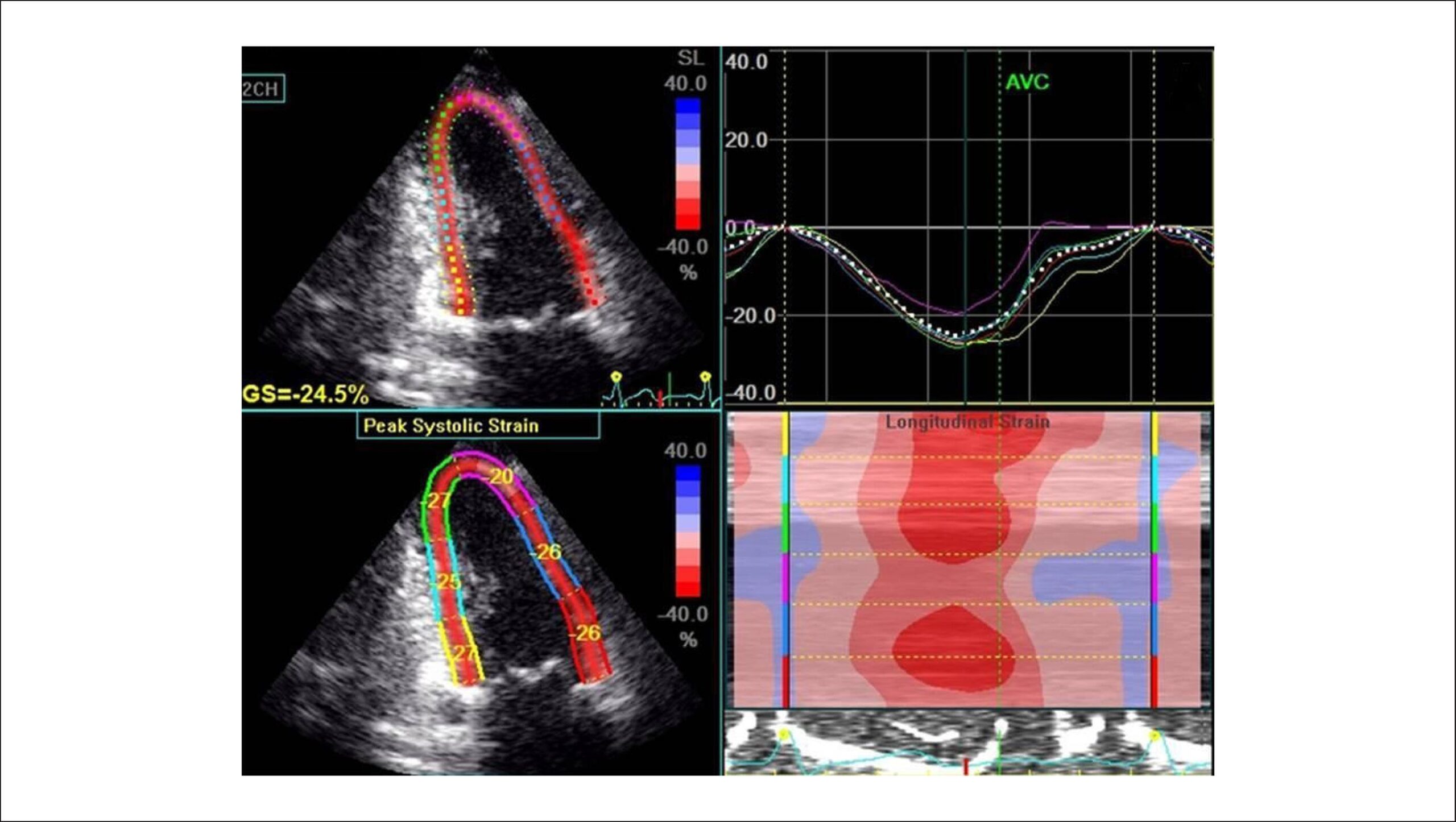
Global Longitudinal Strain or Left Ventricular Twist and Torsion? Which Correlates Best with Ejection Fraction?

Marcio Silva Miguel Lima et al. Hector R Villarraga Maria Cristina Donadio Abduch Marta Fernandes Lima … Cecilia Beatriz Bittencourt Viana Cruz João Cesar Nunes Sbano Mariana Callil Voos Wilson Mathias Junior Jeane Mike Tsutsui

Abstract

Background:

Estimative of left ventricular ejection fraction (LVEF) is a major indication for echocardiography. Speckle tracking echocardiography (STE) allows analysis of LV contraction mechanics which includes global longitudinal strain (GLS) and twist/torsion, both the most widely used. Direct comparison of correlations between these novel parameters and LVEF has never been done before.

Objective:

This study aims to check which one has the highest correlation with LVEF.

Methods:

Patients with normal LVEF (> 0,55) and systolic dysfunction (LVEF <0,55) were prospectively enrolled, and underwent echocardiogram with STE analysis. Correlation of variables was performed by linear regression analysis. In addition, correlation among levels of LV systolic impairment was also tested.

Results:

A total of 131 patients were included (mean age, 46 ± 14y; 43%, men). LVEF and GLS showed a strong correlation (r = 0.95; r2 = 0.89; p < 0.001), more evident in groups with LV systolic dysfunction than those with preserved LVEF. Good correlation was also found with global longitudinal strain rate (r = 0.85; r2 = 0.73; p < 0.001). Comparing to GLS, correlation of LVEF and torsional mechanics was weaker: twist (r = 0.78; r2 = 0.60; p < 0.001); torsion (r = 0.75; r2 = 0.56; p < 0.001).

Conclusion:

GLS of the left ventricle have highly strong positive correlation with the classical parameter of ejection fraction, especially in cases with LV systolic impairment. Longitudinal strain rate also demonstrated a good correlation. GLS increments analysis of LV systolic function. On the other hand, although being a cornerstone of LV mechanics, twist and torsion have a weaker correlation with LV ejection, comparing to GLS.
  • Echocardiography,Doppler
  • Strain
  • Stroke Volume
  • Torsion Abnormality
  • Torsion,Mechanical
  • Ventricular Dysfunction, Left
Read Full Article
Creative Commons Attribution (CC BY) Creative Commons license
29/06/2017 DOI: 10.5935/abc.20170085 Views 1
Figure 1
ABC
Artigo Original

Acute Heart Failure Registry: Risk Assessment Model in Decompensated Heart Failure

Anne Delgado et al. Bruno Rodrigues Sara Nunes Rui Baptista … Bruno Marmelo Davide Moreira Pedro Gama Luís Nunes Oliveira Santos Costa Cabral

Abstract

Background:

Heart failure (HF) is a highly prevalent syndrome. Although the long-term prognostic factors have been identified in chronic HF, this information is scarcer with respect to patients with acute HF. despite available data in the literature on long-term prognostic factors in chronic HF, data on acute HF patients are more scarce.

Objectives:

To develop a predictor of unfavorable prognostic events in patients hospitalized for acute HF syndromes, and to characterize a group at higher risk regarding their clinical characteristics, treatment and outcomes.

Methods:

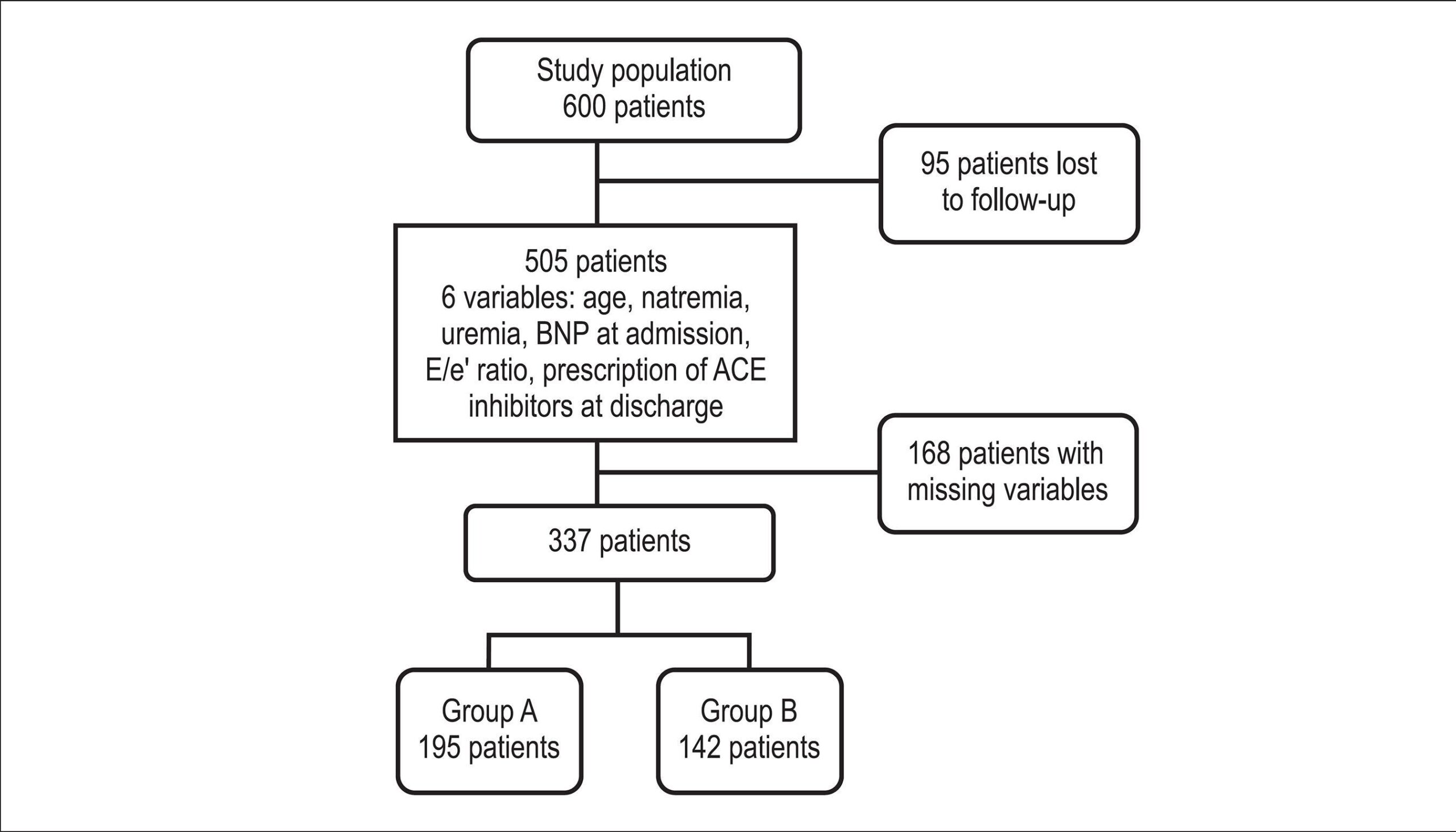
cohort study of 600 patients admitted for acute HF, defined according to the European Society of Cardiology criteria. Primary endpoint for score derivation was defined as all-cause mortality and / or rehospitalization for HF at 12 months. For score validation, the following endpoints were used: all-cause mortality and / or readmission for HF at 6, 12 and 24 months. The exclusion criteria were: high output HF; patients with acute myocardial infraction, acute myocarditis, infectious endocarditis, pulmonary infection, pulmonary artery hypertension and severe mitral stenosis.

Results:

505 patients were included, and prognostic predicting factors at 12 months were identified. One or two points were assigned according to the odds ratio (OR) obtained (p < 0.05). After the total score value was determined, a 4-point cut-off was determined for each ROC curve at 12 months. Two groups were formed according to the number of points, group A < 4 points, and group B = 4 points. Group B was composed of older patients, with higher number of comorbidities and predictors of the combined endpoint at 6, 12 and 24 months, as linearly represented in the survival curves (Log rank).

Conclusions:

This risk score enabled the identification of a group with worse prognosis at 12 months.

  • Acute coronary syndrome
  • Biomarkers
  • Echocardiography,Doppler
  • Heart Failure/complications
  • Prognosis
Read Full Article
Creative Commons Attribution (CC BY) Creative Commons license
01/12/2016 DOI: 10.5935/abc.20160178 Views 1

How to cite this article

EndNote RIS

Electronic Document Format (Vancouver)

Lima MSM, Villarraga HR, Abduch MCD, Lima MF, Cruz CBBV, Sbano JCN, Voos MC, et al. Global Longitudinal Strain or Left Ventricular Twist and Torsion? Which Correlates Best with Ejection Fraction?. Arquivos Brasileiros de Cardiologia 2017;109(1):23-9.

Electronic Document Format (ABNT)

Lima, Marcio Silva Miguel; Villarraga, Hector R; Abduch, Maria Cristina Donadio; Lima, Marta Fernandes; Cruz, Cecilia Beatriz Bittencourt Viana; Sbano, João Cesar Nunes; Voos, Mariana Callil; Mathias Junior, Wilson; Tsutsui, Jeane Mike. Global Longitudinal Strain or Left Ventricular Twist and Torsion? Which Correlates Best with Ejection Fraction?. Arquivos Brasileiros de Cardiologia, v. 109, n. 1, p. 23-29, Jun. 2017.

Electronic Document Format (APA)

Lima, M. S. M., Villarraga, H. R., Abduch, M. C. D., Lima, M. F., Cruz, C. B. B. V., Sbano, J. C. N., Voos, M. C., Mathias Junior, W., & Tsutsui, J. M. (2017). Global Longitudinal Strain or Left Ventricular Twist and Torsion? Which Correlates Best with Ejection Fraction?. Arquivos Brasileiros de Cardiologia, 109(1), 23-29.

Electronic Document Format (ISO)

Lima, Marcio Silva Miguel and Villarraga, Hector R and Abduch, Maria Cristina Donadio and Lima, Marta Fernandes and Cruz, Cecilia Beatriz Bittencourt Viana and Sbano, João Cesar Nunes and Voos, Mariana Callil and Mathias Junior, Wilson and Tsutsui, Jeane Mike. Global Longitudinal Strain or Left Ventricular Twist and Torsion? Which Correlates Best with Ejection Fraction?. Arquivos Brasileiros de Cardiologia [online]. 2017, vol. 109, n. 1, [cited 2026-10-14], pp. 23-29. Available from: <https://journals.cardiol.br/en/article/global-longitudinal-strain-or-left-ventricular-twist-and-torsion-which-correlates-best-with-ejection-fraction/>. ISSN 0066-782X

EndNote RIS

Electronic Document Format (Vancouver)

Delgado A, Rodrigues B, Nunes S, Baptista R, Marmelo B, Moreira D, Gama P, et al. Acute Heart Failure Registry: Risk Assessment Model in Decompensated Heart Failure. Arquivos Brasileiros de Cardiologia 2016;107(6):557-6.

Electronic Document Format (ABNT)

Delgado, Anne; Rodrigues, Bruno; Nunes, Sara; Baptista, Rui; Marmelo, Bruno; Moreira, Davide; Gama, Pedro; Nunes, Luís; Santos, Oliveira; Cabral, Costa. Acute Heart Failure Registry: Risk Assessment Model in Decompensated Heart Failure. Arquivos Brasileiros de Cardiologia, v. 107, n. 6, p. 557-567, Nov. 2016.

Electronic Document Format (APA)

Delgado, A., Rodrigues, B., Nunes, S., Baptista, R., Marmelo, B., Moreira, D., Gama, P., Nunes, L., Santos, O., & Cabral, C. (2016). Acute Heart Failure Registry: Risk Assessment Model in Decompensated Heart Failure. Arquivos Brasileiros de Cardiologia, 107(6), 557-567.

Electronic Document Format (ISO)

Delgado, Anne and Rodrigues, Bruno and Nunes, Sara and Baptista, Rui and Marmelo, Bruno and Moreira, Davide and Gama, Pedro and Nunes, Luís and Santos, Oliveira and Cabral, Costa. Acute Heart Failure Registry: Risk Assessment Model in Decompensated Heart Failure. Arquivos Brasileiros de Cardiologia [online]. 2016, vol. 107, n. 6, [cited 2026-10-14], pp. 557-567. Available from: <https://journals.cardiol.br/en/article/acute-heart-failure-registry-risk-assessment-model-in-decompensated-heart-failure/>. ISSN 0066-782X

  • About ABC Family
  • Internal Regulation
  • Editorial Board
  • Brazilian Society of Cardiology (SBC)

Issues

SBC Guidelines

  • Videos
  • Podcasts
  • News