Applicability of Longitudinal Strain of Left Ventricle in Unstable Angina
Abstract
Background:
Unstable angina (UA) is a common cause of hospital admission; risk stratification helps determine strategies for treatment.
Objective:
To determine the applicability of two-dimensional longitudinal strain (SL2D) for the identification of myocardial ischemia in patients with UA.
Methods:
Cross-sectional, descriptive, observational study lasting 60 days. The sample consisted of 78 patients, of which fifteen (19.2%) were eligible for longitudinal strain analysis. The value of p < 0.05 was considered significant.
Results:
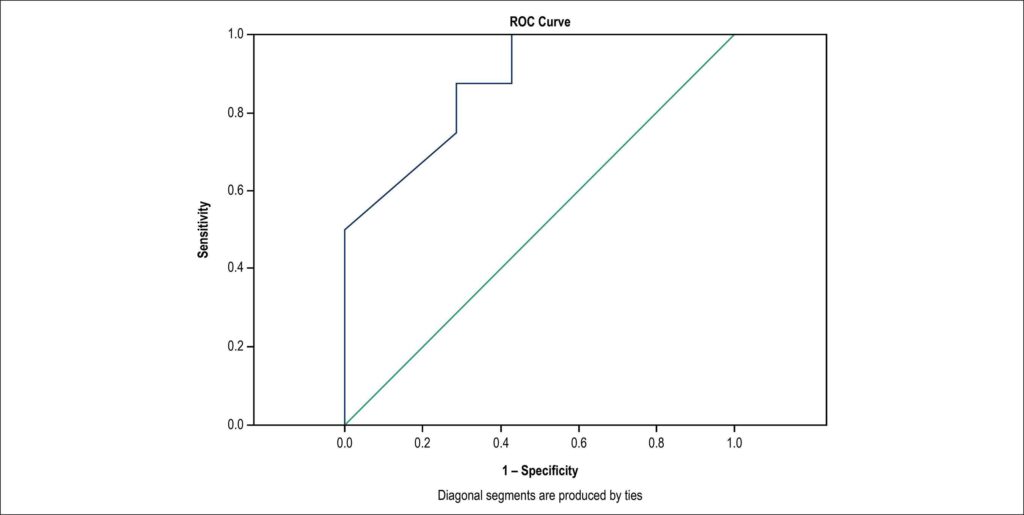
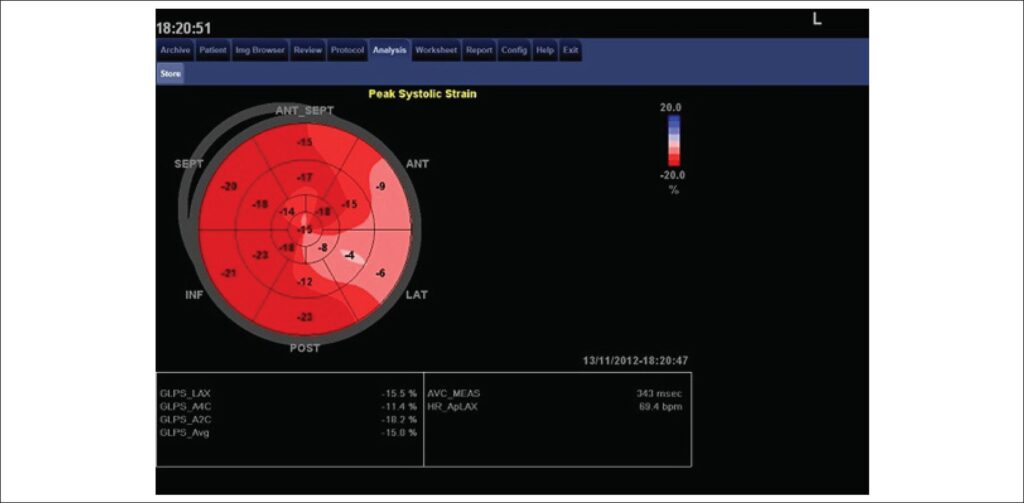
The group of ineligible patients presented: a lower proportion of women, a higher prevalence of diabetes mellitus (DM), use of ASA, statins and beta-blockers and larger cavity diameters. The main causes of non-applicability were: presence of previous infarction (56.4%), previous CTA (22.1%), previous MRI (11.5%) or both (16.7%) and the presence of specific electrocardiographic abnormalities (12.8%). SL2D assessment revealed a lower global strain value in those with stenosis greater than 70% in some epicardial coronary arteries (17.1 [3.1] versus 20.2 [6.7], with p = 0.014). Segmental strain assessment showed an association between severe CX and RD lesions with longitudinal strain reduction of lateral and inferior walls basal segments; (14 [5] versus 21 [10], with p = 0.04) and (12.5 [6] versus 19 [8], respectively).
Conclusion:
There was very low SL2D applicability to assess ischemia in the studied population. However, the global strain showed a correlation with the presence of significant coronary lesion, which could be included in the UA diagnostic arsenal in the future.
Images
Image gallery fullscreen viewer

Comments are moderated by the editorial team before publication. Discussions should be evidence-based and use scientific language. Conflicts of interest should be declared.