ABC Family Arquivos Brasileiros de Cardiologia International Journal of Cardiovascular Sciences ABC Heart Failure & Cardiomyopathy ABC Imagem Cardiovascular
Português English
ABC Family
Português English
  • About
    • About ABC Family
    • Internal Regulation
    • Editorial Board
    • Brazilian Society of Cardiology (SBC)
  • Issues
  • SBC Guidelines
  • Content
    • Videos
    • Podcasts
    • News
  • About
    • About ABC Family
    • Internal Regulation
    • Editorial Board
    • Brazilian Society of Cardiology (SBC)
  • Issues
  • SBC Guidelines
  • Content
    • Videos
    • Podcasts
    • News

ABC Family

  • ABC Family
  • Arquivos Brasileiros de Cardiologia
  • International Journal of Cardiovascular Sciences
  • ABC Heart Failure & Cardiomyopathy
  • ABC Imagem Cardiovascular
Search in

No content found.

Journals
Ordering
Article types
Others

  1. Home
  2. Keyword: Chemotherapy
Figure 1
ABCIC
Original Article

Monitoring Myocardial Metabolic Changes in Lymphoma Patients Undergoing Chemotherapy Using FDG PET/CT

Diego Rafael Freitas Berenguer et al. Gustavo Freitas Alves de Arruda Monica de Moraes Chaves Becker Mayara Lais Coelho Dourado … Roberto de Oliveira Buril Felipe Alves Mourato Paulo José de Almeida Filho Brivaldo Markman-Filho Simone Cristina Soares Brandão

Abstract

Background:

Cardiotoxicity is a serious adverse effect of chemotherapy, often identified only after irreversible myocardial damage has occurred. Positron emission tomography/computed tomography (PET/CT) using fluorine-18 fluorodeoxyglucose (18F-FDG) allows for the evaluation of myocardial glucose metabolism and may help detect early metabolic changes related to chemotherapy.

Objective:

To assess changes in 18F-FDG standardized uptake values (SUVs) across different cardiac regions before and after chemotherapy in patients with lymphoma, and to identify which region exhibits the greatest increase.

Methods:

This retrospective cohort study included 62 lymphoma patients who underwent 18F-FDG PET/CT before and after chemotherapy. SUV measurements were obtained in the left ventricular (LV) free wall, interventricular septum (IVS), right ventricular (RV) free wall, and global myocardium. Control regions included the liver and aorta. Pre- and post-treatment SUV values were compared to evaluate metabolic changes related to chemotherapy.

Results:

Myocardial 18F-FDG uptake increased significantly after chemotherapy across all cardiac regions, with the most pronounced rise observed in the LV free wall (maximum SUV increase of 73%, p<0.001). The RV free wall showed a non-significant increase in SUV, and no significant changes were observed in the liver or aorta.

Conclusions:

Chemotherapy was associated with a global increase in myocardial 18F-FDG uptake, with the most pronounced elevation observed in the LV free wall. This regional predominance highlights the LV free wall as the most sensitive site for detecting early metabolic changes potentially related to cardiotoxicity.
  • 18F-FDG PET/CT
  • Cardiotoxicity
  • Chemotherapy
  • Lymphoma
  • Myocardial metabolism
Read Full Article
Creative Commons Attribution (CC BY) Creative Commons license
31/12/2025 DOI: 10.36660/abcimg.20250067i Views 11
Figure 1
ABCIC
Original Article

Global Longitudinal Strain as Predictor of Chemotherapy-Induced Cardiotoxicity

Monica Samuel Avila et al. Marco Stephan Lofrano Alves Silvia Moreira Ayub-Ferreira Mauro Rogerio de Barros Wanderley Junior … Fatima das Dores Cruz Sara Michelly Gonçalves Brandão Ludhmila Abrahão Hajjar Roberto Kalil Filho Cecilia Beatriz Bittencourt Viana Cruz Maria Cristina Abduch Danilo Bora Moleta Edimar Alcides Bocchi

Abstract

Background

Chemotherapy-induced cardiotoxicity (ChC) is an important complication among patients receiving anthracyclines. Biomarkers and imaging parameters have been studied for their ability to identify patients at risk of developing ChC. Left ventricular global longitudinal strain (LV-GLS) is a sensitive parameter for detecting systolic dysfunction despite the presence of preserved left ventricular ejection fraction (LVEF).

Objective

To evaluate the role of the LV-GLS as a predictor of ChC.

Methods

This was a post-hoc analysis of the Carvedilol for Prevention of Chemotherapy-Related Cardiotoxicity trial, which evaluated the primary prevention of cardiotoxicity with carvedilol during doxorubicin chemotherapy in a population of patients with breast cancer. Cardiotoxicity was defined as a reduction ≥10% in LVEF. LV-GLS was determined before chemotherapy in patients with no prior cardiovascular disease or echocardiogram abnormalities.

Results

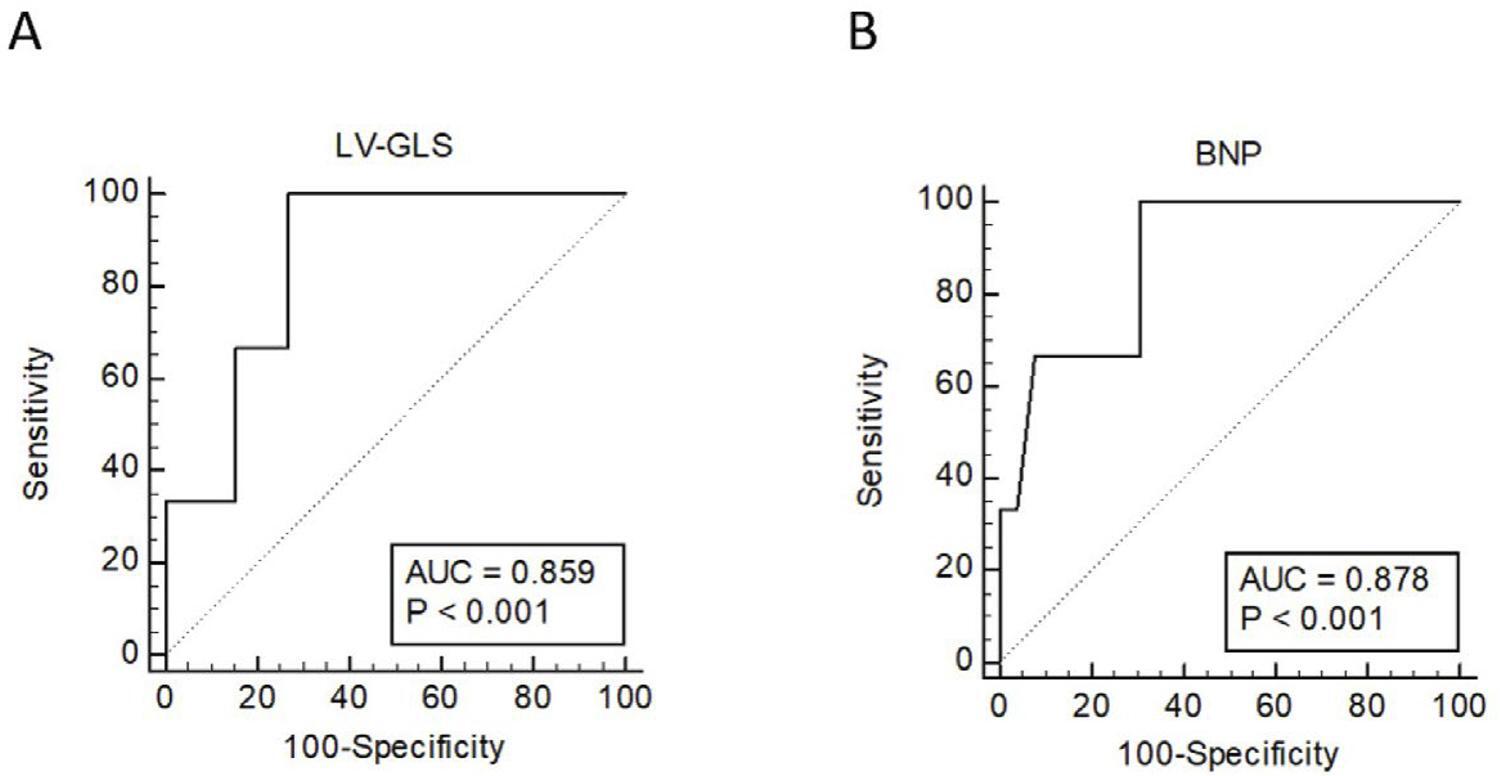
Thirty-one patients for whom a complete echocardiography study including measurement of LV-GLS was performed before chemotherapy were included in this analysis. An absolute LV-GLS<16.9% before chemotherapy showed 100% sensitivity and 73% specificity for predicting cardiotoxicity (area under the curve [AUC], 0.85; 95% confidence interval [CI], 0.680–0.959; p<0.001). In this population, LVEF values before chemotherapy did not predict ChC (95% CI, 0.478 to -0.842; p=0.17). The association of low LV-GLS (17 pg/mL) at 2 months after chemotherapy increased the accuracy for detecting early-onset ChC (100% sensitivity, 88% specificity; AUC, 0.94; 95% CI, 0.781–0.995; p<0.0001).

Conclusions

Our data suggest that LV-GLS is a potential predictor of ChC. Larger studies are needed to confirm its clinical relevance in this clinical setting.

  • Cardiotoxicity
  • Chemotherapy
  • Echocardiogram
  • Prevention
  • Strain
  • β-blockers
Read Full Article
Creative Commons Attribution (CC BY) Creative Commons license
21/12/2022 DOI: 10.47593/2675-312X/20223504eabc340i Views 1
Figure 1
ABCHF
Review Article

Heart Failure with Preserved Ejection Fraction and Cancer

Antonio José Lagoeiro Jorge et al. Humberto Villacorta Luiz Claudio Danzmann Evandro Tinoco Mesquita

Abstract

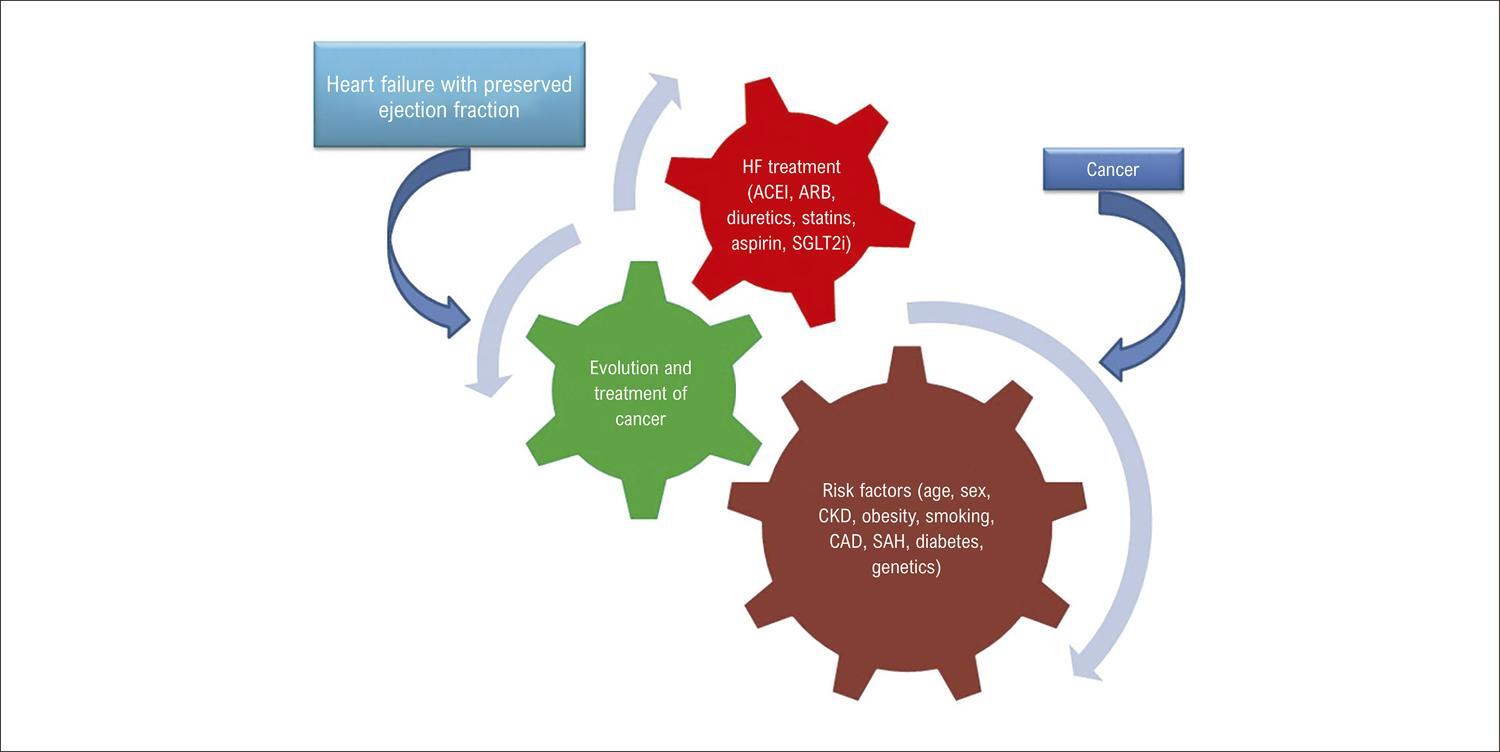
Heart failure with preserved ejection fraction (HFpEF) is associated with high morbidity and mortality. After hospitalization for heart failure, the 5-year survival of HFpEF is 35%, which is worse than many forms of cancer. HFpEF and cancer share common risk factors. The use of chemotherapy medications such as anthracyclines is associated with increased aortic stiffness and diastolic dysfunction, suggesting that anthracycline therapy may increase the risk of HFpEF, given that worsening of diastolic function, which can be associated with the occurrence of HFpEF, is an early sign of cardiotoxicity. Radiotherapy, widely used in the treatment of breast cancer, leads to an increased risk of developing heart disease since radiation induces coronary microvascular endothelial damage and inflammation, leading to microvascular rarefaction, myocardial inflammation, oxidative stress, and fibrosis, which favor the development of HFpEF. Early diagnosis of cardiotoxicity is an important issue in the care of patients with cancer, and biomarkers have been extensively studied in predicting systolic dysfunction and heart failure with reduced ejection fraction, as well as in the development of HFpEF. HFpEF and cancer have an elevated prevalence, and they share age group, risk factors, and the pathophysiological phenomenon, in which inflammation plays a preponderant role. Biomarkers, especially natriuretic peptides, and ultrasound imaging are fundamental tools in the diagnostic detection and follow-up of these patients.

  • Cancer
  • Cardiotoxicity
  • Chemotherapy
  • Heart Failure with Preserved Ejection Fraction
  • Radiotherapy
Read Full Article
Creative Commons Attribution (CC BY) Creative Commons license
18/12/2022 DOI: 10.36660/abchf.20220079 Views 1
Figure 1
ABC
Original Article

Chemotherapy-induced Cardiac18F-FDG Uptake in Patients with Lymphoma: An Early Metabolic Index of Cardiotoxicity?

Mayara L. C. Dourado et al. Luca T. Dompieri Glauber M. Leitão Felipe A. Mourato … Renata G. G. Santos Paulo J Almeida Filho Brivaldo Markman Filho Marcelo D. T. Melo Simone C. S. Brandão

Abstract

Background

It is uncertain whether myocardial fluorodeoxyglucose uptake occurs solely due to physiological features or if it represents a metabolic disarrangement under chemotherapy.

Objective

To investigate the chemotherapy effects on the heart of patients with lymphoma by positron emission tomography associated with computed tomography scans (PET/CT) with 2-deoxy-2[18F] fluoro-D-glucose (18F-FDG PET/CT) before, during and/or after chemotherapy.

Methods

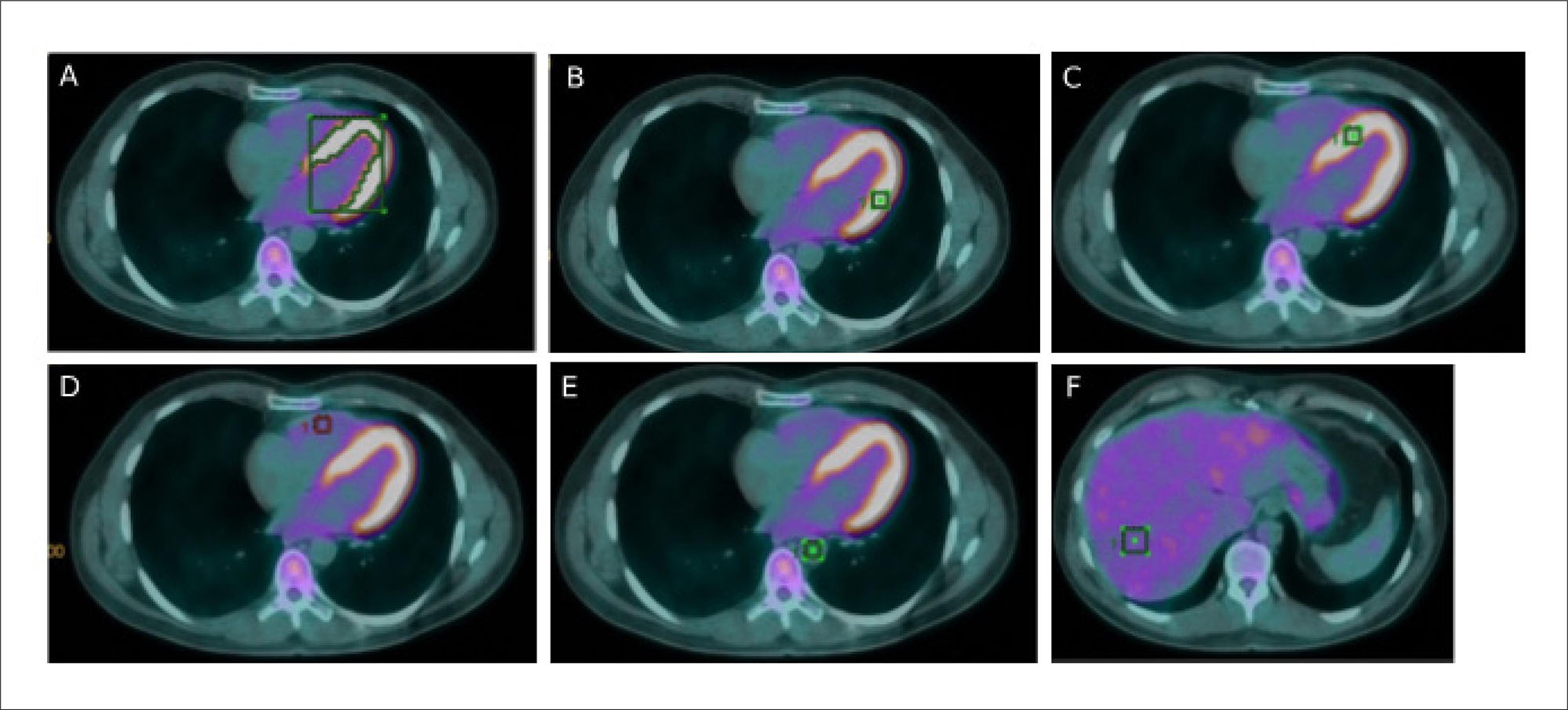
Seventy patients with lymphoma submitted to18F-FDG PET/CT were retrospectively analyzed. The level of significance was 5%.18F-FDG cardiac uptake was assessed by three measurements: left ventricular maximum standardized uptake value (SUVmax), heart to blood pool (aorta) ratio, and heart to liver ratio in all the exams. Body weight, fasting blood sugar, post-injection time, and the injected dose of18F-FDG between the scans were also compared.

Results

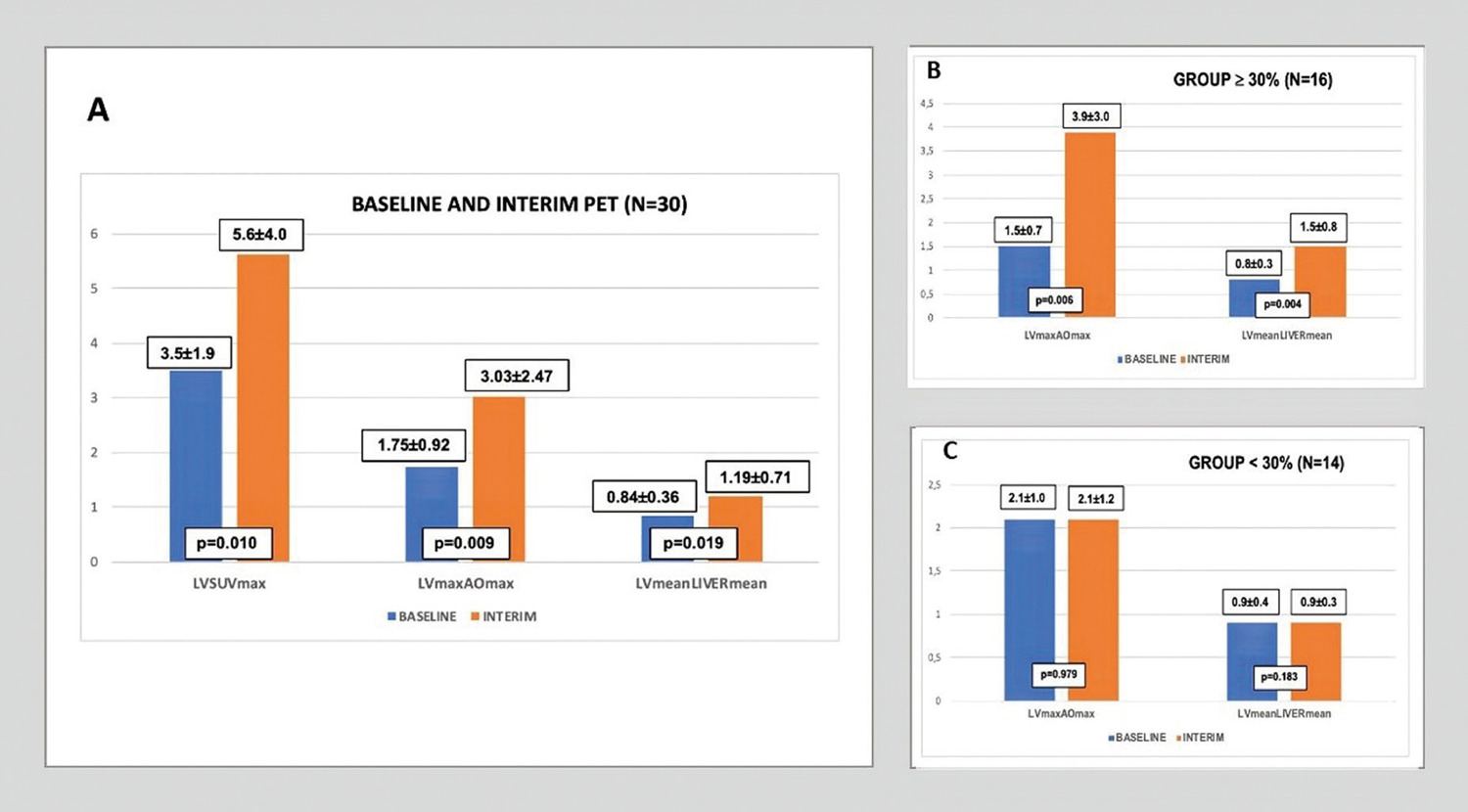
Mean age was 50.4 ± 20.1 years and 50% was female. The analysis was carried out in two groups: baseline vs. interim PET/CT, and baseline vs. post-therapy PET/CT. There was no significant difference in clinical variables or protocol scans variables. We observed an increase in left ventricular (LV) SUVmax from 3.5±1.9 (baseline) to 5.6±4.0 (interim), p=0.01, and from 4.0±2.2 (baseline) to 6.1±4.2 (post-therapy), p<0.001. A percentage increase ≥30% of LV SUVmax occurred in more than half of the sample. The rise of cardiac SUV was accompanied by an increase in LV SUVmax/Aorta SUVmax and LV SUVmean/Liver SUVmean ratios.

Conclusion

This study showed a clear increase in cardiac18F-FDG uptake in patients with lymphoma during and/or after chemotherapy. The literature corroborates with these findings and suggests that18F-FDG PET/CT is a sensitive and reliable imaging exam to detect early metabolic signs of cardiotoxicity.

  • Cardiotoxicity
  • Chemotherapy
  • Lymphoma
Read Full Article
Creative Commons Attribution (CC BY) Creative Commons license
02/05/2022 DOI: 10.36660/abc.20210463 Views 1

How to cite this article

EndNote RIS

Electronic Document Format (Vancouver)

Berenguer DRF, Arruda GFA, Becker MMC, Dourado MLC, Buril RO, Mourato FA, Almeida Filho PJ, et al. Monitoring Myocardial Metabolic Changes in Lymphoma Patients Undergoing Chemotherapy Using FDG PET/CT. ABC Imagem Cardiovascular 2025;38(4):e20250067.

Electronic Document Format (ABNT)

Berenguer, Diego Rafael Freitas; Arruda, Gustavo Freitas Alves de; Becker, Monica de Moraes Chaves; Dourado, Mayara Lais Coelho; Buril, Roberto de Oliveira; Mourato, Felipe Alves; Almeida Filho, Paulo José de; Markman-Filho, Brivaldo; Brandão, Simone Cristina Soares. Monitoring Myocardial Metabolic Changes in Lymphoma Patients Undergoing Chemotherapy Using FDG PET/CT. ABC Imagem Cardiovascular, v. 38, n. 4, e20250067, Dec. 2025.

Electronic Document Format (APA)

Berenguer, D. R. F., Arruda, G. F. A. , Becker, M. M. C., Dourado, M. L. C., Buril, R. O., Mourato, F. A., Almeida Filho, P. J. , Markman-Filho, B., & Brandão, S. C. S. (2025). Monitoring Myocardial Metabolic Changes in Lymphoma Patients Undergoing Chemotherapy Using FDG PET/CT. ABC Imagem Cardiovascular, 38(4), e20250067.

Electronic Document Format (ISO)

Berenguer, Diego Rafael Freitas and Arruda, Gustavo Freitas Alves de and Becker, Monica de Moraes Chaves and Dourado, Mayara Lais Coelho and Buril, Roberto de Oliveira and Mourato, Felipe Alves and Almeida Filho, Paulo José de and Markman-Filho, Brivaldo and Brandão, Simone Cristina Soares. Monitoring Myocardial Metabolic Changes in Lymphoma Patients Undergoing Chemotherapy Using FDG PET/CT. ABC Imagem Cardiovascular [online]. 2025, vol. 38, n. 4, [cited 2026-10-14], e20250067. Available from: <https://journals.cardiol.br/en/article/monitoring-myocardial-metabolic-changes-in-lymphoma-patients-undergoing-chemotherapy-using-fdg-pet-ct/>. ISSN 2318-8219

EndNote RIS

Electronic Document Format (Vancouver)

Avila MS, Alves MSL, Ayub-Ferreira SM, Wanderley Junior MRB, Cruz FD, Brandão SMG, Hajjar LA, et al. Global Longitudinal Strain as Predictor of Chemotherapy-Induced Cardiotoxicity. ABC Imagem Cardiovascular 2022;35(4):eabc340.

Electronic Document Format (ABNT)

Avila, Monica Samuel; Alves, Marco Stephan Lofrano; Ayub-Ferreira, Silvia Moreira; Wanderley Junior, Mauro Rogerio de Barros; Cruz, Fatima das Dores; Brandão, Sara Michelly Gonçalves; Hajjar, Ludhmila Abrahão; Kalil Filho, Roberto; Cruz, Cecilia Beatriz Bittencourt Viana; Abduch, Maria Cristina; Moleta, Danilo Bora; Bocchi, Edimar Alcides. Global Longitudinal Strain as Predictor of Chemotherapy-Induced Cardiotoxicity. ABC Imagem Cardiovascular, v. 35, n. 4, eabc340, Dec. 2022.

Electronic Document Format (APA)

Avila, M. S., Alves, M. S. L., Ayub-Ferreira, S. M., Wanderley Junior, M. R. B., Cruz, F. D., Brandão, S. M. G., Hajjar, L. A., Kalil Filho, R., Cruz, C. B. B. V., Abduch, M. C., Moleta, D. B., & Bocchi, E. A. (2022). Global Longitudinal Strain as Predictor of Chemotherapy-Induced Cardiotoxicity. ABC Imagem Cardiovascular, 35(4), eabc340.

Electronic Document Format (ISO)

Avila, Monica Samuel and Alves, Marco Stephan Lofrano and Ayub-Ferreira, Silvia Moreira and Wanderley Junior, Mauro Rogerio de Barros and Cruz, Fatima das Dores and Brandão, Sara Michelly Gonçalves and Hajjar, Ludhmila Abrahão and Kalil Filho, Roberto and Cruz, Cecilia Beatriz Bittencourt Viana and Abduch, Maria Cristina and Moleta, Danilo Bora and Bocchi, Edimar Alcides. Global Longitudinal Strain as Predictor of Chemotherapy-Induced Cardiotoxicity. ABC Imagem Cardiovascular [online]. 2022, vol. 35, n. 4, [cited 2026-10-14], eabc340. Available from: <https://journals.cardiol.br/en/article/global-longitudinal-strain-as-predictor-of-chemotherapy-induced-cardiotoxicity/>. ISSN 2318-8219

EndNote RIS

Electronic Document Format (Vancouver)

Jorge AJL, Villacorta H, Danzmann LC, Mesquita ET. Heart Failure with Preserved Ejection Fraction and Cancer. ABC: Heart Failure & Cardiomyopathy 2022;2(4):343-5.

Electronic Document Format (ABNT)

Jorge, Antonio José Lagoeiro; Villacorta, Humberto; Danzmann, Luiz Claudio; Mesquita, Evandro Tinoco. Heart Failure with Preserved Ejection Fraction and Cancer. ABC: Heart Failure & Cardiomyopathy, v. 2, n. 4, p. 343-353, Dec. 2022.

Electronic Document Format (APA)

Jorge, A. J. L., Villacorta, H., Danzmann, L. C., & Mesquita, E. T. (2022). Heart Failure with Preserved Ejection Fraction and Cancer. ABC: Heart Failure & Cardiomyopathy, 2(4), 343-353.

Electronic Document Format (ISO)

Jorge, Antonio José Lagoeiro and Villacorta, Humberto and Danzmann, Luiz Claudio and Mesquita, Evandro Tinoco. Heart Failure with Preserved Ejection Fraction and Cancer. ABC: Heart Failure & Cardiomyopathy [online]. 2022, vol. 2, n. 4, [cited 2026-10-14], pp. 343-353. Available from: <https://journals.cardiol.br/en/article/heart-failure-with-preserved-ejection-fraction-and-cancer/>

EndNote RIS

Electronic Document Format (Vancouver)

Dourado MLC, Dompieri LT, Leitão GM, Mourato FA, Santos RGG, Almeida Filho PJ, Markman Filho B, et al. Chemotherapy-induced Cardiac18F-FDG Uptake in Patients with Lymphoma: An Early Metabolic Index of Cardiotoxicity?. Arquivos Brasileiros de Cardiologia 2022;118(6):1049-58.

Electronic Document Format (ABNT)

Dourado, Mayara L. C.; Dompieri, Luca T.; Leitão, Glauber M.; Mourato, Felipe A.; Santos, Renata G. G.; Almeida Filho, Paulo J; Markman Filho, Brivaldo; Melo, Marcelo D. T.; Brandão, Simone C. S.. Chemotherapy-induced Cardiac18F-FDG Uptake in Patients with Lymphoma: An Early Metabolic Index of Cardiotoxicity?. Arquivos Brasileiros de Cardiologia, v. 118, n. 6, p. 1049-1058, May. 2022.

Electronic Document Format (APA)

Dourado, M. L. C., Dompieri, L. T., Leitão, G. M., Mourato, F. A., Santos, R. G. G., Almeida Filho, P. J., Markman Filho, B., Melo, M. D. T., & Brandão, S. C. S. (2022). Chemotherapy-induced Cardiac18F-FDG Uptake in Patients with Lymphoma: An Early Metabolic Index of Cardiotoxicity?. Arquivos Brasileiros de Cardiologia, 118(6), 1049-1058.

Electronic Document Format (ISO)

Dourado, Mayara L. C. and Dompieri, Luca T. and Leitão, Glauber M. and Mourato, Felipe A. and Santos, Renata G. G. and Almeida Filho, Paulo J and Markman Filho, Brivaldo and Melo, Marcelo D. T. and Brandão, Simone C. S.. Chemotherapy-induced Cardiac18F-FDG Uptake in Patients with Lymphoma: An Early Metabolic Index of Cardiotoxicity?. Arquivos Brasileiros de Cardiologia [online]. 2022, vol. 118, n. 6, [cited 2026-10-14], pp. 1049-1058. Available from: <https://journals.cardiol.br/en/article/chemotherapy-induced-cardiac18f-fdg-uptake-in-patients-with-lymphoma-an-early-metabolic-index-of-cardiotoxicity/>. ISSN 0066-782X

  • About ABC Family
  • Internal Regulation
  • Editorial Board
  • Brazilian Society of Cardiology (SBC)

Issues

SBC Guidelines

  • Videos
  • Podcasts
  • News