ABC Family Arquivos Brasileiros de Cardiologia International Journal of Cardiovascular Sciences ABC Heart Failure & Cardiomyopathy ABC Imagem Cardiovascular
Português English
ABC Family
Português English
  • About
    • About ABC Family
    • Internal Regulation
    • Editorial Board
    • Brazilian Society of Cardiology (SBC)
  • Issues
  • SBC Guidelines
  • Content
    • Videos
    • Podcasts
    • News
  • About
    • About ABC Family
    • Internal Regulation
    • Editorial Board
    • Brazilian Society of Cardiology (SBC)
  • Issues
  • SBC Guidelines
  • Content
    • Videos
    • Podcasts
    • News

ABC Family

  • ABC Family
  • Arquivos Brasileiros de Cardiologia
  • International Journal of Cardiovascular Sciences
  • ABC Heart Failure & Cardiomyopathy
  • ABC Imagem Cardiovascular
Search in

No content found.

Journals
Ordering
Article types
Others

  1. Home
  2. Keyword: Antiretroviral Therapy
ABC
Editorial

Estimating Cardiovascular Risk in HIV-Infected Patients

Marcio Sommer Bittencourt

From the initial reports of HIV infections in 1981, substantial progress in the prevention, detection and treatment have led to a marked reduction in mortality. Among them, the use of highly active antiretroviral therapy (HAART) with the combination of multiple antiretroviral drugs acting in different phases of the viral cycle resulted in impressive reductions in transmission and infectious complications. This increase in survival led to a large and growing population of persons living with HIV (PLWH) as a chronic condition in a setting where other non-infectious complications became more common.

Among those novel conditions affecting PLWH, cardiovascular complications became the leading cause of morbidity and mortality, at least in countries with adequate access to care and widespread use of HAART. The increase in cardiovascular risk in PLWH is multifactorial. First, studies suggest that PLWH are more likely to be diabetics and smokers. Second, those individuals are more likely to have higher triglycerides and lower HDL-C, though LDL-C and total cholesterol were also reduced. It also seems possible that HIV infection is responsible for increases in blood pressure and glucose levels by different mechanisms. However, considerable evidence supports the concept that traditional risk factors do not fully account for the higher cardiovascular risk in those individuals, as the changes in the cardiovascular system in PWLH is multifactorial and at least partially mediated by inflammation and immune activation, leading to endothelial dysfunction, changes in vascular elasticity, coagulation.

[…]

  • Acquired Immunodeficiency Syndrome/complications
  • Antiretroviral Therapy
  • Carotid Artery Diseases
  • Highly Active
  • HIV
  • Risk Factors
Read Full Article
Creative Commons Attribution (CC BY) Creative Commons license
10/02/2020 DOI: 10.36660/abc.20190747 Views 1
ABC
Editorial

Cardiovascular Conditions of Patients on HIV Therapy

Alfredo José Mansur

Successful anti-infective therapy of patients submitted to contemporary HIV treatment decreased mortality between 2007 and 2017 by 51% in association with a decrease in of 17% in incidence; decrease in mortality associated with a smaller decrease in incidence means more people living with HIV disease. In Brazil, annualised rate of change in mortality was -1.2% (-1.4% to -1.0%). In many countries the survival rate of patients increased. Therefore, other non-infectious ailments such as prevalent cardiovascular diseases came to the attention of physicians in charge for the patients.

Prevention is a mainstay in the health care of patients. Patients on successful HIV treatment may incur in either asymptomatic or symptomatic conditions that may be risk factors for cardiovascular diseases or demonstrate metabolic abnormalities that need medical attention. Further, new technologies were studied in order to investigate in more depth vascular health either as screening, or a diagnostic tool or treatment strategies.

[…]

  • Antiretroviral Therapy
  • Atherosclerosis
  • Cardiovascular Diseases
  • Carotid Artery Diseases
  • Epidemiology
  • HIV
  • HIV Infections
  • Risk Factors
Read Full Article
Creative Commons Attribution (CC BY) Creative Commons license
10/02/2020 DOI: 10.36660/abc.20190810
ABC
Original Article

Inflammatory Biomarkers and Carotid Thickness in HIV Infected Patients under Antiretroviral Therapy, Undetectable HIV-1 Viral Load, and Low Cardiovascular Risk

Kaliene Maria Estevão Leite et al. Gerson Gomes Santos Júnior Emmanuelle T. A. M Godoi Adriana Ferraz Vasconcelos … Virgínia Maria Barros Lorena Paulo Sérgio Ramos Araújo Kledoaldo Oliveira Lima Heloisa Ramos Lacerda

Abstract

Background:

People living with HIV are at increased risk of cardiovascular disease and carotid thickness, due to the inflammation caused by the virus, the antiretroviral therapy, and other risk factors. However, few studies have observed the occurrence of cardiovascular diseases and carotid thickness in HIV-positive population at low cardiovascular risk and with undetectable viral load.

Objectives:

To evaluate the association between levels of inflammatory markers and carotid thickness in people living with HIV, under antiretroviral therapy and at low cardiovascular risk.

Methods:

To determine low cardiovascular risk in both groups (HIV infected and non-infected individuals), the Framingham Risk Score was used. Inflammatory markers (IFN-γ, TNF-α, IL-1β, IL-6, sVCAM-1, and sICAM-1) were assessed using flow cytometry. Carotid thickness (mm) was measured using Doppler ultrasound. Level of significance was p < 0.05.

Results:

In People living with HIV, age and smoking status were associated with carotid thickness alterations. In the non-HIV group, age, higher total cholesterol, and LDL levels were associated with increased carotid thickness. Using the multivariate analysis, a significant association between TNF-α and IL- 1( levels, and a higher chance of atherosclerosis development in HIV group were observed.

Conclusions:

Both groups have a similar risk for developing cardiovascular disease, therefore our study demonstrates that HIV-positive individuals with undetectable viral load in antiretroviral therapy without protease inhibitors and with low cardiovascular risk do not present differences in carotid thickness in relation to uninfected individuals.

  • Antiretroviral Therapy
  • Atherosclerosis
  • Cardiovascular Diseases
  • Caroti Artery Diseases
  • HIV
  • HIV Infections
  • Risk Factors
Read Full Article
Creative Commons Attribution (CC BY) Creative Commons license
28/10/2019 DOI: 10.5935/abc.20190230
Figure 1
ABC
Original Article

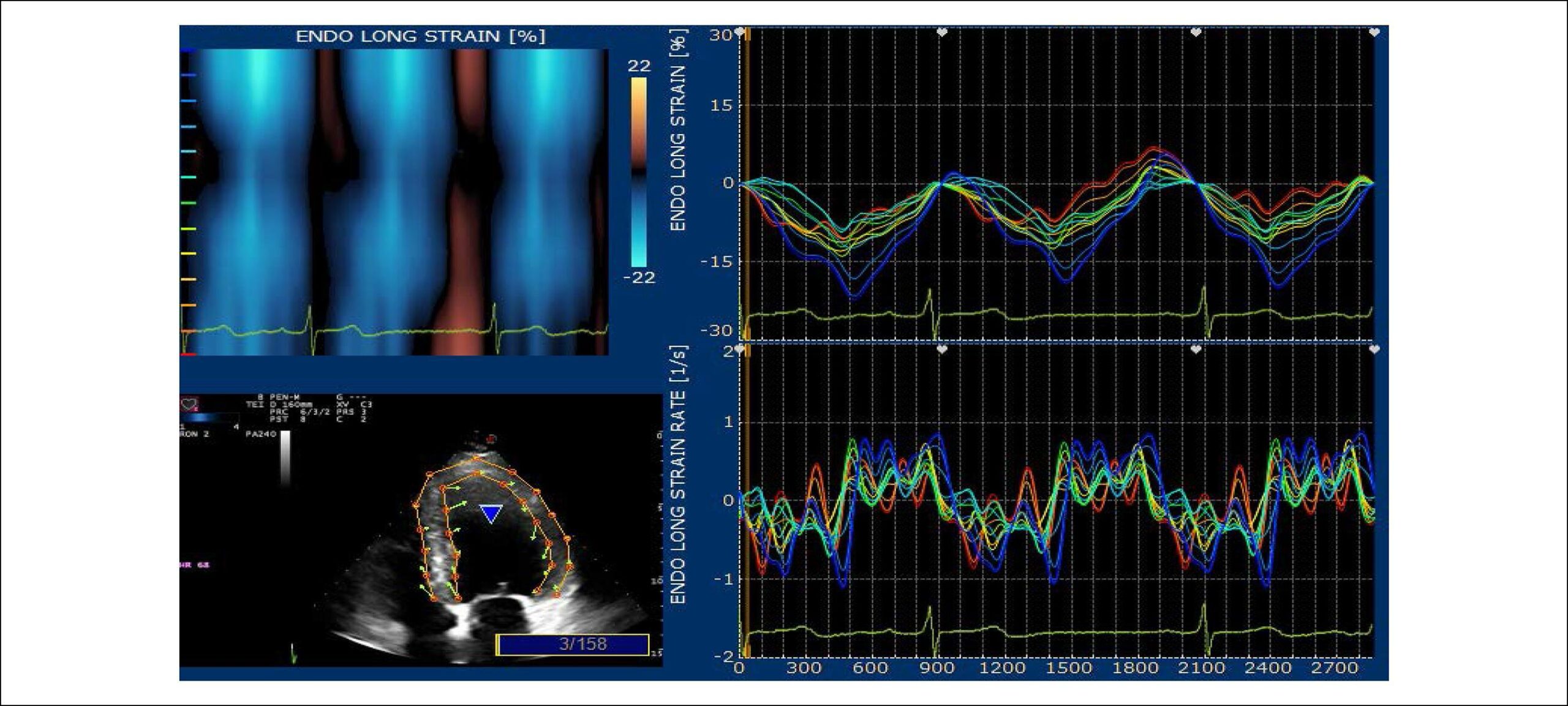
The Use of Two-Dimensional Strain Measured by Speckle Tracking in the Identification of Incipient Ventricular Dysfunction in HIV-Infected Patients on Antiretroviral Therapy, Untreated HIV Patients and Healthy Controls

Ronaldo Campos Rodrigues et al. Katia Martins Lopes de Azevedo Samuel Datum Moscavitch Sergio Setubal Claudio Tinoco Mesquita

Abstract

Background:

Most cardiovascular abnormalities in patients infected with the human immunodeficiency virus (HIV) have been associated with myocardial damage directly caused by the virus. Some cases, however, may be associated with adverse effects from antiretroviral therapy (ART). New ventricular function assessment techniques are capable of detecting early changes in the cardiac function of HIV-infected patients using or not using ART. The usefulness of these techniques has been little employed in these patients.

Objectives:

To investigate the potential influence of antiretroviral therapy (ART) on the occurrence of subclinical left ventricular systolic dysfunction evaluated by myocardial strain rate analysis using two-dimensional speckle tracking echocardiography (2-D Echo) in treated HIV patients compared to untreated patients and healthy individuals.

Methods:

Sixty-eight HIV-infected patients with no cardiovascular symptoms, normal left ventricular (LV) ejection fraction (> 0.55 on 2-D Echo) were divided into three groups: 11 patients not using antiretroviral therapy (NT), 24 using protease inhibitor (PI) and 33 using non-nucleoside reverse transcriptase inhibitor (NNRTI). We also studied 30 normal non-HIV infected individuals (Ctrl). Demographic, clinical, biochemical and anthropometric data were collected. Preliminary transthoracic echocardiography included study of myocardial strain using two-dimensional speckle tracking. We studied strain and strain rate in the seventeen left ventricular (LV) myocardial segments in the longitudinal, circumferential and radial axes. Statistical analysis of the data was done with IBM SPSS – version 20 for Windows. Upon analysis of the data, namely the normality of independent variables in the different groups and the homogeneity of the variances between the groups, Kruskal-Wallis’ non-parametric test was done, followed by Dunn’s multiple comparison tests to test the significance of the differences between the values measured in the study groups. A significance level of 5% was adopted for decision-making on statistical tests.

Results:

The mean age of HIV patients was 40 ± 8.65 years and the mean age of controls was 50 ± 11.6 years (p < 0.001). Median LV global longitudinal strain (GLS) of NT patients (-17.70%), PI patients (-18.27%) and NNRTIs (-18.47%) were significantly lower than that of the Ctrl group (-20.77%; p = 0.001). There was no significant difference in mean SLG between treated patients (PI, NNRTI) and untreated (NT) patients. No significant differences were observed in mean circumferential and radial strain, nor on circumferential and radial strain rates between the NT, PI, NNRTI and Ctrl groups.

Conclusion:

The data suggest that HIV patients present, on myocardial strain measured by speckle tracking, signs of early LV systolic dysfunction that seem to be unrelated to the presence of ART. The prognostic significance of this condition in these patients deserves further studies.

  • Acquired Immunodeficiency Syndrome
  • Antiretroviral Therapy
  • Echocardiography, Doppler
  • Highly Active
  • HIV
  • Speckle Tracking
  • Strain
  • Ventricular Disfunction,Left
Read Full Article
Creative Commons Attribution (CC BY) Creative Commons license
02/09/2019 DOI: 10.5935/abc.20190169
Rosuvastatin and ciprofibrate in the treatment of dyslipidemia in patients with HIV
ABC
Artigo Original

Rosuvastatin and ciprofibrate in the treatment of dyslipidemia in patients with HIV

Hamilton Domingos et al. Rivaldo Venâncio da Cunha Anamaria Mello Miranda Paniago Albert Schiaveto de Souza … Renata London Rodrigues João Américo Domingos

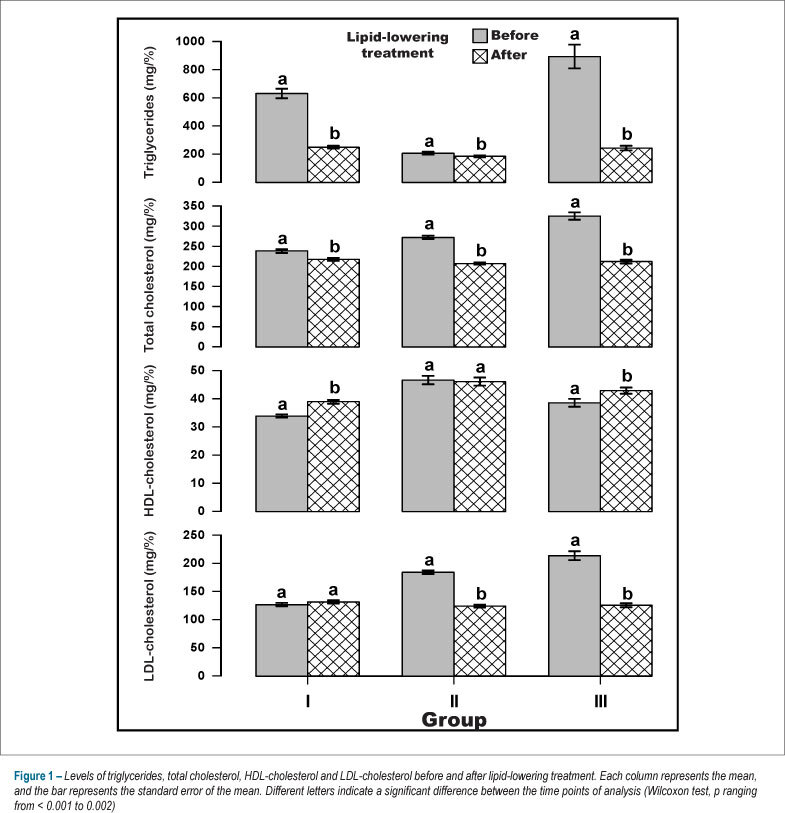
BACKGROUND: Dyslipidemia secondary to highly active antiretroviral therapy in patients with HIV is associated with a significant increase in cardiovascular morbidity and mortality due to atherosclerotic disease, requiring, thus, immediate and effective treatment. OBJECTIVE: To demonstrate the effectiveness and safety of rosuvastatin and ciprofibrate in the treatment of dyslipidemia associated with highly active antiretroviral therapy in patients with HIV. METHODS: Three hundred and forty-six patients with dyslipidemia underwent pharmacological treatment as follows: 200 patients with hypertriglyceridemia received ciprofibrate (Group I); 79 patients with hypercholesterolemia received rosuvastatin (Group II); and 67 patients with mixed dyslipidemia received ciprofibrate associated with rosuvastatin (Group III). The lipid profile was assessed before and after the lipid-lowering treatment, and the Wilcoxon test was used for statistical comparison. Liver transaminases and creatine phosphokinase were measured to assess liver and muscle toxicity. RESULTS: The serum concentrations of triglycerides and total cholesterol were significantly lower than those obtained before the lipid-lowering treatment in the three experimental groups (p < 0.002). A significant increase in HDL-cholesterol was observed in Groups I and III (p < 0.002). In Groups I and II, LDL-cholesterol was significantly lower (p < 0.001). None of the patients experienced elevations in transaminases or creatine phosphokinase to significantly toxic levels. CONCLUSION: The results of this study show that ciprofibrate and rosuvastatin or a combination of both can be considered an effective, safe and well-tolerated lipid-lowering treatment for patients with AIDS on highly active antiretroviral therapy.

  • anticholesteremic agents
  • Antiretroviral Therapy
  • Dyslipidemias
  • fibric acids
  • Highly Active
  • HIV
Read Full Article
Creative Commons Attribution (CC BY) Creative Commons license
30/10/2012 DOI: 10.1590/S0066-782X2012005000096

How to cite this article

EndNote RIS

Electronic Document Format (Vancouver)

Bittencourt MS. Estimating Cardiovascular Risk in HIV-Infected Patients. Arquivos Brasileiros de Cardiologia 2020;114(1):76-7.

Electronic Document Format (ABNT)

Bittencourt, Marcio Sommer. Estimating Cardiovascular Risk in HIV-Infected Patients. Arquivos Brasileiros de Cardiologia, v. 114, n. 1, p. 76-77, Feb. 2020.

Electronic Document Format (APA)

Bittencourt, M. S. (2020). Estimating Cardiovascular Risk in HIV-Infected Patients. Arquivos Brasileiros de Cardiologia, 114(1), 76-77.

Electronic Document Format (ISO)

Bittencourt, Marcio Sommer. Estimating Cardiovascular Risk in HIV-Infected Patients. Arquivos Brasileiros de Cardiologia [online]. 2020, vol. 114, n. 1, [cited 2026-10-14], pp. 76-77. Available from: <https://journals.cardiol.br/en/article/estimating-cardiovascular-risk-in-hiv-infected-patients/>. ISSN 0066-782X

EndNote RIS

Electronic Document Format (Vancouver)

Mansur AJ. Cardiovascular Conditions of Patients on HIV Therapy. Arquivos Brasileiros de Cardiologia 2020;114(1):98-9.

Electronic Document Format (ABNT)

Mansur, Alfredo José. Cardiovascular Conditions of Patients on HIV Therapy. Arquivos Brasileiros de Cardiologia, v. 114, n. 1, p. 98-99, Feb. 2020.

Electronic Document Format (APA)

Mansur, A. J. (2020). Cardiovascular Conditions of Patients on HIV Therapy. Arquivos Brasileiros de Cardiologia, 114(1), 98-99.

Electronic Document Format (ISO)

Mansur, Alfredo José. Cardiovascular Conditions of Patients on HIV Therapy. Arquivos Brasileiros de Cardiologia [online]. 2020, vol. 114, n. 1, [cited 2026-10-14], pp. 98-99. Available from: <https://journals.cardiol.br/en/article/cardiovascular-conditions-of-patients-on-hiv-therapy/>. ISSN 0066-782X

EndNote RIS

Electronic Document Format (Vancouver)

Leite KME, Santos Júnior GG, Godoi ETAM, Vasconcelos AF, Lorena VMB, Araújo PSR, Lima KO, et al. Inflammatory Biomarkers and Carotid Thickness in HIV Infected Patients under Antiretroviral Therapy, Undetectable HIV-1 Viral Load, and Low Cardiovascular Risk. Arquivos Brasileiros de Cardiologia 2019;114(1):90-7.

Electronic Document Format (ABNT)

Leite, Kaliene Maria Estevão; Santos Júnior, Gerson Gomes; Godoi, Emmanuelle T. A. M; Vasconcelos, Adriana Ferraz; Lorena, Virgínia Maria Barros; Araújo, Paulo Sérgio Ramos; Lima, Kledoaldo Oliveira; Lacerda, Heloisa Ramos. Inflammatory Biomarkers and Carotid Thickness in HIV Infected Patients under Antiretroviral Therapy, Undetectable HIV-1 Viral Load, and Low Cardiovascular Risk. Arquivos Brasileiros de Cardiologia, v. 114, n. 1, p. 90-97, Oct. 2019.

Electronic Document Format (APA)

Leite, K. M. E., Santos Júnior, G. G., Godoi, E. T. A. M., Vasconcelos, A. F., Lorena, V. M. B., Araújo, P. S. R., Lima, K. O., & Lacerda, H. R. (2019). Inflammatory Biomarkers and Carotid Thickness in HIV Infected Patients under Antiretroviral Therapy, Undetectable HIV-1 Viral Load, and Low Cardiovascular Risk. Arquivos Brasileiros de Cardiologia, 114(1), 90-97.

Electronic Document Format (ISO)

Leite, Kaliene Maria Estevão and Santos Júnior, Gerson Gomes and Godoi, Emmanuelle T. A. M and Vasconcelos, Adriana Ferraz and Lorena, Virgínia Maria Barros and Araújo, Paulo Sérgio Ramos and Lima, Kledoaldo Oliveira and Lacerda, Heloisa Ramos. Inflammatory Biomarkers and Carotid Thickness in HIV Infected Patients under Antiretroviral Therapy, Undetectable HIV-1 Viral Load, and Low Cardiovascular Risk. Arquivos Brasileiros de Cardiologia [online]. 2019, vol. 114, n. 1, [cited 2026-10-14], pp. 90-97. Available from: <https://journals.cardiol.br/en/article/inflammatory-biomarkers-and-carotid-thickness-in-hiv-infected-patients-under-antiretroviral-therapy-undetectable-hiv-1-viral-load-and-low-cardiovascular-risk/>. ISSN 0066-782X

EndNote RIS

Electronic Document Format (Vancouver)

Rodrigues RC, Azevedo KML, Moscavitch SD, Setubal S, Mesquita CT. The Use of Two-Dimensional Strain Measured by Speckle Tracking in the Identification of Incipient Ventricular Dysfunction in HIV-Infected Patients on Antiretroviral Therapy, Untreated HIV Patients and Healthy Controls. Arquivos Brasileiros de Cardiologia 2019;113(4):737-45.

Electronic Document Format (ABNT)

Rodrigues, Ronaldo Campos; Azevedo, Katia Martins Lopes de; Moscavitch, Samuel Datum; Setubal, Sergio; Mesquita, Claudio Tinoco. The Use of Two-Dimensional Strain Measured by Speckle Tracking in the Identification of Incipient Ventricular Dysfunction in HIV-Infected Patients on Antiretroviral Therapy, Untreated HIV Patients and Healthy Controls. Arquivos Brasileiros de Cardiologia, v. 113, n. 4, p. 737-745, Sep. 2019.

Electronic Document Format (APA)

Rodrigues, R. C., Azevedo, K. M. L. , Moscavitch, S. D., Setubal, S., & Mesquita, C. T. (2019). The Use of Two-Dimensional Strain Measured by Speckle Tracking in the Identification of Incipient Ventricular Dysfunction in HIV-Infected Patients on Antiretroviral Therapy, Untreated HIV Patients and Healthy Controls. Arquivos Brasileiros de Cardiologia, 113(4), 737-745.

Electronic Document Format (ISO)

Rodrigues, Ronaldo Campos and Azevedo, Katia Martins Lopes de and Moscavitch, Samuel Datum and Setubal, Sergio and Mesquita, Claudio Tinoco. The Use of Two-Dimensional Strain Measured by Speckle Tracking in the Identification of Incipient Ventricular Dysfunction in HIV-Infected Patients on Antiretroviral Therapy, Untreated HIV Patients and Healthy Controls. Arquivos Brasileiros de Cardiologia [online]. 2019, vol. 113, n. 4, [cited 2026-10-14], pp. 737-745. Available from: <https://journals.cardiol.br/en/article/the-use-of-two-dimensional-strain-measured-by-speckle-tracking-in-the-identification-of-incipient-ventricular-dysfunction-in-hiv-infected-patients-on-antiretroviral-therapy-untreated-hiv-patients-and/>. ISSN 0066-782X

EndNote RIS

Electronic Document Format (Vancouver)

Domingos H, Cunha RV, Paniago AMM, Souza AS, Rodrigues RL, Domingos JA. Rosuvastatin and ciprofibrate in the treatment of dyslipidemia in patients with HIV. Arquivos Brasileiros de Cardiologia 2012;99(5):997-1007.

Electronic Document Format (ABNT)

Domingos, Hamilton; Cunha, Rivaldo Venâncio da; Paniago, Anamaria Mello Miranda; Souza, Albert Schiaveto de; Rodrigues, Renata London; Domingos, João Américo. Rosuvastatin and ciprofibrate in the treatment of dyslipidemia in patients with HIV. Arquivos Brasileiros de Cardiologia, v. 99, n. 5, p. 997-1007, Oct. 2012.

Electronic Document Format (APA)

Domingos, H., Cunha, R. V. , Paniago, A. M. M., Souza, A. S. , Rodrigues, R. L., & Domingos, J. A. (2012). Rosuvastatin and ciprofibrate in the treatment of dyslipidemia in patients with HIV. Arquivos Brasileiros de Cardiologia, 99(5), 997-1007.

Electronic Document Format (ISO)

Domingos, Hamilton and Cunha, Rivaldo Venâncio da and Paniago, Anamaria Mello Miranda and Souza, Albert Schiaveto de and Rodrigues, Renata London and Domingos, João Américo. Rosuvastatin and ciprofibrate in the treatment of dyslipidemia in patients with HIV. Arquivos Brasileiros de Cardiologia [online]. 2012, vol. 99, n. 5, [cited 2026-10-14], pp. 997-1007. Available from: <https://journals.cardiol.br/en/article/rosuvastatin-and-ciprofibrate-in-the-treatment-of-dyslipidemia-in-patients-with-hiv/>. ISSN 0066-782X

  • About ABC Family
  • Internal Regulation
  • Editorial Board
  • Brazilian Society of Cardiology (SBC)

Issues

SBC Guidelines

  • Videos
  • Podcasts
  • News